Menu•SiteMap |
Ministry
What the Assembly is to Christ and to God
Ministry by G. R. Cowell
– Memorials: Volume 16 (final)
| INTRODUCTION |
|---|
WHAT THE ASSEMBLY IS TO CHRIST AND TO GOD
Memorials 16
Meetings with G. R. Cowell
at London, West Worthing, Croydon and Manchester, 1942-56
|
|---|
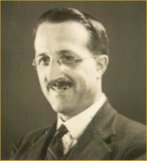
This is the final volume of the series of 16 'Memorials of the Ministry of G. R. Cowell'.
- The readings on 'The Assembly in Paul's Epistles' are particularly valuable.
- More of Mr. Cowell's ministry is included in the 'Early' and 'Later' ministry groups.
G.A.R.
Page Top
WHAT THE ASSEMBLY IS
TO THE HEART OF CHRIST |
|---|
Matthew 16: 13-18, 21-26; 17:1-8
Clapham, London, October 17, 1942
Memorials 16: 1-11
|
|---|
I desire to speak this evening, dear brethren, upon the subject of assembly foundations and assembly privilege; the section of Matthew, from which I have read, is education in view of the assembly.
- Not that the assembly was yet formed, but the education is in view of what now exists; and it is of great importance because it is the Lord’s own instruction. He has taken matters in hand in order to instruct us as to assembly foundations and assembly privilege.
- The passages read form a kind of centre to the section, which begins with chapter 13 verse 53, and ends at the close of chapter 18.
- Some may have noticed that the gospel of Matthew is divided into sections, each fresh section being indicated by the words, “when Jesus had finished” certain things: see chapters 7: 26; 11: 1; 13: 53; 19: 1; 26: 1. Chapter 13 verse 53 reads
- “When Jesus had finished these parables”.
- From that point we have the assembly section until the close of chapter 18.
In chapter 16 we have what I have referred to as assembly foundations –
- first, the spiritual foundation “on this rock I will build my assembly”, verse 18,
- and then, in the latter part of the chapter, the moral foundation, because, if the assembly was to be set up here, the moral foundation had to be laid in the death of Christ, and if we are to enjoy our part in the assembly, that moral foundation must be made good in our souls.
- It means that we must accept the truth of the cross.
- As these foundations are understood, the way is open for assembly privilege as indicated in chapter 17 where the Lord takes with Him Peter, James and John into a high mountain apart.
- It is still education for they were not equal to it then, but it affords light in view of our being free to have part in assembly privilege.
One delights in chapter 16 because of the joy it must have been to the heart of Christ – what a joyful moment in His pathway here, speaking reverently, when for the first time He was able to say “My assembly” –
- to speak of that upon which His heart was set – the primary object for which He had come and for which He was serving.
- Peter’s confession enabled Him to say that! He says “Thou art the Christ”. I want you to notice the emphatic pronouns as shewn in Mr. Darby’s translation
- Peter says “Thou art the Christ, the Son of the living God”.
- I believe the emphatic pronoun there means that it was said in the spirit of worship: this glorious Person filled Peter’s vision. It was not a cold, formal statement of the truth but it burst forth from Peter’s heart in the spirit of worship, as if to say ‘No one can compare with You!’ You are beyond compare!’
- The Lord had been saying
- “Who do men say that I the Son of man am?”
- They had been linking Him up with worthy men; some said Elias, some Jeremias or one of the prophets – that is the background of Peter’s confession.
- The Lord says, “But ye, who do ye say that I am?”
- and Peter says, “Thou art the Christ”!
- Who was Elias or Jeremias compared with the Christ? They fade right out of the picture, and rightly so, when we are in the presence of the Christ, the Son of the living God.
- No one else was that, nor could be, and here is a soul telling Him so, and worshipping. There is no doubt that Peter was a worshipper at that moment.
- I believe it indicates that we should approach assembly matters in the spirit of worship towards Christ. I believe we should approach the supper in this way for at the supper we are engaged with Christ Himself.
Then think of the joy in the Lord’s heart as He replies
- “I also, I say unto thee that thou art Peter”.
- I think the pronoun “thou” is emphasised to bring out the joy with which the Lord said it. What it meant to Him that here was assembly material coming to light!
- As we are in the spirit of worship towards Christ, He is free to tell us what we are to Him, without fear of our being self-occupied or lifted up. Peter was in the spirit of worship towards Christ, and the Lord says “Thou art Peter”.
- The Lord loves to do this at the supper. As we are in the spirit of worship He is free to tell us what we are to Him – what His assembly is to Him. He delights to do so. Then He goes on triumphantly to say,
- “on this rock I will build my assembly, and hades’ gates shall not prevail against it”.
- I think we can enter a little into the joy that was in the heart of Christ at this time – what a sense of victory, because the spiritual foundation of the assembly had come to light.
I want to say a word about the spiritual foundation. It was in Peter’s confession that it came to light. The Lord says to him,
- “flesh and blood has not revealed it to thee, but my Father who is in the heavens.
- That is the Father had revealed to Peter that Jesus is the Christ, the Son of the living God. The confession proved what had gone on in Peter’s soul, and the Lord says,
- “on this rock I will build my assembly”.
- So that the rock, the spiritual foundation of the assembly, is the apprehension in the souls of the saints, by the Father’s revelation, that the Lord Jesus is “the Christ, the Son of the living God”.
- Peter is a sample man; while, no doubt, the revelation in his case was special, we are all to be brought into it. I would like to raise the question now as to whether we have been brought into it, because there can be no doubt the Father would bring us into it if we are ready to receive it.
- Prior to this the Lord had been extricating and freeing them from religious systems;
exposing all they had revered, until He brings them to this place in the region of Caesarea Philippi, on the very confines of Palestine, far north of the Sea of Galilee, in the neighbourhood of Lebanon, where the religious man was not in evidence.
- He did not bring them to Jerusalem, but outside and free from all that men revered and held great religiously, that was the place where He became the subject of the Father’s revelation to Peter.
- Surely today if the Lord brings a people out in separation, it is in order that, as freed from what is around, they may be able to take in this wonderful revelation of what Christ is to God. I believe that is what bowed Peter’s soul in worship,
- “Thou art the Christ, the Son of the living God”.
- It is a question of apprehending what Christ is to God as the centre of His counsels. If you realise that, you will understand that it can only be the revelation of the Father. Who can tell us what Christ is to God except the Father?
- The revelation did not relate to previous experience. Many christians have experienced what Christ can be to them in meeting their need, healing them and bringing them forgiveness: we can all understand that.
- But the spiritual foundation of the assembly lies in apprehending what Christ is to God, not what He is, or has done for us, great though that is.
- It is a great thing to know that the Son of God has come to us in our need – see chapter 14: 33 – but
- it is an entirely different thing to apprehend the Christ, the Son of the living God, as the centre of God’s counsels and thoughts.
- Not until we understand that can we really understand the assembly; it is the spiritual foundation of the assembly in our souls. Christ coming to our side to meet our need does not necessitate the assembly; nor Christ as the promised One coming to Israel.
Then in what setting does the assembly become a necessity? In relation to Christ as the centre of the counsels of God.
- God says of Adam, typifying Christ as Head and Centre of God’s world,
- “It is not good that the Man should be alone”.
- Nor would the scene have been complete for God if Adam had been alone; the woman was a necessity to complete the scene. As we apprehend Christ as the centre of the counsels of God, the truth of the assembly begins to dawn upon our souls.
So the Lord at this stage begins to speak of “My assembly”; the only time He uses that expression.
- He used it because, with this light in his soul, Peter was now able to take in the thought of ‘My assembly’.
- In making his confession Peter had a large view of Christ’s glory, of what He was to God; not only as connected with Israel, for the Lord says,
- “Who do men say that I the Son of man am?”
- The whole setting is away from Israel, in Caesarea Philippi, shewing that Christ in His glory as the Man of God’s counsels is before Peter’s eye; the Father had revealed it to him.
- If we think of these two titles, the Christ, and the Son of the living God, speaking reverently, how the Lord Jesus needs the assembly in both of these characters.
- The Christ refers to His glorious Manhood and is a characteristic title of Ephesians. We are justified in reading Ephesian truth into this, for there is no doubt that later Peter became an Ephesian man.
- It was not given to him to tell out Ephesian truth, but no doubt when Peter received the Spirit and had come fully into the power of all this, he appreciated Paul’s ministry.
- As we understand that Jesus is the Christ, we see the need for the assembly, for He is
- “head over all things to the assembly, which is his body, the fulness of him who fills all in all”, Ephesians 1: 22-23.
- We understand the place which the assembly has in the divine system as with Him in the headship – His “helpmate, His like”: this surely lays the foundation in our souls for assembly formation.
The other title, “Son of the living God” means that Peter apprehended that God was the living God and Jesus was His Son.
- In that character also the Lord Jesus needs the assembly in view of the service Godward. As Son He considers for God perfectly, and so the assembly is called
- “the assembly of the living God”, 1 Timothy 3: 15.
- The assembly is to correspond with Him as Son of the living God, associated with Him in service, praise and worship to God. So the Lord says, “hades’ gates shall not prevail against it”.
- In Israel Christ’s portion is denied and the praises of God have ceased; but praises will never fail in the assembly. Hades is the place of silence and the enemy would silence the praise in the assembly if he could but the Lord says,
- “Hades’ gates shall not prevail against it”.
- God is served and praised in this vessel.
- So we have first what the assembly is to Christ, and then what the assembly is to God as associated with Christ, maintaining in priestly service all that is due to God’s name.
I think we can see therefore, that assembly formation must be based on this two-fold apprehension of the glory of Christ in the souls of the saints.
- The building goes on, on this foundation. The Lord used Paul specially, but the building still goes on, “I will build my assembly”.
Then immediately the Lord passes to the moral foundation:
- “From that time”, note those words!
- The Lord had not spoken of the cross before that time, but the truth of the assembly having come to light it says
- “From that time Jesus began to shew to his disciples that he must … suffer”.
- Another foundation had to be laid, the moral foundation where the question of good and evil was settled at the cross of Christ. So He begins to speak of His sufferings.
Peter shrinks from this moral side – and in this he is still a sample man. Who of us have not shrunk from it? Have we not enjoyed spiritual things on the Lord’s day and been tested on Monday morning? So Peter says,
- “God be favourable to thee, Lord; this shall in no wise be unto thee”, verse 23.
- Peter would compromise; but, dear brethren, if the Lord Jesus had compromised the whole position would have been lost. The assembly is a spiritual structure, but it had to be secured on moral grounds
- At the cross there could be no compromise.
- How natural it is to us to compromise! You may say, I don’t seem to touch the spiritual side much, I wish I touched it more. I would raise this question, Has compromise been allowed in connection with the moral side? Here we read,
- “Then said Jesus to his disciples, If anyone desires to come after me, let him deny himself and take up his cross and follow me”, verse 24.
- These verses are often used in the gospel, and rightly so, but let us see them first in their own setting. It says, “Then Jesus said to his disciples”. This is a word for christians; in fact it is a word for those who have the light of the assembly.
- I would not speak to you in this way if I were addressing christians not in separation, who had not the light of the. assembly, for it is “From that time” Jesus began to say these things.
- How far have we accepted the moral foundation of
- “Jesus Christ and him crucified”?
- Paul laid that foundation at Corinth. The assembly as set up, is a responsible vessel here. If we want assembly prosperity and joy down here, and freedom to move on to the spiritual side, we must accept this moral side.
- Paul determined not to know anything among the Corinthians “save Jesus Christ and him crucified” He laid the foundation at Corinth,
- “For other foundation can no man lay besides that which is laid, which is Jesus Christ”.
- The cross shut out every other man, Jesus Christ is the only Man to be allowed in our local responsible setting. The word of the cross will shut out every other man there.
- We are apt to forget that the teaching of the cross is the doorway to the assembly, see 1 Corinthians 1, the doorway into assembly privilege.
“Whosoever shall lose his life for my sake shall find it”:
- he will find his life in the assembly of the living God; the only place where true life is.
- You may have the light of it, but if you are to find it, it must be on this principle. I speak to myself as well as to the brethren, I do feel we need to take home the challenge to our hearts, as to whether we are really prepared to lose our lives as far as this world is concerned.
- Why is it that we have not more assembly joy, more wholeheartedness in spiritual things? This is the secret, we cannot have both worlds.
- “If anyone desires to come after me, let him deny himself”; it means that we disown that man entirely, “and take up his cross and follow me”.
- One wonders whether one has really got a cross, for it says, “his cross”. We know how the Lord got His cross: the world gave it to Him because of His faithfulness.
- Are we true enough to Christ to get a cross? To be regarded by men generally as fit only for the scaffold, and to take that up gladly at the hands of the world?
- If we took up that side of things more, allowing the truth of the cross its place in our minds and hearts, how fully we should find our life in the assembly!
So the Lord in chapter 16 makes that remarkable appeal,
- “For what does a man profit, if he should gain the whole world, and suffer the loss of his soul”.
- Again I say it is right to use that in the gospel, but I am using it tonight in the setting in which it is given, shewing the danger of a christian losing his soul or life – not eternally, of course, but as far as the present enjoyment of his place in the assembly is concerned
- Would gaining the whole world be worth losing the enjoyment of even one good morning meeting? We have to weigh things up. Peter speaks of soul salvation in his epistle as a present thing,
- “receiving the end of your faith, the salvation of your souls”, 1 Peter 1: 9.
- The soul is the seat of longing and enjoyment. We need to have our souls set free if we are to pass into what is spiritual; and that is by way of the cross.
- The christian position has been largely a defensive one for many years but one has wondered lately, when the world talks about ‘going over to the offensive’ whether we may not be called upon, in some measure, to do this ourselves, accepting the reproach of the cross more definitely.
Now I just say a word as to this matter of assembly privilege. Following this teaching the Lord
- “takes with him Peter, and James, and John his brother, and brings them up into a high mountain apart”.
- Not that the disciples were in the gain of the experience at the time, but we can view it from the standpoint that they are now free for entering into what Ephesians 1 brings before us, God’s sovereign choice and our place with Christ on high.
- The Lord chose three, but Ephesians indicates that all who form the assembly were chosen in Him before the world’s foundation, and are blessed with every spiritual blessing in the heavenlies in Christ.
- The “high mountain apart” would refer to present enjoyment of our blessing in the heavenlies. As the previous instruction is accepted, we are set free, as those chosen in Christ, to go up to this elevated place, there to see Jesus as He is.
- If there is one thing we need, it is to see Jesus as He is. He was transfigured before them. They saw anticipatively a glorified Christ. He is actually glorified now and we need more acquaintance with Jesus as He is.
- Inside the tabernacle all the furniture spoke of Christ as He is. We are much more familiar with Christ as He was, as in the brazen altar: the altar and the offerings upon it bring before us Christ as He was.
- But in the sanctuary itself what occupies the heart is Christ as He is – the Ark, the mercy seat, the golden altar, the pure table, the candlestick – all referring to Christ as He is. The disciples are privileged to get a vision of this:
- “His face shone as the sun, and his garments became white as the light”, verse 2.
The passage shews that education still proceeds even in circumstances of assembly privilege. Peter says,
- “let us make here three tabernacles: for thee one, and for Moses one, and one for Elias”.
- He put the Lord first: he speaks in a subject spirit
- “If thou wilt”, but “While he was still speaking”
- the Father takes up their education. It is beautiful to think of the Father’s word here, He had revealed to Peter who Christ is. Now as these three men are brought into these glorious surroundings, the Father takes up the matter of their education,
- “While he was still speaking”.
- The Father is not waiting for Peter to finish. It was necessary that he should make his remarks in order to learn his lesson, but
- “A bright cloud overshadowed them, and lo, a voice out of the cloud saying This is my beloved Son”.
- The emphatic pronoun is again used, suggesting here the feelings of the Father’s heart. It is not enough to put Christ first. The Father would have us to understand that Christ is everything and in all, the One who fills all in all.
- What would Moses have thought if in his day you suggested making a tabernacle for him as well as the Ark, one for the Ark and one for Moses. He would have shrunk from it with horror. There is only one Ark and there could be only one tabernacle; the Father teaches these three men that great truth.
The cloud that filled the tabernacle overshadows them now – there is only one tabernacle, one sanctuary,
- “the true tabernacle which the Lord has pitched, and not man”, Hebrews 8: 2.
- The tabernacle in the full sense is a picture of the universe where Christ fills all in all. This is necessary education for assembly privilege.
- As Christ gets this place in our hearts we can enter into the conscious enjoyment of union with Him as
- “the fulness of him who fills all in all”, Ephesians 1: 23.
- Then as we enter into what He is to the Father, and our association with Him in the Father’s presence, what a realm is opened up to us.
These are the things I had in mind to bring before you. May the Lord help us as to assembly foundations, both the spiritual and the moral, and may we thus be more prepared for assembly privilege and the education that goes along with it!
- This, in turn will prepare us for the instruction that follows in this section, so that we may be representative of Christ in our conduct here, and qualify to have part in assembly administration.
Page Top Address Top
CHRIST'S DEATH
– THE BASIS OF GOD'S
DWELLING AND HIS PRAISE |
|---|
Romans 8: 3-4; 2 Corinthians 5: 21; Psalm 22: 1-3, 22
West Worthing, February 24, 1950
Memorials 16: 12-21
|
|---|
I wish to say a word, dear brethren, as to the death of Christ being the basis of everything which God has established in grace, and particularly for the basis of His dwelling-place, as the Lord Jesus says by the Spirit in Psalm 22
- “Thou art holy, Thou that dwell est amid the praises of Israel”.
- We would ever be affected when we think of the precious death of Christ, particularly as typified in the sin offering; not that I am confining my thought entirely to that, for there was usually a combination of offerings.
- For instance, at the consecration of the priests there was the sin offering, the burnt offering, and the ram of consecration; and all typified the one death of Christ.
- “For by one offering He has perfected in perpetuity the sanctified”, Hebrews 10: 14.
- But as we think of His death as the sin offering we cannot but be profoundly affected because of what it cost Him and what it cost God.
- We read in Romans 8, “God, having sent His own Son in likeness of flesh of sin, and for sin”.
- Think of what it cost God to lay the foundation in the death of His Son; we cannot measure what it meant for Divine love to take such a course; yet it is on that account Divine glory and love have come into display.
The expression “His own Son” speaks of the most tender affection on the part of God for the One of whom He could say als
- “This is My Beloved Son”, Matthew 3: 17; and again
- “My Beloved, in whom My soul has found its delight”, Matthew 12: 18.
- The sin offering is a soul matter and we need more soul. It says in Isaiah 53: 10,
- “When Thou shalt make His soul an offering for sin, He shall see a seed”, and a little further on,
- “He shall see of the fruit of the travail of His soul, and shall be satisfied”, and in verse 12
- “He hath poured out His soul unto death”.
- “Soul” speaks of the deepest feelings, and Jesus poured out His soul unto death. And so it says
- “He shall see of the fruit of the travail of His soul, and shall be satisfied”.
- If there is a lack of soul with us, I believe the reason is that we have not allowed our souls to contemplate sufficiently what the Lord has felt in His soul;
- and if our souls are not affected we shall never be very effective in the service of God.
- And thus the Lord shall see, in the way He so desires at the present time, of the fruit of the travail of His soul.
In John 12 the Lord Jesus says
- “Now is My soul troubled”.
- His soul was troubled in view of what was before Him.
- In chapter 14 we read “Let not your heart be troubled”,
- but His soul was troubled. If we are brought into untroubled conditions it is because Jesus endured trouble of soul for us. He said to His own,
- “My soul is exceedingly sorrowful, even unto death: tarry ye here, and watch with Me”, Matthew 26: 38.
- We need to let these things enter into our souls. If we have no depth we shall never have height.
- The heading of Psalm 22 is “The hind of the morning”, referring to the assembly as a musical instrument. The Lord needs a musical instrument like that, He needs a vessel capable of moving to the highest levels in praise.
- How shall we acquire agility? Only by depth of feeling. If there is not much in the way of praise in our local companies it is because of lack of depth of feeling, and to get depth of feeling we need to consider the death of Christ as presented in these scriptures.
- In Romans 8: 3 it is “God, having sent His own Son, in likeness of flesh of sin, and for sin”. That is the sin offering.
- In 2 Corinthians 5: 21, “Him who knew not sin He has made sin for us, that we might become God’s righteousness in Him”.
- And in Psalm 22: 1-3 we are given an indication of the Lord’s own feelings as thus made sin. That is when His soul was troubled.
But how great the results are! If God sent His own Son, what kind of result is adequate? Surely no other result than many sons. Think of what God is seeking! He said to Pharaoh:
- “Thus saith the Lord, Israel is My son, even My firstborn”.
- He does not say ‘Let these slaves go’, but
- “Let My son go, that he may serve Me”, Exodus 4: 23.
- That is why God “sent His own Son, in likeness of flesh of sin, and for sin”.
- He had in mind to secure firstborn sons, for nothing less could be adequate in answer to such a sacrifice on God’s part.
- He “marked us out beforehand for adoption through Jesus Christ to Himself, according to the good pleasure of His will, to the praise of the glory of His grace, wherein He has taken us into favour in the Beloved”, Ephesians 1: 5-6.
- It requires that we should be redeemed; it necessitated the work of Christ upon the cross.
- You may say ‘That was simply for our justification’. Justification is included, but the work of Christ is very extensive in its scope.
- The types are intended to help us, and the blood that was brought into the holiest and sprinkled before and upon the mercy seat to make propitiation for sin, had to be the blood of an animal whose body was burnt outside the camp;
- that is the blood which is typically the basis of our justification according to Romans 3: 25.
- The efficacy of the blood depends upon the fact that the Lord Jesus endured the awful sufferings typified by the burning of the body of the animal – burned outside the camp – not on the altar, not even in the camp, but outside the camp. That is where Jesus was when He said
- “My God, My God, why hast Thou forsaken Me?”.
- There was no sweet odour there; no mitigation, but wrath without relief; that is what Jesus bore for us. There would have been no justification for us apart from that.
- It is because Jesus is Who He is, and because He went where He went, and bore what He bore, that His precious blood has such unspeakable value.
“Whom he did predestinate, them he also called; and whom he called, them he also justified” – in the power of this blood – “and whom he justified, them he also glorified”, Romans 8: 30.
- And that refers to the present thing; in fact it refers to what I have been saying, that God has nothing less in His mind in predestination than sonship.
- Romans 8 shows how we are glorified in a moral and spiritual sense – glorified, because these very bodies are indwelt by the Holy Spirit.
- This chapter shows how the believer is glorified. The Holy Spirit dwells in him, setting him free from the law of sin and death. No glory attaches to those under the power of sin and death.
- The Spirit is against the flesh and if we are against the flesh too, judging it unsparingly, the victory is assured; We are in deliverance.
- Then it says “That the righteous requirement of the law should be fulfilled in us” – there is glory attaching to that – who do not walk according to flesh but according to Spirit”.
- He is available for us thus in our walk down here.
- And then “If Christ be in you, the body is dead on account of sin, but the Spirit life on account of righteousness”.
- The Spirit energises all the believer’s thoughts, feelings, words, and actions – in view of righteousness.
- And then it goes on, “As many as are led by the Spirit of God, these are sons of God”, verse 14.
- Surely this is glorification in a moral and spiritual sense. The children of Israel answered to this typically after the brazen serpent. Typically they were led by the Spirit in the wilderness, true to their calling:
- “Let my son go, that he may serve me”, Exodus 4: 23.
Sonship begins in our homes: although sonship belongs properly to the assembly, yet you cannot be a son substantially in the assembly if not at home.
- You may be carried into it in the atmosphere of the assembly. The Spirit of God’s Son avails Himself of every opportunity to cry “Abba Father” in our hearts. We are often carried far beyond where we are substantially to give us a taste to go in for things.
- But in Exodus the first-born sons were secured in the first instance in the houses of Israel. The blood was on the outside of each house and a firstborn son inside.
- God would help us to be sons in a substantial way, so that, according to Romans 8, we cry “Abba Father” in wilderness circumstances. Looking towards the wilderness Balaam could say:
- “How goodly are thy tents, Jacob, and thy tabernacles, Israel”, Numbers 24: 5.
- So we see how God secures some on the basis of the precious blood of Christ; sons who cry “Abba Father” and glorify God in the scene of responsibility and suffering, and
- who are therefore free to serve God as priests in the Sanctuary.
- What a result! God has what He is seeking on the basis of the death of Christ, and we are brought into the joy of it.
- Like the leper, we have the oil on the right ear, thumb, and great toe, Leviticus 14: 28; and it is poured upon our heads, fitting us for the sphere of responsibility;
- and like the priests who are anointed with the holy anointing oil – a holy perfume – with a view to service in the Sanctuary.
- As thus characterised by the Spirit we are glorified and ready for our part in the tabernacle and its service; that is the end in view in Romans.
- We present our body, chapter 12, “a living sacrifice, holy, acceptable to God”;
- in view of our part in the anointed vessel – one body in Christ”.
I pass on now to 2 Corinthians 5: 21. We have been speaking in Romans 8 of what is present.
- Corinthians goes on to the future, showing the vast results from the death of Christ in future glory. It says
- “Him who knew not sin He has made sin for us, that we might become God’s righteousness in Him”;
- a most amazing statement, a marvellous answer to the death of Christ as the One whom God made sin for us.
- It refers to the time when we have our bodies of glory. We are waiting for our full part,
- “awaiting adoption, the redemption of our body”, Romans 8: 23.
- Already the righteousness of God is toward us all and upon all those who believe. We are already justified. But this is a greater thought than our justification.
- As glorified with Christ we become the witness to the whole universe of the righteousness of God. We become His righteousness in Christ. All that God carries out is based upon His righteousness:
“God’s righteousness with glory bright,
Which with its radiance fills that sphere”.
- The glory is that He has achieved His purposes of love without sacrificing one iota of His righteousness.
- We become the witness of it in glory with Christ because we are there on the basis of righteousness. It is a matter of righteousness.
- If Jesus took our place and, as made sin for us, glorified God, it is a matter of Divine righteousness that God should glorify us.
- We see it in the prayer in John 17. Jesus says “Righteous Father”. It is a prayer that speaks of the saints according to purpose.
- “They were Thine, and Thou gavest them Me”.
- There is nothing in the prayer about sinful history or earthly origin. But at the outset the Lord refers to His work.
- “I have glorified Thee on the earth: I have finished the work which Thou gavest Me to do” – and at the end He says “Righteous Father”.
- All that God does is based on Divine righteousness and we become a display of it.
Psalm 22 closes on the same note,
- “They shall come, and shall declare His righteousness unto a people that shall be born, that He hath done it”, verse 31.
- This Psalm is specially affecting. The Lord’s own expression and feelings when made sin for us, are out in the most profound way. He says
- “But Thou art holy, Thou that dwellest amid the praises of Israel”.
- It is of immense moment to us that we should know what was engaging the Lord’s mind and heart when He suffered on the tree. We sing sometimes:
“Thy brethren, Lord, Thine own, and one with Thee,
Thy thoughts engaged when dying on the tree”.
- As we consider the thoughts, motives, and affections governing Him at that time, we begin to understand the inward parts of the sin offering – the fat covering the inwards, the two kidneys and the net above the liver; and to understand, too,
- why these were not burnt outside the camp, but went up as a sweet odour on the altar of burnt offering.
- It is wonderful that we are privileged to enter into that devoted love which led Him into the depths in order that every thought and desire of God might be brought to pass. He would have us enter into it and it would make us urgent.
- The more we enter into the significance of the inwards of the sin offering the more we shall have depth of feeling and urgency of desire that what He died for might find present expression.
- He would go the whole length that the blessed God might have His portion. So we have here His own words given to us by the Spirit,
- “Thou art holy, Thou that dwellest amid the praises of Israel”.
- Think of that! How affecting! In going into these sufferings He had in mind God dwelling, not simply amidst Israel, but amidst the praises of Israel.
- If this enters into our minds and hearts and affects our souls we shall become greatly concerned about the praises of Israel so that God may have what He longs for, that He may dwell amid our praises.
Think of God dwelling. It comes out in Exodus, and the thought of being in the midst is very touching, and not only dwelling but dwelling in the midst.
- Very touching that God should want to be in the midst of His people.
- He must be the Centre. Moses’ first impression was the angel appearing to him in a flame of fire out of the bush and the bush was not consumed. Why?
- We are the thorn-bush – just a bramble fit for nothing by nature, fit only to be burned.
- But because Jesus has borne the consuming fire – God’s wrath without mitigation – that is why Jacob’s son are not consumed! Malachi 3: 6.
- From the public point of view He has dwelt in the midst of the thorn bush, and the vision was to help Moses in view of the service, in view of what he would have to endure from the people.
- But then when we come to God actually dwelling, as the book proceeds, we find Him dwelling in the tabernacle. This is different from the thorn bush.
- He says “And let them make Me a Sanctuary; that I may dwell among them”, Exodus 25: 8.
- In Exodus 29: 42-46, referring to the continual burnt offering and the tent of meeting,
- God says, “Where I will meet with you, to speak there with thee … and it shall be hallowed by My glory … and I will dwell in the midst of the children of Israel, and will be their God, and they shall know that I am Jehovah their God, who have brought them forth out of the land of Egypt, to dwell in their midst; I am Jehovah their God”.
- How touching! How different from dwelling in the midst of a thorn bush!
It is the same people. It is good to get that view of the saints, a people who are not only a thorn-bush, but something else now.
- The tabernacle shows what the saints are according to God. It was a structure where everything typically was of Christ, not a single thing not typical of Christ.
- Christ the Centre – the Ark – and Christ in character in the whole structure. Christ everything and in all!
- We are entitled to look at the saints apart from the idea of the bramble altogether, and see what they are as the body of Christ; as it says “the body is of Christ”, Colossians 2: 17.
- And the final touch in the hallowing of Moses, of the tabernacle, and the priesthood, was the anointing, making all a sweet odour – typically the grace of the Holy Spirit pervading all, as with us, in us, and upon us.
But you see, in Psalm 22 it is not simply God, dwelling according to Exodus or Leviticus. You have to come to David to get the praise. This is a most precious thought.
- All that Moses brought in is carried down by David; but he establishes, in addition, the service of praise. Psalm 22 is a psalm of David.
One would desire to stimulate our hearts as to praise to God. It should be as urgent with us in measure as it was with the Lord Jesus.
- He went into the distance to secure the praises, and let us allow that to come into our souls.
- We need more soul in God’s service, we need to understand more the depth of feeling that would lead us to spiritual height.
- Mary had deep feeling; she was ready immediately for great heights. The height did not dismay her, she was ready to be the hind of the morning.
- Not that we bring the atoning sufferings of Christ into the service of God. The body of the victim was burnt outside the camp.
- But the affections and feelings of Christ as typified in the inwards, were burnt upon the altar and went up as a sweet odour to God. These have their place in the service of God.
One feels this: if we contemplate more the sufferings of Christ day by day we shall get more depth in our souls and bring “inwardness” into the service of God.
- We shall be energised by the very thoughts and desires and affections that energised Christ, and it will give great stimulous to the service of praise and readiness to move with alacrity from glory to glory.
- We have the week to contemplate the sufferings of Christ as
- “outside the camp, bearing His reproach”.
- The more we do that and are established in our souls by that contemplation, the more we shall be able to offer what is suitable –
- a “service of praise continually to God”.
The last verse read again speaks of what the Lord had before Him according to this Psalm. The first words after being heard from the horns of the buffaloes are
- “I will declare Thy Name unto My brethren, in the midst of the congregation will I praise Thee”.
- Through His precious work He could look upon the saints as His brethren, a company capable of taking in that Name. What a joy to Him to sing in the midst of the assembly!
- The Lord Jesus said “In the midst of the assembly will I sing Thy praises”, Hebrews 2: 12.
May God help us in this matter, to contemplate the precious death of Christ and all that flows from it, and may the result be greater energy in the service and increasing richness and fulness in the praise!
Page Top Address Top
| FEATURES OF THE ASSEMBLY |
|---|
Psalm 87: 3-7; Galatians 4: 19-26;
Revelation 21: 2-3, 9-10, 22; 22: 3-4
Southgate, London, January 18, 1947
Memorials 16: 22-31
|
|---|
What is mainly in my mind tonight, dear brethren, is the thought that a true remnant is always marked by the features proper to the whole.
- If it fails to be marked by the features proper to the whole it is no longer a true remnant.
- In saying this I am not wanting to lead anyone to assume that we are a remnant. We need to be free from all assumption.
- The moment we begin to assume anything we are on very unsafe ground, but we would much desire that there might be a true remnant, and I think we can be assured that God will see to it that there is a remnant;
- not comprising perhaps all those who profess to be in the right place, but a remnant that He can take account of.
- The Lord spoke of a remnant in Thyatira, “the rest who are in Thyatira”, those who had not known the depths of Satan.
- There were also a few in Sardis who had not defiled their garments.
- Philadelphia, as a whole, was marked by a remnant state, yet in all these cases, even after speaking of a true remnant state in Philadelphia the Lord addressed the overcomer, showing that remnant conditions can only be maintained in the spirit of overcoming.
- No one can claim to be an overcomer until he has finished the course, and then it will be for the Lord to give His estimate of it.
- The conflict goes on to the end – the fight of faith, which will never cease while we are here, and everything depends upon overcoming.
- The Lord Himself is the great Overcomer. He overcame in all things and the appeal is that there should be overcomers now, and the fact there is such an appeal would preserve us from assumption, yet with a desire to answer to God’s mind.
If there are to be those marked by features proper to the whole we must apprehend these features, and in that connection I would say
- how important it is to get Divine conceptions as to the truth.
- We do not arrive at the truth by looking round on what is here on earth but by getting Divine conceptions from God Himself as to His own thoughts, so that we can clothe the saints with His thoughts; and God is ready to give us these conceptions and especially to the young people.
- What marks the christian dispensation is that the young men see visions, and the sons and the daughters prophesy. It is normal to see things as God sees them, to be let into Divine thoughts and secrets.
- John stresses it in his ministry. The Lord is asked “Where dwellest Thou?” and His answer is, “Come and see”, and so in Revelation John sees things.
- He saw a new heaven and a new earth. They are not yet existing but he got the conception. He saw the new Jerusalem, and God would give all of us visions like that, to see things as He sees them.
- The church is not actually complete, but He would give us to look at things from His point of view. It is most important in this day. You cannot speak about things properly until you have seen them.
- The Lord says, “We speak that which we know, and we bear witness of that which we have seen”, John 3: 11.
- It is open to christians to see things in their measure. John saw things and God wants us to see things. He would help the young men and women to see things.
- Vision is needed if we are to go forward. Caleb and Joshua went and saw things for themselves and were preserved in movement.
- I would say to any young brother or sister, God wants you to be a seer. You must be a seer before you can be a prophet. There are many examples of such in scripture. Zechariah is an example –
- “Run, speak to this young man”.
- What visions he had. He saw Joshua the high priest in filthy garments which were taken off him and he was given festival robes. What a wonderful vision as to man’s place before God in Christ, beyond the reach of breakdown!
- He also had a vision as to God’s over-ruling Government – the chariots coming out from between two mountains of brass.
- One has been concerned about young men and women seeing things and speaking about them. See things and then speak about them. If you have a Divine impression, speak about it.
- This being the Spirit’s day, such things are normal. The Lord tells Paul that he was to testify both of the things that he had seen and of those in which the Lord would yet appear to him. All through Paul’s life he was speaking about what he had seen.
In our first scripture it says,
- “Glorious things are spoken of thee, O city of God”.
- It raises the question as to how much we can say about it. Have we a conception of this great city of God?
- A Londoner, wherever he went on earth, would not be slow to speak about the city of his birth, and God would have us to be like that, to be able to speak of the glorious things of the city of God.
- For us, of course, that is the assembly. What can we say about the assembly?
- All of us can say something about Christ, and it would be a sad thing if we could not. We want to say more and more about Christ, but there is also this point as to how much we can say about the assembly.
- Have we grasped Divine thoughts as to this great city, the city of God? There is no other city to which this title applies so fully as it does to the assembly.
I wish to speak about a few features of the assembly, because a true remnant is marked by features proper to the whole, and the first feature in this scripture is the mother, the mother city.
- There are those born in her. That is carried on to Galatians 4,
- “Jerusalem above is free, which is our mother”.
- Then in Revelation we have read of several appellations of the city. It is the bride the Lamb’s wife, it is the tabernacle of God, and there is no temple in it because
- the “Lord God Almighty is its temple, and the Lamb”.
- These are some of the glorious things spoken of it.
It has often been said that we are between the two glories.
- Haggai says, “The latter glory of this house shall be greater than the former glory”.
- The book of Revelation brings before us the latter glory, the glory pf the church complete.
- We thus have the light of the latter glory and we can also look back to Pentecost and can see the former glory.
- We have the light of both shining upon us and it is for us to take on features proper to this great vessel; and I suppose our first touch with the assembly is in the character of mother.
- The mother side of the assembly would particularly link on with our beginnings and our growth. The Apostle brings it in,
- “Jerusalem above is free, which is our mother”, Galatians 4: 26.
- The Apostle did not give way to the law teachers. He brings in the thought of Jerusalem above which is free, which is our mother.
This Psalm contrasts those who are born in the city of God with those who are born in the world’s cities, and I would like to say in this connection that
- we should all be true products of the gospel,
- free and untramelled by human religion of any kind or of the features of men and women of this world. So it says,
- “I will make mention of Rahab and Babylon among them that know me; behold Philistia, and Tyre, with Ethiopia; this man was born there”, verse 4.
- God is drawing attention to these places, but to contrast them with those who are born in Zion. A city gives character to those who are born in it.
- Rahab is Egypt and we see plenty of ‘Egyptians’ around us. Egypt boasts in God’s resources as its own. It was God’s river, but Pharaoh says, “My river”. That is the character of the Egyptians.
- Babylon is the imperial side of the world. We see men coloured by imperialistic pride.
- Philistia represents the pride of intellect, while a son of Tyre would be a man governed by commercial ambition.
- An Ethiopian in the modern world, would be the pleasure seeking man of the south, the man of careless ease.
- Men of all these types are concentrated in Christendom as indicated in the book of Revelation. All have come into Christendom, but in contrast to that it says of Zion,
- “The Lord will count, when He inscribeth the peoples. This man was born there”.
I want to touch briefly on Galatians in this connection. To be born in a city makes a man a citizen of that city,
- and it is because Jerusalem above is our mother that we belong to the assembly,
- but how much maternal exercises are needed if we are to be marked by assembly features.
- You may say ‘What would mark a citizen of God’s city?’ I think it would be that Christ is formed in the citizen. The assembly is our mother and she would not tolerate anything that is not of Christ. Paul speaks of Christ being formed in the Galatians.
- One has often said, and I think it is true, that the Epistle to the Galatians is the language of an outraged mother, a mother who feared that damage would come to her children.
- Paul speaks strongly of those who would damage his children, and if there is one thing which will damage the saints and hinder their being marked by their true character as citizens of Zion, it is legal principles – the Jerusalem that now is.
- When Paul wrote he referred to Jerusalem the actual city, but at the present time the Jerusalem that now is, is established in Christendom. Naturally we love the bondwoman and her son, but we have to learn that they are to have no place at all.
- We belong to a great free city, where all are sons of God,
- as the Apostle says, “For ye are all God’s sons by faith in Christ Jesus”, Galatians 3: 26.
- Everyone in the city is a son. So that, as accepting the gospel, we are born of this city. We are citizens of it, sons of God, and nothing is worthy of it but the spirit of sonship.
- It is on this line that true spiritual manhood is built up, which I would support by the word in Ephesians 4: 13,
- “Until we all arrive at the unity of the faith and of the knowledge of the Son of God, at the full-grown man”.
- God’s thought is full-grown manhood in sonship. We need to be built up in the spirit of sonship, consciously a citizen of that city.
- The first and foremost thing is that we should be built up thus personally, and I believe the exercises of motherhood enter much into it. The mothers of Genesis bring in various features of motherhood that belong to the assembly.
- Eve means life and this is the city of the living God. What exercises Eve went through before Cain was displaced. Cain is the beginning of the bondwoman and her son, but Eve says,
- “God has appointed me another seed instead of Abel”.
- Abel was a man of faith. We are all sons of God by faith in Christ Jesus.
Then we have the words of Sarah in Galatians, “Cast out the bondwoman and her son”.
- Abraham was not equal to the position but the mother says,
- “Cast out the bondwoman and her son”.
- How we need to cast out legal principles and to develop in the spirit of sonship.
- The Lord says in Luke’s gospel, “Did ye not know that I ought to be occupied in my Father’s business?”
- This is His first recorded utterance and His last utterance is
- “I send the promise of my Father upon you; but do ye remain in the city till ye be clothed with power from on high”.
- He began with “My Father” and He ended with “My Father”, and God says, “Thou art my beloved Son”.
- At thirty years of age He was prepared to take on all the burdens of the testimony, and we see in Him God’s full thought as to sonship.
- The maternal instinct would have nothing less in view than the displacement of self and the bringing in of Christ, and as we are personally formed in the liberty of sonship we shall be able to merge with out brethren in assembly relations.
- We shall be free from every trammel of legality, envy and vain glory and we shall be able to fit into our allotted place in the assembly.
- Saul of Tarsus is the outstanding example in the New Testament of the son of the bondwoman. He loved the bondwoman and was a son of the bondwoman, but in the light of the Son of God he cast out the bondwoman and her son.
- God revealed His Son in him, and we see in him the true features of sonship.
- He says “For me to live is Christ”.
- May God help us to be marked by the character of our mother city, so that He may be able to point to us and say,
- “This man was born there”.
This makes way for us to merge together in bridal response to the Lord. John sees the holy city, new Jerusalem … prepared as a bride adorned for her husband.
- What an attractive feature of the assembly this is. How it appeals to our hearts.
- If the bond-woman and her son have place with us, the blessedness of this will wane; we shall not be equal to it.
- But if we are in the true liberty of Christianity, Christ having His true place and being everything to us individually, there will be no difficulty in our merging together in response to Him Who is everything to us, merging collectively and so, in principle, prepared as a bride adorned for her husband, even now.
- Rebecca was brought to her husband adorned for him. The servant had put the ornaments on her, not for her own satisfaction.
- She was not looking in a mirror, but all was for his enjoyment, so she covers herself.
- It was all for Isaac, and think of what the church is for Christ, this wonderful vessel.
- What greater thing can be said of it, than that it is as a bride adorned for her husband? It is a vessel in which He sees a complete answer to Himself, a heavenly vessel answering to Himself in character and affection.
- Think of the blessedness of touching that feature now. The Lord is looking for it now.
- We are only a small part of the assembly. Millions of the saints are already with Christ. They have gone before us, but yet as on earth at this moment we should be prepared to answer to this.
- There will not be a true remnant on earth unless this is seen.
- A remnant must be marked by the features of the whole, marked by freedom, not trammelled by anything of man, and then moving as a bride adorned for her husband.
Lower down in the chapter the angel takes John up to a great and high mountain, and shows him that great vessel, the bride, the Lamb’s wife.
- The Lord is looking for that feature today.
- It followed quickly in Rebecca, for it says Isaac took her into his mother’s tent and he loved her and she became his wife. The Lord is looking for the wifely features that would care for all His interests down here.
- How precious the early assembly was to Him, in Acts, as He led her into Sarah’s tent! He came to His own, and His own received Him not. There was no portion for Him in Israel, but the assembly was there and He could lead her into Sarah’s tent,
- and the assembly filled out with heavenly light every feature of the testimony that had once belonged to Israel.
- The Lord looks to us to do this today in wifely affection. We may guard everything for Christ that is precious to Him down here, and, of course, the wifely side would link on closely with the side of the mother, as caring for others.
- I think this city in Revelation is the mother city of the universe. As the Lamb’s wife she comes out to take her place in rule with Him, to establish her influence on His behalf over the whole earth.
To return for a moment to the scripture at the beginning of the chapter. John tells us what he saw and what he heard.
- “I heard a loud voice out of the heaven. saying, Behold the tabernacle of God is with men, and He shall tabernacle with them, and they shall be His people, and God Himself shall be with them, their God”.
- We have here another feature of the assembly, another feature that belongs to eternity, because these early verses refer to the eternal state.
- The loud voice speaks of the tabernacle of God. It is the vessel where God dwells in the most intimate conditions, where He dwells in complacency, and where all is in keeping with Himself.
- In the wilderness it was a question of building the tabernacle, and Moses received all the specifications from above. The pattern was given in the mount, and in this scripture we see that the mind of God will be carried through in the assembly.
- God is going to secure His thought. The assembly is the tabernacle of God, and it will be entirely in keeping with the pattern. We all have our places in it according to Divine purpose and counsel, and we are to fit into this structure.
- Paul’s teaching lies behind John’s ministry, and Paul shows how we are fitted together. If one part was out of its place it would spoil the pattern.
- It is wonderful to think of God’s pattern, and the time is coming when every saint will be in his place and will be functioning. The tabernacle is a functioning vessel.
- It is a great vessel of praise to God throughout all ages, just as the tabernacle of old was the vessel of God’s service. This is to mark us now so that God’s praise goes on.
- As I said earlier, if we are in the liberty of sonship we shall have no trouble in finding our place in the assembly now.
- As sons we can serve God individually but the highest service of God is secured in this vessel. It is composed of firstborn sons.
- We are already builded together – a habitation of God in the Spirit. How wonderful that this feature is open to us in measure, in our day!
I wish to just touch on chapter 21: 22 because the idea of the temple comes in. The Apostle says,
- “Ye are temple of God and the Spirit of God dwells in you”.
- The assembly is the very shrine, the place where God speaks, and that feature is also known to us today. God has restored the light of it to us.
- How precious it is that we see evidences of the bridal feature, the wifely feature, the tabernacle feature, and the temple feature!
- We know something of what it is to get the light of God as we are together and to hear His voice, then it says further down,
- “His servants shall serve Him and they shall see His face”, chapter 22: 3-4.
- The word is priestly service and links on with what I have been saying already, the eternal service, the inner side. We see God in the Son, as it were, face to face. We often sing,
- “We bless Thee, God and Father, we bow before Thy face”.
- I believe that is supreme blessedness, the consciousness of being before God as seeing His face in the Person of the Lord Jesus Christ, and as serving Him in perfect liberty.
All these things are proper to the assembly, the city of God.
- We cannot claim to be a citizen of this city unless we have been born in it. No one is a Londoner unless he has been born in London.
- Let us have nothing to say to any other city! Let us cast out every feature of human religion.
- Let us have Christ in everything, and thus in the liberty of sonship let us merge together, concerned that every feature proper to the assembly may mark the saints.
- If we do not keep before us what is proper to the whole we shall become one of the worst of sects.
- The name, ‘Plymouth Brethren’, has come before men publicly, and, dear brethren, let us be watchful on this point.
- We do not want to go without the camp and then make another camp of our own. If we do, it will be the worst sect of all, because we have had the light.
- The only way to be preserved is to have God’s thought and to cleave to it. May He help us to do so, for His Name’s sake.
Page Top Address Top
THE ASSEMBLY
AS A TRUSTWORTHY VESSEL |
|---|
Genesis 24: 67; 1 Samuel 25: 25, 32-33, 41-42;
Proverbs 31: 10-12, 23, 27-28; Matthew 16: 18
Coombe Street, Croydon, January 8, 1945
Memorials 16: 138-146
|
|---|
I desire, dear brethren, to say a word on the trustworthiness of the assembly.
- In considering such a subject we have, of course, to take an abstract view of the assembly; but I hope such a view will stimulate our desires to be marked by the feature of trustworthiness proper to the assembly.
- Each of the passages we have read in the Old Testament bring the assembly before us, in type, in its wifely character.
- In the first case, Isaac led Rebekah into his mother Sarah’s tent, and, it says, he took her and she became his wife and he loved her and he was comforted after his mother’s death.
- I think the reference to Sarah’s tent indicates that the Lord relies upon the assembly to carry through, in spiritual power, every feature of the testimony that was once committed to Israel, and to carry it through with heavenly lustre – to carry it through on a level to which Israel could never rise.
- In Samuel, Abigail comes forward as marked by discernment; she had discernment to meet the crisis in such a way that David’s name was not dishonoured. It says, David sent ten young men to greet Nabal in his name, and his name and Jehovah’s name would have been dishonoured had not Abigail come forward to meet the situation.
- David says, “Blessed be thy discernment, and blessed be thou”.
- I think the chapter brings before us the trustworthiness of the assembly in that respect. The Lord counts upon the assembly to be trustworthy in meeting conditions of crisis by the exercise of true discernment, and in doing what is required to maintain the glory of His Name.
- Then in Proverbs; both the wifely and motherly features come into evidence in connection with the virtuous woman; and it says,
- “The heart of her husband confideth in her”.
- It is evidently a matter of trustworthiness particularly in regard to the household. It is a very important matter that the household should be cared for, so that, in the ultimate issue, her children rise up and call her blessed.
- Surely the Lord counts upon the assembly to fill out that role, so that there should be children who rise up and call the assembly blessed as having proved the maternal care that is found in it.
- I read the passage in Matthew 16 because it shows that the trustworthiness of the assembly is on account of the material of which it is composed and the rock upon which it is built.
- “Thou art Peter, and on this rock I will build my assembly and hades’ gates shall not prevail against it”.
- We should be exercised to be characteristically that kind of material, because if we are not true ‘Peters’, that is, true living stones, we shall not be reliable in the settings to which I have already referred.
Now in connection with Rebekah, the secret underlying her fitness for the position in Sarah’s tent was the service of Abraham’s servant, who is a type of the Spirit; and the fact that room was made for him and his service.
- One would raise the exercise with us, dear brethren, as to how far we make way for the Spirit’s service in our local gatherings.
- We would all desire that the Rebekah character should mark the local companies, and I think it helps to see that this type peculiarly fits in with local settings, because Rebekah is a type of the assembly at the present time.
- Eve, as a type, includes the church as a whole – the church complete; but Rebekah applies to the present time, as Paul says to the Corinthians,
- “I have espoused you unto one man, to present you a chaste virgin to Christ”.
- The provisional position in Sarah’s tent has to be filled out now. It will not apply when we are with the Lord. Sarah’s tent has no application when the Lord comes, for Israel will again take up her place on the earth.
- But it is a question of filling out a provisional position now and thereby being a comfort to the heart of Christ.
- It must, therefore, have a peculiar application to local companies, because that is the present form in which the assembly exists.
- The Rebekah feature was, no doubt, seen in a special way in the pentecostal church at Jerusalem, but it continues throughout the dispensation.
So Paul says to a local company,
- “I have espoused you unto one man, to present you a chaste virgin to Christ”.
- And one great point in the Spirit’s service at the present time is to bring about in every locality what answers to “a chaste virgin to Christ”, so that in every city where the saints of God are, there should be a company with chaste affections set upon one Man; the saints in unity in the matter.
- Rebekah is a type of the saints moving in unity to Christ with chaste affections. What a precious thought that in the cities of men this character of things should exist.
- In cities men run after this man and that, but how much it means to the heart of Christ and of God that there should be those whose hearts are set upon Christ alone. The Spirit’s service and leading has this in view.
The Spirit is seen typically in Genesis 24 in three ways: as the well, the man, and the camels.
- If we avail ourselves of the well, all our meetings will be in freshness.
- But we also need to make room for the Spirit’s personal service, as seen typically in the man. The man raises the question,
- “Is there room in thy father’s house for us to lodge?”
- Do we make room for the Spirit? Do we make way for His personal service in our meetings?
- As the Lord says, “He shall glorify me for he shall receive of mine and shall announce it to you”.
- We need to see to it that there is room for the Spirit to unfold the glories of Christ.
What potentialities there are in the Ministry meeting and in the Reading meeting!
- Making room for the Spirit involves making room for one another in love, making way for the manifestations of the Spirit through whomsoever they may come.
- With what holy restfulness we can sit down together if we recognise that He is present to take of Christ’s things and shew them to us.
And then Laban says that there is room for the camels. The ten camels suggest the full recognition of responsibility to care for the assembly of God.
- We are to be available to the Spirit in this service. The camel is a beast of burden, and the word is,
- “Bear ye one another’s burdens and so fulfil the law of Christ”.
- When Isaac lifted up his eye
- “behold the camels were coming”.
- The camels ensured that Rebekah would arrive at the meeting place fresh, wholly available for the heart of Isaac, not in any way jaded by the journey.
- The journey only becomes an occasion to prove what love can do for one another and in result we arrive at the meeting-place wholly available for Christ.
- The end in view in the ministry and in care is that the saints might arrive in unity, fresh and unjaded for the heart of Christ.
- So Rebekah sprang off the camel. It is in that spirit of buoyancy and response to Christ that we can take up the responsibilities of Sarah’s tent together.
- How much it means to the heart of Christ that Sarah’s tent should be filled – and to the heart of God. Think of what God committed to Israel
- – “whose is the adoption”.
- Has the adoption lapsed? It has not lapsed at all; neither have
- “the glory and the covenants and the law-giving and the service and the promises”.
- The assembly carries through these features in a heavenly and spiritual way. In fact, Israel only had the shadow; the assembly has the substance.
- Think of the service going through, the service set up under Moses, under David and under Solomon. Has it lapsed? Not at all. It is carried through in the assembly in heavenly and spiritual power.
- Think of the temple: has it lapsed? It has not. Scripture says, “Ye are temple of God”. God has His temple here where the oracles are and, the light of God is.
- Nothing has lapsed, all is carried through in the assembly on a level to which Israel could never rise. We can understand what a comfort this is to the heart of Christ.
- Trustworthiness lies in carrying out what love requires, namely, that not one feature of the divine mind should be allowed to lapse, but that all should go through in heavenly and spiritual power.
Now I pass on to Samuel. As I said a moment ago, what is stressed with Abigail is discernment –
- “Blessed be thy discernment”.
- And how much we need discernment in assembly matters! We are continually being faced with questions of good and evil that call for discernment if evil is to be overcome with good.
- It is easy enough to meet evil with evil; but it needs discernment to know how to overcome evil with good so that the Lord’s name might be honoured and the true character of the dispensation maintained.
- The previous part of the chapter refers to a very difficult situation. We have to view David, not as a type of Christ, but as an offended spiritual brother, and the question is how to help him to meet the situation in a right spirit.
- The most spiritual man may become offended. And the more spiritual a man is the more dishonour he will bring upon the name of Christ if he acts in a fleshly way. David was going to meet evil with evil, although, as we should say, a spiritual man.
- True the man he had to deal with was most difficult, an ungodly man who proved himself to be irreconcilable. But it is Abigail who meets the situation. One of Abigail’s young men went and told her.
- It answers somewhat to Matthew 18, “tell it to the assembly”, the vessel which the Lord trusts with the glory of His name here.
Abigail does not go directly to the offender. Her concern is to save the spiritual man. Think of the preparation she makes to break down his anger.
- What abundance of grace she brings with her, what abundance of provision! And then her own attitude. She falls down at his feet and she says,
- “Upon me, my lord, upon me let the iniquity be”.
- What could David do in such circumstances? She takes all the blame upon herself.
What is the secret behind the feature of assembly trustworthiness seen in Abigail?
- I think it is that we learn individually to judge ourselves; learning in the secret of our own soul history with God what good and evil is. The truth of Romans 7 is involved in this.
- Abigail was Nabal’s wife and Romans 7 brings out the truth of having had one husband and now being to Another. We all have to learn, if we are to be of any value in this respect, what Paul says,
- “I know that in me, that is, in my flesh, good does not dwell”.
- We are linked closely with the flesh; in one sense it is me – “I know that in me, that is, in my flesh, good does not dwell”, Paul came to a thorough judgment of good and evil in himself.
- That is why Paul could be relied upon to have a sound judgment in assembly matters. In such matters, it is not only a question of discerning evil. We are apt to think that to discern evil and talk about it is spirituality.
- But the test lies in discerning the good which will overcome the evil, the way to meet the situation in keeping with the character of the dispensation. That is how Paul met the situation in Corinth.
- Think of the food he brought in, glad to spend and be spent for them, and the discernment with which he handled every matter that was troubling them.
- And so you see Abigail had come to a definite judgment of Nabal.
- “Let not my lord, I pray thee, regard this man of Belial, Nabal; for as his name is, so is he; Nabal is his name, and folly is with him”.
- Applied to us, it means that I have come to that judgment of man in the flesh, as having learned what the flesh is in myself. It is not an easy thing for us to come to this judgment about ourselves.
- Yet it is the secret that lies behind this feature of assembly trustworthiness. It will enable us to take up the attitude of Abigail as she says in verse 28,
- “I pray thee, forgive the transgression of thy handmaid”.
- She takes the iniquity upon herself, and, in doing so, cuts the ground from under David’s feet as regards the course he was intending to pursue. She meets the offended brother first.
- It is often the brother who is offended who is the most difficult to handle. She puts him right, as having a right judgment of the whole matter herself.
- She was not defending Nabal, she pronounced her judgment clearly, but takes the guilt upon herself. And David is recovered and becomes a worshipper straight away.
- Where these difficult matters are handled in the spirit of true discernment proper to the assembly, they will end in worship. Think of the offended brother becoming a worshipper!
- He says, “Blessed be Jehovah, the God of Israel”
- – he who, a few minutes before, was an angry man going to avenge himself.
- “Blessed be Jehovah, the God of Israel, who sent thee this day to meet me. And blessed be thy discernment, and blessed be thou”.
- It is a great thing, dear brethren, to have this feature of discernment in our localities. It is a great thing also to rely upon the assembly and not to act on our own judgment; so that, like David, we can bless God that there is such a vessel here.
Having first dealt with the offended brother, Abigail goes to Nabal. She fearlessly approaches the offender, as it says in verse 36,
- “And Abigail came to Nabal”; and in verse 37,
- “And it came to pass in the morning, when the wine was gone out of Nabal, that his wife told him these things; and his heart died within him, and he became as a stone”.
- She told him these things; it was a last appeal to Nabal. There was nothing in what she told him that was calculated to be other than for his blessing.
- But, typically, he would not hear the assembly. What was there in “these things” to harm Nabal? But it says, “His heart died within him”.
- He represents one who would not listen to the assembly and, if a man will not hear the assembly, God deals with him governmentally.
- There was no need for David to avenge himself. Nabal was told, and, failing to listen, God takes the matter up and, it says,
- “Jehovah smote Nabal and he died”.
- What follows is that Abigail becomes David’s wife, stressing this point of trustworthiness.
Now I pass on to the last chapter of Proverbs, a chapter which brings in the maternal feature of the assembly as well as the wifely. The wife and mother go together in scripture. Jerusalem above is our mother.
- I have no doubt maternal rule and influence will mark the Holy City Jerusalem in the world to come, when she comes down out of the heaven from God, in which setting she is called
- “the Bride, the Lamb’s wife”,
- and it characterises the assembly now.
- “The heart of her husband confideth in her, and he shall have no lack of spoil”.
- It is another side of the assembly’s present responsibility. She fills Sarah’s tent, she meets every crisis in a manner which maintains the honour of the Lord’s name and the true character of the dispensation;
- but, in addition, she sees to it that her husband has no lack of spoil.
- It is a question of securing new material and also ensuring the building up and spiritual progress of those already entrusted to us. So the passage brings out the diligence of the virtuous woman in her household duties.
- “She doeth him good and not evil all the days of her life”.
- She provides food for her household:
- “She bringeth her food from afar”.
- We need to consider that side, we need to see that the saints are fed, even if it means bringing the food from afar. Also she provides warmth and clothing.
- And then she is concerned as to those without, and as to acquiring new territory; anything, in fact, that will bring spoil to her husband.
- She expresses the character of God in this poor and needy world, upon her tongue is the law of kindness.
- In result “her husband is known in the gates, when he sitteth among the elders of the land”.
“She is not afraid of the snow for her household … She laugheth at the coming day”.
- She makes such provision that she is not afraid of what is ahead. We should seek to make such provision in our care meetings that we are not afraid of eventualities.
- How much oversight is really needed,
- “She surveyeth the ways of her household, and eateth not the bread of idleness. Her children rise up and call her blessed”.
- We should be concerned that children are born to the testimony and that they should rise up and call the assembly blessed – respect it.
- “Her husband also, and he praiseth her”.
- What more could we wish than to have the Lord’s approval in this way!
Well, I trust these few words may give us a desire to be marked by the trustworthiness proper to the assembly. Matthew indicates the trustworthy material of which the assembly is made.
- In all the matters of which I have been speaking we are called upon to consider for Christ and His interests, and, to be free for this, it is necessary that we should be in soul salvation.
- We need to be exercised to be true Peters, as I said before, marked by life and durability, our vision filled with the Christ, the Son of the living God.
- Peter himself is a sample living stone. You have only to read the Acts to see that no circumstance could overcome him. He was in complete victory, in present soul salvation. He is representative of the trustworthy material of which the assembly is built.
May the Lord help us, for His name’s sake!
Page Top Address Top Next: Reading 1