Menu•SiteMap |
Ministry
| READING 1 |
|---|
The Assembly in Paul's Epistles
Manchester, May 25-27, 1956
(1) 1 Thessalonians 1: 1-10; 2: 5-14; Romans 12: 1-5
Memorials 16: 32-47
|
|---|
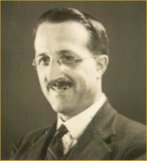
G.R.C. One has in mind in this series of readings to consider the assembly in the way Paul introduces it in five of his epistles.
- It will only be possible to look at one or two salient features in each; the aim being to get some idea of the constructive line of Paul’s work.
- For this we must begin with Thessalonians. He opens the epistle by saying
- “Paul and Silvanus and Timotheus”,
- making no reference to his apostleship. They are three brothers addressing themselves
- “to the assembly of Thessalonians in God the Father and the Lord Jesus Christ”.
- This salutation shows that Paul always had the assembly in his mind. It is to the assembly of the Thessalonians.
- But while he would indicate to them that the assembly was in his mind, and nothing less, the epistle deals with the family; it is what we might call a family epistle.
- And with fatherly affections and sympathy he refers to them as Thessalonians. We do not often refer to the brethren as Mancunians or Londoners, but the apostle was quite free to do so especially when his affections were moved.
- When his affections were specially moved towards the personnel of the assembly he thought of them in affectionate sympathy in their actual responsible setting in the city in which they lived.
- He says, “Our mouth is opened to you, Corinthians, our heart is expanded. Ye are not straightened in us”.
- He thus calls them Corinthians. When he is specially concerned about the Galatians he says,
- When his heart is moved towards the Philippians, because they alone had ministered to him in the early days, he says
- “know also ye, O Philippians, that … no assembly communicated anything to me in the way of giving and receiving save ye alone”, Philippians 4: 15.
- I think we should take account of the fact that family affections amongst the saints, which lead to affectionate, considerate, tender feelings for one another in our actual circumstances, are basic to the assembly.
- It is a question of real love – not simply lip service, but loving the saints as and where they are. And unless the assembly is built upon the basis of family affections its functioning will tend to be merely formal and official.
J.T.S. The apostle says
- “Knowing, brethren beloved by God, your election”.
- Is that to have its answer as we see it in the beloved apostle as he says
- “ye had become beloved of us”, chapter 2: 8?
G.R.C. The apostle, in a remarkable way, was representative of God the Father and the Lord Jesus Christ in this epistle. So much so that in chapter 2: 8, he says,
- “Thus, yearning over you, we had found our delight in having imparted to you not only the glad tidings of God, but our own lives also, because ye had become beloved of us”.
- They loved them so much that it would have been a delight to them to have laid down their lives for these saints.
J.T.S. He laid down His life for us,
- “and we ought for the brethren to lay down our lives”.
G.R.C. That is it. And so, if we view the saints at Thessalonica, they are very much like the treasure in the parable in Matthew 13. The treasure refers to the personnel of the assembly. It says in Matthew 13: 44,
- “The kingdom of the heavens is like a treasure hid in the field, which a man having found has hid, and for the joy of it goes and sells all whatever he has, and buys that field”.
- Having found the treasure he hides it. And so Paul and those with him would go to a town, such as Thessalonica, where they found the treasure, and they proceeded to hide it. And so he
says here,
- “the assembly of the Thessalonians in God the Father and the Lord Jesus Christ”.
- That is where he hid them. He did not leave them in the world; he left them, as it were, in God the Father and the Lord Jesus Christ.
- Their life was not in the world, nor in their businesses, nor even in their families, but their life was in God the Father and the Lord Jesus Christ.
- And yet, while hidden as to their life, it was from such a company that the word of the Lord sounded out. They were not hidden from the standpoint of testimony and the going out of the gospel.
- Though their life was hid, for they belonged to the family of God, the word of the Lord sounded out from them. I believe the power for evangelisation lies in this feature of the truth; namely warm and real family affections amongst the saints.
- “By this shaIl all know that ye are disciples of mine, if ye have love amongst yourselves”, John 13: 35.
- These believers were taught of God to love one another, and the apostle exhorts them to abound in it more and more. What will attract souls, what gives the background for the gospel, is a company in whom there are warm, living affections.
E.J.B. Is there something at all parallel with Bethany in John’s gospel? It is the family setting, the setting of love, and the Lord comes into it, and brings the Father into it. It is referred to as the viIlage of Mary and Martha, is it not?
G.R.C. And what a testimony there was in that village!
E.C.L. Going with those features you have mentioned, the expectatation of the coming of the Lord seems to be a great feature as well, so that there is an urgency as to how we conduct ourselves.
G.R.C. I think that. Viewed as Thessalonians, or Corinthians, or Philippians, what can our outlook be but the coming of the Lord?
- We are in these cities, but we are not of them. We are in them in testimony, we have to face the conditions in them, but our outlook is the Lord’s coming.
A.H. Do you think that this beautiful feature that you are referring to is materially affected by those who minister?
- It says “he went in among them”, and he ministered in such a way that the Spirit of God tells us that they joined themselves to Paul and Silas, as if the affection shining in them bound the saints to them.
- “And according to Paul’s custom he went in among them, and on three sabbath days reasoned with them from the scriptures, opening and laying down that the Christ must have suffered and risen up from among the dead, and that this is the Christ, Jesus whom I announce to you. And some of them believed, and joined themselves to Paul and Silas”, Acts 17: 2.
G.R.C. It shows how attractive the ministers were. They joined themselves to them.
P.H.H. Would the early mention of the Father in this attractive way,
- verse l, “in God the Father”,
- and verse 3, “before our God and Father”,
- tend to promote the family thought that you have in mind?
- Later on it says, verse 9, “How ye turned to God from idols to serve a living and true God”.
- Would the latter refer more to the official side, but God the Father help us in the family side?
G.R.C. That is very good. The family side underlies the service of God in the assembly, does it not? This is the beginning of service here; it is to serve as a bondman, to serve a living and true God. What we are in the family as children and sons, makes the place of bondmanship a delight.
A.H. Would our place in the Father’s love bring in the nurturing influence that would provide for life and growth and power for testimony?
G.R.C. It would. It was exemplified in Paul himself. He was a living expression of the Father.
E.J.H. Could you say that there were balanced affections in that he speaks of a nurse cherishing her own children, and a father exhorting them?
G.R.C. Quite so. “How as a father his own children, we used to exhort each one of you, and comfort and testify”, verse 11;
- and then, in verse 7, “but have been gentle in the midst of you, as a nurse would cherish her own children”.
- Are not those the features that should mark the minister; and, if they mark the minister, he would never think of leaving his children. A nurse would never think of leaving her own children.
- All children have inconsistencies, all children need admonition and reproof; but a nurse does not forsake her own children on account of these things.
- Nor would a father forsake his own children. A father would not forsake his own children because there were things about them of which he could not approve; he would exhort and comfort and testify,
- “that ye should walk worthy of God, who calls you to his own kingdom and glory”.
T.J.G. Does that include everyone? Verse 2, reads
- “We give thanks to God always for you all”.
- Then in verse 7, “ye became models”, as though he is referring to the individuals,
- and in chapter 2: 11 again, “We used to exhort each one of you”, and again
- “We give thanks to God always for you all”, chapter 1: 2.
- That is, none were left out of his reckoning, whether they were difficult or otherwise.
G.R.C. That is so. And speaking of what they were characteristically, he says in verse 6,
- “ye became our imitators, and of the Lord”.
- There may have been inconsistencies, but nevertheless they had become their imitators, and of the Lord. So much so that, according to verse 7, they became models themselves.
- Paul and those with him were models to them, and then they themselves became models.
T.J.G. It does not say ‘model’ as referring to the local company, but the personnel – “ye became models”.
G.R.C. And I think it is from the personnel that the word of the Lord sounds out.
J.McK. Would all this provide for certain attractive links in relation to any locality known intimately by the brethren? I was impressed by what you were saying as to the nurse not forsaking, and the father not forsaking. Should there not be local conditions which ensure this attractive care?
G.R.C. I think so. And it is evident from other epistles that Paul had this fatherly outlook on every locality. Whatever Paul built as a superstructure, he laid the truth of the family as a basis.
J.H. Does he not say, in writing to the Corinthians,
- “Not as chiding do I write these things to you, but as my beloved children I admonish you. For if ye should have ten thousand instructors in Christ, yet not many fathers; for in Christ Jesus I have begotten you through the glad tidings. I entreat you therefore, be my imitators”?
G.R.C. So that in spite of the bad behaviour of the Corinthians, he did not cease to exercise full fatherly affections towards them.
- There was no thought of forsaking them, but he would enter into the position, and admonish them as a father.
- In the second epistle they had heeded the admonition, and he says,
- “Our mouth is opened to you, Corinthians, our heart is expanded”.
- Thessalonian truth thus underlays the Corinthian position.
- It is the same as regards the Galatians, Paul acts as a mother towards them. They were behaving badly, they were going back to law; but he says,
- “O senseless Galatians, Who has bewitched you”.
- It is the way a mother would speak when her children were doing something very foolish. Later in the epistle he says,
- “My children, of whom I again travail in birth until Christ shall have been formed in you”.
P.H.H. Would Jacob, when he addressed his sons in Genesis 49 be on this line
- “Assemble yourselves, and hear, ye sons of Jacob, And listen to Israel your father”.
- He had some very drastic things to say. He says, for instance, to Reuben, “impetuous as the waters, thou shalt have no preeminence”, and so on.
- But does his fatherly approach enable him to hold the children together, without any thought of division or partisanship?
G.R.C. That is very helpful, because with some he could commend things more than with others; and to some he had to speak very drastically;
- and yet it was all done in such a manner, with such fatherly affection, that he did not set the brethren against each other.
J.H. Are the features of nursing and fatherhood seen in God Himself? It says in connection with Israel after the flesh,
- “For a time of about forty years he nursed them in the desert”, Acts 13: 18.
- And Moses in speaking to Jehovah says,
- “Thou sayest to me, Carry them in thy bosom, as the nursing father”, Numbers 11: 12.
G.R.C. I am sure that is right. God has created the affections of the father and of the mother, and, therefore, both must be in God Himself.
- Both are seen in the Lord Jesus Himself. He says in Matthew 23: 37,
- “How often would I have gathered thy children as a hen gathers her chicks under her wing”.
- That is a maternal idea. And so in Luke 13: 34,
- “How often would I have gathered thy children together, as a hen her brood under her wings, and ye would not”.
- Fatherhood is also seen clearly in the Lord. In John 13 He says,
- “Children, yet a little while I am with you”.
- And again in John 21 Peter says “I go to fish”. And he leads the others astray; but when the Lord greets them on the shore He says “Children”.
- They were erring children, but He says “Children”, using a word that expresses peculiar affection.
J.T.S. In speaking of inconsistencies as you have, it is with a view that we should not have our minds on the inconsistencies but be able rather to take account of the work of God in one another? Would that provide a lever for exhortation?
G.R.C. I am sure it would. The Lord Jesus, in His prayer in John 17, does not say a word about inconsistencies. How wonderful was His outlook upon those whom the Father had given Him!
- He had had to speak to Peter about denial, but in His prayer there is not a word about failure. And so in chapter 21, when He meets them,
- He says “Children, have ye anything to eat?”
- What a beautiful touch of fatherhood! He knew they had been on a wrong course, but had they anything to eat?
J.M. Would you say that this love of fatherhood goes to excess in its activity?
- In verse 8 he speaks not only of having imparted the glad tidings of God, but “our own lives also”.
- In speaking to the Corinthians he says the children should not lay up for the parents, but the parents for the children. And then not only would he spend, but be utterly spent for their souls.
G.R.C. It shows how like God Paul was! How like God the Father, and how like the Lord Jesus Christ!
- And I believe the way he moved personally amongst them gave them a great impression of the Father personally, and of the Lord Jesus personally, and of the Holy Spirit personally.
- All three Persons are referred to early in this epistle; there is
- “God the Father and the Lord Jesus Christ”, verse 1;
- in verse 5, “Our glad tidings were not with you in word only, but also in power, and in [the] Holy Spirit, and in much assurance”;
- and then, “and ye became our imitators, and of the Lord, having accepted the word in much tribulation with joy of [the] Holy Spirit”, verse 6.
J.A.C. Is Paul’s service the result of the way that he looked upon saints? I wondered if we were not challenged as to how we look upon the saints in our local settings, claiming them, as a nurse would her own, and likewise as a father, his own.
- Have we not to look upon the saints in that way, claiming them as our own, so that we may minister to them that which will encourage and hold them together?
G.R.C. It is good to note the way Paul moved amongst them. He says
- “our entering in which we had to you”.
- His ministry and his personality amongst them would give them a very real impression of the personality of the Father, and of the Son, and of the Holy Spirit. He speaks of
- “our God and Father himself, and our Lord Jesus”, chapter 3: 11;
- and again, “our Lord Jesus Christ himself, and our God and Father, who has loved us”, 2 Thessalonians 2: 16.
- In 1 Thessalonians 4 he says, “the Lord himself shall descend from heaven with a shout”,
- and he closes the second epistle with, “The Lord of peace himself give you peace continually in every way”.
J.D. Would the golden bells and the pomegranates on the high priest’s ephod bear on the sounding out of the word of the Lord from this company?
G.R.C. The oneness of the saints in love, as suggested in the pomegranates, is really the basis for the sounding out of the testimony. It is the living witness down here that the High Priest has gone in.
- The proof that Christ is in the presence of God, having accomplished redemption, is that the sound of the bells is heard.
G.H.S.P. Is it in your mind that our ability to function in any local assembly is the measure in which we are formed in love as coming under divine influence?
G.R.C. Yes; because I believe that these affections can stand the strain involved in working out body and assembly exercises.
- These affections need to be there basically. In other words, we need to be right in our relations as brethren before we can enter into the relationships connected with the body.
W.I. So Paul speaks of being models and imitators, I am thinking of the Lord’s own words in
John 15, when He says that we might love one another as He has loved us.
G.R.C. That is right. That was His commandment. So it says here
- “in God the Father and the Lord Jesus Christ”.
- The Lord Jesus Christ would link with the kingdom, and would imply obedience to the Lord. His commandment is that we should love one another as He has loved us, which brings in the truth of the family.
Ques. Does the close of the dispensation call specially for these features? I am thinking of the remnant in Malachi.
G.R.C. They “spoke often one to another”. Mutual affectionate relationships existed between them.
E.J.B. You have spoken of what will stand the strain. Is it interesting that in chapter 2: 14 he brings in the assemblies of God which are in Judea, as having been under the same strain.
G.R.C. In chapter 1 they became imitators of the ministers and of the Lord. This would mean that fatherly and motherly affections were now prevalent in that assembly. There was mutual care for one another, as the Lord says,
- “love one another as I have loved you”.
- It is in that passage that He calls His own “Children”, John 13: 33.
J.G.M. There is a reference to the mother in Isaiah 66: 13,
- “As one whom his mother comforteth, so will I comfort you; and ye shall be comforted in Jerusalem”.
G.R.C. He would comfort them in Jerusalem. It shows the link with the assembly. In chapter 1 it says
- “ye became our imitators, and of the Lord”, but in chapter 2,
- “ye, brethren, have become imitators of the assemblies of God which are in Judea in Christ Jesus”.
- That is, it is the assembly that is in mind; but family and brotherly relations are essential as a basis upon which the superstructure of the assembly, can be reared.
- It is these warm family affections which will stand the strain involved in body relations and in all that pertains to the assembly.
E.J.B. And indeed the strain itself can bring the saints closer together?
G.R.C. It will do. If these affections are there, the strain itself, instead of causing disintegration, will draw the saints all the closer together in sympathetic affections.
H.C. Would it raise the question of the kind of teaching that reaches us?
G.R.C. It raises the question both of the kind of teaching and of the kind of men who teach.
H.C. It says in chapter 4: 9 that they were taught of God to love one another.
G.R.C. That is the great thing, they were taught of God. God teaches us to love one another. He has given the lead. We love, because He first loved us.
- God has given the lead and the ministers should be a reflection of God in the lead He has given in love.
A.H. Paul says, “even as ye know what we were among you for your sakes”.
G.R.C. Exactly. So that the teaching is of the utmost importance, but what is of equal importance is what the teachers are themselves.
G.H.S.P. Mr. Taylor often used to speak of Acts 20 as the great love chapter. You get two Thessalonians specifically referred to as with Paul in that chapter and you get a strain when Eutychus falls but is recovered. And then at the end and at the beginning of the next chapter you get the wives and the children all down on the shore seeing Paul off. Is that the practical working out of what we are saying?
G.R.C. It is an excellent illustration. It is interesting in Acts that, when Paul comes on the scene, the appellation ‘brethren’ becomes prominent
- Early in Acts it is disciples; and that is not dropped, for disciples are stressed at Ephesus, the highest level.
- Then, after Paul’s conversion the word “saints” is introduced for the first time. Peter went down to the saints at Lydda and then at Joppa he presented the raised up Dorcas to the saints and widows.
- So that as Paul comes on the scene there is an elevation, the heavenly calling is coming into view.
- But then, as Paul develops his ministry, the title “brethren” becomes prominent. He goes to Philippi and he leaves the brethren there, Acts 16: 40; he goes to Thessalonica and Berea and in both places it is the brethren who sent him away – 17: 10 and 14; he goes to Corinth and takes leave of the brethren – 18: 18.
- In each place he left a company formed in family affections.
A.B. Would it have in mind a kind of constitution being formed, a brother being born for adversity. It is the mutual position. Brethren will stand together if they are true brethren.
G.R.C. Exactly. These relationships are formed in the Divine nature.
- Our natural family relations can be a great hindrance, but we are speaking of the family of God. John writes to
- “as many as received him, to them gave he the right to be children of God, to those that believe on his name; who have been born, not of blood”, that is the first thing, “nor of flesh’s will nor of man’s will, but of God”.
- It is fatal to be governed in any undue way by natural family links.
- Blood may govern us. There is a saying amongst men that blood is thicker than water. But when the truth is in question blood must not govern us at all. We must not be governed by links which are described merely as of blood and of flesh’s will and of man’s will. We have been born of God.
A.F.G. Would an appreciation of that lead to the conscious enjoyment of the hidden position “in God the Father”?
G.R.C. That is just what I had in mind. They were the assembly of the Thessalonians but they were not shining in the city, they were not conspicuous in civic affairs as Thessalonians, they were in God the Father, and the Lord Jesus Christ.
E.J.H. Is it not a sorrowful reflection that such an one as Barnabas should be turned aside for a while through a natural link, a link no nearer than a nephew, thus missing all the blessing in Europe?
G.R.C. It is very solemn that one such as Barnabas should, at that point, be governed by “blood”.
J.W. Could you tell us what you had in mind in the 12th of Romans as following on Thessalonians?
G.R.C. He begins the 12th of Romans with the word “brethren”. Romans is also an epistle which deals with the personnel of the assembly.
- Paul had never been there, so that he cannot speak of his personal love and service to them, but he opens the epistle by saying
- “to all that are in Rome beloved of God, saints by calling”; and then his appeal in chapter 12, “I beseech you therefore brethren”.
- He does not address his appeal to any others than those whom he can call brethren, because we shall not be able to answer to the truth of the body unless we have learnt first to be brethren. Family affections are the first essential.
H.C. You referred to Paul using the term “brethren”. Do you think he might have been affected by the first word he heard from a brother, Saul, brother”?
G.R.C. I think so.
F.C.E. You have spoken about natural links. Would this help us also not to form social links but to allow this feature of brethren, the family side, to govern us entirely?
G.R.C. I am sure that is right. Social links are most detrimental.
W.G.C. Is it striking that after Paul had rebuked Peter to the face Peter says
- “our beloved brother Paul”.
- Had that link stood the strain?
G.R.C. That is very good. These links stand the stress and strain of testimony.
P.H.H. Say a little more please about the brethren, as leading on to the thought of the body.
G.R.C. To divert from it for a moment but to lead up to it, no doubt you remember that Mr. Raven said it is only in the liberty of sonship that we can find our place in the body. Sonship is taught in the 8th of Romans,
- “as many as are led by the Spirit of God, they are sons of God”,
- and then the apostle brings in the exhortation of chapter 12.
- If we know our place as sons of God and children of God according to Romans 8, the Spirit bearing witness with our spirits that we are children of God, the corollary to that is that we are “brethren”.
- Paul does not bring forward the truth of the body until he can speak of them as brethren; and his teaching, if followed to this point, would constitute them truly brethren. So he says
- “I beseech you brethren, by the compassions of God, to present your bodies a living sacrifice, holy acceptable to God, which is your intelligent service”.
- Now you will notice that the sacrifice is regarded as one sacrifice. It does not say to present your bodies living sacrifices; there is no thought of independence here, but it is one great unified sacrifice, which the brethren present
- We are one in the Divine nature, one in heart and soul, and we are intelligent as to God’s mind that we are one body in Christ and are to function as such; and therefore it is our intelligent service to present our bodies a living sacrifice.
J.McK. You mean it has what is corporate in view?
G.R.C. We are not intelligent if we do not understand that. We present our bodies a living sacrifice, one great heave offering, like Exodus 25. It speaks of that as Jehovah’s heave offering. The willing hearted brought the material for the tabernacle. It was all in view of what was corporate.
J.T.S. Was that in the mind of the apostle when he spoke of being minister of Christ Jesus to the nations, carrying on as a sacrificial service the message of glad tidings of God in order that the offering up of the nations might be acceptable sanctified by the Holy Spirit?
G.R.C. Quite so.
A.F. Did not Mr. Taylor stress in Glasgow the importance of our bodies in view of the working out of the truth of the body of Christ?
G.R.C. Exactly, and that is what is in view here. It is our intelligent service in view of our proving what is the good and acceptable and perfect will of God.
- Now the first element of the will of God is that we should understand that we being many are one body in Christ, and that we should each fulfill our function in that corporate vessel.
P.H.H. That remark about the heave offering encourages me to ask about the boards of the tabernacle standing up, and the expression later that the tabernacle may be one.
- Does that help in relation to our fitting together, so many individuals, but all part of the heave offering, to make a unified functioning vessel for God?
G.R.C. That helps very much. Chapter 8 of Romans shows how the boards, 10 cubits high standing up, are formed.
- The sockets of silver are in chapter 3, “the redemption that is in Christ Jesus”.
- The epistle shows how the boards are formed ten cubits high and standing up; but now in chapter 12 they are to be set together.
P.H.H. The feature of strain is there, too, on the corners.
G.R.C. Quite so; but if we are truly brethren, if family affections are present, we shall not have difficulty in fitting in with our brethren in the one body.
- In verse 3, “I say through the grace which has been given to me to every one that is among you not to have high thoughts but to think so as to be wise as God has dealt to each a measure of faith”.
- I think the affections we have been referring to would lead us to look upon one another with great pleasure and delight, like Paul who would gladly have laid down his life for them, and thus we shall think wisely;
- we shall be looking upon our brethren to see what God has dealt to them rather than looking at ourselves to see what God has dealt to us.
- The point is the brethren are so beautiful, they are of such value, and the great point here is that God has dealt to each a measure of faith.
- This is faith for action in the body. God has dealt to each one of my brethren a measure of faith which no other has, for action in the body.
- Each one has a place in the body and each one has faith from God to fill that place and to act in it, and I would like to encourage each one of them to do it.
- Brotherly relations would lead us to make way for each other, so that there would be no friction in the working out of this great thought of God.
J.A.C. Would the compassions of God help us on this line?
- “I beseech you therefore brethren, by the compassions of God”.
- Would they not help us to appreciate one another as brethren?
G.R.C. I think they would, and especially if we understand that those compassions are sovereign:
- “I will have mercy upon whom I will have mercy, And I will have compassion upon whom I will have compassion”.
G.H.S.P. Even in relation to Israel in chapter 11, although they are not in the pathway, they are still beloved for the Father’s sake. Would that not throw light on the fatherly attitude of Paul in relation to the work of God wherever it was?
G.R.C. I am sure it does.
Page Top Reading 1 Top
| READING 2 |
|---|
The Assembly in Paul's Epistles (2)
1 Corinthians 1: 1-3, 10; 3: 16-17, 21-23; 12: 7-13; 14: 23-25
Memorials 16: 48-66
|
|---|
G.R.C. We are now approaching what is corporate. We have thought of the treasure hid in the field, the personnel of the assembly, but all is in view of one pearl of great value.
- I think it is well to see that the enemy’s attack is always upon what is most precious to God. Satan’s attack is firstly against the Person of Christ.
- He would, if he could, cause the saints to confine their thoughts of Christ to what He is as Man on our side and thus to fail to give Him the honours that are His due;
- that attack has led some to find fault with the worship of God as God; there has been a lack of readiness to honour the Son even as they honour the Father.
- But alongside of that there is always unremitting attack upon the assembly. And when one speaks of attack one is not in any way speaking in the sense of accusation – our struggle is not against blood and flesh.
- We are not against any man, we are for man whoever they are, and the best way to help those who may have come under darkening influence is to show how Satan is attacking.
- He attacks the truth of the assembly, and attacks the assembly itself by bringing in independency; independency of thought, independency of service and so on.
- There is a failure to merge, and, apart from merging we shall never have the features of the pearl of great value. God and Christ thus lose the best.
- And these two attacks are linked up, because, nothing will help us more to merge than an appreciation of the true greatness of Christ
- No one is to boast in men, least of all in oneself, as this epistle indicates. There is only one Man. We are espoused to one Man to be presented a chaste virgin to Christ.
- An appreciation of the true greatness of Christ greatly helps us in the merging, and frees us from independency.
- And on the other hand, if we merge, and enter into the blessedness of what the assembly is, that also will fortify us against any attack on Christ, because none appreciate Christ like the assembly.
- The assembly as such has the fullest appreciation of Christ of any creature, both in regard of His manhood and His deity. She never surrenders any feature of Christ’s glory.
- This epistle would guard us against independency.
- What we have had before us already – family affections – were missing at Corinth. If family affections are missing we shall try to take up assembly truth in official lines, without vitality, whereas it is the assembly of the living God.
- They were taking up matters in a kind of official way at Corinth, but there was nothing for God in it. Family affections were lacking; so much so that Paul has to write a whole chapter on love in the abstract, because love was not there in the concrete. The Thessalonian feature was lacking.
- And unless love is with us we cannot proceed to apprehend the glory and blessedness of the assembly of God. So Paul opens the epistle with
- “Paul, a called apostle of Jesus Christ, by God’s will, and Sosthenes the brother”.
- He brings in the brother to shew that Thessalonian affections are needed in the assembly of God in Corinth.
- Romans 12 shows us that if we are to have any practical apprehension of the assembly, and to function in it, we must first be right in our relations with one another, each one members one of another.
- We are to have affectionate respect for one another because God has dealt to each a measure of faith, and we are to encourage one another to act in that measure of faith, and thus fill out our function in the body.
- The first thing is to be right with one another. That is fundamental to the assembly;
- “each one, members one of the other”,
- with mutual respect, helping one another to fill out our place.
Corinthians opens with the corporate idea. Romans leads up to it but this epistle opens with it, and it shows us that
- the assembly of God in a place is no less than God’s shrine in that place, God’s temple. It is the very shrine of God in that city.
- And therefore, while, in the Thessalonian epistle the word of the Lord sounds out from them, that is from the family position, because it is the family position which will attract souls, yet the word of the Lord sounds out in order to bring souls in, and that is the point in Corinth.
- There is something to bring them into, namely [the] temple of God.
- If there are assembly conditions amongst us there is something to bring them into, and it speaks in this epistle about a simple person or an unbeliever coming in. And what do they find when they come in?
- “God is indeed amongst you”.
- They find themselves in the shrine of God.
W.I. Would the Lord’s own word to the apostle, “Why persecutest thou me?” bring all the love out that we see in his life afterwards?
G.R.C. That gave character to the whole of Paul’s life and service. He was concerned for evermore about the “Me”, Christ’s body.
J.McK. When the unbeliever or simple person comes in, does he come under the profound effect of what is corporate. “He is convicted of all”. Would it be right to say that the whole vessel entered into the power of the occasion?
G.R.C. You mean he feels that everybody there can see him through and through. He is not in a congregation, he is in the assembly of God in which every person has a living part.
J.McK. That is how I would feel it to operate. If all prophesy, the element of prophecy is running through the whole vessel, is it not? And God’s mind is expressed vessel-wise.
G.R.C. Very good.
E.J.H. God being there, God fastens that judgment upon the man. The brethren do not say to him ‘Do you think God is here?’. They maintain the conditions that are proper to the shrine; and God steps in, so to speak, reverently, to convict the man that that is so.
G.R.C. And the remarkable thing is that he immediately becomes a worshipper. The word of the Lord sounds out from us with a view to saving men’s souls;
- but when they come in, if things are right, in their very first contact with God in His shrine, they worship, showing that the service of God is always in mind.
- This reminds us, does it not, of the woman in John 4. As soon as she is convicted by the prophetic word, she speaks about worship.
- Here the man actually does it. When he comes into the assembly
- “falling upon his face, he will do homage to God”.
- And then he reports: but he has already done homage to God before he reports anything.
Rem. The man in John 9 becomes a worshipper, immediately.
G.R.C. The effect of coming vitally into touch with the living God in His assembly, or with the Son of the living God, or with the Spirit of God is that a man becomes a worshipper.
- The full fruit, in that sense, is secured immediately, as the Lord says,
- “Lift up your eyes and behold the fields, for they are already white to harvest”.
S.C. This stresses the whole assembly come together into one place.
G.R.C. It would show the importance of making way for simple souls and unbelievers to come to our ministry meetings and our readings.
P.H.H. We have spoken a good deal about love among the brethren on the family side, but what you are saying now about the assembly, and the exercise of prophecy, and the whole assembly together in one place, really brings in the importance of the truth, does it not?
- It says in Thessalonians that certain ones had not received the love of the truth. 2 Thessalonians 2: 10.
G.R.C. “Because they had not received the love of the truth that they might be saved”. Then he says in verse 13
- “but we ought to give thanks to God always for you, brethren beloved of the Lord, that God has chosen you from the beginning for salvation in sanctification of the Spirit and belief of the truth”.
- What were you thinking about that?
P.H.H. I was thinking that some difficulties have arisen because the whole fabric of the truth has not been received. Persons have chosen what they would believe. You spoke just now about some having a difficulty about the worship of God.
- You could hardly have prophetic ministry unless behind it and with it there was the whole truth. Do you think therefore that the love which is proper to the family of God must be accompanied by the love of the truth?
G.R.C. Very good. The assembly is the pillar and base of the truth.
- Christ is the truth. The whole truth as to God is set out in Him, because the fulness dwells in Him. All that can be known of the Father and the Son and the Spirit comes to us in and through Christ.
- But then, the Spirit is the truth. And I would think the fact that the Spirit is the truth down here must involve, according to Paul’s ministry, the truth of the assembly.
- We are to love one another, but we are united in the love of the truth.
T.J.G. Does not John in his second and third epistles stress those two great features of love and truth, and puts them together in interesting combination? For instance 2 John: l.
- “Whom I love in truth, and not I only but also all who have known the truth, for the truth’s sake which abides in us”.
- Then in 3 John 3 and 4 as to holding fast the truth and walking in truth, also “fellow-workers with the truth”, verse 8.
G.R.C. Both those epistles begin “whom I love in truth”, a very great matter.
- But then, if the assembly of God in a city or place is to function, so that there is a sphere where a person can come in and be convicted and become a worshipper, and go out with a report that God is indeed among you, there is no room for independency.
- The moment you have a person on independent lines the truth of this is marred.
E.C.L. So you would expect the truth to come out clearly when the saints are gathered in the light of the temple, in a way you could not receive it in your own home.
- Some say they wait on the Lord to get light; and they wait a long time. The Lord does not answer them because the truth has come out in the assembly, in the light of the temple.
G.R.C. The lampstand is not in our own homes. It is in its own place.
- According to Zechariah, the lampstand and its seven lamps show that the full light of God is available in a day of recovery, but in its own setting.
- To get the gain of the lampstand in Zechariah’s day they had to build the house. That is, they had to bring in the setting in which the lampstand would become available to them, and the light from it.
- Therefore we must have assembly conditions, moving together in oneness assemblywise, if we are to know the gain of the lampstand.
J.T.S. In Acts 18: 11 it says that Paul was “teaching among them the word of God”. Would that bear on this?
G.R.C. The apostle delights to use the word “among”. So that gift is not independent of the temple. As you say, he taught the word of God among them.
W.McI. Is this appeal by “the name of our Lord Jesus Christ” the great thing set over against independency?
G.R.C. It is. The name of our Lord Jesus Christ is the name upon which we call, the name to which we gather together; it is the great testimonial name. And, as you say, it would guard against independency.
E.B.S. Would you say a word as to why he starts with “a called apostle” in this epistle. We had in the scripture in Thessalonians that they might have been a charge as Christ’s apostles; but he seems to refuse that there, in view of the family side. But here he starts with it.
G.R.C. It is “a called apostle of Jesus Christ, by God’s will”.
- Is he not asserting his authority in connection with the establishment of the assembly of God?
E.B.S. And without that, the truth cannot be rightly held, can it?
G.R.C. It cannot. The establishment of the assembly of God, such a dignified vessel, required apostolic authority from God.
E.B.S. The family side would be one side, but the authority side, which he stresses here is essential.
G.R.C. Yes. And we have to see that the first element of God’s will stands related to the body. We are often vague as to what God’s will is.
- He is a called apostle of Jesus Christ by God’s will; and the first element of God’s will, as disclosed in the ministry of Paul is that, according to Romans 12, to find our place in the body. It is more important than any other department of life.
- We are to find our place in the body, and help our brethren to find their places in the body, and to function in it – each one members one of another
- And thus the assembly is established in a place, the vessel which can be called the assembly of God. It could not be thus described apart from the fact that
- “we, being many, are one body in Christ, and each one members one of the other”.
G.H.S.P. Would the upper room in Acts 1 be like the hiding of the personnel of the assembly, but the house in Acts 2 like the sphere where the light could be located and persons brought into it?
G.R.C. That is very good. There were the personnel in Acts 1, it speaks of the crowd of names, everyone was precious; it was like the treasure, hidden. What a treasure it was! The Lord bought the field in order to have it.
- But then, in Acts 2 the Spirit comes down, and the body is formed. The sound filled all the house where they were sitting, and they were all filled and they began to speak as the spirit gave them to speak forth.
- Thus, as you say, the house was set up here for persons to be brought into. The word sounded out and persons were brought in. The Lord added daily.
W.S.S. And they were all saying the same thing according to verse 10.
G.R.C. That is the great thing. There is no room for independency.
W.S.S. I am thinking how the writers of the New Testament, looked at together, illustrate this great principle; everyone had a different impression, but all merged, they were all complementary one to the other. They all formed part of one whole, did they not?
G.R.C. Quite so. Unity does not mean that there is any lack of variety. There is great variety just as there is in the case of the members of our human bodies. No member can do the work of another, each is equipped for action in its own particular sphere, but they all merge in perfect unity.
W.D. Referring to 1 Corinthians 1: 2
- “with all that in every place call on the name of our Lord Jesus Christ, both theirs and ours”.
- Does that emphasise that there can be no independency?
G.R.C. That means that there is not only no room for independency within a local company, but that there is no room for independency between one local company and another. All the local companies on earth, if preserved under the control of the Holy Spirit, will be moving together.
A.G.B. Is the apostle anxious that even as to his own apostleship and service it is not an independent matter? He is “Called apostle of Jesus Christ by God’s will”.
G.R.C. I am sure that is right. There was nothing independent about the apostle. “A called apostle of Jesus Christ by God’s will”.
P.H.H. You are referring to any independency or lack of unity among the companies, founding it, I suppose, on verse 2,
- “with all that in every place call on the name of our Lord Jesus Christ, both theirs and ours”.
- It is not only regulation for the assembly of God in Corinth, but likewise for every place where there is a breaking of bread?
G.R.C. Everything the apostle sets out in this epistle is intended to govern
- “all that in every place call on the name of our Lord Jesus Christ, both theirs and ours”.
- So that, while from the standpoint of the family of God you may find variety in different places, for there were Thessalonians, Corinthians, Philippians, and so on, and distinctive features of the work of God might appear in each company, when you come to the idea of the assembly of God in a place, there is no divergence.
- Viewed from this standpoint, what you would find in every place would be exactly the same, because in every place it is God’s assembly, and the ordering of God’s assembly and God’s house must be the same everywhere.
E.J.H. Would you say therefore that every local company should be descriptive of one pearl?
G.R.C. I believe that, in whatever place Paul laboured, he had in mind to leave behind him, in character, the one pearl of great value.
E.J.B. I think we could do with more help as to the expression
- Corinthians does not present it as something invisible in a place, as composed of all believers, but rather something which is functioning;
- so that discipline, for example, is exercised in chapter 5, the Lord’s Supper is celebrated in chapter 11, the prophetic meeting described in chapter 14, and letters of commendation referred to in the second epistle.
- Could you help as to the force of this expression, and particularly its bearing at the present time?
G.R.C. Does it not refer to the assembly, not viewed in purpose as in Ephesians, but as set here at the present time in testimony?
- And the way it is set here in testimony is in local companies, all patterned after the universal. In the power of one Spirit we have all been baptised into one body; that is universal.
- No man can grant us membership of the body. It is God’s prerogative alone to do so. He does it by causing His Spirit to dwell in us, and thus we become members of the great universal vessel on earth at the present time, of which it is said,
- “in the power of one Spirit we” – that is the universal we – “have all been baptised into one body”.
- Scripture gives us light as to what is proper to that great universal body. For instance, the tabernacle system gives us light from one standpoint, and there are other types which give us light in other ways, as to what is proper to this great vessel;
- and we bring the light of what is proper to it into our local position, and there work out its universal principles, and carry out its functions in our locality.
T.J.G. Because of the breakdown, we cannot say we are the assembly of God, but there is a visible expression of the assembly’s working in those walking in the path of the truth?
G.R.C. Quite so. God has operated, and we have arrived at this position by individually naming the name of the Lord, and withdrawing from iniquity;
- and, as having withdrawn from iniquity, we follow righteousness, faith, love, peace with those who call on the Lord out of a pure heart. 2 Timothy 2.
- And surely all who call on the Lord out of a pure heart will be governed by His commandment as set out in this epistle.
- We call on Him out of a pure heart, and we regard every feature proper to the assembly of God as binding upon us, as it really is. Few may be available, but the Lord says,
- “Where two or three are gathered together to my name, there am I in the midst of them”.
- The whole matter is thus secure, the assembly in principle is functioning. Not that we claim to be the assembly, but, if the Lord is there, what is proper to the assembly is carried out.
G.H.S.P. According to Acts 18 there were many people in Corinth when Paul first went there, but the assembly material is brought to light through the teaching of the word of God.
- Does the authoritative teaching of the word of God remain because the Spirit is here?
G.R.C. I am sure that is right. He was there 18 months. It shows that it takes time for the saints to be merged, and to understand their place in the body, and thus to function as God’s temple, God’s assembly in a place.
K.S. The charge against Paul at Corinth was that he persuaded men to worship God contrary to the law.
G.R.C. That shows that the worship of God is always in mind.
- Perhaps we tend to limit the idea of the temple to enquiry, but enquiry is not the only feature. It is a most important one. It stands related to the lampstand – the shining of the light – and also to the oracle.
- In the house Solomon built, the most holy place is called the oracle. Nothing can be greater than God speaking.
- But then there is the response. Every whit utters glory. The temple is the shrine; God Himself is there. He speaks to us and we speak to Him in responsive worship and praise.
P.H.H. Does 2 Corinthians 6: 16 help us as to that point,
- “for ye are the living God’s temple; according as God has said, I will dwell among them, and walk among them; and I will be their God, they shall be to me a people”.
- That is wider than enquiry, is it not? And the Psalm says that everything in the temple utters glory.
G.R.C. Exactly. So that Isaiah sees the Lord sitting upon a throne high and lifted up, and His train filled the temple, but the first thing is worship.
- “Holy, holy, holy is Jehovah of hosts; the whole earth is full of his glory!”
- Every whit utters glory. We touch temple service at the Lord’s Supper. As the service proceeds we find ourselves in the sanctuary, in the shrine, rendering to God what is due to Him.
- “To him be glory in the assembly in Christ Jesus”.
M.S. Is the matter of divisions seen at its worst in this setting, because he alludes to it in chapter 11?
G.R.C. Quite so. Independency is an easy path for the flesh; but the pearl is not secured apart from suffering.
- Persons on independent lines find for themselves a way of escape from the sufferings for the flesh involved in learning to merge, and to function bodywise; and to be in a sphere where man as such has no place at all, where no one boasts in men.
- The assembly of God is a place where man, as such, has no entrance, neither his mind nor his will nor his ideas. He has no place there.
J.H. The anointing oil was not to be poured on flesh.
G.R.C. Very good. The assembly of God is a sphere where God alone has right of way; that is, God and the Lord and the Spirit; man, as such, has no entrance there. Men are there, but not man after the flesh.
A.H. Is it important that the word of God that he spoke among them for 18 months was nothing other than Jesus Christ and Him crucified? And has the apostle, in emphasising that, in mind to clear the ground to make room for God’s wisdom in a mystery?
G.R.C. So that chapters 1 and 2 of this epistle present, as it were, the doorway into the assembly. It is by way of the cross, Jesus Christ and Him crucified, and then by the recognition of the Spirit as the only power for right thought, let alone right action.
—.D. Is it significant that in the case of Sardis the Lord is presented as having the seven spirits of God and the seven stars?
G.R.C. Understanding the Lord in that way is the basis of recovery at the present time. It is because Sardis, as a church, failed to appreciate the Lord in that aspect, that they had a name to live and were dead.
- But an appreciation of the Lord as presented to Sardis would bring about Philadelphian conditions.
- He has the seven spirits of God; that is the lampstand is available to us, and thus the full light of God without diminution, if only there are right conditions on our side, because the Spirit is still here.
- On the other hand, He has the seven stars, which means that local responsibility can still be exercised.
- These two points cover Corinthian ground. The Spirit is available in fulness, so that the full light of God is available, and, on the other hand, local responsibility can still be carried out. We prove that the Lord still has the seven stars.
E.J.H. Has not Mr. Taylor helpfully said in regard to 1 Corinthians 14 that this was not necessarily the kind of meeting that the Corinthians were having,
- but it was the kind of meeting they would have, and we would have, if we maintained the conditions that are set out for us; and why should we not go in for the best?
P.H.H. Does that make the temple a very attractive place; that is, as shutting out the flesh by the word of the cross, and giving full place for the Spirit, according to chapter 2?
G.R.C. Indeed it does. The temple is the most delightful place that could be conceived.
- The pure light of God is shining, in the power of the Holy Spirit; He is maintaining a pure ministry of Christ in all His glory, and illuminating, not only the candlestick itself, which is a type of Christ,
- but the pure table, another type of Christ, and the shewbread on it, thus illuminating the saints in their beauty as the bread of the presence delightful to God, and illuminating the boards and the curtains.
- You can understand, therefore, that whenever the high priest trimmed the lampstand, he put incense on the altar. As the light bursts forth and illuminates the marvellous surroundings in God’s temple, there must be incense ascending from the golden altar, the outgoings of our hearts in worship.
- And then, of course, the greatest thing of all in God’s temple is that God Himself is there in all His greatness and blessedness, the Father, the Son and the Holy Spirit.
J.B.S. Which meetings would you connect the thought of the temple with?
G.R.C. I would not shut out any meeting. In the Lord’s day morning meeting it functions at the highest level.
- Prophecy goes on there in the service of song. They prophesied with the harp, lute and cymbal – see 1 Chronicles 25. Heman was the king’s seer in the words of God to exalt His power.
- The morning meeting is prophetic in the highest degree, not as bearing on our state, but in a positive way, as bringing in the mind of God in such a manner that the saints are carried into the realm of purpose in their spirits and affections.
- If the service of God had not that effect, the worship of God would not be what it should be.
- It is because of the prophetic nature of the service of song, and the powerful way, in which, by the Spirit, it carries us in our spirits into the full light and blessedness of God Himself, and of the assembly according to purpose, that worship, worthy of God, is brought to pass. It is all temple service.
- And if you think of the prayer meeting, surely both altars should be functioning there – see Psalm 141: 2.
- Then we rightly connect the ministry meeting with the temple, for we come together to listen to God’s voice; and the reading meeting is for enquiry and seeking light from God.
- They are different features of the temple. But I would not like to come together at any time without having some sense that I am coming into God’s shrine and that God Himself is there. I would not want to be there otherwise.
- I would love to be there, of course, to see the brethren, but the great point in the temple setting is that God is there.
W.S.S. Do we need this question,
- “Do ye not know that ye are the temple of God, and that the Spirit of God dwells in you?”.
- I was thinking of the importance of it. Things were very feeble at Corinth when that question was asked; and they are very feeble today, but nothing can change the fact, can it?
G.R.C. He does not say ‘Do you not know that you are temple of God when you come together to read the scriptures’; or ‘Do you not know that you are temple of God when you come together for the ministry meeting?’. They were always that.
A.B. Does it involve God’s pleasure according to 2 Corinthians 6: 16 where he says
- “ye are the living God’s temple, according as God has said, I will dwell among them, and walk among them; and I will be their God and they shall be to me a people”.
- It suggests a certain blessed relationship on God’s part with His people, and His pleasure in them, and His confiding in them, and finding communion of thought with them.
G.R.C. And does it not make it all the more dreadful in the light of these things that anyone should be on independent lines?
- Think of robbing God of this! Think of robbing the saints of this.
- One person on independent lines is a discredit to the truth and endangers the working out of the truth in a locality. It is a most solemn thing.
- Independency is a dreadful thing, a dreadful sin, in the light of God’s thoughts.
P.H.H. Would it be opportune to draw attention to Mr. Darby’s word on ecclesiastical independency, which he describes as wickedness and as giving entry to every kind of sin? I thought the solemnity of your word, in saying it is a dreadful sin, might just put it upon our hearts and consciences.
G.R.C. Brethren justify themselves, alas, sometimes, for being on independent lines on the ground of their conscience.
- But the greatest matter to have a conscience about is independency itself.
- We may not, at first sight, regard independency as serious. Why should not a man have his own opinion? Why should not a man go his own way in service? It may not seem a very bad thing.
- But it is in the light of what we are saying now that you can see what a dreadful sin it is, because it is a direct attack on the truth of the assembly as Christ’s body and God’s temple.
- It would nullify it; it would hinder all practical expression of it, thus depriving God of the best, of that which is dearest to His heart; depriving Him, too, of what is best in testimony for men, and thus depriving men and depriving the saints.
- And so the apostle brings in what would save us from it; first, the name of our Lord Jesus Christ. What an appeal!
- Then he stresses throughout the epistle the idea of food and drink. This would help us against independency. The whole assembly of Israel fed on the passover; and then, in the wilderness, they
- “all ate the same spiritual food, and all drank the same spiritual drink, for they drank of a spiritual rock which followed them: (now the rock was the Christ)”.
- There is no independency in those matters. We all must eat the passover, and keep the feast of unleavened bread. We all eat the same spiritual food and drink the same spiritual drink.
- Then in chapter 10: 17 it says “We, being many, are one loaf, one body; for we all partake of that one loaf”.
- There is no independency there. And the power for all this is in the Spirit, which we come to in chapter 12. The power to appropriate these foods, and the power to move together in the truth lies in the Spirit – One Spirit – there is no independency there.
- “In the power of one Spirit we have all been baptised into one body”.
- And though the manifestations of the Spirit are various, it is the same Spirit.
- “All these things operate the one and the same Spirit, dividing to each in particular according as he pleases”, chapter 12: 4.
- There is no thought of independency at all.
G.H.S.P. And independency with the children of Israel would have meant death in the wilderness. There was no alternative.
G.R.C. And that is why so many of them died in the wilderness, alas.
- You can see how dependent we are on the Spirit. Above all, let us, dear brethren, learn to depend on the Spirit for thought. It is in thought that we begin to go wrong.
- We are not to think from ourselves. We are to have, by the Spirit, the mind of Christ, and thus to think as Christ thinks; and thus to be
- “perfectly united in the same mind and in the same opinion”, chapter 1: 10.
- Perfectly united. There is no thought of independency.
- And then the manna fell on the dew, another reference to the Spirit. It is by the Spirit we can appreciate the manna; and then they drank of the spiritual rock that followed them and the rock was Christ. Christ follows us with spiritual ministry – again a reference to the Spirit. Let us follow up the ministry.
- And then the Lord’s Supper, how unifying it is! We all partake of that one bread. All these things are to save us from independency in order that God might have what His heart is set upon.
P.G. When you speak of independency, do you speak of independency of the Lord?
G.R.C. It must begin there, and that is why Paul says
- “in the name of our Lord Jesus Christ”, chapter 1: 10.
The Lord would never lead us to have different minds and different opinions. It must also mean independency of the Spirit. There is one Spirit, and it is a question of the unity of the Spirit.
- But then, there are the brethren; are we prepared to merge? If we are not prepared to merge there is an element of self somewhere.
- In the will of God, He has given us each a place in the body. There is no room for our wills at all. If I am prepared to merge I shall find the place that God has given me in the body.
I.H. If we are not prepared to merge is it not a slight on the Spirit?
- “In the power of one Spirit we have all been baptised”.
- Does it not go on to indicate the satisfaction that the oneness of the Spirit brings in? chapter 12: 13.
G.R.C. I am sure that is right, and that is why I feel that, while Romans 12 deals with our relations one with another, an outstanding point in this epistle is our personal relations with the Spirit.
- They are brought out in a remarkable way in chapter 12: 4,
- “There are distinctions of gifts, but the same Spirit”.
- Then in verse 7, “But to each the manifestation of the Spirit is given for profit”.
- Then verse 8, “To one, by the Spirit is given the word of wisdom; and to another the word of knowledge, according to the same Spirit; and to a different one faith, in the power of the same Spirit”;
- and the end of verse 9, “in the power of the same Spirit”.
- Then in verse 11, “all these things operates the one and the same Spirit, dividing to each in particular according as he pleases”.
- Finally “in the power of one Spirit we all have been baptised into one body … and have all been given to drink of one Spirit”.
- So I cannot help feeling that a cardinal point in this epistle is our relations with the Spirit.
- Let us be right in our relations with one another – that must come first, and then let us cultivate sensitive relations with the Holy Spirit in the assembly judgment so that we are ready and available at all times for His manifestations.
- That is how the light shines in the temple. The light shines in the temple as every member of the body is ready for manifestations of the Spirit. We do not know whom the manifestation is coming through.
A.H. Do you think that chapter 12: 11 brings in a touch of lordship as to the Spirit? Is that not a side that we do well to think more about?
G.R.C. The verb there “as he pleases” signifies sovereign will. It is the only time that verb is used relative to the Spirit. It is used once in scripture relative to Each Person of the Godhead.
- But this is the verse where it is used relative to the Spirit Himself. It implies His Deity, and that is what you have in mind?
A.H. I was thinking that. It would produce in our souls a real deference to Him.
G.R.C. And that is what we need, a real deference to the Spirit when we are gathered together templewise.
- The truth of the body underlies that of the temple.
- The Lord Jesus spoke of His own body as the temple when He was here, and now it is the saints as Christ’s body who form the temple; because as we are available bodywise, the light shines. There are manifestations of the Spirit.
W.S.S. What about the matter of drinking? We have all been given to drink. Is it a question of whether or not we are drinking?
G.R.C. I think we can all say that when we are merged bodywise we find real satisfaction. Independency leads to a dry and thirsty land.
Page Top Reading 2 Top
| READING 3 |
|---|
The Assembly in Paul's Epistles (3)
Colossians 1:1-4, 12-18, 24-29; 2: 1-10, 16-19; 3: 15-16
Memorials 16: 67-84
|
|---|
G.R.C. We have before us in these readings the truth of the assembly as presented in five of Paul’s epistles, showing the constructive line on which he worked.
We commenced with Thessalonians because that is fundamental. He writes to the assembly of the Thessalonians in God the Father and the Lord Jesus Christ. That is to say, while he had the assembly before him, he based matters upon the family.
- The assembly of the Thessalonians suggests the personnel who form the assembly, and he calls them Thessalonians. We noticed that at times, when he was governed by deep feelings, he addressed the saints in that way, namely as Thessalonians, Corinthians, Galatians and Philippians.
- His love went out for them as viewed thus in their local settings. They were like the treasure, which, when a man found, he hid.
- And so, while they were Thessalonians, their life was not in the city; they were in God the Father and the Lord Jesus Christ; and yet it is from that setting that the testimony sounded out.
- Their life was hidden, but they were not hidden. The word of the Lord sounded out from them, because it is a warmth of love amongst the saints as the family of God, which attracts souls, and which forms the basis of the gospel testimony
- It is upon that basis Paul would rear, as it were, the assembly structure, and he writes to the Corinthians as the assembly of God in Corinth.
- In that epistle he does not refer to the word of the Lord sounding out from them, he presents the assembly of God as the very shrine of God in Corinth, and it is a question
of people coming in – if a simple person or unbeliever enter in, they find that God is there.
- And that led us to dwell on the great sin that marked the brethren at Corinth, the sin of independency; and what a dreadful sin that is, because whether those who practise it realise it or not, it is a direct attack upon the assembly of God.
- It would destroy any expression of God’s assembly in a place. And so he exhorts them to say the same thing and to be perfectly united in the same mind and in the same opinion.
Colossians supposes that the truth of Thessalonians and Corinthians is known. Paul addresses the saints as the holy and faithful brethren in Christ which are in Colosse.
- That implies that the family links of Thessalonians are known and held in holiness and faithfulness on the true level, in Christ, which shuts out all natural family influences, and social influences.
- Then in chapter 2, verse 5, he says
- “for if indeed in the flesh I am absent, yet I am with you in spirit, rejoicing and seeing your order, and the firmness of your faith in Christ”.
- That verse shows that they were in the gain of Corinthians. The order proper to the assembly of God was maintained in Colosse, and the apostle rejoiced in it.
- And so he now brings in a further step in his constructive work, namely, the truth as to the Head. He refers to the body, the assembly, as though that truth was well known to them; but he says of Christ,
- “He is the Head of the body, the assembly”.
- He does not need to pause to tell them what the body is, as he does to the Corinthians, but he speaks of the Head, and our relations with the Head.
- We thought, in our first reading, of our relations with one another; that is basic. Then in the second reading, the need of sensitive relations with the Spirit, Who manifests Himself through the members of the body, and distributes as He pleases.
- But those matters being settled, we are ready for introduction to the Head. After elaborating upon His greatness, he says, He is the Head of the body, the assembly.
- And so this epistle brings in what is mysterious.
- The idea of the shrine of God in a place was not mysterious. People were accustomed to heathen shrines. The idea of manifestations of the Spirit was not something that would appear strange, because they were used to demon manifestations; now there were manifestations of the Spirit of God. Those things would be readily understood by souls who received the gospel.
- But when we come to the idea of Christ as Head, we come to what is mysterious.
- He says “to whom God would make known what are the riches of the glory of this mystery among the nations, which is Christ in you”, or among you, “the hope of glory”.
- The general thought in Corinthians is that God is among you. It is the same preposition here, Christ in you, or among you, the hope of glory.
- hose who are in the gain of Thessalonians and Corinthians provide a sphere where Christ can be known as among us in the wealth and greatness of His Headship.
If I might just add another word, in this setting; the attack of the enemy is more daring and more crafty. In Colosse, the general state was not wrong.
- In Corinth, there was independency and the general state was wrong; they were bringing worldly values and worldly ideas into the meeting.
- But here, things were right, and Satan was attacking where things were right, as in the garden of Eden. It was the same character of attack, the craftiness of the serpent.
- Three times over we are warned in chapter 2: 4,
- “I say this to the end that no one may delude you by persuasive speech”;
- verse 8, “See that there be no one who shall lead you away as a prey through philosophy and vain deceit”;
- verses 18, 19, “Let no one fraudulently deprive you of your prize … not holding fast the head”.
- We are warned against persons here. The state of the company generally was right; so he is not exhorting them to be of one mind, and one opinion;
- but he is warning them against persons who would become tools of the enemy, who would use them to spoil a beautiful setting – coming between them and the Head.
J.McK. Do you think the Spirit of God would specially prepare the ground, that Paul’s ministry might appear for us in these several epistles as one complete whole, reaching out to the vastness and wealth of Ephesians?
G.R.C. That is just what I had in mind. Paul’s writings would correspond with the pattern. Moses was to construct everything according to the pattern he had seen on the mount. Construction has to be according to plan, and Paul was the wise master-builder, or architect. Do you not think, in his epistles, we get the pattern of his building?
J.McK. And we are beginning to see more and more that we need all the epistles and the truth in them, so that the pattern appears in its completeness.
G.R.C. Quite so. In order to bring forth the head stone with shoutings.
A.H. You have referred to holy and faithful brethren in Christ. Does that provide a basis for this remarkable introduction to the Head and all that flows from it?
G.R.C. It suggests conditions of warmth of love. It speaks in verse 8, of
- “Epaphras … who has manifested to us your love in the Spirit”.
- There was warmth of love amongst the brethren – although he desired it should increase – and it was pure love, free from natural, social and other influences. Their links were on that holy level – in Christ.
E.J.H. Would it link with the word
- “wherein there is not Greek and Jew, circumcision and uncircumcision, barbarian, scythian, bondman, freeman, but Christ is everything, and in all”?
G.R.C. It would. It is remarkable the way the truth of the new man, and the truth of the body are brought in side by side.
- I take it the new man is the testimonial side. It is a marvellous thing for God to have here, on the earth, the new man
- “wherein there is not Greek and Jew, circumcision and uncircumcision … but Christ is everything and in all”.
- It is a testimonial idea, because it is
- “according to the image of him that has created him”.
- But then the body is a more secret matter. They are co-related ideas.
- Christ everything and in all, is one view of the matter; but the other view is that the saints form an organism, a body in which every member plays its part, and Christ is Head.
P.H.H. Does David at Hebron somewhat fit into your line of thought? In 2 Samuel, a good deal of time in chapters 2, 3 and 4 is related to the adjustment and order of the brethren, so that they finally come to David in their order, and say “we are thy bone and thy flesh”.
G.R.C. So that moral issues are settled, and we are ready for the great spiritual realm; are we not?
P.H.H. Yes; and I was thinking with regard to your remarks about evil, and the craftiness of the enemy, it was at Hebron that Absolom was born.
T.J.G. Referring to the daring attack; could it be spoken of in the first place as an attempt to limit the revelation of God; and secondly, as an attempt to limit the response of the saints to God?
- The emphasis on the fulness of the Godhead being in Christ would indicate an attempt on the part of the foe – of which the Colossians were in immediate danger – to limit the revelation of God.
- And the introduction of ritualism to limit the response of the saints to God.
G.R.C. I think that is instructive. I am sure those two lines are the lines of the enemy’s attack.
J.A.F. Is it significant that Timotheus the brother is united with Paul in this epistle? The apostle sent Timotheus to the saints both at Thessalonica and Corinth. I wondered if the truth of those epistles was gathered up in Timotheus the brother being linked with the apostle in this epistle?
G.R.C. That is very good. It is remarkable how Paul could use Timothy. He was of service to Paul in Thessalonica, Corinth, Ephesus and Philippi.
K.S. The brethren at Colosse had not seen Paul; did they not get the ministry through those who had been with Paul?
G.R.C. Especially from Epaphras. Paul says in chapter 1: 7,
- “even as ye learned from Epaphras our beloved fellow-bondman, who is a faithful minister of Christ for you”.
W.S.S. At the end of his epistle he says
- “Epaphras who is one of you”.
G.R.C. Most of their help seemed to have come through local brother, Epaphras, who was one of them; and no doubt that was over-ruled so that they should specially value Christ as Head.
- This epistle does not speak of gift, as does Corinthians and Ephesians; it rather emphasises the resource we have in the Head. If conditions are right the resources in the Head are available to us by the Spirit.
P.H.H. Is it remarkable the way that Paul speaks about the Father.
- “Giving thanks to the Father, who has made us fit for sharing the portion of the saints in light, who has delivered us” etc.
- Does the Father in that sense serve to bring into emphasis the Son of His love?
G.R.C. It is a most attractive setting. The Father has made us fit or competent, for sharing the portion of the saints in light, and has translated us into the kingdom of the Son of His love. That is the first presentation of the Head, as it were. He is the Son of the Father’s love.
P.H.H. And would that presentation be sufficiently attractive to draw us into contemplation of the Head?
G.R.C. You are thinking of what He is to the Father. He is the Son of the Father’s love.
- Then as we consider Who He is; it says, He is the
- “image of the invisible God, firstborn of all creation; because by Him were created all things, the things in the heavens and the things upon the earth, the visible and the invisible”.
- And then the invisible are enumerated –
- “thrones, or “lordships, or principalities, or authorities: all things have been created by him and for him. And he is before all, and all things subsist together by him. And he is the head of the body, the assembly”.
- What a marvellous Head we have!
P.H.H. What that really means is that He is God. What is the great thought in your mind attaching to headship as presented here? I think I can see that the attractiveness of this setting is to get our minds ready to consider this great Person, Who has created everything, for Whom everything is, and yet He is presented to us as Head.
G.R.C. Is it not to bring home to us the fact that our resource in Him is complete? We are not to go outside of the Head for anything; and therefore we are not to listen to anyone who is not holding the Head.
G.H.S.P. Is that Paul’s constructive work, to which you referred at the beginning, to bring out the all sufficiency of the Head; because if that is lost sight of, there will inevitably be the turning to human wisdom, and thus wrong leadership?
G.R.C. Exactly. 1 Kings 4 is a type of the kingdom of the Son of God’s love. It begins:
- “King Solomon was king over all Israel”;
- and it outlines the greatness of his kingdom; but it ends in verse 29 with what God had placed in Solomon himself:
- “God gave Solomon wisdom and very great understanding and largeness of heart, even as the sand that is on the sea-shore. And Solomon’s wisdom excelled the wisdom of all the sons of the east”.
- And in verse 32, “And he spoke three thousand proverbs; and his songs were a thousand and five. And he spoke of the trees, from the cedar-tree that is on Lebanon even to the hyssop that springs out of the wall; he spoke also of cattle, and of fowls, and of creeping things, and of fishes”.
- he type would suggest that all wisdom and spiritual resource is in Christ. In Him all the fulness of the Godhead dwells bodily, and we are complete in Him.
A.C. Why should these other glories of Christ be mentioned before His headship?
G.R.C. Is it not to stress how great the Head is? The assembly, above any other creature, has an appreciation of Who Christ is.
- True, He is the Son of the Father’s love, the most touching reference to His manhood in the place of affection into which He has come; but then, He is the image of the invisible God, and He is God.
- All things have been created by Him and for Him. And it is such an One as He who is Head of the body, the assembly.
E.J.H. Does not that bring in, too, the greatness and glory of the body, that has such a Head?
G.R.C. But I think the greatness and glory of the assembly as His body is stressed more in Ephesians.
E.J.B. The headship of Christ is presented on moral grounds in Romans, on official grounds in Ephesians, but on personal grounds in Colossians.
G.R.C. Quite so. Colossians stresses the greatness of the Head. The woman in John 4 had some impression of this.
- She said “I know that Messias is coming who is called Christ; when he comes he will tell us all things”.
- That would be an allusion to the true Solomon. She was not simply referring to the fact that He told her all things she had ever done – that was a smaller matter, but she goes further;
- she says “When he comes he will tell us all things”; that is, everything relating to the service of God, everything relating to the spiritual realm.
A.G.B. Does ecclesiastical sin in Colossians differ from that in Corinthians? The apostle speaks of not holding the Head.
G.R.C. That is the danger here. It would rob us of the gain of the mystery – verse 26 – the gain of Christ among us; verse 27,
- “to whom God would make known what are the riches of the glory of this mystery among the nations, which is Christ in you the hope of glory”.
- It is not the mystery on the level of Ephesians which includes the assembly according to eternal purpose, but it is Christ among the nations as formed in local companies; and therefore the hope of glory is brought in.
- The fulness is still future, and yet the present is very wonderful, for it says. “the riches of the glory of this mystery among the nations”. That is present.
- Think of having Christ among us as He is presented in the first part of the chapter, Christ among us, the hope of glory.
J.A.C. Why does the apostle bring in his own sufferings, his toil, and his combat?
G.R.C. I think he is a great example for us. He says,
- “I fill up that which is behind of the tribulations of Christ in my flesh, for his body which is the assembly”.
- Far from moving on independent lines, or any lines which would militate against the assembly, that which is God’s supreme concern on earth was Paul’s supreme concern.
- Then lower down, the point is that he would present every man perfect in Christ;
- “whom we announce, admonishing every man, and teaching every man, in all wisdom, to the end that we may present every man perfect in Christ”.
- My impression is that that refers to presenting every man as fully functioning in his place in the body.
- “We being many” it says in Romans 12: 5, “are one body in Christ”,
- and he laboured in order that every one should be fully functioning in that vessel.
- Then chapter 2 shows that he had special combat for them, and for those in Laodicea, and as many as had not seen his face in the flesh to the end that their hearts might be encouraged, being united together in love.
- That is, he would have them together bodywise, united in love, so that all the riches involved in the mystery might flow in.
J.A.C. Would you bring the spirit of all this into our local settings? Should we take this on?
G.R.C. I think it has in view the local settings.
J.W.J.G. Paul combats in chapter 2: 1, Epaphras combats in chapter 4: 12, and yet Epaphras is spoken of as one of them; he was apparently with Paul. Was Epaphras functioning in the locality? Archipus has to be reminded to function.
G.R.C. Quite so. “Say to Archipus, Take heed to the ministry which thou hast received in the Lord, to the end that thou fulfil it”.
- Do you not think Epaphras’s contact with Paul would greatly stimulate him in his combat?
- It is beautiful to think of Epaphras, one of them being with Paul at this time, as you say. So that they were both engaged in this combat. It is a word which suggests conflict, agonising in prayer.
W.S.S. In regard to Epaphras, is it not a necessity that we should each be one of the brethren locally, if we are to be with Paul?
G.R.C. So you think we should always be in spirit with Paul?
W.S.S. But as a necessary basis for that, we must be “one of you”, as is said of Epaphras.
G.R.C. It is a feature of the Colossian epistle. Onesimus was also “one of you”. It suggests the mutual state of things which gets the gain of the Head.
Ques. Does it not seem. that the combat of Epaphras bears upon the local position?
Laodicea and Hierapolis are mentioned, and Colosse.
G.R.C. This epistle has in view the local position, what is open to us in a spiritual way locally.
R.D.H. What is the difference between God being among us in Corinthians, and “Christ in you the hope of glory” in Colossians?
G.R.C. God being among us would be the impression that the simple person or unbeliever entering in would receive. He would be conscious that he is in the presence of God.
- But the saints apprehend that the One Who is Head of the assembly is present.
- He is in us characteristically, as typified in the boards of the tabernacle and the curtains – the body is of Christ.
- But then He is there Himself like the Ark; and He is the One in Whom all the fulness of the Godhead dwells bodily. It is because He is amongst us that the fulness is there.
- Where the ark is, God is, but the outsider, in Corinthians, is uninitiated. He does not apprehend Christ as the Ark enshrined among the saints.
J.C.M. Why does it say “the hope of glory”?
G.R.C. Because Ephesians is yet to follow. Ephesians gives us the full light of the assembly according to Divine purpose which we can enter into now in spirit, but which is actually future.
- Colossians has the local setting in mind among the nations, what is down here, in local companies.
- But even though Ephesians is still ahead, as it were, there is a great glory about this actual position. It is the riches of the glory of this mystery among the nations.
- Actually, here and now, among the nations; there is the body, which is of Christ, just as the tabernacle of old was of the same material as the veil and the ark. And it is not an empty tabernacle, Christ Himself is there.
- As we come together in right conditions we become conscious that Christ Himself is there; the Ark is enshrined, and where the Ark is, God is. God sits between the cherubim. It links up with the idea that
- “in him dwells all the fulness of the Godhead bodily”.
J.G.M. Do you link that up in any way, then, with that we may present every man perfect in Christ?
G.R.C. Yes. No doubt the full and complete thought is in mind; but I think it also has in mind that every man should be in his place now, functioning now in this vessel, which is the body, the assembly.
L.G.D. Would the three references to every man suggest every part functioning?
G.R.C. That is what I thought. “To present every man perfect in Christ”.
- We are all in Christ through divine grace – but how could anyone say he is perfect in Christ if he has not yet recognised that we, being many, are one body in Christ, and each one members one of another, and if he is not functioning in this vessel which is called the body, the assembly.
E.J.B. And is the first essential in functioning to get the greatest possible impression of the glorious Person Who is Head of the assembly?
G.R.C. I believe that if we recognise the lordship of Christ according to Corinthians, and thus recognise the presence of the Spirit, and His Lordship and authority – so that we are available to the Spirit according to 1 Corinthians 12 – we shall enter into the gain of Christ’s Headship.
- Riches and glory will mark every meeting; because, as we are thus available to the Spirit, we shall prove the presence of Christ; and as proving the presence of Christ, there will be fulness;
- “in him dwells all the fulness of the Godhead bodily”.
W.S.C. “To whom God would make known”, verse 27.
- Is there a suggestion of desire on the part of God to make these things known?
G.R.C. That is very touching. There is an intense desire on the part of God to make these things known to the saints.
- The assembly is His greatest conception, and He would make these things known – “the riches of the glory” of the present position.
- As we are in the gain of Thessalonians and Corinthians, this glorious position is open to us.
W.P. Has not the word “let” in Colossians a double setting – of warning, and also all that there is for us?
G.R.C. It shows that the matter rests with us. It is for us to take the matter up,
- “Let no one fraudulently deprive you of your prize”, 2: 18 –
- on the one hand; and on the other,
- “Let the word of Christ dwell in you richly”, 3: 16.
G.C. Would you mind saying a word as to God working in Paul himself, in relation to this combating – chapter 1: 29.
G.R.C. It is remarkable the way he brings in the Divine working in this epistle. He was combatting according to His working. It is God’s own working to bring to pass His own great thoughts.
- You get a similar idea as to the saints generally in chapter 2: 12,
- “buried with him in baptism, in which ye have been also raised with him through faith of the working of God who raised him from among the dead”.
E.C.L. Might we not do well to be exercised as to how things work in our local meetings? There is a desire that every one should function in the body, yet there are so many who are not functioning.
G.R.C. It shows the need of toil and combatting.
P.H.H. In Luke 24, although the Lord came in, there were all kinds of conditions there that could not get the benefit of His presence; but John 20 presents the perfect side. Would you say that sometimes we have to see to the Luke 24 side, with a view to getting the gain of Christ in His fulness in John 20?
G.R.C. I would think that. Luke 24 has a special bearing on Colossians, because, when things were righted, it says that
- “then he opened their understanding to understand the scriptures”, verse 45.
- And He opens up the law of Moses, and the prophets, and the Psalms. Colossians 2: 2 speaks of
- “all riches of the full assurance of understanding, to the full knowledge of the mystery of God; in which are hid all the treasures of wisdom and of knowledge”.
- I think in Colossians what is in mind especially is what flows downward, the gain of Christ’s headship as flowing downwards, to fill the saints with the treasures of wisdom and knowledge.
J.B.S. What kind of wisdom is it in chapter 1: 28, and in chapter 2: 21?
G.R.C. I think in chapter 1: 28 it refers to the way the material, if we use the type, of the tabernacle, is put together.
- Paul had the pattern of the assembly in his mind. He knew how to put the material together. If the persons were only subject he would put them together aright
- But then in chapter 2, “the treasures of wisdom and of knowledge” goes further than that.
- It is not simply the wisdom to put the saints together assemblywise, but it is all the wealth that flows in from Christ as Head when we are set together.
G.H.S.P. Is it not very encouraging and important to see that the resources connected with the headship of Christ remain undiminished despite the breakdown on the responsible line?
- Could we not very humbly say that the Spirit is giving us to prove here and now something of the wealth that remains, making us profoundly thankful to be together in the light of this?
G.R.C. That is most encouraging. All the treasures of wisdom and knowledge are still available; all that is in the Head.
- And He can open up everything as to God and His thoughts and purposes. There is nothing that the Lord Jesus Himself cannot open to us. God’s mind is expressed livingly in Him, and the fulness of the Godhead dwells bodily in Him.
- What resource there is if we make way for Him thus – all the treasures of wisdom and knowledge.
E.J.H. Is it not immediately after that that “no one” comes in? Is the foot-note helpful in regard to the “you” of verse 8? “ ‘You’ is emphatic … implying real present danger”.
G.R.C. It is well to get on to this warning. He presents the unlimited resources – “all the treasures of wisdom and knowledge” – available in a downward way, in view of the service of God upwards.
- There is His headship, as we may say, upwards; the impulse and direction He gives in the service of response.
- But then, at this point, the warning comes in as to persons. At Corinth the company, as a whole, were wrong. He does not suggest the whole company was wrong at Colosse, but he warns them about persons.
- Verse 4, “I say this to the end that no one may delude you by persuasive speech”.
- This is a daring attack of Satan – I am not referring now to the persons he uses; I am referring to Satan.
- We have to take account of the persons he uses, they are spoken of here, but Satan is behind the attack, just as the serpent deceived Eve by his guile.
- And so into this beautiful setting, the serpent comes in; he takes advantage of anyone who is available to him; and he comes in by enabling them to speak with persuasive speech.
L.W.T. Does the enemy seek to take advantage of the very features of subjection that are characteristic of the saints to bring in something that is fraudulent?
G.R.C. Quite so. It is so deceitful; persuasive speech characterises the serpent.
- The assembly here is like Eve but not viewed as in Genesis 2, where she is wholly of the man. That is the Ephesian view.
- Colossians 2 would link with Genesis 3 which views Eve in responsibility as one who can be an object of attack, and the one who attacks her is one who is not holding the Head.
- The serpent was more crafty, it says, than any animal of the field which Jehovah had made. All the animals of the field had been put under Adam, and had been brought to Adam for him to name them; his headship covered all.
- But one being in the garden was not holding the head, and Eve lent her ear to the one being who was not holding the head, and it brought in the disaster to the whole race of
mankind.
- It is only needful for us to listen to one person who is not holding the Head to bring disaster into our localities.
W.S.S. What is the bearing of verse 5 on verse 4? I thought possibly the suggestion was that the whole matter was met in the apostle’s ministry, and that it is still available.
G.R.C. Yes. “I am with you in spirit, rejoicing and seeing your order”.
- He is really bringing out what a beautiful situation this was. His fear is lest the serpent should come in through whomsoever he might use.
- In Genesis 2 the man and the woman are in a beautiful setting, and Paul sees a beautiful setting at Colosse. He rejoices to see their order, and the firmness of their faith in Christ.
- The garden is all in order, as we might say. Adam was to keep and dress it, and the Colossians were doing so.
- But Paul is fearful lest someone amongst them should not hold the Head; and should bring in something which does not proceed from Christ, in Whom dwells all the fulness of the Godhead bodily.
A.H. Interfering with the great idea of the increase of God?
G.R.C. Just so. So he says, “I say this to the end that no one may delude you by persuasive speech”.
- Let us remember, dear brethren, that when the serpent comes into the matter, the speech is persuasive, and delusive. It sounds good when we first hear it or read it.
Rem. Like the wild colocynths in 2 Kings?
J.T.S. Would “vainly puffed up by the mind of his flesh” chapter 2: 18 afford fruitful ground for the enemy?
- And would the preservative be having “received the Christ … walk in him, rooted and built up in him and assured in the faith”?
G.R.C. That is our earnest desire for some here today, that they may be assured in the faith through these meetings, and not moved away from Christ as Head.
- Then, verse 8, “See that there be no one who shall lead you away as a prey through philosophy and vain deceit, according to the teaching of men, according to the elements of the world, and not according to Christ”.
- It reminds us, does it not, of the birds of prey that were unclean. The unclean birds of Leviticus 11 refer to this very feature that our brother speaks of,
- “vainly puffed up by the mind of his flesh”.
- The unclean birds refer to flights of the human intellect in the things of God; they refer to those who do not hold the Head.
- It does not mention a clean bird in Leviticus 11, but we know what the clean bird is; it is the dove. And the Spirit always stands related to Christ as Head.
F.D.L. Is chapter 3: 16 the offset to this? What is the bearing of the expression “The word of the Christ”?
G.R.C. I would refer back to the type in 1 Kings 4. It says Solomon wrote three thousand proverbs, and a thousand and five songs, and he spoke of everything, from the cedar to the hyssop that grows out of the wall.
- What he spoke about covered the whole range of the inheritance; and I would think that is what this would refer to – the word of the Christ. He tells us all things.
- The whole range of the inheritance is opened up to us, as we are able to take it in, provided we have Christ among us, and give Him His place as Head.
- There is no suggestion here that the company as a whole might not be recognising His Headship; but it is to emphasise that if they listen to one person who is not holding the Head it will bring disaster.
- It will lead to them not holding the Head, of course; but the point is that holding the Head may be characteristic of a company, and then the enemy brings in someone who is not holding the Head.
- You listen to him, just as Eve listened to the serpent, and you are deprived of your prize; you are fraudulently deprived of everything.
T.J.G. Referring to unclean birds; is it of interest that in regard of the animals, there are distinctive features to guide us as to what is clean and unclean, such as chewing the cud, and the cloven hoof; and in regard of the fish, the scales and fins, and so on.
- But with birds there are no qualifying features given; as though we are dependent, in dealing with that kind of evil, upon the Holy Spirit and the discernment He gives to discover what is really evil in these flights of human fancy.
G.R.C. We are shut up to the Holy Spirit; only by Him can we think aright.
G.H.S.P. We were reminded, very strikingly, at Croydon that a hundred years ago, in the attack through Mr. Newton, many said there could not be anything wrong in his teaching because he had such a beautiful spirit, and an attractive personality.
- Does that not greatly stress the need of reliance on the Spirit, and the wisdom of the Head to discern truth and error?
G.R.C. It is very unlikely the saints would listen to anyone who had not a good spirit and a pleasing personality.
- J.N.D. said that the more pious a man is, the more damage he does if he is on the side of error. He brings all the weight of his piety on to the side of error.
Page Top Reading 3 Top Next Reading Top