Menu•SiteMap |
Ministry
The High Praises of God – Part 12
Early Ministry by G. R. Cowell
| |
Introduction • Early Ministry by G. R. Cowell – Part 11 Part 13>
1. Psalms 2: 1-12; 8: 4-6; 22: 1-3, 22; 24: 3, 8-10; 40: 6-8; 41: 13
2. Psalms 42: 1-2; 45: 1, 6-9; 48: 1-2, 8-10;
68: 17-18, 24, 32-35; 69: 1-2, 9; 72: 18-20
3. Psalms 73: 1-2, 17, 25-26; 77: 13, 19-20; 78: 65-72;
84: 1-7; 87: 1-7; 89: 6, 8, 15, 19, 52
4. Psalms 90: 1-2, 13-17; 91: 1-2; 96: 7-10;
102: 1-3, 10, 23-28;
103: 1-5; 104: 1-2; 105: 1-3; 106: 1-5, 47-48
5. Psalms 107: 1-9; 110: 1-4; 132: 1-9, 13-18;
133; 134;
146: 1, 7-10; 147: 1-2, 12-15; 149: 5-6; 150
• Address: God Dwelling • Key to Initials
|
| |
| INTRODUCTION |
|---|
THE HIGH PRAISES OF GOD
Meetings with G. R. Cowell, Ealing, June 5-7, 1954
The Headship of Christ and of God: 205-302
|
|---|
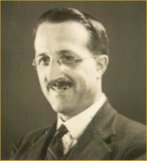
The following notes – as well as those in Early 10 and Early 11 – are from the Stow Hill Bible and Tract Depot book of ministry by G. R. Cowell, ‘The Headship of Christ and of God’.
- My copy came from a brother who withdrew fom the legal sect in 1960, and there are apparently still copies in the libraries of some other brethren,
- but it is the only Stow Hill publication of Mr. Cowell's ministry known to have survived the purge.
A personal account of the Stow Hill meeting of July 26, 1960, by S.G.H., records a remark as to to “GRC's booklet published in South Africa – Fundamental Truths of Christianity and the Kingdom of God, Cape Town, 1958 – as containing fundamental error …” – he records also,
- “The question was asked why Purification and Life [Exeter, August 1958] had been withdrawn” and in both instances unjustified charges were put forward.
- In an earlier letter of July 22, 1960, the author of the above personal account wrote “I understand that the Sydney Depot has burnt their stocks of ‘Purification and Life’ by G.R.C. as containing error” !
- Mr. Cowell had been excommunicated on July 12, 1960 by the suporters of the legal sect.
In view of the above it is a cause of great thankfulness that, in His overriding goodness of God, that book has survived,
- and that much more of Mr. Cowell's ministry has been preserved by the efforts of Philip Haddad.
This is an outstanding series of meetings of special interest to all committed to the continuance of the service of God.
G.A.R.
Page Top
| READING 1 |
|---|
The High Praises of God
Psalms 2: 1-12; 8: 4-6; 22: 1-3, 22; 24: 3, 8-10; 40: 6-8; 41: 13
The Headship of Christ and of God: 205-19
|
|---|
G.R.C. The Psalms are suggested with the desire that we may be helped in the praises of God.
- It is proposed to take up a book in each of the five readings, considering the salient features of each, particularly having in mind the doxology at the end of each book.
- We are not thinking of the Psalms as applied to Israel, but rather seeking the Spirit’s help in giving an application to them, as bearing on the praises of the assembly.
- I think all would agree that this is justifiable, because the assembly was the primary thought with God:
- and while scriptures such as the Psalms have a special bearing upon Israel,
- the Spirit of God ever had the assembly before Him when inditing scripture.
- The whole of scripture, thus, was written for our learning.
- We can read the Psalms, therefore, in the light of Paul’s ministry and the place the assembly has in association with, and as united to, Christ; and
- if read in that way they are calculated, one feels, to expand our thoughts as to the praises of God.
- It has been noted by others that the Psalms begin with the blessedness of the man, that is man according to God, and bring out the blessedness of God,
- ending with the last five Psalms which constitute the great Hallel – i.e. praise – to God.
- The last Psalm is an ascription of praise to God in the greatness of His Being, as signified in the names of Jah and El, so that the Psalms, especially as viewed in Christian light, lead up to a remarkable climax.
- God, as God, is praised in the greatness of His Being, by creatures who have become intelligent as to His nature and attributes,
- by the way in which He has come out in declaration and revelation.
- Such can render to Him a worthy note of praise.
I think the first book of Psalms particularly has in mind the purpose of God and presents God to us in relation to His purpose.
- The purpose of God takes our minds back to a past eternity and in its fulfilment leads our minds on to the eternity to come, and so we can understand the doxology at the end,
- “Blessed be Jehovah, the God of Israel, from eternity to eternity! Amen and Amen”.
- But then, with that in mind, the book dwells much on Christ, as the Man of God’s purpose.
- When it speaks of His moral features it often indicates that there will be others like Him.
- The first Psalm, while applying primarily to Christ, has a more general application, for it refers to the assembly of the righteous.
- Similarly, the first part of Psalm 24 says,
- “Who shall ascend into the mount of Jehovah? and who shall stand in his holy place?”
- And goes on to say, “This is the generation of them that seek him”.
- So that where there are moral descriptions, while Christ is primarily in mind, it makes way for the generation of Jesus Christ.
- But when you come to the glories of the Christ in this book, they are unique to Him – no one can share them with Him.
- The second Psalm brings out basic glories upon which the whole divine plan, as one might say, rests.
- He is God’s anointed – God’s Christ; He is God’s Son, and He is also called the Son.
- It is a remarkable thing that at the opening of the Psalms there should be such a full setting out of the glories of Christ.
- Psalm 8 indicates that these glories are no longer limited to Israel and so presents the Son of man in universal dominion.
- Psalm 22 refers to His sufferings in order to secure the purpose of God.
- Psalm 24 brings out, without equivocation, who He is in His Person. The Man who has gone in is none other than Jehovah of hosts.
- And then Psalm 40,
- “In the roll of the book it is written of me”,
- refers to the One in whom the purpose of God centres.
- I thought these points might engage us, particularly Psalm 2, as being basic, and then Psalm 22, where we might consider specially the declaration of God’s name; and then Psalm 40.
N.F.A. Does the first book link up definitely with Ephesians in the New Testament, would you say, as unfolding to us the glory of Christ?
G.R.C. There is a very definite link with Ephesians, and with Paul’s and John’s ministry generally.
- Psalm 2 brings out two glorious features of Christ’s manhood. The first thing is,
- “I have anointed my king”.
- That is, God has His Christ; and if the purpose of God was ever to be carried through God must have His Christ.
- He must have the Man whom He could anoint, the Man capable of carrying all through for God.
- Then there is the relationship in which He stands as Man,
- “Thou art my Son; this day have I begotten thee”.
- These two glories are greatly developed by both Paul and John. Paul commences his ministry by preaching in the synagogues
- “Jesus that he is the Son of God”, Acts 9: 20
- – and he quotes in Acts 13: 33 from this very passage,
- Following the preaching in Acts 9, it says he confounded the Jews, proving from the scriptures that Jesus was the Christ.
- These are the great pillars of Paul’s ministry, that Jesus is the Son of God and that Jesus is the Christ.
- Paul’s gospel centres in the Son of God, and his ministry of the assembly centres in the Christ. Ephesians is full of the glory of the Christ.
- Similarly they are the two great features of John’s ministry.
- He writes that we might believe that Jesus is the Christ, the Son of God.
- His emphasis is more on the Son of God.
W.J.S. Do you think we have been in danger of thinking of the Psalms too much on the individual line?
- Even in the first Psalm the generation is suggested, the assembly of the righteous.
- And it is remarkable that at the end of Luke He can open up the Psalms, and afterwards they were continually in the temple, praising and blessing God?
G.R.C. The final thing the Lord brings in is the Psalms.
- “These things are the words which I spoke to you while I was yet with you, that all that is written concerning me in the law of Moses and prophets and Psalms, must be fulfilled”.
- And then He says, “Thus it is written and thus it behoved the Christ to suffer”.
- He brings in that title, the Christ.
A.T.G. Could you say a word as to your reference to verse 12, “Kiss the Son”, and then the further reference to Paul’s ministry as to the Son of God?
- The Lord says ill the gospels that no one knows the Son, but Paul says that we are to arrive at the full knowledge of the Son of God.
G.R.C. It seems to me remarkable that so much is comprised prophetically in the second Psalm. First
- “I have anointed my king”;
- that is, God has His Christ. His Christ is not only His King, but He is His Priest, for it says,
- “upon Zion, the hill of my holiness”.
- Indeed; if God secures His King, He secures His Priest, His Prophet and His Preacher. All those are included in the idea of King according to God.
- “I the Preacher was King in Jerusalem”.
- So that, in His Anointed, His Christ, He has the Man who can carry into effect everything that is in the mind of God.
- The last book of Psalms shows, among other things, that He is not only the Anointed but also the Ark of God’s strength – Psalm 132.
- But the first book stresses that God has secured His Anointed, the Man who will carry everything through,
- and this involves finding a place – indeed at the centre of the universe – for Jehovah and the Ark of His strength.
- But the first thing is that God has secured His Christ.
- Then there is the relationship in which He stands,
- “Thou art my Son; this day have I begotten thee”,
- and we are to arrive at the knowledge of the Son of God, at the full-grown man. We are to grow up to Him in all things who is the Head.
- But then behind all that is the truth of His Person, and the Psalm ends with
- a title which, while attaching to Him only in manhood, yet lays great stress on His Deity.
- Those who uttered these things in Old Testament times, as Peter says, did not understand the implication of what they were saying, but here is the word to the kings of the earth,
- and it seems to me that it is a remarkable allusion to His Deity.
- We need, of course, to see, to begin with; that even the fact that He is God’s Anointed and God’s Son implies Deity.
- J.N.D. says that the Lord Jesus has taken places and positions outside of Godhead which no one but a Person of the Godhead could fill, and we have to take that into account.
- No one but a Person of the Godhead could ever be God’s Christ. And so immediately Paul says,
- “of whom, as according to flesh, is the Christ”,
- he adds, “who is over all, God blessed for ever. Amen”.
- No less a Person could ever fill out the position of the Christ.
- Similarly, no one but a Person of the Godhead could fill out the relationship implied in the expression,
- “Thou art my Son, this day have I begotten thee”.
- But when the title “the Son” is used I think there is special stress on His Deity.
W.S.S. Would you say that in the second Psalm God introduces a Man who, at the same time, is divine, by means of whom He is going to fill the universe with praise, as in the last Psalm?
G.R.C. Exactly. Here is the Man who is going to do it.
- It brings out His official glory, the Christ, and His personal glory in manhood, the only-begotten Son.
- Then there is this reference to the Son, which especially stresses Deity, I believe.
W.S.S. I think it is exceedingly beautiful. I am always very thankful when I hear the Psalms taken up.
- J.N.D. said that there is more of the Spirit of Christ in the Psalms than any other part of scripture.
- I suppose the praises which will ascend to God in their fulness depend upon the apprehension of the way in which Christ is presented to us, particularly, perhaps, in Psalm 2.
G.R.C. So that it is good to have Christ before us in the way He is presented. And let us keep in mind that this word is about to go out to the kings of the earth, “Kiss the Son”.
S.H. “I will declare the decree: Jehovah hath said unto me”.
- Do you understand that it is the Christ, the Anointed, that is speaking there, and would it confirm to us that He is the Alpha and Omega? The decree seems to be connected with His Deity.
G.R.C. It was Jehovah’s decree, I suppose; but then the great mystery is that this Person Himself is no less than Jehovah, as we see in Psalm 24. The question is raised,
- “Who is this king of glory?”
- Who is this glorious Man who has gone through and established the whole purpose of God?
- “Jehovah of hosts, he is the king of glory”.
G.H.S.P. Would the first two chapters of Hebrews confirm what you are saying:
- the glory of the Son in chapter 1, in the setting of the revelation of God,
- and then, in chapter 2, many sons being brought to glory?
- The response is to be equal to the revelation because they are both in Christ. Those chapters are full of quotations from the Psalms.
G.R.C. Very good. Chapter 1 stresses His Deity, but in chapter 2 we are associated with Him.
- But very soon the kings of the earth are to hear this command, “Kiss the Son”.
- No one will hold office in that day unless he acknowledges the royalty and Deity of this Person.
- The kissing of the hand is customary when a person receives office at the hands of a monarch, and the time is very near when no one will hold office in heaven or on earth unless he receives it from Him.
Rem. And it will be done, it will be done!
C.E.J. Does Ephesians 1: 9-10 confirm what you are saying as to the purpose of God,
- “which he purposed in himself for the administration of the fulness of times; to head up all things in the Christ”?
G.R.C. Very much so. In that day every office-holder in heaven and on earth will hold office only on condition that he kisses the Son. All things are to be headed up in the Christ, the Anointed.
W.S.S. How does this apply at the present time, because it must work out in the assembly in a fuller way, must it not? All must flow from the heart being attached to the Son?
G.R.C. I think so. The greatness of the Person of Christ is cherished in the affections of the assembly, for He is head over all things to the assembly, which is His body; He is that to us now.
- He does not appear to be that to men on earth at the moment; but to the assembly He is ever that. How we love Him in His glory as He is presented in this Psalm!
C.J.H.D. Does God’s wisdom enter peculiarly into this matter, along with His purpose, for the word used in Psalm 2: 6 for anointed, according to the note,
- is the same word that is used in Proverbs 8, where it is said that wisdom was set up from eternity, from the beginning of God’s ways.
- Though this is said of Christ in manhood, the wisdom that purposed it goes back to the past eternity, does it not?
G.R.C. Very good. All things were created by Him and for Him, were they not? Everything was according to plan from the very outset, having in view that the Christ would fill all.
J.F.P. So that the kiss of allegiance makes way for the outshining of the glory of God in the world to come, in keeping with His purpose?
G.R.C. Quite so, and subjection to the Son at the present time makes way for the service of God in the assembly.
J.F.P. I am sure that is most important, the bearing of it on the service of God at the present time, and the out-shining of God in testimony, too.
G.R.C. We should cherish the mystery of His will, to head up all things in the Christ and have a sense of the imminence of it.
- But then that would all help in the present service of God, and
- I think for that we need to move on to Psalm 22.
- Psalm 8 enforces the truth that the titles of Psalm 2 are not limited to Israel.
- The Christ has universal dominion as the Son of man, and the assembly is linked with Him in it, as we see in Ephesians 1: 22-23, where Psalm 8 is quoted;
- God has put all things under His feet and given Him to be head over all things to the assembly which is His body, the fulness of Him who fills all in all.
- That is the downward aspect of His headship, as we might say. Adam is the type and the woman associated with him. The light of God shines through the divinely-appointed head to the whole creation.
- Psalm 22 has in view what is upward. It is a question of what is flowing back to God, beginning in the assembly, as we should say, in verse 22, but becoming universal,
- “All the ends of the earth will remember and turn unto Jehovah … for the kingdom is Jehovah’s”.
- I think we need to take account of the two aspects of Christ’s headship: one from God downwards, as typified in Adam, and the other, gathering up the response of the universe Godward as typified in David and Solomon.
- These are the two great activities of Christ in headship – to make available to the whole creation the outshining of the blessed God, and then to gather up the response of the universe to His God.
W.J.S. And we are coming into the gain of that at the present moment? The service begins to take shape in Psalm 8, does it not?
G.R.C. Very good. “Out of the mouth of babes and sucklings hast thou established praise because of thine adversaries, to still the enemy and the avenger”.
- It is a Gittith Psalm, a Psalm of pressure. The pressure lies in the fact that both the external and the internal enemies are there, as the note indicates.
- Both are present today, but in the midst of the pressure praise is perfected out of the mouths of babes and sucklings.
W.J.S. And the Lord quotes that very near to the supreme moment of His suffering and pressure, does He not?
G.R.C. He does. He was approaching Gethsemane. The word is cognate with Gittith. To Him it meant pressure to the fullest measure. Psalm 22 indicates the depths of pressure into which Jesus went.
E.C.L. Would you say a word as to the bearing of death on what is due to God?
- According to Psalm 8 He was made a little inferior to angels, and Hebrews 2: 9 adds,
- “on account of the suffering of death”.
- Psalm 22 indicates what death meant to Him. Does the death of Christ stand between the two eternities, as it were?
G.R.C. That is very touching. We have spoken of
- “from eternity to eternity”.
- You are thinking that the cross stands in between?
E.C.L. How much God is going to get out of the worst enemy of mankind in that way.
G.R.C. Has it not brought out the marvellous devotedness of the Christ, the Son of God, that He should have gone into such depths for the sake of His God?
- Do we not need to remember that Psalm 22 refers to the sufferings of Christ for the sake of His God?
- We know that they were necessary on our account, but they are viewed there as endured for the sake of His God,
- “My God, My God, why hast thou forsaken me?”
- This glorious Man could say “My God” in a way that no one else could ever say it.
- He said “My God” as knowing God in the Absolute, and it was that very knowledge which meant such intense suffering for Him.
- He was going to face the sin question in the light of God known to Him in the Absolute.
E.C.L. Quite so. How much suffering it meant in order that the glory of God might be maintained to the full. Yet praise could be secured only on that basis.
G.R.C. And so what is before Him is,
- “thou that dwellest amid the praises of Israel”.
- God is said to dwell in other circumstances. He dwells in unapproachable light, whom no man has seen, nor is able to see;
- He also dwells among His people in grace in the wilderness – 2 Corinthians 6: 16; but there is something very touching about this,
- “thou that dwellest amid the praises of Israel”.
- If He is to dwell with the creature surely this is the most delightful
setting – to dwell amid the praises of the Israel of God.
- Because of what He is – God is love – the desire to dwell with intelligent, responsive creatures was such that, though never ceasing to dwell in light unapproachable,
- He moved out into the realm of declaration and revelation.
- And so in this Psalm, so full of the Lord’s sufferings, He says,
- “I will declare thy name”
- – a most important matter connected with the purpose of God.
- The Psalm contains these two great themes: the sufferings of Christ for the sake of His God, and coupled with it,
- “I will declare thy name unto my brethren”.
W.McK. Are our minds to be impressed with the wonder and mystery of the Incarnation as that which is the basis of everything for God for time and eternity?
- Psalm 2 brings in the Incarnation, and then in Psalm 22
- He says, “I am a worm, and no man”.
- How far He was prepared to go!
G.R.C. I think what you say about the Incarnation is most important.
- “Thou art my Son; this day have I begotten thee”
- would refer to that; and thus God secured His Christ. God’s Son is His Anointed.
W.J.S. Are you linking up Psalm 22, verse 3, with verse 22? Does Israel suggest a princely setting and the Lord Jesus, as prophetically speaking here, praises in the midst of a princely company?
G.R.C. I think so. We would have to link verse 3 with the Israel of God – the assembly.
G.W.B. Is that why you asked for the title of Psalm 22 to be read?
G.R.C. I think the title is a reference prophetically to the assembly, “To the Chief Musician, upon Aijeleth-Shahar”, which means ‘the hind of the morning’.
W.S.S. Were you going to say something more about the declaration of the name?
J.J.T. Was not the Lord in haste to make known that name
- “from the horns of the buffaloes “?
G.R.C. “From the horns of the buffaloes hast thou answered me. I will declare thy name”.
- Do you not think that God Himself also was waiting for this moment?
J.J.T. Does it link with “my God and your God”?
G.R.C. I think so, but I wonder whether we ought to begin with Matthew 28: 19 in thinking of
- “I will declare thy name”.
- I am enquiring, as in all things, for help; but Matthew is a gospel where the Lord Jesus quotes from this Psalm, saying,
- “My God, my God, why hast thou forsaken me?”
- and the depth of His sufferings is stressed.
- Also it is the assembly gospel. The assembly in Matthew 16 is the vessel of praise. The gates of Hades cannot prevail against it.
- Hades is the place of silence – see Isaiah 38: 18 – but the assembly’s praises can never be silenced as the praises of Zion have been. Hades’ gates can never succeed in causing assembly praise to cease.
A.B. Referring to Matthew’s gospel, would there be a foundation in holiness established in the death of Christ, so that God could answer Christ from the horns of the buffaloes? God is glorified in Christ, and then God answers Him, bringing Him out of death.
G.R.C. I think so. Therefore I wonder whether
- “I will declare thy name unto my brethren”
- would refer, in the first instance, to the name of the Father and of the Son and of the Holy Spirit in Matthew 28: 19.
- The Lord Jesus calls the disciples His brethren in Matthew 28: 10.
W.S.S. I had that in mind in asking the question. I feel what you are saying to us is going to help us greatly in the setting of this Psalm where the purposes and counsels of God are being secured. You could not think of a partial declaration, could you?
G.R.C. No. And so one would not shut out John 20: 17 at all, which brings out so fully our association with Christ.
- In fact John 1: 18 goes further than Psalm 22: 22 in a way, because there it is declaring God, not simply declaring His name.
- “The only-begotten Son, who is in the bosom of the Father, He hath declared him”.
- And the word ‘declare’ there has greater force, I think, than the word in Psalm 22.
- It is bringing out all that is to be known of God. But the Lord says here, “I will declare thy name”, so I wondered whether we ought to make room for Matthew 28: 19.
A.B. Does it involve an answer in praise to this wonderful declaration, involving all three Persons of the Godhead?
G.R.C. I think we ought to consider that The Lord says, in spirit, “I will declare thy name”, and at the end of Matthew
- He says, “Baptising them to the name of the Father, and of the Son, and of the Holy Spirit”.
- That is not God as dwelling in unapproachable light, but as having come out in this most remarkable way.
H.A.H. Does it link with the introduction of the Psalm, “My God, my God”?
G.R.C. I think we ought to keep in our minds that it is the sufferings of Christ for His God and the declaring of the name of His God.
- The Father is involved in the name, but it is the name of His God. In Matthew He says, “the name of the Father, and of the Son, and of the Holy Spirit”.
E.A.E. Would it link with Psalm 48,
- “According to thy name, O God, so is thy praise”?
- That would be the declaration of the name as we now have it – Father, Son and Holy Spirit – so that the praise would flow accordingly?
G.R.C. I would think that, but am enquiring for help.
A.A.B. Would we carry in our minds in the spirit of worship the greatness of the mediatorial position the Lord Jesus has taken? I am thinking of Psalm 22 and how He speaks in it, in the position of manhood, the word “My God”, involving the reality of His manhood.
G.R.C. It is the reality of His manhood, and yet He is the Man who is Jehovah’s fellow, as the prophet says in connection with the sword awakening against Him.
- He was truly Man, a perfect Man, considering for His God, and going into the depths for His God,
- and yet they were depths that no one but a Person of the Godhead could ever have gone into. Is that so?
A.A.B. Yes. I would like to refer to Psalm 2 again.
- “Let us break their bonds asunder, and cast away their cords from us!”
- Is the bond between Jehovah and His Anointed seen in John’s Gospel?
G.R.C. You are thinking that Jehovah and His Anointed are really the Father and the Son? It is John who says,
- “He that is not subject to the Son shall not see life”;
- and again, that everyone who sees the Son and believes on Him should have life eternal.
H.A.H. Do you think the working out of what was in the heart of the Lord in Psalm 22 is seen throughout the books of the Psalms?
G.R.C. I would. I think what Mr. L. said about the Psalm standing between the two eternities is most interesting.
- Everything worked to this and from this.
- The two things: Christ going into the depths for His God, which was necessary to bring out what His God is in His nature and moral attributes, and then the declaring the name of His God.
- The name of Matthew 28 is a name of love and grace, conveying the way God has come out in order to effect His purpose.
- The operations of the Father and of the Son and of the Holy Spirit throughout this period are operations of love and grace.
R.S.W. Is it in relation to moral questions in Matthew?
G.R.C. If it were not for the operations of the Father and the Son and the Spirit none of us would ever face the moral question.
- I do not think that name in itself involves the moral question; but if men were to come into the gain of God’s purpose the moral question had to be faced.
- Only the operations in grace of the Father and the Son and the Holy Spirit have ever succeeded in bringing persons to face the moral question.
W.S.S. There is a note in Matthew’s gospel in regard to the word “Eis”. “Baptised to” [eis] “the name”. It directs the mind to the great end in view.
S.H. You spoke of the blessedness of God earlier. Are you linking the declaring of the name with the blessedness of God made known to us?
G.R.C. I am. And I wonder whether we have apprehended sufficiently that there is only one Declarer of God, and only one Declarer of God’s Name. What do you say to that?
S.H. We can see it according to Scripture.
G.R.C. Have we been too prone to search apostolic doctrine to understand the declaration of God?
- I can see that the apostles’ doctrine is based on it and confirms it, but no apostle could say he declared God’s name.
- Paul was a minister of the gospel to bring us into the gain of the declaration, and he was the minister of the assembly to bring about response to it,
- but he never says he was the declarer of God’s name.
- Where must we go if we want to learn about God? Who must we go to?
M.H.T. Do you distinguish between the declaration of the name of God and the proclamation of the name of Jehovah to Moses in Exodus 34?
- Jehovah’s name is said to be proclaimed,
- “Jehovah, Jehovah God merciful and gracious, slow to anger, and abundant in goodness and truth, keeping mercy unto thousands, forgiving iniquity and transgression and sin, but by no means learing the guilty”.
G.R.C. Jehovah was, and is, His name; but the disclosure of that name is not said to be a declaration.
- While He was known to Israel as Jehovah, He dwelt in thick darkness.
- That name implied His faithfulness, yet Moses did not see His face, only His back parts. So that God had not come out.
- As far as men were concerned, He dwelt in thick darkness, although in His own Being He dwells in light unapproachable.
- But now He has come out in the fullest possible way in which He can be known to the creature.
- And so the Lord has declared His name, according to Matthew, if what we are saying is right; but John goes further in saying
- “the only-begotten Son, who is in the bosom of the Father, he has declared him”;
- this seems to me to go further than the declaring of the name. All that can be known of God has come out.
A.A.B. The pronoun “he” is emphatic. Does that support what you say as to there being only one Declarer?
G.R.C. Very good.
E.C.L. Is it also to be noted that it includes what is seen?
- “No one has seen God at any time; the only-begotten Son, who is in the bosom of the Father, He hath declared”.
- Is it what has been set out personally, not only what has been spoken about of God in testimony?
G.R.C. I think so. So that while the name is the name of the Father and of the Son and of the Holy Spirit,
- when you go to John’s gospel the Lord brings out very clearly who the Father is and what He does.
- He does this to some extent in Matthew, but not in so full a way as in John.
- He also brings out clearly the truth of His own Person in John, and also the Personality of the Holy Spirit, and the bearing of these truths upon each other.
- And then, as you say, He says,
- “He that hath seen me hath seen the Father”, and
- “If ye had known me ye would have known also my Father”.
- The Father was dwelling in Him.
- John the Baptist also saw the Spirit descending as a dove and it abode upon Him. The fulness was there in Christ. Is that right?
E.C.L. Yes. It was different from a proclamation.
G.R.C. I wonder whether – I speak suggestively – we have paid enough attention to the fact that there is only one Declarer of God and of His name.
- It is what He has brought out that constitutes the declaration.
- Have we been inclined to search apostolic doctrine in order to get clear as to the Godhead,
- instead of giving due attention to what the Lord Jesus Himself has said and expressed?
- Apostolic doctrine, of course, helps.
H.W. Would you look upon the whole of John’s gospel as being, in a sense, the amplification of the name in Matthew 28: 19?
- The whole of John brings before us the activities of each of the Divine Persons, and, whilst he does not refer to the formula of Matthew 28, the truth is given to us in a living kind of way?
G.R.C. That is what I had in mind. As to our coming into the fulness of the Christian’s place in association and union with Christ, He says,
- “I ascend to my Father and your Father, and to my God and your God”.
H.W. John’s gospel having come in so much later than Matthew, the saints have this wonderful unfolding of the formula opened up in a living and spiritual kind of way.
G.R.C. Very good.
C.J.H.D. Is the ‘hind of the morning’ to be found spiritually in John 20 where the Lord says, “Woman”?
- It says at the beginning of that chapter,
- “Mary comes in early morn to the tomb”.
- She came into the light of the morning in regard of the Man?
G.R.C. Just so. Clearly Mary had the features of the hind of the morning, and those are features the Lord looks for in His assembly.
- And it shows that the truth of union, the truth of the assembly’s relations with Christ, must underlie the spiritual energy and alacrity that is needed to enter on to the highest levels of praise to God, in keeping with the Lord’s words,
- “I ascend to my Father and your Father, and to my God and your God”.
M.H.T. Do we see not only the agility of the hind in Mary of Magdala but also in what is said of Naphtali,
- “A hind let loose, he giveth goodly words”?
- No more goodly words were ever entrusted to a messenger than those that the Lord entrusted to Mary.
G.R.C. Very good. In Psalm 40 it says,
- “Sacrifice and oblation thou didst not desire: ears hast thou prepared me. Burnt-offering: and sin-offering thou hast not demanded; then said I, Behold, I come, in the volume of the book it is written of me-to do thy good pleasure, my God, is my delight”.
- Christ is the One in whom the purpose of God centres, so that in the roll of the book it is written of Him.
- This completes our contemplation, in this reading, of the glories of His Person, all having in view that He should become our Centre and that there should be a resulting note of praise,
- “Blessed be Jehovah, the God of Israel, from eternity to eternity! Amen, and Amen”.
Page Top Reading 1 Top
| READING 2 |
|---|
The High Praises of God
Psalms 42: 1-2; 45: 1, 6-9; 48: 1-2, 8-10;
68: 17-18, 24, 32-35; 69: 1-2, 9; 72: 18-20
The Headship of Christ and of God: 219-38
|
|---|
G.R.C. It will be seen in the passages that we have read to what a large extent God, as such, is the theme of this second book; not now so much as relative to His purpose
- but as the One known to the saints in the way He has effectuated His purpose, both here in testimony and soon in the day of display.
- So the ascription of praise is,
- “Blessed be Jehovah Elohim, the God of Israel”,
- that name Jehovah Elohim standing related particularly to His purpose as to man,
- “who alone doeth wondrous things!”
- It is a question of what He does.
- “And blessed be his glorious name for ever! and let the whole earth be filled with His glory! Amen, and Amen”.
- The soul is looking, on to the day of display, but blessing God as knowing Him already as the One who alone doeth wondrous things.
- That is, the soul understands what God has already effected in a testimonial way.
- The assembly is already here responsive to Christ in the light of what He is to her and she to Him, according to Psalm 45;
- and responsive to God in the light of what she is as the city of God according to Psalm 48.
- The assembly is already here and functioning.
- Psalm 68 brings out the victorious service of Christ as the One who has ascended, but what is it but that He also descended, according to Psalm 69.
- He ascends in Psalm 68, but He is the One who also descended in Psalm 69 to bring all this to pass.
- And so the book ends with this note of praise and worship to Jehovah Elohim, the God of Israel, “who alone doeth wondrous things”, in the appreciation of His glorious Name,
- not now simply as a declaration, but as understanding the operations of God, what He has effected.
- And then one might just add that the book begins with the soul panting after God.
- “As the hart panteth after the water brooks, so panteth my soul after thee, O God”.
- The Father has sought us in grace; the Son, too, the Lord Jesus, has sought us; and the Spirit has operated; but where a soul is divinely affected it pants after God.
- Nothing will satisfy the soul of man, as wrought upon by the Spirit, except God Himself.
- “When shall I come and appear before God?”
- And this book shows how these pantings are satisfied, and therefore closes with
- “The prayers of David, the son of Jesse, are ended”.
- Every longing is stilled, every longing met by the One who alone doeth wondrous things.
- He has so wrought that we know what it is to appear before God in the city of our God, the city of the great King.
- But I think the opening of the book confirms from our side what has been before us so much, that God is the ultimate.
- God is the ultimate in worship, but He is also the ultimate in the soul’s longings.
- The soul who has not had the experience of appearing before God in holy splendour, suitable to Him in His majesty and greatness as God, has never tasted yet complete soul-satisfaction.
J.F.G. Would this be the outcome of understanding how God has moved according to His purpose and counsel, the soul coming into the gain of that?
G.R.C. That is what I thought. The first book indicates the purpose of God and the Man of His purpose,
- but in this book it is the God who effects His purpose, who alone doeth wondrous things,
- so that the assembly comes to light, we might say, in a substantial way in Psalms 45 and 48,
- firstly as the queen, standing in relation to Christ,
- and secondly as the city of the great King, standing related to God.
A.M. Does this Psalm represent a state of soul pleasing to God over against the assumption of Korah?
G.R.C. It does. The sons of Korah figure much in this book. They refer to the saints as vessels of mercy.
- God has been pleased to make known the riches of His glory upon vessels of mercy, which He had before prepared for glory, us, whom He has also called.
- Sovereign mercy is the basis of our relations with God as God. The sense of that in the soul underlies the experiences of this book.
G.W.B. Is your thought that these longings of the soul find their answer in the assembly?
G.R.C. Yes. “My soul thirsteth for God, for the living God. When shall I come and appear before God?”
- Where can we appear before God, thoroughly in keeping with all that He is but in the assembly?
W.S.S. Would Psalm 43 help? Verse 3 says,
- “Send out thy light and thy truth: they shall lead me, they shall bring me to thy holy mount, and unto thy habitations.
“Then will I go unto the altar of God, unto the God of the gladness of my joy: yea, upon the harp will 1 praise thee, O God, my God”.
G.R.C. That is very beautiful.
W.McK. Does Romans work out the pantings of the soul after God, and do the doxologies indicate the way that the soul reaches God?
G.R.C. That is very good. God is the great theme of Romans, just as God is the great theme of Ephesians.
- Paul’s ministry shows the way we may come and appear before God.
- Paul experienced it, perhaps, as no other man has done, and his doxologies indicate his appreciation of the God before whom he appeared.
J.F.P. I was thinking of the deep sense of mercy Paul had according to 1 Timothy 1: 13, and the satisfied longings of his soul rising up in the great ascription of praise and worship to God in verse 17.
G.R.C. 1 Timothy deals with the house of God, which is the assembly of the living God, and, as you say, Paul says,
- and within a few verses he is saying,
- “to the King of the ages, the incorruptible, invisible, only God, honour and glory to the ages of ages. Amen”.
F.J.D. Would you say what is in mind in the living God?
G.R.C. I suppose it is in contrast to the deadness of idolatry and of Judaism. It is a most attractive expression.
- Jesus is the Son of the living God – we are called sons of the living God, Romans 9: 26, and the assembly is the assembly of the living God.
W.J.S. The Thessalonians turned to God from idols to serve the living and the true God.
A.B. Would the praise of God be enriched by experience with God? The Psalmist says,
- “God my rock”, then
- “God of my strength” and
- “the God of the gladness of my joy”.
G.R.C. It would. The third book especially deals with the side of experience, as we may see in our next reading. It enriches the response to God. There must be experience with God.
W.J.S. I believe the earliest reference to God in this way is in Joshua 3: 10.
- “Hereby shall know that the living God is in your midst”.
- It is in connection with the Ark going into the Jordan.
R.F.D. Would “from eternity to eternity” be a suggestion as to the living God? The One that abides.
G.R.C. Yes. And does it not suggest living affections? The living God could only be satisfied with a world of life, a world of living response.
A.B. Does the indwelling of the Holy Spirit have any bearing on soul thirst after God?
- The Lord met it in John 4, going on to the thought of
- “God is a Spirit, and they that worship him must worship him in spirit and in truth”.
G.R.C. That is very good. The thirst of the human soul can only be met in God Himself, and that is met, in this dispensation, by the gift of the Holy Spirit.
W.C.P. Do you think there is a link with that in the welling forth in Psalm 45? Does that suppose that the soul has the gain of the Spirit?
G.R.C. I think it does. It is a living touch. As to Psalm 45, it is a great thing to take account of what is actually effected and existing here in the scene of testimony, and soon to be displayed.
- The God who alone doeth wondrous things has operated in such a manner that the assembly is here.
- The heading of the Psalm is “Upon Shoshannim”, which means ‘lilies’.
- It refers to the purity, chastity and fragrance of those that form the assembly. It is a vessel composed of such.
W.J.S. In John 4 there was a soul panting, and what a testimony she was able to render as having her thirst satisfied:
G.R.C. I think the first element of satisfaction is to see that Man, the Man of the Psalm 45.
- “Is not this the Christ?”
- We are then on the way to having every thirst of our souls met.
- In the first instance we need the Man, and to understand our relationship with the Man, through whom alone we can come and appear before God.
C.J.H.D. The Man really is the answer to that enquiry in Joshua. Joshua goes on to say,
- “Behold the ark of the covenant of the Lord of all the earth goes before you”.
- Is not that the proof of the living God being in the midst, and might it not be linked with Ephesians 5,
- “Wake up thou that sleepest, and arise up from among the dead, and the Christ shall shine upon thee”?
- Is the Christ, as apprehended according to Psalm 45 in His glorious shining, the answer to the deadness around us?
G.R.C. Very good. The shining of the Christ is the true Christian light, is it not?
J.J.T. Is one of the wondrous things that God does in Psalm 45 that He anoints the Lord with the oil of gladness above His companions?
G.R.C. He is singled out because of who He is – He is God:
- “Thy throne O God is for ever and ever”,
- but then He is singled out, too, in His perfect and glorious manhood, as anointed by God.
- “Therefore God, thy God, hath anointed thee”.
- It shows how the Deity and manhood of Christ are blended in scripture, and the need for flexibility of mind, in the power of the Spirit, to apprehend the truth of His Person.
- On the one hand He is God, and, as Man enthroned, is saluted as God;
- yet, immediately after, He is referred to as the Man anointed by His God on account of moral qualifications.
E.C.L. Do you think we have to appreciate Christ as Man to understand the greatness of God?
- I was thinking of the way the Lord used the expression “My God”.
- The more we appreciate the Man, the more wonderful His God must be; and His God is our God.
G.R.C. Quite so. Much depends upon our apprehension of the Christ, the Man of God’s purpose.
- Christianity takes its name from that title, and Christians themselves take their name from it. It has given character to Christianity in its testimonial setting.
- The church’s links with Him stand related to it, for the union of the church is with Christ.
- It shows the importance of understanding the official greatness of Christ – the Man.
H.A.H. Would this be the normal way of having part in the service of God, from satisfied hearts welling forth with a good matter?
G.R.C. Yes, and the first thing is hearts satisfied and welling forth because of their occupation touching the King. The King here is Christ.
W.S.S. In that connection would you say a word on the last clause of the heading, “A Song of the Beloved”?
- The question would be as to Christ being the Beloved of our hearts, would it?
G.R.C. It is really the language of the assembly, is it not?
W.S.S. That is what I was thinking, but then it must be the language of each heart individually?
G.R.C. It must be. The King is also the Beloved in the Song of Songs. It is because the King is the Beloved that He has such sway over the people and can hold them all for God.
W.S.S. I was thinking, too, that it brings us into communion with the Father in regard to the Son.
G.R.C. I am sure that is right. He says,
- “Behold my servant whom I have chosen, my Beloved in whom my soul has found its delight. I will put my spirit upon him”.
- That is the Christ, is it not? The Father’s soul finds its delight in Him and our souls find their delight in Him. That gives us a ‘lily’ character.
- As the saints are marked by the character of lilies the assembly as the chaste virgin comes into view, I think. Lilies suggest chastity.
W.H.K. Are you thinking of this Psalm in connection with our service on the Lord’s Day morning; the entrance into and enjoyment of union helping us to appear before God rightly, gloriously?
G.R.C. Exactly. It prepares for Psalm 48.
A.B. Would it bring in the greatness of the assembly as the vessel in which the various glories of Christ are given expression to in praise?
G.R.C. The varied glories brought out here afford material for expansion in the power of the Spirit in our service of praise to Christ.
- What He is in His moral perfection, what He is in His military prowess, what He is as on the throne and as wielding the sceptre,
- what He is as anointed with the oil of gladness above His companions, and then what He is in the palace, in the inner place,
- are all features of glory which stimulate praise.
H.W.S. What is the thought of ‘instruction’ in connection with this?
G.R.C. Does it not afford instruction as to the response in praise of the assembly to Christ?
E.C.L. Do you think the way the new covenant is added in the Supper to the breaking of bread has some relation to the way God comes into His own through Christ, Christ having His own glory in connection with it?
G.R.C. Would you mind saying more as to the new covenant?
E.C.L. I thought the new covenant would mean that what God has set out to do will be established.
- Does not the assembly hold these thoughts for the time being until the day of actuality?
- Christ’s glory in that connection is held by faith in fulness and satisfies the heart of the assembly?
G.R.C. So that from the standpoint of our relations with Christ Psalm 45 brings satisfaction to our longing souls
- and the Lord Jesus has what His heart is seeking in the assembly, even so far as to anticipate the time when the queen will stand on His right hand.
- Actually, I suppose, that is future but anticipated now, because, according to Ephesians 1, He is head over all things to the assembly, which is His body, the fulness of Him who fills all in all.
- The Spirit is here that we might enter into this in our spirits now and that there might be an answer to Christ commensurate with it.
E.C.L. I was thinking that. Sometimes the covenant is just slurred over, but it has been added to the breaking of bread for a reason?
G.R.C. Do you think it is important that in First Corinthians the Lord says,
- “This cup is the new covenant in my blood”,
- not adding there, “which is poured out for you”?
- Is He not anticipating that the assembly will have an appreciation of all that He has secured for God on the basis of His blood? The universe of bliss is secured on that basis.
A.T.G. Do you mean that there is something additional in the reference to the New Covenant in the Epistles to the Corinthians, as over against the references in the Old Testament?
G.R.C. I think the Lord is stressing His blood. I think, in the Supper, He stresses “my body” and “my blood”.
- As to His body, He says,
- “This is my body which is for you”,
- because His body could not be said to have been given for any company except the assembly.
- But when He speaks of “my blood”, I think He would count on the assembly having some understanding of the vast effects of His blood-shedding.
J.W.G. Is it a wider thought than “poured out for you” in Luke 22, involving the whole system of glory based on the redemptive work of Christ?
G.R.C. Quite so. We have to remember, of course, the scripture, that God purchased the assembly with the blood of His own;
- but it does seem to me that, according to 1 Corinthians 11, in referring to His blood in the Supper,
- the Lord counted on our intelligent affections apprehending the vast scope of things which has been affected by His blood.
- According to Colossians 1,
- “in him all the fulness was pleased to dwell, and by him to reconcile all things to itself, having made peace by the blood of his cross”.
A.W.P. Have you the tabernacle system in mind? The whole system was sprinkled with blood.
G.R.C. Yes, I think the Lord would count on us having some apprehension of the whole system of glory. The assembly has her own place in it. To give the Psalm a present application, she is the queen.
G.H.S.P. The literal blood shedding of Christ is, I think, only recorded in John’s gospel. I thought that put it in a most exalted setting.
- It confirms what you were saying, that the references to the blood need to be elevated in our minds, and in the place that they may have in our service Godward.
G.R.C. So in Ephesians 1 it is the blood of the Beloved, is it not?
- “He has taken us into favour in the Beloved; in whom we have redemption through his blood”.
B.S. Hebrews suggests that we worship the living God on the basis of it.
- “How much rather shall the blood of the Christ, who by the eternal Spirit offered Himself spotless to God, purify your conscience from dead works to worship the living God?”
G.R.C. We could have no access to God as God apart from the blood of the Christ.
W.S.S. I am very interested in what you have been saying about the cup and the covenant. It has been very much in one’s mind of late that the Lord would carry our minds into the fulness of what has been secured. It is opened out to us in a wonderful way as we are together.
W.H.K. “This do, as often as ye drink it, for a remembrance of me”.
- Would that widen our consideration of all the glories that belong to Christ?
G.R.C. Yes. We are calling Him to mind relative to the whole system of blessing, which rests upon the immutable foundation of His blood. And that greatly magnifies Him.
C.J.H.D. The celebration in heaven in Revelation 5 is wonderful.
- “Thou art worthy to take the book, and to open its seals; because thou hast been slain, and hast redeemed to God, by thy blood, out of every tribe, and tongue, and people, and nation, and made them to our God kings and priests”.
H.A.H. Yet the inward position as seen in the palace is far greater to the heart of Christ than outward glory?
G.R.C. It is. Only very favoured people have access to the palace, but the queen, of course, has a right to be there in every way. She is all glorious within the royal apartments.
H.A.H. That would go beyond the teaching in First Corinthians?
G.R.C. It would. The Supper is really the doorway into the inward side of things, is it not?
- In the Song of Songs the spouse says,
- “The king hath brought me into his chambers”.
- So this song ends up with what is within the palace.
A.M. Would you say a word about the joy entering into the service? It is stressed here.
- What I notice is that it is the Lord’s joy. It refers to the oil of gladness, and then
- “stringed instruments have made thee glad”.
- The service begins with our joy,
- “Then were the disciples glad”,
- but our fullest joy is to sense His joy, is it not?
G.R.C. I am sure that is right. Verse 15 goes back to the joy of the saints,
- “With joy and gladness shall they be brought”.
- But, as you say, the greatest joy we have is to take account of His joy, although the whole scene is one of gladness.
- He is anointed with the oil of gladness above His companions. They are all anointed with the oil of gladness; there is not a sad face there.
- Nehemiah indicates that it was not right even to appear before an earthly monarch with a sad face.
- No one appears before God, properly speaking, with a sad face. All appear before God as anointed with the oil of gladness, but then the Lord Jesus is supreme.
M.H.T. Is it striking that in this love Psalm, as you might term it, attention is drawn, in the first place,
- to the beauty of Christ as the One who is fairer than the sons of men,
- and then, in the second place, to the beauty of the assembly as dissociating herself from past history, and
- “so shall the king greatly desire thy beauty”?
- We have in one of our hymns: “All fair art Thou, Lord Jesus, the assembly, too, all fair”.
G.R.C. “The king will desire thy beauty; for he is thy Lord, and worship thou him”;
- and then it goes on further,
- “All glorious is the king’s daughter within”
- – within the royal apartments. What a fitting companion for the king!
C.J.H.D. Has she not known His right hand according to the Song of Songs in another relation? It says there,
- “His right hand doth embrace me”.
- Does that not capacitate her to stand in queenly grace at His right hand, because there has been the intimacy of affection?
G.R.C. Yes, I am sure. And then as we are responsive to Christ in this marital way, does it not prepare us for the service of God?
- The Psalms immediately introduce the city of God. Psalm 46 is the city in a hostile setting, yet
- “God is in the midst of her; she shall not be moved”,
- and Emmanuel is known there,
- “Jehovah of hosts is with us”.
- The assembly is now the vessel of administration in the scene of testimony, and the language of Psalm 46 can therefore be applied to her as here in adverse conditions.
- Psalms 47 and 48 lead on to the greatness of God and of the assembly as standing in relation to God.
D.S.H. You were speaking earlier of Christ as the King in Psalm 45. Do you think there is a difference in Psalm 48?
G.R.C. Yes. In Psalm 48 God is the King. Christ has His part in that, of course, because He is God.
- But the presentation of God as King is a very great matter. It is not now Christ viewed as King as the Man anointed of God, but God Himself as the King.
- And so Psalm 47, verses 6-8 says,
- “Sing psalms of God, sing psalms; sing psalms unto our king, sing psalms! For God is the king of all the earth; sing psalms with understanding. God reigneth over the nations; God sitteth upon the throne of his holiness”.
- And then the next Psalm says,
- “Great is Jehovah, and greatly to be praised in the city of our God, in the hill of his holiness. Beautiful in elevation, the joy of the whole earth, is mount Zion, on the sides of the north, the city of the great king”.
- What a great thing it would be if we understood the assembly better as the city of the great King, God Himself being the great King.
C.J.H.D. Would you say a word as to the Father and our ministering to Him on the way, as it were, to the great climax of God?
G.R.C. Does not the appreciation of Christ as the Beloved turn our thoughts to the Father?
- He is our Beloved; but we think of the Father’s delight in Him, and our hearts are led to the Father and we worship the Father and enjoy our place in the Father’s house, and the blessedness of being loved by the Father with the love wherewith He loves the Son.
- Each side of the truth is incomparably great. How blessed is our place in the Father’s house,
- “that where I am there ye may be also”.
- But then the city of God is another side of the truth. It is not our place in the Father’s house, but God’s place, the place of God, as such; the place where He is praised.
- The Father’s house is the inner side of things, but the service of praise is going on now in the scene of testimony and will soon find full expression in the scene of display.
- But what is going on now in the scene of testimony should be worthy of the great King.
A.B. Does that give the peculiar blessedness of God being among His people in hostile circumstances?
- There is a reference in Psalm 46 to the sanctuary of the habitations of the Most High, and then it says,
- “God is in the midst of her; she shall not be moved: God shall help her at the dawn of the morning”, verse 5.
- God is among His people in the scene of the enemy’s power.
G.R.C. Yes, so that these Psalms are very much in line with Matthew’s gospel;
- the King, that is Christ Himself, and what He has in the assembly; and then what the assembly is as the city of the great King.
- The Lord uses that term in His teaching in Matthew 5: 35.
- He was referring primarily to the earthly Jerusalem;
- and yet surely the assembly would not be absent from His mind, for the assembly is in view all through that gospel.
A.A.G. Is not the response to God as such carried on in the intimacy of the knowledge of the Father’s love?
G.R.C. I think it is. The Father’s house is privilege. The Lord says,
- “I go to prepare a place for you”.
- The place of privilege and intimacy equips us for our part in the assembly as the great vessel of responsibility.
- I am not referring to what it is as a responsible vessel down here, but viewing it abstractly in relation to Christ as
- the vessel which is entrusted with responsibilities which no other vessel in the universe ever will be called upon to fulfil, and in the fulfilment of which there will be no breakdown.
- And, in that sense, she is the city of the great King, that is God Himself.
- And the city is an inclusive idea, because it says in the verse already referred to,
- “the city of God, the sanctuary of the habitations of the Most High”.
- The city includes the sanctuary and the habitations.
E.C.L. Would the light of the city of God according to Psalm 48 affect all the gatherings of the saints?
G.R.C. I think we touch it in the fullest way as we pass in spirit out of the scene of time and locality in the power of the Holy Spirit.
- In our response to Christ we pass in spirit out of time and locality.
- We respond to Him in the light of the church complete; and similarly in regard to God.
- As the city of the great King we are viewing the assembly in its full place and dignity according to the purpose of God.
E.C.L. Is not the city usually linked with administration?
G.R.C. It is, but we must also see that the city is an inclusive idea. It includes the sanctuary. It says,
- “in the city of our God, in the hill of His holiness”,
- and His praise is connected with it.
- This is really the service of the sanctuary, but it is taking place in this vessel which is called the city of the great King.
- It implies that the administrative side has been attended to. There is fulfilled responsibility as to administration, and now it is a question of the praise of God –
- “Great is Jehovah, and greatly to be praised in the city of our God, in the hill of his holiness”.
- And again, “We have thought, O God, of thy loving-kindness in the midst of thy temple”.
- We cannot dissociate the thought of the city and the temple and the sanctuary.
- The city is the overall thought, which includes administration, and, as administration is carried out and fulfilled, God’s praise is secured in this great vessel.
- But the whole matter is worthy of the great King.
H.A.H. Does Psalm 48 present it in a military setting, as impregnable?
G.R.C. Quite so.
R.S.W. Does it afford satisfaction for divine affections? The term new Jerusalem is mentioned in Revelation.
G.R.C. Yes. The city goes into eternity, the holy city, new Jerusalem. It is the centre of light and influence eternally.
- Its eternal responsibility is, on the one hand, to maintain in integrity the praise due to God in His greatness,
- so that, in the presence of the whole universe, glory, honour and majesty are fully ascribed to Him, the Great King,
- and, on the other hand, to diffuse the light of God and thus influence the whole universe – that is the administrative side.
- Of course while evil is present administration has to take on a military character, but in the eternal state evil will not be present.
- Nevertheless it is still the city, and still the city of the Great King, as I understand it, because the word in Revelation 21: 5 is
- “He that sat on the throne said, Behold I make all things new”.
- The throne is still there, and the great King is sitting upon it, and the holy city, New Jerusalem, is His city all through eternity, as I understand it.
A.W.P. Do you still connect government with it?
G.R.C. In the way of light and influence, yes. It is the great diffuser of divine light and influence to the universe.
- But then internally it is the great centre of praise, and leads the praise of the universe to God, so
- “Great is Jehovah, and greatly to be praised in the city of our God”
I believe the assembly is the vessel which will give a lead to the praises of the universe, as herself led by Christ, all through eternity.
- She is the city of the great King. She is in every way worthy of the great King, and enclosed in that city, as it were, is the temple, the sanctuary, and the garden.
- All that is connected with the great King is there.
D.S.H. Why do we get this reference to the loving-kindness of God in verse 9?
G.R.C. Has not everything depended upon that? What have you in mind?
D.S.H. Well, I was wondering if the appreciation of that is a basic thing in connection with the praise of God.
- Perhaps we may tend to associate God’s loving-kindness more with our daily circumstances than with the highest and loftiest thoughts of it.
G.R.C. It seems to me the more we apprehend God as God in His greatness and majesty, the greater will be our appreciation of the mercy and loving-kindness
- that have fitted us to be in the presence of such a great and glorious God.
- We are vessels of mercy before prepared for glory.
W.J.S. The God that the sons of Korah appreciated.
G.R.C. Quite so.
G.W.B. Does the thought in the Psalms go as far as the tabernacle of God with men?
G.R.C. That would be another view of the same vessel.
- On the public side it is the holy city, new Jerusalem, and in that setting prepared as a bride adorned for her husband, showing that those two thoughts go together.
- What the assembly is to Christ bridally and what she is to God city-wise are linked together. Psalm 45 and Psalm 48 go together in that respect.
- But the tabernacle of God is the inner life, the inward side of things, where we know the Father and the Son and the Holy Spirit in personal relations.
- There is the inward side all the time; but what we are thinking of now is the testimonial side in praise.
- God has now, and will have in the world to come, and will have in eternity, a vessel capable of ascribing the worship and honour due to Him as the great King.
W.J.S. The end of Psalm 48,
- What a glorious consummation! And so it says,
- “According to thy name, O God, so is thy praise to the ends of the earth”.
- There is a vessel that can fully praise God according to His name.
G.R.C. It is the God known to us by the name of the Father, and of the Son, and of the Holy Spirit.
- Yet the disclosure of this name does not mean that other names, each of which express some attribute and glory of Deity, are discarded.
- “Thy name” would be the aggregated wealth of all.
W.McK. Would you say that while the assembly is a creature vessel, there will be no possibility of breakdown in the praise of God?
G.R.C. That is just it. It has impressed me that the assembly is the great vessel of fulfilled responsibility all through eternity.
- There is no other creature vessel with such responsibilities allotted to it as the assembly, and yet she will never break down because,
- as the assembly in Christ Jesus, she is united to Christ, and, in the support of His love and the power of the Spirit,
- she will fulfil every responsibility allotted to her; all will be carried out without breakdown.
G.H.M. Would you say what is conveyed by Revelation 21: 22,
- “I saw no temple in it; for the Lord God Almighty is its temple, and the Lamb”?
G.R.C. It seems that there is such nearness to God Himself in that city that there is no need, as one might say, for an intermediary,
- because the saints themselves are the temple, they are the shrine.
- In an ordinary city of men you need a temple in which to approach God. In the earthly Jerusalem there is the temple.
- But the saints of this dispensation are themselves the shrine of God, for the Spirit of God dwells in them.
- So John sees no temple in the heavenly Jerusalem. God Himself is its temple and the Lamb.
A.T.G. Why does it say,
- “Thy right hand is full of righteousness”, Psalm 48: 10?
G.R.C. That is a great feature with God. The stability of the whole universe of bliss depends on righteousness.
A.T.G. Does it refer at all to the basis in the blood of Christ that we have had in mind before?
G.R.C. The foundation has been laid in: he death of Christ and now “God’s righteousness with glory bright” is the basis of all His actings in grace.
- There would be no stability, no solid basis for the universe of bliss, apart from righteousness. His right hand is full of righteousness, and that is a great matter to praise God about.
- The Son in speaking to the Father in John 17 says,
- All His purposes of love are carried through in righteousness.
W.H.K. In the new heavens and the new earth righteousness dwells.
A.M. Does righteousness link up with the acts of Jehovah? I was thinking of what you were pressing,
- “who alone doeth wondrous things”.
G.R.C. All His acts are righteous.
J.F.P. Would not the reference to’ the city as new in Revelation 21: 2 confirm what you have been saying as to its eternal character?
- It goes through the intensive administration of the thousand years and is seen as perennially fresh at the end.
G.R.C. That is very beautiful –
- “prepared as a bride adorned for her husband”,
- and the tabernacle of God. There is eternal freshness and fragrance.
I think we ought to pass on now to Psalm 68. All that has engaged us has been brought to pass by the One who has ascended,
- and if He ascended, what is it but that He also descended into the lower parts of the earth.
- Psalm 68 gives the ascension, and Psalm 69 His descent.
- Psalm 69 is upon Shoshannim, which is ‘lilies’, showing that, as we respond to Him according to Psalm 45, which is upon lilies,
- so correspondingly, as true to Him, we shall bear reproach in the testimonial position.
- We are rejoicing, according to this book of Psalms, in what God has already established testimonially.
- The assembly is really here. But then it involves a position of reproach.
- And the lily character manifests itself in fragrant response to the Lord according to Psalm 45 and in sharing His reproach according to Psalm 69, where it says,
- “The zeal of thy house hath devoured me, and the reproaches them that reproach thee have fallen on me”.
- So that one would like to encourage one’s own heart to be more ready for reproach because it helps to develop the lily character with us.
- In the morning meeting we shall be more at home in the presence of the King if we learn during the week to suffer with Him.
S.H. Are you thinking of the Song,
- “As the lily among the thorns, so is my love among the daughters”?
- But she is not allowed to stay in that position for long. She shares the glory of the banqueting house, and so on.
G.R.C. Very good. How could she be other than a lily among thorns in the scene where all the reproach is cast upon her Beloved?
- We need to be faithful to the Lord in the scene of reproach where He is the song of the drunkards – Psalm 69: 12.
- Our danger is too much respectability. J.N.D. said the first elements of decline are ease and respectability. You cannot be in the eyes of men a respectable person if you are following Christ.
W.H.K. And how could she have the fragrance of the myrrh and spices, all the powders of the merchant, in the Song of Songs, if she did not share the sufferings?
G.R.C. Quite so.
W.McK. You have referred a good deal to Matthew’s gospel. Is it to be noted that Matthew stresses eating in the Supper? I wondered if that would build up a constitution to take part in these reproaches that fell upon Christ?
G.R.C. I think it would. It would strengthen us for the will of God here, would it not?
- It is the will of God that we should bear the reproach of Christ.
- But then it is greatly encouraging to have Psalm 68 in our minds in all this – the Lord has ascended;
- and all that we have spoken about, as having been secured by the God who alone doeth wondrous things, has been secured through the complete victory of Christ.
- He has dealt with every foe in every way and has ascended up on high and led captivity captive, and received gifts in Man;
- and it is through the exercise of these gifts that the assembly has been brought to pass in a practical way here on earth.
- God is doing wondrous things still through the gifts from the ascended Man, so that the assembly should be here in all its features, functioning both as the bride of Christ and as the city of God.
C.J.H.D. I wondered if you would take us on to the matter of the dwelling there of Jah Elohim, which is a very great title, and does it not link with the title Lord God in Revelation 22: 5?
G.R.C. That is very interesting indeed. While our prepared place is in the Father’s house, God’s prepared place is in the assembly. Jah Elohim has a place, as we may say, worthy of Him. Is that so?
C.J.H.D. I was wondering whether Jeremiah’s beautiful description of God does not fit in with what you have in mind.
- “Jehovah Elohim is truth, He is the living God and King of eternity”.
W.J.S. Does not verse 18 show the way the sons of Korah came into things,
- “And even for the rebellious, for the dwelling there of Jah Elohim”.
- Saul of Tarsus was such a one. The living God secured a man like Saul and brought him into the assembly setting.
G.R.C.. I would like to make another suggestion in connection with this Psalm.
- The word translated Lord is Adonai.
- “The Adonai gives the word” verse 11; and,
- “The Adonai is among them”, verse 17.
- He is the One who has ascended on high and He is operating for the dwelling of Jah Elohim. It says,
- “Blessed be the Adonai”, verse 19;
- and in verse 22, “the Adonai said, I will bring them from Bashan, I will bring them again from the depth of the sea”;
- and then in verse 32, “Ye kingdoms of the earth, sing unto God; sing psalms of the Adonai”.
- It seems to be a title that attaches in a remarkable way to Christ.
- Of course, He is also Jehovah of hosts, as in Psalm 24, but in this Psalm He is referred to as Adonai, as also in Psalm 110: 5,
- “the Adonai at thy right hand”.
- I am wondering whether we have limited too much the idea of lordship in Christ to what He is as made Lord.
- My impression is that lordship in Christ, as seen in Ephesians, runs into the truth of His Person. It is true that
- “God has made him, this Jesus … both Lord and Christ”,
- but viewed from this standpoint,
- “Thou hast ascended up on high”,
- the view of lordship in Ephesians – well, who could ascend up on high? No one less than the Adonai. Who else could be victorious like this and lead captivity captive?
B.G.H. Would verse 26 confirm that?
G.R.C. “In the congregations bless ye God, the Adonai”.
- You are thinking of the word God inserted there? It is a remarkable expression.
- I have noticed lately that J.N.D. fully links every reference to Adonai in this Psalm with the Lord Jesus.
W.H.K. Does the reference to ascension stand connected with what He is in His own Person?
G.R.C. That is what I am thinking. And my own impression is that lordship in Ephesians runs into the truth of His Person.
- “Be strong in Lord and in the might of His strength”.
- It is the Adonai really, I would say, the One who ascended up on high, who ascended above all heavens.
W.J.S. What does that word convey to you?
G.R.C. I think it is a word that specially conveys lordship and rule. It is a name and title of God in the Old Testament.
- It is often used of God as such, but in this Psalm it particularly relates to Christ.
- It refers to the position of authority that He has, not because He is made Lord, but because lordship is His in the right of His own Person.
- Adon is a word that means Lord or Master, but when applied to God, as it always is in its plural form – Adonai – in scripture,
- it is a very strong expression emphasising the rights of God over His people.
- It is a kind of office or position but which implies Deity in the One who holds it.
D.W.M. Is it rather remarkable that the Lord finally silenced the opposition in Matthew 22 by quoting from Psalm 110?
G.R.C. Yes. “Jehovah said unto my Adon, Sit at my right hand”, Psalm 110: 1,
- and then the same Person is referred to in verse 5,
- “the Adonai at thy right hand”.
H.W.S. In Revelation 5 you have the Lion of the tribe of Judah, the Root of David has overcome. Would that be a similar thought, implying His Deity?
G.R.C. It is remarkable how the Deity of Christ is interwoven in scripture with His manhood. They are put side by side repeatedly, as in the passage you quote.
S.E.W. The last presentation of Himself to the assembly in Revelation is as the Root of David,
- “the root and offspring of David, the bright and morning star”,
- and immediately it says,
- “And the Spirit and the bride say come”.
G.R.C. And I believe that is how this book of Psalms ends.
- The last Psalm, Psalm 72, is for Solomon, and Solomon is typical of Him who is the Root and Offspring of David.
W.McK. Is it your thought that the tendency has been to regard lordship in an official way, but, as you are speaking of it now, it would link our hearts up more definitely with His Person?
G.R.C. The Lord Jesus is Lord in the right of His own Person as well as on account of what He has been made as Man.
- I think this title Adonai belongs to Him in the greatness of the authority He now wields.
- He wields it not only as made Lord, as Peter says in Acts 2, when he is referring to Jesus of Nazareth, whom they had crucified,
- but also as the One who has ascended up on high, and has led captivity captive.
- What authority He has! He has led captivity captive, and received gifts in Man.
R.W.S. Does not Hebrew 1: 10 confirm that?
- “And thou in the beginning, Lord, hast founded the earth, and works of thy hands are the heavens”.
C.J.H.D. So, according to Psalm 45, worship is to be addressed to Him by the assembly.
- “He is thy Lord” [Adon] “and worship thou Him”.
G.R.C. Quite so.
H.A.H. The descent was the action of a Divine Person and the ascent was the action of a Divine Person. He came down from heaven.
- “What and if ye shall see the Son of man ascending up where he was before?”
G.R.C. All this enters into what is said here,
- “They have seen thy goings O God, the goings of my God, my King, in the sanctuary”;
- and the Psalm ends with a remarkable ascription of praise to God, ending up with,
- “It is He that giveth strength and might unto the people. Blessed be God”.
- And that is what we need. He is the God who alone doeth wondrous things, and one of the things He does is to give strength and might to the people so that
- we can stand in the presence of the greatness of God and ascribe to Him what is His due.
Page Top Reading 2 Top Next Reading