Menu•SiteMap |
Ministry
Page Top
| READING 5 |
|---|
The High Praises of God
Psalms 107: 1-9; 110: 1-4; 132: 1-9, 13-18;
133; 134; 146: 1, 7-10; 147: 1-2, 12-15; 149: 5-6; 150
The Headship of Christ and of God: 273-91
|
|---|
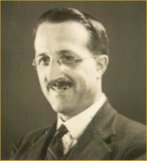
G.R.C. We have been engaged with God relative to His purpose and the Man of His purpose in the first book of Psalms;
- with God as the One who gives effect to His purpose in the second book;
- and with the ways of God in love with His people that we might be brought experimentally into the gain of the truth and to a personal knowledge of Himself in the third book.
We saw that the fourth book has to do with days of recovery and the experiences of the saints in such days.
- They are days when we cannot ignore the sins of the public profession and God’s righteous government on account of them, and so in the prayer of Moses, the man of God, he says,
- “We are consumed by thine anger”, Psalm 90.
- God as God must act in righteous government against those who completely disregard Him in connection with the position of favour and responsibility in which He has placed them in testimony; and we have all had part in the failure.
- According to Psalm 102 the Lord Jesus, in grace, has entered into sufferings in connection with Israel’s failure as the vessel of light and testimony.
- He felt God’s indignation and wrath in connection with Israel’s sins, and was cut off in the midst of His days.
- It would affect us profoundly if we understood that character of the sufferings of the Christ, sufferings which, while distinguishable from those of atonement, led up to, and merged in, the atoning sufferings of Psalm 22: 1-3.
- All blessing for man results from the atoning sufferings of Christ. They afford the righteous basis upon which the dispensation was established in pristine beauty,
- and also upon which God grants recovering grace and mercy in days such as ours.
- In such days we prove in a special way the blessedness of the word,
- The One who was cut off in the midst of His days is “the Same”, and He went into death that we might prove Him, and thus prove God, in that character
- – the one unchanging God, who never deviates from His purpose, but will carry things through to the end, whatever our failure may be.
- As we return to first principles we prove that He is the Same, the Same today as He was at Pentecost.
- In days of recovery we have to go back to first principles, and to the God who has been the dwelling-place of His people through all generations.
- We go back to Him in humble contrition and seek to provide conditions suitable to Him down here so that He may return to us.
- Of course, we know that in this the Spirit’s day, He has never left His dwelling-place – but still there is the need for us to provide conditions suited to the presence of God down here. And therefore the prayer,
- “Let thy work appear to thy servants” and “the work of our hands establish thou it”.
- It is a great thing to be on a line that God is establishing.
- There have been great gospel efforts, and we thank God for every preaching of Christ and what accrues from it in salvation to men,
- but He would have us engaged with constructive work that He can establish.
- In the last 150 years there has been a constructive work that has stood, a work that God has established, such as has not existed since Pentecost.
- True assembly features have become manifest, and that is the thing that we need to be concerned about.
- At the same time, we feel how many of our brethren are not available, but we never give them up in our affections.
- We look on to the Lord’s coming when all the people will say “Amen”.
- The great, final and complete recovery will be when the Lord Jesus comes, when every member of His body will function, and all the people say “Amen”.
- But then in the light of that we hold all in our hearts and have nothing less as our ideal and objective than that all the people should say “Amen” now.
- You say, You will never achieve it, and, no doubt, that is true, but we should have nothing less in our minds, and so this prayer, Psalm 106: 47,
- “Save us, Jehovah our God, and gather us from among the nations to give thanks unto thy holy name, and to triumph in thy praise”
- – includes all saints; and the doxology closes,
“Let all the people say Amen! Hallelujah!”
We come now to the fifth book, the great culmination; a book which, read in the light of Christianity,
- leads us into the expansiveness of the thoughts of God and the fulness of God Himself.
- Certain Psalms in the book prove that it was compiled in the order in which we have it, after the captivity.
- This shows that, in days of recovery, God intends that we should enter into the expanse of His thoughts in purpose, in the power of the Holy Spirit, with a view to our being filled to all the fulness of God. The book links thus with Ephesians.
Psalm 107 shows how God delivers souls out of all kinds of circumstances in order to bring them into the gain of His purpose.
- In the first section it is the redeemed, which includes us all;
- in the second it is those in captivity because of sin and failures;
- in the third it is fools-those who have come into difficulties through sheer folly – and who of us have not;
- and in the fourth, those that go down to the sea in ships, who come to their wits’ end, and then God brings them into blessing.
- This introductory Psalm shows that, in whatever circumstances they may be found, God secures the objects of His purpose, to bring them into the great realm of praise.
Psalm 110 presents the greatness of Christ in His present position at the right hand of God and as the priest after the order of Melchisedec.
- Then the three Songs of Degrees we have read refer to the Ark being brought into its place, a great service performed by God’s Anointed – and the results that flow from it.
- As a place is secured in the affections of the saints for Jehovah and the Ark of His strength, we enter into the whole scope and expanse of God’s purpose – the length and breadth and depth and height to which Paul refers.
- This leads on to the culmination, the great ‘Hallel’ of the last five Psalms, which lead up in Psalm 150 to a crescendo of praise to God Himself in the greatness of His Being.
W.J.S. There is no heading to Psalm 107. It brings before the soul what Jehovah has done
- – “redeemed”, “gathered”, “led”, “satisfied”, “filled” – all His operations in days of recovery.
G.R.C. What a mighty operation redemption is; how it magnifies Jehovah, and every believer comes into that.
- Then what a mighty operation was breaking the gates of bronze and cutting asunder the bars of iron – we have proved it in our day.
- Who would have thought in the Middle Ages that any power could have overthrown the power of Rome? God used, in the main, one man, showing what God can do.
- He has not only operated spiritually in raising up men like Martin Luther, and later Mr. Darby, but He has entered into the political sphere at the same time
- and has set up systems of government in the Western World that have, in the main, been favourable to the testimony to this day, even as were the Persian dynasties of old.
C.J.H.D. Zechariah speaks of a time when all the earth was at rest, and of God using the four craftsmen to keep in control all that would oppose Him.
G.R.C. That is very interesting. God used the chariots also. He used the craftsmen on constructive lines, and the chariots and horses in Zechariah 6 on governmental lines.
- He says that the black horses had quieted His spirit in the north country. The literal application is that He sent forth Persia to deal with Babylon and to break the gates of bronze.
C.J.H.D. In chapter 2 a young man is introduced to Jerusalem, which is able to be measured, and it is going to be
- “inhabited as towns without walls”.
N.F.A. “He led them forth by a right way, that they might go to a city of habitation”, Psalm 107: 7.
- Is the great end in view that souls should be brought to the assembly?
G.R.C. Quite so, and that is what is in mind typically in Zechariah 2,
- “Jerusalem shall be inhabited as towns without walls for the multitude of men and cattle therein”.
- It is remarkable that such a truth should be put before a young man to encourage him in view of what was outwardly a day of smallness.
- “For who hath despised the day of small things?” it says later – chapter 4: 10.
E.C.L. Do you think it is well to encourage young people to have an outline of church history so that the thoughts of God might be enlarged and developed?
- I was thinking of the last verse of Psalm 107,
- “Whoso is wise, let him observe these things, and let them understand the loving-kindnesses of Jehovah”.
G.R.C. That is important, and links with the idea of rehearsal in Psalms 105 and 106. It is a great thing to know how to rehearse God’s ways in grace and in government, do you not think?
E.C.L. I feel it is important to take account of the way God has wrought all down the centuries to bring us to where we are now.
G.R.C. And Zechariah would be a great encouragement to young men.
- He was a young man with plenty of questions, and God takes account of such an one. He says to the angel,
- “Run, speak to this young man”, Zechariah 2: 4.
- Think of God saying that to an angel because He saw a young man who was interested.
- Later Zechariah asks many questions and there is always someone available to answer, although sometimes he has to wait for an answer, and sometimes he is challenged, as when the angel says
- “Knowest thou not what these are?” and he says, “No, my lord”.
- He does not mind admitting he does not know.
- A young man, in a day of recovery, should be full of questions, and if he is, God will see to it that he sees visions.
- Zechariah saw visions, and young men ought to see visions, in the sense in which I am speaking.
- They should have insight as to what God is doing spiritually, and in the sphere of government, at the present time.
- I am applying the idea of vision to insight into what God is doing, and that is what young men need. It will, energise them so that they get to work and fully commit themselves to what is on hand.
- That was the effect on Zechariah. First he had questions, then God gave him visions, and then he prophesied for the rest of the book.
- And if young men had their questions and received answers and spiritual visions, we should hear them in the meeting for ministry. They would prophesy to the end of their days.
A.B. Would he be greatly encouraged with the width of what is committed to him in contrast to Haggai who is given a brief word for the moment? I was thinking of the great scope of his prophecy.
G.R.C. There is a great range in the book. His vision in chapter 3 is in view of the day of recovery.
- Joshua the high priest is really representative of the people and it shows how God would take off the filthy garments and put on the festival robes. It is what God is doing for His people at the present time.
- The filthy garments are those stained with all the sins of Christendom, and God, in His grace, would relieve us of the burden of them, and put on us the festival robes.
- And then the next vision is the lampstand with seven lamps on it, which means that nothing has failed from the divine side, the Spirit is still here, and the full light of God is still available in the Spirit.
C.J.H.D. And the prophecy has a wonderful climax in regard of the name of Jehovah; it says at the end,
- “in that day shall there be one Jehovah, and his name one”, chapter 14: 9.
- Does that look on to the final heading up of things in the glory of the Mediator as He will appear to the universe – God Himself will be there –
- “One Jehovah, and his name one”?
G.R.C. That is very fine. That is, no doubt, the culmination, and it is like the culmination of the Psalms, is it not? There is one Jehovah, every idol is displaced.
- He is known to us as the Father and the Son and the Holy Spirit. There is “one Jehovah, and his name one”.
A.W.P. Does Stephen represent in Christian days, we may say, an example of what you are saying?
- He was able to recount the movements of the testimony in Israel over a long period, and then comes to the point where he sees a vision –
- the heavens opened and the glory of God and Jesus standing
- – and speaks of it in such prophetic power that those who hear are cut to the heart.
G.R.C. Stephen is a very great example of what we are saying. He was a young man and he was full of faith and of the Holy Spirit.
- He was like one of the sons of oil which Zechariah sees:
- “These are the two sons of oil”, Zechariah 4: 14;
- although they represent a company rather than individuals.
- There is the lampstand and the seven lamps, and then there are the two sons of oil,
- which involves exercise on the part of the saints to be in the matter, it seems to me:
- Stephen was one who was in the matter, he was full of the Holy Spirit.
H.A.H. Would that link on with Psalm 110, the dew of the Lord’s youth, literally ‘young man’?
G.R.C. That is good. I am glad you have moved us on to Psalm 110. I think that is a pivotal point in the Psalm,
- because verse 2 no doubt is future and we are wanting to apply the Psalm to the present, and I think we can give a present application to verse 3,
- “Thy people shall be willing in the day of thy power, in holy splendour: from the womb of the morning shall come to thee the dew of thy youth”, or the ‘dew of thy young men’.
- The Lord has such available, the service is carried through by them.
G.W.B. Would you apply the first half of the last verse to the present time also? I was thinking of what the Lord receives at the supper.
G.R.C. So that, while the Melchisedec view of Christ does not emphasise His portion, as does the view of the king in Psalm 45, yet there is just this touch, that He drinks of the brook in the way. How precious that must be to Him as having the service of God in mind.
G.W.B. Do you think it is on the way to His rule in Zion, His public glory?
G.R.C. Quite so, and I was thinking of it now as on the way to the service of God.
- “Thy people shall be willing in the day of thy power”.
- One would apply this verse to the way the saints become willing and available as the Lord comes amongst us, and secures complete sway in affection over us, so that it becomes the day of His power.
- It is not only the day of His espousals, the day of the gladness of His heart, according to the Song, but it becomes the day of His power, and we become available to Him in the service of God in holy splendour.
G.H.S.P. You have in mind, I judge, that as the Lord is refreshed and we find our part with Him, it really sets in motion the whole of the spiritual side of the service of God?
G.R.C. Exactly. Verse 3 thus becomes operative, the people willing in the day of His power in holy splendour. What a setting this is! Then it says,
- “from the womb of the morning”
- – no doubt an allusion to the death of Christ –
- “from the womb of the morning shall come to thee the dew of thy youth”, or ‘thy young men’;
- as we sing sometimes, “Lord, around thee are thy brethren”. The Lord has those available for the service of God.
J.L.W. Would you link it with John 20?
G.R.C. I would. I think John 20 in a particular way presents the tomb of Christ as the “womb of the morning”.
- And Mary of Magdala is the hind of the morning, representing the assembly; and the Lord says,
- – they are like the young men, “the dew of thy youth”.
W.McK. Does the primary thought of God, namely sonship, underlie the service? I am thinking of the word,
- “Let my son go, that he may serve me”, Exodus 4: 23.
- That is, he is to be set free from every power that would hold him. As regards Paul’s ministry, did he not begin there?
G.R.C. He did. I am sure sonship is basic in Christianity. God says,
- “Let my son go, that he may serve me”;
- but where was His son to serve? He was to serve in the tabernacle, which is a type of the assembly.
- He was to serve later in the house that Solomon built, another type of the assembly.
- So that the sons of God serve in the assembly, not exactly in the family setting, although that underlies it, but the assembly is the sphere of service.
W.McK. And is that the view you are taking of the results of the death and resurrection of the Lord Jesus, that out of it comes everything for God?
G.R.C. Yes, everything for God, whether we are viewed as His brethren or His body and His bride, or the sons of God.
M.H.T. Is what you are suggesting also to be illustrated in a well-known incident in David’s history, when the three mighty men break through the host of the Philistines to fetch their king a flask of water from his native well and that action stimulated David to pour it out as a drink-offering to Jehovah?
G.R.C. That is good. The water was for David’s refreshment, but he did not drink it himself. As you say, it stimulated him in the service of Jehovah.
N.F.A. Would you say a little more about sons not serving in the family but in the assembly?
G.R.C. I think that is how scripture presents it. The family is not exactly a service unit.
- Luke 15 does not involve the service of God; it is the Father’s joy in the son and the music and dancing and merriment.
- The joy and the intimacies of family life underlie assembly service, but assembly service proceeds under the headship of Christ in holy splendour.
- In all its parts it is worthy of God in His greatness.
- Even though we are addressing the Father, the manner, and the deportment of the saints and the whole setting of the service, as under the eye of heavenly intelligencies, is worthy of the great King.
N.F.A. The family side of things would give us liberty?
G.R.C. Quite so. The family is like divine home life.
- But the assembly is the great official vessel, as we might say, of service;
- and divine sovereignty enters into its composition, each having his divinely ordered place.
- As sons we are all firstborn, there is no distinction, but in the assembly each has his own place and fits into his own position,
- and we are dependent upon Christ as Head to give impulse and direction to the whole service, as King Solomon did in the type.
A.M. Would you say why the priesthood of Aaron is superseded by what is greater according to Hebrews 5?
G.R.C. Does not the Melchisedec type bring out the greatness of the Person who is priest? He is a priest after that order. The Psalm begins,
- “Jehovah said unto my Adon, sit at my right hand”
- – no one else has ever been invited to do that; and while it refers to the Lord in manhood, of course,
- yet no one other than a Divine Person could occupy such a position.
- Then in verse 5 it refers to Him as
- “the Adonai at thy right hand”.
- That title refers to the lordship and authority that is His in the right of His own Person.
- The testimonial position is that God has made Jesus both Lord and Christ; but we have to recognise that lordship is also His by personal right.
C.J.H.D. Hebrews 7 says, “Consider how great this personage was”, verse 4; but we can say of Christ, Consider how great His person is, can we not?
G.R.C. Yes, and that is what this Psalm would bring home to us. According to Hebrews He set Himself down at the right hand of the greatness on high.
G.W.B. Others are not associated with Him in this setting.
G.R.C. No one could be associated with Him in this setting.
- We must remember, too, that the name Melchisedec means
- God never dissociates the idea of king and priest. It says in Hebrews 7: 2 that he was first king of righteousness, then king of Salem, which is king of peace.
- King of Salem links with Jerusalem, the place of peace. There is a strong assembly link in that way.
- He is King of righteousness, and Jerusalem is the city of righteousness; He is the King of peace, and Jerusalem means the place of peace.
- And then, being King of righteousness and King of peace, He is the priest of the Most High God, there is nothing to hinder Him in priestly service.
J.C.T. Is it your thought that as our affections receive a fresh impression of the greatness of Christ, we are brought into living conditions in which the service proceeds?
- He says in the Song of Solomon,
- “Before I was aware, my soul set me upon the chariots of my willing people”, 6: 12.
- That would prepare the way for the upward movement you have in mind?
G.R.C. I do believe that an appreciation of the greatness of the person of Christ greatly helps us to be willing in the day of His power, in holy splendour.
- Nothing gives us such a sense of the holy splendour of our own place before God as an impression of the unspeakable greatness of Christ.
W.H.K. Would it be out of place to refer to Psalm 96 – it was read this morning but not touched upon –
- “Give unto Jehovah the glory of his name; bring an oblation and come into his courts; worship Jehovah in holy splendour”?
G.R.C. I would say that there you have the willing people.
I think now we ought to move on to the Songs of Degrees, because it is a question there of arriving at the full expanse of the thoughts of God in purpose, which centre in the Ark.
- I believe this is the only time the Ark is mentioned in the Psalms, although it is implied in such expressions as,
- “He sitteth between the cherubim”, Psalm 99: 1.
- But we see in Psalm 132 the relation between God’s Anointed of Psalm 2, and the Ark.
- One of the great services of God’s Anointed is to bring the Ark into its place in the affections of the saints,
- and, if the Ark is in its place, we can look out on the length and breadth and depth and height of the whole sphere of God’s purpose.
H.A.H. Is there a distinction between this Psalm and Psalm 48? In Psalm 48 the nations, and what is outward, is in view, but here it seems to be what is inward?
G.R.C. I think the second book of Psalms has the testimonial position in mind, both now and in the day of display,
- but I believe this book has in mind the saints arriving in their spirits, in the power of the Holy Spirit, at the full expanse of God’s purpose.
J.L.W. Are you thinking of the expression
- “that the Christ may dwell, through faith, in your hearts”, Ephesian 3: 17?
Is that the Ark in its right place?
G.R.C. That is what I understand. I believe the prayer in Ephesians 3 brings in both the Ark and God’s Anointed. When the apostle prays
- “that the Christ may dwell, through faith, in your hearts”,
- I think he has in mind that the saints should, in their affections, apprehend Christ as the Centre of the Divine System, typified by the Ark; but when he says
- “to know the love of the Christ which surpasses knowledge”
- he would include in his thoughts the active love of the Christ – King Solomon and his activities being the type.
- The Ark typifies Christ in the greatness of His Person as the centre of the system – a fixed position: “Every circle gathered round Him” as the hymn says.
- But Solomon is the active view of Christ – God’s Anointed – whose love surpasses knowledge.
- His love moves in all directions, towards God, towards the assembly, towards every family, and He would put the Ark in its place, and every family in its place relative to it.
A.A.B. Would you be free to say a word as to the distinction between David bringing the Ark into the tent he had prepared and the final thought of Solomon bringing the Ark into the most holy place?
G.R.C. I think David bringing it up would link more with Colossians; the outward surroundings were not yet present in all their magnificence,
- and so what was stressed in David’s day was the greatness of the Ark itself.
- The Colossian position, which is our actual position down here, as under the headship of Christ in localities, is a blessed one, because,
- although we are not yet actually in surroundings of infinite glory, we have the Ark;
- and in such circumstances the greatness of the Ark specially engages the attention.
- I suppose there is no greater presentation of Christ than in Colossians 1.
- But I think Solomon links with Ephesians;
- he brings the Ark, typically, into its own eternal setting, a most glorious setting, and I think that is the idea of Ephesians 3.
- So that the Ark is not, in itself, so prominent as under David, because the whole setting is so glorious.
A.A.B. And that runs on to the thought of the glory of God filling the house of Jehovah?
G.R.C. Quite so. For the full thought, we have to link David and Solomon together,
- and I think that is in mind in Psalm 132.
- David never had less than the full thought before him because he desired to build Jehovah a house, but God said,
- “thy seed … shall build me a house”, 1 Chronicles 17: 11.
- “Arise, Jehovah, into thy rest, thou and the ark of thy strength”, Psalm 132: 8
- – would include the occasion when he brought it up and put it under curtains, but the house was really in view and, therefore,
- in 2 Chronicles 6: 41, Solomon actually quotes this, with slight enlargement, when he brings the Ark in.
- He says, “And now, arise, Jehovah Elohim, into thy resting-place, thou and the ark of thy strength: let thy priests, Jehovah Elohim, be clothed with salvation, and let thy saints rejoice in thy goodness”.
- You will notice he adds the word “Elohim”, which suggests the whole scene of glory as standing related to God in His supremacy and majesty – “Elohim”.
E.C.L. Would that be the suggestion in worshipping at His footstool? Is that not an acknowledgement of all that God is?
- While we know Him, yet we acknowledge that there is much beyond what we may be permitted to know. The sense of this promotes worship.
G.R.C. That is very beautiful. While the Lord says,
- “We worship what we know”, John 4: 22
- – we always do it in the sense that there is that which is infinitely beyond us.
D.S.H. Why is it that in verse 9 there is the desire that the priests should be rightly clothed and for the saints to shout for joy? And then in verse 16,
- I will clothe her priests with salvation and her saints shall shout aloud for joy”.
G.R.C. It links somewhat with Ephesians, does it not?
- “But to him that is able to do far exceedingly above all which we ask or think” Ephesians 3: 20.
- The answer was more than was asked for, and God alone can clothe us aright and make us great and strong in such a realm of glory as this.
- David said, “in thy hand it is to make all great and strong”, 1 Chronicles 29: 12.
A.W.P. Would you say more as to the distinction between the Ark and Solomon as types?
G.R.C. While activity characterises the Ark earlier – it goes before the people in Numbers 10 to find a resting place – its final setting suggests a fixed position.
- It typifies Christ as the Centre, the One who gives character to the whole realm of glory, and the One to whom God is fully committed.
- If the Ark is there, God is there, for He sits between the cherubim. And so it is,
- “Arise, Jehovah Elohim, into thy resting-place, thou and the ark of thy strength”.
- God comes in with the Ark – a wonderful thought.
- In Psalm 2 it is Jehovah and His Anointed; but Psalm 132, the link, is between Jehovah and the Ark of His strength.
- These are great thoughts in scripture – God and His Anointed, and God and the Ark of His strength.
- It is through the outshining and the operations in grace of the Father and the Son and the Holy Spirit, that God secures all that He had in mind in purpose.
- He has, in the Son, His Anointed, and that same Person is the Ark of His strength, the Centre of the whole realm of glory.
- The Father names the families, but the end in view in it all is that God in all His greatness and supremacy is enshrined in the universe of bliss in relation to the Ark of His strength.
G.H.S.P. Does the love which is peculiarly linked with the name of the Father and the Son and the Spirit ensure conditions in which the greatness of God as God can be taken account of?
- Many of us would like some further help on the matter of God as God involving wider glories than God known in the Father.
- Does the Father’s realm ensure the atmosphere of love in which the glories of God, which we have been enjoying in the Psalms, find expression?
G.R.C. That is what I thought. God was made known under the name ‘Jehovah’ to Israel; it was, for them, a name of relationship,
- and the value of that name, as of every Old Testament name, remains.
- But for the fulfilment of what God had in mind it required operations of grace and relationships of love
- which involve the Incarnation and the declaration of the name of the Father and of the Son and of the Holy Spirit;
- and it is by way of these operations of grace and love and tenderness which characterise the activities of the Father and the Son and the Holy Spirit, and the intimate relations into which they introduce us,
- that God, as God, gives effect to His great and eternal purpose to be the Centre of the universe, in relation to the One who is the Ark of His strength.
W.J.S. Does the glory of the Ark suggest a Divine Person in manhood?
- There was a moment, as the scripture suggests, when everything hung upon a creature, the anointed cherub. He fell, there was breakdown.
- Then everything hung upon the creature man in the garden, and he broke down.
- But is the glory of the Incarnation that God has effected all His thoughts and purposes in One in whom there could be no breakdown or failure?
- One great impression which will remain in my soul from these readings is the glory of the Incarnation.
G.R.C. That is very fine. Upon the Ark was the mercy-seat.
- Apart from the mercy-seat, the Ark would be alone, but through the mercy-seat it stands related to the whole universe of bliss.
- The cherubim overshadow it – the rights of God are fully maintained. The Ark is a remarkable type.
- One has come in upon whom God can wholly depend, and the universe, as held in relation to Him, becomes the scene of God’s rest.
W.McK. Would Solomon, the more active type of Christ, indicate the Lord’s personal part as Man in the service of God?
G.R.C. I think so. David says, as typical of the Lord,
- “in the midst of the congregation will I praise thee”, Psalm 22: 22.
- So that David and Solomon represent the more active side of things.
- The love of the Christ surpasses knowledge because of who He is in His Person, but it is an active love, and one of the greatest services He performs is to bring the ark into its place – see 2 Chronicles 5: 7-10.
S.H. Would you help us as to the expression
- “to him be glory in the assembly in Christ Jesus”?
- Does what you are saying connect with that great thought, a creature
vessel employed eternally in response to God, but sustained in Christ Jesus?
G.R.C. No doubt it relates to the special status of the assembly.
F.G.S. Would you say that in 1 Corinthians 15 we see the Ark arising and scattering the enemies, according to Numbers 10,
- and in Ephesians 3 the Ark returning to its rest amongst the myriads, so to speak?
G.R.C. Quite so. We are engaged now with the Ark entering into its final rest, and the great fact that God is linked with the Ark.
- One would like to understand better the two great thoughts, Jehovah and His Anointed, and Jehovah and the Ark of His strength.
- They bring before us the One by whom and in whom God’s purpose is effected.
S.E.W. Is that the thought in Psalm 132: 13 and 14?
G.R.C. Quite so. “This is my rest for ever; here will I dwell, for I have desired it”.
- The anointing in its kingly character, as bringing to pass the mind and will of God, is seen in Psalm 132,
- and in its priestly character, as the fragrant oil, in Psalm 133.
- The ark is in its place and the whole system is fragrant.
- God’s king is also His priest and the anointing pervades the whole system
- “like the precious oil upon the head, that ran down upon the beard, upon Aaron’s beard, that ran down to the hem of his garments”.
A.A.B. “By the Spirit all pervading” – is that the thought?
G.R.C. Quite so. And then it is like the dew of Hermon.
- Hermon is a mountain in Lebanon three times as high as Zion, and the dew fell upon the mountains of Zion.
- The dew of Hermon may refer to what comes down from the Man who has ascended above all heavens. He has gone higher than we can go.
C.J.H.D. So it is the anticipation of heaven before we get there.
- I was wondering whether we could link the fifth book of Psalms with the end of the fifth book of Moses, and link both with Ephesians,
- remembering the words of our beloved leader in 1935, “What would heaven be without the saints in it!”
- Moses saw the tribes in the land before they were actually there.
G.R.C. Very good.
A.W.P. I would like to enquire the significance of Zion, especially in the Songs of Degrees. Does the idea of His mercy link with it?
G.R.C. I would think it refers to the accomplishment of all God’s purposes on the basis of sovereign mercy.
And now we ought to proceed to the close of the book, and particularly the last Psalm.
W.T.E. Would you say why the Songs of Degrees are intertwined in the fifth book of Psalms?
- They seem to give a spiritual touch, ending up with blessing in each verse of Psalm 134; while in Psalm 150 it is praise in every verse.
- I thought blessing was a higher form of worship than praise.
G.R.C. Is not blessing that which rises from the soul?
- “Bless Jehovah, O my soul, and all that is within me bless his holy name”,
- whereas praise is that which is expressed and which enters into testimony, because
- the high praises of God now and in the world to come, and, I suppose, even in eternity, will be a great testimony to the whole universe. Is that so?
W.T.E. Yes. I thought that the Songs of Degrees bring out a priestly atmosphere known only to the saints in an ascending way until we get to the thought of praising Jehovah.
G.H.S.P. Could we have your thoughts on this crescendo in the last Psalm?
G.R.C. The last five are “Hallelujah” Psalms, and they begin as it were at the bottom, showing the scope of praise to God, for in Psalm 146: 7-8 it says,
- “Jehovah looseth the prisoners; Jehovah openeth the eyes of the blind”.
- In Psalm 147 it is what He does for the assembly,
- “Jehovah doth build up Jerusalem; he gathereth the outcasts of Israel”, verse 2
- – another touch as to days of recovery; and then in verses 13-15,
- “He hath strengthened the bars of thy gates”
- which would link very much with Nehemiah,
- “He hath blessed thy children within thee; He maketh peace in thy borders; He satisfieth thee with the finest of the wheat. He sendeth forth his oracles to the earth”.
- Psalm 148 is occupied with creation, beginning with the angels, and shows that we need to take account of creation and of God as Creator, both as to this creation and new creation.
- The idea of creation enters much into the praise of God. It is referred to in Romans, Corinthians, Colossians, Ephesians, 1 and 2 Peter and Revelation, as well as in the Gospels.
- Psalm 150 is the great climax of praise. J.N.D. points out that the name of relationship – Jehovah – does not occur in it;
- but that the names used – Jah and El – refer to God in His self-existence and Essence.
- Jah occurs in each of the last five Psalms. “Hallelujah” means “Praise ye Jah”.
- It is one of the most remarkable names of God, the name which most nearly conveys absoluteness.
- ‘Jehovah’ is more His continuous existence, the One who is, and who was and who is to come, the One who has had to do with time in order to effect His purpose.
- By this name He was specially known to Israel, but the knowledge of Him thus was to lead them
- to “Jah”, the essential Object of praise,
- and to the praise of “El”, that is, God in the greatness of His Being, in His sanctuary.
As in the gain of the full declaration of God, those who belong to the assembly are qualified, in a way that Israel never will be, to praise God thus.
- I know we have to be careful in such statements, for we cannot apprehend God in His Essence, nor can we approach Him where He dwells in unapproachable light; nevertheless,
- the way He has come out in declaration gives us some insight, some penetration, into the blessedness of what He is in His Essential Being.
- The Lord Jesus, the Son, is
- “the effulgence of his glory and the expression of his substance”, Hebrews 1: 3; or “essential being”, see note f.
- J.T. wrote in 1943, “Scripture gives no definite line between what is revealed and what is not revealed. That is to say, what is revealed is not detached from the inscrutable”.
- Psalm 150 shows that the ultimate in praise is not the name of relationship,
- but the praise of God in His self-existence – Jah –
- and in His Essence – ‘El’ the Mighty – in His sanctuary.
- His sanctuary is, of course, the assembly, for the assembly is the shrine where God dwells.
- Yet to be in the sanctuary truly involves being in the nearest place in which the creature can be to God as God, a place where there is scope for the power of spiritual penetration.
- I do not want to suggest that we can penetrate the absolute – I trust the brethren will not misunderstand me – nevertheless, the One who dwells in light unapproachable has come out to us,
- and the more we know of Him in the way He has been revealed, the more penetration we shall have into the blessedness of His Being.
- One link between what He is as revealed and what He is in His Essential Being is love – God is love, and he that abides in love abides in God and God in him.
- The God we know and worship cannot be compassed by a creed, nor by any human terms; He is infinitely beyond us.
- Yet, in the power of the Christian revelation we are set down in that most favoured, most holy place, to praise Him in His sanctuary.
- We praise Him, too, in the firmament of His power, as being ourselves the subjects of that power.
- We are in the firmament, which refers to the expanse or heaven, through His power, for
- He has “raised us up together and has made us sit down together in the heavenlies in Christ Jesus”, Ephesians 2: 6.
- We praise Him in His mighty acts, and according to the abundance of His greatness.
G.H.S.P. Does it help to see that the service of praise is cumulative? None of the earlier touches of love are left behind; all are carried forward, are they not?
- I was thinking of what beloved J.T. said that the brethren of Christ, the assembly as united to Christ, and the sons associated with Him in the Father’s presence, are all to be carried forward in our minds, as it were, as we take on this final thought.
- The very knowledge that there remains something outside creature knowledge can only promote a spirit of worship.
G.R.C. I believe that if we entered in fulness – and the Spirit would help us – into our relationships with Christ as His brethren and as His bride, and into our place in sonship with the Father,
- we would have no difficulty about worshipping this blessed God, this great self-existent One, the One of whom it says the Lord Jesus is the expression of His “essential Being”.
- We are in the presence of such an One, though He is infinitely beyond our finite apprehension.
G.H.S.P. Yes, “filled even to all the fulness of God”, Ephesians 3: 19.
G.R.C. Then every kind of instrument is brought in.
- First it is where we praise Him, in the sanctuary, in the firmament of His power, in His mighty acts;
- then according to the abundance of His greatness;
- then how we praise – with every kind of instrument; and then finally,
- “Let everything that hath breath praise Jah. Hallelujah!”
F.J.D. Is that the glorious, eternal answer to Genesis 2: 7, God breathing into man’s nostrils the breath of life, and “man became a living soul”?
G.R.C. That is very fine. “Let everything that hath breath”; everything that breathes, everything in which there is any life from God at all, is called upon to praise Him.
A.W.R. Does the doxology in Timothy help as to the character of praise to God in His Essence to which you refer,
- “The King of those that reign, and Lord of those that exercise lordship, who only has immortality, dwelling in unapproachable light; whom no man has seen, nor is able to see; to whom be honour and eternal might. Amen”.
G.R.C. I think so. It is one of the most profound of the doxologies. Are we saying what is right, Mr. W.?
H.W. I am going with it thoroughly, and enjoying it.
F.L.R. Is it good to see that the trumpet is used in Psalm 150? It is used previously in redemption’s claims clearly uttered in the journeying of the camps and an alarm in the night, and now used again in the day of gladness when God comes in to His own?
G.R.C. Very good.
Page Top Reading 5 Top
| GOD DWELLING |
|---|
Address by G. R. Cowell, Ealing, June 1954
1 Timothy 6: 14-16; Isaiah 57: 15
Exodus 25: 8-9; Psalm 132: 14; Revelation 21: 3
The Headship of Christ and of God: 292-302
|
|---|
Each passage we have read refers to God dwelling.
1 Timothy 6: 14-16
- According to the first passage He dwells in light unapproachable; it says of Him,
- “who only has immortality, dwelling in light unapproachable; whom no man has seen, nor is able to see; to whom be honour and eternal might. Amen”.
- Paul’s heart is moved in worship to the God who dwells, in the self-sufficiency and greatness of His essential Being, in light unapproachable, entirely beyond the vision of the creature.
- It is remarkable that a worshipper should give expression to this, and I suppose only a worshipper could do so.
- Paul himself is the outstanding example of a worshipper in the New Testament.
- As he touches one truth after another, even while writing epistles, he breaks out in worship, showing what a constitutional worshipper he was.
- In Romans he has only to mention God as Creator,
- as he calls Him, when his heart is moved to worship, and he says,
- “who is blessed for ever. Amen”, 1: 23, 25.
- And so later in that epistle, as he touches one important truth after another, he gives expression to a doxology.
- It is such a man as that who gives us this statement as to God,
- “dwelling in light unapproachable; whom no man has seen, nor is able to see”.
- How did Paul know about this? It does not say here that God is dwelling in thick darkness. That was so in Old Testament times, as far as men were concerned;
- but God in His absoluteness dwells in light, although it is unapproachable.
- It magnifies God in our minds and thoughts to know that He dwells in light, although it is entirely beyond us.
- What a marvellous thing it is that the God who dwells there, and ever will dwell there, should move out from that seclusion where no one has seen, nor could see, Him!
- He is there in His own self-sufficiency and self-existence. Why should He move out from that seclusion where He is beyond the knowledge of the creature in every way?
- I believe the answer lies in what has been revealed as to the nature of God, that God is love, and that He desired to be known and to be loved responsively by intelligent creatures.
- Indeed, He desired to dwell among such – that is marvellous – and the creature upon whom His heart was set, according to eternal purpose, was Man.
- We do not read that God ever dwelt, or will dwell, with angels. He dwells in light unapproachable,
- but when it speaks of His dwelling in other ways, as in the scriptures we have read, it speaks of Him dwelling with men.
- It is a marvellous thing that God has come out from the seclusion where He dwells in His own self-sufficiency, having in mind to dwell with men,
- because man is an order of being capable of taking in and responding intelligently to the disclosures of Himself that He had in mind to make; responding affectionately and in praise.
- And so, from the outset of God’s creational activities, wisdom’s delights were with the sons of men.
I suppose we might think of God moving out from His place of seclusion, in the first instance, to act in creation.
- We are told that all things were made by and for the Son and that He upholds all things by the word of His power.
- “The heavens declare the glory of God; and the expanse showeth the work of his hands”, Psalm 19: 1.
- The immortal, invisible, incorruptible God began to express Himself in creation, “Framed with wondrous skill”.
- He manifested His eternal power and divinity, and made known to the man He had made, His perfect goodness and beneficence in surrounding him with every tree that was pleasant to the eyes and good for food,
- and by putting the tree of life in the midst of the garden, showing that His mind for man was life.
- He made Himself known thus as the blessed God, and that is why Paul, when he speaks of Him in Romans as the Creator, says,
- “Who is blessed for ever. Amen”, Romans 1: 25.
- Do we worship God, dear brethren, sufficiently as Creator? Paul says men have
- “changed the glory of the incorruptible God into the likeness of an
image of corruptible man, and of birds and quadrupeds and reptiles”,
- and also says that they “honoured and served the creature more than him who had created it, who is blessed for ever”.
- God has proved in creation that He is blessed forever, and in framing the creation with wondrous skill He had in mind from the very outset the bringing in of Christ as the Centre –
- “all things have been created by him and for him”, Colossians 1: 16.
- If we do not understand that we do not understand the purpose of the creation. Further, it says that He is before all.
- And so in Romans 9, when Paul says
- “of whom” [i.e. of Israel] “as according to flesh, is the Christ”,
- he immediately adds, in a spirit of worship,
- “who is over all, God blessed for ever. Amen”, Romans 9: 5.
- Are you a worshipper of Christ? No mere man, no one, indeed, but a Person of the Godhead, could be the Christ.
- In the Incarnation God was bringing in the Person who is to be the Centre of the vast creation, the One by whom and for whom all things were made.
- The coming in of Christ has laid the basis for God to dwell eternally with men.
Isaiah 57: 15
To proceed to our second scripture, Isaiah says,
- “For thus saith the high and lofty one that inhabiteth eternity, and whose name is Holy: I dwell in the high and holy place, and with him that is of a contrite and humble spirit, to revive the spirit of the humble, and to revive the heart of the contrite ones”, Isaiah 57: 15.
- What a touching passage that is! God could speak in this way because Christ was coming in.
- If He could dwell in past dispensations with those who were of a contrite and humble spirit it was because Christ was to come and accomplish the work of redemption.
- Their faith looked on to Christ. From Abel onwards – indeed, from Adam onwards, faith ever looked on to Christ.
- God was going to set Him forth a mercy-seat. He could never be the Centre of the vast creation, sin having come in, unless He were a mercy-seat.
- God has now set forth Christ Jesus a mercy-seat, through faith in His blood, and the value of His work has its effect backwards as well as forwards. As it says in Romans,
- “For the showing forth of his righteousness in respect of the passing by the sins that had taken place before, through the forbearance of God; for the showing forth of his righteousness in the present time, so that he should be just, and justify him that is of the faith of Jesus”, 3: 25-26.
- It is a wonderful thing that, although God had in mind to dwell with men, the fulfilment of it awaited redemption; there is no suggestion of God dwelling with man in innocence.
- I do not think man in innocence could have provided suitable conditions for this high and lofty One to dwell. Man in innocence had not power nor capacity to take in His thoughts and to be responsive to Him.
- It is on the basis of redemption that He says,
- “I dwell in the high and holy place, and with him that is of a contrite and humble spirit”.
- How wonderful that this glorious God is prepared to dwell with each one of us here! And the condition is that we should be of a contrite and humble spirit. He dwells with none else.
- In John 14, in the light of the full Christian revelation, the Lord says,
- “If anyone love me, he will keep my word, and my Father will love him, and we will come to him and make our abode with him”, verse 23.
- This is how God dwells with an individual in our dispensation.
- A man of a humble and contrite spirit would be a man who loves Jesus and keeps His word.
- He has no confidence in himself, he has learned to judge himself, but he loves Jesus and keeps His word. And of such an one the Lord Jesus says,
- “my Father will love him, and we will come to him and make our abode with him”.
The God who dwells in unapproachable light has now been fully declared.
- He was made known in a partial way to His people of old; Moses, it says, could see His back parts when he saw His glory,
- but we are privileged, as it were, to see Him face to face in Jesus.We behold the glory of the Lord with unveiled face.
- God has moved out in such a manner that a Person of the Godhead has come into manhood, and He is the image of the invisible God.
- The God whom no man hath seen nor is able to see has come into full expression.
- It says of the Lord Jesus, the Son, that He is
- “the effulgence of his glory and the expression of his substance”,
- or essential Being – Hebrews 1: 13, see footnote.
- It does not mean that a creature could compass all that has been expressed,
- but it does mean that everything that men, empowered by the Holy Spirit, can apprehend as to God is now in full expression.
- I am certain that more has been expressed than we shall ever take in or could take in, for God has come out so completely in the Son.
- Nevertheless, what a vast range there is that we can take in by the Spirit. A Person of the Godhead has come into manhood, and He is the image of the invisible God.
- Furthermore, the Holy Spirit has come to take up His abode with us and to dwell in us, giving us power to take in what has been expressed in so far as it is possible for the creature to do so. What favoured persons we are!
- The coming out of God from the seclusion of unapproachable light involves the declaration of His name, the name of the Father, and of the Son, and of the Holy Spirit;
- and in John 14: 23 the Lord Jesus shows how the gain of that is available for one man.
- Earlier He says of the Holy Spirit,
- “He abides with you, and shall be in you”, John 14: 17.
- He is referring to the company there, of course.
- The declaration of God was in view of dwelling, first of all on the part of the Spirit –
- “He abides with you, and shall be in you”.
- Then He says, “If any one love me, he will keep my word, and my Father will love him, and we will come to him” – the Father and the Son – “and make our abode with him”.
- The Spirit is already there, as we may say, but the Father and the Son will also come to him and make Their abode with him. That is a most amazing statement, and the only explanation of it is love.
- “If anyone love me” – that is, the responsive love which God is seeking – “if anyone love me, he will keep my word”.
- If we love, we shall provide suitable conditions for God to dwell.
- If the God who dwells in unapproachable light is to dwell among men it must be on His own terms, in accordance with His holiness. To lay the basis for it Jesus has been into death.
- In coming out to dwell with men God surrenders nothing of what is due to Him in His nature and His attributes.
- But “if any one love me he will keep my word”; he will provide the conditions and “my Father will love him, and we will come to him and make our abode with him”.
- How much is available, beloved brethren, to one who is of a contrite and humble spirit in the present day.
- Such a person will love the Lord Jesus and keep His word, and come in for the infinite blessing,
- not only of the Spirit dwelling in him, but of the Father and the Son coming to him and making Their abode with him.
- All that comes about because God is love, and He comes to such a person for His own satisfaction. The Father, the Son and the Spirit find satisfaction in abiding with one such person.
- I would say again that it is because God is love that He has come out in declaration and revelation;
- love so looks for response, so requires an answer, that the Father, the Son and the Spirit will come down, as it were, to one person for Their own satisfaction.
Exodus 25: 8-9
But in Exodus 25 Jehovah speaks of a corporate dwelling-place. He appeals to those whose heart prompts them.
- I need not say that those who are of a contrite and humble spirit will be amongst these willing-hearted ones. And He says,
- “They shall make me a sanctuary, that I may dwell among them. According to all that I shall show thee, the pattern of the tabernacle, and the pattern of all the utensils thereof, even so shall ye make it”.
- What a call this is for responsive love on our part! God would have, we may say, a corporate or collective dwelling.
- He will come down to abide with one person, but that is not the full thought of God. He has a pattern before Him, and that pattern involves the tabernacle, which is typical of the assembly.
- It involves the saints set together as one body in Christ, and members one of another, according to Romans 12;
- set together as one body in relation to the Holy Spirit, according to 1 Corinthians;
- set together as Christ’s body in relation to Christ as head, according to Colossians;
- and with the Christ enshrined in their hearts, according to Ephesians.
- That is the pattern, and if we are to know God dwelling, things must be according to the pattern.
- Alas, the dwelling of God is very little known in Christendom.
- Where there is a humble and contrite spirit God will dwell with that man; but the dwelling of God in a collective way is very little known, if at all, in Christendom.
- Yet to know the dwelling of God in a collective way is far greater than anything we could enjoy as individuals. It is worth going in for.
- Paul has given us the pattern. The pattern is clearly laid down in scripture – the tabernacle itself is typical of the pattern –
- but Paul’s ministry helps us to understand the typical teaching, and if you follow the epistles – Romans, Corinthians, Colossians and Ephesians – you find the pattern.
- Let us go in for these things, dear brethren.
- The blessed God has come out from the seclusion where He dwells in light unapproachable, desiring to dwell with men; not with angels, but with men.
- He has come out in a way calculated to touch and win our affections. We have been reconciled to Him through the death of His Son, in order that there might be willing-heartedness.
- In fact He has put us in the place of sons: He said,
- “Let my son go, that he may serve me”, Exodus 4: 23.
- We have sung:
“But our God, how great Thy yearning
To have sons who love”.
God sent forth His Son that we might receive sonship; God is seeking sons who love.
- He has sent the Spirit of His Son into our hearts and the answer of love in sonship is seen in the willing-hearted.
- “Let my son go, that he may serve me”.
- How are we going to serve? This was the first great act of service – the willing-hearted bring all the material for God’s dwelling-place.
- We bring ourselves, we hold ourselves available, and all that we have for the dwelling-place of God.
- We are prepared to be governed by the pattern.
- It costs something to accept the truth of Romans, Corinthians, Colossians and Ephesians.
- It means parting company with ourselves; it means judging our old man and having done with him.
- But it is well worth while: what great compensation even for us! For as we are prepared to fit together and form this habitation of God –
- “a sanctuary, that I may dwell among them”
- – we experience the blessedness of God dwelling among His people, here and now.
- God dwells with us in the most intimate conditions.
- We know the Father’s love and glory,
- we know the love of the Christ which surpasseth knowledge,
- we know the love and service of the Spirit.
- How well worth while to provide conditions where the Spirit can be completely free, where the Lord Jesus has His place amongst us, and where the Father’s love and glory shine upon us.
- “Let them make me a sanctuary, that I may dwell among them”.
- But what lies behind the whole matter is that God is love. It is God coming out to seek an answer which only men as secured in the place of sonship can give;
- no other order of being could give God the response which He is seeking.
- It is amongst men that He would dwell,
- not waiting until the eternal state, but dwelling with us here in these mixed conditions,
- provided we are prepared to be governed by the pattern.
- May the Lord encourage our hearts in this.
Psalm 132: 14
I pass on now to Psalm 132, where it says as to Zion,
- “This is my rest for ever, here will I dwell, for I have desired it”, verse 14.
- This Psalm is typical of that which is wider in scope than God’s present dwelling.
- It is something we can enter into now in our spirits, but it really takes in the full purpose of God, brought to pass typically under Solomon, when he said,
- “And now, arise, Jehovah Elohim, into thy resting-place, thou and the ark of thy strength”, 2 Chronicles 6: 41.
- God is moving on to the fulfilment of His purpose. His Christ will bring all to pass – He has been anointed to that end.
- The time is shortly coming when Jehovah and the Ark of His strength will be the centre of a universe of bliss.
- Every family secured from every dispensation will find their centre in God and the Ark of His strength – “every circle gathered round Him”.
- And that is God’s rest forever. There He will dwell, for He has desired it.
- Nothing less was in His mind in coming out from the seclusion of His dwelling in light unapproachable.
- He had in mind, in purpose, a universe of bliss where every family would find its centre in Himself and the Ark of His strength.
- Then God’s delight will be complete, His glory will be fully displayed, the purpose for which He has come out from the seclusion of light unapproachable will be fully brought to pass.
- This is also the hope before our hearts, beloved brethren. We are assured of it all coming to pass, for all is established in Christ, and the Spirit is here that we might enter into it now in our spirits.
- If we are prepared, in our mixed conditions and outward feebleness down here, to provide tabernacle conditions according to Exodus, we shall,
- as we come together, prove the presence of God, and the Holy Spirit will lead us, in our spirits, into the realm of God’s completed purpose.
- God calls the things that be not as being; His completed purpose is present to Him, and the Spirit of God can make it present to us.
- And that is the purport of the apostle’s prayer in the third of Ephesians, that God’s completed purpose might be a present reality to the saints now, that they might be in it in power by the Spirit.
- You may say, ‘How could it be?’ The answer is,
- “But to him that is able to do far exceedingly above all that we ask or think … to him be glory in the assembly in Christ Jesus unto all generations of the age of ages”, Ephesians 3: 21.
- The praises that God is receiving depend, at the present time, on our being carried in our spirits,
- in the power of the Holy Spirit, into the present enjoyment of the full scope of the purpose of God, so that we arrive at finality with God.
- That was the idea, typically, in the feasts of old. The feast of tabernacles was the great climax typifying the time when heaven and earth will be filled with families, the harvest of every dispensation gathered in.
- The feasts imply that we are to arrive at it now, not simply for our own satisfaction, but that God might get adequate praise.
- And He is able to do more than we ask or think. How feebly we yet understand what the presence of God means!
- If only we would make way for Him, if only we would provide conditions for Him!
- God is love, and He wants to be with us and to let us know in full measure the love that is in His heart, and to draw out in full measure response from our hearts.
- If only we provided conditions for Him to be with us unreservedly, what unspeakable blessing we should enjoy in our spirits.
- He is able to do exceedingly abundantly above all that we ask or think; He is able to make all great and strong.
I trust what I am saying will stimulate our hearts to go in for these things, because we can never reach in our spirits the purpose of God in its completeness
- if we are not prepared to face the exercise of providing the suitable dwelling conditions required down here,
- first individually, as being of a humble and contrite spirit,
- and then collectively in our localities, as set together bodywise and assembly-wise.
- We shall never touch the great abstract realities that subsist in the mind of God unless there is a concrete answer to His mind down here, so that He can be with us in power.
- It is worth going in for, dear brethren. We have no idea yet, I am sure, of what we can be led into as we give God His place, so that God is really among us of a truth.
Revelation 21: 3
I pass on now to the final scripture in Revelation.
- “Behold, the tabernacle of God is with men, and he shall tabernacle with them”.
- I read this to bring home to us the unique place the assembly has in connection with God dwelling.
- While, in one sense, the whole universe of bliss becomes the dwelling-place of God, there is one vessel which is called “the tabernacle of God”; there is one company who know His immediate presence.
- I believe it is called the tabernacle of God to stress the intimacy, the intimate affections, that are known inside.
- John has an external view here; but his ministry in his gospel and elsewhere gives us an idea of what is inside, what the inner life of the tabernacle of God is,
- the unspeakable nearness in which the creature is to God as forming part of His tabernacle.
- It is the most blissful place the creature will ever know. God Himself is there.
- You say, the God who dwells in light unapproachable? Yes, God Himself. Not as dwelling in light unapproachable; nevertheless, God Himself is there.
- The Father is there; His love and glory fill the tabernacle.
- The Son is there; the glory of God shines in Him, the Father’s love is expressed in Him, His love supports the whole system – the love of the Christ.
- The Spirit is there, all-pervading, permeating inwardly, filling in completeness every soul, every mind, every heart.
- We cannot find words to express the nearness to God of those who form this tabernacle. They truly dwell in God, and God in them.
- We are to touch it in our spirits now, as understanding John’s ministry.
- God has come out from that secluded dwelling in light unapproachable that He might have a full answer, an answer in the whole universe,
- but, in a particular way an answer in this vessel, which is called His tabernacle.
- In this God finds the satisfaction that He has sought; He dwells with men in the most intimate relations.
“Twas Thy thought in revelation
To present to men
Secrets of Thine own affections,
Theirs to win”.
And that is what marks those who dwell in this tabernacle; they know the secrets of God’s affections, and their affections are won.
- They dwell in God through all eternity, and God dwells in them.
- Other families know His presence, because He is in this tabernacle, but they do not know it in the same direct way as those who form the tabernacle.
- What a marvellous thing that grace has called us to form part of this vessel, which is called in its eternal setting the tabernacle of God!
- Attention is drawn to it; a loud voice out of heaven says, “Behold!” evidently because it is a matter of the utmost importance.
- “Behold, the tabernacle of God is with men”.
- Marvellous thing! God has achieved His end in corning out! May the Lord help us with regard to it, for His name’s sake.
Page Top Address Top
| KEY TO INITIALS |
|---|
THE HIGH PRAISES OF GOD
Meetings with G. R. Cowell
Ealing, June 5-7, 1954
Names are from various sources and believed to be accurate.
? = uncertainty; initial ? = as to name; final ? = as to locality.
There are a number of initials for which names are not known.
|
|---|
? Alec Bennett, London
N. F. Abernethie, Ealing
? A. A. Bellamy, Buckhurst Hill
George W. Brown, Lomdon
Gerald R. Cowell, Hornchurch
Chas. J. H. Davidson, London
F. J. Deayton, Ealing
E. A. Elliman, Portsmouth
H. W. Ellis, Kingston
A. A. Gardiner, Sutton
J. W. Gravenstede, Merton
B. G. Hardingham, Cirencester
? R. Harwood, Southend
? S. Hibbert, Luton
|
? D. S. Hutson, London
? H. A. Hutson, London
George H. Markham, Ealing
? J. Pittock, Sutton
Wm. C. Powell, London
G. H. Stuart Price, Harrow
Frank L. Rothwell, Barnet
? Edward Shorto, Manchester
W. S. Spence, Bournemouth
Joseph J. Taylor, London
Eddie M. Walkinshaw, Gillingham
J. L. Wallach, Croydon
? H. Webb, Ilford
R. Stanley Woodcock, London
|
Page Top Key to Initials Top