Menu•SiteMap |
Ministry
Page Top
| READING 3 |
|---|
The Times of the Nations - 3
Daniel 3: 13-30; 6: 10-16, 21-28
Memorials 15: 51-68
|
|---|
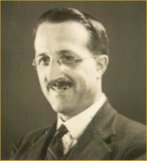
G.R.C. We have read the two accounts in the book where the faithful were called upon to suffer for their faithfulness.
- In chapter 3 there were three young men: as we have already noticed, God counts upon young men to carry the testimony forward. In world affairs young men are in the front line in times of battle.
- It is a great triumph and a great testimony that there should be young men prepared to lay down their lives in faithfulness to the Lord; and it is a great privilege, because it is through suffering that testimony is rendered in high places.
But then in chapter 6 we have an aged man, a man of long experience with God, and we see him, as we would expect,
- standing faithful as having the whole truth of the assembly, typically, in his mind and heart. He was cherishing Jerusalem.
- We were speaking last night of Paul the aged, and how he went out with battle honours, having full part in the conflict, bearing a testimony in the highest places.
The three young men in the third chapter serve as models for those called upon to bear testimony before rulers.
- Their words before the king are very striking, and the king’s words to them at the end are very striking.
- In verse 28 he says of them that they
- “changed the king’s word, and yielded their bodies”.
- The king took account of that. They were young men but they changed the king’s word, and they did it by yielding their bodies.
- It is true that in their case, as also in the case of Daniel, there was physical deliverance.
- No doubt these cases represent, prophetically, the way God will shortly deliver a remnant, during the final power of the beast,
- and their deliverance will cause Gentile rulers to acknowledge God as the Most High.
- Nevertheless the greatest evidence of power here is not in the practical deliverance although that affected the Gentile monarch.
- We are not always to expect physical deliverance.
- Hebrews 11 speaks of those who stopped lions’ mouths and quenched the power of fire, but then it goes on to speak of those who were stoned and sawn asunder – those who suffered actual martyrdom.
- It is not to be supposed that such were defeated, not at all; for the greatest display of power, even in the cases we are considering, is not in the deliverance, but in the men themselves.
- The greatest display of divine power in chapter 3 is seen in the fearless bearing of the three young men before Nebuchadnezzar, and in the words which they spoke to the king.
A.J.G. Do you mean their power shone when they say,
- “But if not, be it known unto thee, O king, that we will not serve thy gods?”
G.R.C. Yes. Daniel had said earlier as to himself that God had given him wisdom and might. God had given him might,
- and He gave these three young men might to stand before the mightiest of monarchs in absolute calmness
- and to state their position without the slightest hesitation or compromise.
- The spiritual power manifested was greater than all the power of the Empire. They begin by saying,
- “O Nebuchadnezzar, we have no need to answer thee in this matter”.
- What a word to the king, an absolute monarch who had said, “Who is the God that shall deliver you out of my hands?”
A.E.M. It is remarkable that they spoke with one voice.
G.R.C. That is a most important thing in testimony, and a thing we need to take account of, because the brethren have not always been unified in their attitude to the demands of the authorities, have they?
A.E.M. No, they have not.
G.H.S.P. Might the underlying state in the assembly that would lead to this unity be suggested in Esther? She says,
- “I also and my maidens will fast likewise, and so will I go in unto the king, which is not according to the law; and if I perish, I perish”, Esther 4: 16.
- I wondered whether manhood in public testimony is seen in the book of Daniel, and public testimony may be in the hands of relatively few,
- but the book of Esther may suggest what is found in the body of the saints, as supporting what may be stood for by relatively few.
G.R.C. That is good; Esther, being a woman, would suggest what is subjective, as found in the body of the saints.
E.C.M. Do you think the Lord’s word to Smyrna applies?
- “Fear nothing of what thou art about to suffer. Behold, the devil is about to cast of you into prison, that ye may be tried; and ye shall have tribulation ten days. Be thou faithful unto death, and I will give to thee the crown of life”, Revelation 2: 10.
G.R.C. Quite so. God manifests His power in enabling His witnesses to stand, in the presence of the greatest power that can be brought against them,
- without the slightest fear, in confidence in Himself, and if needs be to suffer the extreme penalty.
- The extreme penalty struck no terror to the hearts of these three men. That is a remarkable thing. They evidently believed in the God who raises the dead.
A.L.O. Does purpose of heart lie behind what, they said, as it did with Daniel in the first chapter, because there is no record that they had time to talk the matter over amongst themselves and come to one judgment, but they immediately reply that they will not do what the king says?
G.R.C. There was indeed united purpose of heart with these three men.
A.L.O. Is purpose of heart a thing that is taken up individually between us and the blessed God, apart from the brethren?
G.R.C. I think we have individually to arrive at this resolve; but then all moving in company with the Spirit would arrive at the same resolve; so that Paul says,
- “I exhort you, brethren, by the name of our Lord Jesus Christ”
- – which involves the testimonial position –
- “that ye be perfectly united in the same mind and in the same opinion”, 1 Corinthians 1: 10.
- It does not commend the Lord and His name at all if the brethren are not one. So that we have here,
- “But if not, be it known unto thee, O king, that we will not serve thy gods” – the language is so definite – “nor worship the golden image that thou hast set up”.
- They had already received light from God that there is no authority except from God and that the authority existing had been set up by God,
- and yet they had not the slightest doubt where the point came at which obedience to the authority, although set up by God, could no longer be carried out.
D.McI. They say, “our God whom we serve”. Is that basic to spiritual manhood?
G.R.C. It is. “Our God whom we serve” involves our bodies.
- Nebuchadnezzar took account of their bodies – verse 28 – but the fact that they yielded their bodies sacrificially at this point was because they had already yielded them to God for His service.
- Romans 12 comes before Romans 13. Romans 12: 1 is the great basic matter,
- “I beseech you, therefore, brethren, by the compassions of God, to present your bodies a living sacrifice, holy, acceptable to God, which is your intelligent service”.
- So they say, “our God whom we serve”. Their bodies were already devoted to God, His claims were paramount, and the very fact that they knew that the monarch before whom they stood had received his authority from God and was responsible to God for the way he used it, would only strengthen their position before him, just as it strengthens ours.
- Romans 13: 1-2 says, “there is no authority except from God; and those that exist are set up by God. So that he that sets himself in opposition to the authority resists the ordinance of God”.
- These men were not resisting the authority, they were recognising it, for they did not rebel. There was nothing rebellious in what they said.
- But the very fact that they knew the authority was set up by God and that Nebuchadnezzar was responsible to God, and that in judgment-day he would have to answer to God for the way he used his authority, only strengthened their position before him.
- They knew they were before a man who had received his authority from, and was responsible to, their God whom they served.
- He had set up another god and was thus abusing his authority;
- but the God who had given him authority was their God
- and they were His direct representatives to maintain His rights before the very man to whom He had given authority.
A.H. Does what you just remarked give force to verse 16,
- “We have no need to answer thee in this matter”?
- It was apparent that delegated authority was running athwart absolute authority.
G.R.C. Nebuchadnezzar had said,
- “Who is the God that shall deliver you out of my hands?”
- He was challenging the very God who had given him authority.
W.S.S. Is it important that up to this point they had carried out Nebuchadnezzar’s commands?
- They were administering the province of Babylon where the image was set up, and, no doubt, they carried out his wishes up to the point at which they must stop.
G.R.C. And we have to know the point at which we must stop. I was greatly helped in 1916 by a brother who said that
- the believer is always to be subject to those in authority, but he cannot always obey.
- There is a difference between being subject and obeying. Being subject is an attitude of soul and spirit.
- The believer is not a rebel, he acknowledges the man before whom he may have to appear as having authority delegated by God, and therefore he respects him as such, and is subject in his spirit;
- but he has to tell him at what point he can no longer obey.
- Unqualified obedience, on the part of a believer, is due to God alone.
J.M. The Lord Jesus said,
- “Fear not those who kill the body and after this have no more that they can do”, Luke 12: 4,
- but urged that God is to be feared.
- Do you think there should be a distinct testimony to the fear of God before the authorities?
G.R.C. Yes. And it is because of that that the believer always wins the battle.
- The believer is always triumphant if he is with God, because the greatest punishment that the delegated authority can inflict is to kill the body; after that he has no more that he can do.
- But the believer stands before him in the power of the Spirit, which involves the power of resurrection.
- It is interesting to note that God’s disclosure of Himself as the Almighty God to Abraham did not stand related to circumstances.
- We are apt to think of God as Almighty in relation to our circumstances.
- True, He delivered these men. But that is not the way Abraham learned God as Almighty, is it?
J.M. Do you mean he learnt Him as the God of resurrection?
G.R.C. Yes. He learned God as Almighty in his own body. He learned God as the One who quickens the dead.
- He quickened Abraham’s body, and He quickened Sarah’s body. That was a physical matter, but nevertheless it is a lesson for us.
- Abraham learned the almighty power of God in himself, and that involves, for us, the gift of the Spirit.
- The covenant of circumcision involves for us the gift of the Holy Spirit, and it is in connection with that covenant that God says,
- “I am the Almighty God: walk before my face, and be perfect”, Genesis 17: 1.
- To walk before God’s face and be perfect in the face of a hostile world requires almighty power, and God has given us that in the Spirit.
- We are indwelt by the Spirit of God and greater is He that is in us than he that is in the world.
J.J.T. Peter and John before the sanhedrim say,
- “If it be righteous before God to listen to you rather than to God, judge ye”, Acts 4: 19;
- he makes it a matter of righteousness.
G.R.C. And that is just what it is. According to Romans 6: 13 we are expected to yield ourselves to God,
- as alive from among the dead and our members as instruments of righteousness to God.
- In Romans 12: 1-2, we are besought to present our bodies to God as a living sacrifice. Romans 13: 1 in no wise sets aside Romans 6 and 12.
O.E. Would you say that while you may not always expect physical deliverance, you may always expect the help and support set forth in the fourth man – verse 25 – so that they were able to walk in His company in the midst of the intensified heat.
G.R.C. I am sure that is right. We can count on the Lord being with us. Paul said,
- “the Lord stood with me, and gave me power”, 2 Timothy 4: 17.
- But I think we should take account also of the might of God working in the believer.
- The Almighty God should be known to us through the conscious power of the Spirit in us.
H.W. Abraham was ninety-nine years of age when Jehovah appeared to him, emphasising the power that he realized in his body.
G.R.C. The quickening was a physical matter with Abraham, but with us it is a spiritual matter.
- We are victorious in the presence of those who have power to kill the body, not only because we are looking on to actual resurrection,
- but because we are conscious of the almighty power of God in us at the present time
- – the quickening power of the Spirit.
- It speaks in Ephesians 1: 19-20 of
- “the surpassing greatness of his power towards us who believe, according to the working of the might of his strength, in which he wrought in the Christ in raising him from among the dead”.
- Now that power is to usward, it is operating in the Christian even as he stands before authorities, and it makes him entirely superior in spiritual might to everything that he may have to face.
R.G.B. In 1 Peter 4: 14 it says of one reproached in the name of Christ that
- “the Spirit of glory and the Spirit of God rests upon” him,
- suggesting a committal of the Spirit to the believer, as reproached, so that he is consciously and evidently victorious.
G.R.C. That brings in an additional idea contingent upon the other. As we are conscious of the mighty quickening power of the Spirit in us,
- we can stand in such a manner that the Spirit is pleased to rest manifestly upon us, the Spirit of glory and of God,
- so that the public testimonial position is carried through in moral glory, grace and dignity, and that, in principle, marked these men.
- There was far greater dignity with them than with the monarch.
W.S.S. It says “we who live are always delivered unto death on account of Jesus, that the life also of Jesus may be manifested in our mortal flesh”, 2 Corinthians 4: 11.
- Were not these men delivered unto death?
G.R.C. Quite so. The life of Jesus is manifested in such through the almighty power of God in the Spirit.
H.F.R. Does that come out in Stephen. He seems to be a pattern martyr, and the evidence of the work of God in him comes out in a most remarkable way.
G.R.C. It does. He was filled with the Holy Spirit, and the Spirit of glory and of God rested upon him.
W.R. You have referred to Romans 12 as to the presenting of our bodies. It follows on there,
- “be not conformed to this world, but be transformed by the renewing of your mind”.
G.R.C. We could not take this attitude apart from the renewing of our minds. It is thus also that the Spirit gives us oneness of mind.
- These three young men were united; there was no divergence of thought.
- But then there is the quickening power of the Spirit in the soul.
J.M. What would you say as to Romans 8: 10-11,
- “If Christ be in you, the body is dead on account of sin, but the Spirit life on account of righteousness. But if the Spirit of him that has raised up Jesus from among the dead dwell in you, he that has raised up Christ from among the dead shall quicken your mortal bodies also on account of his Spirit which dwells in you”.
G.R.C. That bears on it. The Spirit is life in the believer in view of righteousness.
- Then think of “the Spirit of him that has raised up Jesus from among the dead” dwelling in us! Who can stand against that?
A.B. As standing before the king and the king’s threats, these young men do not leave their future with the king, but in God’s hands, and, in bringing in deliverance, He would have in mind the continuance of the testimony in such persons.
G.R.C. That is important. It is necessary for young men to learn to have confidence in God, to leave their future in His hands, and to make a bold uncompromising stand for the truth. God will care for the future.
- The Almighty God is referred to in 2 Corinthians 6: 18 in connection with circumstances,
- “Ye shall be to me for sons and daughters, saith the Lord Almighty”.
- We have the Almighty God as our Father to care for us in our circumstances, but what will make it easy to trust Him in our circumstances will be
- the consciousness of His almighty power operating in our own souls.
S.R-s. We have in Romans 8: 31 that God is for us; then, at the end, the consciousness that nothing shall “separate us from the love of God, which is in Christ Jesus our Lord”.
G.R.C. Paul says, “I am persuaded that neither death, nor life, nor angels, nor principalities, nor things present, nor things to come, nor powers, nor height, nor depth, nor any other creature, shall be able to separate us from the love of God, which is in Christ Jesus our Lord”, verses 38-39.
- What gave him that persuasion?
- Surely the consciousness of the almighty power of God operating in himself, as indwelt by the Spirit.
F.W.T. Does Paul illustrate that before Agrippa when
- he says, “Having therefore met with the help which is from God, I have stood firm unto this day”, Acts 26: 22?
- It was not only help circumstantially, but specially the help of the Holy Spirit experienced inwardly.
- In result a right subjective state marked the apostle, for he addressed Festus as “most excellent Festus” – Acts 26: 25 – although Festus was making wrong accusations against him.
G.R.C. That chapter, like this, shows that if God’s direct representatives are truly with Him they are in every way superior to the authorities before whom they appear.
- They are superior morally and in spiritual dignity and might.
- They have spiritual might which exceeds the might which God has committed to the authority.
A.E.M. Would there be a moral reason why the fire did not touch them? There was nothing for the fire to do in them.
G.R.C. That is very good, and very searching. Even their garments were not touched, suggesting that all their habits of life were pleasing to God.
F.W.K. Is Paul’s outlook in line with that in 2 Corinthians 1 when he says,
- “We ourselves had the sentence of death in ourselves”,
- and he goes on to speak of the God who raises the dead and who would yet deliver them – verses 9-10?
G.R.C. As that epistle proceeds he makes it clear that there was nothing in the ministers to call for the action of the fire upon them.
- In chapter 6 he speaks of the way they conducted themselves that the ministry might not be blamed.
- Their garments – everything about them – were in keeping with the truth. That is very important.
- If we are to experience God’s power in testimony we must see to it that we are marked by the holiness proper to God’s house.
F.P.S. Is that why the Tribunals recognise the position rather than the individuals?
G.R.C. There is a danger in that. It is possible now for young men in this country to take up the provision for conscience lightly,
- The fact that the conscience question has become urgent in France, and has involved a measure of martyrdom, should affect young men in this country,
- and help them to understand that it is not a light matter at all.
- It should not be regarded just as a matter of course. If it is so regarded, we may experience a change of times or seasons.
- God may come in in a disciplinary way and the young men in this country may yet be called upon to suffer.
E.C.M. Can you help us more as to the companionship of the Son of God with these three young men in suffering?
G.R.C. The suffering must have been well worth while in order to have that companionship.
S.H. In Acts 14 the disciples encircle Paul after he had been drawn out of the city as dead. These young disciples were thus committed to death in relation to the testimony.
A.E.M. I think you were going to say more about the question of the position versus the conscience.
- Every individual must establish that he has a conscience before God.
- Being instructed in the light of the assembly, we should all be alike.
G.R.C. You mean this cannot be taken up as though it were a tenet of a certain sect?
A.E.M. Yes. We have known young men who have gone into the army as conscientious objectors who were not really in heart with the brethren.
G.R.C. That is a very solemn thing. Every young brother must necessarily have to do with God personally in this matter. That is the individual side.
- But then, as you say, if each is amenable to divine instruction, the young men thus truly exercised before God will find themselves in unity of mind.
- The Spirit of God has not two minds. They will be perfectly united in the same mind and the same opinion and thus will be able to stand together.
- Their exercise with God will ensure that their garments are in keeping with the position they take up.
A.L.O. Would it be right for anyone to take advantage of the position without having to do with God in his own soul?
G.R.C. Young men of the type Mr. Myles has referred to bring great discredit upon the testimony. It is really a shame that such should take advantage of a position that has been won at much cost. There is an element of baseness in it.
A.C.S.P. Whereas the constant repetition of the names of these three young men would show the delight God had in men who were inwardly strong and outwardly glorious in the testimony.
A.W.P. Paul refers to those who had
- “obeyed from the heart the form of teaching into which ye were instructed”, Romans 6: 17.
- Is that basic to what is now engaging us?
G.R.C. I am sure it is. There has been much instruction on this line.
A.J.G. That was seen in the four young men in this book. All their original names end with either ‘El’ or ‘Jah’. The eunuch gave them all Babylonish names.
- The Spirit of God takes on those names as regards three of them, but at the same time the men themselves stand true to their names as having the superscription of God upon them.
G.R.C. That is very good.
R.G.B. They are described by Nebuchadnezzar as servants of the Most High God. I wondered if that stressed how the testimonial matter enters into this.
- The name of God was borne publicly by these men and Nebuchadnezzar recognised it.
G.R.C. Nebuchadnezzar had had to admit in the previous chapter that Daniel’s God was the God of gods, and the Lord of kings,
- and in this chapter these three young men speak of Him as “our God”.
- The God of gods, and the Lord of kings was the God whom they served, and His claim could not be over-ridden by any claim the authorities might make.
- According to Romans 13 we must be subject to them but there are times when we have to tell them, in all subjection, that we cannot obey.
A.G.B. Would you say something as to the great principle of idolatry which seems to be used to rival the place that the Most High God should have in the minds and consciences of men? I was thinking of John’s word,
- “He is the true God and eternal life”.
G.R.C. The Gentile monarchies have abused their power by idolatry. They arrogate to themselves the power that God has given them and thus become an object to themselves.
- And so idolatry has marked all four empires. Young people can be carried away by the pomp and glory of imperial power.
W.S.S. Is not Nebuchadnezzar’s image a challenge to the Son of God?
G.R.C. No doubt, because Christ is the image of God. Indeed He is the true God and eternal life.
J.McK. While God is identified with those who are in the testimony, in chapter 3 it is the God of these three men,
- but in chapter 6, after referring to the God of Daniel, the king goes on to speak of God’s kingdom,
- “his kingdom that which shall not be destroyed, and his dominion shall be even unto the end”.
- Does Daniel himself form a kind of basis for these words in the mouth of the king?
G.R.C. I think so. And I think it is prophetic of what will happen in the last days.
- The Jewish remnant that stand true in the last phase of the beast’s power will be delivered by God, and,
- in result, Gentile rulers will be brought to acknowledge God as the Most High.
J.McK. Do you think, as applied to us, chapter 3 is more the objective support of Christ, but chapter 6 more the character of the kingdom as known in the Spirit?
- It is interesting that the words the king uses almost agree with those in chapter 2, as regards the kingdom.
G.R.C. In the days of those kings God would set up a kingdom.
J.McK. And now it comes to be identified with saints such as Daniel.
G.R.C. Very good. We should now consider Daniel. He was an aged man, and he was not only recognising God’s rights over his body like the three young men of chapter 3,
- but also cherishing the whole truth of the assembly.
- “His windows being open in his upper chamber toward Jerusalem, he kneeled on his knees three times a day”,
- and nothing would prevent him doing that.
J.C.T. “The power which works in us”, in Ephesians 3, is linked with glory to God in the assembly.
- The great image in chapter 3 would suggest the greatness of man as seen in the Babylonish system.
- The greatness of God, the glory of God shining in the assembly, is over against that.
G.R.C. Quite so. The enemy’s attack in chapter 6 is very serious, for it is against the truth of the assembly. It was a conspiracy.
- It was not simply the king himself doing something as in chapter 3, but a great conspiracy was on foot against the man who had the assembly in his heart.
It says in verse 11,
- “those men came in a body, and found Daniel praying and making supplication before his God”,
and in verse 15,
- “Then these men came in a body unto the king, and said unto the king …”
- They were a body of men utterly opposed to the truth and the one standing for it, forcing the king’s hand against his will.
- They find their modern counterpart in trade associations and professional and trade unions, bodies of men who endeavour to influence or intimidate those in authority.
- The enemy’s aim is to secure the enforcement of the ‘closed shop’ principle by those in authority in order, if it were possible,
- to destroy all practical expression of the universal fellowship of God’s Son, and thus all true assembly response and service.
F.S. Is that why, in the first case, there was rage and fury with the king, but in the second he was sore distressed? Really Darius’s hand was forced.
G.R.C. Exactly. In this country the government acts on our behalf. Whatever its political colour it has always been against the ‘closed shop’.
- But these men come in a body and would force the hand of the government if they could.
- In mercy it has not yet been permitted in this country and we ought to pray to God to strengthen those in authority against such influences.
- In Australia and America such bodies have succeeded in influencing the government.
E.C.M. Daniel cherished God’s chief interest – Jerusalem. The Psalmist says,
- “Pray for the peace of Jerusalem: they shall prosper that love thee”, Psalm 122: 6.
It says at the end,
- “This Daniel prospered”.
G.R.C. I think we need to see that the first attack – chapter 3 – was against God and Christ His image, and the issue was clear.
- But the attack in chapter 6 was, typically, against the assembly.
- Here was a man, Daniel, who was holding, typically, the whole truth of the assembly and was not prepared to surrender it, and these men come in a body to bring about his destruction.
- And that is the position as regards the trade union movement, trade associations, etc.
- They endeavour to compel the brethren to be unfaithful to the truth of the holy fellowship and thus to the truth of the assembly;
- and, in order to compel the brethren, they would coerce the government if they could.
- We need to be in prayer that God would help the government, even as He helped Darius.
- According to chapter 11: 1, the heavenly personage visiting Daniel said,
- “In the first year of Darius the Mede, I stood to confirm and to strengthen him”.
- This heavenly personage was sent to confirm and strengthen the very king of chapter 6 in the first year of his reign,
- and so we ought to pray that God would send heavenly help to those in authority to do what is right in this matter, because they know what is right.
- Those in authority know well enough that they ought not to give way to unions and associations.
- They know that, if they do give way, they are abdicating their powers and responsibilities.
H.J.M. The law of the Medes and Persians could not be changed, but, as a result of Daniel’s faithfulness, in fact it was changed.
G.R.C. That would remind us again of chapter 3. There Nebuchadnezzar says of the three men,
- “who changed the king’s word”,
- showing that, if we are faithful and make a stand, the king’s word can be changed, the law can be changed.
- According to chapter 6, the law of the Medes and Persians could not be revoked, and, of course, it was carried out in Daniel’s case, for he was cast into the den of lions.
- The law did not say the lions were to destroy him, but that such as he were to be cast into the den, and so he suffered the full penalty, and yet God saved his life.
- But after that there was a new decree,
- “I make a decree, That in every dominion of my kingdom men tremble and fear before the God of Daniel”.
- What a great triumph in testimony!
Page Top Reading 3 Top
| READING 4 |
|---|
The Times of the Nations - 4
Daniel 9: 1-7, 17-27; 12: 1-13
Memorials 15: 69-89
|
|---|
G.R.C. We have a good deal of ground to cover in this reading, as the Spirit of God may help us.
- There is the important matter of confession – but I am not proposing that we should be detained unduly on that, for one trusts we all recognise its importance;
- then there is the implied allusion to the sabbath in chapter 9: 2, the evening oblation, verse 21,
- and finally, the desolater, verse 27, and the great results which flow to God as a result of the discipline inflicted by the desolator’s activities, as indicated in chapter 12, where God secures the wise who
- “shine as the brightness of the expanse”.
- God’s ways in permitting desolations through the ages are thus justified by the results.
- Chapter 9: 26 alludes to the destruction of Jerusalem in the year A.D. 70,
- “the people of the prince that shall come shall destroy the city and the sanctuary”.
- From that time onwards – including this dispensation – there are desolations:
- “and the end thereof shall be with an overflow, and unto the end, war – the desolations determined”.
- Then verse 27 refers to the last and most severe phase,
- “and because of the protection of abominations there shall be a desolator”.
A.J.G. Would you say what you have in mind in referring to ‘sabbath’?
G.R.C. Chapter 9 begins, “I Daniel understood by the books that the number of the years, whereof the word of Jehovah came to Jeremiah the prophet, for the accomplishment of the desolations of Jerusalem, was seventy years”.
- They were the desolations current at that time. Those we have been referring to are those which follow the rejection of Christ.
- It distressed Daniel very much to learn that there were still more and worse desolations to come. He had had some experience of the desolations of those seventy years.
- They were ordered by God because the land had not kept its sabbaths, as we are told in Leviticus 26: 34, 43, and 2 Chronicles 36: 21.
- For four hundred and ninety years the land had not kept the sabbatical years, and God decreed that it should be desolate for seventy years to enjoy its sabbaths.
- “Then shall the land enjoy its sabbaths all the days of the desolation, when ye are in your enemies’ land; then shall the land rest, and enjoy its sabbaths …
- “For the land shall be left by them, and shall enjoy its sabbaths, when it is in desolation without them; and they shall accept the punishment of their iniquity”, Lev. 26: 34, 43.
- That is confirmed at the end of Chronicles when the captivity actually commenced.
- So that the idea of sabbath would be borne in upon Daniel’s mind and the seventy weeks of verse 24 would continue to keep that matter before him.
- There had been seventy weeks of years in which the sabbatical years had been neglected and, on account of it, they were in captivity seventy years.
- But then he learns that there would be another seventy weeks of years,
- “Seventy weeks are apportioned out upon thy people and upon thy holy city”;
- and, for one who loved God, it would be a matter of great distress to think that, for another seventy weeks of years, God would still be deprived of His sabbaths.
- But the vision looks on to the great sabbath in what is said immediately following,
- “to close the transgression, and to make an end of sins, and to make expiation for iniquity, and to bring in the righteousness of the ages, and to seal the vision and prophet, and to anoint the holy of holies”.
- When those events occur, the great sabbatism on earth will commence.
- So the final word to Daniel in the book is,
- “But do thou go thy way until the end; and thou shalt rest” –
- that is, when God would rest he would have his rest
- – “and stand in thy lot at the end of the days”.
A.B. Does the idea of the sabbath convey the thought of God’s people resting with Him and according Him restful conditions as being in communion with Him?
G.R.C. I am sure that is right. The sabbath was the great sign of the covenant.
- It was, in away, the great end of all things that the people should rest before God and God have His rest in them. They were, undistractedly, to be for God and His pleasure, and to enjoy their portion in God.
- One would judge that the full thought of the sabbath is brought out after Moses is given the instruction as to the tabernacle system.
- After all the instruction as to the tabernacle, the great anointed system, is complete, then immediately after speaking of the anointing of it, the final word in Exodus 31: 12-17 is,
- “Jehovah spoke to Moses, saying, And thou, speak thou unto the children of Israel, saying, Surely my sabbaths shall ye keep … and on the seventh day he rested, and was refreshed”.
- That word, “and was refreshed” is an added thought and may indicate that the rest of God in Genesis was only provisional.
- His true rest awaits the final completion of all His work, both in the assembly and in His earthly people. When that is completed He will rest and be refreshed.
J.McK. Does it stress the enormity of idolatry that this matter of the sabbath which had just been communicated by Jehovah to Moses should be intruded upon?
- It is at this point that the enemy brings in this assault of idolatry; and then, when the position has been dealt with, Jehovah resumes instruction as to the sabbath.
G.R.C. You are referring now to Exodus 32, the golden calf?
J.McK. Yes; and then proceeding on to the beginning of chapter 35,
- “These are the things which Jehovah has commanded, to do them. Six days shall work be done, but on the seventh day there shall be to you a holy day, a sabbath of rest to Jehovah”.
G.R.C. That is remarkable. At the end of all the instructions relative to the anointed system, the sabbath and its refreshment is stressed;
- and then, after the idolatry, and before they begin the actual work, the sabbath again is stressed,
- as though it is to remind them that that is the great end in view. God will rest in a fragrant anointed system including heaven and earth.
W.C. Does the standing in thy lot at the end of days refer to Daniel’s inheritance? I was thinking of Psalm 16,
- “Jehovah is the portion of mine inheritance and of my cup”, verse 5.
- Is the gathering up of the way God has become known in all these experiences, the portion of Daniel – everything completed, and then the enjoyment in rest of God Himself?
G.R.C. That is very good.
- “Thou maintainest my lot”, it says in that psalm.
- So that Daniel’s lot is assured; he could go in peace of mind because he would rest when God rested and stand in his lot at the end of the days.
- His lot will be a wonderful one because he belongs to a heavenly company; but how much more ours?
W.C. Quite so. Our lot is described in Ephesians,
- “blessed us with every spiritual blessing in the heavenlies in Christ”.
H.F.R. Would Daniel’s distress at these desolations help us to feel the present condition of the church publicly and encourage us in that the inheritance is laid up for such who feel it?
G.R.C. It would. God cannot rest in a scene of desolation.
- He has granted us a little reviving; assembly features have again appeared so that there is something concrete now in answer to the confession and supplication which those who have gone before us have made.
- The Lord will maintain in some, few though they may be, Philadelphian features until the end.
- Thus God can anticipate His rest and we with Him; but then we have to look right on. While we can anticipate it, the actuality is future.
H.F.R. Do you not think the present enjoyment of it would help us to look right on to the full thought?
G.R.C. I think so.
W.S.S. Is your thought that by the help of scriptures, such as we are reading, and the books, as Daniel says, we should be made intelligent as to the way in which God is going to reach His rest?
- Great events are to take place, very solemn events. All have in mind bringing about a condition in which God will be able to rest and we rest with Him.
G.R.C. Meantime we should feel things intensely with God.
- Daniel would feel intensely the way God had already lost seventy sabbatical years during the previous seventy weeks of years – 490 years – and now He was to lose another seventy sabbatical years during the seventy weeks – 490 years – which were to come.
- Another seventy sabbatical years were to be denied God before the final great sabbath would be ushered in.
W.J. So that Daniel is among those who love Him, in verse 4, and also the love is responded to in,
- “O Daniel, man greatly beloved”.
- It is a love matter, is it not?
G.R.C. It is. The attitude Daniel took up could not be taken up by any but a lover of God. Daniel was a great lover of God.
- He calls Him, “my God”, and he owned the rights of God over him fully, because the title ‘Lord’ he used about ten times in his prayer is the word ‘Adonai’.
- It is the suitable title to use when confessing sins, because it is a word which conveys God’s absolute rights over His people. All those rights had been flouted.
- He begins the supplication, however, by saying,
- “Alas, Adonai! the great and terrible El”.
- He himself had proved Him as ‘El’, as we have seen earlier in the book. His name Daniel implies it. ‘El’ is the One who alone stands in His own strength but who gives strength and might to His people.
W.S.S. Three times it says of Daniel that he was greatly beloved. The communications in this book are made to one greatly beloved, and in the Revelation to one who is called
- “the disciple whom Jesus loved”.
G.R.C. Both these men, Daniel and John, were great lovers because they knew the love of God themselves. They were also so with God in thought and feeling that they were greatly beloved.
D.Mcl. Would that help us to understand God’s thoughts as to the desolator?
G.R.C. I think we should take note of the fact that once Daniel is apprised of the coming of the desolator it becomes his main concern.
- In chapter 7 he sees the end of the Roman empire, in which evil heads up; but
- in chapter 8 he gets another vision, dealing with another little horn, not connected with the Roman empire but with a branch of the Grecian empire.
- He sees a vision about the kings of Media and Persia and the king of Greece; chapter 8: 20-21.
- Those two empires are symbolised in that chapter under the figure of useful domestic animals, not under the figure of wild beasts, as in chapter 7.
- These are the two powers that God particularly used to achieve His ends,
- the Persian power to favour His people
- and the Grecian power as a scourge to discipline His people.
- Out of the Grecian power there arises the little horn of chapter 8, which we usually refer to as the
- and he, all down the ages, but especially at the end, is reserved by God as a desolator to accomplish God’s indignation and discipline,
- but, withal, to achieve His own ends in purity and refinement amongst His people.
A.J.G. I was going to remark that the end is purification, and being made white, and refinement.
G.R.C. That is right. “Many shall be purified and be made white, and be refined”, chapter 12: 10.
W.H. Would the idea of the desolator enter into present conditions at all? The assembly publicly is broken up into a hundred parts or more.
G.R.C. I am sure it does. There is the desolation of the break-up of the assembly, which we should ever mourn about; and then, in addition,
- in a political sense, God brings in the desolator.
- We have had an experience of it in the last two world wars. They were actings of God of that nature, God causing desolations.
- Both these wars were conducted by powers which have the character of the king of the north and were used as a scourge by God to achieve His own ends.
- And, of course, the threatening cloud of the king of the north still hangs over the western world; the desolator is still there, and very much there.
A.J.G. Is not the assembly the great matter of interest that God has constantly before Him, and can we not count on Him, if we are set to go on with the truth of the assembly, to keep things in check?
G.R.C. I am sure we can. As we were saying yesterday, the brass represents the desolating power in the image of Nebuchadnezzar.
- It is that feature of power which God uses for discipline and it finds its final expression in the king of the north who, in principle, is existing to-day.
- But I feel that, during the time of the assembly’s sojourn here, great things can be done through the intercession of the saints. Things are not arbitrarily fixed during this dispensation.
- We have little conception of what a great part we can play in this matter through confiding and intelligent intercourse with God. Do you think that is right?
A.J.G. I do. I Was just thinking of Isaiah 62: 6-7,
- “I have set watchmen upon thy walls, Jerusalem; all the day and all the night they shall never hold their peace: ye that put Jehovah in remembrance, keep not silence, and give him no rest, till he establish, and till he make Jerusalem a praise in the earth”.
- Is that not true in regard of the concrete answer to the truth of the assembly at the present time?
G.R.C. I think so. I believe the Spirit of God would stimulate us as to intercession on this line. God moves governmentally and spiritually in answer to the intelligent supplications of His people.
A.H. In that connection would you say a word as to the spirit of Daniel’s prayer and the extraordinary way in which he identifies himself humbly with the failure, and seems thereby to secure power with God? See verses 4, 13 and 20.
G.R.C. He prayed with fasting and sackcloth and ashes – features we might well take on. Sackcloth is suitable attire in view of the public breakdown and our part in it.
J.J.T. In his prayer he refers to
- as though God would connect Daniel with the city and the people.
G.R.C. That is very sweet. God is not yet prepared to own the people or the city as His, and yet it is implied in the fact that He calls the city ‘holy’.
- God has not really given it up but He puts the matter back on to Daniel. It is “thy people” and “thy holy city”, and that would enforce the idea that holy obligations of love are laid upon us.
A.S.C.P. In connection with intercession, would you say how the service of angels may come into God’s operations with the nations?
- J.T. referred to their service a good many times in his closing ministry.
G.R.C. This book helps us as to that. There is the verse referred to this morning, chapter 11: 1,
- “And I, in the first year of Darius the Mede, I stood to confirm and to strengthen him”.
- It may be Daniel had been praying for the king; for this prayer and confession, in chapter 9, is in the first year of Darius – see chapter 9: 1.
- But whether or not the angel’s intervention was the result of Daniel’s supplications, it would encourage us to pray, because it shows what is happening behind the scenes.
- Who would have thought that God would have sent so great and glorious a being to strengthen Darius the Mede and to establish him in his kingdom?
- He was intimidated for a time by the body of men, but we can see what lay behind the strength which marked him after that incident was over,
- in sending out the decree that all nations should fear and tremble before the God of Daniel in every dominion of his kingdom, and in his recognition of God’s kingdom here in His people.
- Governments know that it is wrong to give way to bodies of men but they are afraid, they do not know what to do. It is essential, therefore, that the saints should pray.
- God is able to send an angel and strengthen the government against the pressure of unions and associations.
F.P.S. “I am come because of thy words”, chapter 10: 12.
G.R.C. Quite so. Heaven was moving in answer to Daniel’s supplications.
S.R. Do we need stimulation in relation to our prayer meetings, giving them a greater dignity?
G.R.C. Very much so. Prayer meetings tend to become repetitive and formal. We know we ought to pray for kings and all in dignity, and it may be done in a formal way; but that is not supplication nor intercession.
H.G.H. What is the relation between confession and prayer?
- In verse 4, “I prayed unto Jehovah my God, and made my confession”.
- Should confession come into our prayer meetings?
G.R.C. I think so. We ought to feel our sins and the sins of Christendom, and, if we are praying much for revival and the perfecting of assembly features,
- such prayer should surely be accompanied with confession as to the general state of things.
W.S.S. We should identify ourselves with the breakdown, as Daniel did.
G.R.C. Quite so. All this bears on the evening oblation, in verse 21. It raises the question as to how much we observe the morning and evening oblation; these are not matters for the prayer-meeting only.
W.S.S. Perhaps you would open that up for us.
G.R.C. Well, how do we begin the day?
W.S.S. The thought is that we begin with God, is it not?
G.R.C. Yes, but at which altar – the family altar or the personal altar?
W.S.S. I would suppose the personal comes first and the family next.
G.R.C. I do not think either come first. We should begin at God’s altar; that is where the morning oblation is offered.
- How many of us begin at the altar of God?
W.S.S. Do you mean the recognition of what is due to God and the glory of His name?
G.R.C. Not only that. You are at the entrance of the tent of meeting in your spirit and you are looking out on the whole of God’s habitation on earth,
- His vast habitation in the Spirit, stretching to the furthermost corners of the earth.
- You are not thinking of yourself nor of your own house, but of God’s house where He has put His name.
- But you are thinking of it as in the conscious sense of an unchanging acceptance – the continual burnt offering.
- You are free to draw near to God with reference to His house and His name, in spite of failure, because
- nothing ever changes the perfect acceptance in which the saints are before God
- nor the perfect basis upon which His house has been established.
- Both rest upon the Person and completed work of Christ. We are in all the acceptance of the One who has glorified God,
- and God never views the saints on a lower level, whatever may be the conditions here.
- So that there is every encouragement to begin the day at God’s altar in relation to His habitation;
- indeed, our privilege, first of all, is to enter the Holy of Holies, having boldness to do so by the blood of Jesus,
- and then to serve at both altars.
E.C.M. Do you mean that the end is to correspond with the beginning, in the evening oblation? We are to be equal to things spiritually at the end?
G.R.C. The evening oblation is most important. It is really the end and the beginning; it is between the two evenings; Exodus 29: 41.
- It is thus at the end of the active part of one day and at the beginning of the next day; the day begins in the evening.
- At the evening oblation the active day is over.
- The Lord said, “Are there not twelve hours in the day?” John 11: 9.
- He was referring to the active part of the day which ended at sundown.
- So you can review the active part of one day in the light of God’s name and His habitation,
- and then begin the new day in the freshness of communion resulting from the evening oblation.
- The first part of the day is the meditative part, the night watches. That is why the evening oblation is so important.
- It prepares us to take full advantage of the meditative part of the day, which comes before the active part.
W.S.S. Would the word in Psalm 139: 18 be applicable,
- “When I awake, I am still with thee”?
G.R.C. That would refer to the morning. It is an important matter to begin aright the active part of the day, that is, to commence with the morning oblation.
F.W.K. Would you say a word as to the so-called Lord’s prayer?
- “Father, thy name be hallowed; thy kingdom come”, Luke 11: 2.
G.R.C. The order is right, is it not? Our needs are secondary.
- But I feel it is of the greatest importance, if we are to make spiritual progress individually and collectively, and to develop assembly features,
- to habituate ourselves to entering the holiest and to serving at the altars of God.
- Let us offer incense to His name and a pure oblation, for both altars were to function continually – see Exodus 29: 42; chapter 30: 8.
- Let us pour out our supplications relative to His house and His interests and then afterwards we can think of our houses and our individual needs.
- We shall find then that our household matters and our individual needs will be seen in their right proportion.
- If we begin with those they loom large before us, and God’s interests have little or no place; but if we begin at God’s altars we shall find that our side of things is very simple and straightforward.
- Our business is to hold our houses relative to God’s house, and, as we do so, He will supply all our needs.
A.E.M. Would you explain for the benefit of the young that we are always in the house of God, whether we are in the meeting or not?
G.R.C. It is very important to recognise that. We are always in the house of God;
- thus our first waking thoughts in the morning should be those of priests.
- The priests encamped near the entrance of the tent of meeting. The sunrise was on one side of them – the hope of the Lord’s coming – and the habitation of God on the other.
H.R. Is that how Daniel prayed, with his window open towards Jerusalem?
G.R.C. You could not imagine, when Daniel kneeled on his knees three times a day, that he began by asking God about his personal needs and household needs.
- He did not begin that way at all. He began about Jerusalem.
- I do not suppose his personal and household needs occupied much time.
H.F.R. Would you say a little more as to the meditative part of the day preceding the active part?
G.R.C. The evening oblation is stressed more in Scripture than the morning.
- It is between the two evenings, so that it affords the suitable end according to God of the active part of one day, when we can review our activities and how they have affected God’s name and God’s house;
- and, at the same time, it prepares us and sets us at rest for the meditative part of the new day just beginning.
- “Between the two evenings” – sundown in the east – might suggest for us the close of the active day; not just before retiring to bed for it is too late then.
A.G.B. Would you say why the expression ‘oblation’ is used? Does it not bear on the burnt offering morning and evening?
G.R.C. Here, as in other passages, such as Malachi 1: 11, 13, the oblation includes the whole offering, that is, the burnt offering with its accompanying meat offering and drink offering.
A.G.B. Did not the accompanying meat offering become the food of the priest?
G.R.C. It did. And the drink offering, which was poured out in the sanctuary, means that the oblation will end with the expression of deep spiritual feelings towards God.
G.H.S.P. Is it striking that in Luke 21, where the Lord speaks about the times of the nations, the chapter finishes with a reference to the Lord going out by night to the mount of Olives, and then coming very early in the morning to teach again?
G.R.C. That is very interesting. The mount of Olives is suggestive as to the meditative part of the day.
S.H. In regard to the activities of the day being reviewed, does Ezra 9 bear on our enquiry? The unfaithfulness of the people and the priests and the Levites is referred to.
- The activities of the day had produced that, and Ezra sat overwhelmed until the time of the evening oblation. Then he rose up and, in his review, he speaks of the desolations, but in view of a new beginning.
G.R.C. I believe if we practice the morning and evening oblation, which is priestly activity, it will greatly energise us both as Levites and as soldiers.
- The priests were nearest to the tabernacle in their encampment; then around the tabernacle and, the priests were the Levites, and around the Levites were the military.
- The priestly exercise of the morning and evening oblation will energise us to orient our households in relation to the tabernacle in these three settings – priestly, levitical and military.
J.M. Is there a dispensational application in connection with the evening oblation?
G.R.C. I think there may be. But one is bringing forward the practical daily matter because, speaking for oneself, it has been neglected for many years.
S.R. The psalmist says, Psalm 43: 4,
- “Then will I go unto the altar of God, unto the God of the gladness of my joy: yea, upon the harp will I praise thee, O God, my God”.
- There is the thought of approaching the altar and then deep feelings.
D.McI. As to the evening oblation, is it a personal or a household matter?
G.R.C. The great thing to remember is that I am a priest, and that my house is set in priestly relation to the tabernacle of witness; therefore,
- whether I approach God personally, or as head of my house, the matter of prime importance is to serve as a priest at God’s altars.
- I can then speak to Him about household and personal needs, and, in the light of His vast interests, these will assume simple proportions.
- The great thing is that my household and personal matters should be regulated in relation to Him and His house.
W.S.S. So the first thing is necessarily God Himself.
G.R.C. It is God Himself, but God in relation to His house.
- How much thought do we give, first thing in the morning and again in the evening when activities are over, to the habitation of God in the Spirit where He has placed His name, stretching out to the uttermost corners of the earth?
- Are we thinking of the whole thing as it is before Him?
W.S.S. Your earlier remark about the tabernacle would be worth repeating. The first thing that was seen when they arose in the morning was the tabernacle. Had you in mind the house of God typically?
G.R.C. The priests were encamped on the east side of the tabernacle; they were the nearest to it.
- Thus two things would occupy their waking thoughts – the sun rising, that is, the Lord’s coming, on the one hand, and the habitation of God in the Spirit, on the other.
W.S.S. But then, would not all the people see the tabernacle as they opened the tent door?
G.R.C. Yes, but we are all priests in this dispensation, so that the first thing is to understand our location as priests and to get the priestly outlook.
- Then, we can think of our location as levites, encamped around the tabernacle, and acquire the levitical outlook.
- Finally, there is our tribal encampment with its military responsibility and outlook.
- But we need to begin at the top, that is, as priests.
R.G.B. In most of Paul’s epistles he refers to his prayers, and they are engaged with the saints and with the Lord’s interests almost exclusively.
G.R.C. He says, “at my prayers”. It is evident that Paul did not neglect the morning and evening oblation because, as you say, his references to his prayers show that God’s habitation in the Spirit was on his heart – every part of it.
A.H. In Numbers 28: 1, God speaks of “my bread”, and the morning and evening lambs are referred to immediately.
G.R.C. Very good. We should now pass on to consider the desolator and Daniel’s great concern about the desolator.
- At the end of chapter 8, when he first received the communication, he fainted and was sick certain days and was astonished at the vision.
- He himself was experiencing seventy years of captivity while the land was desolate, and the divine disclosure that further prolonged periods of desolation lay ahead, was too much for him.
- In chapter 10 he says, “In those days I Daniel was mourning three full weeks”.
- Then he gets a further vision, with communications which continue to the end of the book and which afford much detail as to the activities of the desolator.
- A great personage comes to disclose these matters to him and he is by the river Hiddekel. Now Hiddekel, according to Genesis 2, is the river which flows forward towards Asshur – i.e., Assyria – showing that what is in mind in this river is the scourge of God.
- According to Isaiah – 8: 5-8 and 10: 5, 22-23 – Assyria is the overflowing scourge, and he is represented in these later days by the king of the north, the great desolator whose activities occupy so much of chapter 11 of the book of Daniel.
- Jehovah says in Isaiah that because they refused the waters of Shiloah which flow softly the Lord would bring upon them
- “the waters of the river, strong and many, the king of Assyria and all his glory”, Isaiah 8: 6-7.
- This is a matter to keep in our minds and be exercised about. It stresses the importance of giving heed to the waters of Shiloah which flow softly.
- It is because the waters of Shiloah have been refused in Christendom
- and, no doubt, much neglected by ourselves,
- that we have had to experience the chastening of the waters of the river in the two world wars.
A.J.G. Do you connect the waters of Shiloah with the present voice of the Spirit?
G.R.C. I do; and if we are not subject to the Spirit’s voice and movements, we stand in danger of the waters of the river again coming upon us in very severe discipline.
- But then this great personage, who no doubt represents the Lord Himself, is above the waters of the river – chapter 12: 6 – that is a great comfort.
- It means that the discipline is regulated by love.
- The discipline includes what is political. The history of Europe, and its wars, bears on these matters during the church period.
- The Lord has cast Jezebel into a bed and those that commit fornication with her into great tribulation. That has involved political interventions; so also has the opened door of Philadelphia.
- But the final word is to Laodicea,
- “I rebuke and discipline as many as I love; be zealous therefore and repent”.
- I believe, in the discipline of the last two wars, the Lord had in mind correcting Laodicean tendencies amongst us, for such tendencies prevent us appreciating the waters of Shiloah which flow softly.
- The fact that the threat of invasion by the king of the north still hangs over the western world, has the same end in view. But then, the Lord Himself is over the whole matter.
- He is controlling the river. So in chapter 12: 6, it says,
- “And he said to the man clothed in linen, who was above the waters of the river, How long is it to the end of these wonders?”
- The answer is, “when the scattering power of the holy people shall be accomplished, all these things shall be finished”.
- That is, matters are always under control.
- If you read chapter 11 of this book, which foretells the activities of the kings of the north and south, you might think these kings are absolutely uncontrolled, and doing just what they like.
- But the truth is that the Lord Jesus Himself is above the river and He is controlling the whole matter.
- He is with His Father in His throne and is controlling everything that affects His people. Is that right?
A.J.G. I am sure it is.
E.C.M. Would it link with the Lord’s word in Matthew 28,
- “All power has been given me in heaven and upon earth”?
G.R.C. Quite so.
W.J. Would you say a word concerning the promise to the overcomer in Laodicea,
- “to him will I give to sit with me in my throne”, Revelation 3: 21?
- Is that open to us?
G.R.C. I think we have to bear in mind first of all that the Lord is with His Father in His throne.
- The Father reserves times and seasons in His own authority, but the Lord is with Him in it.
- So that here the Man is above the waters of the river. They are all under control, although they do not seem to be.
- The activities of the desolator are allowed to go on only until the appointed time, just long enough to achieve the divine ends; and then the Lord will destroy the desolator.
- Chapters 8: 25, and 11: 45, both record the destruction of the desolator. The moment his work is done he will be destroyed; and that principle always operates.
- Instruments of discipline, similar in character to the king of the north, have been raised up during the present dispensation. But the moment the work is done they have been removed.
- The Lord does not allow the discipline to continue a moment longer than is needed to achieve the divine results.
- But then your point as to our being with Him in His throne bears more on chapter 7: 18, 22.
- Judgment was given to the saints of the most high places and they possessed the kingdom; that is, judgment was committed to them.
- As we face up to matters now and are educated and become wise, we shall shine then as the brightness of the expanse – chapter 12: 3 – that is, we shall have our place in rule and government and judgment.
H.F.R. The Lord sitting on His Father’s throne is the day of grace. We are in danger of taking advantage of that and the lukewarmness, characteristic of Laodicea, develops with us.
G.R.C. It is indeed the day of grace, but if we despise God’s grace and refuse the waters of Shiloah, we come under His government. His government has not ceased.
F.P.S. The great tempest came upon Jonah and those who sailed with him because Jonah was not right in his relations with God.
G.R.C. You mean that if we are not faithful to our calling, we really do men generally a great disservice because, in the discipline God has to bring on His people, men suffer?
W.C.P. Could we speak of Habakkuk in this connection?
- You find God is dealing with a power which He Himself raised up to deal with His people.
- “Then will his mind change, and he will pass on”, Habakkuk 1: 11.
- But Habakkuk himself says,
- “I will stand upon my watch, and set me upon the tower, and will look forth to see what he will say unto me, and what I shall answer as to my reproof”, Habakkuk 2: 1.
G.R.C. That bears on the matter. His mind changes
- “and he will pass on, and become guilty”.
- That is what always happens to a desolator; he becomes guilty and is destroyed.
A.E.M. Is it of interest that the desolator appears again after the millennium – Gog and Magog – and after that the great white throne is set up?
G.R.C. It is. The desolator referred to in Daniel is the desolator prior to the millennial day; but
- the desolator again comes into evidence after the millennial day, according to Revelation 20: 7-9.
- Then, you say, the great white throne is set up and the final session of judgment takes place.
Rem. 2 Thessalonians refers to that which restrains and he who restrains.
G.R.C. That is the great comfort at the present time. We are not in a dispensation when times are fixed. Things are flexible and a good deal depends upon us.
- God restrains and, no doubt, acts in relation to the prayers of His people.
- There is that which restrains, God raising up instruments of government and using them in restraint;
- and there is He who restrains, that is, the Holy Spirit here in the saints, by whom we voice our supplications.
H.J.M. As to the king of Assyria, Isaiah 8: 8 says,
- “he shall reach even to the neck”.
- That is, he came right up to the gates of Jerusalem: Later on in the book there is deep exercise and the virgin daughter of Zion laughs the enemy to scorn.
G.R.C. I think that illustrates God’s end in the discipline.
- The coming up of the Assyrian was a foreshadowing of the desolator in the last days, and the Assyrian came up to the neck, but the discipline purified the remnant in Jerusalem.
- They were purified and made white and refined; and so the word of Jehovah was,
- “The virgin daughter of Zion despiseth thee, laugheth thee to scorn”;
- and they proved in that experience the great truth of Emmanuel.
- Though the Assyrian came up to the neck, God was with them and, therefore, the victory was assured.
- I believe that illustrates the use of the desolator. God uses him to bring the truth, in all its grandeur, home to our souls and to bring us into conformity to it.
D.McI. Is that not borne out by chapter 12: 1, when it speaks of Michael, and then it says,
- “and there shall be a time of distress, such as never was since there was a nation until that time. And at that time thy people shall be delivered”?
G.R.C. Just so. There never will be such a time of distress; and yet, so far as Israel is concerned, there never will be, I suppose, such a time of results.
- “Many shall be purified, and be made white, and be refined”.
- Great results! And that is what is in mind at the present moment, great results for God!
A.J.G. Do you think, in that sense, God may take pleasure in seeing the feature of endurance,
- coupled with confidence in Him and devotion to His interests, developed in the saints?
- I was thinking of verse 12 of the last chapter.
- “Blessed is he that waiteth, and cometh to the thousand three hundred and thirty-five days!”
- as though there is a suggestion that there might be just a little further period that had not been expected.
G.R.C. Very interesting! We need to be sure that we are going on until we arrive at the best.
- There is a time of suffering of one thousand two hundred and sixty days, the time, times and a half, of verse 7;
- and then there is the one thousand two hundred and ninety days of verse 11, which may give time for the judgment of the nations and the setting up of the kingdom.
- But one would think that the one thousand three hundred and thirty-five days would reach to the full introduction of the sabbath. Every question is settled and God’s rest fully ushered in.
- J.N.D. says it may reach on to the feast of tabernacles.
Page Top Reading 4 Top Next Reading