Menu•SiteMap |
Ministry
Spiritual Vision – Memorials: Volume 14
Ministry by G. R. Cowell
| INTRODUCTION |
|---|
SPIRITUAL VISION AND OTHER MINISTRY
Meetings with G. R. Cowell in various localities, 1936-57
|
|---|
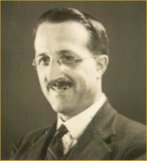
This volume contains 12 addresses and brief notes of 2 readings from 1936-57.
- The readings, dated 1936, are among the earliest recorded ministry by Mr. Cowell. He was 37 years old at the time.
- It is of special interest that the subject was the Lord's Supper, and that the readings took place in his local meeting, Hornchurch.
- A number of the addresses were given during the years of World War II and allude feelingly to exercises that the brethren were going through.
- ‘The Sin Offering is the Basis of the Economy of God’, a 1948 address, is particularly noteworthy.
G. A. R.
Page Top
| SPIRITUAL VISION |
|---|
John 9: 1-7, 35-38; Revelation 3: 18 (last clause) - 19; 4: 6-8
Address at Coombe St., Croydon, February 6, 1943 |
|---|
I wish to speak, dear brethren, on the subject of spiritual vision,
- first as bearing on the glory of Christ and the revelation of God and His purposes;
- secondly, as bearing upon the state of the church and our state at the present time;
- and thirdly, as bearing upon the public ways and dealings of God, this last being connected with the beasts or living creatures who were full of eyes, before and behind, around and within.
I need not say that the matter of spiritual vision is a very important one; without it there can be no spiritual history at all for, if we are to have a spiritual history, we must have our eyes opened to see the Son of God.
- John as a writer makes a great deal of spiritual vision. In chapter 1 he says, “we beheld his glory”,
- and the Lord Himself says to the two disciples of John, “Come and see”, and to Nicodemus, “except any one be born anew he cannot see the kingdom of God”.
- Again, the woman in chapter 4 says, “Come see a man”. All these statements emphasise the necessity of vision.
Chapter 9 records this great sign wrought by the Lord Jesus. Each sign is great in its place, but this is a remarkable one for the Lord speaks of the works of God being manifest in the man;
- and He also says, “I must work the works of him that sent me while it is day”.
- So that in connection with the man born blind, He stresses His own works and the works of God. You will notice the initiative is entirely from His own side.
- It says, “as Jesus passed by, he saw a man which was blind from his birth”. Then further down it says, “when he had thus spoken, he spat on
the ground, and made clay of the spittle, and anointed the eyes of the blind man with the clay”.
- As long as He was in the world He was the light of the world, and He would open this man’s eyes in order that he might see the light of day in Himself, and He operates from His own side. This is the way of divine operations.
- Everyone here who has spiritual vision is a monument of the works of God – they are manifest in him, and also of the works of Christ, who still works, though it may be through His servants here.
- He is no longer in the world but He is in a greater place; the Lord Jesus is now in the place given to Him in purpose; as Man He has reached that place.
- The full light shines and the full truth is expressed in His Person where He is, so that it is an even greater matter today to have our eyes opened than when the Lord was here.
This incident is to teach us, that we are all born blind. Our state by nature is such that we have no power to see anything spiritually at all, and that state has to be met if we are ever to have vision.
Two operations are involved:
- firstly, the Lord Jesus makes the clay and anoints the man’s eyes;
- then He tells the man to go and wash in the pool of Siloam, and he goes and washes and comes seeing.
- These two operations have to take place.
In figure, the Lord Jesus applies the truth of His Person to the man’s eyes – that is His side of the matter;
- but then the man would never have seen if he had not washed, because it is our state that renders us blind.
- Unless we are prepared to go and wash, that is, to own our need of and accept the gospel, we shall never see. The clay on the man’s eyes would make the man more blind, if that were possible, but in washing he came seeing.
- In this sign the Lord Jesus illustrates the truth of the previous chapter where He was faced with self-righteous men who would not admit the need of washing, and, though blind, claimed that they could see.
- In His ministry to them He emphasised the need of washing, going so far as to say that they were children of the devil. They had proved themselves so because murder was in their hearts towards Him.
- The Lord did not call people “children of the devil” until they came out in the devil’s likeness; they had murder in their hearts towards Him, so He tells them plainly, “ye are of your father the devil … he was a murderer from the beginning”.
- He would bring home to them that the essential thing was to wash, to cleanse themselves from that generation, for the whole state of man is wrong.
- Then at the end of the chapter He applies, in principle, the clay to their eyes, for He says, “Before Abraham was I am”.
- He brings before them the truth of His Person, the great truth of the incarnation, and it is this that the clay represents.
Here is a man born blind, representative of us all, and the Lord, it says, spat on the ground and made clay of the spittle – referring to His Deity but as coming into Manhood.
- It is a wonderful symbol. The spittle speaks of His Essence – His essential Deity – for He is God over all, blessed forever! – and yet He has “come in flesh”, as symbolised in His making clay of the spittle.
- The clay therefore represents the wonderful character of His Manhood, a unique Manhood of a new order.
- That is the kind of ministry which the Lord presented to His enemies in John’s gospel! “Before Abraham was I am”, chapter 8, and “I and my Father are one”, referring to Himself here in manhood, chapter 10.
- He puts the highest truth before them. It is an example for us today. We should not hesitate to put the highest truth before men, the truth of the Lord’s Person, His Deity and the unique character of His Manhood.
- Let us present it to men, because if they will go and wash they will see. Sight is given to this man to enable him to see the Lord Jesus. It is one thing to have the greatness of His Person presented in ministry, but it
is another thing to see Himself.
- There is a process to go through until the wonderful moment comes when he is in the presence of the Son of God, and the Lord says, “thou hast both seen him and he it is that speaketh with thee”.
- His eyes had been opened in view of the great moment when he actually saw the Son of God for himself. “And he said, Lord I believe, and worshipped him”.
- This is what we might call normal spiritual vision. Our eyes are opened to see the Lord Jesus, as appreciating the greatness of His Person.
- It is a wonderful thing to apprehend in any measure the greatness of His Person, His essential Deity, yet His perfect and unique Manhood.
- That is what makes a person unshakable in this world: “Who is he that overcometh the world, but he that believeth that Jesus is the Son of God?” You apprehend who the Person is.
- The title Son of God, as applied to Christ, implies that One possessed of absolute Deity has come into Manhood as a Man of a new order, Jesus the Son of God!
But this book shows that from this point the believer’s vision develops, for the Lord Jesus says, in chapter 14, “he that hath seen me hath seen the Father”.
- You have had your eyes opened to see the Son of God, but it is with a view to your seeing the Father. That is a wonderful thing!
- Philip says, “Shew us the Father, and it sufficeth us”. I wonder if we have all seen the Father!
- Our eyes have been opened in order that we might see the Father in the Son. “He that hath seen me hath seen the Father”.
- It is a distinct apprehension in the soul of the Father revealed in the Son; the Father is a distinct Person.
- It is one thing to apprehend the Person of Christ and His greatness as the Son, it is another matter to apprehend the Father,
- though He is revealed in the Son; and the Lord says, “he that hath seen me hath seen the Father, and how sayest thou then, Shew us the Father?”
- It is a wonderful thing that God has given us spiritual sight that we might see the Father!
Then in that chapter the Lord seems to indicate, by implication, that we see the Spirit, because lower down it says, “whom the world cannot receive, because it seeth him not, neither knoweth him”.
- Of course, the Spirit is not incarnate; one would not suggest that we can see the Spirit personally, but I judge the Lord has in mind that we learn to recognise His movements and to discern the manifestations of the Spirit.
- The Spirit is here as Comforter taking charge of God’s family, and we have been given spiritual sight in order that we might discern and become acquainted with His movements as abiding with and in the saints.
Then the Lord goes on to speak of seeing Him in resurrection. “The world sees me no longer; but ye see me; because I live ye also shall live”.
- It is a wonderful thing to see the Lord risen, triumphant over death. It means that we have life in Him: “because I live ye also shall live”.
Finally He speaks of vision in His prayer to His Father in chapter 17, saying,
- “Father, I will that they also, whom thou hast given me, be with me where I am; that they may behold my glory, which thou hast given me; for thou lovedst me before the foundation of the world”. What a wonderful climax that is!
- Our eyes have been opened in order that, as with Him where He is, we may behold His glory; that we might arrive at a full appreciation of Christ as He is and where He is.
- That, of course, involves apprehending our own place with Him; He is ever unique, but how blessed that we have a place with Him!
- This links up with what the apostle speaks of in Ephesians, the eyes of your understanding being enlightened; that ye may know what is the hope of his calling, and what the riches of “the glory of his inheritance in the saints, and what is the exceeding greatness of his power to usward who believe”.
We have the eyes of our hearts enlightened to see all these things.
- So that vision in John’s gospel is normal spiritual vision and has normal development in view in the apprehension of the Father and the Son and the place the saints have in relation to divine Persons;
- and you can understand that it will result in formation. We shall be formed in spiritual manhood and affection.
Now I pass on to Revelation 3. The Lord says there, “I counsel thee to buy of me”, and He counsels us to buy three things, the third being “eye-salve to anoint thine eyes, that thou mayest see”.
- I do not think that this suggests a normal condition such as we have had before us up till now. The suggestion seems to be that
- eyesight has become defective so that eye-salve is needed – something to heal and to put matters right.
- It does not speak here of the Lord doing it for us, although we are to get the eye-salve from Him. We are to do the anointing, “anoint thine eyes, that thou mayest see”.
- I feel that this is a word for us at the present time, because while we have been helped greatly on the line to which I have been referring,
- it seems to me we have suffered from defective vision in regard to a sober view of ourselves and the present state of Christendom.
- So the Lord here speaks of what implies exercise, that we are to buy of Him eye-salve. I suggest that it needs exercise to get it, so that the eyesight might be put right.
- I think our experiences in the last few years have indicated that our outlook upon ourselves, as part of the responsible profession, and our outlook upon the profession generally, has hardly been in accord with the Lord’s own outlook,
- so that we have been taken by surprise by many things which the Lord has allowed.
- It may be that the Lord would raise an exercise with us as to getting our sight thoroughly adjusted.
- We have had adjustment; we have been adjusted in many ways, but one would raise the question as to whether the adjustment has been
sufficiently thorough, whether we are thoroughly adjusted in this matter.
What caused the blindness in Laodicea was self-satisfaction and complacency. The Lord describes their state,
- they were saying, “I am rich, and increased with goods and have need of nothing”.
- That was not His outlook upon them, it was their outlook upon themselves. The Lord says, You do not know what you are really like – they were blind in that sense, they had never seen themselves aright.
- “Thou … knowest not that thou art the wretched and the miserable, and poor, and blind, and naked”.
- The passage seems to indicate that what will cause blindness in the sense in which we are speaking is self-satisfaction and complacency.
We are all liable to be coloured by the outlook of the part of the world in which we live, and complacency has been the outlook of the Anglo-Saxon world in their own affairs
- – rich and increased with goods and needing nothing – and it has almost brought them to ruin.
- The question is as to whether, in measure, we have been coloured by that outlook in our affairs, as those who have had much to be thankful for in the way of ministry and light,
- for the ministry and the light and many privileges of the past few years have been great.
- I am not in any way desiring to impute a Laodicean state, but to point out the danger and touch upon the principles involved –
- the tendency to be satisfied with what we have in the way of light,
- and perhaps to attach it to ourselves, assuming that it has been formed in us in a far greater measure than it has.
- Coupled with this is the danger of connecting our blessings with earth, because we enjoy them here on earth, whereas our blessings are heavenly and our outlook needs to be heavenly.
- Any measure of self-satisfaction or earthly mindedness will cause defective vision.
There has been surprise that the war should come while we are still here, surprise that the brethren should suffer in their homes and in their bodies. But why were we surprised?
- We all feel now that the outlook we had was not a right one, and would suggest that the Lord would help us to go into the matter thoroughly with Him so as to be really adjusted.
- Not to accept adjustment in a grudging kind of way, coming to it slowly by force of circumstances, but that we should get into His presence in order to learn the underlying principles which caused the blindness,
- so that with sight restored we might see things as He sees them, for that is what is in view in this address to Laodicea.
- The Lord desires to bring us into intimacy with Himself; friendship is in mind – “as many as I love” – “love” there is the love of friendship. He wants us wholly in His confidence, and sharing His outlook.
- “As many as I love, I rebuke and chasten; be zealous therefore, and repent”.
- We need zeal in repenting, not a grudging repentance and admission.
- You say you do not think we need repentance? If we do not need repentance we are putting ourselves either in Smyrna or Philadelphia, the only two churches where the Lord does not call for repentance;
- and if we put ourselves in Philadelphia we are very much in danger of Laodicea.
- We need to be in continual repentance and to be zealous in it. We need adjustment of vision to discern our own state and the state of Christendom, and to discern the Lord’s active judicial dealings in Christendom which are going on all the time.
- We are not living in a kind of gap when the Lord is inactive in this regard. There is a tendency to relegate some things to the past and to put other things off to the future.
- But the Lord’s dealings with Jezebel and those who commit fornication with her are going on all the time. Similarly His dealings with Protestantism, as to which He says, “I will come upon thee as a thief, and thou shalt not know at what hour I shall come upon thee”.
- Well, He says to Laodicea, “As many as I love I rebuke and discipline”. These movements are going on now; the Lord is doing these things now.
- To suggest that no upheavals will come while we are here, is to suggest that the Lord is not doing these things. But the Lord is doing these things all the time, and surely we need the discipline as well as others, perhaps more than others, because we have more light.
- How we need to be with the Lord in these matters! He desires friendship, true friendship and confidence. Certain things were tending to blind us, but the Lord would bring us into closest intimacy with Himself,
- “I will come in to him, and will sup with him, and he with me”, suggests a meal where all secrets are shared. What a wonderful end the Lord has in view as we accept adjustment!
Now I pass on to chapter 4, and here it is a question of being, as to outlook, in accord with the throne and with God in His public dealings.
- I am assuming now that we are clear in our outlook as to our own state and the state of Christendom – clear, too, that our blessings are heavenly, so that we are not surprised at discipline on earth.
- As adjusted and at rest on our side we are at leisure now to share the outlook of the throne, to be with God as to His public dealings.
- So we have here in the midst of the throne and around the throne four living creatures full of eyes, “before and behind”. Lower down, in verse 8, it also says that “round and within they are full of eyes”.
- The elders and the living creatures both refer to the saints; no doubt others are included as well as the saints of the assembly, but they certainly include those who form the assembly.
- These things are not simply written to tell us that at some future time we shall be in accord with the throne, but are intended to have a present bearing upon us, so that we may be in accord with it now, surrounding the throne now in mind and affection, and so with God in what He is doing.
- Ephesians 2, referring to the work of God, says that we are already raised up together and made to sit down together in heavenly places; it is regarded as a present thing.
- So God would have us in spirit already with Him, able to see things as He sees them, and to be with Him in what He is doing. This is brought out in a remarkable way in these living creatures, full of eyes before and behind, round and within.
- One would desire to be something like that – to be full of eyes in regard to God and His ways and His movements. “Before and behind”, that is, there is the forward look and there is the backward look. In both there is full discernment as to God’s ways.
- Their note of worship is “Lord God Almighty, who was” – that would refer to the backward look, we can look back upon the ways of God. God intends the saints of this dispensation to be fully intelligent in regard to His ways in past dispensations.
- “And who is to come” – that is like the forward look. Surely God has in mind too, that we should be intelligent, full of discernment, as to all that God has before Him, all that lies ahead.
- Then it says, “round and within” they were full of eyes. One would link that with the God “who is”. God ever is, and if we are to walk before the God who is we need to be full of eyes round and within.
- All those principles which we discern in God’s ways in the past and in the future are to be brought to bear on the present and are to be judged in our own souls.
- We are to be full of eyes within as walking before God, and also to have a present judgment before God as to all that is around.
- This book develops the way the elders and living creatures are with God in all that is happening; they are linked together, and I think one can see that they must be linked together, because unless we have this discernment, how can we gain experience?
- The elders are those who have experience and worship God as the result of experience; so that both the elders and the living creatures represent the saints.
This book shows that the elders and living creatures are able to worship God, as entering into His ways and thoughts, as Ruler, Creator, Redeemer and Judge.
- As regards God in each of these characters they are worshippers. One feels, dear brethren, that the Lord would help us to have a greater appreciation of God as Paul speaks of Him, “the blessed and only Ruler”.
- That is how Paul regarded God; to Paul there was only one Ruler and He was blessed! He looked beyond the immediate instruments – there was one Ruler.
- It would help us in our outlook on the general state of affairs at the present time, God’s public dealings, if we see Him as the blessed and only Ruler. He is blessed in what He allows and in what He orders. Whatever happens we trace it back to Him.
Then these eyes, this discernment, would help us to value Him as Creator.
- We find in this chapter the elders are profoundly affected by God as Creator; they fall down before the throne, they are prostrate, they do homage to Him who lives for ever and ever, and they say,
- “Thou art worthy … to receive glory, and honour, and power; for thou hast created all things”.
- You see, having this kind of spiritual vision will make us worshippers of God, not only as the blessed and only Ruler, but also as Creator.
- It involves the forward and backward look, taking us right back to original creation and right on to the new creation.
- The physical creation is the great framework in which His purposes are carried out. He has not left His creation to function, as it were, by itself, but He sustains it and operates in it continually. “In him we live and move and have our being”.
Then we are worshippers of Him as Redeemer, and we discern that all His ways have in view the securing of His rights in redemption.
- If He permits upheavals in His over-ruling government of this world, one great object in view is to bring to light the elect, to secure the redeemed company.
- After the first six seals are broken a great company comes into view which no one can number, out of every tribe and kingdom and people and nation. But God is acting on that principle now.
Finally, the most extensive note of worship in this book is in chapter 19, and is addressed to God as Judge,
- the word being “true and righteous are his judgments”, and the living creatures and elders fall down and worship. God would have us as worshippers of Him in that character.
- We need to be full of eyes to be with God in His judgments, to be so with Him in His judgments, so fully on His side, that we are worshippers of Him as Judge. We have come “to God the Judge of all”, Hebrews says.
- That is what marks a true elder, that he is thoroughly with God in His judgments; he is a worshipper of God as Judge; but how can that come about unless we are full of eyes, before and behind, round and within?
- Dear brethren, that is what will qualify us, it is a necessity to qualify us as worshippers of God in these four aspects which I have mentioned:
- as Sovereign Ruler, as Creator, as Redeemer and as Judge.
- We need to be “full of eyes” to discern His outlook on things, His judgments and His ways.
May the Lord help us in these three matters which I have sought to bring before you – feebly though it be.
- Firstly, normal spiritual vision to enable us to behold Christ’s glory and the purposes of God which centre in Him;
- secondly, adjusted vision as to our position here in responsibility and the position of the profession generally – a sober outlook;
- and lastly, discernment as to God’s ways and activities in the four characters to which I have referred, so as to be with Him in a worshipful spirit in whatever He is doing.
May He help us, for His name’s sake!
Page Top Article Top
THE SIN OFFERING IS THE BASIS
OF THE ECONOMY OF GOD |
|---|
Leviticus 4: 7-12; Exodus 30: 8-10
Leviticus 16: 14; John 17: 4; Hebrews 9: 13-14
Address at Whitehall, Bristol, October 11, 1948
|
|---|
It is thought that we might get help so as to be more clear as to the fundamental place the sin-offering has relative to the economy of God which is in faith,
- and also to the service that is proper to the saints as brought into the economy;
- so that, while, except for the fat, etc., it was not offered on the altar, yet the service at the altar was based upon it.
If we are to be free in the economy, and free according to God in our relations with one another and with God Himself, it will depend a good deal on our apprehension of this truth.
- The divine thought is that we should so understand the truth in relation to the sin-offering that we can move freely in the economy without being occupied actively with it.
- The fact that it is foundational is seen in that the blood of the sin-offering was poured out at the base of the altar of burnt-offering – I do not know that that is true of any other offering –
- and the altar of burnt offering is the place of the public service of God.
- The blood was also put on the horns of the altar of incense; finally, it was sprinkled on the mercy-seat and before the mercy-seat.
- So that in whatever phase of the service we are engaged, whether it be what corresponds with the altar of burnt-offering or the altar of incense, or whether we come into the immediate presence of God as typified in the cloud on the mercy seat,
- this truth is foundational; our presence in such surroundings depends on it.
- At the same time one feels that it should be so known in the soul that
we do not need to be actively engaged with it, but it is there as a foundation which sets us free in the economy.
The economy of God stands related to thoughts that are outside the sin question; therefore we do not normally bring references to the sin-offering into the service.
- In that connection it helps us to see where the sin-offering was burnt. The sin-offering, as it says in Leviticus 4, was burnt outside the camp;
- it was not burnt on the altar, nor in the court, nor even in the camp, but outside the camp, which in itself is a dreadful consideration when we think of what it typifies.
- It was not burnt on the altar of burnt offering. All that went up from the altar of burnt offering was of sweet odour – for the service of God is connected with what is sweet – and the fire on that altar hardly speaks of judgment;
- the word for “burn” in relation to the altar of burnt offering means “to cause to ascend”.
- The fat that covered the inwards of the sin-offering, and the kidneys, and the net above the liver, were put on the altar of burnt-offering and went up as a sweet odour as part of the service;
- but the atoning sufferings of Christ are represented in the burning of the body of the animal outside the camp, and in that connection the word for “burn” means to consume utterly.
- So it is manifestly wrong to attempt to burn that on the altar of burnt-offering; the sin-offering was never burnt there, but was consumed to ashes outside the camp, conveying the idea of the unsparing judgment of God against sin that Christ bore.
- Christ has glorified God in His nature and His attributes in the work of atonement. The claims of His throne as a righteous and holy God had to be met, and the sin-offering has met them.
- On that basis, the economy of God comes into view; that is, God known as the Father, the Son and the Holy Spirit; and the purposes of divine love, which moved God to come out and declare Himself in that way, are made known.
- They really have no relation in one sense to the sin question. They relate to those matters which were in the divine mind and purpose before the world was; but on the basis of the sin-offering God is free, speaking reverently, to come out and declare them.
The Lord's prayer in John 17 links with the golden altar. He speaks to the Father about matters of purpose,
- but He does so, speaking typically, on the basis of the blood being put on the horns of the altar of incense; so He opens His prayer by saying,
- “I have glorified thee on the earth; I have completed the work that thou gavest me that I should do it”.
- The viewpoint there seems to be the way in which He has, speaking reverently, set God free to come out in the economy in which we know Him, and to declare His purposes;
- whereas the epistle to the Hebrews presents the same truth to set us free that we may move in the economy without the slightest twinge of conscience;
- so that Hebrews has the altar of burnt-offering more in view, and our liberty to serve there, for we read,
- “How much rather shall the blood of the Christ, who by the eternal Spirit offered Himself spotless to God, purify your conscience from dead works to worship the living God”.
- “Worship” there, is public priestly service linked with the altar of burnt-offering. Ephesians 1 gives us what answers to the blood upon the mercy seat, because it is a matter of our acceptance in the Beloved.
- At that point it says, “In whom” – in the Beloved – “we have redemption through his blood, the forgiveness of offences”; so at the centre of the system the blood is there.
John the Baptist referred to Christ in sin-offering character before he drew attention to Him as in burnt-offering character,
- “Behold the Lamb of God, who taketh away the sin of the world”;
- and then “Behold the Lamb of God”.
- Perhaps we tend to think too much of the thought of sin in connection with the sin-offering, rather than of the greatness of Christ as One able to remove the moral stain of the universe.
What is in mind is that we do not pay enough attention to the sin-offering continually, and therefore we are not too sure of our ground in the economy.
- Moral questions tend to hinder us when we should be perfectly free and at home in love.
- Furthermore we may come without that peculiar touch of love which the inwards of the sin-offering suggest.
- “The fat that is on the inwards” of the sin-offering, “the two kidneys, and the fat that is on them, which is by the flanks, and the net above the liver”
- typify the inward motives of Christ, the love that led Him to go that way. They were put on the altar of burnt-offering, and went up as a sweet odour as part of the service, as we read in Leviticus 4.
- The kidneys are the discriminative organs, which maintain the purity of the blood stream. The word “reins” in Revelation 2, is the old English word for kidneys –
- “I am he that searcheth the reins and the hearts” – and it has reference to purity of motive. The Lord's motives were ever pure.
- There is also “the net above the liver” – the diaphragm, controlling the breathing. In Christ it may be linked with the thought of sonship, for every breath the Lord drew was on the line of “Abba, Father”.
- The inwards of the sin-offering set forth the devotion of the love of Christ which led Him to give Himself in such a service.
We need to let the truth of the sin-offering into our souls, the magnitude of the fact that Christ has been made sin for us;
- the awfulness to Christ of what is typified by the sin-offering being burnt outside the camp – no sweetness there!
- As understanding this basic matter we should come to the morning meeting, and to the service, with a wealth of love,
- and should move in the economy in great liberty, carrying with us what answers to the inwards of the sin-offering, which would give a peculiar touch of love.
- Love has found expression in the way that sin has been dealt with. It has become the occasion for God to express Himself in a way in which He could not otherwise have done, both in His nature and His attributes; so the Lord says,
- “I have glorified thee on the earth”.
The passover presents Christ's sacrifice from the standpoint of our need as needing deliverance from judgment and from Egypt
- but what we are considering now is connected with the tabernacle system which typifies the economy of God.
- God was making Himself known in connection with the tabernacle, as today He is known relative to the assembly. The tabernacle system began with a divine desire,
- “They shall make me a sanctuary, that I may dwell among them”, Exodus 25: 8, and this is what is in mind in the present economy.
- The Lord, as forsaken, quoted from Psalm 22, “My God, my God, why hast thou forsaken me?” and it is important to keep in mind that in that Psalm, in spirit
- He goes on to say, “And thou art holy, thou that dwellest amid the praises of Israel”,
- shewing that in connection with the abandonment what was in the Lord's mind, and governing His thoughts and affections, in taking such a place, was that God would inhabit the praises of Israel; that is, the economy is in mind in that Psalm.
- In that same Psalm He later says, “I will declare thy name to my brethren; in the midst of the congregation will I praise thee”.
- We have spoken of the inwards of the sin-offering, and we see in that Psalm that the Lord has in His mind nothing less than the establishment of the economy as we know it, and the praises of God in the assembly.
It is important that as being priests of God and of Christ, we should be intelligent as to what is proper to the different stages of the service, and know where to put things.
- In the scriptures we have read the blood of the sin-offering was poured out at the bottom of the altar of burnt-offering;
- it was also put upon the horns of the altar of incense in the holy place;
- finally, it was carried into the holiest and put upon the mercy seat and before the mercy seat.
- To begin with, it is important to understand the sin-offering basically and feelingly; we should enter feelingly into what it meant to Christ to lay that basis as suffering outside the camp.
- That being so, we should be saved from bringing it into the service of God, for it would have had its right place with us. We should not attempt to burn the sin-offering on the altar of burnt-offering; it does not belong there.
- We should carry the inwards there – the love that led the Lord to deal with the sin question should be valued by us, but we should be very concerned that
- what we offer at the altar of burnt-offering should be in keeping with what the Lord had in mind – something of sweet odour.
- What goes up from off the altar of burnt-offering refers to the Person as well as His work.
- I have wondered whether the fire on the altar of burnt-offering might refer to the affections that burned in the heart of Christ, leading Him to offer Himself;
- and on our side the affections that would cause His perfections to ascend to God.
- It is as the hearts of the saints are on fire that the service is maintained; they bring what is precious to God from hearts like that.
In Hebrews 10 we have access to the centre of the system, “Having therefore, brethren, boldness for entering into the holy of holies by the blood of Jesus”.
- The blood having been poured out at the bottom of the altar of burnt-offering, and having been put on the horns of the altar of incense, and having been put on the mercy-seat,
- it has met every question, and glorified God as to the whole matter of sin, so that we can go freely into every part of the divine system. All is open to us.
- The sin-offering presents the sacrifice of Christ as the basis of the economy of God in which He has come out, and as the basis on which we can be free to go in before Him.
- The appreciation of that would lead to true liberty and intensity in the service. As bringing with us what corresponds with the inwards of the sin-offering we should come with a deep sense of the profound character of the love which took the Lord that way.
- We should put that on the altar of burnt offering with our peace-offerings and our burnt-offerings, and it would give an intensity to it all;
- for the service of God proper is made up of burnt-offerings and peace-offerings, with the appropriate meat-offerings and drink-offerings.
It would appear that the blood is intended to be the sign of love, “This cup is the new covenant in my blood”.
- In connection with the supper it is the sign of love; it does not occupy us with the matter of atonement; that is a settled matter, and our souls are set free;
- but by the blood we are reminded of the love of Christ and set free in every part of the divine domain, and to move on the line of purpose.
- While the bread and the cup indicate to us the way in which the Lord has moved, and where He has gone in His love, yet He does not ask us to be occupied with that exactly, but with Himself,
- “This do for a remembrance of me”.
- At the same time, in the account given to us by the apostle Paul of the institution of the supper, as received from the Lord in glory, there is the allusion to the night in which the Lord Jesus was delivered up.
- There is the fact that the Lord as being here with His people is still feeling that; He is feeling it in some ways, perhaps, more keenly
- because the opposition against Himself, about which He is very sensitive, is directed against His own, which is harder in some ways for the Lord to bear than if it were directly against Himself.
- The world, and particularly the religious world, is still against Him, and expresses its opposition as against His people. The Lord is in need of present comfort.
- He needs to have a foretaste of what He will get from the assembly eternally;
- on the other hand, He feels for us, and says, “I will not leave you comfortless”. The Lord is feeling present conditions, and we are feeling present conditions. He says, 'I am not going to leave you, I will come to you while those conditions prevail'.
- So even as we come together to break bread, we do not regard Him as far away, though in actuality He is on the Father's throne. We think of Him as ready to come in.
We must not limit the Lord to any position. He has His place above, but then He says, “I am with you alway”, and “I am coming to you”.
We shall get profit from thinking about the different positions brought before us in the scriptures we have read. God counts upon His priests to be intelligent as to His service.
- We have referred to that which takes place outside the camp. Then there is that which is proper to the altar of burnt-offering; we need also to understand what belongs to the altar of incense.
- Do we know much about reaching a point in the service of God when the sacrificial side – the burnt-offering side – has no place because we are
- so with God relative to His eternal counsels and purposes, that we are with Him in personal relations, with Him as subjects of His work, and on the basis of our genealogy, one might say.
John 17 helps us as to that. When the Lord at the beginning of His prayer says “I have glorified thee on the earth”, that is on the line of what we have been considering,
- for it is inclusive of the sin-offering which is the basis of everything. Apart from that, other relationships could not be known.
- But then the remainder of His prayer is wholly on the line of what the saints are to God the Father in connection with His purposes; it does not touch what we speak of as the sacrificial side. The Lord speaks of
- “the men whom thou gavest me out of the world. They were thine, and thou gavest them me … They are thine (and all that is mine is thine, and all that is thine mine) and I am glorified in them” – such a high level!
- In the holy place and the most holy place, the prominent metal was gold, which is connected typically with the divine nature, work and purpose; whereas
- the silver was not prominent, although it had its place basically in the sockets beneath the boards.
- In Ephesians 1: 3-6 we have the saints viewed as vessels of gold – what we are according to purpose; yet in speaking of us in that way in John 17, the Lord prefaces it with that statement,
- “I have glorified thee on the earth”,
- which introduces the sin question, as to which He glorified God and set God free to move in relation to His eternal thoughts.
- As enjoying eternal thoughts we are not occupied with the sin-offering at all, but the blood on and before the mercy-seat is the assurance that we are free to move in those wondrous relations.
- We are in such a realm of liberty that we are not even engaged with the burnt-offering side of things. In relation to what is typified by the altar of incense we are in the realm of spiritual personalities.
- The Lord in John 17 would help us as to learning to move in our thoughts in that realm; He views the men given to Him by the Father as the fruit of the Father's work.
Page Top Article Top
FIXED POSITIONS FOR SAINTS,
FOR CHRIST AND FOR GOD |
|---|
Romans 8: 1; Ephesians 2: 4-6
Colossians 2: 8-10; Ephesians 3: 14-21
Address at Chelmsford, December 26, 1941
|
|---|
It is my desire to speak of fixed positions, because, if God is to recover souls to His own thoughts about the assembly,
- it must lie in recovering them to fixed positions which He has secured in Christ.
- This idea of fixed positions comes into the scriptures. The song in Exodus 15 says,
- “Thou shalt bring them in, and plant them in the mountain of Thine inheritance, in the place” (or fixed place, as it might read) “O Lord, which Thou hast made for Thee to dwell in”.
- We are told that the idea of a fixed place there is the same as that which occurs in John 14.
- If God has a fixed or purposed place, we can be sure that nothing can ever disturb that place, and God’s thought was to bring His people in to the fixed place which He had chosen to dwell in.
- The Lord Jesus says, “I go to prepare a place for you”. Surely the place which He has prepared for us, in virtue of His going there as Man, will be in a supreme way, God’s dwelling.
- It is a wonderful thing that God’s purposed fixed place should become our fixed place.
These passages I have read bring before us fixed positions,
- the first from the Roman standpoint, “There is then now no condemnation to those in Christ Jesus”. God would bring us into the reality of that fixed position.
- Ephesians 2 goes further, for it speaks of God raising us up together and making us to sit down together in heavenly places in Christ Jesus. That implies great elevation, and the idea of sitting down would suggest fixity. We are made to sit down now in heavenly places.
- In Colossians, we have what we might call the fixed relationship between Christ and the assembly. It says “In Him dwelleth all the fulness of the Godhead bodily, and ye are complete in Him”. It is the church down here as in a fixed relationship with Christ.
- And then in Ephesians 3, the prayer is that Christ might have His proper place in our hearts – not a passing place, but “That Christ may dwell in your hearts by faith” – a fixed position again.
- I wish to touch briefly on these passages in this order, and I think it will be seen that they bear on what was before us this afternoon. In each setting we are made independent of man and his resources.
Romans 8
The truth of Romans is to bring us in our souls into this wonderful fixed position, as apart from any fleshly resource at all. In the flesh, we can never please God, or have any standing before God.
- This corresponds with the Lord’s own teaching in John 3, “Ye must be born anew”. No more sweeping remark can be made than that. All that we are as after the flesh gives us no standing before God.
- It is helpful to see that the Lord is not saying that to people who are not born anew. John 3 is really intended to bring home to those who are born anew the fact that they must be.
- It is a long history with many of us to accept that it is a necessity – the man who realises that has finished with the flesh. It is really the lesson of Romans 7.
- John 3 is the Lord’s own way of stating the truth, whilst Romans 7 is the way Paul comes to it experimentally. “For I know that in me (that is, in my flesh) dwelleth no good thing”.
- You see “Ye must be born anew” links on with the “Son of Man must be lifted up”. It is the truth of the brazen serpent –
- “As Moses lifted up the serpent in the wilderness, even so must the Son of Man be lifted up”. That is the only ground upon which we could escape condemnation.
- “There is now no condemnation”. Why? Because the Son of Man has been lifted up. Upon the cross He took the place that was due to us – our old man was crucified with Him.
We are slow to realise that, in the eye of God and according to God’s righteous judgment, everyone of us deserves to be publicly executed.
- Men decide that one of their fellows deserves public execution for certain crimes.
- But the very mind of the flesh is at enmity with God – Romans 8 – and rebellion against God merits public execution. That is the condemnation.
- The cross of Christ means that. He was crucified for us, and our blessing lies in taking it up like Paul, “I am crucified with Christ” – to accept the position.
- That is the way we arrive at the truth of which we are speaking. The flesh has been thoroughly judged and condemned in the cross of Christ,
- and now we have this wonderful fixed position of blessing, that there is no condemnation to those in Christ Jesus.
- The foundation of our affection for Christ lies in understanding the truth of Romans. Our hearts are touched by the way He has come to our side in our dire need;
- and now He brings us before God in the position where there is no condemnation.
- As being brought into this fixed position of blessing, we are free to be engaged with the Person Himself and His greatness – the One Who has brought us into such a position of liberty and favour before God.
I would link this truth with the word that the Lord speaks to the overcomer in Thyatira, “He that overcomes, and he that keeps to the end My works”.
- What happened in the history of the church was that the Lord’s own works lost their value in the minds of His people; all sorts of human works were substituted.
- The first step to recovery must be that we appreciate what Christ has done for us. I believe, amongst other things, it includes the truth of Romans.
- Our blessing does not rest upon our works – “Not of works, lest any man should boast”. It is a question of the Person and work of Christ.
- May the Lord help us all to get on to this solid ground before God, a fixed position in Christ, freed from all the condemnation attaching to man after the flesh; and may we, as having received the Spirit, walk in the power of it!
Ephesians 2
This is not the full thought, however. We have to go to Ephesians for the full thought of everything. Romans does not develop fully what “in Christ Jesus” means.
- It involves not only a transference from Adam to Christ, but our being raised up together and made to sit down together in heavenly places in Christ Jesus.
- The love of God requires that we should be there. No less a place of blessing could satisfy the heart of God.
- He would bring us, even in these days, into a sense of it, for, in spite of the breakdown, in which we have part, these fixed positions abide. Nothing will alter them on the divine side.
- All is based on the work which Christ has done for us, and it is made effective by the work of God in us. He has quickened us with Christ, thus bringing us out of death, and has raised us up together and made us to sit down together in heavenly places.
I want to say a word as to “raised up together” because it conveys the idea of great elevation, of being raised to heavenly status.
- God says to Abraham, “Get thee out of thy country”, etc. The first call in the gospel is to go out,
- but it is another matter when we understand that God has raised us up together – think of the elevation of that!
- The word ‘together’ means Jew and Gentile. There was no greater natural distinction than that; but He has raised us up together – lifted us right out of all these natural distinctions.
- I feel that it is an important matter at the present moment to understand and enter into our fixed heavenly place, so that we may be lifted out of our natural and national feelings and bias, and become a really heavenly people.
- God worked with Abraham to that end, because after he was called out, Melchisedec met him, the priest of the Most High God. There is the thought of elevation in that.
- It was disclosed to Abraham that the Most High had blessed him, and the result was that he could accept nothing from the world.
- The Most High has chosen that our place in the economy of His purpose should be in heaven.
- The person who appeared to Abraham was typical of Christ, the One by Whom the Most High is going to take possession.
- “Having made known to us the mystery of His will … to head up all things in the Christ, the things in heaven and the things on earth”.
- He has a Man in His presence now in Whom He is going to head up all things – God’s Son, God’s King, God’s Priest.
- But we need to understand that our part in the economy of divine blessing is the heavenly part.
While we are raised up together and made to sit down together in heavenly places, it does not make us unreal as men down here.
- A heavenly man is a practical man; he can be more practical than any other man, because he is free from the current of things here.
- The Lord is introduced as the Son of the Most High in Luke, and we see Him as the most accessible of Men, social and natural distinctions did not affect Him at all.
- He gave to all their due, yet that did not influence Him in any way in His service. That should mark the heavenly man; he should be more practical, more approachable than others.
- In fact, the apostle freely addresses the saints according to their local setting as men here. He says, “O ye Corinthians, our mouth is open unto you, our heart is enlarged”.
- We might think it was unsuitable to be addressed as Chelmsfordians, but the truth is that, if we are really heavenly, we shall be able to take a practical view of one another without fear of forfeiting our heavenly status.
So Paul looks at the saints at Corinth – as belonging to that city. We become unreal if we detach ourselves from the city to which we belong.
- In other epistles Paul addresses the saints as Galatians, Philippians and Thessalonians. I only refer to this to show that the more we are truly heavenly, the more we can take a practical view of our setting down here, without being coloured by it.
- As a heavenly people, we are intended to be in sympathy with our fellow men, moving as men amongst men. That is the way we can help people.
- The more we know of our fixed place of dwelling there, the more we shall be able to go about doing good, and as helped of the Lord to walk in His steps – 1 Peter 2: 21 – healing those that are oppressed of the devil.
- Even from the glory, the Lord still calls Himself the Nazarene, “I am Jesus of Nazareth”.
- How practical Christians should be! As set amongst men we feel the currents that are sweeping them away. God has set us where we are to help our fellow men,
- but we can only help others as we are overcoming all the influences and powers of evil that are governing the town and country to which we belong.
The Lord Jesus speaks to the Father of His own as being not of the world. As we know something of this elevation, it will enable us to be with God about things.
- We shall be enabled to dwell in the secret place of the Most High; to be in the secret of God’s mind. As we noticed, that marked Abraham, he enjoyed communion with Divine Persons, and then God says, “Shall I hide from Abraham that thing which I do?”, Genesis 18: 17.
- As we know this elevation and freedom from natural bias and influences, we become available to be brought into the Lord’s confidence as to divine activities both in grace and government.
- May He help us to know more of this fixed heavenly position, so that we may be able to walk here sympathetically,
- yet free from all the currents which govern men in the world, and be able to enter intelligently into what God is doing.
Colossians 2
The scripture in Colossians brings before us the fixed relationship between Christ and the church down here, especially applying to us in our local settings.
- If there is one thing we need, it is the teaching of Colossians 2. We need to understand the resources we have in Christ as Head –
- “For in Him dwells all the fulness of the Godhead bodily, and ye are filled full in Him”.
- While the first position makes us entirely independent of the flesh and free from its condemnation, and the second lifts us above all the currents of national and social feeling here,
- this third position means that we need not go outside of Christ for anything in our assembly life.
- The church is filled full in Christ, in Whom dwells all the fulness of the Godhead bodily. How can we give thanks to God enough that such a One is Head of the church?
- The first chapter of the epistle enlarges on the glories of Christ to this very end, that we might be filled with adoration and wonder that we have such a Head.
- But the apostle says, “Beware lest any man spoil you”, etc. We have to beware of bringing anything into the assembly which is not according to Christ.
The language of nominal Christians – Christians in name only, in principle, is
- “I am rich and increased with goods, and have need of nothing”, Revelation 3: 17 – as the church of Laodicea says.
- They can do without Christ really; yet they call themselves the Church of Christ, and the Lord says of such a state,
- “And knowest not that thou art wretched, and miserable, and poor, and blind, and naked”.
- That is what we are if without Christ. This bears on our local settings, as to whether we are prepared to go on without Christ even for one occasion.
- Beware of readings where we just come together to air our knowledge; beware of just being satisfied with right doctrine, lest in being satisfied with these things, we come to a state where we have no need of Christ.
- Is it a matter of concern to our hearts in coming together that Christ should be there, or are we prepared to come away and say we had a good time if Christ was not there?
- “In Him dwells all the fulness of the Godhead”. You may have right doctrine, but if you have not got Christ, you have nothing of the fulness of the Godhead.
- Right doctrine is a kind of framework which the fulness of God will fill out.
The apostle speaks of “The mystery of God; in which are hid all the treasures of wisdom and knowledge”. They are living impressions of Christ.
- The mystery refers to Christ’s relations with the church. There is no mystery about His relations with Israel.
- Christ is the Head of the church – what a privilege to have Christ among us! In that mystery are hid all the treasures of wisdom and knowledge. They are treasures indeed.
- None of us would be satisfied to live in an empty house, we want it filled out with furnishings and treasures. So we want our meetings filled out with the treasures of wisdom and knowledge which come from the living Head –
- “In Him dwells all the fulness of the Godhead bodily, and ye are filled full in Him”.
- This is the fixed relationship from the divine side. Let us abide in it. If we are filled full with Christ, there is no room for anything else. That is really the antidote to the Laodicean state.
- The Laodiceans had need of nothing, in the Colossian state we cannot do without Christ for a moment – without Him our hearts are desolate, we feel we have lost everything.
- He is the only One that matters; we must have Christ. The blessed thing is that it is the divine thought that we should always have Christ. The church is complete in Him.
Ephesians 3
Now I pass on for a moment to the final passage which really relates to a fixed place for Christ and God, which is the greatest thing of all.
- The apostle prays to the Father that He would strengthen them with power by His Spirit in the inner man. These words would bring home to us what power is necessary to bring this about.
- I think what is in view is first love, “That the Christ may dwell, through faith, in your hearts”.
Individual affection for Christ develops on the lines of which we have been speaking –
- in the exercises of Romans, we learn to love Him for what He has done for us;
- that sets us free for the truth of Colossians, to love Him because of what He is in Himself; our hearts are taught to bow in worship before Him in His greatness in Deity and also in Manhood as Son of the Father’s love.
- We are free to sit adoringly before Him, and we delight in the fact that He is the Head, and we are filled full in Him.
In Ephesians 3 it is a question of appreciating Him as the Centre of the counsels of God.
- Ephesians does not speak of His Deity directly nor does it enlarge on His Sonship, but the prominent title is “the Christ”.
- That title refers to His glorious Manhood as the Centre of the counsels of God.
- “That the Christ may dwell, through faith, in your hearts”.
- The Father would give us an impression of how much it means to Him that His Son should be the Christ, so glorious in His Manhood, the Centre of His counsels!
- All that God desires from man, He finds in His Christ – the Father’s heart rejoices in Him.
- The church delights too in the glorious Manhood of Christ, and the Father would strengthen us that He might have a fixed place of dwelling in our hearts. As this is so, our eyes are opened upon the whole realm of divine purpose.
- “That ye being rooted and grounded in love, may be able to apprehend with all saints what is the breadth, and length, and depth, and height; and to know the love of Christ, which passeth knowledge, that ye might be filled to all the fulness of God”.
- What a marvellous expression that is! It means that Christ and God have their place with us, and there is in result glory to God in the assembly throughout all generations of the age of ages.
May the Lord help us in connection with each of these fixed positions –
- first to face the truth of Romans and to know the blessedness of that position;
- then to understand our fixed heavenly place which divine purpose has given us.
- May He help us, too, to understand the relationship between Christ and the church as down here, and to hold fast the Head in our localities;
- and may we be strengthened to take in the whole realm of divine purpose with Christ as its Centre, He Himself dwelling in our hearts by faith, so that we may be filled to all the fulness of God – for His Name’s sake!
Page Top Article Top Next Article