Menu•SiteMap |
Ministry
God's Relations With Men
Ministry by G. R. Cowell
– Memorials: Volume 1
| INTRODUCTION |
|---|
Gods' Relations with Men
Meetings with G. R. Cowell at Aberdeen, Sept. 16-18, 1958
|
|---|
Original 'Foreword' to the 'Memorials' Series
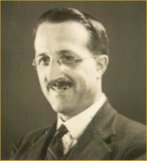 It has been felt for some time past that the ministry of our beloved brother G. R. Cowell was particularly intended of the Lord Jesus to meet the increasing need of a deeper acquaintance with Himself, and the promotion of an inward state of soul suited for the presence of Divine Persons.
In publishing these 'Memorials' our prayerful desire, therefore, is that the Lord may be pleased to richly bless and use this ministry of Himself for the help and edification of His dear people wherever they may be found. Philip Haddad
It has been felt for some time past that the ministry of our beloved brother G. R. Cowell was particularly intended of the Lord Jesus to meet the increasing need of a deeper acquaintance with Himself, and the promotion of an inward state of soul suited for the presence of Divine Persons.
In publishing these 'Memorials' our prayerful desire, therefore, is that the Lord may be pleased to richly bless and use this ministry of Himself for the help and edification of His dear people wherever they may be found. Philip Haddad
|
The initials of other brothers taking part in readings do not appear in Volumes 1 – 8 of the 'Memorials'.
- There may have been a reluctance to show the initials of many who remained with the legal system.
- Happily, where applicable, other initials have been shown in the final Volumes 9 – 16,
- and have been obtained for Volume 2 from the original Stow Hill publication.
G.A.R.
Page Top
| READING 1: ADAM |
|---|
Gods' Relations with Men ( 1 )
Genesis 2: 7-9, 3: 24
Romans 5: 17 to end; 16: 25-27; 2 Timothy 1: 1
Memorials 1: 1-16
|
|---|
G.R.C. It is in mind in these readings to consider God's relations with men, including the ideas of promise and covenant. It is therefore proposed in the early readings to consider Adam, Noah and Abraham.
The word covenant in scripture does not always mean the old or new covenant.
- Both the old and the new covenants, in the letter, belong to the house of Israel.
- The old covenant was made with Israel, the new covenant will yet be made with the house of Israel and the house of Judah.
- But covenant is used in a wider way than that; and so in Hosea we have the expression that they, like Adam, have transgressed the covenant, showing that the idea of covenant entered into things at the very beginning.
- There was an implied covenant in the relations between God and man at the very beginning. Genesis 2 brings out what is fundamental to this subject.
- The name of God that is used bears on it – “Jehovah Elohim”.
- “Elohim” refers to the supremacy and majesty of God as Creator to Whom all rights over the creature belong,
- the One who breathed into man's nostrils the breath of life and therefore whose right it is that every breath man draws should be for Him.
- Man received his breath from Him – what intimacy is suggested in that – and man's breath is in His hand and every breath man breathes should stand related to the God who formed him. The life came from God and was to be for God.
- Of course that will yet be brought about. Everything that hath breath will praise Jah. Every outgoing will be to God. The title “Elohim” does not admit of any rival, there is to be no other god.
But “Jehovah” brings in the personal Name showing God's personal interest in man; so that man was in mind in all that He was doing in chapter 1.
- We see the way He personally had to do with the forming of man, the personal Name being brought in, showing that His affections were peculiarly involved in this. His affections were centred in man.
- Of course the incarnation proved what a place Man has with God and how God would establish eternally the most remarkable personal relations with this particular creature.
- With that in view the Word, of whom Adam was but a figure, became flesh. But still, from the outset these great principles were there.
- “Elohim” was operating in creation generally but in the detailed formation of man the personal Name is introduced, showing how the affections of God were centred in this creature whom He was forming.
- Then the way He personally had to do with him in breathing into his nostrils. What intimacy is suggested in that!
- God breathed into the nostrils the breath of life so that all that life was to be for God. It came from God and was to be for God.
Then on the other side what is brought in here is the great principle of obedience.
- God being who He is, Jehovah Elohim, everything on man's side must stand related to the great principle of obedience and that remains unalterable.
- Adam transgressed the covenant and he disobeyed but God has never altered that principle any more than the others I have just mentioned – all these principles stand.
- Then, along side of all that we have the tree of life in the midst of the garden which indicates the promise of life; as Paul says in the beginning of Titus,
- “In the hope of eternal life, which God, who cannot lie, promised before the ages of time”.
- The witness to that was that the tree in the midst of the garden was the tree of life. Therefore God was committed to that; it was an unconditional promise and the tree was the evidence of it.
- When disobedience and sin came in, and death by sin, it raised the whole question as to God's glory in every way. But how would God fulfill the promise?
- The tree of life was the witness to the promise. God could not go back on that, if one might so say, for the tree of life was the centre. Would God be defeated? Would He be unable to carry out that promise?
- So that great principles are involved in this chapter; basic matters in the ways of God with men which I thought we would get help on in commencing this subject.
Ques. Is the tree of life the setting out of that principle as in God Himself? It is not something that was put into the tree but it seems to be a matter that stands in regard of what is in God Himself? It cannot be affected by anything that may arise, any moral issue. So, as you say, God stands by it.
G.R.C. Yes, God was committed to this before the ages of time. The tree is the witness to it, as far as one sees; and God, if He is to be God, must stand by that.
Rem. The word in Scripture is that He cannot deny Himself.
G.R.C. Well, that is a good word in this connection. He cannot deny Himself. What He has promised He is able to perform.
Rem. Because He is God and He cannot fail.
Ques. Would you say a word as to the presence also of the tree of the knowledge of good and evil? Does that indicate that God was going to share something with men in that connection too?
G.R.C. I would think that what was in the mind of God was that the great issue of good and evil would be wrought out in man.
- The matter had arisen in the angelic order; evil had been introduced but the issue would be worked out in man, in this creature upon whom God had set His affections;
- in that order of being the great issue of good and evil would be wrought out, and in the course of it, God would be glorified.
- God's affections would come into display, and He would be vindicated as the One who never fails to honour every commitment which He enters into – here the promise of life.
- But then also it was no doubt an essential test because sin had come into the universe. So this seems to be an essential test for man, and it is therein that the covenant lies. The word is,
- “Of every tree of the garden thou shalt freely eat; but of the tree of the knowledge of good and evil, thou shalt not eat of it; for in the day that thou eatest of it thou shalt certainly die”.
- So that man's blessing was conditional upon his observing that command.
Ques. The tree of life is said to be in the midst of the garden. Would all the counsels of God flow from that setting, the river indicating, perhaps, God's ability to compass the whole scene in regard of His counsels?
G.R.C. That is very good. It is remarkable that that is how it is put.
- In the Revelation the tree of life and the river are closely connected. The tree of life is the central thing but the river speaks typically of the Holy Spirit. How closely the river is linked with the tree!
- But when the woman speaks in Genesis 3, she says,
- “but of the fruit of the tree that is in the midst ofthe garden, God has said, ye shall not eat of it, and ye shall not touch it, lest ye die”.
- That is to say that the woman had got out of reckoning as to what was central. Satan brings in darkness,
- “Is it even so, that God has said, ye shall not eat of every tree of the garden?”
- As we might rightly say, it was a devilish way of putting things, so subtle, to bring in darkness to touch the woman's pride.
- God had said according to chapter 2: 16,
- “Of every tree of the garden thou shalt freely eat”; that was the way God put things.
- If she had been right and if she had kept under the headship of her husband, she might have answered in those words which God had used, which proclaimed the unspeakable beneficence of the Creator. The woman says,
- “We may eat of the fruit of the trees of the garden”;
- she does not say 'we may freelyeat'. She is not using God's language at all. She comes down to her own language.
- Thus the enemy had succeeded in getting things out of centre. He had already succeeded in that in his first remark and the tree of life was no longer the central point for the woman;
- she was occupied with the forbidden tree – that was in the midst to her.
- All this attack was to bring God out of the centre; and the moment God ceases to be the centre man becomes his own centre.
- That is the very principle of sin – man becoming his own centre and object.
Ques. Is the full-blown result seen in another world – Cain's world in chapter 4?
G.R.C. That is just it. So that a world has been built up where man is his own centre and object.
- It is the lust of the flesh, as we have often noticed, and the lust of the eyes and the pride of life in Genesis 3: 6. That is the order of it.
- The woman succumbed to those three lusts, the pride of life, in a way, being the most terrible.
- The pride of life definitely puts man up as the centre and Jehovah Elohim is displaced.
- That is the principle of sin and the principle upon which the world is built up.
Ques. Does obedience involve attention to every word of God? Does not the Lord Himself say in perfect obedience,
- “Man shall not live by bread alone, but by every word which goes out through God's mouth”?
The woman changed the words, did she not?
G.R.C. That brings out so fully the principle of obedience.
- How the Lord stood when tempted of the devil in a world where God was denied His place! He said,
- “Man shall not live by bread alone, but by every word which goes out through God's mouth”.
- If only the woman had fed upon the words which had proceeded out of the mouth of God! Of course, she was not present when they were said but her husband should have passed them on to her – the very words that proceeded out of the mouth of God.
- We have to keep to the words of God – and they are not harsh or arbitrary.
- “Thy words were found”, Jeremiah says, “and I did eat them, and thy words were unto me the joy and rejoicing of my heart”, Jeremiah 15: 16.
- But the enemy would pervert matters to get us out of centre and then we lose the sense of the blessedness of God.
Ques. Is it not remarkable that the enemy attacks on the matter of eating, thus seeking to weaken the constitution so that there is no resistance to evil?
G.R.C. It is remarkable that the enemy first aims at getting the earof man; he has got the ear of the woman.
- God is entitled to our ear – it is every word which proceeds out of His mouth. Our ear should be closed to other things. Jehovah Elohim has full right to our ear, exclusively.
- The enemy in securing the ear of the woman speaks about food, as you say. Then as to the Lord, he speaks about food, does he not? It shows that it is a vital question.
Ques. Would the position of the tree of life in the midst of the garden have a special meaning when sin came in?
G.R.C. You mean that sin means death, but God was committed to life in spite of sin being already in the universe. Is that what is in your mind?
Ques. Yes, and He is not to be deflected, is He?
G.R.C. No.
Ques. Would the thought of man being formed from the dust of the ground involve that whatever there is in man which is of any value it is divine formation?
G.R.C. That is very good. So Jehovah formed him, and breathed into his nostrils the breath of life. That is what distinguishes man, is it not?
Rem. Yes. And apart from that he is absolutely nothing. He is not distinguished at all.
G.R.C. No. I suppose that man could never have had his place in the image and likeness of God apart from that breathing in. Otherwise it is
- “Dust thou art and unto dust shalt thou return”.
Rem. So that what God forms in man becomes the basis of all that He displays in man; and the former will abide for the satisfaction of divine love when the latter has assured God's end in the display of His ways.
G.R.C. Yes. So that God is not defeated in what He is doing here in forming man and building the woman; because in the full working out of His ways and counsel the man and the woman will be seen eternally in perfection.
- But then in the working out of things the principle of obedience remains. That is why I suggested looking into Romans.
- This fundamental principle in the relations between God and men, obedience on the part of man, is never given up.
- God is faithful to His promise, the promise of life, but the principle of obedience is never surrendered; it could not be.
- So in Romans 5 you have the obedience of the one Man. Adam and Christ are contrasted,
- “so then as it was by one offence towards all men to condemnation, so by one righteousness towards all men for justification of life. For as indeed by the disobedience of the one man the many have been constituted sinners, so also by the obedience of the one the many will be constituted righteous.”
- This should draw out our affections to Christ in a remarkable way as we think of what the one Man has done – so that we have only one Man before us.
- “By the obedience of the one”.
- What that meant for Him! How He had to meet the flame of the flashing sword, which turned every way to guard the way to the tree of life. How He has met it! In result,
- “as sin has reigned in the power of death, so also grace might reign through righteousness to eternal life through Jesus Christ our Lord”.
- His obedience there is regarded as one great act, as He says,
- “Lo, I come … to do, O God, thy will”;
- and as we know from the scripture the climax of this was that His body was to be the antitype of all the four offerings by fire of old. Only thus could the position be retrieved; only thus could the promise of life be carried into effect.
- Think of the wonder of the one Man, Jesus Christ, coming into the world for that purpose, dedicating Himself; His whole path one of obedience, but culminating in the cross.
- “Obedient even unto death, and that the death of the cross”,
- taking our place, bearing our sins, made sin for us; the lengths to which He has gone in obedience, and in result, grace reigning through righteousness to eternal life through Him – but at what cost!
- God glorified; God's faithfulness to His promise established; grace reigning through righteousness to eternal life; thus the promise of life is secured.
Rem. It says, “On this account the Father loves me, because I lay down my life … I have received this commandment of my Father.” Is that the one act of perfect obedience compassing all obedience?
G.R.C. Indeed it is. So in the carrying out of this one righteousness, this wonderful economy – 1 Timothy 1: 4 – in which we live has come into view.
- We live in the economy of God; that is where life really is, and it is in connection with the one Man, Jesus Christ and His committal to the path of obedience, that the economy in which we live has become available, as it were, to men.
- So the Word becoming flesh has meant a system of affections and relationships coming into view.
- He was ever loved before the foundation of the world, but now He is loved in a new relation, as having said,
- “Lo I come”, and as
- “the only-begotten Son, who is in the bosom of the Father”.
- The obedience which is spoken of here relative to God and man in Romans 5 was carried out in actuality in the affections of an only-begotten.
- How He is loved! Loved before the foundation of the world; loved in the relationship into which as Man He entered as an “only-begotten”; loved because of His obedience unto death. How the Father loves Him, and how we ought to love Him!
- We are espoused to one Man; and the one Man gains that place in our affections, to begin with, on the line of Romans 5.
Ques. Does this matter bring in the Lord's peculiar place as Head – the new Head for man – in which what you refer to as covenant relations with men are now established for men in a new Head?
G.R.C. Yes, it is noticeable that the word “Head” is not used in Romans 5.
- It is two men who are brought before us, one man and another Man. It implies His Headship, but really Romans 5 gives the moral basisfor His Headship.
- The moral basis on which He is now the Head for man, and is available for all men, is that He has carried out what is called the
- But then to follow this line of obedience we have to come down to our side.
- We have spoken of Christ and the one obedience but the blessings that flow from the obedience of the one Man can only be received by us on the principle of obedience.
- So in Romans 1 Paul refers to the fact that he was separated to God's glad tidings but that he received grace and apostleship in behalf of His name for obedience of faith among all the nations.
- God has not in any way given up this great basic principle of obedience; everything has been secured for men, and for God too, by the obedience of the one Man, Jesus Christ;
- but then the blessings which are flowing from that are presented to men for the obedience of faith.
- The gospel is not a voluntary matter. We do not preach free-will, there is no such thought. The gospel is a Divine command.
- “God commands all men everywhere to repent”,
- and woe be to them if they do not. It is a Divine command.
- God has opened the door of repentance, but apart from the one Man Jesus Christ and the righteousness He has completed there would be no door open for repentance in view of life and blessing.
- But the one Man Jesus Christ having finished His work, the glad tidings flowing from it are proclaimed for obedience.
- We are not telling people that they can choose. God's rights are involved in the gospel. He has a right to men's ear and has a right that man should obey His word. The gospel is His word.
Ques. Would the thought of the obedience of faith be the beginning so to speak of being constituted righteous?
G.R.C. A man constituted righteous must be an obedient man, a man who faithfully hearkens to the word, who lives by every word that proceeds out of the mouth of God. And he begins by hearkening to the gospel.
Ques. Was not Eve diverted in her thoughts before her acts, and does not the matter of faith come in with what we are inwardly?
- The apostle in Ephesians 2 speaks of
- “our conversation in the lusts of our flesh, doing what the flesh and the thoughts willed to do”.
- Is it not important that the inwards are thus affected first?
G.R.C. Quite so. So “ye … have obeyed from the heart”. That is where the obedience is. They had received the gospel. In other words, they had obeyed from the heart the form of teaching because there is teaching in the gospel as well as preaching.
Ques. Does the preaching of the gospel involve the new covenant?
G.R.C. Well it involves more than covenant.
- The gospel is altogether greater than what is formally called the new covenant, which will be made with the house of Israel and Judah, but the gospel comes on new covenant principles.
- It is God approaching men, not on the line of demand like the old covenant but on the line of supply.
- In the gospel God approaches men offering them the abundance of grace, the free gift of righteousness and then eternal life. It is all freely offered on new covenant principles, God saying what He will do and what He will give;
- but the gospel is far greater than the new covenant in its terms ever visualised.
Ques. Do the opening verses of Peter's first epistle as to election according to the foreknowledge of God the Father, by sanctification of the Spirit, unto the obedience and sprinkling of the blood of Jesus Christ, fit in with the thought that the gospel is greater than the covenant? Is obedience emphasised in connection with election and sanctification?
G.R.C. I take it that the priesthood is in mind there. I would think the sprinkling of the blood there includes the ram of consecration – that we are committed in priestly devotion to the obedience of Christ ourselves. Therefore you can see how the priesthood from that standpoint is constituted righteous.
Ques. Would that involve the gift of the Spirit, which according to Acts 5 God has given to those who obey Him?
G.R.C. Very good. Sanctification of the Spirit involves of course the gift of the Spirit, and it is very interesting that the Spirit is given to those who obey.
Then the passage we read at the close of Romans carries the thought of obedience even further and it is very important for us to lay hold of it.
- The truth of the mystery is no more optional
than the gospel.
- There is no thought that a man can receive the gospel and go on with the truth of the church or not just as he wishes. This is a current idea abroad, as we know, in Christendom.
- Those who do this do not hearken to the word and they are not characteristically obedient.
- The word in the end of Romans is:
- “Now to him that is able to establish you, according to my glad tidings and the preaching of Jesus Christ, according to the revelation of the mystery, as to which silence has been kept in the times of the ages, but which has now been made manifest, and by prophetic scriptures…”
- – what now follows is the part we need to pay great attention to –
- “according to commandment of the eternal God, made known for obedience of faith to all the nations”, Romans 16: 25-26.
- That is, the mystery is as obligatory as the gospel; there is no question of free-will in this either.
- It is put so strongly: “commandmentof the eternal God”. God's rights are specially involved in this matter that those who receive the gospel should go on to the mystery.
- It is to all, all the nations; it is as wide in its scope as the gospel. The gospel is announced to all the nations – chapter 1: 5 – and the mystery is made known to all the nations and both are “for obedience of faith”.
- A person who does not go on with the mystery and fit into his place in the body and function in the assembly is disobedient to the word.
- This is so important because this is the thing that God's heart is so bound up with.
- It is the man and the woman according to Genesis 2. We have spoken of life, that is a basic matter. There could be nothing without life. But then what is the greatest feature of life according to God?
- It is seen in the man and the woman. The woman taken out of the man. There we see life in a superlative way and that is the truth of the mystery.
- God must feel it intensely when persons do not go on to the truth of the mystery. One would like it to come home to one's own heart, and to all the brethren, that
- to take up the truth of the assembly and to work out the truth of the body and the bride, the wife, the city, and all these features of the assembly, is the command of the eternal God, for obedience of faith.
- We should be set for these things. If God has operated in the way He has done to bring in life in spite of all that has happened, how He must feel it, and does feel it, if we do not go on to His full thoughts.
Rem. Paul could not finish without bringing this in
at the end.
G.R.C. That is just it. He could not finish without speaking of the mystery. The gospel is never to be divorced from the assembly. Every one who is obedient to the gospel, in the divine thought is to be obedient to the truth of the assembly, the mystery.
Ques. And we should never differentiate between the preacher of the gospel and the ministry as to the assembly.
- Is there not a tendency to speak of one as preaching the gospel and another being an assembly man? Should not an assembly man be really evangelical and a true evangelic man an assembly man?
G.R.C. An evangelist according to Ephesians 4 is for the edifying of the body of Christ, just as much as the apostle, prophet and teacher.
- So the evangelist according to God is an assembly man. He has nothing less in his mind than the assembly. His gift is evangelizing but he has nothing less in his mind than the assembly and he certainly would not leave his converts with any idea that they should stop short of the assembly.
Ques. Would the full presentation of the gospel and the apprehension of it make way for the immediate reception of the truth of the mystery? Is it not a defective gospel that often leaves an obscurity in the soul?
G.R.C. Perhaps you would just enlarge a little on that as to how you would bring in the link.
Rem. Well, I mean that souls brought into the truth of the gospel on the lines that you have been speaking of – the obedience of faith – will be ready for something further. But whilst things are received on an optional basis, what is further in the mind of God tends to be obscured.
G.R.C. I am sure that is right. We must not announce the gospel as though it was optional.
- People who receive the gospel under a preaching, which gives them the idea that it is their choice, and who have just taken it up of their own free-will, unless they get help on it will never be churchmen.
- The gospel is a command for the obedience of faith. Men disobey at their peril, as we know, and the truth of the mystery is equally a command. None of us should entertain the idea of stopping short.
Rem. Does not the apostle conclude with God as the Centre? He not only says,
- “according to commandment of the eternal God,” but then he says, “the only wise God”.
- So that in that sense even what God has brought out in the way of mystery is not enough for the soul but it must be God Himself. I thought that would connect with Genesis as you were saying.
G.R.C. That is very fine. We see in Genesis how God was displaced by the devil's operations and man became his own centre and his own object.
- At the end of God's operations God Himself is the Centre, and how could it be apart from the working out of the mystery? because God becomes the Centre when Christ and the assembly are in their place, finally, in public glory. Is that not the way that God will secure His place in the universe?
Rem. It is indeed. And I wondered if that was involved in the fact that He set the man to till the garden before he is said to guard it. We may put great emphasis on guarding matters but the tilling may leave us unaffected by what is for God Himself.
G.R.C. Would you say a little more on tilling?
Rem. Well, I thought that it was a question of making good what God had in mind. He had set man in that environment in order that out of it might come what was for God Himself.
G.R.C. Very good.
Ques. Would Paul set it out when he says of himself, “I was not disobedient to the heavenly vision”? Do you think that was a vision of the gospel and the mystery and he was completely obedient to both?
G.R.C. I certainly think it was. “I was not disobedient to the heavenly vision”; what an example Paul is for us! What a pattern! He was not disobedient; and as our brother says,
- the vision disclosed to him is not only the truth of the gospel but also the truth of the mystery.
Page Top Reading Top
| READING 2: NOAH |
|---|
Gods' Relations with Men ( 2 )
Genesis 8: 20-21; 9: 1-17
Romans 13: 1-6; 1 Timothy 4: 9-10
Memorials 1: 17-36
|
|---|
G.R.C. What is in mind for this reading is consideration of the conditions established in the present heavens and earth. Peter in his second epistle says,
- “the then world, deluged with water, perished”.
- Then he speaks of the present heavens and the earth, and goes on further to speak of a new heavens and a new earth. He also tells us that
- “the present heavens and the earth by his word are laid up in store, kept for fire unto the day of judgment and destruction of ungodly men”.
- But meantime the present heavens and earth are being used by God as the sphere where His ways are being worked out and His purpose according to counsel is being carried through.
After the flood God established stable conditions;
- first, in respect of government, putting the sword in the hand of man in the way of magisterial government.
- and secondly, by His covenant with Noah and his sons with him. It says in Genesis 9: 9-10,
- “Behold, I establish my covenant with you, and with your seed after you; and with every living soul, which is with you, fowl as well as cattle, and all the animals of the earth with you, of all that has gone out of the ark – every animal of the earth”.
- Further down in verse 13 it speaks of “the covenant between me and the earth”,
- and verse 16, “the everlasting covenant between God and every living soul of all flesh that is upon the earth”.
So I think we should consider the goodness and faithfulness of God in establishing government, and at the same time
- committing Himself, by an unconditional and everlasting covenant, to maintain creational conditions, which are favourable all the days of the earth.
- The earth is in mind in this covenant, not heaven; the earth is the scene of operations, and the covenant lasts all the days of the earth, that is, until after the world to come.
- This covenant continues right through the millennial day, the thousand years reign of Christ; and of course, much of what is stated here can be taken as prophetic of millennial conditions.
- But one is not concerned to view it in that respect this afternoon, but to view it as it bears on us.
- This covenant has been in force from the time of Noah right until today, and it remains in force all the days of the earth.
- It is in force today, and it should move our souls to think of God entering into this covenant with Noah and his seed – for we are Noah’s seed – and with fowl as well as cattle, and all the animals of the earth – every animal of the earth.
- It is wonderful to think of God taking account of creation in this way, and making a covenant. The covenant is with the animals as well as with men; this would give us respect for God’s creatures.
- We are to respect every living soul and treat it rightly. Thus we have here God’s consideration for every living soul on the earth, and particularly for man. For He says in Genesis 8: 21,
- “I will no more henceforth curse the ground on account of man” – or as the Authorised Version says, “for man’s sake”.
- It is very touching that what God does is primarily on account of man; His affections are set upon man, and His affections require that all that He has purposed concerning man should come to pass.
- Even as to the sabbath the Lord says that the sabbath was made on account of man. We shall never understand the sabbath if we do not understand that.
- God’s rest is in man – especially, of course, in Christ. God is thinking of man, and His purpose as to man, and it affects Him in His heart. It says,
- “Jehovah said in his heart, I will no more henceforth curse the ground on account of man”.
- When you think of God providing these stable conditions with the incarnation in view – although many things were to happen first in His ways – and with a view to Christ coming and the assembly being formed, it should cause worship in our hearts.
- It is quite a mistake to leave this out of our Christian worship and praise. Peter speaks of committing our souls in well-doing to a faithful Creator, evidently having this covenant in his mind.
- Paul speaks of Him as the Preserver of all men, especially of those that believe; this again, one would judge, is a reference to this covenant.
- Then another thing which should affect us deeply is the basis of the covenant. It says,
- “Jehovah smelled the sweet odour”, or sweet odour of rest.
- Noah “took of every clean animal, and of all clean fowl, and offered up burnt-offerings on the altar”.
- If we have stable conditions on earth, if government is favourable, and if the seasons remain, and seed time and harvest, cold and heat, summer and winter, and day and night continue, we owe it all to the offering up of Christ upon the altar.
- It should enter into our minds whenever we give thanks for our food, that we receive our food because Christ has died as a burnt offering.
- That would bring in a great meaning, when we give thanks, to the words, “in the Name of the Lord Jesus”.
Ques. Does the enlargement of man’s menu to include flesh have that in mind? In chapter 9 verse 2 they are delivered into his hand for food. It says,
- “Into your hand are they delivered. Every moving thing that liveth shall be food for you: as the green herb I give you everything”.
- It would seem that God introduces flesh for man to eat at this time, in order to maintain at every meal a testimony to the fact that man lives on the principle of substitution, referring back to the odour of rest.
G.R.C. Yes, that is very interesting; we live on food which is the result of death,
- “Every moving thing that liveth shall be food for you”. Only we are not to eat the blood; “Only, the flesh with its life, its blood, ye shall not eat”.
- The blood is for God at all times, but our natural life is sustained by food that is the result of death. As you say, that would remind us that all rests upon the death of Christ.
Ques. Would this bear upon the blood of the eternal covenant? Would the carrying through of every divine thought of God in view of man, rest upon the efficacy of the blood of Christ?
- And should we not take more into consideration the bondage that exists amongst men, and the whole creation groaning at the present moment?
G.R.C. I think so. One reason why God has established these stable conditions is that the glad tidings might be preached to all creation.
- He has in mind before long to deliver the creation from the bondage of corruption, into the liberty of the glory of the children of God.
- Before this period to which this everlasting covenant applies is completed, the whole creation will be delivered from the bondage of corruption.
- It is a wonderful thing; but meantime in our day these stable conditions are maintained that the glad tidings might be preached, and that the truth of the mystery might be worked out.
Ques. Is all this to produce in us true piety? Would you say a word as to piety in this connection?
G.R.C. The chapter we read from in 1 Timothy deals with piety. It says in verse 4,
- “For every creature of God is good, and nothing is to be rejected, being received with thanksgiving”, and in the previous verse,
- “which God has created for receiving with thanksgiving for them who are faithful and
know the truth”.
- Then the apostle goes on to speak of piety. It shows how important thanksgiving is in this connection. He says to Timothy,
- “Laying these things before the brethren, thou wilt be a good minister of Christ Jesus, nourished with the words of the faith and of the good teaching which thou hast fully followed up”.
- So these practical things relating to piety are essential. This was written for the saints at Ephesus; and we in our day should be balanced in our apprehension of God and the truth.
- “A good minister of Christ Jesus” would be one, I suppose, with the whole mind of God before him as to purpose; but he is a good minister of Christ Jesus if he lays these things before the brethren.
- The Spirit speaks expressly about them too, showing that this line of things is not of secondary importance.
- The purpose of God as to the mystery is the primary matter, but we cannot relegate these things to what is secondary: this is very important.
- In fact, without this as a background the other would never go forward. Then having spoken of the profitableness of piety he goes on to say,
- “The word is faithful and worthy of all acceptation; for, for this we labour and
suffer reproach”.
- So this is an integral part of the testimony. It is
- “because we hope in a living God, who is preserver of all men, especially of those that believe”.
Ques. Is there a certain testimony connected with not eating blood? In certain parts there is a habit of eating things which contain blood as blood, and
- it seems to me that it is a matter of testimony that that should be refrained from, especially in view of the word in Acts 15, which seems to be a carrying forward of this into Christianity.
G.R.C. I would think that is right,
- “Only, the flesh with its life, its blood, ye shall not eat”.
- Later, in Leviticus 7: 27, it is made clear that the blood is for God; it is the blood that makes atonement for the soul. Of course that is the precious blood of Christ; but the blood as representing life is always for God.
Ques. Would you say something about the covenant in chapter 9? It seems to be unconditional.
G.R.C. Well, it is unconditional as far as our side of things is concerned. Really, we know, it all rests from the divine side on the burnt offering.
- “Noah built an altar to Jehovah; and took of every clean animal … And Jehovah smelled the sweet odour”,
- so what sets God free to maintain these stable conditions on earth, in spite of what man is, is what Christ is, and what Christ has done.
- Noah can be regarded as a type of Christ, his name means ‘repose’; God’s rest had been disturbed, but here was a man in whom God could rest; and He smells the sweet odour of rest.
- So we can think of Christ and His perfection and the perfection of His offering, and all we receive from God as a faithful Creator comes to us on that ground.
Rem. Paul at Lystra really appeals to this covenant, does he not? He says that God gives them rain and fruitful seasons, and then he appeals on this principle to men.
G.R.C. His speaking of giving us rain and fruitful seasons bears on Genesis 9.
- The only rain Noah had ever seen, I suppose, was the rain of judgment when the pour of rain was forty days and forty nights on the earth. Rain had not been seen, I would think, before that on the earth.
- But the bow in the cloud is the evidence that when rain comes now it is in view of blessing. Now it is the early and the latter rain, having the harvest in mind. So that we are not to fear clouds, because of the covenant. That applies in a spiritual way as well as an actual way.
Rem. In Acts 17 Paul says He gives to all “life and breath and all things”.
G.R.C. Yes, quite so. Paul had this in mind on Mars Hill; it is upon this basis that Paul makes the appeal to the Athenians. They would not know the Jewish Scriptures.
- You can appeal to any man on the basis of this passage. But the 14th of Acts where Paul says,
- “giving to you from heaven rain and fruitful seasons” bears very much on this.
- Because up to this point rain was judgment. But from this point on, the burnt offering having been offered, when the cloud came there would be the bow in the cloud. It was to be rain in view of blessing.
Ques. Do you think the understanding of this would help us to be different from those around at a time when men are troubled by the ever-expanding efforts being made to reach out to the borders of creation?
- Should not the saints be marked as those who know that God has everything under control, and will not loosen those reins while the earth remains?
G.R.C. I think so.
- Some people think that men by their efforts can affect the weather; this does not indicate that at all. God is controlling the weather; man is not controlling the weather;
- and how comforting that our faithful Creator has promised that all the days of the earth, seed time and harvest, and cold and heat, summer and winter, and day and night shall not cease. How thankfully we can leave all creational matters to Him.
Ques. And in that way does it stress the importance of our being occupied with what is positive?
- The tree of life was spoken of in the reading this morning, and now the sweet odour; God does not touch on any of the potential difficulties that He knew would come in; He is dealing with what is.
G.R.C. Quite so; He has established these conditions that the tree of life might be available to men.
- It is beautiful to think of the Tree of Life, the one Man Jesus Christ, and the obedience of the one Man, and all that He did in that respect, even unto death, which has made Him available now as the Tree of Life to men.
- The glad tidings is really preached to that end that men might feed on that food.
Rem. In Colossians we read of the hope of the glad tidings, which have been proclaimed in the whole creation. Does that, and reconciliation, rest on the blood of the eternal covenant?
G.R.C. When you speak of the blood of the eternal covenant, you are thinking of the last chapter of Hebrews?
Rem. Yes, and then in Colossians, “having made peace by the blood of his cross”.
G.R.C. Yes, that would refer to the work which is the basis of reconciliation having been accomplished. This in Genesis would be looking on to that, do you think?
Rem. Well, I am seeking to get some help as to whether we really understand the full wondrous value and efficacy of the blood of Jesus as laying the basis for all that we are speaking of now.
G.R.C. My impression is that that expression
- “the God of peace, who brought again from among the dead our Lord Jesus, the great shepherd of the sheep, in the power of the blood of the eternal covenant”, Hebrews 13: 20,
- is not relating to the new covenant only. I believe it is a much wider idea. It is not a specific covenant there but I think it is the general idea of the eternal results that are based upon the precious blood of Christ.
- The present conditions that we are speaking about in the world, these stable conditions in the present heavens and earth, are based upon that precious blood.
- And God’s purpose, both as to heavenly and earthly families, rests on the secure foundation of that precious blood. I believe in that sense that the idea of the everlasting covenant is a very wide thought.
- It is a great general idea to bring home to us that the blood of Christ in that respect lies at the basis of everything that God establishes.
Rem. I am very thankful that you have referred to that, because I believe that we need to have a greater inward evidence of holy feelings for our fellow men, and for the whole creation.
G.R.C. Well, I believe that this chapter would give us feelings for men, and even for animals. God has made a covenant with animals, so it behoves us to have respect for animals;
- and God will have to say to those who do not have respect for animals, and who do not treat His creatures as they should be treated.
This chapter is a warning to men to have respect for the creatures of God. God is going to enter into judgment with men for the way that they have treated His creatures.
- First of all we have to have proper respect for the rights of God, and on that account we do not eat the blood of any animal.
- Then there are the rights of animals.
- Then there is the great point of man, the rights of God in connection with man, and the rights and dignity of man. For it says,
- “Whoso sheddeth man’s blood, by man shall his blood be shed; for in the image of God he hath made man”;
- that is, we are never to forget that man has been made in the image of God.
- The Communist system, for instance, ignores the rights of God, and ignores the dignity of human personality;
- whereas God has set up government on earth to preserve both His rights, and the dignity of human personality, as made in the image of God.
Ques. Did not Mr. T— some years back make a remark about the blood sports, in which man is ill-treating the animals; did he not say in that connection that they would do the same to mankind if they had the opportunity, so putting the two thoughts together?
G.R.C. That is very interesting. You mean the two things go together – if God’s rights are denied it will affect man’s treatment both of animals and of his brother.
- You will notice that God even requires a man’s blood at the hand of every animal; but government is put into the hands of man in connection with man.
- “Whoso sheddeth man’s blood, by man shall his blood be shed; for in the image of God he hath made man”. How righteous God is in this!
We ought to spend a little time now in considering this matter of government and the goodness of God in establishing government.
- Public conditions before the flood were chaotic, though there was the line of faith;
- but from the time of the flood, God has maintained government on the earth; that is why we read Romans 13.
- What is in mind here is what we call magisterial government, in contrast to political government.
- In the times of the nations the political rulers are responsible for magisterial government; the two become identified.
- Magisterial government in itself, of course, specially relates to the judges and magistrates. God supports government of that kind for the punishment of the evil doer and the reward of those who do well.
Ques. Does the Lord remind Pilate of that? He says
- “Thou hadst no authority whatever against me if it were not given to thee from above”.
G.R.C. Yes, the Lord acknowledges this. So the sword was put into the hands of man, at this point in a magisterial capacity; and he bears not the sword in vain because God supports him.
Ques. When it refers in Timothy to God being the Preserver of all men, especially those who believe, has it in view both God’s thoughts in creation, and also preserving men by the institution of government?
- While generally men have disregarded God’s rights in creation, and very largely rejected authority, yet are the saints as believing and acknowledging God’s rights, and being subject to the authorities, in a large measure preserved here for God’s pleasure?
G.R.C. I think both thoughts enter into the title of God as the Preserver, the thought of government and the stable conditions. God was not going to allow again the chaotic conditions which occurred before the flood, so He establishes government.
- But I believe these two things would not only be an occasion of praise but would help us in our approach to God in prayer about matters. We should, as we know, be continually in prayer for kings and all in dignity.
- But I think we should be able to approach God about such matters as the weather, too.
Ques. Do you think the generally stable conditions provided in the Noah period give God a foundation for introducing the love period and the heavenly calling?
G.R.C. That is the main purport: God had other dispensations to run, other periods in His way;
- but the main point in establishing these conditions, this covenant, was because of the incarnation and the assembly period following.
- Then, of course, there is the world to come following that, the period of display.
Ques. Is it important that in Romans 13: 5 God brings the conscience in?
G.R.C. It certainly is important, because we recognise God as the Source of the authority.
- “Let every soul be subject to the authorities that are above him. For there is no authority except from God”.
- God put this authority into the hands of man. What is brought out here is the ultimate penalty for the most serious form of evil doing; but it really covers the whole matter of government.
- But then later this form of government was merged with kingly and imperial power, particularly under Solomon; and after the breakdown of Israel it was placed into the hands of the gentile emperors beginning with Nebuchadnezzar.
- So we have to keep in our mind that whatever the vicissitudes of mankind, and the changes in the international sphere, that authority remains.
- And now matters are in the hands of the gentile rulers, God holds them responsible for this kind of government. As politicians they have other ambitions and so on, but God still holds them to this.
- So you find in most countries, unless they are very perverted, that there is an effort to maintain this kind of government; and really the fact that it is maintained is a miracle, it could not be maintained but for Divine power.
- So we need to be in prayer before God about it, and to take account of the fact that it is primarily there for the saints. It is there for the whole scene; God is the Preserver of all men – but specially of those who believe. So it says in Romans 13: 3-4,
- “Practise what is good, and thou shalt have praise from it; for it is God’s minister to thee for good”.
- That is the purpose, from the divine side, of the authority. It is God’s minister to us for good.
Ques. Is the “it” the authority? Is it the persons?
G.R.C. It is vested in persons, but it is put in that abstract way, “God’s minister to thee for good”.
Ques. Would this have a bearing on the way the saints are being brought to have to do directly with rulers and authorities? Would your remarks encourage our faith in that regard?
G.R.C. I think so. If we look back at Genesis 9, what is involved are the rights of God, and the dignity of man as God’s image. That is what authority is vested in men to maintain.
- Therefore we should be encouraged to approach authorities with those two things in mind.
- If we see what God has in mind in giving authority, we can pray to Him about it; we can pray that those who are wielding it at the moment may be so under His control that they may use it in the way He intends.
- The intention is that they should maintain His rights in a governmental way, and maintain man’s dignity and man’s position as His representative.
Ques. So we recognise the “it”, the authority itself, and can leave restfully in the hands of God the kind and character of persons who are engaged in it?
G.R.C. That is right, because it says in Daniel that He sets over it – the kingdom – whomsoever He will. And He may set over it the basest of men.
- God does sometimes use the imperial powers as disciplinary agents, and they may act against His people, treating the saints as though they were evil doers. That is a perversion of their power. The saints are not evil doers.
- True believers are never evildoers if they are walking in faith and the obedience of faith, and the authority ought always to be in their favour.
- But sometimes our state is such that God allows the basest of men to get in control, so that the magistracy treat believers as evildoers; but then God has good in His mind even in that. Indirectly it is going to work out for good.
- It is like the clouds coming up over the earth. The rain was known as judgment, and the clouds coming up might have caused those who had been in the ark to fear another judgment, but the bow in the cloud indicated it was only in view of blessing.
- That is how the prophet speaks of the clouds which come up sometimes in the sphere of government. Nahum whose name means ‘comfort’ says,
- “His way is in the whirlwind and in the storm, and the clouds are the dust of his feet”.
- He is referring to the Assyrian power, Nineveh, a disciplinary agent.
- Sometimes the clouds gather in the political sphere, and government becomes hostile, but God’s way is in that. He is in it; He is moving with a view to good and there is the bow in the cloud; that is, Christ is with the Father in His throne.
- There is no question of any matter of government going wrong as regards believers because the Lord has sat down with His Father in His throne. The Father has all government under His hand and the Lord is with Him in it.
- If we have been wrong, if government is against us because we need some correction, the correction is in view of our blessing. So that the bow in the cloud is there.
Rem. In that connection would you make a remark about the three Hebrew children and Daniel? You were saying that if the government is against us it is we who need the discipline. How does that work out with the three Hebrew children and Daniel?
G.R.C. I would think in Daniel it was allowed for the sake of the testimony. God permits rulers at times to make demands on the saints when we have to say
- “We must obey God rather than men”.
- That is for the sake of the testimony, as in the Acts, because it was God’s will that they should testify before rulers.
Rem. So that Paul, whilst ostensibly put in prison as an evildoer, writes to the Philippians that the circumstances in which he was turned out rather to the furtherance of the glad tidings.
G.R.C. Yes. Paul was being treated as an evildoer and under bonds. The magisterial side of government was under the control of the political and was perverted.
- Paul was not an evildoer. He should not have been in prison, but it was a turning out to the furtherance of the gospel for a testimony.
- Sometimes we have to be prepared to suffer in order that Christ’s name may be borne before nations and kings and the sons of Israel.
Rem. Have not our brethren in Eastern Germany proved this in a wonderful way?
- They have made a number of applications to the Government to recognise the brethren as a whole and grant them liberty, but the Government decided that as there was no entity of brethren in that area they would delegate to the local police the authority to allow the brethren to meet together.
- The brethren have neither interfered with the political trend, nor have they opposed it, and in every place the local police have given the brethren the right to meet together.
G.R.C. That is encouraging.
Rem. I was wondering if it is significant that, after God introduces government in the way of which you have been speaking, we get a word similar to what we have earlier,
- “Be fruitful and multiply”?
G.R.C. That seems very interesting – Genesis 9: 7. How could this be without ordered government?
- God so orders government that we may multiply and swarm on the earth in testimony.
Ques. Is it therefore very remarkable that in the English speaking countries, at least, provision has been made for conscience in the Military Acts, showing how the saints are free in relation to the rights of God?
G.R.C. As far as I know, the British Commonwealth for a hundred years or so has been marked by the recognition of conscience in every aspect, not only as to military service.
- We may limit it to military service in this country in our thoughts, but liberty of conscience has been allowed for in every way, as far as one can see, in each of the Dominions.
- In South Africa recently, as many may know, a new Military Service Bill was introduced without a conscience clause, but the brethren bore testimony, and although the case might have seemed hopeless at the beginning, it ended in statutory regulations being made which have given the brethren all they desired.
- Following that, the South African Government introduced an Act making membership of trade unions compulsory, and the brethren applied again and they got all they desired. They can get certificates of exemption, and go on with their work.
- Similar things have happened in Australia and New Zealand. There is a clause about to be introduced into the New Zealand Society of Accountants Act, allowing men to practice in the fullest way as an accountant without being members, if they have a conscience against membership. That is on the application of three brothers. So that we have got an opened door in this respect at the moment.
Rem. According to Job the clouds are balanced, and we have to get near to the One who is perfect in knowledge in regard to the balancing of these clouds.
G.R.C. That is it. The balancing of the clouds is in His hand, and blessing is always in mind because the bow is in the cloud. And we shall prove even in these governmental matters the blessings of the early and the latter rain.
Ques. Regarding the swarming on the earth which you spoke of, do we see this in 1 Timothy 2 where we are exhorted that first of all supplications, prayers, intercessions and so on be made with a view to men knowing our Saviour God, and coming to a knowledge of the truth?
G.R.C. Yes, we have to keep that passage always in mind. Supplications come first, and mean that you know what is needed and essential at the moment, and you are urgent about it.
- It is not vague prayers in the prayer meeting, praying in a general way for kings and all in dignity; but you know specifically what is needed at the time and you are before God about it.
- Those are the kind of prayers we need to go in for, remembering that the authority from God’s standpoint is a minister to us for good.
Ques. Would there be an opened door standing connected with this great era of assembly revival, as seen and worked out in Philadelphia?
- Does it indicate that God is active behind the scenes in view of things being worked out in relation to what is so dear to Him, in regard to Christ and the assembly, in these last days?
G.R.C. I wondered whether we need to have particularly in our minds the Lord’s word to Philadelphia, and count upon it, and speak to Him about it.
- “I have set before thee an opened door, which no one can shut”.
- That refers to a spiritual door but it also refers to a governmental door. Therefore we are entitled to expect, in these days, favour from the authorities.
- It is not like the days in the Acts. This is a special time when the Lord has in mind just what it says in Timothy, that we should lead peaceable and quiet lives, in all piety and gravity, with a view to working out the truth in its totality at the close of the dispensation.
- The Lord’s heart is bound up with this, that there should be, at the close, a true representation of the assembly. Therefore we can count on special conditions. We need faith to take the matter up, believing what the Lord has said.
- It is typified in the rulers of Persia – Cyrus, Darius, Artaxerxes, all were favourable.
- Esther came into the picture – she was the wife of the father of Artaxerxes, the king who permitted Ezra to go up and to whom Nehemiah made his request – and she risked her life.
- We cannot say how far her influence went.
- There was the influence of Esther and Mordecai behind the scenes, and Daniel before that, those who had to do with authority, and the result was that things went forward and every requirement connected with the house of God was allowed for by those kings.
- Their concern was that the house of God should function in every feature of it, and that is the point at the moment; that all that is due to God in His house might be answered to.
- If the opened door means what we think it means, the Lord is committed to support us in relation to the authorities so that no obstruction may be allowed in the way and we may carry out every principle of the house of God at the close until the rapture.
Rem. So the Lord says in the church gospel, Matthew,
- “All power is given unto me, in heaven and on earth”.
G.R.C. Very good.
Rem. I suppose the assembly responds to the sacrificial love of Christ. One feels that everything for God is on the line of sacrifice.
G.R.C. You mean that these matters mean sacrifice to those who are called upon to face it, like Esther who said,
- This matter of facing the authorities is bound to be a test. It says in Romans 13, after speaking of fear,
- “it bears not the sword in vain”, and then
- “Render to all their dues; to whom tribute is due tribute, to whom custom, custom; to whom fear, fear”.
- So a proper fear is right in regard to the authorities, and how we approach them.
- Inwardly there is boldness because we are there in relation to the rights of God; but in an outward way we should be marked by the fear that is due to those placed in that position by God.
Rem. Having the understanding of the word in Revelation “and no one can shut” it.
G.R.C. That would help us to be bold, would it not?
Rem. And help us to understand what you have been telling us, that God has ordered these very circumstances in view of our taking advantage of them.
G.R.C. Yes, I believe that is the thing. We ought to take advantage of the favourable conditions the Lord has brought, about in the world at the present time, in view of what He is seeking prior to the rapture.
Rem. We should take advantage of them but not presume upon them. They require a prayerful state constantly.
G.R.C. Well, fear would enter into that, would it not? It is not a light matter to approach those in authority.
Page Top Reading Top Next Reading