Menu•SiteMap |
Ministry
The Servant of the Lord
– His Enlightenment and Resources
– and other
Ministry by F. E. Raven – Part Three
| INTRODUCTION |
|---|
The Servant of the Lord –
His Enlightment and Resources
Ministry by F. E. Raven, 1: 306-41, no date
|
|---|
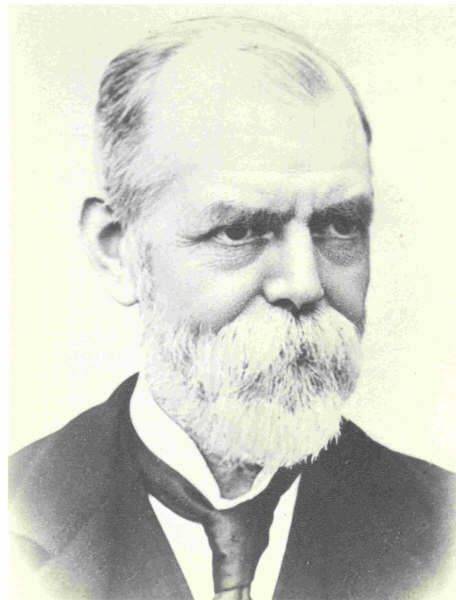
From the earliest years, brethren have especially treasured Paul's final letter, and resorted to it for
- instruction for our own times in which the public ruin of the church is so evident.
In these three addresses on 'The Servant of the Lord – His Enlightenment and His Resources',
- Mr. Raven has succinctly opened up and applied Paul's closing words.
- All who – and who would deny their responsibility? – desire to serve our Lord faithfully in these last days will do well to prayerfully go over these addresses in His presence.
'The Man of God' opens up "how the man of God is formed morally for the place that he has to occupy".
G.A.R.
Page Top
I do not know that the moral order of the truth in this epistle has always been clearly apprehended, but it has struck me;
- and you will find that you really have to learn divine things in the order in which scripture presents them, though you may hardly be conscious of learning them in that order.
- They have to be put in place in the soul in the divine order, for God knows what we want, and what we are able to take in.
- He knows better than we do; and, while we may apprehend truth in part here and there, there is a process which goes on underneath,
- and that is the Spirit of God putting the truth into shape in the believer, that is in its oneness.
- The apostle says, "Now I know in part". It is the work of the Spirit in the believer to put the truth into shape, and to make it one whole in his apprehension.
The great importance of this epistle, to my mind, is seen in the second chapter,
- for there the Spirit of God opens the eyes of the believer to the ruin* and confusion of what passes as the church – the great house.
- When your eyes are opened the course you are to take is marked out, and you find what are your resources; and you must know what your resources are before you attempt your work.
- The resources you find in chapter 3, and the work of the servant in chapter 4.
Timothy is the pattern of a servant in the present day, who continues until the coming of the Lord.
- Timothy was not an apostle, though I admit that on certain occasions he was employed as a delegate of the apostle. He was not one whom God used to introduce the truth;
- the work entrusted to him was to stand for the truth when the truth had been delivered.
- And I may say here that God looks for faithful witnesses, and not for people who are simply holding the truth in terms. He looks for those who are themselves exponents of the truth.
- We are of very little use or value here except as we are exponents of the truth we hold; the mere fact of holding the truth is, I believe, in the thought of God a small matter.
- But I think that by the fact of holding the truth you incur responsibility. It is a poor thing to simply incur responsibility.
I would just say here that chapter 1 is in a certain sense a preface.
- The point of view comes out in chapter 2, in which the eyes of the saint are opened to the confusion which prevails in God's house, or rather, in that which has the place of God's house.
- But before the apostle comes to that, he refers in this chapter to the gospel according to the purpose of God;
- and I am convinced that no person is competent to take into account the ruin of God's house if he is not first established in the truth of the gospel.
- You may depend upon it, that people are not able to look in the face the confusion and ruin that prevails if they do not know the stability of God's purpose.
- Therefore the apostle first refers to the truth of the gospel, that is, that God "hath saved us and called us with an holy calling, not according to our works, but according to his own purpose and grace", etc.
- In connection with this you have the blessed truth of the gospel brought in, by which life and incorruptibility are brought to light.
- Not simply a gospel that justifies a man and enables him to walk piously in this world, but the gospel in which is accomplished the purpose of God.
- The great point here is the purpose of God. God has called us with a holy calling according to His purpose.
Now I desire by way of preface to say one word which may possibly for a moment startle you, and that is, that
- it is impossible for any person in Christendom to change his ecclesiastical position.
- That is what I want to impress upon you. I daresay some may not be prepared to accept that; and yet I feel pretty confident that it is right.
- I suppose a great many here may have the idea that they have changed their ecclesiastical position; but I do not believe that such a thing is possible in the eye of God, though you can do it in the eye of man.
- As far as I understand it, christian profession – the great house – presents itself as one whole under the eye of God. The Lord in looking down here sees one thing; and if you apprehended that,
- you would understand that you cannot change your ecclesiastical position.
- In other words you cannot get out of Christendom; every one forms part of the great house. This cannot be altered until the Lord comes.
I think that ought to be plain to all. Perhaps some may say, But what have we done? The answer is,
- We have severed ourselves from associations which did not answer to the demand of righteousness.
- That is, we were mixed up in certain associations from which it was impossible to purge out evil, and therefore we separated from them;
- but though we cleared our own consciences we did not thereby change our ecclesiastical position in the eye of God. I do not think that is possible.
- For instance, I have separated from the State Church, but the reason I separated from that was that I saw that there was no possibility of discipline being maintained in the State Church; and if I take the great dissenting bodies the same thing really prevails there.
- In such institutions it is impossible to maintain discipline, because they are worldly in character and seek to accommodate themselves to men.
- Hence discipline cannot be maintained in them; the attempt would simply bring into them utter confusion, and therefore they do not answer the demand of righteousness,
- for if discipline be not maintained, as things are here, you may be sure you cannot have righteousness.
- I do not feel bound to be identified with such associations; for when evil is dominant in the church and the church has come to be a great house, the first requisite is to regard righteousness.
- Therefore, every one that names the name of the Lord is to depart from unrighteousness, and we have to "follow righteousness, faith, charity, peace, with them that call on the Lord out of a pure heart".
- Righteousness stands at the head of the list. On the one hand you are to depart from unrighteousness, and on the other to follow righteousness; and in this
- we are brought into a fellowship, the basis of which is, in a sense, that our eyes have been opened to the ruin of the church, to the confusion which prevails in the state of things around.
- We avow the principle that separation from evil is God's principle of unity. This, to a large extent, has been the ground on which we have been brought together.
Our eyes have been opened, and we have seen that things around do not answer to the demand of God. They will not bear to be measured.
- Do you remember how accurately the dimensions of the heavenly city in the Revelation were measured, and how all completely answered to the requirements of divine righteousness?
- So it must be, properly speaking, in the church, and I thank God that if I cannot change my ecclesiastical position I am not bound to go on with unrighteousness;
- and to go on with the great systems around, after we have received light, would be to go on with unrighteousness.
- I repeat that our fellowship has been founded to a large extent upon this, that our eyes have been opened to the ruin of the church, that is to the confusion of Christendom.
Now my point is that you are not really in a position to look that in the face if you are not first established in the truth of the gospel. The apostle urges upon Timothy,
- "Be not thou therefore ashamed of the testimony of our Lord, nor of me his prisoner; but be thou partaker of the afflictions of the gospel according to the power of God …"
- At the time when Paul wrote to Timothy the gospel had come into reproach.
- The application of that to us is that if you want to go on with the gospel, you must go on with it perfectly independent of all worldly support.
- t not look for patronage or support from man; you have to suffer evil together with the gospel.
- I think that a great many who preach the gospel in the world look to Christendom for countenance. I understand that to mean that they are counting on toleration, they have not escaped from Babylon.
- Babylon is the great world power; and where there is the effort to court the world and to accommodate our ways to the world, we are not free from Babylon.
- The apostle foresaw that the spirit of Babylon was coming into the church, and that is what led, I do not doubt, to a good deal which comes out in this epistle.
- A great point, if you are going on with the gospel, is to suffer the afflictions of the gospel, not to accommodate your means of preaching the gospel to what man may think right.
- One should be wholly independent of all that, because prepared, if need be, to suffer with the gospel according to the power of God.
I come now to the terms of the truth as stated here. It says,
- "Who hath saved us, and called us with an holy calling, not according to our works, but according to his own purpose and grace, which was given us in Christ Jesus before the world began, but is now made manifest by the appearing of our Saviour Jesus Christ, who hath annulled death, and hath brought life and incorruptibility to light by the gospel".
- A great many people think that the gospel is simply the instrument in God's hands of saving man. I quite admit that it is that, and that man is justified through faith in what is presented in the gospel.
- If a man believes in the death and resurrection of Christ he is justified in the eye of God, he then receives the Spirit and is to walk suitably in this world.
- "The grace of God … hath appeared to all men, teaching us that denying ungodliness and worldly lusts, we should live soberly, righteously and godly in this present world …"
- The gospel brings home to the heart of man the light of the grace of God. He is relieved of the pressure under which he was, and the Holy Ghost is given to him, and he is to walk soberly, righteously and piously here.
- Many think that to be the limit of the gospel, but if you make that the limit you have not touched the purpose of God at all; and more than that, so far as the believer is concerned, you have never put him off the ground of responsibility.
- I quite admit that the ground of responsibility is changed; the believer is no longer under law, but he is responsible as being under Christ and having the gift of the Spirit, and therefore he is to walk piously here.
- This aspect of the truth looks at the Christian as on the earth in Christ's absence, and therefore in the place of responsibility. But you have not yet touched the purpose of God.
- It is important to distinguish between the gospel as God's means of saving man, and as that by which God gives effect to His purpose. This latter you get here.
- There are two points in it. He has saved us, and called us, not according to our works: that is not on the line of our responsibility at all, "but according to his own purpose and grace which was given us in Christ Jesus". When? Before we had any works at all – "before the world began".
- When I talk about man being justified, he is justified in regard to that for which he is responsible. If he were not justified he would have to answer for his works in the day of judgment; and because he is justified God gives to him the Holy Ghost.
- But then there is behind this the fact that the gospel is the means by which God effectuates His purpose. He has saved us and called us, "not according to our works, but according to His own purpose and grace which was given us in Christ Jesus before the world began".
I will endeavour to give you an idea of what the salvation and of what the calling is.
- What I understand by the salvation is this: it is the deliverance of the soul from the world. It is expressed in what the apostle says to the Galatians in speaking of
- "our Lord Jesus Christ, who gave himself for our sins" – that is our responsibility, but the purpose of it was – "that he might deliver us from this present evil world, according to the will of God and our Father".
- That is what I understand to be really the salvation. God has brought to pass a means by which a man down here, while actually in the world, may be set free from it.
- If you ask me the way, I think it is not simply in having drunk the waters of Marah, but in being dead and risen with Christ.
- It is a most important point to accept the fact that death is upon man. Christ died because men were dead, that is the teaching of scripture. "If one died for all, then were all dead". The fact of His dying for all is proof that all were dead.
- By His death the bitter waters of Marah have now become sweet; but drinking them is hardly the way of deliverance from the world, this lies in the great truth of our being risen together with Christ.
- In the power of the Holy Ghost we are conscious of being free from the power and influence of the world.
- It marked, I think, the fathers in the first Epistle of John; the young men are charged not to love the world; but the fathers had judged the world system, and what we read about them is that they "have known him that is from the beginning".
- The great system has been judged, and that is what we must do in the Spirit if we wish to be free. We are risen with Christ out of it all. I think you can understand that a risen man has in spirit done with the whole thing.
- When Christ rose again, He was wholly parted from all that was after the flesh; and as risen with Christ we are free from the whole system in which the flesh lives. We are over Jordan, really touching the border of the land.
- The Red Sea brought Israel into the wilderness, and the passage through the Jordan brought them into the land; so resurrection brings us to the border of the land where life is.
- Scripture identifies life with the land, for being risen together with Christ is coincident with being quickened with Him. The effect is that you are to set your mind upon things above and not on things on the earth.
- I only speak of it because I think that is the idea of salvation here. Christ died for our sins that He might deliver us from this present evil world.
Now the other point is, He has "called us with an holy calling".
- He has given to us a calling which connects us with heaven, the privilege of which is to know God as He is known in heaven. God has blessed us with all spiritual blessings in the heavenlies in Christ.
- The calling refers to heaven; to know the Father, not simply as He is known of angels, but as He is known of Christ. Christ has revealed to us the Father; and we are brought into the place of sons in the presence of the Father, and Christ is the firstborn among many brethren.
- There is a hope attached to it, because you are not yet actually in heaven; but the calling brings us into the present enjoyment of heavenly blessings, to know the Father as He is pleased to be known, not on the earth, but in heaven.
- It is not simply saying, "Our Father which art in heaven", but it is having to do with Him as He is known in heaven.
With God everything originates in love, and you will not understand the things of God if you do not understand that the purposes of God originated in love.
- It was His purpose to bring many sons unto glory that they might come under the influence of His love, and Christ was to be the Head of this company, the firstborn of many brethren.
- So He says, "I have declared unto them thy name, and will declare it". Why? "That the love wherewith thou hast loved me may be in them, and I in them".
- We know something about love in a natural way; how much do we know about divine love, what it is to be loved of God? I know very little indeed of what it is to be an object of the love of God; and yet God has so made Himself known that we might be at home in His love.
- He has not only saved us, that is, has given us a present deliverance out of this evil world, but He has called us with an holy calling, that we might be in His presence, in the place of sons. He has given us the Spirit of His Son whereby we cry "Abba, Father".
There are many Christians in the world who know that they are justified, and who seek to walk godly here; but there are two things I see about them.
- On the one hand they have not got deliverance from the world, and on the other hand they know but little about the purpose of God concerning them.
- They do not see the gospel in the light of its being God's means of effectuating His purpose, which is the introducing us into the place of sons before Him,
- that we might be conscious of the love of the Father to be the companions of Christ in the Father's presence,
- and to know that we are loved with the love wherewith Christ is loved.
- I cannot conceive a more wonderful privilege. But then it is not according to our works, but according to God's own purpose.
- It is not a question of responsibility, but of privilege. It is what we are called to in common, for it is many sons that God is bringing to glory; it is hence what we are privileged to enjoy in common.
It is perhaps a little foreign to the subject; but the eating of the old corn of the land in Joshua 5 is, I think, typical of the common privilege and enjoyment of saints in the assembly.
- They did not eat the manna in common, that was individual; that was gathered for each house and according to the need of the household.
- I do not think the old corn of the land is eaten in the same way, but in common.
- I should say that the old corn of the land is the natural fruit of the land; the children of Israel had not the old corn of the land in the wilderness, they were fed on heavenly bread, expressed in what Christ was down here in heavenly grace.
- The old corn of the land is Christ according to what He is in heaven, that is in the place which is proper to Him and to which He is proper.
- It is given to us for our communion and common enjoyment according to God's purpose in Christ Jesus before the world began. Every purpose of God was in Christ, that is what is found in scripture.
- If I speak of a believer simply as such, he is justified and has received the gift of the Spirit, and that constitutes his standing here as before God. That is, that instead of being a guilty man he is a justified man, and his body is the temple of the Holy Ghost.
- But I see another line of truth, and that is the revelation of God's purpose in Christ, and in Christ I learn what the purpose of God is in regard to Christians.
Now I come to another point. "Who hath annulled death and hath brought life and incorruptibility to light through the gospel".
- How do you think life and incorruptibility are brought to light?
- God has revealed all that He is in His nature, and has also brought to light what can live in his presence as thus revealed.
- There are the two sides: on the one, all the activities of His love, but when that has been brought to light you must have the other side, and that is, what can live in the presence of God so revealed;
- and therefore Christ has brought life and incorruptibility to light. I think it is brought to light in His own Person.
- I see a man who subsists in the light of God according to all that God is; Christ lives unto God as Man, in the light in which God is revealed.
- And when I come to the application of this to the Christian, we are to reckon ourselves dead to sin because Christ has annulled death, but, alive unto God in Christ Jesus our Lord.
It is, for faith, a most wonderful moment in which we are set, for nothing can be more blessed than the way in which God has been pleased to make Himself known,
- not simply in righteousness and holiness, but in the activities of His love.
- He is working to satisfy the pleasure of love. All the activities of God have sprung from His nature, which is love.
- It is perfectly true that God is light, and that there can be nothing inconsistent with that, and everything is exposed by the light; but
- "In this was manifested the love of God toward us, because that God sent his only begotten Son into the world that we might live through him".
- You cannot understand what it is to live through Christ if you do not understand first the incarnation of Christ; this stumbles man, for it is so inconceivable to man that a divine Person should become man.
- But God sent His only begotten Son into the world. It is the proof and expression of the love of God towards man.
- "God so loved the world that he gave his only begotten Son, that whosoever believeth in him should not perish, but have everlasting life".
- And until you apprehend the love of God you cannot talk about living to God. Can you conceive anything more blessed than to live in the light of God's love?
- That is where Christ ever lived, but now He lives there as Man dead to sin, and that is where we are privileged to live.
I will tell you the first thing which the Holy Ghost does in the heart of the believer.
- He sheds abroad the love of God; He brings home to the believer the truth that the gift of God's blessed Son is the proof of divine love;
- and when that is brought home we get the consciousness by the Holy Ghost that God is love, and our part is to live in the presence of that love, to live there as Christ does.
Page Top Article Top
| HIS ENLIGHTMENT |
|---|
| 2 Timothy 2
|
|---|
What is brought before us in this chapter is the way in which the apostle by the Spirit of God is instructing Timothy for his service.
- I daresay some may think that Timothy had no special need of instruction, having been so long with the apostle.
- But if Timothy needed instruction in this way, how much more do we who have come into the state of things predicted here;
- if Timothy needed a path marked out for him we need it much more, and that is the value to us of the instruction here.
- And this leads me to seek to make plain the way in which the Spirit of God has been working during the last fifty or sixty years;
- I want to show what the action of the Spirit of God has been in regard to saints, though most of us may be familiar with it.
Doubtless there have been mistakes, but what the Spirit of God has been doing is clear to me, and I think it is upon the lines that we get in this chapter.
- I do not think it has always been apprehended, for many have had an idea that the Spirit of God was doing something which I doubt if He has been doing.
- I think if you follow the course of the chapter it will make clear to you what the Spirit's line is; and you will see that such a state of things has come to pass as the Spirit of God predicted, that is, that
- the church of God has come to have the character of a great house, in which are all sorts of vessels – for in a great house there are all kinds of vessels, some to honour and some to dishonour.
- The great point in the chapter is instruction to the servant. It has often been said that in the first Epistle to Timothy the apostle gives instruction for the servant when the house is in order,
- and in the second Epistle marks out the path of the servant when things are all in confusion; and that is the word for us.
I was saying last time that I believe it to be of moment to see that it is impossible for any one of us to change his ecclesiastical position.
- If you want to change this you must needs go outside Christendom, which has in a way the place of the church of God. Otherwise there you are and there you must remain; and, if you apprehend that,
- you will not think about establishing any other ecclesiastical position, you will be free from any idea of setting up any kind of thing here upon the earth.
I believe that the last chapter of Hebrews has sometimes been a little misconstrued.
- It has been thought that to go forth to Christ outside the camp meant to go outside the professing church.
- To the Hebrews it did mean leaving Judaism, which was a religious position, and they left Judaism for Christianity.
- They did change their position, they had to leave all that was connected with the temple order and to "go forth unto him without the camp, bearing his reproach". Religiously they were no longer Jews.
- Well, the same thing almost has been urged upon us; but though Christendom to a large extent has the character of the camp, you cannot really leave it,
- though you may do so in spirit and morally – you cannot go forth literally.
- Christendom has the responsibility of being God's house, and you cannot go outside of the responsibility of the house of God; you have therefore to be a little careful in applying such a scripture as Hebrews 13.
- You may stand apart from a great deal that is going on in Christendom and bear the reproach of Christ, but at the same time you can hardly construe the exhortation in Hebrews 13 in the way in which the Hebrews would construe it.
I believe one great thing is to escape the bondage of Babylon, and you cannot escape that unless you are prepared to bear the reproach of Christ.
- What I mean is this: you must no longer care to be accredited religiously by the world or by the powers of the world. It is a great point when you come to that.
- That is what I should call bearing the reproach of Christ.
- I do not care to be accounted of at all in a religious way by the world. If I am looking for that, I have not escaped Babylonish captivity. Babylon represents the great world power.
- If we go back to the Reformation, the work was only half done. They escaped the corruptions of popery, but they set to work to establish State Churches, and instead of one great mustard tree they set up a good many; that is the kind of thing that went on.
- In the different breaks that have occurred since – I mean from the established Churches – the religious bodies which we see around us and with which many of us have been connected all look to be recognised and accredited by the world power.
In the history of Hezekiah you have the principle illustrated.
- The messengers who came from Babylon to congratulate the king on his recovery were shown all the things of the house of God.
- Hezekiah recognised the power of Babylon, and the Spirit of God predicts that they will all go captive to Babylon.
- The two marks of having escaped the great world power are that
- you recognise no power but the Spirit of God,
- and are prepared to bear the reproach of Christ.
I think this second chapter is leading us on to this, and I wish to point out specially the intense individuality of the chapter, and the great prominence which the Lord has in it. Those are, I think, the two great distinctive features of the chapter.
- Individuality must be prominent when things are in a state of confusion, and also the very distinctive place which the Lord is to have to the individual, that is to me.
- But, you will say, the Lord always had to have that place. But when things around are in confusion I think the Lord comes more intensely into view as a resource.
- The need of the Lord is more realised individually than when things were all in order.
- The fact is, when confusion exists all round, the Lord is the only resource, and it is no good turning to man, to systems and such like.
- The great point is to be fit for the Lord, to be apart from all that would come in between the Lord and me, or that would unfit one for the Master's use.
I just refer for a moment to the order of the epistle. You could not put the second chapter before the first in moral order, because you could not touch the second if you were not more or less established in the truth of the gospel;
- and when I speak about the truth of the gospel I do not mean the gospel simply as meeting the responsibility of man, but as an unfolding of the purpose of God.
- That is the gospel which comes out in this first chapter; it is not exactly the gospel which meets the question of man's responsibility, and shows how he can be justified,
- but which makes known that Christ has annulled death and brought life and incorruptibility to light by the gospel. That is not on the line of man's responsibility.
- I could preach the gospel to people and show them how completely sin has been removed from before God by the blood of Christ, in virtue of which God can justify the ungodly.
- But that is not all the truth of the gospel – there is the purpose of God,
- "Who hath saved us, and called us with an holy calling, not according to our works" – not on the line of our responsibility – "but according to his own purpose and grace, which was given us in Christ Jesus before the world began".
- And in the gospel life and incorruptibility are brought to light. You get an equivalent statement in John. "God so loved the world that he gave his only begotten Son …"
- It is there a question of purpose. It was to make good the purpose of His love that He gave His only begotten Son; it is that man may "have eternal life" according to the purpose of that love.
- There was a purpose hidden behind all the dealings of God, and that is of life, and incorruptibility.
I think we all want that foundation in our souls before we are prepared to have our eyes opened by the Spirit of God to the confusion around.
- Consequently when the church was in ruin the writings of John became of great importance, and they have been so to us.
- Special attention has been given to the writings of John, because he brings out, in the failure of all here, the great truth of eternal life according to the purpose of God.
Now I come to chapter 2. I will first give you an outline of the chapter.
- The first point I take up is this: You need to be in a certain line – what I may call the line of considering – and you will get understanding from the Lord.
- Then you next find the conditions under which you can have to do with Christ as Lord and Master. He is both Lord and Master, and you find how you can be at His disposal as such.
- Then the next point is that you find your company here if you are with the Lord and Master,
- and when you have found your company you will find your service.
This all comes out very simply in the course of the chapter.
The admonition which the apostle brings before the mind of Timothy is this:
- "Consider what I say", and this referred to certain great principles of God's ways.
- The first is, that if a man is a soldier his object is to please him who hath called him to it; then, if a man strive he must strive lawfully; and the husbandman must labour to be partaker of the fruits.
- The fact is, there was ever the danger of Christians settling down into worldly ease, and that is what the apostle will not have, it is what he contends against.
- If you think of a soldier, there was no worldly ease in the apostle's day in being that, a man needed to be free from entanglements;
- if people strove in games they were perfectly in earnest, a man who entered to strive in the games did not give himself up to indulgence;
- then the husbandman must labour before he partakes of the fruits, he is not going to partake of the fruits before he has laboured.
The Roman soldier had not much ease, he had to be in the camp away from home for years on the frontiers of the empire; the great point with a real soldier is to please him who hath called him to be a soldier.
- Timothy was to consider these things. If you want the Lord to give you understanding you must be in a certain line – you must ponder.
- Take Gideon for instance, he was pondering over the state of things in Israel, and the Lord came in, called him, and gave him understanding.
- So with Christians, if we ponder over the principles which the apostle brings before us the Lord comes in –
- "Consider what I say; and the Lord give thee understanding in all things".
- What a privilege for the Lord to give you under-standing; it is what I should call the soul in contact with the Lord. No fellow Christian can give you under-standing, it is the Lord alone, it is His prerogative.
Then a further point. How are you going to be here for the Lord? The first thing is,
- "Let every one that nameth the name of the Lord depart from iniquity".
- The way in which I construe that is, that you have to keep a clear conscience, and so to leave many things that you have been accustomed to go on with;
- for with increased light it is necessary to maintain a clear conscience.
- If you find yourself identified with things in which unrighteousness is admitted, or where righteousness is not maintained, you have to leave them, but you do not thereby change your ecclesiastical position.
- I think that it is simply a question of leaving unrighteousness, because every one that nameth the name of the Lord must depart from iniquity.
- Therefore if I am mixed up with anything by which my conscience is painfully affected as to its principle, there is no course but for me to leave it;
- and it is not an ecclesiastical but a moral question.
When the church has become a shelter for evil "the Lord knoweth them that are his".
- Man may not know them, but the obligation lies on them, "Let every one that nameth the name of the Lord depart from iniquity".
- What drove most of us out of things with which we were once connected was that we saw that righteousness was not maintained in them.
- In any system in which discipline is not recognised there will be unrighteousness, for to tolerate evil is unrighteousness;
- and when such a state of things affects my conscience I have no course but to depart from it; but that is a question of individual faithfulness,
- I want to be free from all that which has the character of unrighteousness because I name the name of the Lord.
- Christians generally know very little about the name of the Lord, for they go on with so much that is unsuitable to that name.
- It is true that they may be ignorant, and the Lord bears with their ignorance; but when they get understanding they are bound to depart from unrighteousness.
I come to the next point. I suppose every one of us would desire to be at the disposal of the Master.
- There are two titles of Christ in regard to saints, namely Lord and Master, and I suppose all would like to be vessels meet for the Master's use.
- I hope that is the case; and if you would wish to be a vessel at the disposal of the Master you cannot be a vessel to dishonour, serviceable for any base purpose
- Despot is the literal meaning of the word here rendered Master. Christ is Master over the house, and if you want to be at the Master's disposal you must purge yourself from vessels to dishonour.
- Therefore you have to look at other vessels to judge of what they are, that is, to see if they are vessels to honour or dishonour.
I see a great many people active in Christendom who are not concerned about the Master's work;
- they are concerned to do, to a great extent, the work of man, and it may be the work of Satan;
- while professedly christian ministers they are propagators of all sorts of false things, they are not vessels to honour.
- The point that I wish to urge upon all is not to be content to call upon the name of the Lord, but to be zealous to be vessels at the disposal of the Master.
- I want all to recognise Christ in the two characters, so that as Lord you call upon Him, and as Master you are at His disposal,
- a vessel for His service, a vessel that He can employ, that is ready for His will, or, as I should put it more properly, for God's will.
- Do you believe that the Master does employ vessels down here? I am confident that He does; and if He does, it is imperative that the vessels should be purged from vessels to dishonour.
- And here again it is a moral question rather than an ecclesiastical one;
- it is purging oneself from those who have evidently the character of vessels to dishonour, because of the desire to be a vessel fit for the Master's use and prepared unto every good work.
The next point is finding company, for you are not to be alone.
- Here again it is not a question of changing your ecclesiastical position or of setting up a new one; it is to
- "Flee also youthful lusts: but follow righteousness, faith, charity, peace, with them that call on the Lord out of a pure heart".
- There is the path marked out, and we get company. I do not doubt at all that it is on this line that the Spirit of God has been leading in these last days.
He has first opened the eyes of the saints to the confusion and ruin around, then He has led them out in their souls to the Lord, to call on the Lord,
- to place themselves, in that sense, as vessels for His disposal; and then to find a fellowship, and that is to
- "follow righteousness, faith, love, peace with them that call on the Lord out of a pure heart".
- We all have to look at what we are pursuing, to see that it is a question with us of following
- righteousness to begin with, not sin:
- then faith, which means God's will, not man's:
- then love, which is the nature of God:
- and peace closes the train.
- They are all moral qualities or characteristics which God has made known to us, and these things we have to follow.
- I cannot exactly know who call upon the Lord out of a pure heart, there may be such with whom I am not acquainted;
- but I can see people following righteousness, faith, love and peace; and that is the line God has marked out, and I seek simply to walk with such.
I want you to mark how simple it all is.
- If I am going to name the name of the Lord I must depart from unrighteousness.
- If I wish to be a vessel to honour for the use of the Master I must be apart from vessels to dishonour;
- and then when I have got so far, if my soul is blessed in that way in close relation to the Lord and Master, I see that there is a company following righteousness, faith, love and peace.
- This is very positive; it is not only that you are apart from things that are not correct, but are going on with the things that are agreeable to the Lord and Master.
I am sure all will fully recognise the point which I dwelt upon at the beginning, namely, the intense individuality which is seen in the chapter.
- I quite admit you do come into fellowship with others, but after all, the exhortations in the chapter are intensely individual.
There is one point more.
- "But foolish and unlearned questions avoid … the servant of the Lord must … be gentle unto all, apt to teach, patient, in meekness instructing those that oppose themselves; if God peradventure will give them repentance to the acknowledging of the truth; and that they may recover themselves out of the snare of the devil, who are taken captive by him at his will".
- Here we have the character of the servant marked out. He is to be apt to teach, patient, in meekness instructing those that oppose themselves,
- for in a day of confusion you may be sure you will have to encounter those who oppose the truth.
- Very few come into the light of the truth without first opposing it. That is the first impulse, because we want to maintain our ground and defend that to which we cling naturally; and
- if we have ourselves opposed the truth we may come into contact with others who oppose it also;
- then we have to be apt to teach, patient, in meekness instructing those that oppose themselves.
You may be sure that people are not going to receive the truth and give up all their preconceived ideas without defending the latter, and you must expect to meet opposition.
- The first thing requisite is meekness, and the second inexhaustible patience, never to be confounded and never to weary.
- It is not that you are going to convert or change people or set them right; when people set to work with that idea they sometimes set themselves wrong.
- The point is this: "if God peradventure". I can do nothing. I have to count on God.
- "If God peradventure will give them repentance to the acknowledging of the truth …"
- The end is that they may recover themselves out of the snare of the devil for God's will.
Now I believe you must take up scripture in the order in which the Spirit of God presents it to us.
- I do not think that any one can properly touch this chapter without first understanding the gospel as that which gives effect to the purpose of God's love.
- When once you come to that, you have the light of eternal life, which is the purpose of His love, a foundation upon which the Spirit of God can work; then the Spirit of God opens our eyes.
- He wants us to listen to what He says to the churches. He opens our ears to receive instruction as to the confusion around.
- Then the question arises, What am I to do? Well, the answer is, look to yourself, see what you are doing.
- The point is to get to the Lord, and in order to do that you must depart from unrighteousness, and you must purge yourself from vessels to dishonour if you are to be a vessel unto honour, fit for the Master's use.
- And having got that far I recognise the importance of fellowship, and in view of this while fleeing from youthful lusts – everything to which youth is prone –
- I find myself among those who are following all that which is according to God in abnegation of their own will; and there it is that the Lord may use you in service for the deliverance of others.
- But you have need to be patient and meek in instructing those that oppose themselves, that they may recover themselves out of the snare of the devil.
May God give us grace to recognise both characters of Christ – Lord and Master. In the one light to call upon Him, and in the other to be vessels sanctified and meet for the Master's use.
Page Top Article Top
| HIS RESOURCES |
|---|
| 2 Timothy 3; 4: 1-8 |
|---|
I think it is very plain from the last chapter of the epistle that the thought in the mind of Paul was that Timothy was the type of servant to fill up the interval until the Lord should come.
- The apostle was evidently conscious that he was about to pass off the scene; for he says, "I have finished my course".
- He regards Timothy as a faithful man, brought up specially under his influence; he could speak of him as being his genuine son, and he was looking for him to fill up the gap when he himself was taken.
- And it is wonderful what God can effect by the agency of one man.
- There were not a great many people in that day upon whom Paul could depend, but there is no limit to the extent to which God can use one man provided He has confidence in that one;
- and though Timothy is regarded as a servant that continues until the coming of the Lord, that does not convey to my mind that Timothy was to be the sole servant: he was the typical servant.
What I want to bring to your attention now is the constructive work which Timothy was to carry out.
- We had before us last time the necessity of separation from evil; but separation is not all.
- Separation is not that which is exclusively to mark our path now, I think that would in itself be but a poor thing.
- You have necessarily to get away from what would come between you and the Lord: if you are to be with the Lord you must be apart from what is unsuited to Him.
- Then, when you are with the Lord you are in separation in that sense; but your work is to be constructive, though it is not a question of building up anything external.
- Chapter 3 shows us the resources that Timothy had in order that he might be constructive; resources which God put at the disposal of Timothy to that end. It is a great thing to be constructive in a right sense.
- I think constructive work is work which is carried on in people's souls; and what we get here is that which would enable Timothy to carry on this work.
I can understand the question being asked, when did the church become the great house?
- It was when man got a place in it. Ever since the fall, when man has got a place he has uniformly brought in confusion.
- I ask anybody in the present day if the effect of man, as such, getting a place in legislation is not to bring in confusion, because there are as many wills as men in the world, and if you have as many wills as men how can it end but in confusion?
- There is only one will, properly speaking, and that is God's will; and when God's will is recognised and has its place there is an end to confusion.
- I only speak of that in regard to the church: I think confusion came in, and the church had the character of the great house, the moment man had a place;
- and the practical effect plainly enough was to displace the Spirit of God.
- When the church was first set up here the Spirit of God directed all. Jew and Gentile were builded together for an habitation of God by the Spirit;
- no one had importance in the church at all except as he was spiritual.
- But when man came in as man, and with that the will of man, or it may be the judgment or cleverness of man, it turned the church into a great house.
- No doubt it came in under all sorts of specious pretexts, it may be with the idea of maintaining order; but it was the influence and rule of man displacing the Spirit and thus bringing in confusion.
I was saying last time that my strong conviction is that the Spirit of God has been of late opening the eyes of saints here and there to the true state of things around,
- as the apostle was seeking to open the eyes of Timothy that he might have a true sense, according to God, of the state of things which the apostle speaks of as the great house.
- So that instead of glorying in the present condition of Christendom, as thousands of people do, we see that it is a scene of utter confusion before God, and there is certainly no ground for boasting.
- If people boast in the present state of Christendom it only shows that they are outside of the leading of the Spirit of God.
But, again, I do urge there is no such thing as changing your ecclesiastical position; the point is,
- when your eyes are opened to the true state of things, to get free of anything that might stand between you and the Lord.
- It is an unvarying principle through scripture that to go on with the Lord you must have a good conscience, you will not otherwise get light from the Lord;
- therefore it is a necessity that you depart from unrighteousness, because unrighteousness must affect your conscience.
- "Let every one that nameth the name of the Lord depart from unrighteousness", and a great many things would come under that term.
- I do not want to be identified with anything that has that character, because it is incompatible with the name of the Lord.
- Then there is not only the question of principles but of persons. If you want to be a vessel here for the Master's use you must purge yourself from vessels to dishonour.
- It is a question as to whether you are going on with man or with the Master.
I was dwelling last time upon the important principle which comes out in chapter 2, that you are really recognising Christ as Lord and Master;
- if you call upon Him as Lord you depart from unrighteousness;
- and if you want to be a vessel for His use, as Master, then you must purge yourself from vessels to dishonour.
- Then you have the path marked out, that is, that having departed from what would affect your conscience, and freed yourself from vessels to dishonour, you follow "righteousness, faith, love and peace …"
- Righteousness first, because sin is all around; and not only that, but also faith, that is to walk in time light of God's will as He has been pleased to make that will known.
What I come to now is this: the resources which the servant has in order that he may carry on constructive work.
- It is all very well to get free from everything that is unsuitable to the Lord; that is a necessity, and so, too, to follow righteousness, faith, love and peace with them that call on the Lord out of a pure heart;
- but the servant does not stop there, he comes now to constructive work.
- I do not mean the setting up or attempting to build up a church or ecclesiastical system; but what I mean by constructive work is the work of God in souls.
- The apostle brings before Timothy the resources which were at his disposal for that work. Timothy was a man peculiarly fitted for it, because he had been the constant companion of the apostle.
- "Thou hast fully known my doctrine, manner of life …" He had in that way had peculiar advantages.
- Now when you set to work on this line you will find that the first thing that meets you to baffle and upset you is imitation.
- This comes out in the beginning of the chapter, and it is a mode of opposition all through scripture, it is nothing new.
- What is referred to here is that when Moses stood before Pharaoh, Jannes and Jambres stood there too, and sought to counteract the influence of the word of God by imitation, and up to a certain point they succeeded.
- They said, in effect, we can do as well as Moses, and apparently they did so. I have no doubt that it was by working lying wonders; but it served to neutralise the influence of the word of God by Moses.
If I were to carry you through scripture you would find the same sort of thing repeated.
- If God raised up prophets, false prophets were raised up to neutralise the word of God by imitation, this was the special work of the enemy.
- Now when I come to our own time, when Christianity was brought in it had a great moral effect upon people, it introduced a light and morality which had its effect in every circle and relation of life;
- and then Satan changed his mode, and, as the apostle says, transformed himself into an angel of light.
- I believe it means that he took up what God had set aside, as for example the law, with the idea that by it he might produce a practice equal to the practice which flowed from Christianity;
- and in that way the truth would be neutralised, for it was virtually saying, we can produce practice as good as that which can be produced by the truth:
- it was an effort to discredit the truth in the eyes of man by imitation. That is what the apostle had to contend with.
- I go a point further. What do we see existing later on in imitation of the truth? Popery. I suppose Popery is one of the most remarkable and wonderful counterfeits of the truth.
- It is an imitation of the truth of the church by a mere outward objective system; and it is a curious fact that there is no system on earth which can claim to be an imitation of the church except Popery.
- Popery claims to be one body and universal. There is no other system that I know of which maintains that pretension.
Imitation has been an unvarying principle of evil from the time that evil came in. That is what the apostle warns Timothy of.
- It is very difficult to counteract imitation, for imitation confounds people; and when you bring forward the truth you have to deal with people who are not well instructed in the truth;
- and when a great many counterfeits exist it is exceedingly difficult to convince people where the truth is.
- It is one of Satan's tactics to distract the attention of people and so to prevent them finding the truth; so that you must not be surprised when you meet that kind of work.
- What I want to show you is how it is to be met. Look at the chapter, verse 9 to end:
- "But they shall proceed no further: for their folly shall be manifest unto all men, as theirs also was.
"But thou hast fully known my doctrine, manner of life, purpose, faith, longsuffering, charity, patience, persecutions, afflictions, which came unto me at Antioch, at Iconium, at Lystra; what persecutions I endured: but out of them all the Lord delivered me. Yea, and all that will live godly in Christ Jesus shall suffer persecution.
"But evil men and seducers shall wax worse and worse, deceiving, and being deceived.
But continue thou in the things which thou hast learned and hast been assured of, knowing of whom thou hast learned them; and that from a child thou hast known the holy scriptures, which are able to make thee wise unto salvation through faith which is in Christ Jesus.
"All scripture is given by inspiration of God, and is profitable for doctrine, for reproof, for correction, for instruction in righteousness: that the man of God may be perfect, thoroughly furnished unto all good works".
To be perfect is not a small thing, and yet how needed in the present day. How is a man to be that?
- The apostle was bringing before Timothy the qualification for the moment.
- Paul's doctrine was to be the great safeguard for Timothy. He had the great advantage of fully knowing Paul's doctrine;
- and if you have not an intelligent sense of Paul's doctrine you will not be able to meet the imitations.
- What I mean is, that you want to know the spirit of the thing, not simply to remember passages of scripture, or even epistles, but to see what the heart and pith of that doctrine is.
I think that there are two great points in Paul's doctrine.
- One is, there is one body,
- and the other is, there is one new man;
- and I do not believe that any one of us will be effective to meet what is abroad if we do not apprehend these two things, that is
- on the one side the heavenly privilege of saints,
- and on the other side what the new man is which God has been pleased to introduce down here.
I may as well give you a passage of scripture which I think substantiates this. Look at Ephesians 2: 14-16.
- You will see in verse 15; He has abolished the enmity "for to make in himself of twain one new man, so making peace".
- The other thought comes out in verse 16, "That he might reconcile both unto God in one body by the cross".
- To put the passage in my own language, it is one body for God in the sense of heavenly privilege, and it is a new man where the old man was. It is on those two points that I will touch.
Paul's ministry differed in a way from the ministry of the twelve. The twelve built the church in the first instance.
- It has often been remarked that when the church, the holy city, comes down from God out of heaven in the Revelation it has in the foundations the names of the twelve apostles of the Lamb;
- that does not include Paul, and, as has been observed, for the reason that while the twelve were building the church Paul was persecuting it.
- The church looked at in that sense is the seat and source of heavenly government in connection with the kingdom, and it is founded on the work of the twelve.
- They were the first to whom the Holy Ghost was given, they were the first to preach the gospel, and their preaching impressed the thought that those who suffered here for Christ would be glorified together with Him.
But you see that Paul comes in with something additional; and the heart of Paul's teaching was this,
- that we being many are one body in Christ.
- He brings to light the wonderful truth of what had been formed here in the power of the Spirit;
- that is a body in which Christ is the firstborn among many brethren, who stand with Christ as His companions, who are quickened together with Christ.
- Paul brings that to light; it is the church of the firstborn which are written in heaven.
- He brings to light the eternal counsel of God, which was that Jew and Gentile should form one body in Christ.
Here we get what God has prepared for Himself for the satisfaction of His love,
- "God, who is rich in mercy, for his great love wherewith he loved us, even when we were dead in sins, hath quickened us together with Christ … and hath raised us up together and made us sit, together in the heavenlies in Christ Jesus".
- God has raised Christ up, but He was not content with that, He also raised up those who were to be the companions of Christ, for it was in the purpose of God's love that Christ should not be there alone.
- Christ broke down the wall of partition "that he might reconcile both unto God in one body by the cross".
- Reconciliation means all distance removed; and as one body we are associated with Christ in heavenly blessing in the presence of the Father.
What a wonderful thought that we shall be companions of Christ in heaven. God is bringing many sons unto glory.
- That is the highest aspect of the church. The greatest thing that can be is what God has prepared for Himself, that is, for the satisfaction of His love, that is what the church is.
- Why do you think God is bringing many sons to glory? For the satisfaction of His love.
- His love is so great that He will have objects in whom that love can be displayed. That is what the church is. He has to that end chosen us in Christ before the foundation of the world. It is a wonderful conception.
- The Sanctifier and the sanctified are all of one, Christ is the Head of the body, He is the firstborn among many brethren, pre-eminent, for that is the idea of firstborn; He is the centre of that company.
Then there is another point, and that is, one new man. I do not think you will talk about one new man in connection with heaven, the fact is
- there is only one order of man in heaven.
- No, the idea in scripture is that the new supersedes the old, in the place where the old was; there would be no meaning in the term "new man" if there had been no "old man".
- I believe the old was displaced for God when sin was condemned in the flesh in the cross of Christ.
- The Holy Ghost came down to make practically good in saints that which had been effected in the cross of Christ; and just as every one that has the Holy Ghost has part in the one body for God – though he may not know it – so I believe that
- every one that has the Holy Ghost has part in the new man.
- I am sure that the work of the Spirit is not to foster the old man in any sense, but to set aside the flesh in order that there may be place for the new man.
The new man is characteristically Christ, that is the only Man for God.
- Christ occupies the ground, but in order to do that He had to clear the ground of the old man; it went in the cross for God with the sin that predominated and governed it.
- I could not speak of Christ being personally the new man; but the new man is characteristically Christ.
- It is in all that is of God as seen in the saints down here created in Christ – righteousness, holiness and truth.
- God has brought in the new man where the old man was. You see every man here asserting himself, for there are as many wills as men; nevertheless God has brought in the new Man, and it is important to remember
- there is only one new Man, just as there is only one body.
- There are a great many Christians, but there is but one new Man.
- The point is that every saint should bear some trait, some feature of Christ; Christ comes out in the new man, there "is neither Greek nor Jew, circumcision nor uncircumcision, barbarian, Scythian, bond nor free, but Christ is all and in all".
How do you think it is effectuated? I believe that affection between saints in the power of the Holy Ghost sets aside the distinctions which existed in the flesh.
- What is the church worth without affection, what is a man worth without affection?
- He may have all the gifts that have come down from an exalted Christ, but without love he is nothing.
- We are too doctrinal. I do not believe that people are powerfully affected by doctrine, but by the light and knowledge of God,
- and our souls want to be nearer to God to know more of His love; we want to know the love of Christ which passes knowledge.
Those two things are what I call the pith and heart of Paul's doctrine – the one body and the new man.
- What affection should prevail between those created in Christ! That is what Christ died to effect. He died "to reconcile both unto God in one body".
I will tell you another thing that Timothy was conscious of. He knew that Paul was up to the mark, not like Jannes and Jambres, an impostor or juggler.
- The apostle was according to his doctrine, not like a man trying to keep one leg in the world, or seeking to serve any selfish or interested ends: he was wholly given up to the work, and Timothy had seen that.
- Now Paul says, "Continue thou in the things which thou hast learned, and hast been assured of …"
- It was virtually to say, you are the man now, you have a great responsibility put upon your shoulders, having had great opportunities.
And we have incurred great responsibility from the fact of having an insight into Paul's doctrine.
- It is not given to us that we should hide it under a bushel, we have to make it known and to use it for the service of the church of God;
- circumstances, to a certain extent, may narrow our sphere, but the heart of the Christian should be very large and take in the whole circle of the church of God.
- The apostle says to Timothy, your path is to continue in the things which thou hast learned, "knowing of whom thou hast learned them".
To be able to trace what you know to its source is a great safeguard; if I know anything about the one body or the new man I can trace it to its inspired source.
- I know the source it came from, it came through Paul.
- I can trace the particular lines of truth which are presented to us in scripture to their sources.
- I can tell – if I am an intelligent Christian – what I have learned from Peter, from Paul, and from John, and I know thus the man who taught me.
- The best of us learned all he knew through man.
- When people take the ground that they never learned anything through man, I say then you know nothing, because if you knew anything you must have learnt it through some inspired instrument.
- We not only want to know a man's doctrine, but his manner of life to commend that doctrine, and God has allowed that.
- He has enabled us to know something about Paul's manner of life, and it has had a great effect upon us.
- Now the obligation is to continue in the things which "thou hast learned and been assured of".
But another point claims attention, namely, that the special doctrine which is given to us through such an instrument as Paul is founded upon the basis of inspired writings, and hence the apostle reminds Timothy,
- "From a child thou hast known the holy scriptures, which are able to make thee wise unto salvation through faith which is in Christ Jesus. All scripture is given by inspiration of God, and is profitable for doctrine, for reproof, for correction, for instruction in righteousness: that the man of God may be perfect, thoroughly furnished unto all good works".
- It is not some new thing coming in and contravening what had existed before, for if it is of God it could only have the effect of substantiating all that which went before.
I believe that such is the case with Christ and the church. It substantiates every part, and in a sense binds together all the divine revelation.
- It shows us what God had in His mind from the very outset, and makes clear many a point which otherwise in the Old Testament might have been obscure.
- For instance, all that took place with regard to Adam and Eve had in view Christ and the church.
- I find in the New Testament that Christ is the spirit of the scriptures, and when I go through the Old Testament I read Christ everywhere.
- It is not then a mass of dry detail or of mere history, but in every part Christ is the spirit of it.
It is a most wonderful book! It has one author and one subject, and is so intimately connected with God Himself that you cannot separate scripture from the idea of God.
- Christ is the subject, and the Spirit is the author.
- And if you want an intelligent understanding of the scriptures you must know the apostle Paul's doctrine; and the two cardinal points are, as I have said, the one body and the new man.
- That is the resource which Timothy had; and in the next chapter he is pressed to make use of it.
- The apostle puts this responsibility upon him, and charges him "before God and the Lord Jesus Christ, who shall judge the quick and the dead at his appearing and his kingdom".
- There was no escape from it, he knew the truth and he was bound to set forth the truth. The apostle was passing off the scene, and Timothy was to preach the word, to be instant in season, out of season, and so on.
- It was not likely to be an easy time for him, he was to stand for the truth.
- It is no light responsibility to have the truth, for if you claim to have the truth you are bound to make it manifest that you have the truth.
- It is only by making evident that we have the truth that we can expose the imitations. No imitators have the truth in the spirit of it;
- they may have the terms and even the doctrine, but they have not the marrow and vitality of it, and in this way they will be exposed.
Chapter 3 is a serious one, and so is the fourth; the second is preparatory, showing how you are to be with the Lord and at His disposal; the third shows
- how the servant is furnished for this constructive work, and how God intends him to do it.
- I think we want not simply to know the truth, we want to be ardent about it, so that we make it evident that we really have it. If that is the case we shall exercise an influence far greater than you can suppose.
- What I have seen in this epistle is the extraordinary use which God can make of one man, if he be a man of faith, and the truth is the one thing that governs his heart.
- Everything must be given up to it, it must be a man's life. I do not think a man is a fit vessel for the Lord until that be the case.
- A man may have to work with his hands in order to support his family; but he must be wholly for the Lord in a day of evil, for a half-hearted man will not do.
- You want a man who is prepared to sacrifice all here in order that he may be close to the Lord;
- then I think the truth will be paramount, and what is more, we shall be ardent to make it manifest, not satisfied simply with knowing it.
Page Top Article Top
| THE MAN OF GOD |
|---|
1 Timothy 6: 11-12
Ministry by F. E. Raven, 8: 31-33, no date
|
|---|
I feel constrained to follow up what we have had before us by adding a few thoughts in connection with "the man of God".
- It is very important to understand the import of this expression, and to see how the man of God is formed morally for the place that he has to occupy.
- The expression is not limited to New Testament times. The course and action of the man of God in any one day being what was suited to that day would not however be descriptive of the man of God in another day.
What I understand by "the man of God" in the present time is characteristically what continues till the Lord comes.
- Timothy represents the ministry until the Lord should come. He is to continue in the truth till the appearing of Christ.
- Paul being an apostle is not designated a man of God. We cannot be apostles, but we can be men of God, and for this we need to be more individual. It is not sufficient to maintain in a collective way what is orthodox.
- I think we have, in the present time, in the ruin all around, to be to a large extent individual. We shall not be any real help if we are not this, for we shall be looking for support from others. If we are not strong individually there is not much power in our fellowship.
One thing is certainly true of the man of God – he becomes manifest in a day of apostasy – he stands in the breach.
- We see this in the case of Moses when Aaron had made the golden calf, and afterwards in Elijah and Elisha in the darkest days in Israel, they had to stand in the truth of God in the apostasy of Israel.
- I think, as I said before, that the man of God in this day abides until the Lord comes. He can stand in the ruin of Christianity, when all has become like a great house, and alone, when there is no outward support.
- It is not a question of doing great things. We have to withstand in the evil day and having done all, to stand. No one will stand in an evil day but by divine support.
- Then it is that you are a real help to others. If one could not be a help to the people of God, it would not be worth while to be here at all.
What comes in in connection with this is that the church is now God's object here. A man will not have much experience of divine support if he has not God's object in view.
- A man of God is one who can act for God because he is in the truth of the calling.
- It is noticeable that in the first epistle Timothy is addressed as "thou, O man of God", in the second the man of God is more general, that is, typical of a class. It is of great moment in our time.
I will refer now for a moment to the qualifications of the man of God.
1. The first thing is that his soul must be consciously in the full light in which God has shone out.
- There are comparatively few who are in the enjoyment of the place in which God in His grace has set them before Him.
- In Romans I see a sort of progress in apprehension in chapters 4 and 5.
- In chapter 4 we get deliverance from the judgment of death by Christ risen. I am in the light of this.
- In chapter 5 we get a point further, we joy in God through our Lord Jesus Christ, through whom we have now received the reconciliation. I am now in the light as God is in the light. The distance which was the effect of sin has been removed, and God has made himself known in the greatness of His love. As I understand it, that is the light in which we are – God has come out.
2. The second point is, that to be a man of God you must have gone in. You cannot come out from God if you have not gone in to God.
- This is not quite so simple as the truth that God has come out. If you are to go in you must travel the path by which Christ has gone in. He has gone in for us by death and resurrection, and we go by that road.
- Death and resurrection have to be realised in the soul, not simply accepted doctrinally. You have to die to sin, to part company with the man that is here both as to his nature and his culture. The former is more simple than the latter.
- But by human culture you can never get hold of the clear knowledge of the mystery of God. This is not gained but by conflict. We get hold of it in apprehending the purposes of God centred in the Head.
- You must die as to the man that is here. When I die, I cease to live in regard of the judgment and culture of man. I reckon myself dead, and alive to God in Christ Jesus.
These two points are simple. The first that God must be known as revealed in love. The second that if you go in you must go in by the way that Christ has gone in.
- We heard in the former address that life was that by which imitators such as Jannes and Jambres were confounded. It is in this way that I understand the admonition to Timothy to "lay hold on eternal life".
- You must first go in to God if you are to come out from God. You can then stand for God in the breach. A man who is always looking for props for himself is no help to others.
And in regard to difficulties that arise in the assembly – where do you expect to get light? From men or with God?
- The great importance of what I have said, that is, of going in to God, is that you get true light in regard to things here. Moses had light as to what was going on in the camp before he came down to it.
- Many are content with Christian privileges who have not been exercised as to the thought of going in. It is blessed to know that if I am with God I can stand here supported by God.
May God give to us to see what is the great thought of the man of God, and the means by which he may be thoroughly furnished unto every good work.
Page Top Article Top