Menu•SiteMap |
Ministry
The Glory of Descending Love
and other
Ministry by P. H. Hardwick
– Part Two
| INTRODUCTION |
|---|
| Ministry by Percy H. Hardwick
|
|---|
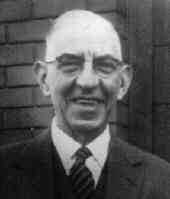
The valuable, now out-of-print, Stow Hill publication 'The Glory of Descending Love', has 12 addresses given in New Zealand in 1947.
- This page has three fine addresses: 'Opened Eyes', Restfulness' and 'The Glory of Descending Love', this last of particular worth.
- If the Lord will, the remaining nine addresses from that book will appear later.
Contents of 'The Glory Of Descending Love'
- The Glory Of Descending Love
- Opened Eyes
- God's Reserves
- Restfulness
- The Acceptable Year Of The Lord
- Young Men … Are Strong
- All Night Unto The Morning
- Awaking Out Of Sleep
- The Coming Of The Lord
- The Greatness Of The Saints
- Renewal
G.A.R.
Page Top
| OPENED EYES |
|---|
2 Kings 6: 8-17; Matthew 20: 30-34; John 9: 6-7
Whangarei, November 1947
|
|---|
I would like to say a little, dear brethren, about our eyes being opened so that the full situation at the present time may be known.
- It is not a very frequent matter, being recorded not many times in the Scriptures, so that we are in the presence of something which has quality and uniqueness about it.
- There are a large number of people who say they see, but as over against that we must remember that the Lord said to some who thought they saw,
- "Now ye say, We see, your sin remains", John 9: 41.
- It would not be going too far to say that it is part of the great lawlessness and assumption of christendom for people to say that they see, that they have clear vision.
- But as having in mind that the opening of eyes is a matter of quality we may perhaps learn to value it more, and be a little more exercised to have our full part in it.
- It is one of the great works of the returning Messiah to unstop deaf ears, and open the eyes of the blind. It took place when the Lord Jesus was here, a blessed foretaste of what spiritually belongs to our day. The day of the testimony, the day of the truth of the assembly, the day when everything emanates from Christ in glory.
- Everything which Jesus had part in must, of course, be unique and glorious when He was here in the days of His flesh, but we may say it is more glorious now, for Jesus, positionally and circumstantially, is more glorious. "He is glorified" as it says.
- Hence, the opening of eyes in connection with Jesus on high is a far greater matter. It would be well to note alongside of this that the enemy is very keen in counteracting this. He started it in the garden with his remarks,
- "Is it even so, that God has said?", Genesis 3: 1,
- and he succeeded in blinding the eyes. The Lord Jesus, through the apostle Paul, calls it blinding.
- "But if also our gospel is veiled, it is veiled in those that are lost; in whom the god of this world has blinded the thoughts of the unbelieving, so that the radiancy of the glad tidings of the glory of the Christ, who is the image of God, should not shine forth for them", 2 Corinthians 4: 3-4
- – a solemn matter. So that we should understand that the opening of eyes by God is one thing, but the assumed sight which comes from the enemy means eternal loss.
- "Veiled", as it says, "in those that are lost".
Besides what is indicated in the scriptures we have read, there are many others which help in this subject. We must not limit God in what He can do sovereignly when He has a mind to show what He thinks of His people, and what He is going to do with them.
- He sovereignly used even a wicked man like Balaam and opened his eyes, so that Balaam describes himself as the man of opened eye, falling down but having his eyes open. God would do that in the face of men who despise God and despise His people. He would do that to show what He thinks of His people; He is doing it now and He will do it again.
- Before this dispensation closes, I believe there will be what the Lord Jesus speaks of to Philadelphia concerning
- "them of the synagogue of Satan who say that they are Jews, and are not, but lie; behold, I will cause that they shall come and shall do homage before thy feet, and shall know that I have loved thee", Revelation 3: 9.
- How is that to come about? I believe one way is that God sovereignly opens the eyes, even of ungodly persons, to show what He thinks of His people. He has shown it latterly during the war years. He is doing it in a certain sense all along, little by little.
- The assembly, in its persons, comes before the public and religious eye, and God says, as it were, This is a people which shall dwell alone. Let us note it. They do not mix with men's unions and associations and amalgamations, religious or otherwise, of this world. They dwell alone; God has given testimony to that.
- He also gives an impression that it is a people without sin. It says,
- "He hath not beheld iniquity in Jacob, neither hath he seen wrong in Israel", Numbers 23: 21.
- We could not say that of ourselves, as to our history, but that is what God says, as a result of the redemption He has effected. He has a right to say that, because, seen when all the scaffolding is taken down and God's word stands alone, it will be a people without iniquity and without wrong. God says, 'That is how I see them'.
- It is a great thing for us to be in moral accord with that, for that is God's mind and He has other things to say too. He talks about the wonderful goodly tents of Israel, and where they are to be found, like gardens by the riverside. They are like those Philippian households by the river where prayer was wont to be made; from them praise is going up, fragrance to God.
- We could dwell a great deal on these points, the saints as a victorious people, the shout of a king amongst them, and so on. I mention all this to show that God can sovereignly open the eyes of any He chooses, of dignitaries, of persons in the circles of government, to show what He thinks and, of course, we find that there are some wonderful impressions of God's people.
- If we were pursuing these chapters in Numbers, we should have to tell each other to be careful we do not lower the standard by immoral behaviour in our tents and in our ways in any sense.
- But it is a good thing for us to cultivate the habit of seeing the people of God, their houses and their glory as it really exists in the eyes of God.
In coming to the second book of Kings, I would speak for a moment about Elisha and this young man, because this is the day of Elisha's young men; perhaps more than of Elijah's young men.
- Elijah is a man of thunder, and a man of judgment, not to be despised at all, for the thunder is needed and the judgment is needed, both are needed in ourselves as self judged, or else there will be no real grace as in Elisha.
- You will notice that Elisha is introduced in Scripture in connection with what is agricultural, meaning not so much what shines out of heaven, but what comes up out of the earth, the subjective element, as we would say.
- In his first introduction he is found ploughing with twelve yoke of oxen and he with the twelfth. Whether he had all the twelve oxen before him, literally in front of him, we are not told, but he was a wealthy young man and he had great territory.
- He was attached to his home, but as one day the mantle of Elijah fell upon him, new impressions and new exercises came into his mind, impressions and exercises relative to the truth of the testimony. Much later on, Paul's mantle fell similarly on Timothy.
It is a great day. Thus we expect things in Elisha's time to grow up graciously and prosperously, and they do.
- If you read the early chapters of this second book of Kings, you find that positions of importance relative to God's people are encompassed and understood: Gilgal, Bethel, Jericho and the Jordan.
- Grace comes in and with it healing. A remarkable introduction of Elisha's ministry is that things are healed on the principle of going back to the source. There is a new cruse and salt therein, and the new cruse and the salt taken back to the source of the waters. This casting in the salt brought healing and the waters flowed, with the prospect of no more death, no more barren land, as if there were plenty coming on in the meeting.
- The Lord has this in mind. He is not pleased that things should die out, but that things are revived to grow and develop. That is the kind of man Elisha is, and then he raises the widow's son to life.
- You might say that testimonially he is Elisha's son, as the previous son was Elijah's son. This son is following on in the testimony, for he reappears in chapter 8 of second Kings. This boy appears again, meaning that the living thing that has come in is being continued.
- The gracious touch which came in under Elisha is going to be continued in the testimony all the way through. What a fine thing if the son were continued personally, we might say, in each one in this company, a ministry of grace continued.
I just touch this scripture having in mind that our eyes may be open to the true position which is shown by Elisha. It is first of all a national position.
- There is Syria warring against Israel, a very mighty host; and we are to be reminded that now in our time it is a question of national conflicts, and it will be. It is not a question of small tribal warfare inside the confines of a big country, but nation against nation, but even so, the national situation is not to depress us unduly, for God is in control.
- You will remember in Ezekiel 1: 26 he saw the four living creatures,
- "And above the expanse that was over their heads was the likeness of a throne, as the appearance of a sapphire stone; and upon the likeness of the throne was a likeness as the appearance of man above upon it".
- There is a great throne, dear brethren, a great control above everything national and international. Jesus is on the Father's throne and things are controlled from there, and the throne stands. It does not totter. Thrones on earth totter and fall, but not there.
- John says, "A throne stood in the heaven", Revelation 4: 2.
- It stood. So we can be occupied with God, dear brethren, and not anything on a lower level than that. God has control and that is a great help to us whatever our difficulties, whatever our limitations. We can be occupied with God. We are to have the supremacy of God in our hearts, and before us in every other way.
- Thus Elisha is not the least bit disturbed at the national warfare here. He is not disturbed at the distorted view of the young man, but concerned that the young man should see clearly, so here in connection with this passage after his servant said to him, "Alas, my master! how shall we do?" he says, "Fear not".
- Seeing the national situation we might say the whole position of the testimony is threatened, but he says,
Now there is hardly any need to say more, but I would like just to leave that impression, and leave it as a question.
- Whether we all are clear; especially our younger brethren, on whom things do fall more and more now, and of whom more is expected. Do we see things clearly? As God opened this young man's eyes he saw a mountain full of horses and chariots of fire round about Elisha.
- That, dear brethren, is the position of the testimony. It is the position of the fellowship. It is like a mountain very safely based, with a wide base and a towering top. The man of God is on it and, as the eyes of the servant are opened he becomes sure, and the whole of the heavenly power which is available for the support of this setting of the fellowship comes before his vision.
- Horses and chariots of fire mean divine power ready at all times. The horse is power, horses and chariots are increased power. The riders are there, no doubt, that is power ready to be directed in whatever exercise is being faced, whatever is needed. These chariots are not anywhere, they are round about Elisha.
- So what support there is for the great position, we may say, of the fellowship of God's Son and for faith at the present time, all to be taken account of on the principle of our eyes being opened. It may be that that is what is needed for a good many of us, especially as we wonder what things are coming to, but the truth will always prevail.
- That is how Paul ends up his two letters to the Corinthians, so full of feeling.
- "That ye may do what is right ... for we can do nothing against the truth, but for the truth", 2 Corinthians 13: 7-8.
- It is a great stay as having our eyes opened at the present time.
Now, not only is that so, but I would speak of this incident in Matthew as being on the line of discerning the present testimony. God has in mind to bring a great realm of things into display.
- Later on, He is going to display a great body of righteous persons. In fact the clothing of the bride, the Lamb's wife, is described as
- "the righteousnesses of the saints", Revelation 19: 8.
- God is going to bring that into display. He is going to bring into display something visibly glorious, and He has a right to give a foretaste of it, and He does.
- What He is going to display He brings into witness beforehand, so that there are persons here now who are righteous, and are morally clothed with practical righteousness. That is an exercise, especially for persons going on with wrong associations.
- "The righteousnesses of the saints" involve purity and cleanness in every practical way, for God is going to manifest a righteous people before the eyes of the universe.
- Happily we can apply the test now and get ourselves right, and so provide in the testimony the foretaste in moral quality of what God is going to display literally later on. It was all seen in Jesus.
- He said, "Ye shall be my witnesses", Acts 1: 8.
So that now it is a question, not of the Lord Jesus personally being at the mount of Olives, in Bethany or Bethphage, or being carried into Jerusalem on a literal colt,
- but it is a question of the testimony of our Lord which we are to bear, as it were, into the glory.
- People as coming in contact with us should be able to get some impression of the Lord Jesus; that is what is going on in Matthew 21.
- Now these two men at the end of chapter 20 want their eyes opened. They are on the wayside and Jesus is passing by. He is going on His way to glory. The whole of the testimony of the truth is to end in glory. The whole of the work which God is doing is to end in glory. All the persons engaged in it are to finish in glory; all is going on now under our very eye, "passing by".
- And the question is whether there is any desire to see what is going on. So I apprehend that these two men sitting by the wayside as Jesus passed by are to be taken account of in that sense. They are two men, two literal men.
I have not any question that they are two sample men, that they are the witness today of persons amongst ourselves wanting to get their eyes opened, to see what is going on.
- So we may raise the enquiry whether anybody is concerned to see what is going on.
- "And lo, two blind men, sitting by the wayside, having heard that Jesus was passing by, cried out saying, Have mercy on us, Lord, Son of David".
- When the Lord strikes a new note in the testimony, it is always something connected with Himself, some title He has. This title goes all the way through. The blind men use it, the people use it on the way up to Jerusalem in the triumphal march, the children use it in the temple,
- "Hosanna to the Son of David".
- Have you discerned, dear brethren, the note in the testimony now? Have you discerned the peculiar character of the present time?
- Jesus at the mount of Olives suggests what is spiritually substantial. It is a mountain of Olives. New material is coming in and coming in this way, not only the young, for there is also the parent generation. The ass is there as well as the colt. There is new material coming in at this spiritual juncture. Perhaps our eyes are not opened to see it.
- The importance of the present moment, and of the persons who want to see cannot be ignored. People are praying that they might see. These men coming to the Lord, and the Lord standing and asking what they desire, and so on, are facts just to help us follow suit and pray that we might see.
- Let no one be discouraged through either age or youth, but let us all pray that our eyes may be opened.
Let us be not like Barzillai, but like Caleb. Both were about the same age, but one was a man going home to die, saying he could no longer discern what was going on either by sight or by hearing or by tasting.
- The other was saying in effect, 'I am as strong now as ever I was; give me this mountain'.
- How much we need to pray to understand all that is connected with the Lord's supper, and the service of God, and the preaching of the word of God. The Lord holds Himself at our disposal:
- He touched their eyes and immediately their eyes had sight restored to them and they followed Him. They are now part of this great way of the testimony ending up in glory, and I suppose everyone here should be credited with a desire like that.
- Whether the desire is really there I cannot tell, but we are privileged as being in the realm of the truth and need our eyes opened on the testimony.
Then I add a word on John. The point now is that the works of God should be manifested in this man.
- The Lord explains very carefully that this blindness here is not governmental. It is not a question of sin, or of what the man has done, but a question of what God has reserved him for, and so He brings him in now, somewhat as the Lord sovereignly reserved John to describe this in the last days.
- The Lord reserved this man to show the works of God, and He made clay of the spittle, involving what He is in His Person. Reverently we refer to the Lord Jesus making the mud, referring undoubtedly to His incarnation.
- It is most remarkable that the Lord should put on this man's eyes what speaks of His incarnation, what in itself is absolutely perfect. One could say, "We have contemplated his glory". "The Word became flesh". It is the incarnation.
- "We have contemplated His glory, a glory as of an only begotten with a father, full of grace and truth", John 1: 14.
- It is marvellous and immeasurable, unspeakably perfect, a divine Person here in manhood. In this sign the Lord applies this to the eyes of a blind man saying,
- "Go, wash in the pool of Siloam, which is interpreted, Sent".
- What is it but that the Lord intends us to contemplate the reality of looking at the Lord and thinking about Him not historically, but as He is now? The apostle Paul says
- "We henceforth know no one according to flesh; but if even we have known Christ according to flesh, yet now we know him thus no longer", 2 Corinthians 5: 16.
- Peter may have walked with Jesus in Jerusalem and in Nazareth, but that was "according to flesh:"
- "Yet now we know him thus no longer".
- The way has been opened up by this action of the Son of God that we might know Jesus where He is, and as He is, in His new condition, not according to flesh but according to what He is now.
- This is a word of God that there should be a possibility of that going on in us, as in this man. We are not merely to think of this man saying things when he says, "A man called Jesus", "He is a Prophet", when he believes that He is the "Son of God".
- We are not merely to think of things being said, but to think of the truth substantially having place in the man. The beginning of it is that all that is historical, however perfect it may be, is washed off by obedience to the injunction of the Lord Jesus, so that we may see things and persons exactly as they are spiritually. All that is going on now is connected with our seeing Jesus as He is:
- "Old things have passed away; behold all things have become new: and all things are of the God who has reconciled us to himself", 2 Corinthians 5: 17, 18.
Let us follow this up and see what it leads to. There is the work of God going on in this man which no religious sects of christendom could contain.
- The Jewish system could not hold that man. They cast him out. A man like that is completely unanswerable.
- Think of the challenge in this chapter, for the man got his eyes opened on Christ, the Son of God as He is. John says, "As He is", and the washing off of the clay is to enable us to see Jesus as He is, and what a vista of glory opens before us there!
- To be cast out, but cast out with your eyes open, to be joined by the Son of God, and to be maintained by Him free of every public religious association. Marvellous thoughts come into the mind when we think of this, and the man growing in intelligence.
These are wonderful things, dear brethren. They lead us, I believe, to the great point of being clear about the present position in this great day of grace, centring typically in Elisha, where things grow and are substantially maintained, all centred in the man of God.
- Let us have our eyes opened to see it and pray for one another that we may see it, and then the great position of what is going on in the testimony, for the testimony is to end in glory, but it is to end.
- Let us ask to see it and be sure we are in it. Then we shall see Jesus as He is, with all that pertains to Him, and presently we shall be with Him. Soon heaven will be filled not only with Jesus as He is, but with the saints of God manifested to be what they are to be on the principle of change.
- Paul says, "we await the Lord Jesus Christ as Saviour, who shall transform our body of humiliation into conformity to his body of glory, according to the working of the power which he has even to subdue all things to himself", Philippians 3: 20-21.
- That is Jesus as He is, and the saints as they are, and now our eyes are being opened to see.
Page Top Article Top
| RESTFULNESS |
|---|
Luke 8: 26-30, 35; 10: 38-42; Esther 2: 19-23; 2 Samuel 7: 18-24, 28-29
Palmerston North, December 1947
|
|---|
It is in mind to say a little about restfulness, peace of mind and patience; these all being bound up suggestively with the matter of sitting. That is a deliberate attitude assumed by persons, not entailing for the moment activity, but rather patient waiting.
- Rest is an encouraging thing to speak about, because it has been initiated by God. God having introduced it very early according to Genesis, and connected a whole day with it, the seventh day, the sabbath.
- Thus when we read about the sabbath, our minds go back to that which God designed to provide restful conditions for Himself; and, along with that, joy in the contemplation of something that has been done.
- It is an amazing thing, and very attractive, to think thus of the first and second chapters of Genesis. God bringing in one thing after another in creation, arriving finally on the sixth day at the making of man.
- "Male and female created he them", Genesis 1: 27,
- and then resting at the completion of His work in the man that He had made.
- It is as if, in the spirit of it, we should understand that while God is God, and absolutely content and complete within Himself, yet He undertakes in His love to share things with men.
- And, I believe this great matter of rest is one of the things in which God delights, and which He would bring His creatures into. It enters into His great final thoughts as we have them unfolded:
- "the tabernacle of God is with men", Revelation 21: 3.
- That is a restful thought. It is not like the tabernacle in the wilderness, constantly changing its position, being taken down and set up again. It is the thought of restfulness in which God, I believe, will eternally delight, the portion of His love.
I might speak also of the Lord Jesus, of whom it says that He is above, sitting.
- "Seek the things which are above, where the Christ is, sitting at the right hand of God", Colossians 3: 1.
- He has never come back publicly to see how things are being managed, either by the nations or even by the assembly. He is content to wait. Scripture has the expression
- What a wonderful thing to think of the Christ sitting, waiting patiently until the right time comes, until the Father gives the word. Then He will move and descend, but for the moment the Lord Jesus is content to sit according to the Father's word.
- I might also mention the saints as being seen in this attitude, according to John's vision in Revelation 4, the twenty-four elders are seen sitting on their thrones. The most drastic of judgments are about to be poured out on this poor world, and the saints are about to be taken into the confidence of divine Persons.
- John himself is told to write, and yet on the very threshold of all this, we find the saints, as typically presented in the elders, quietly sitting in undisturbed repose.
Now what a lesson there is in all this for us. It is not supineness, it is not the rest of the sluggard, which means that everything is neglected and nothing is done.
- It is the rest which comes of knowledge, we might say intelligence, and understanding of what God has in His mind. So this great matter of sabbath is to come into all our minds. Not that we are to break off exactly what we are doing, to celebrate a kind of sabbath with ourselves, but it is the principle of a cessation, affecting our minds, often in the midst of the most arduous toil.
- We find that there are many tasks which we can do, and yet at the same time be going on in our thoughts in restful communion with divine Persons. Let us start on and cultivate this great feature of restful communion.
- Let us, for instance, allow to rest in our minds some feature of the truth that we have heard, or read, or which may have come to us today. Keep it in our minds, turn it over, observe its scriptural connections, and see how it will enlarge before us. That is the idea of the sabbath, alongside of what may rightfully call for our practical attention.
Now, under this heading of sitting, I hope to speak of these passages briefly.
- The first one attaches to us all in soul history. It is a very searching thing to have to face the fact that we are very much like this man, independent, lawless, almost intractable; it refers to what we are in ourselves.
- That is where we need control, we need taming, we need clothes, we need a sitting attitude, and we need the renewed mind. This is a wonderful chapter and you can understand, as you read it, the fitness of this man finding his place in it, for it is a chapter of command.
- The Lord has just commanded the winds and the waves;
- "Who then is this", they said, "that he commands even the winds and the water, and they obey him", verse 25.
- Who else but a divine Person could command such fluid, uncontrollable elements? He is doing it all the time, every day, even while He appears to be asleep. It is not necessary to awaken Him, although if we do so, as by our prayers and may be in the weakness of our own faith, He will listen, and He will come in for us.
- But the great point, I judge, is to see who it is who is there and can do it. "Who then is this?" they say. We may well take note of that, rejoice in it, that we have such a great Person to do it.
- At the end of the chapter He commands that something be given to the young girl to eat. These commands indicate urgent necessity, for the Lord is seeking persons of a good, honest heart, as in the opening of this chapter. He wants room for the word of God. He is prepared to do a great deal to secure the persons for it.
- So He will even secure this demoniac, even commanding before the man said much, as if the Lord would urgently come in and command the devil to go out of the man, so that He might have the man for Himself.
- And He would secure us, for we need to understand that our own minds naturally are lawless and our clothes (that is, our associations) may be all wrong.
- The Lord is prepared to come in quickly to deal with us and He does. The outstanding moral element needed particularly is preparedness to be transparent in relation to our own condition. Luke is full of that, full of people who tell the truth.
There is another woman in this very chapter who falls down and tells all the truth before the Lord.
- When the Lord asked the man of his name, he said, "Legion". A legion in the Roman army might contain anything from 2,000 to 6,000 men. Think of that! Let us apply it in moral power to our souls. See the satanic influences under which men may be held.
- Are we prepared in real joy to tell the Lord what the situation is? If we are prepared to be transparent, the Lord is prepared to take us on and make us usable, and I would say make us ornamental in what He has before Him.
- So that this man eventually is found sitting at the Lord's feet, clothed and in his right mind. That is a very great victory, for although Luke does not mention the assembly, so far as I know, here is assembly material.
- This is the kind of man that is wanted in the assembly. Not the one who can never sit, is never restful, can never be tamed, can never wear proper clothes, a subject in itself, is the divine wardrobe for men. But this is the kind of person that is wanted, and let us see, dear brethren, that we offer ourselves to be this kind of material.
- As the chapter goes on, other persons come in. A notable woman and a notable girl, so that we have the man, the woman and the child. Thus you might say, certain features of the testimony, and certain furnishings for the assembly are assured, and they come in largely on the principle of submitting to the Lord in transparency and being conscious of His command.
But now as we go on through Luke, we find that the standard is getting higher and that we are brought fully to our own day. For by the time that we read of Mary, sitting at the Lord's feet and listening to His word, we have passed by many other things.
- I do not engage you with them in detail, but I would remark one thing; that is, that the Lord Jesus has been seen in glory, on the mountain. As He is there transfigured, the Father draws attention to Him, and says,
- "This is my beloved Son: hear him", Luke 9: 35.
- That is, the standard is getting higher. And so it is not a matter now of just being relieved of demon possession, and the like, but it is a question now of giving ourselves with positive attention to what the Lord has to say. Other things coming in show what the Lord is prepared to do to help us.
- Luke speaks of many things, of the Person of Christ and His sonship, of His rejoicing, and the dark period accompanying His service when everything seemed contrary. He mentions the peculiar blessedness of the eyes and ears of the disciples. He portrays the poor man on the Jericho road; recovered and cared for bringing in the great wealth and comfort of the Holy Spirit.
- All these things come in between, but particularly, I would single out the Lord in His glory as 'The Speaker'. That is a word for the present time.
- "See that ye refuse not him that speaks", Hebrews 12: 25,
- for He is speaking from heaven, the glorious Speaker.
We are to read the following incidents in the light of that. So that Mary and Martha, divided in their behaviour in the house, are treating well, or treating badly, the speaking of this glorious Person.
- I would submit to the brethren that a touch of that is to be found in our own time. We are tested, in our houses, as well as in the meetings, by the attention to the glorious speaking of the Lord Jesus. Martha complained,
- "Martha was distracted", it says.
- The Lord said to her presently "thou art careful and troubled about many things; but there is need of one".
- We can easily get anxious and careful, distracted about many things, and they will divert us completely from what the Lord is saying.
- The Lord's word about it is that one thing is needed and Mary has chosen it. She has weighed things up and has chosen what she is going to do, so the end of it is that she is listening to the Lord's word. That is what it says: Mary
- "having sat down at the feet of Jesus was listening to his word".
- What a word it must be, proceeding from such a glorious Person. How great must be the things that the Lord has to tell us. Think of what has preceded, think of what there is to come, think of our own day.
- The glory of His Person, the glory of His service, the glory of God, the glory of the saints, all these things are to be understood by us as having a part in the Lord's word to Mary.
- The chief point here being, not to describe the details of what He would say, although we would bring much into it, but to insist on her attitude of restfulness and listening.
It would be good to understand that we must get things restfully. It seems to help us in all that is before us whether in our houses, or relative to the great things which are unfolding in the service of God, and our place in the testimony.
- It is on the principle of keeping sabbath; lying fallow. It means that every heavenly influence is to be allowed to play upon us. Speaking agriculturally, we submit ourselves to every heavenly influence from the Lord of glory; as we may say, the rain, the wind, the frost to break up the ground, and the glorious sunshine to quicken all. Thus features of heavenly glory may find their way into our souls.
- I am well aware that Martha changed, and later served on a great occasion. These thoughts are always very inviting, for they show that in this day of grace we need not stay long under limitations. We can always change, we can always improve, and a Martha may in this sense become a Mary.
- Let us not, through many cares and distractions, miss what the Lord is saying at the present time. How much of commanding importance has been said in the special meetings recently. May we be deliberate, yet restful in our attitude, in order that the impression of it all may reach us and abide with us.
In engaging you now with the other passages, I desire to show their connection, for both Mordecai and David are seated in service. The former in watching the welfare of the king's interests; the latter as fully in the flow of the worship of God.
- Mordecai's attitude sets out our attitude towards what we might call, perhaps, matters of administration; while the other scripture refers to our going in to God with great wealth in our souls. These two things are more nearly connected than many would think.
- For matters of administration call for a good deal of spirituality if they are to be taken up rightly, and we shall find that such matters are stronger or weaker according as we ourselves are in spiritual power enabled to approach God.
- The two go together, as is seen in the heavenly city. The heavenly city comes down with Christ to rule; that is, it is administration that is in view, but the heavenly city has already been in to God.
- She comes down, we read, out of the heaven, from God, having the glory of God. She has been in to God and she comes out as having had a great and intimate place with Him, coming out now to rule, in her own peculiar light, most precious. In principle, therefore, these two scriptures are not to be too much divorced.
Mordecai is a very interesting character. Most know, I expect, that the book of Esther is one of the post-captivity books. Its place is in between chapters 6 and 7 of Ezra, which helps us to place what God is doing at the time.
- Yet this book speaks of comparative seclusion. It is not in Babylon, it is in Shushan, meaning that further weakness has come in to remind us that we are in days of captivity, days of difficulty. Yet days when principles are being carried through and all that is genuine amongst the people of God is being cared for.
- That is a great thought to carry, as it were, relative to the book of Esther, the thought of genuineness. The Jew in the book is a genuine person. He is not the opposer as in other passages. He belongs to the people of God, and as such is worth saving. Mordecai is one of them and Esther is another, and the two together provide a very complete expression of care for the people of God in difficult and somewhat obscure circumstances. We are reminded of the need for watchfulness; Mordecai suggests that, and we always need it.
- Absalom understood in earlier years, the importance of being near the gate. All the active affairs of the city take place in connection with the gate. Absalom stood in the way of the gate and as people approached to get the king's ear, his sympathy and advice, Absalom waylaid them with false words, with flattering and delusive speech. So we read he "stole the hearts of the men of Israel", 2 Samuel 15: 6.
- It is said of certain men that they went after Absalom in their simplicity, not knowing. God would not let us go in our simplicity, not knowing our right hand from our left, for God has given us the Spirit that we might know; and we are not to be captivated by a false man with delusive, persuasive speech. We are to keep ourselves, we are to take on, not the spirit of Absalom, as the men did that followed him, we are to take on the spirit of Mordecai, the watcher.
The watchful, protective idea is conveyed in the badger's skin which covered the whole of the tabernacle and the furniture when being carried. The outside covering being badger's skin speaks of watchfulness in defence of all that is so precious.
- And so Mordecai bears this feature on this particular occasion, absorbed as he was with the king's welfare, because Esther was there, and the Jews were there; their very existence lay in the hands of the king.
- In this setting the people of God are seen under the power and dominion of the throne, not exactly God's throne, but delegated authority, and it needs watchfulness to see that the saints are preserved, that the assembly is preserved.
- That is the principle, for the throne in the book of Esther can be swayed. It is not God's throne in heaven, it is delegated power down here in the hands of the powers that be, but watched over by God. This throne can be swayed for evil, or for good, and that it is swayed for good is largely owing to the watchful, prayerful exercises of the saints, all typically concentrated here now in Mordecai.
- It says, "while Mordecai sat in the king's gate, two of the king's chamberlains, Bigthan and Teresh, of those which kept the threshold, were wroth, and sought to lay hand on the king Ahasuerus".
- Well, Mordecai heard of this plot, and he put the information where it belonged, first to Esther and through her to the king himself. The matter was dealt with, and the honour and benefit of it was laid up, presently to effect indirectly the liberation of God's people and the putting away of a very great danger, as represented in Haman, the Agagite.
Surely that gives us the feeling that we should take our place very loyally and watchfully, in the king's gate.
- It is not a matter, as I said before, of rushing to and fro interfering, it is sitting there. That is, we have taken on the thing deliberately before God. This attitude will affect us in our local setting, so that we watch and pray, and persevere in prayer.
- In one of the Lord's final words according to Mark, He commanded the doorkeeper that he should watch, and then presently He says:
- "What I say to you, I say to all, Watch", Mark 13: 34, 37.
- It is an important matter in our day, I am sure, so that the assembly is preserved, and like Esther or like the Jews, increases morally and practically in glory as authority is rightly wielded.
Surely there is always some enemy nearby who would seek to undermine authority, and overthrow the assembly, or at any rate overthrow these things in our minds; we need to watch to see that they are preserved.
- Thus Mordecai sits in the king's gate and as the thing becomes known later, it works out for the salvation of the Lord's people, and honour for Mordecai.
- He was not thinking of honour for himself. We do not do things for the sake of promotion, we do them for the sake of what is so precious, that is the assembly, and we value and count upon the measure of authority which God still graciously allows to be maintained here on the earth. It is, I suppose,
- which Paul mentions in 2 Thessalonians 2: 6.
- Mordecai shows the spirit which is to mark us here. I trust we may each be known, not as one of those who let things go, content to let somebody else deal with things, and allow the greatest possible danger to come in. But as those who are deliberate and faithful, and yet comely and quiet and restful as we watch over the interests of God that are within our reach.
I would just finish with a word concerning David. This is the other part of what we were saying, the spiritual part really, because it concerns eventually the exalted service of God.
- You will remember the setting of the passage here. David has had adjustments, he has already had one adjustment in regard to the ark. He has been helped in it; he is a man of many adjustments, but he never refuses or neglects them.
- Now here he is suffering another adjustment, but a very gracious one, and one which gave him great penetration in the service of God as he eventually sat before Him. He wanted indeed to improve God's circumstances, not his own, and that is a great thing.
- It would be a good thing for us to challenge ourselves whether we desire God's circumstances in the assembly, and in the service of His praise, to be improved.
- That is not only whether we are saying right words and pursuing the right order of service, but whether there is a flow of wealth, and a good spirit, a subject spirit, flowing from us into it, because we are the vessels of service.
- Service is not abstract, the service is real, it exists in persons, like the bowls for pouring out, they were real vessels in the tabernacle system.
So here it is a question of the adjustment of the person in view of wealth in the service; and David takes it on humbly and immediately. He had the idea of improving God's circumstances in His house.
- He says, "I dwell in a house of cedars, and the ark of God dwells under curtains.
And Nathan said to the king, Go, do all that is in thy heart; for Jehovah is with thee", 2 Samuel 7: 2-3.
- But he was not right, and that would make us a little careful of unbalanced statements of support. What is needed is a sober word, not an extravagant word, for it may lead to something which is not according to God's mind. So we begin to be thoughtful and sober and prayerful, and we begin to weigh our words. We are learning to be more thoughtful in regard to the things of God and the truth.
- So David is halting and reconsidering, and he is listening. Nathan has now got a long message for him from God, an adjusting message but very gratifying. David would understand that God appreciated his thought for Him, and he would also understand that God has another greater thought still to bring in which could not be fully exemplified in David, and that is the great matter of sonship.
- David was a son of God, but he is not a full representative son of God. Solomon is. He is David's son; he should build the house, and God says moreover that Solomon would be His son, and He would be his Father.
- David was his natural father, but God was going to be his spiritual Father, so that as Solomon later built the house, the affections and the glory of the Son of God were seen there; they permeated the house, as Solomon built it. And in the light of all this
- David went in "and sat before Jehovah".
We are reminded that the word sat means that he tarried there or abode there. He was deliberately there, full of holy contemplation, one thing giving way to another in his mind in a holy flow.
- It is like a brother who is on his feet in thanksgiving, one thing suggesting another in the divine flow, full of life. This was all active in David, he did not, so to speak, limit his thanksgiving to three or four prearranged remarks in his own mind, as he started and thought of God, and blessed Him worshipfully.
- One thing grew out of another and so these great titles of God emerge in all their grandeur, seven in number, from Jehovah Elohim to "thou art that God", meaning "the Same", one of the titles of God in His eternal greatness.
- He speaks to God about Himself, how great He is, and about His people, how great they are. Then he says,
- "And is this the manner of man, Lord Jehovah?"
- I believe he means by that that he is acknowledging that he sees that God has great thoughts in His mind for man. A parallel passage in 1 Chronicles 17: 17 says,
- "Thou hast … regarded me according to the rank of a man of high degree".
- Dear brethren how great these things are, and if we can only get into this attitude before God, how much we shall be able to say, and the Lord will help us to say more still. He will help us to rise, as He says Himself,
- "To my Father and your Father, and to my God and your God", John 20: 17.
- That is a prophetic word, in the end of John, meaning that the Lord will help us to reach it at the end of time, that is now. So this scripture opens up the great way in which we can address God, leading to great expansion and an upward trend of glory in the service.
So we can see, dear brethren, that what is in mind is really the product of this restful, sabbatical attitude, set on by God Himself, but now taken on further in love by the saints, in the power and grace of the Spirit of God.
- This does not refer to a meeting; we are helped in a meeting because there are brethren there and the Spirit has more scope, but think how great this man was by himself, as it were. We are not told he went in and sat before the ark. It is very likely he did, but it says he
- and what a holy flow came out of his soul, in that quietude, just God with himself and maybe the ark. For very likely it was there he sat, and so he rises to this great height.
- Now how high can we rise in our speaking with God? We can say words, but can we reach Him? That is the great point when praying privately and publicly, to make sure that we reach the divine Persons and that we get their ear. Without that, there is very little chance of going forward with any power in service, whatever it is. It is the idea of restfully tarrying in the presence of God.
It can be seen that there is a good upward trend in these scriptures, and not only so, the upward trend is amongst the saints.
- We have only to sit with them in the assembly, in the service of God, to prove it, and I believe as we are helped to pursue this great matter of restfulness we shall find we are enlarged.
- So whether it is personally or collectively, may the Lord help us to be settled in our souls,
- settled with regard to what He is saying now,
- then in administrative matters, in watchfulness,
- and finally in the great service of God.
- We need much grace for it. May the Lord give it to us for His name's sake.
Page Top Article Top
| THE GLORY OF DESCENDING LOVE |
|---|
Exodus 3: 1-8; 21: 2-6; Acts 20: 7-12; Revelation 21: 9-11
Wellington, December 1947
|
|---|
I would like to speak briefly from these scriptures of descending movements on the part of God, and also on the part of the saints, noting that in each case it is a question of coming down in love.
- That would seem to be the key to any descending movement such as we are contemplating now, for love must be the underlying motive; first of all seen in God Himself, and then able to be taken up by His people.
- I am not thinking of any descending movement, of course, for some are spoken of in Scripture as "falling".
- here are others described as "going down" which are of a character to be avoided, such as the man who went down from Jerusalem to Jericho, a descending movement which is to be entirely avoided. For it means leaving a morally high level and going down on account of low ground in the soul.
- What is before us is descent in love; and where there is affection existing amongst the people of God, these descending movements are the more readily taken on.
In the first scripture read, Moses had, as it were, descended already, and I believe it would not be wrong to say that this made it morally pleasing for God Himself to come down.
- "I am come down", He says, "to deliver them".
- In referring to the movement of love in Moses, I have in mind that he was tending the flock; not his own flock, but he was carefully looking after the flock which belonged to someone else. It says,
- "Moses tended the flock of Jethro his father-in-law",
- and we would gather that this had been his character of behaviour all the time he had been in Midian. It was characteristic of Moses in his love, particularly for God's people.
- I believe that our love is tested more that way than in any other, as to whether we can give ourselves unselfishly to the care and attention of that which belongs to Another; not to Jethro now, but to God. If we love God's flock at all, how far does it extend?
- What we read about Moses is that he was prepared in his love to lead this flock into the very best, into the region of the mountain of God, at Horeb.
- We may love our brethren a little, perhaps, and pass on in ministry something that will just do, but the persistence and patience and depth of our affection for God's people are tested by how far and how long our service of love will go on.
I mention this to indicate that love was already working in Moses, and that made it, may I say again, morally pleasing for God himself to come down in love and tell Moses what He was going to do.
- This great matter of God appearing in the bush is a foreshadowing of the incarnation, nothing less.
- I know that, immediately, it refers to God coming down and dwelling amidst Israel. Malachi 3: 6 refers to it,
- "For I Jehovah change not, and ye, sons of Jacob, are not consumed".
- That is, we might say, a reminder of God in the burning bush, God amongst His people without consuming them, but dwelling there complacently. It is but a foretaste, in type, of what God would do as He came down in Christ.
- It is really the incarnation which is before us, and the wonderful descent in love seen there. Who could measure it? That God should come down in manhood's form, as Paul says in Philippians 2: 6-7,
- "Christ Jesus; who, subsisting in the form of God, did not esteem it an object of rapine to be on an equality with God; but emptied himself, taking a bondman's form, taking his place in the likeness of men".
- In the contemplation of such love we can readily understand Moses being told that it was holy ground: he must keep his distance, as it were. Who could share that with God?
- "We have contemplated his glory", we read in John 1: 14,
"a glory as of an only-begotten with a father".
- They could have no part in that, the incarnation glory: it is a thing apart, holy, inscrutable: whether it be the Babe in the manger, or the Child in the house being worshipped, God is there, and that is what lays the basis for christianity.
- God is there in a Man, in Christ; the greatness of His Person entirely unencompassable. It lays the basis for worship in our souls, that God Himself has thus come down, not in wrath and judgment, but in unspeakable grace.
Now the foreshadowing of this is seen here, and the deliverance out of Egypt of all that belongs to God. God speaks to Moses and says,
- "I have seen assuredly the affliction of my people who are in Egypt, and their cry have I heard on account of their taskmasters; for I know their sorrows. And I am come down to deliver them out of the hand of the Egyptians, and to bring them up out of that land unto a good and spacious land, unto a land flowing with milk and honey".
- I wonder, dear brethren, with all the light we have, whether we all understand from this point of view why God has come down, and what His love will do for us.
- The incarnation was not just to touch us and leave us where we were. God has in mind to take us out of that place entirely and to bring us into
- "a land which Jehovah thy God careth for;" as it says in Deuteronomy 11: 12, "from the beginning of the year even unto the end of the year".
- He has in mind to bring us into the land, the inheritance, ultimately into heaven itself. God has before Him Christ glorified, and the saints with Him and like Him, every enemy turned out and defeated, and everything secured for His own pleasure eternally.
- As we consider the love of His own heart which moved God from the very outset, from before the foundation of the world, to prepare a land of this kind for His own, it raises an enquiry as to the uniqueness of the company that God has in mind to enjoy this land.
- So I would speak to you now, not of Israel, but of the church, the assembly, and the unique place which is being prepared for her. The Lord Jesus says in John 14: 2,
- "In my Father's house there are many abodes … I go to prepare you a place".
- It is a special place, the Lord using His own careful preparation on account of the assembly.
- In connection with the Lord's supper, too, the Lord Jesus says,
- "This is my body, which is for you: this do in remembrance of me", 1 Corinthians 11: 24.
- The breaking of bread is unique to the assembly, never taking place in the temple or any other Jewish association.
Let us take these things in and enjoy them. The Lord Jesus, the Son, is preparing a special place even in glory for the assembly, as if not even glory in the general sense would be sufficient, it must be special,
- "I go to prepare you a place".
- The point is what love is doing; and this love is seen, in the typical foreshadowing of it, in God saying,
- What a story begins there! God not only came down, but He stayed down; when David proposed to build Him a house of cedar, something magnificent, He took occasion to tell David that He had walked in the wilderness with them in a tent and in a tabernacle. This is what divine love will do as it comes down. What a lesson for us!
- The desire of the natural heart is to ascend. Satan spoke like that, as we read in the typical language of Isaiah 14: 13,
- "Thou that didst say in thy heart, I will ascend into the heavens, I will exalt my throne".
- And lest you should think that such an attitude is confined to Satan, we are told of Adonijah who
- "exalted himself, saying, I will be king", 1 Kings 1: 5.
- He represents in a certain sense, typically, the rebel, lawless antichrist. That is the spirit of the natural man in contrast to the Holy Spirit of God. How His descending love should affect us!
As I continue this, I refer to the Hebrew bondman, speaking to us of the true Bondman, Christ. Notice where he comes in in this very suggestive book, Exodus 21.
- Love has already been mentioned in chapter 20, God speaking of shewing mercy unto thousands of those that love Him. That is the secret of mercy intelligently enjoyed; only those that love God can intelligently receive and profit by His mercy.
- Are there any here at cross-purposes with God, not prepared to go down and judge themselves? I believe God would have a controversy with such; He would obstruct their path. I do not think we can count on the fulness of His mercy, in the way we are speaking of it, without self-judgment on our part, because it can never be said that we love Him if we do not judge ourselves – never.
- But there are the thousands of those who love Him, and this beloved bondman comes in in chapter 21. It is true that in this chapter it is not stated as a historical event which had actually happened, the passage beginning, "If thou buy a Hebrew bondman", but the type remains there and is filled out in all its blessedness in Christ. He it was who said distinctly,
- "I love my master, my wife, and my children, I will not go free".
- He said it, as it were, in the upper room. He said it in the garden. He said it on the cross. Did He not say in the garden,
- "Abba, Father … take away this cup from me; but not what I will, but what thou wilt"? Mark 14: 36.
- "I love my master". That is ascending love, ascending to God the Father. Then we have love on the level, horizontal love, as it were,
- "I love … my wife;" that refers to the assembly – she is on His own level.
- "Christ also loved the assembly, and has delivered himself up for it", Ephesians 5: 25.
- "I love … my children" involves descending love, which comes down into the smallest details of the lives and circumstances of those who belong to Christ. How tenderly He cares for His children. In John 21: 5 He says,
- "Children, have ye anything to eat?"
- In chapter 14: 18 He tells His disciples, as the house-father, that He will not leave them orphans,
- "I will not leave you orphans, I am coming to you".
- This is the fatherly care of Jesus, speaking of His descending love in consideration for His children, "I love … my children".
- He says it pre-eminently on love's occasion, the Lord's supper; those of us here who have an interest in the Lord's supper, and partake of it, will understand fully that the Lord is near; this is His voice to us,
All this lies hidden in this incident, and the secret of it is love. Let us take it on, dear brethren, for the time is short, the end near, the Lord is coming.
- And when He comes, will He find love? He left it here, and He looks for it; love amongst ourselves.
- It is set out in Himself in this type, and it involved suffering. His death is the seal of His love, love which among other things has descended because it has set itself upon us.
- I would ask you whether the love of Christ means anything to you personally, whether as you go along by yourself you ponder over the love of Christ. Does it affect you, or is it only something that the brethren speak about?
- Should there be anyone here who is not going on very well, love will go as far as needed. There was the case I have already referred to, the man who went down from Jerusalem to Jericho; a moral descent indeed.
- It was the road trodden, no doubt, by the younger son in Luke 15. Jericho, the city of palm-trees, has been rebuilt in latter times and represents the world of enjoyment away from God. There is many a christian on that road today, going down, although knowing better.
- They say, in effect, We are settled as believers, nothing shall ever take faith out of our hearts, but we are going our own way. They would hardly tell the Lord that, or the brethren, but that is what they do; they go deliberately down, morally. What marvellous love that the Lord Jesus should go after such a one!
Then, alongside of that, to refer to Acts 20, we see in Paul the love that is prepared to descend. And that is the time we are in, dear brethren, the time when love is prepared to come down and help.
- Whether it be like the case of the man on the Jericho road wounded and half dead, needing oil and wine, support and comfort, needing his brethren; or whether it be as Eutychus, who had not been attending to what was going on;
- there is available now the spirit of descending love in the brethren to do all that can be done, so that all might be recovered.
- I do not need to fill out these details, they are so well known, but I would challenge myself as to where I fit into these pictures. Is it a matter of real turning aside, or lack of attention in these last days?
- Acts 20 indicates the end of Paul's ministry. Here he is exercising himself in the most affectionate and descending way that somebody may be helped; and you might say
- the mind of the saints is that the breaking of bread shall take in recovered persons; that is the bearing of the incident.
- The breaking of bread takes place in the presence of Eutychus recovered.
Someone may think that all these things going on among the saints are ordinary. Maybe, that is just what Eutychus was doing; he was in the presence of it all, but was utterly lacking in attention. So he fell.
- Thank God, he was recovered, for Paul says, his life was still in him:
- "Be not troubled", Paul says, "for his life is in him".
- t is a question as to whether we are recoverable; we cannot guarantee that our life will remain in us. A man may not be recoverable, a solemn thought! God said of Ephraim,
- "Ephraim is joined to idols: leave him alone", Hosea 4: 17.
- What a terrible word for God to have to say, "Leave him alone"! Yet He waited for a move on Ephraim's part, and there comes a day when
- Ephraim says,"What have I to do any more with idols?"
Then God says, "I answer him, and I will observe him".
And Ephraim continues, "I am like a green fir-tree".
- There is recovery to life and freshness.
- "From me is thy fruit found", says Jehovah, Hosea 14: 8.
- That is recovery. But it is for us to ponder this matter of being recoverable so that we are actively taking our part in every feature of the truth.
Thus love descends and recovers; the love which began in God, and which has shone out manifestly in Christ, and which is, thank God, being continued in the saints.
- Think of Mark being recovered! It is one of the most beautiful expressions of grace in Scripture that Timothy, who took Mark's place, is the one sent to bring him back, to bring back the man whom he had replaced. That is grace indeed.
- But then Mark was recoverable, and that part of the matter leaves us with a good probing exercise as to what there is in our souls. Is there anything living?
Then we have this reference to the assembly seen in Revelation 21,
- "coming down out of the heaven from God".
- It is wonderful to think of this, the assembly coming down in love. She comes down, with the Lamb; He is not far away. As we read in 1 Thessalonians 4: 17, where Paul is speaking of our being raptured,
- "and thus we shall be always with the Lord".
- So we may say that if the city is seen coming down, the assembly, the Lamb's wife, that He is there too. I am sure He is. He is coming down to exercise an influence for good, bringing in an administration of power and goodness and love, and the assembly is to be with Him.
- "Coming down out of the heaven from God, having the glory of God".
- The shining of the glory of God is there; sonship is there. Sonship, I believe, lies behind this great expression, "having the glory of God". God's sons are going to appear again, this time in glory.
The Lamb's wife is to appear in glory with Him, to take up what is in His mind, so she comes down shining.
- The light that will be seen literally then is morally here now, the transparency and the love. It is made up of persons; the transparency is to be seen in us, and the light and the love. It raises the question, is there transparency now?
- There is only one street in the city; the street refers to the movements of the saints, and it is
- "pure gold, as transparent glass".
- We do not have to tell anyone all that we are doing in our movements, but there should be no moral reason why this could not come to the light. Personally, domestically, assemblywise, and in our practical part before God, there is one street in the city, one set of movements, transparent as glass. The walls, too, and the whole city are on this principle.
We sometimes think of transparency as meaning that what is shining one side can be seen on the other, but here it is not that merely.
- What is inside the city shines through, and what is there is all of holy, precious worth. And it is being wrought out at the present time, the time of faith, wrought out in the grace of the Spirit, in love for Christ, love for God, devotedness and loyalty in testimony, love for the brethren, and love for the truth.
- These things may never be seen, or written down here on earth, but in the eyes of heaven they are full of substance.
- These blessed, glorious persons who make up the city are those who have the glory of God; they have it substantially, and they have it forever. Is it not marvellous to think of a world that is going to be enlightened by a company like that?
But there is something still better to come, for what we have just been referring to is not the eternal setting, it is the millennium.
- The eternal side still remains, but it was not my thought now to go into that, but just to express a little of the blessedness of having part in the city which comes down from God out of heaven.
- She has no embarrassment in being in heaven in the presence of God: she is not a stranger in God's presence, and He is not a stranger God. All are well known. God is known, the Lord Jesus is known, the Spirit is known, and the saints are known. We shall know them all, and we shall know them as they are known; that is, as God knows them. They are known in heaven and are worth knowing.
- The assembly's place is up there, her origin is up there, her destiny is there, and she is coming down from there majestically. What a day, oh! what a day, a literal day when the city comes down out of heaven from God! I rejoice to anticipate having part with the saints in that wonderful time.
Now these are all movements of love, dear brethren, and we have been formed in love ourselves, so that we can happily rejoice in having our part in it.
- The point now, I would say, is that love might have its way with us, in our minds, and in our souls.
- The Lord in the gospels, in answer to the question raised as to which is the great commandment, says,
- "Thou shalt love the Lord thy God with all thy heart, and with all thy soul, and with all thy understanding", Matthew 22: 37.
- Have you noted that, "thy understanding"? Meaning that our love is not blind or unintelligent; it is intelligent, understanding love, so that the mind and the heart go together in these great matters.
Well, it is only love that will come down, dear brethren.
- Whether it be to reach a needy soul, or in the great matters of administration, love as formed in us is always ready to come down; its moral greatness is seen in its descent.
- In closing I would just refer the brethren to two of the names in Genesis 5 in the great line of God's people;
- Mahalaleel, meaning the shining of God; and then Jared, meaning descending:
- a wonderful thing, these two are put together to help us in our souls. The shining of God in all His splendour is seen in His descending love. Love is the secret of it all.
May the Lord help us in it.
Page Top Article Top