Menu•SiteMap |
Ministry
Spiritual Royalty
and other addresses
Ministry by Stanley McCallum
– Part Three
This page has Mr. McCallum's addresses at the 1957 and 1958 annual London meetings.
- It is hoped to add other addresses as time perrmits.
G.A.R.
Page Top
| SPIRITUAL ROYALTY |
|---|
Esther 5: 1-3; Lamentations 1: 1-6;
Song of Songs 6: 13; 7: 1; Psalm 45: 8-11
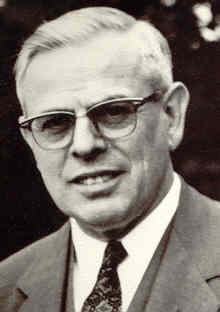
Stanley McCallum
At London Special Meetings, June 25, 1957
|
|---|
The thought in mind, dear brethren, is to say a word on royalty, spiritual royalty, first in the book of Esther, where we have remarkable references to what is royal in the midst of testing times, which would help in regard to our own times, when things are so difficult.
- In fact, all the scriptures that we have read, even Psalm 45, deal with light which comes to the people of God in difficult times. And especially do we need to see the importance in our day of spiritual royalty, because, as we may have often heard, the saints belong to the ruling class.
- We have been referring to the Lord, in our hymn, coming in to rule, and we shall be with Him in the rule, in the administration; He will not come out without us. It will be a wonderful time in that day, when the Lord will have the assembly fully with Him, by His side, linked in all the blessed administration of that scene.
- And the present time is to prepare us for it, royalty with the saints is developed now; there is the side in connection with that which is conferred upon us through grace, the wonderful operations of grace, in that God has taken us like beggars from the dunghill, and He has set us among princes, the princes of His people.
- So that the ministry of the glad tidings in Romans opens up before our souls the wonderful operations of God in putting us amongst the ruling class, in putting us, in the midst of all the splendour and glory of His kingdom, where so much is spread before our souls,
- as in this book we get the hidden allusion in type to the wealth of God's kingdom, when in the first chapter the king is displayed, and there is set out the glorious wealth of his kingdom.
- The epistle to the Romans brings in the great thought of the throne, an essential feature of the truth in regard to God in our relations with Him, that we have to face, so that every feature of our will is subjugated, and brought under the moral sway of God in grace, grace being on the throne, grace reigning, in the present time.
- Righteousness does not reign today, righteousness is not on the throne; righteousness will soon be on the throne, but grace is on the throne now, and grace is in the ascendancy in our dispensation.
- What an advantage we have in that sense! We have every advantage; whatever may be adversative in our lives, whatever we may think is standing against us, it is well to remember, as the truth of the glad tidings opens it up to us, that grace is reigning, grace is on the throne.
- It is a regal thought, a royal thought, over against all that is so common around us, and so degenerate as the fruit of man's will, and the dislocation that has resulted from it; when servants are seen upon horses, and princes walking on foot, as Solomon, the preacher, in the book of Ecclesiastes refers to it.
- The result of man's will is the dislocation of everything in the scene around us, but the result of the assertion of God's will, in its supremacy in the glad tidings, is that our wills through grace, and God's moral sway in it, are subjugated, and brought under the influence of that will.
- That brings in what is conferred, and I speak to the younger brethren in the light of the glad tidings for it is a great thing to see what is conferred upon us. The truth of the gospel in the epistle to the Romans is to build up our souls in the knowledge of divine gift through what has been conferred upon us through gift.
- So that we have eternal life, sonship, great and glorious as these blessings are, moved on to our view on the line of gift in the truth of the gospel.
- It is so that our souls should be built up in substance, in property. Abraham had the light conveyed to him that the people would come out with property, they would come out with substance out of Egypt, and it is on this line that we are indicating in the truth of the glad tidings in Romans.
But then I wish to speak of royalty from our side, how it is developed with us, and entered upon from our side, especially in view of difficult matters, and difficult situations
- We are to be above what is mean and petty, as belonging to heaven, and only here for the moment in the way of testimony. We are to carry heavenly manners, royal manners and dignity as belonging to heaven, and belonging to the expanse, and the ruling class, into all our ways;
- whether it be at school, whether it be at business, whether it be in the local assembly, royalty, heavenly dignity is to mark us, wherever we go.
- It is interesting in this book that we have so much reference to what is royal. If you go through this book and count the number of times that the word 'royal' is used, I believe it is more than in any other book in the Scriptures. And this is of note and of interest, because God's name is not mentioned in the book.
- The circumstances are very difficult for the people of God, and yet God's name is not mentioned throughout the book, it does not appear in the book, as to the actual record. But, as we have often heard and often thought of it, He is behind all the scenes in the book.
- We can count on God wherever His people are concerned, wherever the testimony is concerned, that while, because of certain outward conditions in that which bears His name, as the people of God are in captivity.
- He may not be apparent on the public side, yet He is moving behind the scenes and, as we have heard often, He is moving the scenes that He is behind, for the help and blessing of His
people.
- We are in similar days, dear brethren, for on the public side there is much to humble, as we think of the spirit of Vashti, the resistance of headship, the woman that would pave the way for the rival head in Haman, for that is what she really does.
- We want to get accustomed to the glory of headship, the wonderful glory that is spread before us in 1 Corinthians 11, before the Supper is taken up in its ordered setting and right location in the assembly.
- We get the wonderful glory shining in relation to God, Christ, the man and the woman, referring not exactly to what is in the assembly although inclusive of it, but referring to the public position, where sin has dislocated so much, dislocated everything, we might say, in man's world; so that woman is out of her place, and man is out of his place too, in relation to Christ and God.
- We want to see the wonderful glory that is shining there, the glory that makes way for the Lord's supper, and the glories that follow.
- It is not only, you see, dear brethren, glory in the heavenly sphere, but glory linked with the position down here, moral glory as Christ's and God's headship is accepted, over against the spirit of the world around us, where the authority of headship is refused, and such dislocation has resulted.
- Vashti represents that spirit, and she is displaced as that spirit will be displaced. It will be displaced in the coming day in a full way, but how important, dear brethren, that it should be displaced in our hearts now, that there should be no room for the spirit of Vashti, the spirit that does not submit to the truth, the spirit that is not in subjection to the truth.
- How important the edict that is given forth, and the principle established, that every man should bear rule in his own house. Surely that is an important feature when we come to Christianity, and to the truth of the assembly. Indeed, if a man cannot bear rule in his own house, how can he bear rule in the house of God? How can he take care of the assembly of God?
- Therefore, dear brethren, it is important that our households should be under control, in the light of the dispensation of grace.
- Grace is on the throne, not the law, not the peremptory demands of the law, but grace on the throne, and that is not only to enter into our position in the assembly, but it is to enter into our household economies, working out through the head of the house, through the woman, through the wife, down through to the children.
- There may be things that issue has to be taken with, as the enemy seeks to bring in dislocation, we are not referring to that; we are referring to the importance of every man bearing rule in his own house.
- So that as things come into our houses, if we are as husbands in the testimony, the responsibility devolves upon the head, as to all that comes into the house; and it is important that the spirit of Vashti should not be present in the house, but that full room should be made for headship.
- However poor we may think our husbands are, however weak we may think some of them are spiritually, let us make room for the great divine thought of headship, for therein does the glory of God, and the glory of Christ shine.
- And we are to have part in that wondrous matter, the angels looking on, in regard to the great thought of the woman having authority on her head, as in this wonderful scene of the testimony, where the divine order is preserved, in the saints as recovered to God, recovered to the truth, through the glad tidings.
So that Vashti is displaced, but Esther comes into her place. That is, we have one coming on to view in Esther, who brings in what is divinely effected, as we would speak of it in our day.
- She had come under right influence and care, and we can thank God for the right influence and care that we come under, because it all has in mind the introduction and development of royalty.
- Esther is going to fit into the affairs of the king, she is going to have part in the wonderful affairs and matters of the kingdom, and all that is linked with it; and we want to see, young people, that we are coming into great affairs, great matters, matters that involve the glory of the kingdom of God, as we would speak of it,
- and therefore the need of care and preparation, the need of subjection, the need of yielding to every right influence that comes out from God through Christ toward us to affect us rightly.
- It is so easy to get under wrong influence, but how important it is that we should come under right influence. Esther came under the influence of Mordecai, and what an influence it was!
- What a genuine care for the testimony he had, and how important that there should be Mordecais amongst us, how important that there should be the influence of Mordecais, how important such influence is to heaven!
- And he has in mind Esther, he has in mind this great thought, and his ears are fully alive and his hearing acute in regard to what is transpiring. He knows that Vashti has to be replaced. He knows, as we know, that the first has to be set aside, and the second has to be established; and Esther is coming into this.
- It is not an easy matter, as we see in the course of the book, and it is not an easy matter you see for all of us, the practical and experimental learning to pass from what is natural to what is spiritual, first that which is natural, then that which is spiritual.
- In the truth of the glad tidings it involves much sorrow and bitterness of soul, as we go through it, but Esther comes under the hand, as we have often noticed, of Hegai, the chamberlain. Mordecai sees that she comes under, not only his influence, but that she comes under the influence of Hegai, the chamberlain, one who is typical of the Spirit.
- There is thus a process linked with her training and her education, for this great position in royalty that she is to fill, therefore, dear brethren, the stress in Romans on the Spirit. How we need to see the stress and the emphasis on the Spirit, especially in the early part of Romans 8, for the Spirit is to be everything to us, in view of our training, and in view of the development of royalty in us.
- Spiritual royalty means that not only does grace reign, but that we reign, as Romans has in mind as to believers, that they are to reign in life, through the abundance of grace. It says,
- "much rather shall those who receive the abundance of grace, and of the free gift of righteousness, reign in life by the one Jesus Christ", Romans 5: 17.
- Royalty involves that there is a moral and spiritual supremacy with us in our circumstances, that we are not dominated by them, but superior to them.
- How important it is for all of us, that we should not be controlled by circumstances, how circumstances are made excuses, how they are brought up time and again, as to our spiritual prosperity, and our spiritual buoyancy; it is as if we would use them as an excuse
- whereas God in the wonderful things He has conferred upon us through grace, would build us up in this great thought of royalty,
- so that we are superior to our circumstances, that they do not control us.
Well, the times comes, to be brief, when a crisis has to be faced, and Mordecai is maintaining the lead, he has got a judgment of Haman.
- Haman represents the rival to Christ, the rival to all that is of God raised up in the testimony here in this world. He is a bitter opponent of the truth, as we would speak of it. He has no use for anyone, as we might say, but himself; he stands out in his own estimation, and the result is that sorrow is involved for the people of God.
- But Mordecai comes into the position, and we can always be thankful, dear brethren, in every part of the world, for the spirit of Mordecai coming into the position. It is the spirit of Christ coming into the position, in view of the holding of the ground, in faithfulness, in refusing to yield to the spirit of Haman, that for us looks on to and points to the rival head to Christ, that this world will soon make room for, and in relation to whom the apostasy will set in.
- We want to see the spirit of Christ in Mordecai, in adamant refusal to yield to this spirit that is seen in Haman. It brings out the hatred of Haman, as it always will bring out the hatred of the flesh, but the spirit of Christ in Mordecai has in mind this matter of royalty, and in all our localities, dear brethren, the spirit of Mordecai, or the spirit of Christ in Mordecai would have in mind this thought of royalty.
- In the first part of the book, it is what is put on Esther, as under the care of Hegai, but we come now to the fruit of the blessed influence of Mordecai, when the life of the people of God, the life of the testimony is jeoparded, and Mordecai indicates to her that she has come to the kingdom for such a time as this.
- Think of the time that we are living in, and the question is as to how we are all shaping up in it, how am I shaping up, how are you shaping up? We have the indication in this book of how Mordecai shaped up in this crisis.
- With Esther, you see, there is a little bit of doubt to begin with, but the persevering strain in Mordecai, in the spirit of Christ, in our localities, will see that Esther comes out as she should come out, according to the divine mind. So it says,
- "on the third day Esther put on royal apparel, and stood in the inner court of the king's house, over against the king's house. And the king sat upon his royal throne in the royal house, over against the entrance to the house".
- Notice the emphasis on royal, what is royal. The emphasis on this is important at this juncture, because it is a question of the deliverance of the people of God. It is a question of their lives, it is a question of the life of the testimony. And therefore the moment arrives when we are tested as to what we should do.
Esther is told not to imagine in her heart that she will escape – none of us will escape, dear brethren – we all come under divine review, we all appear in our hour, in our day, in our time in the testimony, and the question comes up with heaven, and in the sphere of the testimony, how are we shaping up, how will we do, how will we act?
- Mordecai is in sackcloth; he feels the position publicly, he feels that the people of God should be subjected to such strain and pressure through the wilfulness and wantonness of a Haman. He knows the origin of that foe, that relentless foe, and he will not yield for a moment to him.
- And he is seeking that Esther might be brought into the matter, as we are all to be brought into the matter, and she puts on the royal apparel. We have been speaking about coming before the king, coming before ordered Government in this world; we want to see that we have got the royal apparel on, that we are different kind of persons, we belong to the expanse.
- I know that evil has come into the expanse, Jannes and Jambres are there, Philetus is there, and Hymenaeus is there; they will not be always there, they will soon go out of it. They are there, and how they got there is something we have to ponder.
- But we want to see that we belong to the expanse too, the assembly belongs to the expanse in this sense, and soon we shall be manifested in that relation, in the ruling, royal dignity that attaches to us as coming out with Christ.
- But in the meantime we have to have a judgment as to all that are in the expanse, so that we are not deceived by Jannes and Jambres, and Hymenaeus and Philetus, men who have erred as to the truth. We are to see it, Paul sees all that and he puts us on our guard in regard to it.
- Royalty would understand that, and it is developed in our souls. Believers as developing in the thought of royalty would see that that all belongs to what is going out of the expanse, but the saints are coming into the expanse, in the sense in which I am referring to it.
- And so Esther puts on the royal apparel, and we are to put on the royal apparel. It is a question you see, of what is different. There is so much of what is common around us, and I believe, in the present time in the testimony, we are challenged as to whether we are prepared to sacrifice, to take our lives in our hands, and put on the royal apparel, and go before the king in the interests of the testimony,
- that the truth might survive, that the people of God might survive, and that God and Christ, as the book shows in type in the end, might come into their universal supremacy.
- Oh, to think that we have part in it! Young brother, young sister, to think of your part as an Esther in this glorious system of things, where God's supremacy is eventually to be known, and where the victory is known to faith. How important to see the royal apparel in this relation!
Now I want to refer to it in the other passages. I want to refer to this matter of royalty in the Lamentations of Jeremiah, for it is very striking how it comes in.
- I am not pressing it on the masculine line, I am going to trace it on the feminine line. We have had it in relation to Esther and now in Lamentations the reference to the princess; chapter 1: 1.
- We are to see how the feminine line comes into the matter of royalty, how it comes into the matter of the ruling class. Indeed, if we do not see that, we shall miss the divine thought, for the divine thought in Genesis 1 is that the masculine and the feminine are both involved in the matter of rule and government, in the universe of God.
- We want to see that, and the great place that Christ and the assembly has, and these passages typically are to develop us along the feminine line, so that we reach the full thought in Psalm 45, in the queen by the side of the king, in gold of Ophir. That is the full thought of royalty, not a half thought, or a quarter thought, but the full thought – the queen in gold of Ophir.
- It is over against the circumstances in which the remnant are viewed in the second book of Psalms, the power of antichrist running high, cast out as they are, beyond Jerusalem, remembering the precious things that were linked with Jerusalem, but having in their souls the light of the king, and the light of the queen, in the fully divine appointed way, in gold of Ophir.
- But we have to face the matter of the Lamentations of Jeremiah, and how royalty develops as we face the broken and the ruined conditions around, where things are being reduced to such commonness among men, where that which bears the name of God, and bears the name of Christ is held in such scorn around us; where the enemy publicly seems to have gained the day, and has made headway, bringing the assembly publicly under the influence of the world, in her alliance with it.
- The Lamentations fit into that. Jeremiah had seen royalty on the masculine line in Josiah in a wonderful way, just as we have seen royalty on the masculine line in our days through the spirit of Christ operating in leaders in the revival: J.N.D., J.B.S., F.E.R., J.T. Oh! the royalty, dear brethren, in these beloved men of God, these beloved servants of God!
- Just like Jeremiah saw it in Josiah, that leader raised up in kingship in his day, and the great revival of the truth under his leadership and influence. What precious features came into view through royalty in Josiah, beginning early, as it did. I would commend it again to the younger brethren, that royalty begins early with us on the masculine line, as it did in Josiah.
- There is power to deal with things in our souls, that are contrary to the truth, power to deal with things in our lives and circumstances, that are contrary to the truth; so that we should come into the ruling line, to exercise moral power in our localities, as having first dealt with things in ourselves.
- No one can exercise moral power in any locality, that has never dealt with things in himself. Romans 7 helps us to deal with things in ourselves, to analyse good and evil, to put evil here, and good there; not to mix them together, but to put them in their proper places.
- And as we begin with ourselves, bitter and severe and sorrowful as the exercises may be, some of us perhaps, almost having gone out of fellowship in working out the exercises connected with Romans 7, but Oh! the blessing that results in the knowledge of the Deliverer, and the knowledge, as in the eighth chapter, of full deliverance by the power of the Spirit, and the presence of the Spirit.
- These are great things, young brethren, these are great things to all of us. Josiah began early, and we think of the ruling class set out in Josiah, and Jeremiah had seen it. He had seen the wonderful way in which the truth was recovered, and in which leadership was maintained, so that the truth had its place, so that the holy ark was put in the place that Solomon, the son of David the king of Israel had built.
- We have also royalty seen in Solomon and David! We have a book on it, you know. I wonder if we have all read it. How many are the books we have not read! 'Royalty and Headship seen in David', what a book it is!
- Josiah got it into his soul, and we are to get it into our souls, royalty seen in Christ, as typified in David. And Jeremiah had seen it and his soul was affected by it, but he saw that the state of the people was not equal to it at that time.
- However powerful the influence of leadership was, there were things that had to be faced amongst the people, and the Lamentations bear on it. So that we are challenged, dear brethren, as to the time when such leadership as we have referred to is absent; we are challenged as to whether the enemy is going to have his way. I think not, dear brethren!
- If there is one thing the Lord has shown, it is the product of royalty in leadership in ministry that has gone before, that product is in the assembly, and we love to think of it asserting itself.
- Well, Jeremiah had seen all this, and now he comes to speak of royalty on the feminine line, in regard to Judah, he says
- "the princess among the provinces is become tributary".
- Is that the divine mind? No, dear brethren. We have to feel what God in His government is doing in relation to public condition, and as we accept His government, and the reduction that it brings, and bow under His government, we shall get blessing, we shall get help.
- Jeremiah speaks in the sorrow of his heart in this book, about God not hearing his prayer. He says in one instance,
- Think of these solemn conditions, dear brethren! We have spoken in connection with the book of Esther, that God is not mentioned there, but in this book God is there. He is entering in His government, into issue with what obtains in the public position, and in His government the heavens are shut up. How solemn these things are!
- But we have the spirit of Christ in Jeremiah, that would be with God, and make a way, as it were, for God to act, as I do believe Jeremiah's spirit did. So that as he ends his book, he sees royalty in the full effect of it in God Himself, as he says,
- "Thou, Jehovah, dwellest for ever; thy throne is from generation to generation", chapter 5: 19.
- But we have to face, as the princess has to face, the impurity in her skirts, as it says,
- "Jerusalem hath grievously sinned; therefore is she removed as an impurity", verse 8, and then, verse 9, "Her impurity was in her skirts".
- The skirts relate to our associations, our manners and habits in life; and we are to see that our skirts are clean. We have been speaking about the water; the death of Christ in its purifying aspect in the water, is to help us that our skirts should be clean, that there is no blood guiltiness in our skirts.
- In the book of Jeremiah itself, it speaks about blood guiltiness in the skirts. We are to see that the skirts of our garments are clean. The assertion and ascendancy of royalty in our souls would see to it, as the truth comes before us objectively, and as by the Spirit, it comes into us subjectively, and affects us subjectively, and that we cleanse and purify ourselves from these habits and associations of life that God in His government expresses His displeasure in.
- Well, that is the moral side, and if we are weak on moral lines, we shall be weak on other lines. We shall never be strong on spiritual lines if we are weak on moral lines. We are challenged as to the moral side of the truth, and how we are facing it, whether we are avoiding it, whether we are passing it by.
- But we have to face it, dear brethren; we have to face it with sorrow in the public position, but there is a way out, thank God, and royalty comes into view in the way out. So that Jeremiah would help us as to royalty, and the facing of it in connection with all the ruin and the breakdown,
- and we should see that it is not of God, in the proper and normal sense, that what is of Himself should be in servitude, or tributary to any principle of this world, or the man that is dominant in it.
Now I want to come to the Song of Songs, where we get the development of royalty in relation to the ardency of love.
- The passage that I have read in chapter 6 alludes to the Shulamite. Dispensationally it points to the great day of recovery and revival when Israel and Judah will be brought together in relation to the advances of the King towards them, and all his ministrations in relation to them, as it says,
- "Return, return, O Shulamite; Return, return, that we may look upon thee".
- It is a wonderful thing to look upon the Shulamite, the feminine counterpart of Solomon! What a wonderful thing it is to look upon the assembly, and to see what has come about in the assembly through divine working, so that the Lord can speak of it, as
- He never tires, as it were, of bringing on to our view the assembly; and any lover of Christ that stands by the assembly, and makes the most of it in their outlook, and makes the most of it in their exercises, will be honoured, as it says of Jerusalem, they shall prosper that love thee. So it says,
- "What would ye look upon in the Shulamite?" It says, "As it were the dance of two camps".
- Oh! the unity that will be brought about as Israel and Judah are united through the wonderful operations of the King!
- They will be united into one, their movements will be one. Instead of the rival kingdoms, instead of the rival parties, as we think of Jeroboam and all that came in through him in Israel, we have come to a time now, when the Shulamite returns, and there is seen, not the dances of two parties, but the dance.
- All the rivalry is gone, and Israel and Judah are seen as united in response to the ministry; for that is the point suggested in the dance, as the Lord says, in regard to John the baptist, and what was said, "We have piped unto you and ye have not danced". Think of the wonderful pipings when the king will have to do with the remnant, and have to do with Israel, bringing about this wonderful result of the dance of the two camps, as Israel and Judah are united, under the hand of the king.
- Well, we are to see that in the assembly, that there is a way out of the confusion and the dislocation, in returning, departing from iniquity, and pursuing righteousness, faith, love and peace, with those that call on the Lord's name out of a pure heart, and coming into the wonderful light of the Shulamite, the wonderful light of the assembly as in the assembly epistles. So it says
- "How beautiful are thy footsteps in sandals, O prince's daughter!"
- Think of it, not 'how beautiful are thy sandals', but "how beautiful are thy footsteps in sandals, O prince's daughter!" It is a question, you see, of our movements in the truth. It is the footsteps, not only the sandals, by themselves, but the footsteps – the way we have been going, where we have been travelling, and the imprints we have left, as it were.
- What have they been? Wherever we go, do we leave an imprint of Christ and of the assembly, or an imprint of ourselves? "How beautiful are thy footsteps in sandals, O prince's daughter!" Then it says, "The roundings of thy thighs" – no sharp corners here, no difficult corners to manoeuvre or to manipulate.
- "The roundings of thy thighs are like jewels, The work of the hands of an artist".
- Think of the refinement, the spiritual refinement linked with royalty in this relation, the prince's daughter!
- We need to see our dignity in the eyes of Christ in this light, as returning, as forsaking wrong principles, as forsaking error, as forsaking lawlessness and unrighteousness; and coming into, in the revival, the wonderful features that come under the eye of Christ, in this profile view that we get of the loved one, typical of the assembly.
- May the Lord help us to see what the assembly is in His eyes, and may He help us to stand by it in all our localities, stand by the assembly, honour it at every turn!
- None of us is greater than the assembly. No matter how gifted a person becomes, in the realm of the testimony of God, he is not greater than the assembly; the assembly is greater than all when it comes to that.
- And every one of us is to see to it that we have a proper respect for the assembly, a proper regard for it, and if need be, we are to be subject to it, as recognising that the rule of heaven works out through it.
Well, just a word in Psalm 45. We have had the princess and the prince's daughter and now we have the queen.
- The queen here sets out the full thought of the assembly, it is not an incomplete thought as to the assembly, not just going a little way as to it, but coming into the full thought of the assembly. It says,
- "Upon thy right hand doth stand the queen";
- it is not the left hand, but the right hand. The King for us is at the right hand of God, and the queen is at the right hand of the King, just as we have been saying, in 1 Corinthians 11, where the glory works down. Oh, the relation of the glory in that sense, from God to Christ, and from Christ to the man, and from the man to the woman!
- Think of the glory, as we might say, projected on to our view, in relation to Christ where He is at the right hand of God, raised by the surpassing greatness of God's power, but given to be head over all things to the assembly.
- In that glorious place of supremacy, the assembly is with Him; there is no shade of disparity, no sense of inequality, but perfectly suited to be there – the queen in gold of Ophir.
- May the Lord help us as to these thoughts of spiritual royalty, that we may see our dignity in the testimony, on the eve of translation at the present hour, and act as those that belong to the ruling class, for His name's sake.
Page Top Article Top
SOME PRESENTATIONS OF THE LORD
JESUS IN THE BOOK OF REVELATION |
|---|
Revelation 22: 16, 17; 1: 12-19; 5: 6-10; 19: 11-16
Stanley McCallum
At London Special Meetings, July 17, 1958
|
|---|
I want to say something about the Lord Jesus as He is presented in this book. He draws attention to Himself personally, in the first passage I have read,
- I suppose there is nothing more calculated to strike a chord in all our hearts than that personal reference of this glorious Person to Himself.
- I want to speak of Him, first as the Son of Man in the first chapter, then as the Lamb in the fifth chapter, and then as the Word of God in the nineteenth chapter.
- It is affecting that in this book, with scenes so dark in it and with a background that is so difficult in many chapters, there should be, by the Spirit and through the medium of him who lay in the bosom and on the breast of Jesus, projected on to our view such glorious features of this blessed Person whom we love and adore.
- It shows that no matter how dark things may be, how strong the tide of evil or how powerful the forces of lawlessness, the Spirit of God would hold our hearts and minds by a powerful presentation of the Person to whom we owe our all, the Person upon whom everything hinges as far as our blessing, our joy and happiness are concerned.
- It is a book in which, with deliberate divine definiteness, there is projected in detail things in an unvarnished way in regard to the assembly publicly, the great light-bearer, and in regard to the world at large, as the scene in which evil's challenge long permitted has reared itself against God and His supremacy.
- It is a book where there is also depicted for us the sorrowful position of persons who have defected, persons who may be in filthiness and thus to whom the word is,
- "let the filthy make himself filthy still".
- How solemn are these things which are depicted for us! But in the midst of it all, and over against it, come these bright rays of Christ's glory, calculated to awaken fresh hope and desire in the hearts of those that long after Him, for, dear brethren, is He not our life?
- It is not only that we have come into things, but we have come to a Person who in secret has so endeared Himself to us, through all His ministrations to us. When everyone else left us and we had to go through things alone, He stood by us; this same Jesus, He never left us, He understood when no one else understood.
- In His priestly station on high, He was thinking of us and He ministered to us and through that ministration, not once, not twice, but all through life's way, in wilderness scenes. He has endeared Himself to us in a way that no other man has or could. Not even those who are closest and dearest to us naturally, could ever have endeared themselves to us as Jesus has done.
- It sounds very simple, dear brethren, but have you ever sat down and pondered what would you do without Jesus? What would life be? Thank God, that we shall never be without Him, in time or through all eternity!
- How wonderful it will be to be actually near Him, to walk with Him and to talk with Him in scenes of purest joy above. If the blessedness of living with Him in private and in secret and in talking and communing with Him now, in the day seasons, in the night seasons, is so precious and blessed, what will it be in scenes of bliss above?
- Young brethren, how wonderful to be in a company like this, where every one is a lover of Jesus! Would you want to be anywhere else? Would you want to be out in the cold bleak world, with all that the great master-scheming mind has designed to draw you into? Would you be there? Never! How can we leave Him?
- Have you ever come to that in the difficulties of your soul, young people? I came to it in my teens. Have you ever come to it? You felt like leaving, and the word came into your soul in power. How can you leave Him?
- He is to be known in the assembly; we shall know Him in heaven, we shall know Him in glory above, but how blessed to know Him in the assembly now! How wonderful the assembly is!
- To think that there are persons that discredit the assembly, persons that say there is no such thing as the assembly in these days. Thank God we are not among them.
- Thank God that through grace, and with the help of the Spirit, on the ground of sovereign mercy, we know that wonderful sphere where the Spirit abides, where He dwells and where He has unfolded to us the heavenly glories of this One we love so well, who has become our life.
Does it not touch your soul that, at the end of this book, He should say to John, "I Jesus"?
- You can understand John's feelings in his isolation, robbed of the fellowship and the companionship of the brethren; he was not able to be at these meetings as we are; he was on the lonely isle of Patmos. He would learn a little bit of the solitude that Jesus knew Himself, for Jesus had to say,
- "the foxes have holes, and the birds of the heaven roosting-places; but the Son of man has not where he may lay his head", Matthew 8: 20.
- You remember too, how He said, in the Psalms,
- "I am become like the pelican of the wilderness, I am as an owl in desolate places; I watch, and am like a sparrow alone upon the housetop".
- Think of the solitude and loneliness of Jesus! Think of how John, who lay in His bosom and on His breast, would think of these words of Jesus. What a solace and a comfort they would be to him in the solitude of Patmos' isle!
- What do we know, dear brethren, about this kind of thing? If our roots were more fixed in this kind of soil, there would be no desire to leave the fellowship and to go away. As the Lord
said to Peter and to the others,
- Think of that! He did not just say, 'Will you go away?' It is not only that our affections are bound up with Him, but His affections are bound up with us, and think of what enters into these words, the depth of the affection, "Will ye also go away?"
- Is there anyone here that is thinking of going away? Is there a young brother or sister here who has had it in their mind and the enemy is supporting it and feeding it into their mind, that they are thinking of going away?
- How can you leave Jesus? How can you go away from the sphere where the blessed Spirit of God is, and where He glorifies that Person?
- After all the scenes have passed, in the Revelation, after all the judgments are executed. He comes in With a personal word to John,
- Think of the Lord coming into a meeting, or a season like this, and saying, "I Jesus"! Have you ever asked the Lord to disclose Himself to you? I think, dear brethren, that we should know greater intimacy with our Lord; it is a real matter to live near to Him and to walk and talk with Him here.
- Oh, the preciousness of it, you cannot explain it, you cannot pass it on to others! The inexplicable blessedness of living with this Person, in communion with Him, and the joy of knowing Him in the assembly.
- Think of every first day of the week as He presents Himself, you waken up in the morning and you are thinking of the Supper and the possibility of meeting Him! When a person comes by 'plane or by train, and you are going to meet them, you know the feelings that surge within you, especially when it is one who is very precious and dear to you; and it is like that every first day of the week!
- As you awaken, your soul is filled with holy and spiritual sentiments and feelings that you are going to see the Lord. The assembly is before you and you come to the assembly as gathered with the saints in assembly, and the Supper is partaken of, the breaking of bread, and the Lord manifests Himself and says "I Jesus". He would say
- as Jehovah saying to Abraham, "It is I". He did not say, 'It is Jehovah,' or 'It is the Almighty,' He said "It is I".
- Oh, for these links, dear brethren, of known intimacy and nearness with the One who discloses Himself in the assembly. How wonderful the assembly is in that light!
- If the time is moved up an hour, is it going to make any difference to love? Will love be burdened? No! love will be all the more quickened, dear brethren, to think that we are going to see Him earlier, we are going to meet with Him earlier. Love will get up earlier to prepare for it.
- The Lord's day, the first day of the week, is no day for lying in. Love would make us agile. Oh, you say, We were out late on Saturday night. Well, did you think of the Lord's day and the first day of the week?
- We want to think of the first day of the week, and the Lord's day, for it is a special day. It is a sanctified day, a dignified day, and we are to treat it and regard it as such and not a day like the people in the world regard it. It belongs to the lordly Person of whom we are speaking, "I Jesus", yet One so low in humiliation here.
Well now, I may refer again to that word in closing, but I want to speak now for a little while of the Son of man.
- This book opens with John, as we have been saying, on the isle of Patmos and the Lord is about to go over with him the matter of church failure.
- Has the Lord ever gone over with you the matter of church failure? Have church sorrows ever broken your heart? They have broken some hearts, have they ever broken yours?
- I am sure that John would have shed tears in secret after the view that the Lord gave him of the public failure. Indeed, in one of the passages that we have read in the context, John wept. He may be referred to as a 'son of thunder', in the gospel, but he is a feeling man. He is a man that can weep, weep over what is so near and precious to the heart of Christ, but what, in the public position, the enemy has defaced and defamed. Do we feel it?
- So He is about to go over this whole matter and He presents Himself to John. The Lord always loves to present Himself to love, on our side. Has He ever presented Himself to you? Have you ever been conscious of it? It is a wonderful thing to be conscious of it. The Lord knows how to do it.
- It is a great thing to be devoted, as John was; he was a devoted follower of the Lord. It has often been said, and it is good to bear it in mind now in this universal gathering, that if there were more devotion amongst us, there would be more gift.
- I would say to those who come from difficult situations and difficult environments and circumstances that as your devotion develops and increases, as you give yourself over to the Lord and His interests linked with the assembly, He will develop gift.
- While gift is sovereign on the one hand, you will always find that where there is devotion, the Lord will answer it by the impartation of something that means something, both to Himself and to us, and to the assembly.
- I do not suppose John had seen Him in this view before, He is in the judicial garments for priestly scrutiny. He is not in the garments of service; John had seen Him in the attitude of service, in the very place where it is said of John that He was in the bosom and on the breast of Jesus. It is in that very section where he saw the Lord lay aside certain garments and wash the feet of the disciples.
- You can understand John must have been greatly affected by that. He must have watched the Lord carefully as He went from disciple to disciple. Think of the Lord going down to their feet! What would the Lord not do with us in order that we might have part with Him? Would not you like to have part with Christ
- We have been speaking in these meetings about the matter of believers having part with unbelievers, and the like. Think of having part with Christ!
- John saw how the Lord was prepared to serve His own; the Lord gives us every advantage, and with every one of us we are the objects of His love and His care in this regard.
- It may be that with some one of us here, we need our feet washed; we all need our feet washed, but somebody needs especially the touch like Peter, and the Lord would do it for us tonight. It is not a question of being washed all over; it is a question of a final touch.
- We have been speaking about final touches, and the feet are the final part that go off the earth and the Lord would touch that final part, dear brethren. We are not going to go up feet first, I speak reverently, but the general idea is that man is made upright, so that our feet are on the earth.
- Of course, it includes more than that, but the Lord would help us, on the eve of translation, as to this final touch involving the matter of our feet, the matter of defilement. It is the matter of contact, as we had in the word that the Lord gave us last night.
- We have in John 13 the disciples and their feet, and their contact with the earth, and the Lord would serve them in view of having part with Him. John had seen that, but now this is another view.
- The garments are not the garments of service, they are the judicial habiliments. They are, we might say, the garments that belong to the strange work, for judgment is the strange work, as we are told in the word. But in the midst of this strange work, and in the midst of all that suggests distance, we have, as we know, the golden lamp and the golden girdle.
- We have the emphasis on that glorious thread which runs through whatever the defection. Let men say what they like, in their departure from the truth, the golden side is there; the golden lamps are there and the golden girdle is there. It is symbolical of course, but it is to remind us, dear brethren, that what is divine abides whatever the ruin and the failure may be in the responsible light-bearer.
Now I want to refer to what it says in verse 16,
- "and out of his mouth a sharp two-edged sword going forth; and his countenance as the sun shines in its power".
- We have often alluded, dear brethren, to the word of God and the priesthood of Christ, in the epistle to the Hebrews, and the symbol here of the two-edged sword going out of His mouth is linked with the countenance of Christ and the sun shining in its power. Have you ever thought of the link between these two things here?
- You will remember how, in Psalm 19, the sun is spoken of as a bridegroom. It is very striking that we should get this figure here and that we should get the bride at the end of the book. It is as if we are reminded, at the end of the book, that the sun has completed its circuit, and on to view comes the bride,
- "the Spirit and the bride say, Come".
- Again like the bridegroom in the Psalms who is in strength, we have the sun here in the meridian of its strength, for it says,
- "as the sun shines in its power".
- Whatever the weakness or failure may be publicly, Christ remains in His shining. His countenance, which reflects the glory of all that He is, remains in the meridian of its strength throughout the dispensation over against the failure of the light-bearer in the public position. And that sun tonight would shed its benign rays upon us, its healing warming influence!
- Think of it as linked with the word of God, the two-edged sword! Oh, someone might say, The matters that we have been having have been cutting deeply, cutting a little bit too close home. Dear brethren, I would say, Let the word of God, as the two-edged sword going out of the mouth of Christ, have its full way with us,
- "penetrating to the division of soul and spirit, both of joints and marrow, and a discerner of the thoughts and intents of the heart", Hebrews 4: 12.
- Let it have its full way, and as we accept the exposure and seek grace to deal with the matters that the word proceeding out of Christ's mouth would call our attention to, we shall get all the priestly grace and support of Christ flowing in behind to help us in relation to all that we may have to face.
- It may involve sacrifice, it may involve suffering, it may involve reproach and ignominy, it may involve being ostracised, but oh, the value of the priestly service of Christ as we accept the exposure!
- But then, dear brethren, if I might be allowed to apply this scripture – I am not seeking to interpret it at the moment – as to the countenance of Christ, as the sun shines in its power, I believe faith can see a suggestion of the bridegroom in it.
- He looks over the public history and He thinks of the bridal glory that marked the church in the early days of the Acts, and He thinks of the bridal response in the early movements of the assembly, especially at Ephesus, when in the power and preciousness of first love, they enjoyed the charm of those heavenly relationships with Christ, which the assembly stood in.
- Think of Him as His countenance looks upon the position of the public light-bearer, robbed of her bridal adornments, robbed of her bridal glories in that public position. How He must feel it!
- But then all the blessedness of the warmth and the healing that is linked with His wings as arising, in the other type and symbol of the sun in Malachi, would come into the soul who is prepared, in the midst of the public defection, to accept the exposure and move into all the joy of the revival as seen in Philadelphia,
- where His countenance shining in its power is felt by those who are prepared to accept death to all that is in the world, and enjoy in secret, as standing in the truth of the assembly, and its heavenly relations with Christ, the blessedness of this warming and healing influence of the sun.
- What a presentation! It is the Son of man, dear brethren. You may say, the brethren are saying hard things, the ministers are saying hard things. They are not considering rightly for us, they do not know the circumstances. But the Son of man does.
- It is the Son of man who is clothed with judicial habiliments – the One who is on our side. As Son of God, He is on God's side, but as Son of man He is on our side; and it does not matter what locality we come from – you might say, 'It is alright for America, or it is alright for England, or Australia'.
- But it does not matter where we come from, the Son of man stands in relation to universal dominion, universal influence, and He is on our side, sympathetically and feelingly, for He is the Son of man. Oh, how He feels with us!
- But His eyes are as a flame of fire. Oh, the holy jealousy that lies behind those penetrating eyes, discerning in the midst of us what is unsuited to love's cherished thoughts! Love would not suffer anything upon us that denies the true features of the assembly in her heavenly glory.
Now a word as to the Lamb. What a presentation of Christ, dear brethren, the Lamb is!
- It would have been wonderful to have had a talk with John after all this. I am sure he would say to us, 'I cannot tell you the half of what I have experienced'. John had to suffer this on account of the testimony, for he was there because of the word of his testimony.
- What about the word of our testimony? What about the word of our testimony to our school principals and instructors, to our employers, to our supervisors and superintendents? What about the word of our testimony to the directors of the concern that we may be bound up with?
- It is a wonderful thing to see a believer fearless in the presence of a board of directors, speaking about Christ. Not saying he has got religious feelings and religious ideas, but a fearless confessor of Christ. We want to be like that! John was like that. But now heaven has said to him,
- "Come up here", Revelation 4: 1.
- I love that thought! We have often heard of it, how heaven loves to call the sufferers for the testimony up there, as it says, "Come up here". It is not just 'Come up', but "Come up here".
- We might say, not that we want to put too much in it, it is where Jesus is, where God is, where the throne is in its eternal majesty and supremacy. "Come up here", and you will get a view of everything from there. Would to God that every one of us, from the youngest to the oldest, knew something of this experience!
- There are those that have known what it is to face the violence of the picket lines. We speak feelingly about these matters. There are those here that have known what it is to face these extraneous matters that militate against the assembly's heavenly glory, and we can speak feelingly about these matters.
- But when you get up into heaven, through that door in the Spirit's power and you see the throne, your soul is prostrate before divine majesty. What does man's poor might mean? What do all his forces marshalled against a believer mean? May the Lord give us a touch of it! The voice says, "Come up here". And this is one of the things he is to see.
- "I saw in the midst of the throne and of the four living creatures, and in the midst of the elders, a Lamb standing, as slain".
- Think of that! You would think that if it were slain it would be lying down, but it is standing. Of course, it is symbolical, but the symbol is to impress our minds; every detail, as it were, is designed by the Spirit of God to throw into transcendent relief this glorious Person.
- As we think of the Lamb – "I Jesus", as He said at the end, but the Lamb here – we think of how He suffered for the rights of God. Think of how He suffered at the hands of men, uncomplainingly, as it is said prophetically,
- "he was led as a lamb to the slaughter, and was as a sheep dumb before her shearers, and he opened not his mouth", Isaiah 53: 7,
- and then as Peter says, "who when reviled, reviled not again; when suffering, threatened not; but gave himself over into the hands of him who judges righteously", 1 Peter 2: 23.
- We might well give ourselves over into those hands, as Jesus did.
- John sees Him as the Lamb, and how it affected him. John had been weeping over the fact that there was no one able to take the book, and his attention is drawn to the Lamb standing as slain.
- Oh, what that brings into the soul and into the mind, as we think of how He was slain, how the experience of death was that holy One's. How He entered the empire of death and conquered him who had the power of death, and forth from death He has come.
- But He once lay there, dear brethren, and John sees Him as a Lamb standing; no longer lying, He is standing. It is like the vision that Stephen saw, "the Son of man standing". He is in that position and actions are going to flow from this chapter onwards.
- Things are going to be done, the man of sin is going to be met and he is going to be met through this channel, we might say, of operation, I speak reverently, but he is going to be met by the "Lamb standing, as slain". And it says,
- "having seven horns and seven eyes, which are the seven spirits of God".
- I think this is remarkable that the Spirit of God should be linked with the holy Sufferer, as Jesus the Lamb was. Think of the Spirit of God, in His plenary character and in the fulness that marks Him in the administration of the throne, identified with the holy Sufferer, the Lamb!
- He will always be identified with suffering ones, as they suffer in the spirit of the Lamb, as Peter tells us, as to those that suffer,
- "If ye are reproached in the name of Christ, blessed are ye; for the Spirit of glory and the Spirit of God rests upon you", 1 Peter 4: 14.
- You see, the great effect it has.
Now just a reference to the Word of God.
- What a holy scene is before us, a scene of holy jubilance! Not only is the rival to Christ being met, in the man of sin; but the rival to the assembly has been met. She who has beclouded all bridal beauty and glory in the public testimonial position, she has been met and overthrown, and on to view comes the wife of the Lamb.
- We belong to the wife of the Lamb. Think of the privilege that is ours as being the wife of the suffering One, the assembly, in the sense of all that belonged to Him in this dispensation – the wife of the suffering One. It says,
- "the marriage of the Lamb is come, and his wife has made herself ready".
Are we in this? Have we made ourselves ready? Is there anything that has to be adjusted or attended to as we come into this glorious scene? Surely, we want to be ready! But the passage that I have read says,
- The assembly is coming out as the wife of the Lamb. If the assembly fills the divine presence and the divine mind as it does, how it should fill ours more and more!
- The heaven opens and then we have
- "a white horse, and one sitting on it, called Faithful and True".
- Oh, the glory of "I Jesus" in this relation! The One who was Faithful and True. How faithful He was, even to death! How true He was! The Lord looks for the reflex of that in us. The Spirit of God would produce the reflex of that in us, so that we should be faithful and true.
- Then it says, "his eyes are a flame of fire".
- It is very interesting, the link with the assembly feature in the beginning of the book, where we have the Son of man in judicial garments, bearing on the public light-bearer, the assembly in her public position. The reference to the eyes again appears,
- "his eyes are a flame of fire, and upon his head many diadems".
- That holy head once crowned with thorns, now adorned with the many diadems! Oh, the thought of His appearing! Do we love it? We are going to be with Him, as it goes on to say,
- "the armies which are in the heaven followed him upon white horses, clad in white, pure, fine linen".
- It is not only that their associations, as in the clothing, are pure and white, but what supports them in movement is white. What a scene of purity! We are reminded, amidst all the defilement and wickedness in this book, of abiding purity and stainlessness in relation to heaven, in relation to God, the throne, and Christ and the assembly.
- And it says, "his name is called the Word of God".
- That is, every bit of the knowledge of God that we have has come through this glorious Person – "I Jesus". Let it strike a chord in the power of the Spirit of God in our souls!
- "I Jesus have sent mine angel to testify these things to you in the assemblies",
- every local position in His mind.
- "I am the root and offspring of David",
it reminds us of the greatness of that glorious Person and the refinement of His humanity; and then He says,
- "the bright and morning star".
- It is the special way He appears, in the assembly period, in heavenly light and glory to those that are in this wonderful stream of living movement with which the Spirit of God identifies Himself, as
- "the Spirit and the bride say, Come".
- May the Lord bless the word to us for His name's sake.
Page Top Article Top