
| EDITOR'S INTRODUCTION |
|---|
| This is Part One of No. 14 in my Historical Reference Series. |
It consists of the original booklet,
| A CAUTION TO THE READER REGARDING CERTAIN ASSERTIONS OF THE COMPILER As To Various Servants And Their Ministry | |
|---|---|
1995 (Revised 1998) Gordon A. Rainbow |
Compiler's Note To The 1970 Original EditionAugust 1970
|
G.A.R.
| COMPILER'S PREFACE |
|---|
In 1951 the Stow Hill Bible and Tract Depot issued a publication edited by Mr. A. J. Gardiner under the title 'The Recovery and Maintenance of the Truth' which in its foreword stated that it was an attempt to provide
It is to be noted that in the foreword to the 1951 edition the editor refers to a useful book on similar lines which had been earlier issued by the late Mr. G. W. Ware,* but which had had only a private and limited circulation. In the opening pages of Mr. Ware's book it is stated:—
"Ever since the Holy Spirit came down at Pentecost it would appear that it has been the effort of Satan to defeat the present purpose of His coming by inducing the people of God to grieve Him … May we not say that the object of the Spirit is to build us up after Christ, so that there may be praise for God in the Assembly and pleasure for Him and testimony for men in the world and that Satan's object is to defeat this. It has been the crux of the conflict from Pentecost onwards, and it is raging to-day as fiercely as ever, perhaps more so in view of the nearness of the coming of Christ to receive the Church to Himself – Another thing which we must ever keep in mind is, that if Satan is at any time defeated in what we may speak of as his main attack, he does not give up what he had in view in it, but seeks incessantly to gain his end by wiles and artifices of the most insidious character."
It is the firm conviction before the Lord of the compiler – and, indeed, of a considerable number of those who prior to 1951 had been seeking to walk together according to the truth of the Assembly recovered as described in the main part of the 1951 edition –
The accounts of the proceedings given herein are taken from authentic records which were prepared immediately after the events took place by persons having first-hand knowledge of such events.
[A. G. Brown]
| 1. THE RE-INTRODUCTION OF SEPARATE ADDRESS TO AND WORSHIP OF THE HOLY SPIRIT | |
|---|---|
|
J.N.D. – Reason For Not New York – 1942 Teignmouth – 1931 Newcastle, Australia – October 1947 Auckland, N.Z. – November 1947 Detroit, U.S.A. – September 1948 New York – 1948 New York – 1949 Washington, D.C. – April 1949 |
Park Street, London London – July 1949 Indianapolis, U.S.A. – November 1949 Typical Application Hymns to the Spirit – London Hymn Book Revision – London |
With the departure of the Apostles many and various ideas as to the Person of the Son and of the Holy Spirit were developed in the early church.
When deep interest in the truth was aroused in the early part of the nineteenth century, practices and customs were tested by the Holy Scriptures and those which had been added since the days of the Apostles were discarded. Amongst these was the practice of addressing and worshipping the Holy Spirit.
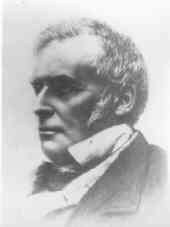
As would be expected references to this clarification are to be found in the literature of the leading teachers of the revival and the following extracts from the writings of Mr. J. N. Darby will suffice for this purpose:—
"It is not any question of Person or dignity as to the Holy Ghost that hinders His being the object addressed in prayer, but the place He holds in the divine economy. He does govern as we are led by Him, but our communion is with (objectively) the Father and His Son Jesus Christ … The Holy Ghost is a divine Person and in the unity of the Godhead adored and worshipped. He is the immediate agent of all that God does – immediate to the effects. But His place in the divine ways is not in the same way objective – as divine and personal, but not in God's ways so objective." Letters of J.N.D., 2: 85
"You cannot properly address the Spirit, but this is for another reason, the Holy Ghost being the One who is in me, and so He cannot address Himself. It is the different place the Holy Ghost takes in the economy of grace that is the reason of this. He is the agent in us to sustain us in prayer, for by one Spirit we have access unto the Father. It is not intelligent to use that hymn, 'Come, Holy Spirit, heavenly dove'. God does not make a man an offender for a word, but it is not intelligent."
J.N.D., Collected Writings, 25: 288
"But there is a difference between these two Comforters. To begin with, there was no incarnation in connection with the second; the spiritual power of God was in Him, and the power of the truth, but not an object for the soul … The Holy Ghost is the blessed source of our right affections, but He cannot, like Jesus, be the object of them. As God, we love Him; but, we know, He was not made flesh for us, He did not die for us, we cannot be united to Him. We cannot say of Him as of the precious Saviour: 'He that sanctifieth and they that are sanctified are all of one; wherefore He is not ashamed to call them brethren'. It is no question of preference or of comparison; it would be folly to speak thus of the divine Persons; but the Holy Ghost, as to His Person, has not placed Himself in the intimacy into which Jesus has entered with us; a Man who calls His own His 'friends', who is indeed the Son of God and with power, but who is a Man and a Man for ever, the same who has been in our midst as He who served." J.N.D., Collected Writings, 33: 249, 272
Substantiating evidence is also provided by the fact that hymns addressed to the Holy Spirit were not included in the hymn books compiled by the brethren who were associated with the return to Scriptural principles and practices.
As far as is known no suggestion that the giving up of this practice was wrong was ever brought forward; indeed, during the following hundred years there are corresponding statements in the published ministry or letters of many brethren, including Mr. William Kelly, Mr. F. E. Raven, Mr. J. Doughty, Dr. C. C. Elliott and Mr. James Taylor himself as will be mentioned later.

But in 1942 Mr. James Taylor who by then had been for some 30 to 35 years the leading ministering brother, suggested in a reading in New York that Numbers 21: 17, “Rise up, well! sing unto it”, warranted singing to the Spirit, though adding, “And yet you would seek to be governed by Scriptural example. This, however, is sparing”. J.T. Vol. 156: 144-5, amended edition; N.S. 52: 154.
The remarks on the subject then made were omitted from the notes of the reading when printed and published by the Stow Hill Tract Depot and added to them by an amendment at a very much later date, that is to say, after the addressing of the Holy Spirit had come up in a much more definite manner five years later and had subsequently become established amongst the brethren.
It is to be noted that Mr. Taylor also says in this correspondence, “In your letter to Mr. Parker* of August 10th you say, ‘In thinking of such a matter I would look for a basis in some passage in the New Testament and would hesitate to base it on a type, but rather interpret the type by the New Testament’. These remarks discredit the Old Testament Scriptures. The Lord says, ‘the Scripture cannot be broken’ ”.
It is somewhat surprising that Mr. Taylor took the line he did at that time [1942] as to an Old Testament Scripture being adequate to establish a Christian practice particularly in view of the following earlier statement by him:—
Ques. Why do we not address the Spirit?J.T. Christianity is founded not merely on precept, but on example. The book of the Acts is to show us how things were done at the beginning, and the epistles confirm this; we do not find anyone addressing the Spirit, and we ought to learn by observation. It is a question, not of inferiority of any divine Person, but of the divine economy.
W.J.H. It is clear the Spirit is not addressed, but we all acknowledge He is a divine Person.
J.T. We do, we baptize to Him, as we baptize to the Father and the Son, so He is to be regarded objectively as a divine Person, equal with the Father and the Son; but still we go by what is presented in Scripture. If I had been in the company of the Lord when He was on earth, I should seek to learn from Him as to how to do things; I should hesitate to do anything in the service of God that I had not seen Him do. So one of the disciples rightly requests. “Teach us to pray”. They learned from Him not only by what He said, but by what He did …
J.T., Vol. 122: 49; N.S. 36: 44-5, Teignmouth, Sept. 30, 1931
The remarks made in 1942 as to singing to the Holy Spirit do not appear to have led to the practice being taken up by the brethren and no further reference to it seems to have been made in ministry until it was brought up by Mr. Taylor in a Bible reading during a conference in October 1947 at Newcastle, Australia. Many brethren from other parts of the world were present on that occasion and the remarks made aroused an immediate interest and a great stir amongst the brethren throughout the world. The subject came up on that occasion as follows:—
G.A. Could you aid us in indicating how these two verses, Revelation 22: 16-17, will help us in the service of God.J.T. Well, to distinguish, as Abigail was able to distinguish certain features, as the word was, “Blessed be thy discernment”, so that in dealing with the service of God, and having part in it, we are to have discernment, to have intelligence in it, so that we know how to speak to God, to speak to Christ, to speak of the Spirit, and even to speak to the Spirit, although it is very rare in the Scriptures; it is right because Numbers 21: 17 says, “Sing unto it”. “Rise up well! sing unto it”. The “it” is an allusion typically to the Spirit. Therefore, as knowing these things we know how to speak to the Father, know when to speak to Him, and we know when to speak to the Son and how to speak to Him, and so we may speak to the Spirit as a divine Person, equal with the Father and the Son. J.T., Vol. 174: 253-4; N.S. 64: 397
It was evident from the remarks made that the suggestion was novel to those present, and, indeed, when Mr. Taylor made the statement quoted, one elderly brother from England present commented openly, “You will have to take that one back, Mr. Taylor”. This is not reported in the notes but later the comment was taken up at Mr. Taylor's request with the brother in question by the London brethren and he was reproved in an assembly meeting at Park Street for having made it and he expressed his regret for having done so. The compiler and his wife were present at the assembly meeting and both remember the occasion well.
The subject came up again in November 1947 at meetings at Auckland, New Zealand in regard of which the following are some of the remarks made:—
C.F.I. Some reference has been made to what is said in Numbers 21 in relation to the well “Sing ye unto it”.H.H. I wanted to ask if it was thought that we should pray to the Holy Spirit.
J.T. I would not say that.
D.J.M. You made some reference to singing to the well, and that the Spirit should have some part in our worship.
J.T. Quite so. That is the truth.
J.T., Vol. 175: 105-6; N.S. 62: 372-3
On his return to New York Mr. Taylor did not immediately press the matter, but addressing the Spirit was referred to in nearly every New York city reading thereafter and service to the Holy Spirit publicly began toward the end of 1948. Letters of J.T., 2: 416.
In meetings in Detroit in September 1948 the following remarks were made:—
J.T. One would like to hear more as to what has come into the minds of the brethren about the place the Spirit has that He has not had before; one of the things that has been brought up is that there is so little said of addressing the Spirit in the Scriptures, whereas the Old Testament says quite a lot about it. It speaks, for instance, about Abraham's servant, the greatest in his house, who is a type of the Spirit of God; he speaks to Rebecca and she speaks to him. Then in the prophets we have several references to the Spirit, He Himself speaking to certain ones and again the song in Numbers, “Spring up, O Well, sing ye unto it”. That is typically a direct word to the Spirit.F.K.C. In Ezekiel 37 the prophet was to speak to the wind saying “Come from the four winds, O breath, and breathe upon these slain”.
J.T. The word “wind” or “breath” there is typical of the Spirit, of course, and it is spoken to. The difficulty that is still advanced by some is that the Spirit is never spoken to whereas He is spoken to.
J.T., Vol. 184: 133; N.S. 72: 134
L.E.S. Referring again to what you have said as to the Spirit, would it indicate the distinctive place that the Spirit has in the economy and especially towards the end of the dispensation?J.T. It is very remarkable that it is at the end of the dispensation, because the brethren so far as I can recall, contented themselves until recently with the fact that the Spirit was not addressed, and that He was lowly and had taken a lowly place in the service. But we have come now to see that the Spirit is addressed and that He is addressed in the Old Testament. Some indeed still say that it is only in the Old Testament; but in saying that they may be unconsciously saying that the Old Testament is not inspired; whereas the Old Testament is called Scripture, and the Lord says of it that the Scripture cannot be broken. The Lord is asserting that the Scripture cannot be broken; so that the Old Testament can certainly be employed in regard to the Spirit and His services.
J.T., Vol. 184: 184; N.S. 72: 186-7
From that time the matter appears to have extended rapidly amongst the brethren. In the last but one of the 1948 New York readings, Mr. Taylor referred to it being in the minds of the brethren and some conversation followed in regard to it and as to how the Holy Spirit should be addressed.
J.T., Vol. 177; N.S. 67: 435-9.
In December 1948 an elderly ministering brother, much loved and respected amongst the brethren, and who had been an ardent supporter of Mr. Taylor's ministry since he first came into prominence in 1905, wrote to him on the matter having regard to his own difficulties – and since in moving about he found “the bulk of the brethren in a state of perplexity as to the teaching”. He put a number of questions to Mr. Taylor in an accompanying statement which covered the following:
Mr. Taylor never acknowledged nor replied to this letter. [See end of next section.]
During the 1949 New York monthly readings many references were made to addressing the Holy Spirit. At the opening of two of the readings Mr. Taylor made special reference to the authority of the Old Testament and it is evident that he did so in view of the difficulties which were being expressed at this time arising from the fact that there was no case of the Holy Spirit being addressed in the New Testament and that the authority for the practice was entirely founded on typical Old Testament Scriptures. His statement on the first of these occasions is as follows:—
J.T. Attention should be called to the importance of Scripture and that the Old Testament has the same relative value as the New Testament; and so also the typical teaching of the Old Testament has its own value and has the authority of Scripture. I am afraid that there is a danger in certain quarters of persons assuming that the New Testament has greater value than the Old. When our Lord was here He quoted from the Scriptures. In the 10th of John He quoted a Scripture, saying as to it “and the Scripture cannot be broken”, verse 35. And so I think it is well to warn the brethren, and we should all be warned, as to the importance of Scripture. We have had it before us that “every Scripture is divinely inspired, and profitable for teaching, for conviction, for correction, for instruction in righteousness, that the man of God may be complete, fully fitted to every good work”, 2 Tim. 3: 16-17. The section now before us is one of the most important sections in the Old Testament as containing typical teaching about the Spirit of God and about the assembly. We must be on our guard not to allow ourselves to slip into error by refusing what is presented in Scripture as typical teaching. J.T., 67: 543.
The subject before the meeting included Genesis 24: 1-33 and 50-67, Rebecca (typical of the assembly) speaking to Abraham's servant (typical of the Holy Spirit).
At the commencement of the next reading Mr. Taylor made a further statement in which he said:—
But I mention all this to lead up to the truth that is now before us, so that the brethren may see that the truth of the Holy Spirit is involved in it, implying, as the type shows, that He is spoken to. The servant spoke to Rebecca and Rebecca spoke to him. So that the inference is clear that those of us who form the assembly are being spoken to; the Spirit of God is speaking to us, and it is our privilege to speak to Him, and profit from all that enters into that.
J.T., 67: 567.
On April 30th 1949 the elderly brother previously referred to, who had written to Mr. Taylor with questions in December 1948, wrote to him to say he now wholeheartedly accepted the new teaching, without in any way explaining how the difficulties he had expressed had been met.
In meetings held in Washington in April 1949, the following was said:—
J.T. Well, no doubt, we are being recovered, but I would not make it entirely what is recovered, because there are fresh things coming out, the Lord has been reserving things to bring them out in view of the end. Of course the word in Isaiah applies in a general way, “a remnant shall return” that is what Shear-jashub means. That is the burden of the book of Isaiah; but then we do not need to limit ourselves to the idea of remnant, because God is God and He is insisting on the fact that He is God; and the Holy Spirit is God, and the three Persons are each One of Them God, for there is only one God; and there are fresh things coming out, things that perhaps the early Christians did not touch; and why should we not allow that liberty to the Lord in our day?
J.T., Vol. 179: 82; N.S. 68: 82.J.T. … I would add that the times we are living in now are greater than simply remnant times; the Lord is bringing out fresh things for us from the Scriptures, or rather I should say the Spirit is doing it. The Lord said, “He will shew you things to come”, and “He shall guide you into all the truth”. We have not got all the truth, maybe we are getting some now.
Rem. Would the words of Haggai suggest that: his words that the latter glory of this house shall be greater than the former?
J.T. That is a good confirmation, so that we might expect the latter glory to be greater than that at the beginning.
J.T., Vol. 179: 91-2; N.S. 68: 91-2.
At the end of March and the beginning of April 1949 two special readings were held at Park Street, London to consider the subject; but it was quite evident that there was no question of not accepting it, especially as at the opening of the first reading the brother who prayed – a well-known London ministering brother – addressed the Holy Spirit.
From that time on the general atmosphere amongst the brethren rapidly became such that those who did not openly indicate their acceptance of this teaching were regarded as being very unspiritual and, indeed, as time went on were branded as insubject and opposers of the truth. A spirit of oppressive intolerance and coercion developed with many who enthusiastically embraced this teaching, and those who could not do so were often not asked to serve as they had been wont to do in the preaching of the gospel and otherwise.
In meetings in London in July 1949 the following conversation took place:—
E.A.L. Has it not been said that the service of God should be made right in a locality? I am thinking of what has happened in regard to this matter of addressing the Holy Spirit and of what is taking place in certain localities where a brother is holding up the brethren generally in not seeing what the Lord is doing among His people in the way of bringing in truth to help us. Do you think that such a matter should be brought into the care meeting? Then, too, in this area there is such a thing as young brothers who have addressed the Spirit being rebuked by older brothers.J.T. Would you state, in a very few words, what you are alluding to, and what was actually done?
E.A.L. I am told that there were two young brothers who addressed the Spirit and that they were rebuked by older brothers. Do you think that matter should be brought up in the care meeting immediately?
J.T. That is what I would say, immediately. Are the brethren here who are responsible? We are not, of course, here to execute judgment on a local assembly, but we might as well examine the thing that you bring forward.
Rem. Brethren from the place are here, and locally it is an exercise, and it is going forward.
J.T. Well, then, we can leave it there.
J.T., Vol. 180: 106; N.S. 68: 216.
Looking back on the matter it seems extraordinary that this teaching should have been accepted in this way based on the typical application of Old Testament Scriptures. It is true that in meetings in Indianapolis in November 1949 Mr. Taylor asserted that Peter addressed the Holy Spirit in Acts 10 ; but if this Scripture is closely examined it will be found that, in fact, it operates in the reverse direction. When Peter in his vision is addressed, Acts 10: 13, he answers, and in Acts 11: 9 he says that the voice came out of heaven, clearly not being presented as the voice of the Holy Spirit; but when after the vision the Spirit spoke to him, Acts 10: 19; 11: 12, he does not answer.
J.T., Vol. 198: 107; N.S. 78: 223.
In regard to the typical application of Old Testament Scriptures Mr. Taylor had himself said in 1914:—
As to the application of Old Testament types, I think we have to carefully compare New Testament light as to the subject that may be in question. Letters of James Taylor, 1: 113.
Even as late as December 1945 in a meeting at Westfield, New Jersey, U.S.A., Mr. Taylor made the following remarks:—
J.T. … Recently certain important matters have been dealt with from the Old Testament and the New Testament and the light that bears on Christianity practically ignored … The Old Testament was preferred and the New Testament passed over in the decision … There is evidently a disposition to have something new or distinctive, with the best of intentions it may be, but still to have something distinctive.A.N.W. You referred to what is fanciful. The types in the Old Testament really lend themselves to be used fancifully, which you cannot do with the direct doctrine.
J.T. That is just what is in mind.
C.A.M. Is it not a fact that Satan's intention is to unbalance the saints in some way, and so the Old Testament, having been opened up in such a wonderful manner for so many years, may be given an unbalanced place in some subtle way?
J.T. Anything to mislead the brethren. Satan has little regard for the instrumentalities he may use, provided he obtains his end, and so the Spirit of God has great consideration for brethren such as the Bereans who searched the Scriptures daily to see whether such things were so
Notes of Readings in New York and Other Ministry – original issue for January 1956, pages 3-4, also J.T. 100: 342-3.
The statement of the manager of the Stow Hill Depot already referred to is, it is submitted, very sound, namely:—
“In thinking of such a matter I would look for a basis in some passage in the New Testament and would hesitate to base it on a type, but rather interpret the type by the New Testament”.
It is no question of the inspiration of the Old Testament but the place of the New Testament relative to the Old Testament in Christianity. In Hebrews 10: 1 we read, “For the law, having a shadow of coming good things, not the image itself of the things …” and that whole epistle makes it very clear that while in some things there is correspondence, yet in other things there is contrast. This must be so if due account is taken of the greatness of the Son who has come and of all that has come in by Him in Christianity. Having regard to this, surely it cannot be possible to find a Christian truth in a typical Old Testament Scripture without first finding a clear basis for it in the New Testament?
Until the matter of addressing the Holy Spirit was at issue the principle of always giving precedence to the New Testament was followed by the brethren and by Mr. Taylor himself and then to support that teaching it was discarded. It would seem that in his age and weakness Mr. Taylor ignored the fact that the New Testament must have greater value than the Old, having regard to the greatness and the glory of the Person who had come in and to the revelation and declaration of God in and by Him. The Old is equally inspired, but what we have in the New is infinitely greater and this must give it precedence. Accordingly the fact that there is no separate address to the Holy Spirit in the New Testament should finally settle the matter for Christians.

The following extract from 'A Review of Certain Contentions for the Faith' by G. W. Ware which is referred to in the Preface is of some interest. Speaking of an earlier conflict he says:—
This error doubtless arose from an attempt on his [C. E. Stuart's] part to adhere too strictly to the details of the type of Lev. 16. As to the danger involved in this, I cannot do better than quote what another has recently remarked “If we read them (i.e. the Old Testament details) in the light of the New Testament they amplify the New and bring them out, but if we approach the New from the Old we shall subvert the New, and this is what Christendom has done. If you take up any thought in the Old Testament and carry it through into the New it will subvert what it typifies. If you take up the Old Testament in the light of the New Testament, you have details of what is definitely intended for our instruction in righteousness”.*It is also to be noted that Mr. Taylor did not in fact fully apply these Old Testament Scriptures typically; but applied them partly typically and partly literally. The children of Israel literally sang to the well, and Rebecca literally spoke to Abraham's servant and in any proper use of these Scriptures as types the singing or speaking would have to be typically not literally applied.[* Mr. Brown was apparently unaware that this quotation is actually from an address by J.T. at Peterborough, England, 'Response from Known Relationships'. J.T. 24: 136. GAR]
It is of interest to note that the leading London brother [A. J. Gardiner] wrote to Mr. Taylor in February 1948 suggesting that inaudibility was intended and that it should be a matter of spiritual impressions or enjoyment of “communion between the Spirit and ourselves”. Letters of James Taylor, 2: 399. This would have been a more correct application of the type, but in his reply of March 4th and 18th, 1948, Mr. Taylor rejects the suggestion stressing, as he seems to have invariably done when such questions were raised, what our Lord says in John 10, “the Scripture cannot be broken”. His mind seems to have been quite oblivious to the fact that there was no Scripture to break!
During the meetings in London in July 1949 the question of hymns to the Holy Spirit came up as follows:—
H.H. What about these hymns to the Spirit, should they be put in?J.T. It is a question of their importance. There is no one who would undertake to say we should have another revision. I certainly would not. I think we have a good hymn book, and we should go on with it as it is. It costs a great deal to revise a hymn book, and I doubt very much whether it is needed. At the same time it is well to take notice of anything that comes in that may be called an addition to what we have spiritually, and there are many such. Many hymns have come to different ones as regards the Spirit, and they are good too, and profitable, and worth reading.
Rem. There are over forty hymns in the book that have some reference to the Spirit.
J.T., Vol. 180: 67-8; N.S. 68: 178.
Despite these remarks by Mr. Taylor, the desire for the introduction of hymns addressed to the Holy Spirit grew rapidly and at the end of the morning meeting [reading] on July 20th 1950 in London with Mr. Taylor the matter again came up. J.T., Vol. 183: 215; N.S. 70: 312.
Mr. Taylor's mind appears to have changed as to a revision of the hymn book for the purpose of adding such hymns, and he now indicated that he would support such a revision. Accordingly a meeting to confer on the subject was held at the Teddington meeting room on Tuesday August 8th 1950, at which about 90 responsible brothers were present drawn from all parts of the British Isles and including as many as were available from overseas. The upshot of this meeting was that the work of revising the hymn book was placed in the hands of Mr. A. E. Myles.*
The work of revision of the hymn book [1951] proceeded forthwith and the preliminary work was completed by the end of January 1951. In that month Mr. Myles went to America to go through the provisionally selected hymns with Mr. Taylor. Discussion on the hymns took place in a series of meetings with Mr. Taylor in New York, extending over several months, at which one or two other brothers were usually present. This stage was completed in May 1951; but when it was found that, owing to paper and other difficulties in England, it would not be possible to have the printing and binding of the new books completed before March 1952 or even a month or so later, a meeting was called at Nostrand Avenue, New York on May 15th to consider the matter, as it was felt to be most urgent to get the new hymn book into use as soon as possible. At this meeting it was decided to print an edition of 50-60,000 in U.S.A., out of which 20,000 would be sent to England as free gifts. The printing of this preliminary edition in U.S.A. was proceeded with and in result the new hymn book came into use in all English speaking meetings in the world on November 4th 1951. The new hymn book contained 480 hymns out of which there were 45 addressed to the Holy Spirit separately. It will be readily appreciated that the coming into use of this hymn book with these hymns in it created most difficult circumstances for those brothers and sisters who had conscientious difficulties as to separately addressing the Holy Spirit. The next chapter recounts the aftermath.
| 2. THE INTRODUCTION OF COMPULSION IN THE ACCEPTANCE OF THE MINISTRY OF THE LEADING BROTHER | |
|---|---|
|
Merton Park – 1952 Wimbledon – 1952-53 Edinburgh – 1953 |
Sutton and Carshalton – 1954 Wallington – 1954 |
Even before the advent of the new hymn book with its hymns addressed to the Holy Spirit, those who were unhappy in regard to this new teaching had become branded as insubject and opposers of the truth. Indeed, it is known that at least two brothers in England were withdrawn from in 1950, the real reason being the non-acceptance of this teaching irrespective of what reason may have been given for the action at the assembly meeting. One of these brothers was Mr. W— of Bath and the other Mr. M— of Leamington. In addition, certain brethren withdrew from fellowship as unable to accept the ministry and the manner in which it was being forced, these including a well-known ministering brother, Mr. F. A. Hughes of Walsall, who withdrew with his household [to Glanton] in the early part of 1951.
Upon the new hymn book coming into use other brethren who could not accept the teaching withdrew from fellowship. These included quite a number at Bo'ness in Scotland with whom a number in different parts of England and Scotland linked themselves, the circle becoming known eventually [and predictably] as the Bo'ness brethren. Other brethren in Great Britain and other parts of the world also withdrew at this time or soon after, including a number at Orpington, Kent, England, who issued a letter under the date of 17th July 1952 [unavailable] in which they showed very fully and clearly that their action was taken because the new teaching embodied in the new hymn book had no Scriptural warrant.
In 1952, 1953 and 1954, however, the brethren in certain meetings took action against certain persons in their meetings who were unhappy as to this teaching and who were not prepared to join in singing hymns to the Holy Spirit. It is known that three elderly brothers in Sutton Coldfleld were withdrawn from in June 1952. Details are not available of the proceedings, but one of the brothers – now with the Lord – was well known to the compiler who can vouch for the accuracy of the statement. As full and authentic accounts of the proceedings against others in the London area are, however, available brief details will now be given of these proceedings. This will serve to bring out clearly their character and to show the principle that was now operating amongst the brethren and which the enemy was establishing amongst them in order to make way for subsequent departures from the truth, namely, the principle that the leading brother's ministry is per se authoritative and is to be regarded as the Holy Spirit's present voice to the assemblies which must be accepted by all.
The first of these cases was at Merton Park in Surrey, where Mr. L—, an elderly, very gracious and evangelical brother, was unable to accept the teaching and, in consequence, to sing such hymns to the Holy Spirit as were given out in the meetings. The issue was first raised at the Merton Park care meeting on 22nd January 1952, and after many conversations with individual brothers and interviews with brothers deputed by the care meeting to see him on the matter, Mr. L— was arraigned before an “assembly meeting” on 30th September 1952. The charges against Mr. L— were formulated by Mr. G— as follows:—
Mr. L—'s reply was that there was no Scriptural authority for praying or singing to the Holy Spirit and in this connection that the brethren who interviewed him did not bring one Scripture forward to support praying to the Holy Spirit and based singing to the Holy Spirit on Numbers 21, the spiritual antitype of which he regarded as being found in John 4. Mr. G— expressed the judgment of the meeting and Mr. L— was withdrawn from.
The next case to be referred to concerned Mr. P—, an aged brother in ill-health who had been in fellowship for 62 years and had served the Lord and the brethren in ministry and otherwise for very many years. It had been known for some time that he was unhappy as to praying and singing to the Holy Spirit and the issue was brought up in a care meeting at Wimbledon in October 1952 and as the result three brothers were deputed to visit him, which they did on 31st October 1952. In the course of the visit one of the brothers, Mr. P—y stated that it was felt that the time had come when the ministry must be accepted – it was “in the temple” and not accepting it should be regarded as sin and “an affront to the Holy Spirit”. It was pointed out to him what the word “affront” meant; but he refused to withdraw it. The meeting lasted two hours and at the end Mr. P— said he would give his answer in writing. He duly sent his answer, stating that he could not, at present, consent to the praying to or the worship of the Holy Spirit, giving as his basic reason the fact that he failed to find in the words of the Lord Himself regarding the Holy Spirit or in the Apostles' doctrine or Paul's doctrine anything to support the practice, and that he could not but feel that the omission from Scripture must be taken account of.
An assembly meeting was held on January 2nd 1953 to deal with the issue. Numbers 21 and Genesis 24 were, as customarily, brought forward to establish the practice and it was also stated that “The general mass of the brethren have felt that the ministry is of the Lord”. Mr. P— was not present, but Mr. I— made a very earnest appeal to the brethren to go on with Mr. P— in grace, asserting that the brethren ought to carry those brethren who cannot see it. Amongst other words given Mr. P—y repeated his previous charge as to not accepting the ministry being an affront to the Holy Spirit and also read from 2 Timothy 3: 8-9 – “Now as Jannes and Jambres withstood Moses, so do these also resist the truth … But they shall proceed no farther”, implying a most serious and unwarranted charge against the aged brother. The withdrawal from Mr. P— was nevertheless carried through and Mr. P— notified by letter on 7th January 1953.
Mr. W—, also of Wimbledon, had been present at the original meeting with Mr. P— on 31st October 1952 and had made it clear that he shared Mr. P—'s difficulties. Owing to his personal circumstances however he was not called upon to give his mind about that meeting until he was asked to do so at a care meeting on 28th March 1953. It was a long occasion and Mr. W— set out his difficulties particularly calling upon the brethren to produce a Scripture to support the separate address to the Holy Spirit, pointing out that if Numbers 21 and Genesis 24 were to be applied literally many other Old Testament Scriptures would also have to be applied literally which would include using musical instruments etc. Mr. W— also made it very clear that he took great exception to the use of 2 Timothy 3: 8-9 against Mr. P— at the assembly meeting of 2nd January 1953. He also pointed out that others in other meetings were unable to accept addressing the Holy Spirit but were not being proceeded against as was happening at Wimbledon. Finally it was decided to bring the matter before an assembly meeting on 24th April 1953 when in consequence of appeals made by Mr. T— of Reigate and Mr. I— the issue was left for further consideration by Mr. W—. A second assembly meeting was subsequently held at which Mr. W— was not present, when he was accused of lawlessness and rebellion and withdrawn from.
Following the withdrawal from these two brothers ten local sisters at Wimbledon – mostly elderly and godly sisters indicated that they were not in accord with the ministry as to addressing the Holy Spirit nor with the so-called assembly judgments as to Mr. P— and Mr. W—. After interviews with at least some of these sisters an assembly meeting was held in regard to them on 3rd July 1953. Mr. I— again made an earnest appeal that the brethren should have patience with them and carry them, but Dr. R— [S. D. K. Roberts ?] of Croydon spoke to the contrary, ending his word by saying that to refuse ministry of leaders “set up by the Lord and accepted by the vast majority” amounted to insubjection to the Lord. Those local brothers who had all through pressed for the withdrawal from those who could not accept this ministry, supported Dr. R—'s word and the ten sisters were withdrawn from.
Now to go north. A brother, Mr. M—, of Edinburgh aged 69, was not prepared to accept the new teaching and at a care meeting at Edinburgh, Upper Gilmore Place, on 30th May 1953, two brothers testified that he was not singing to the Holy Spirit nor addressing the Holy Spirit in prayer. Mr. M— then rose and set out the reasons for this, finishing by the statement that it was his judgment that the whole tenor of Scripture presents the Holy Spirit subjectively and not objectively. A long discussion followed during which an elderly brother who took a considerable lead in Edinburgh looked across to Mr. M— and said, “I hold that the writings of Mr. Taylor are as authoritative as the writing of Moses”. Upon Mr. M— pointing out the seriousness of such a statement since Moses was a man inspired by the Holy Spirit whereas Mr. Taylor was not, the brother in question said, “I see that now”. This is mentioned to show the situation that had developed in the minds of many of the brethren, seeing that this brother, a man of 71 years of age, had up to that moment believed that the writings of Moses and the writings of Mr. James Taylor were on an equal footing. Mr. M— was eventually withdrawn from on 5th August 1953.
While no doubt there were many other brothers and sisters who were withdrawn from during this period for not accepting the ministry as to singing to, praying to, and worshipping the Holy Spirit separately, these cases have been cited as clear records are available and as they show very distinctly the principles which were now governing the brethren in their actions.
The next case that must be referred to – an outstanding one from several points of view – is that of Sutton in Surrey. A number of brethren at Langley Park Hall, Sutton, were unhappy as to the ministry as to addressing the Holy Spirit and in particular there were two brothers who were not free to sing hymns to nor to address the Holy Spirit in prayer. Considerable pressure was brought in by those who wholeheartedly supported the ministry for the issue to be resolved; but the more balanced brethren in the meeting considered that more time should be given, particularly as they could find no Scriptural ground upon which they should withdraw from those who were unable to accept the ministry.
The position reached a crisis on Lord's day 21st March 1954 when at the commencement of the meeting for the breaking of bread, Mr. T— got up and read a statement to the effect that the refusal by the brethren to face the serious issue of the current state of things had brought in dishonour to the Spirit of God, a denial as to the present truth as to God and had allowed the mind of men to prevail rather than the mind of God by the Spirit. He then stated that he had come to the judgment that such a condition of things was iniquity and that he must be governed by 2 Timothy 2: 19 and withdraw. Six or seven brothers then got up and expressed agreement with Mr. T—'s statement and finally they all with about a dozen sisters walked out of the Hall, leaving the rest of the company completely bewildered. They felt that they could not break bread but remained to pray.
Following this action six brothers came to Sutton from Carshalton to see the brothers who had not withdrawn to enquire whether the indictment was correct. After this visit, first a care meeting and then an assembly meeting was held at Carshalton, the latter on 7th April 1954, at which brethren from all parts were present. All the charges in Mr. T—'s indictment were at these meetings upheld and the brethren who had withdrawn accepted as those standing for the truth. All evidence and appeals in favour of those who were withdrawn from were ignored, 2 John 11 and Revelation 2: 21 being read and applied to them.
It subsequently became known that the whole proceeding had been prearranged beforehand, and, in fact, the Carshalton brother who took the lead in the visit of enquiry and in the subsequent care meeting at Carshalton, was present when the wording of Mr. T—'s indictment was considered in a brother's house at Wallington before the occasion of the Lord's day withdrawal by Mr. T— and those associated with him. It is most evident that certain brethren in the locality and outside of it were privy to the plot. Some who were withdrawn from had heard a report on the previous evening of what was to happen on the Lord's day and made enquiry, but all enlightenment as to the rumours was refused to them. The Carshalton brethren issued a circular letter dated 12th April 1954 referring to the assembly meeting of 7th April and stating that “The right hand of fellowship is thus extended to those going on with the truth and who withdrew from the gathering at Langley Park Hall on Lord's day March 2lst 1954”. A full account of these occurrences is given in a circular by Mr. Arthur Mitchell of Sutton headed, 'The Facts as to Sutton', which was issued in July 1954 [unavailable].
It may be said that the form of action taken by the brethren who withdrew was subsequently generally condemned by the brethren with whom they were associated as being wrong; although the result was regarded as right. Indeed, the Wallington brethren, who had on 18th May 1954 withdrawn from a brother, Mr. P— and on 22nd June 1954 from two sisters, Mrs. and Miss M— because they disagreed with the actions at Sutton and Carshalton, subsequently admitted at an assembly meeting held on 31st July 1956 that the procedure at Sutton and Carshalton was wrong, but claimed that it was a “sin of inadvertence”!!