THE RELATION OF BELIEVERS IN CHRIST
TO TRADE UNIONS
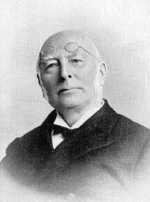
A. M. HAYWARD |
While this paper refers particularly to legislation in New Zealand,
most industrialized jurisdictions now impose similar conditions
in one way or another. Therefore the Scriptural principles
that are brought out are of universal application.
Biography: Brief Sketches: A. M. Hayward |
|---|
The new Industrial Legislation Acts of 1936 make it impossible for anyone employed in the trades or businesses covered by the Acts to find employment without belonging to a Trade Union.
- Every believer who is intelligent in what is due to God and man would desire to obey the "powers that be", and, indeed, we are enjoined so to do, in the epistle to the Romans 13: 1, where we are told to
- "be subject unto the higher powers. For there is no power but of God; the powers that be are ordained of God".
- It would be painful for a believer to take any other course than this and to do so usually involves suffering.
- We are informed, however, that "no prophecy of the Scripture is of any private interpretation" – 2 Peter 1: 20 – which we understand to mean, that
- to get the true bearing of one passage we must have all others in mind which deal with the same subject.
- With this in view we can take account of Peter's reply in Acts 4: 19, where he says to the authorities "whether it be right in the sight of God to hearken unto you more than unto God, judge ye",
- and again in Chapter 5: 29, he makes the definite statement, "we ought to obey God rather than men".
Scripture cannot contradict itself, and by putting these two scriptures together it becomes quite plain that in Romans refers to normal conditions in which the authority is not opposed to any commandment of God.
- One is thankful to say that the "powers that be" do not generally interfere with a man's conscience in relation to God, but at times they may do so, as in the chapters referred to, which results in putting the believer in Christ in a dilemma.
- Such cases are well known in Scripture, those with which we are perhaps specially well acquainted being seen, for instance, in Esther 3: 1-2, where Mordecai did not bow down to Haman though it was the King's
commandment.
- In his refusal to do this he risked not only his own life but that of all the Jews; nevertheless the God in whom he trusted delivered him.
- Another well-known Scripture is that in Daniel 3: 16-18, where Shadrach, Meshach and Abed-Nego refused to bow to Nebuchadnezzar's image, and were cast into the fiery furnace.
We gather from the above that normally we are to obey the "powers that be"; but if any Divine obligation be infringed by such obedience,
- those who love the Lord and have faith in their God are prepared to suffer if need be; and to "obey God rather than man".
As believers in Christ we are called to the fellowship of God's Son, Jesus Christ our Lord – 1 Cor. 1: 9 – and we are told
in the same verse that
- the God who has called us to this fellowship is "faithful"; we can thus rely on God Himself if we will stand true to the fellowship He has instituted.
This epistle to the Corinthians, is written to all the saints of God
in every place, as setting out what the Lord commands, and it says in
chapter 14: 37,
- "if any one think himself to be a prophet, or spiritual, let him acknowledge that the things I write unto you are the commandments of the Lord".
- Here again we are not to limit the Scripture to any private interpretation and therefore we would have to consider other Scriptures, as helping believers as set together seeking to do the will of God.
- Thus 2 Cor. 6: 14, states: "be ye not unequally yoked together with unbelievers", and again,
- 2 Tim. 2: 19 says: "Let every one that nameth the name of Christ depart from iniquity".
Scripture speaks of only one Fellowship for the people of God, every other being classed under "iniquity" or "unequal yoke", and indeed
- it is unthinkable that as belonging to the fellowship of God's Son Jesus Christ our Lord, we should also belong to some man-made
fellowship.
- As it says in 1 Cor. 10: 21-22, "Ye cannot drink the cup of the Lord and the cup of devils; Ye cannot be partakers of the Lord's table and the table of devils. Do we provoke the Lord to jealousy? Are we stronger than He?".
- It may he rightly said that Trade Unions are not the table of devils, but what Paul is showing is that nothing outside of what is of God can be associated with the fellowship of his Son.
It is incontrovertible that a Trade Union is a fellowship.
- It is a bond which has no pretence to be confined to believers in or lovers of Christ; it has its own emoluments, and the object of the bond is to extend the advantages of the class represented by the Union.
- Every person belonging to such a union is a member, which means that he is a party, willingly or unwillingly, to everything that union does.
- If there is a strike, which the writer does not hesitate to say is a lawless act, however much provoked, every member is a party to it, and can no more free himself of it than could poor Pilate free himself of the guilt
of crucifying Christ by washing his hands.
- Similarly, a union exists to enforce the rights or alleged rights of the party it represents, and this again is utterly contrary to the Cross of Christ which teaches us to suffer rather than to contend for our rights and to cast ourselves upon the Lord, who,
- when He was refused His rights as King and even His right to live "committed Himself to him that judgeth righteously" and died – 1 Peter 2: 23.
In the Christian fellowship, as guided by 1 Corinthians, man's wisdom is to have no place, ch. 1,
- the Spirit is to govern, ch. 2,
- we are to be holy as God's temple, ch. 3,
- we are to be prepared to be for Christ's sake, ch. 4,
- to deal with evil, ch. 5, and so forth.
- How can one carry these things out in a trade union, or how can one purport to carry them out among our fellow believers,
- when at the same time one is a member of a fellowship in which the contrary, we may say, is done, or exists?
In 2 Corinthians 6: 14, we have the direct injunction not to be "unequally yoked together with unbelievers: for what fellowship hath righteousness with unrighteousness? and what communion hath light with darkness?"
- God knew well enough that this injunction would cause suffering, and many a believer has had to experience, in carrying out this scripture, the
heartless character of the world, which comes to light when any person
does not go its way;
- but, on the other hand, there also comes to light the blessedness of what God can be to them.
- That He knew well what such at injunction would result in is indicated in verses 17 and 18, where He says,
- "Come out from among them, and be ye separate saith the Lord, and touch not the unclean thing; and I will receive you, and be a Father unto you and ye shall be My sons and daughters saith the Lord Almighty".
- We would ask any lover of Christ, what does this mean, other than what it says? i.e., that there is to be no yoke with unbelievers;
- and that God, knowing the suffering this might entail, undertakes to care for all such as obey the command, taking them under His wing as His sons and daughters.
- If we look at the wind and the waves as Peter did, we shall sink. To begin with how it affects my children, my wife or myself, can only divert the mind from a true judgment.
- To view the matter from the standpoint of how it affects God is the only way to a right judgment, and then we have the exceedingly consoling promise that God will undertake for us.
One is not putting upon the consciences of others a position one has not had to face – in different degrees – more than once in a lifetime,
- but to fail to put the gravity of the position upon the consciences of others would render one unfaithful to the Lord and to one's brethren.
This is not a question such as that of eating meat or not eating meat – Rom. 14 – where no principle is involved, nor is it a
matter of eating meat offered to an idol – 1 Cor. 8 –
where again no principle is involved –
- for there it is not a question of the eater offering to an idol, for all in that time was habitually offered to idols, much as what we buy is necessarily all connected in some way with the system of sin which dominates the world – but it is a question of associating with unbelievers.
- Entering into a bond with them involves the fellowship to which we are called by God and is contrary to the principle of separation.
- We are to depart from iniquity, which we cannot deny exists in worldly associations, and we are not to touch the unclean thing, which again we cannot deny is to be found in these associations;
- and then there is the unequal yoke we are forbidden, whereas in joining any such associations we are yoked with, it may be, thousands of unbelievers.
- This, beloved brethren, is contrary to the commandment of God.
That the law practically pushes one into the position of either having to join a Trade Union or to lose one's employment, in no way lessens the demand of Divine holiness.
- Whether it is voluntary or involuntary does not come into the question. The right path is clear and the support of the Lord Almighty is promised us.
- Many of us have never really faced this question of associations and their effects upon the fellowship, and one believes this test is to raise this very point so that
- we might be liberated into a sphere of spiritual plenty which as yet we have scarcely touched.
One would say to the beloved of the Lord,
- Are we to lose the walking and dwelling of God amongst us for such amenities as are offered by a Trade Union?
- Some say that this is a matter for each individual to decide, and so it is, but for each to decide according to the command of the Lord.
- If we look at the threatened results we shall sink, but if we look in faith to the Lord – and He is the Almighty – He will stretch out His hand and save us.
One is solemnly convinced before God that if the joining of Trade Unions is to be accepted amongst us in a general way,
- the spiritual impetus of which we have been made blessedly conscious in these last few years will be greatly halted, if not lost,
- and that the Spirit will withdraw Himself, as did the glory from the Temple in Ezekiel 9: 3; 10: 4, 18-19, and finally ch. 11: 23.
- The glory is the evidence of the presence of God with us, and without this any company of saints becomes a dead ceremonial system.
Revelation 13: 16-18 shows that the time will come when the beast will insist on his mark being upon every one who wishes to buy or sell,
- and it cannot be denied that the putting of a stamp upon classes of workers, without which stamp they are not to be employed, is of this character.
- Yet the Jews in that day, who will not even have the Spirit of God, will find under the hand of their God a way of salvation, and how much more shall we who have the Spirit of the living God dwelling in us?
Again, these varied associations are all of the character of bundles of tares – Matthew 13 – which are gathered together to be
burned.
- It is worthy of note that these are gathered first, before the
wheat is gathered into the garner.
- It is one indication, therefore, of the nearness of the end, and are we to be found at the Lord's coming in bundles set aside for destruction?
As the new Industrial Legislation stands at present the onus is on the employer, but this does not help the employee, as obviously he will be told he must either join a Union or lose his employment.
- One trusts that one's brethren who are employers will fear to step between a man's soul and his God and will wait in quietness upon God to find a way through for him.
- If he is summoned it does but give him an opportunity to confess his faith and to put before the authorities that, whilst he has every desire to obey them and holds them in respect as appointed by God,
- yet he is unable to take this step of discharging an employee, who for conscience sake cannot join a Union, as such action would make him a persecutor.
- We do not believe that the authorities desire to persecute for conscience sake, but it is upon God Himself that we must rely.
Some have questioned as to whether, as believers in the Lord, we can pay fees to the Unions whilst refusing membership,
- or to the Government if called upon so to do as a term upon which we are allowed to work.
- This, one would gather, is settled by the Lord's words, "Render therefore unto Caesar the things which are Caesar's", Matthew 23: 21.
- The Government can command our money either direct or through authorised channels, such as the Trade Unions, and it has the right to use it in any manner it sees fit.
- To attempt to dictate to them as to what they do with such moneys is to
seek to rule, to which we are not called and such action could not have
the Lord's support.
- Subsequent inquiry clarified that the payment of fees used to support unions would involve fellowship. Brethren affected therefore offered to pay equal, or double, amounts directly to the government or to an acceptable non-sectarian charity.
|
May the Lord strengthen faith and greatly help us in this matter,
giving us increasingly to love righteousness and to hate lawlessness.
- If we hate lawlessness we will not touch an association which is contrary to God even though an attempt be made to force us into it; to obey
man rather than God would be a reversal of Acts 5: 29.
What any individual does he must do in faith. It is a magnificent
record, in Hebrews 11: 33-38, of those
- "who through faith subdued kingdoms, wrought righteousness, obtained promise, stopped the mouths of lions … they were stoned they were sawn
asunder, they were tempted were slain with the sword; they wandered
about in sheepskins and goatskins; being destitute, afflicted, tormented;
(of whom the world was not worthy)".
- May we aspire to be worthy of association with such a company.
A.M.H. – July 21, 1936
Page Top Article Top
| A LETTER: J. TAYLOR |
|---|
Letters of James Taylor, 2: 46-47,
Brisbane, Sept. 25, 1936
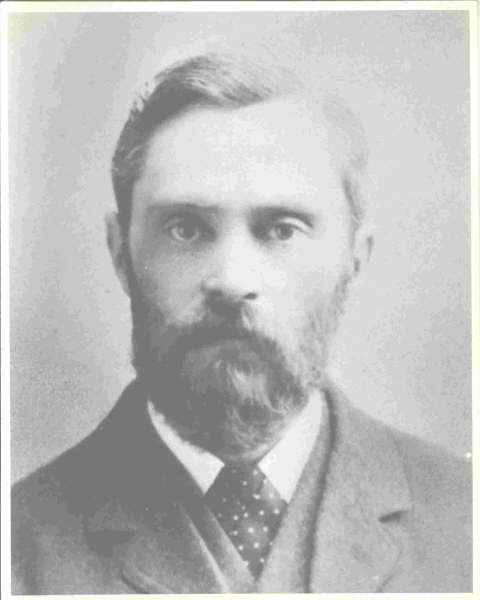
Biography: J. Taylor
|
|---|

My Dear Brother,
Your letters have just come to hand and I am quite concerned by their contents –
- that the view that "we cannot join up" to a trade union is "not generally accepted".
I have seen Mr. Hayward's paper and go with it fully.
- The contrary view you speak of implies a surrender of the truth governing the matter.
- In the challenge to faithfulness we see but the finger – the
body of which, the Jewish remnant and those who follow us in the testimony, will have to endure. The book of Revelation makes this plain.
Those of us who by circumstances are immune feel with our brethren who are obliged to suffer,
- but the latter must accept the principle of one dying for the people – the former will have their balancing share of suffering in other ways.
- To use a figure, those obliged to suffer are like young men compelled to go to the front in time of war; it is their lot, and "when will their glory fade" will be sung of them.
- They have a corruptible crown, but we, who suffer for the truth, an incorruptible one.
- Such as suffer in the present tribulation – they are all limited – are in principle holding the ground of the truth for us all and will surely obtain a recompensing crown.
The principle of trade unionism will be in full force under the beast and the faithful will suffer for refusing it and will be honoured of God because of this, although disregarding "the powers that be".
- Is it not to our great discredit, as enlightened by the truth of Hebrews, etc. – the provisions made for us in suffering – to take lower ground than those who follow us in the testimony of God?
- However few and feeble the saints in New Zealand who take sides with God are, they furnish "a testimony to them" and the ground of faith is held. God will honour them.
With love in Christ, I am, Yours affectionately in Him,
James Taylor.
P.S. I believe that a brother, when required to join a trade union,
should explain his reason as before God for not doing so, quoting
Scripture.
- It is not unlikely that if this were courageously done by all with respect and humility, those in authority would take notice of it, and under God a change might come about.
- Every true Christian sympathises with the working man and wishes him to obtain a fair recompense for his labour,
- but trade unionism in principle requires that he should join it whatever his conscience, or else starve, or perhaps die by violence by its hand.
- Does the Government of New Zealand really understand that it is legalising the anti-Christian principle?
J.T.
Page Top Article Top
THE CHRISTIAN'S ATTITUDE TO TRADE
UNIONS AND TRADE ASSOCIATIONS
G. R. COWELL |
|---|
'The Way Everlasting', pages 170-172, published 1958
Biography: G. R. Cowell
|
|---|
Dear —
 With reference to the recent Federation Circular Letter which reached me through you, calling upon me for the annual subscription,
- I feel it is due to you and others to state the reason why I am unable to become a member of the Federation.
I would say at once that it is not through any lack of respect
either for my colleagues of the —, than whom, I am convinced, there is no more loyal and conscientious body of men in the country, especially having regard to the conditions under which they work;
- or for the officials of the Federation, for whom, on the contrary, in so far as they are known to me, I have the highest esteem.
- It is entirely because I conceive membership to be incompatible with Christian principles and outlook in two respects.
Firstly, a Christian is called to the fellowship of God's Son, Jesus
Christ our Lord, and is a member of the Body of Christ.
- If he is to be true to these Christian obligations, which involve loyalty to the Lord Jesus Christ, and His commandments and teachings, he cannot become a member,
- and thus share responsibility for every corporate act, of an
association which has not been founded with any intention of being guided by Christ and His teaching.
- No one could contend that any association of employers or employed has been founded with that object.
- In fact this general trend runs counter to Scriptural teaching as to the proper relations between employers and employed.
- Trade associations and unions claim rights (so called); but Scripture enjoins duties upon both masters and servants.
- Therefore, as a Christian, I have no option but to stand apart. This is the personal aspect.
Secondly, my duty to my fellow men necessitates the same action.
- I am convinced that the grouping of men into organized bodies,
governed by no ethical standards, but only self-interest,
- however well-intentioned the founders may be, and however beneficial the short-term results may appear – and even these I believe to be illusory –
- is forging an instrument that will be readily available in the hands of unscrupulous men, energized by Satan, to enforce an ideological tyranny worse than anything the world has yet seen.
- Fascism, Naziism and Communism are foreshadowings of it but worse is to come.
- Christianity is the only bulwark against it and the apostasy from Christ
– foretold in Scripture – is now almost complete.
- Once the restraining power of Christianity is removed the world's darkest hour will rapidly approach.
- The Gentile nations as well as the Jews who have already suffered so long through the rejection of Christ will learn by bitter experience the truth of Peter's words,
- "And salvation is in none other, for neither is there another name under heaven which is given among men by which we must be saved", Acts 4: 12.
- Christ is the only true Leader and Saviour. Happy the man who acknowledges it now!
Even the immediate implications of the "closed-shop" principle hidden though they appear to be from its advocates are appalling from the standpoint of the trade unionist himself.
- His livelihood is no longer to depend on good workmanship and normal relations with his employer but on the favour of his shop stewards and trade-union leaders; for expulsion from the union will mean the termination of his job.
- In some countries this already means that he must subscribe to
unprincipled and anti-Christian ideologies and political theories.
In the light of the above I should be guilty of moral cowardice if
I took the path of least resistance in this matter.
- It surely behoves all who see the danger ahead to make a stand now. Those who do so, in my view, render a service to mankind.
Yours sincerely, G. R. Cowell.
Page Top Article Top
DEPARTING FROM INIQUITY
OR INCONSISTENCY
G. R. COWELL |
|---|
| 2 Timothy 2 |
|---|
It is evident that there are many Christians walking outwardly in the path of separation to the Lord, who have never really judged as iniquity that from which they are apart.
- Spiritual food, the attractiveness of the Lord Jesus and the desire to be where His presence is truly known, are positive things that draw souls into the path; and no doubt all would desire to be faithful in it.
- It is, however, to be feared that many, if they challenged themselves, would discover that separation, in their minds, has been a matter of leaving inconsistency rather than iniquity.
Now inconsistency in itself would be no ground for separation. Otherwise Christian fellowship would become an impossibility,
- for where, alas, is the Christian who could claim complete consistency with the truth he holds?
- If anyone is looking for perfection in this regard he is sure to be disappointed, but God's great issue with Christendom is the allowance of iniquity.
- Love may forbear inconsistencies, but it can never tolerate evil, and unless, in some measure, we have learned to judge things with God, we shall fail to stand in a crisis.
The most serious crises, of course, are those which arise in the course of the Testimony of our Lord, but in our private lives minor crises occur,
- such as the wedding or burial of a relative who has been linked with worldly religious associations,
- and sometimes a major crisis may arise, such as being placed in a town far from a meeting.
- We live in a day of compromise, and at such times the temptation to compromise is strong,
- but there can be no greater mistake than to suppose that we shall help ourselves or our fellows by compromising with iniquity.
Iniquity in this sense is lawlessness in the things of God. If lawlessness in a man's private affairs will bring the man into judgment,
- how much more serious is lawlessness in the holy things of God.
- That men, ignoring God's revealed mind, should presume to bring into His house their own ideas as to the ordering of its service and government, is an outrage and an affront to God.
- Not only, therefore, is the doctrine of a clergy and laity iniquitous,
- but so also are the doctrines which assert the independence of local assemblies and the "right" of Christians, who continue in unclean associations, to partake of the Lord's supper.
- So also is every sectarian doctrine and human innovation.
"Withdraw from iniquity" is a strong expression. The word 'withdraw' in the original, has a meaning, the force of which does not suppose any return whatsoever.
- If what is left is judged as iniquity how could a soul return?
- God looks to His people, as naming the name of the Lord, to judge in this definite way that from which they have withdrawn;
- for it is said of Babylon, where iniquity is full-blown, "God has judged your judgment upon her", Revelation 18: 20.
Satan is ceaseless in his efforts to weaken the judgment of the saints in this matter, but this scripture in 2 Timothy 2 meets his specious arguments.
- In an endeavour to justify human systems, men will urge the fact that the Lord sees to it that His own in them do get food, however little, to keep them spiritually alive; and also that the Lord uses them.
- Such an idea is met by the word, "If we are unfaithful, he abides faithful, for he cannot deny himself", 2 Timothy 2: 13.
- No evil will prevent the Lord Jesus from caring for His own, and He knows those that are His; nor will He be restrained from using them in blessing to others.
- The fact, however, that He abides faithful is no warrant for our remaining unfaithful.
- On the contrary, the unwearied faithfulness of His love should fill our hearts with the desire to he wholly faithful to Him and true to His Name.
A second form of attack is the plea that one who is sufficiently enlightened to judge of the iniquity,
- is the very one who should remain in the system in order to help the Christians in it, and to heal the evil condition.
- The answer to this is, "their word will spread as a gangrene", verse 17.
- Human thoughts and innovations appeal to the natural mind and infect all who remain in contact with them.
- No physician attempts to heal gangrene. He calls in the surgeon to cut off the affected limb.
- So the way of obedience, and the only way of safety, is for each to cut himself off from the gangrenous condition and to "touch not the unclean thing". Then he will be in a position truly to help others.
Thirdly, the enemy would suggest that, in separating, one's activities will be hampered and circumscribed. Scripture asserts the very opposite. The word is,
- "If therefore one shall have purified himself from these" i.e., vessels to dishonour "in separating himself from them, he shall be a vessel to honour, sanctified, serviceable to the Master, prepared for every good work", verse 21.
- Such a one is not a departmentalist, but is available to the Master as prepared for service in every direction – Godward, saint-ward and man-ward,
- whereas the serviceability of a soul in unclean associations is necessarily very limited.
- Wherever iniquity is, the service Godward is greatly impaired and, in its true assembly character, ceases; while the service man-ward falls far below the level of the gospel of the glory of the blessed God, with which Paul was entrusted.
- As departing from iniquity the believer, even in these last days, can know the joy of being available to the Lord Jesus in that which is nearest to His heart – the praise and worship of God in the assembly;
- and can only thus be really true to the gospel, for the basic principles of the gospel – righteousness, faith, love, peace – can only be followed as in separation to the Lord.
The only standard a true lover of Christ can accept is the maintenance of every divine thought and every divine principle in integrity.
- Nothing less will keep us in the company of those who call on the Lord out of a pure heart, in company with Paul who to the end surrendered nothing.
- In his ministry divine thoughts and principles are presented at their full height without human admixture. To give up one principle is to turn away from Paul.
- "All in Asia", he says, "have turned away from me". His ministry always has been, and still is, the great test of wholehearted obedience and faithfulness;
- and for those who receive it, it becomes the means whereby they can test all that professes the Lord's Name on earth.
While a true believer will not hesitate to withdraw from iniquity, he will have uninterrupted pain as a necessary accompaniment;
- the separation from those who may at heart be true believers, though linked with vessels to dishonour, will produce this,
- yet with it, the readiness to hold oneself towards such in the meekness and gentleness of Christ:
- "And a bondman of the Lord ought not to contend but be gentle towards all", verse 24.
We need ever to remember that if Satan fails to induce us to compromise,
- he will endeavour to mar the testimony by an attack upon our spirits;
- so that while maintaining the truth in terms and position, we may misrepresent the Lord by showing a harsh, legal, or pharisaical attitude towards the persons from whom we have had to separate,
- and so Paul's final word to Timothy is: "The Lord Jesus Christ be with your spirit. Grace be with you".
Page Top Article Top
PRESENT EXERCISES – 1
G. R. COWELL
Extracts from a Letter, October 6, 1958
|
|---|
| – Trade Unions – Associations |
|---|
As regards the general question, we should surely be governed by the injunction to come out and be separated to the God who is dwelling among us and thus to walk here as Christ walked.
- A Christian is a member of Christ and he is virtually linking Christ with whatever he links himself with, for he should be in nothing that Christ would not happily be in Himself.
- It does not say that an ox and an ass can be put together so long as the ass behaves itself. They are not to be yoked together at all.
- Many have said that if their association did anything with which they did not agree they would come out of it at once. This is an admission that a yoke actually exists.
- Some say they are not responsible for what the council of their association may do because they do not vote and elect people for the council. Similar arguments were used thirty years ago in respect of the trades unions.
- Some held that it was quite justifiable for a brother to be a “card Member”, taking no active part in the affairs of the union. But the Scripture says
- “What consent of Christ with Beliar?”.
- In many matters men are quite content to get our “consent”, whether on a register of members or by a signature on a petition or in other ways. They may not ask for active help but they want passive consent. It is numbers that count and specially in representative bodies who seek power in negotiation or power to influence the Government.
- In fact, each of the phrases in 2 Corinthianns 6: 14-16 is important, covering every kind of association incompatible with the truth; the latter part of verse 15 covering even companionships,
- “or what part for a believer along with an unbeliever?”.
- The man of the 9th of John proved through the faithfulness of his testimony that there is no fellowship of light with darkness and, in result, he found his associations of life solely in the flock.
It confuses the issue to make a comparison with soldiers in the army and workmen jointly labouring under an employer.
- The relation of the master and slave, master and servant, officer and soldier are ordered in the government of God. In 1 Timothy 6: 1, Paul speaks of
- “as many bondmen as are under yoke”.
- That is a yoke which a believer is called upon to accept in the government of God and cannot be compared with the diverse yoke of 2 Corinthians 6. At the same time, in that epistle, Paul says,
- “Nor partake in other's sins”.
- This shows that the slave cannot obey his master where sin is involved, nor can a believing workman participate in the sins of an unbelieving workman.
- “For what participation is there between righteousness and lawlessness”, 2 Corinthians 6: 14.
In the light of 2 Corinthians 6 and relevant passages it seems to me it is the duty of brothers in professional associations individually and, as necessary together, to consider soberly before God what is involved in their membership, whether it is compatible with walking as Christ walked.
- It is not sectarian to move together in any action that may have to be taken, but scriptural, for we are told to follow righteousness etc. with those that call on the Lord out of a pure heart.
- I do not feel it is my duty to look into these things, or that I have capacity to judge of them all, and on the principle of confidence I would normally accept the sober judgement of godly men involved.
- During current exercises I have looked into none except the Pharmaceutical Society's Handbook, on account of Mr. W’s exercises. This is what I meant in my remarks to Mr. S. which you quote.
- As regards M.P.S, registered Pharmacists are made members, without any application or signature on their part, by a provision of the Act of 1933. It may be on this account that Mr. —, on the facts so far as he knew, spoke of membership as only nominal.
What is striking to me is that, in spite of all that has been said on the subject of M.P.S., brothers in the Society are not happy about it.
- You heard read in Mr. P.'s house a copy of a letter from Mr. C. of L. to the Society asking for help to be released from membership. His conscience appeared to be aroused by a clause in the 1953 Supplemental Charter.
- Mr. W. in this meeting says that he has been unhappy about his membership for 12 years. Mr. B. of A. who had the interview with Mr. Taylor on 16th May 1946 [Biography: J. Taylor: Memorabilia: Associations] [text missing] a considerable time. In fact, I know of one who resigned years ago.
- In Australia and New Zealand during the past ten years almost every Accountant in fellowship has resigned from the Association. I understand that they have felt their membership was incompatible with the appeal that was being made to the Government against compulsory membership of Trade Unions.
- This appeal, I believe, was based entirely on 2 Corinthians 6: 14 and I am told that, had the yoke with unbelievers in professional associations been maintained, the case against Trade Union membership would almost certainly have been lost.
To sum up as to the whole position, should there be this diversity of judgment amongst those who all possess the Holy Spirit and are all committed to regulate their lives relative to God and His dwelling place here?
- We are exhorted by the name of our Lord Jesus Christ to be perfectly united in the same mind and in the same opinion.
- Romans 14 has been quoted to try to justify divergence of judgment and action in these matters, but if that chapter applies it would mean that those who have given up these things for conscience sake are the weak brothers and those who remain in them are the strong. Can anyone really believe that?
Some, if not all of these bodies have obtained their “quasi-governmental” powers after long agitation.
- Had the question of Christian conscience before God been raised then, I do not think for a moment that the Government would have delegated their powers in such a manner as to make membership of any body of men compulsory.
You ask the question “Are we so much to blame?” I think we must each take the blame home to ourselves and not try to excuse ourselves, or adopt a policy of self-righteousness, by putting all the blame on those directly involved.
- The truth is, we are all involved. If a brother is in a diverse yoke he links Christ with it and he links me with it. In condoning this, the brethren are each and all involved.
- The question is how to extricate ourselves and, if we feel things rightly, we shall be very sympathetic with, and do all we can to help those who are directly involved.
- It is a question of the whole assembly bringing the burnt-offering and the sin-offering of inadvertence, as well as the individual concerned, according to Numbers 15: 22-29.
- It is wonderful that the burnt-offering comes first in that passage with its oblation and drink-offering, showing that our acceptance and God's attitude towards us is unchanged in spite of our slowness to apprehend the light.
- All through the revival, as light has come in, such sin-offerings of inadvertence have been necessary.
Page Top Article Top
PRESENT EXERCISES – 2
G. R. COWELL, October 26,1960 |
|---|
| – Eating – Alcohol |
|---|
The Lord loves the assembly and desires to have her wholly for Himself as a chaste virgin. Recovery to first love is in His mind.
- “If ye love me keep my commandments”.
- The Lord is seeking true assembly response; and it can only be secured where there is single-eyed devotedness to Himself. This will manifest itself in practical separation from the world. There will be a living testimony to the fact that
- “they are not of the world as I am not of the world”.
The Lord is active in the jealousy of His love at the present time :to secure these results.
- None can withstand these operations, for He intends to have us for Himself. This involves purification – cleansing – within and without. Titus 2 :14; 2 Corinthians 7: 1.
Our only standard is to walk as He walked. 1 John 2: 6. He is therefore calling us out of associations and challenging our whole mode of life.
In these matters, the divine standard of separation, as set out in scripture, must not be lowered;
- and, at the same time, God must be rightly represented in all our actions.
- The objective in ministry is to make the principles clear, and to reach the consciences and hearts of the saints in such a manner that each one shall act on the principles in his own faith before God.
- The Lord's commandments are imperative. They include following after love as set out in 1 Corinthians 13. Indeed, love is said to be the whole law. Romas 13: 10. They thus include the new commandment,
- “Love one another as I have loved you”.
- Separation from the world and love for one another are, therefore, both imperative.
- “Hereby know we that we love the children of God, when we love God and keep his commandments”, 1 John 5: 2.
- We thus become examples as to separation ourselves, and all that we do will be done in love. 1 Corinthians 16: 14.
Paul's word, “Be my imitators even as I also am of Christ”, 1 Corinthians 11: 1, is a commandment of the Lord.
- Thus we are called upon to imitate him, not only in his personal separation to God, but also in the way he handled the Corinthians.
- In the second epistle he brought fulness of grace to bear upon them as a new covenant minister and a minister of reconciliation, truly representative of Christ and of God; and his actions, in their manner and timing, were those of a true priest.
- While he had in mind to avenge all disobedience when their obedience should have been fulfilled, he would deal with each case with priestly feeling, discernment and discrimination. This is essential at the present time.
EATING AND MIXING
As regards mixing and eating, the directions with regard to the man put away in 1 Corinhians 5: 11 are unambiguous.
- As regards eating with persons not in fellowship, we have to be governed by scripture.
- According to Luke 5: 30, their scribes and Pharisees murmured at His disciples saying “Why do ye eat and drink with tax-gatherers and sinners”?
- In Luke 10: 5-9, the Lord instructs the seventy as to eating while engaged in service. According to Acts 27: 35-36, Paul ate with those on the ship after giving thanks, although later – verse 42 – the soldiers wanted to kill him. A governing passage in the matter is,
- “Whether therefore ye eat, or drink, or whatever ye do, do all things to God’s glory. Give no occasion to stumbling, whether to Jews, or Greeks, or the assembly of God. Even as I also please all in all things; not seeking my own profit, but that of the many, that they may be saved”, 1 Corinthians 10: 31-33.
- The test is, is our eating and drinking to God's glory? If it is, it will give no occasion to stumbling, but rather have in view the salvation of the souls with whom we are in touch.
- If we eat to God's glory, we shall not use the occasion to fraternise, nor to indulge in social intercourse. He shall maintain the contact on our level and not on theirs.
In 1 Corinthians 10: 19-22, eating as expressive of fellowship is clearly distinguished from ordinary eating and drinking as set out in verses 25-33. The same distinction is maintained in chapter 11 verses 22 and 26.
- To put ordinary eating and drinking on the level of fellowship and thus make it a breach of fellowship for a brother or sister to eat with anyone who has never been in fellowship, is not in accord with scripture and is, therefore, erroneous
- J.T.’s remarks as to ordinary eating and drinking in Vol. 167: 12-15, 49-50, and in Vol. 174: 212-5, 219 set out the truth according to scripture, both in its general bearing and also as bearing upon teas at fellowship meetings.
ALCOHOLIC BEVERAGES
As regards the taking of alcoholic beverages, the teaching that total abstinence is a Christian duty is a heresy, according to 1 Timothy 4: 1-5.
- To teach, however, that every Christian should partake of such beverages and have them on his table to prove that he is in Christian liberty, is not in accord with the scriptures.
- A Christian has liberty to drink wine – but not to excess, 1 Timothy 3: 3 – and also he has liberty to drink water only, as did Timothy until directed by the apostle to use a little wine on account of his stomach and his frequent illnesses. 1 Timothy 5: 23.
- The general teaching of scripture affords ample instructions in this matter.
In Letters Vol. 1: 119, J.T. says, “one feels the safe course and the course in which the Lord is best served, is to go on himself with what is right, and seek to enlighten all with the truth according to one's apprehension of it, and let God work. Otherwise there will be a tendency to set up a rule 'what brethren hold' calculated to govern the saints in a given connection which is sure to be narrower than the truth, and which will tend to sectarianism and bondage”.
- This advice is of much value in all practical matters.
The Lord is sitting as a refiner and purifier of silver with a view to the pure oblation and the oblation in righteousness being offered to God's name. Malachi 1: 11; 3: 3.
- This can be offered only by those who are in the freedom in which Christ has set us free. Galatians 5: 1; Malachi 3: 17 – last phrase.
- The enemy would seek to nullify the Lord's operations by introducing an imitation legal separation.
- These were his tactics during the closing period of the previous dispensation; the full results being seen in the Pharisees – separated ones – when Christ was here.
- In contrast, there was the truly separate remnant, as depicted in the beginning of Luke.
May we “stand fast, therefore, and not be held again in a yoke of bondage”, Galatians 5: 1 – last clause.
Page Top Article Top
| • • • Scriptures • • • |
|---|
|
Be not diversely yoked with unbelievers; for what participation is there between righteousness and lawlessness? or what fellowship of light with darkness? and what consent of Christ with Beliar, or what part for a believer along with an unbeliever? and what agreement of God's temple with idols? for ye are the living God's temple; according as God has said, I will dwell among them, and walk among them; and I will be their God, and they shall be to Me a people.
Wherefore come out from the midst of them, and be separated, saith the Lord, and touch not what is unclean, and I will receive you; and I will be to you for a Father, and ye shall be to Me for sons and daughters, saith the Lord Almighty.
Having therefore these promises, beloved, let us purify ourselves from every pollution of flesh and spirit, perfecting holiness in God's fear
2 Corinthians 6: 14 to 7: 1.
Yet the firm foundation of God stands, having this seal, The Lord knows those that are his; and, Let every one who names the name of the Lord withdraw from iniquity.
But in a great house there are not only gold and silver vessels, but also wooden and earthen; and some to honour, and some to dishonour. If therefore one shall have purified himself from these, in separating himself from them, he shall be a vessel to honour, sanctified, serviceable to the Master, prepared for every good work.
But youthful lusts flee, and pursue righteousness, faith, love, peace, with those that call upon the Lord out of a pure heart. 2 Timothy 2: 19-22.
From the J. N. Darby translation.
|
Return to the Introduction. |
Page Top Scriptures Top
 At the present time there is a widespread and increasing desire for associations of various kinds. Every thoughtful mind must be impressed with this fact.