Menu•SiteMap |
Guests
My Answer: No. 3
PLEASE NOTE: For the security of our readers, all @ signs have been changed to 'AT' in order to prevent unsolicited email. If you wish to contact any of our guests please remember to replace the @ sign in the address line of your email.
| BIBLE READINGS: WHAT HAPPENED? |
|---|
Murray Linton, Thu, 22 Mar, 2001 expressed his appreciation
of the bible readings when he lived in Edinburgh for two years.
He asks, "But what has happened to the bible reading now?"
|
From: Phil Gasston
rgasstonATihug.co.nz
Kerikeri, Bay of Islands, Zealand
Fri, 27 Apr 2001
To: Murray Linton
Dear brother,
I was encouraged and very interested to read your remarks regarding bible readings and to note your request for comments on this subject.
We live in the very north of the North Island of New Zealand, relatively
remote from the general "brethren" groups of the world.
- There has been much sorrow in this part of the world, largely due to there having been large exclusive brethren numbers which grew out of the colonial connection with Britain in the middle of the 1800's and the relative ease with which brethren were able to travel to NZ in those days.
- Some good men made the journey and with the evangelical gifting that they had the movement grew.
- Our distance from the source of most of the troubles meant that we were
affected only by the later exclusive troubles rather than having divisions
and break-offs all the way through the early 1900's.
I was connected, after becoming converted, with a small group of brethren who had largely come out of the exclusives and there were mostly a maximum of 10 to 15 believers in any of the meetings.
- One of the things that I enjoyed the most was the bible readings.
- No minister or priest, just a general inquiry into a particular chapter of the Word of God in which any brother could contribute of inquire.
- What I didn't appreciate was that very few groups of believers had such meetings thus the truth was not worked out, wrestled with, tossed about, chewed over, in the way I was used to in the bible readings.
- In fact most believers didn't have like occasions because they always ended up as one man's opinion or a platform from which to promote one's ideas.
Then we moved away from the meeting, settling in the north. This is
when we really started to miss the bible readings as did our children (aged
up to twelve).
- We met a lovely Christian couple with whom we began to meet to
discuss the scriptures with a special focus on increasing our appreciation
of the risen Jesus.
- This has now turned into a movement of the Holy Spirit in the town and we often have 15 to 20 along who are keen to know more of Christ
- and who often remark that they have never known anything in their Christian lives like our Tuesday night bible reading.
Here are some basic principles that must govern us in our coming together around Gods Word.
- A spirit of inquiry must govern us … "if we think we know anything, we know nothing …". Too often we come together with preconcieved ideas about what we should speak about and this always comes to nought.
- An understanding of the Head, from whom flows all the wisdom of God to
us as gathered, so as to subject us to Himself as we are together, for
Christ will be in our midst "… where two or three are gathered together in my name there am I in the midst of them …".
- An understanding of the presence of the Holy Spirit. This is what
illuminates our understandings as together. That a person of the Godhead is
present with us ought to set our spirits free for God to work. This would:
- cause us to be subject to Him and to one another. It is wonderful to see God working through a brother in the reading who appreciates the principle of being available to allow Him to work. Sometimes the simplest question opens the way for the subject matter of the whole reading.
- Christ has to be the desire of the heart. A thirst for Him. A desire to
know more of Him in a living way. Too often we get caught up with what one
brother here calls the "Hyerpercotles and Diacoletins" of the scriptures!
- We concern ourselves with majoring on the historical details, and whilst these are important we sometimes tend to leave the Lord Jesus out and exchange Him, so to speak, with the mind of the flesh, which is sin and
death. "…Christ in all the scriptures …"
We also have a bible reading on the Lord's Day. What a blessing this is.
- After the Lord's supper impressions of Himself, fresh from the service of God come out through His people and we are refreshed in Him.
The apostle Paul's instruction regarding when we come together needs to
be the base line of our gatherings.
- Temple light comes by way of temple inquiry and the appreciation that things are worked out in the light of the whole Church of God.
- If we but realized that the confession of Christ as the Son of the living God, is the foundation upon which the Lord has been building His assembly and that we are able to gather together in the light of this amazing fact,
- wouldn't it raise the whole level of the bible reading in spiritual importance in our affections.
I trust these scattered thoughts make some sense.
Yours in Jesus, Phil Gasston.
Page Top Article Top
Tue, 29 May 2001
Dear Murray,
Your question as to the timing of the actual breaking bread, whether
"near the beginning of the meeting" or "toward the end of the meeting" is an important one.
- You are correct as to general practice. Most 'open' and 'exclusive' meetings have the breaking of bread at or near the end of
the meeting.
This was my experience as a young believer in the 'open' – formerly 'Grant exclusive' – meeting where I first broke bread.
- The early part of the meeting consisted of hymns and thanksgiving for the forgiveness of sins and the sufferings of our Lord. Scriptures such as Isaiah 53 were often read.
- It all gave me the distinct impression that I should be filled with sorrow – and even weep.
- This seems to be, what you call, 'building up to' – that is to a suitable state to partake.
- The reading of one of the gospel accounts of the last supper or 1 Cor. 11, signalled that it was time to break bread.
- Thanksgiving for the loaf and cup was usually to the Father, not to the Lord Jesus, some even thanking Him – the Father – for dying on the cross.
- The loaf was broken and passed on 3 plates, and 3 cups were filled from a jug and passed.
- – This raises several questions which must be left for the present.
- After the collection there was usually a short word of exhortation, then the announcements and a closing prayer, and we would go home.
In my search of other meetings in my early years – and in later
wanderings – I found substantially the same practice in both 'open'
and 'exclusive' meetings.
- To my knowledge, only brethren who have profited from the ministry of FER and JT, and others linked with them, break bread "near the beginning" – preceded only by announcements and a hymn.
- – I recall hearing that the 'Needed Truth' group break bread near the beginning but I cannot confirm or deny.
You ask "are we merely following well-established traditions?" This
may well be so regardless of which practice is followed.
- Sadly, many believers – of whatever connection – simply follow what has been done before or accepted by their leaders without personal exercise, confirmation or commitment.
- Because a practice is ancient it is assumed that it must be right. Because words are used that appear in the Bible it is assumed that it must be Scriptural.
- All this is deplorably and depressingly so, even among those who have a tradition of sound Scripture teaching.
Having the breaking of bread "toward the end of the meeting" –
which, as far as is known, our 'early' brethren also did – may have been simply a continuation of the practice in the public church of the day.
- As far as I know, both then and now, 'communion' is usually at the end of a special service, or added at the end of some other meeting.
You also ask "are there any scripture verses which would help us see
one practice preferred to the other?"
- Our Lord said, "But when he is come, the Spirit of truth, he shall guide you into all the truth", John 16: 13.
- Thus as the Scriptures are searched – the mind divested of
preconceived opinions – in dependence on the Spirit we should find indications of how to proceed in any matter.
The Lord appeared to His own in John 20 on three successive first days
of the week.
- At Emmaus on the resurrection first day of the week "he was
made known to them in the breaking of bread" – not the Lord's Supper – and then appeared to those gathered in Jerusalem.
- In Acts 20 Paul and his company waited seven days in Troas till, as Luke says "the first day of the week, we being assembled to break bread".
- All these occasions are precedents for assembling on the Lord's Day – for the breaking of bread and, hopefully, some manifestation of the Lord.
- That Paul gave a long discourse first at Troas seems to be special in view of his imminent departure and not a precedent for a long sermon before the breaking of bread.
Paul evidently had the breaking of bread in mind as the main purpose
for gathering which was being misused.
- Coming "together in assembly" i.e. characteristically – 1 Cor. 11: 18 – seems to indicates a special occasion of the Lord's Supper, possibly in smaller companies, in contrast to "the whole assembly come together" for ministry – 1 Cor. 14: 23.
Indications as to the timing will be found in the very nature and
purpose of the Lord's Supper.
Paul says, "For as often as ye shall eat this bread, and drink the cup,
ye announce the Lord's death, until he come", 1 Corinthians 11: 26.
- It may seem unnecessary to emphasize "the Lord's death" but it is the key to the whole matter. "For in that he has died, he has died to sin once for all; but in that he lives, he lives to God", Romans 6: 10.
- The bread and cup – the body and blood separate – represent a dead Christ and, as JND well said, 'There is no such Christ now'.
- The 'remembrance' [or, memorial] is surely not only that He died – as the world remembers or memorializes their dead heroes – but as "the living One", Luke 24: 5, who "lives to God".
- In the assembly He sings God's praises – Heb 2: 12 – He appears before the face of God for us – Heb. 9: 24.
If we build up to the Supper and end with His death we ignore His
present position and are like the disciples who "entered into the tomb"
and then "went away again to their own home", John 20: 8-10.
If we understand that His death is the moral end of this world before
God, then we must go on to His resurrection and ascension.
- Thus the Lord's Supper is not where we end – i.e. with His death and perhaps some acknowledgement that He has risen – but where we begin with Him as He is now.
- His precious life and His sufferings and death will never be
forgotten. But all that He has accomplished for God will surely be the
basis not only of the world to come but of eternity itself.
While we marvel at His holy life and His sufferings, we have no link
with Him except as He is out of death.
- "Except the grain of wheat falling into the ground die, it abides alone; but if it die, it bears much fruit", John 12: 24.
- All our relations with Him – as His brethren, His bride, and with Him in sonship before the Father – flow out of His death and His resurrection and ascension.
- Our access through Him by one Spirit to the Father – Eph. 2: 18 – results from His death.
When I first came among the brethren I was convinced of the rightness
of breaking bread early before I had any idea of the Scriptural basis.
- What I was introduced to at that time was the result of the ministry and experience of some 60 years or so. It can be appreciated quickly in simplicity of heart.
- However, I am very doubtful that those who have been accustomed to break bread near the end will easily appreciate or understand it by merely comparing one practice with the other.
- This is especially so as many are used to demanding 'chapter and verse', although they could hardly supply that for breaking bread near the end.
If we accept the OT order as an analogy, the altar – representing
the Lord's death – is the first step in approach to God, not the last.
Peter spoke of "the sufferings which [belonged] to Christ, and the
glories after these", 1 Peter 1: 11, compare Luke 24: 26.
- This indicates that occupation with Him and His sufferings in the Supper would be followed by occupation with Him in His many and varied glories.
In regard to the service – worship – of God flowing out from the Supper, check the relevant portions of letters of Feb. 27, Mar. 8, 27, 1999 in the Mailbox for Esli Forrest.
The foregoing is not necessarily all to which reference could be made.
It is simply what has come to mind and I trust it will, in measure at
least, answer your questions and be of some help. Your comments would be
of interest.
Affectionately in our Lord Jesus, Gordon.
Page Top Article Top
| CHURCH A PERSECUTOR |
|---|
John Vedder draws attention to FER's prophetic
comments and wonders how such a state came about. |
|---|
From: John Vedder
Sat, 26 May 2001
Dear Gordon,
… Speaking of FER, I recently found a quote of his which I thought was striking in view of events decades after his death. Perhaps you are already familiar with it; if not, it is:
- F.E.R. No; and therefore what you may expect is this, that there is no single Christian body that, sooner or later, may not turn persecutor, only let the conditions be open for it. I would not trust a dissenting body
any more than the church, and I would not trust the church more than popery. (5: 353)
- In view of events subsequent to 1959 as detailed on your site and elsewhere, FER's observation is trenchant indeed.
- One might well asked why conditions were open for it, and who had prepared the way?
Affectionately in Christ Jesus, John.
To: John D Vedder
Tue, 05 Jun 2001
Dear John,
… Thanks too for the FER quote. I find I had marked it some years ago
but had not recalled it. His remarks are certainly prophetic.
Some have attempted to blame JTSr, but this seems unfair, unreasonable,
and an evasion of our own responsibility.
- It would then be acceptable to blame Paul for the public ruin of the church.
- One man however influential cannot ensure a spiritual state among the brethren and, in JT's day, there were many more than himself who served prominently.
- There is no doubt that because of JT's long period of service – just as with JND's – brethren became complacent and wrongly looked on him as a universal leader and expected a replacement.
- Gideon refused the rule for him and his sons, but Abimelech wanted it. So it has been in our days.
- The low state of the people was the root cause in both instances and we
have all suffered.
- The assumed saviour from encroaching worldliness became himself a scourge, and zealots flocked to his banner.
- Shame on us all for it led to the persecution of the righteous! And the end has not yet come.
Affectionately in our Lord Jesus, Gordon.
Page Top Article Top
From: Kyle Yoakum
Thu, 24 May 2001
Dear Gordon,
… Perhaps you can help me with an issue. When I was in the Local Church (Witness Lee) group (1975-1989), I often heard that God used one man at a time for His move on earth.
- Lee would refer to OT figures like Abraham, David etc., and when it came to Acts pointed out how Peter gave way to Paul, etc.
- He shared how when W. Nee was alive he was the man and the mantle was
passed on to himself once Nee was taken to be with the Lord.
- He also considered Darby as the unique one at his time.
From my understanding of Scripture, the OT figures were types of Christ.
Once Christ came He was the unique Head of the Body.
- On the Mount of Transfiguration the Father purposely told Peter to hear Him, not make three tabernacles, etc.
- Further, the Lord set up 12 apostles, not just one and the assemblies had plurality of elders not just one as a pastor, etc.
- This may have been God's way to protect Christ's headship.
From reading the "Exclusive" literature, I get the idea that there is a
similar idea – Darby – Stoney – Raven – (C. A. Coates?) – J. Taylor Sr – J. Taylor Jr.
- When JTSr died there was a need to continue the line of one leader and the son received the mantle even if not the right person.
- Am I right in this understanding? If so, where does it come from? What Scripture?
Since W. Lee had such a teaching, I am wondering if W. Nee inherited it from the "Taylorite Brethren" (a term I'm sure is despised by the group).
- Nee considered this group as the most spiritual of "Brethren" groups.
As a result of such teaching and practice, all kinds of outward control and legalism comes in.
- Christ's headship is usurped by a man and his system and the saints come into a sort of spiritual bondage.
- I have seen this happen to the LCs.
Your thoughts? Kyle Y.
To: Kyle Yoakum
Thu, 07 Jun 2001
Dear Kyle,
There is a mixture of fact and error in Witness Lee's teaching "that God used one man at a time for His move on earth".
- Certainly God did take up individuals and used them specially in regard of his operations. Noah, Abraham, Moses, Joshua, David, Elijah, Elisha are examples.
- But you are right, "the OT figures were types of Christ". He is the "one man".
- That is not to say that the Lord did not use Paul – "an elect vessel to me", Acts 9:15 – Peter, John and others, e.g. Martin Luther, JND, in an outstanding way, but
- there is no Scriptural basis for any kind of successional leadership throughout the present age.
You say, "From reading the 'Exclusive' literature, I get the idea that there is a similar idea – Darby – Stoney – Raven – (C. A. Coates?) – J. Taylor Sr – J. Taylor Jr".
- I wonder what exclusive literature you refer to. If it is from articles on Dick Wyman's site, I understand as
- almost all of those who contribute to his site only speak from knowledge of the situation from 1959 or later.
- Because that is the teaching under which they were brought up, the tendency is to think it was always that way – and that is an error promoted by the 'leaders' from JTJr onwards.
- Nee could not have inherited such a teaching from the brethren as his contacts were in the early 1930's long before this error emerged in the 1960's.
I am quite familiar with the ministry and letters of those distinctive servants of the past, JND, JBS, FER, CAC, JT – and they were distinctive –
- and have no hesitation in saying that none of them ever claimed to be the "one man" or even suggested that he was successor of those who preceded.
- JT always spoke well of the service of others and often spoke appreciatively of the number of younger men coming into service.
The obvious motive for putting forward such teaching by WL was to assert his own position as the "one man".
- This necessitated giving that place to some who had preceded – WN, JND – and then claiming 'the mantle'. This is the same thing that happened among the brethren.
JT had served faithfully in the ministry of the word for over 50 years, had been greatly used in the opening up of the truth, and was universally respected and honoured by the brethren and his fellow servants.
- There is no doubt that his ministry was distinctive. Because of this many brethren came to regard him as in a special place of leadership – much as JND was regarded in his day.
- After JT's death in 1953, there was a widespread expectation that some one would be raised up to succeed him. There was also open partisanship in vocal support of various servants.
The 'New York Readings' were published monthly during the later years of JTSr.
- After his death in 1953 for some unknown reason – questioned by some at the time – they continued to be published with JTJr leading in the readings.
- During those years 1953-59, even before he came into prominence, JTJr was speaking of 'the three great ministries' – JND, FER and JT – and of others as 'supportive ministries'.
- Thus the groundwork was laid for his claim to be the successor. He never openly claimed the position but did nothing to discourage the place accorded him by his partisans.
- But in fact a not so veiled acceptance and claim were made. In London, July 8th, 1960, he gave an address on 2 Samuel 5: 1-2, later published as 'The King and His Men'.
- In it he said, "There is no detour, from JND around others. It is JND, FER, JT, down, right here – no detour", JTJr 8: 353. The "right here" was understood by many as a reference to himself.
You are correct that "As a result of such teaching and practice, all kinds of outward control and legalism comes in. Christ's headship is usurped by a man and his system and the saints come into a sort of spiritual bondage. I have seen this happen to the LCs".
I hope this answers your question sufficiently. Please don't hesitate to ask if anything seems unclear and, of course, I look forward to hearing from you again.
Yours in our Lord Jesus, Gordon.
From: Kyle Yoakum
Mon, 17 Jul 2006
Dear Gordon,
There is a new book published by Paternoster titled "Searching For the True Church" by Roger Shuff. The book is quite vast and covers many topics, mostly around 'Brethren', both 'open' and 'exclusive', in the 20th century. It's a very interesting read.
One thing Shuff says at the end of the book is there needs to be more scholarly investigation into how
- "Watchman Nee, as an intermediary through whom aspects of the thinking on connexial Brethren's James Taylor, Sr., may have been transmitted to Restorationism. The affinity between Nee's spirituality and that of Brethren has been recognized. (See Walker–Restoring the Kingdom, p. 235; David Lillie–Beyond Charism, pp. 49-50.)
"Further research into similarities between the teaching of Nee and Taylor on spiritual authority may find it of significance that immediately following the conference in Birmingham in 1933, at which Taylor emphasised the 'apostolic' nature of the authority of spiritual leaders, Taylor and Nee spent several days together in each others' company crossing the Atlantic by steamer. (see Taylor–Letters)
"Walker in turn suggests that the reemergence of a comparable view of authority within the Restorationsist wing of charismatic renewal in the 1970's owes a debt , in part at least, to acknowledgeed influence of Nee's writings upon Restorationsit leaders.
"In 1933 Taylor, Sr. gave a conference dedicated to the subject of apostolic authority. In the decade following WWII, Taylor began to be regarded as the 'Embodiment of THE authority' and 'THE voice of the Spirit'. F.B. Hole of Glanton Brethren claimed that the Taylor stream of Brethren had "adopted the idea that God always has one particular man for the moment, to whose utterances peculiar value must be attributed ... and so the process developed and enlarged until the teacher for the moment became invested with almost papal authority by his admirers."
This teaching became a full-blown practice with James Taylor, Jr. He was "THE MAN OF GOD" who was shielded from error. To remain in fellowship one had to pledge 100% agreement with JTJr without being told of any details. Just asking why a pledge had to be made was grounds for being put out of fellowship.
In 1948 Watchman Nee spoke much about spiritual authority and deputy authority, mostly using Old Testament references. I don't think Nee practiced such, though. He warned against hero worship, etc.<>
- However, Witness Lee did teach and practice that God used one man at a time for His move. Lee became God's man, deputy authority, The oracle of God, etc.
- My question is what influenced Witness Lee's understanding about such things?
God bless, Kyle Yoakum.
To: Kyle Yoakum
Tue, 1 Aug 2006
Dear Kyle,
Nice to hear from you again.
It's
difficult to guess why W. Lee would have arrived at his hypothesis. As you
may know, we disagree with the idea of 'one man' – besides the One Man, Jesus
Christ! – and succesional leadership. The Scripture does not support it –
nor do I think James Taylor, Sr. taught such.
- In fact, at the mentioned 1933 Birmingham meeting [See Ministry: James Taylor – Authority in Doctrine and Fellowship] he stated clearly,
- "It is not intended to suggest that we
have any such authority vested in any man now, but to show that there is
authority".
- Whether he was regarded as the embodiment of the authority by
unintelligent brethren I cannot say – if so, they were wrong to believe so,
and I'm sure Mr. Taylor would have had none of that had he known.
I suppose it is possible that Mr. Lee passed along information he had
misunderstood and developed on his own.
- But the real question is, if Nee or
Lee subscribed to what JTSr supposedly taught – and I'm not saying he
did – why didn't they follow or refer to him?
We're not sure what to make of the steamer trip,
- in light of the subsequent
disagreement between Nee and Taylor, it seems irrelevant.
- It is very clear
that Mr. Taylor and Mr. Nee did not agree with each other on some very
fundamental points following Nee's visit. So, I am unsure of the affinity
between "Nee's spirituality and that of the Brethren."
Yours in the Lord Jesus, Gordon.
Page Top Article Top
| THE PRESSURE OF MODERN LIFE |
|---|
Joshua Cade, Fri, 27 Jul, 2001 looks for a way of escape
from the materialistic slavery and rat race of modern life
and is interested in strict codes of conduct and self-discipline.
His reply is a commitment to face matters with God's help. |
|---|
To: Joshua Cade
Wed, 1 Aug 2001
Dear Joshua,
… The pressure of "modern life" though different in detail from earlier times is basically the same as in other ages.
- We live in a hostile environment, the world that rejected and still rejects Christ.
- The world is dominated by the god of this world. His tactics change from time to time using commerce, education, politics, prosperity or poverty, entertainment and other devices, especially religion,
- to enslave men alienated from God,
- and to depress, distract and divert Christians whose commitment to Christ is waning,
- or who only accepted the benefits of a Saviour but never practically acknowledged His lordship in their lives.
Your desire for "simplicity and healthy intimacy with others of like mind sharing in a common goal" is normal and what marked the early believers and others since.
- The company of like minded believers is a wonderful blessing but may not always be available and is not in itself the full answer.
"Strict codes of conduct" if originated or imposed by others is no different from monasticism.
- "Self-discipline" is not arrived at in this manner. It is all a form of escapism. But you cannot escape what is in your heart.
The true Christian – I say 'true' because there is much self-deceptive profession abroad – has the greatest resource within himself, the indwelling presence of the Holy Spirit
- "because greater is he that is in you than he that is in the world", 1 John 4: 4.
"But the fruit of the Spirit is love, joy, peace, long-suffering, kindness, goodness, fidelity, meekness, self-control", Galatians 5: 22-23.
- Notice the last item "self-control". This is produced as the Spirit is allowed to operate in our lives without hindrance.
- A code of conduct and peer pressure is not necessary, and indeed would only stifle the manifestation of the fruit of the Spirit.
- This was written to believers who were being deceived into accepting "a yoke of bondage". The word of James as to this type of thing is still apropos:
- "Now therefore why tempt ye God, by putting a yoke upon the neck of the disciples, which neither our fathers nor we have been able to bear?", Acts 15: 10.
Another type of bondage was being introduced among the Colossians. Paul meets it by saying,
- "If ye have died with Christ from the elements of the world, why as if alive in the world do ye subject yourselves to ordinances? Do not handle, do not taste, do not touch, (things which are all for destruction in the using of them:) according to the injunctions and teachings of men, (which have indeed an appearance of wisdom in voluntary worship, and humility, and harsh treatment of the body, not in a certain honour,) to the satisfaction of the flesh", Colossians 2: 20-23.
We are not to look outside of ourselves to others – except to Christ – for the solution to our problems. Paul says
- "If therefore ye have been raised with the Christ, seek the things which are above, where the Christ is, sitting at the right hand of God: have your mind on the things that are above, not on the things that are on the earth; for ye have died, and your life is hid with the Christ in God", Colossians 3: 1-3.
We need to avail ourselves of the power of the Spirit.
- "So then, brethren, we are debtors, not to the flesh, to live according to flesh; for if ye live according to flesh, ye are about to die; but if, by the Spirit, ye put to death the deeds of the body, ye shall live: for as many as are led by the Spirit of God, these are sons of God. For ye have not received a spirit of bondage again for fear, but ye have received a spirit of adoption, whereby we cry, Abba, Father. The Spirit itself bears witness with our spirit, that we are children of God", Romans 8: :12-16.
You say, "I am Christian of Jewish descent", but I'm not sure what you mean by "I take pride in being 'bar mitzvah'
(though only casually)". Paul who had much to be proud of said,
- "Though I have my trust even in flesh; if any other think to trust in flesh, I rather … but what things were gain to me these I counted, on account of Christ, loss. But surely I count also all things to be loss on account of the excellency of the knowledge of Christ Jesus my Lord, on account of whom I have suffered the loss of all, and count them to be filth, that I may gain Christ …", Philippians 3:–4-11.
- Those of us from among the nations who have been shown mercy have nothing to boast in either.
For Israel the old covenant has been done away, and we of the nations were never under it.
- In the future a new covenant will be made with Israel, but all believers come under the blessing of it now because it is based on the blood of Christ.
- The need for external laws and codes is superseded for it says, "Giving my laws into their mind, I will write them also upon their hearts". See Hebrews 8: 6-13.
Joshua, I am hopeful that some of the above might strike a chord in your heart and be of help to you in your struggle. You have been in our prayers and it will be of great interest to hear of your progress in your continuing exercise.
Yours in the Lord, Gordon.
From: Joshua Cade
Mon, 24 Sep 2001
Hello. It's been a while since I last wrote you. After carefully and prayerfully considering what you wrote to me about "escapism," I have realized how very right you are.
- and that what I was wanting was to quit – the very opposite of what God wants of us.
- So, with His help, and only because of His help, I am still striving to keep the faith and meet the financial and social obligations I touched upon in earlier communiques.
Thank you so very much for your prayers and wise counsel.
May the Holy One bless you. Josh.
Page Top Article Top
THE BREAKING OF BREAD
May an unbeliever attend the meeting? |
|---|
Percy Struthers, Sun, 30 Jul, 2001 writes, "I am interested in your opinion as to whether it is permissible to have an unbeliever attend the breaking of bread meeting, that is to be in the same room as believers.
I am not talking about partaking of the emblems, but to attend the meeting at all.
I look forward to your comments and if you could tell me also the Plymouth Brethren stance on this question I would be much obliged". |
To: Percy Struthers
Wed, 1 Aug 2001
Dear Percy,
… This reply has become somewhat lengthy because of various
ramifications and I ask your patience.
- Also, as my answer will be posted on 'My Brethren' and some guests will probably approach it from a different point of view than you or I,
- it will be useful to define "unbeliever" which in the present time may be used and understood in various ways, as one or all of the following.
- an atheist or an agnostic
or a member or adherent of:
- a faith other than Christianity
- a pseudo Christian cult
- a 'church' which denies the deity of Christ
- a ritualistic 'church', Rome etc.
- any 'church' which does not conform to one's own beliefs – this view
is widespread among so-called 'evangelicals'
- or a person who is not connected with any religion or 'church' and makes
no profession of any beliefs – characteristic of a large proportion of
Americans and Canadians.
The references to "unbelievers" and to "Jews, or Greeks, or the
assembly of God" in 1 Corinthians 10 suggest that Paul considered the
"Greeks" – i.e. those in Corinth who were neither Jews or Christians – as
unbelievers.
As to "the Plymouth Brethren stance on this question", I have a general acquaintance with the views of several groups but can only comment generally,
- and do not necessarily endorse any of the variations mentioned. Exceptions are bound to exist.
- My own understanding will be given at the end.
Many, if not most, 'exclusive' and 'open' meetings would probably have
some reservation as to an "unbeliever" in groups 1-4 attending the meeting for the breaking of bread – if known to be so, and especially if openly antagonistic.
- I can only wonder why any such would want to attend, or why any believer would want them to attend.
Broadly speaking, persons in groups 5-6 may be considered to be 'Christian' by profession at least.
- Many 'exclusive' and 'open' meetings would probably have no objection to such attending, particularly if the person had clearly stated their faith in Christ and His atoning sacrifice, or had shown some interest in the way of meeting etc.
As to persons in group 7, many 'exclusive' and 'open' meetings would
probably have no objection to such attending if invited by one of their
own.
Many 'open' meetings would allow such visitors to sit among the
believers.
- Some commonly known as "tight" would require them to sit apart in the seat of the "unlearned" – see KJV of 1 Cor. 14: 23.
- Most 'exclusive' meetings would require such visitors to 'sit back' in a back row, most likely separated from the others.
One group of 'exclusives' – which has become extremely insular over recent years –
- would not allow any of the persons in groups 1-7 to attend any of their meetings, including 'gospel' meetings and burials.
Excluding any for whatever reason could become difficult for those
who have a public meeting room and a public notice of such a meeting
- – especially if incorporated or registered under government provisions to obtain tax relief – a practice out of keeping with the out-of-the-world and heavenly character of the assembly.
My own view is expressed in the following extract from Studies: The Lord's
Supper and the Service of God – which I recommend you read:
- The Lord instituted the Supper in seclusion with His own. John 13:
21-30; Luke 22: 15, 28.
- Under Paul's ministry it remained a private occasion, as it had earlier
under the twelve.
- Acts 2: 42-47; 5: 11-14; 20: 7-12; 1 Corinthians 10: 14-22; 'in
assembly', 11: 17-34.
- The subsequent anomaly of uncommitted persons or unbelievers being
present is without any precedent or apostolic sanction.
- 1 Corinthians 14: 22-25 refers to "the whole assembly come together in
one place", a different occasion to which outsiders might come in.
I believe the above sets out the normal Scriptural position, but without noting other considerations such as the rightness of the presence of dependent children with their parents.
Some persons brought up in Christian households – whether true
believers or not –
- may want to continue to attend much as others 'go to church', without any exercise or commitment being mere spectators.
- Others person may want to come – and go – out of mere curiosity.
- If the true character of the Lord's Supper were under-stood neither of these situations would be condoned.
Believers who have given evidence of genuine exercise as to the
ruin of the church publicly and of a desire to follow a path pleasing God might be welcomed to attend
- in the expectation that in a reasonable time it would lead to their commitment to the Lord in the breaking of bread.
Because of the breakdown we few here in Toronto have no formal ties
with others elsewhere at this time.
- We welcome brethren from other cities – who have no links here – and who are of the same background and who value the Lord's Supper to attend, even though we do not break bread together.
There are doubtless points that have not been covered, but I trust this
will be sufficient to answer your inquiry.
- I hope to hear from you, not knowing what your own position is on the question or your current connections.
Yours in the Lord, Gordon.
From: Percy Struthers
Wed, 8 Aug 2001
Dear Gordon,
Thank you for your answer. It is in line with my own beliefs and practices ….
Yours in Christ, Percy Struthers.
Page Top Article Top
FINDING A SUITABLE FELLOWSHIP
One Brothers' Dilemma
|
|---|
In the Guest Book for Thu, 16 Aug, 2001, Cecil Weston states
his problems in finding a fellowship suitable to the Lord. |
|---|
To: Cecil Weston
watcherdrew44ATaol.com
Capitol Heights, Maryland, USA
Tue, 21 Aug 2001
Dear Cecil,
Welcome to 'My Brethren'. I sympathize with you in your experience with 'open' meetings and your desire to find "a fellowship suitable to Himself".
- You seem to indicate that you might find such in "one of the 'separated' meetings" whatever you may mean by that term.
- If you refer to the so-called 'tight-open' meetings you may be
interested in my comments in My Answer 1: Who May Break Bread? An inquiry as to the 'Assemblies'.
- However you seem to be referring to those meetings commonly called
'exclusive'. There may not be any in your area and, in any case, the
matter is complicated by divisions and the resulting differences in
doctrines and standards.
I cannot and do not speak for all – or perhaps for any –
'exclusives'.
- There is no doubt that generally their position is more scriptural than that of 'opens', but I am convinced that
- the majority of present day exclusives have departed, in varying degrees, from their original principles and have become sectarian.
That being said, most, if not all, exclusive meetings would be unlikely
to consider a desire to break bread with them as genuine if the person insisted on continuing breaking bread in an 'open' meeting without any previous period of separation.
- Until they had opportunity to get to know the person they would be most unlikely to accept the person simply on his own testimony.
- The reasons for this are both historical and practical.
- Historically, to 'exclusives' the 'open' approach was based on – what exclusives judged to be – an indifference to the honour of the Lord and an independence of others, which has not changed over the years.
- Practically, it would be important to them to be assured that the person desiring to break bread had a judgment as to the 'open' situation – or the denominations if applicable – and a conviction of the scriptural basis of their own manner of gathering and a commitment to continue with them, as well as being personally without charge.
- From what you say – especially your remark as to "their golden
scepter" – it seems that you would consider such an approach totally
unacceptable and "the price" too high.
At the same time, if one were thinking of such a move it would seem
unwise to do so without being fully acquainted with the origin and
history – as well as being assured of the scripturalness of the
principles and practices – of those with whom he was considering
walking. This would surely take time.
To my knowledge, there is no Scriptural basis for your belief "that
until a proper meeting can be found, one should break bread with the
closest to the truth one can find, barring any gathering which denies
any of the fundamentals of the faith".
- Paul's directions for the last days – in 2 Timothy 2 – do not contemplate or provide for such a situation.
- He calls for individual faithfulness – with the expectation that such will find companions even in difficult times.
- If such cannot be found, then an individual path of faithfulness and
separation is surely honouring to the Lord, rather than compromise for
the sake of companionship.
- We are never exhorted to look for "a proper meeting" – if such ready made situations actually exist – but to be faithful ourselves.
While I am convinced of the importance of the breaking of bread it
is not merely for the individual who partakes.
- It should be done with the Lord as our object, and therefore should not be connected with any practice or situation which dishonours Him.
It seems, Cecil, that you are faced with a dilemma that can only be
resolved by a modification of viewpoint – either your own or that of those with whom you may at some time desire to break bread.
- From your statements of your convictions and my knowledge of various meetings, both seem unlikely.
This may seem to be an unsatisfactory reply to your situation but if
my understanding of your letter is correct I could not reply otherwise.
I'll be interested to hear how your exercises work out.
Yours in the Lord, Gordon.
Page Top Article Top
| HOW OTHERS SEE US |
|---|
John Weightman wonders about the consistency
of MB's position on clericalism and sectarianism. |
|---|
To: John Weightman
JWeigh6523ATaol.com
Berwick upon Tweed, England
Sat, 29 Sep 2001
Dear John,
Thanks for visiting 'My Brethren'. I'm glad you found MB easy to
navigate. No matter how good the content of a site may be, it may well
be ignored if there is difficulty in navigation. I hope your first visit
will not be your last.
You say, "Two things very much intrigue me about the content of your
site and I would be very grateful if you were able to enlighten me".
- Your comments are of special interest because they allow me – and those of similar background – to see how others view us, and afford an opportunity to attempt to clarify some points.
- I'll quote your remarks in order followed by an explanation. In some instances I may quote from articles on MB –some my own– for simplicity. If you have already viewed them, please excuse the repetition.
"Firstly, there is both actual criticism and a general dismissal of
what I believe you would call 'denominational churches'."
- What may be called "criticism" and "dismissal" is not intended
to be unbrotherly but because of the conviction that the basis of
denominations is antiscriptural.
- When "sectarianism" is used it is not in the same sense as in news reports, for example, of the deplorable situation in North Ireland, but as follows:
• Sectarianism
Sectarianism is the formation of partisan groups on a wider or
narrower basis than the body of Christ.
Such groups often identify themselves by various unscriptural names,
denying the sufficiency of His Name or arrogate to themselves names
which belong to the whole assembly.
- They gather around the teachings of men, various practices as to
baptism and church government, or on the basis of nationality.
Sectarianism
- dishonours the Name of Christ,
- denies the unity of the one body,
- separates brethren unscripturally,
- fosters ecclesiastical snobbery,
- incites contempt for other believers,
- and causes the world to mock.
From: Studies: Our Responsibility in the Present State of the Church.
|
You say "I would be interested to know if any of the writers are
actually familiar with any churches apart from their own".
- This site is far from–and may never be–complete. Almost all of those whose biographies and/or ministry now appear – or may later appear – on MB lived from c.1800-1970.
- While I don't have full personal details on all, I do know that about half of them originally belonged to the denominational churches of their day, in particular the Church of England, the Church of Ireland, Baptist churches.
"Secondly, there is a general strong condemnation of not only
'clericalism' (which has a very specific meaning), but also the whole
idea of such things as 'minister' or 'pastors' ".
- Yes, "clericalism" certainly "has a very specific meaning" on MB
and is believed to be antiscriptural – as are 'ministers' or 'pastors' in the official ecclesiastical sense, which confuses gift with local service – for the following reasons:
• Clericalism
Clericalism is the assumption of a privileged and exclusive position
in the leading of worship, the exercise of ministry or
administration,
- by certain persons as distinct from other members of the body of
Christ.
It is not based on divine choice and spiritual qualifications but on
a secular-style education and human approval.
Clericalism sets aside
- the sovereignty of the Spirit in the assembly,
- the rights of the Lord over His servants,
- the priesthood of believers,
- and the functioning both of the gifts and of the body.
From: Studies: Our Responsibility in the Present State of the Church.
|
"This is all very well but throughout the site quotations are made
from men you appear to describe as 'servants' ('minister' by another name?)
mainly only by initial. This suggests they are sufficiently well known
to most people that names are unnecessary".
- As one of its main objectives, MB is devoted to featuring the
ministry of certain 'servants' and so it is should be expected that
their ministry will be quoted extensively on the Ministry and Doctrine pages and elsewhere.
- They are not referred to as 'ministers'– which has generally
lost its original meaning – as those unfamiliar with them might easily confuse them with clergymen who are often accorded 'minister' as a
title.
- Yes, most of those referred to are well enough known by many guests
so that only initials can be used. This also reduces typing. However,
names are also used, but would likely still be unfamiliar to those of a
different background.
"Indeed, your very opening page starts with a quotation from 'JT' in
advance of the use of scripture".
- The quotation from JT – James Taylor, 1870-1953 – is not actually
"in advance of the use of scripture". It refers to the scripture at the head of opening page:
- "My brethren are those who hear the word of God and do it", Luke 8: 21.
- The quotation from JT is intended to clarify the stance of the 'My Brethren' web site.
"There is scarcely a thought put forward without a quotation from one
of a very few names. This seems very much to me that you have your own
ministers/pastors/clergymen".
- As mentioned one of the objectives of MB is to feature the
ministry of certain servants both for general edification and to explain certain doctrines which have come under attack.
- While we deplore 'clericalism' – as defined above – we
gladly recognise the sovereignty of the ascended Christ in giving gifts for the edification of the assembly
- and the sovereignty and power of the Spirit in the direction and service of those gifts.
- Those mentioned served their brethren both locally and further afield without official status. Indeed there are none who could give them official status.
- Several had at one time been official clergymen but – out of conviction from the Scriptures – gave up such positions.
- The judgment of the 'notion of a clergyman' being in opposition to
the recognition of the place of the Holy Spirit in the assembly has been
set out by one who was himself once a clergyman in the Church of Ireland. See Ministry: J. N. Darby 2.
This has become rather longer that I would have liked but I hope it
will help MB and its contents to be more intelligible to you, especially
in any further exploration. Your comments will be welcome.
Yours in the Lord, Gordon.
Page Top Article Top
| SIR ROBERT ANDERSON: 1841 - 1918 |
|---|
| Bob Johnson wants to clear a brother's name. |
|---|
To: Bob Johnson
robert.johnson.02ATsnet.net
Thomaston, CT, USA
Tue, 23 Oct 2001
Dear Bob,
… Your inquiry and concern – which I share –
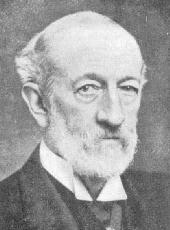 as to the report of Sir Robert Anderson being a Mason has been posted in the Guest Book.
Hopefully it will attract some informed response. Please let me know of any pertinent replies so that details can be posted on MB.
Membership in the Masons and other secret societies has always been
condemned by those brethren commonly known as 'exclusive', based on 2 Corinthians 6: 14 - 7: 1. [See reply of July 10, 2004 to Pascal-Eric Chomel. JLK]
I'm not familiar with the 'open' attitude but suspect it would be the same, and therefore the charge against RA seems incredible.
The Scriptural principles involved are that we are not to receive a
false report, and that any accusation – as this surely is on someone
who cannot refute it personally – must stand on the word of two or
three witnesses.
- From your contact, it does not seem that Mr. Epperson followed this procedure. I do not agree with him that "sometimes in research you have to take peoples' word for information especially historically".
- As said in History: JND: An Unfriendly Appraisal, I believe "A historian's chief
responsibility is to present thoroughly researched and authenticated
facts, objectively and free from personal bias. On this rests his right
to public recognition as a scholar, as well as his personal integrity".
Simply to accept one person's word is not good enough.
- If, for any reason, a single report seems to be so substantial that it
should be noted, it should be made quite clear that it is unsupported by
other witnesses and an explanation given as to why it appears substantial.
- This type of report should be used sparingly and with the greatest caution. If it tends to blacken an otherwise good reputation – as the charge against RA does – it should not be used at all.
On another matter, I am only familiar with RA, and his extensive
ministry, by report but understand that he received his KCB on his retirement and in recognition of his services in Scotland Yard ['Chief Men among the Brethren': 192].
- It is surprising that anyone following in the train of those of
whom Paul could say "we are become the offscouring of the world, the refuse
of all" – 1 Cor. 4: 13 – and who "pursue, looking towards the goal, for the prize of the calling of God in Christ Jesus" – Phil. 3: 14 – would accept worldly honours.
- Mr. F. E. Raven (1837-1903) – a contemporary – whose ministry appears on MB, was in a similar situation to RA. His conduct was in keeping with the Scriptures quoted.
- FER served as Secretary of the Royal Naval College for 25 years. On his retirement he was offered, but refused, a knighthood for services rendered to the British Admiralty.
Yours in our Lord, Gordon.
Page Top Article Top
| HOW TO BE SAVED |
|---|
Patty Bjork asks, "Please tell me how exactly to be saved.
Do you have to pray the 'sinner's prayer', or just believe??" |
|---|
To: Patty Bjork
chambyltAThotmail.com
New Westminster, British Columbia, Canada
Thu, 28 Mar 2002
Dear Patty,
Welcome to 'My Brethren' and thank you for your question as to "how exactly to be saved".
- We will be praying that his answer below will be of real help to you. If anything doesn't seem clear, please feel free to ask about it.
- We are concerned for your eternal and spiritual welfare, and look forward to hearing from you again.
There is no reason to believe that repeating a 'sinner's prayer' – as you would repeat a 'pledge of allegiance' or a national anthem – will save you.
- It is putting one's trust into a prayer not into Jesus Himself; it is not believing that He was raised, it is merely praying that you believe He was raised, and if you do not believe that He was raised then the prayer is rather a lie, and that to God.
- I would not like to have put my belief into myself, what I myself have done to satisfy God.
- I object to it because it is a mockery of the power of God which shines out in the person and the work the Lord Jesus.
- The security it provides is only that of a soothed conscience that God will, no must, be satisfied with your 'prayer' – this is not right at all. So I would consider it very important to understand that.
But with that said – there are many examples in the gospel accounts of men and women who had a need that only God could meet – people who rightly judged their condition and the ability of Jesus to meet that.
- They saw their own sinfulness and that they were prevented from acceptance with God, and therefore, were not free to worship Him.
- They were honest about it and cried out for His help, as it was something that they could in no way accomplish themselves.
- Those who cried out to Jesus are pictures, or examples, for you and me to see that He had compassion on them and could indeed save them.
- One of them said to Him, "If thou wilt thou canst cleanse me".
The apostle Paul wrote "that if thou shalt confess with thy mouth Jesus as Lord, and shalt believe in thine heart that God has raised him from among the dead, thou shalt be saved.
- "For with the heart is believed to righteousness; and with the mouth confession made to salvation. For the scripture says, No one believing on him shall be ashamed.
- "For there is no difference of Jew and Greek; for the same Lord of all is rich towards all that call upon him. For every one whosoever, who shall call on the name of the Lord, shall be saved".
Peter said "Repent, and be baptised, each one of you, in the name of Jesus Christ, for remission of sins, and ye will receive the gift of the Holy Spirit".
- He did not say, 'pray this prayer' but "Repent" – can you see the difference?
- One is active and living in belief – it acts because it believes – one is only profession.
Jesus was asked, "What should we do that we may work the works of God?" And His answer was,
- "This is the work of God, that ye believe on him whom he has sent".
The effect that Jesus had on men and women was such that they immediately followed Him. This is what happens when His sheep hear His voice.
- Jesus said, "My sheep hear my voice, and I know them, and they follow me; and I give them life eternal; and they shall never perish, and no one shall seize them out of my hand.
- "My Father who has given them to me is greater than all, and no one can seize out of the hand of my Father".
- They hear Him and then they follow him.
The two gospel messages on 'My Brethren' would be good to study for an answer to this most important of all questions:
Yours in our Lord Jesus, Gordon.
Page Top Article Top
| DIFFERENCE BETWEEN WEB SITES |
|---|
Edith Bowie asks,"what the difference is
between your web site and Dick Wyman's?" |
|---|
To: Edith Bowie
Wed, 19 Jun 2002
Dear Edith,
I certainly don't want to evade your question. However, my thoughts on the difference between 'My Brethren' (MB) and Dick Wyman's 'Exclusive Brethren Information' (EBI) [discontinued].
- might well be misinterpreted and even be considered by some – I don't mean you – as biased and self-serving.
- It would be far better for you to make your own determination. There are several comparisons you can make to arrive at the difference.
- Objectives: See the opening page, and elsewhere, for each site and compare the basic reasons behind each site.
- Content: Compare MB's 'Menu-SiteMap' with EBI's 'Site Map' and compare the areas covered and the various types and contents of articles etc.
- Response: Compare MB's 'Guest Book', 'Mailbox', 'My Answer' and 'My Stand' with EBI's "Guest Book', 'Opinions and Contributions' etc. for the types of views expressed by guests, and for responses to those views.
- You will find certain similarities and, in certain areas, considerable variations. From this you will be able to make your own personal determination as to the difference and relative values of particular items to your own needs.
I realize you may well have wanted and expected something concise and simple, but trust you will see some value in my suggestions.
- Of course if you have specific questions regarding any items on MB I'll be glad to respond. If you have questions regarding items on EBI, I'm sure Dick will respond.
In our Lord Jesus, Gordon.
Page Top Article Top
Your guest entries and messages will show that
the continuation of My Brethren is important to you.
|