Menu•SiteMap |
Ministry
The Wisdom of God
Early Ministry by G. R. Cowell
– Part 14
The following previously unpublished notes are from a faded original typescript which only recently came to light.
The ministry on 'The Wisdom of God' is still timely – 56 years later – as human wisdom continues to hold sway in the public church,
- and among those who have strayed from the recovered truth.
If the clear principles brought out in the address on 'Leadership' had been followed it would have prevented the terrible breakdown beginning in 1959.
G.A.R. April 2009
Page Top
| THE WISDOM OF GOD – READING 1 |
|---|
Meetings with Mr. G. R. Cowell at Romford - October 10-11, 1953
Hymn 71 -
Prayer, Mr. Cowell
Proverbs 8: 22-23, 27-31; Romans 9: 5; 11: 33-36; 16: 25-2
|
|---|
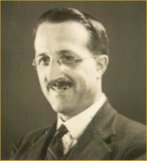
G.R.C. One felt that the Spirit of God would help us in speaking together on the great subject of WISDOM. It is so important that wisdom is personified by the Holy Spirit in Proverbs 8.
- Other attributes of God are not personified in this way, but wisdom is personified, which seems to imply that wisdom is outstanding.
- This passage shows that Jehovah did nothing without her. She says,
- “Jehovah possessed me in the beginning of his way, before his works of old”.
- Among other things, this statement is an answer to modern theories of men – although they are not really modern theories, they are simply put into modern dress – the theory of evolution and so on.
- This passage refutes these, because Jehovah did nothing without wisdom; He possessed wisdom in the beginning of His way before His works of old; and the passage , while treating of creation, shows the object in view in the divine operations in verse 31,
- “my delights were with the sons of men”.
- It then goes on to speak of the house that wisdom has built. So that creation is brought in here, and then the house, which would refer to the assembly,
- “wisdom hath built her house , she hath hewn out her seven pillars”.
- We know from Ephesians 3: 10 that the all-various wisdom of God is displayed through the assembly and that He created all things with that purpose in view, which shows that the assembly has been a great objective – in one sense, the great objective – before God in all His operations from the very outset,
- and the knowledge of this is intended to help us that we might make God’s objective our objective. It is wisdom on our part to make God’s objective our objective.
- This links also with Romans because wisdom in Proverbs is, we might say, in a gospel setting, although it is presented so profoundly. This chapter begins,
- and Romans indicates that a man who truly receives the gospel is affected by every feature of the operations of divine wisdom.
As we know, there are four doxologies in Romans; we have read three.
- The first – Chapter 1: 25 – is a doxology to the Creator. The man who receives the gospel has really heard wisdom’s voice, and he thus gets an impression of the wisdom of God, going back to creation and going forward to the accomplishment of divine purpose.
- The first of the three doxologies read refers to Christ, who is the embodiment of divine wisdom, coming in flesh; and Paul worships Him as over all, God blessed for ever!
- In the next doxology Paul exclaims, “O depth of riches both of the wisdom and knowledge of God” – that is in connection with His ways;
- and the last, in chapter 16, stands related to His purpose
- So that you have great scope in Romans; we may say, the wisdom of God in creation, in the Incarnation, in His ways, and in His purpose; and the man who truly receives the gospel is a worshipper of God in each relation.
- It is remarkable that the two great doxologies at the end of Romans refer to wisdom, which one feels does not have the place it should have in our worship; but it had a great place in Paul’s worship, and he is a sample in Romans of a man who truly receives the gospel. It should have that place in the heart of every one who receives the gospel
F.A.F. So the passages you have read seem to touch the resource of God from eternity to eternity; is that so?
G.R.C. Quite so; and being so , he is a worshipper.
F.G.S. In that connection, is the reference in Luke’s gospel interesting, “wisdom has been justified of all her children”, and the great service of God being secured in that gospel?
G.R.C. It is very interesting. Wisdom is justified in its results; she is justified in her children.
- It is to be noted that the Lord Jesus thus Himself refers to wisdom in a feminine character, showing that wisdom remains personified as a principle even though we also see it embodied, as it were, in Himself He is the wisdom of God, but He is much more, He is God.
- But we have to learn to value wisdom as a principle as well as valuing its expression in the Person of Christ. So the Lord still maintained the idea of wisdom as a principle –
- “wisdom has been justified of all her children”.
C.S. In Proverbs 1: 43 where one hearkens to the voice of wisdom, it says,
- “I will pour forth my spirit unto you, I will make known to you my words”.
G.R.C. That is very interesting.
- “Wisdom crieth without; she raiseth her voice in the broadways”, verse 20,
- so that the gospel is really wisdom’s voice;
- “turn you at my reproof; behold, I will pour forth my spirit unto you”.
- It shows the effect of hearkening to wisdom that this immense result follows, the Spirit is poured forth; and then,
- “I will make known to you my words”. That is a very good thing.
C.S. I was thinking as to wisdom’s voice in the glad tidings and the result of heeding it.
J.O.S. Do we see wisdom operating before sin came in, and then that same wisdom operating in the sphere in which sin is, to bring about the great end God has in mind that He should rest in His love?
G.R.C. It is good to see that. There is the wisdom which God prepared before the ages for our glory; it was purposed before sin came in and before time.
- But then we also see in Christ how every moral issue has been settled in divine wisdom. In the course of God’s operations sin has intruded, but wisdom is equal to the situation.
- One of the glories of wisdom is that in Christ God has met every moral issue and glorified Himself. So that God has never been baffled – He could not be, of course, being God – but then it is very encouraging for us to see that God is never without resource.
- He begins His way with wisdom and when evil comes in it is met in Christ who is the power of God and the wisdom of God, according to 1 Corinthians 1, and every moral issue is settled.
J.O.S. Would wisdom be seen most blessedly in the Incarnation?
G.R.C. I think it is. It is a most wonderful step in wisdom’s way.
A.M.B. One was thinking that this passage in Proverbs 8 would enhance all that is contained in Genesis 1; that is, after the physical creation is brought into being, God says,
- “Let us make man in our image, after our likeness”.
- He had in mind created vessels in which He could get a response to the wisdom He delights to manifest; and, as you were calling attention to in the latter part of this chapter,
- “my delights were with the sons of men”, verse 31.
- The physical creation precedes the creation of man, and does it not seem to be uppermost in the thoughts of God that there should be vessels that should answer to the manifestation of this wisdom?
G.R.C. I think so. It is interesting to note in that way the order of things, because Genesis 1 does not record that angels were created, but we know they were created before men.
- There was the creation of heaven and earth which involved angelic beings – thrones and lordships, principalities and authorities, visible and invisible – all were involved in creation as Colossians says.
- Finally there was man, and that links with verse 31,
- “my delights were with the sons of men”.
- God was bringing in man as an order of being.
M.L.J.M. So that 1 Corinthians 1 is a very important stepping-stone to this matter, the apostle referring first of all to our calling, and then finally referring to the matter of Christ in relation to wisdom, and he goes on to speak of
- “righteousness, and holiness, and redemption; that according as it is written, He that boasts, let him boast in the Lord”.
G.R.C. Yes, it is a very important chapter standing at the doorway of the assembly epistle, because in the assembly human wisdom is to be shut out completely.
J.J.T. Would you see a connection between wisdom and the Holy Spirit?
G.R.C. The Holy Spirit is spoken of as the Spirit of wisdom in certain scriptures, e.g. Isaiah 11: 2.
- 1 Corinthians 2, which speaks much of the Holy Spirit, ends with
- “who has known the mind of the Lord, who shall instruct him? But we have the mind of Christ”.
- The first part of that verse is a quotation from Isaiah 40: 13 which also occurs in the doxology in Romans 11.
- In 1 Corinthians 2 the Holy Spirit is referred to in connection with the hidden wisdom which God prepared before the ages for our glory. How can anyone enter into the great conceptions of divine wisdom except in the power of the Spirit?
- The Spirit’s service is most remarkable for He gives us the mind of Christ, thus enabling us to apprehend divine wisdom. We give heed to wisdom’s voice in the gospel and then we receive the Spirit according to chapter 1 of Proverbs, and that gives us the capacity, as having the mind of Christ, to take in divine wisdom.
J.O.S. So it says, “not in words taught by human wisdom, but in those taught by the Spirit”, verse 13. That would be the link, would it not?
G.R.C. Yes, showing the importance of giving place to the Spirit in our thoughts and also in our communications with one another.
A.A.B. In connection with what you said as to the impossibility of God being baffled, the Lord used two expressions in addressing the Father in John 17;
- the first is “before the world was”,
- and the second, “before the foundation of the world”.
- Would the first be seen in the two verses read – 22 and 23, and then the idea of “before the foundation of the world” in the second section read?
- Is not “before the world was” extremely remote in eternity? Does it help us to see that wisdom was there then, according to verses 22 and 23, not only in relation to the setting up of the universe physically, but more remotely, in the recesses of eternity?
G.R.C. Yes. It seems to me we have to see that before His works of old Jehovah possessed wisdom.
- She was “set up from eternity, from the beginning, before the earth was”.
- It is not simply that wisdom is seen in the creation, but that she was there beforehand.
- Wisdom’s plan has gradually been unfolded in the ways of God in connection with the Incarnation and the establishment of the assembly. But it was all there in the divine mind before the foundation of the world.
A.L.B. Is it significant that “his way” should be in the singular in that verse –
- “Jehovah possessed me in the beginning of his way, before his works of old”?
- The works are manifold, but the way which God had before Him from the outset is one way?
G.R.C. Do you not think that would link with purpose? It is not exactly His ways such as are celebrated in Romans 11, but His ‘way’.
- From the standpoint of purpose God had one objective before Him, and He has never deviated from His objective.
- His objective was the incoming of Christ, Who is the embodiment of wisdom, and the formation of the assembly as a vessel through which His all-various wisdom is expressed, and God has never deviated from that.
J.J.T. The Psalm indicates the greatness of the past eternity in wisdom’s way
- – “from eternity to eternity thou art God”.
G.R.C. That hidden wisdom which God had predetermined before the ages for our glory! Then there is the question of God’s glory
- – “to him be glory in the assembly”.
- These great matters were in God’s mind before His works of old.
J.J.T. It is very wonderful that we are let into the secret of the past eternity.
A.M.B. Do you think that the truth of His works, or movements, are all centred in that word “nursling” – the nursling of His love?
- We understand that love cannot be static, it must operate, and it seems that wisdom has brought God into this sphere of operations. Would that be right?
G.R.C. So that you cannot separate wisdom and love. Wisdom is the nursling of His love. It is because God is love that wisdom’s plan was conceived. Love alone could have conceived it.
R.W. What is the force of verse 12 of chapter 8,
- “I wisdom dwell with prudence, and find the knowledge which cometh of reflection”?
G.R.C. May it suggest what men would call – although I do not want to use just human language – ‘careful planning’?
- Evolutionists would tell us that the creation came into being haphazardly, chaotically; they reject any idea of divine wisdom.
- But God has worked according to plan. All things were created by Christ and for Christ; there was a purpose in everything , even in the physical creation, with the great end in view. All this reflects upon us, that we should plan our lives in a similar way, not as beating the air.
R.W. Is that why Solomon asked for wisdom at the beginning of his reign?
G.R.C. Yes. Wisdom is the principal thing. If you have not a plan, if you have not wisdom, you are just beating the air.
- But God did not operate in that way at all; God has kept undeviatingly to His purpose from before the foundation of the world.
H.B. Is it not divine wisdom that God has placed all that He is effecting upon the basis of redemption?
G.R.C. I have no doubt it is. Say a little more.
H.B. I was thinking of the reference in 1 Peter to the blood of Christ, as of a Lamb foreknown before the foundation of the world, and the reference in Proverbs 8 to the depths,
- as to whether the incarnation of Christ and His sufferings are not all part of the divine plan, in view of placing everything beyond the reach of evil and adverse power for ever?
G.R.C. I feel sure that is right, because how could the assembly be the vessel through which God’s all-various wisdom is expressed apart from her understanding the way God has shone out in His glory in relation to redemption?
- While the assembly as such, as a vessel, is never spoken of as redeemed, yet the personnel, the saints who compose it, are all redeemed, and they know God as having glorified Himself in effecting redemption.
C.S.B. Would you say a word as to how affection is related to wisdom? I am thinking of verse 17 of chapter 8,
- “I love those that love me”.
- You have spoken of wisdom being personified, and it seems that affection enters into this matter too.
G.R.C. I do not think we can ever understand the conceptions of divine wisdom without love. We have to keep in mind that everything which God conceives flows from the fact that God is love, and divine conceptions can only be apprehended by love.
A.A.B. So the whole bearing of wisdom seems to focus upon the sons of men. Would that involve that there is a response feelingly to God in relation to this glorious attribute of His?
G.R.C. I think so. So it is not simply men, but the sons of men. Angels were created first, but then God says , “Let us make man”, but He had in view men in sonship.
A.A.B. I was going to ask for help as to the expression “sons of men”, not simply men.
G.R.C. Perhaps you can help us further. Do you not think it has in mind that wisdom’s delights were with men in sonship? It is man as an order of being, not angels but men in sonship.
A.A.B. I think that helps. The expression is used in Ephesians 3 by Paul as to the mystery not being revealed in past ages to the sons of men.
J.O.S. Then in Acts 15 James, speaking after Paul and Peter had spoken as to the gospel to the nations, quotes from Amos 9 speaking of the residue of men seeking the Lord, and then he adds,
- “who does these things known from eternity”, verse 18.
- So that even the thought of the glad tidings going out to men involves what God had in mind from eternity.
G.R.C. Man, as an order of being, is no doubt peculiarly adapted to express God; therefore the assembly, composed of men, is peculiarly adapted as a vessel for the expression of the all-various wisdom of God.
- I think we are justified in saying that because the Lord Jesus, a Person of the Godhead, has become Man, men in Christ, the fruit of divine workmanship, are expressive of God and responsive to God, and able to apprehend and express the wisdom of God.
J.L.W. Would you say that the magnificence of the wisdom of God is seen in the economy of love into which He has come? It is wonderful wisdom that lies in that movement of self-subordinating love on the part of two divine Persons.
G.R.C. It is, and I think that might give room for enquiry as to this verse, “Jehovah possessed me”, and the verse we finished with in Romans. A question we might ask is, Who is Jehovah?
- “Jehovah possessed me in the beginning of his way”.
- The last two doxologies in Romans are addressed to God as such;
- But this begins with “Jehovah”. So that our consideration begins with the title Jehovah and ends with the title God, worship being addressed to God; but in between there is a doxology addressed to Christ.
A.L.B. Are you thinking that the name “Jehovah” means the existing One, and as fully declared, must be the Father and the Son and the Holy Spirit?
G.R.C. That is what I have in mind, and I believe it is right that, in the full sense, the Jehovah of the Old Testament is the Father and the Son and the Holy Spirit of the New.
- It is quite right in certain settings to say the Jehovah of the Old Testament is the Father of the New; and it is equally right in certain settings to say the Jehovah of the Old Testament is the Jesus of the New.
- But in the full sense Jehovah of the Old Testament is covered in the name of the Father and the Son and the Holy Spirit.
J.C.T. So it involves the Father as coming into the economy in which He is to be known.
G.R.C. Yes, because Jehovah is the personal Name. God, that is “Elohim”, is the name of God as such in His majesty and supremacy.
- Jehovah was Israel’s Elohim, and Jehovah was the personal Name. No other nation knew Him by that Name. He is the “I AM”, the ever existing One, the One who is and was and is to come.
- There was that disclosure, so far, of the personality of God to Israel which no other nation had. Jehovah was their Elohim; but I believe in Christianity our Elohim is the Father and the Son and the Holy Spirit. Is that right?
A.L.B. I think it is.
F.C.M. Would you help us as to Mr Darby’s note to the last verse of 2 Corinthians 6, in relation to what is before us now?
G.R.C. I think it is interesting that the title Jehovah in the New Testament is predicated of the Father and the Son and the Holy Spirit separately.
- In the passage to which you refer it is the Father,
- “I will be to you for a Father … saith the Lord Almighty”.
- The word ‘Lord’ there means Jehovah. In Luke 2: 11, the angel says,
- and in 2 Corinthians 3: 18, we are transformed even as by the Lord Spirit, that is by ‘Jehovah Spirit’ – the title ‘Lord’ there is really ‘Jehovah’.
- So the title Jehovah is attached to each of the Persons separately in the New Testament, and therefore we are justified in attaching it to each of the Persons separately.
- But in the full sense our Elohim is Father, Son and Holy Spirit. What do you say to that?
F.C.M. One was weighing it over in relation to Mr Darby’s footnote to that verse –
- “ ‘Lord’ is the proper name answering to Jehovah. Jehovah Shaddai – Elohim to Israel, and to Abraham, Isaac and Jacob – taking the name of Father with us”.
- You regard that as the particular bearing of the passage?
G.R.C. Quite so. Jehovah is the Father, and the Father is Jehovah. We can nestle in the joy of that.
- But then Christ is Jehovah. There are many passages in the New Testament which insist that Christ has the full honours of deity and one is Romans 9 which we have read. Paul worships Him as
- “over all, God blessed for ever”.
- So although He came into a self-subordinating position, in an extreme way, even to the death of the cross with all its public shame, yet He does not cease to be Jehovah.
J.L.W. Does the title “I am” confirm that with us?
G.R.C. It does. The title ‘I am’ is very closely linked with Jehovah; the Lord says,
J.L.W. So that we have no difficulty in our hearts when it says,
- “he is the Lord, and worship thou him”. Psalm 45: 11.
G.R.C No, indeed. Paul cannot refer to the incarnation without worshipping the Person; he calls Him “Christ”, a title referring to His manhood, but he immediately says
- He is “over all, God blessed for ever”.
- He is prostrated in worship before the Lord Jesus in the greatness of His Person!
- In worshipping Him we cannot say that we worship Him as God and not as Man, for we worship the Person. We never know Him other than as Man, but
- “in him dwells all the fullness of the Godhead bodily”.
- As Man He says, at the end of Revelation,
- “Behold, I come quickly … I am the Alpha and the Omega, the first and the last, the beginning and the end”.
- How can you do other than worship such a person? I am referring to this because I understand some are questioning the rightness of worshipping Christ. It is difficult to understand how any confusion could arise in this matter.
J.O.S. Does Psalm 110: 1, really determine the matter?
- “Jehovah said unto my Lord, Sit at my right hand, until I put thine enemies as footstool of thy feet”.
- That word Adonai – Lord – is a title of God, is it not?
G.R.C. It is. There it is “Jehovah said to my Adonai” – two titles of God are used. Jehovah is a more profound title of God than Adonai, much more; there the Lord Jesus takes the place of Adonai, and David, in Spirit, acknowledges it.
R.W. In 1 Chronicles 29, David says, “Jehovah, God of Abraham, of Isaac, and of Israel, or fathers …”.
- Does that make the matter clear? I was thinking of what you have been saying in relation to ‘Jehovah’ covering the whole name of Father, Son and Holy Spirit, and how David in introducing the service of praise in the end of Chronicles seems to arrive at that in his spirit, so that he addresses Jehovah in relation to His greatness, and then goes on to thank God, and later on he says,
- “Jehovah, God of Abraham, of Isaac, and of Israel, our fathers”,
- showing that he has a clear understanding as to who Jehovah is.
G.R.C. Very good.
F.A.F. What you are saying enhances the greatness of the revelation of God. One of His titles is Jehovah, but as time goes on for us it is broken up, as it were, so that we know Him as Father, Son and Holy Spirit. So that it is right to speak of the ‘Triune Jehovah’, is it not?
G.R.C. I would not object to that. I have never heard the expression before, but it seems to express what we are trying to say.
J.L.W. It says in Isaiah 63: 16, the latter part,
- “Thou, Jehovah, art our Father; our Redeemer, from everlasting is thy name”.
- Isaiah had clear thoughts about that, had he not?
G.R.C. It seems as though Isaiah had some anticipatory thoughts as to what would afterwards come in in fullness.
H.McM. Would that verse in Isaiah 9 bear on it? It speaks about
- “Wonderful, Counsellor, Mighty God, Father of Eternity, Prince of Peace … Jehovah of hosts will perform this”. It is fullness.
G.R.C. Quite. That name would promote worship to Christ in our souls –
- “Mighty God, Father of Eternity”.
E.T.H. Then Isaiah 6, “Holy, holy, holy is Jehovah of hosts”. Would that bear on it?
G.R.C. It would. In Isaiah 6 and in Revelation 4 there is the thrice-repeated ‘holy’, undoubtedly an allusion to the Trinity.
F.W.T. It has been pointed out that the doxology we have at the end of Romans 11, quoted from Isaiah 40, speaks of the Spirit of Jehovah.
- It does say there, “the Spirit of Jehovah”, which shows that the Spirit enters into that doxology as, indeed, the whole Godhead enters into that doxology in Romans 11.
J.C.T. If we kept Matthew 28 before us it would help as to the one Name, Father, Son and Holy Spirit.
G.R.C. It would. Yet it is not the testimonial Name; the testimonial Name is the name of our Lord Jesus Christ – the name to which we gather together publicly.
- The fact that His name is the testimonial Name is itself a proof of His deity. No one less than a Divine Person could be the centre of gathering. So in Acts 5: 41, the apostle rejoices
- “that they were counted worthy to be dishonoured for the name”,
- that is, the name of the Lord Jesus. If we are true to the name of the Lord Jesus we shall come into the gain of the name of the Father and the Son and the Holy Spirit.
R.W. Did Zechariah look on to that moment in chapter 14?
- “Jehovah shall be king over all the earth; in that day there shall be one Jehovah, and his name one”, verse 9.
- That is looking on to Matthew 28, is it not?
G.R.C. We can regard it in that way – “his name one” – Father, Son and Holy Spirit. But then the Lord Jesus Himself is Jehovah; we could not gather to His name otherwise.
F.G.S. The Psalmist in Psalm 45 says, “Thy throne, O God”, and then, “for he is thy Lord, and worship thou him”.
A.M.B. I was thinking of Genesis 1: 2, as to the Spirit hovering over the face of the waters, God breaking out of eternity, so to speak, at the commencement of time in order to reveal Himself;
- and, as Paul says in 1 Corinthians 15, at the close of time, after the full revelation of Himself, of all that He has done in these great matters of wisdom,, He goes back into eternity as One who is none but God supreme,
G.R.C. Yes. As to the Spirit of God, while we do not get the expression “the name of the Holy Spirit” in the New Testament, yet blasphemy against the Holy Spirit is the unforgivable sin in Christianity,
- answering to the blaspheming of “the Name” in Leviticus 24, which shows that the idea of “the Name” attaches to the Holy Spirit personally, just as to the Father personally and to the Son personally.
- But, then, in the full sense, the Name is that of the Father, and of the Son and of the Holy Spirit.
J.O.S. Is the wisdom of God seen in the wonderful way in which He is known as Father, Son and Holy Spirit? Is it in view of His being perfectly known as God?
G.R.C. I think so. Do we not have to see that the revelation is now complete?
A.L.B. I wondered if Isaiah 63 might help us as to the Spirit; it says,
- “the Spirit of Jehovah gave them rest; so thou didst lead thy people, to make thyself a glorious name”
- – the Spirit of Jehovah leading and giving them rest is really an expression of Jehovah linking on with making for Himself a glorious name.
G.R.C. That is very good. As to the worship of Christ, there should be no difficulty for Paul closes his ministry with a doxology to the Lord Jesus in 2 Timothy 4: 18, and Peter’s last word to the saints is,
- “the knowledge of our Lord and Saviour Jesus Christ. To him be glory both now and to the day of eternity”, 2 Peter 3: 18.
- I think it is not without note that the last doxology of each of the two leading apostles is to the Lord Jesus – not to the Father, or even to God as such, but the Lord Jesus.
- Therefore why should anyone have difficulty as to worshipping the Lord Jesus?
J.W. The great charm of the Name to the Christian, where the Name of the Lord Jesus is emphasised, is that that Man is God. Can we know God in any greater way than as known in Christ?
G.R.C. The fullness of God is expressed in Christ, and we are to be filled into it.
C.S. Is that not the reason for the opening of John’s gospel? It is the last of the writings, and it is to bring out the glory of the Person and His greatness in no uncertain way.
G.R.C. It is surely written to meet these very objections.
C.S. We have referred to Isaiah 63 which speaks of the everlasting God, Jehovah the Creator. That would link with John 1: 1-3?
J.J.McC. Would you say that in this section we have read in Proverbs, we have the wisdom of God as seen in the three Persons of the Godhead,
- the Father entering into it,
- and the apostle Paul guarding the greatness of the Person of Christ as entering into it in Colossians – “all things have been created by him and for him”
- – and also the reference to the Spirit in Genesis 1, the Spirit hovering over the face of the waters, and again garnishing the heavens?
- So that all three Persons of the Godhead are involved in the creation and we are to take account of the wisdom of God as entering into His works creatorially.
- That is in view of what you have in mind in Romans, Christ coming in flesh, that is, the wonder of the incarnation.
- Then in the second scripture in Romans 11, the wisdom of the ways of God. So that all these things are to impress our minds and hearts and to produce worship in us. That is what you have in mind?
G.R.C. Yes. There is the coming in of Christ, then the building of the assembly – “Wisdom hath built her house” – Christ having become incarnate and effected redemption and the Spirit having come. So that the assembly is secured; and what wisdom enters into that!
- The first mention of wisdom in scripture is connected with the making of Aaron’s garments;
- then the second reference is in connection with the making of the tabernacle – wisdom building her house.
J.J.McC. That is very good, particularly the building of the tabernacle; what an allusion that is! What wisdom enters into it, seen working out in Bezaleel and the wisdom which marked him, and it is carried on, you might say, in the apostle Paul who is a wise master builder, having this great end in mind – the building of the assembly!
J.O.S. Is it not doubly interesting that the Gentile doxology – I refer to Huram – says,
- “Blessed be Jehovah the God of Israel, that made the heavens and the earth, who has given to David the king a wise son, endued with prudence and understanding, who will build a house for Jehovah”, 2 Chronicles 2: 12.
- I was thinking of the idea of wisdom entering into the thought of God building the assembly and this Gentile doxology in that very relation – a wise son who will build the house.
G.R.C. Following that there is Hiram the man of Tyre, not the king, and it says of him that he was full of wisdom and understanding and knowledge to do all kinds of works in brass. So that wisdom in a peculiar way comes into the formation of the assembly. This is marvellous wisdom in the way God has set us together assembly-wise!
R.W. Would you say something about these seven pillars?
G.R.C. It may be that creation is one of them because the truth of creation is to be held in the assembly; God as Creator should have a great place in our affections and our testimony, because creation is wonderful.
- All His works are inscrutable. We speak of God being inscrutable; so are His works, even a blade of grass! Paul speaks much of the creation in his assembly epistles in relation to the glory of Christ and of God. So the testimony of creation would be one of the pillars.
F.A.C. Does creation furnish some substance for worship in the assembly?
G.R.C. I am sure it does. How narrowed up we are in worship in the assembly, often limiting it to ourselves and our wonderful portion. That must come in,
- but the more we enjoy our place as sons, the more we shall be free to take in the breadth and scope of divine wisdom and glory, ascribing to God what is due to Him; and creation comes into that.
A.M.B. Part of the doxology in Revelation 5, ascribed to the Lamb that was slain, is a seven-fold note of praise. It says,
- “I saw and I heard the voice of many angels around the throne and the living creatures and the elders; and their number was ten thousand of ten thousands and thousands of thousands; saying with a loud voice, Worthy is the Lamb that has been slain to receive. …”.
Then it comes to the seven pillars,
“power, and riches, and wisdom and strength, and honour, and glory, and blessing”.
- It seems as though that is ascribed to the Lamb that has been slain as a result of the operations of divine wisdom.
J.J.T. Have you thought that the greatness of God’s creatorial works might come into the service?
G.R.C. One is impressed with the way Paul refers to creation in Colossians and Ephesians, and the references to it in Revelation. New creation would also be in our minds.
F.G.S. Psalm 150 brings in creation.
H.B. Would Christianity lead us to take in, in our minds, the whole created sphere which God has come into, a created sphere of things in which He will be known, and every intelligence in that sphere will respond to Him?
- Ephesians 3 speaks of “every family named of the Father” both in the heaven and on the earth.
G.R.C. It would seem that there is a testimony to every feature of divine wisdom in the seven pillars of wisdom’s house:
- the creation; the incarnation; the death, resurrection and ascension of Christ; the gift of the Holy Spirit; the testimony of God’s grace; assembly administration; and the assembly service of praise.
H.McM. Proverbs 31: 26 says, “ she openeth her mouth with wisdom”.
- The first times she opens her mouth it is with wisdom.
G.R.C. Yes. So you have wisdom’s house and wisdom speaking: “she openeth her mouth with wisdom”, referring to the virtuous woman. So all this would lead us to the doxologies in Romans.
- Worshippers are in view, worshippers of Christ, according to Romans 9, and worshippers of God in His greatness in chapters 11 and 16. Chapter 11 refers to God’s ways,
- We have to distinguish between counsel and purpose. Counsel involves the way He brings His purpose to pass; He works all things according to the counsel of His own will.
- If we were truly worshippers of God – the gospel securing us as worshippers, according to Romans 9, 11 and 16 – we would go straight forward in our souls to the divine terminus, which is His purpose, because first there is the appreciation of Christ and His deity, then the appreciation of the wisdom of God’s ways.
- This would preserve us from quarrelling with God’s ways. One of the things which hinders souls moving on to purpose is the tendency to quarrel with the ways of God, not outwardly, perhaps, but inwardly fretting because of the place in which God has set us; how we are placed circumstantially, what meeting He has set us in, the persons with whom we have to walk. But all these things are part of the ways of God; He knows what He is doing.
- “Who has known the mind of the Lord, or who has been his counsellor?”
- He does not ask our opinion; He puts us where He deems it best. That marks all His operations. He is moving towards His great objective, the fulfilment of His purpose, and if we are amenable to Him He will always do what is best. He works all things according to the counsel of His own will.
- “O depth of riches both of the wisdom and knowledge of God!”
- The fullness of it is seen in the way He has placed Jew and Gentile together;
- “who works all things according to the counsel of his own will, that we should be to the praise of his glory who have pre-trusted in the Christ; in whom ye also have trusted”, Ephesians 1: 11-13.
- It was the counsel of God’s will to bring the Jew in first and then to bring in the Gentile. Then the way He brought forward the ministry of Peter, Stephen and Paul, and finally John – all these things are linked with counsel, the counsel of His will and depths of wisdom lay in it. If we were in the gain of the doxology of Romans 11 we should never quarrel with the ways of God,
- “for of him, and through him, and for him are all things”.
- Therefore the way would be clear for us to move on to His purpose. This is what is in mind in chapter 16, that we should be established according to Paul’s gospel and the preaching of Jesus Christ, according to the revelation of the mystery. What hinders our being established is because we quarrel with the ways of God.
F.A.F. So perhaps it would be wise to read the last doxology:
- “to God, only wise, through Jesus Christ, to whom be glory for ever”.
- “The only wise God” would suppose there are others, but “God, only wise” means that He is the only One, He is supreme in the affections.
G.R.C. He is! And how touching, “ through Jesus Christ”! That bears on the seven pillars, the way of God’s operations.
- “The only wise God, through Jesus Christ”.
- Everything hinged on that Man.
F.A.F. So every step which Paul took he said, “to whom be glory forever”.
G.R.C. And if we were constitutionally worshippers like Paul, what progress we should make!
Hymn: 468 – Prayer: Mr. Wallach
Page Top Article Top
| THE WISDOM OF GOD – READING 2 |
|---|
Hymn 168 - Prayer, Mr. J. O. Smith
1 Kings 3: 24-28; 4: 20, 29 to end; 1 Corinthians 1: 23-24, 30-31;
Colossians 1: 12-13; 2: 1-3; 3: 15-17
|
|---|
G.R.C. We are considering the subject of wisdom, that is, the wisdom of God. This morning we referred to Proverbs 8: 22,
- Wisdom is personified in Proverbs. The fact that no other attribute of God is personified in this way would impress us with the importance of wisdom as a principle.
- God did not begin His operations without wisdom. There was nothing haphazard about the divine operations; there never has been. God is working to a definitive objective. In divine wisdom He operates in order to reach it.
- Those operations are no doubt summed up in the words, “his way”; His way leading to the fulfilment of His purpose.
- So God’s wisdom enters into creation, but in a superlative way. It enters into the building of the assembly, wisdom’s house, which is going on at the present time.
- We linked the passages in Proverbs with Romans. There are four doxologies in Romans;
- the first, to God as Creator,
- the second addressed toe the Lord Jesus Himself, who is in Manhood, the embodiment of divine wisdom;
- the third to God in the wisdom of His ways and counsel,
- “O depth of riches both of the wisdom and knowledge of God! How unsearchable his judgments, and untraceable his ways! For who has known the mind of the Lord, or who has been his counsellor?”, Romans 11: 33-34,
- the fourth to “the only wise God, through Jesus Christ”, Romans 16: 27, in connection with His purpose.
- There is thus remarkable scope in these doxologies, indicating that where a soul truly gives heed to wisdom’s voice in the gospel –
- “Doth not wisdom cry?”, Proverbs 8 :1
- – he is brought to an appreciation of divine wisdom in the whole scope of its operations. He thus becomes a worshipper of God as Creator, a worshipper of Christ, Who is over all God blessed for ever, a worshipper of God in view of His eternal purpose.
- If we are thus secured as worshippers, it will affect every department of our lives. The gospel is intended to secure worshippers, and particularly, worshippers of God in connection with His wisdom.
- An appreciation of the wisdom of His ways would still all rebellious thoughts in our minds and we would be entirely submissive to His ordering in everything, because He takes counsel with no-one but Himself –
- “who has been his counsellor?”
- So in the working out of His ways, having the assembly as the great present end in view, He does everything according to the counsel of His own will, even to the details of the circumstances of every saint and as to the meeting each is set in.
- If we are thus secured as worshippers of God, we shall be happy in our local gatherings, and glad to avail ourselves of all the resources of wisdom that are in Christ; because although it says wisdom has builded her house and the assembly is regarded as the depository, in a way, of divine wisdom, yet she derives all from Christ.
- Solomon is the great type of Christ as the One in whom wisdom is available for us to draw upon in every contingency that arises.
The passages we have before us this afternoon refer to the Corinthian aspect and then to the Colossian aspect of our local position.
- The Colossian aspect widens out to all saints on earth, yet it has a particular local bearing, because the apostle speaks of those in Colosse and those in Laodicea. He is thus thinking of the saints in their local settings, although, no doubt, embracing all the saints on earth.
- The passages in Kings illustrate typically those two aspects of our local position, the Corinthian aspect in chapter 3 where Solomon is dealing with moral questions,
- and the Colossian aspect in chapter 4 – a realm of things where no evil is occurent, where under Solomon’s headship Judah and Israel were free to enjoy the whole inheritance and to enjoy the treasures of wisdom and knowledge which flowed from the Head.
- That is what is envisaged in the epistle to Colossians; a state where all Corinthian matters are settled, as we may say, and where the brethren, with hearts encouraged and united together in love under the true Solomon, can explore the wealth of the portion of the saints in light.
J.O.S. Is Solomon viewed as a worshipper in 1 Kings 3: 15, just preceding this matter of the two women? Verse 15 says,
- “And he came to Jerusalem and stood before the ark of the covenant of Jehovah, and offered up burnt-offerings, and offered peace-offerings, and made a feast to all his servants”.
- I wondered if he was there in the spirit of worship, and then this matter of wisdom immediately comes forward.
G.R.C. Yes. It shows that all these matters if they are to be handled rightly, must be handled by worshippers.
J.J.T. Would life be one of Solomon’s first thoughts? Living conditions is wisdom’s way in regard to this child.
G.R.C. Is that not where his wisdom shines. In bringing in a judgment which saved the living child, he also brought to light the living mother.
E.C.R. Can we distinguish between judicial wisdom and administrative wisdom?
- Does not the first involve what is right and wrong, life and death, acting with a sword,
- but the second involves the prosperity of the inheritance?
G.R.C. Quite so. You are linking administrative wisdom more with chapter 4.
- We often speak of assembly administration in relation to what is judicial, but there is a great positive range of assembly administration in the way of dissemination of divine wealth, which is a greater matter.
F.A.F. So at the end of the first epistle to Corinthians Paul rejoices at the coming of certain brethren. They seem to have brought with them the features of life. He says,
- “But I rejoice in the coming of Stephanas and Fortunatus and Achaicus; because they have supplied what was lacking on your part. For they have refreshed my spirit and yours: own therefore such”, 1 Corinthians 16: 17-18.
- Living things were there, were they not?
G.R.C. Would not that link with verse 7 of chapter 4 of 1 Kings?
- “And Solomon had twelve superintendents over all Israel; and they provided food for the king and his household: each man his month in the year”.
- They were all sons, Ben-Hur, Ben-Deker, Ben- \Hesed, Ben-Abinadab, etc. Do you think on this line of administration it is a question of being available under the true Solomon to bring in supplies?
F.A.F. The supplies were great, and none of them failed, did they?
G.R.C. No! So that the number twelve, as we have often been reminded is a great administrative number; it is the greatest divisible number.
- Mr. Taylor has said it is love’s number, because twelve can work in all sorts of combinations.
- We should all be available under the true Solomon to bring in the positive treasures of wisdom and knowledge to refresh the saints, to build them up, and keep them well fed and enlightened in the truth. These three who came to Paul were such. There was a lack of such at Corinth because moral issues were not solved.
- So chapter 3 of Kings must come before chapter 4; we must have things settled on the line of Corinthians if we are to be free and happy in the administration of divine wealth according to Colossians.
- These three men who came to Corinth were in the gain of Colossians and they brought what Paul needed. Even Paul needed supplies to refresh his spirit – we all do – even and apostle needed supplies which flow from the true Solomon.
J.O.S. Would you say that in facing moral issues in localities the true position where life according to God really is, comes to light? The sword brought the whole matter to light.
G.R.C. Is that not where wisdom shines, in handling matters in such away that the living child is preserved and the true living features of motherhood amongst the saints are brought out. We can so easily, in trying to settle moral issues, act in a way that will kill both the child and the mother.
J.O.S. Or else give the child to the wrong mother.
A.M.B. There seems to be a moral order in this. According to chapter3, verse 9, Solomon asks God for the ability to discern between good and bad. The thing pleased Jehovah and God gave Solomon far more than he asked for.
- But his understanding was tested in the first incident in regard to discerning between good and evil. Does that confirm that judicial wisdom must precede administrative wisdom?
G.R.C. I think so. Therefore judgement, in the sense of discernment is the characteristic word of 1 Corinthians. It occurs in nearly all of the chapters of that epistle.
- An essential element of wisdom is the ability to discern between good and bad so as to handle cases according to God. Solomon had handled specific cases in chapter 2 and his father had said he was a wise son, he would know what to do with Adonijah, Joab, and others; they were difficult personalities but he knew how to handle them all. And then he could deal with the general state of things as seen in these two women.
- He is a type of the Lord Jesus as the One who can meet every state and condition. There is nothing too hard for the Lord; but then do we go to Him for wisdom in these matters? There is nothing to which we are more prone, in matters of judgment, than to rely on our own wisdom,
- whereas Paul prefaces his words to the Corinthians with the teaching of the cross, shutting out human wisdom. He says,
- “Christ God’s power and God’s wisdom”, 1 Corinthians 1: 24.
- We have no wisdom to meet things according to God except as we derive it from Christ.
A.M.B. That is what one had in mind, I am glad of what you said.
A.A.B. Does the introduction of the word of God typified in the sword bring about finality in judgment, excluding private judgment in these matters? This case was finalised.
G.R.C. It was, and is it not important, that cases should be finalised? Actually all the cases I have quoted were finalised. It is remarkable how Solomon finalised everything. He leaves nothing outstanding.
- It is that which paves the way for chapter 4 where Israel and Judah were merry. It was not a joyous season out of control, such as men visualise when they make merry. Everything was properly controlled under the true Solomon so that it was real merriment according to God.
G.W. In Genesis 41 when Joseph is interpreting the dream he says,
- “God will give Pharaoh an answer
and later Pharaoh says to Joseph,
“Since God has made all this known to thee, there is none so discreet and wise”
- and so he gives him the name of Sustainer of life or Revealer of secrets, and so salvation comes in.
G.R.C. Quite so. It brings out the order that Paul speaks of in 1 Corinthians 11, that the head of Christ is God. Joseph gets his wisdom from God. Of course, in our case, Christ is God. Yet as Man He takes the place that the head of Christ is God.
J.C.T. This is Solomon, the Son, the man of affection. We should take things up in this way. I am thinking of the fellowship of God’s Son Jesus Christ our Lord in 1 Corinthians. Is the thought of sonship to be in our minds in administrative matters?
G.R.C. I am sure it is. One has been impressed by the fact that Paul writes to sons in most of his epistles. He opens Corinthians by saying,
- “Grace to you and peace from God our Father”.
- Nothing can be taken up rightly for God apart from the affections and intelligence of sonship. Sonship is a basic matter in Christianity. We receive it by faith in Christ Jesus.
- It is a basic and initial matter in that sense, although the greatest blessing that has come to men. One feels more and more that to take up things for God at all, we need to be in the liberty of sonship.
F.G.S. Solomon was in that dignity in this chapter. He had been referring to God’s kindness to David his father,
- “that thou hast given him a son who sits upon his throne, as it is this day”
- and he moves forward in this initial judgment in the power of that, would you think?
G.R.C. I would, and God said to him,
- “I will be his father and he shall be my son”.
- All that was behind Solomon’s position.
F.G.S. He said, “I was a son to my father”.
J.L.W. And is the attitude of mind that is suitable to wisdom seen with him –
- “I am but a little child”,
- he says, in the midst of this great people –
- “I know not to go out and to come in”.
- Is that a suitable lowliness of mind accompanying these thoughts?
G.R.C. I would say that it is only as we maintain the spirit of a little child that we are delivered from natural wisdom. The teaching as to assembly administration in Matthew 18 opens with the Lord setting a little child in their midst. Later He says,
- “where two or three are gathered together to my name there am I in the midst of them”.
- To get the benefit of wisdom that is in Him there must be, as it were, a little child in the midst; that spirit marking all of us. What do you think?
J.L.W. I am sure that is right. We tend to arrogate to ourselves the power to judge, but we need more dependence in our judgment.
G.R.C. We do. In Isaiah 1: 6 it says, “and a little child shall lead them”.
- Previously it speaks of the Lord Jesus as the One who has the spirit of wisdom and understanding. There is a seven-fold reference to the Spirit in connection with Him. Then it goes on to say,
- “and a little child shall lead them”,
- referring to one who is dependent on that Blessed Person and so is in the gain by the Spirit of the wisdom which is in Him. Assembly matters are in mind typically – the lion, the wolf and the lamb being together peaceably.
J.O.S. Is there not a strong link between love and wisdom? In the first incident Solomon’s understanding of love became apparent.
G.R.C. He understood maternal affections. Wisdom would always appeal to love.
J.O.S. And would you say that it is only love that is really wise?
G.R.C. I would.
F.A.C. Does wisdom enable us to employ principles in dealing with assembly matters?
- I am thinking particularly that when Nathan went to David he employs the principle of what is manifestly right and Solomon here employs the principle of motherly affections going out to the true son,
- and would we be helped as having a greater knowledge of divine principles and then having wisdom to employ them in arriving at a judgment?
G.R.C. I think so. I think the sword would suggest divine principles as revealed in God’s word and, as you say, it is a question of wisdom as to how and when to bring the sword in.
- I understand that J.N.D. said, Divine principles applied without love are like a sword in the hand of a drunken man. A tremendous amount of damage can thus be done.
- Wisdom would indicate how rightly to apply the sword counting on the divine nature in the saints. Typically that is what Solomon was doing.
- The true mother would represent today those in whom the divine nature is operative and the thing is to apply principles in such a manner that maternal affections are drawn out and the child is preserved. We look for affections in the assembly today which will preserve living conditions for God among the saints.
- That is the way Paul acted towards the Corinthians. He did not deal with matters for them but brought in an appeal calculated to touch every maternal instinct in that assembly, to draw out the divine nature, as it were, in them, so that they themselves should rise up and say, At all costs, let us preserve the living child; just as the mother in 1 Kings 3 who said,
- “Let the other woman have it”.
- She was prepared to surrender her rights and her reputation in order that the living child should be preserved.
C.E.B. Does James help us? He says,
- “But the wisdom from above first is pure, then peaceful, gentle, yielding, full of mercy and good fruits, unquestioning, unfeigned. But the fruit of righteousness in peace is sown for them that make peace”, James 3: 17-18.
In the first chapter it says, “But if any one of you lack wisdom, let him ask of God, who gives to all freely”, verse 5.
- I wondered whether the thought of wisdom from above would link with Christ in glory?
G.R.C. That is very helpful. Wisdom is first pure, then peaceful, etc., but it does not ignore righteousness, otherwise nothing would be secured for God. So that, in the case before us, what was right was established.
- In the previous chapter righteousness required extreme action in the case of certain important personalities; here, without disciplinary action, the true mother came to light and the child was preserved, and was in its right ownership. Moral issues were settled and the way was clear for the joy and prosperity of chapter 4.
A.L.B. Would Hebrews 4:12, help us? –
- “For the word of God is living and operative, sharper than any two-edged sword, and penetrating to the division of soul and spirit, both of joints and marrow , and a discerner of the thoughts and intents of the heart”
- – the bringing out of the sword served to discern the thoughts and intents of the hearts and matters were settled.
F.G.S. Does the thought of development enter into the next chapter?
- “Solid food belongs to full-grown men, who, on account of habit, have their senses exercised for distinguishing both good and evil”, Hebrews 5: 14.
- I wondered whether the living operative word of God would not develop manhood on this line?
G.R.C. It develops sensibilities so that we can take in solid food. The treasures of wisdom and knowledge are solid food connected with Christ in glory.
H.B. I was going to ask whether the word in Zechariah 6: 13, “and he shall be a priest upon his throne”, is exemplified here.
- There is that which is right to be maintained, but the priestly feelings are really here to preserve what is living.
G.R.C. I think that is right, “For the priest’s lips should keep knowledge, and at his mouth they seek the law”, Malachi 2: 7.
- Really Solomon was in that position morally, Although he was not officially a priest, he was a priest morally, as Paul was at Corinth.
- There were a number of leaders at Corinth who were only concerned about their reputation – their children had died, in that sense had been overlain, yet they wanted to attach to themselves the status the living child would give them.
- How easily that spirit can come in; but all that is uncovered here, the false mother is exposed and the true mother is brought to light, and the child is preserved. That happened in principle at Corinth, Paul having brought in Christ, the power of God and the wisdom of God.
C.C.I. Would chapter 5 exemplify that. The apostle speaks there of the “name of the Lord Jesus Christ”, and “the power of our Lord Jesus Christ”.
- Is that something like headship and wisdom brought to bear in the locality? He also speaks of “ye and my spirit”, which is really bringing out what there was of the mind of Christ in the place?
G.R.C. Why do you link that with the mind of Christ? Say a little more.
C.C.I. I was wondering whether we have to draw upon the wisdom which is peculiarly needed and which will be found in the place for which it is needed – it comes from the Head.
G.R.C. You mean Paul did not impose discipline as an apostle from a distance, but he encourages the saints to meet together in the name of our Lord Jesus Christ and in the power of Christ, and his spirit with them, and they would get wisdom at the time?
C.C.I. No precedent governed them but it came from the Head as having authority there.
G.R.C. I am sure that is right. It is a question of local responsibility.
- While a local company gladly accept help from any who can help as to principles, the secret of getting matters settled lies in each local company learning how to derive wisdom from Christ Himself. He will be there if they are gathered to His name.
A.M.B. So this matter of wisdom seems to be very important. It seems as if both sides must be seen operating in the assembly.
- There is the line of what is judicial and the administrative side, in order that the divine end is reached, that is praise to God in that vessel in Christ Jesus.
G.R.C. That is what is in mind. Unless moral issues are settled and finalised as they come up, we are not ready for the wealth of the inheritance as indicated in chapter 4 that we can go on to thoughts of God’s house and His service. So that it is in the power of Corinthians and Colossians that we cab go on to Ephesians.
A.A.B. Is the bearing of wisdom in Corinthians always constructive? There is the meeting and dealing with things that arise, but what is constructive is always in mind.
- I was thinking of the result in Solomon. The sword is not actually used in a destructive way. Do our minds tend to gravitate towards the executive side in judgment and fail to see sometimes that judgment is to discern between food and evil and bring out the good and set it up?
G.R.C. That is it. If Paul’s mind had been set on executive action, he would have come himself and acted drastically. But he brought in the sword – the word of God – and left it to work out.
- The first epistle to the Corinthians is like the sword brought in and placed in that company and it did its own work. As far as we know, nobody came under judicial action except the one outrageous sinner. As far as we know, the others were saved. That was a remarkable thing.
F.A.F. So it is first Christ the power of God – that is subduing, and then it is Christ, the wisdom of God.
- That would lead to what is constructive, Christ, God’s power, subduing every element that is contrary, and Christ, God’s wisdom, Solomon, bringing in what is constructive in regard to the house.
G.R.C. And would not the thought of power be very comforting when we have to face these matters, because we all approach discipline meetings with fear and trembling and we wonder, perhaps, how matters will go through;
- but the first thing here is Christ, God’s power. What can resist God’s power? If Christ is there God’s power is there and then there is God’s wisdom.
F.A.F. So the first epistle is God’s power dealing with the death principle and the second epistle to the Corinthians is the Solomon principle, the building up, is it not?
G.R.C. Quite so. Even the man they had to deal with is recovered.
F.A.F. Fully recovered.
J.C.T. It is most necessary in approaching a meeting of assembly character, to count upon this wisdom being present, so that when the sword is brought in it is not going to result in any living feature being lost, but rather secured.
G.R.C. I think it is encouraging that there is reciprocity about the matter, because on the one hand we can count on the Lord being true to His word, He says,
- “there an I in the midst of them”, Matthew 18: 20
- – and He is God’s power and God’s wisdom – but on the other hand, He relies on the assembly, and so He says,
- “tell it to the assembly”, Matthew 18: 17
The Lord trusts the assembly. He says,
“Whatsoever ye bind on earth shall be bound in heaven”, Matthew 18: 18.
- We can trust the Lord, He will surely be there and we can derive everything from Him. And He trusts us as being available to Him; He trusts the assembly as the true wife to do what is right.
J.J.McC. So even Paul could speak in that way to the Corinthians. He says,
- “that your faith might not stand in men’s wisdom, but in God’s power. But we speak wisdom among the perfect; but wisdom not of this world”, 1 Corinthians 2: 5-6.
G.R.C. When he says, “But we speak wisdom among the perfect” he would whet their appetite for “that hidden wisdom which God had predetermined before the ages for our glory”, 1 Corinthians 2: 7,
- and I think that comes out typically in 1 Kings 4, and in substance in Colossians where he says,
- “the mystery of God; in which are hid all the treasures of wisdom and of knowledge”, Colossians 2: 3.
- I feel in approaching this side of it my own extreme limitations. What do we know of all the treasures of wisdom and knowledge that are hidden in the mystery?
J.O.S. Does it show us that wisdom is cumulative? I was thinking of what the principalities and authorities in the heavens see working out in the assembly – the all-various wisdom of God. Every feature of wisdom working out from Pentecost until now is all treasured up.
G.R.C. Wisdom finds expression through the assembly. The seven pillars imply perfection in the display of wisdom.
- “Wisdom hath built her house, she hath hewn out her seven pillars”.
- Wisdom in fullness and completeness are displayed in the assembly. It is a most astounding thing that through a creature vessel the all-various wisdom of God should be made known.
F.A.F. Is not that touched in 1 Corinthians 1: 30 – “But of him are ye in Christ Jesus, who has been made to us wisdom”?
- That is a universal position. The “ye” is emphatic; it is the assembly of God –
- “But of him are ye in Christ Jesus, who has been made wisdom to us” – that is the vessel is competent.
G.R.C. It confirms the thought that the assembly derives everything from Christ. It is He who is made to us wisdom from God.
F.A.F. And you cannot shut out the worship of the Lord because it says.p>
- “He that boasts, let him boast in the Lord”, 1 Corinthians 1: 31.
G.R.C. That clearly supports the worship of Christ. How we should hate the idea of relying on natural wisdom of any kind in the light of the fact that Christ Jesus is made to us wisdom from God. How we should long fully to exploit the resources that are readily available to us in our glorious Head.
A.L.B. Does that lead to Colossians, and what He is as Head, and we complete in Him? I was thinking of the fullness in Christ, including the matter of wisdom. In every way in which we have any wisdom it is from Him.
F.A.F. Is it interesting that in Corinthians it is the temple where wisdom is; in Colossians it is the Head? In 1 Corinthians 3: 16 it says, “ye are the temple of God”. Wisdom was resident there, the light of God in all its fullness – it is the shrine.
G.R.C. So that the public position is in view in Corinthians. There were the heathen temples and the Jewish synagogue, but the assembly, right in the heart of that city, was God’s shrine, God’s temple, and there light and wisdom were to be found.
- But Colossians has not so much in view the public representation of God in the place, as the exploitation of the wealth that is available to the saints in Christ their Head and their enjoyment of the portion of the saints in light.
- This requires a sphere where no evil is occurrent. Moral issues are settled, Solomon has his sway, and he dispenses the hidden wisdom which God predetermined before the ages for our glory.
F.G.S. Does that enter into the latter part of 1 Kings 4, the great range Solomon had to draw upon in his songs and proverbs, and his vast knowledge of created things?
G.R.C. That is what I had in mind – tremendous wealth. Human language would fail to give any idea of the wealth implied in
- “the unsearchable riches of the Christ”.
- But what Solomon had was available to the people through him.
F.A.F. So you give thanks for it, as you enjoy it. There is greater thanksgiving in Colossians than anywhere.
G.R.C. Chapter 3:15, says, “And let the peace of Christ preside in your hearts”.
- Solomon’s name means peaceful. His peace is presiding in 1 Kings 4. The verse continues
- “to which you are called in one body”.
- I think the twelve superintendents would bear on the truth of the body in our day. With Israel it was a question of twelve tribes, but we are one body. So twelve in the Old Testament links with the one body of the New. It required love for the twelve superintendents to work together and it requires love for us to work together bodywise – one body.
A.M.B. So is the result seen in 1 Kings 4: 20, “Judah and Israel were many, as the sand which is by the sea in multitude, eating and drinking and making merry”.
G.R.C. Quite so. It is not a loose kind of merriment in which men get out of control; it is divine merriment and exuberance. We do not get out of control as under the headship of the true Solomon the Son of God’s love.
- The people were under twelve superintendents. We are governed by the truth of the one body and thus are not out of control because we recognise our responsibility to each other – each one members one of the other – and we recognise that if the inheritance is to be exploited, we must make the most of the other members. It is a poor thing if one man fills the picture
- The twelve superintendents exploited the whole range of the inheritance and brought in the whole produce for the common good. That is the idea of the body. Every member plays its part and we all bring in wealth for Solomon’s table.
- So that it is not a matter of being out of control but of being controlled by the truth of the body, a very controlling truth, involving love. If I understand the truth of the body I want to make the fullest use of every other member and of everything that everyone has. Love would make way for everything.
A.M.B. Would spiritual buoyancy describe what is before us?
G.R.C. It would. I believe that in the recognition of the body, making way for one another in love, holding the Head, deriving from the true Solomon, we shall arrive at conditions like this.
J.J.McM. Would you say that the first verse of 1 Kings 4 is necessary if these right conditions are to obtain amongst the saints? Here we have the record that King Solomon is king over all Israel.
- In most of the writings it is Solomon, but here it is King Solomon, showing the great place that Christ has in relation to His own, His great place officially, and His place in relation to the saints, as we have it brought out in Colossians: the greatness of His Person, King Solomon.
G.R.C. That is a very helpful reference. I think when it puts King in front of the name it refers specifically to His headship, the great place He has as Head. In no part of scripture is the headship of Christ so emphasised as in Colossians; He is indeed there the anti-type of King Solomon.
F.A.F. In a sense it is greater than Ephesians, bringing before us the glory of Christ as head.
G.R.C. Yes. As a presentation of His Person it seems unique, and how that would help us in exploiting the inheritance.
H.B. Would you connect what you are saying with thought of largeness of heart? Would that not interest us very deeply?
G.R.C. God gave Solomon wisdom and very great understanding and largeness of heart. It is remarkable that it says, “even as the sand that is on the sea-shore”, verse 12 – the same reference as you get in verse 20 in regard to Judah and Israel. Solomon was equal to the whole position; he has largeness of heart.
A.A.B. Every other man is shut out in this passage in 1 Kings. Certain names are mentioned but they are excluded. Is that like the word
- “that he might have the first place in all things”, Colossians 1: 18?
G.R.C. I would say so. Is not that a feature of Colossians? No apostle is mentioned there, except in Paul’s opening remarks, and no gift.
- It views the saints in mutual conditions in the appreciation of the greatness and glory of the Head, and when you think of Him in that aspect, it does not warrant bringing anybody else in.
- When you are thinking of the work of the ministry, you think of Paul and Peter and John – for you are thankful for them all, they are all under Christ.
- But when you come to mutual conditions, sitting down together as local companies, we are not occupied with personalities. It is just Christ Himself. It gives an idea of what may be known in our local settings.
- If we are marked by a Colossian state, our hearts comforted and knit together in love, you cannot measure what will flow in from this glorious Person the head of the body the assembly.
A.A.B. So there are Proverbs that are preservative on the moral line and songs that would give impulse in our hearts Godward; and then these communications in relation to creation from the trees to the hyssop, taking account of the smallest detail in the body, so to speak.
G.R.C. And do you think it would be just to link the three thousand Proverbs with
- “Let the word of the Christ dwell in you richly”?
- There is an abundance of proverbs available, abundance in Christ to meet any situation; what wisdom is there!
- You do not have them all in the same meeting, but they are there to be drawn upon, and also the songs, a thousand and five. You do not need one thousand songs in one meeting, but it seems to suggest almost unlimited resources to draw upon.
A.A.B. That is very attractive.
E.C.R. Connecting with psalms and hymns and spiritual songs?
G.R.C. Just so. They all come from the Christ/
F.A.F. So Colossians is linked with Proverbs in the Old Testament. It speaks like proverbs of wisdom and knowledge and understanding, and the prayer of Paul is that we might be filled with it.
G.R.C. “Filled with the full knowledge of his will in all wisdom and spiritual understanding”.
- We learn with love for one another and with faith in Christ, to draw upon Him for living proverbs and living songs at the present time.
J.O.S. Is it not interesting that the first of the proverbs which the men of Hezekiah copied out says,
- “It is the glory of God to conceal a thing; but the glory of kings to search out a thing”, Proverbs 25: 2.
- Does that not involve wisdom, the searching out of a thing.
- Then it says ”the heavens for height, and the earth for depth, and the heart of kings is unsearchable”, verse 3.
- We are really brought into fullness like Colossians?
G.R.C. We do not give sufficient time for searching out and exploiting what is available.
J.O.S. The men of Hezekiah laid hold of those particular proverbs and transcribed them. Do you think we need to lay hold of certain prime matters and follow them?
G.R.C. You mean certain things are stressed at certain times. There is a need to be on the watch for that, but it makes you feel how much there is to go in for and how short the time is to exploit this heavenly realm.
- How much time is often devoted to judicial matters which, if only they could be dealt with quickly, would leave us free to explore this realm of things which is so vast. How short time is and all the treasures of wisdom and knowledge are available for the saints.
J.C.T. Would that give point to the Saturday night care meeting, that we should like to clear up every matter fully, so as to be ready to enter into these things?
G.R.C. Quite so. Sometimes we have to leave over a care meeting matter, but it is a pity that it cannot be settled quickly so that we might devote ourselves to exploiting this great realm of spiritual wealth, time is so short.
J.L.W. You used the expression, “Let the word of Christ”. If conditions are right and our hearts are right, there is a vast flow. If we are ready for them, they are there.
G.R.C. Think of what it says in Colossians 2: 9,
- “In him dwells all the fullness of the Godhead bodily”.
- Think of what there is to draw upon.
H.McM. How do you regard the Song of Songs? It says he wrote one thousand and five songs. I have heard it said that we have only one left.
G.R.C. The Song of Songs deals with his marital relations which I believe, from a typical standpoint, lay behind all his success in the service of God.
A.M.B. It speaks of what Solomon spoke of; three times the word is used. One is thinking of the testimony given to Jesus when those who were sent to take him said,
- “Never man spoke thus, as this man speaks”, John 7: 46.
- Would you say it is all resident now in the Head?
G.R.C. It is, and would not this affect us in the service of God? If we enjoy the treasures of wisdom and knowledge in mutual conditions amongst ourselves, will it not give us greater substance in the service of God? Speaking of the trees, and cattle, and fowls and creeping things and fishes would give us great substance, typically, would it not?
C.C.I. I am sure it would find an answer in the Queen of Sheba. The headship of Solomon and his wisdom quickly moved her in the great matter of the service of God on account of all the wealth flowing into her soul.
F.A.C. Are you going to tell us something more about Solomon’s success in relation to the Song of Songs? What did you mean by that?
G.R.C. My impression is that it was because of the place Solomon secured, the place of affection in the hearts of the assembly of Israel, that he had the power and influence necessary to secure the service of God.
- The Song of Songs was no doubt written relative to his wife, but antitypically it will have an application to Israel as such. Israel will never be what she should be in the service of God until she answers in some measure to the spouse in the Song of Songs.
- The nation will yet be marked by affection towards Christ, He will become their Beloved, and then and then only will they become available to Him in the service of God.
- He is, of course, in a supreme way, the Beloved of the assembly, and as He secures our full bridal affections, we become available to |Him in the service of God.
C.E.B. In 1 Corinthians 14: 26, it says, “What is it then, brethren? whenever ye come together, each of you has a psalm, has a teaching, has a tongue …”.
- Is what we have been speaking about in Colossians 3 to be available in our local settings?
G.R.C. I think so. The public position is in view in Corinth, but if we look at that in the light of Colossians, it really means that everything that is latent in the company is available.
- It may not all come out at one time, that is where the twelve superintendents come in; there is control, everything is under control bodywise.
- The truth of the body is developed in chapter 12 but the public aspect of the meeting is in chapter 14. We are set together bodywise in love, each wanting to get the benefit of what the other has. If we are marked by that spirit the Holy Spirit is free to direct whom He will, there is an atmosphere where anything that the Spirit desires to bring forward will be brought forward.
- So, if we speak in terms of Colossians we are all available under the influence and impulse of the Head.
E.J.H. Does it seem from the last verse of 1 Kings 4,
- “And there came of all peoples to hear the wisdom of Solomon, from all the kings of the earth who had heard of his wisdom”,
- that everybody wanted to be as near to the Head as he could?
G.R.C. Very good. I hope that will be the desire of each of our hearts.
F.A.F. So it says, “And to all these add love, which is the bond of perfectness”, Colossians 3: 14.
- This is the great binding principle, is it not, everyone seeking the good of the other?
G.R.C. It is, and as Mr. H. says, we want to get as near to the Head as possible. Where do you find Him?
E.J.H. Is it linked with the assembly?
G.R.C. I would say we get nearer to Christ in the assembly than anywhere else, if things are right. Of course we can also get near to Him individually.
Hymn: 199 Prayer Mr Frost
Page Top Article Top
| KEY TO INITIALS |
|---|
THE WISDOM OF GOD
Meetings with G. R. Cowell at Romford - October 10-11, 1953
Names are from various sources and believed to be accurate.
? = uncertainty; initial ? = as to name; final ? = as to locality.
There are a number of initials for which names are not known.
|
|---|
? A. A. Bellamy, Buckhurst Hill
? A. L. Bloomfield ?
G. R. Cowell, Hornchurch
Edward J. Hemmings, Acton
E. C. Remington, Watford
|
J. Owen Smith, Watford
Joseph J. Taylor, London
Fred W. Trussler, Horsham
J. L. Wallach, Croydon
? R. Wood, Chelmsford
|
Page Top Key to Initials Top
| WISDOM IS THE PRINCIPAL THING |
|---|
Address by G. R. Cowell at Romford, October 10, 1953
Proverbs 4: 1-9; 8: 17-2; Revelation 22: 16-17; 19: 6-8
|
|---|
Hymn 61
I wish to speak, dear brethren, firstly of wisdom as a principle or an attribute which is available to us and must be acquired by us if we are to prosper;
- and secondly, of the Person who is the embodiment of divine wisdom, the One who addressed Himself to us as “the root and offspring of David”.
- This expression implies that He is the true Solomon, the Offspring of David; and yet it is stated in terms that bring David before us as well as Solomon. It is an expression which blends the lovableness of David himself with the glory and wisdom which marked his off spring; for those qualities blend in perfection in the Lord Jesus Christ.
- Furthermore it is preceded by the statement that He is “the root”. So He presents Himself as a most glorious Person to the affections of the bride!
In the first passage in Proverbs a father is speaking, and in the second passage wisdom herself is speaking; she joins her appeal to what is said in chapter 4.
- One’s desire is that, in some small measure at any rate, a father might be speaking tonight, and that features of fatherhood might increase amongst the saints, that there might be increasing fatherly and motherly love in our outlook upon the young men and the young women growing up amongst us, a reflection, indeed, of God Himself;
- for while it is a father speaking in this chapter, he is really speaking the word of God to the younger ones. It is a matter to be thankful for that there are so many amongst us today who, in some degree, answer to verse 3
- “I was a son unto my father, tender and an only one in the sight of my mother”
- I am not merely referring now to the natural relationship, precious as that is, for nothing gives such joy to Christian parents a to see their children responding to the voice of God, to see tender, filial affections developing in them.
- The one speaking, of course, had become a father, but he is telling others what he was when he was young. He desires that others might take on these features; and that is our desire for all our young people, that they might begin in this way and become, if the Lord tarries, fathers themselves.
- Your own parents have this desire for you, if they are truly with God, and so also have all those who regard you with the affections of spiritual fatherhood and motherhood. All such look longingly upon you, marked, as you are, by all the promise of youth.
- There are fatherly and motherly affections in the assembly. We see them both exemplified in Paul; he was a nursing father and a nursing mother to the saints. He writes to the Corinthians as a father, and to the Galations as a mother who would travail again in birth for them.
- These affections are still present as we look out on the young people and see all the possibilities and we want just to echo the advice by Solomon himself in this chapter.
He says, “get wisdom, get intelligence: forget it not; neither decline from the words of my mouth. Forsake her not, and she shall keep thee; love her, and she shall preserve thee”.
- The beginning of wisdom is, “Get wisdom”, or as the note says, “wisdom is the principal thing: get wisdom”.
- We would say this to you tonight, indeed to young and old, wisdom is the principal thing. I would ask you, What do you regard as the principal thing?
- Do you regard your secular calling, or your studies, or your school life, do you regard any of those as the principal thing? If so, you are not in the mind of God and His thoughts for you, and you are not in line with the true fatherly and motherly affections which exist among the saints.
- You will not bring saints to the full measure of comfort they are looking for if any other thing is regarded by you as the principal thing.
- The word here is that wisdom is the principal thing, therefore get wisdom,
- “and with all thy getting get intelligence”.
- That is, go in for divine things, make divine things your first concern. Scripture is very plain about this. The Lord Jesus says, and we often quote it,
- “seek ye first the kingdom of God and his righteousness, and all these things shall be added unto you”, Matthew 6: 33.
- What a favour it is that divine wisdom is available to us! No one need be without it. It is the principal thing, but it is there to hand, you can have it, it is within the reach of every boy and girl. You say, How can I get it, how can I begin?
- “The fear of the Lord is the beginning of wisdom”, Proverbs 9: 10.
- Turn to the Lord – put Him first. The beginning of wisdom is to put the Lord first, and make Him the test in everything. It is easy to begin, there is no difficulty about setting out on this path.
- Confess the Lord and put His claims first in everything, and you are on the road. Think of what it means, for it says,
- “Jehovah possessed me in the beginning of his way”,
and the wisdom that Jehovah possessed in the beginning of His way is available to every young person here in the beginning of your way. God did not begin without it, why should you begin without it? If you begin without it and continue without it, you will make ship-wreck, your life will be a wasted life.
- In the light of eternity and true values, the most successful life as men would speak in this world is a wasted life. Our lives here are but a vapour; it says
- “all flesh is as grass, and all its glory as the flower of grass”, 1 Peter 1: 24.
- The most glorious life as men speak is just “the flower of grass”,
- “the grass has withered and its flower has fallen”.
- But God would put us on a course which ends in eternal glory. Peter says,
- “the God of all grace who has called you to his eternal glory in Christ Jesus …”, 1 Peter 5: 10.
- There is no “flower of grass” there, but God’s eternal glory! This wisdom which is available to you includes the hidden wisdom God predetermined before the ages for our glory. He has called us to His eternal glory and He has prepared for our glory.
- If you want glory come this way; you will get no lasting glory on the other line. The fleeting glory of this world is of no account whatever, it all ends in the grave. In fact, the guests of the clamorous woman, it says, are in the depths of hell. Proverbs 9: 18. She is typical of the world system and her guests finish there – dreadful end.
So this word is an appropriate one for all of us, that wisdom is the principal thing, therefore get wisdom; make it your first concern. Get wisdom so that your life is not a wasted life.
- Jehovah possessed wisdom in the beginning of His way – what a way it is! What an end there will be to that way! How completely successful will all God’s operations be because they are marked by wisdom; they will end in complete success; and if you embrace wisdom, your path will end in complete success.
- Even if it ends in the utmost contempt and reproach here, and the death of martyrdom, it will be a completely successful life if you have laid hold of wisdom and allowed wisdom to lead you, and it will shine out as such in the day of Christ. That is what God would have us go in for.
So it says here, “Forsake her not, and she shall keep thee; love her and she shall preserve thee. The beginning of wisdom is, Get wisdom; and with all thy getting get intelligence. Exalt her, and she shall promote thee”.
- This is true promotion. Men, as they grow up, get occupied with promotion; what a baneful word that can be – promotion! God may see fit in some cases to promote a man in his business, but do not let us seek it. Daniel did not seek it. This is the kind of promotion to seek,
- “exalt her, and she shall promote thee”.
- It is not a wise thing to devote yourself, to sell your soul, as it were, to promotion in this world. That is not wisdom; it is a most unwise thing to do.
- “Exalt her, and she shall promote thee; she shall bring thee to honour when thou dost embrace her. She shall give to thy head a garland of grace; a crown of glory will she bestow upon thee”.
- These are incorruptible things. How delightful “a garland of grace” is! A man may win a garland through some human achievement – but wisdom bestows a garland of grace and a crown of glory.
- This is God’s thought for you. He has made available the wisdom which has ever been with Him, whih He possessed in the beginning of His way; He makes it available for you that you should have before you the same end that He has before Him. That is wisdom.
- If I have any other end before me than God has before Him, I am not a wise man, I am not in the right current, I am beating the air, I shall get nowhere.
- But if I have the same end in view that God has before Him, I am moving with God, and whatever happens I shall be successful in the true sense, even though it may mean outward defeat.
- This is fully seen in the Lord Jesus; though crucified in outward defeat, we may say with all reverence, the Lord Jesus was completely successful, and always will be, in everything to which He puts His hand. And so with us. Divine wisdom is available to us so that we may be successful in all that to which we put our hand.
Now in Proverbs 8 wisdom takes over the appeal. A father is speaking in chapter 4, but in chapter 8 wisdom takes up the strain; wisdom herself would appeal to you.
- She says, “I love those that love me”.
- Divine wisdom is a matter of affection; wisdom was the nursling of God’s love. God has moved in this way of wisdom because He is love; it is love that conceived and planned and operated, and wisdom says,
- “I love those that love me”.
- If you want to be loved this is the way; wisdom will love you, and all those who love wisdom will love you.
- Let me appeal to the younger ones here to give heed to this word of wisdom; seek wisdom early. Scripture speaks of the years that the locusts have eaten; why should such years mark your course?
- Why not seek wisdom early? Then there is the promise,
- “they that seek me early shall find me”.
- Wisdom loves young people because of the potentialities. It does not say those who seek wisdom late will not find her – a man on his death-bed may find wisdom – but how much wisdom can do with young people. Wisdom, personified in this way, is on the look-out tonight for those who would seek her early.
- “Riches and honour are with me; durable wealth and righteousness. My fruit is better than fine gold, yea, than pure gold”.
- How many men and women are engaged in the pursuit of gold and silver. Peter, with John, said
- “Silver and gold have I none”.
- But what durable wealth Peter had!
Then she goes on to say, “I walk in the path of righteousness, in the midst of the paths of judgment”.
- If I am to have wisdom’s company I must walk where she walks, that is, in the path of righteousness. She does not deviate to the right hand or to the left. Wisdom would always lead you to do what is right without any regard to consequences.
- But then, because she is wisdom, she would lead you to do it in a wise way, in a loving way, but still to do what is right. It is not the hard, legal righteousness of the Pharisee, but righteousness which flows from love.
- The path of righteousness is shown to us in the epistle of Romans; you will find that the word “righteousness” is a characteristic word in that epistle. The first thing said to be revealed in the gospel is
- “the righteousness of God is revealed … on the principle of faith, to faith”, Romans 1: 17.
- Chapter 3 speaks of God’s righteousness and chapter 4 shows the way we come into the gain of it, that is, by “righteousness of faith”.
- Chapters 6 to 8 speak of practical righteousness,
- The kingdom of God is said to be
- “righteousness, and peace, and joy in the Holy Spirit”, Romans 14: 17.
- Romans thus delineates the path of righteousness in which wisdom leads.
Then she goes on to say, “in the midst of the paths of judgment”.
- The first epistle to the Corinthians gives the paths of judgment; almost every chapter in that book speaks of judgment in the sense of discernment. I need to be walking in the path of righteousness, as the apostle says, having
- “the arms of righteousness on the right hand and on the left”, 2 Corinthians 6: 7.
- But then, if I am to be preserved in the path of righteousness, I need to be exercising judgment or discernment all along the line. Those who are skilled in the word of righteousness have their senses exercised for the discerning of good and evil – Hebrews 5: 14;
- that is, a good Roman is a good Corinthian.
- The truth of 1 Corinthians is based on the discerning of good and evil. It begins with that which is the basis of all moral discernment,
- These matters are the basis of all true moral discernment, and the Spirit is the power, the alone power. The more we appreciate the cross the more we shall rely on the Spirit, because the flesh profits nothing. So we shall get discernment,
- “the spiritual discerns all things”, 1 Corinthians 2: 15.
- The spiritual man can judge everything as it arises.
- One of the features of wisdom is that we accept the teaching of the cross and rely wholly on the Spirit. Wisdom would lead that way.
- Even one little esteemed in the assembly is capable of judging the affairs of this life – no need thus for the law courts among Christians. Chapter 6. Then, later in the epistle,
- “I speak as to intelligent persons: do ye judge what I say”, 1 Corinthians 10: 15 –
“if we judge ourselves, so were we not judged”, 1 Corinthians 11: 30,
and “let two or three prophets speak, and let the others judge”, Verse 29.
- So wisdom leads in the paths of judgment, giving right discernment in everything. If we keep company with her we find ourselves in the path of righteousness and we move in the paths of judgment – what dignity!
- As we are faced with moral issues, we have capacity in the Spirit to judge and discern rightly; and are thus, in some measure, in correspondence with the One whose eyes are as a flame of fire.
Then it says, “that I may cause those that love me to inherit substance”.
- She is leading on now to Colossians; Colossians is a book of great substance. In times past things were in shadow, but now we come to the substance. What substance is in Colossians!
- “In him dwells all the fulness of the Godhead bodily”, Colossians 2: 9.
- It is substantially available in Christ. In the mystery of God are hid all the treasures of wisdom and knowledge. We thus inherit substance as in wisdom’s way.
- Then she says, “I will fill their treasuries”.
- That brings us to Ephesians: the Lord Jesus
- “has ascended up above all the heavens, that he might fill all things”, Ephesians 4: 10.
- Wisdom would lead along that road – Romans, Corinthians, Colossians, Ephesians – with a view to our treasuries being filled.
- “The assembly … is the fulness of him who fills all in all”.
- What a path this is! Why not begin it tonight if you have never been on it before? Give heed to wisdom’s voice.
- In the light of this you cannot deny that wisdom is the principal thing; nothing else can put you in possession of these great verities.
- On any other path, whatever you may accumulate of what men call wealth here, you will be left a bankrupt at the end with nothing to pay in that day when each must give an account to God.
- But on the path in which wisdom leads, you will receive durable wealth, spiritual riches and honour.
Now having referred to wisdom personified in Proverbs, I wish to say a word as to the Person in whom wisdom is embodied, the Lord Jesus Christ.
- We are living in a wonderful day because it is not only wisdom personified who appeals to us – and that is a great appeal – but He who is Himself the wisdom of God.
- Not that we cease to view wisdom as a principle personified; for the Lord Himself refers to her thus – Luke 7: 35 – and her appeal has its own peculiar attraction because, in our hearts, we all desire to be wise. If you do not possess wisdom you are among the “foolish”; there is only wisdom on the one hand and folly on the other, there are wise people and there are fools.
- Although it costs us something to go wisdom’s way, we would not like to be among the foolish. The word is “forsake follies and live”. So many things which men call prudence wisdom calls “folly”. While we would thus give heed to wisdom as a principle personified, how blessed it is to live in a day when the Lord Jesus is available as the very embodiment of divine wisdom!
- If you look at His path you will see wisdom fully expressed. He above all walked in the path of righteousness, in the midst of the paths of judgment. There was no deviation with the Lord Jesus. So it is not only a question of loving wisdom as a principle personified, but of loving the Person of Christ.
- What a great advantage we have in our day! We have a Person to love, and He is most lovable, He is “the Beloved”, and He presents Himself to the assembly at the close as the true Solomon, but in a way which brings more into it than Solomon alone as a type could afford. He says,
- “I am the root and offspring of David, the bright and morning star”.
- We have been occupied this afternoon with Solomon, the offspring of David – what a wonderful type he is of the Lord Jesus! He is intended to convey to us some impression of the glory and wisdom which marks the Man Christ Jesus – the true king Solomon! But then the Lord Jesus says,
- No other man could say that. He is the Root – that involves His Deity. It involves that all that was of value in David was derived from Christ, and all that was of value in Solomon was derived from Christ; He is the Root. All that is of value in you and me is derived from Christ
- But the reason everything derives from Him is because of His Deity – truly Man and yet very God – and His Deity and Manhood are never separated in scripture. Scriptures which most stress His perfection and dependence as a Man are set alongside expressions which affirm His Deity. So in this final presentation of Himself He brings the two together.
- “I am the root and offspring of David, the bright and morning star”.
- It is a fallacy to speak about worshipping Him as God and not worshipping Him as Man. The fact is that we worship the Person. We know Him as Jesus, the glorified Man, the antitype of Solomon, the Man who has ascended above the heavens because He is God! It is the Person we worship, and it is thus that He presents Himself – not separating His Manhood and His Deity. He says,
- “I am the root and offspring of David, the bright and morning star”.
- You can understand there must be an immediate response to that,
- “and the Spirit and the bride say, Come”.
- Just earlier, in His previous reference to His coming, He says,
- “I come quickly, and my reward with me … I am the Alpha and the Omega, the first and the last, the beginning and the end”, Verses 12-13.
- What an expression of deity! What a marvellous statement the Lord Jesus makes, He who is the I AM!
- “I am the alpha and the Omega, the first and the last, the beginning and the end”.
- That is the Man who is coming and His reward is with Him. Who can stand in His presence? That is the One to whom we are responsible, and He will render to every man as his work shall be.
But then, in presenting Himself to the assembly, He does it in a manner calculated to draw the most spiritual affections. He says,
- “I am the root and offspring of David”.
- It is a most attractive expression bringing Him before us as the “Beloved”. David was “the Beloved”, lovable because of his intrinsic excellence; Solomon “the beloved of Jehovah” – Jedidiah – because of the relationship in which he stood, and because of the glory and wisdom which marked him. All these features are combined in Christ who is “the Beloved”.
- “I am the root and offspring of David, the bright and morning star”.
- Dear brethren, His coming is imminent, He is about to come and take His spouse home. The idea of home is very precious:–
“Take now Thy spouse home to Thee”.
- What a moment when this glorious Person will come and take us home – this glorious Man will take His bride home; and, being God, He will present her to Himself. As Man He has the bride, but His Deity underlies the fact that He will present her to Himself. In other words, He is the root as well as the offspring. He presents her to Himself, He takes her home, the object of His love. The time is very near – a very sweet thought! – the thought of home in that sense.
But in chapter 19 it says that “the marriage of the Lamb is come, and his wife has made herself ready”,
- and one feels, dear brethren, that the wife making herself ready depends on what has been before us this evening. The true Solomon is coming, “the root and offspring of David”, in whom divine wisdom has found full expression; how can the wife make herself ready unless she avails herself of the wisdom which is in her Head?
- “It was given to her that she should be clothed in fine linen, bright and pure; for the fine linen is the righteousness of the saints”.
- It supposes the saints as having availed themselves of the wisdom which was in the Head; and how essential it is that we should learn to do that now! This vessel is coming out in administration as the holy city to administer on behalf of Christ. Now is the time to learn to derive wisdom from Him.
- “His wife has made herself ready”.
May the Lord encourage all our hearts to give heed to the fatherly and motherly exhortations of Proverbs, coming to us today through those who love us, and to give heed to wisdom’s appeal.
- May we all resolve tonight to accept the truth that
- “wisdom is the principal thing: therefore get wisdom”.
- May we all be found in the path of God’s will, filled with the full knowledge of His will in all wisdom and spiritual understanding, and may we thus have enshrined in our hearts the One who is the very embodiment of wisdom, the true Solomon, our glorious Head! He is a great object of worship.
- One would commend Him to you in the way He is presented in the book of Revelation. It would remove all doubt as to the righteousness of worshipping Him.
- Read the next section in Revelation 19, the names that apply to Him and the name written which no one knows but Himself. Though no one knows the name, the writing is there for all to see, and it will cause all to acknowledge the greatness of His Person.
- No one will be in any doubt when He comes out as to who He is. No one can read the name but all can see it – it is written. I believe it means that when the Lord comes out in public and every eye shall see Him, no one will have the slightest doubt but that He is God. The whole universe will bow to Him as God, though He is Man.
- There is not the slightest doubt about it, there is the name written, a writing which cannot be read. It will convey to everyone that sees it that that Man is God, and we will be coming out with Him there. We know the secret beforehand. The armies of heaven follow Him; the very same persons who form the bride.
- But we are in the secret now, we are worshippers now, but we shall come out with Him then – glorious prospect! May the Lord grant that He may have the place He should have in our affections!
Hymn 33
Page Top Article Top
| LEADERSHIP |
|---|
Address by G. R. Cowell at Leamington, April 14, 1952
Isaiah 11: 1-7; Matthew 18: 1-5, 20; Mark 9: 33-37; 1: 37, 41-45;
Luke 9: 46-47; John 13: 23, 25
|
|---|
I wish to say a word upon leadership. I think we all realise how much we owe to leadership as according to God, and the moment we think of it our thoughts go to the Lord Jesus because He is the chief Leader.
- The word Leader as used of Him is a different word from that used of any other. He is the leader of oiur salvation, He is the Leader and Completer of faith, He is the Leader or Prince of life; He has the unique place of leadership.
- Those who took a lead in the Old Testament according to God serve as types of Him who is the great Leader.
- It says of Joseph that He sent a man before them, and when the people came out of Egypt He sent before them Moses and Aaron and Miriam, showing that sisters have a place in the leadership. Though she had not the same official capacity as Moses and Aaron, yet Miriam is linked with them.
- Leadership as known amongst the saints today has a wide bearing, because most of us influence somebody; our influence is either good or bad, or a mixture of good and bad. God is concerned that there should be a right lead; that in any measure in which any of us have an influence over others the lead might be good and right and according to Himself.
God’s idea of leadership is entirely opposite to that of sinful man. A great deal has been made of leadership in the world in recent times. The last war was in great measure due to the rising up of leaders who were not , in any sense, according to God.
- When a natural man thinks of a leader, he thinks of a bold, assertive, self-reliant man, who is prepared, by leading others, to accomplish his own will and his own plans to the limits of which he is capable; and it takes a long time to get this idea out of our minds.
- So when we read the gospels we find that the best men on earth at the time were continually coming under the power of wrong ideas and motives in this matter.
- The disciples whom Jesus had named apostles were, with the exception of Judas, the best men on earth at the time; there was none like them. The Lord speaks of them as those whom the Father had given Him out of the world.
- And yet continually, in the course of their moving on with the Lord Jesus, a reasoning arose among them, no doubt connected in their minds with leadership, as to who should be the greatest.
- The idea of a great self-important person was still before them, for they so little understood their Lord and Master. If we give way to that notion as to who should be the greatest, we quickly disqualify ourselves for all true service, for the Lord says,
- “He who is least among you all, he is great”, Luke 9: 48.
- God regards the man who is prepared to be at the bottom as the greatest, the man who is the least and the bondman of all. It says of the Lord Jesus,
- “wherefore also God highly exalted him”.
- He took upon Himself the form of a bondman and became obedient unto death, even the death of the cross, and that is the way He has become the great Leader, the great Shepherd of the sheep. God knows how to exalt, it is God’s prerogative.
- The tendency in our hearts is self-exaltation. We have seen examples in recent years of the way God brings the proudest and most arrogant of men to ends of ignominy and shame,
- “for everyone that exalts himself shall be abased, and he that abases himself shall be exalted“, Luke 14: 11.
- Nebuchadnezzar had to learn this lesson and to bear witness to the fact that
- “those that walk in pride he is able to abase”.
- It is God’s prerogative to exalt. So Peter says,
- “Humble yourselves under the mighty hand of God, that he may exalt you in the due time”.
There is moral greatness and excellence in leadership according to God as seen in the Lord Himself and set out in the principles which He teaches.
- I had in mind to speak of the references to a little child in the gospels as bearing on the matter because of the word in Isaiah 11,
- “a little child shall lead them”.
- Those who are little children in their own minds are very scarce even in the natural sphere of things. We are all big in our own estimation, and even children do not care to be called little children, but we have to notice that the Lord calls a little child, not simply a child.
- One who in his own estimation is a little child is one who knows that he cannot do anything of himself. The little child is one who runs to its parent at every turn, it does not try to overcome any difficulty in its own strength, but at every turn confides in its parent.
- The Lord indicates that that is the kind of spirit that is essential in leadership in the testimony, because if we come to realities none of us have any resources in ourselves. The greatest servant of God, Paul, states this clearly. He says,
- “Who then is Apollos, and who Paul? Ministering servants through whom ye have believed, and as the Lord has given to each”.
- They had nothing of themselves. What had Saul of Tarsus? He had nothing until the Lord gave him something. And so he says,
- “What hast thou which thou hast not received? But if also thou hast received, why boastest thou as not receiving?”, 1 Corinthians 4: 7
- Gift makes much of the God who gave it, but it adds nothing, in that sense, to the man. So Paul says
- “Let no one boast in men”.
- On the other hand we should rightly value those that are faithful, those who truly take the place of bondmen, for Paul says,
- “let a man so account of us as servants of Christ and stewards of the mysteries of God”.
- The words ‘servants’ and ‘stewards’ are dignified terms. We are to value such. But this is balanced by the word in the previous chapter,
“Let no one boast in men”. If we have received anything, why should we boast as if it were something we had acquired through our own merit?
- The only attitude which is comely in the presence of God is the spirit of a little child and it is the only attitude which really secures the power and might that is available in the service.
- God will not commit His power to any one who, in any way, brings self-importance, or self in any form, into the matter. He can in sovereignty use anyone; but the measure in which power is there is the measure in which there is complete reliance upon God.
When we think of Jesus, what a remarkable contemplation is this wonderful Man who trod this earth! There has never been anyone like Him.
- He had no official position at all, He was not even known as of Bethlehem but simply as the Nazarean, the Galilean. It was so ordered that there was nothing about Jesus that gave Him any status at all in the eyes of men.
- Thus whatever mark He made in service – and how infinite it has been! – was on account of moral qualities, on account of who He is and what He is, and on account of the way the Spirit was entirely identified with Him. So it says of Him,
- “The spirit of Jehovah shall rest upon him, the spirit of wisdom and understanding, the spirit of counsel and might, the spirit of knowledge and of the fear of Jehovah”.
- And if we are to give a lead of any kind surely what we need is the Spirit of Jehovah, the Spirit of wisdom and understanding, the Spirit of counsel and might, the Spirit of knowledge and of the fear of Jehovah – where can there be a lead apart from that?
- It is seen in Jesus as in the form of a bondman, taking no official position at all, but the Spirit entirely identified with Him, so that everything He did and said was in the unhindered power of the Holy Spirit, and it was this that made Him such a Leader.
- Because of who He is in His Person He must have been so, and yet coming into true manhood He fills out the position in the absolute perfection of dependence as full of the Holy Spirit and led by the Spirit. He is perfectly capable of meeting any position:
- “he shall not judge after the sight of his eyes, neither reprove after the hearing of his ears, but with righteousness shall he judge the poor, and reprove with equity the meek of the earth; and he shall smite the earth with the rod of his mouth, and with the breath of his lips shall he slay the wicked”.
- There are no armaments here, none of the pomp that goes with an earthly leader – it is the greatness of the Man. If He does move in a military way, it is with the rod of His mouth and the breath of His lips. It is the truth – the word of God – the sword of the Spirit – which clears the ground. Out of His mouth goes a sharp two-edged sword.
- His word made way for Him when here, exposing and silencing His enemies; and it will make way for Him as He comes from heaven in glory. What a wonderful time it will be when He comes forth, the sharp sword going out of His mouth! How it will clear the ground and expose everything in its true value!
- The actual removal of evil is an incidental matter; the great thing is first to expose things in their true character, and the word of God does that.
- “Righteousness shall be the girdle of his reins, and faithfulness the girdle of his loins”.
- How He is girded to serve! We need these girdles, we need righteousness as the girdle of our reins. The reins refer to the kidneys; the kidneys had a prominent place in the offerings – the discriminating organs which keep the blood-stream pure.
- “Righteousness … the girdle of his reins”, refers to the inwards of Christ, His devotedness to God, no mixed motives there; we need to be like that if we are to serve.
- Then “faithfulness the girdle of his loins”. All his outward conduct was marked by faithfulness, and we are to take character from Him also in that respect.
Having said so much about the Lord Himself, I wish to refer to the gospels.
- Matthew deals with administrative matters, and how much we need a lead in these matters! How often we lack a lead in the care meeting!
- What is needed is to have a little child in the midst. The Lord is dealing with administrative matters in Matthew 18. He had been raising Peter to a high level in the previous chapter:
- “Take that and give it to them for me and thee”.
- Who would have thought that “in that hour” the disciples would come to Jesus saying, “Who then is greatest …?” It is the kind of attack which Satan will launch against those who want to go on in the truth
- And so the Lord calls a little child and sets it in the midst. A little child must have the parent’s presence and help; he cannot move without it , and so we would not attempt things without the Lord being present and without the Spirit’s help.
- The Spirit does not help us if we go on independently, but we have the help of the Spirit if we call on the Lord and make way for Him. Let us, in faith, make way for Christ. That is the great thing in administrative matters.
- In verse 20 the Lord is in the midst, and this can only be so as the spirit of the little child is with us. If we are big and self-important we keep the Lord out, and that is a very serious thing to do.
- If we are marked by the spirit of a little child, the Lord will have right of way amongst us, and we shall prove the truth of this word,
- “Where two or three are gathered together to my name, there am I in the midst of them”.
In Mark it is a question of the ministry, and the Lord is seen as the great prophet of our God.
- “The Son of Man came not to be ministered unto but to minister”.
- He is the great example on the ministerial line, whether we think of the ministry of the word, or other practical services in which sisters – like Phoebe, minister of the assembly in Cenchrea – have such happy scope.
- We may begin well in ministry to the saints, and then this dreadful principle comes in as to who should be the greatest. In Mark it comes in just after the Lord had been telling them that He was going to be killed.
- He was going to give His life; His ministrations were going to lead Him to the cross; and yet He had no sooner spoken than they were reasoning as to who should be the greatest, blind to the fact that all they deserved was to be crucified and that He was going to take their place. Just think of persons who deserve nothing but crucifixion desiring to be great! What wicked hearts we have!
- So the Lord again takes a little child and sets it in their midst, and takes it into His arms. If we are to minister to the saints, we need to be little ones in the arms of Jesus. The minster is safe when he is there. The trouble is that most of us are too big to be there, for only a little child can be in the arms of Jesus.
- It may be that someone has laboured much for the saints and begins to think the saints have not appreciated him or her as they ought. The enemy would take advantage of it. You feel you ought to have a greater position than you have. Could you have a greater position than to be in the arms of Jesus?
- Would it not be good to give a lead on this line, and just be a living example of one content to go on serving, desiring no recognition because you are so happy in the arms of Jesus, content because He is supporting you and looking upon you with approval? How could you serve rightly apart from that?
- This is the true way to serve the brethren, and only thus can one rightly represent the Lord, for He says,
- “Whosoever shall receive one of such little children in my name, receives me; and whosoever shall receive me, does not receive me, but him who sent me”.
- One in the arms of Jesus is so like Jesus that the one who receives him receives Jesus. If you are in the arms of Jesus you are representative of Him and thus it is not you and your service that is being put to the test, but others are being tested as to whether they appreciate Jesus and the One who sent Him
Although the Lord said this in Mark 9, in chapter 10 the problem was up again. How slow we are to get over this!
- Worse still, the Lord had been saying again that He was going to Jerusalem to be killed and they still did not take in the idea. James and John, two of the leaders amongst them, come to Him and say, ‘We want to sit one on Thy right hand and one on Thy left’.
- It caused a division in the meeting, as we might say, ten against two. Think of the Lord having to deal with such a situation! Let us beware lest we precipitate this kind of thing in our localities.
- How graciously the Lord deals with them, ten indignant men against the two! They were just as bad as the two. Their very indignation proved it. So the Lord says, in effect, ‘Your ideas are entirely wrong, you are still thinking like the nations’.
- “Ye know that those who are esteemed to rule over the nations exercise lordship over them; and their great men exercise authority over them; but it is not thus among you; but whosoever would be great among you , shall be your minister; and whosoever would be first of you shall be bondman of all”.
- The great men that exercise authority in this world are called benefactors. What does God think of them? Nothing. The Lord says it is not good to be like that. He that would be great is to be the least, the bondman of all.
In Luke the same reasoning occurs and the Lord sets a little child alongside of Him; He gives him the nearest seat to Himself.
- Luke has the house in view, where there is a great supper, and where the father says,
- “Bring the fatted calf and kill it, and let us eat and make merry”.
- When you go to a great feast you look to see who is sitting next to the host, for he is the honoured guest. Here you would have found a little child; such a one has the nearest and best place in the time of privilege.
That leads me to John 13 because, while a little child is not brought forward in John, John himself is the example. The Lord had John as a model and so He did not need to take a little child.
- It was James and John who caused the division in Mark 10 and who would have called down fire from heaven in Luke 9; but when we come to John 13 it is evident there had been a great change in John.
- According to Luke, even at the supper table the disciples were reasoning as to who should be the greatest, but I do not think John could have joined in this, for he was in the bosom of Jesus, and I believe that is where the Lord would take one that is marked by the spirit of a little child.
- So John calls himself the disciple whom Jesus loved, for he had drawn out the affections of Jesus. He does not name himself, but he calls himself the disciple whom Jesus loved, and he was in the bosom of Jesus.
- One benefit of being in the bosom of Jesus is that you will know all the secrets of that bosom. The way to become divinely intelligent is to be formed in love, for only love can take in the thoughts that love has conceived. It is one in the bosom of Jesus who will find himself acquainted with the depths of God.
- So far as we know, John never took so conspicuous a public place in the testimony as Peter and Paul; but he was watching over things. There was no one more trustworthy than John.
- The Lord trusted Paul and Peter; but He could trust John to stand by and watch Peter’s and Paul’s ministries through and then bring in such wonderfully rich ministry after all the other apostles had gone.
- He had learned the lesson that we are speaking about and so he becomes in a peculiar way serviceable to the Lord as one who is held in reserve until the end.
May the Lord help us all to be characterised by the spirit of a little child! Leadership in us is really only successful as we bring the Lord in.
- And it is the little ones who believe in Him who truly make way for Him, whether in administrative matters or in service or in the realm of privilege.
- How thankful we should be for the way this spirit has been exemplified in those who have been specially used in leadership in the ministry of the word throughout the present revival, and how much this should encourage us all to follow in the same steps!
Page Top Article Top