Menu•SiteMap |
Ministry
Page Top
| READING 5 |
|---|
The Assembly in the Book of Acts
Acts 19: 1-10; 20: 17-21, 26-28;
Ephesians 1: 5-12; 3: 10-12, 20-21
The Headship of Christ and of God: 172-84
|
|---|
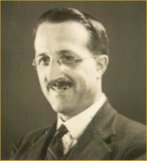
G.R.C. We have been engaged with the assembly as presented in the book of the Acts.
- This afternoon we arrive at the objective with which we commenced, that is, to consider the valuation that God Himself places upon the assembly, according to Acts 20: 28, where the apostle says,
- “the assembly of God, which he has purchased with the blood of his own”.
- He is viewing the assembly of God, as down here, needing care and shepherding.
- The Holy Spirit has the matter in hand and sets certain ones in – not “over” – the flock as overseers, to shepherd the assembly of God.
- This work is to be done from the standpoint of the valuation that God places upon this great vessel which,
- in its final setting as presented in Ephesians 3 and also in other passages such as Revelation 21,
- is seen in its glory as the trusted vessel to which He commits, through eternity, the responsibility of diffusing the light of God and of leading the universe in the ascription of praise to God.
- So from this standpoint it is a most choice and august vessel, the acme of divine workmanship.
- God has secured a vessel able to take on the greatest responsibility of any creature vessel in the universe,
- and to fulfil it in the power of the Spirit and in the power of union with Christ,
- without the slightest risk of breakdown and without coming short in any way.
- There will be carried out in it a service which is adequate to the greatness of God Himself,
- both in the ascription of glory to Him and the diffusion of the light of His glory to the universe.
- Oh, that we had an appreciation of it!
- It involves the following of Paul’s ministry from beginning to end, and no doubt the setting at Ephesus was ordered by God to bring that home to us.
- Paul finds about twelve men who had not yet begun their Christian experience, for they had not even heard that the Holy Spirit was come.
- They did not yet belong to the assembly; they had been baptised only with the baptism of John;
- and so Paul begins with this material, and under his tuition they are carried from the beginning of true Christian experience, that is, Christian baptism, to the great climax, as to which Paul says,
- “I have not shrunk from announcing to you all the counsel of God”, Acts 20: 27.
- To go through that course of instruction requires the greatest application, and, therefore, in chapter 19 and again in chapter 20, verse 1, they are called “disciples”.
- I think, in the period covered by Paul’s ministry, the saints are generally called “brethren”, but Ephesus is an exception.
- It says, “Paul, having passed through the upper districts, came to Ephesus, and finding certain disciples”, 19: 1-2, and then in verse 9,
- “but when some were hardened and disbelieved, speaking evil of the way before the multitude, he left them and separated the disciples, reasoning daily in the school of Tyrannus. And this took place for two years”.
- Then when he is leaving them the Spirit of God still calls them disciples,
- “after the tumult had ceased, Paul having called the disciples to him”.
- That title goes with Matthew, the assembly gospel, where the saints are called “disciples” after the Lord rose from the dead;
- and also with John where they are similarly called “disciples” after the Lord rose from the dead.
—McK. Will you distinguish between the two, the “disciples” and the “brethren”?
G.R.C. Paul’s initial aim wherever he went was to bring about family conditions amongst the saints, because
- the warmth of family affections must underlie the truth of the assembly.
- Thessalonians brings in Paul’s foundations upon which he would erect the Corinthian structure; and so in connection with his ministry in Acts the term “brethren” is prominent.
- I would not think that that was at all lacking at Ephesus, only I think the Spirit of God at this point in Acts would stress
- the paramount need of discipleship in whole-hearted application to the truth, if we are really to get the gain of Paul’s ministry.
- It is a most extensive ministry and requires the greatest application, in fact daily application.
- It is not sufficient to seek to follow Paul’s ministry only in ‘city readings’ as we call them; we must apply ourselves to it every day, and so it stresses
- “reasoning daily in the school of Tyrannus”.
- This went on for two years, and I would think there would have been keen interest among the disciples and that they would not have missed one day out of the two years.
S.H. Is it significant that in chapter 14 we have disciples encircling Paul after he had been stoned in Lystra and dragged out of the city and left for dead?
- Then later he is the only one who is said to have made disciples; he made many disciples – Acts 14: 21. I was thinking of Matthew 28: 19.
G.R.C. These scriptures are very interesting, showing how true he was to the commission of Matthew 28. He made
- “disciples of all the nations, baptising them to the name of the Father, and of the Son, and of the Holy Spirit”,
- with a view to their becoming assembly material.
F.O.W. Teaching links with the school of Tyrannus.
G.R.C. And also with the thought of disciples.
Eu.R. What is involved in making disciples? Would it suggest a state of subjection, to be a learner?
G.R.C. Yes, also affection for the Lord Jesus, prepared to follow Him in reproach.
Ques. So would you think that no one could make disciples who was not a disciple himself?
G.R.C. I am sure of that.
R.W. Is Apollos in that category? It says of him that he was
- “an eloquent man, who was mighty in the scriptures … He was instructed in the way of the Lord, and being fervent in his spirit, he spoke and taught exactly the things concerning Jesus, knowing only the baptism of John …
“And Aquila and Priscilla, having heard him, took him to them and unfolded to him the way of God more exactly.
“And when he purposed to go into Achaia, the brethren wrote to the disciples engaging them to receive him, who, being come, contributed much to those who believed through grace”,
Acts 18: 24-7.
G.R.C. That is good. It shows that the spirit of discipleship marked Apollos. He was willing to learn from those who, in the public eye, were a simple brother and sister, yet they were more spiritual than he.
C.E.B. Would you say a word more as to the school of Tyrannus, because is it not in the school of Tyrannus where disciples are made?
G.R.C. I would say it is in the school of Tyrannus that disciples are instructed.
- I think the making of disciples must depend on the personality of the one with whom they come into touch, because these are already said to be disciples; they had already been affected, possibly by Apollos, who had been at Ephesus,
- “he was instructed in the way of the Lord … and taught exactly the things concerning Jesus, knowing only the baptism of John”, Acts 18: 25.
H.B. Would it involve influence?
G.R.C. I think so. Should we not all make disciples?
- If so, it is essential that we should be true disciples ourselves, subject and ready to learn, keen, too, with our affections engaged so that we are prepared to go to any length to know the whole truth.
- Then we shall affect other people. Paul was like that himself; Paul was prepared to go through anything for the truth’s sake.
J.O.S. How would you apply the daily instruction?
G.R.C. Should we not keep the truth in its highest levels, as committed to Paul, before us every day, so that it enters into our daily exercises?
- If so, we shall never think there are too many occasions of coming together to get help.
- We may not be able to be present on every occasion, but we shall never complain of the number of occasions on which the brethren are together.
- It seems that it was normal in Acts for the brethren to be together every day.
- They were daily in the temple, Acts 2: 46, and there was the daily ministration, Acts 6: 1.
J.O.S. Do we need to be more concerned as to the daily reading of the higher levels of the ministry?
G.R.C. I think it would help if we knew how to regulate ourselves and our time better, so as to give the things of God first place.
C.R.W. It says of Bartimaeus that he followed Jesus in the way. We read a great deal about “the way” in Acts. Is it a question of earnestly following in the way?
G.R.C. I think it is, and of realising that it is a course of instruction which requires application and is worthy of the greatest faculties that a man possesses as empowered by the Holy Spirit.
P.W.T. Does Matthew give the greatest result of discipleship,
- “it is sufficient that the disciple should become as his teacher”?
G.R.C. We should like, as far as we can, to keep pace with Paul.
C.C.I. Does discipleship underlie the matter of responsibility in the assembly and the worship of God?
G.R.C. I would think a true disciple is one who feels the responsibility laid upon him to follow the truth the whole way.
C.C.I. That is, the matter is distinct from the matter of privilege, as suggested in “the brethren”.
G.R.C. There is the side of privilege, but the school of Tyrannus does not exactly suggest privilege.
- It suggests a place where the greatest application and concentration is needed, and a true disciple would feel the responsibility of following the truth right to its climax and not in any way stopping short.
- Paul says, “for I have not shrunk from announcing to you all the counsel of God”.
- Have we got as far as that? I am sure we should like to know more about it.
A.A.B. Have we an example of a true disciple in Timothy, one who fully followed things up?
G.R.C. Timothy is a great encouragement to us; he fully followed up what he had seen and heard in Paul.
J.O.S. Is there a suggestion in the fact that the name is Tyrannus? There is an element of compulsion in the matter if we are to arrive at the end.
G.R.C. Quite so. Paul says in Philippians,
- “not that I have already obtained the prize, or am already perfected; but I pursue, if also I may get possession of it, seeing that also I have been taken possession of by Christ Jesus.
- “Brethren, I do not count to have got possession myself; but one thing – forgetting the things behind, and stretching out to the things before, I pursue, looking towards the goal, for the prize of the high calling of God in Christ Jesus”, 3: 13-15.
A.M.M. Would the disciples understand liberty and co-operation in moving together and helping together? I was thinking of the number twelve. There was something which held them together in true interest and affection; is that not a basic thing?
G.R.C. Twelve is a love number, as we have often been reminded.
- If the number twelve, in a spiritual sense, is truly present with us there will be a working out of the whole truth in love. God gives us persons to walk with in our localities.
- There may not be many, but if the number twelve is there spiritually we shall find, amongst those available, the opportunity to work out the truth practically and concretely for God.
C.C.I. In Acts 20, where Paul was teaching publicly and in every house, he also says,
- “Wherefore watch, remembering that for three years, night and day, I ceased not admonishing each one of you with tears”.
- It is not only what is done in the meeting, but the conversation that goes on in the houses of the saints.
G.R.C. The meetings energise us. Some say there are so many meetings they cannot visit the saints, but Paul did both.
- He had meetings every day, and he visited every house, working night and day.
- Some of us want fixed hours and do not want to work overtime, but Paul knew nothing about that kind of thing.
Ques. He also earned his living in the normal way; he had not retired.
G.R.C. He worked with his own hands to keep himself and those with him.
H.W. I was going to ask whether discipleship is preliminary to being a good workman?
G.R.C. Just so, and I am sure if we follow up Paul’s teaching we shall learn the plan.
- He was a wise architect and did not begin his work without having the whole plan of the assembly before him. We also need to have the plan, otherwise we are just beating the air.
H.F. Is that why in the next section the word ‘announcing’ is used,
- “I have not shrunk from announcing to you all the counsel of God”, Acts 20: 27?
- Does the announcing correspond with the Spirit’s service in John 16, bringing back a report?
G.R.C. It shows the dignity of the whole matter. Ephesians 1 helps as to the counsel of God.
G.F.S. Would both the lower and higher levels of the truth be involved in it?
G.R.C. That is just what I was thinking. Ephesians 1 unfolds God’s will.
- In Colossians Paul prays to the end that the saints might be
- “filled with the full knowledge of his will, in all wisdom and spiritual understanding”, 1: 9, and
- then Epaphras was “combating earnestly for you in prayers, to the end that ye may stand perfect and complete in all the will of God”, 4: 12.
Ephesians 1 speaks of the will of God in three parts:
- first, the good pleasure of His will, which links with Paul’s gospel, the truth of sonship,
- “having marked us out beforehand for adoption through Jesus Christ to himself, according to the good pleasure of his will”, 1: 5.
- Then God would have His sons intelligent as to His great plan for the universe, and so Paul speaks of
- “the riches of his grace which he has caused to abound towards us in all wisdom and intelligence, having made known to us the mystery of his will”, 1: 9.
Sonship is a very great matter but is not difficult to understand, whereas all wisdom and intelligence is needed to understand the mystery of God’s will,
- “according to his good pleasure which he purposed in himself for the administration of the fulness of times to head up all things in the Christ”, 1: 9-10.
That involves the assembly as associated with Him in the headship, according to verses 22-23.
- Finally, he speaks of “the purpose of him who works all things according to the counsel of his own will”,
- which includes what we have referred to as the lower levels of the mystery because it is the working out of things in the ways of God.
Purpose is the great objective, but in reaching it He works all things according to the counsel of His own will. It is the counsel of His will that tests our wills.
The good pleasure of His will in marking us out for sonship does not test our wills, we are delighted with that; the mystery of His will does not test our wills, although it tests our intelligence.
But in working all things according to the counsel of His own will He cuts right across the will of man. He does not consult man, for He takes counsel with no one but Himself.
- “For who has known the mind of the Lord, or who has been his counsellor?” Romans 11: 35.
The counsel of God’s will tests our wills, but if it is submitted to it will lead to a doxology with us, as it did with Paul in Romans 11: 33-5; and this, in turn, makes way for the doxology relative to purpose in Romans 16: 25-7.
A.B. Would it lead to subjection in regard to God’s ways with us?
G.R.C. It would. It needed subjection at the outset.
- “That we should be to the praise of his glory who have pre-trusted in the Christ”
- refers to Jewish believers, and
- “in whom ye also have trusted, having heard the word of the truth, the glad tidings of your salvation; in whom also, having believed, ye have been sealed with the Holy Spirit of promise”
- refers to Gentile believers, while
- “who is the earnest of our inheritance”
- means that Jew and Gentile share a common inheritance.
- The counsel of God’s will decreed that the Jew should come in first, and then the Gentile, and that both should have part in the inheritance.
- That is what tested Peter when he saw the
- “heaven opened, and a certain vessel descending as a great sheet … in which were all the quadrupeds and creeping things of the earth”, Acts 10: 11-12.
- That vision related to the counsel of God’s will and enters, in principle, into the make-up of every local meeting.
- We have no choice as to our companions; we may have persons of different colour, race, nationality and social status in the same meeting.
- We would not have chosen such companions at all, but God has chosen them and has put us together to work out the truth practically.
- Are we going to quarrel with the counsel of His will, or shall we not rather submit in a spirit of worship saying,
- “Who has known the mind of the Lord, or who has been his counsellor, or who has first given to him, and it shall be rendered to him? For of him, and through him, and for him are all things; to him be glory for ever. Amen”, Romans 11: 34-6.
- His arrangements are all part of the working out of His perfect plan.
A.H. Does Job arrive at this by the way of the breaking of his own will? He said,
- “I know that thou canst do everything, and that thou canst be hindered in no thought of thine. Who is he that obscureth counsel without knowledge? Therefore have I uttered what I did not understand; things too wonderful for me, which I knew not”, Job 42: 2-3.
G.R.C. That is very helpful. Job repented in dust and ashes, and that is where we need to be; and that is where an understanding of Romans 9, 10 and 11 would bring us.
- We are just vessels of mercy. We all belong to the clay of fallen humanity and God has been pleased to take up certain ones.
- There is no question of superiority. Not one of us has any rights. Every believer, if he understands Romans 9, 10 and 11 rightly, recognises that.
- Whatever is brought to pass of any value must be of Him and through Him and for Him. There is no glory to man at all.
R.S.W. Does Elihu bring Job to that standpoint, to view things according to God?
G.R.C. He does, and we need to help one another so that we accept the counsel of God’s will and do not resist His purpose.
J.P.H. Does that enter into God’s ways with us personally? Whatever they may mean and however we may feel them, we are happy about them, and happy with Him, recognising that they work out for added wealth in the service of God.
G.R.C. I am sure of that: “O depth of riches both of the wisdom and knowledge of God! How unsearchable his judgments, and untraceable his ways! For who has known the mind of the Lord, or who has been his counsellor?” Romans 11: 33-4.
- He does not take counsel with anyone in what He does with each one of us in His ways and in what He may bring upon us.
- He takes counsel with Himself in perfect wisdom and knowledge, with a view to reaching the end He has in view, that is, His purpose:
- “the purpose of him who works all things according to the counsel of his own will”.
W.S.S. Did counsel enter into His early movements in Genesis?
G.R.C. I have no doubt that the counsel of His will entered into creation, and into the Incarnation, too.
A.M.M. Is it at this point that the service of God begins? It says here,
- “that we should be to the praise of his glory”.
- If we are to have an intelligent part in the service of God we must be marked by subjection to His will.
C.W.O’L.M. Is not the fullest cost of the working out of the counsel of His own will seen in the Lord Jesus in Gethsemane? I was thinking of the praises of Israel as the working out of Psalm 22.
G.R.C. That is very affecting indeed. You are thinking of the depths of Christ’s sufferings in that Psalm, and all that entered into the counsel of God’s will. Who could measure what it cost Christ?
Eu.R. The verse we are so accustomed to in relation to the service of God,
- “I will declare thy name to my brethren; in the midst of the assembly will I sing thy praises”, Hebrews 2: 12,
- comes from that same suffering psalm.
G.R.C. The Lord’s motive in going into death according to Psalm 22 was to lay the basis for the declaration of the name of His God and to secure the praises of His God.
A.B. Would you think the praise of His glory relates to the administration of the fulness of times? I was wondering whether it would work out at the Lord’s coming and go on to the eternal day.
G.R.C. It will, but all that is anticipated now, because it says the Holy Spirit is the earnest of our inheritance.
- What will accrue to God in and through the assembly in the world to come and in the eternal state is to accrue now in a spiritual way, because the Holy Spirit is here.
J.O.S. Would you say that the land as apportioned by Joshua is a kind of pattern of our inheritance, fitting into the thought of the counsel of God’s will; but in David the service of praise involves God’s inheritance in the saints?
G.R.C. Quite so.
G.W.B. Are we thus acquiring a knowledge of God? Is it thus that we have substance for His service?
G.R.C. Just so. We are getting help as to the last phase of the service – the worship of God, as such;
- but I am sure most of us have felt, since the exercise was raised, how little substance we have for that phase of the service.
H.B. Would not the sense of mercy preserve us in freshness in our relations with God? David says,
- “but as for me, I am like a green olive-tree in the house of God”.
G.R.C. The Holy Spirit is the earnest of our inheritance. If we give Him His place we shall be ever fresh in our communications with one another, in our response to Christ and in the worship of God. He is the source of all freshness.
A.H. I am wanting help as to
- “Blessed be the God and Father of our Lord Jesus Christ”, and the whole portion down to verse 14.
- I am asking for help, because I observe that you are speaking much of God, but are you referring to God as Father or are you referring to God in the full sense now?
G.R.C. I would think he begins by saying,
- “Blessed be the God and Father of our Lord Jesus Christ”,
- because sonship in the first instance is before his mind.
- But I do not think the expression “his will”, as used throughout this section, could be limited to one Person of the Godhead.
- J.N.D. has said that God is One in will, in thought, in purpose; that there is separate “willing” but only one will.
A.M.M. Does not the apostle begin with God’s will,
- “apostle of Jesus Christ by God’s will”?
G.R.C. Quite so. In Ephesians 3, about which we ought now to speak, God’s assembly is brought before us in a very powerful way. Paul says,
- “I have not shrunk from announcing to you all the counsel of God”.
- I think “all the counsel of God” covers all that we have been saying:
- It is a general expression covering the whole purpose of God and the way He brings it to pass, an inclusive idea. It is in the light of that that Paul uses the remarkable expression,
- “the assembly of God, which he has purchased with the blood of his own”.
In Ephesians 3 he refers to the assembly as functioning at the present time.
- The book of Revelation helps as to the functioning of the assembly in the world to come and in the eternal state;
- but we need Ephesians 3 in order to understand how we can function now and anticipate what is actually future now, and so we read,
- “in order that now to the principalities and authorities in the heavenlies might be made known through the assembly the all-various wisdom of God”, 3: 10.
- We ought to notice that in this chapter God is prominent.
- It speaks of “the mystery hidden throughout the ages in God, who has created all things in order that now to the principalities and authorities in the heavenlies might be made known through the assembly the all-various wisdom of God, according to the purpose of the ages which he purposed in Christ Jesus our Lord, in whom we have boldness and access in confidence by the faith of him”, verses 9-12.
- I think the word ‘boldness’ links with the thought of God in His greatness, and that these verses suggest the assembly functioning both in administration and, what is more important still, in the service Godward.
F.O.W. So that the praise of His glory would be in the ears of the whole creation.
G.R.C. There are not many men available to listen to it at the present time, but principalities and authorities in the heavenlies are taking account of the service of God proceeding in the assembly.
J.P.H. Does it emphasise the greatness of our portion, we have to subserve everything else to it? The service of God is what we live for?
G.R.C. So you can understand even at the present time how precious the assembly is to God, “which he has purchased with the blood of his own”.
- I think the principalities in the heavenlies observe through the assembly the all-various wisdom of God as it functions under the headship of Christ.
- “The unsearchable riches of the Christ”,
- of whom Solomon was a type, are available to the assembly as under His headship, and thus she is fully endowed in the service of God.
W.S.S. Would the expression
- “all-various wisdom of God”
- link with the thought of counsel in chapter 1?
G.R.C. Is not the wisdom seen in the way the assembly serves as under the headship of Christ?
- Christ is the true Solomon, He has unsearchable riches in the way of substance and in the way of wisdom;
- and, as the assembly functions under His headship, every feature of divine wisdom comes into display.
E.C.H. In the functioning of the assembly?
G.R.C. Yes. Is it not well to understand God’s purpose in this connection?
- This chapter refers to His purpose relative to the present time;
- the fulfilment of purpose according to chapter I will be complete in the future,
- but chapter 3 refers to the purpose of God about the present moment. He has secured the assembly,
- “which he has purchased with the blood of his own”,
- in view of a present answer to His thoughts,
- “according to the purpose of the ages which He purposed in Christ Jesus our Lord”.
R.L. It says in the note that the word “purchased” is really ‘purchased to himself’, Acts 20: 28.
J.P.H. The note connects with the note on Hebrews 1, showing that what God has done is in view of what is for Himself now and eternally, the purchase of the assembly.
- That links with the last verse we read, what He secured for Himself now and eternally,
- “to him that is able to do far exceedingly above all which we ask or think, according to the power which works in us, to him be glory in the assembly in Christ Jesus unto all generations of the age of ages”.
- It begins now and goes right on, is that right?
G.R.C. Quite so.
J.P.H. One would like to emphasise the greatness, the importance and the value of the service of praise – glory to God in the assembly.
A.McG. Does that bear on the remarks made in an earlier reading as to what God has set in the assembly for Himself?
G.R.C. And especially on the fact that He has purchased the assembly for Himself.
Page Top Reading 5 Top
| THE CITY OF THE GREAT KING |
|---|
Address by G. R. Cowell, Ipswich, April 1954
Psalms 2: 6-8, 12; 45: 1-9, 13; 22: 1-3, 22; 48: 1-3, 8-10
The Headship of Christ and of God: 195-204
|
|---|
I wish to say a word, dear brethren, as to God’s Son and God’s King, and what the assembly is to the King;
- and also to speak of God as King, and what the assembly is to God.
It is a great joy to speak of the King; the Psalmist might well say,
- “My heart is welling forth with a good matter: I say what I have composed” – or, ‘my occupation’ – “touching the king”.
- The King is a wonderful occupation!
- The King, indeed, enraptures all our hearts as we come to know Him and apprehend His glories. He is the Beloved. Psalm 45 is headed
- David’s name means ‘beloved’; Solomon’s other name – Jedidiah – means ‘beloved of Jehovah’.
- God’s idea of a King is that He rules in the affections of His people – He is the Beloved. Not that He is King over the assembly.
- If we think of an earthly king and queen, we do not think of the king as ruling over the queen; and yet no one appreciates the king as much as the queen.
- If the queen refers to the king you know whom she means; it is her husband, he is the king to her.
- That is how the church stands related to Christ: He is head over all things. He is truly God’s King, but He is head over all things to the assembly.
- No company will ever have such an appreciation of the King as the assembly, The King is her Husband, and the fact that He is the King only enhances to her the wonder of His affection for her as Husband.
- It is wonderful to her to think that such a Person as the King needs her for the satisfaction of the affections of His heart, and also needs her as His consort in the glorious position which He occupies as King,
- and that He will not take up that position publicly until the queen is by His side. Now that is what is true as regards Christ and the assembly.
- At the present time He has left other things to be united to the assembly, and not till the assembly is complete and in glory at His side will He take up all the vast interests in a public way which pertain to Him as head over all things.
- The assembly will then share with Him in the headship. Thus no company has such an appreciation of the King as the assembly, because, to use the figure, she is the queen; and who values the king, even in a human royal family, like the queen?
But the King is not only beloved to the assembly, He is beloved of God.
- God chose David, a man after His own heart, who would do all His will. How God loved David! He said,
- “I will make him firstborn, the highest of the kings of the earth”, Psalm 89: 27.
- So the scripture says,
- “Behold my servant, whom 1 have chosen, my beloved, in whom my soul has found its delight”, Matthew 12: 18.
- Think of God expressing Himself like that! And then,
- “I will put my Spirit upon him”
- – that is the King. God says, as it were, ‘I will anoint that Man because He is my Beloved, and My soul has found its delight in Him’. That is what the title ‘the Christ’ means.
- God has put His Spirit in its fulness upon one Man and one Man only. We share in the anointing, but the Spirit in its fulness is upon the Christ.
Psalm 2
So Psalm 2 says, “I have anointed my king upon Zion, the hill of my holiness”.
- The King in the Old Testament corresponds with “the Christ” in the New. He is the Anointed, God’s beloved in whom His soul has found its delight, the Man after His own heart who will do all His will.
- God can trust Him fully and has put all power in His hands, assured that everything will be carried through according to His will.
- “The Christ” is an official title and relates to the highest office in the universe. We little realise – we shall see it soon! – the magnificence and splendour attaching to it;
- an office so great that, although it belongs to manhood, only a Person of the Godhead could fill it.
- So when Paul refers to the incarnation in Romans 9 he says,
- “of whom, as according to flesh, is the Christ, who is over all, God blessed for ever”;
- because no one who was not “over all, God blessed for ever” could ever sustain in manhood the glorious office of “the Christ”.
- God says, “in whom my soul has found its delight”.
- The soul of the assembly also finds its delight in the Christ; our soul goes out to Him. We are espoused to one Man, there is no rival to Christ in the assembly.
But Psalm 2 goes on to say,
- “Thou art my Son; I this day have begotten thee”,
- and the great truth of Christianity is that this blessed Person who is the Christ is God’s Son. Only a Person in the relation of sonship could fill out this great position.
- All that God had in His mind in purpose as to man finds expression in the Christ. In Him we see manhood in its fulness and glory according to God.
- Paul speaks of the radiancy of the glad tidings of the glory of the Christ, who is the image of God. There is God’s full thought of Manhood, but it is expressed in One who is in the relationship of Son.
- Psalm 2 brings out the glories of Christ in a remarkable way,
- “I have anointed my king”, then, “thou art my Son; I this day have begotten thee”,
- and then in the last verse there is a word to the kings of the earth:
- a title which especially brings before the soul His Deity. It is a remarkable opening to the Psalms.
- This blessed Person, who is the Son of God and the Christ of God, is the Son co-equal with the Father and with the Holy Spirit.
- “Kiss the Son, lest he be angry”.
- We are on the eve of the time when that word will go out to the kings of the earth, because the time is at hand when
- no earthly ruler will be allowed to exercise any authority except that which he derives from God’s King.
- The kissing of the hand, as we know, is an acknowledgment of royalty; in this country when the king appoints his ministers they kiss his hand.
- That is the idea. No earthly authorities will be allowed to exercise power unless they are prepared to kiss the Son and receive their power from Him. He is the King of kings and the Lord of lords.
Psalm 45
Now I wish to speak a word as to what the assembly is to Christ according to Psalm 45. The Psalm opens,
- “To the chief Musician, Upon Shoshannim”,
- and the word ‘Shoshannim’ means ‘lilies’.
- This Psalm, which is a song of the Beloved, runs very closely along with the Song of Songs.
- The Song of Songs speaks of the Beloved, and the Beloved is the King. At the beginning of the Song the spouse says,
- “the king hath brought me into his chambers”, and “while the king is at his table, my spikenard sendeth forth its fragrance”.
- The Song of Songs also refers to lilies; it says more than once that the Beloved feeds among the lilies. There is a reference to the spouse too; she says,
- “I am the narcissus of Sharon, a lily of the valleys”; and He says, “as the lily among thorns, so is my love among the daughters”.
- If the assembly is to be what she should be for Christ, the character suggested in the lily must mark her; and thus it must mark us all severally.
- The lily suggests purity, chastity and fragrance – that alone is worthy of the King. It is what He looks for in His spouse, and the Spirit is here that these conditions might be found with us.
- It is impossible to nature, but in sanctification of the Spirit the saints become lilies, marked by purity, chastity and fragrance for the Beloved;
- and as we are marked severally in that way, with what pleasure He can look upon the assembly and say,
- “as the lily among thorns, so is my love among the daughters”, and, “thou hast ravished my heart, my sister, my spouse”.
- In such conditions the praises are set free, the Lord has His portion and we have our portion too.
- “He feedeth among the lilies”.
“My heart is welling forth with a good matter; I say what I have composed touching the king. My tongue is the pen of a ready writer”.
- I cannot go into the details of this Psalm, but I believe it provides abundant material for enlargement in our praises to the Lord Jesus because it views Him in so many settings:
- first in His moral excellencies and worth,
- “Thou art fairer than the sons of men”;
- secondly, in His military might and majesty,
- “Gird thy sword upon thy thigh, O mighty one, in thy majesty and thy splendour”;
- thirdly, on the throne and wielding the sceptre,
- “Thy throne, O God, is for ever and ever; a sceptre of uprightness is the sceptre of thy kingdom”,
- the assembly recognising the truth of His Deity and worshipping Him accordingly.
Yet, as so frequently happens in scripture, His Deity is set alongside His manhood, as it says,
- “thou has loved righteousness and hated wickedness; therefore God, thy God, hath anointed thee with the oil of gladness above thy companions”.
- It is the Person we worship. It is not true to say that we worship Him as God and not as man. There is to be no such analysis of the Person of Christ.
- Following this the Psalm depicts the blessedness of being near to Him in the palace. in His own sphere of glory.
- You can understand where there are ‘lily’ conditions – purity, chastity and fragrance – how readily we shall move into the glorious surroundings of the King Himself!
- Ever occupied with His Person, we are led into His own glorious surroundings:
- “Myrrh and aloes, cassia, are all thy garments”.
- How close we are to Him – the odour of His garments affecting us!
- “Out of ivory palaces stringed instruments have made thee glad”.
- “Kings’ daughters are among thine honourable women; upon thy right hand doth stand the queen in gold of Ophir”.
- We are with the King in this glorious setting, conscious of his satisfaction with the one who is on His right hand, a consort entirely worthy of Himself in the glorious surroundings of the palace.
- Not many are privileged to know a king in his palace, but this is our portion.
- “All glorious is the king’s daughter within”
- – within the royal apartments; she is there. conscious of her perfect suitability to be there for the satisfaction of the King, her husband.
- What a blessed thing that is! What a privilege the assembly has thus to be for Christ!
Psalm 22
Now I pass on to Psalm 22, which refers not so much to the assembly as for Christ, but as with Christ – that is, as moving with Him.
- The heading is. “Upon Aijeleth-Shahar”, which means, ‘the hind of the morning’.
- As we know what it is to be with the King in the royal apartments, and as reciprocal affections between Christ and the assembly are satisfied, we are free to move with Him.
- This again links with the Song of Songs, where the Beloved is referred to more than once as “a gazelle or a young hart”. The spouse says,
- “The voice of my beloved! Behold, he cometh leaping upon the mountains, skipping upon the hills. My beloved is like a gazelle or a young hart”, chapter 2: 8.
- The point of the Song of Songs is, Is she capable of moving with Him?
- Except when her state is bad she is glad to receive Him and to be for Him in His house of wine. But is she free to move upwards with Him?
- Psalm 22 suggests the assembly in her perfect ability, as a vessel formed by the Spirit, to move with Christ. He is the gazelle or the young hart upon the mountains; she is the hind of the morning.
- So that if He moves she will not be left behind. She is well able to move alongside her Beloved to whatever heights He may be pleased to lead her; she is marked by spiritual agility to tread in the high places.
- “He maketh my feet like hinds’ feet”, Habakkuk 3: 19,
- and the Song of Songs reaches this point as a climax. The last verse is spoken by the spouse; she says,
- “Haste, my beloved, and be thou like a gazelle or a young hart upon the mountains of spices”.
- That is what she says. Who could say that but ‘the hind of the morning’?
- It is not that she is inviting Him to leave her – not at all; she is urging Him to move into the heights because she knows she is able to accompany Him.
- Not that He needs any urging; His affections and thoughts are ever in that direction.
- He says to the woman in John 20, who represents ‘the hind of the morning’,
- “I ascend to my Father, and your Father, and to my God, and your God”.
- Was Mary dismayed? Not at all! She had no thought that that meant she would lose Him. The hind of the morning has the inner conviction that if He ascends she is well able to go with Him, in the Spirit’s power; she will not lose Him.
- The Song of Songs deals with the reciprocal affections between Christ and the assembly; but it is to prepare us for what is beyond in the service of God;
- and the last verse shows that the spouse is ready, and not only ready, but she is urging Him, and that is very precious to Christ.
- He needs no urging, of course; but how precious to Him when the spouse comes to the point when she is urging Him, saying, “Haste, my beloved”, as much as to say, It is time to move, it is time to move on into the heights.
If we are to be prepared to move into the heights it not only requires that we should understand reciprocal affections between Christ and the assembly, and thus be fully under the impulse of His love,
- but that we should have some appreciation of the depths into which He has been and thus have true wifely feelings in this matter.
- The Lord has been into the greatest depths that He may lead the praises of God in the greatest heights; that is why the hind of the morning is in the setting of Psalm 22.
- It is the sufferings of Christ presented, not from the standpoint of our salvation – although necessary for that – but from the standpoint of His God:
- what He suffered to lay the basis for the declaration of the name of His God and to secure the praises of His God.
- So that when we come to this side of the truth as to moving with Him, we apprehend Him not only as the Christ but as the Son of God, and we are thoroughly with Him in all the movements of His heart Godward.
- John stresses that Jesus is the Christ, the Son of God. We must never separate these things; the Christ is the Son of God, and if He has His way as the Christ He will lead us to God, for He is the Son of God.
- Paul presents the truth in the reverse order, that Jesus, the Son of God, is the Christ. We need the truth in balance in our souls.
- Paul would say, that blessed Person, the Son of God, is the One in whom all the counsel of God as to man finds its fulfilment. He is the Christ, the centre of everything for God.
- Whereas when the Person of Christ was attacked, as He was at the latter part of the first century, John writes to enforce the truth that Jesus, the Christ, is the Son of God. This we must hold in the fullest possible way.
So we move with Him who is the Son of God.
- “I ascend”, He says, “to my Father, and your Father, and to my God, and your God”.
- It is one ascension. The words “I ascend to”, or ‘towards’, govern the whole sentence. It is one act of ascension, but it covers two phases of the truth:
- “to my Father and your Father, and to my God, and your God”.
- “My Father and your Father” is the realm of privilege; it brings into view the Father’s house and all the blessedness of our access to the Father in home conditions:
- “that where I am ye also may be”.
- Who can think of what is more blessed than to know God in this intimate way in the economy, knowing His Father as our Father?
- But then, when you come to the other expression, “my God and your God”, it brings in the additional idea of responsibility, and I hope you will not misunderstand what I am saying.
- I do not mean responsibility as children of Adam, but the moment you get the thought of God you have the idea of responsibility; the name God must imply responsibility – “my God and your God”.
- As I say, I do not want anyone to misunderstand the way in which I am using the expression ‘responsibility’;
- but what I would say is that the assembly of God is a responsible vessel, the most responsible vessel in the universe.
- Because it is the subject of divine work it will never fail in responsibility, it will fulfil every function which has been allotted to it.
- When you think of the Father’s house you are not thinking of responsibility; it is privilege.
- But “my God and your God” would bring to our minds the assembly of God and what is entrusted to that vessel; it will never break down.
- It is not responsibility in the sense that there is any possibility of breakdown; but think what God has entrusted to that vessel!
- It is the city of God, the temple of God, the tabernacle of God!
- It will never break down in any of these settings, but remains inviolate in its eternal greatness.
- “Glorious things are spoken of thee, O city of God”, Psalm 87: 3.
- I delight in the idea of a vessel in which responsibility as to the whole universe centres and which, through the power of the Spirit and the power of union with Christ, will never break down in responsibility.
- It will fulfil every function God has allotted to it, for it is the assembly in Christ Jesus. What a contemplation!
- All this is in mind as we think of “my God and your God”. The assembly is the city of Christ’s God.
Psalm 48
Psalm 48 refers to God in His glorious greatness and to the assembly in its glorious character relative to God. Psalm 47: 5-6 says,
- “God is gone up amid shouting, Jehovah amid the sound of the trumpet. Sing psalms of God, sing psalms; sing psalms unto our king”.
- Who is the King? God. We have spoken of Jesus as the King, but now we move on to God as King.
- “Sing psalms unto our King, sing psalms! for God is the King of all the earth; sing psalms with understanding”.
- That is what we need in this part of the service: understanding as to how to praise God.
- So the next Psalm says,
- “Great is Jehovah, and greatly to be praised in the city of our God, in the hill of his holiness”.
- Whose city? The city of God – God is the great King.
- You say, I thought Christ was the great King; Christ is God, dear brethren,
- but as Man He delivers up the kingdom to Him who is God and Father;
- as Man He is placed in subjection that God may be all in all.
- The fact that as Man the Son retains the place of subjection eternally in no wise militates against the fact that in His I own Person He is God.
- There are plenty of scriptures to support what I am saying. The book of Revelation supports what I am saying; in the final view of the throne in Revelation,
- “he that sat on the throne said, Behold, I make all things new”, 21: 5.
- Who is the speaker?
- “I am the Alpha and the Omega, the beginning and the end”.
- Who could be “the Alpha and the Omega”? That title implies what has come into expression;
- it is the Person of the Godhead in whom things have come into expression – He is the One speaking as representing God.
- We are not called upon always to distinguish the Persons, and when it is a question of God, as such, we must never separate.
- But if we do distinguish who the Speaker is, it must be Jesus. He is speaking as God and representing God. We must never lose sight of the truth of the Lord’s Person.
- In the next chapter it says,
- “Behold, I come quickly, and my reward with me”.
- You say, That is a Man speaking; so it is. But He immediately says,
- “I am the Alpha and the Omega, the first and the last, the beginning and the end”.
- We must never forget that Jesus is now glorified along with the Father, with the glory which He had along with Him before the world was; all the glory proper to Deity attaches to Him.
- But, as I say, it is not for us to analyse or separate. We can distinguish, but we cannot separate Persons of the Deity; and
- the Lord Jesus finally surrenders the kingdom, as a Man, in order that God may be all in all.
- God is the King of the ages, and the assembly is the city of the great King, the city of God Himself.
- “Great is Jehovah, and greatly to be praised in the city of our God, in the hill of his holiness.
- “Beautiful in elevation, the joy of the whole earth, is mount Zion, on the sides of the north, the city of the great king”.
I would like to leave us with an impression, dear brethren, of the glory and the magnificence of the assembly as the city of the great King.
- The city is an inclusive thought, because it includes the house, the temple, the sanctuary; the river and the Tree of Life are there.
- Jerusalem of old included the house and the sanctuary. The city is the great inclusive idea, including all that is proper to the great King.
- What this Psalm stresses is the praise proper to the great King; but administration proper to the great King also proceeds from this city. So it says,
- “As we have heard, so have we seen, in the city of Jehovah of hosts, in the city of our God: God doth establish it for ever. Selah … According to thy name, O God, so is thy praise unto the ends of the earth”.
- How much is involved in that, the name of God! the name by which we know Him, the name to which we have been baptised:
- – the Father and the Son and the Holy Spirit.
- But though thus known, He is still none the less Jehovah Elohim, the One who from eternity to eternity is God.
- So that the final word in Revelation is the Lord God – i.e. Jehovah Elohim – will shine upon them.
- Who is Jehovah Elohim? The Father and the Son and the Holy Spirit, one God from eternity and to eternity.
May the Lord help us in our apprehension of these great things; may He help us to appreciate Himself in His glory as God’s King and as God’s Son.
- May He help us in true assembly features to respond to Him.
- May we be so helped on that line that we are ready to move with Him, to move in high places, to enter the realm of privilege,
- “my Father and your Father”,
- and to enter on this great realm of what I have spoken of – I do not wish to be misunderstood – as responsibility, what the assembly is as the city of the great King,
- where praises worthy of the great King never cease to be offered,
- and through which the light of the glory of God never ceases to be diffused to the whole universe.
Page Top Address Top
| KEY TO INITIALS |
|---|
THE ASSEMBLY IN THE BOOK OF ACTS
Meetings with G. R. Cowell
Ipswich, April 16-18, 1954
Names are from various sources and believed to be accurate.
? = uncertainty; initial ? = as to name; final ? = as to locality.
There are a number of initials for which names are not known.
|
|---|
A. P. Aris, Bournemouth
? A. G. Batts, Witney
C. E. Bedford, High Wycombe
A. A. Bellamy ?
? A. L. Bloomfield ?
E. J. Boyt, Manchester
George W. Brown, London
? Gilbert H. Brown ?
Gerald R. Cowell, Hornchurch
? J. W. Gravenstede ?
B. G. Hardingham, Cirencester
? John P. Hazel, London
? Alfred Helen, Richmond
? Josiah Harper, Colwyn Bay
Sidney Houston, Gillingham
David S. Hutson London
C. C. Ike(i)n, Southend
|
C. W. O'L. Markham ?
? John Mason, Belfast
Alistair McGregor, Hertford
Harold J. Miles ?
? Dr. Arthur Morford, Andover
? K. Parsons, Sutton
Eustace Roberts ?
Gordon F. Skinner, Ipswich
Wm. W. Smart, Glasgow
J. Owen Smith, Watford
W. S. Spence, Bournemouth
F. W. Tydeman, Ipswich
? D. W. Wade, Dartford
J. L. Wallach, Croydon ?
F. David Waterfall, Birmingham
R. Wood, Chelmsford
|
Page Top Key to Initials Top