Menu•SiteMap |
Ministry
Page Top
| READING 3 |
|---|
Head of the Assembly
Colossians 1: 12-18; 2: 9-10; Ephesians 5: 25-32
Genesis 2: 18, 21-24
The Headship of Christ and of God: 34-48 |
|---|
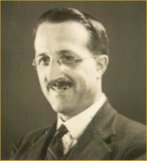
G.R.C. We come now in this reading to what is special: that is, Christ’s headship of the assembly,
- which is a much more sensitive and delicate and remarkable matter than His headship over all things.
- I thought we might be led to consider what Christ is to the assembly in Colossians, where it says,
- “He is the head of the body, the assembly”.
- What a head the assembly has!
- And then in Ephesians 5 and Genesis 2 what the assembly is to Christ; what she is on account of her origin and what she is to Him as His helpmate, His like.
- Perhaps we have little understood all the reasons that govern Christ’s love for the assembly.
But, to begin with, it is a question of the greatness and preeminence of the One who is the head.
- The passage we have read brings out His preeminence in the Father’s affections as the Son of the Father’s love, and His preeminence as the firstborn of all creation.
- As coming into manhood, He must rank as firstborn, because all things were created by Him and for Him, and He is before all.
- These are marvellous statements as to the Person of Christ, and the assembly has an appreciation of Him in every feature of His greatness.
E.J.F. Could you make a general remark as to the difference you see between what you are referring to now as to Christ as the head of the body, and what we were looking at yesterday in the end of Ephesians 1.
G.R.C. You are thinking of the expression
- “head over all things to the assembly, which is His body”?
- Well, I think if you view Christ and the assembly by themselves, then He is the head of the body the assembly. It is like a husband and wife, or a king and queen, viewed by themselves.
- But if you view them in relation to the whole realm that comes under the Christ, then He is head over all things to the assembly, because she is with Him in the headship.
- To use the illustration of a king and queen: they are together in the headship, but the queen would say, ‘My husband is head over all things to me’. Does that help, do you think?
E.J.F. You are meaning that the official position is a much more general and universal one?
G.R.C. In Ephesians 1 Christ and the assembly are viewed in relation to the whole realm over which Christ is head.
- He is head over all things, and the assembly recognises that, but then viewed in that position she is with Him in the headship.
- He is head over all things to her, but to the lower creation, as it were, she is with Him in the headship.
- But that does not alter the truth that, viewed by themselves, He is the head of the assembly. Ephesians 5: 23.
N.K.McL. Is headship in Colossians more personal, and in Ephesians 1 more official?
G.R.C. That is true, so that Colossians brings out, does it not, the personal greatness of Christ, whereas, as you say,
- Ephesians 1 is rather His official greatness.
- It is the greatness of the office or position in which God has placed Him and in which the assembly is with Him in glory.
- In His personal greatness He is unique and alone, yet it is such a Person who is head of the body, the assembly.
J.P.H. Does Ephesians 1 suppose union having taken place?
G.R.C. I think it does. Would you say why you think that?
J.P.H. Because she is sharing the headship with Him.
G.R.C. I believe that is true, answering to Genesis 1: 26, where it says,
- “Let them have dominion”,
- supposing that they are together in union.
A.S. Would you say how far “the kingdom of the Son of his love” bears on this?
G.R.C. I think the affections of the Father are drawn out because of the excellence of the Lord Jesus in His Manhood.
- The passage brings out the greatness of His Person, but then the assembly also appreciates, and, in some way, shares with the Father in His appreciation of the excellence and lovableness of the Son.
- He is the Son of the Father’s love; every excellent feature proper to man in the mind of God is seen in its full display in the Lord Jesus, so that He is not only the Son of the Father’s love but He is the Beloved of the assembly – He becomes our Beloved. Is that right, do you think?
A.S. Do you mean that the way in which the Father loves Him would affect us?
G.R.C. I think it does. The Father loves Him because He is so lovable. David and Solomon merge as a type here.
- Solomon represents the dignity and greatness of the relationship of son, then he is Jedidiah, the beloved of Jehovah.
- But of David God said,
- “I will make him my firstborn, higher than the kings of the earth”.
- God made him that because he was so lovable, so worthy of such a position.
- David means ‘Beloved’ and he is the one who qualifies for affection because of his lovableness,
- whereas Solomon, as it were, is born into the place of sonship typically; he is in it as a position.
- Both are true of Christ, of course:
- “Thou art my Son, this day have I begotten thee”;
- but then it is true of Him too:
- “I will make him my firstborn, higher than the kings of the earth”,
- because of His intrinsic perfections.
H.F.N. Would that be substantiated by the word in the fourth of Proverbs,
- “For I was a son unto my father, tender and an only one in the sight of my mother”,
- and then it speaks in the Song of Solomon of the
- “crown with which his mother crowned him”.
- Is this not, in principle, the assembly’s crowning of Christ in response to the Father’s love for Him?
- He will be crowned publicly, of course, by Israel, but I wonder whether this can be applied to the assembly’s crowning of the Person of Christ?
G.R.C. One has wondered about that, and I am glad you confirm it. The assembly surely would have maternal feelings of affection for Christ as the great ideal.
- The Father has reached, we may say, His ideal in the Son of His love, and the assembly is in line with that; as you say, she would crown Him.
- It is hardly the bride’s part to crown, is it? But there is, I suppose, that aspect of the assembly in which she is at liberty to crown Him.
Ques. Would you say the assembly has an understanding and an appreciation of all the greatness and glory of Christ as presented in this chapter?
G.R.C. That is just what I thought. The assembly can enter into it as no other company can.
J.A.P. Is it not very abrupt, the transition from what speaks of His deity here,
- “by him all things subsist”,
- to “he is head of the body”?
- It goes on without any suggestion of manhood, in a way.
G.R.C. I think His manhood is involved in the title
- it is His manhood introduced in a most endearing way.
- Then; “in whom we have redemption”
- also involves His manhood; and again,
- “who is image of the invisible God”
- refers to His manhood. It is in manhood that He is the image of the invisible God.
- Then, as you say, it makes clear that this Person, who is the image of the invisible God, is God, bringing out some remarkable statements, which the assembly would greatly appreciate as to the greatness of His Person.
- Then following all that it says,
- “and he is the head of the body, the assembly”.
A.G.B.. And is it not important to notice that immediately headship is referred to it is said,
- “who is the beginning, firstborn from among the dead”?
- Is it not in that setting alone that we can come into the gain of the headship of Christ?
G.R.C. I am sure that is right, and that is another great glory of His Person, that He is the beginning.
- Adam was not the beginning – the Lord Jesus is the beginning of everything for God; everything is patterned after Him.
- But then, He is firstborn from among the dead, as you say, because the old order had to be closed.
J.H. Would you mind saying a word about ‘firstborn’. We would like to understand it. Does it imply the chief place?
G.R.C. I think it is a matter of rank. He is the
- “image of the invisible God, firstborn of all creation”.
- As coming into the creation, He ranks as firstborn.
H.F.N. Would the Psalm confirm it
- “I will make him firstborn, highest of the kings of the earth”?
G.R.C. Yes. It is a question of the rank that God gave to David; God gave him that rank.
- But according to this passage the Lord Jesus is firstborn in the right of His own Person.
F.D.W. Could you enlarge a little for us on the expression you have used twice as to Him coming into the creation? I have heard it questioned.
G.R.C. It is what we call the incarnation.
J.P.H. It does not mean that He was part of creation, we know that, do we not?
G.R.C. Quite so. He is the Creator.
W.W.S. Does He not come into the creation as Creator, and by reason of taking a place in creation He must rank as the firstborn of all creation?
G.R.C. I think so. He comes into the creation as Man, that is the great truth.
- He is the Creator, but He comes into the creation as Man, however we may choose to describe it.
- The great point is that He is a Man, and it is as a Man that He is the image of the invisible God, and firstborn of all creation.
H.F.N. It is not a question of time, but the whole emphasis is on the dignity of the Person.
E.J.B. How does this bear on “he is the head of the body, the assembly”?
- Is it to stress the greatness of the assembly that such an One as He is its head,
- or is it an added feature which can be attached to Him that He has this glory that He is head of the body, the assembly?
G.R.C. I would not shut out either of those thoughts, but what is mainly in mind now is to bring out
- the greatness of the One who is the head, that the assembly has such a head.
- How it draws out our affections to Him! He becomes indeed to us the pre-eminent One.
Ques. Would it be summarised in the question by the daughters of Jerusalem in the Song of Songs,
- “What is thy beloved more than another beloved, thou fairest among women?”
- and then she proceeds to describe him personally.
G.R.C. That helps very much. Can we give an account of Him? The spouse in Canticles could give a detailed account of her beloved; she could answer the question in great detail.
- There is no other such Beloved as ours. He is ours, for He is the head of the body, the assembly.
- Our Beloved is the Father’s Beloved, the Son of the Father’s love; and He is a Divine Person, the One by whom and for whom all things were made;
- and, as having come into manhood, He is the image of the invisible God, the firstborn of all creation;
- and as having come out of death, He is the beginning, the firstborn from among the dead.
- In everything He has the pre-eminence, and the assembly is the vessel which understands His preeminence from every standpoint, and she loves Him in every feature of His greatness.
- She loves Him because of who He is in His Person;
- she loves Him because of His intrinsic worth and perfection in manhood; and
- she loves Him because the fulness dwells in Him.
- She also delights in the official glories that have been put upon Him according to Ephesians.
- The Beloved in the Song of Songs and in Psalm 45 is the king, and no one appreciates His kingship like the spouse.
H.F.N. Might we say in regard to what you were speaking of yesterday
- as to Romans 5 that we love Him for His moral glories;
- we love Him, according to Colossians, for His personal glories;
- and then we love Him, according to Ephesians, for His official glories?
G.R.C. Very good. And it is a great contemplation, is it not:
- “My heart is welling forth with a good matter: I speak of my occupation touching the king. My tongue is the pen of a ready writer”, Psalm 45: 1, and footnote.
- We have an occupation which we shall never tire of all through eternity, occupation with our Beloved in all the features of His greatness.
Ques. It says in verse 19,
- “for in him all the fulness of the Godhead was pleased to dwell”.
- Would the fact that He is our head be a great help to us in coming to a knowledge of God, which we all desire, so as to be able to respond more to Him?
G.R.C. That is one of the greatest features of His headship, particularly as stated in chapter 2.
- In chapter 1 it is put in the past – in Him all the fulness was pleased to dwell – with a view to the work of reconciliation, a remarkable statement;
- but in verse 9 of chapter 2 it says,
- “For in him dwells all the fulness of the Godhead bodily”.
- Again it is a Man who is before us – let us keep manhood in mind. His Deity is involved, but it is a Man –
- “For in him dwells all the fulness of the Godhead bodily”.
- If it was not bodily in a Man it would not be available to us.
J.P.H. And the note to chapter 2, to which you have referred, makes it clear that the fulness is towards us.
G.R.C. Yes, quite so.
- “In him dwells all the fulness of the Godhead bodily; and ye are filled full in him”.
E.J.B. Is it not a wonderful thing that in the assembly’s head dwells all the fulness of the Godhead bodily?
G.R.C. It is a marvellous thing. How wealthy the assembly is! The fulness is in Him bodily, we might say, for our benefit.
- Not that we could ever fully compass it. All the fulness is beyond the compass of the creature.
- But nevertheless it is there for our appropriation in so far as we are able.
W.G.C. Could we have a word on the difference between the two references to the fulness in chapter 1 and chapter 2 of Colossians?
G.R.C. In chapter 1 the words “of the Godhead” are not there.
- “In him all the fulness was pleased to dwell”.
- That is a remarkable statement, because it evidently refers to the Lord Jesus when He was here in humiliation. It is a most profound statement.
- In chapter 2 it is in the present tense and the word ‘bodily’ is added, because it is a question of our appropriation.
- We have to distinguish between the Godhead or Deity – the two words mean the same thing – and the fulness of the Deity.
- As to absolute Deity, the blessed and only Ruler dwells in light unapproachable, whom no man hath seen nor is able to see. That is inscrutable.
- But the fulness of the Deity is something that can be taken account of and appropriated, in measure.
H.F.N. Does it help to see the first reference in scripture in regard to fulness? It is in Deuteronomy 33: 16, where it is spoken of as the fulness of the earth; it is all that has come out of the earth, is it not?
G.R.C. I think that greatly helps, because the earth is inscrutable as far as man is concerned. Many things that God has made are inscrutable.
- They are not inscrutable intrinsically, of course, like God Himself is, but they are inscrutable as far as man is concerned.
- The earth itself is beyond the explanation or the understanding of man, yet we can appropriate and enjoy the fulness of the earth.
- Even the fulness of the earth we cannot compass. We cannot explain even a blade of grass. But we can take account of what the earth brings forth, and appropriate and enjoy it.
- And so as to the Deity, all the fulness dwells in Christ bodily for our appropriation and enjoyment as far as we are able.
J.F.G. All that is to be known of God is there.
G.R.C. Yes, and I suppose far more than can be known by the creature. All the fulness is beyond anything the creature can fully compass.
- It is all there; but, nevertheless, it is there to be appropriated in so far as our spirituality will permit us.
H.B. Is not this one of the most wealthy and complete statements in the scripture?
- “In him dwells all the fulness of the Godhead bodily; and ye are complete in him”.
G.R.C. I think so. Chapter 1 is not a question of our appropriation,
- it is the great fact that all the fulness was pleased to dwell in Him and by Him to reconcile all things to itself.
- Through the work of Christ, all things are to be brought into the presence of the Fulness in such a manner that the Fulness will be completely complacent.
- But chapter 2 is for our appropriation.
- “In him dwells all the fulness of the Godhead bodily; and ye are filled full in him”.
H.F.N. So that it is something that has come within the reach of our appropriation. What is most glorious has come within our range,
- and when we think of the Lord’s body, as the habitation and the temple and the dwelling-place of all this, it should bow our hearts in the most profound worship, should it not?
G.R.C. It should. What wealth the head bestows upon us; what wealth there is for us in the One who is our head! All the fulness of the Godhead!
- The wealth that is radiant in the One who is the head of the body, the assembly, is illimitable,
- and if we get the benefit of Him by way of accepting the truth of the body and allowing for the working of the body through the joints and bands and so on,
- we are going to be filled in this fulness.
H.F.N. A simple thought of fulness is what has come out of Deity, is it not?
- And one would like to ask: is it in view of our being brought into correspondence with Christ in what follows?
- There is circumcision, baptism, resurrection, and then finally that we are put into correspondence with Him through quickening.
- Is not all this fulness brought within our reach to bring about in this wonderful vessel a correspondence with our glorious head?
G.R.C. Chapter 1 is the work of Christ which sets us before the fulness in complacency,
- whereas chapter 2, as I understand it, is the work of God in our souls;
- we are risen with Him by faith of the working of God:
- “And you … he has quickened together with him”.
- So that there is the work of Christ in chapter 1 which places us before the fulness in complacency,
- and there is the work of God in quickening power in chapter 2,
- both of which are to set us in the body in such a manner that we can draw on all the resources of the head.
- All the fulness becomes available as thus set in relation to the head through His work for us, and through the work of God in us.
- We are thus set together bodywise so that we can draw on this fulness and get the benefit of it.
Ques. Is Hebrews 1, “the expression of his substance”, a similar thought?
G.R.C. It is a somewhat similar thought; He is the expression of His substance or essential Being. The Lord Jesus is the expression of the essential Being of God.
Ques. In this chapter it says the body is of Christ. Is there ability thus to draw upon this fulness?
G.R.C. That is it. Through the operations of God in quickening that Mr. N. has spoken of it is a true and actual fact that the body is of Christ, so that there is the ability to draw upon the resources of the head.
H.F.N. Would you mind saying more in regard to “the expression of his substance”?
- The note says, “ ‘essential being’, not ‘person’ ”. Now why does J.N.D. put it in that way?
G.R.C. Is it not a question of God – the Supreme Being?
- There is the distinguishing of the Persons, but then what has come out in the Persons is to give us some apprehension, as I understand it, of
- the nature and attributes of the Supreme Being.
- The Son is thus said to be the expression of His essential Being, involving the inseparable Oneness of God.
A.G. Is the word ‘dwells’ important, as over against ‘expression’? It is the same word in chapter 1.
- I thought it would suggest the restfulness of Deity, and our drawing from Him in His character as thus known.
G.R.C. Well, I think there must be the distinction you refer to. Here the fulness dwells bodily, and so it is to be drawn upon.
- In Hebrews it is ‘the expression’. It is not so much a question there of the body drawing upon it, but what has come into expression.
H.F.N. If we are moved this afternoon in regard to occupation with, and holy contemplation of, this glorious Person, till He takes complete possession of our hearts, we shall see how the fulness has come within our range.
G.R.C. “Ye are filled full in him”. Why should we not, as the body, be filled?
Ques. Why is it that He is spoken of here as the head of the body, the assembly, but it speaks of the body first of all? Could you say why that is so?
G.R.C. Because I think the body is the prominent thought in Colossians.
- The primary thought is not the dignity of the vessel – the assembly suggests that, so that in Ephesians 1 He is head over all things to the assembly, which is His body; it is the public dignity of the vessel.
- But I think in Colossians the truth of the body is primarily in mind, with a view to our getting the gain of the head, drawing upon the fulness that is there.
A.G.B.. Has that a Godward bearing? The note on verse 10, “ye are complete in him”, says: “We, as towards God, are complete in him”. Does that suggest the fulness that there is in the assembly Godward?
G.R.C. I have no doubt it means that from the divine side we are complete.
- As in Him, that is in Christ, we are in every way suited to the presence of God; we are complete in that sense.
- But then, there is the question of our drawing upon the head with a view to the body increasing with the increase of God, so that God’s portion is in view in all this.
A.G.B.. I wondered as to the fulness, that we would long to know something more of it in our approach towards God.
G.R.C. That is what we need. I am sure we all feel the need to know more about fulness in approaching God.
Ques. Would you say another word as to the oneness of God’s essential Being? Do we not understand from John 17, for instance, that the Persons were there before time?
G.R.C. Oh yes. The distinctions of Person, as we speak are undoubtedly eternal.
- Only what has come out as to the nature and attributes apply equally to those Persons.
- For instance, “God is love” and “God is light” pertain to God as such without distinction of Person, and this enters into our worship of God as Supreme.
- But in the expression “all the fulness of the Deity” one cannot shut out the idea of distinguishing Persons, for all that is to be known of the Father and of the Son and of the Holy Spirit is involved in it.
- J.N.D. says as to it that there could be no separation of the Son from the Father or the Spirit, though most distinct in their relationship, and thus all the fulness of the Godhead dwells in Him bodily.
- Nevertheless the word Godhead does not in itself imply distinctions – it is just the Deity, that is what the word means.
Ques. In regard to our drawing upon the fulness that resided in Christ, does verse 19 help,
- “from whom all the body, ministered to and united together by the joints and bands, increases with the increase of God”?
- I was thinking “from whom all the body”.
G.R.C. Yes, that is it, “from whom” is where it comes from; it comes from this blessed Person.
- We ought now to go on to the second part of our subject, and that is the question of the preciousness of the assembly to Christ.
- She is so precious to Him that it says,
- “the Christ also loved the assembly, and has delivered himself up for it”.
- But then we have a present matter,
- “Because of this a man shall leave his father and mother and shall be united to his wife, and the two shall be one flesh”.
- That is a present matter, because it is during this period that the Lord Jesus has left other interests precious to Him, other affectionate interests, in order to be united to the assembly.
Rem. We have been needing help on that point.
G.R.C. It ought to affect us profoundly that during the present period the love of the Christ is such that He has left other matters, great and precious matters,
- in order to be united to the assembly, because he Has found something more precious, most precious.
W.W.S. Are we not now touching what is peculiarly delicate and intimate in the relation between Christ and the assembly? I was thinking of how it reads,
- “Husbands, love your own wives”.
- It is a peculiarly exclusive matter: Christ loving the assembly exclusively, and the assembly loving Christ exclusively, would you say?
G.R.C. That is beautiful, is it not? There is a delicate sensitive touch about the headship of Christ to the assembly, which is unique;
- and I wonder whether we might get some further impressions as to the reason the assembly is so precious to Christ.
- First of all there is the question of her origin, so it says,
- “we are members of his body; we are of his flesh, and of his bones”.
- That links with Genesis 2, where it says,
- “This time it is bone of my bones and flesh of my flesh: this shall be called Woman, because this was taken out of a man”.
- And then there is the question of His helpmate, His like, which involves the versatility of the assembly.
- If a great man is seeking a counterpart, if he is seeking a wife, it is a great thing for him to find a wife who is versatile, and able to move with him in all his interests without any difficulty,
- to be able to move with complete ease in the flow of his mind and affections in everything he has on hand,
- and I believe that is what the Lord Jesus has secured in the assembly.
Rem. So it says in Proverbs 31,
- “She doeth him good, and not evil, all the days of her life”.
G.R.C. Yes, quite so. In Genesis 2 it is ‘helpmate’, his counterpart, as the note says.
W.B.H. Of him and for him – that is one of the earliest thoughts we get in scripture, I suppose.
H.F.N. Is that why in the book of Genesis the brides were to be of the same kindred? Rebecca was of Isaac’s kindred.
- We must be of the order of the heavenly Man to be united to Him, and would that make us versatile?
G.R.C. I believe the versatility of the assembly rests upon the fact that we are of Him; we are His body.
- That was the distinction of the woman, that she was his bone and his flesh, and the fact that she was taken out of man gave her capacity to move with man in everything.
- And if you think of the assembly as Christ’s body, He has a vessel which is entirely in the current of His own mind and thoughts.
J.P.H. Speaking in terms of Christ and the assembly, is there not a great deal in the last part of verse 28,
- “he that loves his own wife loves himself”,
- the assembly being himself?
G.R.C. Yes. In this relationship of man and wife there is that which is exclusive in the reciprocal affections; but then,
- the idea of a helpmate, his like, means that the one who is the object of his affections can move out with him in everything that he has on hand.
Ques. You were speaking of varied interests which the Lord has for the moment laid down. Would the assembly be competent and sympathetic in thinking of those glories which attach to Him and are yet to be taken up in the future?
G.R.C. Yes, so that if you think of the assembly according to Genesis 1 as with Him in the headship,
- “let them have dominion”,
- the assembly is competent for that, and that all enters into the Lord’s love for the assembly; His affection is drawn out because of what He sees there: the potentialities of such a vessel.
- For instance, He has a vessel competent to be entirely expressive of Him in administrative matters, the bride the Lamb’s wife.
- When John is taken to see what she looks like, he sees the holy city; he sees an administrative vessel, entirely competent to administer for Christ and for God.
H.F.N. Do I understand you would connect that with the fifth chapter? The fifth chapter, if I might ask, is the assembly looked at as all glorious within.
- Is it not what she is as the special and peculiar object of the affections of the heart of Christ, and He has delivered Himself up for her?
- He has no other interests at the present time, but has given Himself wholly over to His wife?
G.R.C. That is just what I think. But then one of the reasons the assembly is so delightful to Him is because of all her capabilities. The wife implies that, as I understand it.
- The bride is entirely for His delight.
- But the word here is
- “for this cause shall a man leave father and mother and shall be united to his wife”.
- That is, he sees the potentialities of that vessel, as his helpmate, his like; one delightful to him, of course, in bridal relations, but also entirely qualified to be with him in all his interests.
- Psalm 45 is upon lilies, that is one view of the assembly, the fragrance of the assembly to Christ, her purity; and then she is seen as the queen:
- “on thy right hand doth stand the queen in gold of Ophir”.
- Then if you come to Psalm 22 she is the hind of the morning, she is ready to move with her beloved in the highest heights in connection with the service of God.
H.F.N. Might we add one more thought: she really shines out as the virtuous woman and the heart of her husband does safely trust in her?
G.R.C. Excellent, so that is another feature.
W.W.S. Do I understand from what you are saying that you are speaking of the assembly now as entirely suited to Christ in every setting, whether it be in love’s setting or in an administrative setting? Is that what you mean?
G.R.C. Well, when a man chooses a wife, you know, he has the whole matter in mind, has he not?
- I mean there is the love setting, the personal affections;
- but he needs a helpmate, his like, he needs one who will be with him in everything that he is going on with, and be thoroughly in the current of his mind and thoughts in every matter
- and so, as regards the assembly, if it is administrative matters, the Lord has a vessel entirely qualified to take up administration.
- If it is the service of God, He has a vessel available in that service.
H.B. These administrative matters, they would be done like Christ would do them, would they not?
G.R.C. That is just it – she acts just as her husband would. He can trust her to do it.
H.F.N. So that her husband is known in the gates?
G.R.C. Quite so.
Rem. That is what David saw in Abigail.
G.R.C. That is another excellent reference.
Page Top Reading 3 Top
| READING 4 |
|---|
God Himself
John 1: 1-18; Revelation 21: 9-10, 1-7
The Headship of Christ and of God: 48-64 |
|---|
J.F.G. Will you please give a brief resume of the previous readings.
G.R.C. The theme that has been before us is the headship of Christ, as making way for the headship and supremacy of God.
In the first reading we considered in a general way the truth of headship, and noticed particularly that according to God’s purpose
- headship under God has been given to man as an order of being, not to angels; and so when man is first mentioned in scripture the word is,
- “Let us make man In our image, after our likeness, and let them have dominion”, and it says, “God created Man in his image, in the image of God created he him; male and female created he them”.
- This brings out typically the great truth of Christ’s headship, Adam being a figure of Him to come, and also of the assembly’s place with Him in the headship as united to Him.
- We dwelt at some length on the ‘wonderful truth of image.
- The Lord Jesus is the image of the invisible God, the God who always will be invisible, but who is known in the One who is His image.
- We noted that it never says the Lord Jesus is in the likeness of God, because He is God. It would therefore be derogatory to speak of Him as in God’s likeness.
- The saints have to be brought into God’s likeness, to be properly representative, but the Lord Jesus is the image of God, because He is God.
In the second reading we considered in Ephesians the scope of Christ’s headship, particularly having in mind the title ‘the Christ’, which implies the great and magnificent office or position into which He has been installed as Man, as the Lord’s Anointed;
- and the mystery of God’s will, according to His good pleasure which He purposed in Himself for the administration of the fulness of times, to head up all things in the Christ.
- It is God’s good pleasure that the Christ should be the One in whom everything is headed up in heaven and earth, and He has placed Him above every principality and authority and power and dominion and every name named, not only in this age, but also in that to come, and given Him to be head over all things to the assembly which is His body, the fulness of Him who fills all in all.
- We saw the bearing of that on the present time in chapter 3, where the assembly, as functioning under the headship of Christ as the true Solomon, displays the all-various wisdom of God to the principalities and authorities in the heavenlies, not only in administrative matters but also in relation to the ascent, the service of God.
- An earthly principality saw Solomon’s ascent, and there was no more spirit left in her, whereas the heavenly principalities are witnesses of the ascent of the true Solomon in connection with the service of praise in the assembly, so it says,
- “in whom we have boldness and access in confidence by the faith of him”.
- The Father would strengthen us in all these matters that the Christ, referring to His headship, should dwell in our hearts by faith.
In the third reading we considered the special and the most sweet character of Christ’s headship as relative to the assembly. Colossians 1 indicates what He is to the assembly as head.
- “What is thy beloved more than another beloved?”
- Such an One as He is the head of the body, the assembly.
- We dwelt on His greatness in several aspects, particularly being detained on the thought of
- “in him dwells all the fulness of the Godhead bodily”.
- Such an One is the head of the body.
- We also dwelt briefly on what the assembly is to Him according to Ephesians 5, as the helpmate, His like.
- His affections are set upon the assembly, not only because of the private relationship between Christ and the assembly but because of the potentialities of that vessel as His counterpart in everything, the wife.
- That is what has been before us.
Now we move on to consider the great subject of God, as presented by John – the declaration of God in chapter 1 and
- the great end in view in Revelation 21, where it says,
- “the tabernacle of God is with men, and he shall tabernacle with them, and they shall be his people, and God himself”
- – those words being particularly in mind,
- “God himself” … “shall be with them, their God”.
- “God himself” suggests the greatest intimacy that could be known between the Supreme Being and the creature.
- It is God Himself, the God who has been declared.
It is to be noted that the Gospel of John begins with very great stress on the Deity of Christ, lest we should in any way limit the thought of God.
- It does not begin ‘in the beginning was God’, but
- “In the beginning was the Word, and the Word was with God, and the Word was God”.
Lower down it says,
- “No man has seen God at any time”,
- which takes us back to that beginning. In that state of Deity no one has seen God at any time.
- But the verses which follow disclose the marvellous truth that that God has been declared.
Ques. What have you in your mind in that it does not say ‘in the beginning was God’?
G.R.C. To point out that the initial stress is on the Word, on that Person as we speak.
- Lest we should in any way limit the thought of God in our minds, this verse begins with such an absolute statement as to the Deity of the Lord Jesus.
Ques. Does it guard the Person of the Lord Jesus?
G.R.C. That is no doubt its primary purpose. But it would also preserve us from limiting the thought of God in our minds.
Rem. The Word would apply to Him as coming into revelation?
G.R.C. That title refers to Him in Manhood, but it is asserting the truth of His Person, that He was with God, and was God, and that never ceases to be.
Ques. Is it going to help us if we can carry forward these two statements:
- “The Word was with God, and the Word was God”?
G.R.C. I think so, because coming into manhood does not alter the fact of His Deity.
- True, in coming here He emptied Himself, yet He makes it clear to His disciples before He leaves, by addressing the Father in their hearing in chapter 17,
- that that condition would remain no longer, but that, in glorified Manhood,
- He would also be glorified along with the Father with the glory which He had along with Him before the world was.
- That glory links with chapter 1, verse 1.
E.J.B. I was thinking of the way it can be said absolutely of one of the Persons that He was God, but at the same time that He was with God, the two thoughts.
G.R.C. It shows His distinctive personality, and yet His place in Deity. And, as I say, even though when here He had emptied Himself –
- though unchanged and unchanging in His Person: the ‘I AM’
- – why should He in the presence of His disciples ask the Father, in view of His work here in humiliation being finished, that He should be glorified along with the Father with the glory which He had along with Him before the world was,
- unless to indicate to them that, as a glorified Man, He also now has the glory which He had along with the Father before the world was.
N.K.McL. That is the glory of Deity, is it?
G.R.C. Quite so, the glory of Deity.
- I am only making these remarks to indicate at the outset that scripture would preserve us from limiting the thought of God in an arbitrary way.
- While in many passages the context shows that the Father is in mind, in many others the Trinity is implied, without distinguishing the Persons.
- We are justified in referring to God as God without distinguishing Persons.
Ques. Could we have a word as to why John’s writings are the last of the communications opening up this great subject?
G.R.C. Well, in one sense God reserves the best until the last. There is something exceedingly choice in the way John deals with things.
- But it seems most instructive that the three great apostles, Peter, Paul and John, all have the day of God before them, though Peter alone uses the term.
- In a most marked way, as he leaves the scene, Peter is looking for the day of God, and exhorts us to be looking for and hastening the coming of the day of God.
- There is a day called the day of Christ, and there is the day of the Lord, but the final day he calls the day of God, not exactly the Father’s day.
- He is looking for it from the standpoint of the ways of God, and speaks of the new heavens and the new earth as a promise.
- Paul looks on to the same great end, but, while he also has the ways of God in mind, he views it from the standpoint of purpose. He says,
- which we may perhaps dwell on this afternoon.
- John combines the two, I believe, bringing Peter’s and Paul’s lines together in Revelation 21.
- He speaks of the new heavens and the new earth, which is Peter’s line,
- and then he speaks of the holy city, New Jerusalem, and the tabernacle of God, which is Paul’s line, the assembly.
- But God is the great End.
J.McK. You would think this look backward is intended at the outset to carry us through on this holy level.
- If the source be such, if the beginning be such, what must the end be?
- This ray of glory in chapter 1: 1 lays the foundation for the bringing out of the truth in all its clarity and carrying it forward to the great end in our souls?
G.R.C. Quite so. It should help us therefore to look at the beginning and the end together, should it not?
J.McK. Does the Lord’s title, the Alpha and Omega, encourage us to do that?
G.R.C. It is a marvellous title which the Lord Himself takes in Revelation 22: 13. In chapter 21 the One on the throne says,
- “I am the Alpha and the Omega, the beginning and the end”.
- It may be said that the Lord Jesus is the speaker there, but, even so, it is as God He is speaking; God, as God, is before us in that passage.
- But in chapter 22 the Lord applies the title to Himself personally,
- “Behold, I come quickly, and my reward is with me, to render to every one as his work shall be. I am the Alpha and the Omega, the first and the last, the beginning and the end”.
- Is that right?
J.McK. We need a lot of help on that line, because there is a danger of thinking of each Divine Person as having a part in Deity, instead of each being fully and blessedly God.
Ques. Do you think that the last verse of Psalm 4S,,p>
- “This God is our God for ever and ever”,
- would be anticipative of God being fully made known or revealed?
G.R.C. I think it would be anticipative of what we are on now. Literally it applies to Israel, but then the Psalms were not written only for Israel; primarily they were for us.
Rem. I was only thinking of the definiteness and assurance with which the Psalmist speaks, “This God is our God”.
G.R.C. Well, that is very blessed, and we may get help so as to be able to use such language.
- What do we know about Him, “This God”?
F.D.W. The same Psalmist says,
- “According to thy name, O God, so is thy praise”.
- Is that in your mind as to the objective?
G.R.C. Yes. “This God”. That is the God we are considering now, the God that is presented in John 1: 1-18.
- Can we say that? Have we embraced this God in our affections, as knowing Him?
E.J.F. You have referred to Revelation 21: 6. What do you say as to the speaker in verse 7: “I will be to him God”?
G.R.C. I would simply leave it as it stands, that it is God speaking. We are sons of God.
E.J.F. The beginning is in John 1, and I wondered whether the end in the last scripture we are corning back to is that – “This God”.
G.R.C. I think that is right. The declaration is to help us as to that, as to this God. No one has seen God at any time.
- He is beyond our range and reach in inscrutable Deity, but it says,
- “The only-begotten Son, who is in the bosom of the Father, he hath declared”.
- So that that is what we may perhaps get help on now.
J.McK. Is it not a glorious tribute to the declaration that it can be said “God himself”, without limitation of any kind?
G.R.C. It is.
J.McK. Is there not a tendency with us to think of the declaration as partial? But it brings the blessed God Himself within our range, nothing less.
G.R.C. That helps much, and shows the importance of considering the thought of declaration. Apart from it God would be unknown, but
- “the only-begotten Son, who is in the bosom of the Father, he hath declared”,
- and this declaration, as I understand it, is full and complete.
- Everything has been brought out as to God which could be brought out and brought within the range of the creature.
Rem. The Word. has been spoken of as the expression of the mind of God.
G.R.C. I think the title ‘the Word’ stands related to the declaration and has a bearing on the renewed mind.
- The heart is engaged, because it says,
- “we have contemplated his glory, a glory as of an only-begotten with a father”;
- the heart is engaged with what is entrancingly beautiful.
- But coupled with that there is the thought of the Word which implies that there is something to learn, something to be apprehended by the renewed mind.
- There is a vast range of things, more than we can ever compass, of course, in this Person. All that could be told out as to God has been told out in Him.
J.L.W. Would you link the expression “I am the Alpha and the Omega” with “the Word”?
G.R.C. There seems to be a connection. You were thinking that they are the first and last letters of the alphabet, encompassing all that can be known of God.
T.W.C. Why is the declaration connected with the only-begotten Son in the bosom of the Father followed, as it is, by an emphatic He – He has declared Him?
G.R.C. It seems to me that the declaration of God not only required the bringing out of what God is in His nature and attributes,
- which have been brought into relief in the way He has dealt with the sin question,
- but also the revelation of the Father through the Lord Jesus coming into the place of the only-begotten Son.
- This was necessary to give full expression to affections that were ever there in God, but which waited for the incarnation to find expression.
- While God’s dealing with the sin question has brought into expression the love of God, which requires nothing in its object to draw it out, because God is love, yet
- there are also affections, which stand related to eternal purpose, which could only find expression in the presence of an Object adequate for them.
- Such are the affections of the Father for the Son.
W.W.S. In that way is the declaration intended to be a most attractive matter in that it is made by the only-begotten Son, who is in the bosom of the Father?
G.R.C. I think it is. It is most attractive, and I do not think the declaration would be complete – God would not be fully declared – if these tender affections had not come into display.
H.F.N. I understand your thought is to lead up to the headship of God. Would you indicate what is in your mind as to this?
G.R.C. If God is to have His place as head, it implies not only His supremacy as God but that He is known and held in affection.
- Revelation 21: 1-3 implies a scene where God is head, although the word is not mentioned because John is stressing the intimacy of eternal conditions.
- Yet the supremacy of God is there; for although He is dwelling with men in such nearness, it says,
- “He that sat on the throne said”.
- God is enthroned there – He is the King of the ages.
- But then it is God known in such a manner that, although He is the King of the ages, and has all the majesty of the throne attaching to Him, it can be said,
- “God Himself shall be with them”.
- Angels recognise His kingship and supremacy, but none can render Him such reverential worship as those of whom it can be said,
- “God Himself shall be with them, their God”.
- They are under His direct influence and He is enshrined in their affections as head.
H.F.N. Paul, in 1 Timothy, refers to the One who is the King of the ages, the invisible God.
- Do we need to know the great thought of kingship before we can get the great thought of headship in relation to God, of which you were speaking?
- The two thoughts seem almost inseparably connected.
G.R.C. I think they are. The thought of kingship is majesty and supremacy, but then,
- it is those who are near to the King and know Him and love Him who can, in the fullest way, accord Him the honour and glory which are His due as King of the ages.
- But as thus known and enshrined in their affections, He is head to them; they are under His influence and sway inwardly, as Paul says,
F.D.W. Does declaration link with His majesty, and revelation with the side of affection?
G.R.C. Declaration is the bringing out of all that is to be known of God in and through this blessed Person, so that it is a very vast range;
- and within the bounds, as it were, of that declaration the Son reveals the Father to certain ones.
- “Nor does anyone know the Father, but the Son, and he to whom the Son may be pleased to reveal Him”.
W.B.H. I was wondering why just before the eighteenth verse we get the reference to grace and truth subsisting through Jesus Christ. Would you say a word as to that?
G.R.C. Apart from grace and truth subsisting, we should never be able to stand in the presence of the declaration of God.
- But the declaration of God is made in and through the One in whom grace and truth subsists.
- So that we can stand in the presence of it, like Moses, who turned aside to see this great sight. It was holy ground, but he could stand there.
J.P.H. Would it be right to link this word in John 1, “he hath declared him”, with the end of Ephesians 3,
- “That ye may be filled even to all the fulness of God”?
- The assembly, the nearest family, is able to take in all that has ever been made known as to God, and able to answer to it?
G.R.C. Being “filled even to all the fulness of God” would be the portion of those who, in this dispensation, come into the gain of the declaration;
- but the declaration stands whether anyone comes into the gain of it or not.
J.McK. Is the declaration complete in itself, and would it not stand for all the families named of the Father? Whether they all come into it in the same measure is another matter, but the declaration is complete, is it not?
G.R.C. That would help as to Mr. H.’s question. As regards the assembly it is a question of being filled unto all the fulness of God, but that could not be said of other families, one would judge.
H.F.N. Declaration is a universal matter, is it not?
- When it is a question of revelation, it is what is sovereign and what is specific.
- But every family in the redeemed universe will stand in the light and, in their measure, in the gain of the declaration, will they not?
G.R.C. And all that are brought into the gain of declaration are brought into it through the gracious activities of the Father, the Son, and the Holy Spirit.
- The declaration stands, but no one could be affected by it, man’s state being what it is, unless the Father in grace began to work.
- The Father initiates things according to this gospel;
- “thine they were”, the Lord says, “and thou gavest them me”.
- Also in chapter 6, “No one can come to me except the Father who has sent me draw him”.
- So that this gospel is full of the gracious activities of the Father, and also those of the Son and of the Holy Spirit, with a view to souls being brought into the gain of the declaration.
J.McK.. Does the title “the Word” suggest that there is a certain initiation required on the part of those who receive Him? I was thinking of what you have been referring to in chapter 6,
- “Every one that has heard from the Father Himself and has learned of Him comes to me”.
- We need this initiation. I think you referred to the renewed mind.
G.R.C. Will you kindly enlarge on this?
J.McK. I was thinking of what followed – the light shining in darkness, and the darkness apprehending it not. It is a question of those who received Him, those
- “who have been born not of blood, nor of flesh’s will, nor of man’s will, but of God”.
G.R.C. Quite so. That brings about a sphere of things where what has come out in the Person who is the Word can be considered and taken in by our renewed minds. It says,
- “The Word became flesh and dwelt among us”.
- I think the ‘us’ are the children of God of the previous verse; it is those who are born of God, those who have received Him. In this circle the Word can dwell.
- We cannot think of the Word dwelling in a world that He came to and which knew Him not, nor among His own of Israel who received Him not. There was no dwelling-place for the Word there.
- But through the operations of divine grace there was a circle where the Word dwelt – the Word became flesh and dwelt among us.
- Dwelling implies restful and suitable conditions, and that is what we are needing on an occasion like this, and I think we have them in measure.
- In such conditions contemplation is possible and thus our renewed minds can absorb more and more of what is expressed in Him who is the Word.
H.F.N. Would that be seen in the two, who, when they heard John the Baptist speaking, followed Jesus and abode with Him that day?
G.R.C. That is very good indeed, because they call Him ‘Rabbi’, do they not? They say
- Mr. Taylor said years ago that we do not usually ask our school-teachers where they live, we are not interested.
- But here was the teacher, the Rabbi, and His teaching was of such a character that they virtually said, we want to come home with you.
- And it is when you are at home with the Lord that you get the benefit of His teaching fully.
H.F.N. So is it not important to emphasise the fact that
- “the Word became flesh, and dwelt among us, and we have contemplated his glory”?
- One fully admits that the contemplation in one sense was unique to the apostles, they witnessed a life lived in entire relation to the Father, yet I suppose we can come into this holy contemplative spirit.
- Then the second thing is,
- “Of his fulness we all have received, and grace upon grace”,
- and thus we are led on spiritually into the great thought of declaration, are we not?
G.R.C. Very good indeed. That helps greatly as to how things work. There is this circle at the present time –
- Paul would call it the temple, but John speaks about it in a nearer and more intimate way.
- The temple of God, after all, is a homely place, although it is also a very holy place. What could be more holy and yet more homely than,
- “We have contemplated his glory, a glory as of an only-begotten with a father”?
- And then, lest we should think that we could not be in such a circle, it says,
- “full of grace and truth … for of his fulness we all have received, and grace upon grace”.
- All this grace is ministered that we might be happily and restfully in the homely and holy circle which, in the power of the Spirit now indwelling surrounds the One who is the Word; and that, as you say, makes way for our getting the gain of the declaration:
- “the only-begotten Son, who is in the bosom of the Father. He hath declared”.
Ques. Have you any thought as to why it is put as a simile in this sentence,
- “we have contemplated his glory, a glory as of an only-begotten with a father”?
G.R.C. I think it is bringing it down to us, to within the range of our intelligence, because we are accustomed to this kind of thing in human life;
- we are accustomed to the idea of an only-begotten with a father – we know it is a most tender and precious thing.
- Not that in human affairs it could ever compare with the place of the Lord Jesus with the Father, but it is put as something known, a kind of thing known to the human race.
- But then, you see, the One who created the human race, the God of whom we are speaking, created these affections.
- And if He created such a relationship as this in the human race He must be capable of such affections in surpassing degree.
- In fact He really patterned human relationships after the divine relationships He had in mind to bring in, which alone would satisfy His heart.
- “An only-begotten with a father” – in that relationship, as applied to the Lord Jesus and His Father, the fulness of divine affections have, I think, come into display.
A.G.B.. Does not what you are saying now have a bearing upon the remarkable place that is given to grace in this setting? Is it not suggestive of the infinite resources that have been supplied by God Himself in order that He may thus draw near?
- It says “grace upon grace”.
G.R.C. Should it not encourage us greatly that this boundless resource of grace is available in order that we might be restfully in this holy and yet homely circle, where we can contemplate His glory?
- With our hearts thus: engaged, our renewed minds will be free to take in the truth, and we shall become intelligent as to the truth of the declaration.
H.F.N. And as to the headship of God!
J.McK. Is the reference to “an only-begotten with a father” to stress to us the importance of our acquaintance with and contemplation of Christ, for it is only there we I shall have the knowledge of the Father?
G.R.C. Quite so, and only there that we shall have the knowledge of God.
J.T.W. Is something to be known in our local settings of the Lord dwelling among us?
G.R.C. I believe, as an application, it would answer to the temple conditions in our localities, because we are there for enquiry,
- and all enquiry that we could possibly have finds an answer in the One who is the Word; but it involves now the presence of the Spirit.
J.T.W. So that while declaration would be for all, there are even now those that can have the wonderful privilege of together contemplating Christ’s glory?
G.R.C. If there are temple conditions locally, we have the privilege of enquiry with a certainty that we shall get our enquiries answered,
- because the One who is the Word is available to us on account of the Spirit of God dwelling in us.
J.P.H. What more were you going to say about declaration?
G.R.C. The nature and attributes of God have shone out in dealing with the sin question; but I think it is evident that
- declaration also includes the whole truth relating to the Father and the Son and the Holy Spirit.
- The Lord’s ministry in this gospel is full of the Father, and His activities and His supreme place in the economy,
- and it is full of Himself, the greatness of His Person, and the greatness of the place He has in the economy,
- and it is also full of the Holy Spirit. No other part of scripture so fully brings out the truth as to the Holy Spirit.
Ques. Would you say declaration is the widest and most inclusive thought that is presented to us?
G.R.C. I think it is.
A.S. Would it involve every phase of the Lord’s life; His life here in flesh and blood and His death, and His resurrection and His ascension?
G.R.C. Yes, all are needed. And yet, because His ministry in this gospel anticipates His death, He brings out remarkable instruction as to the Father and as to the Son and as to the Holy Spirit.
J.A.P. Would the words “God and Father”, or “God and our Father”, or “God the Father”, which are so frequent in scripture, suggest that there is a gradation in the way in which Divine Persons have been pleased to reveal Themselves?
G.R.C. I think so. The Lord says,
- “My Father is greater than I”,
- so that in what is called the economy of God – 1 Timothy 1: 4, Colossians 1: 25 – the Father is supreme.
- In relation to the administration of things, in the scene of testimony and need, I think it is right to say that the Father is God to us, and the Son is Lord to us, and the Spirit is the Comforter.
- As in this scene of need, if we turn to God, we address Him as the Lord, and we seek the Spirit’s help as the Comforter.
- The declaration includes what God would be to us in the scene of testimony and need.
- But as to our place before God, our eternal place, we know God in revelation and relationship in the Father,
- we know Him as expressed and manifested in the Son,
- and we know Him dwelling in us in the Spirit,
- but it is all God; it is God all in all, as I understand it.
E.J.B. Does it not peculiarly move our hearts toward God as we think of all that?
G.R.C. Quite so. It is God known in His own realm; God in relationship with us as known in the Father expressed to us in the Son, and dwelling in us by the Spirit, but it is God.
H.F.N. Paul could say “My God shall abundantly supply all your need”.
G.R.C. That is interesting, because it shows that even in the scene of testimony and need we can use the title God to include the Trinity. The title “My God” covers all.
- All our needs would be supplied through the Father and the Son and the Holy Spirit; because, after all, as to our needs,
- the Father takes charge of certain things,
- and the Lord Jesus takes charge of certain things,
- and the Spirit takes charge of certain things;
- but “my God shall abundantly supply all your need”.
Ques. Is it not remarkable that in all the epistles, generally speaking, God is spoken of. The Father is referred to in the salutations, and once or twice otherwise, but generally through all the epistles it is God.
G.R.C. I think we have to take scripture in its setting, and in the realm of testimony and administration and need,
- “to us there is one God, the Father”,
- and we generally turn to Him in all matters that stand related to God.
- But this does not alter the fact that Paul repeatedly uses the term God in a wider sense. I do not believe he was limiting himself at all when he says,
- “my God shall abundantly supply all your need”;
- and again, “I thank my God through Jesus Christ for you all”.
- As regards his doxologies in Romans, one is addressed to Christ,
- “Who is over all, God blessed for ever”,
- but the others are addressed to God as God without limitation.
H.F.N. Now may we have a word on Revelation?
G.R.C. In Revelation we come to the end as given us by John, and again the thought of God is stressed, both in the millennial and the eternal day.
- In both passages there is a connection between the assembly, as under the headship of Christ, and the place God has. The word is,
- “Come here, I will show thee the bride, the Lamb’s wife”.
- That is the assembly under the headship of Christ, entirely amenable and responsive to Him; but what John sees is the holy city, because the assembly is versatile; she is available to Christ in every aspect in which He needs her.
- In the millennium He needs her in administration, and in that aspect she is the city, the wife is the city, wholly like her husband in administration; and so she has the glory of God.
- The Lord Jesus is the One in whom the glory of God shines, of course, but the holy city has the glory of God.
Then in the eternal state, he says,
- “I saw the holy city, new Jerusalem, coming down out of the heaven from God, prepared as a bride adorned for her husband”.
- Again you have the link with Christ in affection and headship, a bride adorned for her husband; but the voice from heaven says,
- “Behold, the tabernacle of God”.
- John is told that the vessel with which he is occupied as the bride is also the tabernacle of God.
- The truth is that, as marked by bridal affection, the assembly is a vessel in which Christ is enshrined and therefore God rests in it complacently.
- The tabernacle of old is a type. Christ was enshrined, in it as the ark, and God could rest there – everything was complacent for God.
- And how does Christ get His place as enshrined in the assembly? It is through bridal affections.
J.McK. Is it not wonderful that the same word can be applied in Revelation 21 as in John 1: 9;
- the Word tabernacled amongst us, and now the tabernacle of God with men. Would it imply that the answer is gloriously reached?
G.R.C. It is most interesting that we begin and end with this thought of tabernacle.
J.McK. It is so unofficial.
G.R.C. We must not think of the tabernacle as a tent. The word tabernacle does not mean a tent but a dwelling place.
- In the Old Testament there was the tabernacle and the tent over the tabernacle which protected it.
- But in eternity the tent is not needed – there is no more journeying.
- It is a dwelling place in intimacy, as Mr. M. says; not the palatial aspect verses 10 et seq. David says,
- “The palace is not for man but for Jehovah Elohim”.
- That is the display side. Buckingham Palace is a palace, but if you went inside you would find intimate and homely family affections there.
- The tabernacle was merged in the temple under Solomon; the two ideas merge, for he brought up the tabernacle and all its vessels into the house.
- It is a spiritual idea. The tabernacle would suggest the intimate and homely side of things which underlie the display and goes on to eternity, would it not?
W.W.S. Does the scripture in Revelation stress the thought of what is to eternity, as it says,
- “from eternity to eternity thou art God”,
- the economy corning in between, God at the beginning and God at the end?
G.R.C. Quite so. How much richer the “to eternity” is, is it not? How much richer, because the declaration has come in between, and now,
- in what we can speak of as “to eternity”, God Himself is known in a most blessed way in this tabernacle.
- He is known in the Father in revelation and relationship,
- He is known in the Son in expression and manifestation,
- and He is known in the Spirit as dwelling.
- What a tabernacle this is, and God Himself in it. It is God Himself who is there.
Ques. Is that covered in “God is love”?
G.R.C. The declaration of God involves the great truth that God is love.
- He that dwells in love dwells in God and God in him. In the eternal state we shall dwell in God and God in us.
- Then if you think of God Himself being with the other families through the tabernacle, how near He must be to those who form the tabernacle.
- The nearness of those who form the tabernacle is indescribable.
J.McK. Is not that the beauty of the tabernacle, that God Himself, in all His blessedness, will be there
- and thus there will be a mediatorial condition of things in which the glory will radiate and be known by other families.
G.R.C. Just so. And if it can be said of the men who form the other families that God Himself is with them because His tabernacle is there,
- what must be the nearness of those who form that tabernacle? It cannot be described.
A.G.B. Does the last part of verse 6 suggest to your mind the way in which these great and wonderful thoughts can come within the range of any who thirst after them?
G.R.C. That is just it. If anybody thirsts after eternal realities the One on the throne would encourage such.
- If thirst has been awakened with any of us today, He would say to us,
- “I will give to him that thirsts of the fountain of the water of life freely”.
- The Spirit, as we know, has no less an objective before Him than to bring souls into the gain of eternity now.
Ques. Would the expression
- “He that sat on the throne said”
- emphasise the supremacy of God – God is still supreme?
G.R.C. Yes, and also the city. We have to take account of the fact that the city is still there in eternity,
- the city suggesting what stands related to the majesty of God.
- It is His city, the holy city, new Jerusalem. So there is still the city and the throne; but there is also the tabernacle, God so near.
Ques. Do you mean that the assembly will be used mediately to the other families in eternity?
G.R.C. I think so. I think that is what Mr. M. had in mind.
J.A.P. What a transparent vessel she must be!
H.F.N. Then it says finally,
- “He that overcomes shall inherit these things, and I will be to him God”.
- God would have every one of us to be overcomers in view of eternity. We inherit all these things on the principle of overcoming.
G.R.C. What an immense encouragement to be an overcomer and to go in for these things.
J.McK. Is it significant that the city in its eternal setting precedes the millennial aspect in this chapter?
G.R.C. I think it is, because, after all, the assembly will be in her eternal place before she comes out in the millennium.
- We shall have reached our eternal state and condition, although there will not yet be a new heaven and a new earth.
- The great objective, as I see it, in the ministry of Peter, Paul, and John is not simply that, in our spirits, we should anticipate the world to come,
- but that we should reach eternity.
- And so the narrative here hastens on to eternity, then it comes back to tell us about the world to come.
Page Top Reading 4 Top Next Reading