Menu•SiteMap |
Ministry
The Headship of Christ
and of God – Part 10
Early Ministry by G. R. Cowell
| INTRODUCTION |
|---|
THE HEADSHIP OF CHRIST AND OF GOD
Meetings with G. R. Cowell, Birmingham, April 23-25, 1953
The Headship of Christ and of God: 7-105
|
|---|
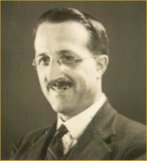
The following notes – as well as those in Early 11 and Early 12 – are from the Stow Hill Bible and Tract Depot book of ministry by G. R. Cowell, ‘The Headship of Christ and of God’.
- My copy came from a brother who withdrew fom the legal sect in 1960, and there are apparently still copies in the libraries of some other brethren,
- but it is the only Stow Hill publication of Mr. Cowell's ministry known to have survived the purge.
A personal account of the Stow Hill meeting of July 26, 1960, by S.G.H., records a remark as to to “GRC's booklet published in South Africa – Fundamental Truths of Christianity and the Kingdom of God, Cape Town, 1958 – as containing fundamental error …” – he records also,
- “The question was asked why Purification and Life [Exeter, August 1958] had been withdrawn” and in both instances unjustified charges were put forward.
- In an earlier letter of July 22, 1960, the author of the above personal account wrote “I understand that the Sydney Depot has burnt their stocks of ‘Purification and Life’ by G.R.C. as containing error” !
- Mr. Cowell had been excommunicated on July 12, 1960 by the suporters of the legal sect.
In view of the above it is a cause of great thankfulness that, in His overriding goodness of God, that book has survived,
- and that much more of Mr. Cowell's ministry has been preserved by the efforts of Philip Haddad.
G A.R.
Page Top
| READING 1 |
|---|
The Headship of Christ as Man
Genesis 1: 26-27; Romans 5: 12-21; 1 Corinthians 11: 2-12
The Headship of Christ and of God: 7-19
|
|---|
G.R.C. It is in mind in these meetings to consider the headship of Christ as leading to the headship and supremacy of God.
- One feels sure that the Spirit of God will help in the enquiry because the truth of headship is so much needed and, one feels for oneself, so little known.
- I think we would all recognise that God’s place in the universe must be that of head, and the incoming of sin has raised a challenge as to that, so that while God remains head, He cannot be other than head, yet His headship is disregarded in the world.
- But we wait for a “new heavens and a new earth, wherein dwells righteousness”,
- and righteousness involves that God’s place should be recognised and fully accepted by every intelligent creature.
- Then it is a great thing to see that headship under God is committed to man, not to angels.
- Angels have had a place in connection with the maintenance of the rights of God and in representing God, but it would appear that the idea of headship as under God has been reserved for man, that order of being, and angels recognise that.
- Angels are referred to in our third scripture, and we shall find that they are referred to in scriptures that we may consider later.
- The unfallen angels carry out God’s will without question, and they do not question God’s purpose as to man. So at the outset God said,
- – a very important statement in connection with the purpose of God as to man.
- There is no statement like that about anything else in the creation. It does not say ‘Let us make light’, or ‘Let us make cattle’, but God said,
- “Let us make man, in our image, after our likeness”.
- This brings us in a primary sense to what God’s thought is as to man; God was to be represented in a full way in His creation, but it was to be through man –
- Adam, of course, being but a figure of Him that was to come, and the figure pales into insignificance when compared with the One of whom he is a figure.
- Adam’s dominion was over the fish of the sea and the fowl of the heavens and over the cattle and over the whole earth, but the dominion of the Son of Man extends to heaven and earth.
- He is “head over all things”.
- God was not primarily occupied with Adam but with Christ, even at the beginning.
Then it might be well to say that while scripture begins with God and man, later in this book the thought of Father and Son comes in in Abraham and Isaac,
- because for God to be fully known in His nature and attributes, revelation and relationship were necessary.
- Finally, in David and Solomon the two thoughts of manhood and sonship combine.
- That is, we see God’s full thought, as far as the types could give it, as to man in David and Solomon, both being in the place of sonship typically, but filling out headship in a glorious way.
I thought this morning we might think of
- the initial features of headship seen in Genesis;
- of the way the Lord Jesus has laid the moral basis for His own headship in Romans 5,
- and then the general principles of headship in 1 Corinthians 11 – that is, the woman and the man and God, the order.
T.W.C. Does headship stand related to glory? Is headship more in relation to glory, and sonship in relation to love?
G.R.C. It says in the last scripture we read that man is God’s image and glory.
J.McK. Would the new heavens and the new earth make way for the full outshining of this, everything deriving from God in His own blessedness?
G.R.C. I think so. It is a
- “new heavens and a new earth wherein dwells righteousness”,
and the One who has brought it into being says,
- “Behold, I make all things new”.
- It is new creation and God in His supremacy.
Ques. Is that why it says “he that sat upon the throne”?
G.R.C. Yes, quite so. It is the throne, suggesting the supremacy of God.
J.McK. But it reaches us now in conditions of testimony, and that testimony has peculiar lustre in the way it does shine out.
G.R.C. Would you say what you have in mind as to reaching us now in conditions of testimony?
J.McK. In the presence of so much that is adverse, the believer comes in for the blessedness of it in the recognition of the great principle of headship, especially in Christ.
G.R.C. I am sure that is right, and in that connection a vessel is being formed which appreciates Christ’s headship as no other ever could or will.
Ques. Would you say further what you had in mind in connection with the thought of headship and glory?
G.R.C. I think that would link with the outshining of God.
- Paul speaks of “the radiancy of the glad tidings of the glory of the Christ, who is the image of God” – that is a touch of headship.
- Christ is the image of God, and there is the radiancy of glory connected with that, and we have to keep in mind that that title, ‘the Christ’, links with headship.
- No doubt the title ‘the Christ’ will come before us as these meetings proceed, for it is a title that we need to give great consideration to.
E.J.B. What is involved in the word “in our image”?
G.R.C. Well, is it not needful for God to be expressed and represented, because He is the invisible God? The Lord Jesus is said to be the
- “image of the invisible God”,
- and God ever remains invisible,
“whom no man has seen, nor is able to see”.
- Therefore the need of image becomes apparent, because if God, who dwells in light unapproachable, whom no man has seen nor is able to see, is to be apprehended intelligently in His creation,
- it can only be through an image, and the Christ is the image of the invisible God.
- There is a full representation of God in His moral character, in His nature and His attributes, in that blessed Person.
J.F.G. So right at the outset He had nothing less than that in His mind, in what is said here?
G.R.C. No, quite so. It is a marvellous statement.
- Adam, even in innocence, could only be in God’s image in a limited way.
- In saying these words at the outset the person in God’s mind was Christ. He is the image of the invisible God, the firstborn of all creation; that is, He takes precedence of Adam.
- He was always first in the mind of God, Adam being just a figure.
W.W.S. The word in verse 26 is in the plural, “Let us make man in our image, after our likeness”.
- Does that suggest that as to this matter Divine Persons took counsel together, do you think?
G.R.C. Well, it may leave room for that, but I am not quite clear about it.
- ‘Elohim’ in the Old Testament, the word normally used for ‘God’, is a plural word.
- The extraordinary thing is that in the Old Testament, which stresses that
- “Jehovah thy God is one Jehovah”,
- a plural word is often used for God, but when you come to the New Testament, where God is declared as the Father and the Son and the Holy Spirit, the singular is used for God.
- In Ephesians 1, it is the “counsel of his own will”, not the counsel of ‘Their own will’, so that I could not with certainty reply to your question.
- Mr. Taylor years ago said that this might be the plural of majesty, and this chapter has the majestic side in mind.
- It is ‘Elohim’, God in His supremacy, that is in mind, and yet a God who would be known; a God who would not remain, as it were, in unapproachable light, though ever dwelling there, but a God who would be known in one who is His image.
Rem. At the end of verse 27 it refers to the singular pronoun,
- “in the image of God created he him”.
G.R.C. That is interesting, yet there is the “let us” and “our”.
- But we have to keep in mind that counsel does not mean agreement like three human beings agreeing together; it is
- “the counsel of his own will”.
- I think counsel implies the way things are worked out. Purpose is the objective.
- God purposes something, but then He works all things according to the counsel of His own will; He counsels with Himself, as it were, and works things out according to the counsel of His own will.
- In Deity, as I understand it, there is only one will. J.N.D. says there is one will and mind and purpose, although separate willing in the detail of divine operations.
- But in spite of all that I am saying, I am not shutting out that there may be some veiled allusion to the Trinity in the passage.
Ques. In John 1 and Hebrews 1 the Son is referred to, and creation is attributed to Him, and yet on the other hand it is God speaking – in Son?
G.R.C. Yes. So that, while there may be a veiled allusion to the Trinity, I think the plural of majesty has its place here, and I think we should avoid –
- I speak subject to correction
- – the idea of counsel as being agreement between persons, because I understand that God is One in will and purpose – one in Essential Being.
Ques. May we not use the expression ‘Divine Persons’ too much, thus rather weakening the thought of the unity of the Godhead?
G.R.C. I think there is a danger of that. The word ‘Persons’ is useful in conveying what we mean as to the distinct activities of the Father and the Son and the Spirit,
- but I think it is well to limit the use of the words ‘Divine Persons’ as much as possible,
- and rather to speak of God. It is scriptural to speak of God.
Ques. Is that again confirmed in Hebrews when it says of the Son,
- “who being the effulgence of his glory and the expression of his substance, and upholding all things by the word of his power”?
- I was thinking of His glory, His substance and His power.
G.R.C. Yes, quite so. It is God speaking, in Son.
- The One in whom He is speaking is the One we know as the Son, but it is God speaking.
- He is the brightness of God’s glory; as you say, it puts it in the singular, and He is the expression of His substance.
- We can distinguish the Persons, but God is One in His Essential Being.
A.G.B. When we come to the way that divine counsel is to be put into operation, is it not remarkable that the singular word is used? I was thinking of verse 18 of chapter 2 and again of verse 21.
G.R.C. It is. “I will make him an helpmate”, and yet it is Jehovah Elohim who is speaking.
Ques. When you say that God is one, have you in mind that that is something more than what we refer to as unity?
G.R.C. Yes, quite so. We can speak of the unity of the saints; we are set together in unity, but “God is one” is a stronger expression.
- It is oneness of Being, as I understand it.
Rem. So that it never has in it the thought of anything to be arrived at, it is always there.
J.McK. It is important to bear in mind that each Person of the Godhead is fully and absolutely God, in Himself?
- He is not in that sense dependent, so to speak. They are there, in self-existence, as one God?
G.R.C. And I think while we can distinguish we cannot separate Deity.
- If the Son was here it was God manifest in flesh;
- if the Spirit is dwelling in the saints, they are God’s habitation in the Spirit.
Ques. What is the link between the scripture “Let us make man”, and Christ? How does it apply?
G.R.C. I would not apply it to Christ. I would not apply the word ‘make’ to Christ,
- but rather that God was bringing in an order of being according to His purpose.
- He had previously created angels but He was not making man then.
- But all was in view of the incarnation. The Lord Jesus was born of a woman.
- God was making the order of being in which in due time the Son would take His place, but as the Second Man, out of heaven.
H.F.N. The word referring to the Lord is that “he became flesh”, is it not?
G.R.C. Yes, “taking his place in the likeness of men”.
W.W.S. Although He formed no part of the creation, yet in grace transcending He came into it and took a place in relation to it?
G.R.C. That is quite true, but then the greatness of this, do you not think, is that
- God was making an order of being in view of Christ becoming incarnate.
- God was preparing the way, as it were.
Ques. I would like to ask what is involved in the words of the Lord Jesus,
- “a body hast thou prepared me”.
- I wondered whether God had not something to do with the body that the Lord Jesus took?
G.R.C. Quite so. I think it is good to bring that out, and it is another case where it is important to keep to the word of scripture, “a body hast thou prepared me”.
- We can safely go as far as that, that a body was prepared for the Lord Jesus, and a body is essential; angels have not bodies, they are spirits.
- For headship, for image, a body is essential.
Rem. I thought that was what was in your mind in the great thought of man before God.
G.R.C. Quite so. Man is a tripartite being – spirit, soul and body; and the Lord Jesus has come into manhood and scripture speaks of His spirit, His soul, and His body.
- In John 12 it says, “Now is my soul troubled”;
- and in John 13 it says, “Jesus was troubled in spirit”;
- and He also says, “my body for you”.
- Jesus is very man although He is very God; but it says,
- “in him dwells all the fulness of the Godhead bodily”,
- showing the necessity for a body.
J.McK. In 2 Corinthians 4 the glory of God is said to be in the face of Jesus Christ.
G.R.C. That necessitates a body.
J.A.P. Would the thought of likeness need the Son, the thought of likeness perhaps referring to the moral character of God, as love?
G.R.C. Well, the idea of likeness is never attached to Christ in scripture, and Mr. Darby says that is because He is God.
- It would not be right to say that Jesus was in the likeness of God, becase He is God, and therefore in the fullest measure He must be the image of God, because he is God.
- It would be derogatory to say that he was in the likeness of God.
J.A.P. I meant that that feature of God would have to be expressed in Him, One who knew Him.
G.R.C. Quite so, and I think in us the family side is essential as underlying our part with Christ in headship.
- Likeness, I believe, is connected with the thought of origin, and children and those who form the assembly are all of Christ’s order. According to this passage,
- “male and female created he them”.
- The woman is there, typical of the assembly. The assembly is composed of those who have the divine likeness.
E.R.F. You made reference just now to the thought of fulness. Is it in mind that the fulness should be displayed through this great matter of headship?
G.R.C. It says, “in him dwells all the fulness of the Godhead bodily”. That brings out the greatness of the head.
Ques. Would these words “by him” and “for him” support the idea of speaking of Persons in the Godhead? – “by him were created all things”.
G.R.C. I think they do. We have to distinguish between the Father and the Son and the Spirit, and the word ‘person’ helps in this.
- We can distinguish the activities of the Father and the Son and the Spirit, and scripture speaks of sovereign will in connection with the operations of each.
- Nevertheless “God is one”, and I think that refers to the oneness of the Supreme Being.
Ques. Would you carry your remarks a little further as to how we can distinguish and not separate? How does that work out in our approach?
G.R.C. As to our approach, our access to the Father is through the Son and in the Spirit.
- That is, there would be no approach if we separated the Persons of the Godhead, for we need the Son and the Spirit to have access to the Father, and thus we dwell in God, and God in us.
- There are many other scriptures – for instance,
- “Whoever denies the Son has not the Father either; he who confesses the Son has the Father also”, 1 John 2: 23;
- and, “He that abides in the doctrine, he has both the Father and the Son”, 2 John 9.
- One could not have the Father and the Son without the Spirit.
H.F.N. If we might get a little clearer, would you say that in 1 Corinthians 15: 28 the expression
- would involve Father, Son and Holy Spirit?
- I notice Mr. Darby, in the introduction to the Bible, brings in a most wonderful note of worship and then says, “God, Father, Son and Holy Spirit”.
- Also does not Ephesians 3: 21 –
- “to him be glory in the assembly”
- – involve Father, Son and Holy Spirit?
G.R.C. I fully agree.
H.F.N. So that there is liberty to address each Divine Person?
G.R.C. Certainly. God is One in nature and Essential Being; but this does not alter the fact that we can and must distinguish the Father, the Son and the Holy Spirit.
- If we think of God from His own side, making Himself known, and bringing us before Him for His pleasure,
- we know God in revelation and relationship in the Father, expressed and manifested in the Son and dwelling in us by the Spirit. But it is one God.
- On the other hand, if we think of divine operations day by day in the testimonial sphere,
- then we know the Father as our God, the Son as our Lord and the Spirit as the Comforter.
- But we never lose sight of the fact that the Son and the Spirit are one with the Father in Essential Being.
J.McK. Would you say that it is in the economy and in divine operations that there is that which can be distinguished, but as in Deity they are One, inseparably One?
G.R.C. Quite so. Therefore there is such a thing as response to God and worshipping of God without distinguishing Persons – God the Supreme One.
- But then we know Him in revelation and relationship in the Father, expressed in the Son, and dwelling in us by the Spirit, but the whole matter is God; it is thus that God is known.
- And the God who is known in that way, in whom we dwell, and He in us, is the God who inhabits eternity.
- Behind all that has been made known, there is the fact of Himself, in His own supremacy, the supremacy of His own Being, dwelling in light unapproachable.
H.F.N. So that you come to the realm of what we so often speak of as inscrutable.
G.R.C. And the sense of that greatly promotes worship.
Ques. Do you distinguish between “God is one” and the oneness that the Lord speaks of in John 17?
G.R.C. I believe one underlies the other. My impression is that the oneness of Deity underlies those statements of the Lord in John’s gospel.
- While, of course, there is the fact which flows from it, that as Man here, the Son, He was in every way one with His Father, yet I believe underlying all was the one-ness of Deity.
- It was impossible for it to be otherwise because of the oneness of Deity.
F.D.W. Would Philip’s enquiring mind unwittingly bring in, or seek to bring in, separation when he said,
- whereas the Lord’s reply is,
- “He that hath seen me hath seen the Father”?
G.R.C. Quite so. “Am I so long a time with you, and thou hast not known me, Philip?”;
- and earlier, “If ye had known me, ye would have known also my Father, and henceforth ye know him and have seen him”;
- and again “Believest thou not that I am in the Father and that the Father is in me?”
J.McK. As to headship, does it all bear upon mediatorship; the blessedness of what God is could only stand related to creation as in a mediator?
G.R.C. The headship of God is the great end in view. But the headship of God having been set aside in the creation,
- it is secured beyond any further challenge through the coming in of the Lord Jesus and through His headship as Man, and, we may say, through Christ and the assembly.
- Thus the headship of God is to be secured in the universe in a way that will be for ever beyond all challenge.
W.B.H. Is it remarkable that David in 1 Chronicles 29 should, in some way, voice what you are now saying, when he says,
- “Thine, Jehovah, is the greatness, and the power, and the glory, and the splendour, and the majesty; for all that is in the heavens and on the earth is thine: thine, Jehovah, is the kingdom, and thou art exalted as Head above all; and riches and glory are of thee”?
G.R.C. I think it illustrates what is in mind. David was the king and the title ‘the king’ is closely allied to headship.
- It suggests the glory and splendour attaching to the position. In human affairs the king is the head of the state, and Peter speaks of
- The king must be supreme, and therefore the king is always head, although kingship no doubt stresses the splendour and power of the position,
- while headship emphasises moral features and influence proper to it.
- But the king is the head; and in 1 Chronicles 29 David, as typical of Christ, having brought all under his own influence and sway as head, then makes way for the headship of God –
- “thou art exalted as head above all”.
H.F.N. Is one of the initial thoughts in headship the great thought of recovery?
G.R.C. That is because sin has come in. But would you say that the abstract truth of headship lies outside of the sin question?
H.F.N. Exactly.
G.R.C. Thus Genesis 1 is before sin came in. Apart altogether from the question of sin, if the invisible God was to be known He needed an image,
- and according to His eternal purpose man was to be His image; it was not an angelic being, but man.
- It required the coming into manhood of the Lord Jesus to fill this out, for Adam was just a figure.
- But then sin having come in, man’s recovery had to be taken up by the Lord Jesus, and Romans 5 speaks of that.
- Sin having come in, there must be a moral basis laid for Him to take up headship.
- Were God’s thoughts as to man and His eternal purpose to fail?
- They
have not failed, because the Lord Jesus has come in, as the One Man of Romans 5, to lay a moral foundation for His headship.
H.F.N. Has it not often been said that headship is introduced
- in Romans on a moral basis,
- in Colossians on a personal basis,
- and in Ephesians on an official basis?
- In that connection will you make more clear the link in your mind between our three scriptures?
G.R.C. Genesis 1 makes clear that the purpose of God in the matter is connected with man,
- It is not a question of angels – it is in man that God is to be represented, and it is man who is to have the place of head, and in that connection it is male and female, so that the assembly comes into the matter –
- “let them have dominion”.
- It is in Christ and the assembly that headship is to be seen; Christ is head over all things, of course,
- “head over all things to the assembly”.
- Nevertheless the assembly shares in the dominion.
- In Romans the Lord Jesus is not called head, and I think we have to note that.
- It seems to me rather the moral foundation that He laid in order to take up His place as head.
- He is head by divine right because of His Person, but then in wondrous grace He came in on the line of the “one righteousness” and “the obedience of the one” in contrast with Adam.
- He was obedient unto death; and through that moral basis being laid, God’s thoughts for man have in no way failed.
- God is free to carry out all His thoughts as to man; He is free to secure the assembly, so that the man and the woman should be in the place of headship according to the eternal purpose.
- Then 1 Corinthians 11 sets out the general principles of headship, whether we apply it to men and women down here, as the scripture does primarily, or whether we apply it to Christ and the assembly.
- “Christ is the head of every man, but the woman’s head is the man, and Christ’s head God”.
- Man is God’s image and glory, and the woman is the glory of the man. I think there you get the general principles set out.
Ques. Would you say a further word in relation to likeness, and how the thought of likeness is carried forward?
- You will remember that it is brought in in the fifth chapter after sin has come in and seems to be carried forward in the sense of generation?
G.R.C. I should say that is right, and I think in the full sense of generation it is connected with the children of God.
- It involves our generation as born of God; that is how the likeness is secured.
- John’s epistle shows that those born of God are like God in righteousness and purity and love.
- The likeness is there and the assembly is composed of such persons and is therefore fitted to be with Christ as His counterpart in the headship.
Ques. Would you say why you think the word ‘likeness’ is left out in Genesis 1: 27?
G.R.C. Because I think the primary thought is image. If the image is to be true, likeness is essential.
- But it is not said of Christ that He was in the likeness of God, because He is God, and therefore in manhood He must be the image of God,
- but with the saints, likeness has to be brought about.
- The primary thought in headship is image.
Ques. Is image the thought of representation?
G.R.C. Yes, God is invisible. He can only be known in His creation through One who represents Him; He will be known through Christ and the assembly.
H.F.N. Would it be right to say that when you come to the great question of recovery in regard to image and likeness God will not put the stamp of His image on anything that is not like Himself?
- So that, as you say, you could not refer to the thought of likeness in regard to the Lord, He is God.
G.R.C. In human affairs a representative may be a representative of a monarch and yet be quite unlike him. But that is not the divine thought.
- Fallen man remains as having been created in the image of God, but he is no longer a true image because the likeness is lost.
H.F.N. Exactly.
J.P.H. So it says in Philippians 2,
- “irreproachable children of God in the midst of a crooked and perverted generation; among whom ye appear as lights in the world, holding forth the word of life”.
- Is that children and likeness?
G.R.C. I think it is.
H.F.N. Would it be right to link the thought of likeness with children, whereas image would more bear on our place as sons?
G.R.C. I think that is right. We are to be conformed to the image of God’s son. And God’s Son is the One whom God has made head – He is the image of God.
Page Top Reading 1 Top
| READING 2 |
|---|
The Christ
Ephesians 1: 3-10, 20-23; 3: 8-19
The Headship of Christ and of God: 19-34 |
|---|
J.F.G. Would you be free to say briefly what you understand to be the difference between lordship and headship?
G.R.C. The distinction is an important one and is made by Peter in his initial address in Acts when he says,
- “God has made him, this Jesus … both Lord and Christ”.
- I think lordship implies supreme authority. A king, in human affairs, is known as ‘Sovereign Lord’ in official documents, and that is right, for a king is Sovereign Lord.
- But then he is also head, he is head of the state; so that kingship includes both lordship and headship.
- I think lordship in Christ implies supreme authority and also power to subjugate, including what is military,
- whereas headship properly requires a scene where evil is no longer occurrent to be seen in its full exercise.
- God’s thought of a king, as seen in David, is that he is the Beloved – his name means that.
- So that in kingship according to God the king is not only a lord but he is the Beloved, and he therefore rules in the affections of his people, and as ruling in their affections he has great influence.
- He thus gives direction, impulse and character to the whole scene over which he is head.
- I think if we apply that to Christ, in whom alone the idea is fully seen, it is very wonderful.
- He is spoken of in this chapter as the Beloved, not simply God’s Beloved, but He is the Beloved. It will be no arbitrary matter for things to be headed up in Christ.
- Because He is the Beloved, He will be the centre of all affection, and therefore all who come under His headship will be exceedingly sensitive to His impulse and direction; all will, as it were, move in the current of His thoughts and His mind.
This afternoon we may get help in a special way as to headship as seen in Christ, keeping in mind the title the Christ, which is the characteristic title in this epistle.
- The title ‘Son of God’ is used once, but the title ‘the Christ’ is used something like nineteen times in Ephesians.
- It implies His place as head and the royalty and splendour that attach to it, and thus includes kingship.
- It answers to ‘the Lord’s Anointed’ of the Old Testament, only that
- whereas the kingship and headship of the Lord’s Anointed of the Old Testament was limited to Israel and, in some measure, the nations around,
- the kingship and headship of the One who is in the full sense God’s Anointed – the Christ – extends to all things,
- “the things in the heavens and the things upon the earth”, Ephesians 1: 10.
- God has purposed this in Himself,
- “according to his good pleasure which he purposed in himself for the administration of the fulness of times; to head up all things in the Christ”.
- The title “the Christ” occurs again in verses 20 and 21, where it says that God has
- “set him down at his right hand in the heavenlies, above every principality, and authority, and power, and dominion, and every name named”.
- Think of the splendour of this position. It is the highest office in the universe. The title ‘the Son’ refers to a relationship, but the title ‘the Christ’ to an office.
F.D.W. So that does ‘the Christ’ involve choice?
G.R.C. It does; according to the scripture,
- “Behold my servant, whom I have chosen, my beloved, in whom my soul has found its delight. I will put my Spirit upon him”, Matthew 12: 18.
- That is the Christ. God has put His Spirit upon Him; He is the Anointed, and He is anointed because He is God’s beloved.
N.K.McL. Does the title ‘the Christ’ in the Ephesian epistle always refer to Christ personally?
G.R.C. I think so. It is possible in verse 10, by inference, to include the assembly, because we know that the assembly is with Him in the headship;
- but I think generally the title ‘the Christ’ refers to Christ personally.
- But then His body is referred to, and He is viewed as united to the assembly in verses 22 and 23,
- “head over all things to the assembly, which is his body”.
J.McK. Does the trend of headship in this epistle bear on what accumulates Godward, that is, the gathering up of all that is effected through grace for the divine glory;
- whereas in Colossians is it headship as imparting wealth and wisdom and glory to the saints?
G.R.C. It is important to see that one great end in view in Ephesians is the gathering up of the response of the whole universe to God, and for that headship is necessary.
- The “administration of the fulness of times”
- refers to the world to come as the time when the fulness of every other time is displayed. A time is what we often call a dispensation.
- Out of every dispensation God has secured fruit; He has secured a family, and He is shortly to bring in the fulness of times.
- The fulness in that connection means that the harvest of each time or dispensation is displayed.
- God will display what He has secured from every dispensation, and that involves families; there will be families in heaven and on earth.
- But we have to bear in mind that the family idea by itself is not sufficient to secure adequately the whole scene in service and praise to God as God.
- For that we need headship.
- We need the family side of things to give liberty and privilege and enjoyment,
- but when we come to the service of God in His greatness, what is due to Him as God, and the gathering up of all in response to God, we need headship.
J.McK. You mean that headship is not simply a family idea – it includes what is official and influential?
G.R.C. Yes.
Ques. Is it an eternal thought?
G.R.C. It is. Also the families that are displayed in the administration of the fulness of times are carried over into eternity.
- A change has to take place with some, of course, because
- “flesh and blood cannot inherit God’s kingdom”,
- but what God has secured for Himself from every age will be displayed and then carried over into eternity.
- The feast of tabernacles which typifies the fulness of times has seven days, and then an eighth day.
- The seven days refer to the world to come, whereas the eighth day, “the last, the great day of the feast”, would link with the eternal state.
- The feast of tabernacles was celebrated when all the harvest was gathered in, and in the fulness of times all the harvest will have been gathered in, and God will display the great results, which are eternal.
Ques. Does lordship go into eternity?
G.R.C. I think abstractly lordship must always be there, but I do not think the active exercise of lordship belongs to eternity.
- The Lord Jesus will have put down all authority, He will have dealt with every enemy
- so that I do not think the active exercise of lordship belongs to the eternal scene, whereas
- the exercise of headship must go right through.
H.F.N. There will be no necessity for the exercise of lordship in eternity.
- Do we not get an illustration of the contrast between lordship and headship in the books of Samuel and Chronicles?
- In Samuel does David represent the great thought of lordship and the establishment of the kingdom and the overthrowing of every adverse power,
- and then does Chronicles bring in the great realm of the service of God in which David shines in such peculiar lustre in headship?
G.R.C. That is very helpful. In Samuel David is dealing with enemies; it is subjugation and military exploits which link with lordship.
- But is not all in view of David securing a scene so under his influence as the beloved, where
- all are so responsive to him and where he is so enshrined in the affections of the whole nation,
- that they are brought entirely into line with his own desires and impulses towards God?
Ques. Is that what Christ as head will do – bring out a universe for God?
G.R.C. That is exactly what is in mind. He says, “My God”, and it is a question of what the perfect Man will do for His God.
W.W. In Solomon’s day there was neither enemy nor evil occurrent.
G.R.C. That is the kind of domain where headship is seen in its true exercise. There is nothing to hinder affection flowing freely, so that the whole realm is in the flow, and under the influence of, the affections of the head.
Ques. Is subjection an eternal thought?
G.R.C. Yes, because headship involves subjection.
- Lordship subjugates in view of producing a state of subjection.
- It is in a state of subjection through affection that headship operates.
Ques. Does the day of the Lord precede the day of Christ?
G.R.C. The day of the Lord is an extended period. I think it begins with the initial judgments prior to the millennium;
- it includes the millennium, because the power of lordship will then hold evil in check;
- and it continues after the millennial day until the last enemy is destroyed.
- So that Peter speaks of the day of the Lord, without any reference to the millennial day, as ushering in the day of God.
- It is remarkable that Peter closes his ministry with the day of God, the headship of God, before his soul in such a manner that he does not even mention the millennial day.
- He speaks of the day of the Lord as one great matter of subjugation with a view to the bringing in of the day of God.
- But then, as you say, included in that period there is the millennial period which is spoken of here as
- “the administration of the fulness of times”.
- It is called elsewhere the day of Christ, when Christ will reign without evil or enemy hindering.
H.F.N. How does the will of God bear upon this great thought of headship? We have often noted
- “the good pleasure of his will”, verse 5, and then
- “the mystery of his will”, verse 9, and then
- “the counsel of his own will”, verse 11.
- Is all in view of eternity and the bringing in of headship?
G.R.C. I think so; and we are specially engaged now with
- “the mystery of his will”.
- We need to take account of that expression.
- “The good pleasure of his will”
- relates to sonship, but then God would have His sons intelligent, and the mystery involves intelligence.
- It says, “the riches of his grace; which he has caused to abound towards us in all wisdom and intelligence, having made known to us the mystery of his will, according to his good pleasure which he purposed in himself”.
- God would have us intelligent as to His good pleasure which He purposed in Himself as to the Christ.
H.F.N. The will of God here involves the whole spiritual universe, does it not?
G.R.C. It does, and I think we should seek to understand God’s good pleasure in this connection.
- He delights that His Son should have this great official position, the greatest position in the universe.
- He delights to put honours upon the Son; He has set a crown of pure gold upon His head, He has crowned Him with glory and honour. In Psalm 2 we have
- “Thou art my Son”; and,
- “I have anointed my king”.
- It is the good pleasure of God that the whole universe should centre in the Son, honoured in this way as His Christ.
H.F.N. According to the good pleasure of His will He has taken us into favour in the Beloved,
- but the mystery of His will is to gather everything up in Christ as the head.
G.R.C. That is what we need to lay hold of: the place He has given to Christ, because He loves Him.
- He is the Son, the Beloved, and it has been the greatest joy to the heart of God to set Him in the centre of a vast universe,
- in a most glorious way in royal splendour, as the Object of universal affection, influencing all.
- What a fit setting for such a Person!
J.McK. Headship in Christ is a prime matter with God, is it not? And would it not go back before any moral question had arisen? I was thinking of Proverbs 8,
- “Jehovah possessed me in the beginning of his ways”.
- Is not this great plan of headship God’s prime idea as to the whole universe gathered up in Christ?
G.R.C. I think so. Jehovah possessed wisdom in the beginning of His way, and wisdom has found expression in this great plan.
- His delight in a parental way is to have families, and that is essential. There could be no liberty in the universe apart from the family idea in sonship.
- But divine wisdom, I think, is seen in the fact that He has brought in Christ as head.
- It is the acme of divine wisdom to bring in Christ as head, so that all the saved families have One to look to under whose direction they can take their place in the service of God.
- We are sons, and every family will know sonship in measure, and sons would love to serve God. But how are we to serve Him?
- We need to be under a head, under One who can give us impulse, direction, guidance and wisdom in the service of God – One who knows fully what is suitable to God as God.
H.F.N. Is God teaching us all the secrets that belong to this vast system that is going to be introduced under the headship of Christ?
G.R.C. The mystery involves the secrets of God’s will.
- No greater honour could have been bestowed upon us than that God should desire to communicate to us His most cherished thoughts and plans, and that is what is involved in
- “the mystery of his will”.
E.J.B. In this lavish setting it says,
- “which he has caused to abound towards us in all wisdom and intelligence, having made known to us”.
- He has done it in a lavish way.
G.R.C. He has. We are His sons and He wants us to be thoroughly intelligent in His mind.
- But then, in spite of His abounding towards us, how little we have taken it in, how little we are marked by all wisdom and intelligence so as to understand the divine plan.
H.F.N. The One who is the very centre of the vast system of glory is to dwell in our hearts by faith. This would give us entrance into it, would it not?
G.R.C. Chapter 3, verse 8, speaks of
- “the unsearchable riches of the Christ”;
- and then Paul prays that the Father would give us,
- “according to the riches of his glory, to be strengthened by his Spirit in the inner man, that the Christ may dwell, through faith, in your hearts”.
- Have we taken enough note of the apostle’s desire, and evidently the Father’s desire, that the Christ –
- that is to say, the Lord Jesus as the glorified head in all the splendours attaching to the office He holds
- – that He in that character, should dwell in our hearts by faith.
H.B. Does the vast system of glory open out to us as the Christ is in our hearts?
- We get the Spirit of His Son whereby we cry “Abba, Father”, but then the Father’s Spirit is to magnify the Christ in our hearts, so that the whole scene of glory might be opened up before us.
G.R.C. Do you think we have understood that much?
H.B. It would be a good thing if we did more through this meeting.
G.R.C. Do you think we realise that the Father, according to the riches of His glory, would strengthen us by His Spirit
- in order that we might apprehend the glory that He has put upon His Son in giving Him this great position as the Christ?
- The Father delights in Him, He has heaped honours upon Him and made Him the centre of the whole system because He is worthy,
- and the Father would strengthen us that we might apprehend Him as the head of that system.
T.W.C. Is the ark in the tabernacle a type of Christ, especially as dwelling in our hearts by faith, as the centre of the great divine system which the tabernacle typifies?
G.R.C. Just so. I think that type fills out the expression in a large measure. The ark is the centre of the system as giving character to all.
- But then I believe also that Solomon is a type of the Christ and that both types are needed.
- It speaks of the love of the Christ which surpasses knowledge, and that suggests Christ as active.
- The ark suggests Christ as head in a fixed position as giving character to the whole scene, and as the One who has laid the basis by way of the mercy-seat for the whole scene to exist;
- but then the active element of headship is seen in Solomon in the immense activity that marked him, and David too, viewing them together as a type.
H.F.N. The ark was brought into the most holy place and the staves were withdrawn.
- Is that like Ephesians 3 – the great end in view in Paul’s ministry – that the Christ may dwell in our hearts by faith, and the staves withdrawn?
G.R.C. I think so. But then Solomon becomes active, to secure in full measure the results for God, and it needs active love to secure the full results.
F.D.W. Is Paul one who was serving in the light of a system already in existence, and are we not often hindered in putting these truths off to the future?
G.R.C. I am glad you refer to that. What we have read in chapter 1 is future literally,
- but if we do not anticipate it in the power of the Spirit the service of God will flag.
- So that He is already head over all things to the assembly.
Ques. What is involved in the heavens and the earth? Does it involve the whole universe?
G.R.C. It does. Adam was set over the earth, but the mystery of God’s will is to head up all things in the Christ, the things in the heavens and the things upon the earth; and then the angelic beings are brought in in their dignity here.
- When it speaks of angels in 1 Corinthians 11: 10 it would refer to them as sent out for service, and so the woman has authority on her head because of the angels – an important matter.
- If they understand the great subject of headship, sisters will have no difficulty about having authority on their head;
- because it is most important, in view of the place God has given man according to His purpose, that we should rightly behave before the angels.
- I think that passage refers to them as sent out for service; but in Ephesians 1: 21 they are referred to in their dignity, for they are great dignitaries, yet the Lord Jesus is above them all.
- What a place man has! God has
- “set him down at his right hand in the heavenlies, above every principality, and authority, and power, and dominion, and every name named”.
J.McK. Is chapter 3 the bearing of that upon us now? Is that why the word the mystery occurs? It will not be mystery in the future, will it?
G.R.C. Chapter 3 brings in the present in a specific way.
- Chapter 1 speaks of God’s purpose which He purposed in Himself for the administration of the fulness of times,
- but chapter 3: 19-12 refers to God’s eternal purpose about the present time, and it involves the working out of headship now in the assembly.
A.G.B.. At what point in time would we begin to think of this great thought of the Christ?
- Does it go back to the incarnation, or to the anointing, or to His present place as the ascended Man?
G.R.C. At the incarnation the word is
- “a Saviour … who is Christ Jehovah”, Luke 2: 11, footnote.
- Then there is the anointing at His baptism. God anointed His Son and so He moved out in testimony as the Anointed, the Christ,
- and is confessed as such in reply to the question, “Whom do ye say that I am”, in each of the first three gospels.
- What a joy it must have been to God to see that great truth dawning on the hearts of the disciples!
- But I think He took up the position of the Christ officially in ascension, because Peter says,
- “God has made him, this Jesus … both Lord and Christ”.
- What do you say about that?
A.G.B.. I am thankful for what you say – it has clarified the thought in one’s mind.
- The “administration of the fulness of times” involves the Christ in His present position?
G.R.C. It does, because I think the Christ really involves the glorified Man.
- He was anointed here, and was the Christ, and apprehended as such by faith, but the full splendour and dignity of the position is seen in Jesus glorified.
Ques. And is it not in that setting that this word
- “gave him to be head over all things to the assembly” comes in?
- I wondered if you had something further to say about His headship in this relation.
G.R.C. It would link particularly with the second chapter of Genesis, do you not think?
- “I will make him a helpmate, his like”.
Rem. But he was established head over all things prior to that, was He not?
G.R.C. That is true. The cattle and the beasts and the fowl, and so on, were brought to Adam and he proved his competency as head by the fact that he named them and whatever name he gave them that was its name.
- He had the wisdom to discern the functions and faculties of every creature brought to him, and then finally the woman is brought to him, and he names her.
- He says, “This time it is bone of my bones and flesh of my flesh: this shall be called Woman, because this was taken out of a man”.
- So the highest feature of Adam’s intelligence lay in that he could name the woman and name her so accurately.
W.W.S. Is there not a peculiar delicacy of feeling and refinement of thought when you think of headship in relation to the woman?
G.R.C. There is. How capable the Lord Jesus is of assessing the functional value of every family and every individual in the universe of God, angelic beings too,
- and of influencing all and using all in the service of God, but especially so as regards the assembly;
- as regards her, His headship has a peculiar character.
H.F.N. So that the assembly is associated with the Christ in His headship and administration.
G.R.C. I think so, and do you not think that Christ’s headship operates, if one might use the expression, downward and upward?
- It operates downward in the sense that the light of God and the administration connected with His glory is maintained in the universe through Christ and the assembly,
- and upward in the response that accrues through Him to God?
J.P.H. To what extent is Ephesians 1: 22-23 touched by us now?
G.R.C. Well, I do not think we can limit the extent to which it may be touched now, because the Spirit is here,
- and the union of Christ and the assembly is, as I understand it, an already existing fact. Things are viewed here as already done.
- It says that God set Him down at His right hand, and has put all things under His feet, and gave Him to be head over all things to the assembly.
H.B. Would you say a word on being enlightened in the eyes of your heart in chapter 1 and then the Christ dwelling through faith in your hearts in chapter 3.
G.R.C. The first is enlightenment, but would not the Father use that to make way for the Christ Himself to dwell in our hearts?
H.B. It says “that ye may be fully able to apprehend with all the saints”. Do we need all the saints for this?
G.R.C. We need all the saints in our affections.
H.B. So it would have a bearing on our relations with one another?
G.R.C. It would.
H.F.N. What you were saying is of great importance. Chapter 1 is a matter of light, but then do we not need the prayer of chapter 3 to give us a present entrance into it?
- The first chapter is from the divine standpoint and is opening up the great realm of purpose,
- but when we come to the third chapter it is the formation of a vessel that is really to enter into it and display it eternally. Is that right?
G.R.C. That is very helpful. “Enlightened in the eyes of your heart, so that ye should know what is the hope of his calling”.
- Do you not think that the calling includes not only sonship but also the church’s union with Christ?
- I think if we limit the calling of God to sonship we fall short of the divine mind.
- I believe the hope of God’s calling is sonship –
- “out of Egypt have I called my son”
- – but it also includes that we are called to have part in the assembly. The very word assembly means ‘called out’, it is a called-out company.
- So that we are called to sonshp, which gives us liberty, but also to have part, a functional part, in this great vessel which God has called out and which is united to Christ. That is included in the hope of His calling.
- I think if we had the light of that it would lay the basis for Ephesians 3.
H.F.N. You were making a remark, which I think was most valuable, about the double thought of headship, both looking down, and then in relation to God. Would you say a further word as to this?
G.R.C. In Genesis 1 and 2 the man and the woman were set over the creation to shed the light of God upon it,
- and Ephesians 1: 22-23 corresponds with this in an antitypical way.
- “Him who fills all in all”
- would refer primarily to the downward functions of headship.
- But I think chapter 3: 8-12 have in view not only the administration of divine wisdom and wealth downward but also response upward. It is the Solomon aspect of headship.
- The vessel which is the bride of Christ is also the habitation of God, for He dwells in a vessel where Christ is enshrined. In such a vessel He finds His rest, and in it His service proceeds.
- So the type of the assembly under Solomon merges in the house and in those who had part in the service of the house under his headship.
- These verses in Ephesians 3 have that in mind. It speaks of
- “the glad tidings of the unsearchable riches of the Christ”,
- and where can we find a type of that in scripture other than in Solomon?
- 1 Kings 4 gives the wealth of wisdom and other things that were under his hand for the people:
- “Judah and Israel were many, as the sand which is by the sea in multitude, eating and drinking and making merry”; and it goes on to say,
- “God gave Solomon wisdom and very great understanding and largeness of heart, as the sand that is on the seashore”.
- And then it says that he spoke of a vast range of things. All this was downward for the people, to fill them.
- But later there is the upward flow, and Solomon’s wisdom is seen in ordering things in the way of response.
E.R.S. Is that why height is the last measurement referred to in Ephesians 3: 18?
G.R.C. I think it would bear on this, because the queen of Sheba saw his ascent.
- She saw all the wisdom of Solomon and finally his ascent by which he went up to the house of Jehovah, and then it says there was no more spirit in her.
- Think of the king, the head, going up to the house of Jehovah.
- It would set in motion the whole service of the house which was under his impulse and direction, and you can understand there was no more spirit left in the queen of Sheba.
- She was an earthly principality looking on, and there was no more spirit left in her; but in Ephesians 3 heavenly principalities are looking on at the service proceeding in a heavenly vessel.
H.F.N. So that in relation to Solomon does his wisdom and headship produce on the one hand the virtuous woman, the woman of worth, and on the other, as you say, the service of God really in its eternal character?
G.R.C. I think it does. I believe the acme of divine wisdom typically is seen in the way David and Solomon ordered the service of God. Would you say that?
H.F.N. I would indeed.
Ques. Why is the prayer addressed to the Father of every family? Is that an eternal setting?
G.R.C. The family thought is eternal.
Ques. I was wondering if it was your thought that our hearts must be established in the family setting before we could attain to the thought of God as the Head over all?
G.R.C. I think that is a most important principle to keep in mind. The family setting is essential; but the family setting does not exactly involve service.
- A king’s sons at home with him are not thinking of service; but when it comes to matters of state and of the public honour due to the king, then in the liberty of sonship they take up service.
- They can render honour and homage to the king in a way no other subjects can because they know him in the inside place in intimacy.
- Thus family affections underlie the service of God.
A.G. Does the Father’s spirit come in in chapter 3 to help us not only to see the ascent as did the queen of Sheba but to take it ourselves?
G.R.C. I am sure that is right. In chapter 1 sonship comes first, and then the mystery of God’s will as to headship, and
- in chapter 3 the Father, who has named every family, would now strengthen the hearts of those who form the assembly to understand headship, the Christ dwelling in our hearts by faith,
- so that we might be fitted for the magnificence of divine service.
- As sons we would delight to be in it; but to be equipped and furnished for it we need to be under the headship of Christ.
F.C.E. In chapter 2 we have access to the Father, and in chapter 3 access to God. What is the difference?
G.R.C. Access to the Father in chapter 2 is the inner side of privilege.
- Service is not so much in mind there, as far as one sees.
- But the theme of chapter 3 generally is God; it is
- “the mystery hidden throughout the ages in God, who has created all things, in order that now to the principalities and authorities in the heavenlies might be made known through the assembly the all-various wisdom of God, according to the purpose of the ages”.
- That is God’s purpose about the present time.
- Let us not forget that God has a purpose about the present time,
- “according to the purpose of the ages, which he purposed in Christ Jesus our Lord, in whom we have boldness and access in confidence by the faith of him”.
- It does not say who the access is to – it is left open.
- It is a question of how far our spirituality will enable us to go.
- It does not say the Father here, but it adds ‘boldness’ because God is the theme, and you need boldness in approaching God, the Supreme Being.
- But we have boldness, and we have access with confidence by the faith of Him.
- Who can limit what that access may mean in the Spirit’s power, under the true Solomon?
Rem. Whilst we ourselves are in time, if we reach, through the headship of Christ and the power of the Spirit, God in His habitation, do we touch eternity?
G.R.C. We arrive at eternal conditions in our spirits in the power of the Holy Spirit.
R.G.H. “Filled even to all the fulness of God”.
- Would you mind saying how far that would go?
G.R.C. Well, I could not say how far it would go, because the fulness of God is like an ocean.
- You put a vessel into the ocean and the vessel is filled, but the vessel does not contain the ocean; nevertheless we can say the ocean is in the vessel, but not all of it.
- I do not think we can place limits upon it.
J.McK. So that perhaps the question to raise is, What is our capacity?
G.R.C. Yes, quite so. What is our capacity and spirituality?
J.McK. I was wondering whether you are not emphasising to us the particular value of this chapter, for God has delight in this great phase of the truth.
- Are we not inclined to look on to what is final and ultimate in actuality instead of seeing that
- in the wisdom of God this period of time has a lustre peculiar to itself,
- when the administration of the mystery of the Christ shines by way of the Spirit?
G.R.C. I believe that verses 8-12 of this chapter 3 are some of the most important in scripture, and if anyone here does not know them off by heart I hope he will learn them today.
- Many learn the prayer, but do not learn what the apostle was praying about. These are the verses he was praying about,
- because it is a question of God’s purpose as to the present moment, and, if we miss it, it is missed forever.
- It is an urgent matter that these verses should be taken up and understood and worked out, and that, of course, involves our relations with one another.
- The administration of the mystery with a view to God’s wisdom being manifested in the assembly is a most testing thing, because it begins with our relations with one another.
- “There is one body and one Spirit”.
- The body is referred to before the Spirit in that passage, and unless our ‘body’ relations are right, we shall get no further.
H.B. So that chapter 4 begins with one another and finishes with one another, as though the things must be held on those lines?
G.R.C. That is a very good and practical remark. Chapter 4 is so essential if we are to know anything of these verses in chapter 3.
J.F.G. Why did you say just now we need boldness in relation to God?
G.R.C. Because God is the Supreme Being, supreme in majesty. What do you think?
- I am only noticing that scripture puts in the word boldness there,
- “in whom we have boldness”.
- It also comes in Hebrews, where God in His greatness is presented.
A.G.B.. Is it not remarkable in that regard that the love of the Christ is left so late before reference is made to it?
- It would seem that some apprehension of the extent and vastness of the love of the Christ, operating in relation to these great thoughts that are Godward, should have a place in our souls.
G.R.C. Exactly. I think what you say is right, because the love of the Christ is one love.
- We are apt to think of the love of the Christ as relative to the assembly only, but the love of the Christ is one great and perfect love, the love of a perfect Man.
- He is God, of course, but it is the love of a perfect Man which flows in every direction –
- “I love my master, my wife, and my children”
- – the love of the Christ. Is that right?
A.G.B.. Yes, that is just what I had in my mind.
G.R.C. And so from that angle it could not be brought out till this point, because now
- you have got space to indicate the scope and extent of the activities of the love of the Christ.
- It flows in every direction. It fills out the length and breadth and depth and height.
J.A.P. Could I ask one question? You would not suggest that what you are referring to in the third chapter is greater than chapter 2: 18, would you, because in the fourth chapter we have definitely,
- “one God and Father of all, who is over all and through all, and in us all”.
G.R.C. These things are complementary, they run on together. The Father’s house is the place of privilege and enjoyment.
- It is a question of a place prepared for us, what the Father has done for us. He has done the best for us, and we have access to the Father.
- But complementary to this there is the assembly as the vessel of divine service, which brings in the thought of what is due to God in His greatness.
- The one is necessary for the other.
Ques. Is the order of John 20 to be borne in mind in relation to that,
- “My Father, and your Father … my God, and your God”?
G.R.C. Yes, it is. “My Father, and your Father” is in view of our being able to be with the Lord Jesus as Man in the service of His God. Is that what you have in mind?
Rem. That is what I had in mind: not to distinguish in greatness but in order.
G.R.C. That is right.
Page Top Reading 2 Top Next Reading