Menu•SiteMap |
Ministry
Devoted Persons and Hallowed Houses
Early Ministry by G. R. Cowell
– Part Eight
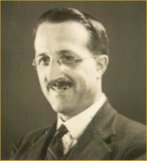
All the articles on this page are taken from Booklets 1 – 6 of 'Ministry of G. R. Cowell', the final series of publications by Philip Haddad.
- The series contains new articles as well as some previously published elsewhere.
- These last appear on 'My Brethren' in either the 'Early' or 'Later' series of Mr. Cowell's ministry.
G.A.R.
Page Top
DEVOTED PERSONS
AND HALLOWED HOUSES |
|---|
Exodus 25: 1- 2, 8-9; Leviticus 27: 1-8, 14-15, 28
1 Chronicles 29: 9; Acts 16: 15
Address at Trowbridge, February 15, 1958
Ministry of G. R. Cowell, Booklet 1: 3-18 |
|---|
I have in mind, dear brethren, to speak mainly upon Leviticus 27, touching on the thought of devoting and valuing as to persons, and of hallowing and redeeming as to our houses,
- but I want to show how these principles related to the house of God.
This chapter comes at the close of a book which begins with Jehovah dwelling among His people and calling to Moses and speaking to him out of the tent of meeting.
- God had come down to dwell among His people in marvellous grace and love. He had come to dwell because He loved the people. A man dwells with those he loves, and that is how God dwells.
- As thus dwelling He called Moses out of the tent of meeting with a view to persons being free to approach Him, for God loves us to approach.
- So how fitting it is that the book should close with the kind of response on our part which would lead us to devote ourselves and hallow what we have to Him.
- What more fit answer could there be to a God who loves us so much that He does not postpone His dwelling till a future day, but comes to dwell among us here and now while we are still in mixed conditions, in the tabernacle of testimony.
Devoted Persons
So the passage in Leviticus opens with the thought of a vow,
- "When any one devoteth anything by a vow".
- The principle of a vow is of great importance. In the Old Testament God secured His house on that principle. The light of the house of God was first vouchsafed to Jacob, and Jacob made a vow. He said,
- "If God will be with me, and keep me on this road that I go, and will give me bread to eat, and a garment to put on, and I come again to my father's house in peace – then shall Jehovah be my God. And this stone which I have set up for a pillar, shall be God's house; and of all that thou wilt give me I will without fail give the tenth to thee". Genesis 28: 20-22.
- That was Jacob's vow and God accepted it; it pleased God. The tithes were based upon it: He never forgot it.
- The tithes are referred to in Leviticus 27, verses 30 onwards, and as you go right through the Old Testament to Malachi God is still thinking about them,
- "Bring the whole tithe into the treasure-house", Malachi 3: 10.
- God never forgot Jacob's vow, and the whole economy was based upon it, for the tithes supported the Levites, and the Levites' tithes supported the priests;
- so that the whole economy of Israel was made to hinge upon Jacob's vow being carried out from generation to generation.
Then later, David vows. In Psalm 132 he says,
- "Jehovah, remember for David all his afflictions; how he swore unto Jehovah, vowed unto the Mighty One of Jacob":
- David never forgot Jacob's vow; he went back to it. God was to him the Mighty One of Jacob, the One who was faithful to Jacob and brought him through and brought him to what He intended to work out in him.
- And David, like his great predecessor, made a vow in relation to God's house.
- He said, "I will not give sleep to mine eyes, slumber to mine eyelids, until I find out a place for Jehovah, habitations for the Mighty One of Jacob".
- He went back to Jacob in his thoughts, but how completely David devoted himself!
- We get the thought of devoting in Leviticus 27 in connection with the vow, and how completely David devoted himself to Jehovah the Mighty One of Jacob!
- He would not look after his own interests or his own comfort until he had found a place for Jehovah.
- And what is encouraging in these vows is that God takes account of them and appreciates them, and gives the person strength to carry them out.
- We could not do anything in our own strength; any kind of vow based on self-confidence would utterly fail, but
- God looks for definite committal on our part in the full light of the outshining of His love, His grace and His power.
- Power belongs to God, not to the creature. The creature has only strength in so far as God is prepared to give strength. Whether you think of the animate or inanimate creation, all strength comes from God.
- Lawless man does not admit it, but he has to come to it in the end. Death overtakes him and he has to feel his weakness. Strength belongs to God.
- But in the light of God as disclosing Himself to us, the normal response is committal to Him and reliance upon Him for grace and power to carry out what we desire.
- "We love because he has first loved us", 1 John 4: 19,
- and if we love, then we want to be for Him, and He loves to see this definite response.
I am referring to a vow in the sense of our being definite in our committal, and we can afford to be definite in the light of the way God is shining out upon us.
- He loves to see such a movement, and He will support it.
- He may have to pass us through many exercises, many things that humble us, but if it is a real vow made before Him, He will hold us to it and give us grace to carry it through, and the joy of being able to carry it through without any credit to ourselves but all to Him.
That is what He did with David. David was young when he vowed, perhaps a boy in his teens. He was only a youth when he slew Goliath. Think of what that young man did!
- So I would encourage young brothers and sisters to think of David and what he did.
- And how did he do it? By the Mighty God of Jacob – not in his own strength.
- His point of view was that Goliath had defied the armies of the living God and he relied upon the living God to be with him in going forth against that great enemy!
So I suppose it was in the early part of his life that he made this vow that he would not give sleep to his eyes nor slumber to his eyelids until he had found a place for Jehovah.
- If God has a habitation here, in a practical way, suited to Him, it is because persons have devoted themselves on the principle of a vow to God.
- If you feel that in your locality there are, at any rate to some extent, conditions suitable to God,
- you can be sure that one or more persons in that locality have made a definite committal of themselves to God,
- and you are getting the benefit, and we may say, God is getting the benefit too.
So David went forward and God enabled him to carry out what he desired.
- Though he was not permitted to build the house, yet he was permitted to procure the site of it and the material for it.
- Prior to that he had put up a tent and brought the ark to Jerusalem. So you see what God will do for us if we are on this line!
At the outset as to the tabernacle, it says,
- "And Jehovah spoke to Moses, saying, Speak unto the children of Israel, that they bring me a heave-offering: of every one whose heart prompteth him", Exodus 25: 1.
- How could God dwell in love amongst His people unless on the ground of their hearts prompting them?
- There is no compulsion in love. God could not dwell in love amongst His people if they were doing things from a sense of legal duty;
- "We love because he has first loved us",
- and our hearts prompt us. We are greatly touched by the thought that God desires to dwell among us. So it is the willing-hearted, those whose hearts prompt them, who bring the material. And He says,
- And they shall make me a sanctuary, that I may dwell among them".
- What could we desire more? Let us all, dear brethren, be on this line! Let us think of the Lord Jesus, how fully committed He was, no one like Him. Coming into the world He said,
- "Sacrifice and offering thou willedst not; but thou hast prepared me a body … Lo, I come … to do, O God, thy will", Hebrews 10: 5-9.
David is but a type of Christ. How outstanding Christ is!
- "And thou art holy, thou that dwellest amid the praises of Israel", Psalm 22: 3.
- What lengths He would go to to secure a dwelling-place for His God! Psalm 22 is the psalm which shows how much the Lord Jesus suffered for His God.
- Let us not simply read it to think how much He suffered for us. The sufferings were for us, because He needed us as material for that habitation,
- but the great point in Psalm 22 is the sufferings He endured for His God;
- the lengths to which He would go for His God, and the depths into which He went for His God, to secure for Him an eternal dwelling-place amid the praises of His people.
- If anything would attract us into this path it is the contemplation of Christ!
- It is good to think of David and others, but let us think of Christ and the depths into which He has gone. Can we be on any other line in the light of that? Can we have any reserves in the light of that?
- Shall we not each and all commit ourselves to this great matter of providing God with conditions that are in keeping with His own specifications of His dwelling-place in our localities?
- We may say that we cannot come up to the perfection of them, but let us do what we can to improve conditions for God.
I read the passage in 1 Chronicles 29 bearing on this idea of devotion because in connection with the tabernacle there are the willing-hearted!
- Then at the end of David's life it says of the people,
- "And the people rejoiced because they offered willingly, for with perfect heart they offered willingly to Jehovah; and David the king also rejoiced with great joy".
- How we would desire to make David the king's heart rejoice! How it makes the heart of Christ rejoice when there are those on earth at the present time who are set definitely in this direction!
What we are saying shows how important Leviticus 27 is, because God's house has been founded on this principle and it is to be maintained on it. So it says in verse 3,
- "When any one devoteth anything by a vow, the persons shall be for Jehovah according to thy valuation".
- There are a good many persons in this room. According to this chapter the idea is that persons should be devoted.
- I am not speaking of devotion now in the ordinary way in which we use it, but as meaning wholly given up.
- When a thing is devoted it means that it is wholly given up for a certain purpose, and that is the meaning of it in this chapter.
- So God would have each one of us here fully surrendered to His will. The Lord Jesus was fully surrendered from the outset;
- "Thou hast prepared me a body … Lo, I come … to do, O God, thy will".
- And now God, as having come down to dwell amongst us, is looking for this kind of response in our hearts, that we should devote our bodies; give them up beyond recall.
- "I beseech you therefore, brethren, by the compassions of God, to present your bodies a living sacrifice, holy, acceptable to God, which is your intelligent service", Romans 12: 1.
- This principle is at the groundwork of christianity. It is a Romans idea. Chapter 6 –
- "yield yourselves to God as alive from among the dead, and your members instruments of righteousness to God", and chapter 12 –
- "I beseech you therefore, brethren, by the compassions of God, to present your bodies".
- We have already yielded ourselves and our members, and in result, as having learnt to value the Spirit, we have bodies to present.
- How valuable believers' bodies are as thus presented, and it is as presented they are valued! The persons shall be for Jehovah according to "thy valuation".
So the idea of valuation comes in here, which is very important, and the valuation is according to the shekel of the sanctuary.
- It is all a question of how the matter stands relating to God and His house. It is the value from that angle.
- We look round among our brethren and may say, That brother is a most capable business man! That is good so far, but that is not the valuation here!
- What is his value relative to God and His house? How does he stand as weighed according to the shekel of the sanctuary?
- So you have the perfect valuation at the different ages set out here – Moses' valuation – "thy valuation".
- The perfect standard is seen fully in Christ; seen in large measure in David; seen in greater measure in Paul.
- If any man of like passions with ourselves has come up to the divine valuation, Moses' valuation, that is surely Paul. We would surely say of him, There is a fifty shekel man!
But then it says in verse 8, "And if he be poorer than thy valuation, he shall present himself before the priest".
- That is very encouraging. Let no one here hold back because you think you are not equal to things.
- Who is equal to the full valuation? Who could put himself alongside Paul? And you could not even put Paul alongside Christ!
- Yet there is a certain valuation of every committed person. You cannot be valued until you are committed.
- You are of no specific value that could be estimated in relation to the divine system until you have committed yourself, devoted yourself, presented your body, never to be taken back. Now you can begin to be valued.
- Do not think you are not worth anything and hold back on that account. Every one is worth something.
- This is not a critical valuation. Do not let us look round upon the brethren in a critical way to see how short each one comes. That is not the point here.
- The priest does not look at things that way. He makes the very best of everyone. We all feel we do not come up to the divine standard, but we can present ourselves to the priest.
- How tender the Lord is as Priest! He would tell us what the divine standard is. He has set it out in Himself – Moses' valuation.
- How tender Jesus is as the Priest, and we can present ourselves to Him, "Just as I am" as we sing sometimes.
- Let us present ourselves to the Lord just as we are. He will put a right valuation upon us, and then we would learn to put a right valuation on one another.
- There should be the priestly element in every locality, and let us see that it is there and that it puts a sympathetic and right valuation upon every one.
- There is no under-valuing: no criticising because of what is not there, but valuing what is there. That is the thing. Everyone committed to Christ is worth something, and
- the "poorer than thy valuation" that is Moses' valuation "shall present himself before the priest, and the priest shall value him; according to his means that vowed shall the priest value him".
In Romans 16 you see how Paul values everyone.
- What a valuation he put upon Phoebe! what a valuation upon Priscilla! what a valuation upon Aquila! He put Priscilla first, but he valued them both,
- and so all the way down the chapter Paul puts his valuation on all the brethren. And that is how we are to look on one another; everyone who is committed is of value; the point is to be committed.
- Unless you are committed you are simply an anxiety, but the moment you are really committed to divine things on this principle of a vow and devoting yourself, you come under the priestly eye for valuation.
The value can increase: young people grow spiritually – "five years … unto twenty"; then when you get over twenty how greatly the value increases!
- And no one need get over "sixty" on this line of things! We have to see that we do not get over sixty – that is decline.
- The idea in christianity is that however old the body gets the inward man is renewed day by day. Paul never got beyond sixty in this sense: he was always at the top of the valuation.
Hallowed Houses
Now I pass on to the house.
- "And when any one halloweth his house, that it may be holy to Jehovah".
- You will notice the word is changed. It does not say 'devoted' here, but "halloweth".
- A devoted thing is something entirely given over; the word hallowing means 'set apart', something that is set apart for God.
- We are all privileged to set our houses apart for God, and all that comes under our hand here. Only a person who has devoted himself can properly hallow his house. We must begin with ourselves,
- "they gave themselves first to the Lord", 2 Corinthians 8: 5.
- But if we have committed ourselves on the principle of the vow, now it is our privilege to hallow what we have, set it apart for God.
There have been times when saints have been called upon to devote what they had. In the early part of Acts it says,
- "for as many as were owners of lands or houses, selling them, brought the price of what was sold and laid it at the feet of the apostles";
- that illustrates the meaning of devoting a thing. It means that it passes out of your possession. You sell your house, you sell your lands and you hand the whole thing over.
- There are times in the testimony when we may be called upon to devote what we have; indeed, what we put in the box on the Lord's Day is devoted; it passes out of our control.
- This meaning to the word 'devote', the word used in this chapter, is very testing. In what I have already been saying as applied to ourselves, it means that our bodies are devoted, they are handed over:
- we never again claim to be our own but are entirely at the Lord's disposal.
- That is what is involved, and it is a very testing thing, but who would want anything less? We are not our own: we are bought with a price.
- Then as to what we have, while under the administration of the twelve at the beginning, space was given for devoting and selling the houses and lands, and placing the proceeds at the apostles' feet.
- But, generally speaking, under Paul's ministry the idea is hallowing; setting apart what you have for God, but redeeming it. So it says here,
- "And when any one halloweth his house, that it may be holy to Jehovah, the priest shall value it, judging between good and bad: as the priest shall value it, so shall it stand. And if he that halloweth it will redeem his house, he shall add the fifth of the money of thy valuation unto it, and it shall be his".
I want to make these two thoughts clear, dear brethren. Verse 28 says,
- "Notwithstanding, no devoted thing that a man hath devoted to Jehovah of all that he hath … shall be sold or redeemed".
- That is you cannot redeem a devoted thing; you never can have it back.
- Thus in the early days, believers parted with their houses and land and they could never have them back; they laid the proceeds at the apostles' feet.
- But, in a general way under Paul's ministry, we are not called upon to devote our houses and our means, but to hallow them and redeem them.
- That is we set them apart for God, but we take them back under our own control on the principle of redemption, and on God's terms of redemption – the principal with a fifth part added.
That is the test for all of us as to our houses, and means.
- If we set them apart for God, the terms on which we should retain control, according to this passage, are that He should have the principal plus a fifth part added.
- Those are the terms on which we are allowed to retain control of what has been set apart for God, that He should get a fifth part more than if we had devoted it, if we had sold it and laid it at the apostles' feet.
- God gets more from our retaining them on the principle of redemption than if we had handed them over. How do we stand in this?
- It is a question of devoted persons, our bodies presented a living sacrifice – devoted persons and hallowed houses.
- God is looking for hallowed houses which devoted persons hallow to Him but retain in their control on the principle that God should receive 20% more than if they had been handed over and completely devoted.
This is testing, dear brethren, but it is very attractive. It is a very attractive thing that we can hallow our houses –
- and I am specially thinking of houses in this address because we have been speaking of houses this afternoon. We all desire to hallow our houses, surely?
- It is a great thing for young persons getting married to start with this, that they are setting up a hallowed house, retaining it under their control on the principle of redemption.
- So it is a test and a privilege for each one to seek to hold our houses on this principle that more shall accrue to God by retaining them under our control than if they had been sold and the proceeds placed at the apostles' feet.
- This involves continuous exercise as to how we are holding our houses. Is God getting the principal plus the fifth part from that hallowed house?
I suppose we see many examples of this in scripture, both in the Old and New Testaments.
- Think of the house of Obed-Edom being available for the ark to come in! You can understand that while the ark was there everything had to be subservient to it,
- and that should be the principle with all of us that everything in our houses should be subservient to Christ and the testimony.
- As you come to the New Testament, think of the houses there!
I read about Lydia because she is a good illustration of a devoted person and a hallowed house.
- The Lord opened her heart to attend to the things spoken by Paul, and she places herself before the priest, like the devoted person in the early part of Leviticus who presented himself before the priest for valuation.
- She was prepared to be valued by Paul. She had committed herself to God, and she says to Paul,
- "If ye have judged me to be faithful to the Lord".
- Paul had a high valuation of Lydia as a devoted person. When he came out of prison it says in that chapter,
- "And having gone out of the prison, they came to Lydia".
- It is remarkable that it is put that way. It does not simply say that they came to Lydia's house, showing what a high valuation Paul put upon Lydia as a devoted person, and how much she meant to him. But then she says,
- "If ye have judged me to be faithful to the Lord" – that was a question of her herself being valued in relation to God and His house – "come into my house and abide there".
- It was a hallowed house, and it says, "And she constrained us".
- If your house is hallowed and you have taken it back on the principle of redemption so that God is getting the fifth part more, you would not mind Paul coming in. We can test how much we are on this line in that way.
I suppose it would be a test for Paul to come into the house for a few hours and have a meal – we are glad to have the Lord's people in for a meal – but she says to Paul,
- "come into my house and abide there".
- She was prepared for Paul to see how she went on first thing in the morning, and in the middle of the day, and last thing at night. She was prepared to be under his inspection for as long as he liked to stay.
- How we would love to have houses like that that would stand such a scrutiny!
- Paul had this in mind wherever he went – hallowed houses on the principle of redemption; in fact in Ephesians he speaks of redeeming the time.
- We are to hold all that comes under our control on the principle of redemption; that is, the idea of God getting a fifth part added.
- How are we using our time? Perhaps many young people here have told the Lord that they would like to give their spare time to Him, and He says, as it were,
- 'I accept it. You set your time apart for Me, but I am handing it back to you to use on the principle of redemption. You redeem it!'
- We have to do that. If we have hallowed our time apart for the Lord we have to redeem it, use it for Him, so that He gets the principal plus a fifth part.
- And so with all that we have, we are privileged to set it apart for God and then to retain it in our possession on this great principle of God getting more from it than if we had actually given it up.
Now it is on this line of things that all that relates to God's house here on earth will prosper.
- The next book, as we noticed this afternoon, shows how much the households of the saints are needed.
- The early chapters of Numbers show that our houses are to be held entirely in relation to God's dwelling. Part of Leviticus 27 – speaking of fields and so on – could only apply when they got to the land, and that enters into our experience too – our place in the inheritance, but the parts we read apply in the wilderness and in the land.
- Persons were needed in the wilderness. Houses were needed in the wilderness. God speaks of houses from the outset,
- "a lamb, for a father's house", Exodus 12: 3.
- God was out to secure houses: they were only tents but they were houses, "a father's house", and it speaks of heads of a father's house, and
- Numbers shows that God, as dwelling amongst His people, required all the houses to be set in relation to Him.
- Every house in Israel was a hallowed house; set apart for God; still left under the control of the owner, but set apart for God so that there should be
- a continuous revenue flowing in to God from these households set round the tabernacle in military, levitical and priestly array.
- How blessed this! Let us see, dear brethren, that the divine revenues are maintained!
The tithes are there: they are mentioned at the end of the chapter – the tenth part goes on all the time. But there was also what was hallowed and redeemed.
- May we all, through grace, in the light of God having come to dwell amongst us, be devoted persons and may our houses be both hallowed and redeemed, for His name's sake!
Page Top Article Top
| THE SCOPE OF PRAYER |
|---|
Matthew 21: 12-16; Ephesians 6: 18-22
1 Timothy 2: 1-7; 1 Timothy 3: 15
Address at Bognor, December 10, 1955
Ministry of G. R. Cowell, Booklet 1: 19-28 |
|---|
The Lord may help us as we consider His words quoting from the prophet,
- "My house shall be called a house of prayer", Matthew 21.
- He adds "for all the nations", according to Mark,.
- We think rightly of the house of God as a place of praise, and later in the passage the Lord says,
- "Out of the mouth of babes and sucklings thou hast perfected praise".
- But if the house of God is to be, as it should be, a place of praise – for it says that those who dwell in God's house shall be constantly praising Him, Psalm 84: 4 – we must first recognise that it is a house of prayer.
- It may be, too, that we need to understand better what a service prayer is, not only in its results, but in its fragrance to God –
- "Let my prayer be set forth before thee as incense, the lifting up of my hands as the evening oblation", Psalm 141: 2.
The passage in Ephesians would indicate the nature of prayer at the golden altar,
- and the passage in 1 Timothy, the character of prayer at the brazen altar.
- The psalmist says, "Thine altars, O Jehovah of hosts, my king and my God", Psalm 84: 3 –
- so that we should be accustomed to both altars and to function at them, and together they provide a vast scope as to prayer.
- The more we develop scope in prayer, the more we shall develop scope in praise.
- As incidental to that, what is in view in prayer, according to 1 Timothy, is that men should not only be saved, but come to the knowledge – full knowledge – of the truth.
- That is the scope, that truth being that God is one and the mediator of God and men one.
- But Paul goes on to speak of his outlook as to his own service, and doubtless our scope in prayer will affect the scope of our outlook in service.
- He does not say 'a teacher of the saints' or 'a teacher of the assembly', but "a teacher of the nations".
Matthew links specially with our day, because it was the end of a dispensation, and the Lord cleanses the temple.
- He has brought in ministry in the last 150 years, which has exposed all that is contrary to Himself in that which professes to be the house of God here.
- Cleansing has gone on, but with a view to our being recovered to God's thought about His house, and the first thing is "a house of prayer".
Many examples occur in scripture to show how prayer leads to praise. In Revelation 5: 8-9 we have the
- "golden bowls, full of incenses, which are the prayers of the saints",
- and then they each have a harp, so that praise is in mind, and praise breaks out immediately.
- So in Acts 16: 25 It says, "at midnight Paul and Silas, in praying, were praising God with singing".
- That bears on the question of taking our harps with us wherever we go, as well as our bowls. David's psalms show that he carried his harp with him, in a spiritual sense, wherever he went,
- for in the most untoward circumstances his heart went out to God in prayer and it turned to praise.
- The very scripture quoted by the Lord says earlier,
- "Them will I bring to my holy mountain, and make them joyful in my house of prayer", Isaiah 55: 7.
- The vast scope of things which opens up before the soul in prayer would lead to buoyancy.
- Even the prayer of Habakkuk, in a time of pressure, culminates at the end of the chapter in the prophet rejoicing and finding joy in the God of his salvation,
- walking upon his high places, addressing his composition to the chief musician upon his stringed instruments – his harp being there as well as his bowl!
Solomon affords an outstanding example of prayer at the altar of burnt offering, 2 Chronicles 6. That kind of prayer can be linked with 1 Timothy 2. The altar of burnt offering is in view – that is,
- "Christ Jesus, who gave himself a ransom for all", 1 Timothy 2: 6 –
- and the prayer there is for all men and touches the matters of God's government – kings and all in dignity, and also the welfare of the saints in their practical lives here.
- It is an outward outlook, whereas at the golden altar, you are in an environment where all is gold.
- You see the saints according to purpose, and your prayers take character from the environment in which your spirit is.
- We need to be familiar with both the altars, and to be free to move from one to the other.
- No doubt the inner place – our place within – indeed in the holiest of all – would give character to the outer.
- The note to the word "intercessions" in 1 Timothy 2: 1 – note 'g' – says that it is
- "Personal and confiding intercourse with God on the part of one able to approach him".
- The one who can take up, in that personal and confiding intercourse, the prayer of 1 Timothy 2 would be one who was at home with God in the holiest and at the golden altar.
The boards are there, covered with gold, typifying the saints according to divine purpose, and the coloured curtains again representing the saints, the curtains being in keeping with the veil.
- The veil itself is there, but no obstruction for us, Hebrews 10: 20. We serve, in prayer as well as in praise, in the full light of the holiest.
- Christ having been set forth a mercy seat, there is no veil in the sense of anything hindering our vision, the heavens are opened through – Acts 7: 56 – and all our service goes on in the light of the holiest of all.
- So we have God before us, and the Ark of His strength, and God shining forth from between the cherubim, and then, in the light of that,
- we take account of the saints according to His purpose, the boards and the shewbread on the table all being lit up by the pure light of the pure candlestick.
- In that light how elevated prayer would be for all saints!
The cleansing of the house in Mr. Darby's day was accompanied by the recovery to the saints of all these precious things,
- so that we can take account of God's thoughts at the end just as they were set up at the beginning – see 2 Chronicles 29: 18-19 –
- and in the light of that the "Song of Jehovah" – verse 27 – can proceed.
- This is just the order in our chapter in Matthew – the cleansing of the temple leads to the praise of verse 15 and in between we have the healing of the blind and the lame.
- When the Lord began the ministry of cleansing through Mr. Darby, hardly anyone in Christendom had spiritual eyesight, and there were hardly any who could "walk".
- Even godly souls did not know how to walk, they were under law, and knew not the power of the Spirit nor the truth of justification.
- In those who responded to the cleansing ministry there has been healing. They have received their sight, and the power to "walk".
Underlying the great matter of prayer is the individual side. In Matthew 6: 7, the Lord does not say "If", but "when ye pray", implying that it is normal for the soul to be in touch with God.
- He warns against vain repetitions, and speaks of the secret place, stressing the personal touch –
- "Enter into thy chamber, and … pray to thy Father who is in secret", verse 6.
- Paul himself started thus – Acts 9: 11.
- It is doubtful if any of us give up enough time to our private devotions. We should surely get more help in them if we did, and if we waited long enough for the prayer to turn to praise.
- This is a service which we can take up to the very end of our days, when perhaps other services may be denied us through physical weakness.
- Here is a service of the highest character, open to every brother and sister, because even in our private devotions we are privileged to leave our own affairs and to pray relative to God and His house.
- It is like Daniel, with his window open towards Jerusalem, doubtless in spirit praying both at the golden altar and the brazen altar.
- The two prayers in Ephesians were the apostle's personal prayers. He knew even in private prayers how to function at the golden altar.
It is important, too, to get beyond the realm of need. The holiest was where the ark was, covered in every part with gold.
- It is a great help, as we approach God, if we are enabled to speak to Him of Christ, and of Himself, and of His glory and majesty, as being beyond the realm of our need.
- Making room for this more in our private devotions would greatly add to the substance of the worship on Lord's Day morning.
- We should be worshippers characteristically, accustomed, in our private relations with God to worship Him; like David who went in and sat before Him.
- Help is available that we should be sustained in prayer. We have the High Priest to sustain us – Hebrews 4: 14-16 – and
- the Spirit "joins also its help to our weakness", Romans 8: 26.
- In Ephesians 6 the Spirit is stressed,
- "praying at all seasons, with all prayer and supplication in the Spirit".
- How wonderful it would be to get really into the current of the Spirit's affections and emotions in this matter, and to be under His control in our thoughts and supplications!
- Furthermore, perseverance is called for, as it goes on to say,
- "with all perseverance and supplication for all the saints" – see also Colossians 4: 2.
- We need in prayer first to have a knowledge of God and of His will – Ephesians 1: 17 and Colossians 1: 9 .
- In the environment of the golden altar, we are in the presence of the outshining of God, and of what speaks of the saints according to purpose – His will.
- Prayer would have nothing less as its objective than that all saints might come to the full knowledge of God, and the full knowledge of His will, to fully fill out their place in the divine system.
- But secondly we have to recognise what is against that, because our prayers are to be against what is against the testimony, and it is no mean power against us.
- "Our struggle is … against principalities, against authorities, against the universal lords of this darkness, against spiritual power of wickedness in the heavenlies".
- Our prayers in the prayer meeting rarely suggest anything like the urgency this calls for.
The tabernacle system sets out the will of God,
- and every saint should stand in his place as a board upright, ten cubits high, on the sockets of silver, standing in relation to the other boards;
- and then we should all merge together body-wise in those coloured curtains, manifesting only the features of Christ, only the new man, and nothing else.
- Thus we shall enjoy our place of acceptance before God as the shewbread on the pure table.
- All those things indicate typically what God's will is, and in that environment surely we should pray about those matters as understanding what would hinder.
- We should understand that personalities are behind these things that are moving in the world. Principalities and authorities are behind them, Satan and those under him, and they are called the "lords of this darkness".
- The instruments Satan is employing are such things as communism, Romanism, trade unionism, trade associations and the like.
- The powers behind them are in the heavenlies – "spiritual power of wickedness in the heavenlies" – but they are operating through men, and combinations of men, here on earth.
- Two sisters, one long in fellowship, and the other brought up in the meeting, have recently been caught by Rome, reminding us of its power,
- by which thousands upon thousands of true souls have been caught and are held in the system which in itself is marked by "the depths of Satan".
- Undoubtedly we should see great results if we prayed more, with reality and earnestness, that all the saints – not simply those we walk with –
- might come into the full knowledge of God and of His will,
- and as thus praying we shall experience something of what it is to get answers from heaven checking these great forces.
- We shall see that God will check them – as hitherto, and more. So that we are not to be afraid of them, but to face them with God, as those who pray.
In 1 Timothy 2 the apostle exhorts "first of all, that supplications, prayers … be made for all men".
- On the testimonial line the most important thing – more so even than good works – is that there should be prayer of this kind.
- If people come into our prayer meetings, or if we have visitors in our homes and they hear the head of the house praying, if this kind of prayer is absent, God is not rightly represented.
- In the light of Proverbs 8: 31 and other scriptures, we know that God's pleasure and His eternal purpose relate to men, not angels.
- So it is not simply a question of praying for the salvation of their souls, important as that is,
- but that men should come to the full knowledge – see footnote to verse 4 – of the truth, and
- that truth is that God is one, which involves the present revelation; it involves the name of the Father, and of the Son, and of the Holy Spirit, underlying which is this great truth that God is one.
- Then it says, "The mediator of God and men one". It is men that God's purpose is set upon, and we need to have that in our minds and prayers, to give us right spiritual energy in it,
- and then flowing out of that, how do we hold our service? Are we ready to serve all men?
- Paul says he was "appointed a herald and apostle … a teacher of the nations". Paul was ready to teach all men, and if there is one thing men need, it is teaching.
- Our own souls becoming enriched in the knowledge of God as the Father, the Son and the Holy Spirit,
- we are enabled to look out on all men with a deepening understanding of the one Man, Christ Jesus, the mediator of God and men.
- The first thing to be done with persons affected by the testimony is to baptise them to the name of the Father, and of the Son, and of the Holy Spirit, and they are given to understand that God is one.
- The full light of God is thus brought to bear on them, and then the truth as to man is also presented to them in perfection in the Man Christ Jesus.
- So that the full truth is involved in this simple statement:
- "God is one, and the mediator of God and men one, the man Christ Jesus".
If intelligence is needed at the golden altar, as indicated in Ephesians, it is also needed, in another way, at the brazen altar.
- "Kings and all that are in dignity" has not in mind that we are to think only of the ruler of the British Commonwealth, nor is it an abstract prayer for the powers that be.
- You think sympathetically of the persons, and you weigh up the persons, as far as you can.
- At a time when Cyrus did not even know God, God calls him His beloved, for He was going to use him.
- God raises up men in the sphere of government suitable for His use, and we need to discern, so far as we can, what God is doing with these men, and to know how to pray.
- We need to have some understanding of the image Nebuchadnezzar saw, if we are to pray on this line.
- The first metal, gold, represents the general principle, that there is no authority except from God, and even though the character of rule deteriorates, that principle remains.
- The gold was still there when the Lord stood before Pilate – see John 19: 11 – and all the metals are there when the Lord comes,
- when the "stone" smites the "image", and the iron, clay, brass, silver and gold are broken in pieces together and become like the chaff of the summer threshing-floors. Daniel 2: 34-35.
- The silver, which came to light in the Persian Empire, is the kind of rule which acknowledges the rights of God over His people;
- that principle remains, thank God, and has marked the British Commonwealth for centuries.
- The brass, which marked the Grecian Empire was used, and will yet be used, as a disciplinary power. If God sees His people need discipline He can raise up the basest of men to discipline them.
- We have seen that in our day. Those who appear to be against the testimony would be in line with the brass. We have to view them in that light and wait on God about it and as to when it shall be His time to grant relief.
- Then the Roman power is marked by opening up the highways, as suggested in the legs of the image. Men think the highways are for other purposes, but we know they are for the testimony and that is why we are free to use them.
The prayers of 1 Timothy 2 would lead to the doxology of the last chapter.
- The doxologies of this epistle would indicate the note of worship that is aroused in the heart as it takes account of the magnitude and majesty of the ways of God, and the greatness of their scope, not only in grace but in government.
Page Top Article Top
THE BAPTISM OF THE SPIRIT
AND THE THRESHING FLOOR |
|---|
Matthew 3:7-12; Acts 1:4-8; 1 Corinthians 12:12- 13
Extracts from a Reading at Dublin, December 24, 1954
Ministry of G. R. Cowell, Booklet 2: 3-14
|
|---|
One feels the importance of paying attention to the baptism of the Holy Spirit. John the Baptist refers to it in each of the gospels; the Lord Jesus in the Acts 1, and Paul in 1 Corinthians 12.
- One feels that the Lord Jesus would have us learn what immersion means in this respect.
- We are all tested as to whether we are prepared unreservedly to commit ourselves to the Holy Spirit in the way He may be pleased to move at any time – to be wholly in the current of His movements.
- The figure of baptism helps. It is in the acceptance of it that we come practically into the gain of the body. In actual fact the body is formed [thus] and we are members of it:
- "In the power of one Spirit we have all been baptised into one body", 1 Corinthians 12: 13.
- If we understand the meaning of baptism the truth of the body would work out practically and vitally amongst us, and there would be no persons moving independently or in any way that causes concern to the saints.
- Such movements are not compatible with the truth of the body nor with the truth of the Spirit being here.
It is important to see that in Ephesians 4 it says,
- "There is one body and one Spirit".
- We might have written it in the reverse order, but scripture says,
- "There is one body and one Spirit, as ye have been also called in one hope of your calling",
- showing that if we are to get the gain of the Spirit we must recognise the truth of the body. The baptism of the Spirit, if understood by us, would mean that we are moving bodywise.
John the Baptist brings in the great truth to magnify the person of Christ.
- "I indeed", he says, "baptise you with water to repentance, but he that comes after me is mightier than I, whose sandals I am not fit to bear, he shall baptise you with the Holy Spirit and fire", Matthew 3: 11.
- I am not sure that any such suggestion is made earlier in scripture. John brings in a remarkable new unfolding of the truth, that there was to be such a thing as this, the baptism of the Spirit.
- In announcing the coming of Christ, this is how he introduces Him, this is what would mark Him off –
- "He shall baptise you with the Holy Spirit".
- He is indicating that the baptism of the Spirit is one of the most outstanding events on the divine calendar – an outstanding feature in connection with the coming in of Christ and what He would effect.
- The mystery hidden throughout the ages in God was to be brought to pass, that is, the formation of the saints into one body.
Then when persons receive the Spirit they partake in the baptism of the Spirit, they become members of the body, but it is quite a different idea.
- The moment you think of the baptism of the Spirit you have the corporate thought in mind.
- It is as an individual that I receive the Spirit. Our bodies are spoken of as
- "temple of the Holy Spirit", 1 Corinthians 6: 19.
- But then have I apprehended that, the Spirit having come to dwell in me in that way, I have part in the baptism of the Spirit? That links me on with the saints, as it says,
- "For also in the power of one Spirit we have all been baptised into one body", 1 Cor. 12: 13.
- So that the baptism of the Spirit is not an individual matter. I am brought vitally into what is corporate. We are baptised into one body.
The description of the coming of the Spirit greatly helps:
- "And there came suddenly out of heaven as of a violent impetuous blowing and filled all the house where they were sitting. And there appeared to them parted tongues, as of fire, and it sat upon each of them, and they were all filled with the Holy Spirit, and began to speak with other tongues as the Spirit gave them to speak forth", Acts 2: 2-4.
- Those who were together on the day of Pentecost were not only thinking the same thing, but saying the same thing.
- The intention is that we should all be immersed in the current of the Spirit, and then the body becomes a practical matter. We are all moving together.
John, in Matthew 3: 11 – Matthew, being the assembly gospel – though he would not have known it, is really prophesying of the formation of the body – the assembly.
- But first of all he speaks of the axe as applied to the root of the trees, then he brings in the baptism of the Spirit, and following that he refers to the Lord's service in thoroughly purging His threshing floor.
- Do not these things bear on one another? He says,
- "Every tree therefore not producing good fruit is cut down and cast into the fire".
- Has not every kind of tree been tested? We might speak of the Jewish tree. The fig tree had been cultivated, but it had produced no fruit. Then the Gentile tree – there was no fruit there.
- So that whether it was Jew or Greek, bondman or freeman, whatever kind of man, socially, racially, or in any other way, he had been found fruitless.
- Have we not to recognise that, if we are to value the baptism of the Spirit? So it says,
- "In the power of one Spirit we have all been baptised into one body, whether Jews or Greeks, whether bondmen or free", 1 Corinthians 12: 13.
- Is not the axe a sweeping matter, showing that the ground is to be cleared of every kind of man after the flesh? It says,
- "Already the axe is applied to the root of the trees".
- If independence of thought or movement come out, it shows that the fact of the axe being applied to the "root" – not only to the trunk – has not been accepted.
- It is every feature belonging to the flesh that has to be cut down.
We can understand God not bringing in the truth of the body, until every kind of man had been tested – man's will lying at the root and the trees are the evidence of it.
- Among the features of the flesh in Galatians 5 – "contentions, disputes", etc. is "schools of opinion"; and that is what we are troubled with at the present time – schools of opinion or heresies.
- They come about through persons who never accepted that the axe is laid to the root of the trees.
- They are still trying to cultivate one of the trees and therefore have not learnt the truth of immersion in the Spirit.
- They have not let themselves go entirely in what Ezekiel describes as "waters to swim in", Ezekiel 47: 5.
The baptism of the Spirit in Matthew being the Lord's operation involves the Lord's authority, and only our recognition of His authority brings us vitally into the truth of the baptism of the Spirit.
- And it is of no avail for anyone to claim he is moving under the authority of the Lord if he is not accepting the baptism of the Spirit.
- The Lord's rights require that we should suffer ourselves to be immersed in the Spirit.
- There is nothing more blessed than to move along with the brethren as immersed in the Spirit.
- It is remarkable how closely baptism with water is linked with the baptism of the Spirit – they both come in the same sentence: "I baptise you with water … he shall baptise you with the Holy Spirit and fire", Matthew 3: 11.
- In the case of Cornelius the baptism of the Spirit comes first, but was immediately followed by water baptism; but in the more normal cases as in Acts 2: 38, water baptism comes first,
- "Repent and be baptised each one of you in the name of Jesus Christ, for remission of sins, and ye will receive the gift of the Holy Spirit".
- All those baptised in water that day were also baptised in the Spirit.
- Then we are inwardly carried along in our thoughts and affections with the one great current that is flowing.
- To be indwelt by the Spirit is one thing, but it is another thing to understand that I am in the Spirit; that is the divine thought, that I should be moving along in that current.
- It is a wonderful thing that the Spirit should be pleased to dwell in me, but, in a way, it is more wonderful that I should be privileged to move as in the Spirit.
To be filled with the Spirit is to recognise the baptism of the Spirit. It is seen in the figure we have often used in other connections as to the ocean.
- If we put a vessel into the ocean it is not containing the ocean, yet the ocean is in the vessel; but as in the ocean it can be carried along with the current.
- If we are really immersed in the Spirit, we shall certainly be filled with the Spirit. What wonderful seasons we should have bodywise, if that were true!
- But it is well to pay attention to the fire,
- "the chaff he will burn with fire unquenchable", Matthew 3: 12, and then
- "parted tongues, as of fire", Acts 2: 3.
- It shows that God cannot tolerate the flesh in any form. Man in the flesh has been tried in the fullest way, and has been found fruitless.
- God cannot tolerate any feature of the flesh, and in no setting are they more distasteful to Him than when they intrude into divine things.
In Acts 15 where the question of circumcision comes in, there were schools of opinion, but afterwards at the end of the chapter we read,
- "It seemed good to the Holy Spirit and to us", verse 28; that would be merging together.
- There is always the danger of heresies or schools of opinion dividing the church.
- Their tendencies are always to divide, because they are propagated by persons who do not recognise the truth of the Spirit and the body. Therefore they can only divide the saints.
- In that chapter christianity was taking form, but it is a beautiful result, because they were all moving in the current of the Spirit.
- We function bodywise as we are prepared for immersion in the Spirit, because we are all moving then as wholly amenable to the Spirit.
- So that in 1 Corinthians 12: 11, the Spirit distributes to each as He pleases.
- He has sovereign rights, and if we are submissive to Him, and allow ourselves to be led by Him, does it not make way for those rights? There will be nothing then to hinder or quench Him. So we are enjoined to
- "keep the unity of the Spirit, in the uniting bond of peace".
- We are to "use diligence" to do this, it says.
- No independence of any kind allowable. The saints in Antioch were moving undoubtedly bodywise, so that the Spirit was free to say:
- "Separate me now Barnabas and Saul for the work to which I have called them".
It says in 1 Corinthians 12, "God has set certain in the assembly". That is with a view to this unity. In Ephesians 4: 12 the gifts are
- "for the perfecting of the saints, with a view to the work of the ministry, with a view to the edifying of the body of Christ".
- One purpose of the gifts is to help us to understand the truth of the body and to fill out our part in it vitally.
- Take Antioch, how manifestly that assembly was in the gain of the truth of the body! The Spirit said:
- "Separate me now Barnabas and Saul".
- I assume that He spoke through some brother, but nobody criticised what was said.
- They might have said, 'Why take Barnabas, the one at the top of the list, and Saul at the bottom?' – but they were prepared for whatever the Spirit was pleased to say.
- That is a great point at all times. It meant that any predilection or self-importance that I might have has got to go, and things are under the control of the Spirit.
- In the first scripture we read, John the Baptist stresses the greatness of Christ – Who He is.
- The first thing is for us to have an immense impression of the greatness of Christ; it is in the recognition of His lordship that we really submit to the baptism of the Spirit.
- But when the Lord refers to the matter in the Acts, He does not say: I shall baptise you with the Holy Spirit – that was of course true.
- But He says, "ye shall be baptised with the Holy Spirit after now not many days", Acts 1: 5; that is, He would now specially impress them with the Holy Spirit.
- The first thing is to be impressed with Christ and His greatness, and then that makes way for us to be impressed with the wonder and greatness of the Person who has come from Christ – the Holy Spirit.
- So that the Lord does not bring Himself into the matter there, but says, "ye shall be baptised with the Holy Spirit". And further on He says, "the Holy Spirit having come upon you".
- Then when we come to Paul's doctrine in Corinthians, we have, "in the power of one Spirit", 1 Cor. 12: 13.
- In other words as we go on in this matter, we learn more and more to value the Spirit. Our valuation of the Spirit never displaces Christ, but the point is the Spirit is becoming greater to us.
The greatness of the Father also comes before the soul – as the Lord Himself makes much of Him in connection with the gift of the Spirit –
- "whom the Father will send in my name", John 14: 26; then
- "I send the promise of my Father upon you", Luke 24: 49.
- It shows the unselfish love that marks the Persons of the Godhead. The Lord thus stresses the greatness of the Person that is coming,
- and Paul stresses His greatness as having come; he refers to the sovereign will of the Spirit,
- "dividing to each in particular as He pleases", then lower down in the chapter,
- "in the power of one Spirit we have all been baptised into one body", 1 Corinthians 12: 11, 13.
- Then the Father's love is shown in the expression of "the promise of my Father" – in giving us the Holy Spirit; and also that,
- as "the Holy Spirit of promise", He would link up with every promise God has made to men.
The precious sufferings and death of Christ should greatly affect us when we consider what we have been brought into – things that were never conceived in Old Testament times.
- Although there are types of the assembly there, yet we should be impressed with the fact that we are brought into something entirely new.
- The axe is applied to the root of the trees. What was ever in God's mind in purpose is brought in – the baptism of the saints by the Holy Spirit into one body.
- As we move together in the Spirit, we come into a realm of things which can never be compassed by human language – "waters to swim in", Ezekiel 47: 5 – and we can never say that we have reached finality.
- That is the test of the moment. But the secret of the working of the organism lies in the fact that each, in love, esteems the other more excellent than himself.
- That gives the Spirit room and right of way. There is nothing to obstruct Him. That would be a great experience for us. And in the spirit of mutual love and respect we prove the word:
- "But much rather the members of the body which seem to be weaker are necessary; and those parts of the body which we esteem to be the more void of honour, these we clothe with more abundant honour".
- That would give the Spirit of God a free hand to bring in that which He desires.
The twelve men at Ephesus, in Acts 19, were in the gain of John's baptism, and
- when they came into the gain of christian baptism and the baptism of the Spirit, they make rapid progress, more rapid than we are accustomed to in these days.
- Paul says to the elders at Ephesus,
- "I have not shrunk from announcing to you all the counsels of God", Acts 20: 27.
- How rapidly they entered into things, showing what a great place they were giving the Holy Spirit.
- The Philippians too had made rapid progress,
- "If any fellowship of the Spirit … that ye may think the same thing, having the same love, joined in soul, thinking the same thing", Philippians 2: 1-3.
- And so the secret underlying the working of the body is in 1 Corinthians 13 – love – as it follows on chapter 12.
A third point is in Matthew 3, "whose winnowing fan is in his hand, and he shall thoroughly purge his threshing-floor".
- The baptism of the Spirit has to do with what is corporate – the body – but in order that we might fit into our place in the body, the Lord deals with us severally in connection with His threshing-floor.
- He is dealing with us all with a view to helping us to fit together bodywise. We are all in the threshing-floor, and the Lord has His winnowing fan in His hand.
- Extreme measures may have to be taken by the Lord with some of us, so as to free us from the chaff.
- And in John 13 too the Lord's washing of the feet of His disciples, is with a view to setting them together; it is really a 'body' chapter.
- The Lord uses the words "yourselves", "one another", "love one another" and "love among yourselves". These are body ideas.
- And He is seeking to rid us of the chaff; we naturally love the chaff, it makes a good show – the world lives on it.
- So that the word "fire unquenchable" is used in Matthew, because these natural features about ourselves are the greatest hindrance to the work of God in us, in merging us together.
- So let us not resist, let us submit ourselves to the Lord and let the fan do its work. Let the chaff go.
- This all precedes the garnering, it is all pure wheat there – and if we view the body abstractly, it is wholly of Christ, nothing but pure wheat there.
We have "one body" in 1 Corinthians 12, and later in the chapter it is called "body of Christ", and in Colossians we see its relation to Christ. He is the Head of the body; the body is a basic matter.
- There would be nothing for Christ in the way of bridal response apart from it.
- Persons that go off on independent lines are damaging everything that is precious to Christ.
- We need to wait on the Lord and on the Spirit in all our gatherings. We do not want to launch out even into a reading without the Spirit.
- Much of the independent teaching has not been in a collective setting, and we can only get the Spirit's help in guiding us into the truth as we are in the recognition of our relations with our brethren – then He will confirm us.
- The gain of the anointing in 1 Corinthians 12 is proved bodywise; that does not shut out what is individual. We are anointed and as we serve God in the power of the Spirit, the grace of the anointing is seen in the service.
- But 1 Corinthians 12 shows that in a peculiar way the anointing is linked up with the saints bodywise – the anointed vessel.
- There the grace and power of the anointing is seen in a unique way; it can be named – "so also is the Christ";
- then, "in the power of one Spirit we have all been baptised into one body";
- then the apostle says: "have all been made to drink of one Spirit".
- So that it is a very full idea. There is what is seen in the saints in the power of the anointing, but what underlies it is the baptism of the Spirit, and the inward satisfaction in the drinking.
- All these things are seen as the saints are moving together.
- Then, also in 1 Corinthians 10, there is another thought: "we being many are one loaf, one body". We feed upon one another bodywise.
- Referring back to Peter, in Mark 14, Peter would not be the kind of brother to help the saints bodywise. He says, "Even if all should be offended yet not I". He is putting himself above the others.
- In John 21 the Lord tests him. He says: "Lovest thou me more than these?".
- After the test Peter would become a real "body" man. He would regard himself, not as the best brother in the meeting, but as the least. And as restored, he would be prepared to "confirm thy brethren".
Page Top Article Top Next Article