Menu•SiteMap |
Ministry
Unity as Presented in Paul's Epistles
Early Ministry by G. R. Cowell
– Part Five
| INTRODUCTION |
|---|
UNITY AS PRESENTED IN PAUL'S EPISTLES
Revised Notes of Meetings in London
with G. R. Cowell, July 14-16, 1959
FOREWORD
In answer to requests, the London 1959 Readings
are being made available on the principle, “Let the others judge”
– the brethren having been deprived of the opportunity previously.
|
|---|
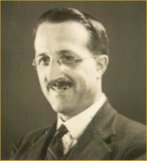
At the fateful 1959 London meetings, certain remarks of Mr. Cowell were challenged by JTJr.
- This was the predictable outcome of criticism by JTJr and others of Mr. Cowell's ministry in Australia and New Zealand:
- The Gospel of the Glory, Sydney and Melbourne, February and March 1959, as well as
- Purification and Life, Exeter, August 1958,
- Fundamentals of Christianity, Cape Town, Dec. 1958.
- GRC was unjustly charged with holding wrong doctrine and weakening separation, ultimately resulting in him being withdrawn from on July 12, 1960.
LONDON MEETINGS, 1959
– The Auckland Supplement |
|---|
- In the publication of ministry, the primary objective is edification; and it was, therefore, thought wise to omit from the fourth reading the brief, but controversial, remarks re Auckland, the facts concerning which would be unknown to many. Indeed it has always been considered desirable in print to avoid pointed references to particular localities or individuals, but rather to keep to general principles.
- Since the publication of the book, however, requests have been received for information concerning the references to Auckland; and, in response to these requests, the three references are given hereon in full, the places in the fourth reading where they occurred being also indicated.
- Enquiries as to the revision of the Notes have also been received. In accordance with usual practice, the Notes were sent to me for revision in August, 1959, and were revised immediately. With the inclusion of the Auckland Supplement the Notes are complete.
- The original copies of the Notes are still available for inspection should the need arise.
G.R.C.
|
The exchanges between JTJr and GRC referred to above are included in Reading 4 at the appropriate place, as follows:
1 2 3 footnote .
G.A.R.
Page Top
| READING 1 |
|---|
Unity as Presented in Paul's Epistles ( 1 )
1 Corinthians 1: 10-15; 4: 6-7; 5: 2, 6-8; 12: 1-6, 11-13
|
|---|
G.R.C. The thought in these readings is that we should consider the way Paul presents unity in the epistles to the Corinthians, Galatians and Ephesians.
- Having in mind the universal desire of the saints, it is in all our hearts that we should be preserved in increasing unity until the Lord comes, in the recognition that apart from it there can be no true portion for Christ, and no true portion for God.
- It has often been said that union cannot be enjoyed without unity, and it is interesting to keep in mind that in Paul’s gospel treatise – and what, I suppose, is the highest note in Romans – he says, “that ye may with one accord, with one mouth, glorify the God and Father of our Lord Jesus Christ”, Romans 15: 6.
- The working out of that, no doubt, involves Paul’s ministry as a whole, but he brings it into his gospel treatise, showing that the great end in view is unison in praise; and I am sure it is before the minds of the brethren continually, that there should be unison in praise to the God and Father of our Lord Jesus Christ universally on the earth.
- What must precede that is unity, and entering into the truth of union with Christ.
In the revival the great truth that separation from evil is God’s principle of unity was brought out,
- Outward separation is essential, but the history of those who profess to be outwardly separate shows that all along the line there have been hidden workings, to which, I suppose, we could trace every division that has occurred.
- There have been conflicts for the truth, but what has made the conflict necessary has been the working of what is hidden, and that is what the old leaven signifies. It speaks of a woman hiding leaven in three measures of meal until the whole was leavened.
- And so in dealing with the state of things at Corinth the apostle begins with their lack of unity, and goes on to this hidden working.
- And one wondered whether we might consider the passover, and the feast of unleavened bread, as a continual necessity.
- The passover was initially celebrated in Egypt, but it was also celebrated in the wilderness and in the land; the idea being, one would judge, that the further we move on in spiritual experience and history the more we value the passover, and the more fully we appropriate it.
- It was eaten in Egypt, but the implications of it in Egypt were no doubt little understood.
- As we learn experimentally in the wilderness, there should be an ever-increasing appreciation of the implications of the passover, and in the land more still.
- If we dwell a little on that it may lead us on to chapter 12, where the positive side of unity is introduced, linked with the Holy Spirit.
A.B.P. Would the fact that the children of Israel moved out of Egypt in rank, following the eating of the passover, bear upon what you are saying as to unity?
G.R.C. It seems as though the idea of military array is included in that; and in the final idea of unity, as presented in Philippians, conflict is in mind, as it says,
- “ye stand firm in one spirit, with one soul, labouring together in the same conflict with the faith of the glad tidings”, Philippians 1: 27.
- So that, on the one hand, unity would lead us on to unison in praise, and, on the other hand, to be joined in one spirit and one soul, labouring together in the same conflict as Paul (see Philippians 1: 30).
F.L.F. Does the passover get rid of the man in whom no unity could ever be found?
G.R.C. And then the exercise of purging out the leaven is a very important thing. One feels it is needed at the present time in every part of the world, and nowhere more than in oneself.
C.H. Before we move on to the passover, can we get your mind about this first scripture, as to how lordship in Christ bears upon the question of unity?
G.R.C. He says, “Now I exhort you, brethren, by the name of our Lord Jesus Christ”, 1 Corinthians 1: 10.
- They were concerned about leaders, but, in one sense, there is only One Leader. The word used for Leader, as regards Christ, is unique to Himself, the chief Leader, or the Captain; and it is Him we are to follow.
- The word “imitate” is used as to others, but the word “follow” as regards Christ Himself. So that there is one flock and one Shepherd, the great Shepherd of the sheep. He is leading the flock, and our eye is to be ever on Him.
- The apostles are the great examples, for they were men who never led away disciples after them. The dispensation started with twelve men who never led away a disciple after them, but always directed to Christ.
- So that we are said to be built upon the foundation of the apostles and prophets – we could not have been built on a foundation that lacked unity, or that was partisan – and their names appear in the foundations of the wall of the city.
C.H. I was thinking of the exhortations in the end of Hebrews. We are to imitate the faith of the leaders, and we are to esteem them and obey them.
- But the difficulty in Corinth was not so much that the leaders were turning people after them, but some persons were following certain leaders of their choice.
G.R.C. Quite so. Therefore this word, “the name of our Lord Jesus Christ”, should affect us.
- There is no other name under heaven given amongst men whereby we must be saved, and salvation involves following Him, as He said, “they follow me; and I give them life eternal”. We are not in practical
salvation unless preserved under His leadership.
- Paul thanked God he had not baptised any of them except two, or three, that no one might say he had baptised unto his own name.
A.J.G. So that in Acts 5 the apostles rejoiced that they were counted worthy to be dishonoured for the Name.
G.R.C. Do you not think that the name of Jesus, or the Lord Jesus, is the testimonial name, the name of the great Leader?
- If people submit to His authority and are baptised to His name, they are also baptised to the name of the Father, and of the Son, and of the Holy Spirit, the name of God as declared.
C.H. May I ask why you are emphasising the Name, and not simply speaking of the Person? You speak of it as testimonial.
G.R.C. I was thinking of the renown, or fame, attaching to Christ, and, as you say, we are all in danger of attaching a certain renown or fame to those the Lord raises up in leadership, in a subordinate way down here.
- But, from the standpoint from which we are now speaking, there is only one Name.
- We are not to be occupied with the fame of leaders, although we obey and honour them. If we attach the idea of fame to leaders we shall become partisan. Fame attaches to one Man.
J.S.E. Is that why of Christ Himself alone the word “leader” is employed as connected with the One who sets things on? His renown is connected with His place as the originator, is it not?
- Paul disowns anything of that in relation to himself, so that he says, “lest anyone should say I baptised to my own name”.
G.R.C. What renown attaches to Christ, the Originator, the chief Leader! He should fill the vision of our souls,
- and every true leader under Him would have that in mind, like John the baptist, who said, “Behold the Lamb of God”. He is the Person of renown, so John’s disciples now follow Jesus.
- But then there is the idea of imitating, but the only ground on which we can ask people to imitate us is that we are imitating Christ: “Be my imitators, even as I also am of Christ”.
R.W. Is it seen in Acts 3, where Peter and John said, “Look on us”, but not with intention to draw the man to them, for they refer immediately to the name of Jesus Christ the Nazarene?
G.R.C. It is in the defence of that action that Peter says that there is no other name under heaven given amongst men whereby we must be saved;
- and then you have to note that while to the lame man he said, “Look on us”, and it is a fact that those who are truly representative of Christ affect souls, and are to be looked at, yet,
- when it came to explaining the matter to the people, Peter said, “why do ye gaze on us as if we had by our own power or piety made him to walk?”, Acts 3: 12.
A.B.P. Is it not in that passage also that the word “originator of life” is used, and the footnote says, “It is a ‘leader’, but it is more. It is used for one who begins and sets a matter on?"
G.R.C. Quite so. And so the testimony of John the baptist in John’s gospel bears on what we have in mind.
- He was a prophet; indeed the Lord said he was the greatest of the prophets; and his prophecy is most extraordinary in its brevity and its scope; it is greater than any other prophecy up to that time, I would say.
- And he says, “Behold the Lamb of God, who takes away the sin of the world”. Who could set that on? We sing:
Hark! Ten thousand voices crying
“Lamb of God!” with one accord.
- In that gospel the Spirit of God has already shown that He is the “I am”. The first three verses are an emphatic assertion that Jesus is “I am”. But John presenting Him says, “Behold the Lamb of God”.
- We hail Him as the great “I am”, but He is the Lamb of God, who takes away the sin of the world.
- And then he goes on to say, “He it is who baptises with the Holy Spirit”. Who could do anything like that? Who could set that on? What an index to the greatness of Christ!
L.E.S. Is it not important that in Isaiah 52 we read,
- “Therefore my people shall know my name; therefore they shall know in that day that I am HE, that saith, Here am I”, Isaiah 52: 6.
- And it is in this section where we have the thought of unity really stressed. It says, “Thy God reigneth!” and then, “for they shall see eye to eye, when Jehovah shall bring again Zion”, verse 8.
- I am thinking particularly of the word, “Thy God reigneth!” as bearing upon the glory attaching to the Person of Jesus, and the bearing of His name upon His people.
G.R.C. Very good.
J.S.E. Is there not evidence of the peculiar jealousy of the Holy Spirit that He lays great stress on the name of our Lord Jesus Christ, and the fellowship of God’s Son,
- and brings home to the brethren the great need of the testimony of the Christ being confirmed amongst them? Is that to help us in the direction of Christ being everything and in all?
G.R.C. I am sure it is. The Corinthian epistle has in mind the tabernacle of testimony, has it not, and the testimony of the Christ was confirmed in them.
- The ark was enshrined in the tabernacle of testimony. But then the testimony of God was there too, as he says in chapter 2: 1, “announcing to you the testimony of God”. The testimony of God is also in the tabernacle of testimony.
- So this book does not close without referring to God being all in all. There is a testimony to that in the tabernacle of testimony.
- So in the saints as viewed thus, there is a testimony to Christ, His greatness and His rights, and there is a testimony to God right on to the point of God being all in all.
J.S.E. So that the allusion to the testimony of the Christ being confirmed amongst them must have reference to Christ personally, but coming, by way of these chapters, to chapter 12, where we get the allusion to the Christ, as connected with the vessel here, but solidly based on what you have emphasised, this matter of unity?
G.R.C. As I understand it, the title “the Christ” in chapter 12 does not exclude Christ personally. It is referring to the anointed vessel here, but Christ enshrined in it. What would it be without Him?
A.J.G. Have you in mind that if we had a true understanding of the testimony of the Christ on the one hand, and the testimony of God on the other, as committed to and enshrined among the saints, there is nothing that would be more unifying?
G.R.C. I am sure of that.
C.H. Does that not give emphasis to Paul’s answer to those who said, “I of Christ”. That might appear to run very near to what you are saying, but he said, “Is the Christ divided?”
G.R.C. Just so. It is noticeable that Christ is put last. Is not that the effect of men making much of human leaders? We see it rampant in Christendom. Look at the various divisions of Christendom! Christ is last.
- If you speak to people who are in them, Christ is usually the last Person they want to speak about. They will speak about their great men.
C.H. So in the Old Testament, “He that favours Joab, and he that is for David”. It is the wrong order.
R.W.S. It says in verse 11, “For it has been shewn to me concerning you, my brethren”; not idle table talk, or gossip, but matters placed before Paul by the house of Chloe.
G.R.C. Quite so. They knew Paul’s love for Christ, and that he was not a party man in any way.
J.T.Jr. So that, in spite of the divisions that existed, the house of Chloe would indicate the power that was there to move in regard to the evil, which the saints are exhorted to be united about in chapter 5.
G.R.C. And is not that present in the body of the saints today?
J.T.Jr. It is, but there is a good deal of conflict in localities in regard to dealing with matters.
G.R.C. And is not the first thing that we have to deal with, the old leaven in ourselves?
J.T.Jr. No one but a self-judged person can properly deal with evil.
G.R.C. Quite so. So that while other epistles bring in what is external in the way of separation from evil, here the great point is what was within, and working in the company, something hidden.
- One has proved in oneself that this can go on without one being fully aware of it, this working of the old leaven. The scripture distinguishes between the old leaven and the leaven of malice and wickedness.
J.T.Jr. So that such a condition would hold up the proceeding with the matter.
G.R.C. I think the matter itself links with malice and wickedness, things which are manifest.
- What was, in some ways, morally worse than the sin of chapter 5, at which even the natural conscience would revolt, is the state in chapter 1.
- He deals first with the partisan state in Corinth that arose from the working of the old leaven.
- In chapter 4 Paul says that he transferred these things in their application to himself and Apollos for their sakes,
- “that ye may learn in us the lesson of not letting your thoughts go above what is written, that ye may not be puffed up one for such a one against another”.
- Does that not show the way leaven works? There is this hidden working, and the result is we get puffed up one for such a one against another. It is leaven working; puffing up is the result of leaven.
J.T.Jr. So there could not be any proper judgment where that is in action, and there will not be.
Rem. Two things come in here, one the “word of the cross”, and the other this matter of leaven working in us.
G.R.C. I think what we should consider at the present time is the danger of leaven working in us. I believe it would be a salutary thing if throughout the world this exercise were taken up as to purging out the old leaven, that we might be a new lump.
H.V. Whilst we may be conscious of the working of the leaven, what is the remedy?
G.R.C. In the first instance, appropriating the passover Lamb. The lamb was roast with fire, its head and its legs and its inwards, and the whole was available for eating. If any was left over it was to be burnt, but the idea was that it was to be eaten.
- It stands in contrast to the priestly offerings where the inward parts, even of the peace-offering and the sin-offering, were for God.
- The passover is to be completely appropriated by ourselves, even the inwards.
T.U. Would the section from verse 18 to the end of chapter 4 help us as to naming this matter of being puffed up?
G.R.C. Quite so. If they did not do it themselves Paul was coming, and he would know not the word of those that were puffed up, but the power, and he would deal with all that was contrary. But his concern is that they should deal with it themselves.
J.S.E. Is that why the passover in chapter 5 is placed before us as an accomplished matter and used as a leverage so that we might celebrate the feast? So that Paul himself says, “Let us therefore celebrate the feast”.
- The sacrifice of Christ is a complete and gloriously full matter, but now this devolves upon us to celebrate the feast, and then the old leaven and the leaven of malice and wickedness are brought before us.
- Does that really bring home our responsibility particularly in our local settings assemblywise? If this is done in every locality, would it not make much more ease in universal unity?
G.R.C. I am sure it would. It is a celebration, a feast; it is a wonderful thing to be in a circle where leaven is not work-ing, it is one of the greatest privileges we could conceive.
- The world is impregnated with leaven. Men are puffed up themselves, and puffed up one for such a one against another. The world is full of hypocrisy, men pretending to be what they are not.
- But to have a circle where there is sincerity and truth is a great celebration, a continual feast.
- But then there is no power to keep the feast of unleavened bread unless we have appropriated the passover, the head, the legs, and the inwards.
- Leaven works in our head, it works in connection with our legs, and above all it works in our inwards. We have been corrupted with leaven.
- The old leaven, as I understand it, was injected into the human race by the serpent at the beginning, “ye will be as God”. Eve was corrupted by the lust of the flesh, the lust of the eyes, and, particularly, the pride of life.
R.G.B. Therefore does the passover suggest the judgment of sin in the most absolute and unsparing way vicariously in the Person of Christ?
G.R.C. Yes, and substitutionally. There is something very affecting about the passover in the way it presents Christ as our Substitute,
- and the only right answer to that is for Christ to be substituted for self in our lives; so Paul says, “no longer live, I, but Christ lives in me”. There was complete substitution in Paul.
- Christ took our place, and bore the judgment due to us in our head, our legs and our inwards. Things are manifested through our head and our legs, but our inwards are particularly in mind in this purging out.
W.T. In Psalm 139: 23 David says, “Search me, O God, and know my heart; prove me, and know my thoughts”.
G.R.C. Have we accepted the fact that leaven is in each one of us? It has been injected into the human race, the whole human race is leavened.
- The three measures of meal in the gospels no doubt refer to the Christian profession. Even that which began at Pentecost in a company where leaven was baken and inoperative, has become corrupted.
- Leaven has been brought in and has worked until the whole Christian profession is leavened.
- Have we each accepted the fact that this is working in us, unless it is judged, unless it is purged out? It must be dealt with drastically; purging out is a drastic word.
- Let us examine ourselves as to whether there is any puffing up about ourselves or about others. “Ye are puffed up”, Paul says, “your boasting is not good”.
- They had no true judgment about anything because they were puffed up. The moment you become puffed up or partisan, your judgment is impaired.
W.D. Is it to be noted that leaven always works in a lukewarm atmosphere?
G.R.C. I think an appropriation of the passover would bring about deep affection for Christ, and that is why I am referring to John the baptist.
- He says, “Behold the Lamb of God”. That title covers more than the passover, of course; it covers the immense scope of the sacrificial work of Christ.
- It would link no doubt with Genesis 22: 8, “God will provide himself with the sheep”, (or lamb – see note on Exodus 12: 3), “for a burnt offering”.
- But then the way we begin to appreciate that is in the passover; we take to ourselves the lamb.
W.S.S. Would a reference to Deuteronomy 16: 7 help, “And thou shalt cook and eat it at the place which Jehovah thy God will choose, and in the morning shalt thou turn and go unto thy tents”. Is it to be worked out in individual exercise?
G.R.C. So that it is an assembly matter as well as an individual matter. In Corinthians it is in an assembly setting, our passover, Christ, and “Let us celebrate the feast”. It affects our assembly relations as well as our household relations.
J.H. Does the eating of the passover in Matthew 26 bear on this?
G.R.C. It says twice over, “as they were eating”, referring to the passover. And the Lord brings in, that which would lead to each one proving himself.
- I would think that is involved in this purging out of the old leaven, “Let a man prove himself”.
- And so He says, “one of you shall betray me”, and each says, “Is it I?” They were each taking the thing home to themselves.
- Then it goes on to say later, “as they were eating” the Lord took the bread and instituted the supper, saying, “Take, eat: this is my body”. That is food on a higher level.
R.M.Y. Why is the word ‘sacrifice’ used here? If I recall aright, the people were enjoined to kill the passover. “Has been sacrificed” would seem to bring God into the matter, would it not – God having delivered up that blessed One for us.
G.R.C. Generally I think the word ‘sacrifice’ is used in connection with what Christ does for us.
- The peace-offering in the Old Testament is almost always called the sacrifice of peace-offering, and that offering refers to the way He loved us and gave Himself for us.
- And so here, Christ our passover has been sacrificed. It is a word that should touch our hearts.
H.C. Is the need for continuity of exercise indicated in the scripture in Luke 22: 23? It says “And they began to question together among themselves who then it could be of them who was about to do this”,
- and the next verse reads, “And there was also a strife among them which of them should be held to be the greatest.”
G.R.C. It is an extraordinary thing that that should occur at the supper table. Strife as to who should be the greatest is the leaven working, it is the puffing up.
- The Lord speaks of the leaven of the Pharisees and Sadducees in Matthew, and of the leaven of the Pharisees and the leaven of Herod in Mark.
- The leaven of the Pharisees is hypocrisy, in contrast to sincerity and truth; while the leaven of Herod would specially bear on the strife as to who should be the greatest.
- Herod was an Idumean, and what marks the genealogy of Edom in Genesis 36 is the large number of chiefs and kings. There were kings in Edom before there was a king in Israel.
- The idea of human greatness dominated Edom and dominated Herod, and that idea was dominating the Corinthians; they were reigning as kings, puffed up. Therefore they were just babes in Christ, when they ought to have been grown men.
J.M. It says in Exodus 13: 9, in regard to the feast of unleavened bread, that “it shall be for a sign to thee on thy hand, and for a memorial between thine eyes, that the law of Jehovah may be in thy mouth”.
- Do you think that keeping the feast would make way for the law of Jehovah? Would Paul have that in mind in Corinth?
G.R.C. I am sure of that. It shows how important the feast is. The absence of leaven will impress our children. They go to school, and hear men made much of; leaven is on every hand; but they come home and find something entirely different.
C.H. You distinguished earlier between the old leaven and the leaven of malice and wickedness. Will you please explain that?
G.R.C. I thought the old leaven was the hidden working of things, referring to what was injected into Eve at the beginning.
- It speaks of corruption in that connection in 2 Corinth-ians 11: 3. It refers to puffing up or inflation. “Ye shall be as God” – what could be more inflating than that?
- The old leaven is in every one of us; that is the thing to face. It is not a question of looking at someone else, this thing is in me, and have I purged it out?
–.W. Does the expression in Exodus 12: 5, “Your lamb shall be without blemish, a yearling male”, help as to a substantial appreciation of Christ?
G.R.C. It does, and it also shows the idea of substitution which ought to affect us deeply, “your lamb”.
- Christ really did take my place, in connection with my head, my legs, and my inwards. My inwards were the worst of all.
- His head was perfect, as also His legs: “Looking on Jesus as He walked”, and the inwards! – think of all the fragrance that went up from the altar relative to the inwards of Christ!
- In connection with the lamb I am to appropriate the whole, the head and the legs and the inwards.
- I am to see the contrast between myself and Christ; and the only answer to it is “No longer live, I”, the man has got to go, “but Christ lives in me”.
W.S.S. Unless we do so we could not keep the feast of unleavened bread.
G.R.C. Quite so. And then, if the old leaven is allowed, we shall get the leaven of malice and wickedness.
- The old leaven was injected into Eve; the leaven of malice and wickedness came out in Cain, who killed his brother. We have to remember that puffing up will lead to murder, spiritual murder if not actual.
A.S.B. Does the mourning of verse 2 stand over against the puffed-up condition to help us feelingly into the sacrificial side, and then to celebrate the feast?
G.R.C. Sad moral failures occur, and we should mourn, so that we may be helped to purge out the old leaven in our-selves. It is the working of the old leaven that makes way for these moral breakdowns which disgrace the Lord’s name.
A.P.C.L. Is it instructive that before he passes on to the passover he says, “according as ye are unleavened”? Would that be affections in the minister, corresponding, in his thoughts as to the saints, with what is in the mind of God?
G.R.C. It is a great thing to be able to take the abstract view. There is the work of God in the saints, and God is looking at that;
- and Paul is looking at that as he addresses them at the beginning, and also in chapter 6 where he says, “Ye are washed, ye are sanctified, ye are justified”.
- It is a wonderful thing that whatever the practical conditions among the saints are, if they really are saints of God we are privileged to take an abstract view.
- And God is taking an abstract view. He could not go on with us otherwise.
P.L. But there is that which is concrete at Corinth that gives warrant, so to speak, for Paul referring to the abstract.
G.R.C. Very good. The work of God is always concrete; but there must be something concrete in evidence.
C.H. Does not the second epistle confirm that, for he speaks of their proving themselves in every way pure, not merely right. Is not purity, or purifying, the point here?
J.A.P. Is the suggestion that the power of the kingdom of God is necessary, as in chapter 4, verse 20?
G.R.C. I am sure it is, and that is where the Spirit comes in, and that is the point in John the baptist’s prophetic witness.
- He speaks of the Lamb of God, and then he brings in the only remedy, “He it is who baptises with the Holy Spirit”.
- If we had not the Spirit, our case would be hopeless. The very fact that our head and legs and inwards are all wrong, means that we are entirely dependent on the Spirit. We are dependent upon Him even for our thoughts.
- We are not competent of ourselves, Paul says, even to think anything as of ourselves. So we are dependent on the Spirit as to head and legs and inwards.
A.J.G. In addition to the lever to our affections which the passover presents, Paul shows us in his second epistle that
- when he ministered amongst the Corinthians he had espoused them to one man, that he might present them a chaste virgin to Christ.
- There is not only the death of Christ and the appeal of it, but then there is what Christ is Himself, as the one Man, is there not?
G.R.C. I am glad you have brought that in because it completes John the baptist’s testimony in John’s gospel.
- He begins with the Lamb of God and goes on to speak of the baptism of the Spirit, but his final testimony is, “He that has the bride is the bridegroom”.
- That is the result in mind, that the Bridegroom should have the bride, and who would want anything less than that?
- And the man in whom leaven is judged says, “He must increase, and I must decrease”.
J.Hr. John the baptist had two or three unique opportunities to exalt himself as presented in the beginning of the gospel, when persons asked him what he had got to say, but he was so deflated that, he only exalted Christ.
G.R.C. That is very interesting, because in John 1: 19 it says, “And this is the witness of John, when the Jews sent from Jerusalem priests and Levites that they might ask Him, Thou, who art thou?”
- The first thing in his witness, according to that passage, is what he witnessed about himself; he witnessed that he was nothing but a voice, and not worthy to be a slave, and then he bears witness to Christ.
- He was the greatest of the prophets. In a few verses he brings in what had never been disclosed before,
- first the Lamb of God, the taker-away of the sin of the world, then the One who baptises with the Holy Spirit, and
finally the Bridegroom and the bride.
J.T.Jr. And he deals drastically with the Pharisees and the Sadducees.
N.W. Has there not been considerable sorrow amongst us over the years on account of puffing up from business matters and social matters?
G.R.C. I am sure we need to take account of those things. That is why we have to judge and reject social or business influence in the Christian circle.
A.J.G. Do you feel that what the Lord is at at the present time is not simply, or not mainly, to bring in increased understanding of the truth with us,
- but to bring about greater correspondence practically with Christ personally, who is the great standard of all that is pleasing to God in manhood?
G.R.C. I think so, and I believe the substitutionary idea is very important in that connection.
- He took our place in bearing the unmitigated wrath of God, as typified in the lamb roast with fire, and thus Paul speaks of “the Son of God who has loved me, and given Himself for me”.
- Then there is the substitutionary idea in Paul – “no longer live, I, but Christ lives in me”.
A.J.G. So that if we find that the demand of the truth calls for reduction in circumstances, we can never get less circumstances than the Lord entered into.
- For our sake He being rich, lived in poverty, it says, according to J.N.D.’s French version.
G.R.C. It is a good thing to take that to heart. And so the side of things we are engaged with stresses the need of purging out what is inward.
- There is the further matter, malice and wickedness, of which Cain is the example, leading even to murder.
- But before that comes to light let us purge out the old leaven which, if it is allowed to work, will result in the malice and wickedness. The Lord’s word about the Pharisees in Matthew 23 bears on it.
- In Matthew 16 the Lord speaks of the leaven of the Pharisees and Sadducees, and it says they understood that He was speaking of the doctrine of the Pharisees and Sadducees.
- If you look at their doctrine, the Lord says, “Woe to you, scribes and Pharisees, hypocrites, for ye make clean the outside of the cup and of the dish … Blind Pharisee, make clean first the inside of the cup and of the dish, that their outside also may become clean”, Matthew 23: 25.
- We are rightly much concerned nowadays that the outside might be clean, but let us begin by seeing that the inside is clean.
J.T.Jr. Is not 2 Timothy 2 the way to it, the inward side being judged, calling on the Lord out of a pure heart?
G.R.C. The pure heart is what is needed.
E.C.R. Is it not significant that the true and genuine recoveries that came in in Kings, particularly under Josiah, are particularly linked with the reinstitution of the passover?
G.R.C. It is. Josiah’s passover was a remarkable thing, Hezekiah’s too.
S.G. Would this partisan spirit rob us of the gain of those Christ has given to the assembly? Paul says in Corinthians that “all things are yours, whether Paul or Apollos …”.
G.R.C. Quite so, and in so doing it would rob us of the gain of the Spirit. The Spirit cannot go on with leaven.
- If we want the help of the Spirit, and if we want manifestations of the Spirit in our localities, we must purge out the old leaven. The Spirit of God cannot go on with leaven.
C.H. Do you think the Lord, in the present questions, is not only raising questions of righteousness, but questions of holiness?
- I think we ought to get more into that, because it relates, does it not, to the service, “Without holiness no one shall see the Lord”. It is the inward state as well as the outward circumstances.
- The circumstances of Christ have been referred to touchingly by Mr. G., but there was also what was inward in perfection in Christ, in the repudiation of evil in the holy nature that was His.
- I was thinking that the Spirit of God wrought that out in some measure with the Corinthians in that Paul says “ye have proved yourselves to be pure”, not merely right.
G.R.C. Very good.
R.W.S. Was the cup added, as we have in the synoptic gospels? Do we read of the cup in the Old Testament? I wondered about the joy that we should enter into as leaven is judged.
G.R.C. The leaven being judged should be prior to the supper, as we have been saying. It was as they were eating the unleavened bread that the Lord instituted the supper.
- The cup would speak of joy and satisfaction – we have all been made to drink of one Spirit.
As regards chapter 12, a great chapter dealing with unity, whilst John the baptist’s testimony is consistent in drawing attention to the Lord as the One who baptises with the Holy Spirit, so that he makes the Lord rightly prominent, as He ever must be,
- yet in chapter 12, verse 13, it rather stresses the Spirit Himself,
- “For also in the power of one Spirit we have all been baptised into one body, whether Jews or Greeks, whether bondmen or free, and have all been given to drink of one Spirit”.
- And that seems to be in keeping with the way the Lord stresses the Person of the Spirit in the first of Acts. He links on with John, in verse 5, “John indeed baptised with water”, but instead of saying, ‘I will baptise you with the Holy Spirit’,
- He says, “but ye shall be baptised with the Holy Spirit after now not many days”.
- It does not in any way detract from the glory of Christ as the One who does baptise with the Holy Spirit, but I wondered if we should note the way the Lord puts it.
- He is desiring in the first of Acts, one would judge, to bring forward the Person of the Holy Spirit. So He charges them by the Holy Spirit, and then He says, “ye shall be baptised with the Holy Spirit”.
- He allows Himself for the moment to be not so prominent as John the baptist made Him. And then in verse 8, “ye will receive power, the Holy Spirit having come upon you”.
- I wondered if there is something to learn from that, that the Lord Himself would bring forward the personality of the Holy Spirit.
- And 1 Corinthians 12 does that in a remarkable way, because verse 11 stresses His sovereignty:
- “But all these things operates the one and the same Spirit, dividing to each in particular according as he pleases”. Deity is involved there.
J.T.S. Would the word in Acts 11: 15, “And as I began to speak, the Holy Spirit fell upon them even as upon us also at the beginning”, bring into prominence the Spirit Himself?
G.R.C. Yes, in connection with the body. He was bringing the Gentiles in, they were being baptised and brought into this one body, and, as you say,
- it is viewed as the Holy Spirit’s own action, He fell upon them.
H.B. Does the insistence on the repeated thought of the “same Spirit”, and the “one Spirit”, stand over against the disunity at Corinth, and which may mark us?
G.R.C. I think so, so there is the same Spirit, the same Lord, and the same God; but then, following that,
- the Spirit is stressed, His sovereign will in verse 11, and then the fact that in one Spirit we have all been baptised into one body, and have all been given to drink of one Spirit.
- There could not be unity apart from the Spirit. The Spirit is essential in the matter that is before us, as we know.
F.J.F. Do we not realise that at the supper?
G.R.C. I think we do. It has often been said that verse 13 has a bearing on the supper;
- we have all been baptised into one body linking with the loaf,
and drinking of one Spirit linking with the cup.
- So that in the realm of lordship, the Spirit is prominent, whether we think of Romans 8, or 1 Corinthians 12, or 2 Corinthians 3.
- In the realm of lordship the Lord Jesus Himself would seem to give a certain prominence to the Spirit, and our thankful hearts would recognise our indebtedness to Him, in baptising us into one body, and giving us satisfaction;
- but in the realm of headship as in Colossians the Spirit recedes, He is not in view at all in that epistle. There is the one reference to love in the Spirit, but the Spirit personally is not in view at all.
P.L. So that the testimonial position is in mind in Acts 1, and in Corinthians, and the tabernacle was anointed with the holy oil.
- While the Lord asserts the peculiar place of the Spirit in the testimony, the Spirit on His part, in the inward position, bearing on divine counsels, magnifies Christ as Head, does He not?
G.R.C. Does not Colossians show that? The Spirit would ever magnify Christ. But it is just a matter for consideration whether, at the time of the supper itself, the Lord might not impress us with the Spirit’s service.
A.P.A. Does not the new meat-offering in Leviticus 23 suggest a real possibility of reaching what we are speaking of, the fact that it is baken with leaven?
G.R.C. The epistle to the Corinthians would show that the new meat-offering would characterise every locality where things are right.
J.S.E. If we took advantage of all being given to drink of one Spirit, would we not have more liberty in relation to the Lord Himself? And is not that pursued in chapter 3 of the second epistle,
- “The Lord is the Spirit, and where the Spirit of the Lord is there is liberty. But we all, looking on the glory of the Lord, with unveiled face, are transformed …”.
- It seems to me that in the present exercises, if we could be more clear as to the jealousy that is with the Spirit as to the glory of Christ, and the jealousy that is with Christ as to the place of the Spirit, we should get a more balanced view of matters.
G.R.C. What you say is a help. I think we have to take account of the scripture in Acts 1, and this passage, and in fact the place that the Spirit has generally in the realm of lordship, the way much is made of Him in that sphere.
- But when you come to the realm of headship in Colossians, He recedes. If we get the gain of His service in the realm of lordship, He will make everything of Christ. Is that what you have in mind?
J.S.E. Yes, and when we come to the epistle to the Ephesians, in the only exhortation to us to be filled with the Spirit, the Lord is the objective, “singing and chanting with your heart to the Lord”.
G.R.C. Quite so.
M.H.T. Does not Joshua 5, in a kind of way summarise what we have had before us, the circumcision of the new generation, the keeping of the passover, then the man with the drawn sword rebuking every element of what is partisan?
G.R.C. That is a very helpful passage, because Joshua, as J.T. used to say, shows the tendency of young people, the best of them, to be partisan.
- He had shown partisanship earlier, had he not, in wanting those who were prophesying in the camp to be forbidden? But I take it he got clear of partisanship completely in Joshua 5.
Page Top Reading 1 Top Next Reading
| READING 2 |
|---|
Unity as Presented in Paul's Epistles ( 2 )
2 Corinthians 2: 14; 3: 4-18; 4: 1-12
|
|---|
G.R.C. In this reading the thought in mind is unity in the apprehension of “our gospel”, referred to in chapter 4: 3, and therefore unity in the representation of God, both in our dealings with one another and with men,
- that unity being set out in chapter 3: 18, “we all, looking on the glory of the Lord, with unveiled face, are transformed according to the same image from glory to glory, even as by the Lord the Spirit”.
- We rightly use that verse relative to the transformation that, goes on when we are engaged in the service of God, but the verse also has in mind the substantial and permanent transformation that comes from looking on the glory of the Lord
- so that the same image is seen in us all, the true image of God in that sense, remembering of course that Christ Himself is the image, we express it in measure, “the radiancy of the glad tidings of the glory of the Christ, who is image of God”.
The apostle is speaking of himself and those with him generally because he could not yet say much about the company at Corinth.
- He begins in the first verse we read by saying that God “makes manifest the odour of his knowledge through us in every place”. Now that should have marked the Corinthians in their own place.
- Two of the features that marked the tabernacle of testimony were the odour and the light; the tabernacle was replete with fragrant odour, the holy anointing oil was a perfume after the work of the perfumer, so that if any came in proximity to the tabernacle they would be impressed by the odour.
- And so as persons come into touch with the saints in localities and come into meetings, they should be indelibly impressed with the odour of the knowledge of God.
- Paul brings himself and those with him forward as examples to encourage the Corinthians as representative of God in Corinth, to take it on, that the odour of the knowledge of God might be there.
- Then also in the tabernacle there was light, but not in the way light is shining now, because it could not be in those days.
- Moses had liberty at all times to go into the presence of God, and when he went in he took the veil off his face, but when he came out he put the veil on, because he had not a ministry that would bring other people into the gain of what he had. So that light was not shining at that time in the way we have it now.
- But in the true tabernacle, which the Lord has pitched and not man, odour and light should be characteristic; and odour and light will only be characteristic as we are in the gain of “our gospel” ourselves, and, therefore, continually in the holiest ourselves, looking on the glory of the Lord.
- Moses could go in at any time into that which was a figure; we can go in at any time, into that which is the true. It should be characteristic of us, every one of us, “we all”, it says, “looking on the glory of the Lord, with unveiled face”.
J.McK. Do you connect the idea of radiancy with our arriving at the same image, on the line of the representation of God?
G.R.C. Yes, according to chapter 4: 6, “Because it is the God who spoke that out of darkness light should shine who has shone in our hearts for the shining forth” or ‘radiancy’ “of the knowledge of the glory of God in the face of Jesus Christ”. It is a radiancy in our faces, and in our bodies. Is that right?
J.McK. It seems very interesting and instructive that this radiancy or shining forth of knowledge should proceed; would that be consequent upon the Spirit’s place down here; not only Christ on high, but the Spirit’s place and service down here?
G.R.C. I think so, because the odour is from the holy anointing oil, and I suppose that should be the first thing that impresses a person who comes into proximity with what is of God, the odour of His knowledge.
- It is something that is indescribable, and it would lead him to give attention to the persons with whom that odour is connected, and in doing so he should see this radiance.
C.H. As to this matter of light, can you tell us what place the truth as to the temple of God has in chapter 3 of the first letter, and its bearing upon our subject of unity?
G.R.C. The holy of holies is the innermost shrine. It is the temple of the tabernacle that is in mind here. The temple is a term that applies to the holiest in the tabernacle, as well as to the oracle of the house that Solomon built.
- The first mention of the temple in scripture is the temple of the tabernacle, 1 Samuel 1, and the second reference is to Samuel being in the temple of Jehovah where the ark of God was. That also was the temple of the tabernacle, and, I take it, that is what is in mind in Corinthians.
- The saints are viewed in these epistles as the tabernacle of testimony, forming the very shrine of God, and of course, that is known when we are assembled, if we are rightly assembled, in a fuller way than it could be known individually. Whatever we may look upon, or enter into, individually, is greatly enhanced when we are together.
C.H. I wanted to get the bearing on the collective setting of what we may come into individually.
G.R.C. I believe there is a very close bearing because it seems to me that unless we frequent the holy of holies individually there will be a lack when we are together.
- We should be accustomed to the presence of God in our normal approach and devotions, and then, when we come together, everything that we have entered into in our individual approach is greatly enhanced and enriched.
C.H. I was wondering whether it did not relate to the three things you mentioned this morning, the head and the legs and the inwards, and especially the head;
- whether the temple did not stand related to the expressed mind of God as light comes in the temple, and would free us from independency of thought, so that unity is brought about in that way.
G.R.C. That is very good. You mean that if our own head is negated, and our legs and inwards, we are open to receive what is coming from God in the temple.
C.H. I wondered whether that is where the extension of what comes through an authoritative lead under the hand of Christ, is extended to all the saints, so that all get the gain of it.
G.R.C. It says, “we all” – it is not simply the ministers – “looking on the glory of the Lord, with unveiled face, are transformed according to the same image, from glory to glory, even as by the Lord the Spirit”.
J.S.E. Is the divisive state in the first epistle explanatory of the fact that the matter of the temple is put to them inter-rogatively? “Do ye not know?”
- Whereas in the part that you are at now, it is a state-ment without any qualification, is it not? Is that not an indication that there is a good measure of adjustment with the brethren?
G.R.C. I would say that. They were beginning to apprehend what “our gospel” means, and what it brings us to. But I suppose we can always do with help as to “our gospel”.
J.S.E. I thought that the allusion to “our gospel” aptly flowed out of these last two verses, “we all, looking”.
R.M.Y. Would you say just what you have in your mind as to “our gospel”. Who are the “our”, and what is the peculiarity of that gospel?
G.R.C. Primarily the “our” no doubt is Paul and those with him. It is the gospel they carried.
- But still it is the gospel the radiance of which should be shining out in every company.
- It is a matter of radiancy; and so he says, “if our gospel is veiled”. It was not veiled in Paul. Paul and those with him stand in contrast to Moses in chapter 3: 13, “not according as Moses put a veil on his own face”.
- Moses could go in, he took the veil off when he went in, but when he came out he put the veil on. One feels sorry for Moses. He had a privilege which he could share with nobody, because he had not a ministry, he had not a gospel which could put anybody where he was. He was alone there.
- But, in contrast, we can go in. Paul and those with him could go in and continually went in and looked on the glory of the Lord with unveiled face. That is, they had no veil on their faces when they went in, nor on their hearts.
- He speaks of a veil on the heart in verse 15. We are to have no veil on our faces, and no veil on our hearts, as we go in. There is certainly no veil on the face of Christ, but we are to have no veil.
- But then in coming out we do not need to put a veil on, because we can come out to one another and to men, whatever the state of the brethren may be, and whatever men we meet,
- we can come out in full radiancy, because we can say to anybody, “We have a ministry, which is capable of putting you where we have been”.
- That is our gospel – a ministry of the Spirit and a ministry of righteousness, from the glory, to fit men for the glory. We have a gospel which will put any man just where we are, in the very presence of glory, and at home in it.
F.J.F. That was seen in Philippi’s jail, was it not?
Ques. Is it connected with verse 19 of chapter 1, “the Son of God, Jesus Christ, he who has been preached by us among you”?
G.R.C. I think the preaching of the Son of God, Jesus Christ, would be the full testimony, and would include sonship.
- Paul is writing to these believers as sons, his opening address in the letter shows that, “Grace to you, and peace from God our Father”. I am not saying they knew much about sonship practically, but they were sons.
- The Son of God would be the full testimony, to bring persons into the full gain of the gospel which includes sonship.
- But he is bringing out here the moral features of the ministry. He could approach any man, or approach the brethren at Corinth, whatever their state.
- He had a ministry which if they would give heed to it, would put them where he was, in the very presence of the glory.
–K. Is the radiancy seen at the end of Acts 26, where Paul speaks of “such as I am, except these bonds”?
G.R.C. Indeed it is. Now there is always a danger for us to go back to the letter.
- We can apply Christian commandments in the letter; we can tell people they must follow Christ, in the way of demand.
- But the principle remains that the letter kills, but the Spirit quickens, and it is this radiancy which is needed to mark us as those who know our place ourselves, and are continually in the presence of God individually,
- and who know what the temple is collectively, and are continually in the presence of God collectively, and who do not put a veil on our faces when we come out.
- The transformation is substantial, it is to remain; we are not to be something when we are with God and in the meetings, and something different when we are outside.
C.deK.K. Is that why the apostle says that he speaks as before God and of God in Christ?
G.R.C. I think so.
H.C. Is there an allusion in Acts 19: 12, where napkins and aprons were brought from Paul’s body, and they affected the sick?
G.R.C. It says there that they were no ordinary miracles; but the fact that his body is mentioned bears on what we are saying. There was a radiancy about the man, the life of Jesus was manifested in his body.
A.B.P. Does Paul’s word to the Thessalonians, “in God the Father and the Lord Jesus Christ”, show how effective the gospel was in the brief time that he was at Thessalonica?
G.R.C. So that they were in the family, and in the kingdom.
J.T.Jr. The unity of the ministers is, I would think, in mind. In the first verse you read – chapter 2: 14 – and also the 3rd chapter, the “us”, I would think, alludes to the ministers.
G.R.C. I would think that. It was they who were being led in triumph in Christ.
- But then it seems to me that what they set up in a place was intended to be marked by the same odour. The odour of the knowledge of God was to mark the tabernacle of testimony.
J.T.Jr. They were in unity, those ministers. It is right for the ministers to be in unity.
G.R.C. That is a primary matter.
J.T.Jr. Ministers are to be in unity. The gospel is the gospel of Christ, it is the gospel of the blood and the water.
F.J.F. There had been a great victory, had there not, before that simile was referred to? When the Romans had a great victory they had those processions, and the procession reflected the great victory that they were in the enjoyment of.
G.R.C. Quite so, and there has been a great victory effected at Calvary. The basis of these chapters is the end of chapter 5,
- “Him who knew not sin he has made sin for us, that we might become the righteousness of God in him”. That is the basis of all this.
C.H. What had Mr. T. in mind in referring to the blood and the water?
J.T.Jr. It is the essential feature of the gospel; Romans 3, Romans 6, John’s epistles bring it out, the water and the blood; not only blood, not only water. The gospel is here set forth by Paul, I would understand, and those with him, in the full thought.
C.H. You have got something specially in your mind about the water as well as the blood.
J.T.Jr. Well, if there is difference in the ministry, where is it? If the ministers are not saying the same thing, I would think it refers to the water.
G.R.C. The tabernacle of testimony was erected after the Red Sea, so that there was the water; the blood in the passover, and the water in the Red Sea.
M.H.T. Is it striking that in Judges 7, all Gideon’s three hundred men were to do as he did. They broke their vessels that the light might shine. There is a reference to the treasure in earthen vessels in 2 Corinthians.
G.R.C. Yes, that has often been linked with chapter 4: 7, as to the way the light shines out.
R.W.S. I should like some help as to 1 Corinthians 15: 3, where Paul speaks of
- “For I delivered to you, in the first place, what also I had received, that Christ died for our sins, according to the scriptures; and that he was buried; and that he was raised again the third day, according to the scriptures”,
- and then the allusion that you have made to the minis-try of the Spirit and the ministry of righteousness. Is there something additional now in the second epistle?
G.R.C. I think the passage in 1 Corinthians 15 gives the great basis of all, that Christ died for our sins, according to the scriptures, and that He was buried;
- that brings in the idea of the water, He was buried, and He was raised again the third day according to the scriptures.
- There we have the basis of the gospel, but here it is the gospel of the glory.
- It comes to us now as the gospel of the glory because Jesus is glorified, and the ministers, Paul and those with him, were looking on the glory of the Lord with unveiled face.
- So that this is a ministry from the glory, to fit men for the glory.
W.H. Would that involve the purpose of God for men as seen in Christ in glory?
G.R.C. Yes, quite so. It is a wonderful thing to lay hold of the idea that “our gospel” is a ministry from the glory which brings with it all that is requisite to fit men for the glory,
- but it can only be commended and expressed in those who themselves are transformed, according to the same image from glory to glory, so that there is a representation of God in unity amongst the saints.
J.H. Might I refer to verse 14 again, “But thanks be to God who always leads us in triumph in the Christ”; that God has full possession of them; and then “makes manifest the odour of His knowledge through us in every place”.
- God having full possession of the ministers first, they evidencing the victory, and then the odour of the knowledge of such a God in every place. Do we need to understand the completeness of God’s acquisition of us in view of representing Him thus?
G.R.C. I am sure that is right. 1 Corinthians 15: 57 speaks about the victory. It says, “Thanks to God who gives us the victory by our Lord Jesus Christ”, relative to the fact that He died for our sins and was buried, and was raised again the third day, and that involves the water as well as the blood. It involves that we are in moral victory.
J.H. I was thinking of the expression, “the odour of his knowledge”. The odour surely is the outcome of anointing by the Spirit, referring to chapter 1: 21. God has anointed us.
G.R.C. That is why I think the gospel is set out here. The ministers who carry it are in the light of Christ glorified, and man’s place in glory with Him.
R.G.B. Paul’s first touch came from Christ in glory, and there was immediate evidence of a change in the man.
J.T.Jr. So you would say that the ministry of Peter’s first preaching took them as far as the Spirit, the gift of the Spirit. The Spirit is evidently in view in a very definite sense in this chapter.
G.R.C. It says in John 7 that the Spirit was not yet because Jesus was not yet glorified. Peter says, does he not, being by the right hand of God exalted, and having received of the Father the promise of the Holy Spirit, He has shed forth this.
- So that there was the anointed vessel, they were baptised into one body, and were anointed, and it was evident that they had all been made to drink of one Spirit, filled spiritually with the new wine, and there was a wonderful testimony, a wonderful outshining.
A.B.P. And they are spoken of as “in one accord”.
G.R.C. Quite so. There was unity.
A.H. Does the end of chapter 4: 2 confirm what you have in mind, “commending ourselves to every conscience of men before God”.
- I am thinking of your reference to the odour, and wondering if in view of the inward exercises of these servants, what they have renounced, and so forth, this wonderful word can be said, that no fault can be found with them as ministers.
G.R.C. That is a great point, and would bear on what we had this morning. “We have rejected the hidden things of shame, not walking in deceit, nor falsifying the word of God, but by manifestation of the truth commending ourselves to every conscience of men before God”. That laid the basis for the radiancy.
A.W.G.T. Does that mean that the ministers were using the water that has been suggested?
G.R.C. It does.
J.O.S. In Acts 24: 16, when Paul was before the Roman governor, he says that he exercised himself “to have in everything a conscience without offence towards God and men”.
G.R.C. These are basic moral features, with a view to our being ourselves at home in the presence of the glory, and becoming radiant in the expression of it.
- These ministers are radiant ministers, but their intention was that it should mark the whole company at Corinth, “we all looking on the glory of the Lord with unveiled face”.
- And what one would suggest in the first instance is our unification in the apprehension of the gospel as set out here, the gospel of the glory: a gospel from Jesus glorified. It is from the glory, fitting men for the glory.
- So that we do not need to veil our faces, we can radiate the glory of God, and we should be radiating it in our measure, because we have the ministry which will put others in the same place as ourselves: that is a ministry of the Spirit, and a ministry of righteousness.
- We are not coming out to men on the line of demand, we are coming out to men with full supplies from the glory, that will fit men for the glory, so that they themselves are at home in the glory:
- whether we think of the approach individually, as entering the holy of holies constantly, or whether we think of the assembly as temple of God, we have a ministry which will fit men for it.
P.L. Would that be seen in full in the best robe brought forth by the servants wherewith to clothe the prodigal?
G.R.C. Quite so. What could be better than the free gift of righteousness. and the gift of the Holy Spirit?
T.U. Would the end of chapter 2: 17, “but as of sincerity, but as of God, before God, we speak in Christ” link?
G.R.C. That again bears back on what we had this morning, the unleavened bread of sincerity and truth; there is trans-parency with the ministers. There is no question of the glory shining through if there is not transparency.
- I think we need to be grounded in the terms of our gospel in our relations with one another as well as our relations with men, that we may be free altogether from the legal system, the system of demand.
- We have a ministry of supply, a ministry of the Spirit, and a ministry of righteousness, which fit men for the glory.
F.J.F. Is that why they called themselves ambassadors, com-ing from, as it were, a great monarch, carrying with them the sense of the greatness of where they had come from?
G.R.C. Yes, he touches on that in chapter 5: 20, “We are ambassadors therefore for Christ, God as it were beseeching by us”.
- They came from the very presence of the great King.
- The idea of an ambassador is a wonderful thought, and links with what Paul says in 1 Timothy 1. He speaks of the gospel of the glory of the blessed God, and that is what we are engaged with, but he goes on to say
- “Now to the King of the ages”.
- That blessed God, from whom Paul was bringing this ministry from the glory, to fit men for the glory, was the King of the ages, and Paul was His ambassador. And in every way he commended the great King who sent him.
J.S.E. Is there any connection of these two last verses of chapter 3, with the Lord coming and standing in the midst.
- When He comes, does He not bring the glory with Him, so that it becomes easy for us, as under the control of the Spirit, to engage ourselves with it?
G.R.C. I think so. And it is in view of our unification. We are transformed according to the same image from glory to glory, that we should be unified in the representation of God.
J.S.E. That is the image of the glory, is it not, and does not that bring home to us the great value of making use of the Spirit so that we are assisted in discerning the Lord when He comes in, and being assisted in engagement with His glory as having come amongst us?
G.R.C. That brings up the question which was raised this morning as to the Spirit in the lordship setting, does it not?
- We have a stress on the Spirit in this chapter, the ministry of the Spirit, the Spirit quickening too. That surely stresses the greatness of His Person. And then it says,
- “the Lord is the Spirit, and where the Spirit of the Lord is, there is liberty. But we all, looking on the glory of the Lord, with unveiled face, are trans-formed according to the same image from glory to glory, even as by the Lord the Spirit”.
- One would like help oneself as to why the Spirit is so stressed in the lordship setting.
- I find in Romans 8 a great stress on the Spirit, not only His characteristic services, but His Person, the Spirit itself, or as we might say in English, the Spirit Himself bears witness with our spirit. Twice over it speaks of the Spirit itself.
- Then in 1 Corinthians 12 the Spirit is brought forward; it is in His power we are baptised into one body, so that we cannot help being grateful to Him. In the power of one Spirit we have all been baptised into one body, and have all been given to drink of one Spirit. His sovereign activities are also referred to in verse 11.
J.S.E. Are we not carried forward in all matters relating to the Lord and His glory in the energy and by the attention of the Spirit, but is not the Lord the Object in the case?
- And is not that the reason why chapter 4 flows out as it does on the line of radiancy? It is because we are enjoying the help of the Spirit in relation to the glory of the Lord who is the Object, so that we become reflective by that route, do we not?
J.T.Jr. Would not the ministry of the Spirit therefore be seen in the way He came out in the Acts, as we have remarked already; that is God being brought in in the gospel, that is really I suppose the ministry of the Spirit.
- But then these definitions as we have them, the ministry of righteousness, well, that is the great thought. But does it not commend the Acts of the Apostles, the great ministry of righteousness is coming out in God?
G.R.C. Quite so, and in the basic thought of it, would you not say, it means that the glorified Man is our righteousness?
- The very One whose glory we are looking upon is our righteousness, made to us wisdom from God and righteousness.
- It is a glorified Christ that is the righteousness of the believer, and there is nothing like the sense of that to give us liberty in access to God, whether individually, or when we are together. Christ Himself is our righteousness, as glorified.
J.T.Jr. So that the coming out of things through Christ was the righteousness, and everything is governed by Him, what He says.
J.McK. Does this reference to the ministry account for the apostle’s confidence; he says, “having this ministry we faint not”. Not only was the thing true in Christ, but the power to make it effective, and to carry it forward.
G.R.C. So in chapter 3: 12-13, “Having therefore such hope, we use much boldness: and not according as Moses put a veil on his own face”.
- They had boldness, and did not need to put a veil on their faces because of the ministry they had.
- They had the ministry of the Spirit, and the ministry of righteousness, which could put any man, who was prepared to submit to the Lord, where they themselves were, namely, in the presence of the glory.
J.S.E. Is that why the preaching is on a cumulative basis in this epistle? “The Son of God, Jesus Christ, he who has been preached by us among you (by me and Silvanus and Timotheus)”.
- That is a cumulative feature of the preaching, which makes it possible for men to be in the enjoyment of the Lord’s company, and engaged with His glory,
- whereas the preaching of Jesus Christ and Him crucified, is really the removal of man, is it not?
G.R.C. Quite so. And might not the apostle very well have fainted when he saw the state at Corinth if he had not this ministry?
- We might well faint today at the practical state that we often find, and find in ourselves; but having this ministry, as we have had mercy shown us we faint not,
- because we have got a ministry, which, if there is subjection, will meet every state, and make the saints, and men who are prepared to submit to it, ready for the glory.
- And that is what we need; the Corinthians needed to be ready for the glory. They were not entering the holy of holies individually. They were occupied with men.
- They were not looking on the glory of the Lord, but on the glory of man, which has all been done away. The grass has withered and its flower has fallen.
- And therefore they were not ready for the glory in the assembly, they were not ready for the temple of God locally.
J.S.E. You refer to the first epistle?
G.R.C. Yes. This would prepare them for true temple conditions.
E.C.M. Would the much boldness of 2 Corinthians 3: 12 link with the reference to having boldness to enter the holiest in Hebrews?
G.R.C. I think it does further than that. The first thing is we have boldness to enter the holy of holies, but this is the boldness of the one who comes out.
- It is a question of coming out here. There it is the entering; we all looking on the glory of the Lord. But how do we come out? He had much boldness in coming out. He did not put a veil on his face like Moses.
- And we are to come out with boldness, we are to come out holding the confession of the hope unwavering. Hebrews 10: 23.
- This is the boldness of coming out, that we should come out radiant, radiant towards our brethren, and radiant towards men generally, and we should be unified in the radiance.
- I believe this is the ministry that is effective to put state right, if state is wrong, as it was at Corinth. This is the ministry that can put it right.
F.J.F. Would that be seen in David as he came on to the battlefield with God; God was with him, he was afraid of nothing.
G.R.C. “Our gospel” involves conflict, but what made Paul bold, according to chapter 3, was his confidence in the ministry he had got, and that is why one is saying,
- Do we understand our gospel? Do we understand what we have got? – namely, a ministry of the Spirit, and a ministry of righteousness, which are calculated to meet every state and condition that we have to contend with.
- But it can only be carried effectively by radiant persons who not only go in with boldness, but come out with boldness, to radiate the light of the knowledge of the glory of God here.
A.H.G. Could you say a word on the contrast of these ministries in verse 9 of chapter 3, “if the ministry of condemnation be glory, much rather the ministry of righteousness abounds in glory”.
G.R.C. We ought to boast in our gospel. We have got a wonderful gospel, and yet we are apt to be ashamed of the gospel. Paul said he was not ashamed of it.
- We have got a ministry of the Spirit which subsists in glory, and a ministry of righteousness which abounds in glory; a ministry from the glory to fit men for the glory, not only for the glory in the future,
- but to put them in the presence of glory now, so that they, with us, are transformed; a ministry to meet local conditions,
- and to put the saints, as set in local companies, in the presence of glory now, so that the truth of the temple of God might be fully known.
- And one would say, in that connection, that we must not limit the idea of temple of God to enquiry.
C.H. You say that the temple is not limited to enquiry. May we have what is in your mind as to that?
G.R.C. I submit it to the brethren that we cannot limit the idea of the temple to enquiry; we cannot limit the idea of the temple to reading meetings.
- It does not fit with what scripture says about the temple. Enquiry is one feature of it, and a very important one. The oracles are there,
- but then the whole service of God is there. All that took place in 2 Chronicles 5 stood related to the temple, it was temple service. The Lord’s supper is in that setting, and all that follows.
W.C. In regard of the reference to the glory, and adminis-tering the glory, did the Corinthians fail in restoring the man to his full privilege because of the lack of this radiancy of the glory amongst them?
G.R.C. They were slow to restore the man. They were not sufficiently in the gain of new covenant ministry in the sense in which it is developed here.
W.C. And that would affect the service of God, would it not, in the temple? One who had gone astray and been recovered would come back with a rich knowledge of God, would he not?
G.R.C. The Corinthians were defective in “our gospel”, and the question is whether I am defective in it or whether I understand it, and am radiating the: glory that is connected with it.
J.M. In regard to assembly service, I would like to enquire as to the matter of lordship further what your thought is as to that.
G.R.C. It is the introduction to it, is it not? The whole setting as we have been told, of the Lord’s supper is dominical, it is the lordly supper.
- The body and blood of the Lord are referred to, and it is the Lord’s death that we announce. We say Lord Jesus, in the power of the Holy Spirit.
- And in the initial idea of looking on the glory, it is the glory of the Lord. They were glad when they saw the Lord. We move on from glory to glory, but is not the lordship setting the introduction to the whole matter of assembly service?
J.M. How do you view the Spirit now in this connection? Do you apprehend the Spirit objectively in connection with that?
G.R.C. The Spirit is here to exercise lordship authority, as sent by the Lord. What would you say to that?
J.M. I am glad of these remarks.
G.R.C. So that the Spirit is the One who has immediate authority, as it were, as here, with us and in us; but He is giving effect really to the lordship of Christ, as I apprehend it.
A.W. The Lord Spirit is without article, – “Lord Spirit” simply, and points to the Spirit of God, does it not?
G.R.C. One is bringing this forward as an enquiry. We are in the temple now, on the line of enquiry, the glory shining too, we hope, and we in the presence of the glory.
- The question is, Why is the Spirit so stressed in the lordship setting? When it says in Romans 8, “the Spirit itself”, it seems an objective presentation, and so also in 1 Corinthians 12: 11, where He distributes to each in particular as He pleases; and again here, even as by the Lord the Spirit.
- While His work is subjective, yet there seems an objective presentation of Him in the lordship setting, and, to be quite frank, it makes me wonder whether, if things were normal, our hearts would go out in thanksgiving to the Holy Spirit in the lordship setting.
- In the power of one Spirit we have all been baptised into one body, and how can we help being thankful about that?
J.T.Jr. I would suggest that in 1 Corinthians 3, that is the temple, it is the Spirit of God that is referred to, which is a wilderness setting, and it precedes the action in chapter 5, and it precedes the Lord’s supper.
- The Lord’s supper is the Lord’s supper (1 Cor. 11). It is not the Spirit’s supper. It is the Lord in regard to the loaf and in regard to the cup. It is the Lord’s supper.
G.R.C. I think that is very clear.
J.T.Jr. Then in what you are saying as to the Spirit He is always there. He is always God, but He may not be before you as God all the time. Well then there is a difference.
G.R.C. But then He seems to be brought before us in His Deity in the lordship setting.
J.T.Jr. Well that is quite true in 2 Corinthians 3. That follows the Lord’s supper.
- It would not be in the realm of headship; it would not be in the realm of the Lord’s supper, except in the sense of the Spirit always being there, and that you can always appeal to Him.
G.R.C. And we can always express thanksgiving to Him, I take it.
J.T.Jr. Well to have worship to a divine Person, you must have the divine Person before you to do it, as God.
T.J.G. Did I understand that it was said that we may not always have the Spirit before us as God? Did I get that remark right?
J.T.Jr. Certainly. If the Spirit is acting in you in some sense, filling out a matter, it is not a question that He is before you as God in doing that.
- But in 2 Corinthians 3 He is mentioned as quickening, the Spirit quickens. But then that is God doing that. And when He is mentioned as the Lord Spirit, He is before you as God.
G.R.C. And that is in the lordship setting as we speak, not in the headship setting.
J.T.Jr. Well, the Lord is the minister of the sanctuary, and He is Head. The Spirit is not viewed that way in the Lord’s supper.
H.V. Can we ever separate the Spirit from being God?
J.T.Jr. In the way we are thinking, certainly, just as you think of Christ as Man, and you think of Him as God.
G.R.C. But it seems to me that whenever we are addressing a divine Person our souls may be led to worship.
J.T.Jr. It is not a question of what you may be led to, but is the Lord in it, when He is leading. The Lord is the minister of the sanctuary.
J.H. Has not beloved J.T. called our attention to the Spirit objectively in the epistle to the Hebrews, in chapter 2, God bearing witness with them to it, and then to the distributions of the Holy Spirit, according to His will.
- Then later – chapters 3-4 – the Holy Spirit says, and then in chapter 9, the Holy Spirit showing that the way to the holy of holies was not yet, then in chapter 10, the Holy Spirit also bears us witness.
- That would be the distinct Person bearing witness, and it seems a difficult matter to separate between the Person who does this objectively and His operations.
J.T.Jr. The Spirit is always God, but He may not be acting as God all the time. And in the Lord’s supper it is the Lord’s supper, and He comes in.
- The Spirit is always there, augmenting the matter. You do not have Him before you as God then, you have the Lord before you.
W.R.M. If He is not acting as God, how would you say He is acting?
J.T.Jr. He is acting in us in a subjective sense.
W.R.M. Would that not be as God too?
J.T.Jr. He is always God.
W.C. Is that not God operating, working in us? It is only God that can work in us the willing and the working of His good pleasure.
J.T.Jr. Quite so, He is always God.
G.R.C. 1 think we should just weigh over these references to the personality of the Spirit in the lordship setting as to what they mean.
- As to the temple, as I apprehend it, while the temple is mentioned in chapter 3 of 1 Corinthians, the later chapters show how the temple operates.
- “Know ye not that ye are temple of God, and the Spirit of God dwells in you”, but the actual manifestations of the Spirit which would give light in the temple are dealt with later in the book.
- The body underlies the temple, that is, the truth of the body and the working of it; and chapter 14 shows how it works out. So that the truth of the temple is not left behind.
- And I would say again that I do not think we should limit the idea of temple simply to enquiry, because the whole service of praise was in the temple. In His temple every one says, Glory.
J.S.E. Does not chapter 2 of Ephesians augment what you say, “in whom all the building fitted together increases to a holy temple in the Lord; in whom ye also are built together for a habitation of God in the Spirit”, verses 21-22.
- Is that not perhaps the fullest allusion to the temple in the epistles, involving a habitation of God in the Spirit? Does that not necessarily involve more than just enquiry?
G.R.C. Ephesians 3 would indicate what is involved in the habitation of God in the Spirit. You get there the filling out of what is involved at the present time in God’s habitation in the Spirit.
C.H. We obviously, do you think, cannot limit the innermost place to just the question of light? It is where God is. But it is in that particular setting, I suppose, in 1 Corinthians 3.
G.R.C. Exactly. I think that is the great point, that the temple – the word means the shrine, as we know – is where God is, it is the immediate presence of God.
- And what must take place in the immediate presence of God? We get an indication in Isaiah 6; the seraphim called one to the other, saying,
- “Holy, holy, holy is Jehovah of hosts; the whole earth is full of His glory!”
J.S.E. Is not the expression in 1 Corinthians 3 on the characteristic line as applying to the assembly in a place,
- whereas in Ephesians 2 is it not the full thought of the temple, without reference to a locality?
G.R.C. That is why I think it is important to see that in Corinthians it is the temple of the tabernacle. It is the wilderness position.
- But in the transformation that takes place at the Lord’s supper, we transfer, as the Lord comes in and is known as Head, from the wilderness position to the side of purpose.
- But as we come together in the week it is particularly the wilderness position. We come together in enquiry and seeking light,
- but my impression is that worship should never be absent, whatever the meeting is, and I do not think it will be if we are really in the gain of the temple.
F.J.F. Do we not delight to worship at all times, if there is power for it? Does that scripture come in where David says,
- “I have loved the habitation of thy house, and the place where thy glory dwelleth”.
G.R.C. That is very good. And so “our gospel” would ensure that temple conditions are present in every locality.
- If we understand “our gospel” we have the means to meet what conditions may be there, we have the wealth to meet them.
- If there is insubjection and self-will at work, discipline has to be exercised, but in the absence of that,
- where there is anything in the way of a subject state, we have got the means to meet all conditions, so that the saints might be kept in the presence of the glory,
- free to enter individually, and free and ready to understand the presence of the glory in the assembly of God in a place, and what it leads to, from glory to glory.
R.W.S. And that is not contradicted by the fragile vessel, where the treasure is, nor by the afflictions, nor by the outward man perishing.
G.R.C. That all helps. Always bearing about in the body the dying of Jesus that the life also of Jesus may be manifested in our bodies. Because after all, the life of Jesus is the light.
- “In Him was life, and the life was the light of men”, and the life of Jesus now manifested in the bodies of the saints, is the light. It is the treasure we have in earthen vessels.
R.W.S. You mean as the vessel breaks the light shines?
G.R.C. Yes. Therefore it is the light of the knowledge of the glory of God in the face of Jesus Christ. The face of Jesus Christ, in that way, is seen in the saints; our faces are reflecting His.
L.E.S. Does the testimony, the radiancy of the glory shining in the face of Stephen, help us in relation to what we are speaking of?
G.R.C. It does; he was filled with the Holy Spirit, and looked steadfastly into heaven. He saw the glory of God, and Jesus.
J.S.E. Is there any sense in which we may view the Spirit in His service to us as subservient to the glorification of Christ?
G.R.C. Oh, I think so, very much so.
J.S.E. I am wondering if that is the answer to what is presented in 2 Corinthians 3, “the Lord is the Spirit”, that He is there in authority over us, but all in a subservient way relative to the glory of the Lord?
G.R.C. Even though there are these references to His deity in the chapter, and in 1 Corinthians 12, yet His service, I would have thought, is subservient to the glory of the Lord.
- So that all this leads up to the Lord being among us as Head, whereas in Colossians, the Spirit recedes completely. As we have often thought, He as much as says, “That is my Master”.
- So that when it comes to union, and what the assembly is to Christ, when we get on to that side, which we should do rapidly at the supper, it seems to me to be an unsuitable diversion to have a hymn of worship to the Spirit.
- The Lord is present, and His relations with the assembly are in question.
J.S.E. I had wondered myself whether in perhaps being too eager, in one direction, we have diminished in another. One has noticed on many occasions a great lack, and almost an entire absence of assembly response to Christ.
G.R.C. That would be very sad indeed.
J.S.E. One wonders whether the present exercises are not to revive that with us, and bring us more into it. The Spirit would very much help us in that direction.
G.R.C. The Lord, I believe, is ever an Object. Even when the Father is the Object, the Lord never ceases to be an Object, as I understand it, all through the service.
A.P.C.L. Is it not so that every feature of glory is presented in Him personally?
G.R.C. Quite so.
J.T.Jr. But when the Lord takes His place as Head He is not before us in that sense. He is leading us to the Father, the Father is before us, not the Lord.
G.R.C. Quite so. The Father is the Object and the worship is flowing to Him, but the Lord is nevertheless still an Object, because He said, “I am in my Father, and ye in me”. We abide in the Son and in the Father, He has His own unique place.
J.T.Jr. Well, of course, but then He has the Father before Him, that is the objective. He is not the objective then, the Lord is not the objective.
G.R.C. The Father is the objective at that stage, but the Lord does not cease to be before us objectively;
- just as when the service of song was proceeding in 2 Chronicles 5, Solomon would never cease to be an object before the people. He was never lost sight of. He was always directing. There was also the ark before them.
J.T.Jr. Yes, but to get the service of God we get instruction about it in the New Testament, and that we are having access through Christ by the Spirit, the Father is the objective.
- And I do not think we have the Lord and the Spirit before us objectively then.
A.P.A. Do not the words in John 17: 26, “I in them” confirm what Mr. C. is saying? “That the love wherewith thou hast loved me may be in them, and I in them”.
G.R.C. Also in John 14, “I am in my Father, and ye in me, and I in you”. There is that side, “I in you” the Lord in us and among us.
- He is leading the praise, but my impression is that we never lose sight of Him.
- The Father is the Object to Whom our worship is flowing; but in the praises of Israel, Solomon would never be lost sight of. The Lord is never one of us merely.
J.T.Jr. I would not have any difficulty about that, but the point in the service is, as the Lord pointed out in John 4, the Father is the objective.
G.R.C. The Father is the objective, I quite agree, at that time. But I fear at times one has tended to lose sight of the Lord altogether.
J.H. Could we ever lose sight of the Lord in the light of the wonderful word “in him dwells all the fulness of the Godhead bodily”?
G.R.C. A remark of yours, Mr. T., some time ago helped me. You said when, at the end of the service, God is before us, you are thinking of a Man, you are thinking of Christ as the expression of God. Is that right?
J.T.Jr. Well you are going on now, I would say. I have no difficulty about that. The truth is the Trinity, the Name of the Father, and of the Son and of the Holy Spirit.
- But then the Son there is the Man, you come back to the thought of Ephesians 3, of Christ, because we are not infinite, we are finite.
G.R.C. And in Him dwells all the fulness of the Godhead bodily.
P.L. But, as acting, the blessed Lord and the Holy Spirit are on our side, with a view to the worship of the Father.
G.R.C. I fully agree with that.
J.O.S. How do you understand the expression, “No one comes to the Father unless by me”, John 14: 6? The Lord is always, in that way, before us?
G.R.C. I am not suggesting that the Lord becomes our Object; at that time, in worship, or thanksgiving, the Father is our Object; but only that we do not lose sight of the Son at any time.
J.O.S. In John 14 the Lord had in mind that those who saw Him saw the Father.
J.McM. Are you thinking of Hebrews 2: 12, “in the midst of the assembly I will sing thy praises”?
G.R.C. Yes. I think I have been guilty at times of almost losing sight of Him amongst the brethren. But He is ever distinctive. He is directing the whole service.
R.W. What is the force of 1 Chronicles 29: 20? “David said to all the congregation, Bless now Jehovah your God. And all the congregation blessed Jehovah the God of their fathers, and bowed down their heads, and did homage to Jehovah and the king”.
J.T.Jr. Would that not fit in with the thought of God, the Trinity, there?
A.J.G. Is it not suggestive of the Minister of the holy places, in the sanctuary, giving directions?
G.R.C. It may be; and that applies throughout the service, does it not?
G.B. Could we go back just for a moment to your reference to Genesis 24? You quoted the servant saying of Isaac, “That is my master!” You would not be free, would you, to address the Spirit and speak to Him about His Master?
G.R.C. I had never thought of such a thing.
G.B. Do you think it would be unseemly in a creature to do so?
G.R.C. I cannot see any warrant in scripture for it.
Page Top Reading 2 Top Next Reading