Menu•SiteMap |
Ministry
Page Top
| NEW CREATION |
|---|
Fundamental Truths of Christianity ( 5 )
2 Corinthians 5: 14-18, 21 - Ephesians 2: 10, 14-16, 22
Revelation 21: 1-7 - Galatians 6: 15-16
|
|---|
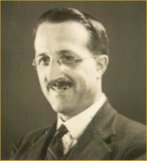
G.R.C. I thought we might consider new creation, as existing at the present time and how it stands relative to reconciliation.
- The scripture in Revelation gives the completeness of it, the One on the throne pronounced that “it is done”. “Behold, I make all things new”.
- So that that passage affords special help as to new creation, bearing in mind that we have there the external view of things.
- It refers to the holy city, new Jerusalem, and indicates that the same vessel is the tabernacle of God.
- The city retains the character of the bride, shewing that the heavenly relationships in which we find our life spiritually, belong to new creation.
- And the throne of God is there. This, of course, is not limited to new creation; in a way, it stands apart from creation, it is the throne of God;
- but it is still in evidence in the new creation scene, showing that rule remains.
- Then there is the word, “I will be to him God, and he shall be to me son”. But the passage does not give us the inner life of the tabernacle.
- We have to go to John's gospel to get an idea of the inner life of the tabernacle of God, the Father's love for the Son, the Son's love for the Father and the place we have in that wonderful “dwelling”.
- In his gospel John unfolds the inner life, but he is viewed as an onlooker in Revelation 21. He is seeing, from an external viewpoint, the features of new creation.
But then we have to recognise that new creation already exists. There is not yet a new heaven and a new earth, but new creation already exists and so the word in Galatians 6 is
- “in Christ Jesus neither is circumcision anything, nor uncircumcision; but new creation. And as many as shall walk by this rule, peace upon them and mercy, and upon the Israel of God”.
- The Galatians were fond of rules. They were going back to law. But the apostle leaves them with this word “as many as shall walk by this rule”, the rule of new creation, and those walking in the power of the Spirit walk according to that rule, they are the Israel of God.
- So that we have to apprehend that new creation already exists, the great institutions that are seen in their completeness in Revelation 21 are already existing, and we are to walk according to the rule of new creation.
R.S. Does “I will be to him God, and he shall be to me son” belong to new creation and eternity?
G.R.C. It is the public view of the relationship and we are put on our mettle as to whether we shall be worthy to be owned as son in the public position; that is, relative to God in His majesty as on the throne.
R.S. Will that be the portion of men in eternity, not only the assembly?
G.R.C. I think it refers to those who form the assembly.
M.S.V. Sonship goes right through into eternity?
G.R.C. Yes; only we have to distinguish between sonship in the setting of majesty and the family setting.
- We are all firstborn sons through divine grace, so that, relative to the Father and the Father's house, the Lord says,
- “I go to prepare you a place; and if I go and shall prepare you a place, I am coming again and shall receive you to myself, that where I am ye also may be”.
- That is a position given to us in wonderful grace, for the satisfaction of divine love.
- But in Revelation 21 it is the setting of majesty. It is the One on the throne who speaks.
- His utterance is most majestic: “Behold”, He is calling attention, “Behold, I make all things new”. It is what God has done by Himself and for Himself and He calls attention to it.
- And then it says, “And he says to me, Write, for these words are true and faithful. And he said to me, It is done”. Now that shows how, in a setting of supreme majesty, there can be intimacy.
- Think of the condescension of the One on the throne! After His public proclamation, He turned to His bondman, John, and said something to him, “he said to me, It is done”.
- He said that to John; so that John, being a true bondman, a true slave of Jesus Christ, as the first chapter of the book indicates, would be one of those who would be owned as son in the public position.
- He himself would say he was a bondman and not worthy to be the bondman of the King in His majesty.
- Yet there is no doubt he is one who would be owned as son; and I suppose the whole of that last communi-cation to John is for us who form the assembly, John being a pattern man.
- “It is done. I am the Alpha and the Omega, the beginning and the end. I will give to him that thirsts of the fountain of the water of life freely. He that overcomes shall inherit these things, and I will be to him God, and he shall be to me son”.
- Who can doubt that John would be an overcomer, and I believe an overcomer is one who walks according to the rule of new creation now.
- So we are tested as to how Galatians ends, “as many as shall walk by this rule, peace upon them and mercy”. Such will be honoured in the day that Revelation 21 speaks of.
F.J.F. This is the only time that John speaks of son.
G.R.C. According to John, the Lord speaks of the family, and of the intimacy of our place “that where I am ye also may be”. All that is what grace confers upon us to satisfy divine love.
- But here it is sonship in the setting of majesty, putting us on our mettle as to whether we shall be worthy of being owned as son in that setting. Not every son, among human rulers, is worthy to be owned as son in the public position of majesty.
C.M.M. When the Lord Jesus presents himself to the Laodi-ceans He says that He is the “beginning of the creation of God”. Would that include new creation?
G.R.C. I think so. As to the present creation He is the source of it, “All things received being through him”; and much in the present creation is figurative of the new and was patterned on the new. Adam was a figure of Him that was to come.
- Yet, from another standpoint, the new creation is in contrast to the old. The word “new” involves what is entirely different.
L.D.V. Is that the meaning of the title “I am the Alpha and the Omega, the beginning and the end”? He initiated the new creation and He is the One who has completed it.
G.R.C. I think that title goes further. In Colossians He is called “the beginning, firstborn from among the dead”.
- There it is the beginning, I would think, in the sense of pattern. The new creation is patterned after Christ, it is nothing but Christ. Every family will bear His features in some measure. He is the pattern, the Beginning.
- The “beginning of the creation of God” may be a rather more extensive thought, including perhaps the fact that He is the source. All things received being through Him, whether we think of this creation or the new one.
- But then when He says, “I am the Alpha and the Omega, the beginning and the end”, He is referring to Deity. God is the Beginning and He is the great End.
B.H.T. God looks at us as created in Christ Jesus.
G.R.C. And that is the way we are to learn to look upon the saints. How can we walk according to the rule of new creation if we have not that outlook?
B.H.T. New creation is existing now?
G.R.C. It is indeed. God is not dwelling with the old man. He has His tabernacle of testimony here on earth at the moment,
- but He is dwelling among those who have put on the new man, “which according to God is created in truthful righteousness and holiness”. God would not be dwelling here but for new creation.
B.T. Were you going to say a little more about 2 Corin-thians 5?
G.R.C. In verse 14, Paul is speaking of the judgment he had arrived at. Earlier he speaks of the judgment seat of Christ.
- It is a question as to how far we walk down here according to the rule of new creation. Nothing else, I would judge, will meet with approval at the judgment seat of Christ.
- Paul tells us how his judgment was formed. He was walking in the light of the judgment seat of Christ and he says,
- “For the love of the Christ constrains us, having judged this: that one died for all, then all have died; and he died for all, that they who live should no longer live to themselves, but to him who died for them and has been raised”.
- Now we need to have our judgment formed like Paul's. One had died for all, therefore, morally, all had died; and we are to live to the One who died for us and rose again; and if we are to live to Him we must live according to new creation.
- So he goes on to say immediately, as a result of that judgment, “So that we henceforth know no one according to flesh …”
- This is the great negative rule of new creation; we know no one according to flesh. “But if even we have known Christ according to flesh, yet now we know him thus no longer”.
R.S. “Then all have died” indicates that new creation is a moral necessity.
B.H.T. And verse 14 commences “For the love of the Christ”. That is an ocean that knows no depths, is it not?
G.R.C. We could have no part in new creation but for the love of Christ. He died for all. New creation links with Christ risen. He is “the beginning, firstborn from among the dead”.
- Therefore Paul says, “So that we henceforth know no one according to flesh”.
- That is the first thing, bearing on the way we look at one another. We know no one according to flesh. Thus we do not recognise links based on the flesh.
It does not mean that we do not take up family relationships such as husband and wife, and parents and children,
- but that in our links together as Christians, we know no one after the flesh.
- There is nothing more damaging than to form links with one another, as Christians, based on the flesh.
- We may have to take account of one another, as to what we are by nature, in order to help one another, but not to form links with one another on the line of nature.
- It is a shameful thing to do; because most of us would never have known one another but for our being in Christ.
- And the moment we form a link that is on a lower level than “in Christ” and “new creation”, we degrade the holy links in Christ.
- Why should we bring in something foreign, when we would never have known one another but for being in Christ?
W.E.G. He goes further, and says, “if even we have known Christ according to flesh, yet now we know him thus no longer”.
G.R.C. It is very affecting that Christ after the flesh is known no more, He has laid down that condition for ever. Had He not done so, we should have had no link with Him and no link in Christ with one another.
J.W.B. The word to Peter in Acts is “slay and eat”. Is that the setting aside of the old order and appropriating the new?
G.R.C. I think so. He was not to feed on them as after the flesh. We may feed on one another after the flesh by forming social links, which are Moabitish, or national and racial links, which are Ammonitish.
- All social and racial distinctions are gone in new creation. It says in Colossians,
- “having put off the old man with his deeds, and having put; on the new, renewed into full knowledge according to the image of him that has created him; wherein there is not Greek and Jew, circumcision and uncircumcision, barbarian, Scythian, bondman, freeman”, all those things have gone.
- We may form links with one another because of national proclivities, racial proclivities, social proclivities, business proclivities;
- or, on the other hand, we may take aversion to one another and be occupied with the unpleasant side of the flesh in one another.
- Both aspects are contrary to the rule of new creation.
- Peter would have turned with aversion from the Gentile, “for I have never eaten anything common or unclean”, he says to the Lord.
- But he had to learn the truth of Ephesians 2, verse 15, “that he might form” – and that word 'form' is the same as 'create' in the original – “the two”, that is Jew and Gentile, “in himself”, that is in Christ Jesus (verse 13) “into one new man”. That is new creation.
B.H.T. Now knowing Him in glory, which is implied in the verse, “now we know him thus no longer”, only tends to enhance the glory of His blessed pathway here as the perfect Man.
G.R.C. And the new man involves that His character is continued in the saints.
- We cannot speak of Jesus as the new Man. He is the Second Man out of heaven. He is the same yesterday, today, and forever.
- But Christ formed in the saints is the new man. It is new creation. In 2 Corinthians 5: 7, it says “So if anyone be in Christ, there is a new creation”. He does not say there will be a new creation; it is existing now.
- We await the new heavens and the new earth; all things are not yet made new, but yet new creation is already existing. And then it says
- “the old things have passed away”, not that they will pass away: “the old things have passed away; behold all things have become new; and all things are of the God who has reconciled us to himself by Jesus Christ”.
- Now we need to consider that verse carefully. It is to govern our outlook. It is the way God is looking at things; “if anyone be in Christ, there is a new creation”.
- Such a one is in new surroundings and new relation-ships, if he is in Christ. All those distinctions I have referred to are done away. He is in Christ, a new order of things.
B.H.T. In the authorised it says, “he is a new creature”. But that is not the thought.
G.R.C. It is not wide enough. It is true that there is a new creative work in the man; he would not be in Christ otherwise.
- But the point is “if anyone be in Christ, there is a new creation”. He finds himself in a new creation. Perhaps we have not really discovered ourselves there yet. And then it says “the old things have passed away”.
- Now it is a great thing to grasp how God looks out on new creation at the present time. The new man is here, created after God in righteousness and holiness of truth.
- God looks out upon the saints and what does He see? He sees the new man. For Him the old things have passed away. He is not knowing us after the flesh and we are not to know any one after the flesh.
- Through divine grace and through the work of Christ, God is not looking at us as after the flesh.
- As after the flesh, our history has been judicially finished before God at the cross. We have been reduced to ashes.
- So that as He looks out upon the saints from this standpoint, the standpoint of reconciliation, the old things have passed away.
C.M.P. Would it be right to say that as all the features pleasurable to God were seen in Christ personally here in manhood, so God, by the Spirit, is enjoying the same features in the saints in new creation?
G.R.C. Christ was Himself the Second Man out of heaven.
- But we are God's workmanship and He is forming Christ in the saints.
- Those features in the saints are called in Scripture “the new man”. And God looks out and for Him the old things have passed away.
- You may say 'How can it be?' Because of the work of reconciliation, the old things have passed away. But for that work it could never be said that the old things have passed away.
- Christ has been made sin for us, who knew no sin; the blood has been placed on the mercy-seat and has been sprinkled on the whole system, and that covers everything for God.
- He does not see the old things, He is not occupied with them. For Him the old things have passed away, judged and finished in the cross of Christ.
- So God is looking out on a new creation in the saints, now, and He is dwelling among us relative to that new creation.
M.S.V. Is this the truth presented from the divine side and is the apostle exhorting us to come into it?
G.R.C. That is just what it is. He had come into it and those with him. He says “we”, emphatic, “we henceforth know no one according to flesh”.
- They had come to God's viewpoint, they had arrived at God's judgment. God is not knowing us according to flesh.
- Where should we be if He did? We would still be under judgment. But God is not viewing us according to flesh because of the reconciliation work of Christ. That history is finished before Him, and so for Him the old things have passed away.
- What He sees is His own work,“all things have become new”. Now we are to get that viewpoint; to learn to look out upon the saints, and the whole anointed system, from this standpoint, that the old things have passed away.
- If we do, we shall not make links based on natural proclivities, we shall not cherish natural aversions. For us the old things will have passed away, and our links with one another will be wholly connected with what is new.
- “All things have become new: and all things are of the God who has reconciled us to himself by Jesus Christ”.
J.E.M. Would it be right to say that in the old creation God's rest was disturbed, but in the new creation, because of reconciliation, His rest is final, complete and eternal?
G.R.C. Yes. When we come to Revelation 21, it says“the former things have passed away”. They will have actually passed away then, there will not be any trace of the old man or of the old things, everything will be new.
- Then it will be very simple to have this outlook, we shall all have it then; but because of the reconciliation work of Christ we can have this outlook now.
- God, speaking with all reverence, has a right to look at things this way. He has a right to look at us from the standpoint that the old things have passed away.
- He is not knowing us after the flesh, the old things have passed away; and all things have become new. So he looks out on us with complacency.
- And this is where the two thoughts of reconciliation and new creation meet. Reconciliation has met the whole question of old things. Through that work, the old things have passed away from before God's eye, and they should pass away from before our eye.
F.J.F. Is that why we can enter into God's rest and enjoy it with Himself?
G.R.C. Yes. God thus has an outlook of rest at the present time.
F.J.F. It is a wonderful thing that we can enjoy the rest to come, our place of liberty.
G.R.C. And then another thought we must guard against is that our place of favour and nearness to God depends upon the new creation work.
- If so, some of us would be nearer to God than others, because the work would have proceeded further.
- We have been reconciled to God by Jesus Christ and that work is complete; what He has done and the way He has gone in to God, have secured our place.
- And that could not be improved upon by any work in us. No work in us could improve the place God has given us, because it is Christ's own place of favour in His presence.
- God works in us and, but for His work in us, we should never accept or receive the reconciliation.
- Then God continues His work in us that we might be fitted for the place, the place which cannot be improved upon, which is ours in Christ.
- The new creation work fits us for it. It does not give it to us.
W.E.G. I am glad you are drawing our attention to new creation as existing now.
G.R.C. That is what we want to lay hold of, so as to have this viewpoint. And I can tell you where we shall get this viewpoint; it is in the holiest.
- Paul says in verse 13,“whether we are beside our-selves, it is to God”. That means that, whenever they were free, as the note indicates, from the calculations of love in their service for the saints, they were in the holiest.
- In the holiest you get God's outlook. For Him the old things have passed away, and for anyone who has been in the holiest the old things have passed away, and all things have become new.
E.P.S. When Noah built the altar it says, “And Jehovah smelled the sweet odour” (or odour of rest).
G.R.C. That verse indicates the basis on which God will go on with the renewed earth in the millenium and on which the world stands in provisional reconciliation even now.
- But reconciliation for us means liberty to enter into our place within the veil. There is nothing to compare with our place in God's presence with Christ, and the thing is to be there as often as we can.
- I do not see how we can maintain this new creation outlook, nor walk by the rule of new creation, unless we enter the holiest continually.
E.P.S. Within there was the blood on the mercy-seat and before the mercy-seat, and that is the basis of everything.
G.R.C. And God is there, in the centre of the system, and looking out on the system.
- Everything in the tabernacle system, the figurative representation of the things in the heavens, was typically Christ.
- The tabernacle system, typically, was a new creation. It was all made according to the pattern shown on the mount. Christ is the pattern. He is the Beginning.
- And everything in the tabernacle was of Christ. It was all figurative then, now we have got the real thing. And God was the centre of that system.
- But then, you see, the blood on the mercy-seat, and the blood sprinkled on the tabernacle and all the vessels of service – Hebrews 9: 21 – implied typically that those who form the system, who have their part in it, have had a previous history.
- But the blood has covered all that, old things have passed away under the power of the blood, as we may say, in the eye of God. So that God is free to look out on a system which is wholly of Christ.
- That is the present position, as at the end of Ephesians 2; we are“built together for a habitation of God in the Spirit”.
C.M.M. You spoke of the point where reconciliation touches new creation. Is it right to say that there is an entity which goes through?
G.R.C. Exactly. In the work of reconciliation we may say we have been consumed to ashes. Christ has borne the judgment.
- From the divine standpoint the judgment is passed and we, as after the flesh, are ended, in judgment. But the person is retained.
- What we are as after the flesh has been dealt with, God made Him to be sin for us; but the person is retained, and, therefore, is carried into new creation.
L.F.J. Did you imply just now that there was growth in relation to the person in new creation?
G.R.C. At the present there is. We must not regard new creation as like the old. It is not just an act of power.
L.F.J. That is what we want help on. Will you just open that up?
G.R.C. In the first creation God spoke and it was done. New creation is entirely different from the first creation.
J.H.H. Does Philippians 1 come into this where Paul says to the Philippians,“he who has begun in you a good work will complete it unto Jesus Christ's day”?
G.R.C. Exactly.“we are his workmanship, having been created in Christ Jesus for good works”, Ephesians 2: 10.
- What does workmanship mean? Does it mean something done in a second? Our glorified bodies are given to us in a moment, but it says,
- “Now he that has wrought us for this very thing is God”, 2 Corinthians 5: 5.
- And what is wrought takes time, workmanship takes time, and that is going on now.
R.S. So that new birth may take place this afternoon in some soul, would you say?
G.R.C. Well, generation is a creational process, as Mr. Taylor said. In natural things, birth is a creational process. Even the material creation is still proceeding, in that sense.
- But we need to take account of the word,“we are his workmanship”.
- When we think of generation, it is the individual line, but new creation refers to the way God has worked in the saints as a whole, setting us together tabernacle-wise, bodywise, and as the new man.
- The curtains of the tabernacle involved workmanship. They represent all the saints, knit together curtainwise, for God's habitation.
M.S.V. Your point is that, in going into the holiest, we have a view of all that which God has brought in for His pleasure?
G.R.C. We get His view, His outlook. The boards show how we, as coming into it in a personal way, are together. Romans gives that.
- The whole tabernacle was a matter of workmanship, but it was typically new creation. Viewed as the tabernacle of witness, it is here at the present time.
S.P.S. Why do you connect new creation more particularly with the collective side?
G.R.C. I think it links more in scripture with the collective side. God is working in us to bring about the great institutions He has in mind, namely,
- the new man, the one body, the holy temple in the Lord, and the habitation of God in the Spirit. All these things are mentioned in Ephesians 2.
R.L. It says“if anyone be in Christ (there is) a new creation”. I am thinking of the one.
G.R.C. That is, he finds himself in a new creation. It is not simply that he is a new creation, but he finds himself brought into a system of things where the old things have passed away and all things have become new.
R.L. So he forms part of the new creation system.
G.R.C. He does. But God is working out the whole thing, and we should not individualise ourselves in it, because the work is not only what is done in me personally, but it involves fitting me into the system.
R.S. God's work in my soul has the assembly in view, my place in it.
G.R.C. God's work in each of us individually is that we might find ourselves, as in Christ, in a new creation order of things.
W.E.G. It is good to see that that workmanship is not for the one alone, but all come into it. That is what God is working for, the habitation of God.
G.R.C. We love to individualise ourselves. Our self-importance dies slowly. But God is not individualising us.
- We all have our personal links with Him, but He has in mind finally the holy city, new Jerusalem, the tabernacle of God. And what is at present existing is referred to in Ephesians 2.
C.W.C. The use of “us” and “we” in 2 Corinthians 5 is very striking. See verses 18 and 21.
G.R.C. We are not individualised; “that we might become God's righteousness in him”. We shall be the eternal witness, in new creation, to the righteousness of God.
C.M.M. Do the“good works” in verse 10 of Ephesians 2, “which God has before prepared”, refer to the works of Christ as man here?
G.R.C. They do; but then the way it works out with us, as I understand it, is that we walk in the new institutions. If we do not understand that, it becomes too vague in our minds.
- We are told that we should walk as He walked. But how are we to walk as He walked? We have to walk in the institutions connected with new creation.
T.T.S. Have those works been set forth perfectly in the Lord Himself, where the Lord could say,“follow me”?
G.R.C. Quite so. Only how do we take them on? By walking according to the rule of new creation. That is the only way to walk as Christ walked.
- We are not walking as Christ walked, unless we are walking according to the truth of the new man “having put off the old man with his deeds, and having put on the new, renewed into full knowledge according to the image of him that has created him”, Colossians 3: 10.
- So the first thing is to walk according to the truth of the new man. Following the reference to the new man in Ephesians 2: 15 it says,“reconcile both in one body to God by the cross”, Eph. 2: 16.
- The next thing, therefore, is to walk in the truth of the one body. And that lays the basis for our growing into a holy temple in the Lord; we are to walk in the truth of that.
- Jesus spoke of His body as the temple when He was here, and now we, as Christ's body, are the temple; but it is increasing, it is not finished yet.
- Finally it says,“in whom ye also are built together for a habitation of God in the Spirit”. That refers to the saints as the tabernacle of witness; and we are to walk in the truth of that.
N.C.J.C.“And your having put on the new man, which according to God is created in truthful righteousness and holiness”, Eph. 4: 24. Would you say something about righteousness and holiness, in relation to this matter?
G.R.C. It is in contrast to the old man. The first man was created innocent. He was not created after God in righteousness and holiness of truth. That is an illustration of how different new creation is from the first creation.
- The first creation was an act of power, but, when you come to new creation, it is based on the settlement of moral issues, and the understanding of the settlement of moral issues being wrought out in our souls.
- It is not a new man created in innocence, but a new man created in righteousness and holiness of truth, created according to God.
J.W.B. Would the verse in 1 Corinthians 1: 30 have a bearing: “But of him are ye in Christ Jesus”? That is, the apostle is taking account there of what is of new creation in the local company,“who has been made to us wisdom from God, and righteousness, and holiness, and redemption”.
G.R.C. Yes, that is a good verse, because“of him are ye in Christ Jesus” is the new creation work.
- Bad as they were in their state, Paul looks at them from the standpoint that the old things have passed away.
- And then he brings in the ground on which they are with God; not on the ground of a work in them, but on the ground of what Christ is, He is made to us wisdom, righteousness, holiness, redemption.
- We have to keep the two things clear. If we held that the work of new creation in our souls improved our place of acceptance with God, it would take away from the glory of Christ and His completed work upon the cross.
C. de K.F. It is wonderful to think that these are practical matters, not theories. They are not ideas which stand to be worked out in a future day, the day of Christ, but the things of Jesus Christ, which have a bearing on us now. Phil. 2: 21. They will come out in display in Christ's day.
G.R.C.“Things” are substantial, they are not just ideas or theories. All things have become new.
- There are things on this earth, substantialities, institutions, if we may speak of them in that way, that are existing.
- The new man is here, the one body is here, the household of God, family relationships, which are new and will go on for eternity, are existing.
- We already have access to the Father. The temple is here, although it is not complete, and the habitation is here.
- These things are here, and we are to walk in these things. That is the rule of new creation. Walking as Christ walked, for us involves walking in these substantial realities which are here through the work of God.
J.E.M. Is there a suggestion in Matthew 11: 28 in regard to the way we may come experimentally into the great idea of new creation and the rest that marks it? “I will give you rest” or “bring you to rest”. Would we learn it in the holiest?
G.R.C. It is in the holiest that we learn these things and enter into rest, as in Hebrews 4: 3. The force of that verse is that we enter into rest at the present time.
- The rest in its fulness is future, but we enter into rest at the present time, day by day, by entering the holiest.
- We get a greater entry into rest in the time of privilege at the Lord's supper. But, nevertheless, day by day, we should enter into rest by being in the presence of God and looking out as He does.
C.M.M. When Paul says, “I know a man in Christ”, would that be a new creation thought?
G.R.C. It would. He explored the realm of new creation in a way which no one else has done.
C.M.M. Is it put in that way to entice us into it and the joy of it?
G.R.C. Yes. He does not say that it was himself. He just says “I know a man in Christ”. So there it is. It is open to a man in Christ.
J.W.B. “Of such a one I will boast”, he says.
G.R.C. That is good, because our place in Christ does not stand related to anything we could boast in. We are reduced to ashes in God's sight. There is nothing to boast of in ashes.
- It is all God's grace – the Person and work of Christ and all that has been secured for us by Him, and then the work of God in grace in us.
S.P.S. Were you linking the thought of “good works” with the substantial things you spoke of just now, or have you something else in mind?
G.R.C. No. It is these substantial things. If we walk in these great realities we shall have good works on the Christian level, not on the level of human philanthropy.
- Colossians enumerates features proper to the new man – the features of Christ coming into expression in our practical relations with one another. It says,
- “bowels of compassion, kindness, lowliness, meekness, longsuffering; forbearing one another, and forgiving one another, if any should have a complaint against any; even as the Christ has forgiven you, so also do ye. And to all these add love, which is the bond of perfectness. And let the peace of Christ preside in your hearts, to which also ye have been called in one body, and be thankful”, Colossians 3: 12-15.
- These are good works. Then, as regards the temple, there should be the light of God shining for men around.
- The Lord spoke of the temple of His body, and the light was shining for men around. When He was here, He was the light of the world.
- There is great scope for good works in shedding forth the light of God to men.
R.S. The Lord said of the woman that “she has wrought a good work toward me”, Matthew 26: 10.
G.R.C. That is the greatest kind of good work; a good work toward Him, and towards God.
T.T.S. Is it not important that we should, in considering these good works, take account of ourselves as God's workmanship?
G.R.C. Exactly. We are God's workmanship and therefore we have part in these great institutions. We have put on the new man.
T.T.S. That would prevent us having our own idea of good works.
G.R.C. Just so. We can be very vague about good works and sink down to the level of human philanthropy, which has man as its object and its centre.
- Good works have God as the object, and God as the motive, and therefore they stand related to these institutions which He has set up. And I believe that is what it means when he says “as many as shall walk by this rule”.
- We love a rule, and our tendency is to go back to law, and make a rule of law. We may make a rule of something which is only a matter of wisdom.
- There are many things that are matters of wisdom, but they are not inflexible like the Lord's commandment. Our tendency is to make hard and fast rules. But the rule we are to walk by is new creation.
R.S. And the promise connected with that is “peace upon them and mercy”. I suppose we are to know the joy of that in these good works.
G.R.C. Quite so.
R.S. And it says, “and upon the Israel of God”. So that the dignity of the position is not lowered.
Page Top Reading Top
Next Item: Address
| THE KINGDOM OF GOD |
|---|
Hebrews 2: 5-10; 1 Corinthians 15: 22-28
Numbers 23: 21; 24: 5-7
Address at Cape Town, December 26, 1958
|
|---|
I wish to speak a few words, dear brethren, about the kingdom, and particularly about the expression, "the kingdom of God". This is very comprehensive in its scope.
- It is not referred to much in the Old Testament in a direct way, although in the Psalms it does speak of Jehovah's kingdom being an everlasting kingdom. But it is referred to a great deal by the Lord Jesus Himself.
- According to Matthew 3: 2, John the Baptist began his testimony with the words, "Repent, for the kingdom of the heavens has drawn nigh". And the Lord Jesus begins in the very same way.
- According to Matthew 4: 17 it says, "began Jesus to preach … Repent, for the kingdom of the heavens has drawn nigh".
- According to Mark 1: 15 He says, "The time is fulfilled and the kingdom of God has drawn nigh; repent and believe in the glad tidings".
- So that, with the coming of Christ – the Word having become flesh – the kingdom of God had drawn nigh.
The Lord Jesus speaks a great deal about the kingdom in the Gospels, and we find the theme continued in the book of Acts.
- He appeared to the disciples after He had suffered, and he spoke to them "of the things which concern the kingdom of God", Acts 1: 3.
- What a place it had in the heart of Christ and in His ministry, even during those forty days of His risen life on earth.
- Paul, referring to his ministry in Ephesus, when speaking to the elders, said,
- "I know that ye all, among whom I have gone about preaching the kingdom of God, shall see my face no more", Acts 20: 25.
- And the book of Acts closes with Paul in his own hired house, "preaching (or
'heralding'), the kingdom of God, and teaching the things concerning the Lord Jesus Christ, with all freedom unhinderedly", Acts 28: 31.
These scriptures are surely sufficient to show the great place the kingdom of God had – both in the ministry of Christ and in the ministry of the apostles: and the great place it has in the scope of divine truth.
While the kingdom of God had drawn nigh when Jesus was on earth, in the Acts, when He was exalted by the right hand of God and the Holy Spirit given, it was established.
- We live in the glorious time when the kingdom of God is an established thing.
Peter announced it at Pentecost. "Let the whole house of Israel therefore know assuredly that God has made him, this Jesus whom ye have crucified, both Lord and Christ", Acts 2: 36.
- He was the first one to herald the great fact that Jesus was enthroned on high. Jesus is Lord and Christ. Jesus is God's Anointed. God has anointed His King upon His holy hill of Zion.
- Jesus, crowned with glory and honour, is set over the works of God's hands. And though we do not see yet all things put under him, we see Jesus, crowned with glory and honour.
And, following his exaltation, the Spirit is given. The Spirit came to bear witness to the fact that Jesus was crowned above.
- And not till the apostles had received the Spirit and, by the Spirit, had seen Jesus crowned with glory and honour, did they announce it. And so Peter says,
- "Having therefore been exalted by the right hand of God, and having received of the Father the promise of the Holy Spirit, he has poured out this which ye behold and hear", Acts 2: 33.
- Thus the kingdom of God was established – Jesus, Lord and Christ above, and the Holy Spirit here.
- And what was the end in view? That God should have His rights in the hearts of men and women and children – that God's will should be done here on earth by His people, as it is in heaven. And thus it is so.
There may be many believers who are not fully subjugated, and are not practically in the kingdom, but, nevertheless, the kingdom of God exists;
- and there are those on earth who are doing the will of God, and proving the value of being in the kingdom of God; proving that the kingdom of God is not eating and drinking.
- It is not a question of our standard of living. Men's kingdoms are based on eating and drinking.
- Men's kingdoms compare themselves with each other as to the standard of living, and comparisons lead to wars and hatred and strife.
- The kingdom of God lies outside of the range of eating and drinking. The kingdom of God is righteousness – that involves doing the will of God – and peace and joy in the Holy Spirit.
- There is no peace in the kingdoms of men. You cannot keep peace, properly speaking, in one street, even among neighbours. How then can you keep peace among nations?
- The moment you bring God in, and recognise His rights, and His will, you will come into peace.
- The kingdom of God is righteousness and peace and joy.
- You will find no joy in the kingdoms of men. There is mirth, and the pleasures of sin for a season, but no real joy. Joy is unknown outside of the kingdom of God.
- Joy, in the true sense of the word, is something no one can take from you – something that does not depend on circumstances at all – something that goes beyond death.
- In fact, the very sources of supply of Christian joy lie outside the realm of death.
- Those in the kingdom of God know what joy is – righteousness and peace and joy in the Holy Spirit.
- And this kingdom is existing here at the present moment.
Now the kingdom of God has a military aspect, based on military victory. The great battle has been fought and won.
"His be the Victor's name,
Who fought the fight alone."
God's kingdom can never be overthrown because the victory, the initial and fundamental victory, is complete.
- Men, in their warfare, know nothing of real victory. Modem nations have found to their costs, that sometimes the so-called victor nation suffers the most. There is no real victory.
- Each war is fought to end wars; but when it is over, all the old foes are there again. There is no end to it.
- That is not so in God's military operations. It says,
- "Now the sting of death is sin, and the power of sin the law; but thanks to God, who gives us the victory by our Lord Jesus Christ ", 1 Corinthians 15: 56-57.
- Think of those enemies – death, sin, the law – no amount of armies and navies and air-forces could overthrow those three things, the great enemies that stood out against us, and behind these Satan.
- Men do not attempt to touch those enemies. They cannot. They are powerless in the presence of them. But God's kingdom is established on the basis of all those enemies being defeated.
"He Satan's power laid low;
Made sin, sin's reign o'erthrew;
Bowed to the grave, destroyed it so,
And death by dying slew".
- It was a complete victory, every enemy laid low, and even the law having no more power against us. And on the basis of that battle, fought by Christ alone, on the terrible battleground of Calvary, God gives us the victory – a free gift.
- If we submit to the gospel, and come into the kingdom, God gives us the victory, through our Lord Jesus Christ. So His kingdom is based on victory.
But then, to secure souls in His kingdom, there is the subjugating side of conflict. We need to be subjugated to the Lord. He has dealt with the enemies.
- But we shall not be free of the enemies unless we confess Him as Lord. God has made Him Lord.
- I have to make Him Lord in my heart, surely a thing which every right-minded person would like to do.
- I would like to own as Lord the One that God has made Lord, the One that He has exalted, the One who is rightly exalted, because He fought the fight alone, and has won the victory.
- And so, the Lord is operating in grace to subdue men and women and children.
See how He subdued Saul of Tarsus, an enemy of Christ, set to destroy the saints, and to blot out the name of Christ.
- "Saul, Saul, why persecutest thou me? It is hard for thee" – He did not say, 'it is hard for Me, you are persecuting Me and I am feeling it'.
- The Lord was feeling it intensely, more than we can estimate, to see the members of His body ill-treated. The Lord was suffering, though in glory.
- But think of how He treated him. "It is hard for thee to kick against goads". He says as it were to Saul, ‘I am thinking of you, you are on a hard path’. He was on a path which was leading to certain destruction.
- It broke Saul of Tarsus down, to find that the One he was persecuting, was thinking of him, in grace. He could say afterwards, "the Son of God, who has loved me and given himself for me", Gal. 2: 20.
- That was the One who appeared to him on the way that he went. And so Saul of Tarsus was subjugated.
- That is another aspect of the kingdom – the subjugating power of Christ, the subjugating power of the word of God. That is how we are subdued and brought into and become subjects of the kingdom.
- May God grant that we may all be subjugated and thoroughly surrender to Christ, so that we may be truly in the kingdom of God, proving it to be righteousness, and peace, and joy in the Holy Spirit. That is our side of the matter.
But the great point in the kingdom of God is that God should have His place. An enemy has come in, and has robbed God of His place.
- And we have a world system built up to cater for the lust of the flesh, and the lust of the eyes, and the pride of life and not to cater for God at all.
- It uses the creatures of His hands and exploits them for men's lusts, and corrupts men in the doing of it, so that God should have no place in the hearts of men.
- But God has established His kingdom here, and the great end in view is that God shall have the place which is truly His, in the hearts of His creatures;
- and, indeed, ultimately, in the hearts of a universe; that is the great end in view.
Now I desire to say a word as to the millennial kingdom. It is spoken of in Hebrews 2: 5. It says God "has not subjected to angels the habitable world which is to come, of which we speak".
- I have just described the present world. It is a system built up to cater for men and men's lusts, every kind of man is catered for. Satan is the god of this world.
- But there is a world to come wherein the true God will have His place. And who will secure this? The same One who secures His place in your heart at the present time – the Lord Jesus Christ.
- John the Baptist says of Him, "Behold the Lamb of God, who takes away the sin of the world", John 1: 29.
- The world to come is not a different heaven and a different earth. It is the same heaven and the same earth, but under an entirely different management.
- And that world to come is about to come. Jesus is about to come, and to take up His public rights in government. John the Baptist says, "Behold the Lamb of God, who takes away the sin of the world".
- When the sin of the world is taken away, it will be the world to come – the same heavens and the same earth, and yet an entirely different state of affairs.
The Lamb of God has laid the sacrificial basis for taking away the sin of the world by sacrificing Himself. Had He not done that, the taking away of the sin of the world, would have meant taking us all out of it.
- It would not have been a habitable world. There would not have been any men in it.
- But He has laid the sacrificial basis, that there might be a world of men, redeemed by His blood.
- And He has laid the basis thus for taking man, and his glory, out from the centre of the world, and putting God, as known in Himself, in the centre.
- He is about to take away the sin of the world thus, and to establish the rights of God in love and grace, in this very heavens and this very earth with which we are connected.
And so it says that He has not subjected to angels the world to come.
- It is a wonderful thing to think that God's purpose as to the world to come was to subject everything to man. It brings out the greatness of the day in which we live.
- In the past dispensation things were subjected to angels. The law was given by the administration of angels. Angels are on a higher plane than men, as to creational position.
- But, Christ having gone into heaven, and angels and principalities and powers having been made subject to Him, the whole position has changed.
- We are living in a wonderful dispensation, when those who were the rulers, as it were, in a past dispensation, are now the servants of the saints.
- "Are they not all ministering spirits, sent out for service on account of those who shall inherit salvation?", Heb. 1: 14.
- They are great beings, to be greatly esteemed. Many of them are principalities and authorities in the heavenlies, holding great official positions,
- but yet glad now to be the servants of those who shall inherit salvation, because they see our destiny, as they see Christ exalted above.
- They see the Man, Christ Jesus, set at God's right hand in the heavenlies, above every principality and author-ity and power and dominion and every name named.
- And they apprehend that those who belong to Christ, though still here in conditions of weakness, are destined for that glory.
- He is there, crowned with glory, but He is bringing many sons to glory. He is the Leader – He is gone be-fore, and He has been made perfect through sufferings.
- That includes the atoning sufferings. He has been right down into the depths, in order to be perfected as a Leader.
- He could not have led many sons to glory if He had not been into those depths, and borne our sins in His body on the tree
- and if God had not made Him to be sin for us, Who knew no sin, "that we might become God's righteousness in him".
- We, who were once under death and under the judg-ment of God, are now among the many sons, en route to glory – our destiny assured – to be in glory with Christ.
- And the anxious looking out of the creation or the creature, waits for the revelation of the sons of God. The creation will not be set free from the bondage of corruption until these "many sons" are manifested in public power and glory.
- And it is to Christ, and those many sons that He is bringing to glory, that the world to come is subjected – first of all to Christ Himself, of course. Universal dominion is His.
It is wonderful to think that the world to come is about to be introduced. It includes heaven and earth. The Old Testament prophecies could only tell you about earth.
- But in the New Testament we see clearly that the title "the Christ" – the Anointed, God's King – means that His rule and dominion extend to heaven and earth.
- The mystery of God's will is "to head up all things in the Christ, the things in the heavens and the things upon the earth", Eph. 1: 10. How wonderful it is!
- What a world to look forward to! The present heavens and the present earth all under the dominion of Christ, and of men in Christ; not subjected to angels, but to men, according to God's divine appointment.
- The day is at hand when every office in the universe, every position and seat of government, will be filled by Christ and those delegated by Christ.
- Christ will fill all things. There will not be a position of authority anywhere in the universe that is not occupied by Christ Himself or those delegated by Him, we in the heavenly part of it, the Lord preserving us for His heavenly kingdom!
- He is "head over all things to the assembly, which is his body, the fulness of him who fills all in all", Ephesians 1: 22-23 – the assembly with Him, in the headship and the dominion and the glory of that great scene, the world to come, of which we speak. How we ought to speak of it!
- It rejoices the heart to think of the present heavens and the present
earth – the triumph of it – being all under the dominion of Christ, and those appointed by Him; the kings of the earth walking in the light of the heavenly city, everything regulated according to God.
- We shall see thus the sin of the world taken away; the holy city coming forth, having the glory of God, and her shining like a precious stone, as a crystal-like jasper stone;
- and the light, dispelling all the darkness – no more dark thoughts of God, no more scope for the lie, but the heavenly light of the city shed abroad, and the whole creation liberated;
- we ourselves, as forming the city, being in the direct rays of the glory which is shining in the Lord Jesus.
- The glory of God enlightens the city, and the Lamb is the lamp thereof, and we can gaze upon Him without a veil. We can behold the glory face to face;
- but other families and the nations will get their light through us.
- What a wonderful day the world to come is! What a wonderful part we have in it! What a wonderful view of the kingdom!
In that day the official glories of Christ will shine resplen-dent; and how the assembly delights in His official glories –
- the Head over all things, the King of kings, the Priest of the Most High God, the Lamb – think of the greatness and glory and dignity of Christ!
- The throne of God and the Lamb is in the city. The Lamb's high glories will occupy the attention and the lips of heaven and earth.
- And thus God will have His rightful place in the present heavens and the present earth.
It is because of the state of things that has come in, that it has been necessary, as it were, for God to commit things into the hands of the Son.
- He loves the Son and has put all things into His hand.
- He has put all things under His feet, in order that everything might be subdued and yet,
- in the world to come latent evil will still be there, and thus administration will be necessary as evidenced in the wall and gates of the city.
- Therefore a mediatorial kingdom in the hands of the Son is necessary. His official glories coming into display in that day of Christ. Wonderful day!
But then it says in 1 Corinthians 15: 24, "Then the end, when he gives up the kingdom".
- The millennial kingdom is to be given up. He “gives up the kingdom to him who is God and Father".
- The Father committed all things into His hand; and when the purpose for which all things were committed into His hand is completed, He delivers up the kingdom to Him who is God and Father.
- It does not mean that the kingdom comes to an end. It has been received, and it is delivered up. But what glory attaches to Christ as the One who, in the great administration committed to Him, has brought all things to finality!
- And the bringing of everything to finality not only includes the thousand years' millennial reign, but also what follows it. And so it goes on to say,
- "when he shall have annulled all rule and all authority and power. For he must reign until he put all enemies under his feet. The last enemy that is annulled is death".
The millennial reign, the great reign of peace, will be over, and there will be the great rebellion;
- Satan loosed from his prison, and Gog and Magog going up from the four corners of the earth to besiege the camp of the saints and the beloved city –
- that great final rebellion, even after the millennial reign of Christ.
- Satan being loosed is the final test – the test to those born in the millennium – the great answer to socialist ideas of the present day, which assert that men only need a better environment and they would prove to be alright. Even present events give the lie to that.
- The wealthy classes have never been the best classes morally, even though they may have had all that money could buy.
- And yet that is the theory men have held – only put men in a right environment and they will be alright. It is a denial of original sin. It is not the truth.
- And the final disproof, of that lie will be seen in those who have been born under the reign of Christ, and have been in perfect conditions.
- The moment Satan is loosed, they fall a prey, and there is the great rebellion.
- But then the Lord Jesus deals with that. "Fire came down from God out of the heaven and devoured them", Rev. 20: 9.
Then it says, "And I saw a great white throne" – after that great rebellion is quelled, there is the final settlement of everything.
- "And I saw a great white throne, and him that sat on it, from whose face the earth and the heaven fled, and place was not found for them". Think of the majesty of Jesus!
"God's glory bright, God's majesty divine,
Resplendent in the face of Jesus shine."
You cannot conceive of a scene of greater majesty than that depicted.
- And the dead, great and small, stood before the throne. And they were judged according to their works. Every moral issue is finally settled at that great assize.
- Think of Jesus, the glorious Person before whose face the earth and the heaven fled! As another scripture says,
- "Thou in the beginning, Lord, hast founded the earth, and works of thy hands are the heavens. They shall perish, but thou continuest still; and they all shall grow old as a garment, and as a covering shalt thou roll them up, and they shall be changed", Heb. 1: 10-12.
- When this present heavens and earth have fulfilled their purpose, and there has been a thousand years' reign vindicating Christ and magnifying God, and displaying all that God has worked out through all the dispensations before an admiring universe, then He who made them, will roll them up and they shall be changed. That is one aspect of it.
- But the other aspect is that in doing that, in rolling them up and changing them, no moral issue is left unsettled.
- There is a great white throne, and Him that sat upon it, and no moral issue is left unsettled at that great assize.
- There are those earlier whose judgment is summary – Satan, the beast and the false prophet cast alive into the lake of fire. The execution of judgment upon them did not need to wait for the great assize. Their guilt was plain for all to see.
- But finally there is the great assize, and the majesty of the scene defies human description. But we shall see it.
- And thank God we shall not be amongst those who stand before the throne there, to be judged "according to their works".
- Woe betide those who do! Heaven and earth fled, but men raised and held there to give an account to God. And thus every moral issue is settled, and evil consigned to its own place.
And then John says, "I saw a new heaven and a new earth … And I saw the holy city, new Jerusalem, coming down out of the heaven from God, prepared as a bride adorned for her husband", Rev. 21: 2.
- Now we look on to the eternal scene! – the final aspect of the kingdom of God.
- The Son, having completed all that was put in His hands to do, delivers up the kingdom. And it says,
- "But when all things shall have been brought into subjection to him, then the Son also himself shall be placed", 1 Cor. 15: 28
- – it does not say that anyone places Him there, it is according to divine counsel.
- He "shall be placed in subjection to him who put all things in subjection to him, that God may be all in all".
- Now we come to the final phase of the kingdom of God – God, all in all, a fixed, an eternal scene,
"Where deceiver ne'er can enter,
Sin-soiled feet have never trod".
What a wonderful scene this is! The great end reached – "Then the end" – the great end and objective in all God's ways, that God should have His full place in the universe –
- not now in the present heavens and the present earth, in a provisional state of affairs where flesh and blood still exist, where evil is still latent,
- but that God should have His place in a final state of affairs, where evil is for ever put away and can never intrude again, where nothing can ever challenge God's rights.
He has His city, the new Jerusalem, an incorruptible city.
- The assembly as the city will always fulfil every responsibility.
- The assembly is the great vessel of fulfilled responsi-bility, standing related to "my God, and your God", the city of God.
- Think of God having a vessel that will fulfil responsi-bility, and through which His light will be diffused in the universe, all through eternity; where everything will be held in incorruption.
But, you see, in that eternal day, the official glories of Christ recede. They are no longer prominent, because the official services of Christ are no longer needed in the same way.
- His activities, for instance, as Lord and Priest will no longer be needed as in the earlier provisional state of things. Even His glory as the Lamb recedes.
- I do not think these glories will ever be forgotten, but they are no longer the great prominent features of the day, the day of God.
- They are the great features of the world to come, the day of Christ, but in the day of God all that is personal to Christ as Man, in the way of official glories, will recede, in order that God may be all in all.
- And in Whom do we see God expressed? In Jesus. He is the effulgence of God's glory, and the expression of His substance, and He will always be that, all through eternity.
- It is a question of God, we see God shining forth in Him – the Fulness dwelling in Him bodily.
- It is God with whom we are occupied – surely ever the Father, and the Son, and the Holy Spirit, but God, God manifested in a Man.
- God's glory bright, His majesty divine, will ever in the face of Jesus shine.
And so, in the references to Christ related to eternity, it just says, "he that sat on the throne".
- There is nothing to draw attention to His distinctive official glories as Man, that belong to Him alone.
- He that sat on the throne said, "Behold, I make all things new". Who is speaking? – Jesus. But it just says "He", because it is a question of God being before the soul.
- It is Jesus as representing God – God, all in all, still known to us in Jesus, but God.
- "He that sat on the throne said, Behold, I make all things new … I am the Alpha and the Omega, the beginning and the end", Rev. 21: 5-6. That is the kingdom of God in its final and fullest aspect.
- Paul says, "Now to the King of the ages, the incorruptible, invisible, only God, honour and glory to the ages of ages", 1 Tim. 1: 17. And that will be so.
- There will be glory to God the King to the ages of ages, and yet He is ever the invisible God. We see Him in Jesus most blessedly, and God fills our hearts. What a day that day will be!
Now I want to come back for a moment to the present time, that we might get some practical idea of what the kingdom of God is now.
- We have spoken about the eternal kingdom, which flesh and blood cannot inherit. But what about the present time?
- Numbers helps us as to the present aspect of the kingdom of God. Christ is on high, and the Holy Spirit is given that God might reign in our hearts now.
- Initially that was His idea in Israel. God did not appoint a king to begin with. And when the people asked for a king, He says to Samuel, "They have not rejected you, they have rejected Me from reigning over them".
- In the tabernacle system in the wilderness we get a foreshadowing of God's eternal thoughts – that God Himself would reign as dwelling among His people.
- A king normally dwells among his people. And the idea of a king is that he is beloved of his people. Lordship and headship combine in kingship.
- A king must be lord, and the title "Adonai" in the Old Testament is lordship as applied to God. In England the king is cited in official documents as "Sovereign Lord". Lordship means that God has absolute rights, supreme rights.
- But headship is a question of moral power and influence. A king is head of the State. No earthly king is properly fit to be head. It needs moral qualifications to be head so as to morally influence everything aright. Christ is the true Head.
But then God is Head in the final sense, "thou art exalted as Head above all", 1 Chron. 29: 11. But there is a foretaste of that now, even in the wilderness position.
- And that is what you get in Numbers. The kingdom of God, in its practical working out, typically, is seen in the book of Numbers, the early chapters.
- God had come down to dwell among His people. He said they were to be a kingdom of priests.
- He had come down to dwell in Exodus, He had called upon them to approach Him in Leviticus, He wanted them near to Him,
- and in Numbers He orders all the camp relative to Himself, God the centre, dwelling in His habitation.
- That is the present position. God has His habitation in the Spirit here. The tabernacle of witness is here, formed of His people, and God is dwelling among His people.
- And the idea of the kingdom of God is that the whole nation is regulated by the King. We are the holy nation – 1 Peter 2: 9 – a kingdom of priests and a holy nation.
- Numbers gives you the holy nation, every household in it is set in its place by the King.
- According to the early part of Numbers, we are numbered for military service, numbered for levitical service, and held for priestly service; and all encamping in our proper positions.
That is the practical side of the kingdom of God. And therefore we can measure ourselves up as to how far we are in the kingdom.
- The Lord says, "thy will be done as in heaven so upon the earth". The early chapters of Numbers give God's will on earth at the present time:
- that the tents of the saints should be camped around His tent; that His interests should be our interests; that our interests should be entirely subordinated to His. That is the kingdom of God.
- That is where you will prove righteousness, peace and joy, because that is righteousness. Righteousness lies in recognising God's claims in love over you; that He has a right to your services.
- We are called upon to hold our houses as military households, encamped in position, as levitical households encamped around the tabernacle;
- and as priestly households on the east side of the tabernacle, ready to take up service day by day, morning by morning, evening by evening.
- We in this day are a kingdom of priests, free to enter the holiest at all times. We are also a holy nation and He is the King. And He will order everything relative to Himself as the centre.
- So that we should not put off the idea, "Our God the centre is", to the future. It will be the grand result of the future, but it is present.
- If we are in the gain of the kingdom, it is a present matter, that God is already the centre.
- I am not my own centre, in that sense, nor are my interests my centre or chief concern. But it is God – God the centre – His habitation the great concern; my habitation, my business held relative to Him.
- That is the teaching of Numbers. That is the kingdom of God at the present time. Are we in it? Or have we contracted out of it? Is God the centre of heart and thought and life?
- And Balaam looks at them from that viewpoint. He sees the kingdom, as you may say, in its present aspect. He says, "Jehovah his God is with him, and the shout of a king is in his midst", Numbers 23: 21.
Oh, the glorious present, the glorious present, dear brethren! We think of the glorious future, the world to come; and the glorious future, the day of eternity. But oh, the glorious present! Let us not miss it.
- The glorious present of God dwelling among His people now, and walking among us, and we encamped around Him, all our interests subservient to His –
- we going through with Him – "when thou wentest forth before thy people, when thou didst march through the wilderness", we – all moving on with Him, to the appointed end.
- Let us all be in this glorious matter! And who would be out of it? You will never get another opportunity of knowing the kingdom in its present aspect. Now is the time.
- And there is a glory about the present moment which will never be repeated – to be in the kingdom now, moving relative to God as centre now, moving with Him in the testimony now. What a favour this is!
- Let us all be in it, let us not lag behind! "Today if ye will hear his voice, harden not your hearts".
- Let us have our ears and hearts open and be moving on with God, truly in the kingdom of God. Think of the triumph of it! "Jehovah his God is with him, and the shout of a king is in his midst".
- No one can stand in the way of the saints if they are in the gain of this. God is moving forward, and we are moving forward with Him.
- And so, Balaam says, "How goodly are thy tents, Jacob, and thy tabernacles, Israel!"
- He sees them all in their setting, in relation to God as the centre, and therefore all proving the support and the refreshing power of the Holy Spirit.
- In a desert? Yes. And yet what Balaam says as he sees the tents all in order, around the tabernacle, every one in the holy nation in his place, is,
- "Like valleys are they spread forth, like gardens by the river side", Numbers 24: 6.
- "Like aloe-trees which Jehovah hath planted, like cedars beside the waters. Water shall flow out of his buckets, and his seed shall be in great waters".
- This is the kingdom of God – plenty of water, plenty of refreshment, righteousness, peace and joy in the Holy Spirit.
May the Lord help us to be in this matter at the present time, as well as having our hearts beating high with hope as to the world to come, which is about to appear;
- and also, looking for and hastening the coming of the day of God. May it be so, for His name's sake.
Page Top Address Top Key to Initials
| KEY TO INITIALS |
|---|
Fundamental Truths of Christianity
Meetings wirh G. R. Cowell
Cape Town, December 26-28, 1958
Names are from various sources and believed to be accurate.
Some initials could not be identified.
|
|---|
Joseph W. Beattie, Cape Town
Robert J. O. Beattie (?), Johannesburg
C. W. Collins, Johannesburg
Gerald R. Cowell, Hornchurch
F. J. Fletcher, Johannesburg
Cecil de K. Fowler, Cape Town
W. E. Gibbon, Cape Town
A. A. Gibbs, Port Elizabeth
A. A. Hattingh, Port Elizabeth
J. H. Holland, Port Elizabeth
L. F. Joyce, Johannesburg
R. Leeman, Pretoria
F. Loudon, Cape Town
C. Musgrave Menzies, Cape Town
John E. Morren, Johannesburg
|
Deryck Noakes, Port Elizabeth
C. M. Paynter, Johannesburg
Daniel J. Pienaar, Cape Town
H. J. Richardson, Port Elizabeth
Jack Richmond, Cape Town
Stuart P. Scott, Cape Town
Raymond Sellars, Johannesburg
T. T. Sellars, Cape Town
D. M. Simpson, Cape Town
E. P. Sobey, Cape Town
B. H. Thomas, Cape Town
J. P. van Niekerk (?), Durban
F. A. von Rein, Port Elizabeth
Luther D. Vos, Cape Town
Michael S. Voss, Johannesburg |
Page Top Key Top