Menu•SiteMap |
Ministry
Bondmen of God
Early Ministry by G. R. Cowell
– Part Two
BONDMEN OF GOD AND OF
THE LORD JESUS CHRIST |
|---|
Ministry by G. R. Cowell
Acts 2: 18; 3 John 14
Revelation 1: 1-2; 10: 7; 19: 5-7; 22: 3-5
Address at London, June 27, 1957
Originally included in the Stow Hill publication of
Ministry by S. McCallum:
Spiritual Unity in the Ministry of John: 188-202
Reprinted by Philip Haddad in Memorials 3: 114-30
|
|---|
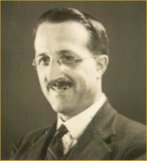
I wish, dear brethren, as a bondman of Jesus Christ, and as, I trust, His happy slave, to speak a word
- to my fellow-bondmen with a view to each one of us being truly bondmen of God and of our Lord Jesus Christ.
God has great thoughts for men. His great thought for men, as regards relationship is sonship. He has also great thoughts for men as to the dignity He would put upon them through the anointing.
- We speak of Christ the Prophet, Priest and King. Those offices are involved in the anointing. God would put great dignity upon His saints in the power of the anointing.
- But the practical enjoyment of our relationship with God, and our coming into the gain of the dignity of the anointing, is dependent upon our accepting our place as bondmen.
- I do not mean to say that our relationship is conditional; I am speaking of the enjoyment of it. We are all sons of God by faith in Christ Jesus, and God said of old, “Let my son go, that he may serve me”.
- But if we rightly appreciate God's grace that has given us sonship, we shall delight, as we think of the great-ness of the God who has marked us out beforehand for adoption by Jesus Christ to Himself, to hold ourselves, as bondmen of God.
- It is an immense privilege to be the bondmen and bondwomen of such a God.
- The apostles esteemed it so. The five epistle writers, Paul, Peter, James, Jude and John, each calls himself a bondman; and they give this designation precedence over any other.
- So we have, “Simon Peter, bondman and apostle of Jesus Christ”, and “Paul, bondman of Jesus Christ, a called apostle, separated to God's glad tidings”.
Now it is a wonderful thing that the Lord Jesus Himself affords us a great Model on this line, though entirely different from us in the manner of His bondmanship.
- We were thinking of Him today, as recorded in Philippians 2: 6, “who, subsisting in the form of God, did not esteem it an object of rapine to be on an equality with God”.
- It was evident when He was here that He did not esteem it an object of rapine to assert His equality with God; but it says, He “emptied himself, taking a bondman’s form, taking his place in the likeness of men” and then it goes on “having been found in figure as a man”.
- God has great thoughts of dignity connected with man, and the Lord was found here in figure as a man.
- Headship, kingship, and priesthood belong to man. But being found in figure as a man, He did not, at that time, claim those official positions, though they are His by right, but
- He “humbled himself, becoming obedient even unto death, and that the death of the cross. Wherefore also God highly exalted him, and granted him a name that which is above every name”.
We see Him now as the Priest and King, God's anointed. God bears witness to Him as such.
- But He, in infinite grace, has reached that position by way of bondman service, becoming obedient even unto death and that the death of the cross.
- He went into depths which the creature could never fathom; into sufferings which the creature could never have sustained.
- What a service He did! Think of His bondman service on earth ending in that way. God made Him to be sin for us. Think of Him being prepared to go that way in obedience,
- “Him who knew not sin he has made sin for us, that we might become God's righteousness in him”, 2 Corinthians 5: 21.
- No wonder God has exalted Him! It is an act of righteousness on God’s part to exalt such a One as that. How could God do otherwise?
- “Wherefore also God highly exalted him, and granted him a name, that which is above every name, that at the name of Jesus every knee should bow, of heavenly and earthly and infernal beings and every tongue confess that Jesus Christ is Lord to God the Father’s glory”.
- How right that is! It is the righteous, moral conse-quence of His bondman service even unto death, and that the death of the cross.
The taking a bondman’s form was His own act. “Once here in the form of a bondman, Thou servedst for wages of love” [Hymn 209: 1, 1973].
- The Hebrew bondman is a great type. It says, if he came in with his body, he could go out with his body (see footnote to Exodus 21: 4, New Translation).
- But if he said plainly, I love my master, my wife, my children, I will not go out free, then certain consequences were to follow.
- Thus the Lord Jesus served for wages of love. Love led Him to empty Himself and take a bondman's form; taking His place in the likeness of men to do bondman service;
- not, at that point, to take up His kingly position, but to do bondman service even unto death, even to the point of being made sin.
- And so, in His case, it was a matter of His body. He came in with His body, and bondmanship affects our bodies.
- According to Hebrews, as coming into the world He said, “Sacrifice and offering thou willedst not; but thou hast prepared me a body”, Hebrews 10: 5, or “ears hast thou digged,”
- as it says in the footnote to Psalm 40: 6, referring to the Hebrew bondman who would not go out free and whose ear was therefore bored to the doorpost.
- And then He adds, “Lo, I come … to do, O God, thy will”. That passage shows that His bondman service had in view that He would offer Himself as the antitype of the offerings of old.
- “Sacrifice and offering thou willedst not … thou tookest no pleasure in burnt-offerings and sacrifices for sin … Then said I, Lo, I come”.
- The offering of the body of Jesus Christ once for all, in all that that meant to Him, was the amazing extent to which His bondman service went. He came in with His body and He surrendered His body in the offering of it to God.
- So that when it says, “I have completed the work which thou gavest me that I should do it”, you can see how that work centred, as it were, in the altar of burnt-offering.
- I am not excluding all that He did in His path of service here, but the great climax was there. The great work He came to do involved the offering of Himself.
All this bears on us, dear brethren, as to our bodies. Bond-manship is a matter of the body and it raises the question as to what we are doing with our bodies.
- Romans 6 shows how we become bondmen of God. We are bondmen on different terms from the Lord Jesus; we are bondmen because we have been bought,
- “Do ye not know … ye are not your own? for ye have been bought with a price, glorify now then God in your body”, 1 Corinthians 6: 20.
- What are we doing with our bodies? If a man buys a slave, he wants the use of that man’s body.
- I would address myself to all my fellow-bondmen and bondwomen, What are we doing with our bodies? How are we using them, how are we adorning them?
- Are we living on this principle that we are not our own, we are bought with a price? And what a price! The price paid by the One who has marked out the path of bondmanship for us! What a price He paid!
- The word therefore is, glorify now then God in your body. It is your body that God wants.
- Man was created in God’s image and glory. “Whose is this image and superscription?” the Lord says, as regards the denarius. “They say to him, Caesar’s”.
- But man was created in God's image and glory. We are to render to Caesar the things that are Caesar’s, because God has set up Caesar; we are to understand how far Caesar has rights over our bodies.
- Chapter 12 of Romans, which sets out God’s rights over the believer, comes before chapter 13, which speaks of Caesar’s rights. And so does chapter 6.
- In chapter 6 we become bondmen to God. Chapter 12 shows that if we become bondmen we shall have something to present to God as priests.
- We are priests because we have the Spirit; but I am referring to the practical matter of having something to present in a priestly way.
- Romans 6 shows how we become bondmen, it is a detailed exercise. We yield ourselves to God, as alive from amongst the dead, and our members instruments of righteousness to God; that is, we have got to think of our bodies member by member.
- With some of us certain members get out of control, and, with other people, other members get out of control.
- But in Romans 6 the body is yielded to God, not exactly as a body, but member by member. Thus we become bondmen to righteousness, as it says, and finally, bondmen to God.
God does not expect results like this until His grace has been proved.
- In Romans 5 we have access by faith into this favour in which we stand and we boast in hope of the glory of God. We also boast in God through our Lord Jesus Christ.
- And what is the answer? Our members are yielded to God. But then, if our members are yielded, so that we become bondmen of God according to Romans 6, we are able to serve as priests in Romans 12.
- “I beseech you … brethren, by the compassions of God, to present your bodies a living sacrifice, holy, acceptable to God, which is your intelligent service”.
- The word ‘service’ there is not bondman service but priestly service. We have a body to present to God as a living sacrifice, holy and acceptable.
- How has it come about? Through accepting bondman-ship. JT used to tell us that the Hebrew bondman of Exodus 21, viewed as a type of Christ, becomes the high priest of Exodus 28. It is the way of practical qualification for priesthood.
- So it raises the whole question of our bodies; how we are holding them, how we are clothing them, how we are using them. Man as God’s image and glory – 1 Corinthians 11: 7 – is responsible to express God.
- Are there any features of the world about us? We need divine adornment if we are to represent God. The ornament of a meek and quiet spirit is, in the sight of God, of great price.
This matter, therefore, affects not only brothers but sisters. All are involved in it. That is how the testimony began in Acts 2. Peter, explaining what had happened, says,
- “upon my bondmen and upon my bondwomen in those days will I pour out of my Spirit, and they shall prophesy”, Acts 2: 18.
- I am reading this scripture to show that we come into the gain of the anointing by way of bondmanship.
- You may say, I wish I had more joy in the Holy Spirit; I wish I were used more by the Spirit in prophecy and praise, and were better fitted to stand here for God in testimony in a kingly way.
- All those things are connected with the anointing, the prophet, priest and king. You wish you were more in those things? Then look to your bondmanship.
- Peter speaks of it from the side of grace first, “your sons and your daughters”. Does it not touch our hearts that God has poured out of His Spirit upon our sons and our daughters?
- But from His side, the persons He commits Himself to are His bondmen and His bondwomen.
You may say, I am sure I have the Spirit. I hope indeed that you have the Spirit, because you are not in things vitally at all without the Spirit. But the anointing is not the initial view of the Spirit.
- If you look at 1 Corinthians 12: 12, 13, the instruction begins with the anointing. “So also is the Christ”, 1 Corinthians 12: 12, refers to the assembly, the anointed vessel.
- Then it says, “For also in the power of one Spirit we have all been baptised into one body”, verse 13. And again, “and have all been given to
drink of one Spirit”.
- Things are presented thus from the divine side, but, on our side, we come into the gain of the Spirit the other way.
- We have to learn to drink of one Spirit, to open our inwards to the Spirit, as the Lord says,
- “Every one who drinks of this water shall thirst again; but whosoever drinks of the water which I shall give him shall never thirst for ever”.
- As we open our inwards to the Spirit, we find we are carried along in the current, immersed, and thus in the gain of having been baptised in one Spirit into one body.
- We find ourselves moving along with the brethren in the great current.
- This makes way for the grace of the anointing to be upon us and we find we are being used by the Spirit in public service and testimony. That is the way of it on our side.
- But it begins, as to our state, with our being bondmen and bondwomen. “Upon my bondmen and upon my bondwomen in those days will I pour out of my Spirit, and they shall prophesy”.
Now the first great result of being a bondman or a bond-woman is that you prophesy.
- I am not referring to the gift of prophecy; there were prophets and prophetesses in Scripture; but I am referring to the fact that the saints as a whole, if they are in the gain of the Spirit, have the mind of God.
- We belong to the prophetic, anointed vessel, the Christ. And so Paul says, “ye can all prophesy one by one”. He also says, we have the mind of Christ.
- The Corinthians ought to have had it, they had it potentially in the Spirit, but they were not in the gain of the Spirit because they had not accepted bondmanship.
- It is to them he says, “Do ye not know … ye are not your own? for ye have been bought with a price: glorify now then God in your body”.
- They were using their bodies wrongly, were grieving the Holy Spirit, and therefore had not, in a practical way, the mind of Christ.
But if you have the mind of Christ, you are thinking the thoughts of God, and you can speak of the things of God.
- And that is what the company in Acts 2 were doing. Men and women were speaking the great things of God. Men and women had the mind of God.
- The women would be acting in a comely way; they would be speaking normally, no doubt, to other women, although the woman of John 4 spoke to the men.
- But the point is “my bondmen and my bondwomen” were there in Acts 2 and they were prophesying: they had the mind of God. Who does God give His mind to? His bondmen and His bondwomen.
- How are you using your body? Have you accepted bondmanship? Paul had. He said “I bear in my body the brands of the Lord Jesus”, Galatians 6: 17.
- Not many of us could say that. But he gloried in it. He had the marks of the stripes he had borne and he viewed them as the brands of Christ’s happy slave, which he loved to be.
- He said, “For the rest let no one trouble me”. He as much as said, No one can question the reality of my Christianity, “I bear in my body the brands of the Lord Jesus”.
- In some degree, you know, there should be that about each of us which marks us off as Christ’s happy slaves.
- Do the people at your office or in the factory or the school, know that you are Christ's happy slave, and that you would not be anything else for a thousand worlds? That is what they ought to know. You bear the mark of it in your body.
- If I am clothing myself according to the latest fashion, I am not bearing in my body the brands of the Lord Jesus, I pass muster in the world.
- This is a practical matter. For if you are not prepared for bondmanship, God will never trust you.
- God never trusts a man who trusts himself, but He also never trusts a man who is not committed in bondmanship.
- To His bondman He will disclose His mind. So that if you are a bondman you will become a prophet in this sense that you will have the mind of God; and
- that is one of the greatest things you could possi-bly aspire to, to have the mind of God – to know God, to know His thoughts, to know His will.
I speak to the young people here. Would you not like to know God and to know His thoughts and to understand His will? Then take up your privilege of being happy slaves of Jesus Christ, bondmen of God.
- “If I were yet pleasing men,” the apostle says, “I were not Christ’s bondman”, Galatians 1: 10.
- Give up the idea of pleasing men. O, the bondage, the misery of it! It stands in the way of your spiritual progress. Be a bondman of Jesus Christ, His happy slave – now to please but One.
- If the young people take this up, they will get on well spiritually. We want the young men and women to get on well.
- God has committed Himself to us and He counts upon us to commit ourselves to Him. It is the only right thing to do because we have been bought with a price.
- We are not our own; do not let us think we are our own, think of the price that has been paid.
- Let brothers and sisters understand that it is their privilege to have the mind of God. God will trust you with His mind if you are trustworthy, and that depends on being a true bondman or bondwoman.
- So in Revelation 10: 7 it speaks of the mystery of God being completed “as he has made known the glad tidings to his own bondmen the prophets”.
- He makes known His deepest secrets, the mystery of God to His own bondmen. And that brings us to the point of friendship.
We read the word in John’s epistle, “The friends greet thee. Greet the friends by name”.
- This is not a fellowship within a fellowship, it does not mean special friendships in that sense;
- but it is a challenge as to whether we are truly in fellowship at the present time, because, if we are, we shall be among the friends.
- How do we qualify for friendship? The Lord says, “Ye are my friends if ye practise whatever I command you”. Now such a person is a bondman; a bondman is a man who does whatever he is told to do.
- He is not pleasing men, he is pleasing Christ, “Ye are my friends if ye practise whatever I command you”. Then He says, “I call you no longer bondmen”.
- The moment you become a true bondman of Christ and are prepared to do whatever He commands you in all your habits of life and service, He will say,
- “I call you no longer bondmen … but I have called you friends, for all things which I have heard of my Father I have made known to you”.
- He will hold nothing back but will disclose every secret.
- The idea of friend in Scripture is a bosom friend. John was in the bosom of Jesus. He is the great example of a friend. The secrets of the bosom are known to such.
- And we are to understand who the friends are. I can tell you who the friends are. They are those who are committed to the Lord in bondmanship.
- They become distinguished, as Paul says of one, “the beloved brother and faithful minister and fellow bond-man in the Lord”, Colossians 4: 7, and he names him. “The friends greet thee. Greet the friends by name”.
- The whole fellowship in these last days should come into this. There is no thought of anyone being outside of it, but you may be outside of it, because if you are not truly a bondman you cannot be a friend. You are outside of divine secrets.
There are great secrets to be communicated. Think of the secret made known to Daniel. He and his friends were men who held their bodies for God.
- Nebuchadnezzar said of them that they yielded their bodies, that they might not serve nor worship any God except their own God. They were bondmen.
- But see how wonderfully they were let into the secret of God’s ways in government.
- If you want to know the secret of God’s ways in government you must be a bondman and thus become a friend like Abraham, the friend of God.
- What an obedient man Abraham was! When he was called he obeyed and he commanded his household after him. God trusted that man. He said, Shall I hide from Abraham what I am doing?
- The friends have intelligence as to God’s ways in government. But then God has greater things than His ways in government, and that is the mystery, the greatest of all secrets.
- But the friends of this dispensation understand that. Would you not like to qualify to be among the friends?
- I like to look round upon the friends, those who know, in some measure, the truth of the mystery, and who understand God’s ways in government.
- These are the two great secrets at the present time. The friends know them and become distinguished in that way. They are known by name. Let us come into this circle of the friends.
- It says “the Lord Jehovah will do nothing, but he revealeth his secret untohis servants the prophets”, Amos 3 : 7.
While prophecy is the first thing mentioned as to the bondmen and bondwomen in Acts 2, the fact is that,
- if we are prophets as having the mind of God, we shall be qualified to serve as priests.
- The gift of the Spirit constitutes us priests, but I am speaking about coming into the service practically.
- You cannot be a priest intelligently, unless you are a prophet. That is, you need the mind of God if you are to praise and pray aright.
- How can you praise God intelligently without knowing His mind and will? And how can you pray aright without knowing God's mind and will?
- The first thing, you see, is to be a bondman; then you will come into the mind of God, you will be among the friends; and thus you will be qualified for your priestly office. The anointing has in view that you should function as a priest and this is the way of qualification.
- And so it says of Abraham “for he is a prophet, and will pray for thee”, Genesis 20: 7.
- Who knows how to pray? The prophet. It is the brother or sister who has the mind of God who knows how to pray. I believe the reference to Abraham is the first mention of a prophet in Scripture.
- He had not the gift of prophecy, but he was a prophet because he had the mind of God. God had not hidden from Abraham what He was doing. He was the friend of God and had the mind of God, and God says “for he is a prophet, and will pray for thee”.
- A prophet knows both how to pray and how to praise because he has the mind of God. So you can see how, on this line, we are fitted for the great office conferred upon us as priests of God and of the Christ.
- We know how to pray and how to praise, and that prepares us for our place in kingship. It says in Revelation 5: 9
- “And they sing a new song, saying, Thou art worthy to take the book and to open its seals; because thou hast been slain, and hast redeemed to God, by thy blood, out of every tribe, and tongue, and people, and nation, and made them to our God kings and priests”.
- It is by way of bondmanship and by way of having the mind of God, that we can serve acceptably as priests and represent God as kings.
- The elders in Revelation are distinguished all through as having the mind of God, and they are seen on thrones, round the throne, and on their heads golden crowns.
- They are kings and priests to God. Each of them has “a harp and golden bowl full of incenses, which are the prayers of the saints”, Revelation 4: 4; 5: 8.
But what is in mind is what we are now in a priestly and kingly way. We are a kingly priesthood and, as such,
- we are not only to serve God intelligently in prayer and praise, but to represent Him, as manifesting the true features of royalty, in our testimony in this world.
- We have a higher calling and greater power in the Spirit than the power that God has delegated to the authorities in this world.
- They are set up by God and we are to recognise what rightly belongs to Caesar, but we are above all to recognise what belongs to God; and the God we represent is the God who gives strength to His people.
- Daniel says, wisdom and might are His; and He gives us might, in the Spirit, to represent Him in a kingly way down here.
But in Revelation 22: 3-5 we have the culmination. It says, “the throne of God and of the Lamb shall be in it; and his servants shall serve him”.
- The word ‘servants’ is ‘bondmen’ (see footnote).
- Think of the way bondmanship is carried through into the heavenly city! We cannot even say that the Lord Himself does not still take on bondman service at times.
- It says in Luke 12: 37 “that he will gird himself … and coming up will serve them”. The word ‘service’ there is a different word but the girding Himself shows what the glorified Lord would do in love for His own.
- But then, as to the saints, it is evident that bondman-ship is carried through into the heavenly city. His bond-men shall serve Him. The word ‘serve’ there is priestly service. His bondmen shall serve Him as priests.
- I believe the idea of God as God necessitates the thought of bondmen being carried right through.
- When we think of God as God, in His majesty and greatness, then, whatever relationship He brings us into, even sonship in the most blessed way, and whatever dignity He confers upon us as kings and priests, what place could we take but that of bondmen?
- And so “his bondmen shall serve him and they shall see his face; and his name is on their foreheads”. That is the mark of the bondmen.
- Let His name be on our foreheads now, let us move about in this world, having the evidence upon us of divine ownership, the evidence that we are the happy slaves of Jesus Christ and of God.
- Then we shall have liberty to serve Him now as priests; His bondmen will serve Him, and they will see His face. You would like to see His face? These are the people who see His face!
- And it goes on to say “they shall reign to the ages of ages”. The bondmen are both priests and kings, but they are still bondmen, they love to be, they love to recognise God's complete rights over them.
So I come back for a moment to chapter 19. A voice came out of the throne in verse 5, and I believe it is the voice to us tonight, the voice from the throne.
- There is much about the throne in Revelation. It stands related to the temple in this book.
- Isaiah saw the Lord sitting on a throne, high and lifted up, and his train filled the temple, and one seraphim called to the other saying,
- “Holy, holy, holy is Jehovah of hosts; the whole earth is full of his glory!”
- And here there is a voice out of the throne. Are not you going to obey the voice from the throne? A voice came out of the throne, saying
- “Praise our God, all ye his bondmen”.
- I look round this hall tonight, and I address my brethren in this way, “all ye his bondmen”. You have been bought with a price, you are not your own, and the throne is speaking to you, and what is it saying?
- “Praise our God, all ye his bondmen, and ye that fear him, small and great”.
- Soon the beast is coming and it says of him that both small and great have to have his mark upon their forehead or upon their hand.
- Thank God it is God’s mark that is upon us. Let it be so, dear brethren; let us have in our body, in some way, the indication of divine ownership; let His mark be upon us.
- And if we really surrender to God in this way as bondmen, there will be no lack of praise. We shall understand the throne, we shall understand the thoughts of God and we shall respond at once to this voice,
- “Praise our God, all ye his bondmen, and ye that fear him, small and great”.
- Who would not be in this note of praise? There is an immediate response:
- “And I heard as a voice of a great crowd, and as a voice of many waters, and as a voice of strong thunders, saying, Hallelujah”.
- Four hallelujahs occur in this passage. Hallelujah, though a hackneyed term in Christendom, is one of the greatest notes of praise. Praise ye Jah, the great self-existent God!
- It is praise to God, God as God; Father, Son and Holy Spirit. For this title applies to Jesus.
- The first three verses of John’s gospel assert who He is; He is the great self-existent One. He always was, and all things began to be through Him. He is Jah, the great I AM.
- I AM is His own assertion of it, our answer is, “Praise ye Jah”. How wonderful to hail the Saviour in this way. Jesus our Saviour is the great self-existent One, co-equal with the Father and with the Holy Spirit.
- And we would say tonight, “Praise our God, all ye his bondmen”. And there is the answer,
- “Hallelujah, for the Lord our God the Almighty has taken to himself kingly power. Let us rejoice and exult, and give him glory; for the marriage of the Lamb is come, and his wife has made herself ready” – the great consummation of the mystery.
May we all be caught up in this note of praise tonight. I would say again, “Praise our God all ye his bondmen”.
- I call upon my brethren, and myself more than any, to be true in this matter of bondmanship. May the Lord help us for His Name’s sake.
Page Top Article Top
| FULL GROWTH |
|---|
Colossians 1: 24-26;
Ephesians 4: 7-16; Hebrews
5: 8-14; 6: 1, 13
Address at Lancing, May 17, 1948
Words of Grace and Comfort, 1949, 25: 32-41
|
|---|
I have in mind to say a word as to going on to completion, perfection. The idea is perfection, or full growth.
- God has no pleasure in what is imperfect or unfinished; God has pleasure in things that are complete,
- and so it says at the outset that God finished the work and that He rested on the seventh day from all His work which He had made; that is the idea of the sabbath.
- It means that the toil is ended because the work is finished. So the Lord said on the cross, "It is finished".
- How wonderful it is that Divine Persons always complete what They begin! God at the beginning completed what He began to do in creation.
- The Lord Jesus says, "I have finished the work which Thou gavest me to do"; and finally in Revelation the One that sat upon the throne says, "It is done".
We are living in the days of completion.
- God is completing the assembly; He is bringing the greatest of all dispensations and the longest of all dispensations to a close by completing His work. Nothing is to be left unfinished.
- This applies even to what is down here provisionally in testimony, for God would secure in a remnant a full answer to His thoughts as to the assembly. That is what God has in mind.
- So the Lord is able to address the remnant as if it were the assembly:
- "I also will keep thee out of the hour of trial", and
"I will cause that they … shall know that I have loved thee", Revelation 3: 9.
- As features are found in the remnant proper to the assembly as a whole, the Lord can address it as though it were the assembly.
- In fact He really addresses the assembly as a whole in the light of what He finds in the remnant, because He will keep the whole assembly out of the hour of trial.
Colossians 1: 24-26
The first thing to notice in the Scriptures read is that God has
completed the unfolding of His mind.
- That is what Paul means when he says, "the dispensation of God which is given me towards you to complete the word of God", Colossians 1: 25.
- It is a great thing for us to lay hold of that. How small and trivial to allow ourselves to be hindered by occupation with the wrong man when this is available!
- We want to be liberated from all else so that we can go in for the vast realm of things which has been unfolded. We are privileged to live in the day when the unfolding of God's mind is complete.
Ephesians 4: 7-16
In the second Scripture we see the wonderful provision that God has made
that we may lay hold of His mind and thus be perfected, growing fully to our allotted measure.
- The gifts are given for the work of the ministry "until we all arrive at the unity of the faith and the knowledge of the Son of God, at the full-grown man, at the measure of the stature of the fullness of the Christ".
On the one hand the mind of God has been told out and on the other full provision has been made for us to arrive at it and come to full growth.
- Then the word to the Hebrews is the practical side and is intended to arouse exercise with us to move forward and to avoid sluggishness.
It is a great thing to recognize that the word of God has been
completed by Paul.
- It is said of the lame man in Acts 3 that he held Peter and John. We should do that, and their ministries will lead us to Paul.
- We need Peter and John. I am not setting them aside. Peter leads us up to Paul, and John, though having his own distinctive ministry, brings us back to Paul and holds us to Paul.
- Nevertheless it was given to Paul to complete the word of God, and that shows the importance of Paul's ministry.
Another thing to notice is that he connects the completion of the word of God with the ministry of the assembly.
- In this passage he refers to both of his ministries. In verse 23 he refers to himself as a minister of the gospel, and in verse 24 he speaks of Christ's body which is the assembly, "of which I became minister … to complete the word of God".
- Paul was a minister of the gospel and a minister of the assembly, and the completion of the word of God is particularly linked with the ministry
of the assembly.
- I believe it is most important to understand that Paul's ministry of the assembly is that which completes the unfolding of the mind of God.
- God has reached in the assembly what He ever had in mind. He may have committed certain things to Israel, such as sonship, the service of God, etc., but they belong primarily to the assembly.
- The assembly was in His mind before the world began.
At best Israel had only the figure of things to come, for the
tabernacle and the temple were figures, but the assembly is the thing
itself.
- Christendom has imitated the figure and returned to the "weak and beggarly elements"; but the fact is that what was once here in figure is now here in actuality.
- We are it, we are part of it, we belong to this vessel. It is a magnificent thing to lay hold of this!
- So it says in verse 25, "according to the dispensation of God which is
given me towards you". It is for us to lay hold of it.
We live in the most wonderful day, when the vessel itself is here. The true temple, the tabernacle of God, the city of God in principle, is here in
the assembly.
- It is all here because the saints form Christ's body. If you have the body of Christ you have everything.
- He speaks of His own body as the temple, John 2: 21. Now the saints are "the body of Christ" and "temple of God".
- Everything which was in the mind of God was first expressed in the Lord Jesus personally but is now continued in the assembly.
- It is a wonderful thing to lay hold of this; thus it is not exactly the gospel which completes the mind of God, because the gospel was not hidden from ages and generations, but the truth of the assembly was hidden.
- As Paul says, "the mystery hidden from ages and from generations, but has now been made manifest to His saints".
It is a great thing to have Paul's ministry for it unlocks the word of God.
- Completing the word of God does not mean that Paul's ministry finished the Scriptures, because John wrote after Paul,
- but it means that Paul's ministry completes the unfolding of God's mind in filling out all that had gone before – it "fills full" the word of God.
- If we had not Paul's ministry we could not understand what has gone before, but now we can understand the types.
- We can understand the types of Adam and Eve, Isaac and Rebecca, the
tabernacle, the house that Solomon built, and many other things, because we have Paul's ministry of the assembly.
- The mystery was hid in God but now the truth is out. The whole mind of God is out, and it is a tremendous matter. Think of what it means.
- God is God, yet He has been pleased in this dispensation to make known through Paul all His mind as to Christ and the assembly. He has held nothing
back.
I should like the young people to take this in, for it is well worth going in for all our lives.
- You may go to the university and learn what men are thinking, but these are God's thoughts,
- and it is worth while, young men and young women, giving yourselves up to these things for the whole of your lives. Nothing else is worth
while in comparison.
- That is why Paul says to Timothy, "Occupy thyself with these things; be wholly in them", the whole mind of God.
You may say, 'I am studying this or that'; but what about the mind of God?
- I admit you cannot get it on the line of mere human study, yet it is available to us:
- "which is given me towards you to complete the word of God, the mystery which has been hidden from ages and from generations, but has now been made manifest to His saints; to whom God would make known what are the riches of the glory of this mystery among the nations …"
- Let us pay attention to Paul's ministry. He brings in the full thoughts of God as to blessing, as to sonship, as to our heavenly relations, and also as to the vessel in which we all have part.
Now it is not only that the whole mind of God is expressed, but Ephesians shows that divine provision has been made to bring us into it. It is a great thing to see that.
- It says, "Having ascended up on high, He … has given gifts to men". It speaks of Christ having ascended up above all the heavens that He might fill all things;
- from that altitude the gifts are given and therefore they are irresistible.
- They come from the victorious ascended Man, who has overthrown every hostile power.
He has given some apostles, and some prophets, and some evangelists, and some shepherds and teachers.
- You may say we have not apostles now, but we have their writings.
- We also have the New Testament prophets as well as the prophetic word as known in our day; and we have some evangelists, and shepherds and teachers, all
- "for the perfecting of the saints, with a view to the work of the ministry, with a view to the edifying of the body of Christ".
- God has made every provision for the perfecting of the saints in order
that we should not be unfinished but every one of us perfected.
From the standpoint of the work of Christ we are already perfected: "For
by one offering He has perfected in perpetuity the sanctified", Hebrews
10: 14.
- All who believe in the Lord Jesus are in a place of acceptance before God, which cannot be improved upon by any amount of growth on our side.
- Sanctification relates to the holiness of God; and through faith in the Person and work of Christ we are fitted to enter the holiest, the immediate presence of God – that is our home.
- But the measure of enjoyment depends upon the measure of growth. We shall not enjoy it if we become sluggish.
- There is the side of growth and these gifts are given "for the
perfecting of the saints, with a view to the work of the ministry, with
a view to the edifying of the body of Christ".
- We are each to be perfected with a view to fitting into our place in the vessel, so that there is also the edifying, or building up, of the body of Christ,
- "until we all arrive at the unity of the faith and of the knowledge of the Son of God, at the full-grown man, at the measure of the stature of the fullness of the Christ".
Now here, dear brethren, there is a vast range for us to come into, a measureless range, something to arrive at – "the unity of the faith".
- The unity of the Spirit has to be kept, but the unity of the faith is something to arrive at.
- It is a question of our arriving at the full truth of Christianity – the full apprehension of the Christian faith and the knowledge of the Son of God, at the full-grown man.
- God's eternal purpose is connected with man, but man in sonship. It is a question of arriving at the knowledge of the Son of God, at the full-grown man, and that means our coming into sonship in full manhood.
- We need to cast out the bondwoman and her son and to be clear in our minds from other men. That is to say,
- we need the word of the cross before we can make a proper beginning.
- But here we have a vast range in the knowledge of the Son of God. How vast it is, dear brethren!
We may consider the Son of God as in the wilderness. Think of growing up to Him, coming to the full-grown man in that respect – what He was in the wilderness.
- He was led by the Spirit in the wilderness.
- The devil says, "If Thou be the Son of God". What was His answer? Do we put our own interest, our needs, first?
- This all enters into our coming into "Man shall not live by bread
alone but by every word of God". Man, but Man in Sonship!
- Only Man in Sonship could answer like that. "Though He were Son, He learned obedience from the things which He suffered".
If we are brought into correspondence with the Lord Jesus, it means that every word of the ministry is going to have effect.
- We shall not be left behind or be dull of hearing as the Hebrews were; but shall live by every word of God.
- Each temptation brings out a feature of true manhood, and we are to grow up to Him as in the wilderness. That s fundamental.
- How can we answer to Him in the land if we do not answer to Him in the wilderness? We are to grow up to Him in all things who is the head.
See Him in the garden of Gethsemane. We see Sonship in the perfection of obedience, "Nevertheless, not My will but Thine be done". What food for the
soul!
- But then, see the Lord in resurrection. He says,
- "Go to My brethren and say to them, I ascend to My Father, and your Father, and to My God, and your God", John 20: 17.
- Think of arriving at the knowledge of the Son of God on this line, to be able to stand alongside of Him, for, although ever having His own unique place, He brings us alongside of Him: "My Father, and your Father …
My God, and your God".
- What a range is open to us in connection with Sonship as seen in Christ risen and ascended!
- Isaac and Solomon are outstanding types of Christ as Son – Isaac the intimate side and Solomon the glory side. Scripture is full of Christ.
It is all intended to help us on this line – the knowledge of the Son of God, at the full-grown man, and this qualifies us to fill out our place in the vessel, the assembly, and so it says, "at the measure of the stature of the fullness of the Christ".
- This refers to the assembly in its completeness. The more we arrive at the knowledge of the Son of God, at the full-grown man, the better we are able to fill out our place in the body, the assembly; the completion of the
vessel is in mind.
- She is His fullness; that is what she is to arrive at.
- In our measure we can all have part in these operations, because it is said, "To each one of us has been given grace according to the measure of the gift of the Christ".
- But I would like to leave an impression from this passage of the provision that has been made for us to arrive at the full mind of God as expressed in a living Person, Lord Jesus Christ.
Hebrews 5: 8-14; 6: 1, 13
I read the verses in Hebrews because they bring in our side, the side of exercise.
- The apostle said he had many things to say; he had the whole mind of God to unfold concerning Christ, but he says "hard to be uttered", not because he was not ready to utter them, but because they were dull of hearing.
- There was a tendency to be sluggish and not to move in the current ministry.
- Peter speaks of the present truth. It needed grace for him to speak thus of a ministry not his own for undoubtedly Paul's ministry is in mind.
- Peter moved on, but the company at Jerusalem, as far as we know, had not
moved on with Paul's ministry. They were sluggish, and this letter was
written to rouse them and is intended to rouse us too.
- "For when for the time ye ought to be teachers, ye have again need that one should teach you what are the elements of the beginning of the oracles of God, and are become such as have need of milk, and not of solid
food".
- I do not want to speak of persons, but one has met people who specialize in a milk diet. You cannot grow to manhood, or do a man's work, on milk. You become weakly and undeveloped.
- Milk is good at any meal and can be taken in all stages of growth, but do not let us live on milk alone. We need strong meat.
Some say we shall lose the young people unless we keep to the milk diet. I do not think so. Young people are helped by seeing others going on to perfection.
- It is the sluggish ones who say otherwise, those who do not want to
go forward, but are satisfied with milk.
- Milk refers to the gospel as meeting our need, but strong meat refers to the Lord Jesus as the One in whom the whole mind of God is expressed, and opens up the sphere of God's purpose into which we are to enter.
- It goes far beyond our need; it is a question of God, His purposes, His counsels, and of Christ and the assembly. That is strong meat.
"For every one that partakes of milk is unskilled in the word of
righteousness".
- We need something more than milk diet to understand the truth of Romans – the word of righteousness.
- It is a sad thing to remain a babe. It is possible to be a babe after
being thirty or forty years on the road.
- The children of Israel were typically babes after thirty-eight years in the wilderness. When they faced up to the lesson of the brazen serpent they became men.
- When once you come to a judgment of man in the flesh and learn to give
place to the Spirit, you are ready for the great thoughts of God and your senses become exercised to distinguish both good and evil.
- You are no longer dull of hearing like Barzillai, nor dull of taste and of sight like the people of Israel when Caleb and Joshua brought back the grapes of Eshcol. They had no taste for them; they wanted to go back to Egypt.
- But, having your senses exercised, you can discern good and evil. Caleb and Joshua could discern the good, which is the real test of spirituality, and they said that the land was a very, very good land.
- Have you discerned that the land into which God intends to bring you is very, very good? Do you know what is good, what is very good, and what is very, very good? That is holy discernment.
- There are certain things in Christianity which are good, others very good, and others again very, very good.
- If we have discernment we shall go in for the best. Caleb said it was a very, very good land.
- We are to learn to judge of and approve the things which are more excellent, and as our faculties develop in the discernment of good we shall become increasingly qualified to discern and judge evil.
"Wherefore, leaving the word of the beginning of the Christ, let us go on to what belongs to full growth". Let us not be detained.
- Let us be stimulated by being reminded that the whole mind of God is available to us;
- that we form part of the vessel concerning which the mind of God has been disclosed and the ministry of which completes the word of God.
- Let us be encouraged by the fact that great forces have been put into operation by the Man who has gone above the heavens in order to bring us into these things. Let us be encouraged to go on to perfection.
- It was the young people who came into the land; the old ones fell in the wilderness.
- When Caleb and Joshua urged forward movement, the old ones said, as it were, 'We shall lose the children'. But they themselves were lost, and the
children went into the land with Caleb and Joshua.
- Children have their eyes on people who like Caleb and Joshua are going on to full growth.
May the Lord help us in these matters that we may all move on to completion, for His name's sake!
Page Top Article Top
THE SHINING
OF THE GREATEST LIGHT |
|---|
Acts 9: 3
At Hornchurch, No Date
Hornchurch was GRC's local meeting
Words of Truth, 1957, 25: 32-33 |
|---|
In Acts 9 we have a light out of heaven: "there shone round about him (Paul) a light out of heaven", and this is the greatest light that has ever shone.
- We may say it is the greatest light that ever will shine for men; and men we need to remember – that is, men in Christ – are the most blest of any creatures.
- The Spirit of God would help us as to this greatest of all light, revealed to Paul. He says,
- "God … was pleased to reveal His Son in me", Galatians
1: 16; and
- "by revelation the mystery has been made known to me", Ephesians 3: 3.
- Those two revelations constitute the greatest light that has ever come to men, and, if understood, they enable us to be in the assembly at the full level of intelligence and response that God desires.
In Revelation 3: 1-6, the Lord says that He is the One who has the seven Spirits of God.
- That is, the fullness of the Spirit is available with a view to our going on to completion. Paul's ministry involves completion.
- If we do not go on in our souls and enter into this greatest of all lights, we shall never reach completion according to God.
- Sardis, which represents Protestantism, has never moved on to Paul's ministry of the assembly.
- Protestantism, as such, is ignorant of Paul's gospel and of Paul's intelligence in the mystery.
- Rome claims to be the assembly, but she is a complete travesty of it.
- Protestantism has never apprehended the assembly in any sense at all, and one reason why Protestantism has failed is because in her evangelical
zeal she has allowed herself to become defiled.
- Therefore she has become dead; death and defilement go together.
- Defilement may spring from evangelical zeal, but in defiling ourselves we do it at the expense of our lives, we become dead as to the truth of the assembly and to all that is really living according to God.
So the Lord is speaking to those who have not defiled their garments.
- If we are led away, even, as we may think, with the best motives, to defile our garments, as Protestantism has done, by using worldly means and
methods in testimony, we are disqualified from moving on into this greatest light.
- We are disqualified from ever apprehending Paul's ministry.
- Such a course not only results in disqualification but will lead to moral death.
- But we will get help in pursuing the positive side. The seven Spirits of God suggest the full availability of the Spirit, so that we might, as giving Him His place, take in this greatest light and thus arrive at the complete thoughts of God.
Page Top Article Top
| THE CALL OF GOD |
|---|
The Way Everlasting: 8-10, published 1958.
Compiled by Robert Stott for the benefit of younger believers.
|
|---|
The question arises as to what it means when it says "Let my son go", and what is meant when it says,
- "By faith Abraham, being called, obeyed to go out into the place which he was to receive for an inheritance, and went out, not knowing where he was going", Hebrews 11: 8.
- The Gospel as rightly received in the soul, involves the call of God out of Egypt.
- God would call us out, and Abraham is the great example in the Old Testament of one called out, and it says, "By faith Abraham, being called, obeyed".
- Abraham was living in a city, Ur of the Chaldees, and excavations have brought to light that the culture of that city was on a par with Paris at the present time.
- There were not the modern inventions, but the art and culture of Ur of the Chaldees was of a very high order. But it was a wicked and idolatrous city.
God said, "Go out of thy land, and from thy kindred, and from thy father's house, to the land that I will shew thee.
- "And I will make of thee a great nation, and bless thee, and make thy name great; and thou shalt be a blessing. And I will bless them that bless thee, and curse him that curseth thee; and in thee shall all families of the earth be blessed", Genesis 12: 1-3.
- Stephen tells us that it was the God of glory who appeared to Abraham.
One would love to think that the God of glory had appeared to our hearts … this blessed God …
- who justifies sinners, who sanctifies the defiled, who reconciles enemies, who bestows the great gift of sonship and who gives the Holy Spirit to dwell in us – what a glorious God He is!
- Surely in some measure the God of glory has appeared to every one of us. Have not we some impression of the glory of this God?
- If so, you will have a great desire to enjoy not only the blessing but the company of the Blesser, and if you are to have the company of the blessed God Himself, the only way is for you to move out,
- for you cannot enjoy the blessing, nor can you enjoy God's presence in the way He would love to be with you, while you remain in the world.
Scripture says, "Friendship with the world is enmity with God", James 4: 4.
- The world as a system is built up on the principle of leaving God completely out of account. It is a system of rebellion and robbery.
- It takes God's property – the fulness of the earth, and, without any reference to the Owner, it appropriates and uses it as it thinks fit.
- That is the great principle of sin – leaving God out of account and ignoring His rights.
- It would be regarded as intolerable in human affairs if a man appropriated another's property without any regard for the rights of the owner. But that is what men are doing all the time. It is the principle of the world system.
How different it will be when what belongs to God will be used for God, when the Lord Jesus reigns!
- The oil found in the earth will not then be used to carry atom bombs. The manner in which men use created things is outrageous to God.
- But what else can we expect from a world which proved its enmity and hatred of God by crucifying Christ – a sin of which it has never repented, in spite of its cathedrals and crosses?
- If you were to attend any great social function and make a speech in honour of Christ – the greatest Man living – you would be derided.
- The world does not want to hear about Him. It has not changed, and has never repented of the crucifixion. Individuals have, but the world as a system has not.
So the word is "Go out", and this brings in the principle of the obedience of faith. "By faith Abraham, being called, obeyed".
- Paul says he preached the gospel for the obedience of faith among all the nations. Faith not only puts its trust in Christ and His finished work, but obeys the call of God.
- A man who really trusts in Christ and owns Him as Lord and Saviour could not, with a good conscience, remain in the world. The call has come to him, and it is for him to obey.
Now, the obedience of faith is a matter of love. If you have accepted the Gospel and let the light of this blessed God shine into your heart, the One who has justified, sanctified, and reconciled you, made you one of His sons, and put the Spirit of His Son into your heart – you will love Him.
- "We love because He has first loved us". The Bible says faith works by love.
- You cannot believe in such a God and Saviour without loving that God and Saviour. It is impossible. This is how God has secured human hearts. He has loved us into loving Him.
With Abraham and the children of Israel, who are types of us, it meant an actual geographical movement.
- It is not so with us today. You will still live in the same street and go to the same office or factory but you are a very different person – you are in the world but not of it. The Lord Jesus said,
- "They are not of the world, as I am not of the world. I do not demand that thou shouldest take them out of the world, but that thou shouldest keep them out of evil", John 17: 14-15.
- The will of God in Christianity is that we should remain actually in the world, but to be in it as not of it and as not wanting anything it can offer.
- You are not dependent on it for your joy and resources. They are all in God. Jesus as a Man here found all His portion in His God and so does the believer.
Page Top Article Top
| THE CHOICE OF A CAREER |
|---|
| The Way Everlasting: 15-16, published 1958.
|
|---|
Strictly speaking, the believer has no choice. He is not his own, he is bought with a price; and his true business in life is to do the will of God.
- God's will is, therefore, his career; Christ his Object and Christ his Motive. What a wonderful career this is! None other can compare with it.
- Those who pursue it are assured of divine support, a heavenly Father's care, and the acquisition of the true, the eternal riches.
The Lord Jesus is the great Model. "Coming into the world he says ... Lo, I come (in the roll of the book it is written of me) to do, O God, thy will", Hebrews 10: 5, 7.
- That will involved for Him the offering of His body once for all as the great Antitype of all the offerings and sacrifices of old. Our sanctification and all our blessing depend upon it.
- At twelve years of age He said, "Did ye not know that I ought to be occupied in my Father's business?", Luke 2: 49.
God's will for the Christian is clearly set out in Scripture.
- Christ's body is here and he is to function as a member of it.
- God's house is here, and he is responsible to undertake military, levitical, and priestly service in relation to it, and to the God who dwells in it. Numbers 1–4.
- His calling is heavenly and he is to pursue with all his energies, "looking towards the goal, for the prize of the calling on high of God in Christ Jesus", Philippians 3: 14.
- God's will, therefore, 'demands my soul, my life, my all!'
The young believer may say, 'Yes, but I have my living to get'. The Lord Jesus, referring to temporal needs, says,
- "Seek ye first the kingdom of God and his righteousness, and all these things shall be added unto you", Matthew 6: 33.
- God, as it were, says (to use the language of another), 'You make my interests your concern, I'll make your wants My care'. God does far better for a man than a man could do for himself. And so the Scripture says,
- "Confide in Jehovah with all thy heart, and lean not unto thine own intelligence; in all thy ways acknowledge him, and he will make plain thy paths", Proverbs 3: 5-6.
As you pray and wait upon Him about your earthly calling, your heart already fixed upon Him and His interests, He will make quite plain what that earthly calling shall be.
- And, as chosen by Him, it will be the calling that will serve best your place in His kingdom here below, and thus your present and eternal happiness.
Page Top Article Top
| THE DEITY OF CHRIST |
|---|
| The Way Everlasting: 120-21, published 1958.
|
|---|
Souls saved through the testimony of the Gospel are baptized to the name of the Father, and of the Son, and of the Holy Spirit.
- In the house of God they learn the whole truth as to this God who is One, and yet revealed in such a remarkable way; and the whole truth as to the Man Christ Jesus who gave Himself a ransom for all.
- And one outstanding truth as to the Man Christ Jesus, is that God has been manifested in flesh.
- That is the answer to all the heresies. We come to the end of human reasoning, for God has been manifested in flesh.
The Man Christ Jesus is God; the Fulness dwelt in Him, and dwells in Him now bodily; so we come to finality – we cannot get beyond that.
- And where it is accepted the soul is preserved from every heresy.
- The great heresies of the early centuries, which have been revived under modern names in the last century, concurrently with the revival of the truth, all deny the Deity of Christ.
- Whether you think of Russellism, or Christian Science, or Spiritism, whatever it may be; bring them up against this great truth of who the Man Christ Jesus is, and they are exposed.
But in God's house this great truth is preserved. You come into God's house, and you learn that God is One, the Father and the Son and the Holy Spirit;
- and that the Man Christ Jesus was no less than God manifested in flesh. The Fulness was, and is, in Him.
- In the house of God the Spirit is available to help us. We are dependent upon the Spirit of truth to preserve us in the truth, not only to guide us into it, but to keep us in it;
- because the moment the human mind intrudes we get into difficulties; and these difficulties were troubling even the brethren at Ephesus.
All this bears on conduct in the house of God, as to how we let our minds run loosely. It says in 1 Timothy 1: 3,
- "that thou mightest enjoin some not to teach other doctrines, nor to turn their minds to fables and interminable genealogies, which bring questionings rather than further God's dispensation, which is in faith".
- All the theories that men propound as to who Jesus is, these genealogies, all come to a stop once you accept the truth that in Him all the Fulness was pleased to dwell.
There is no question now about these genealogies or questionings. The Godhead was there.
- What gives room for these questionings and interminable genealogies and so on, is some defect in the apprehension of the Deity of Christ. Once His Deity is accepted we are set free from them.
- So John's Gospel was written last, that all these reasonings might be brought to an end.
- "In the beginning was the Word, and the Word was with God, and the Word was God … And the Word became flesh",
- "Before Abraham was, I am".
- Before these truths the human mind has to cease.
Page Top Article Top
HOUSES HALLOWED
AND REDEEMED |
|---|
Leviticus 27: 1-2, 14-15
Locality and Date Unknown
A Word at a Marriage Fellowship Meeting
The Way Everlasting: 193-95, published 1958.
|
|---|
We have gathered today as loving our brother and sister, and loving those who are connected with them after the flesh. We love them all in the Lord.
- Nevertheless, the over-riding motive that brings us here is love for God, and the thought in our minds of what will accrue to God from this union.
- This must be so if we apprehend the present position as set out typically in this book, for God had come down to dwell among His people.
- We often think of the future when we sing, 'Our God the centre is' (Hymn 72), but that is true of the present moment so far as the camp of God on earth is concerned.
- Our God already is the Centre, therefore He must be the centre of this occasion. He has taken up His residence among His people, therefore He must always be the centre.
- It should touch our hearts greatly that God has a habitation here. He has not waited for perfect conditions before dwelling among us, He loves us so much that He has come to dwell among us now. Paul says to the Corinthians,
- "… ye are the living God's temple; according as God has said, I will dwell among them, and walk among them; and I will be their God, and they shall be to me a people", 2 Corinthians 6: 16.
- In spite of the state of the Corinthians, God had not left them, they were the living God's temple. He would dwell among them and walk among them.
- This book shows how much it has cost Him to have a dwelling-place. We see in chapter 16 how the work of Christ has given God liberty to dwell among His people at the present time, in spite of mixed conditions.
- Only divine love could have borne the cost – the unspeakable atoning sufferings of Christ.
If God is thus dwelling among us the only right answer is devoted persons and hallowed houses.
- Notice the distinction between the words 'devote' and 'hallow'.
- A devoted thing is something completely surrendered, and God counts upon persons to devote themselves by presenting their bodies a living sacrifice that cannot be recalled.
- We are not our own, we are bought with a price, and we are to be under the Lord's command all the time.
To hallow means to set apart. Christians are not always called upon to devote their earthly goods in the sense in which this chapter speaks of devoting.
- That is to say, they are not always expected to surrender control of them.
- In the early days believers who were owners of lands or houses, sold them and laid the proceeds at the feet of the apostles. Acts 4: 34-35.
- These things were, therefore, devoted. They passed out of the control of the original owners.
- While action such as this is still called for at times – and indeed, all that is placed in the collection is devoted – under Paul's ministry the general idea as regards our houses, is hallowing and redeeming.
- What lover of God could refrain from hallowing his house? And how can we do other than love Him who has loved us so much as to come and dwell among us at such a cost?
- The early chapters of Numbers show that love requires that our houses should be set in relation to God and His house, in military, levitical, and priestly function.
It is in relation to hallowing that the idea of redemption comes in;
- "And if he that halloweth it will redeem his house, he shall add the fifth of the money of thy valuation unto it, and it shall be his", verse 15.
- Verse 28 shows that a devoted thing cannot be redeemed, it has passed beyond the control of the one who devotes it.
- But what is hallowed need not pass beyond our control. It is set apart for God, but it can be redeemed on certain terms.
- It is valued by the priest and the terms of redemption are the priest's valuation with a fifth part added.
- That is to say, I am privileged to hallow my house, and yet to retain it under my control, on condition that God shall receive 20 per cent more than if I had completely handed it over.
- God is to get more than if I had actually sold it and placed the proceeds at the apostles' feet!
There are many examples throughout Scripture of people who have held their houses in this way.
- Who can doubt that the Lord had this in mind in going to the marriage meeting in John 2?
- This is our desire today, that is why we are here. Our over-riding motive is love for God, and a concern that a full revenue should accrue to Him from this union.
- Our brother and sister have the privilege of hallowing their house and redeeming it.
- There are those who have a priestly valuation of the house that is being set up.
- Our brother, himself a priest, should also have such valuation, and he has the privilege of holding it for God on the principle of redemption, which involves adding the fifth part.
- The principle of redemption applies even to our time; "redeeming the time", Paul says, "because the days are evil", Ephesians 5: 16.
May the Lord help and encourage our brother and sister, with all of us, to devote themselves, and to hallow what is under their hand,
- as affected by the marvellous love of God which has led Him to come to dwell among us and walk among us, at the present time.
Page Top Article Top