Menu•SiteMap |
Ministry
God's Work and Our Response in Service
Ministry by G. R. Cowell
– Memorials: Volume 13
| INTRODUCTION |
|---|
GOD'S WORK AND OUR RESPONSE IN SERVICE
Memorials 13
Meetings with G. R. Cowell 1938-1957
|
|---|
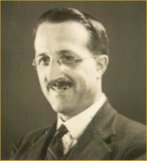
The 10 addresses and two readings in this volume took place over a 20 year period beginning before World War II in 1939.
- Therefore various allusions to the conditions faced by the brethren during that war will be found in some of the articles.
- As the articles are presented in the same order as in the original book – and not in chronologial order – the dates should be kept in mind.
- The ministry extends over almost the whole period of Mr. Cowell's early service, which ended shortly after 1959 London meetings.
G A.R.
Page Top
GOD'S WORK IN US
IN GRACE AND GOVERNMENT |
|---|
Isaiah 8: 5-8, 11-18, 10: 11-12, 24-25;
Hebrews 2: 10-13; Matthew 18: 2-5, 20
Address at Weston-Super-Mare, August 24, 1940
Memorials 13: 1-13
|
|---|
I believe, dear brethren, that what God has before Him at the present time is to work, not only in His grace in ministering to us spiritually,
- but also in His government in disciplining us,
- having in view to bring about in us full correspondence with the Leader of our salvation – Christ.
- If there is to be full correspondence in us with the Lord Jesus it implies that we should not only know our status and position before God as sons,
- but that we should be here in this world as true children.
In Hebrews 2, there are three quotations brought in and attributed to the Lord Jesus Christ who is presented as the Leader of our salvation.
- God has appointed Him Leader to bring many sons to glory: that is the great end in view; and in the quotations which are attributed to Him, the highest thought is presented first:
- “I will declare thy name to my brethren; in the midst of the assembly will I sing thy praises”.
- That implies that the saints are brought into accord with the Lord Jesus Christ as sons with Him in the presence of God; He can speak of them as His brethren;
- we correspond with Him in that way, and as His brethren we are able to take up the song that He sings and to join in it, so that He leads the praise in the midst of the assembly.
- That is the marvellous issue that is before God in providing us with the Leader of our salvation.
But then the next quotations immediately refer to the other side, the second one being,
- God would have us to correspond with our Leader in that.
- For many years now we have been privileged to take in and enjoy much ministry bearing on our portion before God in the assembly as associated with Christ, and we have enjoyed having our part in the service Godward;
- but, dear brethren, what is the real substantial value of that if we do not also correspond with Christ in connection with these other quotations?
- I am not saying there is no value in it, but I would raise the challenge: what is the value of a people who can come together and praise God, but who in their practical life are out of accord with Christ in their trust in God?
- Surely if we are to be ever with Christ before God, God has it before Him to bring us into accord with Christ in a practical, substantial way during this brief period while we are here; we cannot get this education in heaven.
- One is spoken of in this epistle,
- who “though he were Son, he learned obedience from the things which he suffered”,
- and who “in the days of his flesh, having offered up both supplications and entreaties to him who was able to save him out of death, with strong crying and tears was heard because of his piety”, because He feared God.
- God would have us brought into accord with Christ in that. Think what God has before Him today!
- He would have us in our measure trust Him like Christ did, and He would have us to be marked by piety like Christ’s when here, and say,
- “Preserve me, O God, for in thee do I put my trust”.
- God will bring this about. Surely this is attractive to our hearts that we should honour God by the same kind of trust as characterised His own blessed Son down here in those days when He learned obedience by the things which He suffered!
Unless we learn that lesson of trust in God we shall not answer to the third quotation, which means that there is a people on earth to whom the Lord Jesus can point:
- “Behold, I and the children which God has given me”.
- It is the heart of Christ delighting in having a people here on earth who are like Him, not only in assembly service, but like Him as He was down here in practical every day life, walking as He walked,
- as John says in his epistle, righteous as He is righteous, pure as He is pure, loving as He loved.
- That is the idea of children – true representation. We never grow out of being children in one sense; a son is ever a child, however old he may get.
- There is the idea of true representation and likeness to the features of the parents continued in the children, whereas the thought of son suggests image, status and dignity.
- We shall be conformed to the image of God’s Son; but with children it is likeness. When God made man He said
- “Let us make man in our image and after our likeness”.
- The Lord Jesus Christ looks for that: His heart requires that He should have those here like Himself in the practical day-to-day affairs of this life.
- He can point to these children as signs and wonders in Israel, as Isaiah says.
- The Lord is looking for signs and wonders; He requires to have those in testimony here to whom He can point in this way, those who trust God in their measure as He trusted Him, and who walk here as beloved children.
I would like to say a few words as to this matter of children, for I feel that we ought to give more attention to it.
- The book of Isaiah has a good deal to say about children. In the first chapter Jehovah has to say,
- “I have nourished and brought up children; and they have rebelled against me”,
- showing us that the affections of the heart of God require children – “beloved children”, as the apostle says:
- “Be ye therefore imitators of God, as beloved children”, Ephesians 5: 1.
- How God’s heart longs to have beloved children down here! From the point of view of substantial formation and likeness to God it is the highest truth.
- Sonship is a higher truth according to position and status; but it is in Ephesians that we read this exhortation as to being beloved children,
and it is the epistle to Philippians which says,
- “That ye may be harmless and simple, irreproachable children of God in the midst of a crooked and perverted generation”, chapter 2.
- God is looking for children like that. The flesh does not like to be simple, small, meek and gentle, but that is the kind of children for whom God is looking, shining as lights in the world, holding forth the word of life.
- It is in the character of children that we are in testimony.
Then, as you go on in the book of Isaiah, you get the thought of Jerusalem yearning for children. It is very touching.
- Jerusalem above is our mother; and God considers for the yearnings of Jerusalem, and sees to it that she has children. In Isaiah 49: 20-21 we read:
- “The children of thy bereavement shall yet say in thine ears, The place is too narrow for me: make room for me, that I may dwell. And thou shalt say in thy heart, Who hath borne me these, seeing I had lost my children and was desolate, an exile, and driven about? and who hath brought up these? behold, I was left alone; these, where were they?”,
- showing how God considers for the mother heart of Jerusalem. While Jerusalem is desolate, God secures these children for her, brings them up, as it were, and presents them to her.
- No doubt it has an application to the joy which the earthly Jerusalem will yet have in seeing the church as begotten by the testimony which emanated from that city;
- but primarily it has in mind the earthly people which God will secure.
- But I read that scripture to show how the heart of the assembly looks for children. Surely we long for children, and God would love to satisfy that desire.
Then in chapter 53 we have Christ Himself brought before us:
- “Who shall declare his generation? for he was cut off out of the land of the living”.
- The heart of Christ requires children. It is the way the Lord views us as down here, taking character from Himself, begotten by His own service and testimony.
- It says “Who shall declare his generation?”
- Could any of our hearts brook the thought that there should not be a generation here like Christ? that His life should not be continued in character here?
- It goes on to say, “He shall see a seed, he shall prolong his days, and the pleasure of Jehovah shall prosper in his hand”.
- God will see to it – and He is seeing to it – that Christ has a seed.
- So how precious is this thought of children – God’s heart desiring children, the heart of Jerusalem looking for children, and the heart of Christ requiring children!
- Divine affections require children, and beloved children.
- If we look at the New Testament we find the apostles Paul and John bringing out this side of the truth as to children, being like God and like Christ.
As I said at the outset, I believe God is working to secure this substantial formation in His people, so that we might truly be such that the Lord can point to us in our practical lives here and say,
- “Behold, I and the children whom God hath given me”.
- To bring this about discipline is necessary. Two things are always necessary to achieve God’s end:
- firstly, the ministry of grace from His own heart,
- and secondly His ways in government, or discipline.
The two sides come out in the epistle to the Hebrews.
- The early part of the book is full of the provision of God’s grace.
- It speaks of all the grace resident in the apostle and High Priest of our confession; it speaks of our place with Him within the veil, of the Minister of the sanctuary, and of our liberty of approach to God.
- God would minister that side to us continually; but then when we are exhorted to be here in practical faith, corresponding with Christ here, we get the thought of discipline brought in in chapter 12;
- in fact in chapter 10 the apostle speaks of the way the saints were going through suffering, persecution and the spoiling of their goods.
- In chapter 12 he exhorts them to endure discipline, reminding them that the Father of spirits is over the whole matter;
- for God’s government and grace work to one great end, to achieve His purpose in us, that we might correspond with Christ in every sphere:
- in assembly, in our place before God, and down here in testimony and in our practical lives.
- How patiently God works in His grace and government to bring about this great end – correspondence with Christ!
The early part of Isaiah bears on what we are passing through at the present time.
- Up to chapter 39 it is the Assyrian invasion which is largely in the prophet’s mind, an invasion which occurred in Hezekiah’s day,
- although it has a future bearing, alluding to the overflowing scourge which will again pass through the land in the near future.
- But this early part of the book had its immediate fulfilment in Hezekiah’s day, and that section of the book closes with that, dealing with Hezekiah and the coming of Sennacherib king of Assyria.
- The latter part of the book deals more with the return from Babylon. The going to Babylon is foretold in chapter 39, and then immediately God says,
- “Comfort ye, comfort ye, my people”,
- and the latter part of the book speaks of the return from captivity.
So chapter 8 which speaks of the invasion has its fulfilment in Hezekiah’s reign.
- If you read the account of this invasion in 2 Chronicles 32, you will find that it occurred at a peculiar time, as we might think.
- We read in the chapters preceding of the early years of his reign, and of the remarkable spiritual development in connection with the house of God and His service.
- It is remarkable to read how the service of God in His house was restored, the priests and the Levites set in their places, and then the song of the Lord began.
- They were so enjoying the restoration of the service Godward, that Hezekiah sent to the ten tribes
- to gather others in to keep the feast of the passover in Jerusalem; he longed for more of the brethren to enjoy it.
- The people were giving so freely that great heaps accumulated, and Hezekiah asked what they were, and had to make special provision because of the way divine love was flowing in the hearts of the saints.
- You might say, That is a peculiar time for God to order this terrible invasion! It says in chapter 32:
- “After these things and this faithfulness, Sennacherib, king of Assyria came and entered into Judah”.
- You will see an analogy between that day and our own day. We have had many years of ministry dealing with the assembly and our privileges in it.
- Possibly brethren are enjoying their part with Christ and in service Godward as they have not done perhaps for centuries.
- It was so in Hezekiah’s day; they enjoyed it as they had not done since the days of Solomon.
- And now God has allowed discipline to come upon us. You may say, Why has He allowed it at such a time of spiritual prosperity?
- We often think that God brings in discipline when there is a low state; well, He does in His mercy;
- but God is concerned to help forward a good state, to make what is good really solid, to consolidate it in the souls of the saints.
So the Assyrian comes up, and Hezekiah says,
- “This day is a day of trouble, and of rebuke, and of reviling”;
- but, thank God, Hezekiah gets to the root of the matter. It is a great thing to get to the root of the matter.
- If we see the reason for the discipline, we can be with God in relation to it.
- Hezekiah puts on sackcloth – it would be well for us to-day to put on sackcloth – and he says,
- “This day is a day of trouble, and of rebuke, and of reviling”; but he gives the reason:
- “for the children are come to the birth, and there is not strength to bring forth”; as much as to say,
- We have had wonderful assembly privileges, we have enjoyed the service of God together, but there has not been a really practical state that answered to it!
Now, beloved brethren, if I search my heart I know that is true of me, and perhaps it is true of others.
- We have had wonderful privileges; we have enjoyed our place in the assembly; we have enjoyed the praises of God, and God has enjoyed them too, one might reverently say; times have been good.
- But have we not many of us, perhaps all of us, felt that in our public lives we were hardly equal to our place in the assembly, that there was a kind of disparity, or discrepancy?
- Have we not often felt ashamed that we could enjoy the presence of God when together, and outside our faith in God was so small, our trust so little, not like the trust which marked the Lord Jesus Christ?
- Have we not enjoyed divine things in our spirits among the brethren, and outside our spirits have been so unlike the spirit of Christ, that He could hardly point to us and say,
- “Behold, I and the children which God has given me”,
- for we have not really been representing Him in our spirits, ways and words outside?
- To represent Christ in our spirits and words and ways outside involves having that as our one aim in life, and making everything else secondary;
- otherwise we shall never really be children who represent Christ as He was here, acting like God, speaking God’s words, doing God’s works.
- He filled out His place in testimony perfectly, and if we are true children in the sense in which I am speaking, it implies that we are like Him in that way, marked by His spirit, His acts and His words.
- You remember how in John’s gospel, which speaks so much of the children of God, the Lord as the great Example in testimony says,
- “I cannot do anything of myself”, John 5: 30;
- and, again, “I have not spoken from myself, but the Father who sent me has himself given me commandment what I should say and what I should speak … What therefore I speak, as the Father has said to me, so I speak”, 12: 49-50.
- Perfect dependence marked the Lord. We cannot speak of the Lord as a child in the way I am speaking of it, but what a beloved One He was
- in the humble dependence in which He trod His way, not speaking from Himself, but as the Father commanded Him so He spoke.
- What dependence, humility and lovability marked Christ before the Father’s heart as He moved with one object, to represent His Father in this world!
- If we know our place with Christ in assembly, what a great thing it is that God has before Him that we should go out from that sphere and really represent Christ in this world,
- in our measure acting like Him, marked by His spirit, speaking His words, doing His works – may be in a feeble measure,
- but moving in such a way that He can regard us as beloved children and God can view us in that way, and the heart of the saints – “Jerusalem above”– is rejoiced.
So Hezekiah touched the point; he realised that was where the weakness lay. Conception was there: the children had come to the birth.
- We have often found ourselves in that condition; we have conceived the idea of being here to represent Christ: all our desires are that way, but there is no strength to bring forth.
- When a little test comes, it is self that is seen, and not Christ. God says, I will help you as to that!
- The ministry of grace alone will not work it. God says, I will bring in something to help you. God moves in a way which we might think most drastic:
- He brings up the king of Assyria, the waters of the river overflowing all his channels and all his banks, reaching up even to the neck.
- I take it to mean that when the king of Assyria came up, he reached right to the walls of Jerusalem – to the very neck.
- He brought home to the people of Jerusalem their helplessness, for if a man is in water up to the neck, he cannot help himself.
- In some measure we have seen something like it: a scourge which has reached a very long way.
In coming to this point, I would like to make clear that when God brings up an instrument of this kind He effects many things at the same time, though
- His foremost concern is His people walking in the truth.
- That is what God is doing today. He is chastising many nations at the same time, as we read in Isaiah. Isaiah speaks of what happened to many nations.
- God deals with matters between nation and nation, between man and man, in His perfect overruling government; He deals with persons who profess His name, represented by Samaria and Judah;
- but what He had mainly before Him in Hezekiah’s day was to perform, “His whole work upon mount Zion and upon Jerusalem”;
- after that He had in mind to “punish the fruit of the stoutness of heart of the king of Assyria”.
- So God is doing many things today; His ways in government are past finding out. We can thank Him whenever we can see what He is doing.
- If He is cleansing those who profess His name from the pleasure-loving spirit that has taken hold of them, and if He is cleansing the beaches from all the indecencies which marked them, we can thank God for all He is doing.
- But what is specially before Him is what answers to that remnant in Jerusalem.
You might say, Well, the work seemed complete before God began to bring in this discipline: Mount Zion was inhabited and the service of God was going on in Jerusalem.
- But there was no strength to bring forth, and God had before Him to perform His whole work, that there might be a practical answer to the truth, and strength to bring forth.
- Strength to bring forth lies in the knowledge of God in a practical way, and we need to get into difficult circumstances to know Him thus.
- I am not suggesting that the Lord Jesus needed to know God at all in the way in which we do, but it does say that He learned obedience through the things which He suffered.
- It is as passing through affliction that we learn God. When God brought up this great river it affected the whole profession, but His great end was to perform His whole work on mount Zion and upon Jerusalem;
- after which He would punish the king of Assyria; and while this was going on He exhorts them not to be afraid. He says in chapter 10: 24:
- “O my people that dwellest in Zion, be not afraid of the Assyrian”.
- If we are dwelling in Zion, if we are truly set for the truth of the assembly – Zion representing the privilege and praise side of it – we need not fear the Assyrian.
The whole work will be performed. It may be very painful, but we need not be afraid, for God says,
- “For yet a very little while, and the indignation shall be accomplished”, and mine anger, in their destruction”.
- It is very encouraging that this kind of work on God’s part, the work of discipline, is always short, it is always but for “a little while”. God says of Jerusalem in chapter 54: 7:
- “For a small moment have I forsaken thee; but with great mercies will I gather thee”.
- Even the final tribulation is only for a little while, three-and-a-half years, or forty-two months. It is never God’s way to prolong affliction of this kind.
- The point is to get the gain of it during the little while. So the writer in Hebrews says,
- “For yet a very little while he that comes will come, and will not delay”, chapter 10: 37.
I wanted to show the bearing of this on the great thought of Immanuel, God with us.
- It is in knowing that God is with us that we find strength to bring forth.
- I cannot go out and face the world for Christ if I do not know that God is with me, nor can we do it collectively.
- So in connection with this discipline the thought of Immanuel is brought in:
- “The stretching out of his wings shall fill the breadth of thy land, O Immanuel!”.
- If God is with us we are under His wings. We have come to trust under the wings of Jehovah;
- but it is because those who profess to trust in the shadow of His wings have given up confidence in Him that He allows alien wings to come over them.
- He allows these other wings to cover the land because they did not know the reality of “God with us”. It was Immanuel’s land, but the profession had no practical experience of it.
- If God was to give them to know the blessedness of Immanuel’s land, they must know it as in contrast to the other wings being stretched over them.
- I suppose in a way we can regard Christendom as Immanuel’s land. It is not heaven, of course; it is down here in the presence of the fiercest opposition. That is the idea of Immanuel, God with us.
- Christendom is really divine territory, like Samaria and Judah were at this time, but God would give that remnant at Jerusalem to know what Immanuel really meant – that the Holy One of Israel was in the midst of them.
- How can that come about? Only as the work of the ministry goes on and we are formed by it; so it is that God is with us.
- We may say, Where two or three are gathered, the Lord will be in the midst! Not at all, dear friends: it is
- “Where two or three are gathered together unto my name, there am I in the midst of them”, and
- it implies this state of which I am speaking – that we are truly formed as children whom the Lord can own.
- In this actual invasion Immanuel became an immense reality to this remnant. They found strength to bring forth. In that emergency in crying to God they learnt the full meaning of,
- and in that emergency they learned the reality of God with them, and the enemy was overthrown.
I alluded to Matthew 18, because it brings in the moral features of these children.
- We do not get in that chapter the thought exactly of children in the way I have been speaking of it, but we get the moral features of a child.
- If we are to be true children of Christ in the way I have been speaking of it, and true children of God, it can only come about by a moral process, by putting on the moral features that belong to a child, simple trust, and harmlessness.
- The Lord says, “Unless ye are converted and become as little children, ye will not at all enter into the kingdom of the heavens”;
- and then He says, “Whoever therefore shall humble himself as this little child, he is the greatest in the kingdom of the heavens”.
- When we come to the public testimony it is this that makes a person great, that he is able to humble himself as a little child. We shall never really represent Christ unless we have learned that.
- Think of moving among men like that – humble, small, simple, and restful as a little child, so that men who meet us say, Well, he does not trust in himself but in God!
- It is only in that spirit that we can represent God. So the Lord goes on to say,
- “Whosoever shall receive one such little child in my name, receives me”.
- That is the idea of representation: in receiving such an one you are receiving Christ.
- This chapter begins with the Lord Jesus taking a little child and setting it in the midst of the disciples, and the verse with which I ended says,
- “For where two or three are gathered together unto my name, there am I in the midst of them”.
- I think it helps to connect those two verses in our mind. I would suggest, dear brethren, that it means this: If we want to know the Lord’s presence in our midst, we must put the little child in the midst first.
- If there is the spirit of the little child in the midst of us, we shall have the Lord in the midst.
- It is the kind of spirit with which He can link Himself, and that indicates how we reach this great thought of Immanuel, God with us.
- It is no longer a matter of alien wings being stretched over us; we do not need their protection; but we are under the wings of the Lord Jesus Christ.
- There is a spirit now among the saints, as having been brought into practical accord with the Lord, by reason of which we can have the Lord with us.
May the Lord help us in these matters that we may have the gain of what has been before us, both individually and collectively, for His name’s sake!
Page Top Article Top
| YOUTH IN THE TESTIMONY |
|---|
Exodus 24: 4-8; Matthew 21: 12-16;
1 John 2: 14-17; Revelation 21: 7
Address at San Francisco, October 24, 1957
Memorials 13: 14-28
|
|---|
I wish to speak a word especially to the youths. When I speak of the youths I refer to young men and young women
- because, in Christianity both men and women are called upon to take up priestly, levitical and military service.
- From that standpoint we have to regard the idea of the male as suggesting the energy God looks for in all of us in accepting these responsibilities.
- The early chapters of Numbers shows that we are all called into service. There is no exemption from military service in the divine system.
- Neither is there any exemption from levitical service. From a month old and upward all the Levites were numbered for it;
- and we are all priests, by birth, there is no age limit as regards priesthood. What a priestly boy Samuel was, lying in the temple of Jehovah where the ark of God was!
God has called us to the very greatest things. He would give us tonight a sense of the greatness of the dignity conferred upon us to be called of God.
- The greatest calling which the creature has ever known is ours; greater than any angelic calling, greater than the calling of Solomon and David or anyone in the Old Testament.
- If we understand this we shall see that our career here is to do the will of God, and everything else is incidental. He will care for you as to other matters if you seek first His kingdom.
God’s kingdom is set out in the early chapters of Numbers. They are kingdom chapters. The book ends with,
- “the shout of a king is in his midst”, 23: 21.
- The kingdom is an ordered system where everybody is placed in a military, levitical and priestly setting around God’s habitation.
- God has called you for that, and that is your real business on earth. I wonder if every boy and girl here realizes what his business on earth is?
- Your business is to fulfill the obligations, which are also immense privileges, which God has laid upon you by His calling. That is your business.
- You say, I have my living to get. God knows that, He will help you in that, and, in helping you in it, He will order for you so that you have the job which will help you in the best way in relation to His interests.
- It may not be the job you would have chosen, but you will find, as time goes on, that God has ordered your path and given you the kind of occupation in your life here which will best fit in with those spiritual obligations which are your real business in life.
The Lord Jesus is the great model. At twelve years old He said,
- “did ye not know that I ought to be occupied in my Father’s business?”, Luke 2: 49.
- Twelve years is a very important age. The Lord has shown that it is an age at which we can make it manifest that we understand what our business in life is.
- It is a very good age for committal because at that age you have not begun to let your own will work about your career.
- Committal at that age means that you have accepted God’s career for you before you are called upon to decide what your ordinary occupation should be, and that is a very great advantage.
- Think of a boy or girl of twelve coming to it that his business in life is to do the will of God.
- If that is accepted you will find that God will help you in a remarkable way, although it may not be in the way that you expect.
John says “all that is in the world, the lust of the flesh and the lust of the eyes, and the pride of life, is not of the Father”.
- The natural man plans his career in relation to those three things, the lust of the flesh, and the lust of the eyes and the pride of life. And the word is
- “the world is passing, and its lust”.
- You have to measure time against eternity.
You are surrounded by an attractive world which offers you many opportunities to gratify the lust of the flesh and the lust of the eyes and the pride of life, and you may say,
- I am going to give myself up to these things; I will be a respectable citizen, I will not offend the moral code of the United States,
- but at the same time I am going to make the finest earthly career I can;
- I would like to have everything around me and about me which will gratify the pride of life, so that my school friends will say, I wish I were like him, see how well he has done, see what a fine home he has!
- If that is your objective it is a very poor thing. It is an objective which will never satisfy your heart, and even if you achieve your ambitions, God may say to you,
- “Fool, this night thy soul shall be required of thee”.
- All that you have lived for and lived in is left behind for someone else. Death is a fact which we are very slow to face. So we have to measure time against eternity.
- “The world is passing, and its lust, but he that does the will of God abides for eternity”.
Nearly two thousand years ago, there was a great emperor reigning, Caesar Augustus, and there was a king, Herod the tetrarch, and there were other notabilities; they were filling the public eye.
- They all had their ambitions, and away, in a small town near Jerusalem a babe was born, and He was wrapped in swaddling clothes and placed in a manger.
- He was far beneath the notice of Caesar Augustus, far beneath the notice of the other notables! What did His birth matter to them?
- We have the privilege of looking back. Where is Caesar Augustus? What remains of his works? He is only a name. His glory and his works are forgotten.
- What about the babe laid in Bethlehem’s manger, who came to do the will of God?
- He abides for eternity in His glorious Manhood!
- Wherever you go in the commercial world today, whether Japan, or elsewhere, everyone who writes a commercial letter admits the greatness of Christ.
- They have to date their letter, the year of our Lord. Even if they do not believe in Him they have got to date their letters from the date of His birth.
- That is God’s overruling hand. He is determined that men, even if not in their hearts, should have to recognize tacitly that Christ is the greatest Man who ever lived.
- What would Caesar have thought if you had told him that in a remote town in his empire a babe was lying in a manger – there being no room for Him in the inn – and that in years to come the whole commercial world would be dating their letters from the date of His birth?
Later there was an emperor Nero. What is left of him but a bad name and a record of evil works?
- At that time a despised man, Paul, the off scouring of all things, was using Caesar’s roads. God had made Caesar build them for Paul and the evangelists. Caesar was used as an instrument to help the gospel forward.
- The Romans who made the roads, and Caesar and his works are forgotten but Paul’s work remains.
- “He that does the will of God abides for eternity”.
- Paul’s gospel is preached still to the uttermost parts of the earth. The assembly, which he was used to establish, is still here, and we are privileged to come into it.
Now I want to encourage you with the fact that God needs the young people. The testimony requires them.
- Young people are always in the forefront of the testimony, just as in war time the young men are sent into the front line.
- Therefore, if the testimony is to prosper, we must have young men and women committed to the will of God. It is the young who are under men’s eyes, it is the young they are looking at and noticing.
- And so the past dispensation began with priestly activity on the part of youths in Exodus 24. Moses built an altar with twelve pillars, but it says,
- “the youths of the children of Israel … offered up burnt-offerings, and sacrificed sacrifices of peace-offering of bullocks”.
- Think of the honour God puts upon youth, that the great priestly service, before the tabernacle was made, was inaugurated by the youths of the children of Israel. God loves to see young people functioning in a priestly way.
- You may say, How can young brothers and sisters have bullocks? Do they not belong to the old and mature? But the youths had them!
- So we would encourage young men and women to take up priestly service whether privately or in the case of the young men, publicly and vocally in the assembly, because God will help you.
- What will impress strangers coming to the meeting is the sight of young men moving in spiritual energy. They take account of the old men, but they are especially impressed with the young. The enemy has no answer to it.
- He can say of old men, Their life is nearly over, they turn to these things in their dotage. But when young people are seen to be wholly in the truth, offering up bullocks, what can the enemy say?
- He cannot say Christianity is a worn out theology then. He has to admit it is a living matter, that Christ still makes an appeal to the young more powerful than that of any other leader that has ever lived; that He appeals to and holds the affections of youth.
- And so if you young men take up priestly service God will help you to bring bullocks. You will be surprised at what you are able to do. He will help you even beyond your normal measure in the service of God.
And then if we turn to the present dispensation, how did it begin? Did it begin with a group of aged men? Not at all.
- Peter stood up with the eleven. Peter was probably the oldest, but they were a band of twelve men in the prime of life;
- twelve young men who had overcome the wicked one and had overcome the world,
- were standing for God, seven weeks after Christ had been crucified, in the very city where He had suffered.
- They were bearing His reproach without the slightest hesitation, prepared to face the very Sanhedrim that had condemned Him to death.
- What could the enemy do? Nothing! In such a situation the testimony went forward in power.
In passing I would refer to one particular young man in the Old Testament. In Exodus 33, Moses pitched the tent outside the camp, and afterwards it says
- Moses “returned to the camp; but his attendant, Joshua the son of Nun, a young man, departed not from within the tent”.
- What an object of affection he was to God, a young man who would not leave the presence of God, God was more to him than all else.
- If God was to be found outside the camp in that tent, there Joshua would be; he departed not from within the tent.
- The word Nun means continuance. He was a young man who continued – he went right through, and that is what God has in mind for every young person here.
- Your affections should be so held for Him, that you would not depart from His presence, but continue until you arrive at full growth in the apprehension of His purpose.
We could speak also of young men in the New Testament.
- Think of Stephen. He was not an old man, but God committed His testimony for the moment to Stephen.
- How gloriously he carried it on, an overcomer completely victorious in his death.
- When men become violent towards a witness it just proves that his witness is irrefutable. When men have to resort to violence it shows they are defeated.
- That is what happened to Stephen, he went out in complete triumph over all his enemies.
- There was another young man there. Those who stoned Stephen laid their clothes at the feet of a young man named Saul. He was a most unlikely young man for the testimony, as men would think.
- Consenting to Stephen’s death, he breathed out threatenings and slaughter, although he had seen Stephen breathing out nothing but the spirit of Christ.
- But he never forgot what he saw in Stephen.
- “When the blood of thy witness Stephen was shed, I also myself was standing by and consenting”, Acts 22: 20.
- How it pricked his conscience to see a man breathing out the spirit of Christ in the greatest suffering, when he was breathing out threatenings and slaughter.
- And the result was the Lord appeared to that young man, and, the Lord having appeared to him, he took up the torch of testimony which Stephen had laid down and carried it forward.
- It shows what God looks for in young men, you see. You are to carry forward the testimony.
And now I pass on to Matthew, because it speaks even of children there. At the close of the Lord’s life the children were a great comfort to his heart.
- They were in the temple, and they were saying,
- “Hosanna to the Son of David”.
- And the Lord says, “Out of the mouth of babes and sucklings thou hast perfected praise”.
- Now I want to apply this passage to our day.
Similar things have happened in the closing part of this dispensation in which we live. It says,
- “Jesus entered into the temple of God, and cast out all that sold and bought in the temple, and overthrew the I tables of the moneychangers and the seats of those I that sold the doves”.
- He cleansed the temple, and that is what has happened in the last 150 years.
- The Lord Jesus raised up Mr. Darby who went through the length and breadth of Christendom and exposed every evil practice.
- Morally he cast out all that sold and bought in the temple and overthrew the tables of the money changers; he overthrew everything, in his ministry, that the enemy had brought in.
- If you had gone back to the temple in Jerusalem the day after, you would have found all the tables back, doves still being sold, and that is what has happened in Christendom.
- A ministry has come in which has exposed everything, and the fact that the false official priesthood around us has continued its old practices and rejected the ministry the Lord has given will only add to the severity of their judgment.
Then the Lord says, “My house shall be called a house of prayer”,
- and the Lord is helping us to understand this, and to understand how to pray. Following this,
- “blind and lame came to Him in the temple, and He healed them”.
- That has been a great feature of the revival. So called Christian countries were filled with blind and lame people when J.N.D. was raised up,
- people who were blind as to the purpose of God and as to the truth of Christ and the assembly,
- and people who had never learned to value the Spirit, so that they were not able to walk; they were lame; and yet they were pious souls.
- It says, He healed them, that is what has happened.
- Ministry had been given which has exposed all the practices of Christendom, but alongside of it there has been a ministry which has opened the eyes of the blind. Men have seen,
- “what is the hope of his calling, and what the riches of the glory of his inheritance in the saints, and what the surpassing greatness of his power towards us who believe”, Ephesians 1: 18-19.
- And the lame have been made to walk. We have been taught to value the Spirit, and to learn what the Spirit would be to us.
- So that we are no longer held in legal bondage trying to keep the Ten Commandments, but have learned that
- “the righteous requirement of the law should be fulfilled in us, who do not walk according to flesh but according to Spirit”, Romans 8: 4.
- These are great results.
But then, at this point, the greatest result in testimony was the praise of the children. It shows the importance of the children being in everything.
- “Thou shalt rejoice in thy feast”, it says in Deuteronomy 16: 14, “thou, and thy son, and thy daughter, and thy bondman, and thy bondmaid, and the Levite, and the stranger, and the fatherless, and the widow”.
- They were all to be at the feast. It was the children who provided the particular testimony at this important time.
- “When the chief priests and the scribes saw the wonders which He wrought, and the children crying in the temple and saying, Hosanna to the Son of David, they were indignant”.
- There was such a powerful testimony that these opposers were indignant, they did not know what to say. All they could do was to question the Lord,
- “Hearest thou what these say?”
- This is a very important matter. You can not be too young to be in this, you see. It includes the youths and the maidens and even the children.
- If you really know the Lord Jesus you can be in this matter. Of course, in another way, it includes us all;
- we should all be in the spirit of babes and sucklings, marked by simplicity and receptiveness and dependence.
- The Lord’s remark is,
- “have ye never read, Out of the mouth of babes and sucklings thou hast perfected praise?”
- Now this is a feature of the moment, the perfecting of praise out of the mouths of babes and sucklings.
- According to Psalm 8: 2 from which this is quoted, it is this which silences the enemy and the avenger.
There is an internal enemy and an external one – see footnote to Psalm 8: 2.
- Communism and Unionism are external. It is the infidel feature of opposition.
- The internal enemy, which will culminate in antichrist, is like the Romish system and other opposing forces within the Christian profession.
- Now the way God silences both enemies is by perfecting praise in the mouths of the saints, especially of the young people.
- Young men and women filled with praise, afford a testimony which the world is bound to take note of, and to which Satan has no effective answer.
- They are a living testimony to the fact that Christ is just as sufficient as He was at the beginning of Christianity.
- And it says that He has “perfected praise”. I believe it is an important matter that praise should be perfected out of our mouths.
- The praise at any given time is to be commensurate with the way God is making Himself known.
- The testimony at that time was that Christ was the Son of David. The rulers refused Him as such, but this gospel traces his descent from David the King.
- That was the testimony at this time, and praise was perfected in these children saying Hosanna to the Son of David.
As things developed the praise would take on greater fulness, and that is what has happened in the revival. The blind have begun to see, the lame have begun to walk,
- and as the truth has been recovered so has the answering praise been perfected.
- One rejoices in what is going on at the present moment, because, through God’s grace, the truth as to the Godhead has been recovered, and thus the worship of God in His greatness and majesty.
- And a particular feature of the moment is the way God is helping young men in the service of praise.
- I have been to many meetings where one could say that in measure, praise has been perfected in the mouths of young men at the close of the meeting,
- and we older ones have been thrilled to hear young men responsive to the current of the Spirit’s ministry at the present time.
Praise perfected is a great feature of the testimony. If we develop more and more in this God may be pleased to bring more and more exercised souls into the morning meetings.
- It is there they see the testimony in its greatest expression, God’s name confessed in a sacrifice of praise – see Hebrews 13: 15.
- It would astound many to see the young people and children happily in this service.
Now I pass on to John’s epistle, where there is a challenge to the young. The young men are those who are expected to be carrying the burdens of the testimony. He says,
- “I have written to you young men, because ye are strong”.
- How delighted we are to see young men who are strong, young men who have really committed themselves to the Lord and devoted their minds to the truth, so that the word of God abides in them.
- We look around upon the young men and women here with great desire that you might apply your minds to the truth. It is the most magnificent exercise for the human mind as energised by the Spirit of God.
- Apart from the Spirit you could not do it. But the thing is to apply your mind to divine things, not as you would study a text book, but in dependence upon the Holy Spirit. Do what Paul says to Timothy,
- “Occupy thyself with these things”, 1 Timothy 4: 15.
- Let your mind always, when free, be in that direction, always open to receive impressions, always ready to follow up impressions.
- “Think of what I say, for the Lord will give thee understanding in all things”, 2 Timothy 2: 7.
So it says the word of God abides in you and you overcome the wicked one.
- Now the wicked one is a view of Satan acting through antichrist.
- The little children in the next section are in danger of antichrist, but if they rely on the unction they will not be deceived by the antichrist.
- The unction gives them the power to discern what is truth and what is error.
- But I love to think of young men according to God! They have overcome the wicked one, you could not overthrow them by error.
- If a Jehovah’s Witness comes to the door he will not disturb a young man in whom the word of God is abiding, nor will a Christian Scientist, nor will a person bringing any other of the revived heresies that abound around us today.
- They have no power over a young man in whom the word of God abides. Now we rejoice in young men and women like that!
But there is still something else to be overcome, that is the world.
- “Who is he that gets the victory over the world, but he that believes that Jesus is the Son of God?”, 1 John 5: 5.
- Now it is incumbent upon all of us to overcome the world. If not, we shall be lost to the testimony.
- You may be strong and the word of God abiding in you today, and you have overcome the wicked one. You can successfully refute false doctrines.
- But if you do not overcome the world you will become a casualty as far as the testimony is concerned.
- The Lord is the great example. In the temptation there was no question of the Lord being tested by the wicked one. He is Himself the Truth. No error could have any effect on Him. That conflict would not come in there.
- But the enemy brought every feature of the world, of which he is the prince and the god, to bear upon Christ. He brought every allurement, the lust of the flesh, the lust of the eyes, and the pride of life, but the Lord Jesus overcame the world.
- And so it is a question as to whether we are overcomers? The world is passing. It is folly to let the things of time outweigh the things of eternity.
- You will be filled with regrets sooner or later if that is your course. You will have missed an opportunity never to be repeated.
- This little span of time should be used in relation to eternity and the will of God. So he says,
- “Love not the world, nor the things in the world”.
- Satan would aim at your affection through the world. He would corrupt your affections, bringing in idolatry.
- Every lust is an idol, Paul tells us, because any lust comes between my soul and Christ. And so this epistle says at the close,
- “He is the true God and eternal life. Children, keep yourselves from idols”.
- That is, keep yourself from every lust, everything that would draw your affections away from Christ.
- “If anyone love the world, the love of the Father is not in him”.
- The way to overcome the world is to have the love of the Father in you, that is to let your affections centre on the One in whom the Father’s affections centre.
- The Father loves the Son, and if the Father’s love is in me, I shall love the One that He loves.
- The Father will not tolerate a rival to Christ. The Father is going to deal in unsparing judgment with anything that attempts to rival Christ.
- “The Father loves the Son, and has given all things to be in his hands. He that believes on the Son has life eternal, and he that is not subject to the Son shall not see life, but the wrath of God abides upon him”, John 3: 35-36.
- The wrath of God is going to fall on everything and everyone who sets himself up as a rival to Christ, and is not subject to Christ.
- And if the love of the Father is in us it means that Christ will be our object and our motive, and we shall be delivered from the world.
Now Revelation 21: 7 is the final word from the one sitting on the throne. The eternal state is being depicted in all its blessedness – finality.
- “And he that sat on the throne said, Behold, I make all things new. And he says to me …”.
- Think of the grace of the One on the throne! After the majestic declaration, “Behold, I make all things new”. He turns to his bondman John, and he says,
- “these words are true and faithful”.
- They must be if He says them, but think of the grace which assures the heart of His bondman.
- And then it says again, “And he said to me”, He turns to this bondman John again. His bondman was a lover.
- His bondman had been a young man who had overcome. He had overcome the wicked one, overcome the world, and had become a father;
- and yet he himself would never take any place but that of a bondman.
- And the One on the throne loved him. So it says,
- “he said to me, It is done”.
- Think of coming into divine confidence in such a way that, in the setting of divine majesty, the One on the throne would turn to you and tell you certain things.
And then He goes on to say,
- “I will give to him that thirsts of the fountain of the water of life freely”.
- As much as to say, If these eternal things attract your heart, and have awakened desires in your soul, I will satisfy every desire. I want desires to come into your soul about eternal things.
- “He that does the will of God abides for eternity”.
- They outweigh infinitely material things; and He would say to you if those longings are in your heart, I will give you “the fountain of the water of life freely”. I will satisfy every longing of your heart after that eternal scene. God will surely do it.
- If you are on the path of His will you are on a path of unending satisfaction. And then He says,
- “He that overcomes shall inherit these things”.
- Now where are we to stand as to this? You are a young man, you have overcome the wicked one, the word of God abides in you; but have you overcome the world? There is the final word from the throne,
- “He that overcomes shall inherit these things”.
- Now what are we going to do about it? Are we going to be among the overcomers, and therefore to be owned in this setting of sublime and eternal majesty?
- “He that overcometh shall inherit these things, and I will be to him God, and he shall be to me son”.
- It is being owned as son in the setting of eternal majesty.
- You say, But we are all sons of God by faith in Christ Jesus. Certainly! Through the grace of God we are sons and know something of sonship in the family setting.
- But, even in a human royal family, not every son is worthy to be owned in the setting of majesty. We have experienced that. So the word here is,
- “He that overcomes shall inherit these things, and I will be to him God, and he shall be to me son”.
- What a reward! In the greatest setting of majesty that could ever be conceived, he is owned as son.
May the Lord stimulate our hearts to go in for these things; to count all things but loss for the excellency of the knowledge of Christ Jesus our Lord, and to be marked by one purpose:
- this one thing I do, Paul says, “forgetting the things behind … I pursue, looking towards the goal, for the prize of the calling on high of God in Christ Jesus”, Philippians 3: 13-14.
- What I have told you now is the prize,
- “I will be to him God, and he shall be to me son”.
- May the Lord help us for His Name’s sake!
Page Top Article Top
| THE WORK OF THE LORD |
|---|
Exodus 35: 4-21, 29; 39: 42-43; 40: 33; 1 Corinthians 15: 58
Address at Redhill, no date
Memorials 13: 29-41
|
|---|
I wish to say a word dear brethren about work. You will notice the word is prominent in the passages we have read in connection with the heave offering that Israel brought.
- They brought it, we are told, for the work for the tabernacle of the congregation and having brought it for the work, they set to work upon the material under the direction of Bezaleel and Aholiab.
- All the wise-hearted had part in it, men and women, and at the close it says,
- “According to all that Jehovah had commanded Moses, so had the children of Israel done all the labour. And Moses saw all the work, and behold, they had done it as Jehovah had commanded – so had they done it”, Exodus 39: 42-43.
- We have often been reminded that this is a working time and it was at this point in the history of the children of Israel that they were called upon to work.
- The Egyptians had made them work and had been task masters over them but God had said to Pharoah,
- “Let my people go, that they may serve me”.
- God had delivered them from the bondage of Egypt and they had seen His work upon the Egyptians and how He had borne them on eagles wings and brought them to Himself.
- That was what God had done; but now the time had come when God required them to work in order to make Him a sanctuary that He might dwell among them.
- It depended upon the willing-heartedness of His people and upon their willing-hearted labour, and, when it came to the question of the actual work, wisdom was needed too.
- The wise-hearted did the work but at the end it was credited to the whole of the children of Israel,
- “And Moses saw all the work and behold they had done it as Jehovah had commanded”.
It is interesting that the last communication Moses received when he was on the mount receiving instructions as to the work related to the Sabbath.
- Just before he came down from the mountain God reminded him that
- “In six days Jehovah made the heavens and the earth, and on the seventh day he rested, and was refreshed”.
- God had set out the work He had in mind for His people to do, but He closes the instruction by reminding Moses of the Sabbath.
- It was not to be a legal service. If there was work to be done it was to be done in the spirit of restfulness, having also in view the completeness of it, and the rest of God.
- God reminds him that for six days He had worked in the creation and on the seventh day He rested and not only that but He was refreshed and
- even while this work was going on, they were not to forget that but were to keep the Sabbath.
- It is remarkable that while this is the last communica-tion Moses received before coming down from the mount, when he is giving the instruction to the people, he begins with it.
- Instead of beginning as God began with him, to speak about the work of the tabernacle, he begins with the Sabbath.
- “And Moses collected all the assembly of the children of Israel, and said to them, these are the things which Jehovah has commanded, to do them. Six days shall work be done, but on the seventh day there shall be to you a holy day, a sabbath of rest to Jehovah”, Exodua 35: 1-2.
- While it is a time for work the idea of rest is never to be left out. We shall never be effective in the work of the Lord if it is not taken up restfully in christian liberty.
- One idea in keeping the Sabbath is that we are delivered from dead works.
- Good works have their place and the work that we are speaking of is included in them but we are free from dead works.
- In the fullest sense we find our rest in Christ and take up this great work in a spirit of restfulness, willing-heartedness and love for God and His people, so that it is not a legal work at all.
In the course of my remarks I propose to refer to some New Testament scriptures.
- We read one in Corinthians about the work of the Lord in which we are all exhorted to abound.
- Another in Ephesians 4 speaks of the work of the ministry, the Lord Jesus having given gifts with this in view.
- A third, in 1 Timothy 3 refers to the work of an overseer.
- I wish to stress that, in each it is work, not a hobby or a pastime, but work, to be taken seriously.
- One has is mind particularly these three kinds of work, if I can call them three.
- There is the work of the ministry and the work of the overseer, which might be termed specific operations;
- but there is also the exhortation to all the saints to abound in the work of the Lord,
- showing that we are all to be in the work in a general way, as were the children of Israel.
- Every brother and sister at Corinth was exhorted to be
- “steadfast, unmoveable, always abounding in the work of the Lord”.
What is in mind tonight is the work of the Lord. That is the overriding title of it. It is one work.
- No man is left out in Christianity. It says that he delivered to his bondmen authority and to every man his work.
- But while there is that idea – we each have our own work – we delight in the fact that it is one work – even the work of the Lord;
- and so while Bezaleel and Aholiab came into it and also the children of Israel as a whole,
- it is often regarded as the work of Moses because, in one sense, it was his. He was over the whole matter and so finally it says that Moses finished the work.
- We shall be glad to credit the Lord with it all at the end. In our day and generation we are privileged to have a little part in it but it is the Lord’s work
- and when we look at the assembly, the building, we shall be able to say that the Lord finished the work, and it was His work from the beginning to end.
- So that there is no question of rivalry or anything of that kind. It is the Lord’s work – one work – and we are all exhorted to abound in it and if we are to abound in it, we must move on the same lines as the children of Israel.
- That is to say, if the work is to go on we must first have material. He says,
- “Speak unto the children of Israel that they bring me an offering”.
- Everything depended on the willing-hearted bringing the material. The builder must have material, and what I have in mind is that we should all be builders in outlook, true workmen.
- Paul says, “A workman that has not to be ashamed”, 2 Timothy 2: 15,
- but it is a workman. He speaks of Aquila and Priscilla as his fellow workmen in Christ Jesus, which implies that they were most skilled workmen.
- In the construction of a building various grades of workmen are required, both skilled and unskilled; but I like to think of Aquila and Priscilla as skilled workmen.
- They had no part in the work of the ministry, for we do not read of Aquila being a gifted brother, and yet they were skilled workmen and could help a man who was gifted. In helping such an one they helped the saints as a whole.
- Aquila and Priscilla were Paul’s fellow workmen in Christ Jesus. What a level of workmanship that was!
So one has in mind that we should all be builders in outlook spiritually, and the first thing a builder is interested in is the material and the second thing the plan.
- He cannot get on without material and so the children of Israel were to bring the heave offering for the work.
- In bringing the offering we are to have the work in mind. Do not let us have less. That is the reason we bring it.
- In Christianity the heave offering is introduced in Romans 12. The Apostle says,
- “I beseech you therefore, brethren, by the compassions of God, to present your bodies a living sacrifice, holy acceptable to God, which is your intelligent service”, Romans 12: 1.
- Note the word intelligent. It means that you know why you are bringing it. It is for the work and you know what the work is. It is an intelligent service.
- You bring your body, that is yourself and all that you are and have. That is the heave offering of Christianity. No less an offering will do.
- “They first gave themselves to the Lord”.
- There is no true heave offering in Christianity apart from the believer offering himself.
- He puts himself on the altar and it is a wonderful privilege that he can do so.
- You may say, I did not think I was of any use to God, I thought I had to bring Christ for my offering.
- That is true in the gospel sense. As in the flesh we are not acceptable to God and can make no beginning with Him at all until we recognise it and approach Him by faith through Christ and His perfect offering.
- But the wonderful thing is that those who are before God on the basis of Christ and His work, and thus accepted in Christ, receive the Holy Spirit;
- and the Holy Spirit is not only the Spirit of sonship in the believer, but also the Spirit of life in Christ Jesus which sets him free from the law of sin and death.
- Justification is in view of life. Sin brought in death. Justification has an end in view, life, and clears us from sin that we may live.
- “The soul that sinneth it shall die”,
- but the sins are gone and we are justified in view of life. It is justification of life.
- The proof that a man is justified is that he has life and the evidence that a Christian has life is that he has the Spirit and is a delivered man.
- The law of the spirit of life in Christ Jesus has set him free, and that becomes the verification of the truth publicly in the individual.
- If I say I am justified I should afford some evidence that death is removed from me and that I have life in Christ;
- and what is the proof of it? – that the law of the Spirit of life in Christ Jesus has set me free from the law of sin and death.
- I become an evidence thus that there is no condemnation for those in Christ Jesus.
But then the Spirit as thus known in the believer brings to pass a marvellous change in the position.
- Whereas his body was a vehicle of sin and entirely unacceptable to God, now, as walking in the Spirit, the law of sin in his members becomes inoperative so that in Romans 12 the Apostle says,
- They are the same bodies but God is going to accept them now as an offering.
- “Holy, acceptable to God”.
- What a marvellous thing it is that the Christian’s body, if he is really in the gain of the gospel, becomes holy and acceptable to God.
- You say, I cannot understand how it can be. Well it is true, and it is seen in type in the two wave loaves baken with leaven.
- They still had leaven in them but it was inoperative and they were acceptable to God; a type of believers’ bodies as presented, sin still there, but inoperative through the presence of the Spirit.
- So that we can each bring a heave offering, we bring ourselves and, in bringing ourselves, we bring all that we are and have spiritually; and that is how all the materials become available, for every believer has some gold, silver and copper, etc.
- If only all believers were available for the work! How many thousands of our brethren never bring their heave offering. They are on individual lines, in evil association and the gold, silver, copper and other materials which might be serviceable for the work are not available.
- As we bring ourselves and all that we have spiritually we become available for the work.
In going through the exercises of Romans a believer acquires gold and silver and copper.
- These materials refer to the outshining of God in Christ – gold is the outshining of God in love. According to Romans 5 the love of God is shed abroad in our hearts and we become vessels of love and we have some gold.
- The silver refers to the outshining of God in redemption, the outshining of His grace; and as appreciating it we become vessels of grace.
- The copper refers to the outshining of God in relation to evil – the way He has dealt with it without compromising one principle, and at all cost to Himself.
- All has been met through suffering and as believers we are to be in accord with the copper; prepared to stand for divine principles whatever the cost.
The fabrics speak of the glories of Christ’s humanity.
- How can anyone accept the gospel and go through the exercises of Romans without getting an impression of the glories of Christ? We change our man. We have another Man before us now.
Then there is the shittim wood which is typical of Christ’s humanity – the underlying character of it; as the Man who could endure everything that was brought to bear on Him.
- That is the great feature of the shittim wood; it can endure the wilderness. It is imperishable wood and therefore the gold can be placed upon it. That kind of Man is the believer.
- “Examine yourselves if ye be in the faith; prove your own selves, that Jesus Christ is in you”, 2 Corinthians 13: 5.
- When suffering He threatened not, when reviled He reviled not again, but committed Himself into the hands of Him that judges righteously.
- He was the Man Who could endure everything and still display the character of God.
Then there is the oil for the light. The believer becomes a vessel of oil.
- If there is to be oil available we have to bring it with us in that sense; oil for the light. We are the vessels of the Spirit.
Then the spices for the anointing oil and the incense. The anointing oil was a perfume, referring to the Holy Spirit of Christ.
Finally the precious stones speak of the individuality of each saint: the personality that marks each one as a subject of the work of God.
I mention these things to indicate that as presenting our bodies a living sacrifice and bringing all that we are and have, all these materials become available.
The next thing is, if these things are available, and in some degree they are available in all our localities, how do we use them?
- That needs wisdom. It was the wise-hearted who were to set to work.
- And we need to have the pattern. Everything was to be made according to the pattern which Jehovah had shown Moses on the mount; and I would like to raise the question with the brethren here tonight, how far have we grasped the pattern?
- There is a lot of work going on which is aimless.
- A builder would never think even of laying the foundation until he had the whole plan of the building. He knows from the start what he is aiming at, what the corner stone is to be.
- Everything was to be made according to the pattern which was shown to Moses on the mount. Paul speaks of himself as a wise master builder. He had laid the foundation but he had the whole pattern in his mind.
- How far have we the pattern of the assembly in our minds? How far have we apprehended God’s thoughts as to the assembly?
- Paul tells us in Ephesians 3 that he had fullest intelligence as to it. He had written to them previously and in reading it they were to understand his intelligence in the mystery of the Christ. His service was to enlighten all.
- “And to enlighten all with the knowledge of what is the administration of the mystery … in order that now to the principalities and authorities in the heavenlies might be made known through the assembly the all various wisdom of God according to the purpose of the ages, which he purposed in Christ Jesus our Lord”, Ephesians 3: 9-11.
The builder is to have in mind not only God’s purpose as to the future but also His eternal purpose, about the present moment, that now to the principalities and authorities in the heavenlies He would
- “make known in the assembly the all various wisdom of God according to His eternal purpose which He purposed in Christ Jesus our Lord”.
- It refers to the present time. Christ Jesus our Lord is our Moses.
- What the builder has in mind if he has the pattern before him – and Paul’s ministry is intended to enlighten us as to it – is the assembly functioning now,
- and this must be in local settings because that is the assembly’s present form.
- It involves the saints set together each in his place, according to the Divine mind, so that heavenly intelligences see the vessel functioning and the all various wisdom of God manifested in the way it functions.
- I think it is a wonderful sight for angels – to see the assembly here on earth and to see the thoughts of God worked out now in mixed conditions in little local companies, the saints set together in divine wisdom and thus, collectively
- “having boldness and access in confidence by the faith of him”
- – boldness to draw near to God in a way that angels will never know. That is what angels are to see now and it answers to the pattern that God showed Moses on the mount.
- You see Romans brings in the material but Paul’s other epistles are to set the material together and what one would desire is that we might be builders in our outlook on the brethren.
- What have we in mind in our localities? The enemy is attacking brotherly conditions. It is a great thing to have such conditions but do not make that the end. It is only the foundation.
- It is from that point we can move together and work together and work with one another with a view to fitting together and functioning in our place in the assembly as the vessel of God’s service and praise.
- “In whom” – that is, the Lord – “we are builded together for an habitation of God in the Spirit”, Ephesians 2: 22.
- Are we built together? Is the material properly used?
The work of the ministry comes in to help as to this. The Lord has given some apostles, some prophets, some evangelists and some pastors and teachers.
- One of our dangers is to regard ministry as the end. It is not an end; it is only a means to an end.
- It is to help us as local companies to be set together assemblywise.
- It is first of all for the perfecting of the saints and then for the building up of the body of Christ. The body of Christ is a building in that sense; it is an organic structure but it is built.
- One has been impressed with the fact that in the older ministry, J.N.D. and others, the tabernacle system was applied almost exclusively to Christ.
- All the features of the tabernacle were spoken of as being seen in Christ personally and this, of course, is true.
- But the Lord has helped us to see that what was seen in Christ personally is now to be seen in His body, the assembly on earth.
- It is for us to arrive corporately at the measure of the stature of the fulness of the Christ.
- The features of the tabernacle are indeed expressed in Christ personally but as a vessel it is representative of the assembly as corresponding to Christ and it involves our being set together and built together.
Much more could be said about the pattern. It is instructive to notice the point at which Paul commences to unfold it in each of the epistles.
- In 1 Corinthians 10 he starts with the altar, saying
- “Are not, they who eat the sacrifices in communion with the altar?”,
- implying that those who partake of the Lord’s Supper should be in communion with His death.
- Where things are wrong, as at Corinth, we have to begin with the altar.
- Joshua and Zerabbabel began with the altar. Ezra 3: 2.
- In Ephesians Paul begins with the ark, as God does in Exodus 25. He speaks of our being accepted in the Beloved in whom we have redemption through His blood, the forgiveness of sins.
- That is like the ark and the mercy seat, which were the centre of the system and typify Christ as Head and Centre.
- I only mention this to show that the pattern can be approached from different points of view.
- According to Exodus 36 the tabernacle itself – that is, the ten coloured curtains – was the first item actually made.
- I believe that is the point at which we have to begin where things are normal.
- Where things are wrong we have to begin at the altar.
- The tabernacle involves the merging of the saints together. We are to use the material that is available, that is the saints themselves and all that they have spiritually.
- It involves sober assessment of one another’s measure and we are to learn to fit in together unselfishly and with skill so that in a practical way we are built together for an habitation of God in the Spirit.
I now wish to say a word on the work of an overseer.
- It says, “if anyone aspires to exercise oversight he desires a good work”.
- One feels there is great need for that kind of work, dear brethren.
- There are no official overseers just as there are no official ministers today.
- We just do what we can, but there is a great need for oversight to be taken up as a work.
- Not as a hobby, or when we feel like it, but as a work. It involves shepherd care in our localities.
- In all the constructive work of which we have been speaking we are dealing with persons. The material consists of persons and what they have and are spiritually, and shepherd care is essential in order that the persons may be available.
- The second chapter of 1 Peter, which begins with the thought of a spiritual house ends with a reference to the Lord Jesus as
- “the shepherd and overseer of your souls”.
- Similarly, in the epistle which was written to Timothy while he was at Ephesus, where Paul had fully developed, as it were, the pattern of the spiritual structure, the question of oversight is introduced and commended as a good work.
- How much the work of shepherding is needed in every locality and one feature of a shepherd is that he knows the saints intimately. We are handicapped as builders because we do not know one another well enough.
- The Lord says I know my sheep and am known of mine, as the Father knows
me and I know the Father. John 10: 14. He knew His own as intimately as that.
- Do I know the saints in my locality as intimately as I know the Lord and the Lord knows me? How skilfully we should be able to handle each other if we knew one another like that! How it would help the building!
- We need to know each other intimately and to know how to handle each other – one day I need you and another day you will need me. A great deal of mutuality enters into this service.
- J.T. has used the expression, “working with each other” and that is a good expression.
- The material is “one another” and we are to help, love and serve one another and keep one another available in this great matter.
- The ministry alone will not suffice unless the underlying shepherd service is going on amongst us.
- “If anyone aspires to exercise oversight he desires a good work”, 1 Timothy 3: 1.
Finally I would again refer to the verse we read in Corinthians.
- “Therefore my beloved brethren, be ye steadfast, unmovable, always abounding in the work of the Lord, forasmuch as ye know that your labour is not in vain in the Lord”.
- Let us see to it that we are all available as material, then let us see that, according to our measure of intelligence, we know the pattern, know what we are labouring at, so that we are not beating the air. We have God’s thoughts of the assembly in our minds.
- And then let us abound in the work of the Lord and help one another, so that every brother and sister realises their part in the great vessel; so that,
- in a practical way we may be built together in the Lord as a habitation of God in the Spirit;
- and that heavenly principalities may learn, through the assembly, the all various wisdom of God – Ephesians 2: 22; 3: 10.
May the Lord help us to be in the work and abounding in it, that we may thus be able to look on with confidence to that moment when it will be said
- “And so Moses finished the work”.
- May the work be completed in all our localities before the Lord comes. May He help us for His Name’s sake!
Page Top Article Top Next Article