Menu•SiteMap |
Ministry
Page Top
| READING 5 |
|---|
The Grace and Government of God in Days of Recovery
Zechariah 12: 6, 10-14; 13: 1-9; 14: 3-4, 8-11, 16, 20-21
Memorials 12: 92-107
|
|---|
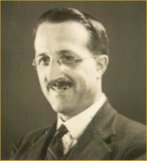
G.R.C. We have been engaged in the past two days in this book, with what is objective;
- the passages we are dealing with now relate to what is subjective.
- They refer to the way Israel will be finally recovered to God, and they were brought in in remnant days of old because the way of recovery at any time must be on the same moral principles.
- What is more important now is that they were also recorded to indicate to us the moral road of recovery to God’s thoughts.
- We have had his thoughts before us, but this is the moral road to recovery to them, all with a view to Jerusalem dwelling again
- “in her own place, in Jerusalem”, chapter 12: 6;
- “I will pour upon the house of David and upon the inhabitants of Jerusalem the spirit of grace and of supplications”, verse 10,
- shows how the Spirit enters into this matter. The translator has not put a capital ‘S’, but we know that it involves the grace and activity of the Holy Spirit, and the result is there is power to look upon Christ,
- “They shall look on me whom they pierced”.
- It seems to be an essential matter in the way of recovery to God’s thoughts, that we should thus look upon Christ.
- “And they shall mourn for him, as one mourneth for an only son, and shall be in bitterness for him, as one that is in bitterness for his firstborn”.
- I think, applied to Israel, it is the way they will come, in reality, to the truth of the passover, because the firstborn is mentioned here,
- “they shall be in bitterness for him as one that is in bitterness for his firstborn”.
- They will feel intensely what has happened to Christ.
- And then, following that, in chapter 13, the fountain is opened, the great thought of purification is the next thing
- Everything unclean is dealt with, especially what is religiously unclean, and natural ties are not allowed to hinder the cleansing.
- There is the taking home to our own souls of the meaning of the death of Christ upon Whom we have looked and it leads to this thorough acceptance of purification.
- Purification has been effected for us in the death of Christ, but it is to be practically worked out. And that sets us free to appreciate the service of Christ as in contrast to all religious pretension.
- While His being wounded in the house of His friends refers to the way Israel requited Him for His service, we would be led to take account of the way He has been wounded throughout the Christian dispensation.
- This, in its turn, leads to a deeper appreciation of His death. The wounding in the house of His friends was so vile an act that judgment alone could meet the position.
- And when judgment alone could meet the position, instead of the sword awaking against those who had wounded Him, it awoke against Him. He in grace took upon Himself the guilt of that most dreadful sin.
- These exercises lead on to the mount of Olives, that is, to spiritual conditions. The Lord will link up with the remnant, in a coming day, at the mount of Olives;
- and He links up with us as we recognise the presence and power of the Holy Spirit.
- The mount of Olives is only a sabbath day’s journey from Jerusalem.
- Applying it today, if we are in the gain of the Holy Spirit’s presence, the Lord will come to us, and then it is but a short and restful journey spiritually to the divine centre; and to the divine end, with which the book closes,
- “there shall be one Jehovah, and His name one”, 14: 9.
- The last two verses set out the holy conditions secured in Jerusalem.
H.W. Would there be any correspondence with what the Lord has reached in Philadelphia?
- He presents Himself to that assembly, with the object of securing at the end features corresponding with Himself.
G.R.C. Quite so. He presents Himself as the holy and the true.
J.S.E. Are you implying that the piercing of Christ must not be viewed merely in an objective way, but as resting upon us responsibly?
- We have had our part in the treachery of the profession, and we come into the truth by way of a thorough judgment of that.
G.R.C. I think it is evidently a subjective matter, because it does not come about until there is the pouring out of the spirit of grace and supplication.
- It is no mere objective view, although what is objective enters into it; it is looking upon Christ in a way which deeply affects the soul.
- It is a question of His deity here, which is prominent throughout the book.
- I am not ignoring His manhood, but it is Jehovah speaking, and He says
- “they shall look on me whom they pierced”,
- so that it implies a true appreciation of His Person. And then to think that He, such an One as He, was pierced!
G.M.S. John’s gospel alone records the piercing of Christ. That same gospel asserts His Deity.
G.R.C. Exactly. In that connection it might be well to note that throughout this prophecy the deity of Christ is carefully guarded and insisted on, beginning with
- “Thus saith Jehovah of hosts … behold, I will shake my hand upon them, and they shall become a spoil to those that serve them; and ye shall know that Jehovah of hosts hath sent me”
2: 8-9.
- That is Jehovah of hosts speaking, and yet He says Jehovah of hosts sent Him.
- It is an allusion to the fact that while Jehovah of hosts sent the Lord Jesus, the Lord Jesus Himself is Jehovah of hosts.
- There are other instances in the book, but now we have this remarkable one.
- “They shall look on me”, 12: 10 – and then,
- “Awake, O sword, against my shepherd, and against the man that is my fellow”, 13: 7.
- Earlier He has been called the Man whose name is the Branch, stressing His humanity, but now,
- “the man that is my fellow”
- stresses His deity. It is a great thing to have an appreciation of His Person, and John’s gospel bears upon our scripture because He says,
- “When ye shall have lifted up the Son of man, then ye shall know that I am”, John 8: 29.
H.C. Is John entering into His feelings when He refers to it in Revelation 1: 7, for after referring to their looking on Him whom they pierced, he says, “Yea, Amen”.
G.R.C. Quite so “Every eye shall see Him” but now,
- as having the spirit of grace and supplication, we look upon Him, not simply as on the cross – He is the One Who has been there –
- but as having an intelligent appreciation of His Person.
- That is what affects us. We think of who He is, and yet that He is the one we pierced.
- Both Jew and Gentile were involved in the piercing. The Jews were primarily responsible, but the Gentiles actually performed the act.
- We were all involved in it; and it is the aspect of the death of Christ, according to John’s gospel, in which all judgment centred.
A.H.G. Would this come into the expression of our feelings at the Supper?
G.R.C. I think it would produce in us the deep feelings that underlie response at the Supper. It is preparatory.
- We have been thinking of the inhabitants of Jerusalem, assembly persons, and they are mourning here; but they mourn every family apart, and their wives apart.
- All judgment centred in the lifting up of the Son of Man. Man’s judgment was seen there, man’s judgment of Christ; but then,
- in the very fact that man judged Him worthy of the cross and pierced Him, the world was judged.
- The world stood judged and condemned by such an act. And then, in over abounding grace,
- the occasion was taken advantage of by God to judge sin in its totality.
A.B. Would the reference to the spirit of grace and supplications relate to the inward working of the Spirit producing these fine feelings in regard of Christ.
G.R.C. It is the subjective side of the truth, and it shows there will be nothing truly subjective with us until we have learnt to look “on me whom they pierced”.
E.J.B. Is there some parallel in Thomas in John 20? He says “My Lord and my God” to the One that was pierced.
G.R.C. Thomas is typical there of Israel; but, nevertheless, J.N.D. said that we all ought to say, as Thomas did,
- While Thomas is typical of Israel, yet the scripture says “Thomas one of the twelve”. He does not cease to be one of the twelve whose names are on the foundations of the heavenly city.
E.J.B. “Blessed they who have not seen and have believed”
- would be a suggestion that we have all to come to it.
S.McC. Would the fact that Judah and David are made so much of here show that in all these purifying and cleansing processes the service of God is particularly in mind?
G.R.C. You are thinking of the meaning of the name Judah and the fact that David took the lead in the service.
S.McC. Just so. Judah was God’s sanctuary.
G.R.C. So that, in any true recovery, God becomes the centre of the heart, not our blessing.
- The mourning is for Him, the thoughts are all towards Him and towards God, how it affected Him, and how it affected God.
S.McC. Is it helpful to see that amid all the exposure linked with the public position and whatever may come in amongst those that are the subjects of recovering grace,
- there still is that which is especially marked out by God, as J.N.D. says of Judah “Guilty but beloved Judah”.
- I have in mind what we have in Philadelphia, that feature of things that seems to be so choice.
G.R.C. And does this not show that the element of leadership comes into this matter in Judah, verse 5,
- “The leaders of Judah shall say in their heart, The inhabitants of Jerusalem shall be my strength through Jehovah of hosts their God”.
- Judah considers for God and Judah set this matter on. And then in verse 7,
- “Jehovah shall save the tents of Judah first, that the glory of the house of David and the glory of the inhabitants of Jerusalem shall not be magnified over Judah”.
- God appreciates leadership on subjective lines.
S.McC. J.N.D. sets out the great thought of
- “like a torch of fire in a sheath” verse 6,
- the remarkable character of his service in ministry entering into the basis of the recovery, do you not think?
G.R.C. “In that day I will make the leaders of Judah like a hearth of fire among wood, and like a torch of fire in a sheath”.
- It is really God raising up, as you say, a vessel like J.N.D. He exposed everything that was not of God, and set it on fire, as it were. In his ministry it was burnt up and consumed.
- And this paved the way for the spirit of grace and supplication to be poured on the house of David, and on the inhabitants of Jerusalem. It paved the way for this subjective result in the saints.
S.McC. Just so. And for Jerusalem to dwell again in her own place.
Ques. Could you distinguish between the glory of the house of David, and that of the inhabitants of Jerusalem in this sense? Verse 7.
G.R.C. I can only say that there is the idea of graded glory, and here Judah is first.
- God appreciates a lead in the truth, especially a lead on subjective lines which affects the state of the saints and puts them right with Him.
J.A.C. How do you understand this mourning in the family setting, the wives and the families coming into the matter?
G.R.C. I think it would be the way the passover is taken up in a day of recovery.
- They “mourn for him, as one mourneth for an only son, and shall be in bitterness for him, as one is in bitterness for his firstborn”.
- Christ has become so precious to us that He has become the firstborn in our affections, and we are in bitterness for Him. The mourning is taken up familywise and yet everyone apart.
W.S.S. Would this mourning bring us into communion with God? It speaks of his firstborn, and only Son, as if it would bring us to the appreciation of what Christ is to God?
G.R.C. Exactly. We are thinking of what it cost God to see His only Son, His firstborn, treated in this way. It would lay the basis for our considering for God as to all His thoughts.
W.S.S. And really the great development of the truth through the scripture is that we are brought into line with God in regard to all His thoughts in relation to Christ.
J.A.C. Have we a similar line in Judah? He speaks to Joseph as to the feelings of Joseph’s father and when he concludes,
- “Joseph could not control himself before all them that stood by him”, Genesis 45: 1.
G.R.C. That is where Judah first took the lead. There is no proper leadership apart from that.
- It is a question of considering for God’s feelings.
These exercises lead to an appreciation of
- the “fountain opened to the house of David and to the inhabitants of Jerusalem for sin and for uncleanness”.
- A fountain is available for complete purification from every sin and uncleanness that has come into the christian profession. All can be dealt with.
- The way to deal with it is to get back to the truth that
- “ye have been washed”, 1 Corinthians 6: 11.
- That is, we get back to the truth that, in accepting Christ, and Christian baptism, we have put off the old man.
- Every form of uncleanness comes from the old man, whether religiously or otherwise, and this fountain means that we realise the truth as it is in Jesus;
- namely, our having put off the old man, and put on the new, which is created after God.
- It is not something we work up to, but we recognise the truth as it is before God, the truth as it is in Jesus.
- Then, having accepted the truth, we put it into practice and deal with every feature of sin and uncleanness which the allowance of the old man has brought in.
F.M. Is there a necessity for the fountain being used in the early part of the chapter, and then the fire is brought in chapter 13: 9 for refining?
G.R.C. Quite so. The fire is brought in for refining, so that the silver and the gold might come to light. That is God’s side of the matter.
- Our side is to accept the fountain that is opened, that is, the truth of the death of Christ from the standpoint of the water which flowed from His side according to John.
- “Not by water only” it says in 1 John 5, “but by water and blood”.
- The stress here is on the water, and the meaning of it is perhaps little apprehended by us.
- In God’s sight we are purified from the man of sin and shame.
- We have put off the old man and put on the new. And the thing is to answer to that truth in our practical walk.
F.M. Coming therefore to the fire, there is the preservation of what is for God, the silver and the gold.
G.R.C. I believe if we accept the water, God will bring in the fire to help in the matter of purification.
- The fire goes inward, it refines the motives and deals with things that we would not have discerned, so that there might be nothing left but pure silver and pure gold.
J.A.P. In chapter 3, certain persons help Joshua to remove the filthy garments, but in Colossians we are told “to put off” and “put on”.
- I would like to enquire when others serve us, and when we do things ourselves?
G.R.C. In chapter 3, it is a question of our being brought to apprehend our place of acceptance in Christ.
- But Colossians 3 and Ephesians 4 treat of the new man, and the exhortations are based upon our having put off the old man and put on the new.
- According to Ephesians 4: 20-24,
- “ye have not thus learnt the Christ, if ye have heard him and been instructed in him according as the truth is in Jesus; namely your having put off according to the former conversation the old man which corrupts itself according to the deceitful lusts; and being renewed in the spirit of your mind; and your having put on the new man, which according to God is created in truthful righteousness and holiness”.
- Now that is the truth as it is in Jesus. That is the truth as it is before God.
- The christian is regarded as having put off the old man, and having put on the new, and the water which flowed from the side of Christ is symbolic of that great purification.
- But we are to accept the truth, and then act according to it. And so in verse 25 it says,
- “Wherefore, having put off falsehood”.
- Now we come to the practical side in keeping with the truth stated above.
- “Having put off falsehood, speak truth everyone with his neighbour”;
- and that is the point in Zechariah 13: 3 where it is a question of the worst form of lying; false prophets speaking lies in the name of Jehovah.
- We are to put off falsehood, and especially that kind of falsehood which is the most abhorrent. We have had to deal with persons who speak things that are not the truth in the name of Jehovah.
- And it is part of this cleansing process to clear the land of this kind of thing. We have to deal with such persons even if they are natural relatives.
- “His father and mother that begat him shall thrust him through when he prophesieth”.
A.B. These references to the wives mourning apart from every family apart, would give ability to rise above natural feelings and natural considerations.
G.R.C. That is why I think that chapter 12 comes before chapter 13.
- Unless there has been the looking “on me whom they pierced”, and the mourning, the taking things home to ourselves before God from the standpoint of how it has all affected God,
- we shall not be ready to accept the truth of the fountain, the truth of having put off the old man and put on the new, nor to carry that out in practice.
- But if we are in the gain of chapter 12, we shall be ready for this.
J.S.E. Has the Lord been very patient in bringing the brethren to each of these matters one at a time?
- I was thinking of the way this fountain is presented, and then, what you have emphasised as to natural relations.
- It seems to be almost the last matter before we come to this great truth,
- “In that day shall there be one Jehovah and his name one”, chapter 14: 9.
A.E.M. Does the service of God suffer by reason of our keeping up links with people we have withdrawn from, or people in the world?
G.R.C. Very much so.
A.E.M. It makes it very important to understand what you are saying. I believe there is a tremendous need for this to be understood.
A.H.G. Does verse 5, bring in a contrast?
G.R.C. It does indeed. It is Christ’s own service. He did not profess to be a prophet at all.
- He said, “I am no prophet”.
- He would not take any religious place, and that is the only safe ground for anyone of us.
The Lord says in Spirit, “I am no prophet”, and it is the proper ground for each one of us to take up.
- We assume no religious place at all, We do not assume to be servants of the Lord as a class, or anything of that kind –
- “I am no prophet, I am a tiller of the ground; for man acquired me as bondman from my youth”.
- No one who approached the Lord, claiming His services, was ever refused.
- And so we are here just to be acquired; our services may be claimed by men, or by our brethren; we are here just to serve, but not as taking any religious place.
- But then, one serving in such a spirit does not appeal to the natural man.
- “One shall say unto him, What are those wounds in thy hands?”
- His service was not appreciated. It was like Paul with the Corinthians.
- Paul said they bore those who exalted themselves and beat them on the face, but when it was Paul, who was prepared to be the least, and prepared to spend and be spent, they did not want him.
- And so with the Lord,
- “What are those wounds in thy hands?”
- Think of the way Christendom has treated Him, the way He has been treated all through the dispensation – wounded, all along the line.
- And then to think that the One Who was wounded in the house of His friends, when judgment must fall upon such wickedness, took the whole guilt upon Himself.
- Instead of the sword awaking against those who had wounded Him, the sword awoke
- “against my shepherd, even against the Man that is my fellow”.
- How touching this is! And how it would prepare us to accept the refining process at the hand of God.
- We should welcome a process which would free us from anything which might lead us, in any way, to add to the wounds inflicted upon Him.
- The refining is in order that our motives might be kept pure, that there might be only silver and gold in evidence.
- And that would lead to the mount of Olives in verse 4 of the next chapter,
- “His feet shall stand in that day upon the mount of Olives”.
- He will resume relationships with the remnant at the mount of Olives.
- And He resumes relationships with us there in a spiritual sense.
- It is where these exercises have been passed through, so that the saints gather in spiritual elevation, relying only upon the Holy Spirit, that we prove His feet standing today.
- “Jesus came and stood in the midst”.
- It is in Mount of Olive conditions, in a spiritual sense.
- Only, whereas in the case of the remnant in the day to come, His standing on the mount of Olives makes a way of escape from their enemies,
- in our day the way of escape is upward.
- He comes and stands in the midst in view of our moving upward with Him.
Ques. Do you think that the suggestion here is that if we really understand the Lord’s Supper, and how we eat there, and the Spirit’s sphere, we shall experience the Lord’s presence in the midst?
G.R.C. I am sure that is right. And as we learn in Acts 1: 12 it is only a sabbath-day’s journey, a short restful journey, from the mount of Olives to Jerusalem.
- And that is what we prove as the Lord comes amongst us at the Supper; we find it is but a short, restful journey, as it were, to the very centre of the divine system.
- Thus we find ourselves at Jerusalem, whence the living waters are going out.
- We come to the city of the great king.
- “Jehovah shall be King over all the earth; in that day there shall be one Jehovah, and his name one”.
S.McC. Is it not remarkable that we should have a reference to Uzziah in this particular section.
- What came to light in that man was divine holy resentment as to the exercise of priestly functions without priestly state.
- And that would bear on what is in mind as to the subjective side particularly as regards the service of God.
G.R.C. It would touch on the idea of “See to the concision”. No intrusion of the flesh is to be allowed.
Ques. As to prophetic service he says, these are the wounds “with which I was wounded in the house of my friends”.
- Would it suggest that true prophetic service would be in suffering?
G.R.C. It would. Zechariah himself would no doubt share in that suffering.
- And it is in this atmosphere that we partake of the Supper, as conscious of how the Lord has suffered, not only on the actual night of His betrayal,
- but in the continuation of it right through the dispensation, how He has been betrayed and wounded all along the line.
- But through mercy we have been restored to mount of Olives conditions where He comes and stands in the midst.
- And we find, as the Lord comes and stands in the midst, we are very near to Jerusalem. In restfulness we can move on to the divine centre.
Ques. Had the Lord that in mind in John 4, in His remarks to the woman. After speaking about the well He speaks about worship, not geographically, but in spirit and in truth?
G.R.C. Exactly, as opposite to all human ideas of worship.
- And now we have this wonderful passage,
- “Jehovah shall be king over all the earth”, 14: 9.
- We, of course, embrace heaven and earth – the whole universe. And while this is millennial, we would look on to eternity.
- “Jehovah shall be king I over all the earth: in that day there shall be one Jehovah, and his name one”.
- And in verse 10 it says, “Jerusalem shall be lifted up, and shall dwell in her own place”, and in verse 11, “men shall dwell in it”.
- What a wonderful thing this is as applied to the New Jerusalem!
- To think that, in a remnant day, a day of recovery, we can touch God’s whole and eternal thoughts in the power of the Spirit.
- We arrive at Jerusalem lifted up and dwelling in her own place, that is, the assembly according to eternal purpose, and men dwelling in it.
- And there is the worship of God as the King. There is One Jehovah, and His name one.
- We have come to know that blessed God as declared, in the name of the Father and of the Son and of the Holy Spirit.
- The love and grace of the Father, the activities of the Son in bringing God’s purposes to pass, the grace and workings of the Holy Spirit subjectively –
- all express, and bring home to us, the great truth that God is love. We know God as thus manifested.
- We have been brought to know God Himself and to worship Him according to the truth that He is One.
- The honour and glory due to God as such, are due equally to the Father, and the Son and the Holy Spirit. God is One.
W.D. Is what we have been saying as to the revelation of God, part of the light that has come to us at eventide according to verse 7,
- “At eventide it shall be light”?
G.R.C. I think so. What light has come at the close of the dispensation!
- “At eventide it shall be light”.
- Is that right Mr. M.?
A.E.M. I am enjoying it very much.
A.P.C.L. And we have that before us all the time. As flowing out of spiritual conditions of the mount of Olives this truth as to God would be with us all through the week.
G.R.C. It should govern us right through the week.
- We should have in view, in all our activities, the time of privilege, when we are privileged to reach finality in the power of the Spirit, as suggested in the feast of tabernacles.
- They come up to Jerusalem “from year to year to worship the King, Jehovah of hosts, and to celebrate the feast of tabernacles”, 14: 16.
A.P.C.L. So that at the end of verse 5 it is
- “all the holy ones with thee”.
J.McK. Would the living waters going out from Jerusalem imply some power in testimony?
G.R.C. It is what we are looking for in the glad tidings this evening.
J.McK. I wondered whether there is not a kind of correspondence, the fountain in all its abundance and energy, known, experimentally amongst the saints, answered by the power of living water flowing out.
G.R.C. So the whole matter is characterised by the Spirit. There is the mount of Olives and then the living waters going out.
- And now just a word on the last two verses.
- “In that day shall there be upon the bells of the horses, HOLINESS UNTO JEHOVAH”.
- We have thought of the horses, and the way God uses them, as indicated earlier in the book;
- but this looks on to the future, when all government will be manifestly on the principle, of holiness to Jehovah.
- It will be upon the bells of the horses. What a day to look on to!
J.S.E. The Priest will be on His throne then.
G.R.C. Quite so. But then, we would like it to be true now, so far as we are concerned. The horses can be applied to the way we order or govern our goings.
- Whether in home, or business, whatever our activities are,
- should be on the bells of the horses. There should be a manifest testimony to holiness.
- Similarly, in seeking to carry out God’s direct government in the assembly, it should be apparent to everybody what that is being done is holiness unto Jehovah.
W.S.S. Would the pots and bowls refer to the saints? They also are to be holiness to Jehovah.
G.R.C. Exactly. There are the pots in Jehovah’s house like the bowls before the altar;
- but then every pot in Jerusalem and Judah is to be on the level of the holiness of the sanctuary.
- Our homes and businesses are to be on this level.
- “Every pot in Jerusalem and in Judah shall be holiness unto Jehovah of hosts; and all they that sacrifice shall come and take of them, and seethe therein. And in that day there shall be no more a Canaanite in the house of Jehovah of hosts”.
- We should see to it that there is no more a Canaanite, the whole idea of commercialism, all idea of personal gain, as connected with divine things, should be gone from us.
H.W. Mr. Taylor once made the remark that Satan is in the great commercial system; he is lodged there.
G.R.C. He is called the King of Tyre – Ezekiel 28: 12.
Page Top Reading Top
THE WORK OF THE LORD
AND THE SERVICE OF GOD |
|---|
Address by G. R. Cowell at Edinburgh, June 1956
Haggai 2: 1-9, 20-23; 1 Corinthians 3: 9-11; 15: 58;
Hebrews 12: 26-29; Malachi 1: 11-14; 2: 1
Memorials 12: 108-21
|
|---|
I wish to say a word on work and service; that is to say, the work of the Lord and the priestly service of God.
- We are, each and all, called upon, and privileged to have part in both.
- As to work Paul says to the Corinthians
- “So then, my beloved brethren”;
- he does not leave anyone out. The whole company at Corinth, men and women, old and young are included. He says
- “my beloved brethren, be ye firm, immovable, abounding always in the work of the Lord, knowing that your toil is not in vain in the Lord”.
- That word should come home to everyone of us. Men and women, old and young, gathered here today, how do you stand in regard to the work of the Lord?
- Are you firm and immovable in it? Are you abounding in it? Is it the chief work of your life? If not, you are not alongside Paul.
- I would like to be truly amongst Paul’s beloved brethren.
- What a worker he was! How he abounded in the work of the Lord; the great example indeed for us all!
- And then, as to the service of God, the word in Malachi is,
- “ye priests, this commandment is for you”.
- Everyone of us who has received the Holy Spirit is a priest. It makes no difference whether we are men or women, old or young.
- God is giving the Spirit to young people, boys and girls, and they are thus constituted priests, priests of God and of Christ.
- What could be a greater concern to anyone who loves God than the service of praise and worship to Him?
- You have received the Spirit, you are a priest. How do you stand as regards the service of God? Are you functioning in it?
- Mary and Elizabeth functioned in it in their own homes. What a testimony praising women are – silent in the assembly as to thanksgiving,
- but vocal in the hymns and in the amens, and able to take up the service of song in their homes.
- So that we should all be in this matter, men and women, young and old.
- Ye priests, I address all here tonight, this commandment is for you, as to being vitally in the service of God.
I go back now to the question of work. It may be some of us are not very fond of work – let us beware of being slack in the work of the Lord.
- This is the time for work. It is the time for toil.
- Toil means hard work. How little we know of it compared with Paul and others, through whose labours we owe so much.
- If Paul had not toiled as he did, where should we be today? How much we owe to him!
- Above all, how much we owe to Christ, and the unspeakable toil that He undertook!
- And so it is a question of being prepared for work, as Paul said,
- What was he toiling about? Presenting every man perfect in Christ. That is the work of the Lord.
- You say, What does that mean? It means securing people through the gospel, and then seeing that they are fitted into their place in the assembly.
- No one is perfect in Christ who is a free-lance and on independent lines.
- Paul is speaking of himself as minister of the assembly.
- He filled up that which was behind of the sufferings of Christ for his body’s sake, which is the assembly of which he became minister. And he says,
- “Whom we announce”, that is Christ, “admonishing every man, and teaching every man, in all wisdom, to the end that we may present every man perfect in Christ”.
- Paul did not cease his work when persons came to the Lord and knew the Lord Jesus as their Saviour; he went on labouring, toiling, to present every man perfect in Christ.
- “We, being many, are one body in Christ”.
- If a man does not recognise that, how can he be perfect in Christ?
- We are “one body in Christ, and each one members of the other”.
- Paul’s example would surely stimulate us all to work with one another. Mr. Taylor said that we have to work with one another.
- We ourselves are the material for the house of God.
- The truth of the one body in Christ underlies the truth of the house of God and the material we have to work with is one another.
- Much of the work today is on mutual lines.
- Thank God He has given us some material. We would like to have more, but He has given us some. Let us get to work with one another, as it says,
- “in all wisdom teaching and admonishing one another”.
- Paul speaks of teaching every man and admonishing every man in all wisdom. He was specially gifted to do it. But we can do it for one another.
- We can teach and admonish one another in all wisdom, helping one another to find our place in this corporate vessel and to fill out our function in it.
- This is a great work; it is the greatest constructive work that has ever proceeded on this earth.
- The work of building the tabernacle and of building the house that Solomon erected was great in its way, but those houses were only figures of the true.
- Now the true house is here and the saints are the material. And it is a question of getting to work,
- so that the features of the true house might come into expression for the pleasure and glory of God at the present time.
That was the position typically in Haggai. A remnant had returned from captivity in Babylon and had begun to build,
- but the enemies had got to work, and the king had issued an order that the work was to stop.
- Historically it would appear that the king’s order was the reason the work stopped.
- But the prophet tells us the real reason.
- The work stopped because the people became half-hearted in it, and a half-hearted worker is of no use to God. They began to consider their own things.
- It is remarkable that in Philippians, the most exalted epistle as to Christian conduct, where Paul speaks much of the work and those engaged in it, he says
- “all seek their own things, not the things of Jesus Christ”.
- What a statement to make! And that was the state of the returned captives within a few years of their return.
- Let me ask the brethren here, and my own heart, Have we got into that state?
- It is a terrible state for returned captives to get into – brands plucked from the burning, brought back from captivity in the pure mercy of God and recovered to His own thoughts.
- How base to use their release from captivity just to devote themselves to their own matters!
- There is a great system around us, which claims catholicity, and which exacts so much from its devotees that nations under its sway become poor.
- God has, in mercy, released us from that fearful domination.
- Men, too, are led captive by their lusts. How much they spend on lusts and pleasures from which we have been delivered.
- From all these captivities we have been set free.
- What then are we doing with our time and our money? – with that which would have been spent on wasteful lusts if we had not been set free?
- Are we spending it just for our own gratification on earthly things?
- You say, I am not spending it on anything that is wrong.
- No, perhaps not wrong in itself, but utterly wrong if what you are spending it on has become an object to your heart and has displaced God and His claims.
- Paul speaks in Philippians of those who were enemies of the cross of Christ, who minded earthly things.
- Delivered from worldly things, they gave themselves up to earthly things;
- and what is so astonishing is that these returned captives who should have had such a sense of mercy in their souls, with all the love for God which that engenders, should so quickly have slipped into occupation with earthly things.
- The king’s decree to stop the building would never have stopped them if God had been supreme in their hearts. It was just a test of their state.
- And when the prophets aroused them, they did not wait for another decree from the king but began to build before the decree came. It was all a question of state.
- The prophet says in chapter 1,
- “Is it time for you that ye should dwell in your wainscoted houses, while this house lieth waste?”.
- Think of returned captives living in wainscoted houses, adding luxury to their dwellings, as it were, while God’s house was lying waste.
I want to raise the point with us all as to whether God is our first love.
- I would challenge my own heart as to that. Is God my first and supreme love, my all-commanding love?
“Thou shalt love the Lord thy God with all thy heart, and with all thy soul, and with all thine understanding, and with all thy strength”, Mark 12: 13.
- You say, ‘If I give God that place in my life, how will it affect my other relationships?’ They will not suffer.
- Give God His place, and every other relationship will fall into its right place. The perfect One said in spirit
- “I love my master, my wife and my children”.
- It could not be put in any other order. Did the wife and children suffer because the Master came first?
- Not at all! Who has been by Christ loved like the wife and children?
- No the challenge is, dear brethren, as to whether God has the first place with us. And as returned captives, surely, in a special way, that should be His place in our affections.
- If He has the first place, no fear of man will stop us going forward.
- And I speak of this feelingly, as being a fearful person myself, that no fear of man will hinder us going forward in the work of the Lord if God has His right place in our affections.
- We shall fear God and not man. And that is the first thing these people are brought to. It says,
- “And the people feared before Jehovah”, 1: 12.
- The first thing was they feared before Jehovah. They no longer feared the king and his edict, they feared before Jehovah – reverential fear.
- And immediately Jehovah spoke to them again and said
- “I am with you saith Jehovah”.
- How gracious God is. The moment we give Him His place in reverential fear He says, “I am with you”.
- Before they began to build He said, “I am with you”. And then the word comes,
- “Speak now to Zerubbabel the son of Shealtiel, governor of Judah … But now be strong, Zerubbabel, saith Jehovah; and be strong, Joshua son of Jehozadak, the priest; and be strong, all ye people of the land, saith Jehovah, and work: for I am with you, saith Jehovah of hosts”, verse 4.
- That is the thing I want to stress – work. Be strong saith Jehovah and work.
- We may not like the word very much, but work – that is what is needed. Not the taking up of the Lord’s things as a hobby, but as a work.
- You say, Where am I to begin? Begin with your local brethren, work with them.
- Visit the sick, visit those who are waning in their affections, go after them.
- Keep company with those who are going on best and help them forward.
- Keep the pattern before you, the plan of the assembly. Paul was the wise architect. He had the pattern before him.
- Keep in mind what the objective is, that the saints should be set together as one body in Christ, all functioning in their place,
- all available according to Corinthians, as vessels of the Spirit for manifestations of the Spirit;
- all available according to Colossians as holding fast the Head;
- all available according to Ephesians to fill their place in the service and praise of God in the assembly.
Keep that in your mind and work to that end. Work in your local company, to achieve these features there. There is plenty of work to do.
- I would encourage the young people to work. While you have your youth and energy, work.
- The Lord has plenty for you to do. Find out what there is to do and do it.
- Visiting is a thing which can be taken up in youthful energy, and those who do it will receive great profit in their souls.
- They will minister comfort to the aged and the sick, but the aged ones will minister even more to them.
There is work to be done. Let us be always abounding in the work of the Lord knowing that our labour is not in vain in the Lord.
- Everything else is in vain.
- God says, “Yet once, it is a little while, and I will shake the heavens, and the earth, and the sea, and the dry land”.
- You may be labouring for other things, but be assured that everything except God’s building is coming down.
- You may be aiming at becoming a captain of industry, a prince of commerce or something of that kind. Let me turn your attention in other directions.
- You may build up a big business here but it will come down. God is going to shake everything.
- I am referring to the danger of making these things an objective. That is where the damage is done, in minding earthy things, making them your objective.
- You may be house-proud, business-proud, clothes-proud, and so on. The sin comes in in making these things an object.
- God may be pleased to give you a house. Why does He give it to you? For the testimony. Houses are needed in the testimony.
- In the early days the assembly often met in houses; and how much goes on in houses today!
- God needs houses and He will provide us with the houses He needs if we are simple with Him. But do not make your house your object.
- Let God be your object and His house.
- The moment I make earthly things an object, I am on the path of sin. You say, Why do you speak of sin; the things are not wrong.
- Well, just look at the later part of Haggai’s prophecy as to what is clean and unclean. You say, Surely it is not unclean to go in for earthly things?
- It is unclean, dear brethren, to make them an object, to mind them, in the sense that Paul means when he says,
- “Who mind earthly things”.
- If you read Leviticus 11 you will find that crawling things are the most unclean of creatures; things that crawl on the earth are an
abomination to God.
- Abomination indeed when the church was in pristine beauty, but how much more among returned captives.
- To think that such should use the liberty of their release from Babylon to give themselves up to earthly things. What uncleanness!
- And the serious thing is, if I am unclean in this way, I contaminate others. That is the meaning of the latter part of this chapter.
- If an unclean person touches another they become unclean. The thing spreads.
- Dear brethren, there is a danger of this kind of thing spreading amongst us, the minding of earthly things.
- God may entrust you with things; He entrusts some men with riches. Joseph of Arimethea was a rich man, a rich man was needed at that time;
- in the course of the testimony rich men are needed, and, if God entrusts a man with riches, all well and good.
- But let him not make his riches an object. Let God be his object always, and let him understand that what he has been entrusted with in material means is for the testimony.
- If God gives me a house it is in view of the testimony. If God gives me means it is in view of the testimony. It is to be used in the work of the Lord, not to hinder me in the work of the Lord, not to divert me.
- So Haggai’s is a wholesome word to us, as to what we, as returned captives, are occupied with, as to whether we are clean in this respect.
- You say, I have come out of Babylon, I have left all the religious systems, I have left the trade unions, I am clean.
- But if earthly things are your object you are not clean. And you are carrying about with you a contamination which is most insidious, and which can corrupt the brethren.
- We need persons who are heavenly minded, who are prepared to give themselves up to this great matter of the rebuilding of the house in order that there should be, in every locality, the true features of the assembly in expression.
- Such were badly needed at Corinth. Paul has laid the foundation, but they were each to see how they built upon it and were exhorted to be
- “firm, immovable, abounding always in the work of the Lord”,
- and to “be vigilant; stand fast in the faith; quit ye like men; be strong”.
- So it says here in Haggai,
- “Be strong and work”, and then, “the word that I covenanted with you when ye came out of Egypt, and my Spirit, remain among you: fear ye not”.
- If we know what the divine plan is, and if our hearts are right with God, giving Him the all-commanding place in our affections,
- and if we are set for the furtherance of what is pleasurable to Him in His house, we have nothing to fear.
- And I would say as to that, that if we are convinced as to what God is doing and what will stand, it will save us from being apologetic about our Christianity.
- We have nothing to apologise for. We stand before the Lord of all the earth. We are concerned about His rights. We are working on a building which will stand when everything that man has built has come down.
- We have nothing to be ashamed of. We can afford to be bold in the gospel, bold in speaking of Christ.
- “Proclaim the word; be urgent in season and out of season”.
- Let us give up an apologetic attitude. Let us speak to people boldly of Christ as those who know where they stand and what they are doing,
- and that what they are engaged in is going to abide when everything else is shaken and comes down.
- Let us tell people that they should be in this matter, too. A bold front is needed, dear brethren, because more material is needed for the house.
- An apologetic attitude will not help to deliver our brethren from the systems around. A bold attitude will help them.
- I do not mean any fleshly boldness or aggressiveness, but spiritual boldness.
- “Quit yourselves like men; be strong. Let all things ye do be done in love”.
The prophet closes with another word as to the shaking. The shaking of chapter 2: 6 is in view of encouraging us to go on with the building, and I believe God is shaking at the present time as it says there,
- “I will shake all nations”.
- Both the Eastern and Western camps of the world are feeling weak, they are shaking at the present time, and that is all to the good.
- There is more hope of reaching men through the gospel, and of delivering our brethren from the systems.
- When the world appears strong, we are all liable to be caught up in it, and to devote ourselves to our own wainscoted houses, because things down here appear more secure; but
- when God shakes the nations it is for our good, to release us, and to release others, for His house.
- That is the view of the first shaking here, and the result of it is that the latter glory is greater than the former.
- Outwardly the recovery will never be like Pentecost, or Ephesus, when the saints were publicly one. And yet there is a glory about it which is all its own.
- Features appear which are not mentioned originally and which could only come to light in a day of recovery. So that we are moving on as it were, to the latter glory.
- Publicly the latter glory will be when the heavenly city comes down, and that will indeed be greater than the former; greater than anything.
- But the light of that is shining upon us, so that there might be a moral glory about the present moment that is unsurpassed.
- But then the shaking referred to in chapter 2: 21 is final and will result in the overthrow of all the kingdoms so that God might put the impress of Christ upon everything.
- Zerubbabel is a type of Christ as God’s signet, and God is going to put the impress of Christ on every throne, and lordship and principality and authority.
- But that is to be known now in the assembly, Christ in everything, and in all.
- That is the objective in this prophecy – that what will soon be universally true, the impress of Christ on everything, might be true among the saints at the present time; Christ, and Christ alone, in evidence.
Now I pass on to the second part of my subject, the priestly service of God. In that connection
- Paul quotes Haggai in Hebrews 12: 26. He brings in the shaking to show how it is intended to help us relative to the priestly service of God.
- It is to help us in the work of the Lord, but it is also to help and stimulate us in the priestly service of God. And how does it stimulate us in priestly service?
- Because the more things shake here, the more joyful and thankful to God we are that we have received a kingdom that cannot be shaken.
- That is the point in Hebrews.
- “Let us, receiving a kingdom not to be shaken, have grace, by which let us serve God acceptably”.
- What is already shaking is soon going in order that what is not shaken may remain.
- The only things that are going to remain are the things we are privileged to be engaged in.
- All that the great Gentile monarchies have built up, their institutions, their culture, and so on, all is shaking now and all is going to be removed.
- There will not be a trace left of what Caesar did, but what Paul did will shine in glory for ever.
- And we, “receiving a kingdom not to be shaken”!
- What a joyful people we should be in the sense of this! And what is the kingdom we have received?
- We “have come to mount Zion;
- and to the city of the living God, heavenly Jerusalem;
- and to myriads of angels, the universal gathering;
- and to the assembly of the first-born who are registered in heaven;
- and to God, judge of all;
- and to the spirits of just men made perfect;
- and to Jesus, mediator of a new covenant;
- and to the blood of sprinkling, speaking better than Abel”.
- That is the kingdom not to be shaken and we have come to these things.
- But you say, ‘How have we come to them? We are just a feeble company building in our localities’.
- Yes, but the more we build, the more faithful we are on Corinthian lines in building something here, in a concrete way, in our localities,
- the more free the Spirit will be to lead us into the truth of Ephesians, where, in the Spirit’s power, we apprehend what is ever present to God.
- What is before His mind and heart in purpose, and is ever present to Him, becomes present to us.
- But if we are not prepared to build on Corinthian lines and secure conditions for God locally, the Spirit will not be free to transport us into the realm of purpose.
- If we are true builders we shall, by the Spirit, be continually and increasingly transported into that kingdom which cannot be shaken, especially at the time of privilege,
- and we shall realise, as a great practical reality, that we have come to these things.
- What is present to God, to His mind and affections, becomes present to us.
- Think of what we have come to, what we shall have all through eternity, and, in the light of it all, let us
- “have grace by which let us serve God acceptably”
- – that word is priestly service – let us have grace to go on with the priestly service.
- We are going on with the work of the Lord, but, concurrently with it, we are going on with the priestly service of God.
- “Let us … have grace, by which let us serve God acceptably with reverence and fear. For also our God is a consuming fire”.
I read in Malachi because he was the last prophet and his word is for the priests relative to the service of God.
- The house had been finished. The word to Malachi does not relate to the work of the Lord, but to the service of God.
- “And now, ye priests, this commandment is for you”.
- I suppose most of us here are priests – this commandment is for us.
- “If ye do not lay it to heart, to give glory unto my name, saith Jehovah of hosts, I will even send the curse among you”, chapter 2: 2.
- God is not sending a curse today, but we shall suffer leanness of soul if we do not take it to heart to give glory to His name.
- What a joy it is to give glory to God’s name! Surely there is no higher level of priestly service than to give glory to God’s name. Let us serve God acceptably, with reverence and fear.
- We know His name, we know the name of the Father, and of the Son, and of the Holy Spirit;
- and we bring into that glorious name the glories attaching to every previous name by which God has disclosed Himself.
- What a wealth of disclosure, culminating in the name of the Father, and of the Son, and of the Holy Spirit!
- Surely our hearts are roused as we think of the glory of that Name, and of our privilege to give glory to it. So the word here is
- “from the rising of the sun even unto the setting;”
- it refers to local companies in every place.
- It is remarkable that the Old Testament could look forward to the present day – “in every place” – not now Jerusalem as an earthly centre.
- “From the rising of the sun even unto its setting my name shall be great among the nations”.
- That refers to the name to which the nations were to be baptised.
- “My name shall be great among the nations; and in every place incense shall be offered unto my name, and a pure oblation”.
- The altar of incense and the altar of burnt-offering are both functioning.
- “For my name shall be great among the nations saith Jehovah of hosts”.
Well now, how can we serve God acceptably?
- It tells us here how we can serve Him unacceptably.
- “Ye bring that which was torn, and the lame, and the sick; thus ye bring the oblation: should I accept this of your hand?”
- This raises the same question that I have already raised as to the work of the Lord. Has God the first and supreme place? He is prepared to accept no other.
- How could God accept anything less than the first place with anyone?
- You bring something torn and lame.
- “Cursed be the deceiver”, it says “who hath in his flock a male, and voweth and sacrifieth unto the Lord a corrupt thing”.
- You have reserved the male for yourself. The best of your energies have been reserved for your own things instead of being devoted to God.
- God feels it. He will not have it. It is not acceptable.
- “Let us … have grace, by which let us serve God acceptably”.
- How can we serve God acceptably? By bringing all we have without reserve to Him. That is the way to serve God acceptably.
- “For I am a great King, saith Jehovah of hosts, and my name is terrible among the nations”.
- He is a great King and He cannot accept anything but the best. The whole of our energies, the whole of our lives, must be dedicated to Him.
- What we do in our ordinary work and ways must all be subsidary to His work and His service; held as incidental to it, to support it.
May the Lord help us in this, that we may have grace whereby we may serve God acceptably.
- Let us have no doubt as to what acceptable service is. We sing sometimes
“Entire and full devotion
Alone can worthy be”.
- Nothing less can meet the position, dear brethren. May the Lord help us for His Name’s sake!
Page Top Address Top
| KEY TO INITIALS |
|---|
The Grace and Government of God in Days of Recovery
Memorials 12
Meetings with G. R. Cowell at Edinburgh, June 15-17, 1956
Names are from various sources and believed to be accurate.
? = uncertainty; initial ? = as to name; final ? = as to locality.
There are a number of initials for which names are not known. |
|---|
? David Allan, Donaghadee
? Alex Bennett, London
? E. J. Boyt, Manchester
? Hubert Calvey, Southport
J. A. Carruth, Waterfoot
Gerald R. Cowell, Hornchurch
Alex H. Dickson, Edinburgh
Wm. Dickson, Edinburgh
J. S. Ephgrave, Waltham Cross
Alex N. Gray, Linlithgow
A. Horace Griffiths, Southport
? Josiah Harper, Colwyn Bay
Wm. Henderson, Glasgow
|
A. P. Cecil Lawrence, Stornoway
? John Mason, Belfast
Stanley McCallum, Detroit
James McKay, Leeds
Finlay Murchie, Edinburgh
A. E. Myles, ?
Alan C. S. Price, Barnet
? Alex Robertson, Glasgow
Wm. W. Smart, Glasgow
W. S. Spence, Bournemouth
George M. Strang, Edinburgh
Alex. Terries, Edinburgh
Thomas Terries, Edinburgh
|
Page Top Key to Initials Top