Menu•SiteMap |
Ministry
The Grace and Government
of God in Days of Recovery
Ministry by G. R. Cowell
– Memorials: Volume 12
| INTRODUCTION |
|---|
THE GRACE AND GOVERNMENT
OF GOD IN DAYS OF RECOVERY
Memorials 12
Meetings with G. R. Cowell at Edinburgh, June 15-17, 1956
|
|---|
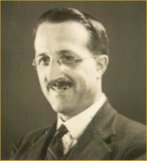
These 1956 notes are of special note because – as far as is known – they are the only record of readings with G.R.C. at which two other respected leading servants – A. E. Myles and Stanley McCallum – were present.
- Of course, Mr. Cowell was at both the 1957 and 1958 London meetings with Mr. McCallum, and gave an address at each. See Ministry: G. R. Cowell Early 1 and Early 2.
- It is instructive to note the brotherly way in which they all worked together in opening up the Scriptures.
The early years of the recovery of the truth – from the time of the Powerscourt conferences – were marked by extended inquiry into the prophetic scriptures.
- Subsequently the Spirit drew attention to other features of the truth so that by the time of these meetings the full scope of the truth had been opened up.
- Mr. Cowell was well aware of, and drew attention to, the primary interpretation of Zechariah to Israel but –
- in keeping with our Lord's present occupation with His assembly
- – made an impressive and needed current application to our own day.
G.A.R.
Page Top
| READING 1 |
|---|
The Grace and Government of God in Days of Recovery
Zechariah 1:7-21; 2: 1-13
Memorials 12: 1-21
|
|---|
G.R.C. It is in mind in reading this book, to consider the grace and the government of God in days of recovery,
- and to see how God coordinates His operations of grace and government in order to reach the divine end,
- the divine end being indicated in the last chapter of the book where it says,
- “Jehovah shall be king over all the earth: in that day shall there be one Jehovah, and his name one”, chapter 14: 9.
- The Old Testament prophets had as their objective the world to come, and the earth, but these scriptures are written for our instruction, and as Christians
- we have in view heaven and earth, and the day of eternity, when God will be all in all.
- God is operating both in grace and in government to bring those who have returned from captivity into the fulness of His thoughts,
- so that there might even now be a response which will give Him the foretaste of what He will have in that eternal day.
In the first vision the matter of government is introduced first, so that we might be settled in our minds about that, in a general way;
- and then the great objective is brought forward, that is Jerusalem.
- While the immediate matter in view was the building of the house, God brings forward His great objective, Jerusalem,
- which is typical of God’s complete thought as to the assembly in Christ Jesus, including, of course, His abode, but embracing everything proper to the city of the great King;
- for it is in and through this city that He will be known as the great King both in the world to come and, I suppose, in the eternal day.
- He has nothing less before Him than the full thought of the assembly, and He would help us, as returned captives, to embrace His full thought.
- Then, as the chapter proceeds, there is another view of the gentile powers, the four horns that scatter; but we are shown that they are defeated by the four craftsmen.
- In chapter 2 the man goes forth to measure Jerusalem and the prophet is told that it is to be inhabited and that God will dwell there.
- So it is a comprehensive vision to prepare us for what follows.
A.E.M. “I am jealous for Jerusalem and for Zion with a great jealousy”, Zechariah 1: 14.
- It is an unfolding of the heart of God; it is a great comfort to us.
G.R.C. That is very precious. Jealousy would flow from His heart. His love lies behind it.
G.M.S. Is government brought forward first because of the poor state of the people at this time?
G.R.C. They had been deterred from building through opposition on the part of the authorities, brought about by their enemies,
- but, as a result of the prophecies of Haggai and Zechariah, they did not wait for a further message from the king;
- they started to build, and then God moved the authorities in their favour.
- This prophecy was in the four and twentieth day of the eleventh month.
- They had already been stirred by the prophetic word, and had already begun to build
- and now God assures them that government is under control, so that they should go forward without fear.
W.W.S. Would this word in verse 8
- “I saw by night, and behold, a man riding upon a red horse, and he stood among the myrtle trees that were in the low valley”
- in any way link up with the position outlined for us at the end of Matthew, the Galilean position, but where the Lord says all power has been given me in heaven and upon earth?
G.R.C. That is exactly what I think. It is by night.
- When the day dawns direct government will be in the hands of Christ,
- but during the night, while God is not governing directly, He nevertheless maintains complete control by indirect providential operations which faith can take account of.
- So he says, “I saw by night, and behold”.
- It is what faith beholds. We are living in the night, in this sense, the day has not dawned, but we behold, we are given light as to a man riding upon a red horse, and he stood among the myrtle trees.
- As you say, it is a type of Christ as the One who says,
- “Behold, I am with you all the days, until the completion of the age”, Matthew 28: 20.
- He stood among the myrtle trees. You were thinking that the myrtle trees in the low valley would represent the saints?
W.W.S. I thought it stressed the lowly position marking the saints as set out in Galilee.
G.R.C. I think so. And what a lowly position ours is, as having returned from captivity.
- Outwardly the Christian profession is in a state of apostasy, but there is everything needed to maintain those who view things aright and are preserved in lowliness. The Lord is with such,
- “Behold, I am with you all the days”;
- and “where two or three are gathered together unto my name, there am I in the midst of them”, Matthew 18: 20.
- How lowly the position of the two or three!
S.McC. Does it help to see that government runs through all dispensations in the ways of God and is always against evil, but for the promotion of what is good?
G.R.C. That should ever be in our minds as the great principle of God’s government.
A.P.C.L. So that the first reference to God’s government in this chapter is in relation to the people, is it not, as He reviews their history in the previous section?
- What he had said had come to pass.
- Do you think that we have to view the powers that be as definitely set in relation to the carrying through of what God has in mind, even governmentally, for His saints?
G.R.C. So that He uses them to carry out governmental discipline upon His saints. That is a solemn matter is it not?
A.E.M. Is it striking that where faith is not in exercise the government is not favourable to the saints?
G.R.C. That is good. But as soon as faith was exercised by the returned captives, the government became favourable.
- That would encourage us to go forward in faith, having God’s objective as our objective.
A.E.M. The basis of God’s operations must be faith in us.
G.R.C. Faith would lay hold of what God is doing now, would it not? So that we should be fellow-workmen, moving together in relation to God’s chief interest.
- And then God will overrule in His providential government to help forward the work.
- But if we depart from that, and become occupied with our own houses, as in Haggai 1: 4, and depart from God’s prime interest, God will use the authorities in discipline.
- Here in the vision the power that had been used primarily in discipline is not seen; the discipline had done its work, in one sense.
- There were the three powers left, Persia, Greece and Rome. But they were all behind the man riding upon a red horse.
- That is, they could make no movement without the man who was in front of them. Angels and principalities and powers are subject to Christ.
S.McC. And is it not interesting that all the answers to enquiries at this point come from the man that stood among the myrtle trees?
- “My lord, what are these? then the angel that talked with me said unto me, I will show thee what these are. And the man that stood among the myrtle trees answered and said”, verse 9.
- He gives the answer.
- I thought perhaps there was an allusion to the mind of God coming out as the saints are found in the position represented by the myrtle trees.
G.R.C. Very good. Did not Mr. Taylor help us much in our view of the authorities, that they are really a department of God.
- “The man that stood among the myrtle trees answered and said, These are they whom Jehovah hath sent to walk to and fro through the earth”.
- That is faith’s view of them, a remarkable thing.
W.H. Would the myrtle trees have reference to the saints as recovered to the truth, something evergreen and precious before God?
G.R.C. I think so, as in a suitable state of soul, in the low valley, and as thus having the Lord among them.
- Matthew visualises a position such as this right until the end of the age. Where two or three are gathered together to His name there He is in the midst of them.
- But then the One who is in the midst of them is the One to whom all power has been committed in heaven and upon earth. All powers are under His control, and He gives us light as to them.
- These are they whom Jehovah has sent to walk to and fro through the earth. It would give us respect for the powers without fearing them.
E.B.L. So the two or three have all power behind them?
G.R.C. Quite so. The One who is in their midst is the One to whom all authority, or power, in heaven and earth is given.
F.M. Referring to Matthew 16, the Lord speaks of building His assembly and says, the gates of hades shall not prevail against it.
- Is that in view of all the powers of evil that were set against the Lord’s operations.
- Here it is what the saints are actively engaged in. Powers may oppose, but, in the government of God, things are held in our favour.
G.R.C. The gates of hades are always active to get control of the authorities.
- They are active in other ways to make inroads among the saints themselves;
- but we see, in the course of history, that the gates of hades ever scheme to get the authorities under their control, and thus to use them as persecuting powers against the saints.
- But, as you say, the gates of hades shall not prevail against the assembly.
- If our state is right and the Lord is in our midst, we have the One in our midst who is really in control. Faith sees Him to be in control of all these things.
J.McK. Do you view the word “the earth sitteth still and is at rest” as all that is providentially favourable?
G.R.C. It says, “they answered the angel of Jehovah that stood among the myrtle trees, and said”,
- showing that they were responsible to the angel of Jehovah that stood among the myrtle trees.
- It shows what a place Christ has in this sphere. And they say,
- “We have walked to and fro through the earth, and behold, all the earth sitteth still and is at rest”.
- And then that leads to intercession.
- I suppose this is a backward view, it would refer to the time before the captives had been set free.
- Babylon had carried them away captive, and had oppressed them; and instead of the authorities, who were responsible to God, whether they knew it or not, being concerned about Jerusalem, the whole earth was sitting still and was at rest.
- And so the angel of Jehovah intercedes and says,
- “Jehovah of hosts, How long wilt thou not have mercy on Jerusalem and on the cities of Judah, against which thou hast had indignation these seventy years?”
- And Jehovah answers the intercession. It may be we could regard that as the intercession of Christ Himself.
A.R. Would what you say as to the authorities be an incentive to us to pray for them according to 1 Timothy 2?
G.R.C. I think the two lines we are engaged with, that is, God’s activities in grace and in government, should be known to us in such a manner that we can pray intelligently about both.
- And one has felt concerned as to how small one’s own intelligence is in praying for kings and all that are in dignity.
G.M.S. Please help us on that line – how to pray intelligently for those who are in authority.
G.R.C. I am thinking especially of praying for them relative to God’s operations in grace; and so here we have an intercession,
- “How long wilt thou not have mercy on Jerusalem and on the cities of Judah?”
- An intervention in government on God’s part was needed.
- “And Jehovah answered the angel that talked with me good words, comforting words. And the angel that talked with me said unto me, Cry, saying, thus saith Jehovah of hosts: I am jealous for Jerusalem and for Zion with a great jealousy, and I am wroth exceedingly with the nations that are at ease; for I was but a little wroth, and they helped forward the affliction. Therefore thus saith Jehovah: I am returned to Jerusalem with mercies; my house shall be built in it, saith Jehovah of hosts, and the line shall be stretched forth upon Jerusalem” – and then further He refers to the cities. Verses 13-17.
- So that the answer to the intercession was that God had returned to Jerusalem with mercies.
- But the way that operated, in actual fact, was that the Persian power overthrew Babylon, which was thought to be an invincible city, in one night, and Belshazzar the king of the Chaldeans was slain.
- This made way, in due course, for Cyrus, who was a subject of Isaiah’s prophecy to come forward and release the captives and to issue the decree that the house of God in Jerusalem should be rebuilt.
J.S.E. Is it significant that, following the fall of Babylon, Daniel is brought into relief with his windows open towards Jerusalem? Does that link on with the thought of appreciating God’s government, that he would keep his eye on Jerusalem whatever the outward circumstances might be?
G.R.C. I think that. So that if we are to be intelligent in praying for kings and those that are in authority we have to keep our eye on Jerusalem.
- It is a question of what God is going to do for Jerusalem; that is, the assembly.
- He is determined that at the close of the dispensation there should be saints on earth who are empowered by the Spirit to lay hold of His full thoughts as to the assembly. That is what He is operating for.
- And it is a question of being intelligent in our prayers for kings and those that are in dignity with that in view.
- Our eye is on Jerusalem; what is God going to do for Jerusalem? He has sent out these powers.
- “These are they whom Jehovah hath sent to walk to and fro through the earth”.
- But He has sent them out relative to Jerusalem.
A.P.C.L. So that in the history of Daniel, when he is so concerned about matters, it is interesting to see how the angel speaks in regard to being in the court of Persia,
- and being withstood there for one and twenty days, Michael coming and helping him.
- Is that the inside view of what God does in relation to powers? That is unfolded, is it not, to Daniel, a man exercised about how things are going to be carried through?
G.R.C. Very good. Jerusalem was Daniel’s centre, and he received light, as you say, as to what lay behind God’s operations and providential government. Could you say any more about these persons you referred to?
A.P.C.L. We have no access to political matters in our own time, but God has access to them.
- And I thought, in the detailed way in which the operations of the angel are unfolded to Daniel in his exercise,
- it would keep him perfectly restful in the sense that the struggle is not against flesh and blood
- but that these powers are being held in check angelically by powers of good on behalf of the saints.
G.R.C. Quite so. So that we may look at this further when we come to chapter 6. It says in chapter 6: 5, referring to the four Gentile monarchies,
- “These are the four spirits of the heavens, which go forth from standing before the Lord of all the earth”.
- That is, the view point in this book is not so much what the monarchies are in themselves, as in Daniel 7 where they are seen as wild beasts, but as instruments used by God.
- The four spirits of the heavens suggest the Divine energy of providential government behind and controlling these powers.
A.H.D. Would a knowledge of the government of God in this way tend to preserve the saints in tranquility of mind in relation to all that is transpiring amongst men and nations, so
- that we might be understanding and free in our spirits to take account of what God is doing, and the great end to which He is working, and to be with Him in it?
G.R.C. Exactly. I would think we need to be with God as to what He is doing at this moment, especially as regards the rulers of the great powers.
- The U.S.A., the British Commonwealth and Russia would be in our thoughts as to how God may use them relative to Jerusalem, to the assembly,
- because we would desire that our brethren in every land might be set free to work out the great truth suggested in Jerusalem, and to have liberty to dwell in their cities, the local settings.
S.McC. So that this spirit of intercession is very important, as bearing on matters of associations and trade unions, and the relation of the authorities to them.
- Perhaps there is need for greater intensification of the spirit of intercession that a way may be made for the conscience of the people of God.
G.R.C. You are feeling that if there were more intercession we could count on God using the authorities against these things; because they are really not only a challenge to the saints, they are a challenge to government.
J.McK. Does Daniel bring out so definitely that God has a moral basis for His intervention in such men as Himself, in the service of intercession?
G.R.C. Quite so; taking character in that way from Christ Himself.
- It is touching, if we think of verse 12 as being the intercession of Christ Himself; His own concern that,
- at the close of the dispensation, the assembly in all its features should come into expression in humble persons released from captivity.
- Would not His intercession lead us, and encourage us, to be engaged in intercession ourselves?
J.McK. Yes. I think it is one thing to understand that God will intervene according to His will, but it is another matter to give Him a moral basis for doing so.
Ques. Do you think that the truth of the Spirit’s word coming through Haggai so distinctly and frequently lays the basis for the vision of the brethren being clear and definite so that we see how matters do stand?
- The prophetic word comes in two or three times very swiftly. Ought we to be concerned as to the character of what is prophetic amongst us, so that all the saints may see these matters very plainly?
G.R.C. The way these two prophets are interwoven is very interesting.
- Haggai takes the initiative; he, as it were, breaks up the ground. It speaks of God hewing them by the prophets, and Haggai comes in on that line; but it makes way for Zechariah, a young man who had visions:
- “your young men shall see visions”.
- It is an immense thing to see visions. What I mean by visions, in the way I am speaking now, is that God would give us, and especially young men,
- the ability to see things as they are before Him – not as they appear to be.
- If we look at the matter of government as it appears to be, we shall get confused; but we have to see things as they are before God, and that is a great point in this book. It says in chapter 6: 5,
- “These are the four spirits of the heavens which go forth from standing before the Lord of all the earth”.
- That is where these spirits stand, they are “before the Lord of all the earth”.
- But on the other hand, in God’s operations in grace, there are those who stand before Him in a much more intimate and blessed way.
- The authorities themselves may have no consciousness, or very little, of the purpose for which they are there, perhaps none at all. But then there are those standing before Him,
- “He spoke and said unto those that stood before him”, 3: 4.
- They are standing before Him in the wealth of His grace.
- Then, “These are the two sons of oil that stand before the Lord of the whole earth”, 4: 14.
- What a thing to have our eyes opened as to what is before God, and how things stand before Him!
J.M. Would this bear a parallel to 1 Timothy, where Paul gives Timothy to see things as they are before God? He refers to God as the King of the ages.
G.R.C. Timothy helps much on this line. God is brought before us as the King in that epistle.
- He is controlling everything both in the realm of grace and government.
- And that epistle not only brings out His providential government – we are to be intelligent enough to pray about that – but
- it brings out His direct government in His house, which the book of Zechariah also deals with.
- There is God’s direct government here in His house; and as to that Paul says
- “I testify before God and Christ Jesus and the elect angels, that thou keep these things without prejudice, doing nothing by favour”.
- Matters of direct government in the house of God are to be done as before Him.
J.M. The reference in 1 Timothy 1 to a good conscience is followed by a reference to the authorities in chapter 2, and then that leads on to the assembly of God in chapter 3 and the elect angels in chapter 4. Does that correspond with what you have in mind?
G.R.C. It brings in a great array of what is before God, and our maintaining a good conscience means that we ourselves are walking as before God.
J.A.C. Would you say a word as to the asking of these questions. Would you encourage us to ask questions in relation to these matters?
G.R.C. We shall not learn much unless we ask questions. These meetings are meetings of enquiry, are they not?
- It is the spirit in which we are together, none of us taking the place of being other than a learner.
- The Spirit of God, typified by the Angel, is here to help us. Many times Zechariah refers to
- “the angel that talked with me”,
- chapters 1: 9 and 19; 2: 3; 4: 1, 4; 5: 5; 6: 4.
- How easy God made it for him to ask questions. The angel was not talking to him, but with him. There was mutual intercourse between Zechariah and the angel.
J.A.C. Would you link it with the intimacy we may have with the Spirit on such occasions as these?
G.R.C. I would indeed. The service of the angel is performed in our day by the Holy Spirit.
J.A.C. One is very impressed with the nearness, the intimacy here, and then the questions that are asked, and how quickly they are answered!
G.R.C. They are answered quickly in the early stages, but we shall see as we proceed, that later he does not get an answer so quickly.
- In fact, things are brought in that are more difficult to understand, and he is made to feel his ignorance.
- Sometimes before he gets an answer the word is,
- “Knowest thou not what these are?”
- But in the early stages, as you say, the answer is very rapid; in fact, in chapter 2: 4 another angel comes and says to the angel who talked with him
- “Run, speak to this young man, saying, Jerusalem shall be inhabited as towns without walls for the multitude of men and cattle therein”,
- showing the delight of God in a young man who is full of genuine enquiry. God loves such a young man, indeed his name means ‘Whom Jah remembers’.
A.P.C.L. Is it significant in verse 12, that the intercession of the angel is in the form of a question, and then the answer does not exactly come to him, but through the angel that stood with him?
- Do you think in our intercession there should be more the line of enquiry. Do you not think sometimes we are apt to lay things out rather than enquire intercessarily?
G.R.C. That is very interesting.
G.M.S. Does not the Lord Himself refer to the same prophet in His ministry
- “whom ye slew between the temple and the altar”, Matthew 23: 35
- – as much as to say that the Lord honoured Zechariah, in his cleaving to the temple, the place of enquiry?
G.R.C. I am glad you have mentioned the temple. It is a prominent feature of this book. It is the shrine itself, where the light is.
A.N.G. Do we have something analagous to what you are saying in the history of Abraham?
- God had intervened governmentally in Babel, and over against that you have one man on the line of faith.
- Then God deals with Pharaoh in Egypt, and with Abimelech, King of Gerar, on Abraham’s behalf; so that Abraham should go through on the line of faith. Finally Abraham pleads with Jehovah for Sodom?
G.R.C. It says He “reproved kings for their sakes, saying, Touch not mine anointed ones, and do my prophets no harm”, Psalm 105: 15.
- And that principle remains. God would rebuke kings for the sake of the saints.
- He wants those who are in the gain of the anointing, and going forward with His interests, to be unmolested so that the work in mind is completed.
W.S.S. Were you going to say something about the four craftsmen? Do they refer to another kind of power, insignificant in the eyes of men?
G.R.C. The horns in verse 18 refer to the Gentiles’ powers from another angle, because, though we may view them as used of God, as indeed they are,
- yet in themselves, and particularly as they come under the
power of Satan, who is the prince of this world,
- their activities have the effect of scattering, they had scattered Judah, Israel and Jerusalem.
- But then, God is behind Satan; we have to keep that in mind. God is behind the scenes, as Mr. Darby said, and He moves all the scenes that He is behind.
- The scattering but achieves His end. The scattering in Acts, for instance, had great results.
- Those that were scattered went everywhere preaching the word – Acts 8: 4 – and they came as far as Antioch – Acts 11: 19 – which became the base of Paul’s operations.
- So that when scattering is allowed, it works out for good, even though it be allowed governmentally on account of the state of the saints. It is for the furtherance of the testimony.
- But the good depends on the four craftsmen; that is, we have to understand that our business is to go on with constructive work, as it says,
- “the line shall be stretched forth upon Jerusalem”, verse 16.
- To bring about conformity with the measurements of the Divine plan the constructive work of craftsmen is required.
- So that while there is always the scattering principle, yet under God’s hand it is overruled for good, and, as the craftsmen work, the horns are completely defeated.
W.S.S. Do we have the craftsmen in the beginning of Acts, and should we all be craftsmen?
G.R.C. We should all be craftsmen, and we need to have the whole plan in our minds.
- Paul was the great craftsman, and he was a wise architect. He had the whole plan in mind according to divine specifications and measurements.
- “I lifted up mine eyes, and saw, and behold a man with a measuring line in his hand. And I said, Whither goest thou? And he said unto me, To measure Jerusalem, to see what is the breadth thereof, and what is the length thereof”.
W.S.S. So Ezekiel was told to show them the fashion of the house.
G.R.C. I hope we shall all be concerned more and more to understand the pattern of the assembly, the plan.
- Paul unfolds the pattern in his epistles, beginning with Thessalonians then Corinthians, Colossians and Ephesians, where he ends with the assembly in Christ Jesus.
- We need the whole plan in our minds if we are to be intelligent craftsmen.
A.P.C.L. In verse 19 it says, “These are the horns which have scattered Judah, Israel, and Jerusalem”.
- Do we sometimes think of scattering in relation to the saints, but we leave out the idea that Jerusalem is scattered if the saints are not secured? The plan is the great thing to have before us?
G.R.C. It would be a dreadful thing if constructive work relative to the assembly should not be proceeding, according to the plan.
- We feel it if the personnel are scattered, but the great thing is that, even if they are literally scattered, the constructive work should go on.
W.D. Is that why in chapter 2: 4 reference is made to the city inhabited, not just an abstract form, but a living state of things?
G.R.C. That is very important. The measuring of Jerusalem is one thing, that is to have the Divine measurement or plan;
- but then the city is to be inhabited, therefore we need the personnel.
- “Run, speak to this young man, saying, Jerusalem shall be inhabited as towns without walls for the multitude of men and cattle therein”.
- This is a word specially for young men. We need more inhabitants today, and it is especially a matter for young men to evangelize; and to help souls as to the truth of the assembly.
- What a spur this message would be to Zechariah.
A.C.S.P. In that connection, does the five-fold reference to what ‘shall be’ in verses 16 and 17 help? It says
- “my house shall be built”,
- “the line shall be stretched forth upon Jerusalem”,
- “My cities shall yet overflow with prosperity”,
- “Jehovah shall yet comfort Zion, and shall yet chose Jerusalem”.
- There is a Divine ring of certainty about it that would help us in our souls?
G.R.C. What could more encourage and fill a young man with spiritual enthusiasm and zeal in the work of the Lord?
J.S.E. Would you say a word as to the difference between these four horns, in their principle of operation, and the four craftsmen.
- You referred to the four horns as representing the monarchies. Were they not in succession, and each in its turn marked by ambition for the control of the then known world.
- Do the four craftsmen represent that which is under God’s hand with a universal outlook, but not working in succession, one overthrowing the other,
- but working in co-operation and continuity with the universal thoughts of God in their hearts?
G.R.C. Very good. Each of these Empires had universal aspirations, but in Jerusalem we have set out what is universal according to God.
J.S.E. Does a gathering like this bring in what we might call the result of the four craftsmen?
- Was there ever a time when there was such a mark of universal interest in the things of God and what belongs to the assembly as in our time?
G.R.C. Though the numbers are small and we would desire far more inhabitants, and I believe God would stir us up to secure more at the present time,
- yet your reference is very encouraging as to the universality of what we are linked with.
- The constructive work is surely going on allover the world.
J.S.E. Is it not a fact that, as a result of what the Spirit has given over the years, there is very little remaining of mere parochial practice amongst the brethren?
G.R.C. Very good. So that the cities in verse 17, which overflow with prosperity, do not practise local customs, they all take character from Jerusalem.
H.C. In verse 12 we read of the “cities of Judah”,
- but in verse 17 God says “My cities”.
G.R.C. Would it not be a comfort to us in our local settings? They may be small, two or three, but God claims them as His own.
F.M. Would you say a little more as to the young men.
- Following the word, that our brother called attention to, chapter 2: 4 says
- “Jerusalem shall be inhabited”, and
- “I will be unto her a wall of fire round about, and will be the glory in the midst of her”.
- If advance is to be made by the young men in evangelisation and the spreading of the truth, do they not need to take account of Jehovah as the great Protector?
G.R.C. They do. It is a remarkable word, “Run, speak to this young man”, and that he should be told that Jerusalem should be inhabited as towns without walls.
- Surely it is just the word a young man needs, for it is an assurance that his activities will not be in vain.
- A young man full of zeal for the truth, and full of zeal to secure inhabitants for Jerusalem, will not labour in vain.
- And surely, this is a great need at the moment, young men inspired with this, that Jerusalem needs inhabitants.
W.S.S. Is it a question of taking character from the Lord Jesus Himself? In Mark, that great gospel of service, He is spoken of as the carpenter. These craftsmen are referred to as carpenters.
G.R.C. Matthew brings in the truth of the assembly, but Mark the preachers, who secure the inhabitants.
A.P.C.L. So that the question that he asks in verse 21 is not the same as he asks in verse 19. He is shown the horns, and he says
- “What are these?” Then in verse 21
- “And I said, What come these to do?”
- It is not so much who the persons are, but what have they come to do. Do you think that should govern us?
G.R.C. That is the important thing. What they are going to do. And this cooperation amongst the craftsmen would bear much on that.
- What are we going to do; have we all got the plan correctly in our minds?
A.N.G. So that at the outset Paul, when he was commissioned, went up to Jerusalem to see the brethren there, to take away any appearance of independence;
- and later, when Peter moved in a way that was not in line with the idea of a craftsman, Paul took it up with him, so that they should all be working towards the one end in unity, would you say?
G.R.C. Very good. It is Jehovah Himself Who showed him the four craftsmen, showing how concerned God is about the craftsmen. And then comes the question
A.E.M. If you have not got the plan in mind, you are only an apprentice.
G.R.C. Do we have to begin by being an apprentice?
A.E.M. I think so.
G.R.C. Then we should covet to have the whole plan complete in our minds.
Ques. You have mentioned Antioch. They came there in Acts 11. Then, in chapter 12: 24 it says
- “the word of God grew and spread itself”,
- involving God’s own mercy and grace towards His people. Then it continues immediately
- “now there were in Antioch”, chapter 13: 1.
- Do you think that the availability of servants under the Spirit enters into this matter?
G.R.C. I do. The passage you quote in Acts 12: 24, “the word of God grew and spread itself”, stands related to God’s governmental operations which we have been referring to.
- An angel of the Lord smote Herod and he died, eaten of worms, showing what God can do in the realm of government. He can remove a man at any time.
- There had been much prayer for Peter, and God answered it by removing Herod altogether. Following that the word of God grew and spread itself.
- Then the narrative goes back to Antioch where some of the notable
craftsmen were in the assembly and available to the Spirit, as you say.
J.H. Is there a scattering of the craftsmen in the end of 2 Timothy, where Paul speaks of Demas having forsaken him, and Crescens gone to Galatia, and Titus to Dalmatia!
- Is he repairing the situation as he exhorts Timothy to bring Mark with him, and to join himself to Luke?
G.R.C. Quite so. Of course Demas had defected, he was no longer working according to the plan; he had forsaken Paul.
- He may have been going on with the gospel on a human level, but having given up the Divine plan, he was not in the work properly at all.
- It may be, Paul had sent the others to places where help was needed; but he wants Mark with him. Luke is already with him.
- But what is encouraging about the work of the craftsmen is that
- “these are come to affright them, to cast out the horns of the nations, which lifted up the horn against the land of Judah to scatter it”.
- It is remarkable that Paul, and those with him overthrew, in a moral sense, the Roman Empire. That was the horn that was existing at that time.
- From the base at Antioch the Roman Empire, in all its moral features, was overthrown. Paul invaded Europe from that base, and finally was in Rome itself.
- And what Paul constructed remains today in all its power, but what Caesar built is in ruins.
F.M. Does that show the importance of Acts 13, the Holy Spirit free to say,
- securing such servants as Paul and Barnabas to go forward with the work?
G.R.C. It seems to show that the Holy Spirit is in direct control of the craftsmen.
J.S.E. There were some remarks in this very Hall in 1950 by our beloved brother Mr. Taylor as to Herod the Great in the early part of Matthew,
- and the latitude that Joseph had in not going into the territory of the first son of Herod, Archillaeus,
- but coming into the other territory, Nazareth.
- Is that all bound up with the right of way of God in government, so that He allows latitude of movement with Joseph in order that Christ and all that is to come out in Him should go forward?
G.R.C. And in that way scripture was fulfilled.
J.S.E. Yes, and persons were employed in the fulfilling.
G.R.C. Exactly. It says “That that should be fulfilled which was spoken through the prophets, He shall be called a Nazarean”, Matthew 2: 23.
- So that the fact that Archillaeus was reigning in Judea and that Joseph was warned not to go there was all for the fulfilment of scripture.
A.H.G. Does that bring us back to what you remarked earlier as to the low valley, that power really lies with those who are on the line of meekness and lowliness?
G.R.C. The title Nazarean would link with that.
J.A.P. What is the difference between the craftsmen and those who are engaged in husbandry? When do we engage in these different works?
G.R.C. The two types of work are dependent one upon another. Paul says
- “Ye are God’s husbandry, God’s building”, 1 Corinthians 3: 9.
- And if we look at Haggai 2: 15, he refers to the husbandry,
- “Now, I pray you, consider from this day and onward, from before a stone was laid upon stone in the temple of Jehovah”.
- Before that, husbandry had failed; there was no fruit from the work of their hands. But once the building began husbandry prospered.
- I think the two things go together. If we are craftsmen, and have the assembly before us according to the Divine plan, and are building in relation to that, we shall find our husbandry operations prosper.
W.W.S. Do craftsmen carry the thought of construction while the husbandmen carry more the thought of cultivation?
- Is the craftsman largely related to what is basic, the truth of the assembly being developed,
- but the husbandman has in view the bringing out the features proper to the assembly in the personnel and securing material for offering?
G.R.C. Quite so. God does not prosper the husbandry work of those who have not the truth of the assembly before them.
- Individual saints, viewed as plants of Jehovah, do not prosper and yield what they should in the way of fruit, unless the foundation of the house is laid and the building is going on.
W.H. They must be Paul’s plants, must they not, to be really prospered?
G.R.C. “I have planted” he says.
A.P.C.L. Does not cultivation call for excess of grace?
- “Cut it down, why does it also render the ground useless?” Luke 13: 7.
- The reply is to leave it, dig it about, and dung it. Is it means whereby we can expend a lot on one another in view of growth?
G.R.C. I think so. But I doubt whether God will prosper that work unless we have the house and Jerusalem in our minds, because the fruit of all cultivation is to be brought to the house of God.
A.P.C.L. I was thinking that. Where Paul brings them together, the responsibility is not upon the husbandry but upon the building. And he warns persons who build in what is not right.
D.A. Could you help us further as to verse 21? We have been thinking of the horns as indirectly used of God, but here the four craftsmen are said to be working against them, “these are come to affright them”.
G.R.C. The horns do not represent the powers that be from the standpoint of being ordained and used of God, but rather as power in the hands of men.
- Faith’s view in the earlier part of the chapter is that they are under control, God is overruling providentially.
- Nevertheless power is still in the hands of men, and in seeking to achieve universal ambitions, man in power is characteristically against the assembly.
Page Top Reading Top
| READING 2 |
|---|
The Grace and Government of God in Days of Recovery
Zechariah 3: 1-10
Memorials 12: 22-43
|
|---|
G.R.C. We are considering the operations of God in grace and in government in days of recovery with a view to seeing the way He co-ordinates them so that His end may be reached, that is,
- that He should have the place that is His by right as indicated in the last chapter of this book;
- and we were noticing that, in the first vision, the matter of government is dealt with at the beginning to show that the One whose presence is known in the midst of two or three who are gathered to His name is the One Who is in control of governmental matters.
- The three great Gentile Empires, represented in the red, bay and white horses, are all behind Him, and cannot move without Him.
- But then the vision goes on to show God’s heart is set upon Jerusalem, that all that He does in government and in grace is to bring to pass what is in His mind as to Jerusalem,
- that is, as to the assembly, applying it to our day.
- And we spoke of the craftsmen, and the way they operate as having the divine plan, so that power in the hands of man which is used for scattering is overcome.
- Even if scattering occurs, it only furthers the divine end, as the craftsmen continue with their work, so that
- the fruit of Paul’s labours remain,
- while, what attached to the great Empire in the days in which he served, now lies in ruins.
- But the work of the craftsmen is what remains. The work of the Gentile Empires, as such, will not remain.
- We closed with chapter 2: 4, the special message to the young man,
- “Jerusalem shall be inhabited as towns without walls for the multitude of men and cattle therein”.
- I think that links with the chapter that we have now read.
I might say before we leave chapter 2, that verse 8 shows how precious the inhabitants of Jerusalem are to Him,
- “He that toucheth you toucheth the apple of his eye”.
- There is the word to flee from Babylon, and those who flee and become true inhabitants of Jerusalem are exceedingly precious to God. It says
- “After the glory, hath he sent me unto the nations that made you a spoil”.
- As applied to our day, God is known in the midst according to verse 5.
- “I … will be the glory in the midst of her”.
- God has recovered saints to His thoughts, and we anticipate the coming day in that we already know in the Spirit’s power what it is to have God in our midst,
- and, it is in the light of that glorious position of recovery, that God speaks with such appreciation of the inhabitants of Jerusalem, and the way He would deal with anything that would affect them
- – “he that toucheth you toucheth the apple of his eye”,
- which would be a comfort to us in connection with Trade Unionism, Communism, Romanism and other things we have to meet. He acts in regard to these things,
- “Behold, I will shake my hand upon them”, verse 9;
- God will not allow unmolested anything that touches the inhabitants of Jerusalem.
Now chapter 3 would indicate the way those inhabitants are secured in holy liberty before God, to serve Him; for God’s thought is to have a kingdom of priests.
- In Revelation 22: 3, as to the city, it says
- “his servants shall serve him”
- – the word is priestly service. Thus priestly service marks the inhabitants of Jerusalem, and this chapter shows the way God operates in recovering grace,
- so that those who have known captivity in Babylon might be established in the gain of all that is secured for them in Christ on high,
- with a view to their serving God acceptably as priests. That takes us down to verse 5.
- The remainder of the chapter is a word to such – those who have apprehended their place of favour and acceptance in Christ.
- They are left here in responsibility, to walk in Jehovah’s ways, to keep His charge, to judge His house, and to keep His courts. That is very much like Paul’s injunctions to Timothy.
- The early part would link more with the first few verses of Ephesians, our place of acceptance in Christ, but then Timothy was left at Ephesus, and Paul commits to him the charge, and the keeping of God’s house.
- And, where these two sides of the truth are entered into in power, a restful state of affairs is brought about, seen in verse 8,
- “Joshua the high priest, thou and thy fellows that sit before thee”,
- in which we can contemplate Christ as the Branch; not the One Who will come now, but the One Who has come, and as the Stone, and we can be restful in the presence of the seven eyes.
I might add, at this point, that it is to be noted that, while in Paul’s epistles he develops the plan that we spoke of this morning as to the assembly, so that the craftsmen might be working according to plan,
- alongside of that, he develops in his epistles the truth of the gospel, and that is what this chapter would bear upon.
- If we are to be equipped for the assembly we need the truth of the gospel, and so whether we think of Thessalonians, Corinthians, Colossians or Ephesians, each brings in an aspect of the gospel.
W.S.S. Would that be indicated in the remark,
- “they are men of portent”?
- The note says “Men to be observed as signs, or types”.
- Sitting restfully, as you have said, would be a basis of testimony would it not?
G.R.C. Quite so. In a day like this, those who are recovered to the full truth of the gospel –
- their place of acceptance before God in Christ
- – and who are able to serve Him accordingly in acceptable priestly service, are men of portent.
- They are entirely different from that which is current.
F.M. Would the first part of the chapter be a Colossian view? I am comparing the taking away of the filthy garments with Colossians 1: 13,
- “delivered us from the authority of darkness and translated us into the kingdom of the Son of His love”.
- Everything must be in suitability.
G.R.C. Do you not think in Paul’s epistles he was taking away the filthy garments, but also investing the saints with the festival robes.
- I am thinking for instance of the filthy garments marking the saints in Corinth.
- Everything that marks man after the flesh is filthy in God’s sight, everything that proceeds from the mind and will of man in divine things is filthy in God’s sight.
- Therefore the truth of the gospel is needed if we are to serve God acceptably, because the full truth of
- the gospel implies that all that man is as after the flesh has been removed from before God judicially in the death and burial of Christ,
- and that if any live to Him now, they live to Him as in Christ Jesus.
- We were chosen in Him, we are justified in Him, we have life in Him, we are sealed in Him. So that all that is filthy, if we understand that, is left behind.
J.McK. Do you think that Paul’s gospel in the full and glorious sense of it always meets with the adverse power of Satan? Satan is standing at Joshua’s right hand to resist him.
- Is he taking exception and resisting men being liberated entirely from filthy garments to serve God.
G.R.C. You can understand how Satan is set against the service of God proceeding acceptably before Him.
- And here Joshua the high priest, represents the nation, with all the sins of the dispensation upon him, the filthy garments, all that has been introduced into the professed service of God.
S.McC. Very often, in difficulties that arise amongst us locally, the Lord really brings us back to the basic teaching of the glad tidings.
- If we take the matter of sin or sins, and the judging of it, the Lord has to bring us back to the basic principle of the gospel in regard to forgiveness, too, do you not think?
G.R.C. I am sure He does. So that, while the basic principles are set out in Romans, which is the treatise on the gospel,
- yet, when Paul approaches the Corinthians, in order to deal with their state, he has to bring in the gospel in a manner suited to their state alongside of his church teaching,
- all with a view to their being true inhabitants of Jerusalem, fit to serve God in the assembly.
- And then, as Mr. M. says, he writes to the Colossians.
- The things about which he warns the Colossians are not regarded as filthy by men but they are very filthy in the eyes of God – they are
- the things that result from the human intellect intruding into the things of God and introducing its own ideas into the worship of God.
- And so he brings further gospel ministry, as well as assembly ministry, to meet that.
- Then in Galatians he exposes the filthy garments of legality, ceremonialism, and cold formality, and brings in the gospel to meet these.
- But in Ephesians he brings in the full blessing of the gospel.
S.McC. Just so. I think your reference to the filthy side in Colossians, and man’s mind, is important; also in Galatians;
- because we constantly need to be reminded that ecclesiastical sin is far more heinous in the sight of God than moral sin. Mr. Darby said that years ago.
G.R.C. It may be we are slow to come to that. We have been impressed lately with the dreadful sin of independency.
- At first sight independency may not appeal to us as very bad; but when we come to face what it means –
- that, in order to retain my own thoughts and opinions in the things of God, and thus spare my flesh,
- I am prepared to cut across all that is most precious to God, and prepared to see the practical features of the body, the temple and the pearl of great value destroyed
- – we realise how dreadful it is.
E.B.L. So the full gospel would bring in the full light of God. It would show up the filthy garments.
G.R.C. The filthy garments are shown up as in the presence of Christ. It says
- “He showed me Joshua the high priest standing before the Angel of Jehovah”.
- As we have seen in chapter 1, the Angel of Jehovah is a type of Christ, and Joshua the high priest is standing before the Angel of Jehovah. It is a great thing to stand there.
A.H.G. Would this correspond at all with what Paul has to say of himself in 1 Timothy 1: 13, what he was, and how he had obtained mercy?
G.R.C. It would. The word here is
- “Is not this a brand picked out of the fire?”.
- And that verse bears on what has been said, that God has Jerusalem in mind in this.
- We are speaking of the gospel, and recovery to it, but what is always in mind is the assembly.
- “Jehovah said unto Satan, Jehovah rebuke thee, O Satan! Yea, Jehovah that hath chosen Jerusalem rebuke thee!”.
- Satan is against Jerusalem, his great attack is against the assembly. But then he prosecutes that attack by attacking the personnel of the assembly.
- He would, if possible, destroy any concrete expression of the assembly by attacking the personnel.
- And if we are not in the power and truth of Paul’s gospel, we are not ready to take up the truth of the assembly, nor are we ready to take up the holy priestly service that belongs to it.
J.McK. Would it be right to seek to bring the truth of the assembly more into the gospel?
- Should not the preaching amongst us be distinctive, not merely on the lines of bringing relief to men, but containing some of the great thoughts of God for men in the assembly?
G.R.C. Well, Paul does not close his gospel treatise, that is Romans, without a reference to the mystery, so why should we?
- He shows that the mystery is as much a command of God as is the gospel. Romans 16: 25-27.
- “Now to him that is able to establish you, according to my glad tidings and the preaching of Jesus Christ, according to the revelation of the mystery, as to which silence has been kept in the times of the ages,
- but which has now been made manifest, and by prophetic scriptures, according to commandment of the eternal God, made known for obedience of faith to all the nations –
- the only wise God, through Jesus Christ, to whom be glory for ever. Amen”.
- That is the finish of his gospel treatise.
- He leaves those before whom he has put the truth of the gospel, with the fact in their minds that there is another great truth which has been revealed, the mystery; and that it is of the same scope as the gospel.
- The gospel is preached for the “obedience of faith among all the nations” chapter 1: 5 – and
- the mystery is “made known for the obedience of faith to all the nations”, chapter 16: 26.
- No one whom God reaches by the gospel is outside of the scope of this commandment.
- God commands obedience in this matter, obedience to the mystery, that is the truth of the assembly.
W.S.S. And on the other hand he does not close the assembly epistle, Ephesians, without a reference to the mystery of the gospel.
A.H.G. Could you say more as to obedience relative to the assembly?
G.R.C. No one can be in the assembly practically unless he is obedient.
- According to Romans 12 the first and primary element of the will of God is that we should recognise that we being many are one body in Christ.
- That does away with independency straight away – we are each one members one of another.
- It is the will of God that we should find our place in the body and function in it, and that requires obedience.
- People reached through the gospel are not to be freelances.
J.S.E. This morning we referred to government, and Matthew’s gospel was spoken of.
- Would you say that Luke is complementary to Matthew in that he brings in the priestly side, and has much to say about a sphere into which man is brought, and in which God is served?
- And does Joshua here, although he is said to be the high priest, represent those who have fallen from the normality of the priesthood and need to be restored to it?
G.R.C. That is the position with us all, as recovered from Babylon, is it not? What you say is helpful.
- Chapter 1 links more with Matthew; the man among the myrtle trees typifying the One to whom all power in heaven and on earth is given.
- But this chapter would link more with Luke.
J.S.E. Luke is nearly always positive in his allusions to Jerusalem is he not?
G.R.C. He is. There was a man in Jerusalem at the beginning.
A.E.M. In preaching the gospel, we should always finish with a word as to breaking bread, because it is the beginning of assembly exercise. Would you say that?
G.R.C. That is very good. One has felt that Romans 12 might be called the fellowship chapter,
- because it involves the communion of the body of the Christ in that our bodies are presented for the carrying out of God’s will.
- We are thus, in our measure brought into correspondence with Christ, in the way He used His holy body.
A.C.S.P. Has the Lord’s word about the woman that anointed Him any bearing on this, when He says,
- “Wheresoever these glad tidings may be preached in the whole world, what this woman has done shall be also spoken of for a memorial of her”, Mark 14: 9?
- I was wondering whether, alongside of the testimony of the Christ, there is to be a testimony as to a woman who thinks everything of Him.
G.R.C. Very good indeed. So that the idea of response is there straight away, which culminates in the assembly.
J.M. And in the restoration of David in Psalm 51, there is a reference to the recovery of a saint, and he reaches Jerusalem in his exercises
- “build the walls of Jerusalem”.
G.R.C. Showing that whatever experiences we go through, in regard of recovery, the fruit of it, in added wealth in our souls, is to contribute to service in the assembly.
J.S.E. Would you say a word about the taking away of these garments?
G.R.C. It says “he spoke and said unto those that stood before him”;
- – there are those standing before Him, those who are in the gain of their place in Christ, and it is to those he says
- “Take away the filthy garments from off him”.
J.S.E. Does that arouse certain sobering exercises as to how persons are to be reviewed, so that nothing connected with the filth of these garments is bypassed?
G.R.C. I think so. Paul in his epistles, as we have said, is a great example of that.
- His ministry in each of the epistles is calculated to take away the filthy garments, and to set the saints up in liberty before God in Christ, as free from the man after the flesh altogether.
- Do we not need to see that the truth of the gospel would free us from all filthy garments?
- The truth of the gospel involves that we are no longer before God as in Adam or as in the flesh, but that we are before God in Christ and in the Spirit.
- If that is known in the soul and answered to it would relieve us of all filthy garments.
J.S.E. I can understand all that on the line of solid and uncontaminated teaching, but is it not an actual fact that
- we have to do with persons who have emerged, so far, from the captivity, and yet,
- as they are reviewed, there is a need to assist them.
- I wondered if those standing by might represent those amongst the saints who are in the joy of Jerusalem, and know what is due to God, and whether such should be available to help souls.
- It says “he showed me Joshua”.
G.R.C. And do we not all need help in some measure? It is our duty to help one another.
- How slow, for instance, one is in getting free from every trace of the Galatian garment, every trace of the notion that fleshly effort can contribute something in the service of God.
W.H. Would the word to the bondman to bring forth the best robe and put it upon him, in Luke 15, have a bearing on this?
G.R.C. I think so. And would you not say the best robe, as in Paul’s ministry, would be Ephesians 1: 3-6 ending with
- “taken into favour in the Beloved”?
A.P.C.L. Those that stand by are said to take away the garments, and then he said
- Would there be an impression that what is in keeping with divine pleasure proceeds from Jehovah Himself?
G.R.C. It is God Himself who justifies us in Christ, who gives us life in Christ, and who by the Holy Spirit, has sealed us in Christ.
A.P.C.L. The knowledge of that is greater than the instrument through whom it may come to us.
G.R.C. Yes. It is He Himself who has taken us into favour in the Beloved.
A.B. Would the death of Christ lie behind the removal of the filthy garments and the clothing with festival robes?
- The last verse in the preceding chapter says,
- “Let all flesh be silent before Jehovah; for He is risen up out of his holy habitation”.
- Is not the flesh silenced in the death of Christ? Sin in the flesh is judged there, and that would be the basis for removing the filthy garments?
G.R.C. It would. So that it is important to see that our ability to serve God acceptably in the priestly office, depends on our being in the gain of the gospel, and the gospel has that end in view.
- It fits us for our place in the assembly, and in the assembly we serve as priests.
- If we understand our place of acceptance in Christ we are ready for the pure turban.
W.D. Is it in line with Isaiah’s reference to the turban, chapter 61: 10, and 62: 3, beautifying the saints in relation to the work of God in them?
G.R.C. The turban, according to Exodus 28: 36 had a golden plate and on it was written
- It was indeed a beautiful crown, involving the thought of holiness in a complete sense, but especially as bearing on the mind.
- The mind is to be under control, so that God is served according to His own thoughts.
- I believe it is important to see that if we are defective in the truth of the gospel, defective in any way as to the basis of our acceptance before God, we shall bring before God in our priestly service what is filthy in His sight.
- We may do it more than we realise. Anything in the way of fleshly energy in the service of God is filthy in His sight.
G.M.S. If the work of Christ is referred to in the taking away of the filthy garments and the clothing with festival robes,
- do you think the work of the Spirit is suggested in verse 5, “I said”. Who is the ‘I’?
- Is there not a suggestion of thoughts in the power of the Spirit in the reference
- “set a pure turban upon his head”?
G.R.C. No doubt it was the Spirit that prompted this remark, although a young brother said it. Is that so?
G.M.S. Do you think the ‘I’ is the prophet himself?
G.R.C. Yes; but then it would be prompted by the Spirit, and shows how the Spirit would use us, how He would use a young man.
- It shows how a young man can be in the greatest situation and be so thoroughly in line that he makes a suggestion which is just right at the moment.
- “And I said, Let them set a pure turban upon his head”.
- It was just what was needed to be said at that moment and, as we would say, the youngest brother in the meeting said it. It shows how the Spirit would use one who is available.
S.McC. It is interesting that when it comes to the actual operation, the pure turban comes first.
- “They set the pure turban upon his head, and clothed him with garments”,
- which would bear out what you are remarking as to the primeness of the priestly side.
G.R.C. That is very instructive. So that priesthood is in mind in the way God sets up in Christ in grace. He has in mind that we should serve Him acceptably.
- But if we are defective in the truth of the gospel we shall introduce something that is filthy.
A.H.G. Would that be involved in the fact that he uses the word iniquity?
- “I have caused thine iniquity to pass from thee”.
- Is iniquity sin in holy things?
G.R.C. I think so. Even before Paul had passed off the scene all kinds of iniquity had been brought in;
- things utterly unsuited to the service of God had been introduced in Corinth, Colosse, and Galatia; and they have become rampant around us.
- But then, as God operates in grace, and there are returned captives who are established in the full truth of Paul’s gospel, these filthy garments no longer appear in the service of God.
E.J.B. Is there a kind of reminder each Lord’s day in the cup, that by way of death every moral question has been settled and we are set up in liberty for the service?
- Is there not a link between the cup and the remission of sins which comes in in the gospel?
G.R.C. Quite so. And so in Ephesians 1: 6-7 where it says,
- “He has taken us into favour in the Beloved”
- it immediately says
- “in whom we have redemption through his blood, the forgiveness of offences”.
E.J.B. So that we would not want to reinstate that man in any sense.
G.R.C. No. I believe the bearing of the gospel on the priesthood needs to be stressed.
- If God is to be served acceptably it can only be by those who are in the gain of Paul’s gospel, beginning with Romans and ending with Ephesians 1.
A.B. Would it involve in some measure correspondence with Christ on high as the priest?
- Exodus 28: 38 refers to the turban,
- “It shall be upon Aaron’s forehead, and he shall bear the iniquity of the holy things, which the children of Israel shall hallow in all gifts of their holy things; and it shall be continually on his forehead, that they may be accepted before Jehovah”.
- Would that represent Christ as He now is before God as maintaining things according to Him there?
G.R.C. And I think the Angel of Jehovah here would represent Christ in that way.
- Joshua the high priest was standing before the Angel of Jehovah, and then, verse 3,
- “and Joshua was clothed with filthy garments and stood before the Angel”.
- It is in the presence of Christ, all that is contrary is fully exposed.
- And then there are the operations of grace, the taking away of the filthy garments, and then the word
- “I clothe thee with festival robes”.
- It is a most touching thing that after all the iniquity of the dispensation – and we are at the end now – our place of acceptance in Christ is unchanged.
- Nothing that has happened on the responsible side here has in any way affected the glorious truth of the gospel; and we are brought back to it, and brought back to it in a particularly jubilant way,
- “I clothe thee with festival-robes”.
- There is a jubilance about recovery to the truth of the gospel. There is something added in the way of joy.
J.S.E. Do you mean that Joshua remained there in the consciousness of relationship on the one hand, and yet of all the unsuitable nature of his garments to that relationship, and remained there so that all that could be radically dealt with?
G.R.C. I believe that, in the early days of the present recovery, many were like him for a long time in their soul history.
- They were conscious of the relationship as you say, but they were very much oppressed with the filthy garments, and it has taken many years of the ministry of Paul’s gospel to set us free.
- We have gradually become clear of Corinthian, Galatian and Colossian error, so that you find the saints today, speaking generally, know more of the jubilance connected with the festival robes than those in the early days. Do you think that?
J.S.E. Oh yes, I do. What I am anxious to get at for myself is the setting of Joshua, so that we understand that the realtionship abides, but all that is extraneous to it must be disposed of, and that is a very exercising matter.
W.W.S. Is it not very beautiful that while in verse 3 Joshua is standing before the Angel with filthy garments, the end of the section in verse 5 finds the Angel of Jehovah standing by, as finding his peculiar pleasure in Joshua now attired as he is?
G.R.C. That is very fine, so that the great point here is the clothing of Joshua, and it says
- “And unto him he said, See”.
- Those that stood by were to take away the filthy garments from off him but then the word to Joshua himself is
- “See, I have caused thine iniquity to pass from thee, and I clothe thee with festival-robes”.
- God Himself speaks to him about what He has done in grace, and then there is the word of the prophet in the power of the Spirit,
- “Let them set a pure turban upon his head”.
- Zechariah, carried along in the spirit of the occasion, realises what the divine end is. And then
- “they set the pure turban upon his head”, that is put first, “and clothed him with garments”.
- So that the great point here is the operations of God in recovering grace.
- The pure turban is upon his head, he is clothed with the festival-robes, and the Angel of Jehovah stood up.
- What an affecting thing that is, the Lord Jesus Himself, typically, standing by.
- What a delight it must be to Him to see the saints consciously invested with the festival-robes, and with the pure turban upon their heads.
J.M. We get a beautiful touch in Isaiah 61. The Lord Jesus begins His ministry from this Scripture in Luke’s gospel, but His service goes on
- “to appoint unto them that mourn in Zion, that beauty should be given unto them instead of ashes, the oil of joy instead of mourning, the garment of praise instead of the spirit of heaviness … that he may be glorified”.
G.R.C. Very good, showing that the end in view in the gospel is that the garment of praise should mark the saints.
J.A.C. Satan is standing at Joshua’s right hand to resist him in verse l, but he is completely silenced by God’s operation in grace.
G.R.C. He has nothing to say because the whole matter has been met in righteousness.
- It shows the abiding efficacy of the gospel, that it stands in all its glory at the end of the dispensation as it did at the beginning.
- Even the sins of the dispensation – the iniquity that has marked the profession in which we have had our part – cannot be used by Satan to depress the saints, because our place in Christ remains in all its glory:
- “Taken us into favour in the beloved”.
A.P.C.L. And it is Jehovah of hosts from whom this word proceeds.
G.R.C. Why do you point that out Mr. L?
A.P.C.L. I was thinking of the inhabitants. There is no diminution of numbers in the divine mind.
G.R.C. So that we are not to be occupied with fewness of numbers. We are in touch with Jehovah of hosts.
A.H.G. Would there be the idea of protection and support in the Angel of Jehovah standing by, and then amongst those that stand by?
G.R.C. I think it would involve support. Those that stand by would be ever ready for service.
- Joshua has been established in grace and now, in verses 6-7, he is placed in responsibility.
F.M. Does “If thou wilt walk in my ways” verse 7 – suggest responsibility as to fellowship?
G.R.C. It does.
J.McK. And the priesthood is to have the custody of the house and the courts, and would there be justification for imposing confidence in the priesthood as having come by this way of moral cleansing?
G.R.C. God Himself puts confidence in such.
- How can God put confidence in a man who has not accepted the truth of the gospel?
- Such a man still has some confidence in himself. If we have confidence in ourselves, or in the flesh, then God can have no confidence in us.
H.C. Is it appropriate to link this up with 2 Timothy 4:
G.R.C. Very good. Luke, in his gospel confirms the truth of Paul’s gospel, and shows that the gospel secures a priestly company serving God in the temple.
- And, in a day of difficulty, Luke is amongst those who stand by, he is with Paul.
H.B. In Isaiah 28: 5 and 6 there is a reference to the diadem of beauty, and then again
- “for a spirit of judgment to him that sitteth in judgment”.
G.R.C. That is good as bearing on this passage. Joshua was to judge God’s house.
- And I think the whole of verse 7 relates to the responsibility placed upon Joshua in connection with God’s direct government in His house.
- We have been speaking of the operations of God in grace and government. We have been occupied with God’s ways in indirect or providential government, as using the Gentile powers.
- But there is not only indirect government; there is also God’s direct government in His house.
- And the responsibility of maintaining what is due to God in His house is placed upon Joshua as representing the priestly company.
- “If thou wilt walk in my ways, and if thou wilt keep my charge, then thou shalt also judge my house, and thou shalt also keep my courts”.
W.H. How does this work out locally? Is it a matter of responsibility amongst those who feel their responsibility, or are all included in the matter?
G.R.C. I think all are included in the matter, the whole priestly company.
- God has recovered us in His mercy to the truth of the gospel and the exuberance of the festival-robes, and has established us in priestly service.
- We are brands plucked from the burning. Now the responsibility lies with all of us to walk in His ways. It is not a responsibility placed upon us as in the flesh.
- The fact that we have been established in the truth of the gospel means that we have power in the Spirit to walk in His ways, keep His charge, and judge His house.
- This goes very much with Paul’s instructions to Timothy. He says,
- “This charge my child Timotheous, I commit to thee, according to the prophecies as to thee preceeding”, 1 Timothy 1: 18.
- He committed the charge to Timothy. It is an epistle dealing with the house of God, and he says
- “I testify before God and Christ Jesus and the elect angels, that thou keep these things without prejudice, doing nothing by favour”, 1 Timothy 5: 21.
- That chapter deals with assembly giving – the honouring of widows and the according of double honour to elders – and then refers to judicial action;
- but what governs the whole matter of administration is that it is to be done as before God and Christ Jesus and the elect angels.
- And then he closes that epistle by saying chapter 6: 13,
- “I enjoin thee before God who preserves all things in life, and Christ Jesus who witnessed before Pontius Pilate the good confession, that thou keep the commandment spotless, irreproachable, until the appearing of our Lord Jesus Christ”.
- I think that epistle shows how the charge comes down to us. It came down to Timothy, and it would come down to all who have tasted of the grace of God.
W.S.S. Do you think that it could be linked with the end of verse 8 of our chapter in Zechariah
- “Behold I will bring forth my servant the Branch”,
- Christ coming into view testimonially?
G.R.C. I think that. So you get God’s direct government in His house in verse 7,
- and the resulting restful conditions in verse 8,
- “Hear now, Joshua the high priest, thou and thy fellows that sit before thee – for they are men of portent – for behold, I will bring forth my servant the Branch”.
- I think it means that there are restful conditions in which we can contemplate Christ in His blessedness.
- And then the second “behold” directs our attention to Him as the Stone,
- “Behold, the stone that I have laid before Joshua – upon one stone are seven eyes”.
W.S.S. It says in chapter 4: 10
- “these are the eyes of Jehovah, which run to and fro in the earth”.
J.S.E. You have remarked on this stone once or twice, and emphasised the seven eyes. Could you say what you have in mind?
G.R.C. I wondered whether the stone refers to Christ as the foundation laid in Zion, and whether the eyes show the intimate relation between Christ and the Spirit.
- In Revelation 5: 6 the seven eyes that the Lamb has are said to be the seven Spirits of God.
- I wondered whether God has laid the foundation, that is, Christ Himself, from which the whole structure is to take character
- and whether the Spirit is here, with His perfect discernment, to see that everything that is put upon that foundation is in keeping with it.
- But the great thing is that Joshua and his fellows could be restful in the presence of those seven eyes.
J.S.E. Would this, in the actual setting of Joshua’s place in history, be in principle his being provided with the plan, so that, as the house came into view, he would know what to do?
- Has there not been a good deal of – may I reverently say – real struggle on the Spirit’s part amongst us in relation to the plan, and now He seems to have some measure of freedom.
- We would all like to be more intelligent as to what is to be done in the system, and how it is to be done.
H.B. Is there any sense of divine scrutiny in the thought of the seven eyes and restfulness in the presence of it?
G.R.C. That is what I thought. As set up before God in grace, we are able, in the power of that grace, to carry out our responsibilities in God’s house, and are thus able to be restful in the presence of the seven eyes.
E.J.B. The fact that in verse 7 the responsibility is put entirely upon a positive line, that if what is right is done these results will follow, and the negative is not referred to, would give us a restful sense that God is going to maintain it to the end, do you think?
G.R.C. I think so. The Spirit is here with perfect discernment, and He will expose anything introduced that is not in keeping with the foundation stone;
- but He is the Spirit of grace, and is with us in love, so that, if we are upright in heart, we can be restful, even in the presence of the seven eyes, because the Spirit is here to help us.
- We rely on His discernment to give us discernment.
- We should have no discernment ourselves, but the Spirit with His perfect discernment, the seven eyes, is available to us, and He gives us discernment as to what is according to God and what is not.
S.McC. So that in Revelation 4: 5 after the reference to
- “the seven lamps of fire, burning before the throne, which are the seven Spirits of God”,
- we immediately get a reference to the living creatures
- as “full of eyes; and they cease not day and night saying, Holy, holy, holy, Lord God Almighty, who was, and who is, and who is to come”, verse 8.
- There would be a link in the symbolism there, do you not think?
G.R.C. I do. You are thinking of the living creatures as representing the saints, and they are full of eyes, around and within, before and behind.
- The Spirit gives us discernment; and we are not at all dismayed at the presence of the one Stone with the seven eyes, because
- the Spirit not only gives the priestly company discernment, but power to do what is right.
- Without His aid, and the discernment He gives, we could not carry out the charge of verse 7.
A.P.C.L. So that in 1 Corinthians 2: 10: 16 where the Spirit is so emphasised, it says,
- “we have the mind of Christ”.
- You were saying that this type – the stone – brings the Lord Jesus and the Spirit together.
- When the natural mind is shut out entirely as in 1 Corinthians 2, what comes in is the thinking faculty of Christ.
G.R.C. That chapter says
- “the spiritual discerns all things”,
- showing how the Spirit gives us eyes.
A.B. Does the feature of dependence come in in connection with the Branch, the way in which the Lord served God, particularly in Luke’s gospel. He was continually marked by prayer.
G.R.C. I thought that. The first “behold” is,
- “Behold, I will bring forth my servant the Branch”.
- He is called God’s servant and He is the model. The Branch suggests, I suppose, the freshness and vigour of life, but, at the same time, dependence.
A.E.M. Would the meeting for ministry be of especial value in connection with the eyes?
- In the meeting for ministry there is a special appeal to the affections by the Spirit. He observes all things, and He may speak about them in power.
G.R.C. And we should greatly welcome that. The Spirit is here in love and grace and discerns what we would not discern, but He may make it known, as you say, in the meeting for ministry.
J.McK. And in keeping with the seven eyes would there be the living and operative word of God? There is not only discernment, but the word that gets to the root of the matter.
H.B. The prophet in Samuel was formerly called a seer. Is that the same thought, in connection with the eyes?
G.R.C. That is the idea of a seer, he is a man who sees.
- Zechariah was, in principle, a seer, because he saw these things and recorded what he saw. In the light of these things he was able to prophesy.
J.McK. I was thinking that removing the iniquity of this land in one day would be by the power of the word, would it not?
G.R.C. I would think so. There is the second “behold” –
- “behold … upon one stone are seven eyes; behold, I will engrave the graving thereof, saith Jehovah”.
- What is set out perfectly in Christ is to be engraved in the saints.
- And the word of God would effect that and what is contrary would be dealt with.
J.Hr. In full accord with what you have been saying, do we need to contemplate the Branch? In chapter 6 they are told to behold the man whose name is the Branch.
- We see everything perfectly in Christ, and then the effect of it in us would be this engraving.
G.R.C. And is it not a fact that the ability to sit down together and to contemplate Christ in His beauty and perfection, is the result of
- being restored in recovering mercy to the truth of the gospel and to a sense of responsibility as to what is due to God in His house?
- The Spirit of God has wrought thus in recovery so that saints should be able to sit down and contemplate Christ together as the Branch; and then to take account of the stone, as in the presence of the seven eyes.
Ques. Was Paul in the value of this when, as a man in Christ, he heard unspeakable things? And, as holding these things in his soul, he was able to impress the saints.
D.A. Do you think the stressing of “that day” in verse 10 would show that the prophetic word received and responded to, would at once open the door to conditions of eternal life?
G.R.C. Just so. That verse suggests that the gain of the inheritance is known, liberty with God and liberty with the neighbour.
A.C.S.P. Peter in his epistle, refers in chapter 1 to the precious character of the blood by which we have been redeemed, in view of priestly service in the next chapter, and refers, in that chapter, to the great foundation stone.
A.P.C.L. Is verse 10 a test as to whether these things have been entered into, and answered to, by us in our localities?
G.R.C. Our neighbourly relations are thus a test of how far we have progressed spiritually.
G.M.S. Is there a connection between the fellows verse 8 – and the neighbour verse 10, suggesting mutual conditions?
G.R.C. I would think so. “Thy fellows that sit before thee” would be in a priestly setting, in connection with the house of God, and verse 10 may refer to the same persons, but in the neighbourly setting.
Page Top Reading Top Next Reading