Menu•SiteMap |
Ministry
Page Top
| PLANNING |
|---|
Gospel Address by G. R. Cowell at Sydney, February 1959
Proverbs 8: 22-24, 27-31; 9: 1-2, 4 (latter part), 6, 10
1 Corinthians 1: 23-24, 30-31; 2: 6-10
Memorials 10: 96-112
|
|---|
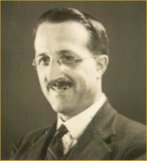
Note: In reading Proverbs 8, Mr. Cowell said: “Jehovah possessed me” – that is, wisdom – “in the beginning of His way, before His works of old”. – I would like to explain to any here who may not understand that the word ‘Jehovah’ was the Name of God in the Old Testament; God is now declared in the Name of the Father, of the Son, and of the Holy Spirit. – “I was set up from eternity”.
I wish to say a word tonight, dear friends, on power and wisdom relative to planning.
- This is a great day for planning: every nation, especially the leading nations, is planning; the United Nations is planning.
- In a way, every one of us is a planner – we seek to plan our lives: we have our business plans, it may be, and our plans as to our home, our family.
- So that planning is a thing that affects all of us.
You would all agree that in connection with planning, you need wisdom.
- It is a very foolish thing to plan either in a small or a big way unless you are a wise man, because your plan will not be much good.
- And the second thing that is needed if you are going to plan is power to carry it out.
- Now the world is especially engaged on planning at the present time, as we know; huge plans are afoot. And the planning in a way can be separated into two parts.
- Everyone in the world knows, every intelligent being, that something is wrong. I am sure everyone here will admit that anyway; we shall agree on that point, that there is something wrong with men, and with the world in general.
- Therefore, the first thing that must engage planners is to deal with the problems, to seek to deal with what is wrong.
- There are many tremendous problems to be solved – even as far as human planners see, there are many problems to be solved: racial problems, national problems, labour problems, international problems.
- So if planning is to be of any effect, the first thing is to deal with the problems; the next thing is, to plan a better world, once the problems are settled.
- What shape is the new world going to be? – is a question that sometimes comes into the minds of human planners.
- You know, this quest for a better world has been going on for six thousand years or so, and we do not seem to be any nearer to it, do we?
- We have a much cleverer world, but not a better world. Evil is as mighty and powerful as ever, perhaps more mighty.
- The more clever you make a man, you see, if he is not right with God, the more scope he has to pursue what is evil.
- And so, in a way, with all the inventions and the cleverness that marks men of this age, the basic problem of sin and wickedness is worse than ever; instead of a better world, in many ways it is worse than ever.
- We want a peaceful world: but then peace is further away than ever.
And so men are engaged with planning, both as to meeting the problems and as to bringing in something better.
- Whatever they may plan, they need power to carry it out, and so men are seeking power; each party with its plans wants power – each party thinks its plans are best, and it seeks power to carry them out.
- The history of mankind shows a continuous tale of disappointment – the planners are always disappointed, those who had hopes; the plans have always failed.
- You may not believe it, but I will tell you this: the plans always will fail.
- The planners do not, and cannot, go deep enough; the planners only touch the surface – racial problems, labour problems, national problems, are just touching the surface;
- they just touch the social life of man, and the most the planners hope to do is to make the social life of man a little bit pleasanter during the brief span that a man is here on earth.
- You live to seventy years perhaps; a little bit easier life for seventy years – well, so far so good; but it has only touched the fringe of the problem.
- The real problems the planners never tackle, and never have tackled. What are the real problems?
Satan – Satan is abroad; sin – sin born in the hearts of men: the lust of the flesh, the lust of the eyes, the pride of life – 1 John 2: 16.
- The most altruistic planners have to cater for those lusts, otherwise they will be turned out of office.
- Those lusts, as I may say, bedevil every situation: that you must cater for the lusts of the flesh;
- and for those to whom the grosser lusts of the flesh may not appeal, you must cater for the lust of the eyes – all the changing fashions in dress and so on, and everything else that appeals to the eyes;
- and you must cater for the pride of life – every man wants to be a somebody, a somebody in business, or a somebody in education …
- Sin, therefore, is a very great problem: Satan … sin … sin is comprised in those three things I said: the lust of the flesh, and the lust of the eyes and the pride of life.
- Who is there here who will dare to stand up and say he is not a sinner? Who is there here who will dare to say that he is not conscious of the lust of the flesh, and the lust of the eyes and the pride of life? –
- the pride of life, you know, the way you envy your neighbour: whatever she has, you want; you want to be one better.
- Who dares to stand up and say he is exempt from those things?
- And the final thing is death. The planners never try to touch death.
- They are trying to make a living cell and have not succeeded, not even the simplest living cell has ever been made, not the most primitive form of life.
- The greatest scientist on earth cannot explain even a blade of grass; he cannot account for it; he cannot tell you how it comes, why it comes.
- Men adorn themselves with their knowledge, and they have found out a good bit, but from another sense they have found out extraordinarily little if they cannot explain a blade of grass; and that is the truth of the matter.
- They cannot make a grain of edible food – they can process foods that are already foods, but they can make in the laboratory a substance of the same formula as edible starch in wheat, and the human stomach will not digest it. See the limitations of man!
But all those remarks sprang from the statement that the planners have never tackled the matters of life and death.
- The medical profession extends our lives to some extent, but death is always around the corner.
- You see, what I can hold out to you, even the youngest here, as a certainty is not that life is before you, but that death is before you. That is the truth and the thing that needs to be faced.
- A boy or a girl may well say: well, I am only five years old, six years old, twelve. In ordinary average reckoning, we would say, well, you have life before you, but we cannot say that for certain.
- One thing we can say for certain: that, unless the Lord Jesus comes and you belong to him, you have death before you.
Well now, in planning we ought to face up to these things; but men blind their eyes to these things, they go on with surface matters.
- I do not want to decry those in authority; God uses them for the preservation of men, but I am thinking of the world planners.
- It says in the passage we read in Corinthians that the wisdom of the world is foolishness with God.
- Human wisdom at its very best is just foolishness in the eyes of God; it does not touch the root of anything, it gets you nowhere; it just scrapes the surface, and leaves you where you were.
Well now, I want to speak about some other planning. I have spoken of Satan: Satan is planning, and always has been from the beginning; Satan’s plans are deeply laid –
- at the beginning, in the form of a serpent, he deceived the woman, he deceived man into sinning, so that he might be able to exercise death, the power of death, that he might be able to claim, as it were, that on God’s behalf, he must bring death upon man; that is the subtlety of Satan.
- He would deceive man into sinning, in order to claim that on God’s behalf, as a matter of righteousness, man must die. Satan is still planning.
- And with all the planners as regards mankind in this world, they more or less, and they are always in danger of it, fall into Satan’s hands, and further his plans. And you know, men are no match for Satan.
But now, I do not want to delay too long on negatives; I want to come on to God’s planning. God has planned; and Job came to it – he says to God:
- “Thou canst be hindered in no thought of Thine”, Job. 42: 2.
- God’s plans are going through without the slightest doubt.
- Men would like to think, who do not believe in God, that the whole universe came into being haphazardly, chaotically. That is wishful thinking, you know, that is all it is; just wishful thinking.
- You see, men who are not prepared to face the truth as to their own need of a Saviour indulge in wishful thinking, and their wishful thinking says: well, let us pretend that this great universe in which we find ourselves just came into being chaotically – certain atoms and molecules decided to become a horse and others decided to become other things and so it all came about, and we just came into being by chance.
- Well, I would say unequivocally, and many of the most renowned scientists agree with this now, that this is just wishful thinking; it is wishful thinking because
- you would like to shut God out, and feel that after all you could live and die and do just what you like, and in the end you would never have to face God and give an account to Him.
- Now, do not indulge in wishful thinking. Nothing has happened by chance, or chaotically. God has always worked according to plan;
- God is supreme in wisdom, and therefore his plans are perfect;
- God is supreme in power, therefore they must go through against all opposition – that is the thing to face.
- You have to do with God: you are here tonight to come face to face with God. Sooner or later, either now in grace, or soon in judgment before the Great White Throne, you have to give an account to God.
- No wishful thinking will stand you in any stead – you must have to do with God; you belong to Him, He is God and you are His creature; you cannot escape, it is impossible to escape from God.
- Your very breath is in His hand; He brought you into being. And so our great desire is that any wishful thinking on that line might be banished from your mind.
Now the passage I read in Proverbs refutes the idea of the universe having come into being haphazardly.
- It says “Jehovah”, meaning God, “possessed me”, that is, wisdom – wisdom is personified in that chapter as you will see if you read the chapter –
- God possessed me “in the beginning of His way”, Proverbs 8: 22,
- that is, God did not begin His operations without a plan; because that is implied in wisdom.
- God did not begin anything without having the whole plan in His mind.
- You say, well why did He bring things, why did He create this universe? He created it for His pleasure, and it will yet be for His pleasure under the reign of Christ.
- But we are told in Colossians a reason why He created it: it says there, speaking of Christ Himself,
- “All things have been created by Him”, Colossians 1: 16
- – mind you, the One we are preaching tonight, Jesus the Saviour, is the One who made this universe –
- “All things have been created by Him and for Him”.
- Men act as though it was all created for them. God did not create this earth to be a stage for proud and simple man to strut across, and display himself and his fancied greatness – not at all.
- This earth, and the heavens too, were created by Christ and for Christ, and Christ is soon coming to take them, and to show the whole universe why they were created.
- God had a purpose in everything; He possessed wisdom in the beginning of His ways, everything was done according to plan. And right at the outset when He began His operations, it says:
- Wisdom’s “delights were with the sons of men”, Proverbs 8: 31.
- Think of that – that God had men in mind; His affections are set upon men. That is why the gospel is going out, because His affections are set upon men.
- God is determined to fill His presence with men in perfect suitability, in perfect happiness, for ever and for ever, in a new heavens and a new earth, in a city, New Jerusalem.
- God is even going to show in this heaven and this earth, and that before many years have passed, how He can do all that men have failed to do, solving the problems and bringing in a world of peace under the reign of Christ.
- Everything is going according to plan – do not doubt it for a minute – but, the point at the moment is your position relative to the plan, where you are going to stand when the plan is completed.
- Where will you be? Where will you spend eternity? Will you be among the lost, or amongst those men redeemed by the precious blood of Christ, who will be in happiness in the presence of God for ever?
Now, as I have said, planning involves settling problems first, if problems are there, and then bringing in a new world.
- You say, how is God going to do that? That is what we are preaching for – to tell you:
- “We preach”, the apostle says in Corinthians, “Christ crucified, to Jews an offence, and to nations foolishness”, 1 Corinthians 1: 23.
- It sounds foolish to the wise of this world, but, mind you, the wisdom of this world is foolishness to God, because with all their wisdom, men are not touching the basic problems, and they cannot touch the basic problems, they have no power.
- So if the preaching sounds foolish to you, and it may sound at first hearing, do not forget that the wisdom of the world is foolish in the eyes of God; and give heed to the preaching, because by this very preaching you may come to know the One who is
- “God’s power and God’s wisdom”, 1 Cor. 1: 24.
- So it says here: “We preach Christ crucified, to Jews an offence, and to nations foolishness; but to those that are called, both Jews and Greeks, Christ, God’s power and God’s wisdom”.
- That is the Person we present to you in the gospel – Christ. We present Him to you to believe in, to entrust your soul’s salvation to Him.
- There is salvation in none other, for “salvation is in none other, for neither is there another name under heaven which is given among men by which we must be saved”, Acts 4: 12.
- We present to you Christ the Saviour, Christ crucified, and we preach Christ glorified.
- Christ crucified! It is there we see how God has met the problems, has solved every difficulty.
- As glorified, we see Him seated as the One who is God’s power and God’s wisdom, in settling the problems of the universe – and He is available for you, to settle your problems,
- to settle the eternal problems relative to your soul at this very time.
- That is why we preach Him; we preach Him for you.
- The problems will be settled, the new world that God has planned will shortly come in –
- “the world to come, of which we speak”,
- the world to come, over which Christ will reign as Head over all things, when He will speak peace to the nations and they will learn war no more.
- That time is surely coming, but we are preaching for your sake, that you, as a personal matter, might get the gain of the One by whom God is going to settle everything.
Now it says, “We preach Christ crucified”. Have you ever thought of the cross of Christ? “Wouldst thou know …
“Where shine forth the wisdom and wonder
Of God’s everlasting plan?
Behold on the cross of dishonour
A cursed and a dying Man”.
Because He took my place; Christ is the Saviour for me. He took my place on that cross;
- He bore the curse that was due to me; He bore my sins in His body on the tree; He bore the judgment; He went into the death that was due to me – my Saviour.
- He took my place; that is what He did for me.
- But He gave Himself a ransom for all – why do you not put in your claim to Him? Think of what He did for you.
- What did He do in that dread hour when He hung upon that cross? He solved the whole of the problems which human planners cannot even touch;
- He solved the whole problem of Satan and his power, and sin, and the reign of sin over us, and of death; He really overthrew all our enemies.
- You say, Well, how can I ever get free from Satan’s power? Call on the name of the Lord, and you will be saved.
- You cannot meet Satan’s power, but the Lord can, and He gave Himself a ransom for all – for you – that He might be your Saviour.
- You say, How can I meet the power of sin? Sin is all around me, sin is within me – what can I do about it?
- Have to do with Jesus about it, tell Him about it. He died upon the cross that sin might no longer reign in your mortal body, that you might be free from it.
- He can give you deliverance; He gives to those who obey Him the gift of the Holy Spirit. The Holy Spirit dwelling in you is more than a match for sin in your flesh.
And what about death? Well, I am sure everyone who knows the Lord Jesus here would join with me in telling you that once you believe in the Lord Jesus and have a link with Him as your own personal Saviour, the fear of death is gone.
- Why, death only releases me from a body of humiliation, and as absent from the body, I am present with the Lord – 2 Corinthians 5: 8.
- I call on Him here; He is closer to me than any earthly friend; I am joined to the Lord, I am one Spirit – 1 Corinthians 6: 17, joined to the Lord, one Spirit, through the gift of the Holy Spirit; I can tell you
- and before God I am not telling a lie, that Jesus is closer to me than any human being; my link with Him is closer than that with any human being, closer than the closest earthly tie.
- And if I become absent from the body I am present with the Lord. Where would I like to be better than that? What terror then does death hold for me?
What does death mean to you? I would ask the children here – even children die sometimes.
- Boys and girls quite early begin to think; they hear some other young person has died, and they think, well, it might be me next time.
- Have you not ever had longing to be sure of what would happen after death? Well, you can know that assurance tonight. You come to Jesus as your Saviour, and the fear of death will be gone.
- You will have certainty: a Christian is certain. He is not planning in the dark his own personal life, because he is certain about the future.
- The greatest of the world’s planners are planning in the dark; they do not know what is ahead – the next day, the next week, the next year. They are planning in the dark literally; they do not even know clearly what they are aiming at.
- The moment you believe in the Lord Jesus, everything is changed: you have a link with the risen and glorified Saviour; you belong to Him; your link with Him is closer than any earthly tie;
- the fear of death is gone, the power of sin broken, your sins forgiven; your soul is happy and peaceful with God – no cloud between the soul and God; the future is certain – no future but glory for the Christian, the future is glory with Christ;
- if I am absent from the body I am present with the Lord; if I am here on earth when He comes, He will change the bodies of those who are living, and He will raise the dead who belong to Him, and we shall all have bodies of glory like His.
- There is nothing but glory, in that sense, ahead for the Christian.
- As to the details of your life here, how simple they are, if you are a Christian; how fully you can trust the One who, as Paul says,
- “loved me and gave Himself for me”.
- Will He ever let you down? Never. As you commit your way to Him, He will guide and keep, and bless you, all through your pathway here. And the end is assured.
Now, that great transaction at the cross – how we need to contemplate it! Men plan, but they leave out the cross of Christ. Satan planned, but he never foresaw the cross of Christ.
- Satan planned to deceive men into sinning, so that he might wield the power of death, not as an open enemy of God, but as wielding the power of death, in view of his position which he once held – “the anointed covering cherub”, Ezekiel 28: 14.
- He deceives men into sinning, this serpent, the deceiver, in order to become the accuser.
- The word “devil” means “the accuser”. Think of the subtlety of Satan! Deceiving men into sinning that he might become the accuser. Then he says you are worthy of death.
- But Satan never foresaw the cross. It says of the seed of the woman in Genesis 3,
- “He shall crush thy head”.
- Now Satan’s head refers to his plans and his wisdom. Satan is a planner; he has wisdom from beneath; but the Lord Jesus has crushed his head. Satan’s plans have come to nought. How? Because of the cross.
“Behold on the cross of dishonour
A cursed and a dying Man”.
Satan completely outwitted and defeated; every question resolved for God, and for us, if we believe.
- Satan deceived men and led them on by their lusts – that is how Satan leads you on, by your lusts.
- This world system is built up to cater for men’s lusts – the lust of the flesh, the lust of the eyes, and the pride of life: a great system, commercial and religious, built up to cater for men’s lusts, but in no sense to cater for God. God is left outside of it.
- It is no wonder that the world’s planning will always come to nothing; God is outside of the thoughts of the planners.
- It is a great system to cater for man’s lusts and to make men more comfortable in the fulfilment of their lusts.
- Satan deceived men and led them on to that crowning moment of Calvary. See the subtlety of Satan, leading men on, men hating Christ without a cause, men exposing themselves in their utter wickedness at the cross.
- The cross is the full exposure of the wickedness of man. Man’s wickedness could only be exposed by his reaction to perfect goodness, and perfect goodness was never here until Jesus was here.
- But in the presence of perfect goodness and perfect love, men said, We cannot stand it; it is too exposing. It exposes our hypocrisy, it exposes our sin; we cannot stand a person like that in our world. Perfect goodness and perfect love will not do in man’s world.
- And Satan was behind men, leading them on, until they cast out and crucified, in the greatest dishonour and ignominy they could heap upon Him, the Son of God.
- ‘Well now’, Satan would say, ‘the crowning sin has been committed; now I have something to accuse men of. There is no escape now – this is the crowning sin. There is no hope for men!’
- How he would rejoice as the accuser, as he sees Jesus led to the cross and crucified. Satan thought he had won the day, because the sin was of such a character that judgment had to fall at that time.
- Judgment could not be postponed; God could not pass by a sin like that. Wickedness was fully exposed, and God could not pass it by; judgment had to fall.
- If judgment had fallen, and the human race had been swept away in judgment, Satan would have won the day. God’s purposes as to men would have failed.
- But what happened? What Satan never foresaw. That Man, whom we crucified – Jew and Gentile, we crucified Him; we hanged Him on a cross, we did not want Him.
- You say ‘I would not have done that’. How are you treating Christ now? When you are out with your friends, enjoying yourself, are you prepared to talk about Jesus? ‘Oh’, you say, ‘No, I would not like to mention His name’. Well, you are just one of the crowd. You do not want Him in your circle.
- If you have never come to His feet as the Saviour, you are just the same as that crowd that crucified Him. You would say, “Away with Him” – you are saying it now! In your circle of friends, you do not want Jesus.
- You are saying, virtually, “Away with Him!” all the time, all your life. You do not even want to be in the presence of Christians who talk about Him. Your whole attitude of life is, “Away with Him!”
We hope there will be a change this evening. We hope you will repent, will change your whole attitude to Christ.
- But that was the position at the cross, and judgment had to fall. One loves to think of how Satan was confounded, how his head was crushed. What he never foresaw happened, that the holy Sufferer, when we had done our worst, took all the guilt upon Himself.
- When judgment had to fall, the sword awoke against Him instead of against us – Zechariah 13: 7. Have you ever heard of anything like that?
- “Where sin abounded, grace has overabounded”, Romans 5: 20.
- Sin abounded at the cross, and grace overabounded. I will say it again: When we had done our worst, and said, “Away with Him!” and hanged Him on a cross – and it may be there are some here who are saying it tonight, in principle –
- when we had done that, and a sin had been committed which could not be passed by, when judgment had to fall, it was then that the holy Sufferer took all the guilt upon Himself.
- The sword awoke against Him instead of against us, and the sufferings He endured then were worse than anything men put upon Him.
- It was then He became the curse for us; it was then that He bore our sins in His body on the tree – 1 Peter 2: 24; it was then that God made Him sin for us, who knew not sin – 2 Corinthians 5: 21.
- It was then that the consuming wrath of God fell on Him, that we might go free.
- After we had done our worst, as we may say, God did His best, and provided this blessed Saviour who was prepared to take our place.
- The grace of it is astounding, beyond all human conception, that the One whom we had injured to such a terrible extent should take the guilt upon Himself.
- Satan was defeated – he has nothing to accuse us of. He will try to accuse you. If you are a Christian, he will try to accuse you in your conscience; he will get you occupied with yourself. He is still active in that way.
But, really, all that he trusted in is gone. We can overcome him by the blood of the Lamb, and by the word of our testimony – Revelation 12: 11.
- What can he say when we point to Christ and His precious blood. What can he accuse us of? Jesus has borne the judgment.
- Now you can see how God has settled the problem. What a free hand God has! How freely the gospel comes!
- And the word to you tonight is, Come. As it says in the ninth of Proverbs, “Come, eat ye of my bread”.
- This is Wisdom speaking; the gospel is Wisdom’s message.
- “Come, eat ye of my bread, and drink of the wine that I have mingled. Forsake follies and live”.
- God is inviting you to come. He has prepared everything for you. He is ready to bestow on the repenting sinner things which He prepared before the ages for our glory.
- God looked on, before the ages; before He began His operations, He prepared in His purpose things for our glory – yours and mine, if you are a believer.
He purposed in that past eternity to save men; He foresaw all that would come in. It speaks of the Redeemer as
- “the Lamb slain from the foundation of the world”, Revelation 13: 8, A.V. – wording differs in J.N.D.’s translation.
- God foresaw everything; God was never taken by surprise.
- The Lamb of God has come, He has suffered. And for those of us who take advantage of Him as their Saviour, God delights to bestow upon us the things which He prepared before the ages for our glory. Think of the best robe!
- “Bring out the best robe and clothe him in it”, Luke 15: 22.
- God will do the best for you. The best place in heaven is now available for the worst sinner on earth, through the precious work of Christ at Calvary.
- Is there not divine wisdom in that? Cannot you see the wisdom of God in meeting the whole power of Satan and the wickedness of man? It is all met in Christ crucified.
- And now, in Christ glorified, the living Saviour, God’s power is manifested to carry everything through, and the power of Christ is available for you tonight.
- He is God’s power and God’s wisdom. By Him God has settled every problem, and is bringing a world into being entirely suited to Himself.
- And by Him every problem of yours can be settled, because I want to come down finally to your planning, your personal planning.
God’s planning is all right; everything is going through – but what about you, and your planning? I want to speak specially to the young ones here.
- It says God possessed wisdom in the beginning of His way. Now I want every boy and girl to possess wisdom in the beginning of his or her way.
- You say, I am only five, I am only six. Never mind:
- “Wisdom is the principal thing; therefore get wisdom”, Proverbs 4: 7, A.V.
- – not worldly wisdom, but get divine wisdom. Get Christ, in other words; have Christ as your wisdom.
- “The fear of Jehovah is the beginning of wisdom”, Psalm 111: 10.
- The way to get wisdom is to fear God, and turn to Him in repentance, and come to the feet of the Saviour.
- Then you will find that the One who is God’s wisdom, who has settled every problem for God, has settled every problem for you. You could not have settled your problems; you could not have dealt with Satan or sin, or death. They are your real problems.
- Accept Christ as your Saviour, and you will have Him as wisdom. You will find He has settled your problems which you could never settle.
- And so the scripture says that He has been made to us wisdom from God – 1 Corinthians 1: 30.
- Receive Him, dear friend. Receive Jesus, and you will find One who has settled all your problems.
Then it says, “righteousness”. God has made Him to be to us wisdom and righteousness. What a wonderful thing to have Christ as your righteousness – a glorified Christ.
- All our righteousnesses are as filthy rags, we deserve nothing but judgment, but we come to Christ, and we have him as wisdom – that means he has settled all our problems.
- Then we have Him as righteousness, which means we are clothed in perfect suitability to come to God and to be in the presence of God. We are as acceptable to God as Christ is.
- He, the glorified Saviour, who took my place on the cross, has won for me His place in glory.
And He is also our “holiness”, or “sanctification”.
- “For by one offering he hath perfected for ever them that are sanctified”, Hebrews 10: 14, A.V.
- He has fitted us for ever for the presence of God, and He is our redemption, soon to exercise his redemptive power in redeeming our bodies, giving us bodies of glory like His own.
- Come to Jesus! He is God’s power and God’s wisdom, and He is available for you, to settle all your problems, and to bring you into this great, new order of things which centres in Himself.
And while I have spoken of the world to come, I want to say in closing, that Wisdom has built her house on earth at the present time.
- You do not need to wait for the joys of heaven until you get there; you can have a wonderful foretaste of the joys of heaven here on earth.
- The true believers in Jesus form the spiritual house, made of living
stones – 1 Peter 2: 5. Wisdom has built it – Christ has built it in divine wisdom. We invite you to come into it.
- You receive the gift of the Spirit – and that is normal in the gospel; you receive the forgiveness of sins as you receive Jesus, and you normally receive the gift of the Holy Spirit.
- Then you really become part of this house; you have a right of entry. And Wisdom is saying,
- “Come, eat ye of my bread, and drink of the wine that I have mingled”.
- It says she has prepared her table – God has prepared everything for you. In coming to Jesus and leaving the world which has rejected Him, God does not leave you in a vacuum.
- He has on this earth a place of joy and gladness, where the things which eye hath not seen, nor ear heard, nor that have entered into the heart of man are known and enjoyed in the power of the Holy Spirit – the things that God has prepared for those that love Him.
- We say to you, Come to Jesus, and come into Wisdom’s house.
Page Top Gospel Top
FILLED WITH THE FULL
KNOWLEDGE OF GOD'S WILL |
|---|
Summary of 5 Readings on Ephesians
Memorials 10: 113-32
|
|---|
1. Ephesians 1: 1-23
In Colossians, the apostle’s prayer is, that
- “ye may be filled with the full knowledge of his will”, and that the saints may grow “by the true” or ‘full’ “knowledge of God”, Colossians 1: 9-10.
- Ephesians chapter 1: 3-14 would bring out the fulness of God’s will – and then Paul prays that the saints may be given the spirit of wisdom and understanding in “the full knowledge of him”.
- Thus the greatest conceivable things are before us – the full knowledge of God’s will, and the full knowledge of God, and it is necessary to have this full knowledge if there is to be a full response to God in the assembly.
Chapter one begins in a spirit of worship –
- “blessed be the God and Father of our Lord Jesus Christ”,
- and it is to be noted that the apostle brings out the greatest thoughts in either the spirit of worship or in prayer.
- The apostle was a man who had recourse to the presence of God – or the holiest as Hebrews would present it – at every opportunity, and would write from that standpoint.
- This full knowledge is peculiar to the assembly, and to have “all wisdom and intelligence” which God has caused in the riches of His grace to abound towards us, is proper sonship – verse 9.
There are two thoughts in the expression “God and Father”.
- The expression links with what we have in John 20,
- “my Father, and your Father, and my God, and your God”,
- only there the order is reversed for it is the line of approach. Here, Paul is beginning with the Divine side, and thus first, with God, we should be
- “holy and blameless before him in love”, verse 4,
- which means we are before God entirely in keeping with His nature, then secondly, in relation to the Father, we have been marked out for
- “adoption through Jesus Christ to himself”, verse 5.
- Both these relationships are carried through the chapter.
- Thus, we see that God has been manifested in order that men may be before Him,
- first, as in keeping with His nature – holiness and love –
- and secondly, in the liberty of sonship in relationship with the Father.
- Therefore men may have the full knowledge of God, and be before Him in perfect accord with Himself, and be there in the perfect liberty of sonship.
All this section is given by the apostle in the spirit of worship, and this must enter into touching what is inscrutable,
- for, while through grace we are brought into such blessed relationships, we are in the presence of Him who is inscrutable.
- We are really in a sphere where there are
- “waters to swim in”,
- but at the same time it is a “river that could not be passed through”, Ezekiel 47: 5.
- Hence, while naturally we would like to feel our feet in such waters, that is, be able to define and comprehend,
- we are in a realm where things are intuitively realised in communion, through the Holy Spirit, rather than understood by terms of doctrine.
The Ephesians are addressed as “saints and faithful in Christ Jesus”, and they were this.
- Those in Rome the apostle did not know personally, so he refers to them as “saints by calling” but with the Ephesians it was what they were characteristically,
- and for us to be this is the only way that we can take in the truth on this level.
There are three references in this section to His will.
- The first in verse 6: “the good pleasure of his will”, stands by itself in its glory having reference to the place and relationship we are brought into before God.
We are blessed with every spiritual blessing, we are before God in accord with His nature, we have the relationship of sonship and we are taken into favour in the Beloved, in whom we have redemption.
- The second, in verse 9: “the mystery of his will”, involves on our part all wisdom and intelligence.
God has made known the mystery of His will to us because He would have His sons intelligent as to His purpose “to head up all things in the Christ”. Intelligence is proper to sonship.
- The third reference to His will is in verse 11: “the counsel of his own will”, and this relates to the working out of things.
In carrying out His purpose He “works all things” to the counsel of His own will. This tests our wills.
It touches our circumstances, for here the Jew, verse 11, and the Gentile, verse 13, are brought in together.
Peter was tested as to the bringing in of the Gentiles, and we may be tested in racial, national and social matters.
We might prefer to be in a “better class” meeting for instance, but the thing to see is that God has ordered all things.
God has purposed “in himself”; and it is the counsel of His own will. He does not take counsel with us as to the working out of things. He takes counsel with no one but Himself.
- It is the activity of our wills that hinders us.
- We need to know our settled place before God
- according to the good pleasure of His will, the end in view,
- according to the mystery of His will,
- so that we may be happily subject to God in the working out of the counsel of His own will.
Therefore, after the setting out of these three great features of God’s will, the apostle prays, for the crowning thing is the full knowledge of God Himself.
- It is something that the apostle cannot put on paper.
- Nothing greater can be conceived for the creature than that he should have the full knowledge of God – it is the sum of creature happiness.
- Being in the holiest helps as to this. We are apt to limit our thoughts as to the holiest, because the term is only used by the apostle in writing to Hebrews, but scriptures in other epistles bear upon it.
- We are to enter the presence of God continually.
- We often feel we can say more as to what God has done than as to what He is in Himself, but it is noteworthy that Paul is brief in his doxologies.
- David was an example of one able to speak to God about Himself, and if we gave more time to sitting before God, assembly praise would be enriched.
The full knowledge of God attracts our hearts. What can we want more?
- “Let him that glorieth glory in this, that he understandeth and knoweth me, that I am Jehovah”, Jeremiah 9: 24.
2. Ephesians 2: 1-23
In chapter 1, the apostle in prayer goes over to God’s side in his thoughts.
- Earlier he had been referring to “we” and “us”,
- but now he is speaking about His calling, His inheritance, His power, and then what the assembly is to Christ.
- Earlier it was our inheritance as sons and heirs through the riches of His grace,
- but now it is God’s side, His inheritance, and that is something that is exceedingly great, for through Christ and the assembly, the whole universe is secured for Him.
- “His calling” would show the magnificence of it – “the prize of the calling on high of God in Christ Jesus” – and it would include both sonship, and the assembly being with Christ on high, sharing His headship.
- The word “assembly” means “called out” ones.
Everything put under Christ’s feet, and He being put as
- “head over all things to the assembly” makes way for “the administration of the fulness of times”,
- which God had purposed in Himself for His good pleasure.
- The Lord Jesus is in the highest office in the universe in this way, and thus the assembly is greatly elevated as His counterpart – His wife.
- Even in natural things, the greater the office or position a man occupies the more important it is that his wife should be equal to her position as a true help-mate.
- How great the value of the assembly to Christ. She is not unworthy of Him. She is
- “the fulness of him who fills all in all”,
- the last part of the phrase showing that the Man whose fulness she is is a Divine Person. No creature could fill all in all.
- It shows how close the assembly is to deity – the Man who is united to the assembly, Ephesians 5: 31, is a Divine Person.
In chapter 1 we see how God
- “has set him down at his right hand in the heavenlies”,
- and now in chapter 2 we see how God
- “has raised us up together and has made us sit down together in the heavenlies in Christ Jesus”.
- It shows how the members of His body have been secured, both Jew and Gentile being equally dead in offences; but the prison doors have been opened, and we have been quickened with the Christ.
- In natural things, to have a command to appear in the presence of earthly majesty is regarded as a great honour, but think of what an honour it would be to be made to sit down, to be made ‘at home’ in such surroundings!
- Think of God doing this, not only raising us up into His presence, but making us sit down – making us perfectly at home!
- How great it is that is the portion of the saints of this dispensation and nothing less would do for the consort of Christ than those who compose it should be thus elevated!
The fact that it says
- “God has raised us up together, and has made us sit down together in the heavenlies”
- would refer to what is true abstractly, but it could only be said to those who were in some measure in the good of it. We are there as His workmanship.
- It is as quickened, which is life out of death, referring to the positive work of God in us, a work of new creation. Workmanship implies skill and detailed work.
- The Galatians were to walk by the rule of new creation, and this would help us as to good works that we have been created for.
- It would be “good works” patterned after the Man of the gospels, not dropping to the level of human philanthropy.
- God has created certain institutions and good works mean that we are to walk according to them. There are institutions which God has established.
- These are “one new man”, verse 15, “the one body”, verse 16, heavenly citizenship, verse 19, the household of God, verse 19, the holy temple in the Lord, verse 21, and the habitation of God in the Spirit, verse 22.
- Walking according to these institutions we would be really like Christ, otherwise we shall try to imitate Him on the level of human philanthropy.
Each of these institutions involves our being set together in right relations.
- We tend to break down at the very doorway through petty difficulties with one another in the flesh.
- It is a matter of our walking in them now, if God is to get something at the present time.
- Is there really an expression of the features of the new man?
- Are we walking together according to the truth of the one body?
- Are we really conscious of being fellow-citizens of the saints and of the household of God?
- Are we governed by the truth of the temple and God’s habitation?
- The tendency is to break down at the door-way and not walk in these things, and at the same time to try and make a show of so-called good works.
According to God we are seated in heavenly places, so how wicked and foolish it is to allow petty fleshly feelings among the brethren.
- We need to know more about the cross, and this would help us as to the idiosyncracies of one another.
- It is the enmity that is slain, not the brother, be he Jew or Gentile. If we understood the cross we would know how to deal with enmity.
Thus we need to see that we walk together according to the truth of these great divine institutions, so that we experience the immense spiritual wealth that is available to us in them.
3. Ephesians 3: 1-21 – Lord’s Day Afternoon
Paul had in mind to exhort the saints at Ephesus in the light of chapter 2, but then breaks off, in chapter 3 verse 2 and brings in the parenthesis,
- in which he brings out both in his teaching and the prayer that follows, that which becomes a kind of climax to the epistle in indicating the way of full response to God in the assembly;
- a response to the God, who has operated in such a wonderful way as we see in chapters 1 and 2.
He had been speaking as to both the Jews and the nations before, but now the nations are especially in mind, and he says
- “I Paul, prisoner of the Christ Jesus for you nations”.
- The mystery is involved in the bringing in of the nations, verse 6, and it leads him to speak of his ministry, both parts of which, that is the gospel and the mystery, lead to praise.
- It is a question whether we would have had an epistle like this apart from Christ Jesus putting him in prison. In this way the powers that be further the dispensation.
- These “powers that be” are sometimes used in a disciplinary way, to check the idolatry and worldliness of Christendom, in which, alas, we have our part,
- but we can be thankful to God that governments favourable to the people of God, rule in the Western world at the present time.
- The Roman power gave Paul liberty in his own hired house, whereas the religious world would have killed him.
- Without protection under favourable governments, at the present time, Jezebel would not permit us to live. In countries where she is powerful we could not have meetings like this. But, in mercy, the Lord has cast her into a bed.
The two parts of Paul’s ministry are set out here, first,
- “to announce among the nations the glad tidings of the unsearchable riches of the Christ”, verse 8,
- and secondly, to enlighten all with the knowledge of what is the administration of the mystery, verse 9.
The “mystery of the Christ”, verse 4, was opened up to Paul on the road to Damascus, when Jesus appeared to him and said
- “Why dost thou persecute me”, and
- “I am Jesus whom thou persecutest”.
- The Lord Himself thus named the assembly as His body. None but He could have done that.
- Paul, the one to whom this light came, was one who had already seen Christ expressed in the members of the body he had persecuted.
- Paul had this light, and yet moved on in a humble and quiet way until the Spirit said
- “Separate me now, Barnabas and Saul for the work to which I have called them”, Acts 13: 2.
- He is a model for us in this. We are not to assert ourselves, but to await God’s time.
In verse 17 of chapter 2 the apostle had spoken of
- “the glad tidings of peace”,
- and if we are not in the gain of this, we cannot know
- the “glad tidings of the unsearchable riches of the Christ”,
- which has in view Christ’s headship, and the illimitable wealth available to the assembly in Him.
- We experience this as His union with the assembly is practically realised, and thus we are equipped for the service of praise and worship to God.
The “administration of the mystery” is a matter of urgent importance, for if we are in the gain of this, we shall be in the gain of the headship of Christ in the service of God,
- and in Him, we shall “have boldness and access in confidence by the faith of Him”,
- which is assembly access. Hebrews 10: 19-22 deals with individual approach.
Access in Ephesians 3 is like the glorious ascent of Solomon, and Paul bows his knees to the Father that we might be furnished so as to be fully in the matter.
- Heavenly principalities and authorities look on in wonder at this heavenly vessel functioning – the assembly.
- Thus the service of God is consequent upon the gain of union with Christ and His headship. Have we known it? We want every believer to be in this –
- so that all might function in this great vessel in the praise of God.
It is a necessity that the basic steps be taken if we are to function in the service of God.
- We must, firstly, be in the gain of the gospel of peace – peace between Jew and Gentile and between man and man – which sets us together in peace in the truth of the one new man.
- It is viewed as Christ’s own service –
- “coming, he has preached the glad tidings of peace to you who were afar off, and the glad tidings of peace to those who were nigh”.
- If we are not truly at peace, we cannot go on to
- “the glad tidings of the unsearchable riches of the Christ”.
- The gospel of peace assures that all, as pictured typically in the diverse creatures in the vessel like a sheet let down from heaven, will get on together.
- Other things will be beyond us unless we get this import of the gospel of peace; we will never know them.
- Rightly the gospel of peace will set us together in the body, which makes way for the headship of Christ and union, so that the assembly becomes available, under His headship and impulse, in the service of God.
4. Ephesians 4: 1-32; 5: 1-2
At the end of chapter three the parenthesis closes, and in chapter four the apostle commences to exhort the Ephesians as to their walk.
- He had already said in chapter two that God had prepared good works, that we should walk in them.
- Now, the apostle exhorts them in some detail concerning their walk, first, as to keeping the unity of the Spirit, which involves walking in the truth of the one body.
- Following this the apostle shows the care of Christ for the saints and for the body, in what He supplies for their edifying. Unless we walk according to the truth of the body we shall not experience these supplies.
- Then, from verse 17 on we are exhorted to walk according to the truth of the new man; and then, at the beginning of the fifth chapter, to be imitators of God as beloved children, and walk in love. These exhortations bear specially on our relations with one another.
- Finally, the apostle, with reference to our general conduct exhorts us to walk as children of light. The instructions as to walk are therefore very extensive.
In answer to a question regarding chapter 3: 10-12, as to whether the thought of the assembly as an entity is carried through the whole service,
- instead of being in our minds only in the marital phase for Christ, and in the final phase for God Himself,
- it was remarked that the assembly corporately goes right through the service.
- We gather in the light of the assembly of God in a place, and in the light of the fact that
- “we being many, are one loaf”, 1 Cor. 10: 17,
- and we close with glory to God in the assembly; so that there is no departure from the thought of the assembly all through the service.
- In Ephesians 3 the assembly is seen in what it is for God; in chapter 1: 22-23 what it is to Christ.
- Chapter 1: 22-23 is more the ‘downward’ aspect of headship; the assembly with Christ in his headship over all things.
- Chapter 3 is more the Solomon, or ‘upward’ aspect of headship, having in mind a full response to God.
The Song of Songs ends with the female speaker saying in the last verse,
- “Haste, my beloved, and be thou like a gazelle or a young hart on the mountains of spices”.
- That is the assembly, in type, speaking to her Beloved, urging Him to move upward conscious that she has capacity to move with Him.
- As under the influence of His love, she is ready when the time comes, to move Godward: which is always His objective. It is a peculiar delight to the heart of Christ to be so urged by His spouse.
- The Spirit would give her capacity to move at the same pace as He would move. He is the gazelle, and she the hind of the morning.
The assembly is a corporate idea. While the family is collective, it is to be distinguished from the assembly setting.
- The family setting is like the sons at home, and, while it is always in the background, the point of it is not service.
- The assembly on the other hand is the great vessel of service.
- Mr. Taylor, many years ago, said regarding the scripture
- “Let my son go that he may serve me”, Exodus 4: 23
- – How does the son serve? As a priest. Where does he serve? In the tabernacle, which is the assembly.
- The assembly is Christ’s fulness, and, like the Ark in the tabernacle, Christ, the beloved, is enshrined in it. It thus becomes God’s abode.
- Where could He dwell, but in the vessel where Christ is enshrined?
In the prayer in Ephesians 3 the apostle is praying
- “that the Christ may dwell through faith in your hearts”;
- praying that the assembly may be enshrined in the hearts of the saints in view of full response to God in the assembly.
- It is the upward aspect of headship; and His offices as Great Priest and Minister of the holy places would be included in it.
- In writing to the Hebrews those terms are used, because Hebrews would understand them, but to the Gentiles Paul uses the term Head, which is the greater and inclusive title.
Every one in the assembly is a son, and we reach the liberty of this in Romans 8, which precedes Romans 12, where we have the beginning of the corporate idea – the one body in Christ.
- The corporate idea involves great sensitiveness. To use a poor natural illustration, if the music of an orchestra is to be harmonious – there are many diverse instruments – every participant must be very sensitive as to the mind and direction of the conductor.
- Sonship gives us liberty to fill our part, but union with Christ is needed to make us sensitive as to the mind and direction of the Head.
- Individually we are joined to the Lord, one Spirit – 1 Corinthians 6: 17, and we are united together in one body by the same Spirit, 1 Corinthians 12: 13;
- the assembly thus formed is so attractive to Christ that He leaves other interests to be united to her – Ephesians 5: 31.
- The Spirit is the bond of union. If a man could give his spirit to his wife, how complete the oneness would be.
- But we have the Spirit of Christ. The assembly is thus a vessel composed of sons, but with extreme sensitiveness as to the impulses of the Head.
Kindredship is there initially, so that there is no discrepancy, we are His brethren; but, we are not detained there.
- When the Lord came into the midst He showed them His hands and His side, the assembly was in mind, and the great ultimate is
- “my God, and your God”.
- The Lord singing in the “midst of the assembly”, Hebrews 2: 12,
- shows that the vessel is there through the service to the final point, where there is glory to God in the assembly.
The assembly personnel are always sons, but they are not a number of individual sons doing what they like.
- They fill their place in the vessel of praise under the direction of the King. There is no discordant note for they are all sensitive to the direction of their Beloved.
- We speak to the Father as sons, but there is the link with Christ all through.
- The spouse of the Song of Songs morally merges into the assembly of Israel. The identity of the actual woman is not given, because it is a question of King Solomon as the Beloved of Israel.
- The assembly of Israel were assembled to King Solomon – 2 Chronicles 5: 6.
- Not until Christ becomes the Beloved of Israel in the future will the praise of God reawaken in Zion.
In the supper itself it is not our service that is in mind.
- We are remembering His service. It is His service that takes us in.
In Hebrews 8 the “minister of the holy places” is seated,
- and perhaps, we have little apprehended what it means to be seated for the service of God. His place as seated, of course, is unique.
- He is always an Object, even when the Father is the Object engaging us we never lose sight of Him. We could not think of the people losing sight of King Solomon for a moment.
- It is “looking on the glory of the Lord”, 2 Corinthians 3: 18.
- There is a going forward in the service and everything is cumulative, there is no ‘turning’ as we sometimes express it, we are moving forward from one phase to another.
- There is some sense of God’s final rest at the height of the service.
If we are walking according to the gospel of peace, we will get the gain of the unsearchable riches of the Christ, that is, Solomon in type with his riches and wisdom.
- He has riches of wisdom and wealth unsearchable. Solomon was the head, and the Queen of Sheba saw everything properly carried out.
- She saw “the food of his table”, 1 Kings 10: 4.
- It is a question of what food we have in the city, for if there is food, it proves there is good administration. Then if difficulties arise they can be dealt with.
- The Queen of Sheba saw
- “his ascent by which he went up to the house of Jehovah”, 1 Kings 10: 5,
- and it is the ascent that is in mind in Ephesians 3.
- What it must be for the heavenly principalities to see the climax of the service of God, when men in Christ forming the assembly and endowed with His wealth have
- “boldness and access in confidence by the faith of Him”,
- in their approach to God.
- This ascent is a wonderful climax in majesty and grandeur, and the principalities look on with wonder at this boldness of approach “in confidence by the faith of him”, which they will never have.
- They take account of the all-various wisdom of God in bringing such a thing to pass, and this from such material.
- As angels they watch over our walk here, but when the assembly is viewed in its dignity as the heavenly sanctuary they, too, are regarded in their dignity and called principalities and authorities in the heavenlies.
- All this would greatly promote the service of God in our eyes and make us value it.
- It is being taken account of in its highest levels by principalities and authorities, and it also would be a testimony to men, so that we would wish to have them there to witness it.
The apostle prays that we might be strengthened and furnished for this wonderful approach and service, indeed, that we might
- “be filled even to all the fulness of God”.
In chapter 4 the apostle exhorts us to walk in dignity, and worthy of our calling
- “using diligence to keep the unity of the Spirit in the uniting bond of peace”, which would link with “the glad tidings of peace”, Ephesians 2: 12.
- We are to use diligence to keep this unity, for, if we do not, the whole matter of the return to God, that we have been considering will be spoilt.
- Therefore, the body, verse 4, the inner thing, comes first, for there is nothing more important than that. It is not a thing that is just on the surface or that we try to maintain appearances.
- If a man is speaking and he is not marked by all lowliness, how it grates on the hearers. Paul could say
- “less than the least of all saints”,
- so we can understand how he walked among them with all lowliness.
- “Bearing with one another in love”
- is surely all worth while that what is for God may be prospered.
- In Acts 20 Paul is concerned as to walk, for it is the only way that things can be preserved amongst us.
- Mutual respect, and affection are developed from the outset in Romans 12. God has dealt to each a measure of faith, and if God has had dealings with a person we are bound to respect him.
There are great unities marking the system in chapter 4 – one body, one Spirit, one Lord, one faith, one baptism, one God and Father and so on.
- One body comes first. We might have put it the other way, but the “one body” is a primary idea.
- Unity is essential as coming between what is for God in chapter 3, and “our struggle” in chapter 6, for if we cannot walk properly we cannot fight. If our feet are not shod with the
- “preparation of the glad tidings of peace”, 6: 6,
- the enemy will attack through our feet. Our “walk” really refers to our whole deportment and manner of life – the way we conduct ourselves.
- The apostle then digresses from our walk to speak about how the Lord is caring for the saints and the body.
- If we need teaching how to walk, then there is no lack, for the gifts have come from an ascended Christ to that end. True ministry comes from the highest altitude.
- We may rebel against it, but we cannot resist it. The words of Stephen were irresistable.
- We may refuse ministry from the Man above all the heavens, but we cannot gainsay it. Ministry carries its own authority and credentials.
- It is to be deplored that there are so few evangelists. Many were lost in the 1890 and 1908 divisions, for they had come down to a worldly level in their service.
- We need to be exercised that evangelists should be raised up, who are true churchmen; evangelists, as the other gifts, are for the edifying of the body of Christ.
5. Ephesians 5: 7-33; 6: 1-4
We have been noticing how extensively the apostle exhorts us as to walk, firstly in relation to the body, then to the new man, then as beloved children of God.
- Chapter 5 speaks of children of light, and this especially has in mind the testimony. As amongst men we are to shine according to the fruit of the light, which is
- “in all goodness and righteousness and truth”.
- We are to prove what is agreeable to the Lord, and
- not to “have fellowship with the unfruitful works of darkness”.
As the exhortation proceeds the apostle touches matters that men around us take account of.
- We are not to be drunk with wine – in human fellowships they have this – but we are to be filled with the Spirit. This is to mark all our occasions, as at the beginning of Acts.
- It is to be manifested in a testimonial sense, in the way we speak to ourselves in psalms, hymns and spiritual songs, singing to the Lord and giving thanks to Him who is God and Father,
- and in all this persons in contact with the meetings should see the spirit of subjection in them
- “submitting of yourselves one to another in the fear of Christ”.
- Our mutual relations are marked by subjection, not because we fear one another, but because we fear Christ.
Wives, children, parents and bondmen, we are all to walk as children of light, so that we shine in every department in the testimony.
- This is most important, and we cannot take it up properly apart from the previous sections, that is, the full knowledge of God, the body and the new man.
- If we are not right bodywise, it is hopeless to think of being children of light. The testimony depends on conditions amongst us.
A question was raised as to the minister of the sanctuary sitting, and of our sitting in the presence of God.
- This brings up the matter of our deportment generally in the assembly the apostle could speak of
- “seeing your order”, Colossians 2: 5,
- and love “does not behave in an unseemly manner”, 1 Corinthians 13: 5.
There was the deportment of Solomon’s servants, and
- the “order of service of his attendants”, 1 Kings 10: 5.
- If there was anything out of order at the lower level, everything would be marred for the Queen of Sheba.
There were “three-score mighty men” around Solomon’s couch, and
- “they all hold the sword, experts in war”, Song of Songs 3: 7-8.
- Then the inner side is given, verse 9-10.
- Therefore, there is the importance of our outward deportment as coming to and sitting at the Lord’s supper.
- Like the mighty men, who would know how to stand at attention, we would know how to sit.
- We would not like our attitude to be less respectful than it would be if we were privileged to sit in the presence of an earthly monarch.
- The spouse speaks of the King sitting at His table, Song of Songs 1: 12.
- A sense of the divine presence would govern any gathering and would bear in mind that the Spirit abides with us.
- Also we would consider what the heavenly principalities are seeing. What archangel would approach God in an unsuitable way?
In the outward order in 1 Corinthians 11, which precedes the supper, the woman is shown to be in the place of subjection and suitably attired. The angels take account of this.
- We are not in the assembly as husband and wife, and brothers would normally surround the table; so that, if numbers are sufficient, there would be no empty chairs.
- Of course, those with responsibility to help care for their own children must carry out their responsibilities, but in the absence of responsibilities or disabilities which require their sitting back, brothers would normally go forward.
- At the same time, there is no suggestion of a complete segregation of males and females. It would not be in accord with the truth.
- Young men moving in sobriety can suitably sit in the front provided there is room. In the service of God the old and the young serve together –
- “the small as well as the great, the teacher with the scholar”, and “they cast lots”, 1 Chronicles 25: 8.
- Taking part “falls by lot” as it were – i.e. a matter of divine sovereignty – we do not know where the old or young will come in.
- In the care meeting, however, it is different, for there it is the elders that are in evidence; it is not the teacher and the scholar by lot.
- Elihu waited until the aged had finished speaking. We listen to what experience will say. A true elder is old in the sense of having spent many days with God.
- We look at the emblems and at the saints as assembled with spiritual thoughts and emotions.
- As we look at the saints we think of the new oblation. It is what the saints are as coming out of their dwellings, like the two wave loaves, baken with leaven, Leviticus 23: 15-17.
- But the first thing is the celebration of the feast of unleavened bread; that is there is no sham. We gather in sincerity and truth.
- As to coming in late – we don’t, unless it is unavoidable.
In answer to a question regarding authoritative ministry, as connected with chapter 4, it was said that it comes from the Man, who has ascended up above all the heavens,
- and ministry is proved to be such by its being confirmed in temple enquiry in the localities world wide.
- The Bereans searched the scriptures daily for confirmation. The saints have the unction and the capacity for this.
- The enquiry in Acts 15 added nothing to what Paul had already received from the ascended Christ; Galatians 2 proves this.
- But he kept the unity of the Spirit by going to Jerusalem and making way for the apostles and elders to discuss the matter, and for it to be confirmed by the Spirit in temple enquiry.
- He is a great example in his deportment at Jerusalem, of one who in all lowliness and meekness, etc., used diligence to keep the unity of the Spirit in the uniting bond of peace.
- Had he acted otherwise, there would have been division between Jewish and Gentile believers and the very purpose of his ministry – to bring together Jew and Gentile in one body – would have been defeated.
The great end to be reached is the body doing things of itself
- – “the whole body … works for itself the increase of the body to its self-building up in love”.
- Thus the more effective gift is in building up the body, the more it can be done without.
- Local companies become in one sense self-supporting as growing up to, and deriving from the Head.
The features of the new man come out in the conduct of the brethren to one another, and this is a testimony.
- The walking in love in chapter 5: 1-2, is like the new commandment of John 13, and our walk becomes a sacrificial walk yielding comfort and edification to the brethren, and a sweet odour to God.
Then the apostle comes to what it is to be children of light in the larger sphere of responsibility. It is light in the Lord.
- Light shines as we move under His direction.
- The will of the Lord involves circumspection in our deportment in every department of life, chapter 5: 15.
- It is a serious thing to change our locality without His direction.
The heavenlies are in contact with the earth. Thus our natural relationships, wife and husband, children and parents, servants and masters, are carried out under the influence of heaven.
- In these relationships the weaker side, that is the subject position, is put first, for that is where the enemy especially attacks.
- It was the woman that was deceived not Adam. Therefore the wives are put before the husbands, children before parents and bondmen before masters.
- “Children of light” is a fine expression, and it is a wonderful thing to be shining. We are to be the more radiant as darkness increases around.
Our comings together will be good times as we are filled with the Spirit. We are not drunk with wine, that is what the mockers said,
- but we shall not be of much value in the testimony unless filled with the Spirit.
As we walk as children of light it will govern our homes, for we can shine in divine light as husband and wife.
- It is a word for every one of us, for every day we feel our lack because of the flesh in us. But there is full testimony as we walk as children of light.
- As the apostle is speaking of husband and wife, his heart is so full of Christ and the assembly that he brings out the most precious things.
- Christ has left other interests to be united to the assembly – how precious this is!
Page Top Reading Top
| CHRISTIAN CONFLICT |
|---|
Address by G. R. Cowell at Melbourne, March 1959
Exodus 15: 1, 3; 17: 8-9, 13; Joshua 2: 8-11
Song of Songs 6: 10; Ephesians 6: 10-20, 23-24
Memorials 10: 132-38
|
|---|
It is in mind to say a word on conflict which means fighting.
- We have sung to the Lord: “His be the Victor’s name, Who fought the fight alone”.
- A Christian, whether a brother or a sister, will never get on in the truth if he is not a fighting man.
- Characteristically he is a son of peace, and desires peace, but only peace based on righteousness and truth.
- Thus, while evil is occurrent, the son of peace must be a fighting man.
It is very touching to think of the Lord Jesus as a Man of war. He has done so much.
- He fought the fight alone, with no man to help Him, and for this chose Calvary as the battleground, which touches every heart.
- The enemies He had to meet were powerful foes, against which we were powerless.
- As He entered upon the conflict He began to be sorrowful and deeply depressed; and He had to say to His disciples – can you not watch with me one hour?
- But after taking the cup from His Father’s hand, He went forward – He was no longer depressed – He was like the warhorse smelling the battle afar off, and prepared for the unspeakable sufferings the conflict involved.
- Every conflict means suffering –
- “take thy share in the suffering”, 2 Timothy 2: 3, Paul said to Timothy.
- How much are we prepared to suffer? We are not to inflict suffering on others, but to suffer ourselves.
- The Lord was prepared for untold suffering, and He met the enemy to make a way out for us.
The enemy thought he had won the battle at the death of Jesus. The crucifixion was man’s greatest sin – man’s greatest crime; and judgment must fall.
- But Jesus won the battle, by taking upon Himself all our sins, all our guilt – all the judgment upon Himself.
- He annulled him who has the power of death, and took away the right of the devil to accuse. The enemy was confounded. He does not know love and could not conceive what love would do.
- Man had done his worst, but Jesus then took all the guilt upon Himself. He not only annulled the devil, but He annulled death itself.
- He went into death in all that it could mean to Him as bearing and exhausting the judgment of God.
- “Thanks to God, who gives us the victory by our Lord Jesus Christ”, 1 Corinthians 15: 57.
- If we are not in victory it is entirely our own fault because sin, death, law, have all been dealt with.
- Sin’s reign has been overthrown and now grace reigns through righteousness to eternal life through our Lord Jesus Christ.
Then, looking forward, the great Warrior is about to come forth and make war in righteousness, Revelation 19: 11. He judges first, and then makes war.
- In men’s wars, the innocent suffer as well as the guilty, but not in this war.
- Many diadems are on His head – there is no crown of thorns now – He is our beloved
- “O mighty one, in thy majesty and thy splendour ride prosperously, because of truth and meekness and righteousness”, Psalm 45: 3-4.
- How great the majesty of that glorious Person!
In Exodus there is conflict on our part. The first attack on the people of God after they crossed the Red Sea, was at Rephidim by Amalek,
- and it came at a certain point when the water was flowing out of the rock.
- Young man, have you a satisfied heart? Have you learnt to get supplies from the rock?
- It is when he sees that he is in danger of losing power over you, on account of your finding satisfaction in Christ alone, that Satan attacks.
- He has built up a system to seduce you. His system is the world, and it is made up of
- the “lust of the flesh, and the lust of the eyes, and the pride of life”, 1 John 2: 16.
- If you are not prepared to fight you will become a casualty. You have to learn to use the sword, or go down. Perhaps you do not like a sword, or the edge of it, but it is the only way of safety.
- Joshua broke the power of Amalek by the edge of the sword. The sword is used as
- “by the Spirit, ye put to death the deeds of the body, so ye shall live”, Romans 8: 13.
- Satan attacks through the flesh by its lusts. It may be the lust of the flesh, making us dissolute and drunken;
- or the lust of the eyes, the desire for outward show;
- or the pride of life, leading us to bend all our energies to get to the top of the ladder in our earthly calling.
- His aim is that we should waste the best years of our life instead of using them for God.
- I am to learn to use the sword against myself, and thus have Christ as my object, my motive, my satisfying portion.
- The Lord has called you to be for Him in testimony, do not let the enemy overcome you.
The next conflict is with Sihon and Og, and Rahab heard how the people had dealt with them.
- This is active warfare to capture divine territory, represented by the plains of Moab.
- Sihon and Og represent the pride and ease, the self-importance and self-indulgence which govern men in their circumstances here. Christians are called upon to overcome these things.
- It means active warfare so that our homes, businesses and local companies are held for God.
- Overcoming here will result in wealth, as the later chapters of Numbers and Deuteronomy show.
- As this area was captured by the people, there was a thrill of dismay in the hearts of the enemies in Canaan, as in the hearts of those in Acts who spoke of the apostles as those who had turned the world upside down.
- If we are in the gain of the Corinthians position – which the plains of Moab typify – no enemy can stand against us; but if we are not, then we are not fit to go over Jordan into the true inheritance.
If the plains of Moab are held for God the position is one of triumph, for we know God amongst us, see Numbers 23: 24.
- If we are in the gain of this the enemies in the land will not deter us; but if we do not deal completely with the “land” enemies then these earlier ones, who we had thought we had overcome, will spring up again.
- Thus later, we find Moabites and Amorites joining the inhabitants of the land against Israel.
Ephesians really gives the great struggle, the wars of Canaan.
- We ought not to be detained by the wilderness enemies but to enter the land and take up the true christian conflict.
- “Our struggle” is really between light and darkness, and we need to walk as children of light, because against us are the universal lords of this darkness, and they will go to any length to put the light out.
- In one way it is very simple. The devil, he who has the power of death has been annulled, and we are able to live in
- “the radiancy of the glad tidings of the glory of Christ who is the image of God”, 2 Cor. 4: 4,
- so that the light shines out through us for men.
- But, how few are in this conflict! How many are detained by Amalek, Sihon and Og because they are half-hearted. Let us deal with these, and then thoroughly deal with the enemies in the land.
- If we do not dispossess the latter,
- “those that ye let remain of them shall be thorns in your eyes, and pricks in your sides”, Numbers 33: 55.
- Speaking of this dispensation, the enemies were never fully dispossessed and therefore there are so many thorns and pricks – Jezebel is all around and there are numerous heresies, all of which have their source in the universal lords of darkness. The trend is to bring in something religious for every man.
- Those going on in the truth are like a small beleagured city in the midst of Christendom, and Satan is ever trying to bring darkness in amongst us.
Our struggle is against the universal lords of darkness, it is not against blood and flesh. Men are just instruments, and we want to deliver them.
- Normally the whole church should be in the struggle, and in it as loving Christ in incorruption, verse 24, for it is in this spirit alone that warfare can be carried out successfully.
- It is the church militant and her Beloved, He who is the truth, is being attacked.
- She is “fair as the moon, clear as the sun, terrible as troops with banners”.
- The banners are what we carry and stand for. They cover every aspect of the truth – the fellowship – the one body – the one new man – the heavenly city – the household of God – the temple – the habitation of God – the heavenly sanctuary.
- We would go forth and stand for every feature, for they all stand related to our Beloved. Thus we are exhorted to stand and put on the panoply of God.
The putting on of the armour is a real exercise, for it involves victory in the previous conflicts.
- It is no good sending men into battle if in five minutes they are going to be casualties, and just be a burden.
- Therefore, we need to have each part of the panoply of God.
- “Having girt about your loins with truth”,
- would connect with the loins of the mind that Peter refers to. The loins refer to strength.
- All the doctrines of Christianity are to be held in balance, for if one doctrine is held out of balance we have not got the truth. You then become a difficulty to the troops you are with.
- Then as to the breastplate, our affections are to be governed by righteousness, so that we are not loving the world.
- If we are not right in our homes, and business spheres, and local companies, we will have a bad conscience, and will be out of the battle.
The feet shod “with the preparation of the glad tidings of peace”
- would involve that there is nothing in our walk that would cause national, racial or social prejudice. We cannot be a soldier unless our feet are so shod.
- Then again, Satan will attack and threaten us with penalties such as losing our jobs, so we need the shield of faith to quench his inflamed darts.
- It would have been said to Paul when he was in prison: Look where you find yourself now! If you had not been so uncompromising, you might still be free and continue public preaching.
- But Paul accepted it all in faith, and said he was the “prisoner of Christ Jesus”.
“The helmet of salvation” would go along with hope. Long-faced people are better out of the battle.
- We are to be abounding “in hope by the power of the Holy Spirit”, Romans 15: 13,
- and the more we enjoy assembly privileges the greater will be our hope.
- We will be looking on to the actuality, which must be far greater. A good morning meeting imbues us with hope. We will not be good soldiers without helmets.
The sword is the only weapon we need. It was all Jesus needed and the only weapon He will use when He appears.
- If the word of God can be brought home in power to the conscience, the conflict is over.
- The word of God convicts a man, and he either surrenders to Christ or turns away to destruction.
- We will not be able to use the sword against the theories of men and the doctrines of demons unless we have first used it against ourselves in the war with Amalek.
If we go away from this hall with the panoply on ready and able to wield the sword, we will be able to do our part
- in delivering men from the power of the lords of this darkness, and
- in keeping the saints clear from the enemy’s attack.
May the Lord help us in “our struggle”. There are very few in it, but perhaps more than we think.
- Soon the Lord will come; there will be a shining, the city will be shining, therefore we want to come out like it, and shine for Jesus now.
- As our faces are shining, and we use the sword of the Spirit we shall be able to deliver others. May it be so for His Name’s sake!
Page Top Address 2 Top
| KEY TO INITIALS |
|---|
THE GOSPEL OF THE GLORY
Meetings with G. R. Cowell at Sydney, February 15-16, 1959
Memorials 10
Names are from various sources and believed to be accurate.
All are believed local in Sydney unless otherwise noted.
There are some initials for which names are not known. |
|---|
D.A.? David N. Alderton
C.A.? C. W. Allbut
J. Cairns
G.C.? G. H. Craddock
Albert E. Deayton
Charles Deayton
Gerald R. Cowell, Hornchurch
G.D.? G. J. Dale
V.D.? Victor Day, Melbourne
W.F.? W. J. Fooks
F. R. Grace, ?
J. Nelson Grace, Melbourne
A.G.? Athol J. Greene
|
W. Bruce Hales
J.H.? John S. Hales
H. S. House
W. J. House
A.I.? D. A. Ivory
Cecil E. Joyce
Dr. David J. Martin
Harold J. Miles
R.P.? Richard H. Pridham
M.R.? M. Ruda
F.S.? F. M. Small
N. B. Stewart, ?
|
Page Top Key to Initials Top