Menu•SiteMap |
Ministry
The Gospel of the Glory
Ministry by G. R. Cowell
– Memorials: Volume 10
| INTRODUCTION |
|---|
THE GOSPEL OF THE GLORY
Memorials 10
Meetings with G. R. Cowell in Australia, February-March, 1959
|
|---|
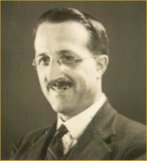
The notes on this page are all that have come to light of Mr. Cowell's ministry during his visit to Australia and New Zealand in early 1959.
- The visit must have extended through May and June, as Mr. Cowell gave an address in Singapore on June 4, 1959 – evidently on his return trip to Britiain.
- Shortly after his return, Mr. Cowell served at the London meetings on July 14-16, 1959.
- His remark at that time "that the greatest numerical losses we have had of late years have been through the Galatian spirit" was challenged.
- This was a prelude to his being unjustly charged with holding wrong doctrine and weakening separation – particularly on his visit to Australasia –
- ultimately resulting in being withdrawn from on July 12, 1960.
G.A.R.
Page Top
| READING 1 |
|---|
The Gospel of the Glory ( 1 )
2 Corinthians 3; 4: 1-12; 5: 20-21
Memorials 10: 1-25
|
|---|
G.R.C. I thought we might consider what Paul calls “our gospel”, in verse 3 of chapter 4:
- “But if also our gospel is veiled, it is veiled in those that are lost”.
- In chapter 3, relative to “our gospel”, he says that he and those with him were competent new covenant ministers, verse 6; God had made them that:
- “who has also made us competent as new covenant ministers”,
- as the note indicates. On the other hand, in chapter 5, he says they were ambassadors:
- “We are ambassadors therefore for Christ, God as it were beseeching by us”, verse 20.
- As competent new covenant ministers, they had a ministry which would meet the need of every man; as ambassadors, they were beseeching and entreating because of the longings of God’s heart.
- They represented God in their entreaty and in their beseeching. In the one case, what is in mind is the need of man; in the other, as we say, the need of God.
- So these two features are both linked with the word “our gospel”.
- Some may say, Surely Paul’s gospel was the gospel of sonship – and so it was, and is; that is the great blessing. He is writing to sons; in most of his epistles, he writes to sons. The salutation here is
- “Grace to you, and peace from God our Father”, 2 Corinthians 1: 2.
- He is writing to sons, and he says that his preaching was
- “the Son of God, Jesus Christ”, 2 Cor. 1: 19.
- But then sons should know the moral basis on which the gospel comes to them.
- Those who were marked out beforehand for sonship needed redemption, and it is essential that they should know the moral basis on which the gospel has reached them; otherwise they will never be in the liberty of the relationship.
And so in chapter 3, Paul speaks of the ministry. He and those with him were made by God competent new covenant ministers, but he tells us what the ministry is,
- in verse 8: the ministry of the Spirit subsists in glory;
- and in verse 9: “the ministry of righteousness abounds in glory”.
- They were the things which he and those with him, as new covenant ministers, were ministering.
- God was ministering, indeed, through them, the ministry of the Spirit and the ministry of righteousness, subsisting in glory and abounding in glory.
- So that the gospel from this standpoint is the gospel of the glory, as Paul says:
- “the radiancy of the glad tidings of the glory of the Christ, who is the image of God”, 4: 4.
- It is a radiant message. The gospel comes from the glory, fits men for the glory, and attracts men into the glory. God is bringing many sons to glory. Heb. 2: 10.
I thought this morning we should dwell mainly on the aspect in chapters 3 and 4:
- how God had made Paul and those with him competent as new covenant ministers;
- what the ministry was, and where it brings us, not leaving out of our thoughts that the longings of the heart of God are in the matter.
I suggested reading the two verses in chapter 5 for this reading also, that we might see both sides –
- that those who were carrying the gospel at this time were made by God competent new covenant ministers, and they were also ambassadors.
- An ambassador cannot be an ambassador unless he comes from the presence of the king.
- They were men who were in the gain themselves of new covenant ministry, who were habitually in the presence of God Himself, and knew the longings of His heart; therefore they were ambassadors.
- Then the last verse of chapter 5 shows the foundation of the whole matter.
- The foundation is not referred to in chapter 3, but whichever view we are taking – whether that of new covenant ministry, or the ministry of reconciliation – both are founded upon the momentous truth that
- “Him who knew not sin he has made sin for us, that we might become God’s righteousness in him”, chapter 5: 21.
- So at the beginning of the reading, our hearts no doubt will be solemnised as we think of that – the awfulness of it – Him who knew not sin, God has made sin for us.
- Apart from that, there could be no new covenant ministry, and no ministry of reconciliation.
L.F. Is that what is involved in the suggestion that the competency is of God? They are competent ministers of the new covenant, but that competency is of God Himself, is it not?
G.R.C. Quite so. It is remarkable what Paul says,
- “not that we are competent of ourselves to think anything as of ourselves”, chapter 3: 5.
- It is not a question only of doing, it is a thing to take to heart, that we are not competent of ourselves even to think anything as to ourselves – showing how dependent we are upon the Holy Spirit.
S.E.E. Would it be right to say that in the new covenant ministry, as meeting the need of men, God is telling man what He is for him,
- but in the ministry of reconciliation is it more what man is intended to be for God?
G.R.C. Yes, I think so. Chapter 3, as you say, brings out in a remarkable way what God is towards us, and what He is ministering through those whom He fits for the ministry.
- But then, the ministry of reconciliation brings home to us the longings of the heart of God to have man in His presence in suitability, that all distance should be removed, and the lengths to which He has gone to bring that about.
D.A. Have you any thought here as to the title of the Spirit:
- “the Spirit of the living God”, chapter 3: 3?
G.R.C. Well, it is very touching, the expression “the living God”, in contrast, in verse 7, to “the ministry of death, in letters, graven in stones”.
- You cannot imagine anything more set and fixed than something graven in stones. And what was graven in stones was a ministry of death and of condemnation.
- This would be a warning to us not to produce anything in what is current amongst us “graven in stones”. In contrast to that, you have “the living God”.
- “Thou shalt not make thyself any graven image”, Exodus 20: 4.
- There is nothing static, as it were, speaking reverently, about God. He is the living God – always active, always in movement,
- and, as the expression “living God” must imply, He is a loving God. His affections are living and always in activity.
- And so we have “the Spirit of the living God” writing, but writing on fleshy tables of the heart – verse 3.
- In chapter 6, we have the temple of the living God; we are connected with what is living. God is living; it is the living God who is dwelling among us and walking among us.
- Everything in the system is living, and if we personally are not living, we are not vitally in the system at all. The ministry of the Spirit is to make us alive.
- “The letter kills”, verse 6.
- That is a general principle, that “letter kills, but the Spirit quickens”.
- You will notice the note on “letter”; it is characteristic, ‘For letter kills’; but the Spirit quickens.
- The ministry of the Spirit is to make men alive towards God, so that they can livingly be in the system – the divinely established system.
W.F. This had a very attractive result to the Thessalonians,
- having “turned to God from idols to serve a living and true God”, 1 Thessalonians 1: 9.
G.R.C. Quite so. “To serve a living and true God, and to await his Son from the heavens”, verses 9-10.
- And we belong to the city of the living God – Hebrews 12: 32.
- But there are those who do not give heed to God’s voice, because the idea of living means that God is speaking every day:
- “Today if ye will hear is his voice”, Heb. 3: 7.
- It is not that God has spoken; it is not that we have everything there is to know on the bookshelves; God is speaking:
- “Today if ye will hear his voice, harden not your hearts”.
- God is the living God, speaking every day, and if we do not heed his current voice, in principle we are turning away from the living God.
G.C. Not only being made to live, but being maintained in life.
G.R.C. Quite so. Paul was an example of this, even in the fact that he did not need a letter of commendation. He said,
- “Ye are our letter, written in our hearts, known and read of all men”, 2 Corinthians 3: 2.
- That is to say, Paul did not need to carry a letter of commendation about with him; it was so manifest that the Corinthians were written on his heart, that they were his letter.
- And this raises the whole question as to how we regard the brethren, how we talk about them.
- I feel certain that if anyone met Paul, they would not have heard about all the troubles at Corinth although he would tell Timothy and Titus.
- But there is a tendency in our hearts, which we know, to dwell upon troubles and difficulties.
- Brethren go from one country to another, possibly, and they say, ‘What are the brethren like in that country?’
- And the tendency may be – well, it is, with the natural heart – I am only saying this as a warning to myself and to others – to begin to talk about troubles and difficulties.
- But that is no letter of commendation – that is the opposite. It does not commend a brother to me, when he is talking like that.
- Paul would speak to others of the positive side of things at Corinth, but he would bear in his own spirit the side of what needed adjustment.
- We should speak well of the brethren, viewing them as God views them, as the work of God; not comparing some to the disadvantage of others.
- To spiritual persons who are concerned and who may help in the matter, it is another thing to confide, in view of help.
- But the general thing was that the Corinthians were Paul’s letter, as written on his heart.
- It was so evident that Paul loved them, through thick and thin, as we say – never mind what they were to him, and they were treating him very badly.
- Paul had been treated disgracefully by the Corinthians, but there was not a bit of personal feeling against them.
- Through thick and thin, as we may say, he loved them, and everybody knew it. That was his letter of commendation.
G.C. Love is the highest and greatest expression of life, do you not think?
G.R.C. Well, it is. And so Paul goes on to say they were manifested to be Christ’s epistle – 2 Corinthians 3: 3. What can you say against Christ’s epistle?
- There were many practical things out of order at Corinth, but he maintains the view that nevertheless they were Christ’s epistle,
- “ministered by us, written, not with ink, but the Spirit of the living God”, chapter 3: 3.
- There was some definite writing at Corinth to talk about, without talking about the difficulties.
Ques. Is this what is distinctive, in relation to Paul’s gospel? You spoke of “our gospel”.
- At the end of Romans he speaks of “my gospel”. It is the gospel of the glory of the blessed God, the ministry of the Spirit coming in in that way.
G.R.C. I think I have already referred to the fact that sonship is an outstanding feature of Paul’s gospel, but so is the glory. We have here the gospel of the glory,
- “the radiancy of the glad tidings of the glory of the Christ, who is the image of God”, 4: 4
- – and I think we need to lay hold of this side of the gospel in its liberating power.
- It comes from the glory; it is a ministry from the glory, fitting men for the glory. And therefore Paul did not need to put a veil on his face.
N.B.S. Could you say how we come into the gain of the new covenant which is made with Israel?
G.R.C. Well, this is not the new covenant made with Israel; this is our gospel. Our gospel is greater than the new covenant made with Israel.
- It is simply that the character of it is new covenant, not old.
- It is ministered on new covenant lines, on the line of “I will”, not “Thou shalt”. It is the character of it that is new covenant –
- “competent new covenant ministers”
- – and we are not to go back in our spirits or actions to the old covenant.
- Our gospel is greater than any covenant, far greater. It exceeds beyond comparison the covenant yet to be made with the house of Israel and the house of Judah –
- although we have one thing in common, and that is the forgiveness of sins:
- “their sins and their lawlessness I will never remember any more”, Hebrews 8: 12.
- We have to come into that, just as they do, by repentance and faith and forgiveness.
- But after we have got away from the basic matters, then we come to what is distinctive of Christianity. Paul is speaking here of Christianity, “our gospel”.
- It far exceeds anything Israel will ever know; it takes us within the veil. That is the point of this ministry:
- “But we all, looking on the glory of the Lord, with unveiled face, are transformed according to the same image from glory to glory, even as by the Lord the Spirit”, chapter 3: 18.
- In principle, in certain respects, it corresponds with Hebrews. Hebrews presents the blood of the covenant which will yet be the basis of the covenant with the house of Israel and the house of Judah,
- but this epistle shows that that blood, which is the basis of that covenant, has opened the way for us within the veil.
- Christianity is altogether superior to anything Israel will ever know. Hebrews is to stress that.
- That blood, which will yet secure blessing for Israel, has opened up the way, and we have boldness by it to enter the holy of holies, where Israel will never go – nor any other family.
- And so it speaks of the things of the heavenlies being purified with blood, in Hebrews – chapter 9: 23. The heavenlies themselves –
“the heavenly things themselves” literally is “the heavenlies”
- – have been purified with better sacrifices than the offerings of old.
- And we belong to the heavenlies themselves; we do not belong to the earthlies.
- Israel belongs to the earthlies, but the blood that has secured their blessing has opened up, as it were, the heavenlies to us, and the idea is here.
- “Our gospel” comes from the glory, fits men for the glory, and attracts men into the glory; that is, within the veil, where Christ is.
G.C. ‘The heav'ns are opened now’. Hymn 132: 3 – 1973.
G.R.C. They certainly are – But have we been in? Have we entered in spirit yet, and do we live there?
A.I. Is this the character of ministry that comes in through Haggai, in order to get the saints going again when they had ceased to build?
- “The word that I covenanted with you when ye came out of Egypt, and my Spirit, remain among you: fear ye not”, Haggai 2: 5.
G.R.C. Quite so. We can get great comfort from that scripture, as applying it in the light of Christianity.
- But here we have Christianity itself. This is surpassing. It speaks of it in that way:
- “the surpassing glory”, 2 Corinthians 3: 10.
- There has never been anything like it – never will.
- “The surpassing glory” – and what do we know about it? We take the ground, perhaps, that we know the gospel, but do we know it?
- If we know the gospel, our home will be in the holiest; that is, if we know the Christian gospel – we may have got a partial gospel.
W.J.H. Would you tell us the connection between the glory
- and “the face of Jesus Christ”
- – why that is particularly emphasised, that the glory should be there?
G.R.C. Actually, in verse 6 of chapter 4, it refers to what is shining in the faces of the apostle and those with him – but it was the face of Jesus Christ.
- Christ was formed in them. If you read that verse:
- “Because it is the God who spoke that out of darkness light should shine who has shone in our hearts for the shining forth” – or ‘radiancy’ – “of the knowledge of the glory of God in the face of Jesus Christ”.
- I do not mean that the glory of God is not in the face of Jesus Christ, but the point there is that God had shone into the hearts of Paul and Silas and Timothy for the shining forth, radiantly, of the knowledge of the glory of God in the face of Jesus Christ.
- They were directly in that light; it was shining directly from His face into their hearts, but was to shine out through them. Their faces, and their measure, were to correspond with His.
- We ought to be radiant Christians; we ought to have radiant faces.
W.J.H. Paul was concerned about those who had not seen his face. There was something in Paul’s face that the saints would miss if they had not seen it.
G.R.C. Do you not think the face of a man is one of the most marvellous features of creation? The face of a man – perhaps the most marvellous.
- There is the voice of a man – man’s capacity to sing and respond, which is unique – but the face of a man!
- “Let us make man in our image”,
- and so God made a creature with a face capable of expressing divine attributes.
- A man’s face can express love, sympathy, anger, hate, mercy, compassion; a man’s face is capable of expressing attributes of God.
- But then, there is a complete misrepresentation of God in the old man. He expresses anger, but it is not divine anger, it is not God’s anger; he expresses hate, but not God’s hate. God hates certain things.
- The old man is expressing what is the reverse of the divine image, but the new man is created after God, in righteousness and holiness of truth.
- And therefore there should be in the faces of the saints, as well as their actions and words, an expression of God.
- But all I am saying about the face is to concentrate, in our thoughts, on the face of Jesus Christ.
A.I. Peter could say to the man at the gate of the temple, “Look on us”.
G.R.C. Yes – “Look on us”. Well, there was something to look at there, in the way we are saying; the light was shining forth.
- There was a radiancy about Peter and John, but the face of Jesus Christ is the great study, perhaps the greatest study there ever will be – the face of Jesus Christ.
- “The glory of the Christ, who is the image of God”.
- There we see a perfect representation of God. We see love, compassion, tenderness, kindness, holiness – and yet, we will see anger.
L.F. Is it dependent upon being in the holiest, and coming out – this shining of the face you are speaking of?
G.R.C. The fact is that no one can be a competent new covenant minister in connection with “our gospel” unless he lives in the holiest.
- The figure used is that when Moses went in to speak to God, he took the veil off, as it says in Exodus.
- Whenever he went in to speak to God in the sanctuary, he took the veil off; when he came out to speak to the people, he put the veil on. Why did Moses put it on?
- Paul did not put it on – that is the difference between Christianity and the old dispensation.
- Paul went in to God, and looked on the glory of the Lord with unveiled face, but he did not put a veil on when he came out.
- If the gospel was veiled, it was not because he put a veil on his face; it was veiled in those that were lost.
L.F. The very expression here, “the knowledge of the glory of God in the face of Jesus Christ” emphasises what you are saying. It means that it is in the holiest, in the knowledge of the thing.
G.R.C. I think it is most important to see what is being said, that the new covenant ministers come forth from God.
- They are in the gain of the gospel, they habituate the presence of God; they are looking on the glory of the Lord with unveiled face, and are
transformed; but they do not put a veil on their face when they come out.
- Moses was transformed, typically, but he had to put a veil on his face.
- The point, today, is that we can go into the holiest in the full sense.
- In Moses’ case, the holiest was connected with a tabernacle which was a figure of the true.
- Now we go into “the true”, into the very presence of God, outshining in radiant glory, in the Person of the Son, and in coming out we do not need to put a veil on our faces.
- We may do so, to escape reproach, and so on. I am afraid I have done it, alas, many a time. But we should come out with faces radiant – no veil.
C.E.J. That came out in Paul in his preachings, did it not? I am thinking of his preaching before Agrippa. He desired that Agrippa might be even as he was, except his bonds.
G.R.C. Quite so – beautiful. What a man he was before Agrippa! What a radiant face he had! His face reflecting the glory of God in the face of Jesus Christ.
J.C. Does this turn, in measure, upon our capacity to see? And does the matter for those without also depend on whether there is a work of God there, that they may see it in us?
- If we do not see the things which are there in the sanctuary, if we have not the capacity of sight, we cannot take them on and reflect them.
G.R.C. You mean, as new covenant ministers, if we have not seen them, we cannot express them.
J.C. We need our sight affected, before we can see them. Until we have seen them, we cannot reflect them.
G.R.C. But then, those who are affected by the gospel, see it first in the saints.
- That is the point here: “for the shining forth”.
- There is the shining forth, or radiancy, of this in Paul and Silas and Timothy. They knew the inside place, and outside they were shining; and the light was to come to others through them.
- That is still the truth. The Lord can always arrest a man directly – Paul being a great example – but the normal way is that the light reaches men through those who know the inside place themselves.
- Then if men accept the light as it comes to them through men like Paul, they get the gain of the ministry of the Spirit and the ministry of righteousness – which Paul could minister to them – which fits them to go in.
- The first thing is that people should be arrested by the radiancy of light shining in the saints. Then, when a soul is arrested, he says, ‘I would like to know something of what you know’.
- You say, ‘Well, we know there is a ministry – a ministry of the new covenant which will put you where we are. Through wondrous grace we have found a ministry of the Spirit and a ministry of righteousness, and that will put you just where we are, and then you will behold the glory direct’.
W.B.H. What you are saying as to the face of the ministers, does it explain why the emphasis here is on the Spirit – whereas in similar passages in the Hebrews, you were speaking of the blood being stressed?
G.R.C. Yes. Well now, the soul would get help as to the blood in the ministry of righteousness, but here the ministry of the Spirit is put first.
- The soul sees the light shining in persons – and Paul is not limiting this to himself; in measure, it should mark all of us who know our place in the presence of God.
- Those affected see the light, and then there is the ministry of the Spirit.
- No doubt there begins to be quickening power working in them, for Paul says,
- “death works in us, but life in you”.
- But then, to be free, themselves, to enter the presence of God, they must understand the ministry of righteousness. But these ministries are available!
- God is ministering the Spirit to men as a free gift – but He is ministering the Spirit to men as a free gift on the ground of ministering righteousness as a free gift.
- And the ministers should be thus morally qualified to have these things from God and to bring them to men.
D.J.M. It says in Acts, “specially pained … that they would no more see his face”, Acts 20: 38.
G.R.C. Well, what a wonderful face Paul had! What the saints saw in the face of that man! They saw a reflection of Jesus Christ,
- “the glory of God in the face of Jesus Christ”.
- It is affecting that it should say “that they would no more see his face”. I suppose, next to Christ Himself, there has never been such a face as Paul’s in testimony here.
Ques. Does the Lord taking Peter and James and John up into the mountain have in view their competence as new covenant ministers?
G.R.C. I think that is so, in principle. It was to equip them for what they would be empowered to do when they had received the Spirit.
- But I believe we ought to understand this ministry, the idea of the veil, how the veil comes in.
- We often say there is no veil on the face of Christ, but that is not the main point.
- It is true, there is no veil on the face of Christ; we can in that way contrast Christ with Moses. But that is not the main point, for Paul says,
- “Having therefore such hope, we use much boldness: and not according as Moses put a veil on his own face”, chapter 3: 12.
- That is the contrast – Paul did not put a veil on his own face. He went into the holiest, into the presence of God, and was transformed, but he did not put a veil on when he came out. That is the difference between the Old Testament and the New.
- Why did Moses put a veil on his face? Because he had no ministry given to him whereby he could say to those who saw his face shining, I have a ministry which will put you where I am.
- He had not got it; He had only a ministry graven on stones, a ministry of death, a ministry of condemnation. Therefore he put a veil on his face; he could not bring them where he had been.
- But the point in Christianity is that those who have been in the presence of God and have looked on the glory of the Lord have got a ministry
- which will put every soul who accepts the light, who comes to the light, where the minister himself is. So there is no need to have a veil.
W.B.H. Moses could not offer them the Spirit.
G.R.C. He could not; nor could he offer them righteousness. The minister of the gospel, on God’s behalf, offers men righteousness and the gift of the Spirit.
G.D. How do you propose that we put what you are saying into operation? Here we are in this city – how would you propose that we put it into operation?
G.R.C. Well, it should be in operation. It is not a question of putting it into operation – this should be in operation, because we profess to have accepted the gospel.
- Now, if I have accepted the gospel, I have received the free gift of righteousness; Christ is my righteousness; and I have received the gift of the Holy Spirit.
- Therefore, I am perfectly at liberty to go into the presence of God.
- These gifts have come to me from the glory to bring me to the glory. The glory is my place, and I am to find my home there; I am to live there at every opportunity. It is really where my life is:
- “your life is hid with the Christ in God”, Colossians 3: 3.
- Well, that should mark us all. Then, we should come out with shining faces, unless we put a veil on –
- and if we do sometimes put a veil on, we come out as a very astute business man, or something like that; or we have some other status, a member of an institute –
- and that marks us amongst men. Well, that is like a veil on your face.
A.I. What you are speaking of is the radiancy of the glad tidings shining out in persons, and God’s glory is secured in earthen vessels.
G.R.C. Yes. There is “the shining forth” – or ‘the radiancy’ – “of the knowledge of the glory of God in the face of Jesus Christ”.
- “But we have this treasure in earthen vessels, that the surpassingness of the power” – there is surpassing glory, and surpassing power – “may be of God, and not from us”, chapter 4: 7.
- We are emptied of ourselves. The moment self gets into the picture at all, it is a veil, and that is why the discipline comes in here.
- We all need it, to keep self out of the picture – the big ‘I’. The moment a little bit of the big ‘I’ comes in, there is a veil on our face.
S.E.E. Is the unveiled face seen particularly in Paul and Silas?
G.R.C. Yes, and in Timothy. Paul says in chapter 1 of this epistle, verse 19,
- “For the Son of God, Jesus Christ, he who has been preached by us among you by me and Silvanus and Timotheus”.
- Those were men with shining faces; there was radiancy about them. They were men who could say with Paul,
- “no longer live, I, but Christ lives in me”, Galatians 2: 20.
- There was no veil on their faces.
C.D. We have had from time to time, for some years now, preachings in this city, and the Lord has helped in one way and another. Do you think this would come into it?
- We have never had the support, really, of the brethren in a general way, but do you not think that there should be support for such an occasion city-wise?
G.R.C. Yes, you want plenty of shining faces supporting the gospel. That is what there was in the second of Acts.
- The whole company had received the free gift of righteousness and the gift of the Holy Spirit.
- They were all filled with the Holy Spirit, and they all began to speak forth –
- that is, the sisters and brothers; sisters speaking – not in the assembly – but to those they come in contact with day by day
- – you are so radiant about the matter, that you cannot stop speaking.
- The whole city was one of radiancy, and that brought the crowd together. And Peter, standing up with the eleven, explains the situation.
- That is all the preaching can do, explain the situation and offer what God is offering to the people. Peter offers the very same thing:
- “Repent, and be baptized, each one of you, in the name of Jesus Christ, for remission of sins”,
- – that would involve, in Paul’s language, the free gift of righteousness –
- “and ye will receive the gift of the Holy Spirit”, Acts 2: 38.
- He as much as says, ‘We have a ministry that will put you where we are’.
J.H. Is suffering vital in this testimony? Paul at Corinth had the opposition from the synagogue, and then finally before the ruler, and in this chapter he says,
- “always bearing about in the body the dying of Jesus, that the life also of Jesus may be manifested in our body”, verse 10.
- Is it not suffering and glory?
G.R.C. Exactly. We are bound to get opposition, because the gospel is so wonderful;
- it is so radiant, if our faces are unveiled, that the only thing that could cause it not to shine is because it is veiled in those that are lost – and it tells us how it is veiled:
- “in whom the god of this world has blinded the thoughts of the unbelieving, so that the radiancy of the glad tidings of the glory of the Christ, who is the image of God, should not shine forth for them”, verse 4.
- So we are up against the god of this world. He cannot do anything nowadays, except blind men. He can no longer actively wield the power of death; Christ has annulled him who has the might of death – Heb. 2: 14.
- He has lost his power in a general way, but he knows that if the light of the gospel really penetrates a soul, that soul is lost to him. So the god of this world is blinding – according to Ephesians,
- “the universal lords of this darkness”, Eph. 6: 12.
- The only hope Satan has is to blind men, so that they do not see this radiancy. And therefore we shall come up against the opposition of the god of this world.
- “For we who live are always delivered unto death”, and in the preceding verse, “always bearing about in the body the putting to death of Jesus” – see note – “that the life also of Jesus may be manifested in our body”, verse 10.
- I think all these disciplinary measures, whether they come through persecution, or in other ways, are to help us not to put a veil on.
- The other figure is of Gideon’s pitchers. The more the pitchers were broken, the more the light shone out.
Rem. Paul, in writing to the Philippians says,
- “that ye may be harmless and simple, irreproachable children of God in the midst of a crooked and perverted generation; among whom ye appear as lights in the world, holding forth the word of life, so as to be a boast for me in Christ’s day, that I have not run in vain nor laboured in vain”, 2: 15.
G.R.C. Well, I think that helps as to the general position of the saints.
- Here it is those whose privilege it is to minister who are specially in mind, although he is writing this no doubt to help the whole of the Corinthians to be radiant.
- The Philippians were radiant, more than any company; they were shining lights in the world, holding forth the word of life.
A.G. Why does the apostle refer to the Lord the Spirit in connection with what has been said as to liberty in verse 17:
- “Now the Lord is the Spirit, but where the Spirit of the Lord is, there is liberty”.
- You are speaking of Satan restricting and seeking to hinder. Is that an encouragement?
G.R.C. It certainly is an encouragement. We have the Spirit. The Lord is the Spirit, but where the Spirit of the Lord is, there is liberty.
- “But we all” – now he is not limiting this to himself and Sylvanus and Timotheus –
- “we all, looking on the glory of the Lord, with unveiled face”;
- we have a far greater privilege than Moses. He went in with unveiled face to behold the glory.
- But think of our privilege: we look on the glory of the Lord with unveiled face, and
- “are transformed according to the same image from glory to glory, even as by the Lord the Spirit”.
- I would seek to urge upon myself and others that we should find our home in the holy of holies.
- This ministry is from the glory, to fit us for the glory, to attract us to the glory – which would have repelled us.
- The glory repelled the children of Israel, because there was no ministry to fit them to be in the presence of it.
- But it is completely different now; the glory need not repel anybody.
- It should attract, because God is presenting all that is needed to fit men for the glory, so that they should find their home in the glory, and themselves become radiant.
H.J.M. Was not Stephen an outstanding expression of this?
G.R.C. He was. They looked on his face to begin with, and it was as the face of an angel, which may refer – I do not know whether it does – to judicial glory; but that is a feature of God’s glory.
- An angel is a messenger. Stephen was God’s messenger at that time – not exactly an ambassador, but a messenger, bringing an indictment.
- But there was a glory about his face, and at the end he sees the glory of God in Jesus, and that glory is morally reflected in his face as he dies.
Ques. Was Paul himself really affected by Stephen?
G.R.C. Well, that is very interesting. We may say that Paul’s first touch was on the road to Damascus when the Lord appeared,
- but in a way his first touch was at the stoning of Stephen. He refers to it in speaking to the Lord:
- “when the blood of thy witness Stephen was shed”, Acts 22: 20, he said.
- And undoubtedly Paul saw the radiancy of the knowledge of the glory of God in the face of Jesus Christ shining forth in Stephen,
- so that when the Lord appeared to him, a certain groundwork had been prepared, because the Lord said,
- “It is hard for thee to kick against the goads”
- – recounted by Paul in Acts 26: 14, omitted in Acts 9. Paul had seen something which had reached his heart and conscience.
W.F. That might make room for enquiry on verse 12:
- I would like a little help on that expression. We have been encouraged this morning about going in, and having boldness for it.
- What about this expression of using boldness? Is that the testimonial side?
G.R.C. I think it is boldness in coming out. We have boldness in going in by the blood of Jesus, and we want other men to have boldness to go in;
- and therefore we go out. Here, it means going out.
- “Having therefore such hope, we use much boldness”
- – because of the ministry that he had got from God. Why should we not be bold in going out with the gospel?
- Look what we have got in our hands, as it were – a ministry of righteousness, and a ministry of the Spirit.
- I am using that order, although the reverse is put here, because Paul is speaking to the Corinthians, where things were getting into a ritual and into a groove.
- They were tending to go back to what was graven on stones; which is all men can do. Men can only grave things on stones; they cannot put anything into the hearts of people.
- That needs the Spirit of the living God. So that is why, I think, Paul brings the Spirit in first here; but you do not present that first in the gospel.
- What you present in the gospel is the ministry of righteousness, which abounds in glory – comes from the glory, and abounds in glory.
- Why, our righteousness is Christ in glory! It is a glorified Man who is our righteousness.
- “But of him are ye in Christ Jesus, who has been made to us wisdom from God, and righteousness”, 1 Corinthians 1: 30.
- It is a glorified Man who is our righteousness. Think of presenting that to men!
- A glorified Man as their righteousness, which gives them right to go into the glory – but the Spirit gives them power, quickening power.
J.C. The Galatians were going back to the stones. Paul says,
- “He therefore who ministers to you the Spirit”, Galatians 3: 5.
- Is he referring to his own ministry, his own service, as well as that directly from God?
G.R.C. The Galatians were certainly going back to the stones. “Weak and beggarly elements” – they make us all paupers.
- If we go back to what is graven in stones, we shall all become paupers spiritually, and’ all have very dull faces.
- But the ministry of righteousness and the ministry of the Spirit sets us up in divine wealth and glory, and makes us radiant – if we take advantage of it, if we go in.
- The gospel is to place us right inside, in the very presence of God, in perfect suitability.
G.D. All these scriptures you have brought before us bear on what is the result of going in, so that a witness publicly was in the mind of the apostle, would it not be, for Corinth?
- That every face was to shine with this wonderful ministry – in Corinth, I mean? And is not that to be in Sydney?
G.R.C. That is just what I am thinking. Because you take what Paul says in the first epistle:
- They were the very shrine – that word means the ‘shrine’. But entering the holiest is the individual side, where we should continually resort; it is our home.
- I would like to press that – it is our home. If we have another home, we are on a lower level; we are not on the Christian level.
- But collectively, we know the presence of God amongst us, the Father and the Son and the Holy Spirit, if things are right.
- If the Spirit is free and ungrieved, Christ will be enshrined amongst us whenever we are together; and where Christ is enshrined, the Father’s presence will be known. That is the truth of the matter.
- There is God – Father, Son and Holy, Spirit – known amongst us where things are right, so that we are the very shrine.
- And in principle, our gatherings, therefore, are in the holiest. We are in the very shrine itself, the presence of God.
- The gatherings vary. Some people limit the temple to the thought of enquiry, but that is only one side of the temple.
- In the temple, every whit utters glory. God is there – transcending thought! God Himself! We are in the presence of glory.
- If we are temple of God, and know the presence of God, surely the whole company should be radiant.
G.D. And surely that should have a witness for the men that we are concerned about.
- We do value the truth of the position into which the Lord has brought us, but we do not want that to become a bar to others coming into this wondrous glory that should shine in all our faces, do we?
G.R.C. The Lord Jesus was perfectly exclusive, but He was the most accessible of men.
- That is the true separation – entirely separate, but perfectly accessible. The other kind of separation is pharisaical.
D.A. Could you say a word as to the spirit of the new covenant? It has been spoken of as being the administration of it. This word “spirit” with a small ‘s’, would that be the spirit of the new covenant?
G.R.C. “Not of letter but of spirit”. Well then, he immediately goes on:
- “For the letter kills, but the Spirit”
- capital ‘S’ “quickens”. There are no capitals in the Greek, of course.
- It is just a question here of the translator’s spiritual discernment as to when he puts a capital and when he does not.
- “Not of letter, but of spirit”
- means, I would say, that Christianity is characteristically spirit and not letter. We have to take everything up on that line, in the spirit of it, not the letter. Letter kills.
J.N.G. So that this bears not only upon the public preaching, but on the way in which ministry is taken up amongst us, and on our relations amongst the saints.
G.R.C. Well, it bears much on our relations with one another.
- One legal person in a meeting can do a lot of damage. A legal person usually causes terror.
- They did not cause Paul terror, but they cause most people terror. Paul was not terrified by legalists, even though Peter was, at Antioch. Paul would withstand them to their face.
- But this does bear on our relations with one another. It is not only a question of shining faces as expressing the radiancy to the world, but it is the way we should be radiant towards each other – all helping towards liberty.
- “Where the Spirit of the Lord is, there is liberty”.
- “But we all” – no one left out – “we all, looking on the glory of the Lord, with unveiled face, are transformed” – the whole company should be transformed – “according to the same image from glory to glory, even as by the Lord the Spirit”.
S.E.E. Things ministered in the letter engender bondage. If the saints are brought into bondage over anything, you would question it, perhaps, whereas what is in spirit, or spiritual, would engender liberty, would it?
G.R.C. Yes. Any dictate, or dogma, comes between the soul and God, which is a very serious matter. It comes between the soul and God.
- If people obey a dogma, they are not obeying God; it has come between their souls and God.
- So that the apostle himself says, in the first chapter of this epistle, “Not that we rule over your faith” – that is Romanism, the very principle of Romanism, to rule over people’s faith –
- “Not that we rule over your faith, but are fellow-workmen of your joy”, chapter 1: 24.
- What a way to approach! The apostle is as much as saying, ‘All I am seeking to do is to help you joy. You are going on with things which are hindering your joy – you are standing in your own light – and I want to get you free of them’.
- But he did not put things down as a dogma to rule over their faith, but in such a manner as to exercise their souls relative to God.
- He would put them in touch with God in his ministry, so that they worked the thing out with God.
- We have to say straight things, we have to speak clearly and faithfully about what is wrong, but there is the manner, in which it is done.
- It should be done in a manner like that of the apostle in the first epistle, which puts the soul in direct exercise before God, so that the soul reaches it with God.
Rem. I was thinking that this occasion should help us in relation to this radiancy. The Lord is speaking to us now in the same way as Paul was speaking then to the Corinthians.
G.R.C. Well, this is the spirit in which we should approach matters. Even in applying Old Testament types, they are to be applied in the spirit of the new covenant, not in the letter of the old covenant, which will only kill.
J.N.G. So that if matters come up in ministry which call for adjustment, if there is a touch of glory about the way the truth is ministered, all saints will respond.
G.R.C. Well, all who are in a state to respond. There may be some who do not.
- But if things have been handled in keeping with the ministry of glory, and then there is no result, it is because will is at work.
- In fact, the apostle tells them in the second epistle to examine themselves and see if Jesus Christ was in them at all.
- If people do not respond to the ministry of glory, the question is, are they in real Christianity at all?
- They may be, but you have to leave it as to whether they are or not – but you have to deal with them as not in the thing vitally.
- But to bring a thing to an issue without acting in the right spirit, is a very serious matter.
Ques. Is that seen in the 10th chapter? Paul is so in the joy of this, that he is able to refer to himself;
- “But I myself, Paul, entreat you by the meekness and gentleness of the Christ”, verse 1.
- Is that “the same image”?
G.R.C. I think so. You think of all that Paul had put up with from the Corinthians personally; their treatment of him had been disgraceful.
- He refers to how they were treating him more than once in the two epistles, especially in the second epistle, but he never brings in anything personal in the way of personal feeling or resentment – not a bit.
- It did not affect his love towards them at all. He leaves out what is personal, although the way they were treating him was disgraceful.
- And even after all that had transpired, apart from the personal side, all the wickedness that was there in Corinth, even in the tenth chapter, he is saying,
- “I … entreat you by the meekness and gentleness of the Christ”.
- What forbearance still to be on that line!
- But he did not remain on that line. If ministry of new covenant character does not produce results, you cannot remain on that line then; it is a question of people doing despite to the grace of God.
- And so Paul said, in the last chapter of this epistle, that if he came again, he would not spare – chapter 13: 2. Things would happen then.
- And that is another feature of the divine glory. Paul’s face would then still be expressing God – the anger of God.
- It says of the householder in Luke 14, that
- “in anger”, he said to his bondman, “Go out into the ways and fences and compel to come in”, verse 23.
- We have to take account of the anger of God when grace is refused.
J.C. Normally, the saints will respond to the Lord’s requirement, if it is put before them attractively, and they are not pushed into it. If the thing is set out attractively, the saints will generally respond to it.
G.R.C. Well, thank God, that has been the feature for many years now, that saints have been ready to respond – though some may be slower than others.
- We need to know, however, when the character of things changes. The time comes when God is angry.
- Divine anger will be seen in Christ on the great white throne; it will be seen earlier:
- “Kiss the Son, lest he be angry”, Psalm 2: 12.
- But it will be divine anger – God’s anger, not mere human anger; not anger because the brethren are not doing what I tell them to.
W.B.H. It was seen in Stephen – you were referring to it earlier. It was not the gospel he preached, was it? He was not condemning them. But as he was dying, and saw through into heaven, he was the exhibition of the gospel, was he not?
G.R.C. He was. It was wonderful with Stephen. His mission at that time was a message of indictment, and his face would be in keeping with that; he was arraigning them with murder.
- They had had every opportunity to repent, and had not, and he arraigns them with murder.
- And yet, when it is what is personal to himself –
- and how much this causes difficulty among the brethren, what is personal
- – when it came to what was personal to himself, having finished his indictment as to the murder of Christ, he says,
- “Lay not this sin to their charge”;
- and looking on the glory, he was confirmed of the glory. And so the last view of Stephen is a radiant expression of the gospel of the glory.
F.R.G. The Lord Jesus is presented in the end of the first chapter of Revelation in this judicial character, and it speaks there of
- “his countenance as the sun shines in its power”, verse 16.
G.R.C. Yes. And when the sun shines in its power, as you realize in this country, there is a great deal of heat in it. It is not only the beneficent side.
- The sun shining beneficently is one thing, but the sun shining in its power can become over-powering – and that is how the Lord’s face can be.
Page Top Reading 1 Top
| READING 2 |
|---|
The Gospel of the Glory ( 2 )
2 Corinthians 5: 10-21
Memorials 10: 26-48
|
|---|
G.R.C. This passage is of great importance as showing, among other things, the kind of judgment Paul arrived at, and which governed him in his outlook on the saints,
- and would also govern him in his outlook amongst men, as an ambassador.
- If we pass by judgment, we pass by the love of God, as the Lord says. The Pharisees had passed by judgment and the love of God – Luke 11: 42.
- And as an ambassador, Paul would represent God in grace and love, and in the longings of his heart. His judgment would be formed by being in the presence of God. He says in verse 13,
- “For whether we are beside ourselves, it is to God; or are sober, it is for you”.
- I understand that expression to mean that whenever Paul was not actively engaged with his service and care for the saints, and his testimony to men, he was in the holiest. This would be another reference to it.
- The term ‘holiest’ is only used in the epistle written to the Hebrews; but he says,
- “whether we are beside ourselves, it is to God”.
- That is to say, whenever he was at leisure from his many responsibilities, he was beside himself to God; he was in the presence of God, in the presence of Him who is the effulgence of God’s glory,
- “the expression of his substance”;
- in the presence of perfection in Manhood; he was beside himself.
- You can understand a man being beside himself in the presence of God.
- The spectacle is so amazing – God’s glory in radiant display in a Man, all the fulness of the Godhead dwelling in that Man bodily. How could we be other than beside ourselves?
- Then, in the presence of God, we get God’s outlook and judgment on matters, so that the more we are in the presence of God, the more we shall apprehend and come to God’s judgment as implied in verse 21:
- “Him who knew not sin he has made sin for us, that we might become God’s righteousness in him”.
- In that most awful expression of judgment, God’s love has come into display. In fact, His glory has come into display; His nature and character have come into full display.
- The glory that is shining in Jesus now has come into display, and is available to us, to look upon and be at home in, because that very One in whom the glory is shining now –
- God’s nature and character in radiant display
- – has been right down into the lowest place, and borne the consuming wrath of God against sin. What love there is in it!
- “That we might become God’s righteousness in him”.
This links on with what we have had already, as to the ministry of righteousness, “abounding in glory”.
- J.N.D. speaks of “God’s righteousness with glory bright”.
- One outstanding feature of the glory is that love has achieved all that it purposed without compromising righteousness in one iota;
- but achieving it in such a way that we, who were once lost and undone, shall become the eternal display of God’s righteousness as in Christ.
- That is, we in Christ, will be the eternal display of God’s righteousness, but with what “glory bright”;
- love having achieved its end at all cost to itself, without compromising righteousness in one degree, but instead upholding righteousness.
- And incidentally, to understand this is what brings peace to the soul.
- “And the work of righteousness shall be peace; and the effect of righteousness quietness and assurance for ever”, Isaiah 32: 17.
- The first epistle shows that a glorified Christ is our righteousness, and here it shows that we become God’s righteousness in Him. You could not think of anything more secure, therefore, than the position of the believer.
- A glorified Christ is his righteousness, and – I suppose it looks on to the time when we have glorified bodies – we are to become God’s righteousness in Him – an unchallengeable position.
But then, as we were speaking of Paul’s judgment being formed, this is the basis, in verse 21, of our being free to enter the presence of God.
- It is what is called in the Old Testament “atonement”, and called in the New Testament “reconciliation”, and with it is linked the other great type of Christ’s sufferings – the red heifer.
- One is in Leviticus, one in Numbers, each perfect in their setting. And so Hebrews 9 says,
- “For if the blood of goats and bulls, and a heifer’s ashes sprinkling the defiled, sanctifies for the purity of the flesh, how much rather shall the blood of the Christ, who by the eternal Spirit offered himself spotless to God, purify your conscience from dead works to worship the living God?” verses 13-14.
- It is very instructive that the types of Christ’s sufferings in Leviticus 16 and Numbers 19 are brought together – “the blood of goats and bulls, and a heifer’s ashes sprinkling the defiled” – and in 2 Corinthians 5: 21 undoubtedly both types are in mind.
- Leviticus 16 refers to the sufferings of Christ relative to God; God is primarily in view. We get the benefit, but it is His sufferings to meet the claims of God and His throne, and the blood was sprinkled on the mercy seat eastward and before the mercy seat.
- But in Numbers it is the sufferings of Christ particularly for us to contemplate. It is not for the eye of God there, but one was to slaughter the bullock before Eleazer’s eyes.
- I believe, therefore, both types are needed to form our judgment and to give us true liberty of approach.
L.F. Does this reference to God’s righteousness in Christianity give us a different concept altogether as to righteousness that might have been before men – something entirely new, something we are taking on, all in accord with God Himself?
G.R.C. Well, God’s righteousness, according to Romans, was revealed in the gospel.
- God was always righteous, of course – He could be no other – and had He manifested Himself as a judge and dealt with men in judgment, He would have been righteous, but His purpose as to man would have failed.
- But in the gospel, He has revealed His righteousness relative to the saving of men, and the carrying out of His purpose.
S.E.E. “For the love of the Christ constrains us”.
- Is Paul being affected there by the red heifer type of the death of Christ?
- Then “if one died for all, then all have died”
- – would that be more Leviticus 16? In the footnote to verse 13, it refers to the calculations of love.
G.R.C. Yes, quite so. Well, I would think perhaps both types enter into it –
- ”the love of the Christ constrains us”.
- After all, in what he was doing for God, going in by His own blood, according to the type, Aaron was making atonement for himself and his house; he was making a way in for us; He has dedicated it for us,
- “through the veil, that is, his flesh”, Heb. 10: 20.
- But then, the other type emphasises His sufferings; it emphasises the grace which took our place, the awfulness of the man whose place He took.
- That is Numbers 19, and it is to be before our eyes, so that we might know our awfulness, and have a judgment of it.
- The death of Christ viewed in these two ways is the basis of our approach. Reconciliation is effected, distance is removed, the way is open into the holy of holies – as we have had it already.
- There is a ministry of righteousness and a ministry of the Spirit on this basis to us, and we see in Paul a man who, when he was free from other things, was beside himself to God, and therefore his judgment would be formed according to God.
- He had before him the judgment seat of Christ. Many of us will want much adjustment at the judgment seat of Christ, undoubtedly; but Paul, as one who was habitually in the presence of God and had such a deep appreciation of verse 21, had arrived at a judgment.
- So that he was in keeping – if any man ever was – with the judgment seat of Christ while he was still down here. So that when it came to departure, he knew what he would receive there.
- We are to receive the things done in the body, whether good or evil – verse 10. But Paul knew what he would receive.
- He said the Lord, “the righteous Judge”, would give him “a crown of righteousness” in that day – 2 Timothy 4: 8.
S.E.E. You spoke of being in the presence of God. In 1 Corinthians 6, much is said there of “judgments”, and Paul has to say,
- “Thus there is not a wise person among you, not even one”, 1 Corinthians 6: 5.
- This would be over judgments with his brethren. I was wondering if this feature of wisdom is not something that is derived from the presence of God personally.
G.R.C. Well, it is. In the presence of God, we see “Christ God’s power and God’s wisdom”, 1 Corinthians 1: 24.
- That is another view of what we see in the presence of God – “Christ, God’s power and God’s wisdom”. The Psalmist says,
- “To see thy power and thy glory, as I have beheld thee in the sanctuary”, Psalm 63: 2.
- So we see Christ, God’s power, Christ, God’s wisdom, Christ, God’s glory in the sanctuary.
S.E.E. What you said as to Leviticus 16, propitiation, is that in view of God coming out? Would that be behind the ambassadors?
G.R.C. Yes, it is a basis of God coming out – although the great point is, man going in.
- What God yearns for is for man to be before Him in love without distance. But he comes out with a view to man going in.
- But the coming out properly is in the new covenant ministers as Paul speaks thus of himself and those ministering with him.
- They come out with a ministry which will fit men for the presence of God, which will fit men for the glory.
- God is sending that out, but it is all on the basis of verse 21 of chapter 5.
- ‘God is sending out the message’, as we sing;
- the light is shining in the ministers; there is the odour of the knowledge of God in every place-there is not only light, but odour, and sound;
- “we also believe, therefore also we speak”, chapter 4: 13.
- The spiritual senses of a man as he enters the holiest, become truly exercised; all our spiritual sensibilities are in exercise.
- There is the sight, the glory, the odour; Christ going in typically as in Exodus 16 – Aaron going in in the cloud of incense, typifying Christ going in in the fragrance of His own Person.
- He goes in by His blood, but in the fragrance of His own Person, that fragrance having been fully brought into display in the very sufferings of atonement. He goes in in that cloud of incense.
- And then there is sound in the holiest – there are divine communications. So that in every way our sensibilities are in activity as we are in the holiest, and we come to a judgment.
N.D.S. “Having judged this”. Is there a definite point reached in his outlook, as the result of something definite that he comes to and holds to?
G.R.C. And he tells us what it is: “that one died for all, then all have died” – or all “had died”, see footnote.
- We have thought about a dead body being unclean, and the whole position is unclean.
- If anyone is to come into blessing, all need to be sprinkled with the water of separation, as well as having their hearts sprinkled – which would refer to the blood –
- “from a wicked conscience”, Hebrews 10:22.
- We all need it, and in principle it is brought to us in the gospel. We may need the application to us in our practical lives as Christians, but from the divine side, these things are brought to us in the gospel that
- “all have died; and he died for all, that they who live”,
- and they would be those quickened in the way we have been speaking in the previous reading; “the Spirit quickens”;
- “should no longer live to themselves, but to him who died for them and has been raised”, 2 Corinthians 5: 15.
Then this next point is perhaps the practical working out of the judgment.
- “So that we henceforth know no one according to flesh; but if even we have known Christ according to flesh, yet now we know him thus no longer. So if anyone be in Christ, there is a new creation; the old things have passed away; behold all things have become new: and all things are of the God who has reconciled us to himself by Jesus Christ”, 2 Corinthians 5: 16-18.
- Now I take all that as part of the judgment Paul has arrived at, and it is just a question how far we have arrived at this.
- “We henceforth know no one according to flesh”, and “the old things have passed away”.
- Now is that true of us? I am not talking now about practical life, but our outlook, our judgment of matters, involving our outlook on the saints.
- Paul is brought into line with God’s own outlook. God’s own outlook is that
- “the old things have passed away; behold all things have become new: and all things are of the God who has reconciled us to himself by Jesus Christ”.
- That is how God is looking at the saints; new creation is here and now, not only future. New creation is existing, as it says in Galatians,
- “as many as shall walk by this rule”, Gal. 6: 16
- – that is the rule of new creation. Paul was walking by it here; his judgment was formed and his walk would be according to it.
- “So that we henceforth know no one according to flesh; but if even we have known Christ according to flesh, yet now we know him thus no longer. So if anyone be in Christ there is a new creation”.
- That is true at the present time; there is a new creation.
C. Paul says at the end of Galatians:
- “For in Christ Jesus neither is circumcision anything, nor uncircumcision; but new creation”, Galatians 6: 15.
G.R.C. Yes, that scripture was in my mind just now.
- “And as many as shall walk by this rule, peace upon them and mercy, and upon the Israel of God”, verse 16.
- Well, who does walk according to the rule of new creation? What do brethren say about new creation existing at the present time?
C.E.J. When Paul was here, he said,
- “I know a man in Christ, fourteen years ago”, 2 Corinthians 12: 2.
- So it must be the present time, would you think?
G.R.C. Quite so.
H.J.M. It says here, “So if anyone be in Christ, there is a new creation”; it is the present tense.
G.R.C. It is existing on earth; it is here and now – not the whole of it; not a new heavens and a new earth yet; but new creation is existing here and now.
- Have we apprehended that. How can we walk by the rule of new creation if we do not know it is here?
J.N.G. Would you open up a little further what the rule of new creation means?
G.R.C. I think if we look at these passages, the Spirit of God may help us. I believe it helps to think of the tabernacle, because Corinthians has the tabernacle in mind
- – the tabernacle of witness, or testimony; it is the assembly in the wilderness.
- What was the tabernacle of witness composed of, Mr. G.?
J.N.G. Are you thinking of the boards, and the central figure being the ark?
G.R.C. I am thinking of the whole of it.
J.N.G. It is the saints, is it not?
G.R.C. Yes. But what do the materials of which it is composed represent? Do they represent features of the old man?
J.N.G. Do they represent what Paul gives at the end of Romans in the salutations – “In Christ”?
G.R.C. I think if you look at the materials of the tabernacle system, they all refer to Christ as formed in the saints –
- “Created in Christ Jesus”, it says in Ephesians 2, “for good works”.
- Part of the good works, one of the most important of them, is to function in the tabernacle system to which we belong. That in a way is the first and foremost good work, and we are “created in Christ Jesus for good works”.
- Now the tabernacle system, typically, in every part was Christ –
the Ark, Christ Himself; but even as to Christ Himself, not Christ after the flesh, according to this passage,
- “we henceforth know no one according to flesh; but if even we have known Christ according to flesh, yet now we know [him thus] no longer”.
- We know Christ glorified; it is as such He is among us
- – ”Christ in you, the hope of glory”, Col. 1: 27.
- But “the riches of the glory of this mystery” involves the assembly here as of Christ – ”the body is of Christ”, Colossians 2: 17
- – and Christ in us characteristically and Christ among us personally; just as the tabernacle was Christ characteristically, and the ark was Christ personally.
- What would the tabernacle be without the ark? Christ among us, the riches of the glory of such a mystery.
- But is Christ dwelling, as we may say, among the features of the old man? Not at all. If Christ is among us at the present time, it is relative to new creation.
M.R. Does it not say in the Authorised Version, “If anyone be in Christ, he is a new creature”? In J.N.D’.s translation, it is “there is a new creation”.
G.R.C. Yes. The first is not correct, of course. The point here is, that “if anyone be in Christ, a new creation”.
- It is really where he finds himself. I think J.T.Sr. used that expression a good many years ago, that if anyone is in Christ, he finds himself in a new creation.
- He is part of it, but what is the new creation at the present time? Well, the tabernacle is a type of it – I am only referring to that as a type – the tabernacle of testimony.
- Here and now, the tabernacle of testimony is on the earth. The tabernacle of old was just a figure; now the real thing is here, the assembly is here.
- All the materials of the tabernacle represented Christ. Well, how is Christ here? “A new creation” – a new creation in the saints; the new man, created after God.
- God is not dwelling with the old man, Christ is not among those who have the features of the old man. It is a question of the new man, as it says in Colossians,
- “having put off the old man with his deeds, and having put on the new, renewed into full knowledge according to the image of him that has created him; wherein there is not Greek and Jew; circumcision and uncircumcision, barbarian, Scythian, bondman, freeman; but Christ is everything” – that is like the tabernacle; the whole structure was characteristically Christ – “and in all”, Colossians 3: 10-11.
- “Christ is everything” would also mean that He is ‘everything’ as object and “in all” in character.
- Well now, are we conducting ourselves as those who apprehend that new creation is present and existing – not in its totality, but it is here. God would not be dwelling here otherwise.
L.F. Would you say that in the acceptance of this great thought of new creation, it provides for us a way out in regard to all that is old, and in that way in our apprehension a way in to all that is new?
G.R.C. Well, our way in, of course, is by the blood of Jesus, by “the new and living way” into the very presence of God.
- And the more we go into the presence of God, the more we shall see that what He is looking out upon is a new creation – here and now.
- We are “His workmanship, having been created in Christ Jesus for good works”, Ephesians 2: 10.
- But then the point is that we should come to His outlook.
- Therefore, walking according to the rule of new creation involves that we henceforth know no one according to flesh. Now what about that?
A.I. Paul says, “For me to live is Christ”. The Centre of the universe for God is Paul’s Centre now, is it?
G.R.C. Yes, and in Galatians he says,
- “No longer live I” – that big ‘I’, that is the man to get rid of – “but Christ lives in me”, Gal. 2: 20.
- But then, what about walking according to the rule of new creation? We know no one after the flesh – how have we got on in that?
- Paul would come to that judgment, in the sanctuary. He was not favouring a rich man more than a poor, nor a white man more than a coloured; he was not concerned about any man.
- He did not respect any man’s person; His only concern was the work of God.
R.P. Does this link at all with Exodus 30, in which the shekel of the sanctuary is brought forward as bearing on our judgment, and the weight of matters in the sanctuary?
- And then you have the anointing oil, made according to that measure too, which was not to be put upon man’s flesh.
G.R.C. Quite so. I am sure this would involve the shekel of the sanctuary and coming to God’s own valuation of things.
- What God values is His own work in the saints; God has no respect for man in the flesh in this connection. Verse 21 of our chapter excludes that man completely, especially in the burning shown in Numbers 19.
- The whole animal was burnt, even including the blood, although some of the blood was sprinkled seven times before the tent of meeting.
- The type in Numbers shows that we have got no relationship, even with the tent of meeting, apart from this aspect of the death of Christ.
- When it comes in Leviticus 16, the body of the victim is burnt outside the camp, but there it is what is for God that is the great point; the blood was for God, and went inside and has made a way.
- Through it, we have boldness to enter, because God wants us there; we would not have thought of being there.
- It is because of the longings of God’s heart that the way has been made for us into the holy of holies. We would never have considered such a thing, much less desired it; it was God’s desire.
J.L. Would the burning of the red heifer “before his eyes”, as it says, be intended to affect us so that we are done with man after the flesh?
G.R.C. That is just what is meant –
- “So that we … know no one according to flesh”.
- When we come to what is practical, we very easily get carried away by the cedar wood of man after the flesh; we are not much concerned with the dung, it may be.
R. As to the man after the flesh, was that the adjustment that Mary needed at the sepulchre, when the Lord says, “Touch me not”? Mary would have had Him as she knew Him in the days of His flesh. Is that right?
G.R.C. Well, she had to learn that even Christ was known no longer after the flesh.
- But this judgment we are speaking about is a searching matter.
- Take the matter in our own locality, each one of us. Are we governed by this rule? Have we got special friendships after the flesh?
- Are we specially favouring those on the same social level, or the same race – if we have people of other races. We should have an outlook on all races.
- And how the cedar wood attracts us – a better status amongst men! How we are apt to boast in this brother and that who, in God’s ordering, it may be – I am not suggesting they are wrong at all – has a high position in the world. How we are all apt to cherish that bit of cedar wood.
- Then there is the hyssop and the scarlet. But all has gone into the burning; it does not count in the assembly at all. To be rightly in the assembly, we must arrive at this judgment;
- Paul had judged that he would not know anyone after the flesh. He says in Galatians, when he went up to Jerusalem, speaking of those who appeared to be conspicuous,
- “whatsoever they were, it makes no difference to me”, Galatians 2: 6.
- Brethren appear to be conspicuous through all sorts of things.
- There is a right sense of conspicuousness – there are those who are seen to be pillars; it is right to be pillars.
- But there are other kinds of conspicuousness which are attached to the flesh, which we are apt to be governed by.
G.C. You can only trust the work of God.
G.R.C. Quite so.
D.J.M. Was Paul walking by that rule when he withstood Peter?
G.R.C. He certainly was. Peter was afraid of the legal man, and no one causes such terror as a legal man. Even one legal person in a meeting will have a baneful effect.
- “A little leaven leavens the whole lump”, Galatians 5: 9.
- But Paul had many against him; there were all those who had come from Jerusalem with Peter, and Barnabas carried away by the same dissimulation.
- And Paul knew that Jerusalem was behind them at that time; there was the weight and the influence of Jerusalem behind the situation –
- although, of course, Paul had been up earlier, and certain things were settled, as far as the general position went among the Gentiles in his earlier visit to Jerusalem.
- But yet, those who came from Jerusalem influenced Peter; there was still the thing working at Jerusalem.
J.H. It came from James. Is that the point? Peter had been right at first – he had eaten with those of the nations. But when somebody came from James, then he withdrew.
G.R.C. Of course, James – if he is the writer of the epistle; I do not know whether he was, for certain – is a remarkable man.
- The epistle of James is a most remarkable epistle, an outstanding part of scripture.
- Nevertheless, at that time, those who came from James – whether it was through his influence or not – acted wrongly.
- They were reviving the man who was consumed according to Numbers 19; they were bringing in the cedar wood of legality, and the scarlet of human glory in that connection.
J.H. If we do or say certain things when somebody spiritual is present, they will still be the right things to do and say when there may be some unspiritual present.
G.R.C. Quite so. We must not be afraid of men’s persons.
W.F. I was thinking of your remarks about the cedar wood, and the hyssop, and the scarlet.
- We may think we have a judgment of what we are according to flesh, but the 19th of Numbers teaches us there is only one place for it, in the burning of the heifer.
- Is not the contemplation of the heifer in Numbers 19 magnificent as to the Person of that blessed One:
- “a red heifer without blemish, wherein is no defect, and upon which never came yoke”.
G.R.C. Yes, it is a very affecting presentation of Christ as the One who knew not sin, not even in the way of a yoke. He knew not sin, yet was made sin for us.
- The burning in that chapter, as far as I have seen in scripture, is the most extensive of any connected with an offering.
- And it is to be before our eyes, Eleazar’s eyes; it is the priestly element amongst the saints. That was always before Paul’s eyes.
- “For I did not judge it well to know anything among you save Jesus Christ, and him crucified”, 1 Corinthians 2: 2
- – that would be the red heifer. And again in Galatians:
- “to whom, as before your very eyes, Jesus Christ has been portrayed, crucified among you”, Galatians 3: 1.
Dr. D. Would you say a word as to why it is a heifer?
G.R.C. I do not know that I can say much. It may be that it is to show that it bears on our subjective state, as compared with the perfect state of manhood in Christ.
S.E.E. Is it because of the subjective state in view?
G.R.C. Yes, but then Mr. F. has been saying where it leaves us. Well, where does it leave us? In ashes.
- There is nothing left of me but ashes, under the eye of God, and that is my blessing
- Where should I be if I had not been reduced to ashes vicariously? I should have gone to hell.
- But the consuming judgment has been borne, and so far as what is before God goes, I am only ashes. The thing is done and finished; the judgment is over, I would have gone to hell otherwise.
- That is what we need to come to, that Christ has saved us from hell.
A.G. Had Abraham that judgment of himself?
- “I, who am dust and ashes”, Genesis 18: 27.
G.R.C. So that “dust and ashes” is the place of repentance;
- dust recognising the government of God in connection with physical death,
- and ashes recognising our deserts as to the second death; and Christ has taken our place.
- That should draw out our affections to Him. And in the sanctuary we get the full thought of these things; they are brought home to us more in the presence of God than it could be elsewhere.
F.R.G. Would you say something in relation to the expression “upon which never came yoke”. You referred to it as not even sin in that way. What did you mean by that?
G.R.C. Well, it shows the bearing of it on practical purification. We are thinking now of things from the divine side.
- God views us all, if we are vitally in things at all, as having been sprinkled with the water of separation. He is not viewing us as linked up with man after the flesh.
- The man from whom we needed to be separated most was ourselves; that is the man it was essential that we should be separated from – ourselves. And it is the man we leave last.
- We might get out of every association around and still retain ourselves, and that is a very poor thing.
- Let us see that the water of separation as sprinkled upon us as we receive the gospel – if we receive a full gospel – involves our coming to a judgment of ourselves, and separating in mind from ourselves, like the seventh of Romans.
- “It is no longer I”; you disown the man. What right have you got to disown the man? Because Jesus has borne the judgment, and in the divine view ashes are all that is left of the man – and what a relief that is to me!
G.C. Would that be seen in Abraham – “I who am dust and ashes”?
G.R.C. Yes, he goes further, in reality. Job says, “I repent in dust and ashes”.
- But Abraham, who, as far as we know, was contemporary with Job, and who had had long experience with God, says,
- “I who am dust and ashes”
- – a wonderful statement; and that is where we ought to keep. And so what was sprinkled on them were the ashes,
- “a heifer’s ashes, sprinkling the defiled”.
- It was the ashes that were sprinkled. It is the force of judgment fully borne, and that man gone in all that he could boast in – that is what is to be brought home to us in the sprinkling.
J.C. Why does not Paul bring this in the first epistle? He brings the cross in there to meet the condition of the Corinthians, but this seems to be something further, does it not?
G.R.C. This really involves the cross, but he could not go into it to this extent in the first epistle. I would say they were not ready for this; I do not think many of us are.
- I do not know how many brethren there are in the world ready for this. What do you say?
J.C. Well, I think that is a most arresting statement – we are all exercised by it.
G.R.C. We think of the death of Christ as meeting our need in the way of justification, and so on, but this was at the bottom of it – we should not have been justified apart from this.
- Have we gone into the matter with God, down to its depths, in all that was involved?
- So that we are thankful for the water of separation, which gives me a right before God to separate from myself.
- Then, of course, I can take up separation from what is around. But on Him “never came yoke”.
R.W. And is this necessary before reconciliation can be effected?
G.R.C. No. Reconciliation was effected at the cross.
R.W. Well, where was the groundwork for reconciliation to be effected?
G.R.C. At the cross. Reconciliation is what has been done for God.
- The red heifer is what is done for us.
- But even then, from the divine side it has been done, and if we are in the thing at all, we have been sprinkled from the divine side,
- but perhaps not from the practical side – that is what we want to come to.
- But reconciliation was effected at the cross.
S.E.E. In Hebrews 10, it also adds, in regard of entering into the holiest,
- “through the veil that is, his flesh”.
- Would you say a word about that?
G.R.C. Well, it involves His death. It speaks of the days of His flesh in Hebrews – from the Hebrews standpoint, they are over. He has been into death, and we enter
- “through the veil, that is, his flesh”.
- You have a similar expression in Colossians 1, where the Fulness is in mind, the Fulness bringing us into its presence for its own satisfaction.
- We may say it is the holiest viewed from the standpoint of the joy of the Fulness, and it says
- “you … now has it reconciled in the body of his flesh through death”
- – that helps us as to Hebrews –
- “to present you holy and unblamable and irreproachable before it, if indeed ye abide in the faith founded and firm, and not moved away from the hope of the glad tidings”, Col. 1: 21-23.
- It is a question of the glad tidings. That is our subject today – the glad tidings. But how much have we understood it?
- Hebrews presents the holiest in its benefits to us, Colossians 1 what it is to the Fulness, that the Fulness can present us before it, holy and unblamable and irreproachable.
C. Does the expression “in Christ” cover what you are presenting? If we are “in Christ”, we are in this position, are we not? And if we are not in this position, we are not “in Christ”.
G.R.C. If we are “in Christ”, it is a new creation; otherwise, as you say, we are not “in Christ”.
C.E.J. I was wondering why the apostle brings in the ministry of reconciliation immediately following this matter of all things becoming new and all things being of God.
G.R.C. Because we have to see the bearing between new creation and reconciliation.
- We have been talking about the positive side of new creation – it is not only that, it is true – but we are speaking of God’s outlook on the saints: He sees a new creation. But then it says,
- “the old things have passed away”.
- That is how God looks out – because of the work of reconciliation. God can look out upon us as a new creation, and old things have passed away.
- The tabernacle and all its utensils were sprinkled with blood. The blood covers, as it were, all that is of the flesh in us; that man has gone, that man vicariously reduced to ashes, and the blood is the witness to the work of Christ completed in that respect.
- Therefore, the tabernacle and all its utensils were sprinkled with blood. You may say, ‘If the tabernacle is of material which represents Christ, why the sprinkling of blood?’
- Well, it was to complete the type as to ourselves. We are created in Christ Jesus; there is the new man here, a new creation under God’s eye.
- But the world is still with us, in actual fact, but because of the work of reconciliation on the cross, God is pleased to look at us from the standpoint of “the old things have passed away”.
- They have finished for Him at the cross; the judgment has been borne, so that
- “the old things have passed away; behold all things have become new”.
- Now, there again, have we arrived at God’s outlook? As we look at the brethren, have, for us, the old things passed away?
N.B.S. It says “the old things have passed away; behold all things have become new”. Do we need to come to a judgment with God as to the old things, but have our eyes on the new?
G.R.C. That is very helpful. First the fact is stated:
- “if anyone be in Christ, there is a new creation”.
- Then the next thing is that the old things have passed away, and that involves an apprehension of reconciliation: the old things have passed away.
- But until you have that, you cannot appreciate the new. It is there:
- “if anyone be in Christ, there is a new creation”;
- but until we have arrived at this judgment of matters in the light of the cross, we are engaged with the old things.
- We may say, ‘Well, yes, there is a work of God in the saints’, but to a great extent we shall still be engaged with the old things. Therefore, we do not see the beauty of new creation.
- So the order is, that there is a new creation; then, the old things have passed away – that involves reconciliation – and behold, all things have become new.
- Now the word “behold” as much as expresses the delight of Paul’s heart in the whole matter. He says, ‘Just look at the vista! The old things have passed away, and look, behold all things have become new!’
- “And all things are of the God who has reconciled us”.
- Well, that is finished; the old things have passed away in the cross. He has reconciled us; that is a past matter.
- The present matter is, Look, behold all things have become new. What a vista!
C.A. Does Paul’s word, “that I may be found in Him”, Philippians 3: 9, bear on the subjective exercises in the way of desire to be in continuing consciousness of the reality of what you are now speaking about?
G.R.C. I am sure that is right. Other scriptures, as you say, show how the soul would bend all its energies to be in the gain of this.
- Paul was bending all his energies to come to the realisation of this in his own soul.
- But here, it is getting our judgment formed and our outlook according to God. We have been in the presence of God, and how is He looking out on the saints?
- He is dwelling in the tabernacle of testimony. How is He looking out on the tabernacle of testimony at the present time?
- Well, for Him, the old things have passed away. He would not stay
with us if they had not; God would not have dwelt with the saints these two thousand years if this were not true. How could He have done?
- Think of all the evil which comes in amongst us practically; God has not left us. Why? Because He has the right to look at things this way: “the old things have passed away”.
- There is the cross in the background.
- “The old things have passed away; behold all things have become new”.
G.C. What is the link between reconciliation and new creation?
G.R.C. Well, I have been trying to explain it, but I am a very poor hand.
- New creation is the work of God in the saints, Christ in the saints; we are created in Christ Jesus, His workmanship.
- Reconciliation has dealt with all the old matters; they have been settled for God’s eternal glory at the cross. All that was offensive to God is now in ashes – and they do not trouble anybody much.
J.B. There is a reference in Isaiah 65: 18:
- “But be glad and rejoice for ever in that which I create”.
G.R.C. That is a good word. There is that which God has created here on earth in the saints at the present time, and we should be glad and rejoice in it.
- We should say to one another, “Behold, all things have become new”. What a sight!
W.B.H. Could I ask a question as to verse 5? Would you just explain:
- “Now he that has wrought us” – not ‘wrought in us’, but “wrought us” – “for this very thing”.
G.R.C. Well, I am very glad you have mentioned that. We are apt to speak of the work of God in the saints, but it is evidently rather a defective expression.
- He has wrought “us”, and then in Ephesians “We are his workmanship” – not simply His work in us, which I often refer to. I am glad you have put me right.
W.B.H. I was not trying to correct anything, but I thought of what you said earlier as to looking at one another without seeing anything at all which attaches to the flesh,
- because the only things which keep us apart are certain habits, or attitudes, or ways of speaking – those things attaching to the flesh.
- If we can strip them off, we have got to a unity which is unassailable, have we not?
G.R.C. We have. And I think what you draw attention to is very affecting.
- “We are his workmanship”,
- and here, “He that has wrought us”;
- we are created anew in Christ Jesus.
- It is not just something in us, but we ourselves. What a wonderful thought that is!
W.B.H. It shows what you said as to new creation being present. We are waiting for our house,
- “a building from God … eternal in the heavens”
- – we are waiting for that – but we are wrought for this.
G.R.C. That is it. We are already wrought for it, with a view to the body being clothed upon with a house from heaven.
G.C. Would reconciliation be connected with the work of Christ, and new creation with the work of the Spirit?
G.R.C. That is just right. Reconciliation is the work of Christ upon the cross – and let us give Him all glory for it.
- We have been reconciled to God by the death of His Son; we are
- “reconciled in the body of his flesh through death”, Colossians 1: 21.
- That is where reconciliation was effected – through death.
- But new creation is the work of God; it is the work of the Spirit, but it is remarkable that in Ephesians 2 it is also attributed to Christ.
- He brought into being the first creation. If you look at Ephesians 2, verse 14;
- “For he is our peace, who has made both one, and has broken down the middle wall of enclosure, having annulled the enmity in his flesh, the law of commandments in ordinances, that he might form”:
- Now that word ‘form’ is ‘create’; it is the same word as in verse 10:
- “For we are his workmanship, having been created in Christ Jesus”.
- Therefore, it is attributed there to Christ:
- “that he might ‘create’ the two in himself into one new man”. It is creation.
S.E.E. What is the difference between new creation and new birth?
G.R.C. New birth is part of the new creational process.
- New creation is not an act of power like the old; it is an act of power, but it is not on a par with the first creation, it is not simply “He spoke, and it was done”;
- it is “workmanship”, “wrought”.
- Those words do not come into the original creation.
G.D. It is remarkable. I was just looking at Balaam’s prophecy in the 23rd of Numbers. He says,
- “Jehovah his God is with him, and the shout of a king is in his midst. God brought him out of Egypt … For there is no enchantment against Jacob, neither is there any divination against Israel. At this time it shall be said of Jacob and of Israel, What hath God wrought”, 23: 21-23.
- The note says that “At this time” is at the end of the journey through the wilderness – it is just as they were about to go over into the glory. How applicable it is to the position of the saints now!
G.R.C. “What hath God wrought!” Exactly.
- So that new creation is a process, based on the solution of the question of good and evil.
- Creating in innocence is one thing, but creating after God in righteousness and truth and holiness is another matter.
Ques. “The love of the Christ” – is this the soul coming into the apprehension of the One who has made this glorious system possible?
G.R.C. Well, if we pass by judgment, we pass by the love of God, and we shall never understand the love of Christ either.
- That is, the measure in which we retain ourselves and do not understand the extent of the judgment which was our due, beclouds our knowledge of the love of God and the love of Christ.
S.E.E. What is the force of the apostle’s statement,
G.R.C. Well, I think it means to receive it. We are making our boast in God through our Lord Jesus Christ, through whom we have now received the reconciliation.
- God has removed the distance by removing the man in judgment, at unspeakable cost to Himself.
- And now His ambassadors take the place of entreating and beseeching, because they know the heart of God; they have been in His presence.
- They have been beside themselves to God; they know the longings of His heart, and by understanding the judgment, they appreciate the depths of divine love, and the depths of the longings on the part of God to have man for Himself. So they beseech and entreat.
A.E.D. You were going to say something about the ambassadors, speaking of an ambassador in that setting.
G.R.C. In chapter 3 it is the competency of the ministers; God has made them competent. We need competency.
- But then, we also need to be true ambassadors. An ambassador is the personal representative of the king; he comes direct from the presence of the king to take up his appointment.
- It all hinges on what we are saying, that the presence of God is our home, and the ambassador is continually coming forth from God,
- freshly impressed with the longings and yearnings of the heart of God, and what it has cost God to have His way in love.
- So that the ambassador would rightly represent God.
Page Top Reading 2 Top Next Reading