Menu•SiteMap |
Ministry
Page Top
| READING 5 |
|---|
Progress in Recovery ( 5 )
Nehemiah 12: 27-47; 13: 1-3, 7-9, 22, 28-31
Memorials 7: 97-119
|
|---|
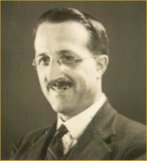
G.R.C. Chapter 12 is a climax in progress in recovery, and therefore a climax in praise and thanksgiving to God, also a climax in joy.
- Earlier, Ezra 6: 16, 22, they had kept the dedication of the house with joy and the feast of unleavened bread with joy, because God had made them joyful; but, in this celebration, the joy is greatly increased.
- In verse 27, they held “the dedication with gladness, both with thanksgivings, and with singing, with cymbals, lutes and harps”.
- And then, in verse 42, “the singers sang loud … And that day they offered great sacrifices, and rejoiced: for God had made them rejoice with great joy; and also the women and the children rejoiced. And the joy of Jerusalem was heard even afar off”.
- So it was really a time of exultation, and surely it is in the mind of God, in the present recovery, that we should complete matters, and that we should experience the joy and exultation of this chapter;
- a joy which springs from a sense of security for ourselves and for our children and, above all, in the preservation of the holy things of God.
So that comfort is complete, “Nehemiah” meaning ‘Comfort of Jehovah’.
- How much it means to God Himself that His saints should be set together, not only house-wise but city-wise, with the wall completed! What comfort in every way!
- We read in Zechariah what Jerusalem would be. While the immediate purpose of the prophecy was to encourage the builders of the house, yet the prophecy speaks much of the city.
- It covers the whole matter. In Zechariah 8: 4,
- “Thus saith Jehovah of hosts: There shall yet old men and old women sit in the streets of Jerusalem, each one with his staff in his hand for multitude of days. And the streets of the city shall be full of boys and girls playing in the streets thereof”.
- There is nothing to harm them, and the boys and girls are joyful, as well as the old men and the old women.
- “They shall not hurt nor destroy in all my holy mountain”, Isaiah 11: 9.
- And God would have conditions like that among the saints now.
- So that the women here rejoiced and the children rejoiced. I suppose there was never a day when the children were so happy amongst the saints.
- The boys and girls are free and happy in the streets of Jerusalem.
- But that could not be so, if the wall were not completed, not that we can say it is finally completed, but we are moving on and we are getting the gain of what completion means.
- So the point here is the dedication of the wall.
Ques. What do you understand by the dedication of the wall?
G.R.C. Earlier, in Ezra 6, there was the dedication of the house; I think it means that we dedicate ourselves, house-wise and, as we may say, wall-wise.
- “Whose house are we”, Hebrews 3: 6.
- And we dedicate ourselves to what we are. And then, as we have been seeing, the wall really is the saints, and we dedicate ourselves to the matter with gladness, and it really means being true to what we are.
- John says, “we are of God, and the whole world lies in the wicked one”, 1 John 5: 19.
- The Lord Jesus says, “They are not of the world, as I am not of the world”, John 17: 16.
- If we are true to what we are, as born of God, we really constitute the wall.
- Our reactions to everything around will be in keeping with the divine nature; our reactions will be, as God Himself would react.
- But we are to dedicate ourselves to that, because we are still in mixed conditions and we can allow our reactions to be fleshly and natural; but we are to dedicate ourselves to what we really are and do it with gladness.
Ques. What are we to learn from the Levites being brought into this matter?
G.R.C. It seems that it was essential to get the Levites:
- “they sought the Levites out of all their places”; and “the priests and the Levites purified themselves; and they purified the people, and the gates and the wall”.
- The singers were of the tribe of Levi, as also the players on musical instruments, and the doorkeepers. So the Levitical element is essential.
- We might note, as to the music, that the priests use the trumpets; that is so, I think, right through the Scripture; and here, in verse 35,
- “the priests' sons with trumpets” and, in verse 41, “the priests … with trumpets”.
- But the Levites use the “cymbals, lutes and harps”. Would you say some more?
Rem. It is a remarkable thing that they came from a right marriage in the first instance, standing over against the mixed marriages that seem to have come in.
G.R.C. Quite so; mixed marriages had to be dealt with in the next chapter, particularly in verse 23, and some of the leaders were involved in them.
- There were “wives of Ashdod, of Ammon, and of Moab”.
- The Philistine, the Ammonite, and the Moabite are the great dangers in the exercise we are dealing with.
Rem. I suppose, the more we know the joy, the more there will be the answer in the dedication. It seems to suggest that that feature marked the saints at the beginning.
G.R.C. It did: “they persevered in the teaching and fellowship of the apostles, in breaking of bread and prayers”, Acts 2: 42.
- And in those days the wall was functioning, the saints were functioning wall-wise.
- The building of the wall was jasper, and I think that was in evidence in the early chapters of Acts.
Rem. Acts 2: 46, “And every day, being constantly in the temple with one accord, and breaking bread in the house, they received their food with gladness and simplicity of heart, praising God”.
G.R.C. Undoubtedly the wall was there and came into manifestation in its protective character in chapter 5.
Ques. Were you thinking that the priests' blowing of the trumpets would alert the position and the people, and the Levites were to attend on that?
G.R.C. The priestly element is ever controlling the service.
Rem. There is an interesting setting under Hezekiah, when the priests cleansed the temple, but the Levites were left the work of removing the impurity from the court,
- “And the Levites took it to carry it forth into the brook Kidron”, 2 Chronicles 29: 16.
- Is that the part of the service that involves the practical carrying out of all that the priest might call attention to?
G.R.C. That is very good. The Levites are the workmen, the active element.
Rem. It says in verses 44 and 45,
- “the portions assigned by the law for the priests and the Levites; for Judah rejoiced over the priests, and over the Levites that waited. And, with the singers and the doorkeepers, they kept the ward of their God, and the ward of the purification, according to the commandment of David and of Solomon his son”.
G.R.C. That is a beautiful verse, following all the gladness that marks the dedication.
- This should be the state marking us all, the Judah element. Judah is always in the lead.
- “Judah” means ‘Praise’ and it was “the princes of Judah” that were brought up upon the wall.
- The priests take the lead and give direction in the actual service of God; but Judah has his own place always.
- Nehemiah himself was of the tribe of Judah, the royal tribe, and it is a great thing when the kingly and priestly elements are entirely together in affection. And that is the idea here;
- “Judah rejoiced over the priests, and over the Levites that waited”.
Rem. With regard to this Levitical matter in Ezra 8, he seems to give
- “a commission to Iddo the chief” in view of getting “ministers for the house of our God. And by the good hand of our God upon us, they brought us a man of understanding, of the sons of Mahli, the son of Levi, the son of Israel, namely, Sherebiah, with his sons and his brethren, eighteen”.
- Was there not a lack in the numbers of Levites and might we not refer to that today, the need for an increase among the Levites?
G.R.C. I believe so. The “fast … at the river Ahava”, in Ezra 8, was due to that, was it not,
- that he found none of the sons of Levi in that new move? That was a great reproach.
- There had been those in the original move under Zerubbabel, but in the move sixty-eight years later none of the sons of Levi was there.
- So that you can see the need for our being energised on Levitical lines.
- While priestly features are seen preponderatingly in our revival, and I think that is the will of God that it should be, yet the Levitical side is essential and we all need stirring up, like Timothy.
- Timothy was a priestly man. Paul called to mind his “tears”, showing what a priestly man he was; but he tells him “to rekindle the gift” which is in him. 2 Timothy l: 4-6.
- That is, he is stirring up Timothy in his capacity as a Levite and tells him that
- “God has not given us a spirit of cowardice, but of power, and of love, and of wise discretion”.
- Power, and love, and wisdom are needed in Levites in the practical work of the house and the city.
Rem. You could hardly have the continuance and maintenance of the priests apart from the Levites.
- The Levites were to be joined to the priests and were to support them in their service, and they were to give their tithes to the priests, were they not?
G.R.C. From that standpoint, the priests were dependent upon them.
- On the other hand, for direction the Levites were dependent upon the priests.
- And that shows how interwoven these features are and the essentiality of unity amongst us. “Levi” means ‘Unity’.
Ques. Do you think that the deficiency lies, perhaps, in the fact that we often class Levites as a special class of person?
- I think that we have got into that habit; we speak of the Levites. We are terrible people of habit.
- Do you not think that it is just a department of our lives, as sustaining what is priestly with us, just as we are common people as well?
G.R.C. We cannot classify in the way persons were classified in the past dispensation.
- We are all priests on account of the anointing; as it says in Exodus 40 :15,
- “And their anointing shall be to them an everlasting priesthood”.
- But then, we are all Levites, we are first-born ones, called to take our part in the work.
- The Levites are not limited to the gifts of Ephesians 4. Those gifts were sovereignly given from Christ ascended in His love for the assembly, and in principle there is a continuation;
- but all the saints have priestly responsibilities and Levitical responsibilities, every one of us.
- And then we should also recognise our royal responsibilities, as of the tribe of Judah.
Rem. So it says, “the priests and the Levites purified themselves”;
- is there a tendency with us to think that certain are already purified, but the exercise here is that they themselves purify themselves, before mentioning the people?
G.R.C. It is a continual thing; we have to be watching all the time. The purifying process must be maintained.
- “And they purified the people, and the gates and the wall”,
- and then, as our brother has pointed out, in verse 45 there is
- “the ward of the purification”.
- The priests, and the Levites that waited, with the singers and the doorkeepers,
- “kept the ward of their God, and the ward of the purification, according to the commandment of David and of Solomon his son”.
- So that the whole thing is done in buoyancy.
- Purification is not to be a sad matter, as though we were very sorry to part with what belongs to man after the flesh; the thing is done in the spirit of praise and worship. The singers enter into it.
Ques. If I may refer to 2 Chronicles 5, are the priests and the Levites beautifully unified in the service? I am thinking of how it says, verse 13,
- “it came to pass when the trumpeters”, who were the priests, “and singers”, who were the Levites, “were as one, to make one voice to be heard in praising and thanking Jehovah”.
- Does that show how they blend and are unified in this great matter of the service of God?
G.R.C. As the service proceeds, are not trumpet notes given in the Spirit's power and under the Lord's leading – distinct impressions which move us forward in the praise?
- And would not the stringed instruments refer to the hearts of the saints vibrating, as they answer to the trumpet note?
Rem. I would think that. You mean that the trumpet brings in some distinctive impression which moves the hearts of the saints in further response.
Ques. Is that why the priests, in the inauguration under David,
- “blew with the trumpets before the ark of God”,
- and then later, when there is the blending of
- “clarions … cymbals, playing aloud with lutes and harps”, it goes on to say,
- “the priests with trumpets continually, before the ark of the covenant of God”?
- Everything receives its impulse from Christ Himself.
G.R.C. Are you thinking of 1 Chronicles 15: 24?
Rem. Yes, and continuing down to verse 28, and then again in chapter 16: 6, prior to the word,
- “David delivered first this psalm”, in verse 7.
- I was thinking that in our day, if we keep our eyes on Christ as the
- “minister of the holy places”, Hebrews 8: 2,
- we shall receive the right note.
G.R.C. The ark of God was there. God shines forth from between the cherubim. It is a wonderful situation to be in, before the ark of God.
Ques. Is it to be noted that the first feature that marks the Levites is that they are proved persons? I am referring to Deuteronomy 33: 8.
G.R.C. Yes, and it was on that account that the priests were also of that tribe, because, it says there, they were to offer burnt-offerings. The priestly side is included in that.
Ques. You have referred to additional features that come in in the day of recovery.
- In relation to the Levites, do the references in Nehemiah to the Nethinim bring in this feature;
- persons who were not in an official class, but doing the work of the Levite and peculiarly seen in Nehemiah's day on the wall of Ophel?
G.R.C. It seems that the very lack of Levites brought out the devotion of the Nethinim.
Ques. Do you think that the Levites bring in the heavenly side as to the saints,
- “the assembly of the firstborn who are registered in heaven”, Hebrews 12: 23?
G.R.C. Quite so. Everything is to be done on that level, is it not, relative to the service of God, because we are a heavenly company?
- Even our responsibilities down here as men in flesh should be carried out with heavenly lustre.
Rem. Later on, in the next chapter, Nehemiah found that the Levites “had fled every one to his field”, verse 10,
- which would mean an earthly occupation, would it not,
- whereas they should be devoted to the heavenly side? The service of God involves the heavenly side, does it not?
G.R.C. Our earthly occupations are to be incidental, entirely tributary to what we are as relative to God in His house.
Ques. Is there a suggestion of that in the last verse of the chapter?
- “And all Israel, in the days of Zerubbabel”,
- all contributed to what was in mind and sustained it.
G.R.C. So that all Israel were in this matter and, as Israel, we are princes of God, moving here in the power of the Spirit in spiritual wealth in our path of responsibility;
- so that everything done in the path of responsibility contributes to the house of God.
- “The portions of the singers and the doorkeepers”
- are maintained and the Levites and the priests are maintained.
Rem. So that matters are not only to be attained as an objective but sustained in power.
G.R.C. That is the point of the end of this chapter. Things were to be sustained.
- The joy of Judah over the priests and the Levites was to be sustained and the Levites were to keep the ward of their God and the ward of the purification,
- because the need for watchfulness and purification never ceases with any one of us.
- Inward purification has to be maintained all the time and external matters will tend to encroach always.
- So there is the ward of their God, and the ward of the purification, and then there is this supply that all Israel brings, to sustain the saints in the service.
Rem. And constant consecration: “and they consecrated things for the Levites; and the Levites consecrated for the children of Aaron”.
G.R.C. Just so. The whole nation was in it, and so all the saints should be in it. It really means that the whole of our lives are dedicated to God.
Ques. Would that lie behind what is said, that
- “they sought the Levites out of all their places, to bring them to Jerusalem”?
- Is that a great gathering from all matters that would relate to what is personal, to bring into the service of God at the divine centre?
G.R.C. Quite so.
Rem. In regard to the number of Levites, is it not remarkable that, after the Lord had appointed twelve,
- He “appointed seventy others also” and asked them to “supplicate … the Lord of the harvest that he may send out workmen into his harvest”, Luke 10: 1-2?
- At that time there were eighty-two full-time workers in a very small land. Would that not remind us of the greatness of the work to be done and that every one may have a part in it?
G.R.C. I am sure; so that we need to be concerned, each one of us, to have our part in it and to put these things first.
Ques. You remarked that the priests outnumbered the Levites throughout these two books;
- would that indicate that the influence of Babylon is very powerful over those who might well be fitted to help the saints?
G.R.C. Indeed it is. The systems around us often hold people in captivity because of their so-called church-work, and people who might move do not move because of their church work; they think they are useful where they are.
- But they are really held captive, because these systems of men are not churches. We ought never to let it pass, when people say they belong to this church or that church;
- in faithfulness to God, I believe, we should inform the persons concerned that what they call a church is not a church, it is a human organisation.
- That might help to liberate them from it. They are just serving a human organisation, and we should seek to tell them what the church is – the one and only church, the church – assembly – of Christ.
Rem. You will notice the place the Levite has in the Acts.
- The common man, as we would say, is recovered in chapter 3, but the Levite, in Joseph surnamed Barnabas, in the last two verses of chapter 4, and the priest in the next chapter.
- What you say is borne out in Acts 4: 36-37.
G.R.C. Then, I think, there is a reference to priests.
Rem. In chapter 6, verse 7, “a great crowd of the priests obeyed the faith”.
- It is interesting to see how the Levite,
- “being possessed of land, having sold it, brought the money and laid it at the feet of the apostles”.
G.R.C. Yes, Barnabas became a true Levite in the spiritual sense of the word, devoted to the tabernacle of testimony, to God's house.
- But I think we should move on to the “great choirs”.
Rem. Are we all constituted priests and Levites; but is it your present exercise that we should all function as priests and Levites?
G.R.C. Just so. Here “the priests and the Levites purified themselves” with a view to functioning.
Ques. Why is it that the “processions” are “upon the wall”?
- I notice that the wall is continuous and entirely encircles the house of God, and so on;
- but does it mean that there is a substantial thing produced in the exercises of separation that supports the movement in this direction?
G.R.C. The wall is a substantial development in the saints at the present time and it is the basis on which these two choirs move.
Ques. May the use of the word “choir” suggest some refined feature that, perhaps, did not appear, even under David?
G.R.C. That is interesting;
- “two great choirs and processions”
- and, of course, there would be public testimony connected with this,
- “on the right hand upon the wall towards the dung-gate”.
- We have often noticed as to the distinction of the two choirs. One appears to relate to privilege and service Godward, now liberated, because the wall is complete,
- and the second choir relates to administration manward, involving fruitfulness, “the gate of Ephraim”,
- and yet dealing, according to God, with all that is contrary; and the whole thing is a matter of exultation.
- They go over the whole ground with exultation; all the moral features that are suggested in the gates were now typically in existence and functioning. So that it reminds us of the word,
- “thou shalt call thy walls Salvation, and thy gates Praise”.
- Here were the walls, encircled with song and praise to God and joyful people, and the singers and the doorkeepers were at the gates.
Ques. It suggests substantiality, do you think, in the wall, that it could sustain choirs of this character? Might we think of it as the crowning of a wall in its substantiality for the praise of God?
G.R.C. Yes, and the wall implies that the city idea is in the affections of the saints, that we are functioning city-wise.
- We have learned to function house-wise in Ezra, now the city is really functioning. It cannot function till the wall is complete.
Rem. It is to be noted in that way that
- “the ascent” is “by the stairs of the city of David”,
- the city idea being there and the ascent being in accord with it.
G.R.C. I think so, and it says,
- as though that is the starting-point of the way of privilege and service Godward. So that the word in 1 Corinthians 11: 28 is,
- “But let a man prove himself, and thus eat of the bread, and drink of the cup”.
Ques. Why is it that “the princes” are “brought up” “upon the wall”?
G.R.C. We are all to be princes; “Israel” means that, ‘Prince of God’, and we are not of much value, relative to the house of God, unless we are truly princes.
- Only those who can be called “Israel” experimentally are in the liberty of sonship.
- “Israel is my son, my first-born”, Exodus 4: 22.
- It means that we are in the gain of the Spirit and we have an income equal to our position as sons.
- So these were “the princes of Judah”; it would imply persons who have been through the exercises of Romans 7 and 8 and are in the liberty of sonship and taking a lead in a kingly way.
Ques. Would the idea of “choirs” mean that there was unification with them? It is not just spontaneity, but spontaneity with regulation.
Rem. I thought it would involve that idea of really merging together under leadership.
Ques. You spoke elsewhere of unison; there is unity and unison. Would that come in in the choir?
G.R.C. The great end in view in all this building work is unison in praise.
- We have it in 2 Chronicles 5 in the beginning and now we have it here at the end;
- but there are three things to remember:
- unity; we are to be unified ourselves;
- then union, we must know our relations with Christ;
- and that leads on to unison in praise.
- And the unison here is not only in each choir but finally, in verse 40,
- “both choirs stood in the house of God”.
- That is the great culmination.
Rem. In the Babylonish system the thought of the choir and the procession, from which through grace we have been recovered, has had a very great place; is it so now that the real thing has been recovered in the saints?
G.R.C. Very good; this is the real procession.
Ques. And why are the two choirs going in opposite directions?
G.R.C. Because they are opposite directions, are they not?
- The line of privilege and service Godward is one line, the up line, as we may say;
- and then there is the line of administration manward, which is from God down.
Ques. Do they move from a centre up? He says,
- “I brought up the princes of Judah upon the wall”.
G.R.C. Yes, and then they join “in the house of God”, so that the activities merge in promoting the praise in the house of God.
Ques. Why are the persons named in the first instance, but not in the second?
G.R.C. I could not say; perhaps you have something on your mind.
Ques. I wondered whether, on the side of the service of God, there is distinctiveness of personality seen, whilst the unity you speak of is maintained;
- but, on the side of administration and what is manward, individuals do not come into such prominence.
G.R.C. That is an interesting suggestion, because, while we are merged assemblywise, there is the distinction, as you say, that marks each person.
- But the great point, I suppose, in administration manward is that we should be one in the representation of God.
Ques. It is rather remarkable, too, that a prince has power with God and with man.
G.R.C. Quite so. There is the going up and the coming down, as it were.
Ques. Do you think that the two choirs merging would imply there is no disparity between the privilege line and the administrative;
- so that the joy of Jerusalem can only be entered into as both these lines are pursued and completed?
G.R.C. That is very helpful, and it is a matter that we should be exercised about, because, I suppose,
- our weakness lies most in the second line. We often feel how weak we are in administration manward.
Ques. Why is it that Ezra the scribe goes before them in the first choir and Nehemiah follows after in the second?
G.R.C. Nehemiah is the kingly element, of the tribe of Judah; Ezra, the priestly element.
- You can understand Ezra going before in the way of giving a lead in the first, Nehemiah coming in the rear in the way of support in all that is done in the second.
Rem. It is very interesting, the distinction between the choirs, trained singers, and Chenaniah in 1 Chronicles 15: 27. The procession is attached to them.
- Will it not encourage young people to join in the procession, if they are not up to the choir? You need to come under the instruction of Chenaniah to learn to sing music, trained music.
G.R.C. “Chenaniah chief of the music of the singers”.
- There is a reference earlier in verse 22,
- “And Chenaniah, chief of the Levites for the music, gave instruction in music, for he was skilful”. And the note says it is music “Or ‘transport’ ”.
- But there is the idea of instruction in spiritual music, and I think you have in mind that, if the young people join in the procession, they will qualify to take part in the choir, and they will gradually get more and more skilled.
- It is in joining in the thing that we get the skill; is that right?
Rem. Quite so.
G.R.C. And then music being ‘transport’ is very interesting. ‘My soul is all transported’.
- The wonderful thing about spiritual song – they prophesied, it is a prophetic matter – is that song brings in the mind of God relative to Himself and His purpose, not relative to our state,
- and, if we are in the Spirit, we are transported into the very surroundings we are singing about, in our spirits.
- That is needful, if God is to get the worship from our hearts that is His due.
Ques. And does not the thought of singing bring out the feelings of the saints as having spiritual impressions, rather than only intelligence?
G.R.C. Indeed it does.
Ques. What is the difference between offering and singing?
- You get both thoughts in the types; sacrifices, and then this that was introduced by David,
- “the service of song”, 1 Chronicles 6: 31.
G.R.C. I think the offerings underlie the service of song, Moses underlies David.
- There is the Mosaic side of the service and there is the Davidic side, and the Moses side is never given up, as we have read in these books, they go back to Moses,
- “the law of Moses the man of God”, Ezra 3: 2.
- Moses gives instruction as to offerings. We did not enlarge on it, but, when the altar was set up, there were offerings; then, when the house was set up, they were greatly increased.
- The increase would, in the main, be in the way of sacrifices of peace-offerings.
- Burnt-offerings were prescribed for the different feasts, although there could be voluntary burnt-offerings as well; but burnt-offerings were prescribed;
- whereas the peace-offerings, except in two places, were not prescribed.
Initially the peace-offering refers to the way Christ loved us and gave Himself for us.
- He died for us, He died for our wealth and prosperity, He died to establish the Christian fellowship.
- And the wealth among the people, both in our own well-being and joy spiritually and in what goes up to God, depends on the number of peace-offerings;
- and that depends on the amount of love amongst the saints, the amount we are prepared to sacrifice.
- He laid down His life for us, that is the peace-offering, and we ought to lay down our lives for the brethren.
- I believe that the substantial idea of sacrifice underlies the service of song.
- The service of song would have no reality, it would be like a trained choir in the world, if there were not sacrificial offerings underlying. Is that right?
Rem. That is helpful. Would you think that the singing and the instruments would bring out the refinement of formation under Christ, too. It says,
- “of David the man of God”,
- here, what he was personally; that must enter into the service, must it not, the formation that is in the saints?
G.R.C. It must. That refers to the more refined idea. If we are committed on the line of the sacrificial offerings, we come under David, Christ as Head,
- and become formed by His own affections and sensibilities, and the service of song stands related to that,
- “the instruments which I made”, 1 Chronicles 23: 5.
Ques. Is not the thought of praise connected with the sacrifice in Hebrews 13: 15,
- “By him therefore let us offer the sacrifice of praise continually to God”?
G.R.C. Quite so; so that, if the element of sacrifice is not underlying it in the way of our devotion to God, the praise is just a formality, is it not?
Rem. Surely.
G.R.C. We have got choirs around us in all the cathedrals and other places; but what does it mean for God?
- In many cases there are no real substantial offerings in the way of sacrifice underlying it. It is just to please men's ear.
Rem. In chapter 11: 23 the importance of it seems to be brought out. It says,
- “it was the king's commandment concerning them, and there was a settled portion for the singers, due for each day”.
- It speaks about “the sons of Asaph, the singers, for the work of the house of God. For it was the king's commandment”.
G.R.C. That is good, and that comes on the line of this substantial idea of sacrifice and offering.
Ques. Do you think that the unity you are speaking of, as set out in these two choirs, should raise sober exercises amongst us at present,
- because is it not a fact that there has been a tendency to divergency on both these lines,
- that is, in regard to the order of the service and in regard to administrative matters as well?
- I wondered whether what you are saying should not be taken home by us in practical exercise, so that practical unity may come amongst us in regard of these things.
G.R.C. I think it will do, if there is purification. If there is lack of unity, there is lack of purification; the flesh has got in somehow.
Ques. Is that why the Lord speaking to the Father in John 17: 17 says,
- “Sanctify them by the truth: thy word is truth”?
- The whole tenor of the Lord's desire is that we may be free, on the one hand, to be with Him where He is and free, on the other hand, to appear in the world as not of it.
G.R.C. “We have been sanctified through the offering of the body of Jesus Christ once for all”, Hebrews 10: 10.
- That is the divine side. Sanctification in the Spirit is the practical side.
- But I believe the passage you quote means that we are to be brought into sanctification intelligently.
Rem. It says in verse 45, “And with the singers and the doorkeepers, they kept the ward of their God, and the ward of the purification, according to the commandment of David and of Solomon his son”.
G.R.C. So that it is a matter of vigilance all the time with each one of us.
- Now the wall was complete, they were able to carry out the law that
- “the Ammonite and the Moabite should not come into the congregation of God for ever”.
- And that is a thing we have to see to. Sanballat was a Moabite and Tobijah an Ammonite. They represent elements from which we all need to purify ourselves.
- Moab would refer to family and social status – the word is said to mean ‘Water of a father’; and Ammon to nationalism, the word meaning ‘Fellow-countryman’.
- Eliashib the priest was corrupted by both through marriage links with Tobijah and Sanballat; and these elements corrupt the Protestant profession around.
- Tobijah's great chamber in the courts of the house of God would be a spurious spiritual influence; and we have to beware lest any such influence is allowed amongst us.
- Israel occupied the plains of Moab and held them for God; and we are to hold our families and our businesses for God.
But we do not allow these things to influence us in the assembly. The wall is to exclude natural and national influences.
- Why do we compare one country with another? “The new man”, Ephesians 4: 24, is the same everywhere, true to himself wherever he is,
- and thus you find the same features expressed in the brethren in every land.
- Ashdod is mentioned, too, in verse 23 of chapter 13; they had married wives of Ashdod, as well as of Ammon and Moab. So the Philistine element is also always to be guarded against.
- Let us, therefore, purify ourselves from Ammon and Moab and Philistia. They are three things that cause disunity.
Rem. So it is important, it is
- “using diligence to keep the unity of the Spirit in the uniting bond of peace”, Ephesians 4: 3.
G.R.C. Quite so. Acts 15 is the great example. There was the danger of the nationalistic rift.
- The greatest national barrier on earth is that between Jew and Gentile.
- And Paul, although he knew that what he had was from Christ ascended, went up in all lowliness and meekness, to keep the unity of the Spirit;
- and the Spirit came in, as He will, to support what comes from the Man above the heavens.
- He used Peter and James, the most suitable vessels for the purpose, to carry the saints. And so the danger of a rift was met.
Ques. Do you think the wood-offering as the common outlet would be the answer? The wood-offering would mean everybody serviceable at the altar. Nothing would pass the wood-offering.
G.R.C. And the wood-offering does not require skill in the way some services do. It is a work we can all take up; we can wash one another's feet, we can do the work of slaves.
Ques. I notice in chapter 10 the wood-offering precedes the first-fruits; would there be moral order in that?
G.R.C. Say what you have in mind.
Rem. I thought that the wood-offering means the total dedication of the believer to the service of the altar and, apart from that, we can hardly look for first-fruits.
G.R.C. I am sure that is good. The wood-offering is what keeps the fire burning, and, from one standpoint, the fire on the altar is the fire in the hearts of the saints.
- What goes up from the altar, unless the hearts of the saints are burning?
- And the wood-offering means that we are doing anything, however menial it may be, to keep the fire going in the hearts of the saints.
- So we would be active all the week. If a sister is ill, there will be sisters there to help her, in any practical services needful. I think all that enters into the wood-offering.
Rem. And in the last verse they are brought together. That is what is left with us in the book,
- “the wood-offering” and “the first-fruits”.
Rem. So Paul gathered sticks, when the need arose. Acts 28: 3.
G.R.C. And he worked with his hands to have something to give. When the saints realised that night and day he was serving them in the ministry,
- and yet also working with his hands, to have something to give in a material way,
- how that would have warmed their hearts and set them on fire!
Rem. And when the Lord came out of death, the result of His service for two going into their own matters was,
- “Was not our heart burning in us?”, Luke 24: 32.
- Do you think, if our visiting one another was on that basis, even as much as on Matthew 18, it would help us in the unity?
G.R.C. I am sure it would. The Lord Jesus is
- “the shepherd and overseer of” our “souls”, 1 Peter 2: 25,
- and think of the shepherd service and the oversight as He went on the way to Emmaus! Think of what the Lord had on hand to do!
- Yet He found time to go all that way with them. He went along with them and listened to them and the end of it was their hearts were burning, and they were back in Jerusalem as soon as possible.
Ques. He did not tell them what to do; do you think it is important to be able to reach the hearts of the saints
- and to stir them in such wise in regard to the truth that they do the right thing without being told what they have got to do?
G.R.C. We find instances of that. Souls are converted, their hearts are burning, and they purify themselves without any specific injunctions.
- If we served one another so that our hearts were burning, it would greatly help those who are faced with external matters of purification.
- If their hearts are on fire, what will stand in the way? They will say, ‘We must get back to Jerusalem and we must be in accord with the wall, whatever happens’.
Ques. Would you say something about the way in which Nehemiah moves in chapter 13?
G.R.C. You mean, the way he is energetic in dealing with things.
Rem. Yes, his faithfulness.
G.R.C. He acts in a kingly way, with power. With the word of a king there is power. He
- “casts forth all the household stuff of Tobijah”.
- We do not want anything of that kind among the saints. And then later, he dealt with things drastically.
Ques. Certain things seem to come in in the absence of Nehemiah; what is your thought about that?
- I wondered whether it might represent an element that needs to be maintained; the faithful element that is taking up things for God.
- Things should not be allowed to drag on, matters should be taken up, in a right way, of course, but still taken up, would you not think?
G.R.C. They should be taken up. There is the case of Tobijah, and the mixed marriages,
- and then the concern about “the sabbath day”, a concern that nothing should disturb the rest of God.
- The wall was finished and in verse 22 he had that in mind;
- he “commanded the Levites that they should purify themselves, and that they should come and keep the gates, to hallow the sabbath day”.
Ques. Verse 4 says, “And before this”; may we gather from that that the history of Tobijah recorded in chapter 13 actually preceded the “great choirs and processions” of chapter 12, so that they really finished on the top-note?
G.R.C. It would appear to be so.
Ques. Would it be right for me to say that I would be afraid of Tobijah in my own heart?
- These elements are not what we deal with in one another only, are they?
- Your idea of purification is that these things come into my heart and I might project them amongst the saints.
G.R.C. There is always the tendency to look at the other man. The doctors of the law laid burdens on others, but did not move them with their little finger. Luke 11: 46.
- But the Christian, who knows the grace of God, begins with himself and then, in having to deal with others,
- he has entirely different feelings, because he has begun with himself and he does not know anyone worse than himself,
- and that is the basis on which he approaches others. Is that right?
Rem. That is what I thought. When Ehud went to Eglon king of Moab,
- he “made him a sword having two edges”, Judges 3: 16;
- would he have judged the matter in himself, in that sense, ruthlessly?
G.R.C. That is what I would say. I do not think we can help others in a spiritual way unless we have dealt with the matter in ourselves;
- and, if we deal with things in ourselves, we shall feel and know that we cannot meet anyone worse than ourselves.
Ques. Is the seriousness of Tobijah reflected in what he displaces more than what he brings in? I was thinking of
- “where formerly they laid the oblations, the frankincense, and the vessels”, verse 5;
- it is a question and a serious matter as to what is displaced by the allowance of such an element.
Ques. What about “the language of Ashdod”? I was contrasting it with Zephaniah 3: 9,
- “For then will I turn to the peoples a pure language, that they may all call upon the name of Jehovah, to serve him with one consent”.
G.R.C. That is good. We need to have a pure language,
- so that we “may with one accord, with one mouth, glorify the God and Father of our Lord Jesus Christ”, Romans 15: 6.
Page Top Reading 5 Top
| THE BUILDING OF ITS WALL WAS JASPER |
|---|
Address by G. R. Cowell at
Newcastle-upon-Tyne, September 25, 1959
Hebrews 2: 10; Revelation 21: 9-12, 14, 17-27; 22: 1-5, 14
Memorials 7: 120-32
|
|---|
I wish, dear brethren, to speak of glory as bearing on the wall of the city, and the verse we commenced with is fundamental to all that is in mind.
- “For it became him”, God, “for whom are all things, and by whom are all things, in bringing many sons to glory, to make perfect the leader of their salvation through sufferings”.
- Through grace we are among those “many sons”; sonship is fundamental to Christianity.
- Other families will have that relationship conferred upon them in some degree; but we have it, so far as creatures are concerned, in surpassing measure.
- We have been singing in our hymn as to it:
‘Like Thine own Son, with Him above,
In brightest heav'nly bliss’.
- Our sonship is of such an order that we are to be with Jesus where He is, we are to be in the immediate presence of God, His Father and our Father, His God and our God: such is our portion.
- Like Him we are 'to know that glory beam Unhindered, face to face!' How great our calling is, what a destiny is ours!
- How things of earth pale into insignificance as we think of what we have been called to, and how our hearts are bowed in worship as we think of Him, for Whom are all things and by Whom are all things.
A primary thought in His mind in all His operations, for all things are by Him, has been the great purpose to bring many sons to glory and, in order to achieve that purpose, it has involved a Divine Person becoming incarnate,
- “the Word became flesh, and dwelt among us”, John 1: 14;
- a most amazing thing! A Divine Person, the One by Whom all things were made, became flesh and entered Himself into the relationship of Son, a relationship which He retains throughout all eternity.
- All that pertains to Him in Deity remains and yet we know Him now as a glorified Man in the presence of God, the Son, and He is the leader of our salvation.
- He is the One by Whom God brings many sons to glory, and, to be qualified as a leader to do such a thing as that, He had to be made perfect through suffering.
- That word “perfect” involves qualification; the only way He could qualify to be a Leader of a heavenly company, such as we are through grace, was to suffer, and to suffer sufferings that are untold and unfathomed by the creature.
- He fathomed them, and we can think of what that meant to the Father, the anguish of the Father's heart, for the Father's love is brought before us in Scripture in type, first of all in a setting of anguish,
- “Take now thy son, thine only son, whom thou lovest, Isaac”, Genesis 22: 2.
- Think of what it meant to the Father! Think also of what it meant to the Holy Spirit, when He
- “by the eternal Spirit offered himself spotless to God”, Hebrews 9: 14!
Let us keep near to the cross, dear brethren, and all that it means, Jesus hanging there, every indignity having been heaped upon Him by men.
- And then, when men had done all the evil to Him that they could do, He Himself became the Victim, in order to effect the work of reconciliation, so great in its scope that it affects heaven and earth,
- but having a special effect upon us, as on the day of atonement there was that which Aaron did for himself and his house.
- And so the Leader has been made perfect through sufferings. It would include, no doubt, all His sufferings, but it includes certainly the sufferings of atonement.
- And thus, as now glorified, He is qualified as the Leader; and, according to chapter 1 of this book,
- He is “the effulgence of” God's “glory and the expression of his substance”.
Wonderful to think of Jesus! He glorified God in the darkest hour, when He was made sin for us. He was morally glorified in that; there never was such moral glory.
- “Now is the Son of man glorified, and God is glorified in him”, John 13: 31.
- Think of the moral glory of the cross, One who would go that way in absolute perfection, His spirit never ruffled!
- “Father, forgive them, for they know not what they do”, Luke 23: 34.
- In Gethsemane He began to be sorrowful and deeply depressed, yet, in all His ways, representing God in every circumstance in absolute perfection.
- He was the perfect Representative of God in every situation He had to face.
- But now, He has glorified God in death and God has glorified Him, and we see Him now in the presence of God. He has entered in as our forerunner, and He is the effulgence of God's glory.
And, as among the many sons, we are to enter now by the Spirit into the meaning of being brought to glory.
- And where do we see the glory? Shining in a glorified Man! Marvellous thing!
- We see the glory of God in radiant display in a glorified Man, and that Man is our righteousness and our life, our very title to be there.
- Indeed, when we ourselves are glorified, we shall have
- “become God's righteousness in him”, 2 Corinthians 5: 21,
- the eternal display of God's righteousness. How secure we are, Christ our righteousness and we the righteousness of God in Him!
- And that very One, who is our righteousness, is the effulgence of God's glory;
- and, as thus in the presence of Jesus, the glorified Man within the veil, we find ourselves in the presence of the effulgence of God's glory; many sons brought to glory.
Now we ought to understand glory; it should not be just a vague term to us. Scripture speaks of
- “the shining forth of the knowledge of the glory of God in the face of Jesus Christ”, 2 Corinthians 4: 6.
- There is “the knowledge” of it; how much do we know about it?
- Many sons brought to glory; sons should be intelligent; that is one great feature of sonship. Affection is one feature, intelligence another.
- God would have His sons intelligent about everything. Ephesians tells us that He has
- “marked us out beforehand for ‘sonship’ ”, 1: 5, footnote,
- and then goes on to tell us that He has abounded
- “towards us in all wisdom and intelligence”,
- making known His secrets to us.
- God has secured us as sons, that we might be before Him in affection and intelligence, trustworthy,
- that He might be able to deposit His secrets with us as to Christ and the assembly and all that He has in mind. But then
- there is nothing greater than the full knowledge of God. The apostle prays – Ephesians l: 17 –
- that “God … would give you the spirit of wisdom and revelation in the full knowledge of him”.
- There is no greater occupation than to be occupied with God.
So there is the question of the light “of the knowledge of the glory of God”; we should be intelligent as to the way God is shining out.
- It is not that God has changed, from eternity and to eternity He is God; but because of the way He has come out in the economy of grace, in the incarnation and glorification of Christ,
- all that He is in His nature and character is now in full display, and that is His glory.
- What we see in that glorified Jesus, who died on the cross for us, is the radiant display of God's nature and character, His attributes in perfect conciliation with His nature;
- His love in perfect conciliation with all that He is in righteousness, holiness, mercy, compassion.
And so we should have a knowledge of that. That is how we come to the knowledge of God. We are privileged to look upon
- “the glory of the Lord, with unveiled face”, 2 Corinthians 3: 18.
- Moses went in without a veil to that which was a figure of the true. God was known in some measure, but there was no full knowledge of God then. And no one could look upon the glory then shining except Moses.
- But our privilege is to go into the presence of God and look on the glory of the Lord with unveiled face. We see God in radiant display in a glorified Man.
- Now, that is the privilege of the sons, and we are there in perfect liberty, because we are sons. We are conscious of the Father's love, that sovereign love which sought us, and found us.
- We should not have moved towards God, although God was shining in radiant display, but for the Father's activities.
- “Light is come into the world, and men have loved darkness rather than light”, John 3: 19.
- The fact that there is any result from the outshining of God is because of the Father's sovereign love and activities and, under the Father, as it were, the activities of the Son and of the Holy Spirit.
- Sovereign activities have brought us into this and we are embraced in that wondrous love, the Father's love for the Son, and in the current of the Son's love for the Father, for we have the Spirit of His Son.
What a wonderful thing the gospel is, the forgiveness of sins, the gift of sonship, and the gift of the Holy Spirit! I have put them in that order, because Galatians speaks of that order.
- We “are all God's sons by faith in Christ Jesus” and “because” we “are sons, God has sent out the Spirit of his Son into our hearts, crying, Abba, Father”, Galatians 3: 26; 4: 6.
- So we should be accustomed to glory, and it is the many sons thus secured who are the personnel of the assembly. As we are in the liberty and joy of sonship, we fit into our place in the assembly. The assembly is the corporate vessel.
- If we are in the gain of this, we shall move on in unity together, bodywise and house-wise, and thus there will be both response to Christ in the assembly and response to God in worship and praise.
- We shall be merged in that vessel of which He is the Beloved,
- “a chaste virgin to Christ”, 2 Corinthians 11: 2;
- and we shall thus function under His headship relative to His Father and our Father and His God and our God.
And so this passage in Hebrews goes on to say,
- “I will declare thy name to my brethren; in the midst of the assembly will I sing thy praises”.
- The many sons can join in the praise. No one could raise the song but Jesus and the song He raises is a new song; it is a song that could never have been raised, had He remained in the abstract relations of Deity.
- It is the result of Him becoming flesh and learning obedience in the things that He suffered and going through death and coming forth from death, and entering in, victorious.
- What a song He sings! And we, as under His direction, are privileged, as the many sons, to join, in our measure, in the song He sings, in the midst of the assembly.
And now I want to speak of this as bearing on the heavenly city, because, as citizens of that city, we shall be for ever in the immediate presence of the glory. It says of the city,
- “the glory of God has enlightened it, and the lamp thereof is the Lamb”, Revelation 21: 23.
- That is, the Lamb is the lamp of the glory; He is the effulgence of God's glory, it is shining forth in Him. When we see Him,
- “we shall be like him, for we shall see him as he is”, 1 John 3: 2.
- Other families will not see Him as we shall.
- If a royal personage were passing through Newcastle, you might get a glimpse of the person as he went through and you would say, ‘I saw the King’, and, in that sense, every eye will see Him.
- It would be another thing to see the king in his palace, to see him face to face in his glory, to have a personal knowledge of and link with the king; that is another matter altogether. And that is how we are to know Jesus. That is just a feeble illustration.
- We shall see Him as He is and always be in His presence. That is the portion of the inhabitants of the city of God.
- That city is “the bride, the Lamb's wife”.
- How right that He, the Lamb, should have a wife, that One who was made perfect through sufferings! He has the bride, His wife, and the personnel are all sons brought to glory.
They dwell in the sunshine of the glory of God shining in that blessed Man, looking on His glory with unveiled face.
What a portion is ours, dear brethren! It says
- “the city has no need of the sun”,
- He is the sun, His face shines as the sun; and we are citizens of that city and, as having the Spirit, we have the earnest of this now.
- We are able to look on the glory of the Lord, with unveiled face, and to see the glory of God radiant.
- How it helps us in the praise of God, as we understand His glory thus! Praise marks the city.
- “His servants shall serve him”.
- The word “serve” is ‘priestly service’, they serve as priests;
- “and they shall see his face; and his name is on their foreheads”.
- That is the mark of bondmanship: “his name is on their foreheads”. What other name would you have but His?
And then it goes on to say,
- “the Lord God shall shine upon them”.
- He shines upon us in Jesus, the glorified Man. And it says,
- “they shall reign to the ages of ages”.
- They are not only serving as priests, but they are kings. That is God's thought, kings and priests, and that is the dignity of all the inhabitants of the city.
Well now, it says of the city that it was
- “pure gold, like pure glass”.
- How these thoughts should stir our hearts now as to the assembly, the city of God,
- “the city of the great king”, Psalm 48: 2!
- “Glorious things are spoken of thee, O city of God”, Psalm 87: 3.
- Have you ever said glorious things about the assembly?
- The very thought of the city of old stirred the godly Israelite to deep emotion, and that is how it should be with us.
- Then, as to its shining, it says,
- “he … shewed me the holy city, Jerusalem, coming down out of the heaven from God, having the glory of God”.
- The glory of God is diffused, as it were, through the city. This involves, for us, transformation, and it is going on now;
- “looking on the glory of the Lord” we “are transformed according to the same image”.
- Here the transformation is complete and the city comes down, “having the glory of God”.
Other families are to learn the glory through us. It is not theirs to behold it face to face.
- “We shall be like him, for we shall see him as he is”.
- ‘There with unwearied gaze Our eyes on Him we'll rest’. He is the lamp of the glory, He lightens the city.
- But then, the city diffuses the light to other families; diffusing it to the universe, according to the measure in which each family can apprehend it.
- “Her shining was like a most precious stone, as a crystal-like jasper stone”.
- Think of its purity, its transparency! All this is to bear on us now, that there should be transparency with us, no hidden motives or movements, but everything crystal-like.
- But then, it says, “as a crystal-like jasper stone”. It says of the One sitting on the throne in chapter 4,
- He was “like in appearance to a stone of jasper and a sardius”.
- The city thus is representative of God in her shining. She has the glory of God.
But then, when we come to the wall, it says, she has
- We have to take account of those words. You might think the wall is very small compared with the height of the city; but there is a moral meaning in these things, they are symbolic measurements.
- In actual fact, the wall is “great and high”; there is no possibility of getting over it.
- If we apply it to the assembly at the present time, it is greater and higher than anything men have ever seen.
- You say, ‘How forbidding!’ Not at all. There is nothing forbidding about the wall. It says,
- “And the building of its wall was jasper”:
- that is, the wall refers to the saints as fully representative of God, the One who is on the throne, who is like a jasper and a sardius.
- It is only forbidding to those who know not God and who obey not the gospel.
To such it is forbidding. And, to bring this down to the present time, are we representing this wall?
- Is it great and high, so that nothing damaging can intrude into what is precious? And is it of jasper?
The only kind of wall that God recognises is a wall that is expressive of Himself. Therefore, the wall meets every situation.
- The saints form the wall, as knowing glory, and being transformed by it. Where is the wall, if the saints are not the wall?
- But the saints are the wall in the measure in which they represent God, so that they react to everything they meet as God reacts.
- They have “put on the new man” in practice, “which according to God is created in truthful righteousness and holiness”, Ephesians 4: 24.
- The nations are “estranged from the life of God”.
- When they see it expressed in the saints, it repels them, because they are walking
- “in the vanity of their mind”, Ephesians 4: 17-18.
- But to a repentant soul, it is attractive. It attracts all that is of God and repels all that is not of God, this great and high wall.
It is “a hundred and forty-four cubits”, twelve twelves. We have often been told “twelve” is the love number, and this is twelve twelves, because
- the great testimony at the moment is that the kindness and love to man of our Saviour God has appeared, and we are to be expressive of God.
- But God can have nothing to say to those who obey not the gospel. The greatest offence is to offend against the grace of God, to insult the Spirit of grace. Hebrews 10: 29.
- That is why the sin of this dispensation is greater than that of any past dispensation.
- Not only has evil crept in, and is rampant as in the Jezebel system,
- but the general sin of the dispensation must be greater than anything past, because what is in expression is the kindness and love of our Saviour God towards man.
- If people refuse grace, there is no hope for them. The severest judgment must come on those who reject God in the full outshining of Himself.
- And the wall conveys all that. Therefore, it is repellent, on the one hand, to those who hate God or disobey Him, but it is attractive to all who seek after God in any measure.
- Where there is any real fear of God, the wall would attract.
What are we displaying in public testimony? A wall so great and high that all people can see it?
- Anyone approaching the tabernacle saw the curtains round the court and the hanging at the entrance; what are they seeing today?
- What they should see is a true representation of God in saints walking in the liberty of sonship.
- God can be angry; if there is something to cause anger, we can be angry.
- The Lord looked “round upon them with anger”, it says in Mark 3: 5;
- but let us see that we are representing God, and, if there should be something to cause anger in a right sense, let us see that we do not let the flesh in on account of it, and sin.
- “Be angry, and do not sin; let not the sun set upon your wrath”, Ephesians 4: 26.
- It is “a man's measure”; that is, it is the expression of God, in so far as that is possible in the creature.
In Jesus, it is full and absolute; He is the effulgence of God's glory; but in the wall you have the expression of God according to man's measure, the creature measure, and,
- in a way, this is the measure of our responsibility.
- Man's responsibility at the beginning, the measure of his responsibility, is that he was “God's image and glory”; it says in 1 Corinthians 11: 7,
- “man … being God's image and glory”.
- And it says in Romans 3: 23, “all have sinned, and come short of the glory of God”.
- We have failed in that prime responsibility to represent God.
- But the Christian, if he is true to himself, is brought back to that on a higher level than the innocent man ever could be.
- He is brought back to the idea of the representation of God in his public dealings with men and walk before men.
- That is the wall of jasper; and, if people are attracted, there are the gates for them to go in, provided they wash their robes.
Then they will begin to see the city. We must not look at these measurements in a material way.
- One would judge that “great and high” means that you could not see the city, unless you passed the wall through the gates.
- But there are those, thank God, who are not repelled, they are drawn to the saints.
- If I speak to some here who came in from outside, as we say, were you not drawn to the saints? I was.
- There was the wall, seen in a separate people, and yet one was drawn to them. There was something heavenly there. God was expressed in them.
- Then there were the gates: the local company functioning. Every gate “one pearl” would involve every local company held in unity, every local company marked by the features of Christ.
- “So also is the Christ”, it says in 1 Corinthians 12: 12,
- embracing the whole church on earth, but that is to characterise the local company. Every gate a pearl.
- “By this shall all know that ye are disciples of mine, if ye have love amongst yourselves”.
- And the level of it is, “love one another; as I have loved you”, John 13: 34-35.
- That is how the feature of the pearl comes into manifestation.
At the present time we have to have other gates. In the millennial day there will be no need for any but the normal gate, the pearl;
- but we have to have gates, such as the valley-gate, the dung-gate, and the prison-gate.
- Assembly administration has to cover many things, because we are in a scene of contrariety; but let us see that the normal gate is there, the pearl.
- Every gate, one pearl: that is, if we apply it in that way, every local company, one pearl;
- “and the street of the city pure gold, as transparent glass”.
The foundations of the wall are wonderful,
- “and on them twelve names of the twelve apostles of the Lamb”.
- Think of those twelve men, how they adorn the city! God's thought is that we should be in keeping with the foundation,
- in keeping with the twelve apostles of the Lamb, marked by the unity and devotedness that marked them,
- so that, at the present time, there should be some expression of the beauty of the foundation.
- And you will find in those foundations
- “the first foundation, jasper”.
- You see again that the expression of God is the primary thing.
- I wish I knew more about precious stones, so that I could understand these things better; but I can understand
- “sapphire”, the heavenly colour,
- and I can understand “emerald”, which suggests life and vitality,
- “the sixth, sardius”, another stone which speaks of God,
- and then “the eleventh, jacinth”.
- “Jacinth” may bear on what is judicial, because, in Revelation 9: 17, in connection with an evil power, it is linked with fire and brimstone.
- There is that element in the foundation of the wall which will not tolerate evil.
Now, I am speaking of this with a view to our bringing it morally into the present moment and,
- if the wall is functioning, what joys we shall know within and what outgoings there will be!
- For, following this, there is not only what comes in. We want more to come in; it says here,
- “And they shall bring the glory and the honour of the nations to it”.
- Do you not think that, if we were right and the wall were really what it should be, there would be increase from among the nations?
- Paul laboured “that the offering up of the nations might be acceptable, sanctified by the Holy Spirit”, Romans 15: 16.
- And then the outgoings!
- “And he shewed me a river of water of life, bright as crystal, going out of the throne of God and of the Lamb”.
- What outgoings of grace, a river of water of life! And later in the chapter the word is,
- “let him take the water of life freely”.
One could go on speaking of these things, dear brethren; but I will close, with this last appeal,
- “Blessed are they that wash their robes, that they may have right to the tree of life, and they that should go in by the gates into the city”.
Page Top Address Top