Menu•SiteMap |
Ministry
Progress in Recovery
Ministry by G. R. Cowell
– Memorials: Volume 7
| |
Introduction Memorials: Previous Next
1. Ezra 1: 1-11; 3: 1-6, 10-13
2. Ezra 5: 1, 2; 6: 14-22; Zechariah 3: 4, 5; 4: 6-14; 6:11
3. Nehemiah 3: 1-16, 26-32; 6: 15-19; 7: 1-3
4. Nehemiah 8: 1-3, 13-17; 9: 1-2, 5-7, 38; 10: 28-34, 39
(“… And we will not forsake the house of our God”)
5. Nehemiah 12: 27-47; 13: 1-3, 7-9, 22, 28-31
• Address: The Building of its Wall was Jasper
Hebrews 2: 10; Revelation 21: 9-12, 14, 17-27; 22: 1-5, 14
|
| |
| INTRODUCTION |
|---|
PROGRESS IN RECOVERY
Memorials 7
Meetings with G. R. Cowell
at Newcastle-upon-Tyne, September 25-27, 1959
|
|---|
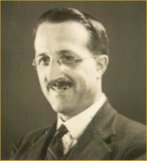
Just two months after those fateful July 1959 London meetings – and the unwarranted attack upon GRC – he was serving positively and in power.
- There is no hint in the notes that most of the prominent brothers in Britain would shortly succumb to the emerging legal system and tamely accept his unrighteous excommunication.
The initials of other brothers taking part in readings do not appear in Volumes 1 – 8 of the 'Memorials'.
- There may have been a reluctance to show the initials of many who remained with the legal system.
- Happily, where applicable, other initials have been shown in the final Volumes 9 – 16.
G.A R.
Page Top
| READING 1 |
|---|
Progress in Recovery ( 1 )
Ezra 1: 1-11; 3: 1-6, 10-13
Memorials 7: 1-24
|
|---|
G.R.C. It is in mind in these readings to consider ‘Progress in Recovery’, noting that the progress was mainly in three stages;
- first, the building of the altar and its functioning,
- then the building of the house and the establishment in a definite way of the priesthood as indicated in Zechariah 6,
- and then, under Nehemiah, the building of the wall and its dedication;
- having in view that we should see an analogy in our own times in the history of the recovery in which we have part.
We would bear in mind that, while these things were consecutive relative to the material altar and the material house, they run concurrently in our case, although they were somewhat consecutive in their initiation.
- So that we are still getting help as to the altar; and it is manifest that the building of the house has to continue, because, apart from anything else, fresh generations come along, and we
- “are built together for a habitation of God in the Spirit”, Ephesians 2: 22.
- And it is similar with the wall. But the exercise as to the building of the wall has become more prominent in this later stage of the recovery.
- Thus the three things run on concurrently with us, although, as I say, there is a certain moral order, and, to some extent, an historical order in the history of the present revival.
Before we consider the altar, I thought we might seek help as to the relations of the returned captives with the authorities.
- In the return from the captivity the relationship between the authorities and the people of God assumed great importance. So this book opens with
- “And in the first year of Cyrus king of Persia, that the word of Jehovah by the mouth of Jeremiah might be accomplished, Jehovah stirred up the spirit of Cyrus king of Persia”.
- And then verse 5 brings out another principle, namely, that God co-ordinates what He does in government with what He is doing in grace; and so it says,
- “the chief fathers of Judah and Benjamin rose up, and the priests, and the Levites, even all those whose spirit God had stirred, to go up to build the house of Jehovah which is at Jerusalem”.
- Thus God was operating in stirring up the spirit of Cyrus and at the same time He was operating in stirring up the spirit of the chief fathers, and the priests, and the Levites, and of others; and that is a very important and comforting principle.
- God is “the blessed and only Ruler … the King of those that reign, and Lord of those that exercise lordship”, 1 Timothy 6: 15.
- He has never abdicated; He is on the throne, although He rules, as it were, behind the scenes.
- And all that He does in government, if we have eyes to see it, co-ordinates with what He is doing in grace and recovery.
And the Lord Jesus Himself has part in this in our day.
- He enters into the matter of government where it affects the testimony and the church. He has sat down with His Father in His throne.
- So, when things affect the testimony, He says as to Jezebel,
- “I cast her into a bed”, Revelation 2: 22.
- He does not say that the Father would do that, but He would do it, and that has involved great governmental movements in Europe, as well as spiritual movements amongst His people. Then He says,
- “I have set before thee an opened door, which no one can shut”, Revelation 3: 8.
- That applies, not only to the spiritual door that is opened, but also to the governmental door: the Lord has done it relative to divine operations in grace.
- He says, “because thou hast a little power, and hast kept my word, and hast not denied my name”.
- The thing is co-ordinated. In the address to Laodicea He says,
- “I rebuke and discipline as many as I love”, Revelation 3: 19.
- That is the main explanation, one would say, of the last two wars, the discipline of which has been ordered to preserve us in the testimony, if we are in it.
Rem. And so we see God in His overruling power and sovereign movements, taking up heads of governments and making them favourable to His people.
G.R.C. Yes, and I think that would show the need of being up to date in the matter: that is, to understand the present position relative to government. What would you say to that?
Rem. I am sure that is right. We need to move with God in what He is doing in providing conditions and moving heads of government to make them favourable to His people even now. So that what you say, one feels, is important.
- We should be conscious of what God is doing and take advantage of what He is doing, would you say?
Ques. This stirring up is in accordance with the testimony that already had been given; would you say a word about that?
G.R.C. That is remarkable; you are thinking of Isaiah 45?
Rem. Yes, and the word of Jeremiah.
G.R.C. There are the words of Jeremiah as to the seventy years – Jeremiah 25: 11-12; 29: 10 – and then Isaiah, years before, had prophesied concerning Cyrus.
- In Isaiah 44: 28, Jehovah said of Cyrus,
- “He is my shepherd, and he shall perform all my pleasure; even saying to Jerusalem, Thou shalt be built; and to the temple, Thy foundations shall be laid”.
- Then in chapter 45 Jehovah calls him
- “his anointed … whose right hand I have holden”, and God would “break in pieces the brazen doors, and cut asunder the bars of iron”, verse 2.
- And in verse 4, Jehovah says, “I surnamed thee, though thou didst not know me”,
- and the note on “surnamed” says, ‘The word implies a fondness of affection in the name given’.
- All this was in view of His people knowing that He was
- “Jehovah, and there is none else; there is no God beside” Him.
- God's ways in government greatly help us as to that.
Ques. What had you in mind in saying that we need to keep up to date? Had you something more than what is general?
G.R.C. I think we are living in a day which is different from that at the beginning of the revival. According to Ezra 1
- “Jehovah stirred up the spirit of Cyrus”
- and it is remarkable that, concurrently with the raising up of J.N.D., many ruling powers of the western world became particularly favourable to all Christian work and endeavour, as freed from the influence of Jezebel, so that there was great liberty to go forward during last century.
- But it does not say in Ezra 1 that they made any request to Cyrus. But sixty-nine years after, when Ezra came up, in the reign of Artaxerxes, it says in chapter 7, verse 6, the latter part,
- “And the king granted him all his request, according to the hand of Jehovah his God upon him”.
- Then thirteen years after that, in chapter 1 of Nehemiah, we find the same king on the throne, and in chapter 2 of Nehemiah, verse 4,
- “the king said to me, For what does thou make request?”
- The king was inviting him to make request. I believe that is the kind of day we are living in.
- God has determined that the dispensation should end in glory, and, in order that nothing should hinder His people, He has brought about an unexampled state of affairs, where rulers in the western world are willing to listen to requests relative to Christian conscience.
Ques. Is this co-ordination seen particularly in the gospel of Luke in relation to the Lord, the census being ordered in order that He should be born in Bethlehem?
G.R.C. Luke 2 is a very interesting passage as to God ruling, because the Lord is introduced in that gospel as
- “Son of the Highest” – i.e. Most High – Luke 1: 32.
- And Zacharias, in his praise, appears to call the Lord Himself the Most High, for he says of John the baptist,
- “And thou, child, shalt be called the prophet of the Highest; for thou shalt go before the face of the Lord to make ready his ways”, Luke 1: 76.
- Thus the title “Most High” comes into Luke, the Lord even saying to His own,
- “ye shall be sons of the Highest”, Luke 6: 35.
- That title is prominent in Daniel – 4: 17, 25.
- “The Most High ruleth over the kingdom of men, and giveth it to whomsoever he will”.
- Then in verse 35 “and he doeth according to his will in the army of the heavens, and among the inhabitants of the earth”.
- Luke 2 shows how much God used rulers at the time of the incoming of the One who is called the “Son of the Most High”, and the faith that marked the saints at that time was wonderful.
- Had faith not been active, unbelief would have reasoned that everything was going wrong – the journey from Nazareth to Bethlehem at such a time, and then the crowning trial that, when they got there, there was no room for them in the inn!
- It looked as though the Most High was not ruling at all!
- Yet he was ordering everything, because it was essential that, when the Son of the Most High came, He should be born in the most low circumstances; not only in Bethlehem, but in a manger.
- The Most High orders everything, but faith alone apprehends it.
Rem. You would see a kind of parallel, too, with Aquila and Priscilla. All the Jews had been ordered to leave Rome and it was a long way from Rome to Corinth and transport would not have been easy;
- but in the governmental ways of God they were put in touch with Paul, and assembly truth was developed in them and through them.
G.R.C. It shows that we can look at this, not only from a general standpoint but, as to how it affects each one of us personally. How it would encourage us to be subject!
Rem. Recovery has always been preceded by great inventions on the side of man, Martin Luther by the printing of books, J.N.D. the telegraph and the steam train, and, during Mr. Taylor's life, the development of air travel.
G.R.C. God has, in many instances, ordered such things relative to the testimony.
- For instance, the Grecian empire, while it was hostile to God's people and used as a disciplinary agent yet, God developed in that empire a language He intended to use for the New Testament Scriptures, a language in which divine thoughts could be expressed accurately.
- We see similar overruling in current time, in that large areas of the world are acquainted with the English language.
- Every one in India for instance, who is educated, knows English and speaks and reads it excellently. God is over these things.
- Then, as regards the Roman empire, the commission was
- “Go, walk to and fro through the earth”, according to Zechariah 6: 7;
- and that Roman empire, under God's ordering, opened up the roads for the early evangelists.
- Since then the extension of it, in the western world, has opened up vast means of communication and transport, including air travel, the primary purpose for which, under God, is the testimony.
Rem. Cyrus began the period represented by the breast and arms of silver in the image of Daniel 2: 32-34.
- The silver would refer to the recognition by authorities of God's rights over His people.
G.R.C. The silver, I think, would be just that. The Persian empire recognised God's rights over His people, and there are governments of this character today;
- whereas the brass of the Grecian empire indicated that God can, and does, use government as an instrument of discipline when necessary.
- The King of the North, the great instrument of discipline, stems from the Grecian empire. We have had two wars in which the northern power has been a disciplinary agent.
- Russia and Germany, politically, partake of that character. I am speaking of the character, not merely the geography.
Ques. What have you in mind m stressing that the authorities are open for request?
G.R.C. I believe it is a feature of the present time which we should take account of and, in a right sense, take advantage of. It has been founded on the blood of martyrs.
- The background of Cyrus's attitude and activities would, no doubt, be the faithful stand of Daniel and his companions.
- Daniel was put into the den of lions by Darius the Mede, who was linked with Cyrus in the conquest of Babylon.
- He continued, it says, to the first year of Cyrus. So that there was the background of faithfulness, even to death.
- And then the king, Artaxerxes, who listened to the requests of Ezra and of Nehemiah, was the son of Esther's husband, so that he would be well acquainted with the suffering testimony of Esther and Mordecai, as well as having knowledge of Daniel's history. Artaxerxes was the son of Ahasuerus.
- These things are the background underlying the state of affairs whereby the authorities were amenable to request in respect of conscience before God, and the position is similar today.
- We look back to the Reformation and the blood of the martyrs; we look back to the sufferings of saints during the centuries that followed.
- All these sufferings have been borne, and, in result, we now have a condition of things in the western world where the authorities are prepared to listen to request in connection with the rights of God over His people relative to His house;
- and I do not think those who suffered and died, would be at all pleased with us if we did not avail ourselves of the favourable conditions that exist.
- Nevertheless, we must be prepared to suffer, even as those who have gone before.
Ques. Does it appear that the prime thought in God's mind in handling government is in view of His own thoughts spiritually in connection with His people, that these should have place and development amongst His own, leading to His outstanding thoughts in the assembly?
G.R.C. That is just what I think. So that what He is doing in government is co-ordinated with what He is doing in grace.
Ques. As to the reference to the purpose of God in Ephesians, we have reference to
- “the good pleasure of his will”, 1: 5,
- and to “the mystery of his will”, 1: 9,
- and then He is spoken of as “him who works all things according to the counsel of his own will”, 1: 11.
- Does that fit in with the thought before us?
G.R.C. I think so. Purpose is one thing, and counsel is another.
- Purpose is the great objective, the great end in view;
- but counsel is the way God works to that end; He takes counsel with none but Himself; it is “the counsel of his own will”.
Rem. There are two things that are outstanding here, that is, stirring up and helping; Ezra means ‘Help’.
G.R.C. It is very good to be reminded of the meaning of the name. He went up sixty-eight years after Zerubbabel to help.
- Others have gone before and we come in on the line of helps, if we can do anything at all, just to help things forward a bit.
- And he went up as the result of request. Another thing enters into the matter of request and that is, if it is done rightly, it keeps the testimony of God before the authorities.
- The testimony originally, no doubt, was rendered through sufferings and martyrdom; and the principle of that enters into the reproach of Christ, borne by those who render testimony now. ‘Martyr’ means ‘witness’.
- But, since conditions have been brought to pass where we are at liberty to make request, it is not only that we desire to have freedom to be here for the will of God without hindrance,
- but it affords an opportunity to keep the testimony of God before those in authority, which is a very great thing.
- The testimony has been impressed upon them in the past, through the sufferings of the saints, and it is now to be kept before them in a right way, one would judge.
- We do not know how far-reaching the effect of such testimony will be in influencing them in their general outlook and policies. It is impossible to measure the effect of a true testimony as to God, His grace, and His rights.
- I believe it is in that way that the Spirit restrains.
- “There is he who restrains”, 2 Thessalonians 2: 7.
- I do not think the Spirit of God acts directly on these men unless they have some measure of faith themselves – of course, Nebuchadnezzar had and, no doubt, Cyrus had faith as time went on.
- But I would think the primary way in which the Spirit restrains is through the influence and testimony of the saints. Additionally, of course, there is angelic restraint.
Ques. Does this really indicate to us the necessity of being alert as to the implication of the prophetic word? One was thinking of Jeremiah here,
- a “hallowed” and “appointed … prophet”, Jeremiah 1: 5
- and, if we kept the implications of the prophetic word, our approaches to the authorities would be in line with that.
G.R.C. Would not the prophetic word give us to understand the character of the times in which we live, the kind of state of affairs that God for the moment has brought about?
- Soon it is all going to change. The church will be taken and the dragon will be “cast out into the earth” and will give his power and throne to the beast. Revelation 12; 13: 2. That will be a terrible time.
- But preceding that, God has done a remarkable thing; He has brought about a state of affairs in the western world where authority is willing to listen to the voice of Christian testimony and conscience.
Rem. In regard to the thought of suffering to which you have referred, a distinguished member of the Government, when approached recently, said to the brothers,
- 'How seriously do you view this matter and what price are you prepared to pay on your side?', or words to that effect, and, when he understood how seriously they viewed it, he viewed it seriously, too.
G.R.C. So that, in the approach, we have to be like Esther,
- “if I perish, I perish”, Esther 4: 16.
- Nehemiah was “sore afraid”. He feared and “prayed to the God of the heavens”, even as he made his request.
- The king asked him for his request. Nehemiah 2: 2-4 –
- “For what dost thou make request?”
- Remarkable state of affairs!
Rem. You were speaking of testimony; I was thinking of Mordecai in his speaking to Esther.
- He said that, if she failed in the testimony, God would use some other person. Esther 4.
G.R.C. Yes. I do not want to say anything wrong in this respect, but it seems to me that we have been rather slow.
- I think in 1916 it was other Christians who rendered testimony as to Christian conscience relative to military service, as a result of which a conscience clause was inserted in the Military Service Act.
- But the brethren in France, in testifying recently as to their conscience before God, have been very much confirmed, and the position is entirely changed; the young men are treated well and respected.
Ques. In your opening remarks you made a reference to government and the opened door; are you suggesting that there is facility for making appeal to the government and it is, after all, using an opened door?
G.R.C. Yes. “I have set before thee an opened door, which no one can shut”.
- Ezra and Nehemiah both proved it.
Ques. That would be a prophetic word for us, would it not?
G.R.C. I think so. What do you think?
Rem. I think it is very good; but I wanted to ask this question: does recovery begin with God or with man?
G.R.C. With God, would it not be? How would you say recovery begins?
Rem. I thought so, too: with God; but during the past ages, when there was no church light, God did not move in this way. He did not do so until Mr. Darby's day. Is it that He saw something in J.N.D. and others that He could use?
G.R.C. I wondered whether that was implied in the word to Philadelphia. The Lord says,
- “I have set before thee an opened door, which no one can shut, because thou hast a little power, and hast kept my word, and hast not denied my name”.
- Has not the present favourable position been brought to pass because of persons such as that? The Lord says in John 14: 23,
- “If any one love me, he will keep my word, and my Father will love him, and we will come to him and make our abode with him”.
- He brings it down to an individual. But in Philadelphia He has a company who are doing that, indeed, who have done it: the proof of love for Him, first love.
- He says, “thou hast a little power, and hast kept my word, and hast not denied my name”.
- Would that bear on what you are saying?
Rem. Yes, I think so; but I wanted to get the reason, if you can help me, as to why there was no light for many hundreds of years before J.N.D.
Ques. I was wanting to ask our brother if he would say that the government of God enters into these matters.
- The breakdown, the darkness, in the church, did it not come upon the church because of unfaithfulness, and does God see the state arising – it may be with just a few individuals – that liberates Him,
- so that He can, as we get in Ezra, cause Cyrus to be favourable and also exercise some of the saints?
Rem. Yes, I think so. In several recoveries in the Old Testament, they do not amount to anything permanent
- but, in those recoveries, have we to see the history of the church, God in His government working with men?
G.R.C. I would think that. I suppose you would say that, whatever may come to light and give the Lord a moral basis for action, it is really the result of God's operation in grace.
Rem. So that a very little faith on our part releases immense power on God's part.
G.R.C. That is very encouraging. The Lord said,
- “If ye have faith as a grain of mustard seed, ye shall say to this mountain, Be transported hence there, and it shall transport itself”, Matthew 17: 20.
- And in Zechariah 4: 7 He speaks of the mountain in connection with Zerubbabel and the building of the house. He addresses the mountain,
- “Who art thou, O great mountain? before Zerubbabel thou dost become a plain; and he shall bring forth the headstone with shoutings: Grace, grace unto it!”
- So Zerubbabel must have had faith, at least as a grain of mustard seed.
Ques. Is recovery in view of God having praise and worship, and being served? It is not just for the benefit of His people. I suppose the book of Ezra would help us as to that.
G.R.C. Therefore the first thing they built was the altar.
Ques. In 1 Samuel 3: 3 it says of Samuel that
- he “lay in the temple of Jehovah”
- and previous to that it says that
- “the lamp had not yet gone out”.
- Would we always have to recognise that, through the presence of the Spirit, however unfaithful the church, the lamp of God has not gone out?
G.R.C. The lamp of God has been there all through the ages.
Ques. What about the vessels brought back from Babylon? Do they represent in any way that the things of God are still intact?
G.R.C. They were things that were to be used in the service, the “chargers of gold” and the “chargers of silver”; the note says they were used “either for the blood of sprinkling or fine flour offerings”. Would they represent the saints as available?
Rem. Yes; it seems remarkable, there is no account of any loss in these vessels whilst in Babylon.
G.R.C. No; it does not refer to the major things, of course, such as the ark or the golden altar.
Rem. But more to the saints as available themselves in the service.
G.R.C. Yes; we cannot claim things to be as they were at the beginning.
- We cannot claim, publicly, to have the ark in our midst.
- Nevertheless, we do enjoy the Lord's presence, we do have Him in our midst; we are recovered to these things in a spiritual way without any outward pretension, are we not?
Ques. Would it be right to say that the Spirit of God has been here all the while from Pentecost right through the dark ages? He has been active in some sense, has He not?
G.R.C. Yes; but now, in this revival, it was a question of rebuilding the house in order that the lamp-stand, as seen in Zechariah 4, might function according to God.
- The lamp-stand is seen there “all of gold” in its perfection according to God and it stands related to Zerubbabel completing the house and bringing forth the headstone.
Rem. In regard to recovery, is there a side in which God becomes jealous for His own thoughts, as expressed in Zechariah 1: 14 and 8: 2?
G.R.C. Quite so. And therefore, in this recovery, while light has been maintained right through the ages, it is a question of coming back to the full light of God and bringing about conditions where the “seven lamps” are all functioning.
Ques. Will you say, please, why the building of the altar comes first?
G.R.C. That is a most important thing. I think it shows, first of all, that the great point in recovery is that God should be served according to the glory of His Name;
- and that was the first concern, one would judge, of those who separated in the early part of last century.
- Their concern first of all was for the altar and the service of God, and that is to be our first concern still, although we have gone on to other things.
Ques. Would the law of Moses, the man of God, bear on the things being restored according to the full light of God?
G.R.C. I think so. They went right back to the beginning and they started at the top, that is, “the seventh month”.
- That was how this revival began. In contrast to earlier revivals, it started with the full light of Paul's ministry.
- Those who separated governed themselves by Paul, not only the Corinthian aspect of his ministry,
- but also the higher levels of it, the truth of Christ and the assembly and of the Headship of Christ,
- and I would link that with the seventh month.
Ques. It says in the beginning of chapter 3 that
- “the people gathered together as one man to Jerusalem”.
- Would that suggest the great need for a unified state amongst the brethren if there is to be an answer in service to God?
G.R.C. I think so; they were in their cities, but they “gathered together as one man to Jerusalem”;
- that is, we have the assembly before us in its greatness according to divine purpose, the universal view.
Ques. Would the altar stress the moral features of the service of God, those that are foundational as connected with Moses, the man of God?
- And then you have the higher levels, perhaps, connected with David, king of Israel, the service of the priests with the trumpets and the Levites,
- “according to the directions of David king of Israel”, verse 10.
Ques. Is it not remarkable that in verse 3 of chapter 1 it says,
- “Whosoever there is among you of all his people”?
- Does that suggest that every one of us is to be vitally in it?
- “His God be with him”, it says.
- Is it not a challenge to every one of us to be practical as to how we do stand vitally in the matter, as to whether we are all pulling our weight?
G.R.C. The fact that the altar is set up first would test us as to that, because it says,
- “are not they who eat the sacrifices in communion with the altar?”, 1 Cor. 10: 18.
- The first thing we need to think about as to ourselves is: are we in communion with the altar?
- As regards those who separated at the beginning, the first thing that was before them, as far as one understands, was the Lord's supper and the service of God, in the light of Paul's ministry, the seventh month.
- It was beginning at the top level. I believe that is where this revival has differed from all others, it began at the top.
Ques. There is the building of the altar and there is the setting of the altar on its base; would you say a word on that, please?
G.R.C. As far as I know, a base is not mentioned, as regards the building of the altar, in Exodus, Kings or Chronicles.
- But the bottom of the altar – or, the word might read, the ‘foundation’ of the altar – is referred to as the place where the blood of the sin offering was poured out.
Ques. Does that go back to the work of Christ?
G.R.C. I think so; it says the blood of the sin offering was poured out
- “at the bottom of the altar”, Exodus 29: 12, Leviticus 4: 7, and elsewhere.
Ques. Was not the great day of atonement in the seventh month? And did not the beloved brethren in the early days make much of the work of Christ and the sufferings of Christ, and ought not we to carry that forward?
G.R.C. We ought. And so I think we ought, in the little time we have left, to consider the altar and the seventh month.
- There is the challenge as to being in communion with the altar. Fellowship became an important thing initially and still is.
- Communion with the altar, as I understand it, is a very positive matter; it is not only negative.
- Communion with the altar involves that we present our bodies a living sacrifice.
- Christ offered Himself on the altar, He offered Himself without spot to God, the supreme sacrifice; and we profess week by week to be in
- “the communion of the body of the Christ”, 1 Corinthians 10: 16.
- Paul says, “are not they who eat the sacrifices in communion with he altar?”
- Well, the only way to be really in communion with the altar is to present our bodies. We are not really in communion with the altar unless our bodies are presented
- “a living sacrifice, holy, acceptable to God”, Romans 12: 1, for His will.
- That is what marked the early brethren. They were here for the will of God.
Ques. What lies behind the second part of verse 3,
- “And they set the altar on its base; for fear was upon them because of the people of the countries”?
- Would it be that the setting up of the altar, and being in accord with it, would be the only way of safety?
G.R.C. They would have Divine protection, would they not?
Ques. In relation to what you said, there are not only the offerings according to the ordinances but the voluntary offerings; are you suggesting that we might not only see the position established, but be liberally and voluntarily in the matter?
G.R.C. That is it; we should be wholeheartedly in communion with the altar.
Ques. Is that indicated in chapter 8 as they come up? There was an added matter of
- “two vessels of shining copper, precious as gold”, verse 27.
- Does that seem to be an added matter that comes up from the captivity, that would be in correspondence with what you are saying?
G.R.C. I think so, and therefore in the present recovery 2 Timothy 2 came into great prominence. That chapter bears on the
- “two vessels of shining copper, precious as gold”.
- It is a question of withdrawing from iniquity and we have to see the primary setting of iniquity in that chapter. It is the evil in the Christian profession, especially the evil teaching.
- The immediate context is Hymenaeus and Philetus, who were teaching that the resurrection had taken place already and were overthrowing the faith of some. 2 Timothy 2: 17-18.
- Now, what marked the beginning of this revival was withdrawal from iniquity – verse 19 – from all the false teaching, the heresies, that had come into Christendom.
- That is a basic matter and we are not in communion with the altar, of course, unless we have withdrawn. Is that right?
Rem. Yes, indeed. I was wondering whether it brought into prominence what we are, as over against what we may be able to say.
- In the chapter where they came to Daniel in a body, he did not say one word. And yet it says that
- “the king … set his heart on Daniel to save him; and he laboured till the going down of the sun to deliver him”, Daniel 6: 14.
- Do you think Romans 13: 3, where it says,
- “practise what is good, and thou shalt have praise from it”,
- is not only keeping the laws, but also being true to what we are in the presence of God, which will be a testimony to the authority?
G.R.C. Very good; so that, if we are really faithful to the testimony, we shall prove God using the authorities on our behalf.
Rem. “God's minister to thee for good”, Romans 13: 4.
Ques. Do you think that Paul and Silas in prison in Philippi were “two vessels of shining copper”, bringing the truth into Europe?
G.R.C. Yes, and in this connection I think we may find, as we proceed, that the wall that is built later is a question of what we are, not merely what we say.
Ques. Is it suggestive that the burnt-offering is so stressed in connection with the setting up of the altar? And then, do the further verses we read hear on yielding up of our bodies?
- The Lord Jesus, in the burnt-offering aspect, was committed to the will of God, and is that same committal in single-eyed devotedness to mark us?
G.R.C. It is; and no one who presents his body to God a living sacrifice could remain linked up with iniquity according to 2 Timothy 2. So the two things go together.
- In Ezra 2: 59 there were those who
- “could not shew their fathers' house, nor their seed, whether they were of Israel”,
- and, in verse 62, “These sought their genealogical register, but they were not found; therefore were they, as polluted, removed from the priesthood”.
- Did not Mr. Taylor say that we prove our genealogy by acting on 2 Timothy 2? And that is what the early brethren did and what we would give one another credit for doing.
- We have withdrawn from the iniquity of Christendom, we prove our genealogy that way, and it is by continuing on that line that we are in communion with the altar.
- We have an altar, but who knows anything about it? It is the Christian altar, it belongs to all Christians, but who understands it? Only those who have withdrawn from iniquity.
Ques. It does not say that they built the base of the altar. Would that connect with
- “the firm foundation of God stands”, 2 Timothy 2: 19?
G.R.C. I think so. “The Lord knows those that are his”.
Rem. With reference to the altar and its base, it says in Psalm 87,
- “His foundation is in the mountains of holiness”.
Ques. While it says here that these offerings are “voluntary”, yet is it a little remarkable that it says,
- “as the duty of every day required”?
G.R.C. So that we must not say too much about the voluntary side.
- Everything is done, in our dispensation, in the liberty of sonship; but there is that which every day requires.
- “Voluntary” is excess but every day requires the morning and evening burnt-offerings.
- And then there were the feast-days, which required more; and the remarkable thing was, they went back to all the requirements of the seventh month.
- “They held the feast of tabernacles as it is written, and offered daily burnt-offerings by number, according to the ordinance, as the duty of every day required; and afterwards the continual burnt-offering, and those of the new moons, and of all the set feasts of Jehovah that were consecrated”,
- then it brings in the willing offerings; those “that willingly offered”.
- Then it says, “From the first day of the seventh month they began to offer up burnt-offerings to Jehovah”.
- It is important to understand “the seventh month”. The present revival began, as it were, with the seventh month, with Paul's ministry, which completes the word of God, gives fulness to it all.
Ques. Would you help us as to the seventh month? We have, perhaps, some little understanding of the feast of tabernacles, but you do not come to that immediately in the seventh month.
G.R.C. I think the first day of the seventh month, which was the feast of the
- “blowing of trumpets”, Leviticus 23: 24,
- as applied to our day, refers to Paul's ministry and his announcing of all the counsel of God, and I think something of that governed the beginning of this revival.
- And I do not want to go back to the beginning merely, because we are to continually expand in all that the altar means and the service proper to it and the food provided on it.
- The altar is the place of food, food for God and food for the saints. Fellowship, food, and the service of God all link with the altar;
- but all the services and activities are to be carried out in the full light of Paul's ministry.
- We begin with the blowing of trumpets – the full outline, I believe.
Rem. The first day of the seventh month would also bring in the new moon, would it not?
- There would be an answer, in principle, amongst the saints to the full shining of Christ; divine thoughts coming out in their fulness in Him now taking shape in the saints.
G.R.C. Yes, and it was not like the first day of an ordinary month. The first day of the seventh month was the fulness of things, as you say.
- It is “a memorial of blowing of trumpets”.
- Some link that with the gospel; but it is not so, because in Leviticus 23 the gospel is connected with Pentecost. It says, after speaking of the feast of weeks or Pentecost,
- “And ye shall make proclamation on that same day”, verse 21.
- That is the gospel testimony; that is like Acts 2, the gospel testimony which goes out from moral conditions, represented by the feast of weeks.
- But built on that moral foundation of the feast of weeks we have the seventh month, and that is the fulness of Paul's ministry.
Rem. I was thinking it required great courage, because the apostle says,
- “I have not shrunk from announcing to you all the counsel of God”, Acts 20: 27.
- So that, if we are to maintain what is proper to the seventh month, we need spiritual courage not to drop down to any lower level.
G.R.C. The revival began on the level of Christ and the assembly; Christ's Headship and the Spirit here; and we must continue on that level, and continually develop in what belongs to the seventh month.
Ques. Is it not remarkable that a very considerable part of the Mosaic law bore on the seventh month? In Exodus, Leviticus, Numbers and Deuteronomy, the seventh month is referred to.
G.R.C. Furthermore, Solomon brought up the ark at the feast of tabernacles in the seventh month. 2 Chronicles 5, where unison in praise was brought about, was in the seventh month.
Rem. We can hardly hope to understand these things in a day of recovery, if we do not pursue the truth as it was originally given to us, as set out in Paul's ministry.
G.R.C. Paul's ministry is the key to all Scripture. It does not mean we are ignoring the rest of Scripture; but you never get the right bearing of other scriptures if you have not an outline of sound words according to Paul.
Rem. So is it significant that in Nehemiah 8 ministry comes in in that very connection? At the beginning of the seventh month you have
- “the open place that was before the water-gate”,
- and you have “Ezra the scribe” and “Ezra the priest”,
- and you have the Levites mingling with the people, so that they might understand that
- “the joy of Jehovah is your strength”.
G.R.C. Speaking in a general way, believers not governed by Paul's ministry have no living ministry, have they?
- Some of them mourn on account of it, but they are not prepared to move into the moral circumstances where they would come into the gain of the present ministry of the Spirit.
Ques. And would you, perhaps, connect the thought of heavenly-mindedness with the fulness of Paul's ministry?
- You have referred to those who separated earlier; were they not distinctly marked by heavenly-mindedness and might not what is spoken of as the raising of the standard of living tend to make us earthly-minded and to give up our heavenly citizenship?
G.R.C. I think that is one reason why God has allowed the cloud of Russian domination to hang over the western world.
- It is the northern power, the disciplinary power, and God allows that cloud to hang over the western world to save us, if we can be saved, from earth dwelling. Without that cloud, where should we be?
- Therefore we ought to thank God; we ought to be intelligent as to what He is doing in government, so that we can rightly thank and praise and worship Him for it.
- Of course, if our state were better and we were more trustworthy, God might be free to relieve that pressure and our brethren in the East would benefit.
- So that we have to take it home to ourselves as to why the pressure should remain so long over brethren in the East. If our state were better, God might be free to lift the burden. Is that right?
Rem. I think so.
Ques. Do we reach the culmination of all that pressure in the third psalm “Upon the Gittith”, Psalm 84?
- As “Passing through the valley of Baca”,
- they understand what suffering is, but there is a going
- “from strength to strength: each one will appear before God in Zion”.
G.R.C. “The highways” are in their hearts, the highways of divine principles, and that is what should mark each of us.
Ques. Does the blowing of trumpets seem to signalise a period of liberty for the people of God? You are connecting it with Paul's ministry, the heavenly side of things. Has that to be borne in mind?
G.R.C. It has, and, following that, you have the day of atonement, which Paul alone gives the scope of.
- It is not the death of Christ from the standpoint of bearing our sins and setting us free from Egypt;
- it is the death of Christ as effecting reconciliation for God, the reconciliation of all things, as well as of ourselves at the present time;
- “you … now has it reconciled”, Col. 1: 21-22.
- And Paul alone gives us the great scope of the day of atonement.
- It would be good if we all followed up each of Paul's references to it; for instance: in Romans chapters 3 and 4, 2 Corinthians chapter 5, Colossians chapter l, Ephesians chapter 2, and Hebrews.
- It is a great thing to follow up the scope of the day of atonement. There is nothing more liberating.
- It will give us liberty of soul and great expanse of outlook and it will prepare us for the feast of tabernacles, which is the fulness of God's purpose.
- But the fulness of God's purpose, the bringing in and filling of heaven and earth with families, has, as its moral basis, the sacrificial work of Christ, the great work of reconciliation.
Ques. And does not the day of atonement come in specially on the failure of priesthood and would that have a special bearing upon us today? The ministry of Paul has a special bearing on the day of recovery.
G.R.C. So that we should appreciate it especially in this day.
- The full scope of the work of Christ did not come in until Paul, it did not come in in the Pentecostal setting.
- There was failure in the Pentecostal setting with Ananias and Sapphira and with regard to the widows; and there was also the rejection of Christ by the Jews.
- But then Paul brings out the truth of the great day of atonement, its bearing on the whole universe.
Ques. Does John's ministry come in to help us in the last days to get back to Paul?
- I was thinking of how he speaks of dwelling conditions which seem to be much connected with the idea of the seventh month, the feast of tabernacles; is that important basically amongst us?
G.R.C. Very good: the last, the great day of the feast. John's ministry would bring us to the eighth day of the feast of tabernacles, the eternal day.
Page Top Reading 1 Top
| READING 2 |
|---|
Progress in Recovery ( 2 )
Ezra 5: 1, 2; 6: 14-22; Zechariah 3: 4, 5; 4: 6-14; 6:11
Memorials 7: 25-50
|
|---|
G.R.C. These scriptures deal with the building of the house, and the prophecy of Zechariah indicates what is in mind, indeed it brings out features proper to the house of God:
- first of all, that it is to be marked by festivity and joy. Joshua was clothed with festival-robes – chapter 3;
- then, in chapter 4, it is in view of the full light of God shining, the “lamp stand” functioning;
- and thirdly, it is in view of the priesthood functioning in a glorious way.
That prophecy was to energise the builders, because, if the house were built, they would come into the gain of what was prophesied,
- the festivity of the house, the full light shining, and, in the power of that festivity and as governed by the full light of God, priestly service would proceed according to the Divine thought.
- In chapter 6: 11, Joshua the high priest was crowned.
- It was not to make anything of him personally, but to give us an idea of how God would enhance and glorify the priesthood, for His own Name's sake, in these last days.
So that there are certain features which are not found at the beginning – “festival-robes” and “crowns” on the head of the high priest.
- Thus the close of the dispensation is marked by the priesthood functioning in an enhanced way.
- It is questionable whether there has ever been anything like it.
- So it is good to see what God has in mind in these days of recovery; and, if we are to know the joy of these things, and are to reach the divine end in priesthood, we must be diligent as builders.
- While in Ezra it is viewed as a completed matter, yet in our day things are continuous, the different features of the truth run on concurrently, so that we can never say we have finished building.
Ques. Would you say why the joy of the seventh month is afforded the people before the house came into being? Would it be on the line of support and energy?
G.R.C. I would think so; therefore the truth of 1 Timothy was written for the Ephesian company. Ephesians would specially give us the fulness of the seventh month.
- Colossians enlarges on the day of atonement, or reconciliation; but Ephesians gives us the filling of things.
- There is the reconciling of all things in Colossians and the filling of all things in Ephesians, which would link more with the feast of tabernacles, the harvest gathered in.
- But then, in the light of that, we can take up the responsible side of the house of God down here.
Ques. Does the first scripture suggest that this building is the result of the prophetic word?
G.R.C. Yes; the building had ceased after the foundation was laid, and I think you can see how early in the present revival the foundation was laid.
- Romans 7 and 8 were very prominent in the teaching, and the word of the cross, all with a view to getting the right foundation.
- “For other foundation can no man lay besides that which is laid, which is Jesus Christ”, 1 Corinthians 3: 11.
- It took much ministry and teaching to clear away the rubbish to get down to the right foundation, which is Jesus Christ.
- It involved years of ministry, and we still need it; but it marked that day in a special way after the altar was set up, as it were. There was great work in connection with the foundation.
- But then, in Ezra, the work ceased, and it appeared to be on account of opposition.
- Yet the prophet Haggai, when he arouses the people, does not give the cause of their stopping as external opposition, but indicates that it was because of their state.
- They were building their own “wainscoted houses”.
- “Is it time for you that ye should dwell in your wainscoted houses, while this house lieth waste?”, Haggai l: 4.
- So Haggai is sent to arouse them from their lethargic state, and we need such prophecy all along the line, because we are apt to get occupied with our own things
- – Paul says, “For all seek their own things, not the things of Jesus Christ”, Philippians 2: 21 –
- occupied with our own houses and neglecting the house of God.
- So the prophets came; Haggai's searching word stirred them up, so that they feared Jehovah and got back to the work and Zechariah encouraged them, showing how magnificent the objectives in view were.
- And so they “began to build” and, after that, the “mountain” of opposition became “a plain”, Zechariah 4: 7.
Ques. Does the service of the prophets indicate the constant need throughout the time of the recovery for ministry, and that that should have a prophetic edge to it and that there should be unity in it?
G.R.C. I am sure that is right. It is interesting that Haggai and Zechariah interweave in their prophecies.
- In the early part of Zechariah's prophecy, if you look at the dates, they were serving at the same time and, while their prophecies are so different, yet both were necessary.
- The ministries of the two men were complementary.
Rem. It is very interesting that they prophesied in different months in the second year of Darius. Haggai 1: l; Zechariah 1: 1. There was opportunity for both of them and yet they were in unity.
G.R.C. Quite so, and we need to learn team-work. The dispensation began with the twelve men who knew how to work together.
Ques. Is there some link with this in Acts 16? The first ministry in Europe was Paul's, and then immediately there was the opposition to the building by the “spirit of Python”, but the building went on, because the jailor was secured.
G.R.C. Lydia was secured and her house, and the jailor and his house. Building has gone on ever since in Europe and especially in this revival in which we are.
Ques. What do you make of the fact that the building ceases; then, on account of the service of the prophets, it begins again before the evil report that had reached the authorities was settled?
G.R.C. Does it not show that faith was now active? It says,
- they “feared before Jehovah”, in Haggai 1: 12;
- they feared. And the result of fearing Jehovah is that we do not fear men.
- And so, in the fear of God and in faith, they go forward and they prove what the Lord says, that
- “If ye have faith as a grain of mustard seed, ye shall say to this mountain, Be transported”.
Ques. Is the initiative now restored to the people? That is, they are not waiting for the authorities to take action before they act.
G.R.C. The authorities had already taken action in Cyrus, had they not? God had stirred the spirit of Cyrus and the writing was there. It only had to be referred to, but it was the local authorities which were hindering them here.
Rem. So in chapter 4 they seemed to lose the initiative. They accepted the ruling of the local authorities apparently and the work ceased.
G.R.C. Quite so; but then, Haggai tells us why it ceased: because they were looking after their own ‘ceiled’ houses, 1: 4, footnote.
- That was the real reason; otherwise they would have gone forward, counting on God's help through the authorities, which had already been given.
Rem. And the letter that hindered the building and brought to light the state of the remnant, came into the hands, did it not, of a usurper, who was only there a matter of months? All that shows how God operates in relation to the state of His people.
G.R.C. God soon removed that man.
Ques. Is it comforting in regard to what takes place that God chooses His own time sovereignly? He has His prophets in reserve,
- but He is working with the state of the people, so that there is an immediate answer, when God has worked from His own side, so that His thoughts are carried through at once.
Ques. In Ezra 5: 1 it says, “in the name of the God of Israel did they prophesy to them”.
- Would that suggest to your mind that, in the day of recovery, the prophetic word is intended to embrace God's original thoughts?
G.R.C. I think so; it is “in the name of the God of Israel” and it is the name of God which affects us in these last days; we can go forward in that name.
- The final prophet, Malachi, speaks much of the name,
- “For from the rising of the sun even unto its setting my name shall be great among the nations; and in every place incense shall be offered unto my name, and a pure oblation”, Malachi 1: 11.
- The name of God has become exceedingly precious to us.
Ques. So has he, in speaking of the God of Israel, the whole of Israel in mind, although it says that
- they “prophesied to the Jews that were in Judah and Jerusalem”?
- God's thought is that there should be full restoration of all Israel and the enjoyment of their place in the presence of God.
G.R.C. So that we are to embrace in our affections the whole body on earth, and that is emphasised in chapter 6 after the house is completed, because it says in verse 17,
- “for a sin-offering for all Israel; twelve he-goats, according to the number of the tribes of Israel”.
- They have got the whole twelve tribes in their affections, and they were building this house relative to the whole twelve tribes.
Ques. Does not 2 Timothy show that the general trend of things publicly in days of recovery tends to discouragement?
- Even Timothy has to be told to rekindle the gift of God which is in him. 2 Timothy 1: 6.
- Do you think that the prophetic ministry here is serving to that end, that we be kept going on with the work?
G.R.C. Quite so. 1 Corinthians 14: 3 tells us that
- prophecy is for “edification, and encouragement, and consolation”.
Ques. Is there an interesting touch, too, that the prophets did not only prophesy, but they helped them? They got alongside them on the practical side as well.
G.R.C. And that is what we should all do, we should all be in the work. There is no thought of clericalism, we are all in the work.
- Whatever we may have from the Lord, it does not alter the fact that we are all members of one another and members of the body, and it is a question of the body being edified.
- We are all to be in it, because the body underlies the house.
- The building goes on all the time; edifying means building.
- The simile of the body is an organic simile, an organism, and it is the secret side of things.
- As we are set together bodywise and are building one another up bodywise, the house comes into view, we are publicly
- “built together for a habitation of God in the Spirit”, Ephesians 2: 22.
- We must never leave out the idea of the body in connection with the building operations in the New Testament.
- There was no such thought in the Old Testament; the body belongs to the New Testament,
- “in the power of one Spirit we have all been baptised into one body”, 1 Corinthians 12: 13,
- and that underlies the truth of the house. Is that right?
Rem. It is very true, but we do not appreciate it much. The tendency is to individualise things, you know.
G.R.C. It is; to individualise things and become independent in thought, or else to put the gifts above the body.
- But the body is the great thought, the assembly is greater than any gift.
- Zechariah was a young man; his name means ‘Whom Jah remembers’; a young man full of questions and,
- because he was full of questions in a right way and full of inquiry, he became a great help to the brethren;
- but I am sure, as a young man, he never would have put himself above the assembly, above the “bowl” of oil, which was on top. Zechariah 4: 2.
Ques. Is it interesting that the first thing referred to in Ephesians 4 in regard to “the ministry” and “the edifying of the body of Christ” is,
- “until we all arrive at the unity of the faith and of the knowledge of the Son of God”, verses 12-13?
- It is not the unity of the Spirit there, but of the faith. I was thinking how important the unity of the faith is. It is what is held in faith, is it not, amongst the saints?
- Therefore, if I act in matters without faith, on whosoever authority I act, it is not arriving, in any sense, “at the unity of the faith”, is it?
G.R.C. So the apostle says,
- “Not that we rule over your faith, but are fellow-workmen of your joy”, 2 Corinthians 1: 24.
- The skill in ministry is so to put souls in touch with God, that they arrive at the thing in the faith of their own souls with God. Is that not so?
Rem. That is how I understand it; otherwise, what results is
- “babes tossed and carried about by every wind of that teaching”, Ephesians 4: 14.
G.R.C. Whereas, if souls are put in touch with God so that they act in the faith of their own souls before God, and we are all arriving at the same thing in the faith of our souls with God, then unity of the faith, relative to current exercises, is effected.
Rem. In chapter 6, the prosperity and completion of the house are intimately connected with the prophesying of these two men. Is it not the ministry bringing about that state?
- If things are to go on, we need to be constantly alert as to what the Lord is saying; through prophecy the work is started and completed.
G.R.C. “Through the prophesying”; it is continuous.
Rem. In that connection, the word in Haggai is helpful, that
- “Zerubbabel … and Joshua … and all the remnant of the people, hearkened to the voice of Jehovah their God”;
- and then immediately it says that
- “Jehovah stirred up the spirit of Zerubbabel … and the spirit of Joshua … and the spirit of all the remnant of the people”,
- and the effect of that is that the word comes to Zerubbabel, Joshua, and all the people that they must work together,
- “for I am with you … and my Spirit”, too. Haggai 1: 12, 14; 2: 4-5.
G.R.C. They hearkened to the voice and there was a stirring up. God had stirred them at the outset but the energy had not been maintained; but how effective the prophetic word was!
Rem. There is no jealousy, no rivalry, no competition, in this building. The prophets helped; they are not distinguished when it says,
- “the prophets of God, who helped them”.
- Do you not think it is important for us, every one, to recognise that we are all connected with one truth and one work and one body and one house?
G.R.C. We are all labouring with the same great objective in mind, that is, the edification of the body, because the gifts in Ephesians 4 are
- “until we all arrive at the unity of the faith” and so on, and then it says,
- “that we may be no longer babes … but … grow up to him in all things, who is the head”,
- and then refers to the body functioning, “according to the working in its measure of each one part”.
- The building is largely a question of helping one another, the gifts helping us.
- If we are each functioning bodywise, there will be publicly an expression of God's house, persons
- “built together for a habitation of God in the Spirit”.
Ques. It is Haggai who says,
- “The word that I covenanted with you when ye came out of Egypt, and my Spirit, remain among you: fear ye not”, Haggai 2: 5.
- Is there a suggestion in that of both the unity of the faith and the unity of the Spirit?
G.R.C. The word would help us towards the unity of the faith; but the Spirit remains with us, so that the unity of the Spirit is a subsisting matter which we are to keep.
- We are to keep the unity of the Spirit while we are arriving at the unity of the faith, because, I suppose, there will never be a time when it can be said that we have all fully arrived at the unity of the faith.
- The gifts are always operating with a view to our arriving at the unity of the faith – especially relative to fresh movements. Meantime we are
- “to keep the unity of the Spirit in the uniting bond of peace” and it shows us how to do it –
- “with all lowliness and meekness, with long-suffering, bearing with one another in love; using diligence to keep the unity of the Spirit in the uniting bond of peace”, Ephesians 4: 2-3.
- Thus we are preserved while moving on to the unity of the faith.
Ques. How does the word in Jude come in in that connection, in regard to
- “the faith once delivered to the saints”, Jude 3?
G.R.C. The faith once delivered to the saints is the whole system of Christian truth, is it not?
Rem. Yes. I was wondering how you regarded the arriving at the unity of the faith, as compared with that statement. It is looked at there as something completely handed over to us.
G.R.C. It is, from that standpoint. The Christian faith – the whole system of Christian doctrine and revelation – has been entrusted to us. If the faith is attacked, we must contend earnestly.
Ques. What is “the unity of the Spirit”?
G.R.C. It says, “There is one body and one Spirit”;
- there could not be disunity, could there, connected with the Spirit?
Rem. I was wondering if Mr. Darby's note as to keeping
- “the unity of the Spirit in the uniting bond of peace”
- would help. He says, “It is not only ‘bond’, but the ‘bond-together’. It is not the power of union – that is the Holy Spirit; but the practically uniting in fact, as amongst men on earth”.
G.R.C. That is to say, “the uniting bond of peace” is the practical uniting in fact, but the unity of the Spirit subsists?
Ques. What bearing has 1 Corinthians 12: 28 on what we are saying?
- “And God has set certain in the assembly: first, apostles; secondly, prophets; thirdly, teachers; then miraculous powers;”
- and so on; but it is first, second, and third.
G.R.C. Gifts are graded there, showing their relative importance, and they are set in the assembly;
- but they subserve the assembly, they really serve the assembly like the Levites of old who encamped around the tabernacle and served it. Numbers 1: 50.
Ques. Would the gifts in Ephesians 4 be intensified in comparison with 1 Corinthians 12? It says,
- “and he has given some apostles, and some prophets, and some evangelists, and some shepherds and teachers”;
- would it not only be the gift, but the persons who have the gifts?
G.R.C. I think it refers to the persons.
Ques. Does the end of Ephesians 2,
- “in whom all the building fitted together increases to a holy temple in the Lord; in whom ye also are built together for a habitation of God in the Spirit”,
- allow for the work proceeding now, the work of building going on now and persons coming into it?
G.R.C. That is what I think. Those the Lord has given are for
- “the work of the ministry … until we all arrive”.
- But they are not the only builders; they are building with the others, but we are all to be builders, are we not?
Rem. And then, I was thinking of the verse in Ezra 6,
- “they prospered through the prophesying of Haggai the prophet and Zechariah the son of Iddo. And they built and completed it”.
- The building went on under the prophetic word, did it not?
G.R.C. It did, and all the people were engaged in the building, Zerubbabel taking the lead.
Ques. And does the building take on testimonial value?
- It is on account of the building that the whole question is raised as to the rights of God in the matter, why they built and who authorised them, and that takes them back beyond Darius to Cyrus, who issued the decree.
G.R.C. Quite so. The building of the house is a testimonial matter.
- The body is the secret side, which underlies it. But, if we are set together bodywise, then we shall be set together publicly house-wise in a testimonial way.
Ques. And is there a sense in which we are to attend to the completing of the house, especially in the closing days of the dispensation?
- It says that “this house was finished” and the date is given;
- I wondered if it paved the way for the introduction of the positive features of the house and the shining forth of them in their own lustre.
G.R.C. And so in Zechariah 4 it speaks of the finishing, does it not? In verse 7,
- “he shall bring forth the headstone with shoutings: Grace, grace unto it!”
- And then the following verses,
- “The hands of Zerubbabel have laid the foundation of this house; and his hands shall finish it”.
- A wonderful promise! How much that must have strengthened Zerubbabel in going on with the work, that his hands were going to finish it! And that is what God would say to us.
- Zerubbabel is the kingly element. Among the saints there is what is kingly and priestly.
- Zerubbabel is the king, the kingly element, Joshua the priestly element; they are not divorced in Christianity,
- “kings and priests”, Revelation 5: 10,
- is God's thought. But God would strengthen the kingly element,
- to go forward with the building, and that does not refer simply to gifted men or prophets; that is the element of moral power amongst the saints.
Ques. Is the touch in chapter 6: 14 interesting, that it now becomes a matter of the commandment of God rather than the commandment of the king?
- “And they built and completed it according to the commandment of Cyrus, and Darius, and Artaxerxes king of Persia”.
- The instrumental way that God had worked is submerged there in relation to God Himself in His operations, do you think?
G.R.C. Quite so. “The commandment of the God of Israel” is the great command, and what our brother was saying as to completing is so important, because it is a question of
- bringing forth “the headstone with shoutings”.
- So we can measure how far we have got towards completion by the extent to which the headstone is in view.
- The foundation is laid, which is Jesus Christ; but then Jesus Christ is also the headstone. The whole building takes character from Him, there is nothing but Jesus Christ in it.
- And what about the headstone? Has Christ that place amongst us yet? Is He really the headstone?
- He was not at Corinth, they were going in partisanship after certain leaders, so that the thought of Christ as the headstone was far away.
Ques. Is that why the prophet Haggai says,
- “Go up to the mountain and bring wood”, Haggai 1: 8?
- Has the material to come from the Man who has “ascended up”? The gifts in Ephesians 4 come from Him,
- “with a view to the work of the ministry, … until we all arrive at the unity of the faith and of the knowledge of the Son of God”.
G.R.C. You were thinking of the exercise involved in going up to the mountain?
Rem. Yes, and not only that, but where we get our material from for the building and as to the character of the building, what it is we build with. It must be impressions of the Man, according to the foundation which is laid.
G.R.C. So we get impressions of Christ, as you say,
- the Man “who has also ascended up above all the heavens”, Ephesians 4: 10.
- The ministry comes from Him; but then, the material we have to work with is the saints, we have one another.
- But we are to look upon one another from the elevated standpoint, relative to the work of God in our souls.
Ques. Would the headstone involve collective and corporate answer in the saints; not simply light or certain persons, but the whole structure befits the headstone?
G.R.C. That is right, and what a wonderful thing, if that is so, to bring in the headstone! The structure is fitted for Him.
- And then it says, “he shall bring forth the headstone”. It seems to me we are to have nothing less before us in this revival than that, to
- “bring forth the headstone with shoutings”.
- We are all exultant to think of Christ having His true place.
Ques. Does not that stress the importance of festivity and joy that you mentioned at the beginning? I noticed in Ezra 6 they kept it
- “with joy; for Jehovah had made them joyful”.
- And then the festivity you come into in Zechariah! Do we not need to see that that is what God has in His mind?
- Answering to the prophetic word is not a matter of sorrow, it is a matter of joy, is it not?
G.R.C. Yes, the prophetic word often has to disclose our state; but the normal idea in prophecy is edification, encouragement, and consolation.
- While there is the negative part of prophecy in the Old Testament, you will find abundant encouragement and consolation.
Ques. In regard of what you were saying as to moral power, it says in Ezra 6: 20,
- “For the priests and the Levites had purified themselves as one man”.
- But then, it goes on to say in verse 21,
- “And the children of Israel that were come back out of captivity, and all such as had separated themselves to them from the filthiness of the nations of the land”.
- Does it suggest this increase that is going on and is taken up, in a sense, spontaneously amongst the saints? But then, there are others brought into it.
- We should not think that the tests of the present day are going to diminish what is for the Lord amongst His people.
G.R.C. The word “purification” has rightly become current amongst us;
- “the priests and the Levites had purified themselves as one man: they were all pure”.
- Now, the Corinthians had gone a certain way, they had proved themselves “pure” in a certain matter. 2 Corinthians 7: 11.
- There were other things for them to go on with, but the word “pure” is used, they had proved themselves pure. That is the great thing, to prove ourselves pure.
Ques. Is there not a certain sense in which there is a test as to whether this matter of purification is present with us?
- I was thinking of the reference in John 2 to “the water-vessels” being filled up.
- As they are filled up, what is drawn out of them is not water, is it? It is wine.
- So you do not pour water on people all the time. From a truly purified person, what comes out is wine, is it not?
G.R.C. I think so; and therefore Zechariah would be an example of that. He brought out the wine of encouragement; his own heart full of the visions he had seen, he brings them out in his ministry.
- What you say is very important. If we are purified persons we shall have wine to administer.
Rem. In the last verse of chapter 6 of Ezra, it says
- “and they kept the feast of unleavened bread seven days with joy; for Jehovah had made them joyful”.
G.R.C. We little understand the way of joy. John the baptist gives us the prescription for joy. John the baptist is a sample purified man.
Ques. It is striking that it follows the keeping of the passover here, does it not?
G.R.C. Yes, and John's witness is to
- “the Lamb of God”, John 1: 29, 36.
- And then there was a reasoning between his disciples and a Jew about purification – John 3: 25 – but John himself is the answer to the discussion, because he comes forward as a sample of a purified person.
- He says, “He must increase, but I must decrease”, and, having heard “the voice of the bridegroom”, he says, “this my joy then is fulfilled”, John 3: 29-30.
- That is, he was like a water-vessel, he was emptied of self in the light of Christ. He was filled with water, purified as to his object and motives, and therefore he was filled with wine.
- He says so: “my joy then is fulfilled”. He was a water-vessel, but the water had been turned to wine and he was full of joy, full of wine.
Rem. The water-vessels were “filled … up to the brim”.
- There was not room left for anything else. The word having its full application, there was no room for self or flesh of any kind whatsoever, and does not that result in a person like John the baptist who speaks
- “out of the abundance of the heart”, Luke 6: 45?
G.R.C. Yes; so that he gives us the prescription, as it were, for joy. Naturally we do not understand the way of joy. The way of joy is by way of purification.
Ques. Is there a parallel with this in the coming of the Spirit in Acts 2,
- “And there appeared to them parted tongues, as of fire, and it sat upon each one of them. And they were all filled with the Holy Spirit, and began to speak with other tongues as the Spirit gave to them to speak forth”?
G.R.C. The mockers said, “They are full of new wine”,
- which was true in a spiritual sense and they had undoubtedly been, in a spiritual way, keeping the feast of unleavened bread during those ten days during which they had been waiting for the Holy Spirit to come.
- They were like the two wave-loaves, baken with leaven, Leviticus 23: 17; leaven was not working.
Rem. According to the record, this is the last time the passover was celebrated in the Old Testament; it would seem to be the best.
G.R.C. That is interesting. We are apt to think the feast of unleavened bread is a long-faced matter, are we not?
- But it is a feast and it is to be celebrated, and here they celebrate it
- “with joy; for Jehovah had made them joyful”.
- It is a joyful thing to be in a company where leaven is inactive.
Ques. As well as our joy, is there not a reference to Divine joy in Zechariah 4?
- “Yea, they shall rejoice – even those seven – and shall see the plummet” and so on.
- Is there a special reference, do you think, to the Spirit in that?
G.R.C. I think so. The “seven eyes” are in the foundation, according to Zechariah 3: 9,
- “upon one stone are seven eyes”,
- as though the Spirit is watching to see that everything that goes into the structure is in keeping with the foundation, and He rejoices to
- “see the plummet in the hand of Zerubbabel”.
- That is, Zerubbabel was
- “a workman” who cut “in a straight line the word of truth”, 2 Timothy 2: 15.
Rem. That is an important matter for us at the present time.
G.R.C. You will notice in Ezra 3: 9 it speaks of
- “the workmen in the house of God”.
- There were those who went
- “to superintend the workmen”,
- and in 2 Timothy 2 Paul exhorts Timothy to
- “Strive diligently to present thyself approved to God, a workman that has not to be ashamed, cutting in a straight line the word of truth”.
- The plummet has to come into use, because I can say true things, but, if they are out of balance, it is not the truth.
- As we should say, the building is not true. The material may be all right, but the building is not true.
Rem. The latter part of Zechariah 4: 6 is important.
- “Not by might”, – Or ‘forces’, footnote, it could be – “nor by power, but by my Spirit, saith Jehovah of hosts”.
G.R.C. The fact is that you cannot cut in a straight line the word of truth except by the Spirit. Only the Spirit of truth can enable any of us to do it. It is impossible otherwise.
- “He shall guide you into all the truth”, John 16: 13.
- We need the Guide to get things in balance. God is said to be the One who is “true”, John 3: 33.
- “We know that the Son of God has come, and has given us an understanding that we should know him that is true; and we are in him that is true, in his Son Jesus Christ. He is the true God and eternal life”, 1 John 5: 20.
- It is a wonderful thought that to me, “him that is true”.
Ques. Why is the plummet connected with Zerubbabel, who, I think you said, represents rule?
G.R.C. It seems to link the kingly element with the building. It requires moral power to handle the material, to handle one another in love.
- Really Paul is calling for such persons at the end of 1 Corinthians. He says,
- “Be vigilant; stand fast in the faith; quit yourselves like men; be strong. Let all things ye do be done in love”, 1 Corinthians 16: 13-14
- – men who can, in a right way, handle the material that is available and set it together according to God, according to the truth of the body and according to the truth of the house.
Rem. But to do that we have, have we not, to have the truth in our souls in an authoritative way, as having our own links with God?
- We sometimes are more content to quote volumes of ministry than really see the truth as it is in Scripture and be able to cut it in a straight line.
G.R.C. Scripture can be used in an entirely wrong way, as by the devil himself in the temptation,
- for heretical sects, generally, base their teaching on Scripture, but on Scripture which is taken out of its setting and bent, as it were, to support preconceived ideas.
- That is the danger, going to Scripture with a preconceived idea and bending Scripture to that idea.
- Therefore we are dependent on the Spirit, and we have to exercise care not to take Scripture out of its setting.
- We have, for instance, the setting of 2 Timothy 2 and the setting of 2 Corinthians 6. We have to know all things in their own setting and cut in a straight line the word of truth.
Rem. The use of the numeral “seven” here would bear on that. I am thinking of the completeness of what is in mind here.
- In the Spirit of truth we have the whole thing, have we not, and there in absolute, divine perfection?
G.R.C. That is very helpful and encouraging. As you say, the “seven” suggests perfection and fulness, so that we can rely on the Spirit.
Ques. Is not often past ministry used to support what is erroneous or to divert the minds of the saints, whereas would the plummet in the hand of Zerubbabel suggest
- how the standard of the truth is held currently among the saints by the Spirit in His present activities?
G.R.C. Quite so; and the truth always means balance. It is not truth otherwise.
- If we think of God, every feature is in perfect balance. All flows from His nature, which is love.
- But then, God is holy, God is righteous, and there are the other features of His character, compassion, long-suffering, patience, and all these things; but everything is in perfect balance.
- We speak with all reverence. He is the One of Whom it is said, “him that is true”.
- And we are to have the knowledge of the glory of God, not simply a vague idea, but to see how the rays of His glory –
- His nature and all the features of His character
- – fit and merge in perfect balance, and truth involves the right representation of God.
- He is the One who is true and, therefore, we have to depend on the Spirit of truth, He alone can guide us. I feel sure of that.
- Otherwise, one feature that may be true in itself will override other features, and that is not truth.
Rem. As an example of that, in Luke 9: 54-55 it says,
- “James and John seeing it said, Lord, wilt thou that we speak that fire come down from heaven and consume them, as also Elias did? But turning he rebuked them and said, Ye know not of what spirit ye are”.
- Was not that the wrong scripture quoted in a crisis, because, if they knew so much about Elijah, they would also have known about the spirit of grace in Elisha, when he said to the king of Israel,
- “wouldest thou smite those whom thou hast taken captive with thy sword and with thy bow? Set bread and water before them”.
- The king made “a great repast”, and the enemies were completely subdued. 2 Kings 6: 22-23.
G.R.C. Quite so. And so we are to “prove all things, hold fast the right”, 1 Thessalonians 5: 21.
- We have got the Scriptures and we have the Holy Spirit to guide us, and everything has to be proved.
- It was a young company Paul was writing to, and yet he says,
- “prove all things, hold fast the right”.
- We cannot get away from that responsibility. We are to prove all things, search the Scriptures, whether these things are so – Acts 17: 11 – and we have the privilege of doing it in temple character,
- so that what comes to us in the way of ministry can be confirmed in the temple.
Rem. “If any one desire to practise his will, he shall know concerning the doctrine”, John 7: 17.
Ques. Would you add another word about “The hands of Zerubbabel”?
- His hands “have laid the foundation of this house; and his hands shall finish it”,
- and it is in his “hand” that the plummet is. Would it be Christ Himself?
G.R.C. I suppose he is a type of Christ; but, on the other hand, he is a type of the kingly or royal element amongst the saints at the present time.
Ques. Would it imply the possibility of completing matters practically? Are we not being tested? We may see things in an abstract way, but the great test is whether they can be completed practically amongst us.
G.R.C. And I think that a good deal depends on “the two sons of oil”.
- You see, Zerubbabel and Joshua no doubt represent the two sons of oil at this point;
- but they are really elements amongst the saints, the kingly and the priestly element amongst the saints, and in this day the two are merged.
- They are not seen necessarily in separate persons, although one may be more evident in one and another in another, yet we are all called into these features that marked the two sons of oil;
- but it all depends on being sons of oil.
- If the plummet is to be right in our hands, it can only be as we are sons of oil and, if the priesthood is to function as God intends it to do, we must be sons of oil.
- And what marks the sons of oil is that they
- “empty the gold out of themselves”.
Ques. In speaking of the sons of oil, are you stressing this great feature of spirituality which must underlie what is kingly and priestly?
G.R.C. Yes; I do not think we enjoy sonship as a relationship except in the measure in which we are sons of oil. I think Romans 8 and Galatians are written especially to help us to become sons of oil.
Ques. Did you make some allusion earlier as to the “bowl upon the top of” the “lamp-stand”? Did you say it answered to the assembly?
G.R.C. I would think so, and there it is a question of light.
- You see, relative to the house of God there are the festival-robes, and those robes seem to belong particularly to our day,
- that there is to be joy marking this day of recovery, as things draw to the climax, which perhaps has never been known before.
- Then there is the thought of light, because you not only need buoyancy and jubilance, if you are to serve God as He desires to be served, but you need light – you need the lamp-stand functioning.
- The priests served in the light of the lampstand of old and we are to serve in the light of it, and the manifestations of the Spirit can only be known where we are set together bodywise.
- That is why the building is so important; we are to be set together bodywise, so that,
- according to 1 Corinthians 12, manifestations of the Spirit become the order of the day,
- and we are continually kept freshly in the light of God and His thoughts.
- And the sons of oil represent the saints, if we are equal to it, if we are in the gain of the Spirit, as supporting that, do you not think?
- And it is all leading up to priesthood functioning in a glorious way at the close of the dispensation, the priesthood being greatly enhanced.
Ques. Would you say more about the “olive-branches” and the “two golden tubes that empty the gold out of themselves”?
- Why was the gold emptied out of themselves; something there which was available, which could be emptied out?
G.R.C. First of all, they are “olive-branches”. He changes his question; instead of saying “olive-trees”, he says “olive-branches”, suggesting their dependence, I suppose.
- And then he says, “which are beside the two golden tubes that empty” – or, ‘which by means of … tubes, empty’, footnote – “the gold out of themselves?”
- Does it not mean that they have a supply of love? Is not that why 1 Corinthians 13 comes between 12 and 14?
- You have the doctrine of “the body” in chapter 12 and the possibility of manifestations of the Spirit through “the members of the body”, if we are rightly set together, but
- chapter 13 shows what is essential, if we are to be so set together, and if the Spirit is to be free.
- That is, you must have the gold, the love; if you have not love, you are nothing. And then chapter 14 is the actual meeting.
Rem. And in chapter 14 there are constant references to “edification”, that is, building.
Ques. When Paul speaks of love in 1 Corinthians 13, I think he mentions seventeen different features of love, the first being,
- “Love has long patience”,
- and one has sometimes thought, if one was exercised about having a little more patience, if you have passed number one, there are sixteen more things to consider after that.
- Would you say that, while “love” is one of the commonest words in the Christian world, and even amongst us, some of us know very little about it in practice and detail?
G.R.C. The question is, I suppose, have we got enough love to empty the gold out of ourselves? Emptying seems to me a process that costs you something.
Ques. When Paul says, “Now I shall most gladly spend and be utterly spent for your souls, if even in abundantly loving you I should be less loved”, 2 Corinthians 12: 15,
- is he there the golden tube dispensing the gold?
G.R.C. That was just the scripture I had in mind. He was emptying the gold out of himself, you might say.
Ques. Does it really commence with Zerubbabel's ability to complete matters? Is it a reference to that, the kingly element?
G.R.C. I think so, the “two” would represent the kingly and the priestly, so that it is as sons of oil we can really build, because it is love that edifies – 1 Corinthians 8: 1 – that is, it is love that builds.
- So as sons of oil we can build, and as sons of oil we can function as priests.
Ques. Is that the only way in which we can arrive
- “at the measure of the stature of the fulness of the Christ”, Ephesians 4: 13?
G.R.C. I would think that.
Rem. I was thinking of the two sides that are presented in that verse in regard to ministry,
- “until we all arrive at the unity of the faith and of the knowledge of the Son of God”:
- that would be on God's side, the unity of the faith being what we arrive at in the faith of our souls, corresponding with the Son of God. But
- “the full-grown man, … the measure of the stature of the fulness of the Christ”
- would be the answer, in the saints as fully developed in love according to God.
G.R.C. I would say so, because it goes on to say,
- “holding the truth in love, we may grow up to him in all things, who is the head”.
Rem. That is a collective matter, that stature, is it not, arrived at by the way that you are speaking about in Zechariah?
G.R.C. And I would say sons of oil bring in the mature thought of those who, in measure, at any rate, are acting like Christ, growing
- “up to him in all things, who is the head, the Christ”;
- but we see it specially in Paul, so far as a man
- “of like passions”, Acts 14: 15,
- goes, and the Lord's commandment is that we should imitate Paul. It is part of the Lord's commandment.
Ques. Is the feature of being helped in the particular aspect of the truth that is coming before us seen in that?
- Zechariah says, “No, my lord”. Is the matter of our minds being subject a very important point?
G.R.C. How subject we should be to the Lord and to one another!
- Zechariah continually speaks to the angel as “my lord”, and, in a way, we can address one another in principle like that.
- I do not mean, in those actual words, but in our outlook on one another and our respect for one another.
Ques. May we have your impression of chapter 6 verse 11 as to the “crowns”?
G.R.C. I thought that shows the objective in view from God's standpoint;
- the house being built, and Christ brought in as the headstone is in view of the priesthood at the present time being greatly enhanced.
- So that there would be a quality of priestly service that, perhaps, in some ways, exceeds anything that has gone before.
- We have at the present time the earth virtually surrounded by meetings and God's thought is that the building should so come to completion, Christ having His place, that the priesthood down here should function in a glorious way;
- and the “crowns” are made through the exercises of those who have come out of captivity.
- So, when the gold and silver is taken from them, it would represent the great result of all the exercises that lie behind our getting free from the captivity and being recovered to divine thoughts.
Ques. Do you think that is the reason why chapter 5 follows, in relation to the disposal of “Wickedness”, because the priesthood according to God has been set up?
G.R.C. I think chapter 5 is essential. In chapter 3 it says,
- “Let them set a pure turban upon his head”,
- but in chapter 6 the thing is done, and in an enhanced way. The priesthood is viewed as fully functioning.
- But between you get the judgment of things, both from the standpoint of what is moral in the “flying roll” that affects our houses, as well as our local meetings, and then the system, the great Babylonish system,
- We come to a judgment of things. And then, you get further light as to the authorities in the beginning of chapter 6.
- So there is great enlightenment as to everything, because these sons of oil
- “stand before the Lord of the whole earth”
- and they are to understand all that the Lord of the whole earth is doing, both relative to His house and to Wickedness and relative to government.
- They are to understand everything, they stand before Him and, unless we are doing that, standing before Him, how can we pray aright, how can we serve aright?
Rem. I suppose there is only one way in which we can complete things, and that is by love.
G.R.C. Yes; and then, in this completion, they get Christ before them, like the headstone. In verses 12, 13 of chapter 6 you have a wonderful presentation of Christ, the King and the Priest.
Rem. If we get a sense of the glory of Christ in remnant days, as it is suggested in chapter 6, it seems as if the whole glory is reflected in the saints.
G.R.C. So that the crowns made nothing of Joshua, they are not even credited to him.
- I mean, God enhances the priesthood for His own glory and with a view to our getting this remarkable appreciation of Christ.
Ques. Do you think, in that way, the purifying exercises with which brethren are being presently faced are intended to promote this feature of priesthood in its glorious setting,
- and that makes way for the bringing in of Christ in this choice and living suggestion as “the Branch”?
G.R.C. I do; “the Branch” is a different word from the “olive-branches”, it is the ‘Sprout’, footnote; it is the One who has brought in what is new and fresh,
- “and he shall grow up from his own place”.
- It is such a complete view of Christ, how He grew up out of His place, and then,
- “he shall build the temple of Jehovah: even he shall build the temple of Jehovah; and he shall bear the glory, and shall sit and rule upon his throne; and he shall be a priest upon his throne; and the counsel of peace shall be between them both”.
Ques. Would you say a word about,
- “who hath despised the day of small things?”?
- Does it not need the guidance and enlightenment of the Spirit to understand that these most wonderful and precious things are actually amongst us and that,
- while they are not great externally, they are great spiritually;
- and there may be a tendency, perhaps, to despise them, because they are not great positionally and externally?
G.R.C. The most precious things have been vouchsafed to us and the most wonderful privileges;
- in some ways exceeding those of any other day,
- the festival-robes, and the crowns on the head of Joshua, the priestly service moving in such dignity. How wonderful this is!
Rem. The word to Philadelphia is,
- “hold fast what thou hast, that no one take thy crown”, Revelation 3: 11.
Page Top Reading 2 Top Next Reading