Menu•SiteMap |
Ministry
Page Top
| READING 5 |
|---|
Ordering of the Camp ( 5 )
The High Priest and the Spirit
Hebrews 8: 1-2
Numbers 21: 17-18; 24: 5-7; Hebrews 2: 11-12
Memorials 8:101-26
|
|---|
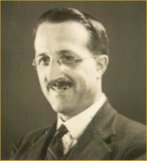
G.R.C. I thought we might consider this afternoon
- the great fact that we have such an High Priest on the one hand,
- and the great fact that we have the Spirit on the other
- – one being complementary to the other, in view of the service of God –
- in view of being available to the Lord Jesus as the Minister of the holy places.
We were considering yesterday afternoon the way the priesthood is established in chapters 17 and 18 of Numbers, Aaron’s staff bearing witness to the living and heavenly Priest.
- We have such a One – Hebrews 8: 1 – and there is no life outside of Him; He lives in the power of an indissoluble life, and if we live it is because He lives; as He says,
- “because I live ye also shall live”, John 14: 19.
- In the experimental history in Numbers the assertion of the priesthood in that attractive way leads to movement on the part of the people;
- it leads rapidly to a recognition of the Spirit, which is really complementary.
- For if we realise that we live because Christ lives, then the Spirit of life in Christ Jesus becomes a primary thing in our thoughts.
- So as the result of the priesthood being established, the assembly drinks of the water from the rock – Aaron’s staff coming into evidence.
- We have had priestly speaking for many years, and we have drunk of the water from the rock, which leads on in certain rapid movements to giving the Spirit His true place in the song –
- though the brazen serpent was a painful lesson
- – this song which Israel sang out of joy of heart, not commanded to do so my Moses, but it says,
- “Then Israel sang this song, Rise up well! sing unto it”.
- It changed the whole character of things, and that is what it does for us.
- We are thankful for every help and adjustment we have had as to the true place of the Spirit, both in the responsible sphere and in the sphere of praise; the Lord has helped us wonderfully.
- And the collective side is specially in mind in,
- “Assemble the people and I will give them water”, Numbers 21.
- So there is typically the giving the Spirit His true place.
- Then in chapter 24 that results in the testimonial sphere in the saints being viewed in their fertility in a dry and thirsty land in the wilderness.
- We find that, as in the gain of the Spirit, the saints are in freshness and power and fertility, which I believe is
- the substantial background for the service of God in the sanctuary – what we are substantially in the testimonial sphere.
As we have noticed, the children of Israel were at the last encampment, and they are viewed by Balaam as in the good of being set together in the order which this book prescribes.
- “How goodly are thy tents, Jacob, and thy tabernacle, Israel!”
- Typically, they are viewed now as happily and restfully in the setting under the sovereign ordering of God as set out in the first four chapters; no complaints, no murmurings.
- They are as in the recognition of the Spirit, and the refreshment that He gives. And then the fertility – what they are for Christ and for God;
- “Like valleys are they spread forth, like gardens by the river side, like aloe trees which Jehovah hath planted, like cedars beside the waters”.
- There is substantially there all that is needed in the service of God, even the cedars.
- Then the water flowing in abundance in verse 7; it is a scene of abundance in the way of spiritual power and refreshment and fertility – I suppose we might say in testimony in the glad tidings.
- I wondered whether this was the substantial background in the testimonial and responsible sphere for the service of God in the assembly in Hebrews 2.
- Hebrews does not develop this side; it is in the main engaged with what is more individual.
- And yet the other is in mind, that we have such an High Priest, and He is the Minister of the holy places; and in chapter 2, the assembly service is referred to.
- But, as I say, I think in the experimental sphere, the apprehension of Christ as the living and heavenly Priest has led us on to an appreciation of the Spirit – for we need both sides.
- We have such an High Priest but, according to Numbers, we have the Spirit as the Well, the source of supply and refreshment, in the testimonial position, and available to us thus in the service of God.
Ques. Would the Spirit in His service always have in mind the saints as available to Christ as the Minister of the holy places, and High Priest seated on the right hand of the throne of the greatness in the heavens?
G.R.C. Yes I am sure. That was the objective really one had in mind in this reading, that we should be available for the Lord as the Minister of the holy places,
- and that in the testimonial sphere there should be nothing to hinder that, that we should be in keeping with Numbers 21 and 24.
- Happily and restfully and with satisfied hearts in the position we have been given in the testimonial sphere, so that we are ready and available for the Minister.
Ques. And the Minister in His place where He is. Is it not important to get hold of that?
- He is not only High Priest, but He is seated at the right hand of the throne, and of the Greatness in the heavens.
- Does not that give warrant for the most exalted praise to God?
G.R.C. It does. So that the assembly is the heavenly sanctuary: we belong to the heavenlies,
- and that is not out of keeping with what we have at the end of Numbers in the passages we have read;
- because, viewed here in responsibility, the tabernacle of testimony is a heavenly thing.
Ques. Would the fact that it is pitched imply a provisional order at present obtaining in the assembly?
G.R.C. I think so. We have not got to finality yet. The tabernacle of testimony is still in movement; we find it in Revelation in heaven, the Levites have carried it. It says
- “the temple of the tabernacle of witness”, Revelation 15 :5.
- It is still called the tabernacle of witness or testimony.
- It is a remarkable statement; as though the Levites have done their work; all the movements were completed, and now the tabernacle is where it belongs.
- But I would have thought that the Lord pitched the true tabernacle at Pentecost.
Rem. And with a view to what is universal in praise to God.
G.R.C. Yes; so that we have had before us the idea of the tabernacle of testimony,
- that the testimony of the Christ is enshrined there, and the testimony of God.
- So that while we have not reached Christ’s day yet, there is a sense, no doubt, in which the tabernacle can be undertaken as representing heaven and earth, as all under Christ’s sway.
- But then we have not reached that day yet; but the assembly, as the tabernacle of testimony, has enshrined in it
- the testimony of the Christ, which would relate to Christ’s day:
- and the testimony of God, which would relate to the day of God.
- So that it is all here in testimony in this vessel. Therefore, from that standpoint, I think,
- we can rightly regard the assembly as the true tabernacle which the Lord has pitched and not men
- – though we can make a wider application of it in its day of display.
Ques. Would the Lord’s position as the One who has sat down at the right hand of the throne of the Greatness in the heavens be described to impress us with the glory of His own Person?
G.R.C. It would. I think it was mentioned yesterday that it is “set himself down”, according to the note; it really implies His deity.
- Yet, as High Priest, His manhood is especially emphasised; though,
of course, the deity of the Person, who is the High Priest, is carefully guarded. And that is the wonder of it.
Rem. So in having to do with Him we are immediately impressed by His majesty and glory.
G.R.C. Yes, and the wonderful thing is we have Him: that is the summary of all that has gone before in this book –
- especially from chapter 3 onwards, where it speaks of Him as the Apostle and High Priest of our confession.
- From that point on, nothing much more is said about the apostle; but what is developed is the High Priest, the wonder of His priesthood, His qualifications for the office so perfect.
- And now there is the summary, that we have such a One High Priest; we have Him; He is ours. That is the point in Numbers 17, we have such an One.
Ques. Is there a distinction in your mind between the High Priest and the Minister of the sanctuary?
G.R.C. The distinction that had been in my mind is that the High Priest is the One we have;
- “we have such a one high priest”,
- He is ours, and we need Him; if we live it is because He lives.
- But I thought the Minister of the holy places was more what He is to God. In a way the offices are closely connected; I mean Aaron typically was both.
- But I wondered if the Minister was that aspect of His service that related to God, that God should have His portion.
- But then unless we had such a High Priest to support us and sustain us in life, the Minister would have no vessels to use.
Ques. Did not F.E.R. say that priesthood always had approach in view?
- I wondered whether we are sometimes inclined to limit the priestly grace of Christ as meeting our circumstances down here, which it blessedly does;
- but does that take on a fresh lustre when we consider that it always has the approach in view?
G.R.C. I think that is most important. It says in Hebrews 5: 1,
- “Every high priest taken from amongst men is established for men in things relating to God”.
- That is, the service of the priest is not limited to things relating to us and our circumstances.
Ques. Do you not think it is significant that in the wilderness Aaron died; but Eleazor, his son, was not to be concerned so much with the people and their infirmities as with the land and the things of God.
G.R.C. And I think that is what Hebrews is intended to bring us to. Hebrews dwells much on the Aaronic side and the side of infirmity;
- but it is evident that the book has in mind helping us to appreciate Christ in the Eleazor type, because the Spirit has in mind that we should not stop short of the full purpose of God.
Ques. Do these references in chapter 7 show the blend of that, as to His intercession – able to save us completely, and so on? It is those who approach God that are in mind, which would confirm what you are saying as to both sides of the matter.
G.R.C. Yes, He is able to save completely those who come to God by Him. That is a magnificent statement, coming to God by Him. He ever lives to intercede for us.
Rem. The same expression, used in chapter 2: 17,
- “in things relating to God”,
- where it speaks of Him being a merciful and faithful High Priest, very touchingly links with His taking hold of the seed of Abraham.
G.R.C. I think it is very important to get that side clear in our minds.
- The Lord as priest will come down to our side of things in a sympathetic way into the smallest things of life – to help, to succour, to sympathise and help;
- but in order to save us completely.
- He is able to save us in every way in order that we might be completely liberated for the service of God.
Ques. Do you distinguish between the High Priest and the great priest?
- The great Priest being spoken of in chapter 10 in relation to this matter of approach –
- In verse 15 the matter of the High Priest comes in as you have been saying in the end of chapter 4 and the beginning of chapter 5, and connected with sympathy and support in the wilderness.
- But I wondered if the great Priest had more in mind our approach: and earlier, in connection with the Melchisedec priesthood, it says,
- “He, because of his continuing for ever, has the priesthood unchangeable. Whence also he is able to save completely those who approach by him to God”, Hebrews 7: 24, 25.
G.R.C. Yes, it seems interesting that in verse 14 of chapter 4, both adjectives are used,
- “having therefore a great high priest”.
- Then in verse 15 it misses out the “great” – when it comes to sympathy, it just says High Priest. And the same in chapter 5, where it is a question of His sympathetic help on our side.
- But, as you say, when you come to chapter 10, and it is a question of finding our place within the veil, we have a great Priest, that adjective is used.
Ques. Would you say that the great Priest draws attention to the greatness of the Person rather than the office?
G.R.C. I think that; and I am just wondering whether the great Priest would include the idea of Minister of the holy places!
- Where it speaks, in these earlier chapters, of the High Priest, it is because we need Him.
- We need to know, too, His high priestly work in the offering of Himself. In chapter 8, verse 3, it says,
- “Every high priest is constituted for the offering both of gifts and sacrifices; whence it is needful that this one also should have something which he may offer”;
- and the following chapters, 9 and 10, develop what He has to offer.
- It helped me some years ago when J.T. pointed that out, that the great high priestly offering which has laid the basis for all service on our side, was the offering of Himself – that which He alone could do.
- And as chapters 9 and 10 develop that, His coming into the world in chapter 10 is introduced as standing related to it. And then it says,
- “by which will we have been sanctified through the offering of the body of Jesus Christ once for all”, chapter 10: 10.
- That great high priestly work was His own, without which there could be no approach or priestly activity in the assembly. He has thus secured the sanctified company.
- But then, when it speaks of the great priest in chapter 10, it is the great priest over the house of God;
- it includes the idea of the minister – He is over the house of God; He is over all the vessels of the sanctuary.
Ques. I wanted to ask about that; He is Son over God’s house; and then the scripture you have just called attention to. Could you say something more about “over the house”?
G.R.C. I think chapter 3 stresses it from the standpoint of authority; because there the contrast is with Moses, who was faithful in all God’s house.
- But Jesus is the Son over it; it gives a peculiar lustre to His authority, that the Son should be over it now; and He is the builder.
- But then I would think in chapter 10, the idea of the great Priest over it is in view of the service;
- it is the Priest there, it is in contrast to Aaron – not in contrast to Moses. Do you think that is right?
Rem. I do. I think F.E.R., in his ministry, stressed that in the chapter of approach the greatness of the Person is emphasised as the One who conducts us to the Father.
Ques. In relation to your earlier remark, does not this thought of sitting down stand in relation to the great work that He has done in offering Himself, the completeness of it, that He can now
- sit “down on the right hand of the throne of the greatness in the heavens”, Hebrews 8: 1?
- Does not that lie behind all the service that He is carrying on in the sanctuary now?
G.R.C. Yes, so that the great inaugural sacrifice is accomplished, and therefore He set Himself down.
Ques. And when it says “we have such a one”, is it intended to bring that continually to our affections; that the way He took up His priesthood should be livingly associated in our hearts with the place that He has now?
G.R.C. You are thinking of how the offering of Himself would captivate our affections completely; and then to think that we have Him now in His risen life.
- He has offered Himself, but He is ours; how He has proved that He is ours in going into death! What more could He have done to prove it?
- But now, as the living and heavenly priest, He is ours; we have such an One.
- Have we appropriated Him? It is like Aaron’s staff that budded; have we appropriated our great High Priest?
Ques. Would that involve our complete identification with Him where He is?
G.R.C. Yes; so that
- “he that sanctifies, and those sanctified are all of one; for which cause he is not ashamed to call them brethren”, chapter 2: 11.
- We have been sanctified by the offering of His body once for all. What a cost! but now we are associated with Him there.
Ques. Have we perhaps been inclined to think of the Lord as the Minister of the holy places, as initiating the movement in the service of God, and the Spirit coming in as the power for movement?
- But are you suggesting now that the Lord, being complementary to the Spirit, helps us in relation to the movement too?
G.R.C, Oh yes, I would think that. I would think we need the Lord all through as well as the Spirit in the way of support. We have such a One High Priest.
Ques. Does the sonship of Christ give a kind of fulness and glory to His priesthood? I was thinking of, firstly, the greatness of who He is; and then the love that He is able to bring into expression and flow in the saints.
G.R.C. I think so. So how easy authority is in Christianity, when you think that He is the Son over God’s house!
- Your heart is drawn out to Him; the Son is in charge. And then it says
- “a Son perfected for ever”, chapter 7: 28.
- Then in chapter 5, as we were noticing yesterday, He is the author of eternal salvation to those who obey Him;
- but the One we obey is the Son, who though He were the Son, He learned obedience. Well all that is so attractive.
Ques. Would you be free to say a word as to the bearing of the bridegroom decking himself with the priestly turban?
- Does that have a bearing upon the point at which the Lord’s service as priest in relation to the holy places is reached?
- The matter of bridal response, and assembly relations with Christ Himself would seem to flow on to that point where the Bridegroom, having secured His own portion, puts on the priestly turban. Is that so?
G.R.C. That is an interesting scripture. I would think that we need the support of the One we have as High Priest at all times, and especially as approaching the great occasion.
- We can rely on Him; so that we need Him in that way – His support and help all through, even from the beginning of the service.
- But then we enter into marital relations with His support; and I think the idea of the bridegroom decking himself with the priestly turban may indicate
- that, subsequent to bridal response and union, the Lord would in a definite way take up His place as the Minister of the holy places.
- He would have then the full service in mind, as having the assembly entirely at His disposal. So the word is
- “in the midst of the assembly will I sing thy praise”.
Ques. Do we need the priestly services of Christ even in relation to our response to the Spirit?
G.R.C. We do. I would think in a general way as the Minister of the holy places, He directs all the service.
Ques. Is it somewhat like David over the courses?
G.R.C. Yes, I would think that. So that while we need the Spirit all through, we worship by the Spirit of God; that is, the whole idea of service Godward – we cannot do anything without the Spirit.
- Yet on the other hand I would have thought that as soon as the Lord comes in at the supper, that He takes control even relative to response to Himself.
- We might not think of Him at that point officially, as it were, as the Minister; but surely, He would take control and all things come under His influence.
Ques. Do we not need help on that line? The question of spontaneity is important; but even what is there spontaneously needs to be regulated.
G.R.C. Yes. So I would think that as the Lord comes in He takes over the regulation of the service;
- He would even indicate I suppose the length of time we should devote to Himself; He has got the whole service in mind.
- And then, as we have been helped to see, He would also indicate and direct our attention to the Spirit after we have responded to Him.
- And then of course that leads on to the full thought of the service, the full idea of it –
- “My Father and your Father, and my God and your God”.
- It is then we see the Minister in His full glory as Minister, directing things.
Ques. Is that why the expression in chapter 8 is
- “the right hand of the throne of the greatness in the heavens”?
- In chapter 1, where we have the glory of His Person emphasising His deity, it is
- “the right hand of the greatness on high”, verse 3.
- But for all the great things to become available under His hand, and to lead us into the glory of them, He takes His place at the right hand of the throne.
- I wondered if, in that way, it would link up somewhat with John 6, where the Lord in His manhood says
- “if then ye see the Son of man ascending up where he was before”, verse 62.
- That might link with Hebrews 1: 3, but then immediately afterwards He says,
- “It is the Spirit which quickens”;
- that is now, as from the throne, He would direct everything in relation to the service, even as to calling attention to the Spirit.
G.R.C. That is good. You are bringing in the throne then with the idea that He regulates everything in the service.
Rem. Quite so. So that in chapter 10 he sets Himself down at the right hand of God in the greatness of who He is. But in chapter 12
- He “is set down at the right hand of the throne of God”,
- with a view to all that becoming available to us. So that from the very beginning of the service He is available to take us and control everything in power until we reach God Himself.
G.R.C. That seems a very interesting suggestion as to the control and regulation of everything.
Ques. Would the word in Ezekiel 43 fit in now,
- “And the Spirit lifted me up, and brought me into the inner court … and a man was standing by me. And he said unto me, Son of man, this is the place of my throne … where I will dwell in the midst of the children of Israel for ever”, verses 6 and 7.
- Would the general setting of that passage bring in the Spirit, the movement into the inner parts, and the man standing by – the Lord Jesus still as Man to serve God and us?
G.R.C. Yes; I think that is a helpful passage. The Spirit lifted him up; it is the Spirit that quickens; we cannot do without the Spirit;
- but the man was standing by, and I suppose that is true all through the service.
- We have such an High Priest, He is always standing by to support.
- And then he hears a voice speaking to him out of the house; He says
- “This is the place of my throne, the place of the soles of my feet”.
- One has often thought that that especially relates to the highest level of the service; that is,
- – because it is God in majesty there.
- “This is the place of my throne, and the place of the soles of my feet, where I will dwell in the midst of the children of Israel for ever”.
Ques. Is what you are saying seen again in chapter 13 of Hebrews?
- “By him therefore let us offer the sacrifice of praise continually to God, that is, the fruit of the lips confessing his name”, Hebrews 13: 15.
- I was thinking of what you are saying as to the Lord’s service right through. It is by Him and in Him.
G.R.C. Quite so.
Rem. Peter confirms that, the spiritual sacrifices are acceptable to God by Jesus Christ.
G.R.C. Quite so. Those are interesting references.
Ques. Why are the holy places and the true tabernacle mentioned separately, please?
G.R.C. I had simply thought the holy places were the distinctive parts of the tabernacle; He is the Minister of the holy places.
Ques. Would you say that, linking on with your earlier references to the Spirit, and as to the matter of life in us, and as to the Lord having pitched the true tabernacle at Pentecost,
- He was the One who poured out the Spirit, the anointing of it?
- So that in the wilderness epistle, 1 Corinthians, it says in chapter 12,
- an anointed vessel; but it is a vessel functioning in life.
- And do not the chapters following, which involve the services, suggest that everything is functioning rightly, not only in the service of praise itself, but in the testimonial setting also?
G.R.C. I think that is good. So that you mean the services of the court and the holy place are filled out; and then of course we have our own distinctive place in the holies.
Rem. If we contemplated more the fact that Christ is sitting there at all times, when we come together for this occasion, of which we are now speaking,
- would we not have the Spirit’s help to bring us into line with the One who is available to serve us? Perhaps sometimes we are waiting for Him to move to help us.
- I am thinking of the glory of the fact that He is always sitting there. In Chronicles, the priests were unable to stand to serve, but this glorious Priest sits, does He not? and serves continually.
G.R.C. So you mean we come together in the light of that, with the faith of that in our souls, and we have the Spirit.
- One has often thought that the Spirit strikes the chord; we do not know how the meeting is going to begin, but the Spirit, if our state is right, unfailingly strikes the chord, and His quickening power is known.
- We have referred to the Spirit, as it were, lifting us up; the service proceeds, and then the Lord comes in.
- It does not alter the fact that from another standpoint He is seated.
- But He graciously comes in, like John 20, when He stood in the midst; that is, with a view to our movements until we reach our heavenly position, too
- – raised up together and made to sit down in the heavenlies –
- till we are in keeping with Him, in the sense of restfulness before God.
Ques. Might I ask as to 2 Corinthians 3.
- Do I understand that lordship attaching to Christ is in relation to His being Minister of the sanctuary, and regulating the service;
- whereas lordship in the Spirit stands more connected with our side in view of our moving forward in the service?
- I am thinking of the word in 2 Corinthians 3 as to the “Lord Spirit”.
G.R.C. It seems like that. We are transformed; that seems to be our side; and in that chapter it says it is the Spirit that quickens.
- So that we look on the glory of the Lord; but then the Spirit on our side transforms us from glory to glory,
- so that we are capacitated to take up each feature of the service as the Minister moves in it.
Ques. As to Numbers 21, do you view it as related to seasons of ministry, and building up the saints constitutionally?
G.R.C. You are thinking of the word
Ques. Yes; and following the brazen serpent. Is it a question of being built up constitutionally in view of the service?
G.R.C. That is what I thought. I thought that the chapter is constitutional; it is really a state arrived at, where our state of soul is singing to the Spirit.
- There are particular times when we sing to Him, but it is a kind of state of soul,
- “Then Israel sang this song”.
- You are always rejoicing in the thought that the Spirit is with us and in us, at all times, according to Romans 8 individually,
- but according to Corinthians collectively, which links more with Numbers 21: “Assemble the people together”.
- We rejoice in that whenever we come together.
Ques. Otherwise, if we were not able and ready to sing to the Spirit it would be an impossible demand upon our souls to worship and come under His influence in moments of privilege, would it not?
G.R.C. .It certainly would.
Ques. Do you think this reference to the Spirit,
- is what should distinguish the service of God and the service of believers in the present time in Christendom in its dead condition?
- Is there not a testimonial setting to it; and would not the presence of the saints as recognising the Spirit, and being helped by the Spirit, be a testimony to God in such conditions in Christendom today?
G.R.C. I am sure that is right, And that seems to be why the Spirit is so prominent in the testimonial epistles, because
- if we are giving Him His place there will be the evidence of life, whatever kind of meeting people come in to.
- And even in our individual path, wherever people meet one whose state of soul is singing to the Spirit, surely there will be a testimony.
- If they come into our meetings, well, there would be power and refreshment, as it says, and a state of things will come about like we have in chapter 24: 6,
- “Like valleys are they spread forth, like gardens by the river side”.
- There is all the potential fertility and fruitfulness for Christ and for God; gardens, aloe trees, cedars.
- But what a testimony! And then the public testimony, specially in
- “water shall flow out of his buckets”.
- If people come in, there is abundant supplies for them. Is it not all involved in the recognition of the Spirit?
Rem. It lends a glory to the completion of wilderness exercises, does it not?
G.R.C. It does.
Ques. Is it a kind of result of the priestly service of Christ?
- Attention has been called to the distinction between the holy places and the true tabernacle which the Lord has pitched;
- the holy places suggesting the inside position I think, and the true tabernacle more the court, the outside position.
- I think it has been said the same word is used in regard to the true tabernacle which the Lord has pitched.
- It is the same word that is used in Number 24, like aloes which Jehovah hath planted; it is the same reference I understand.
G.R.C. That is an interesting remark.
Ques. In regard to the conjunction in Hebrews 8: 2,
- “minister of the holy places and of the true tabernacle”,
- if I recall rightly, F.E.R. said the holy places are where God dwells and walks. Would that connect with 2 Corinthians 6: 16,
- “I will dwell among them and walk among them”?
- The Lord would serve in relation to the saints in that regard, would He not? But then
- “the true tabernacle which the Lord has pitched and not man”,
- has in view the service of God specially, do you think?
G.R.C. Yes, I would think that. I think what you say as to God dwelling among us and walking among us is very affecting, as we think of the holy places.
Ques. Referring to chapter 24, would you say a word as to the tents and tabernacles. The tents of Jacob, and “thy tabernacles O Israel”. Are you viewing them as representing the households of the saints?
G.R.C. I thought that was the primary idea, that they are viewed as in their setting in divine ordering according to the early chapters of the book.
- They could not be otherwise; the people are now typically in the gain of the Spirit.
- They would be restfully in the position assigned by God relative to His tabernacle.
Rem. They are not only in testimony but they are fruitful, are they?
G.R.C. Quite so; and Jacob and Israel are in keeping. There is the Jacob side,
- “Thy tents Jacob, and thy tabernacles Israel”.
- The great feature of this part of the book is that word “Israel”, not the children of Israel.
- “Then Israel sang this song”.
- Over and over again in these chapters you get what Israel does.
- It is because they have arrived at the gain of the Spirit, the idea of the
- “prince of God”, Genesis 32: 28
- – see J.N.D’s marginal Note.
Ques. Is that the reason why the Spirit is prominent in this parable? In the third it is the Spirit of God that comes upon him, and brings to light the thought of God’s husbandry.
G.R.C. Yes I think so.
Ques. In your opening remarks you referred to the service of the Lord and the service of the Spirit being complementary to one another.
- Is not that one of the greatest features of the dispensation?
- Two Divine Persons are working hand in hand to bring about the great thoughts of God, and it applies really right through the service.
- And then in the scripture that has been referred to in 2 Corinthians the Lord and the Spirit seem almost identical together;
- and then in this passage in Numbers 21
- “Rise up well! Sing unto it: Well which the princes digged, which the nobles of the people hallowed out at the word of the lawgiver”.
- We have got the Lord and the Spirit brought in there.
G.R.C. I do not think we can emphasise this too much, the utmost importance of it.
- We have the Lord on high, and we have the Spirit here, and the position of One is complementary to the position of the Other;
- and we need to fully avail ourselves of these resources in the Lord and in the Spirit. Both are essential to us.
- And it seems to me, therefore, that if we recognised the priesthood of Christ according to Numbers 17,
- He would, through ministry and otherwise, in priestly grace, rapidly bring us to Numbers 21, to the recognition of the Spirit and His place.
- And now everything is ready for the service.
Ques. Does the thought of the Paraclete – Comforter – applying to both Divine Persons, bear on this? J.N.D’s note being ‘one who manages our affairs’?
G.R.C. Yes, One managing our affairs on high, in all things pertaining to God; and the Other managing our affairs down here that we might be ready and available to the Minister.
Ques. Are not those two sides combined when the Lord says in Matthew 28, verse 18,
- “All power has been given me in heaven and on earth”?
G.R.C. You are thinking He exercises His power amongst the saints on earth by the Spirit.
- The Spirit maintains His authority, the authority of Christ amongst the saints.
Rem. He goes on to speak of the Name of the Father and of the Son and of the Spirit.
Ques. Is it a remarkable thing that the Lord charged the disciples by the Spirit during the 40 days; is not that to convey to us the present position?
G.R.C. I think so. You mean that what the Lord would do now He does by the Spirit. If He gives us impressions and directions, they surely come to us by the Spirit at the present time.
Ques. Is your thought that there is no part of the service that is not perfectly and divinely provided for us in this dual service involving Christ and the Spirit?
- And would you look, in addition to that service, for some specific worship to Each of those Persons in the service?
G.R.C. I would, very much so. So that while Numbers 21 is more a state of soul, that we are singing to the Spirit, we give expression to it vocally at suited times.
- How often we give expression to it in reading meetings, and ministry meetings, where we feel the need of the Spirit to bring in the water, the streams of refreshing;
- but then we have been helped as to the suited time in the service of God.
Ques. Does this dual service continue in conditions of access to the Father and to God?
- And would there not be in those conditions of access a more glorious understanding of Divine Persons as They stand related to Each Other,
- and not relative to wilderness conditions and conditions of lordship?
G.R.C. I think that is very helpful. I think this morning one got a sense more than ever before of the wonder of the truth that God is One; the oneness of all the operations, diverse in one sense, yet in glorious oneness.
Ques. Would we not need to apprehend that rightly in view of worship?
G.R.C. I think so, especially, you mean, at the close of the service, the worship of God.
Rem. And the worship of the Spirit, as He stands in His service relative to access to the Father.
G.R.C. Quite so.
Ques. Is that what you have in mind in making reference to the time of the worship of the Spirit?
G.R.C. Yes, that is what I have in mind. Would you think that?
Rem. Yes, but develop that a bit for us, please.
G.R.C. I think it has been thoroughly confirmed in practice, that it is a matter of the suited time.
- To bring in a note of worship to the Spirit while we are responding to the Lord, for instance, is a kind of divergence;
- it is a breaking in upon a matter which should be filled out by itself
- – and the Spirit is with us in filling it out – He is with us in every part of the service.
- The point is, when is the most suitable time to express our appreciation.
Rem. We had previously rather built much on verse 17 of Genesis 24
- “Let me, I pray thee, sip a little water out of thy pitcher”,
- as perhaps suggesting it came in earlier in the morning meeting.
- But I think we have been helped to see that that links with the wilderness position, and it confirms what you have been saying as to Numbers 21. Would you say that?
G.R.C. Yes, and the way we value Him in our other gatherings.
Rem. Reference has been made to Joshua 5, the man with the drawn sword; and they come to a point where the man says:
- “No; for as captain of the army of Jehovah am I now come. Then Joshua fell upon his face to the earth and worshipped, and said to him, What saith my lord unto his servant?” verse 14.
- He fell upon his face to the earth, and worshipped, and called him ‘lord’. It is thought that is a reference to the Spirit. And is it significant that this is just at the point of entering the land?
G.R.C. It would be the point of entering upon the full thought of the service,
- “My Father and your Father”.
- I am not taking simply the setting in Joshua, but the full service; and I suppose union with Christ is in the land, it is in heavenly places.
- Our links with Him are all as the ascended One, whether as His brethren or as His bride.
- But then, as we are about to enter into the full service, suggested in
- “My Father and your Father and my God and your God”,
- that is where the prostration to the Holy Spirit seems to be right.
- And I take it, that kind of expression, falling on the face and worshipping, is the fullest thought of worship.
- There is a sense in which every response to a Divine Person is worship; the word ‘latreuo’, the word used in Hebrews 9 to worship the living God, as the note indicates, is any outgoing to a Divine Person.
- But then there are different degrees of that, and when you come to falling on the face, it is prostration.
Rem. I think that clarifies the whole matter for us.
Ques. Is it not important therefore to have the Lord before us all the time? We must keep our eyes on Him and see what He is doing, where He is.
- And then when we come to Hebrews 2, we must be listening to what He is singing, must we not, to enter into this phase of the service?
G.R.C. Yes, I think the idea of the Minister as well as the Mediator shows how we need Him all the time,
- we need Him for direction, as the Minister of the holy places;
- and I rather think that in that title
- “Minister of the holy places”,
- we would have to go beyond Aaron, because Hebrews 2 goes beyond Aaron.
- You get the idea of Aaron as a type in
- “he that sanctifies and those who are sanctified are all of one”;
- but it immediately goes on to David and Solomon.
- “I will declare thy name to my brethren in the midst of the assembly”.
- Really in those days, the service was under the direction of the king, so I take it that
- as Minister of the holy places the Lord fills out what is typically suggested in Aaron and in Solomon’s direction of the whole service.
Ques. In Aaron as minister, does He not provide a full and adequate response in the light of what He is as the effulgence? The effulgence has its answer in His ministry of the sanctuary.
G.R.C. So, as F.E.R. said, the approach is equal to the revelation.
Rem. And even in the marking off of Aaron in Exodus 28
- “that he may serve me as priest”
- is emphasised more than once.
G.R.C. That is good. That is, God’s side is stressed there, not our side and our needing Him; but “that he may serve me as priest”.
Ques. Referring to Hebrews 2, would we ever bear in mind that the One who made the declaration is in Himself the perfect and full answer to it?
- And does singing in the midst of the assembly speak of the unique response of Christ, for His response must be unique in the suited environment of the midst of the assembly to His Father and to His God, would you think?
G.R.C. That is really the wonder of Christianity, that the One who is the effulgence of God’s glory and in whom all the fulness is expressed,
- is the One in whom there is the full and complete response; there are the two sides.
- But then another great wonder is that in the assembly there is a vessel adequate for the Lord to sing in the midst of it.
- He is singing in surroundings capable of appreciating His song, insofar as the creature could, and of joining in the song.
Ques. And in that sense, would it be just to say that the response is equal to the revelation?
G.R.C. I would think that God has secured in the assembly, as under the headship of Christ, a worthy response; with Christ singing in the midst of the assembly there is a full and adequate response to God.
Rem. The expression
- “filled even to all the fulness of God”, Eph. 3: 19,
- would confirm that.
G.R.C. That does seem to be so.
Ques. How would Christ singing in the midst of the assembly have its practical effect upon us as assembled? How would it be discerned? Many such questions would come to the mind.
G.R.C. I would think the Spirit, if we were more amenable to Him, would give us some impression of the kind of response that is ascending, or going up from the heart of Christ to His Father and His God.
Ques. Does that particularly emphasise what you were saying as to the complementary service of the Spirit and the Lord, that we can only hear what the Lord is singing as we are particularly dependent upon the Spirit?
G.R.C. I would say so. I feel if we were more amenable to the Spirit we might catch those notes more. J.N.D. speaks of “the inspiring song” that He sings, and as to whether we are capable of joining in it.
Rem. And the wonderful grace that would give us to have a part in it, as it says
- “Thou art holy, thou that dwellest amid the praises of Israel”, Psalm 22: 3.
- Is it not a marvellous thing that we can come into these praises?
G.R.C. Song is the result of joy, it is a joyful heart that sings; and it helps us to think of Christ coming out of those depths, when He says
- “Thou art holy, O thou that dwellest amid the praises of Israel”
- – coming out of the depths and entering the presence of His Father and God.
- What joy was in His heart, the sufferings were over; what joy and gladness, what an inspiring song!
Rem. I suppose one of the practical effects would be that every expression of worship and affection would be quite beyond the individual appreciation, but would be assembly emotions; would it not?
G.R.C. It is one of the things we have been helped on over the years, that it is the idea of assembly response, and we being in it bodywise, one heart, one soul
- – so that we do not take the supper as so many individuals, and we do not take it as a sacrament.
Rem. The reference to
- “above all which we ask or think”, Eph. 3: 20,
- suggests that in the creature vessel itself there is limitation; but there is the power that works in us:
- “according to the power which works in us”.
- Does not that give the link, as you have been saying, to the exalted character of assembly response –
- “to him be glory in the assembly in Christ Jesus”?
- I am thinking of the sensitiveness, and the ability to penetrate into these things, according to the Spirit’s power.
G.R.C. “Exceedingly above all which we ask or think”.
- It is wonderful, the possibilities suggested there.
Rem. I think you have said elsewhere that we might talk about limitation as to ourselves; but when we think of what you have been stressing this afternoon
- – the coordinated service of two Divine Persons, and the assembly being the vessel that is employed in the service –
- it all enhances the greatness of that system of glory.
G.R.C. I think it is wonderful to think about that, the coordinated services of the Lord and the Spirit, and then
- what the assembly is as Divine workmanship – the acme of Divine skill and workmanship.
- So that if you put those things together you can get an idea of the wonderful results for God.
Ques. Does “in the midst of the assembly” suggest that the assembly is a vessel of music and song, and that His praises resound in the assembly in that sense?
G.R.C. Yes, that is what I would understand; and as the acme of Divine workmanship, how sensitive the assembly is!
- Think of the operations that have gone into it that there should be a vessel sensitive enough to catch the notes of Christ, and to be in sympathy with them, and in creature measure to take them on!
Ques. Would “in the midst” suggest that as Minister of the holy places He had complete control of the service?
G.R.C. That is what I would say.
Ques. And would it require “the midst of the assembly”, that even any local gathering should be in the light of the whole assembly position?
G.R.C. Is it not normal that when the Lord comes in, He comes into the local position; but if things are right, do we not, as in His presence, pass out of time and locality?
Rem. Yes, but are we not prone to try and detain the Lord in the local conditions, but the assembly would be what is universal?
G.R.C. That is right. So that in our spirits the thing is to pass out of time and locality, and in our spirits to be with the Lord relative to the full thoughts of God.
Ques. I would like to ask in regard to understanding the Lord singing in the midst to the assembly – it does not seem to suggest that we exactly hear what He says.
- But we would be helped, in looking upon the faces of the brothers and the sisters, as the service goes on, to see and understand that the Lord is singing in the midst of the assembly.
G.R.C. So that you think it would affect the countenances of the brethren.
Ques. What is the general distinction and connection between the thought of the headship of Christ, and this view of Him as the Minister of the sanctuary?
G.R.C. The way it appeals to me is that headship in Colossians and Ephesians would include the thought of Minister of the holy places.
- No doubt headship has specially the idea of His influence and impulse; but I think it must include this,
- for “Head” is a comprehensive title and is used in the Gentile epistles
- to persons who would not necessarily understand the typical language. What do you think?
Rem. Yes, I thought the idea of the Minister of the holy places would be absorbed into the idea of headship.
G.R.C. So that Solomon, the great type of Christ as head, directs the whole service;
- he includes in his functions, I would say, typically, the office of the Minister of the holy places.
Page Top Reading Top
| THE LAST ENCAMPMENT |
|---|
Address by G. R. Cowell at Doncaster, April 1960
Numbers 22: 1; 23: 7-10; 25:1-3; 33:1-2, 48-49
2 Corinthians 13: 5-14
Memorials 8: 127-39
|
|---|
One’s concern, dear brethren, is that, in company with one’s brethren, we may reach the last wilderness encampment, and be in the gain of it.
- It would mean that we had learnt the lessons of the wilderness.
- The last encampment is a wonderful place; and, if we are there and in the gain of it, we are ready for the final move.
- “The last trumpet; for the trumpet shall sound, and the dead shall be raised incorruptible, and we shall be changed”,
- ready to be taken actually into our eternal inheritance; and therefore morally ready to enter in spirit now.
- The children of Israel reached the last encampment in the verse with which we began:
- They “encamped in the plains of Moab on the other side of the Jordan from Jericho”.
- The last movements in the wilderness were rapid, following what we had this afternoon:
- the apprehension of the priestly grace of Christ, the living and heavenly Priest,
- the greatness of the sanctuary and the service of God in it,
- the apprehension of the value of the death of Christ according to Numbers 19 – in its purifying character.
- Then their drinking of the water from the rock, as it says:
- “and the assembly drank, and their beasts”, Numbers 20: 11
- – typically, as a result of the apprehension of Christ as the living Priest on high, and of the speaking to the Rock – although
- Moses failed, by striking the rock twice, but God saw to it that the people got the good of it.
- The result of all that is that you come to rapid movement; and from that point on, the children of Israel are time and again called “Israel”, and not simply the children of Israel.
- Israel’s princeliness, as according to God, was coming to light.
- So they treat their brother Edom in a princely way; they would not go out to meet him with the sword, although he would come against them with the sword.
- In the next chapter they vow a vow to Jehovah, as the Canaanite comes out against them, that they would utterly destroy them, and Jehovah listened to the voice of Israel.
- They are set against the Canaanite; Canaanite means ‘trader’, and they are set against that principle – in any way making a trade of the word of God.
Then they rapidly come to that vital point, the brazen serpent. It is a wonderful point to come to.
- In chapter 17, in connection with Aaron’s rod that budded, they proved the grace of our Lord Jesus Christ, the living and heavenly Priest;
- but in coming to the brazen serpent, and looking intently upon it, they arrive at the love of God – and the end of themselves.
- But you see, it is only in the measure in which we arrive at God’s judgment upon us that we apprehend His love; as the Lord says to the Pharisees:
- “and pass by the judgment and the love of God”, Luke 11: 42.
- It was in that scene of judgment that God’s love was told out:
- “has not spared his own Son, but delivered him up for us all”, Romans 8: 32
- – the love of God which is in Christ Jesus our Lord.
- And then they proved the communion of the Holy Spirit.
- “Then Israel sang this song, Rise up well! Sing unto it”, Numbers 21: 17.
- You see how rapid the movement is, and the coming to the divine judgment of matters;
- getting the gain of the grace of our Lord Jesus Christ and the love of God and the communion of the Holy Spirit!
- And those three things are what will be enjoyed unhinderedly if we arrive at and are in the gain of the last encampment.
- Those are the things characteristic of the last encampment, to be known without hindrance
- – the grace of our Lord Jesus Christ and the love of God and the communion of the Holy Spirit.
- They move on, and there is the overthrow of Sihon and Og – self importance and self indulgence, pride and ease.
- They have come to the last encampment in the plains of Moab on the other side of the Jordan from Jericho.
- The enemy is fearful of them; they were not enemies of Moab; but Moab was fearful of those in spiritual power, and so Balak hires Balaam.
- He would hire him to curse the people, but the curse is turned into a blessing; and we have read the first remarks of Balaam and what comes into his first statement is
- “Lo, it is a people that shall dwell alone and shall not be reckoned among the nations”.
Chapter 33 speaks of their journeys, their goings out;
- there is the initial going out through the Red Sea, when we accept the doctrine of baptism, and in our measure at the time accept baptism itself.
- But these journeys bring home the truth of it to us more and more; they are all called the goings out.
- In the Red Sea we acknowledge that our old man has been crucified with Him; but the working of it out – so that we are practically free from that old man involves the lessons of the wilderness,
- a pivotal point in which is the brazen serpent.
- So that you can understand Balaam saying here, as he beholds Israel,
- “It is a people that shall dwell alone”; their goings out at this time were so complete – “they shall not be reckoned among the nations”.
- But then, at this last encampment, referred to again in the beginning of chapter 25 at Shittim – which as we know means acacias –
- “Israel abode in Shittim”,
- the enemy attacks on that very point, the very point as it were that Balaam began with. We are told in chapter 31: 16
- “these through the counsel of Balaam, caused the children of Israel to commit sin against Jehovah in the matter of Peor”.
- So that although Balaam had been compelled to speak God’s mind about the people, because of the corruption of his motives, he counselled Moab and Midian as to how they could attack such a people;
- and the attack was based on that very verse – it is a people that shall dwell alone.
- The very thing that he had said about them, he used the light of it that was given him, against the people; and he gives counsel to Balak and Midian, as much as to say: ‘Now that is where you can overcome them, that is where you can weaken them – on that point’.
After all their journeys and goings out they come to the last encampment, and there is a final attack on this particular line.
- So that even if we could credit ourselves – which alas we cannot – with being at the last encampment, we would have to face this.
- And in fact what we are facing, and have been facing, is pretty much this kind of thing,
- the counsel of Balaam to strike at the root of things by seducing the saints so that we are no longer a people dwelling alone; so that we are reckoned among the nations, we have a place amongst men.
- And so this Midianitish snare comes in, the people began to commit fornication with the daughters of Moab; it is the fair and attractive side of the world.
- The people at the last encampment should not be carried away by the base things of the world, the fair and attractive side of the world, the seducing side. But it says:
- “And they invited the people to the sacrifices of their gods; and the people ate, and bowed down to their gods, and Israel joined himself to Baal Peor”.
- I suppose there was no graver point in their history than this, in view of the point they had reached with God, that then they should allow themselves to be seduced.
- And so the very thing that is brought forward here, as an example, suggests the awful seduction of the world. Social status, high positions – it says in verse 14,
- “And the name of the man of Israel that was slain, who was slain with the Midianitish woman, was Zimri the son of Salu, the prince of a father’s house of the Simeonites. And the name of the Midianitish woman that was slain was Cozbi, the daughter of Zur; he was tribal head of a father’s house in Midian”.
- How this speaks of the seductive side of the world! How the world would flatter us!
- It would say, ‘We want you, you are a clever man, your Christian principles will help, we would like you in our institutions, you are just the man we want’.
- The world will really say that, and Satan would like to have you; he cannot convert people, but he likes to have converted people to adorn his system; it makes it look respectable.
- And so we have Phinehas coming forward, jealous with God’s jealousy among them, used by God to save the situation.
- Nevertheless, twenty-four thousand died in the plague, which was a most serious matter.
I think we need to take account of this; God is bringing us, I believe, to this last encampment; so we need to be very vigilant as to the Midianitish snare.
- But the thing was met, the plague was stayed, and immediately following that, they are numbered for the land in the next chapter; for the land is in view at this last encampment.
- There was not one left of the old generation except Caleb and Joshua.
- Here is the new generation, Caleb and Joshua being the link with the old, which gives the continuity of it in Christian experience – that we are the same persons.
- But the new generation is now numbered, numbered for the land, and the family side is stressed all through this numbering.
- You see the family links amongst the brethren; how we need to keep a pure strain; a Midianitish woman with an Israelitish prince is a dreadful mixture!
- We need the pure strain, if there is to be pure family affections amongst the saints.
- The moment you get an admixture of the world, it cuts right across divine family affections; you are bringing in something entirely extraneous to the family of God.
- And we need the basis of family affections if we are to move together into the inheritance.
- Indeed Joshua, who was about to be raised up, was of the tribe of Ephraim.
- You have levitical leadership in Moses and Aaron and Miriam; but you have the tribe of Ephraim, the firstborn; you have the rights of the firstborn, linking more with the family side of things in Joshua.
- As to David, leadership was according to Judah.
And so this numbering is in view of going into the land. And again it speaks of this encampment in verse 3 of chapter 26,
- “in the plains of Moab by the Jordan of Jericho”.
- That is where this numbering goes on; it is at this last encampment that the new generation has clearly come to light, and can be taken account of and numbered for the land.
- Following that, we have the daughters of Zelophehad – because, you see, the land is in view at this last encampment, nothing less, and the daughters of Zelophehad come forward indicating the true spiritual state that God is looking for, valuing the inheritance.
- And God answers their desire, this energetic spiritual state that would claim the inheritance.
- And then following that, God says in chapter 27: 12 to Moses
- “Get thee up into this mount Abarim, and see the land that I have given unto the children of Israel. And when thou hast seen it, thou shalt be gathered unto thy peoples, as Aaron thy brother was gathered, because ye rebelled against my word in the wilderness of Zin, in the strife of the congregation, as to hallowing me in the matter of the water before their eyes”.
- The serious side of things is brought forward there as to Moses. What a solemn thing, those hasty words!
- But then, although God says that to Moses here, his departure does not take place here; that is impending, for there is much to be done yet.
- There is the appointment of Joshua; and then to think of those chapters, 28 and 29, marvellous chapters, and how they come in here! Think how privileged Moses was to give this instruction:
- “My offering, my bread for my offerings by fire of
sweet odour to me, shall ye take heed to present to me at their set time”.
- And all the detail of the offerings of each set time is gone over in these two chapters.
- At the last encampment the people are prepared for this kind of thing, that God should have His full portion.
- If they are thinking of the inheritance, they are not thinking of it merely relative to themselves; but they were to learn how God should have His full portion, His offerings, His bread, His offerings by fire.
And so if we move on to chapter 31, we have the war to
- “Avenge the children of Israel upon the Midianites”.
- And that is a thing we need to attend to; Midian must not become a snare any more. So we must go to war against the Midianites; every tribe represented, every local meeting, as we may say.
- We go to war with the Midianites – these principles of seduction.
- And the war was successful; and one feature of it was, according to chapter 31: 49, that not one man was lacking.
- Twenty-four thousand died in the plague, but not one died in the war; so that once we face the matter, there is salvation.
- But you will notice that in this war, and what follows it, how much purification is stressed in chapter 31, verses 19-24!
- How thoroughly they were to purify themselves, as well as the booty they had taken!
- “The gold, and the silver, and the copper, the iron, the tin, the lead, everything that passeth through the fire, ye shall make it go through the fire, and it shall be clean; only it shall be purified with the water of separation;”
- Even after going through the fire, it was all to go through the water:
- “And everything that cannot pass through the fire shall ye make go through the water. And ye shall wash your garments on the seventh day, and ye shall be clean; and afterwards ye may come into the camp”.
- What a thorough going matter this was! Not only warfare, but this utterly thorough and complete purification!
That brings us on to chapter 33 where we read about these journeys. Here we have a wonderful view of the wilderness in retrospect.
- “And Moses wrote their goings out according to their journeys by the commandment of Jehovah; and these are their journeys according to their goings out”.
- They are not called wanderings here.
- We might well say that the truth of the brazen serpent was always true, and why did not they acknowledge it just after they left Egypt?
- But you see, the wilderness lessons had to be learnt experimentally, and while the prolonged time in the wilderness was because of sin in the flesh working in the people – which, of course, you cannot excuse –
- yet from the Divine side God was over it all.
- Those in whom He was working were getting the good of it – Caleb and Joshua were getting the good of it – the new generation, if we may say so, was getting the gain of it.
- God did not cease to order their movements, they were journeys, it says,
- “by the commandment of Jehovah”.
- In Nehemiah 9, the confessional chapter that was referred to this afternoon, it says in verse 19 that
- “The pillar of cloud departed not from them by day … neither the pillar of fire by night”.
- The faithfulness of God is wonderful. If God had been impatient He would have left them – for they could have done the journey in only eleven days.
- But think of the patience of God operating so that those who were His elect might truly learn all the lessons experimentally – during 40 years.
- Many died by the way, many fell out, but there were those who got the gain; we would like to be amongst those who get the gain, and to come to this last encampment.
- And so at the end of this record of the journey it says “and they encamped by the Jordan”, verse 49.
- It again gives us the previous description, they “encamped in the plains of Moab by the Jordan of Jericho” verse 48.
- But then it goes on to give a further description and says
- “they encamped by the Jordan, from Beth-jeshimoth unto Abel-Shittim, in the plains of Moab”.
- Now the note indicates that Abel-Shittim means the plain of acacias.
- And by the time we come to this chapter, the people are viewed as having really reached that experimentally, the plain of acacias;
- they were in keeping with the acacia wood of which the tabernacle was made, and of which the ark was made.
- God’s end had been reached so far as the wilderness was concerned. That is what I understand this to mean; that
- there was nothing in evidence but the acacia wood.
Now, I believe that is what Paul has in mind in the last chapter of 2 Corinthians. He wants to bring the Corinthians to the last encampment of the wilderness; they have gone round that mountain long enough, and so he says
- “Examine your own selves if ye be in the faith; Prove your own selves: do ye not recognise yourselves, that Jesus Christ is in you?”
- Now, dear brethren, do we recognise ourselves? May I ask, what you think about yourself?
- You say, well, I come from a good family, brought up in the meeting; I have a good education, I have got a good deal of ability.
- Well, it may take us a long time to recognise the kind of man we really are.
- What we may be boasting in does not count with God; He has overruled those things that we may have in His mercy and goodness;
- He has overruled your forbears and so on, but nothing we derive naturally from that source has any part in His system.
- The only ground for our having any part in His system is that Jesus Christ is in us. Have we discovered that yet?
- You see, if you have discovered that Jesus Christ is in you really, and therefore recognised yourself, you will say,
- ‘Well, I cannot tolerate anything else. Everything except Jesus Christ in me springs from the flesh which has come under divine condemnation at the cross; and I cannot recognise that as myself, I must disown it, and not boast in it any more. I disown it’.
- So that at this last encampment we really come to a knowledge of ourselves according to God, to recognise ourselves as we really are according to God, that Jesus Christ is in us, and that is the only thing that matters.
- And it is because Jesus Christ is in us that we are part of this great system, like boards of the tabernacle. You could not have anything but acacia wood.
- You can see that if you bring anything else into the matter, you are spoiling your availability as a board of the tabernacle; the board of the tabernacle is just acacia wood and nothing else. And that is me.
- In Romans 7 Paul says it is not I that do it; he would disown the other man completely. It is the sin that dwells in him.
- But Paul is very specific in Corinthians, because he had taught the word of God there with a view to setting them together tabernaclewise, as we may say; and he wanted it to be a practical reality.
- So he ends with this challenge, which if answered to, would bring us I believe, to the last encampment,
- “Do ye not recognise yourselves, that Jesus Christ is in you?”
- Mr. Stoney used to deprecate the idea even of being a good Christian man as the world speaks; you see, it attaches things to myself.
- To attach Christianity to myself to make anything of myself is one of the worst things.
- The point is Jesus Christ is in me. And if He is in me, and I rightly realise that, and recognise myself in that way, I cannot tolerate anything else.
- That is how we arrive I think at the plain of acacias.
- And he was wanting the Corinthians to arrive there, at this last encampment. He did not mind what they thought of him as long as they arrived there.
- He would rejoice even if he was thought a reprobate, he says
- “For we rejoice when we may be weak and ye may be powerful”, 2 Corinthians 13: 9.
- He did not mind what happened as long as the saints arrived at this last encampment. And of course if they arrived at that, there would be no need for him to use severity.
- The authority he had been given was for building up, not for overthrowing; and if they arrived at the last encampment all that would be needed would be building up. So he says
- “For the rest, brethren, Rejoice”.
- These are the things that would mark the last encampment. Earlier he says,
- “But this also we pray for you, your perfecting”, verse 9.
- And I think he has in mind this point that I am seeking to bring before us, this arriving at the last encampment;
- “your perfecting”, from the standpoint of getting the gain of the wilderness and its lessons – “your perfecting”.
- And as I say, what characterises the position is joy,
- “Rejoice” he says, “be perfected; be encouraged; be of one mind; be at peace; and the God of love and peace shall be with you. Salute one another with a holy kiss. All the saints salute you”.
- And then these three great things I have referred to already that have come out earlier in Numbers,
- “The grace of the Lord Jesus Christ”, the living and heavenly priest,
- “and the love of God”, told out at the cross, but resident now in Christ Jesus our Lord;
- “and the communion of the Holy Spirit, be with you all”.
- What marks the last encampment is that those things are enjoyed without hindrance.
- We may touch them and come into them as they did typically in chapters 17, 20 and 21;
- but they had still got more to do, they had got to overthrow Sihon and Og, and they had got to face the Midianitish snare.
- But now the point is that all those things being faced, then these three things can be enjoyed without any hindrance;
- “the grace of our Lord Jesus Christ, and the love of God, and the communion of the Holy Spirit, be with you all”.
- Well, you are in a wonderful position now. Just ready for the land, ready for the last trumpet, ready for Deuteronomy.
At this same place, Moses began to unfold that feeling discourse called “Deuteronomy” – the words of one who loved the people. Three times over he says,
- “Jehovah was angry with me on your account”.
- He does not in that book view his not going into the land as the penalty on himself – that is another side of it – but
- he views it, typically, as the vicarious sufferings of Christ, Jehovah was angry with me on your account.
- That should touch all our hearts, beloved brethren, Jehovah being wroth, as we may say, speaking reverently, with Christ,
- not only to deliver us from Egypt, but because of all our rebellions in the wilderness.
- Jesus had to take them all up vicariously at the cross, the whole history of things was entered into there, prospectively.
- How it would humble us and touch our hearts as we think of the manifestations of the flesh in the various forms in the wilderness, and to think that Jehovah in that sense, has been wroth with Christ on our account.
- We can understand, in delivering us from Egypt, that He should have to bear the wrath;
- but why should He have had to bear wrath because of our naughtiness in the wilderness? That should touch our hearts very much.
- And it is at this last encampment that Moses can speak like that to the people. While we are still going on in naughty ways, we would not have any appreciation of that.
- You see, you come to a point at the end of 2 Corinthians in which, if they answered to what the apostle exhorted them, they would come to a greater appreciation of the vicarious sufferings of Christ because of the rebellion and state of things at Corinth.
- And so, if we think of church history, well, what a load has been His to bear!
- We are called upon to bear it in our spirits; to bear the iniquity of the priesthood and of the sanctuary, to carry it in our spirits. But Jesus bore it vicariously.
- But in Deuteronomy, you see, we could only take that in at the last encampment.
- The words of one who loved the people, Moses, laying bare his heart, not just communicating commands direct from God, but going over the ground as to what he had commanded.
- He had commanded what God commanded, but he speaks over and over again of how he had commanded, and what he had said to them, with all the feelings of one who loved them, and had suffered on their account.
- Well, what a wealthy place the last encampment is! How it would bring us into line with Christ, and His own feelings about everything!
- Fitting us, in that way, for the land; so that even before we go over, we are truly a people for a possession, delightful to God.
- Well, may the Lord help us as to these few words, encouraging us to face the exercises of the wilderness, having in mind arriving at this last encampment, and dealing with all that has to be dealt with there,
- so as to be ready for all the privileges that attach to the last encampment.
- And if we are ready for those, there will be nothing to hinder us in spirit entering the land, as we have opportunity, in the times of privilege.
- And, furthermore, we shall be ready for that assembling shout of the One who says
- May the Lord grant it, for His name’s sake!
Page Top Address Top