Menu•SiteMap |
Ministry
Ordering of the Camp
Ministry by G. R. Cowell
– Memorials: Volume 8
| INTRODUCTION |
|---|
ORDERING OF THE CAMP
Memorials 8
Meetings with G. R. Cowell at Doncaster, April 22-24, 1960
|
|---|
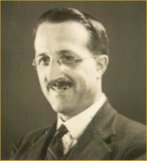
Besides their intrinsic value – which will become quckly apparent to the discerning reader – these meetings – as those in Memorials 7 – are of particular interest because
- they took place after the fateful London meetings of July 1959
- and before the unrighteous excommunication of Mr. Cowell on July 12, 1960.
- Mr. Cowell and others who advocated and practised the moderation of earlier years were still being invited to serve at special and fellowship meetings.
- Outwardly, the brethren were still committed to the recovery of the truth wrought by the Spirit from 1827 onwards,
- but the leaven of legality – which had been secretly working for some years – was inexorably spreading, and would shortly assert itself publicly.
- As an example, an account of ‘Hornchurch Assembly Meetings’ of July 8 and 12, 1960 – referring to these meetings – adds
- “The brethren at Doncaster had an assembly meeting clearing themselves in self-judgment before the Lord in connection with having Mr. Cowell for three day meetings”.
- This is only one of the many instances of brethren in various localities quickly succumbing to the pervasive influence of the rapidly dominant legal sect.
The initials of other brothers taking part in readings do not appear in Volumes 1 – 8 of the 'Memorials'.
- There may have been a reluctance to show the initials of many who remained with the legal system.
- Happily, where applicable, other initials have been shown in the final Volumes 9 – 16.
G.A R.
Page Top
| READING 1 |
|---|
Ordering of the Camp ( 1 )
Numbers 1: 1-4; 47-54; 2: 1-2; 3: 5-10
Memorials 8: 1-27
|
|---|
G.R.C. It is in mind to refer to other scriptures in Numbers in the later readings, but in this reading one feels
- the Holy Spirit would give us an impression of what is incumbent upon us in view of God having taken up His abode amongst His people.
- We might consider that point first, the wonder of it, of God having taken up His abode amongst His people in the wilderness.
- One thing that immediately comes into view is conscription for military service, the appointment of the Levites in verse 50 of chapter 1, and the appointment of the priests in chapter 3: 10.
- “Thou shalt appoint them for the priest’s office”.
- But this follows God taking up His residence in the habitation which love had provided:
- “they shall make me a sanctuary” was the proposal in Exodus 25, as some of us were considering last night.
- “They shall make me a sanctuary” every one was to be in it “that I may dwell among them”.
- The willing hearted and the wise hearted operated, the sanctuary had been provided – that is the exercise of Exodus, that we should provide the sanctuary, sanctuary conditions for God.
- And God had taken up His residence in the last chapter of Exodus,
- “on the first day of the first month of the second year”.
- Then a month had elapsed, during which what we have in Leviticus took place:
- “And Jehovah called to Moses and spoke to him out of the tent of meeting”, Leviticus 1: 1.
- What a new departure it was! They had known what it was for God to speak from heaven; but now God was dwelling amongst them, and He calls to Moses and speaks to him out of the tent of meeting, supposing that His lovers would desire to draw near to Him.
- They had provided Him with a habitation and He had come down to dwell; how it speaks of Divine love, that God should desire to dwell with us at the present time!
- And then He speaks out of the tent of meeting relative to those who would desire to approach Him; and I suppose during this month
- the priests had been consecrated, and hallowed, the altar had been dedicated, which you get later in this book, and with the dedication of the altar, the great offering of the princes.
- Wonderful things had gone on, and now on the first day of the second month Jehovah spoke to Moses in the wilderness of Sinai in the tent of meeting, He is speaking in the tent of meeting.
- He would speak inside, as it were, of our responsibilities outside, because the more we know our inside place the more we shall be desirous of, and prepared for, the responsibilities outside.
- And so He spoke to Moses in the wilderness of Sinai in the tent of meeting. I wonder if that would help us
- to get a present view of what is typified here, the wonder of it, God dwelling in His habitation in the Spirit down here, and the people encamped around Him!
- But now the encampment is to be regulated. We sing sometimes,
- “Our God the Centre is, His presence fills that land”;
- but Numbers presents God as the Centre here in the scene of testimony.
Ques. Is there not a difference in the various dwellings of God? This would be relative to testimony.
G.R.C. So that the tabernacle, seven or eight times in this book is called the tabernacle of testimony. Is not that a very precious view of the assembly?
Ques. Would it be anticipated that certain attributes of God were to shine out through the people?
G.R.C. I wondered in that way whether it was illustrated in Corinth! Corinth gives us the assembly in the wilderness and
- Paul says “the testimony of the Christ has been confirmed in you”;
- and, in chapter 2 he says that he came amongst them with fear and trembling and so on, announcing the testimony of God.
- So that Paul came to Corinth carrying as it were, the testimony of the Christ and the testimony of God; but the point was, where was that testimony to find a residence in that city?
- Well, it involved eighteen month’s work straight away; eighteen month’s work, much people there, much material, but the initial work took eighteen months, as it were, in principle, to set together the tabernacle of witness.
Ques. Would the thought of testimony involve the setting out of the light in the locality?
- I was thinking of the setting in Numbers, they were to be numbered according to their tribes, and set in relation to their standards and their father’s houses.
- Would all that suggest that the testimony is to shine out in localities; while it is universal in its bearing, it is expressed locally, is it?
G.R.C. Yes, that is developed under Paul’s ministry, that while the tabernacle of testimony is a great universal idea,
- God’s habitation in the Spirit, at the present time I suppose, stretches to the four corners of the earth;
- yet it is to be expressed, the features of it are to shine in every locality; what is proper to the tabernacle of testimony as a whole is to be seen in every locality.
Rem. That is a very dignified word that Stephen uses,
- “the assembly in the wilderness”.
- I thought it would connect with a system of glory really, not merely a congregation going through, but a setting out of divine attributes and order and dignity.
G.R.C. You can understand therefore why Paul remained in Corinth eighteen months teaching.
Ques. Is the church of God the testimonial name? I was thinking of how it is introduced at Corinth –
G.R.C. I think it is in the way it is used in that epistle, the assembly of God. It is the residence of God of course,
- but it is the residence too of the testimony of God, Paul went there announcing the testimony of God.
Ques. Does this link on with the current exercise as to all our meetings being public, that the testimony of God might shine out?
G.R.C. Well, in considering this exercise, we should have to take this idea of the testimony of God into account.
- And the assembly is the vessel where the testimony of God and the testimony of Christ are enshrined.
Rem. You had something in mind as to conscription. Last night, in Exodus, you were drawing our attention to everyone whose heart prompted him. This is rather different from that, is it?
G.R.C. Yes, but God does not bring it to bear upon the people until He has taken up His residence in His habitation,
- and they had had a month, and there had been the opportunity to draw near to Him,
- then He asserts what He ever had the right to assert, but He asserts His rights in love over the people.
- But the only answer to love like that that had led Him to come down to dwell, and has led Him now to come down to dwell among us in these mixed conditions, is
- that we should all accept conscription; because God so loves us that He has not postponed His dwelling until conditions are perfect, until we reach the eternal state.
- But we ought to pay more attention to, and contemplate more earnestly, the amazing character of the proposal – and of what has actually taken place –
- of God having such affection for His people that nothing would meet or satisfy the desires of His heart but to dwell among us now.
- How He loves us, that He should want to dwell among us now! We dwell with those we love; dwelling is a matter of love, and God has come to dwell among His people.
- But then, in such mixed conditions, and in an unholy city like Corinth, if sanctuary conditions suitable for God are to be maintained, it is essential that we should all accept conscription.
Rem. So it says in Romans 6:
- “But now having got your freedom from sin and having become bondmen to God”.
- Would bondmen to God involve this matter of conscription? It goes on to speak of
- “ye have your fruit unto holiness and the end eternal life”.
G.R.C. Quite so. If we recognise bondmanship, the claims of God in the way of conscription would not present any hardship to a bondman, he is already committed to whatever he is called upon to do.
Ques. Does this matter of the military question involve that the divine presence needs to be guarded?
G.R.C. Yes, I think so.
Rem. I was thinking of how early the idea of guarding enters into the divine thought; man was set in the garden to begin with, not only to till it, but to guard it.
G.R.C. That is very helpful. And of course he failed in that, but still it is a wonderful thing to think of, that guarding came in at the very outset, there was the garden of God’s delight, and it was to be guarded;
- well how essential now that the habitation of God should be guarded!
Ques. And is it to be noted that the view of the assembly in Corinth, what is referred to as the dwelling-place, is the temple, the shrine, the house itself.
G.R.C. Quite so. And Hebrews 3 says
- “Whose house are we, if we hold fast the boldness of the boast of hope firm to the end”.
- That is the Exodus view, “Whose house are we”. We, as Christians, form the material for the house;
- the willing hearted involves Romans 12, that we present our bodies, each of us, one great living sacrifice for the one great end, that is, providing God with a sanctuary, sanctuary conditions.
- So that that views us as forming the house;
- but then Numbers views us as in our responsibilities relative to it.
Ques. Is not that the way the apostle takes the matter up with the Corinthians, being such a house, he has to regulate them, does he not, as to what is external?
G.R.C. And I think there you get the idea of the “holy nation”. You see Peter applies to us what was applied to Israel in Exodus 19, a kingdom of priests and a holy nation. Peter says in his epistle,
- well that would bring in I suppose sonship and so on –
- “Israel is my son, my first-born”.
- And then he says “a kingly priesthood”, which might link with Leviticus,
- and then “a holy nation”, which I think links with Numbers,
- because in Numbers the whole nation is organised relative to the habitation of God in the midst.
Rem. So that the word goes on,
- “that ye might set forth the excellencies of him who has called you out of darkness to his wonderful light”.
- Is that the testimony of God?
G.R.C. It is, and I think it is important to keep in our minds that from the standpoint of the title
- tabernacle of testimony”,
- it implies that the assembly is the vessel in which the testimony of the Christ, and the testimony of God are enshrined, and nothing is to be allowed to sully that,
- and showing forth the excellencies of Him who has called us out of darkness into his wonderful light would bear on that.
- Nothing is to bedim the excellencies of the God whose testimony is enshrined in the tabernacle.
- And we need to keep these things in our minds – the testimony of the Christ and the testimony of God.
- There is no other thought than that the assembly, universally, and also as seen in its local setting, should be the vessel in which the testimony of the Christ and the testimony of God are enshrined unsullied.
Ques. Would you just say a few words as to the distinctive features of those two testimonies in the way you speak of them?
G.R.C. I wish I could say something about them, they are very great thoughts.
- “The testimony of the Christ”
- is so linked up with the vessel that in chapter 12 of Corinthians Paul, in referring to it as the assembly here, can say
- It is really the assembly as the anointed vessel now. The whole tabernacle – every part of it – and the priests were anointed; everything was in the grace of the anointing.
- In every way the system was descriptive of Christ. The material of the tabernacle – while the curtains and the boards represent the saints – in character, was all Christ, and nothing but Christ, and therefore anointed on that account.
- And then Christ personally was enshrined there: the ark, the table, the candlestick, all were to be seen at Corinth.
- There was a company anointed, and Christ enshrined amongst them, so that anyone coming in touch with that company would get an impression of Christ’s day – a testimony to Christ’s day.
- But then not only that, the testimony of God was there, therefore Paul does not close that epistle without referring to the day of God, because the day of God is touched in the assembly,
- “that God may be all in all”.
Rem. So that, as I understand what you are saying, it is a very wonderful thing that in the testimony at the present time there is ability
- to present things as they will appear in glory in the world to come and in the day of God.
- Is not that a very wonderful conception, a very wonderful standard to keep in our minds and in our hearts?
G.R.C. It is very wonderful. As the tabernacle went through the wilderness as the tabernacle of testimony, whether it was stationary or in movement,
- the first thing I take it that would impress anyone who came into touch with it would be the perfume, the odour of the anointing –
- “a perfume after the work of the perfumer”, Exodus 30: 35, it says as to the holy anointing oil.
Ques. Would that connect with the word in Corinthians again,
- “the odour of his knowledge in every place”?
- That would not only apply to what was conferred, but what was brought out amongst the saints, specially with Paul and those with him.
G.R.C. Paul had to refer to that, relative to himself and those with him, because of the absence of it in practical reality among the saints in Corinth, so he says
- “God makes manifest the odour of his knowledge through us in every place”.
- But then that was true; the idea was that as Paul left every place, he should leave behind the anointed vessel itself, so that the odour of God’s knowledge in that place remained.
- And then the next thing that would impress a person who came in touch with the tabernacle, or perhaps equally so, with the presence of God in it, whether the tabernacle in movement or stationary, was the pillar of cloud by day and the pillar of fire by night.
- People should get an impression of the odour of the Spirit of Christ, the anointing, and an impression of the very presence of God amongst His people.
Rem. That is what is in mind in relation to a simple person coming in, or an unbeliever,
- “reporting that God is indeed amongst you”, 1 Corinthians 14: 25.
G.R.C. That is it. And that is the testimony of God, God is indeed amongst you.
- And you think of what that means to anyone who comes to the Lord’s supper, an exercised soul, a simple person as you say.
- The service does not end until the saints are in spirit touching the day of God.
- What an effect that would normally have on a soul that was exercised, to hear the praise at the close of the meeting, the touches of eternity!
- That is how the testimony of God comes into expression in the fullest way I take it. But then it is there all the time, in our ministry meetings and at other times, God is there.
Ques. Does the apostle bring both the incense and the anointing oil together in that passage in Corinthians?
- The odour of his knowledge on the one hand, and the sweet odour of Christ to God on the other?
G.R.C. That is very good.
Rem. I thought you would have one just as you had the other, would you?
G.R.C. You think one is the odour and the other is the incense, the sweet odour of Christ to God – very good.
Ques. Would you say that what you are bringing forward, testimony, involves identification with Christ?
- I was thinking there was nothing of a collective testimony until they had got through the Red Sea, then God had a people.
- I wondered if you would emphasise the importance of complete identification with His death and burial and resurrection;
- and then comes Corinthians, the working out, death working in us – 2 Corinthians 4: 12.
- Would that be in line with what you are bringing forward as being essential to it?
G.R.C. I am sure it would. They could not serve God in Egypt, as Moses said, the service could not go on there, nor could God’s presence be known amongst His people,
- it could only be as they had crossed the Red Sea, and been brought to Himself, as He says,
- “I have borne you on eagles’ wings, and brought you to myself”, Exodus 19: 4.
Ques. Do you think we should have something more as to this question of guarding?
- It is striking that in connection with the Ephesian company the elders are told to shepherd the assembly of God which He has purchased with the blood of His own.
- They were not told to teach, though teaching is important, but to shepherd, which would involve guarding. One feels it is very necessary at the present time.
G.R.C. It is very necessary, and that brings up the question of conscription again.
- It was not a special appointment, it was simply all were conscripted for it, and there is a good deal that hinges upon it.
- The first thing Paul says about a soldier is that he does not entangle himself with the affairs of this life;
- if I am entangled with the affairs of this life it is pretty clear I am not much good at guarding the testimony.
- And then it raises the question as to what our tents are like, because it was a question of how they were to encamp, everything was to be according to divine ordering, so that another thing that arises is,
- Why am I where I am – as to geographical position? Did God put me there, or was it earthly advantage or something else that put me there?
Rem. I remember Mr. Robert Dunn saying during the first world war,
- “Make no mistake about it, brethren, conscription is a divine idea”.
- I think some of us were a little startled at the time, but we found out he was right.
G.R.C. So it is a basic thing in national life nowadays, and here we have the holy nation, and
- the first thing that regulation brought in nationally, as we may say, was conscription.
Rem. The trouble with conscription as men know it is that many are conscripted who are not sympathetic, but with divine conscription everyone is sympathetic.
G.R.C. Yes, because it is such an affectionate matter, a Christian soldier is a suffering man,
- he takes his share in suffering, not in making others suffer, but he takes his share in suffering himself.
- So the whole setting here is an affectionate one, after their families, according to their father’s houses.
- Their affections would be involved; God dwelling there being the supreme thing, but their affections were involved in every way, they were defending what they loved.
Ques. Would it help us to accept thankfully our place wherever God has set us in His ways, to see that it is God who has set the members in the body as it has pleased Him, we are set there for the divine pleasure are we?
G.R.C. We are, and so God’s ordering has in view the sovereign place in the body, and coupled with that, that
- He would order our actual circumstances, would He not, as to the locality we are placed in – it is no small matter to change your locality.
Ques. Do you think that is why the Spirit was at pains in Acts 18 to enlarge upon the company at Corinth – who they were, how they got there, where they lived, and what their work was?
- I am thinking along the lines on which you are speaking, that all that has its bearing on the testimony.
G.R.C. That is good. Aquila and Priscilla were there in the government of God, not of their own choice,
- their occupation had been ordered by God, God would order our secular occupation;
- God would order everything in the holy nation; everything is to be ordered by the God who is the Centre.
- That is the idea to keep in mind in the holy nation – “Our God the Centre is” now here in the scene of testimony,
- and His residence is at the centre, and everything revolves round Him and His residence,
- and He would regulate the whole of our lives relative to that, where we live, what work we do, and everything else.
Rem. In that chapter – Acts 18 – you quoted that Paul was teaching among them the word of God.
- I was thinking of the adjustment of fairly recent years we have had as to the announcement of the Word of God in our rooms on the Lord’s Day.
- Would that bear on this matter of conscription, the number of interested persons largely comprising our own young people,
- would it bear on the manner of the presentation of the Word of God, that they are conscripted for such service?
G.R.C. Yes, I think so, because you have in mind in the preaching of the Word, securing persons relative to the tabernacle, as material for it and as set in relation to it. Is that so?
Rem. Yes I had that exactly in mind, I thought the service was not complete unless that end was reached.
G.R.C. Where it is possible, one would think the Spirit would often lead us to make some reference to the assembly in our preachings, not only for the sake of those brought up amongst us,
- but for souls brought in from outside, that we should let it be clear as to what the true church is.
- I believe we ought to make that clear whenever we can, in individual contact and otherwise, to disabuse people’s minds of the idea that there could be such a thing as churches,
- in the sense of different denominations, they are simply human organisations who have no right to the name whatever.
- And I think it might help souls if we were more insistent that there is only one church.
- I am using ‘church’ now, because we need to use that word in speaking to people outside.
- They may not understand the word assembly, but there is only one church, the church of the Bible, and tell them a little about it. What do you think?
Rem. I think that is very good but very searching.
G.R.C. It might lead to exercise as to their responsibilities, relative to it.
Ques. I was going to ask about the use of the word ‘calling’ in Corinthians 1. Would that bear on what you are saying, the thought of being conscripted, the call of God? It is an imperative call, is it not?
G.R.C. “Saints by calling”.
Rem. And then “called into the fellowship of His Son” and so on.
G.R.C. Oh yes. As saints by calling we are set apart by the divine call, and then as you say, called into the fellowship.
- Do you think that would have some link with the “20 years old” – speaking spiritually?
- I suppose if we take up the privilege, there should be in some measure the ability to take up the responsibility of defence.
Ques. Does not the work of God respond in a dignified way to the call? It speaks of the going forth to military service,
- “all that go forth to military service”.
G.R.C. It is a dignified idea, it suggests a measure of spiritual manhood, not the thirty years old of the Levites, but sufficient development in manhood to defend the testimony.
Ques. Joseph is referred to in Hebrews as calling to mind the going forth of the sons of Israel, and he gives commandment concerning his bones. Was he not a man who was under commandment in relation to the testimony?
G.R.C. He certainly was.
Rem. In keeping with the wonderful thought of God abiding with us, what you are saying about the testimony shows how broad that must be too.
- Sometimes the testimony has been confined to the preaching of the Word, but every meeting, as you are suggesting, has a testimonial side, as well as every part of a believer’s house and life.
- And then your reference to the comprehensive character of the preaching of the Word, too, would show how vast and wide is the testimony in keeping with the great thought of God dwelling with us.
G.R.C. That is very helpful, so that, as you say, every meeting, and every part of our lives stands related to the testimony of God.
Ques. Would you say something more about this second month and second year? It is not the first month and the first year.
G.R.C. It may be that would enter into our development as to “twenty years old”, they had had a year’s experience of the grace of God when He met them in their murmurings in Exodus, without rebuke,
- and then they had had the experience, the exhilaration of seeing the sanctuary, the offering of the people, and the setting of it together, and God taking up His residence,
- and then they had had all the unfoldings in Leviticus.
Ques. Might not the beginning of Romans 12 come into this matter, beseeching them by the compassions of God to present their bodies a living sacrifice? So that every person is completely surrendered to the will of God in this matter.
G.R.C. I think so, the good and perfect and acceptable will of God.
Ques. I would like to ask in regard to the setting in Numbers, is it not a fact that there were none feeble among their tribes?
- But amongst us now, there is very much feebleness, surely, and physical sickness too; there are some that would like to be at such occasions as this, and are hindered through sickness;
- and there is a great deal of feebleness, both spiritual and physical amongst us at the present time, which it appears was not among the people in Numbers. Can you help us as to that?
G.R.C. In the early part of Numbers we have things set out in perfection according to the mind of God.
- As you proceed in the book you find that weakness comes in, and failure, so that we have to face that kind of thing.
- We need first of all to get a view in the early chapters, from which we have read, of the mind of God, so that we get this clearly before us, the organisation, if I might use the word, of the “holy nation”.
Ques. Was that seen at Pentecost?
G.R.C. It was, in a beautiful way, and I suppose it was seen at Ephesus.
Ques. Some of the physically sick amongst us are the Lord’s best warriors, are they not?
G.R.C. Quite so. Timothy was not a strong man, was he? The scripture speaks of frequent illnesses in connection with him.
Ques. What would you say as to the person to whom Jehovah spoke? It says,
- “He spoke to Moses … And with you there shall be a man for every tribe”.
- Does God speak generally; and does He speak too, specifically, through specific servants today?
G.R.C. Yes He does, Moses primarily, and then Aaron as linked with him, the priestly side, the sympathetic side, and
- then a man for every tribe I suppose would suggest what is local, because leadership is also needed locally.
Rem. What is held universally to be held in every locality representatively you mean.
G.R.C. That is right.
Rem. I was wondering if, by way of the princes, the regulation that you spoke of is brought down to us in our localities?
G.R.C. That is good, and it is a very important matter. As we are saying, the military side involves our locality and households, and that our tents are pitched relative to the tabernacle;
- so it would cover every item of our lives. We are never off duty as soldiers.
- Now as to the thought of appointment, in verse 50 of chapter 1 it says
- “But thou, appoint the Levites over the tabernacle of testimony”,
- and the word is used relative to the priests in chapter 3, verse 10,
- “And Aaron and his sons shalt thou appoint that they may attend to their priest’s office”.
Ques. The question of movement is in mind here is it not,
- “When the tabernacle setteth forward”?
G.R.C. Yes, does it not cover both aspects? They were over all the vessels thereof, and all the things that belonged to it.
- Then there is the bearing of it, the encamping round about the tabernacle.
- So while a good deal is said here to cover the journeys, yet when it was stationary they were to encamp around it, in verses 52 and 53.
Rem. I was wondering whether, even in regard to the first passage as to the matter of conscription, the passage has in mind that the saints are to move together in relation to every movement of the testimony of God;
- and whether conscription would ensure that we move together in relation to all matters!
G.R.C. Yes, and there divine sovereignty operates. If we truly accept conscription we shall surely accept divine sovereignty as to where we are placed.
- Judah moved first; it was not in order of birth that they moved, the camp of Judah was to take the lead; so that in every way God orders things.
- You get a similar idea with the Levites; that although in the numbering in chapter 3, Gershon comes first, and then Kohath and Merari
- – because Gershon was the eldest of the family –
- yet Kohath has the most exalted service. So we have to be prepared for divine sovereignty.
Ques. What is the thought of the Levites in verse 53 of chapter 1? They are to encamp round about the tabernacle of testimony,
- “that there come not wrath upon the assembly of the children of Israel; and the Levites shall keep the charge of the tabernacle of testimony”?
G.R.C. The military side is in the beginning of chapter 2,
- “round about the tent of meeting afar off, opposite to it, shall they encamp”.
- That is to say as military men, relative to our own houses and so on, we are not to intrude our own affairs; we stand in relation to the tabernacle, for its defence;
- but we do not intrude our own affairs, our household stuff or anything of that sort into the service.
- Those immediately around the tabernacle are the Levites, to keep the charge; they are under charge to, in every way, guard – that word has been used – the habitation of God.
Ques. Having a more intimate position than the military. Is it interesting that in Exodus 6, the Spirit of God stops at the generation,
- “the sons of Levi according to their generations”?
- Reuben, Simeon, Levi, then nothing more. I wondered if God had reached His prime end in the Levite?
G.R.C. That is good. And in chapter 3, as no doubt you have noticed, it begins with
- “these are the generations of Aaron and Moses”,
- putting Aaron first, and does not enlarge on Moses.
- It goes on to develop the generations of Aaron, he was of the tribe of Levi of course, he was the head of the tribe.
- But when the whole tribe of Levi, in verse 6, are brought near and presented, Moses presents them before Aaron the priest,
- showing that all levitical service is to be under priestly direction, primarily under the direction of Christ as Priest.
Ques. The passage in Romans 12 has been alluded to as bearing upon conscription.
- Would 1 Corinthians 12, especially the end of that chapter, bear on appointment, divine sovereignty entering into it?
G.R.C. Quite so. We have to extend it of course to all the saints, as it says earlier in that chapter, God has set the members in the body according as it has pleased Him.
- Then you have the special gifts at the end, set in the assembly, but then even in the body God has set the members there as it pleased Him.
Ques. Would you say what we are to understand by appointment? It seems to be here something rather compensatory to not being numbered.
G.R.C. They were numbered later from a month old and upward, but not numbered with the rest; this was a special appointment.
- But in our case we, as Christians, are not only all conscripted as soldiers, but we are all of the tribe of Levi.
- Yet the point is do we value the appointment? In secular callings, men are on the look-out for appointments.
Ques. In what way does Paul use the word, in both the first and the second epistles to Timothy, where he says,
- “I have been appointed” a herald, and so on?
G.R.C. I think that would bear on this. What an appointment Paul had! He was appointed a herald and an apostle and a teacher of the nations in faith and truth;
- what scope, a teacher of the nations, not simply believers!
- He would have in mind, of course, that the nations are to become believers, but I was thinking of the scope of it in both epistles.
Ques. What would you say as to persons being appointed, and our having confidence in persons who are appointed?
G.R.C. Do you mean that if it is the Lord’s appointment we should have confidence?
Rem. I was wondering how we could distinguish persons who have a sense, like Paul did, of being appointed, and then the question of confidence on our side in them.
G.R.C. Well, that is an important point, because Paul could speak of his appointment, he was quite sure of it; and every spiritual person would be sure of it,
- but some at Corinth did not seem so sure of it. We too, ought to know our appointments.
- But then there is a sense in which the appointment applies to all of us.
- I bring that in because one has a desire that all of us, especially the young people, should value this idea of appointment.
- It is something special; to be a Levite is something special, and yet we are all Levites according to the divine thought; and we have been numbered from a month old and upward in view of it.
Ques. In referring to the household of Stephanus, Paul speaks of them as devoted, which means appointed, does it not, as the note says, ‘an officer to a regiment’.
G.R.C. That is good.
Ques. Would the idea of appointment go along with the blessing of Levi?
- “They shall teach Jacob thine ordinances, and Israel, thy law: they shall put incense before thy nostrils, and whole burnt offerings upon thine altar”.
G.R.C. That includes the priest as well, the whole tribe of Levi is in mind there.
- There are the two appointments relative to the tribe, the tribe as a whole appointed, according to what we have here,
- over all the tabernacle, and over all the vessels thereof and over all the things that belong to it; they were to bear it, and serve it, and encamp around it.
- But then there was the special appointment to the office of priest, which, I suppose, is an exceedingly high office that we have been appointed to.
- What one is concerned about is that we should value these appointments.
- You see the holy nation as organised according to this book, with God as the Centre.
- Our concern should be divine appointments, not appointments down here, not appointments to high positions in this world.
- God may order it that way, Daniel was appointed to a high position which he did not seek at all, God can do that kind of thing if it is needful for the testimony.
- In Corinth, a man had been appointed as steward of the city, Erastus; that was in God’s ordering, Erastus was steward of the city.
- But if you see where his name comes in in the list in Romans 16 it would leave you with the idea that while he would use his position for God, he was not making any boast of that at all.
- That was not the appointment that he valued in the full sense, for at the end of Romans 16, which we might regard to some extent as a levitical chapter, in verse 22, we get Tertius, who I suppose was a slave –
- “I Tertius, who have written this epistle, salute you in the Lord. Gaius, my host and of the whole assembly, salutes you”.
- I would assume Gaius was a man of property, for he had room for the whole assembly, he salutes you, and
- “Erastus, the steward of the city, salutes you, and the brother Quartus” – that is another slave.
- So that a slave comes in first, and then two men who have some distinction in this life, and then another slave, the brother Quartus,
- and they were very happily together in the fellowship, they were all soldiers, all conscripted, and all appointed, appointed as Levites.
- That would be the appointment they valued, Erastus would value his appointment as a Levite; it would have no comparison in his mind with his appointment as steward of the city, no comparison at all;
- the great appointment from this standpoint was the divine appointment – that in the holy nation he, a Levite, had been appointed with this special charge over the tabernacle and over its vessels.
Ques. When the apostle says to Timothy
- “Take thy share in suffering as a good soldier of Jesus Christ”,
- is that the military side? But then he says also
- “This charge my child Timotheus I commit to thee according to the prophecies as to thee preceeding”, 1 Timothy 1: 18,
- would that be the levitical rather?
G.R.C. I would say that. I think that is very helpful.
- “This charge I commit to thee”
- I believe is the whole charge of the tabernacle of testimony and would include the Levite and the priest, the whole charge.
Ques. Is it of note that in 1 Chronicles chapter 9 the matter is carried forward by Ezra in the day of recovery,
- so that he refers to those who had been appointed in trust, or on account of their faithfulness, and the levitical section there is full of the idea of appointment?
G.R.C. I am glad you have mentioned that, we will have to look into that in our private time, because this idea of appointment impresses me greatly.
Rem. I referred to it because faithfulness is added to the matter.
Rem. And following on what Mr. H. has said, by the last words of David, the age limit was reduced for the Levites.
- Did not J.T. say that that would greatly increase the number available. Might that bear on our time, the valuing of the appointment that is available?
G.R.C. I think so. And I think in that way we have to distinguish between the military
- – as a soldier I am there to defend, I am there to defend the testimony against all attack –
- and the Levites who have a positive charge, and a most marvellous charge.
- They are over the tabernacle of testimony and all its utensils, they are responsible to keep it all unsullied, and intact, to take it down to a new encamping place and to put it up again,
- in order that the priestly service might not be hindered in any way.
- They were given to the priests, they move under the priest’s direction, and their whole outlook would be to keep the tabernacle of testimony so pure and unsullied
- that as soon as the encampment took place the priests could function, and God would have His portion.
- Now that is the charge committed to us. Do we value the appointment? One would like to raise the question with all of us, especially the young people, that this far surpasses any appointment you could get down here.
- God may give you something down here in His government, or he may not; that is a secondary matter;
- but this great charge is open to everyone in their measure, to serve as a Levite, and to take up the charge as appointed by God, and then
- over and above that, what is greater still, Aaron and his sons were appointed to the priest’s office.
- That is the greatest office you could imagine, greater than any Prime Minister’s office.
Ques. The apostle says in 1 Corinthians 4: 9,
- “For I think that God has set us the apostles last as appointed unto death”.
- Is that not striking, coming in the Corinthian epistle?
G.R.C. It is very affecting, because evidently the testimony required that divine appointment, the testimony required that the apostle should be appointed unto death. And of course we do not know what the appointment might be for us.
Ques. Would it help if you would say a word as to the distinction between the levitical and the priestly side of the service?
G.R.C. Perhaps we ought to begin by speaking about the priests, because that word in chapter 3, verse 10, is striking.
- “And Aaron and his sons shalt thou appoint that they may attend to their priest’s office”.
- That is a great thing to attend to; I am not belittling the Levites, but the priest is the greatest thought. Now how far are we attending to the priest’s office?
- We are all of the priestly family, but are we attending to the priest’s office; that is the first thing, because if we are not attending to the priest’s office we shall not be able to serve effectively as Levites.
- They serve under the direction of the priests, and with the priestly service in view; nor shall we value sufficiently what we are to defend as soldiers.
- So it is of the utmost importance that we should realise that we have been appointed to the highest office, the priest’s office, and we are to attend to it.
Rem. And the scripture makes no division between the priests, the sons of Aaron, and the office. It says
- “they may attend to their priest’s office”.
G.R.C. You mean the close link with Christ?
Rem. Yes, priest’s office would suggest the dignity conferred upon them, and that they cannot be separated from it.
- We may elect ourselves out of this, but scripture says “their priest’s office”.
G.R.C. Very good.
Ques. Had John that in mind in Revelation chapter 1, when he speaks of
- Him “that loves us and has washed us from our sins, and has made us a kingdom, priests unto His God and Father”.
G.R.C. I think the idea of a kingdom is set out in these early chapters of Numbers.
- It helped me many years ago, when J.T. referred to these early chapters of Numbers as the present view of the kingdom of God,
- God dwelling amongst His people, and having absolute rights to regulate the whole of their lives like a king regulates the nation.
- So we are a kingdom, but then the highest office in the kingdom from this standpoint is priesthood.
Ques. Does a priest always think as God thinks, or is exercised to do it at any rate, always thinking from God’s point of view?
G.R.C. Yes, and he has to maintain the service; it says in chapter 3, verse 38
- “And those who encamped before the tabernacle eastward, before the tent of meeting toward the sunrising, were Moses and Aaron and his sons, who kept the charge of the sanctuary”.
- They kept the charge of the sanctuary, not simply the tabernacle of testimony as a whole, but specially the sanctuary, because the Levites were not allowed to touch anything in the sanctuary,
- the priests had to go in and cover everything before the Levites could come in, but they had charge of the sanctuary, and
- it has often struck me, as to their encampment, that they were immediately at the east of the tabernacle, so that as a priest began the day, he would look out;
- on the one side there was the sunrising – the Lord’s coming would be in his mind – and on the other the tabernacle of testimony.
- And how happily the priest would immediately, as his first duty, as it were, take up the priestly service, put the incense on the golden altar, and offer the oblation on the brazen altar!
Ques. So would the local brethren be the priestly family? Is the sanctuary worked out in our localities?
G.R.C. It is. We should all pitch our tents as priests, on the east side of the tabernacle, all our tents should be pitched there.
- In a secondary way we pitch our tents as Levites, we have got that responsibility too.
- Thirdly we pitch our tents relative to the defence of the testimony. We are in all these positions.
Ques. Does the term “attend to it” involve that things are done effectively in the Spirit?
- The service of God is not approached in a perfunctory manner.
G.R.C. I am sure that is right. We need to do it in the Spirit as you say, and to do it with application,
- apply ourselves to it, to attend to the priest’s office, to see that the priestly service is maintained,
- the continual burnt offering, the continual incense, and all that is requisite is maintained every day.
Rem. Samuel was called into this matter very early in life – I was thinking of your reference to those who are younger. Would it not be an encouragement to all to see that they can have a part in this matter?
G.R.C. I am sure it would. And it is encouraging that saints who are physically disabled are not disqualified from the priest’s office, the highest service remains open to them; they can attend to the priest’s office, in fact they have more time for intercession.
Ques. You spoke earlier of the kingly priesthood in 1 Peter chapter 2. Would the holy priesthood to offer up spiritual sacrifices be the highest character, and more what you have in mind now?
G.R.C. Yes, and then there is the other side, because, as it says, the priest’s lips should keep knowledge, they seek the law.
Rem. Yes, I was thinking of that passage. He is the messenger of Jehovah of hosts.
G.R.C. And we would like Mr. B’s remarks on priests and Levites.
Rem. One was only thinking of the immediate access to God that the priests have, and the force of anointing as specially bearing on the priests.
G.R.C. Yes, Exodus chapter 40 makes that clear, that the anointing shall be to you an everlasting priesthood; it is a beautiful thought, that we are priests in virtue of the anointing.
Ques. Would the priests always be on the alert for the approach of the stranger?
G.R.C. You mean it says
- “the stranger that cometh near shall be put to death”.
Ques. Is it remarkable that in days of recovery we get the thought of a teaching priest, as bearing upon the Levites?
- I was thinking of what you were speaking of the priestly office as being the greater; would not all levitical service be done in a priestly way, having the thoughts of God for His people in mind?
G.R.C. I am sure. I feel it is very important to see that all priestly service is under the direction of the priest – Aaron himself primarily. But Christ Himself is the priest.
- Then Aaron’s sons; so that what is priestly in us takes precedence, that is, in all that we do levitically we are thinking of God, and what is suitable to God,
- and that the praise of God should ever increase in volume and quality.
Ques. Would it help to be reminded that true priestly service really flows from the liberty and intelligence of a son? Does that help, and would it not encourage the youngest to come forward in it?
G.R.C. That is of the utmost importance; sonship is a relationship, priesthood is an office.
- God has been pleased to appoint His first born sons to the highest office, the office of priests. J.T. said as to
- “Israel is my son, my firstborn, let my son go that he may serve me” –
- how does he serve? As a priest. Where does he serve? In the tabernacle. Sonship lies behind it all.
Rem. So that we really see the pattern in the beauty and fulness of it in the Lord Jesus Himself as the Son, do we not?
G.R.C. We do. That is a very important thing, that Hebrews brings out, that the Lord Jesus Himself is the Son.
Ques. Is it not important that in relation to Christ as great High Priest, the whole tabernacle system was anointed with oil without the application of blood?
G.R.C. Yes it was, it gives Him His unique position; but later, after the consecration, then the oil and the blood is sprinkled on Aaron and his sons.
- It is wonderful grace that He has gone in on a basis on which He can link us with Him.
Rem. I wondered if the military side, and the Levitical side, and the priestly side are not beautifully blended in Paul and Silas in Acts 16.
- I was thinking of the military side as dealing with the woman,
- “I enjoin thee in the name of Jesus Christ to come out of her”,
- that is military, and then they were engaged in levitical service, but they ended on a priestly note.
G.R.C. Very good indeed, and then the priestly note having been effective, praying and praising God with singing,
- they go back to levitical service in all the freshness of priesthood, speaking the word of the Lord to the jailor.
Ques. By way of contrast, in relation to this question of appointment which one feels very, very important,
- is it not remarkable that in Luke chapter 22 the disciples wanted to do the appointing, whom they held to be the greatest, is there not something instructive for us in that?
G.R.C. Yes, that would be an ever present danger I suppose, but in the way we are speaking of it, this appointment in its measure is open to us all;
- but then, as you say, sovereignty enters into the actual work allotted, because in chapter 4, verse 19, as to the Kohathites, it says
- “Aaron and his sons shall go in and appoint them everyone to his service and to his burden”.
- And then again in verse 27 “ye shall appoint unto them in charge all their carrying”.
- So that in the detailed working out of it all is divine sovereignty; while we are all favoured in this appointment, yet we cannot choose our work, it is all
- in divine sovereignty that the work is given; we cannot choose other people’s work for them.
Ques. Should we all covet to have a sense of commission for anything we put our hand to?
G.R.C. I am sure we should. It speaks in chapter 4, verse 3
- of “all that enter into the service, to do the work in the tent of meeting”;
- it is a work, and we should have the sense as to what we are appointed to do.
- But then first of all we need to value the idea of appointment, that is what one would like to leave upon our spirits, what is really governing our outlook in life?
- What are we seeking after? Is it some great appointment in our secular life down here?
- Have we really grasped the fact that the greatest possible appointments have been made by God, and He has appointed us as Levites, in charge over the tabernacle of testimony?
- What are we doing about that? We may waste our lives seeking an appointment down here, and never take up the charge that we have been appointed to by God.
- And then we have been appointed to the priest’s office. These are the greatest favours conferred upon man in the sphere of testimony.
Ques. Is the principle seen in Mark 3, where it says of the Lord that He went up into the mountain and called whom He Himself would, and they went to Him, and
- He appointed twelve that they might be with him, and that He might send them to preach and have power to heal diseases, and to cast out demons.
- Would the principle extend to us?
G.R.C. The general principle. The twelve were special of course, and what is special is allowed for in what our brother referred to at the end of 1 Corinthians 12.
- There is what is special, but the principle of it extends, as these chapters show, the tribe of Levi were all appointed, and their various work and burdens were appointed to them.
Page Top Reading Top
| READING 2 |
|---|
Ordering of the Camp ( 2 )
The Passover in the Wilderness
Numbers 9: 1-17; 10: 11-13
Memorials 8: 28-50
|
|---|
G.R.C. We were occupied this afternoon with the ordering of the camp, God having come down to dwell among His people,
- and ordering every detail of their lives relative to Himself and His habitation,
- and we finished in considering specially the appointments, the honour of being appointed as Levites over the tabernacle and over all its utensils, and having the charge of it,
- and then, what is higher still, the honour of being appointed to the priest’s office, to which Aaron and his sons were to attend.
- They were to attend upon their priest’s office, and how an understanding of those appointments would eclipse in our thoughts and affections anything that the world could offer.
- The world may offer its appointments, but God has given us the highest possible appointments, and they are the things to apply ourselves to from our earliest days; for the Levites were numbered from a month old and upwards.
- As to the priests, it does not give any age; they were simply numbered as of the priestly family; they are the great appointments to keep in mind.
- And what follows, one would think, is what is necessary if we are to be preserved in priestly and levitical energy.
- That is, in chapter 5 we are to be ready continually to submit to the trial of jealousy, as to the purity of our affections, whether we are in any way being led astray by what is worldly and earthly.
- In other words, whether in any way the scene around is becoming anything other than a wilderness to us.
- The book opens with God speaking in the tent of meeting in the wilderness.
- The moment the world becomes anything but a wilderness we are
in very great danger; if the world is a wilderness to us it will be because our affections are held for God and His things.
- And if the world is simply a wilderness we cannot have ambitions connected with it.
- Mr. Darby said, “This world is a wilderness wide, I have nothing to seek or to choose”, Hymn 139.
And so, if we think of Paul at the end of his life, in 2 Timothy, we see how his priestly energy was undimmed,
- for “the testimony of our Lord” governed him on the one hand,
- and the appearing of Christ on the other –
- like the priests who encamped at the east side of the tabernacle; it was between the sunrising on the one side, and the tabernacle of testimony on the other.
- And those were the only two things that Paul was concerned about. That is, the priestly outlook; they are the only two things that matter,
- the Lord’s appearing which is imminent,
and on the other hand, that
- the tabernacle of testimony is here, the testimony of our Lord is still here.
- And so we need to be prepared to submit to the trial of jealousy on the one hand,
- and on the other hand to be committed to the Nazarite’s vow, in chapter 6.
- Chapters 5 and 6 therefore vitally follow the ordering of the camp.
- I think those two things would keep and preserve us in spiritual energy, because the Nazarite separates himself from wine and strong drink;
- he not only separates himself from what is unclean, but from wine and strong drink;
- that is, he makes a vow not to be stimulated by anything that is down here.
- All his stimulation is in God, and the things of God,
- “The God of gladness of my joy”, as the Psalmist says.
Then if we look at the beginning of chapter 7 for a moment, the dating goes back to the first day of the first month, on the day that Moses had completed the setting up of the tabernacle, and had anointed it.
- So there is a backward look as to the dedication of the altar, the princely actions of the people;
- and in chapter 8 the lighting of the lamps, and the Levites offered as a wave offering.
- Then we come to chapter 9; and again we are back in the first month,
- “Jehovah spoke to Moses in the wilderness of Sinai in the first month of the second year after their departure from the land of Egypt”.
- This timing is important because it shows us that the celebration of the passover was the background, as it were, of the numbering.
- The numbering was on the first day of the second month, and on the fourteenth day of the first month they had celebrated the passover, not now in Egypt but in the wilderness;
- and I think we need to see the importance of that as that which would provide the moral background in the incentive to submit to the numbering and the ordering of the camp.
That is the first thing I think we should consider this evening – the bearing of the passover on what has gone before in the ordering of the camp; and
- then the question of the unclean persons, and the provision made for them in the second month.
- It was humbling that there should be unclean persons, and yet their exercises were right and in effect it meant
- that the passover was before the minds of the people all through this period, from the fourteenth day of the first month right through to the fourteenth day of the second month –
- right on till the time they began to journey the passover would be before their minds.
- But we may get some help from the Spirit as to the bearing of the passover in this setting, and the instruction that is available in connection with those unclean.
Ques. Is the apostle, giving a backward look when he calls attention again to
- “For also our passover Christ has been sacrificed”, 1 Corinthians 5?
G.R.C. I thought so. I think we have to see the difference between the celebration of the passover in Egypt and in the wilderness: and 1 Corinthians 5 is the wilderness setting of it.
- As we know, the passover was celebrated in Egypt, and then as a memorial in the wilderness, and then in the land.
Ques. Will you say another general word about those three settings please?
G.R.C. It seems to me that in Egypt itself the people would be considering their own need and their own peril,
- and although the rights and ordinances of it are given there – for instance they were to feed on the lamb roast with fire – and it says
- “ye shall eat none of it raw, nor boiled at all with water, but roast with fire; its head with its legs and with its inwards”.
- While they were to do that, and did it, yet they ate with haste; and it is just a question as to how far in soul history, at a time like that, the extent to which persons can truly appropriate the passover,
- they do appropriate it, they did eat it, but not with the appreciation one would judge, with which they would do it in Numbers 9.
Rem. I am sure what you are saying is right; we would like some help on this extended view in the wilderness and then in the land.
Ques. Would the passover eaten in the wilderness give more of an assembly view of it, and assembly experiences entering into it?
G.R.C. Yes, I would say that. God had the assembly in mind in the passover, because it is the first time the word assembly is used, I think, in scripture, Exodus 12,
- “Speak to the whole assembly of Israel”.
Ques. Does it seem from chapter 9: 1 that this instruction as to the passover was one of the very early matters that God spoke of after the tabernacle had been set up?
G.R.C. Yes. It would appear that the tabernacle was set up, and then on that day the princes began to offer – the dedication of the altar – which would take twelve days,
- and then very soon after that God would be speaking about the passover, in view of being observed on the fourteenth day.
Ques. Would Romans 3 for us be the passover as in Egypt? I am thinking of the quality of what is set forth in the blood of Christ.
G.R.C. It refers there to the blood on the mercy seat, really taking us to the centre, but one great point in the passover is that God was securing His firstborn.
- That is something that in a way is unique to the passover, from their side they were going to be shielded from judgment, delivered from bondage, but from God’s side He was securing His firstborn.
- So immediately after the beginning of Exodus 13, He says:
- “Hallow unto me every firstborn … it is mine”.
- That was God’s thought in the passover.
Ques. Hebrews tells us that Moses celebrated the passover in Egypt, not that they did it. Is there any point in that?
G.R.C. I would think perhaps that it is just a question as to how far the people, who were on the point of leaving Egypt, can appreciate the bearing of it.
- They do eat it, in their measure; but I would say that when we arrive at Numbers 9 our appropriation will be very much greater – our ability to understand the meaning of the feeding on the lamb roast with fire, its head and its legs with its inwards, and the way it would result in active firstborn affections in us.
Ques. Is that why the time is counted from their departure out of the land of Egypt, not the time they have been in the wilderness exactly, but the time counting back to their departure from the land of Egypt?
G.R.C. Quite so, and I think in a way the whole of the wilderness journey is linked up in that way with their departure from the land of Egypt,
- because in chapter 33, where it enumerates their journeys, it calls their journeys
- there the point is that in every journey they were learning to judge Egypt more fully, and were more remote from it in heart and spirit
- until of course they are over Jordan, when, at the circumcision the second time, the reproach of Egypt was rolled away.
Ques. Would one aspect of recognising the world as a wilderness provide us with unhurried and restful condition of mind and heart in which we may fully appreciate what God has done in the passover?
G.R.C. I wondered that. So in these passages it is called in verse 7 the offering of Jehovah at its set time,
- and in verse 13 “he presented not the offering of Jehovah at its set time”.
- Actually, according to Leviticus 23, there was not only the passover lamb slain and eaten, but there was the offering by fire to Jehovah that followed it, for seven days; that did not take place in Egypt.
Ques. Does it not show that God would have us to consider the moral side of righteousness right through our course, whether it be individual or assembly?
G.R.C. Yes, because the passover brings freshly to us the rights of God, His complete and absolute rights over us.
- We have been redeemed and purchased, as the song in Exodus 15 says; and therefore you can see what influence the celebration of the passover on the fourteenth day of the first month would have on them – the accepting of divine order and divine sovereignty.
- The passover would prepare the people for that if they truly appropriated it; they would be ready for anything that God directed, not in any grudging way, but ready for it in the affections of the firstborn.
- In all that God orders, He is counting on the affections of the firstborn to carry them out.
Ques. Would the passover in Egypt be a matter of God judging sin, whereas here it seems to be the feature of uncleanness. Would that require deeper exercise relative to their wilderness life?
G.R.C. Yes, because in Egypt I suppose everything was unclean, but now that God is dwelling among His people there seemed to be sensibilities awakened among these men.
- God had come down and was dwelling in the camp; the people were encamped around Him; they were not yet ordered, they were about to be ordered.
- But in view of God’s presence among them there should be sensibilities as to His holiness; there were men who were unclean through the dead body of a man and could not hold the passover on that day.
Ques. Does the appropriation of Christ in His unmitigated suffering not only secure a suited response from our hearts, but does it, do you think, develop these holy sensitive feelings so needed by us?
G.R.C. I think it would profoundly affect us, if we were to feed in restful conditions upon what it means – that the lamb was roast with fire, with the head and the legs and the inwards.
- I think it is only in connection with the passover – as far as I remember – that we are permitted to appropriate the inwards.
- In the offerings the inwards were placed on the altar for God; but it is a wonderful thing that we are to appropriate the passover truly –
- first, the perfection of the One, in His head and His legs and His inwards. What a contemplation!
- But their bearing on us is, that He took our place relative to our heads and our legs and our inwards.
Ques. Does the apostle bring that forward in Corinthians,
- “Ye are not your own, ye are bought with a price; glorify now then God in your bodies”?
G.R.C. What a price has been paid!
Ques. Would it promote strength and energy for movement? I was thinking of the way the first movement of the cloud follows closely upon these men in their seven days of unleavened bread, in fact the seven days would almost appear to merge in the movement.
G.R.C. That is very striking. In the first place, the feeding on the lamb roast with fire, during that night, no doubt gave them strength for the initial move out of Egypt.
- Now, in view of movement in an orderly way through the wilderness the passover comes in again;
- it seems as though the passover in the wilderness would give us strength for continuous movement whenever the cloud moves.
- There is the alertness of the affections of the firstborn. Our affections are kept fresh in firstborn energy for God,
- so that we are ready on the one hand for His ordering as to the camp in divine sovereignty, in each of the settings we have had before us today;
- and on the other hand we are alert and ready for movement. And of course the movement did take place.
- Think of how the Levites had to spring into activity and the priests were to sound the trumpets.
- Think of the work involved for the Levites as well as for the whole camp; but the Levites especially, for they were all to be ready.
- They, as of the tribe of Levi, who were taken instead of the firstborn, would be ready only as having appropriated the passover.
Ques. Will you say something further about the second year – the first month of the second year, and then as to the second month of the second year?
- I was linking it on with other such scriptures as the second man out of heaven, the second bullock and the second year in Egypt.
- Is there something denoting spiritual increase in the second year?
G.R.C. I should think so. When you think of all that had taken place in the first year, all that had happened up to Sinai, and at Sinai, and the tabernacle;
- the work completed, the tabernacle erected, and God taking up residence on the first day of the first month of the second year;
- what a wonderful opening it was for the second year, God taking up His residence!
Ques. And is it a testing matter when God brings us on to more spiritual ground? I am thinking of these unclean persons coming to light in this setting.
- Is that what has taken place in our day, the level of the truth has increased in our souls; and have we, any of us, been exposed as going on in a wrong way?
G.R.C. God coming to dwell among His people must make all the difference; the test becomes the supreme test then – God dwelling –
- and conditions must be suited to His dwelling.
- So the idea of uncleanness comes up in Leviticus in many ways; the need for dealing with it is apparent, because God is dwelling.
- And now you get a specific instance of it coming to light in the first month of the second year.
Ques. Could we apply this second month to the Corinthians after Paul had brought before them the truth as to the passover?
G.R.C. It would seem like it, as though the Corinthians would have to come in as a second month people.
Ques. Would you say that the provision of the second month in some sense brings the matter down to the days of recovery in which we have part?
G.R.C. That is what I thought. If you apply it generally, in these last days the truth of God dwelling amongst His people in these mixed conditions has been recovered
- – the idea of the tabernacle of testimony – the saints have been recovered to the truth of that,
- but then it has exposed to us all that we were unclean; for instance, take Sardis,
- “Thou hast a name that thou livest and art dead”.
- So that even if we go back to Luther and the reformation; well, what has grown out of that is dead. And we have our links with a dead body.
- Of course, in other ways, we have had links too, but I am referring to the general situation;
- therefore 2 Timothy 2 comes in with a view to our days of recovery being in accord with the truth of the tabernacle of testimony and of God dwelling here.
Ques. Why is the characteristic word in Exodus 12 “eat”, and the characteristic word in Numbers 9 “hold”?
- I was thinking that it can only be held when God is dwelling with His people.
- They moved out of Egypt in haste, they should eat it with haste; but it is held amongst a circle where God is dwelling with His people.
G.R.C. So that this is not the initial leaving of Egypt, but the memorial of it in which we have a far greater appreciation of it than we could have had when we were occupied with getting away from the land of judgment.
Ques. Is it not put that way in Deuteronomy 16:
- “for thou camest out of Egypt in haste – that thou mayest remember the day in which thou camest out of the land of Egypt, all the days of thy life”.
- It is to bring us back to our complete severance from Egypt, is it not?
G.R.C. Yes.
Ques. Would the keeping of the passover in Numbers 9 raise the question of finer sensibilities on the part of these men who felt they were disqualified, so that Moses inquires of God what to do?
G.R.C. Yes; and did not those sensibilities arise from the fact that God was dwelling amongst His people?
- There was the instinctive sense; and of course the teaching of Leviticus would enforce it, that God’s dwelling, that the whole camp must be clean;
- in fact after the ordering of the camp chapter 5 of this book begins with the cleansing of the camp.
- Every unclean person was to be put out of the camp.
- So that that exercise arises the moment the soul gets a sense of standing related to God and His dwelling.
Ques. What is the significance of the expression that is used two or three times in regard to this matter, that it is
- “between the two evenings”?
G.R.C. I think in Deuteronomy 16 it is defined as at the going down of the sun. The going down of the sun, I take it, was between the two evenings – the evening that closed one day and the evening that began the next.
Ques. Is the word so much repeated,
- “according to all that Jehovah had commanded Moses, so did the children of Israel”,
- a word that is being stressed in our time?
- Paul said, “the things that I write to you, that it is the Lord’s commandment”.
- The spiritual would acknowledge that they are so.
G.R.C. Quite so. And the basis of those rights of God over us lies in the passover.
Ques. Why is there an emphasis on the unleavened bread and bitter herbs in the second month? It is not mentioned the first time.
G.R.C. It would be included in that they were to hold it according to all the rites thereof:
- “according to all the ordinances thereof shall ye hold it”.
- But I would think that the emphasis on it in the second month is to show that even though it is partaken of in the second month
- the standard is by no means lowered;
- and in fact you would think that the unclean persons would need especially that side of it.
Ques. What kind of leaven are we particularly expected to meet in this wilderness setting? You helped us in London as to getting free of Egypt,
- and the danger of the leaven creeping in, the old leaven, and the leaven of malice and wickedness;
- I wondered if you could help us as to what we may expect particularly in the wilderness from which the passover feast and the unleavened bread would set us free.
G.R.C. I think it would be those items that you have mentioned, that Paul refers to in 1 Corinthians 5;
- that is, there is the old leaven, and the leaven of malice and wickedness. You will find the thing working in the book of Numbers.
- Take the rising of the band of Korah; there was the old leaven working, they would aspire to the priesthood, although Korah was a Levite, and the others were not even Levites.
Ques. Is it in your mind that in this passage there is no thought of any shelter from judgment involved,
- but it is an advance in the people appreciating what the passover was to God as claiming a people for His service?
G.R.C. That is just what I had in mind.
Ques. Is it remarkable that in the case of the men who keep it the second month you have the word in verse 12,
- “nor break a bone thereof”?
- Is not that one of the highest references to the body of Christ,
- “not a bone of him shall be broken” – John’s gospel?
- It has often impressed me that even in a gospel like John, which really belongs to recovery days, the blessedness of the One who is the passover comes before us.
- There is a good deal about the passover setting in John’s gospel, and that is where we get the expression “not a bone of him shall be broken”.
G.R.C. How are you applying that?
Rem. I thought that there was a certain advance in this second month.
Ques. Is not that quotation from the Psalm?
Rem. Very probably, but I wondered if it all set out the grace of the present moment, and the way things are made more precious to the saints in days of recovery!
G.R.C. Yes, but does not that expression occur in Exodus 12 as well?
Rem. Yes, verse 46.
G.R.C. I would like to get more clearly what is in your mind as to not a bone broken.
Rem. I thought it brought before us a sense of the blessedness and even deity of the Person Who is our passover.
- In the first instance it is just
- “according to all the rites of it, and according to all the ordinances thereof shall ye hold it”.
- That is the first month, but when it comes to the question of the second month there is this verse included.
G.R.C. Yes.
Rem. I want to get this clear. There was only one passover, was there? But is not Numbers 9 a memorial? The Lord Jesus only died once.
G.R.C. Yes, this was the memorial of the passover, although it says the children of Israel shall hold the passover at its set time.
- It does not use the word memorial here, but in Exodus 12 it does, that it was to be held as a memorial;
- and I think it is in the memorial that there is the leisure to take in the meaning of it in a way that could not be done in Egypt.
- What has been said is the point that whereas in Egypt the people would be thinking of their need and the benefit they were going to get, here we are thinking of God’s side, what God is getting from the passover, He is putting in His claims now;
- He has come down to dwell, and He is about to put in His total claims over the people relative to Himself as dwelling amongst them.
- Well, what an effect it would have upon them that they have just partaken of the passover before these claims are put in, on the first day of the second month, and not only so, but that the atmosphere of the passover was continuing.
- They would not forget that there were still those who, through uncleanness, had not partaken of it, and that they were going to partake of it in the second month.
- So that between these two partakings of the passover there is the ordering of the camp; but, it seems to me, that the influence of the passover covers the whole situation.
Rem. All one had in mind was the scripture in Hebrews:
- “By one offering he has perfected for ever the sanctified”;
- because Christendom has taken up the idea of a repetition of the sacrifice, whereas all we can have now is a memorial.
G.R.C. Quite so, but it does not alter the fact of the spiritual appropriation involved.
Ques. Are you thinking than an outcome of God dwelling among His people consciously, is that those people would have a deepening appreciation, as years went by, of the value of the sacrifice of Christ?
G.R.C. Yes; therefore as the years go by there should be a deepening appreciation with us, and a deepening response in affections of firstborn sons to God.
- That was God’s thought in the passover with the people in Egypt; they would be thankful of escaping from judgment;
- but God’s point in the passover was that He was paying the price to secure the firstborn.
- And He was going to rely on the affections of the firstborn, relative to all the claims He was going to put in, as coming to dwell among them.
- He would rely on the affections of the firstborn to value all that has been before us this afternoon, and to readily respond to love’s requirements.
Rem. So that the real gain of the passover is positive not negative – what there is supremely for God.
G.R.C. That is the real thing.
- “Israel is my son, my firstborn”.
Ques. Is the presentation of the offering of our God the recognition on the part of the firstborn of God’s claims? God is before their souls, not their initial benefit from the passover.
G.R.C. That is just the thing. They are not thinking here of their benefit, as you say, it is the offering of Jehovah at its set time;
- it is what God is getting from it, and it really involves in the antitype the complete surrender of ourselves to God in the energy of firstborn affection.
Ques. In 1 Corinthians 10, after the exhortation to flee from idolatry, the apostle brings in the communion of the blood of the Christ, and the communion of the body of the Christ. Is that to be a lever in our souls in connection with this matter?
G.R.C. I am sure it is, and yet of course there is a distinction because that is relating to the altar; the altar had been set up and dedicated, that is the communion, they were committed to that, the fellowship.
- But God was about to put in His claims that were total; the thing is have we recognised that God’s claims over us are total, one hundred per cent?
- That if God comes down to dwell among His people He can ask for nothing less than a hundred per cent,
- a total claim over our spirits, souls and bodies and circumstances, everything as to our interests being secondary to His.
- That is what the ordering of the camp involved earlier; and what would give the lever for that I believe is
- the ever increasing appreciation of the passover, as bringing about in us what God had in mind for Himself from it – the energy of firstborn affections.
- The other side that you speak of would flow out of this.
- The order had been dedicated but this now, the passover, and then God’s claims following would mean that we are irrevocably committed to all that God has set up;
- we are committed to the tabernacle, we are committed to the altar, and to the fellowship; and we submit to God’s ordering in everything.
Rem. God had said to Abraham at the outset that His people would leave Egypt with great property; that was not to be a personal property was it, but property to serve Him well with in all His interests.
G.R.C. That is it, so that He lays claim really to all that we have and all that we are.
Ques. Would you connect it with Paul’s reference to being purchased with the blood of His own, the assembly? It is God’s own property at such a cost.
- I wondered if our brother’s reference to the Person would enter into that –
- “not a bone of him shall be broken”.
G.R.C. Yes, the blood of His own. The thought of purchase is very affecting.
- In the song of Exodus 15 you have redemption and purchase, both are by the blood.
- But in one case I suppose the redeemer has to think of the liabilities, and the cost of meeting the liabilities,
- but when you think of purchase, it is the value that the purchaser puts on that which he is acquiring, for Himself;
- and that is the touching side, the assembly of God which He purchased; it is the value God put on the assembly.
Ques. Following the word as to the passover, and the exhortation
- “let us keep the feast”, in 1 Corinthians 5,
- is it of interest that when we come to the close of the next chapter we have this word:
- “and ye are not your own for ye have been bought with a price, glorify now then God in your body”?
G.R.C. Yes, you are thinking of the price.
Rem. Yes, and I am thinking of this coming in following the sacrifice,
- “Christ our passover has been sacrificed”.
- What a price we may say!
G.R.C. Yes, so that we are not only redeemed but purchased. We are not our own. We have been bought with a price, we belong to God, and we are to glorify God in our bodies, and that involves His total claims upon us.
Rem. The question of the keeping of the passover seems to be a most essential one,
- and it seems that there is a fuller provision made in divine grace for those who are unclean and who are exercised concerning the matter
- than those who are outwardly clean and have no concern in regard to the keeping of the passover.
- In that case it says “that that soul shall be cut off from among the people”.
- What would you say about that?
G.R.C. I am glad you have taken us on to those two sides. Those who were unclean here were rightly exercised, and I suppose in that sense God valued the exercise,
- they realised they were unclean, and yet they say “Why are we kept back?” They were longing to be in the matter,
- “Why are we kept back, that we may not present the offering of Jehovah at its set time among the children of Israel?”
- They were not thinking of themselves – what they were missing – but the offering of Jehovah. And therefore you have the consideration and forbearance of God in connection with them.
Ques. Is it particularly encouraging that they not only are exercised about their uncleanness, but they own it?
G.R.C. Yes it is,
- “They said to him we are unclean by reason of the dead body of a man”;
- they knew it. We do not know how many other people did know it, but these owned it.
Rem. The wonderful grace of the dispensation comes out as we own matters.
G.R.C. Quite so. There is divine provision if we own matters.
Ques. Would you suggest in that way that there is a possibility of us being outwardly clean and yet not being self judged inwardly?
G.R.C. Yes; that is a very solemn thing. Here God says,
- “that soul shall be cut off from among his people”.
- A person who is not inwardly moved at the idea of presenting –
- “because he presented not the offering of Jehovah at the set time”
- – a person who has no regard for God’s claims over him, draws upon himself divine displeasure.
Rem. We would have to bear in mind that they were kept from eating.
- In current matters things have gone on, the brethren are still in fellowship who are unclean through a dead body; so we would have to make some distinction, would we not?
G.R.C. Yes we may come to that, in our later readings in this book.
Ques. What would you say about a dead body. Is it not a very illuminating expression? There is moral death in remaining in touch with it, is there not?
- And defiling of the camp would mean committing of the brethren to that, if one remains linked up with it.
G.R.C. I would not think these persons did.
Rem. I would judge that. I was only speaking of the seriousness of being linked up with a dead body, and the incumbency upon us all, if that is the state of affairs, to get clear as quickly as possible.
G.R.C. I would say these persons were unclean by reason of a dead body of a man, but it does not mean that they were still touching the dead body,
- they had come to a judgment of that; but there was a process of cleansing required.
Ques. Is not the point here that these persons were disqualified from eating the passover until they were clean?
G.R.C. Yes, that is the point.
Ques. Why is it that we have not the provision yet, for their becoming clean, until chapter 19?
G.R.C. Well there you get the statute relative to it; it comes later in the wilderness journey, the definite statute is in chapter 19, and perhaps bears specially on our day.
Ques. Why do you think that Moses felt a special enquiry of Jehovah was needed?
G.R.C. Would it be because no such situation had arisen before? What do you say about it?
Rem. I thought it showed the importance Moses attached to this matter of uncleanness.
G.R.C. Yes.
Rem. In the matter of the daughters of Zelophehad Moses had to look into the matter.
G.R.C. Yes, a very different exercise of course, but there again enquiry had to be made.
Ques. Would not the genuineness of the exercise of these men be seen at the end of verse 6,
- “they could not hold the passover”?
- It does not say they were debarred by anyone, but their own sensitiveness would give them to understand they were not fitted for the passover:
- “and they came before Moses and before Aaron on that day”.
- I think it would show, as you have been saying, that there is genuineness of exercise and desire to do what is right, and I think you made some allusion to the fact that that is how the grace of the day of recovery operates.
G.R.C. If we apply it in that way as to the dispensation we have all come in as second month men, because the case in Hezekiah’s day bears on that, 2 Chronicles 30, where
- they kept the passover in the second month in a day of recovery, and at that time some of them even then were not purified.
- Not that we could make that as a reason for treating things lightly at all, but it is just the facts of the history.
Rem. But there was not any delay here, was there?
G.R.C. No, but in 2 Chronicles 30: 2, it says
- “and the king took counsel and his princes, and the whole congregation in Jerusalem to hold the passover in the second month”
- – they had not held it in the first month –
- “for they could not keep it at that time because the priests had not hallowed themselves in sufficient number, neither had the people been gathered together to Jerusalem”.
- So that both of the disqualifications were in force, that is the lack of hallowing, and also that they were afar off, which it mentions in Numbers 9: 10
- “anyone on a journey afar off”.
- And that is where believers were found in the opening of this recovery, they were not only linked with what was unclean – the dead bodies – but they were afar off from God’s centre.
Rem. I think if we understood that it would magnify grace to us.
G.R.C. Quite so. And then in Hezekiah’s day they keep the passover on the second month, a very great congregation, in verse 13. And then in what follows it says,
“for a multitude of the people, many of Ephraim and Manasseh, Issachar and Zebulun, had not cleansed themselves, and they ate the passover otherwise than it was written. But Hezekiah prayed for them”, verse 18.
- And so God hearkened to Hezekiah and healed the people, and then they held the feast of unleavened bread seven days with gladness;
- “and the Levites and the priests praised Jehovah day by day, with instruments of praise to Jehovah”.
- I only refer to that as bearing particularly on the general position of this day of recovery.
Ques. And would not the delay between the first and second month result in a deeper exercise and greater yield?
G.R.C. I would think that is how it worked out through the goodness of God.
- The matter of the passover was kept before the people throughout this period of numbering and ordering; and then, as has been noted,
- on the twentieth day of the second month –chapter 10: 11 – the cloud was taken up.
- It is wonderful that God should move first on that day, all by that time had partaken of the passover, all were ready for movement.
Ques. Is there a test different in movement from dwelling? I know that the dwelling does not cease, but would the goings of God be reflected in the cloud?
G.R.C. Yes, it is God Himself moving. God Himself initiates the movement. And if we are in the gain of the passover we shall be ready for movement.
- As you say, movement tests us. In nature we would all like to settle down.
Ques. Do you connect it with the expression in 2 Corinthians
- “I will dwell among them and walk among them”?
- Is the walking among them a further exercise?
G.R.C. I thought so. We would like to move with God. God is moving, God is walking, and He would walk among His people. It is not His thought to leave His people behind.
Ques. You said earlier that when the cloud moved the priests and the Levites sprang into action and a good deal of energy and activity was taking place. Would you mind helping us as to how that would operate today?
G.R.C. To begin with, the priests would sound the alarm, or rather it says the silver trumpets were for the calling together of the assembly and for the journeyings of the camps. And then in verse 5:
- “When ye blow an alarm, the camps that lie eastward shall set forward”;
- so that the priests needed to be on the alert all the time, and to sound the trumpets.
- But then at the sound of the trumpets it would mean the Levites all spring into activity, because the tabernacle had to be taken down, and had to be carried and re-erected.
Rem. That would involve very close working would it not? Does not Levi’s name mean ‘united’?
G.R.C. Yes. United in the sense of united to one another as Levites, and united to the priests.
Rem. I wondered in that way if it could be said that the passover was the basis of the relationships between God and the people;
- but not only so, it was the basis of their relationships with one another. Would you go as far as that?
- I was thinking it is a remarkable thing that in Egypt the people were all feeding upon the same food at the same time; would that not build up a constitutional unity amongst the saints?
G.R.C. It would, and the neighbourly element comes in relative to it, as to the feeding.
Ques. Does there seem to be some definite link between the eating of the passover and movement? In Exodus 12 they ate it with their loins girded; it was a move out of Egypt,
- but would it be like God to move when all the saints were ready – having eaten of the passover in the second month?
G.R.C. It seems like that. The timing was the twentieth day of the second month; so that the second month passover had been partaken of, and the days of unleavened bread were almost completed.
Ques. So that whilst in one sense God’s movements are entirely sovereign, and no one could anticipate them, does He take account of conditions amongst the saints in regard to His movements?
G.R.C. I am sure He does; because, after all, God moved with them for 40 years; what patience there was in that, when it should have been eleven days journey!
Ques. Would there be a special glory about this initial movement, because everything was in perfection, at least, as regulated by the presence of God.
- Moses says in Deuteronomy, He shone forth. Would this not be one of the times of Him shining forth, so that there is something very glorious in the movement?
G.R.C. Do you think that normally each movement would bring a shining forth?
Rem. Some fresh, added glory, especially as the land was approached, for all these movements are credited with being eastward are they not?
G.R.C. Yes.
Rem. It says “so it was continually”.
- Is not that so at the present time? God was going on continuously.
G.R.C. Yes, the cloud was there continuously even when the camp was stationary. But then in chapter 10: 11 the cloud was taken up from off the tabernacle of testimony.
- Then they set forward, and the note on the word ‘journeys’ there seems interesting – ‘according to their marching order’.
- Everything now being in order according to chapter 2. They were moving according to divine order. The numbering had taken place, and they were all in divine order.
Ques. John’s ministry has been referred to earlier, is it not significant that he ends his ministry with warnings?
- I was thinking about this question of uncleanness and the basis of getting things right; he speaks about inaccurate statements going amongst the brethren, and then he says
- “little children keep yourselves from idols”.
- And at the end of the Revelation he brings in the feature of adding to and taking away. I wondered if it had some link with this matter that we are on as to what is unsuitable coming in.
G.R.C. That is interesting, that John should warn us like that; we need warning.
Ques. Would the passover sharpen the spiritual vision and spiritual hearing of the saints, so that as the cloud moved the saints were alert and moved with God?
G.R.C. Yes, really the firstborn affections are there energetically. That is God’s portion from the passover, the affections of the firstborn.
Ques. Would there be any moral link at all between the appearance of fire here, and the lamb roast with fire, in the passover?
- I wondered whether there was an abiding testimony to what was suitable to the presence of God,
- the fire reminding us of the severity of judgment seen in the death of Christ,
- and that the character of God is permanently before the people in the appearance of it by night?
G.R.C. So that our God is a consuming fire.
Page Top Reading Top Next Reading