Menu•SiteMap |
Ministry
Page Top
GREATER THAN THE TEMPLE,
MORE THAN JONAS,
MORE THAN SOLOMON |
|---|
Matthew 12: 1-10, 13-24, 31-42
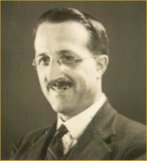
Address by G. R. Cowell at Bournenouth, May 1955
Memorials 6: 108-19
|
|---|
I desire, dear brethren, that the Spirit of God may give us an impression of the greatness of Christ,
- and therefore the greatness of what was here when He was here;
- also – I speak, of course, in a much lesser way now – of the greatness of the saints according to divine thoughts;
- and then we may receive some impression of the greatness of what is here now in the scene of testimony.
There are many expressions in this chapter which bring out the greatness of Christ. He is the antitype of David;
- He says, “have ye not read what David did?”
- He also says, “there is here what is greater than the temple”;
- “the Son of man is Lord of the sabbath”;
- “more than Jonas is here”; and
- “more than Solomon is here”.
There were those at that time who had received some impression of the greatness of Christ. They had heard Him praising the Father,
- “the Lord of the heaven and of the earth”.
- They had heard Him saying,
- “All things have been delivered to me by my Father, and no one knows the Son but the Father”;
- they had heard Him speak of revealing the Father to whom He pleased;
- they had heard Him issue the invitation,
- Glorious Person, the alone One who could stand and issue such an invitation and that, in the consciousness that He was rightly the Centre of the divine system!
- “Come to me”, He says, “and I will give you rest”.
- There were those who had come to Him.
- Jesus went on the Sabbath through the cornfields; and His disciples were with Him. Those who had come to Him were with Him, moving with Him.
- It was indeed the sabbath to them; the Lord had brought them to rest. “Come to me”, and, according to the footnote, ‘I will bring you to rest’.
- In Him the Father rests, His own beloved Son. We find our rest where the Father rests, in Christ.
- On the other hand, we also find our rest where the Lord Jesus found His rest, in the Father.
- How marvellous is the rest which He brings us into; what a sabbath!
- We are resting in the One in Whom the Father rests; we are resting, too, in the love of Him into Whose love the Son retired. We know the Father. What rest is the portion of believers! What liberty is ours!
And so they walked through the cornfields on the sabbath. The Son of man is Lord of the sabbath; it is He Who has brought in the true sabbath.
- It is He Who brings souls to rest, to rest where the Father rests, and to rest where He rests.
- Furthermore, as we take His yoke, and move with Him, we find rest for our souls; the disciples were moving with Him, and it is our privilege to move with Him.
- “David … and they that were with him”, the Lord says.
- There were those who took upon themselves David’s yoke, but the disciples had taken on themselves the yoke of the glorious Son of David, the Lord of the sabbath.
- They were hungry, but they were in liberty; and they began to pluck the ears and eat. They would not eat the chaff; they were after the wheat.
- That raises the question as to what we eat when we are hungry. The Lord says,
- “Have ye not read what David did when he was hungry?”
- We all become hungry, and we need food. You say, Christ is our food. That is true. The barley harvest would speak, no doubt, of Christ Himself; He is our food.
- But we need other food as well, because we need human companionship down here; and scripture indicates that we feed upon those whose companionship we keep.
- Hence the importance of Leviticus 11 which deals with clean and unclean animals. We feed upon those whose companionship we keep. We cannot do otherwise; and, as feeding upon them, we take on their characteristics.
- It is a great thing to feed on the wheat; a great thing to feed on the saints as they are according to God. What joy and liberty there is in that.
- Peter became hungry and fell into an ecstasy, and saw in a vision a vessel like a sheet descending out of heaven and coming to him;
- “And there was a voice to him, Rise, Peter, slay and eat. And Peter said, In no wise, Lord; for I have never eaten anything common or unclean”.
- It would indeed have been of no value to Peter to feed upon those creatures which he saw in the vessel according to their natural features and their natural origin. But the word was, “slay and eat”.
- He was not to feed upon them according to their natural features; he was to feed upon them as those whom God had cleansed.
- He was to bring the death of Christ to bear upon the persons represented, and to recognise that God had wrought in them; and so it says,
- “What God has cleansed, do not thou make common”.
- What do we feed on when we are hungry? Do we feed upon the brethren according to their natural characteristics? How sinful flesh loves those tasty morsels we call scandal!
- Alternatively we may be occupied with troubles; it is poor food, and will not sustain the soul. The word is,
- “Have ye not read what David did?”
- He entered into the house of God. If you are hungry, enter into the house of God; look at the saints as they appear before God.
- “He entered into the house of God, and ate and shewbread”
- – the bread of the presence. It is a great thing to eat the shewbread.
- We shall not appreciate the greatness of Christ, nor the greatness of what is here in testimony, unless we have this outlook on the saints. Instead, we shall be damaged in our souls, and hindered.
- When we are hungry, let us enter the house of God, and eat the bread of the presence on the pure table;
- feed upon the saints as they are before God, as He sees them – reconciled to God in one body by the cross.
- Israel was represented by twelve loaves. We are one bread, one body. It is delightful to feed upon the saints thus;
- and what is so encouraging is that the persons with David were young men.
- Similarly those who were accompanying the Lord through the cornfields were young men.
- Christianity began with young men; and the testimony is still, in a special way, a young man’s matter. Of course, I include young women in that.
- If you read this incident in David’s history, you will find it refers to the young men who were with him.
- Young men were feeding on the very best food; they were in company with David, and eating priestly food, the bread of the presence. That is what young men and women need to feed upon.
- Refuse to be occupied with what pertains to the flesh. Be true to your priestly instincts.
The real priests at that time were with David and those with him; that is where the service of God was going on.
- In the cave of Adullum it was going on, for David composed a psalm there.
- He composed a psalm when the Philistines took him in Gath – Psalm 56. He even composed a psalm when Doeg the Edomite told Saul of his visit to Abimilech when he ate the shewbread.
- Think of the living character of the service of God which was proceeding! David undoubtedly had his harp with him! And who would sing those psalms? Surely David and those who were with him.
- It was there that the service of God was proceeding. And in principle that was happening when the Lord was here.
- The true service of God was maintained by Jesus, the Son of David, and those who were with Him. He had just said,
- “I praise thee, Father, Lord of heaven and of the earth”;
- He was setting on the praise, and those who were with Him would, in due time, take it up.
- Later His praise resounded in the temple –
- “Hosannah to the Son of David”.
- Out of the mouths of babes and sucklings praise was perfected. I appeal specially to young people, to young men and women, as to the privilege which is open to you.
- If you are committed to the Lord, you may eat the very best food; the food which belongs to the priests is your property; and I would encourage you to eat it –
- to appropriate the saints according to God – so that you may be sustained in priestly power, in company with the true David, and in the service of song.
- I would again say that Christianity has always been especially a young man’s matter. I do not leave the older ones out; they are essential.
- But Christianity began with young men; the apostles were young men. They were fathers as to spiritual stature, for they had known Him that was from the beginning, but they were young men actually.
- Youth is needed in the testimony, and youth is needed in praise. Indeed the service of praise is one of the most vital parts of the testimony.
- And it is of primary importance from the testimonial angle, that young people should be in it, wholly in it. The enemy has no answer to that.
- With all the attractions he is bringing in to hold the young, he has no answer to it when young men and women are found wholly with the true David, accepting His rejection, and wholly with Him in the service of God.
And so the Lord goes on to say here,
- “I say unto you, that there is here what is greater than the temple”.
- As I said, the service of God was being maintained by the Lord Jesus, and those who were with Him at that time. The temple service was a mere form.
- And where is the service of God now, dear brethren? The Lord Jesus is not here corporeally, but the Holy Spirit, another Divine Person, is dwelling in the saints, and with them.
- There is, therefore, at the present time, what is greater than the temple, greater than all the cathedrals, greater than the greatest human system of religion.
- The Holy Spirit is here in, and with, the saints –
- “Ye are the temple of God, and the Spirit of God dwells in you”.
- And the service of God is proceeding; because where the Spirit of God is, and has the place He should have amongst the saints, the presence of Christ is still known.
- He says, “I will not leave you orphans, I am coming to you”.
- The presence of Christ is still known where the Spirit is ungrieved and unquenched, and thus the service of God proceeds.
- Think of the position when Christ was here. Who was here? The Minister of the holy places. He says,
- “there is here what is greater than the temple”.
- The Minister of the holy places was there, actually on earth at that time.
- But the Minister of the holy places now is at the right hand of the throne of the greatness on high, but He has set up down here the true tabernacle,
- “which the Lord has pitched, and not man”.
- Thus, as the Spirit has His place, we realise today the presence of the Minister of the holy places, and the service of God proceeds.
Following this, the Lord cures the man’s hand; and He is prepared to do that for all of us, for He wants us all to be in the service.
- If we are to be in the service we must be able to lift up holy hands in the sanctuary.
- Whatever disabilities we have, the Lord is available to cure them. He wants every young person, and every older one, to be vitally in this service.
And so, as the passage proceeds and the opposition increases, the Holy Spirit brings forward this wonderful prophecy,
- “Behold my servant, whom I have chosen, my beloved”.
- What a glorious Person Jesus is! What a touching expression – My Beloved, In whom my soul has found its delight!
- Think of God’s soul being moved, and of the emotions expressed –
- “my beloved, in whom my soul has found its delight. I will put my Spirit upon him”.
- This gives a wonderful character to the anointing, and to that great title the Christ. It was in this manner, we may say, that the Lord Jesus, as Man, was exalted to the highest office in the universe!
- Why does God exalt Him? Because, according to this passage, He was so lovely, so worthy. He affected the very soul of God.
- “I will put my Spirit upon him”.
- God says, as it were, He shall have the highest office in the universe.
- What a joy it is to God that His Beloved is now in the highest office in the universe.
- The prayer of Ephesians 3 is that we might be in accord with the Father in this matter; that the Christ may dwell in our hearts by faith;
- that He might be our Beloved, that our soul may find its delight in Him; that we may say, Amen, to the fact that He has the highest office in the universe.
- What an office “the Christ” is – God’s anointed is His Priest, the Minister of the Sanctuary; God’s anointed is the King,
- “more than Solomon is here”;
- God’s anointed is the Preacher, and
- “more than Jonas is here”.
- Glorious Person!
But as the opposition increases, and He moves on, He heals a blind and dumb man.
- See how the Lord is concerned about the service! We cannot serve God if we are blind.
- The cure for blindness, as we have often been reminded, is to wash in the pool of Siloam, to get into the current of the Spirit.
- It does not give detail here as to how the man was healed; it says,
- It is a great thing to see, to be enlightened in the eyes of our heart, that we may know what is
- the hope of His calling,
- the riches of the glory of His inheritance in the saints and
- the exceeding greatness of His power to usward who believe.
- And the dumb man spoke, as well as saw. We have a man speaking now. What a great thing it is to know how to speak to God, and thus to learn how to speak to man!
- Surely we all desire to be able to speak to God, and thus to learn how to speak to man.
- Surely we all desire to be able to speak to God more acceptably. The Lord would help us.
- The dumb man spake and saw. And they say of Jesus,
- “Is this man the Son of David?”
- He was proving that He was the Son of David. The actions of God’s Beloved are always in view of God’s praise and God’s glory.
The Pharisees, having heard it, said, “This man does not cast out demons, but by Beelzebub, prince of demons”.
- The Lord answered that by bringing out in a most remarkable way the personality of the Holy Spirit.
- In the 11th chapter, He had spoken in a remarkable way of the Father and of Himself, fully asserting the Deity both of the Father and of Himself.
- The Spirit was not yet given to the saints, so that the Spirit is not referred to there.
- But when the attack comes, the Lord takes the opportunity to assert, in unequivocal terms, the Deity of the Holy Spirit.
- He says, “Every sin and injurious speaking shall be forgiven to men, but speaking injuriously of the Spirit shall not be forgiven to men. And whosever shall have spoken a word against the Son of man, it shall be forgiven him; but whosoever shall speak against the Holy Spirit, it shall not be forgiven him, neither in this age nor in the corning one”.
- I cannot conceive of any language which could more emphatically assert the Deity of the Holy Spirit.
- He is so very God that he that speaks against Him is never to be forgiven. And that applies to the present time, because the Spirit is here.
- It applied when the Lord was here, because they said that He was casting out demons, by Beelzebub. But it particularly bears on our day, when the Spirit is here.
- The Son is no longer here as in the days of His flesh, but the Spirit is here – the “Holy Spirit”, as He says.
- It is a solemn thing to think of the Holy Spirit here, and of the responsibility which attaches to all in the christian profession to respect His Person, and the terrible penalty for speaking against Him.
- But then, how it opens up the glory of the present time. The Son is no longer here in bodily form; but it is a greater dispensation, one which the Lord, as we may say, speaking reverently, so much looked forward to.
- He says, “If ye loved me ye would rejoice that I go to the Father, for my Father is greater than I”.
- And again, “It is profitable for you that I go away; for if I go not away, the Comforter will not come to you; but if I go I will send him to you”.
- He looks on to this great day, when the Spirit of God is here. The Minister of the Sanctuary has sat down at the right hand of the throne of the greatness in the heavens;
- and the true tabernacle, which the Lord has pitched, and not man, is set up here in virtue of the presence of the Spirit;
- and the service of God is proceeding.
- It is a wonderful day! Whether young or old, we would surely all desire to be fully in it.
- Great heights are connected with it, as indicated typically in Solomon’s day.
- “He built his sanctuary like the heights, like the earth which he hath founded for ever”.
- There are great heights connected with the service; the Lord says,
- “More than Solomon is here”.
- The great Builder was here;
- “On this rock”, he says, “I will build my assembly”.
- The great Builder had come; He who builds all things is God.
- The One Who is God over all, blessed for ever, had come; far greater than Solomon – the One Who would build God’s sanctuary like the heights.
We would desire to have part in the heights connected with assembly service. But if we are to have part in the heights, we have to begin with the depths.
- He says, “a sign shall not be given to it save the sign of Jonas the prophet. For even as Jonas was in the belly of the great fish three days and three nights”.
- What depths, dear brethren! We are to know the breadth and length and depth and height. What depths are suggested here! The Son of Man three days and three nights in the heart of the earth!
- “All thy breakers and thy billows are gone over me … The deep was round about me, The weeds were wrapped about my head, I went down to the bottom of the mountains; The bars of the earth closed upon me for ever”, Jonah 2: 3-6.
- What depths He has been into to secure the service of God! Solomon gives typically the heights; Jonas the depths – three days and three nights in the heart of the earth.
- That is the Man who is God’s Anointed Preacher. How could the Lord Jesus have been a great Preacher otherwise? What message would He have had to preach?
- What would be the purpose of saying Repent, were He not going to lay this great foundation? – three days and three nights in the heart of the earth.
- Are we prepared for the depths? Are we prepared to go down? We have not to go where Jesus went; we could not. Is it not for us to go down to the bottom of the mountains? How do we go down? By repentance.
- “Yet forty days, and Nineveh shall be overthrown”.
- That was the message of the most successful preacher of Old Testament days. All the proud trees of the forest had to come down. And it says,
- “The men of Nineveh believed God, and proclaimed a fast, and put on sackcloth, from the greatest of them even to the least of them”, Jonah 3: 5.
- The greatest began it! It is not easy to get ‘great’ people to repent. We may get a position which we may think ‘great’; but then it is not easy to repent.
- “Yet forty days and Nineveh shall be overthrown”.
- You are given forty days; God gives space for repentance. If repentance does not come about, the judgment falls. We cannot trifle with God. They believed God, it says.
- They did not wait till the 39th day; they repented straight away; it is a great thing to repent straight away.
- However great the men were, the judgment would not be postponed beyond forty days. There is no respect of persons with God. And there is to be no respect of persons with us.
- The men of Nineveh believed God, proclaimed a fast, and put on sackcloth, from the greatest of them to the least.
- If this were done, dear brethren, in localities where there are open sores at the present time, there would be healing, especially if “the greatest of them” began it.
- Sometimes the greatest are the main cause of the trouble.
- The Ninevites put on sackcloth, from the greatest of them to the least. They all put it on, no one pointing the finger, and saying, I am better than you. They all put the sackcloth on,
- “and the word reached the king of Nineveh”.
- What was he going to do?
- “He arose from his throne, and laid his robe from him, and covered himself with sackcloth, and sat in ashes”.
- What a thing for a king to do! Human wisdom would have said, ‘That is not becoming for a king; you will make yourself very foolish in the eyes of the people’. Nevertheless the king did it.
- How effective was the preaching of Jonah! We mourn the lack of effective preachers, those who can get below the surface.
- Jonas was a man who could get below the surface, because he had been three days and three nights in the fish’s belly, and he knew what depths were himself.
- How deeply he had repented; thus he had no need to say much. The city came down in repentance. And it goes on to say, the king commanded
- “let man and beast be covered with sackcloth”
- – it was thorough repentance –
- “and cry mightily unto God; and let them turn every one from his evil way, and from the violence that is in their hands. Who knoweth but that God will turn and repent, and will turn away from his fierce anger, that we perish not? And God saw their works”.
- They were works meet for repentance.
- “God saw their works, that they turned from their evil way; and God repented of the evil that he had said he would do unto them, and he did it not”.
- That is, they repented, and then God repented.
We all have to face these exercises. If we do not know something of depths we shall never touch the heights.
- A greater than Jonas is here; the men of Nineveh repented at the preaching of Jonas; and yet some can be unaffected when the Lord Himself appeals to them
- – the Son of man, He Who spent three days and three nights in the heart of the earth!
- What a contrast to Jonas, a man fleeing, afraid to deliver his message; what a contrast to Jonas is the Son of man!
- He went into depths no creature could fathom in obedience to God’s will.
- Why are we not prepared for depths? How small are the depths we are called upon to enter into, compared with those Christ entered into!
- What does God ask of us? Repentance, and works worthy of repentance! Sackcloth from the greatest to the least!
- If we respond thus to the great Preacher – the Greater than Jonas – we shall become available for the One Who is greater than Solomon;
- we shall be brought into the gain of the Father’s revelation to Peter, and become living stones in that great structure, the sanctuary which the great Builder, the Son, is building like the heights.
- Beloved brethren, let us give heed to the great Preacher, the greatest of all preachers – the Lord Himself;
- so that we may become available to Him as the true Solomon,
- living stones in that living structure which the Son of the living God is building for the eternal praise and glory of His God.
- That service of praise, which will go on through all eternity, commences here, because the Holy Spirit is here – in and with us.
May the Lord help us, for His name’s sake.
Page Top Address Top