Menu•SiteMap |
Ministry
God With Us – Memorials: Volume 6
Ministry by G. R. Cowell
| |
Introduction Memorials: Previous Next
1. Christ Himself : Matthew 1: 1, 17-25; 2: 13-15; Isaiah 9: 6-7; 12: 4-6
2. John's Testimony : Matthew 3 entire; 5: 1-18
3. Suitable Features : Matthew 5: 1-9; 11: 25-end; 12: 49-50; 13: 44-48
4. My Assembly : Matthew 16: 13-18, 21-24; 17: 1-8
5. Dignity and Trust : Matthew 17: 24-27; 18: 1-23, 35; 19:3-6, 13-15, 20-21
6. The Name : Matthew 28: 16-20; Isaiah 12: 2-6;
Ezekiel 43: 2, 5-7 (to "for ever"), 10-12; 48: 35 (last phrase)
• Address: Greater than the Temple, More than Jonas, More than Solomon:
Matthew 12: 1-10, 13-24, 31-42
|
| |
| INTRODUCTION |
|---|
GOD WITH US
Memorials 6
Meetings with G. R. Cowell
at Bournemouth, May 18-20, 1955 |
|---|
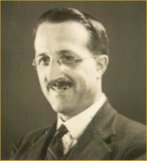
The initials of other brothers taking part in readings do not appear in Volumes 1 – 8 of the 'Memorials'.
- There may have been a reluctance to show the initials of many who remained with the legal system.
- Happily, where applicable, other initials have been shown in the final Volumes 9 – 16.
G.A.R.
Page Top
| Reading 1: CHRIST HIMSELF |
|---|
God With Us ( 1 )
Matthew 1: 1, 17-25; 2: 13-15; Isaiah 9: 6-7; 12: 4-6
Memorials 6: 1-17
|
|---|
G.R.C. I thought we might consider the great truth of Emmanuel, which means “God [El] with us”; and then the kind of persons who are able to appreciate this name, as it says in verse 23 of chapter 1,
- “they shall call his name Emmanuel, which is, being interpreted, ‘God with us’ ”,
- so that we might get some apprehension of who the “they” and the “us” are.
- It is a matter which bears on the personnel which composes the assembly, and also on the assembly itself.
- In this first reading, however, it would be well to consider the person of Christ Himself.
- He is introduced here as Jesus Christ, Son of David, Son of Abraham; and in verse 17 all the generations concentrate on the Christ.
- Then there is His personal Name –
- “Thou shalt call his name Jesus”,
- and the reason for that; and then,
- “they shall call His name Emmanuel”.
- Isaiah 9 indicates that there are those who appreciate in full measure the One who has come in –
- “For unto us a child is born, unto us a Son is given; and the government shall be upon His shoulders; and His name is called Wonderful, Counsellor, Mighty God,” [mighty El] “Father of Eternity, Prince of Peace. Of the increase of His government and of peace there shall be no end, upon the throne of David and over his kingdom, to establish it”.
- So that peace is what is in view in the rule of the Son of David, He whose name in the type – Solomon – means ‘peaceful’.
- But then it is an immense thing that our affections should be engaged with the Person.
- He is introduced in Matthew as the Beloved. The son of David was named Jedidiah,
- the one of whom Jehovah said,
- “I will be to him father, and he shall be to me son”;
- and the son of Abraham was his only son, whom he loved. The Lord Jesus is thus presented as an object of great affection.
- As the Christ, the Anointed, He is also the Beloved.
- “Behold my servant, whom I have chosen, my Beloved, in whom my soul has found its delight. I will put my Spirit upon Him”, Matthew 12: 18.
- We need to apprehend Him as the Beloved, and to give Him that place in our affections.
- The King is the Beloved in Psalm 45 and in the Song of Songs. In this Gospel the King, the Beloved, is introduced.
- But then there is the question of who He is in His Person –
- “They shall call His name Emmanuel, which is, being interpreted, ‘God [El] with us’ ”.
Ques. In Isaiah the giving of the name ‘Immanuel’ seems to be attributed to the virgin.
- “Behold, the virgin shall conceive and shall bring forth a son, and call his name Immanuel” Isaiah 7: 14.
- What is the difference between that, and Matthew 1: 23 –
- “they shall call His name Emmanuel”?
G.R.C. The change which the Spirit of God gives in Matthew is very significant. Persons come to light who appreciate who Jesus is, and they call Him by this name.
Ques. Is the word, “the virgin”, in Isaiah, a prophetic allusion to the remnant in a coming day?
G.R.C. I am glad you have mentioned that. When Sennacherib came up, the prophetic word was,
- “The virgin-daughter of Zion despiseth thee, laugheth thee to scorn”, 2 Kings 19: 21,
- the reason being that the name Emmanuel was apprehended – ‘God with us’.
- If we understand that, we can afford to despise the enemy, and laugh him to scorn.
Ques. So that the “they”, to whom you draw attention in verse 23, would be those in whom virgin features are coming into expression. Is that right?
G.R.C. Very good. I have wondered whether the gospel of Matthew, rightly understood, would bring about in us what corresponds to the virgin – or unconquered – daughter of Zion;
- and that is why I think it is important to see that the One coming in, according to Matthew, is the Beloved.
Ques. I would like to go back to what you said about the Beloved. Does it not involve that we are brought into communion with the Father in regard to the Son?
- The names Son of David and Son of Abraham, suggest the Father’s thoughts about the Son. Are we not brought into communion with Him?
G.R.C. God says of the son of David,
- “I will be to him father and he shall be to me son”.
- The Lord Jesus is the Son of the Father’s love. Then the word to Abraham was,
- “Take now thy son, thine only son, whom thou lovest, Isaac”.
- God has relied upon an object of such tender affection to carry things through for Him; as the Son of Abraham He was to lay the basis for blessing.
- The Father, the Lord of the heaven and of the earth, had in mind to fill heaven and earth with families named of Himself, and the carrying through of His purpose was entrusted to One whose affections were equal to it – His only Son, whom He loved.
- On the other hand, the Son of David is the one upon whom God relies to gather up the response of the whole universe.
- The outgoings of all the saved families will be gathered up by Him in responsive praise to God. It is the Beloved who accomplishes those great matters. Is that so?
Rem. I am sure what you say is right. One is very much impressed with the marvellous privilege of being brought into communion with the Father regarding His Son.
- “The Father loves the Son, and has given all things to be in his hand”.
G.R.C. It all bears on the title, “the Christ”, the One to whom God can entrust everything.
- The anointing means that he is the Prophet, Priest, King and Preacher; it covers all.
- The title, “the Christ”, means that He fills out every office, and does so with a glory with which only “Emmanuel” could do it.
Ques. Would the love you have been speaking of be an answer to His own word in John 17 –
- “That the love wherewith thou hast loved me may be in them and I in them”?
G.R.C. We learn to love the Christ, the Centre of the divine system. Paul says in Ephesians 3,
- “I bow my knees to the Father of our Lord Jesus Christ … in order that he may give you according to the riches of his glory, to be strengthened with power by his Spirit in the inner man; that the Christ may dwell, through faith, in your hearts”.
- He is the Beloved of the Father, and Isaiah 9 shows how affectionately we embrace Him –
- “unto us a child is born, unto us a son is given”.
- How much we appreciate that such an One had been given to us. We can think delightedly of what He is to God; but He is also given to us to be the Object of our affections, the Object of our trust.
Ques. Is that what is in mind in the baptism?
- “This is my beloved Son, in whom I have found my delight”.
- God wants us all to come into it.
G.R.C. That is why I suggested reading in chapter 2. The word there is,
- “Out of Egypt have I called my son”.
- He is Son of David and Son of Abraham, but the One who fills out those great positions is the One of whom God says, “my Son”.
- That is why the positions are so great. Whatever promises of God there are – and most of these were connected with the Son of David and the Son of Abraham – in the Son of God is the yea, and in Him the amen.
- The Son of God has, in grace, become Son of David and Son of Abraham.
Ques. Would these affections have affected Peter peculiarly in his confession in this Gospel?
- “Thou art the Christ the Son of the living God”.
G.R.C. The “Thou” is emphatic – “Thou art the Christ”; and I think it shows that Peter was a worshipper of Christ.
- To be rightly in the assembly, it is essential to be a worshipper of Christ.
Ques. In 2 Corinthians 1: 19 and 20, to which you have referred, the Apostle says,
- “The Son of God, Jesus Christ, He who has been preached by us among you”.
- Is the expression “Son of God” there a worshipful one?
G.R.C. I am sure it is; and, as I was saying, we have to keep in mind that behind the expression, “Son of David”, lies Psalm 45 and the Song of Songs. Solomon, the king, is the beloved.
Ques. I was wondering whether the Person of Christ is a theme which constantly recalls our hearts, because the three sets of fourteen generations involve the matter of recovery at the end, do they not?
- Abraham to David is, in one sense, an unbroken line; and then we have the carrying away; and then everything recovered in the Christ.
- Would that bear upon our day, and cause the hearts of recovered persons to appreciate Christ more and more?
G.R.C. I think that. The Immanuel section of Isaiah begins with “Shear-jashub”, which means, “a remnant shall return”.
- Isaiah was told to take his stand, with his son, at the end of the aqueduct of the upper pool on the highway of the fuller’s field, Isaiah 7: 3, and it was the remnant who returned in heart to God who proved the truth of Emmanuel in that day.
- You are referring to the return from Babylon; but even before the captivity they had departed from God; and, through Isaiah’s ministry, a remnant of Judah returned to God.
- Thus the features of the virgin daughter of Zion came to light in Jerusalem, and therefore the truth of Emmanuel, “God with us”, was realised.
- And so, in our day, unless the features of the virgin daughter of Zion come to light through affection for Christ and true return to God, we shall never understand the truth of Emmanuel.
- Virgin affections for Christ come first. He is the Beloved, and as He has this place with us we begin to apprehend the great truth of Emmanuel.
Ques. If these affections do appear, does it not make for features of impregnability in the assembly?
G.R.C. Exactly. Matthew provides for a remnant day – two or three are envisaged. Matthew 18: 20.
Rem. Paul says, “For I am jealous as to you with a jealousy which is of God, for I have espoused you unto one man, to present you a chaste virgin to Christ”, 2 Corinthians 11: 2.
G.R.C. I believe the first book of the New Testament is intended to espouse us to one Man. The King has come in, and the King is the Beloved.
Ques. Is not the idea of a king that he himself is the source of power? In a certain sense it is greater than the idea of ‘lord’, is it not? Lordship would be more delegated power, but a king is presented as the source of power.
G.R.C. Kingship includes lordship and headship. Even in this country the monarch is sovereign lord, but also head of the State. They are different ideas.
- Lordship implies authority, and includes military power; but headship implies influence and direction through affection.
- There is a moral quality about headship. The fact that the King is the Beloved would link with headship. He is ruling not simply by power, or authority, but in the affections of His people.
- And the true King, the Lord Jesus, rules in the affections of His people in order to lead our affections to God.
- David himself had nothing less than that in mind. If he secured the affections of the people as king, it was in order to lead them to God.
Ques. Does Colossians 1 bear on what you are saying? The Father has
- “translated us into the kingdom of the Son of his love”,
- and “He is the Head of the body, the assembly”.
G.R.C. That is very helpful. The Son of His love is the King, and He is the Head of the body, the assembly.
Rem. It says of David that he bowed the hearts of the men of Israel as one man.
Rem. The Lord’s first thought in resurrection was,
G.R.C. Even in Matthew the Lord Jesus called the disciples His brethren.
- “Go, bring word to my brethren that they go into Galilee, and there they shall see me”, chapter 28: 10.
- They are the brethren of the King in the sphere of administration; and therefore they are to be like the King, and that is what this gospel has in mind. Persons are to be secured who are like the King.
Rem. In 2 Samuel 19: 12 it says,
- “Ye are my brethren ye are my bone and my flesh; and why will ye be the last to bring back the king ?”
- And it goes on to say, “And he bowed the heart of all the men of Judah as of one man” verse 14.
G.R.C. I think that is what the Lord is securing in this gospel – those who are of His order. Psalm 45 begins with the king, but it closes with
- “Instead of thy fathers shall be thy sons”.
- The genealogy here brings in the fathers; they are persons we rightly greatly respect – Abraham, Isaac, Jacob, Judah, and so on, persons in whom the Spirit of Christ was. But
- “Instead of thy fathers shall be thy sons; princes shalt thou make them in all the earth”.
Ques. “Who shall declare his generation ?” it says in Isaiah 53: 8. Is the generation being declared here?
G.R.C. It also says in verse 10 of that chapter,
- “he shall see a seed, he shall prolong his days, and the pleasure of Jehovah shall prosper in his hand”.
- Psalm 45 stresses that instead of thy fathers shall be thy sons; Isaiah 53 says, “he shall see a seed”; and Psalm 22, which links specifically with Matthew, ends by saying,
- “A seed shall serve him; it shall be accounted to the Lord for a generation”, verse 30.
- These passages help us to see who the “they” are who “call his name Emmanuel, which is, being interpreted, ‘God with us’“.
- Who is God with? He is not with man after the flesh. Who is He with? Well, it says, “a seed shall serve him”.
Rem. The first man whose name is given to us in the New Testament – Joseph – is said to be a righteous man.
- You have referred to those who are like the king. To a righteous man the word comes,
- “Take to thee the little child and its mother”, Matthew 2: 20.
- It is to righteous persons that this affectionate aspect of Christ can be committed without any reserve whatsoever.
G.R.C. I think that is most important. Righteousness is a primary feature of the generation we are speaking about. The first evidence of life is righteousness;
- “the Spirit life on account of righteousness”, Romans 9: 10.
- If we wish to discern the children of God according to John’s epistle,
- “If ye know that he is righteous, know that everyone who practices righteousness is begotten of him”, 1 John 2: 29.
- If you are seeking those who are of Christ’s order, righteousness is the first thing you look for.
Ques. Is that the thought connected with the expression, “princes shalt thou make them”? The moral features of the king are seen in the princes.
G.R.C. That is right, and righteousness shines preeminently in the king according to Psalm 45: 7,
- “Thou hast loved righteousness, and hated wickedness”.
- The Lord’s first public utterance was,
- “thus it becometh us to fulfill all righteousness”, Matthew 3: 15.
- And righteousness marks the seed to which we have referred. If you want to find them, you have to look out for that feature – righteousness.
Ques. Joseph, who is spoken of as a righteous man, was also addressed as, “Son of David”. Does that suggest the seed?
G.R.C. Yes, he came on the line of the generation of Jesus Christ; but then he was also morally a son of David, because he was a righteous man, and unwilling to expose Mary publicly.
- A righteous man is a feeling man, like David. David was not a man who, if he could help it, would expose anyone publicly. He would not expose Saul publicly.
Ques. Do you see any significance in the putting together in Psalm 45 of the Beloved, and then this matter of righteousness,
- “because of truth and meekness and righteousness”,
- and then the salutation to Him as God,
- Is that in keeping with the line of truth in your mind in Matthew?
G.R.C. I am sure it is, and as you say, it puts truth first, “because of truth and meekness and righteousness”.
- In the Immanuel section of Isaiah, the issue God has with the people is that
- “this people refuseth the waters of Shiloah which flow softly”;
- that is a matter of the truth. If we are to be in the gain of the truth, we must make way for the Spirit of truth;
- and if we do not make way for the Spirit of truth, typified in the waters of Shiloah,
- God will bring up upon us the waters of the river great and many – the king of Assyria – in the way of discipline.
- There does not appear, from that scripture, to be any middle course. If persons reject the waters of Shiloah which flow softly, they come under God’s discipline in connection with the river.
- But then the discipline of God is to bring us back. In the history of Israel it had that effect, and will again do so in the future.
- The discipline brings them back to an appreciation of the waters which flow softly.
- The aqueduct of the upper pool, and the highway of the fuller’s field, indicate that giving place to the Spirit on the one hand, and practical righteousness and purity on the other, are consequent one on the other.
Ques. You are linking the highway of the fuller’s field with purity?
G.R.C. Yes, I think it would indicate that.
Ques. I would like to ask whether the worship of Christ, the Beloved, as God, does enter into this matter?
G.R.C. I am sure it would, and I believe we come into the gain of that vitally on the line of affection; and so here the Lord is introduced with titles which relate to Him as the Beloved, the long expected One; and then it says,
- “They shall call his name Emmanuel, which is, being interpreted, ‘God with us’ ”.
Ques. Is the word “O Immanuel” in Isaiah 8: 8 a worshipful return in divine recovery, do you think?
G.R.C Yes, I do. So that He is not only the child born, and the son given, but His name is called the Mighty God [El], Isaiah 9: 6. What a wonderful thing to get such an impression of Christ!
Rem. According to Isaiah 8, the combinations of opposition, on the part of those who refused the waters of Shiloah, were all to be frustrated in the light of verse 10, “God [El] is with us”.
- The various conspiracies would come to nought. Thus everything which is opposed to the truth today will be overcome in the light of the glory of Christ, Who is God with us.
G.R.C. We have to beware lest the spirit of conspiracy is found amongst us – anything which is underhand.
- Everything amongst us should be above-board. If anything in the nature of conspiracy is working, it cannot be according to truth.
Rem. That is just what I was thinking. It is not on the principle of righteousness to which we have referred.
G.R.C. No. Once persons engage in anything underhand, or in the nature of conspiracy, it is evident that they are not walking in truth.
- If we are walking in truth, we are transparent and prepared for adjustment, and what we say, we say in the open; there are no underground methods.
Ques. Was not the first feature of evil to show itself in the church in the early days, in Ananias and Sapphira, the feature of conspiracy?
G.R.C. Quite so. There was something hidden, but Peter brought it out.
- Then, in the wider sphere there is the link between Syria and Israel in Isaiah 8.
- We do not desire to criticise persons, because God sovereignly uses persons, but we have to look at principles.
- The kingdom of Israel in Isaiah’s day would link with the open position in ours – the giving up of principles among those who are professedly people of God.
- This leads to alliance with the world, and the adoption of worldly methods.
- Syria joined with Israel, and the governmental result was that God brought up the waters of the river, the King of Assyria, as an overflowing scourge.
- Movements of that kind, unholy confederacies between the world and the church, even though having as their object the furtherance of the gospel,
- will only result in disaster as far as the public testimony is concerned, and those engaged will be carried away by the waters of the river.
- The only thing not swept away by the Assyrian was Jerusalem: he came right up to the gates of Jerusalem, he reached even to the neck. Isaiah 8: 8.
- When all else was carried away, the virgin daughter of Zion and the city of Jerusalem were preserved. It is only in holding in integrity to the truth of the assembly that we will be preserved.
Rem. You are seeking to promote affection for the Beloved; nothing less than virgin affections will preserve us. There is what is outward and what is inward, and the inward is essential.
G.R.C. What is outward flows from what is inward. It is a question of love for Christ – virgin affections; so that the virgin daughter of Zion is to come to light in our day.
- He is the Beloved; we love Him and take character from Him; we love righteousness and hate lawlessness. And it is thus that we prove the reality of Emmanuel.
Ques. Does Romans 8 help? The Spirit of Christ is referred to in the early part of the chapter;
- then our proving practically that we have no need of alliances because God is for us;
- and then at the close of the chapter there is the love of God in Christ Jesus our Lord, which perhaps might bring us into the gain of “God with us”.
G.R.C. That chapter bears on the waters of Shiloah in its emphasis on the Spirit.
- The fact is that if we make any kind of alliance, it means that we are not relying on the Spirit;
- the alliance between Syria and Israel was outside the range of the Spirit and the issue with the people was that they refused, “the waters of Shiloah which flow softly”.
- We need to learn to rely wholly on the Spirit, and to move together in the Spirit; and that involves transparency.
Ques. Does Siloam in John 9 connect with Shiloah? The cure of the blindness resulted in the man doing homage to the Son of God.
G.R.C. The Secret of being cured from blindness is to avail ourselves of the waters of Shiloah which flow softly. The man had to go and wash.
Ques. Does not the “daughter” suggest formation? Should we not be exercised as to our young people, that there should be formation by the Spirit?
G.R.C. Yes. And what would hinder that is our not being saved from our sins. That is one of our greatest difficulties.
- “Thou shalt call his name Jesus, for he shall save his people from their sins”.
- If we are not in the gain of that, how can we know anything about Emmanuel? God says,
- “Your iniquities have separated between you and your God, and your sins have hid his face from you”, Isaiah 59: 2.
- If we fail to understand and realise the truth of Emmanuel, it is because our iniquities have separated between us and our God; yet Jesus –
- – has come to save His people from their sins. But are we saved from our sins, or are our sins separating us from our God?
Rem. Saved from them is more than having them eternally forgiven.
G.R.C. Saved from our sins would include the guilt and the consequences; and we see in this gospel what the cross meant to the Lord in order to save us from those consequences.
- But here it says, “save His people from their sins”, which involves saving us from the power of them, and from the love of them; so that we are free.
Rem. There is a touching reference in 1 Peter 2: 24,
- “Who himself bore our sins in his body on the tree, in order that, being dead to sins, we may live to righteousness”.
G.R.C. That is very good. Sins are our trouble. The prophet says that of the increase of His government and of peace there shall be no end. What disturbs peace is sins.
Ques. Would the increasing appreciation of the Person help us in relation to being saved from our sins?
G.R.C. I do not think we are practically saved from our sins until the Lord Jesus is our Beloved.
Ques. In verse 21 it says, “he shall save his people from their sins”.
- Does it not involve the Deity of Christ, that the people are described as His people? The great sacrifice of Himself, by which He saved His people from their sins, would greatly endear Him to us.
G.R.C. Would it not lay the basis for the virgin affections we have referred to?
- We need to see, I think, that virgin affection for Christ involves chastity in every relation.
- If we are unchaste, or unrighteous, in any relationship of life, it proves that we have not virgin affection for Christ.
Ques. Does such integrity come to light significantly in Joseph? Does he not shine as one to whom God could entrust His most precious interest in view of a time of great crisis? And he did not fail in what was entrusted to him.
G.R.C. Very good.
Ques. In Psalm 45: 2, after saying,
- “Thou art fairer than the sons of men”, it says,
- “therefore God hath blessed thee for ever”.
- Does that emphasise the moral qualities in Christ which underlie the position He has officially, and is that to affect us?
G.R.C. Exactly. So that when we think of Him as the Beloved, we combine David and Solomon in our minds, because of David it says,
- “I will make him firstborn, the highest of the kings of the earth”, Psalm 89: 27.
- It was because of his moral qualities.
Rem. And we would be affected by the sufferings of Christ.
G.R.C. Yes. They need to have their full place with us. Virgin affection cannot be secured without an appreciation of the sufferings of Christ.
Ques. Is that seen in the woman in Matthew 26 who anointed the Lord’s head in the house of Simon the leper?
G.R.C. She represents the great product of Matthew’s gospel, and she anointed His head,
- when Jesus had finished all these sayings”, Matthew 26: 1.
- How she had appreciated all that the King had said!
Ques. Would the woman in Luke 7 have a bearing on this – she loved much because she had been forgiven much?
G.R.C. Very good. I do feel that practical salvation from our sins must depend upon affection for Christ.
- Naturally we love our sins; we may not love them all, but there are sins which we love.
- According to scripture idolatry is one of the worst sins, and who of us can say that our hearts are free from idols? John refers to Jesus as the true God and eternal life, and then says,
- “Children, keep yourselves from idols”, 1 John 5: 21.
- Then too, things which are going to affect the peace of Solomon’s reign, if I might use that expression, must be dealt with.
- At the beginning of his reign certain persons had to be dealt with who would have disturbed the peace of the whole realm. It says,
- “Of the increase of his government and of peace there shall be no end, upon the throne of David”.
Ques. Psalm 45 also says, “grace is poured into thy lips”. Would that mean that the grace of the dispensation should also govern us?
G.R.C. Yes, the grace of the dispensation should govern us at all times; but
- there are things which hinder the service of God;
- they hinder peace, and peace is necessary if the service of God is to go forward.
- Solomon, the man of peace, was the one who instituted the full service of God; and we need peace for that.
- Great things are coming out, and it is a question of the full service of God, the full service of praise and worship being rendered; and
- it is a shame on us if there are localities where conditions remain disturbed for long periods.
- Things should be settled, so that the reign of peace may be established under the Son of David, and the service of God may proceed.
Ques. Is it interesting to see two examples of sin being judged in relation to God? Joseph says,
- “how shall I sin against God?”, Genesis 39: 9.
- And David in Psalm 51 says
- “Against thee, and thee only, have I sinned”.
G.R.C. David is a great example, because human reasoning would have counselled him, on account of his position as king, to hush up the whole matter;
- suggesting that, if he were to disclose it, he would lose all his influence as king. But it is not so at all.
- In acting transparently and confessing his sin, and addressing Psalm 51 to the Chief Musician, content that all Israel should know and sing it, he acquired moral power.
- He did not lose moral power as king, but acquired more power, although governmentally sorrowful results remained.
Ques. King Ahaz in Isaiah is totally devoid of moral power, is he not? Why is he brought forward so prominently?
G.R.C. Is it not a foreshadowing of the dispensation of grace?
- He was in the responsible position, and grace waited upon him in the fullest possible way; and he received this great prophecy,
- “Behold, the virgin shall conceive and shall bring forth a son, and call his name Immanuel”.
- What an appeal to him to be in the truth vitally!
Ques. Does Isaiah 7: 13 bear on this?
- “Is it a small matter for you to weary man, that ye weary also my God ?”
- Are we not made weary often with things which go on through lack of moral power?
G.R.C. I am sure we are.
Ques. Is it striking that the title “Jah” is introduced in connection with sins, Jesus meaning “Jah the Saviour”?
Ques. Had you in mind that the expression “their sins” is something peculiar? It is a challenge as to whether his people are in accord with the position they occupy. In this passage it does not say, save sinners from their sins.
G.R.C. That is important. We may consider ourselves His people, but are we saved yet from our sins?
- If we do not know experimentally the truth of Emmanuel, it is because we have forfeited it on account of our sins.
Ques. Is there a difference between what may be comparatively recent, and what is of long standing?
- Matters which Solomon was required to deal with were matters of long standing, whereas Joseph, in Matthew 1: 19, was occupied with something current.
G.R.C. Quite so. The persons whom Solomon had to deal with had compromised all the grace of David for many years, had they not?
Ques. Does the title of Psalm 22, “Upon Aijeleth-Shahar” contain a suggestion of virgin affections?
G.R.C. I think it does, confirming the need for us to dwell upon the sufferings of Christ, if such affections are to be produced and we are to be freed from our sins.
Rem. In a day of recovery it says,
- “and the fountain-gate repaired Shallum the son of Colhozeh, the chief of the district of Mispah; he built it, and covered it, and set up its doors, its locks and its bars, and the wall of the pool of Shelah by the king’s garden, and to the stairs that go down from the city of David.
- “After him repaired Nehemiah the son of Azbuk, the chief of the half district of Bethzur, even over against the sepulchres of David, and to the pool that was made, and to the house of the mighty men”, Nehemiah 3: 15-16.
G.R.C. Verse 15 refers specifically to the Spirit in His present activities, the fountain gate, and then the pool of Shelah or Shiloah.
- The fountain gate may refer to the Spirit as springing up within us, and the pool of Shiloah to the current of the Spirit in which we move together – the waters of Shiloah which flow softly.
- But then there is also the pool that was made, which would refer I suppose to past history.
- We value past ministry; but we cannot get the gain of that unless we are in the gain of the present movements of the Spirit.
Rem. There are several references in these chapters to what was spoken by the Lord through the prophets.
G.R.C. You have in mind the living voice of the Spirit?
Rem. Yes. It says the Lord spoke through the prophets.
Page Top Reading 1 Top
| Reading 2: JOHN'S TESTIMONY |
|---|
God With Us ( 2 )
Matthew 3 entire; 5: 1-18
Memorials 6: 18-33
|
|---|
G.R.C. I think it will be helpful to dwell upon John the Baptist’s testimony to Christ. He refers to the axe being applied to the root of the trees, and then bears testimony to activities of a very distinctive kind on the part of the Lord –
- “He shall baptise you with the Holy Spirit and fire; whose winnowing fan is in his hand, and he shall thoroughly purge his threshing floor, and shall gather his wheat into the garner”.
- This refers prophetically to His activities which would bring about conditions amongst His people, saving them from their sins, which would permit them to know unhinderedly the truth of Emmanuel, God with us.
- Then in chapter 5, in the Lord’s first recorded teaching, He sets out in the first seven beatitudes the character of the wheat which He is securing,
- the features proper to the personnel of the assembly, the sons of the kingdom;
- so that the operations of the threshing-floor are to bring to pass those features without which we cannot know the blessedness of Emmanuel.
- These features are set out in the King, Whom we referred to this afternoon as the Beloved, the Object of such affection, the Son of David, the Son of Abraham.
- Both of these titles bring the Lord Jesus before us as the Beloved, and so also does the title “the Christ”.
- Those who are held in virgin affection for Him become numbered among those who call His name Emmanuel, come to apprehend the truth of His Person, and experience the blessedness of God with us, as saved practically from their sins.
- If that is to be so, the activities of the Lord are necessary, because of what we are. He thus takes us in hand.
A reference was made to a seed, or generation, being secured. Psalm 22: 30.
- In chapter 1: 1, the word generation is really “genesis”. It refers to birth or origin; so that the initial idea in Matthew is to bring out the birth, or origin or genesis, of Jesus Christ, Son of David, Son of Abraham,
- and to lead on to the fact that in His Person He had no genesis because He is Emmanuel, God with us.
But, as the gospel proceeds, another word is used. The Lord says,
- “To whom shall I liken this generation?”, Matthew 11: 16-19,
- in contrast to wisdom’s children.
- The offspring of vipers is referred to by John in the chapter we have read; and the Lord Himself refers to the offspring of vipers in chapter 12, and again in chapter 23: 33, where He says,
- “Serpents, offspring of vipers”.
- Stronger language is used in this gospel, I think, than any, as to the generation which is here.
- John’s ministry would help us to judge ourselves in the light of such denunciations; and then the Lord’s operations are to free us from every feature of a generation which can be spoken of in such terms.
The Lord Jesus is securing His wheat. We should take account of John’s ministry. It says in verse 6, they
- “were baptised by him in the Jordan confessing their sins”.
- Jesus had come to save His people from their sins; and being saved from our sins involves the confession of our sins.
Ques. Are you thinking of this as continuous?
G.R.C. Quite so.
- “If we confess our sins, he is faithful and righteous to forgive us our sins, and to cleanse us from all unrighteousness” 1 John 1: 9.
Rem. The Lord speaks of fulfilling all righteousness.
G.R.C. That word, “fulfil”, is to be noted. It means giving the fulness of a thing. In chapter 5: 17 He says,
- “Think not that I am come to make void the law or the prophets; I am not come to make void, but to fulfil”;
- that is, He came to give the fulness of the law and the prophets.
- Fulness of righteousness is seen in christianity. It is a standard of righteousness beyond anything known in the Old Testament. The Lord says,
- “Thus it becometh us to fulfil all righteousness”.
Ques. What is particularly in mind in the word “thus”?
G.R.C. Is not the Lord referring to His action, in grace, in identifying Himself with the repentant remnant?
Ques. That is what I had in mind. Would it have an application now?
G.R.C. J.N.D. said that the moment a person is repentant, and prepared to confess his sins, he finds the Lord Jesus by his side; he finds himself in company with Christ.
- And therefore he would find himself in company with all those who are in accord with Christ.
Ques. Does not the hungering and thirsting after righteousness, which are inward matters, go beyond anything that has gone before?
G.R.C. It is a remarkable expression. The whole being is craving for it.
Ques. Is it significant that in this gospel it is a question of trees not producing good fruit? In John’s gospel it is fruit, but here the character of the fruit is in question.
G.R.C. Quite so; fruit, too, worthy of repentance.
- “Every tree therefore not producing good fruit is cut down and cast into the fire”.
- The principle of John’s baptism is not left behind; that is the principle of repentance, because in Acts 2 Peter says,
- “Repent, and be baptised, each one of you”.
- Christian baptism has a fulness in it which John’s had not, but the idea of repentance and confession is carried into christianity.
Ques. How are we saved from our sins?
G.R.C. Saved from our sins means that we are saved from the sins themselves, the love of them, the power of them, so that we can experience God with us;
- and we are saved from them on this basic principle of repentance and confession, and the recognition of the truth of baptism.
Rem. In chapter 1 it is, “He shall save”; but this is our side.
Rem. “He that covereth his transgressions shall not prosper; but whoso confesseth and forsaketh them shall obtain mercy”, Proverbs 28: 13.
G.R.C. That is a very important matter, and especially in the case of leaders, because leaders affect the saints and the peace of the saints.
- Those who came to John here were leaders in Israel, but they were just an offspring of vipers; and we have to see that these principles are in our own hearts, and need to be judged.
- John himself had no sins to confess here, but he needed adjustment. He said to the Lord,
- “I have need to be baptised of thee; and comest thou to me? But Jesus answering said to him, Suffer it now”.
- John needed adjustment, and we all need adjustment; and it is a great matter when a leader is adjusted quickly. John the Baptist was adjusted quickly.
Ques. Does John the Baptist’s ministry provide a kind of moral quality which takes on adjustment quickly?
- I was wondering whether the twelve men at Ephesus in Acts 19, knowing only the baptism of John, were persons who were able to accept adjustment; and they became suitable material for the choicest assembly truth?
G.R.C. That is very interesting. They became ready immediately for the gift of the Spirit. The baptism of the Spirit would be readily apprehended by them.
- I think that baptism and confession, and the recognition that the axe is laid to the root of the trees, brings home the necessity for the baptism of the Spirit.
Ques. Does Matthias come in on that line? I was thinking of him as one who qualified, as having been with the disciples all the time that Jesus came in and went out among them, beginning from the baptism of John.
G.R.C. Very good. He followed all the way from the baptism of John.
- One feels the importance of this principle of confession, and also that we should be rapidly adjusted. Peter in chapter 16: 22 is rapidly adjusted.
- He makes a remark which I suppose his fellow disciples thought was one of the best remarks they had heard. He says,
- “God be favourable to thee, Lord; this shall in no wise be unto thee”.
- But the Lord rebukes him, and he is rapidly adjusted; and it is very important that leaders should be rapidly adjusted. At Antioch Paul rebuked Peter to his face; the thing was dealt with quickly.
- The more devoted a man is, and the more the saints value his service, the more damage he can do if he is in any way marked by error, because all the weight of his piety and devotion is on the side of error.
- It is most important that all who lead among the saints should be ready for rapid adjustment and rebuke if necessary. At Antioch Paul rebuked Peter to his face, and the matter was settled quickly.
Ques. Primarily we confess to God. Is there sometimes need for something further than that?
G.R.C. We have already referred to Joseph not being willing to expose Mary publicly. None of us would desire to expose anyone publicly,
- but there are occasions when the honour of God in His house requires that things should be openly confessed.
Ques. Might it not depend on whether the assembly has in any public way been affected?
G.R.C. Yes, Quite so.
Ques. You speak of leaders. Of course it affects us all, as well as those who lead;
- but if things have been said and done which need confession, because brethren have been distressed, would not that necessitate something being said in public?
G.R.C. I think it would. One is concerned about peace among the saints.
- Happenings in localities can become disturbing allover the world. But it says,
- “Of the increase of His government and of peace there shall be no end”, Isaiah 9: 7.
Ques. May I ask for further help about James 5: 16? It says,
- “Confess therefore your offences to one another, and pray for one another, that ye may be healed”.
- If this is properly pursued, would there not be healing?
G.R.C. I am sure. It is put on a mutual basis there.
- “Confess … to one another, and pray for one another”.
- How can we pray for one another without confession? And then James says that,
- “the fruit of righteousness in peace is sown for them that make peace” James 3: 18.
- Peace has to be on a sure footing. It has to be the fruit of righteousness; and the first step in righteousness, for the sinner – and we are all sinners –
- is to repent and confess our sins, and accept the truth of baptism. That is a matter of righteousness.
Ques. Is the wise woman in Abel an example of this? She stood for the peace and unity of the city, and the disturber of the peace had to be dealt with, and everybody knew it; and the whole city was saved by the faithfulness of one woman.
- She says, “I am peaceable and faithful”, 2 Samuel 20: 19. She puts “peaceable” first.
G.R.C. Very good. David too is a great example. Natural wisdom would have advised him to hush the matter up, but he wrote Psalm 51 and addressed it to the Chief Musician.
- He did not mind young and old knowing about the matter. They could all sing about it.
Rem. I was thinking of David, and how he said,
- “There is forgiveness with thee, that thou mayest be feared”, Psalm 130: 4.
- And do we not understand that he never repeated a failure or a sin? Having judged it, he never repeated it, or came under the power of it again.
Ques. Is it important that repentance is not merely a change of mind and heart, but a change of mind as to sin, arriving at God’s estimate of it?
G.R.C. Quite so. The axe is applied to the root of the trees. We are apt to boast in some trees, but we need to get clear of all the trees.
- Paul says, as to the new man, that there is neither Greek nor Jew, circumcision nor uncircumcision, barbarian, Scythian, bondman, freeman. Every kind of tree is cut down.
- We may even boast in our family trees. Everything connected with man after the flesh has been dealt with in judgment in the cross of Christ.
Ques. Paul determined to know nothing among the Corinthians but Jesus Christ and Him crucified. Was he laying the axe to the root of the trees?
G.R.C. I think so. So that, while here it was only applied to the root, in the cross judicially it was carried out.
- The “word of the cross” brings every tree down.
We ought now to move on to the Lord’s activities.
- John says, “he shall baptise you with the Holy Spirit and fire”.
- John’s ministry and baptism prepare for the baptism of the Spirit. It is remarkable the stress which is put upon the baptism of the Spirit by John in each of the gospels, and by the Lord in Acts 1: 5.
Ques. Would the baptism of the Spirit, coupled with fire, have in mind the removal of all that opposes practically? At the beginning of Acts all that was opposing was removed through the Spirit of God being active amongst the saints.
G.R.C. Quite so. Fire is prominent in each part of this section.
- Every tree not producing fruit is cut down and cast into the fire;
- then, He shall baptise you with the Holy Spirit and fire;
- and finally, in verse 12, the chaff He will bum with fire unquenchable.
- I think this all stands related to Emmanuel, God with us. Our God is a consuming fire. If we are to know God with us, we must accept the action of the fire.
- First the trees – whatever kind of man we may think of after the flesh; we have to accept that, judicially, man after the flesh has been cut down at the cross and cast into the fire.
- Then the baptism with the Holy Spirit and fire would indicate the action of the fire inwardly in purifying our motives.
Ques. You made some reference to immersion in relation to the baptism of the Spirit. Could you say more as to that?
G.R.C. The baptism of the Spirit is an important matter, and fundamental to the assembly. John the Baptist could not tell us about the assembly, but he is telling us about a mighty act of Christ which would bring the assembly into being.
Ques. I was thinking particularly of the word ‘immersion’. Does that not stand at the root of many of our difficulties? Does it not involve complete surrender, and our being taken entire possession of by the Spirit?
G.R.C. I believe so.
Ques. It is noticeable that in Peter’s first preaching he does not say anything about the baptism of the Spirit. He says,
- “Repent, and be baptised, each one of you, in the name of Jesus Christ, for remission of sins”, that would be water baptism I suppose,
- “and ye will receive the gift of the Holy Spirit”.
- Do you think that the baptism of the Holy Spirit referred to here, and as recorded, for instance, in 1 Corinthians 12 and 13, is something which we are ready to enter into as confessing our sins, and accepting the moral import of John the Baptist’s ministry?
G.R.C. I think so. It seems to await Paul to give the real force of it. It is remarkable how the baptism of the Spirit is linked with water baptism. Here it is put close to it as also in Acts 1 and 2, 10: 47 and 19: 5 and 6.
Ques. So that, as accepting the truth of water baptism, we should be ready for the far greater things to come – all that is conveyed in,
- “He shall baptise you with Holy Spirit and fire”.
- Does that not strike you as something which would make it well worth while being transparent and clear about every matter?
G.R.C. Very much so.
Ques. Is not the Spirit necessary to being saved practically from our sins? In Isaiah 12 it speaks about drawing water out of the wells of salvation.
G.R.C. I would say that we need to give more attention to the idea of baptism in connection with the Spirit. The proposal in Acts 2: 38 is,
- “Ye will receive the gift of the Holy Spirit”.
- My impression is that we have thought more of the Holy Spirit as a gift, and what He is as dwelling in us individually, than we have of being baptised with – or “in” – the Spirit.
- In the power of one Spirit we are all baptised into one body. It conveys to me the idea of immersion.
- Our vessels are filled, of course, if we are immersed; but the point is that we are all to move along in the same current so that we are practically one body – merged in one body – in this great current of the Spirit.
Ques. Is that why in Mark and John there is no reference to fire? It is baptising with the Holy Spirit, having in view the positive entrance into this fulness.
- Is fire added here with a view to bringing out the personnel who would appreciate Emmanuel?
G.R.C. I think so.
Ques. We still want some more help on this matter of immersion. In 1 Corinthians 12: 13 it says,
- “For also in the power of one Spirit we have all been baptised into one body – and have been given to drink of one Spirit”.
- Does that confirm and enlarge the thought of immersion – that we should be moving together in what is now called one body?
G.R.C. That is what I thought; so that while the indwelling of the Spirit, according to Romans 8, saves us from personal sins, it seems to me that
- the acceptance of immersion in the Spirit saves us from ecclesiastical sins, such as independency.
- The baptism of the Spirit would save us from all independency in divine things.
- It means that we would all be moving in the same current, perfectly united in the same mind and the same opinion.
Rem. It continues, “And have all been given to drink of one Spirit”.
G.R.C. Yes, there is such satisfaction in it. We should experience it in our localities.
- When we have a reading meeting in which we have sought to move along bodywise in the waters of Shiloah which flow softly, do we not experience a satisfaction which is indescribably blessed?
Ques. Is not the emphasis on “one”?
G.R.C. I believe so. It means that we are saved from any kind of independency.
- Independence in divine things is sin; it is unrighteousness. We need to be saved from ecclesiastical sins as well as other sins.
Ques. Would it be right to say that the truth of the one body lies at the root of other things which we enjoy together, such as fellowship and the assembly?
G.R.C. I believe it is fundamental to the truth of the assembly, and all that flows out of that truth.
- Both the service of God, and assembly administration, depend upon our being in the gain of the baptism of the Spirit, I feel assured.
Rem. Referring to the fire, it says in Isaiah 33: 14,
- “Who among us shall dwell with the consuming fire? who among us shall dwell with everlasting flames?”; and verse 17,
- “Thine eyes shall see the king in his beauty; they shall behold the land that is far off”; and then in verse 22,
- “For Jehovah is our judge, Jehovah, our lawgiver, Jehovah, our king: he will save us”.
- No doubt this refers to the holiness of God.
G.R.C. It does; and the Holy Spirit being here means really dwelling with the consuming fire, for our God is a consuming fire.
- In the Song of Songs, “flames of Jah” are spoken of in connection with the jealousy of our Beloved.
Rem. That is the only reference to the name of God in that book.
G.R.C. It shows the importance of virgin affection for Christ, lest we provoke him to jealousy.
- In this chapter however, the stress is on the Holy Spirit – not the one Spirit as in 1 Corinthians 12.
- He shall baptise you with Holy Spirit and fire, linking with the word
- “great is the Holy One of Israel in the midst of thee”.
- The presence of God is known amongst His own, now that the Lord has gone on high, because of the presence of the Holy Spirit.
- If the Holy Spirit has His place, ungrieved and unquenched, we shall know the presence of the Lord, and the presence of the Father; we shall know the Godhead with us in Its fulness.
Ques. What is ecclesiastical sin?
G.R.C. I was applying the term to independency in divine things – moving on independent lines
- without regard to what the Spirit is bringing out in mutual conditions amongst the brethren, in what we speak of as the temple.
- It is by way of the baptism of the Spirit that the truth of the temple becomes a reality among us.
Ques. Would it be illustrated in Acts 13 where they were ministering to the Lord and fasting, and the Holy Spirit spoke definitely, showing what liberty He had?
G.R.C. Quite so. The Holy One of Israel was in the midst of them. If the Holy Spirit is free and unhindered among us, and we are moving in the communion of the Holy Spirit, the presence of God is known.
Ques. Do you regard that scripture,
- “But the Spirit speaks expressly” 1 Timothy 4: 1,
- as characteristic, and beyond what immediately follows in that scripture?
- I wondered whether if we knew more of temple conditions there would be less likelihood of matters being differently understood by different persons?
G.R.C. I think if we accepted immersion, we should all be in the holy current of His thoughts.
- There would be variety, but we should all be moving in the same current – in the waters of Shiloah which flow softly.
Ques. Do you think that we are often clear about trees, but not so clear of the chaff?
G.R.C. It is just as well to come on to that. The baptism of the Spirit is fundamental to the truth of the assembly;
- and then John goes on to speak of the way the Lord deals with the personnel, so the threshing floor is brought in.
- It is necessary that we should all be amenable to the Lord in connection with His operations on the threshing-floor. You are thinking of the chaff, that which attaches to us personally?
Ques. Yes. We might see a tree and recognise that it has to go, but do not small things often cling to us because we think they are of no consequence? Only wheat has value; chaff has no value at all.
G.R.C. So the work of the threshing-floor goes on in order that all that might cause friction and discord amongst the saints might be destroyed. The chaff He will burn with fire unquenchable.
- Until we get adjusted in our minds, we may admire the chaff, and take a pride in external appearances and natural characteristics. But in the divine estimate these are only chaff.
Ques. Does the fact that it is His threshing-floor insist upon the Lord’s own rights in dealing with matters in the assembly?
G.R.C. He has full rights in dealing with the personnel, and all in view of gathering the wheat into His garner, which, in its present application, would refer to the assembly.
- The threshing-floor entered into the history of Boaz and Ruth;
- and the foundation of the house was in the threshing-floor of Oman the Jebusite.
- These scriptures show how important the threshing-floor is if the assembly is to be secured for Christ and for God.
Rem. Our mixed conditions make the threshing-floor essential for God to be with us – Emmanuel.
Ques. Does John’s reference to the One that is “mightier than I” link up with the Mighty God [El] in Isaiah 9: 6;
- and would it encourage us all to let the Lord have His way in the assembly, no matter how difficult things may appear?
G.R.C. “He that comes after me is mightier than I”.
- It is wonderful to be prepared for that, to let the Lord have His way!
Ques. The first threshing-floor in scripture is connected with a burial – that of Jacob. Does that indicate that the first man has to go before we can be under the control of the Spirit?
G.R.C. And the word as to the chaff here is very strong, it is “fire unquenchable”.
Ques. Was not the Lord Jesus peculiarly delightful to heaven in coming to John to be baptised, in anticipation, really, of his vicarious work?
- When Daniel confessed the sins of the nation, as if they were his own, he earned a like commendation from heaven –
- “thou art one greatly beloved”, Daniel 9: 23.
G.R.C. Daniel is a great example for us. But the Lord Himself here is unique.
- Think of such an One as He identifying Himself with this repentant remnant! It links again with Isaiah – “a remnant shall return”.
- It was the remnant only who got the benefit of Emmanuel at this point, however little they understood it.
- To get the gain of it fully involved the Lord’s actual death, and the accomplishment of the work of redemption; but nevertheless, however little they understood it,
- God was with them, not only in the person of Jesus, but in the voice out of the heavens, and in the Spirit of God descending as a dove and coming upon Him.
- It was a manifestation of the Holy Trinity; God with them in all that that could mean anticipatively, awaiting redemption for the fulness of it to be known.
Ques. The heavens were opened to Him here. While it speaks first in this way of the Lord, is our whole outlook changed as we accept baptism?
G.R.C. The thing to notice is that He was the Object of heaven; the heavens were opened to Him.
- The Father was engaged with Him; and the Spirit of God, descending as a dove, came upon Him.
- Heaven was opened because Jesus on earth was the Object of heaven; but when the heavens were opened for Stephen, Jesus is still the Object, but He is in heaven.
- It does not say that heaven was opened for Jesus to see an object in heaven. Jesus was the Object of heaven; and now, in heaven, He is our Object. Thus heaven is opened for us.
Ques. Might I refer back to Daniel. Is it ever possible for us to take the ground that we are personally free from what has to be confessed? Daniel owned some personal part in what he confessed.
G.R.C. Daniel says, “Confessing my sin and the sin of my people Israel”, Daniel 9: 20.
Ques. Is it important, in matters which disturb the peace of Jerusalem, to own that there is some personal part which each of us has played?
G.R.C. I feel sure that is right. We should, each and all, take matters home to ourselves.
Rem. That is, that everyone of us is humbled.
G.R.C. Yes. That is why the Lord was unique. There was no other sinless One. He is unique in His own perfection,
- yet in grace He is linking Himself with this repentant remnant;
- soon, of course, to take all those sins upon Himself at the cross, having none of His own, yet to bear them all vicariously.
Ques. Would the word the Lord selects be important,
- We have spoken as to whether certain things are right or wrong. Is it good to have what is becoming before us?
G.R.C. I am sure it is. We do well to have in mind what is becoming in every situation.
Ques. Would not the contemplation of Christ as the Beloved, and again, in His lowly grace, as the Object of heaven in this passage, greatly help us in this matter of repentance?
G.R.C. Indeed, it would.
Ques. Should we not be very much affected by the greatness of what is contained in these verses?
- J.N.D. says the Trinity is manifested here for the first time. That is a very marvellous thing!
G.R.C. It was manifested in these circumstances where persons were repenting, confessing their sins and being baptised; and Jesus was identifying Himself with them.
Rem. Showing the immense possibilities which are open to us, if we are marked by confession and repentance!
G.R.C. That is just it. If we are marked by repentance and confession, and the recognition of the truth of baptism, the Lord will be with us;
- and we shall get the gain of the Spirit and of His baptism;
- and we shall get the gain of the outshining of the Trinity.
- What an immense recompense for simply doing what is right, for that is what it is.
Ques. I have been thinking of what is said in Colossians as to Epaphroditus – “one of you”.
- He merged happily with the brethren, enjoying his relationship in the body, and in the good of baptism. Would he be one who had come into the gain of this revelation?
G.R.C. He would.
Ques. Are we not also left with a great impression of the Spirit, this being the Spirit’s own act?
- The Spirit of God descended as a dove, coming upon Him.
- He is a Divine Person, and, in this particular instance, acting of and from Himself.
Ques. Might I ask, as regards repentance, whether we are not inclined to confine repentance to failure?
- Is it not an attitude of self-judgment which should always mark us continually, and thus open the door for the Lord Himself to do the purging?
G.R.C. I am sure that is right. The Lord refers to a repenting sinner – Luke 15. Such an one would be amenable to the Lord’s hand in His threshing-floor.
Ques. Would the Lord’s reference to remission of sins, in giving thanks for the cup in chapter 26: 28 of this gospel show how these exercises are brought right to the very threshold of the service of God?
G.R.C. In chapter 5 the features of the wheat are described by the Lord, Who pronounces those marked by such features as ‘blessed’ – that is ‘happy’.
- It is the key of happiness to be amenable to Him and His operations in the threshing-floor.
Ques. Is not the word in Amos 9: 9 encouraging? God speaks of sifting His people among the nations, and says,
- “Yet shall not the least grain fall upon the earth”.
G.R.C. Very good.
Page Top Reading 2 Top Next Reading