Menu•SiteMap |
Ministry
Page Top
| READING 5 |
|---|
The Lord Jesus as seen in the Revelation ( 5 )
Revelation 21: 23; 22: 3-5, 10-21
Memorials 3: 82-100
|
|---|
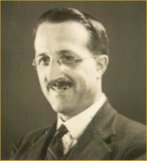
G.R.C. I thought we might consider the glory of the Lamb as the great light-bearer in the city –
- “the glory of God has enlightened it, and the lamp thereof is the Lamb”
- – and then the final blessedness of His bondmen –
- “his servants” – bondmen – “shall serve him, and they shall see his face … and they shall reign to the ages of ages”.
- Later we may arrive at the most important matter in this reading – the two closing ways in which the Lord presents Himself. Firstly He says,
- “Behold, I come quickly, and my reward with me, to render to every one as his work shall be”.
- And then there is a remarkable assertion of His deity,
- “I am the Alpha and the Omega, the first and the last, the beginning and the end”, verse 12.
- That is a presentation which would put every bondman on his mettle, and would stimulate each one to be an overcomer;
- because His reward is with Him, and He had indicated earlier in the book the way He would reward overcomers.
- In verse 16, the closing appeal or presentation is most touching, because, after all the vast range of glory and majesty presented in the book, He now says, “I Jesus”,
- presenting Himself in a personal way to those who are the objects of His heart’s affections –
- “I Jesus have sent mine angel to testify these things to you in the assemblies”.
- He is thinking of his saints in all the local assemblies. It immediately invokes response that a Person so great in fame and majesty, as depicted in this book, should come in this loving way and say, “I Jesus”.
- It evokes the bridal response which He is seeking –
- “And the Spirit and the bride say, Come”.
I thought we might speak briefly of the Lamb’s glory in the city, the city itself being seen,
- “coming down out of the heaven from God,”
- radiant with the glory of God.
- If the city itself is radiant, how unspeakable is the radiance of Him whose light lightens it!
- The city itself is enlightened with the glory of God, and the lamp of that glory is the Lamb.
Ques. Does it suggest that all His administrative glories – for He dwells in the city in the coming age – shall be lit up and tempered with the lustre of His sufferings?
G.R.C. Very good. How beautiful and touching that that title should be used there;
- “the lamp thereof is the Lamb”,
- because the fact that He can be the lamp of God’s glory is because He has sacrificially glorified God, and God has glorified Him; and now He is the radiant expression of God’s glory.
- In fact it says in Hebrews that He is the
- “effulgence of his glory and the expression of his substance”, Hebrews 1: 3.
Ques. Does that thought of a lamp, a condensed vessel, suggest the glory in which He came into such limitations; and now the light as viewed by the universe through the medium of the holy city from that vessel is so glorious?
G.R.C. The universe will be enlightened by the city; but how bright the lamp within the city – how unspeakably bright
- “the effulgence of his glory and the expression of his substance”.
- In referring to the lamp and the limitations, were you linking it with the word ‘bodily’ in Colossians 2: 9?
Rem. I was thinking of that.
G.R.C. “In him dwells all the fulness of the Godhead bodily”.
- So in the next scripture we have read it says,
- “and they shall see his face”.
- What a place the bondmen have in the final setting;
- “his servants shall serve him” – that is priestly service;
- “and they shall see his face”
- – they are in the full radiance of the glory which shines in Him.
Ques. Does it mean that the radiancy of what is administrative is to be marked by the suffering feelings of Christ? It is in such a spirit that light comes, and is administered for blessing in the assembly and amongst men?
G.R.C. The glory of God shines forth in that suffering setting.
Ques. Does the reference to the glory of God, as enlightening, link with the earlier reference,
- “coming down out of the heaven from God, having the glory of God”?
G.R.C. Yes. The city has the glory of God, and diffuses it, because the Lamb is the lamp of the city.
- How radiant must be the light shining upon the inhabitants of the city, that they themselves should become luminous.
- In 2 Corinthians 4 it says that that radiancy has
- “shone in our hearts for the shining forth”, verse 6.
- This should characterise believers now. They are in the direct light and shining of the One Who is the image of God, and the light should shine forth through them.
Rem. So that the shining forth, as we might say, goes right through.
Ques. So that it says,
- “the glory of God has enlightened it”.
- Does that mean that some of the enlightening and shining is going on now?
G.R.C. A reading like this is to help us to open our hearts more fully to the light, so that there might be a greater shining forth now.
Ques. Would the lamp-stand and the seven lamps in the tabernacle have any bearing upon this?
G.R.C. The seven golden lamps are referred to in chapters 1-3, and the shining of those lamps in testimony in the power of the Spirit.
Ques. Is the Spirit bringing into relief something in relation to Christ as the Lamb that can be found nowhere else?
G.R.C. Exactly. No one else is the effulgence of God’s glory, or the expression of His substance; no one else could be.
Ques. Do we mostly understand that in relation to Christ as presented in Hebrews 1?
- But I think there is additional attraction here where it says,
- “the lamp thereof is the Lamb”.
- It is the only suitable issue, in those millennial conditions, in view of His sufferings.
G.R.C. It greatly touches our affections. And as to His glory, it says,
- “the throne of God and of the Lamb” – it is only one throne – “shall be in it; and his servants shall serve him”.
- Whose servants? No distinction is made between God and the Lamb.
Ques. Does the term, ‘the Lamb’ there make it easy for us to understand the force of the word,
- “they shall see his face”?
G.R.C. How could we see the face of God elsewhere?
- “they shall see his face; and his name is on their foreheads”.
- And His name should be on our foreheads now; we ought to have, in the most prominent place, an evidence that we are bondmen of this glorious Person.
- What is on a man’s forehead is seen by everybody, and there should be some mark about us showing that we are the slaves of Jesus Christ. What a great testimony that would be!
Ques. Would you say that it is not there unintelligently?
G.R.C. I think the forehead would suggest that; it is intelligent affection.
Ques. In the scripture referred to, the Spirit speaks of the shining forth of the knowledge of the glory of God. Does this radiance connect with the knowledge of God?
G.R.C. You are thinking of that, too, in connection with the forehead? It is the true knowledge of God.
Ques. Does it not come in as a beautiful answer to the corruption at the beginning? I am thinking of the line introduced in the garden, and now God answering it all in the Lamb, and this incorruptible knowledge shining forth.
G.R.C. So that in this holy city the truth is for ever enshrined, because God and the Lamb are there;
- whereas in verse 15, “everyone that loves and makes a lie” is confined to his own place.
Rem. I have noticed that there is reference twice to there being no need of the sun – chapters 21: 23 and 22: 5 – as though all that governs the universe is transferred, so to speak, to the Lamb – everything centred in Him as regards rule, government or control.
Rem. All natural light eclipsed in this glorious outshining.
Rem. In John’s gospel the light shone in the darkness. Now it shines where there is no darkness!
G.R.C. Very good! When the Lord was here the state around was that of night; but, according to this chapter,
- “night shall not be any more”.
Ques. “The darkness is passing, and the true light already shines”.
- Do you think there is some measure in which the saints are intended to enter into the value of this now?
- Is not the allusion to the Lamb and the Lamb’s wife to bring home to us that a clear line of teaching objectively is one thing, but not everything;
- it is the application of the matter in circumstances of suffering which means so much?
G.R.C. Should it not be true of all local companies of saints that the darkness is passing and the true light already shines? Acceptance of the true light involves suffering.
Ques. Would you in any way connect this line of things with the cup at the Lord’s supper?
In giving the details of the supper to Paul, the Lord said, as to the loaf,
- “This is my body which is for you”.
- He does not say that in connection with the cup; He had the whole universe in mind in referring to His blood;
- “This cup is the new covenant in my blood” – here He does not say, “for you”.
G.R.C. I think that is right. New covenant blessing is going to fill the universe on the basis of His blood; and, in that universe of bliss, He is the great Light-bearer.
- The One who suffered becomes the radiant vessel of the glory of God.
- The Lord would help us as to His words, “my blood”, and all that has been effected through His blood.
- The priests presented the blood of the peace-offering, Leviticus 7: 33, which would be a witness to us of divine love and blessing;
- but they also presented the blood of the burnt-offering, Leviticus 1: 5.
- The presentation of the latter is more definite, and refers to what the blood has effected for God. It is the witness of a work completed for God, which ensures that the universe shall be filled with His glory.
Ques. Would you say a word as to the Lord God – Jehovah Elohim – shining upon them, verse 5?
G.R.C. I think it refers back to the fact that Jehovah Elohim formed man in Genesis 2.
- That title does not occur in Genesis 1, but in chapter 2; and the second reference to it is that
- “Jehovah Elohim formed Man, dust of the ground, and breathed into his nostrils the breath of life; and Man became a living soul”.
- Here Jehovah Elohim has achieved His end in man.
Ques. Is it the shining complacency of love, the fruit of all love’s operations, and in such suffering?
G.R.C. It is. “Jehovah Elohim shall shine upon them”.
- You can understand the joy of Jehovah Elohim in shining upon them – complacent shining.
- The shining is in the face of the Lord Jesus, the Lamb, and it is most affecting that the One who suffered is the vessel of this radiant glory.
Ques. Do we have the bondmen, priests and kings, here, as those who serve in priestly service; and then they reign? Is there moral order in that?
G.R.C. There is; because the great end, according to this book, is that God will secure the priest and the king.
- He has secured this in Christ, but He will also secure in the saints those features which are necessary for the representation of Himself in the universe.
- So it says of His bondmen that they shall serve Him – priestly service – and that
- they “shall reign to the ages of ages”.
- Priesthood and royalty are presented there.
Rem. So that the great order with God is, blessing men; then priesthood, connected with His dwelling with them; and then this thought of reigning, ruling through them.
- Blessing; dwelling; reigning.
G.R.C. Is there not moral order in that? Is not kingship the greatest thought, the culminating matter, the representation of God?
Rem. As the embodiment of those three thoughts – blessing; dwelling; reigning; every testimony of God from the beginning is there.
Ques. Is the only occasion Jehovah Elohim appears in the gospel connected with the thought of reigning?
G.R.C. Yes; and with the greatness of Christ.
- Jehovah Elohim, “shall give him the throne of David his father” Luke 1: 32.
- Then it says, “he shall be great”.
- You can understand the title occurring in Luke, because Luke carries the thread of the testimony from Adam right through.
Ques. Is that why democracy and communism are such serious things, as running entirely counter to God’s thought of rule?
G.R.C. We, therefore, have to guard against these principles seeping in amongst us.
Ques. Do you think the Lord shining upon them will secure eternal freshness; the vessel is replete, but everything is to flow from God Himself as God?
G.R.C. You feel what a living and pulsating matter eternity will be. We were reminded recently of the word,
- “he will rejoice over thee with joy … he will exult over thee with singing”, Zephaniah 3: 17.
- Applying that to the eternal scene, it is a remarkable thing that it is a scene of endless exultation on the part of God Himself.
- The saints will be singing; Christ will be singing; but God will be exulting with singing.
Rem. So that the greatest joy of all is God’s joy.
G.R.C. It must be so; God’s joy must exceed the joy of the creature. And we contribute to His joy.
Ques. Does this expression,
- “reign to the ages of ages”,
- indicate that what is so pleasurable in this millennial setting goes on eternally?
G.R.C. I understand the expression,
- “to the ages of ages” means eternity.
Ques. Do we reign in eternity?
G.R.C. It may not be in an official capacity, but Romans 5: 17 speaks of reigning in life. I believe that is an eternal idea.
Rem. The fact that the city is mentioned again as the city in the eternal setting at the beginning of chapter 21, would convey that
- there is an administrative influence and rule found in the assembly in eternity.
G.R.C. Exactly; the capital city is there.
- After all, we have to keep in mind that angelic beings were created before man, and are referred to as principalities and authorities. Eph. 6: 12.
- So that the idea of rule in the universe was prior to man, and will surely go on to eternity.
Ques. Does it imply how trustworthy that which has been brought to pass through the work of the Lamb will be; how God will commit Himself to it all in His bondmen?
- I was thinking of it as over against Adam, to whom rule was given; but he could not be relied upon, he failed.
G.R.C. I believe it is most important to understand that God trusts His bondmen, and they are the only persons who are trustworthy.
Rem. In the doxologies in Timothy, God in His inscrutability is before us. He is spoken of as the
- “King of those that reign”, and
- “King of the ages”.
G.R.C. The kingdom is an eternal idea. The mediatorial kingdom of Christ is delivered up to Him who is God and Father, but the kingdom itself does not cease.
Ques. Would you say that the title, “the Lamb”, is not mentioned in the first part of chapter 21, because it particularly relates to the millennium and not eternity?
G.R.C. I think the title of “Lamb” is omitted in the first eight verses of this chapter to make it clear that the mediatorial kingdom is over.
- It is no longer the throne of God and of the Lamb, but the throne of God as such.
- The mediatorial side of the kingdom is over, but the inhabitants of the city will never fail to appreciate the Lamb.
- We do not change; we reach finality before the millennium.
Ques. I was wondering whether the personal glories of Christ would be treasured in the assembly, and therefore come over into eternity;
- but whether the particular point of the glory of the Lamb entered into the vindication of God?
G.R.C. I think the mediatorial kingdom is primarily for the vindication of Christ, and of God Himself, in the present heaven and the present earth.
- The mediatorial kingdom relates to the present heaven and the present earth.
- So you can understand the Spirit of God leaving out the title, “the Lamb”, in the eternal state;
- because it is not the time of vindication, but the time of eternal satisfaction and rest.
- But I cannot think but that our appreciation of the Lamb will be as much as ever through all eternity.
Rem. So that, primarily, the coming age is God’s vindication in glory of Him who suffered here in grace.
G.R.C. Exactly.
Ques. Would you say in that connection that the Lamb will always be the Lamb who had suffered?
G.R.C. It may be that that title will not be used in the eternal day, but I do not think we shall ever forget His sacrificial sufferings
- – how could we? – because there is no change in the inhabitants of the city;
- they will have reached their eternal state and condition before the millennial reign begins.
Rem. It has been said that the sacrificial side will not be prominent in eternity, but that, as the hymn says, “He who suffered once is there”.
G.R.C. That is good.
Ques. Is the title “Mediator” an eternal matter, and is that not prominent in the title the “Lamb” here being so closely connected with God?
G.R.C. Yes; but I think here it is not only the Mediator, but the mediatorial kingdom.
- The Lord’s mediatorship goes on to eternity, and must do so; but the mediatorial kingdom does not.
Ques. Is the mediatorial kingdom, referred to in 1 Corinthians 15, the kingdom which the Lord gives up?
G.R.C. That is the mediatorial kingdom.
Ques. That was in mind in my question as to our reigning, because the word is, “to the ages of ages”. I wondered if that reigning was connected with the mediatorial side of the kingdom?
G.R.C. I have no doubt it is, in a primary way; but I think, in the principle of it, it remains. We belong to royalty eternally.
Rem. J.N.D. in his Synopsis, in regard of that expression, “reign to the ages of ages”, says, ‘Not only for the thousand years, but ever and ever’.
G.R.C. That is good.
Ques. I would like to refer to verse 3,
- “And no curse shall be any more”,
- that being an eternal suggestion – the blessedness which obtains throughout eternity.
- Is it not that we always attribute everything to the great thought of the Lamb? “God and the Lamb” – does not that remain?
G.R.C. It remains, but in the eternal condition it is not designated as the throne of God and the Lamb.
- In the millennial condition, the throne of God and the Lamb is in the city – one throne; but God and the Lamb linked together, because it is still the mediatorial kingdom.
- Where the throne is mentioned in chapter 21: 5, the eternal condition, it is just,
- “he that sat on the throne”;
- so also as to the great white throne it says,
- The Lamb is not mentioned in connection with the throne in those cases, because they are subsequent to the millennium.
- We know who the Sitter on the throne is – it is the Lord Jesus; but not in any glory personal to Himself, but sitting on that throne as representing God; and the title ‘the Lamb’ is left out.
Ques. Our links with God, would you say, are eternally in Christ, His mediatorship remaining eternally?
- Our eternal link with God must be in that Person; but that Person is not viewed precisely as the Lamb.
- The Lamb, in a way, recedes from view as we pass from the millennium to the eternal state.
G.R.C. In the eternal state it is God. God is all in all; so that what is personal to Christ, and which will be so prominent in the millennium,
- is not referred to in connection with the Sitter on the throne in the passages already mentioned; but it is a question of God.
- But, as already quoted from the hymn, “He who suffered once is there”.
- While the title, “the Lamb”, will not be prominent, the One who suffered will ever be appreciated.
Rem. The title “Lamb” in Revelation, being in the diminutive, would hardly, as such, go into eternity, there is nothing diminutive there.
G.R.C. The diminutive idea is to bring out what an object of affection He is. It does not suggest that there is anything diminutive about Him.
Ques. Would there also be a distinction between display and satisfaction? Would the display be more in regard to the world to come, and that is not needed in eternity?
G.R.C. Not in the same way. Display is for vindication, as has been said, and for God’s glory.
We ought to pass on now to the presentations of Christ in chapter 22: 12 and 13. As I said earlier, this presentation is to put all the bondmen on their mettle.
- The Lord presents Himself in the greatest possible way
- – “I am the Alpha and the Omega, the first and the last, the beginning and the end”.
- The fact that He presents Himself thus in the majesty of Godhead should put us all on our mettle as to what we can be for Him.
- What an honour to be the bondman of such an One! Then He says,
- “Behold, I come quickly, and my reward with me, to render to every one as his work shall be”.
- The point is, where shall we stand? It challenges us as to whether we are overcomers.
Ques. Is the idea of reward not so much what the bondmen work for, but the joy of the Lord in rewarding what has been for Him?
G.R.C. That is a prominent point in it. But if we think of the promises He has made, even the last two, to the overcomers,
- well might this presentation of Himself stir our hearts,
- “My reward … with me”!
- “He that overcomes, him will I make a pillar in the temple of my God, and he shall go no more at all out”, Revelation 3: 12.
- We have to go out now; but what a promise that is – perhaps what we might call on priestly lines!
- And then to the overcomer in Laodicea He says,
- “He that overcomes, to him will I give to sit with me in my throne”
- – that is the kingly side. I used to hear years ago that that was the least of the promises, but I regard it now as one of the greatest –
- “to him will I give to sit with me in my throne; as I also have overcome, and have sat down with my Father in his throne”.
Ques. Is Paul thinking of the Lord,
- – the majesty of the Person, and the crown of righteousness which He would give?
G.R.C. I think that is exactly what he had in mind,
- “which the Lord, the righteous Judge, will render to me in that day”, 2 Timothy 4: 8.
Ques. Would this presentation of Christ greatly help our beloved brethren who are facing matters of association?
- To think for example, that if loss is faced in the matter of shareholding, or directorship, or partnership, or other associations, this glorious Person is coming quickly and His reward is with Him?
- His reward is greater than any loss sustained now!
G.R.C. Quite so. I think it would be the answer to everything which appears to us as an obstacle standing in the way of our carrying out the will of God.
Ques. And would it make us trustworthy bondmen? It was as a trustworthy bondman that Paul laboured at Ephesus and secured first love.
G.R.C. He says, “These hands”. What a labourer he was!
Ques. In connection with the assemblies, the thought of works is referred to. I notice here the word is,
- “to render to every one as his work shall be”.
- Would you make the distinction, please?
G.R.C. When He is referring to the assembly in a place, He refers to a company of people and to their works;
- but I think this is addressed to the individual.
- It is to rouse each one of us as to our bondmanship, and whether we are really overcomers.
Rem. In Matthew 25: 21 the Lord says to the bondman who had gained five talents,
- “Well, good and faithful bondman”.
Ques. Do we need to keep our thoughts away from the sovereign principle of gift here? Luke’s presentation is different from Matthew’s.
- There seems to be, in Matthew, a suggestion of gift in the five and two talents,
- but in Luke all are on the same level; each one had one mina.
G.R.C. As you say, it is not a question of gift, but of faithfulness. The Lord says,
- “Well done, thou good bondman; because thou hast been faithful in that which is least”, Luke 19: 17.
Ques. What greater reward could there be than what the Lord said,
- “Enter thou into the joy of thy lord”, Matthew 25: 23?
G.R.C. That is a wonderful thing, what more could a bondman desire? We should aim at being ten talent bondmen!
Ques. That would bring the apostle Paul in?
G.R.C. I am sure it would. We cannot doubt what the Lord will say to Paul!
Ques. Is the reward for the millennium, or is it eternal?
G.R.C. It is for the millennium; but if you think of what the Lord says to the overcomers,
- I do not think all the promises could be limited to the millennium.
For instance, He says,
- “He that overcomes, him will I make a pillar in the temple of my God”; and He goes on to say,
- “and I will write upon him the name of my God, and the name of the city of my God, the new Jerusalem,” – which is the eternal idea –
- “which comes down out of heaven, from my God”.
Ques. It says, “as his work shall be”; why is it future there?
G.R.C. I think it is the way his work will appear under the scrutiny of the Divine Judge. It may appear all right now to believers, but how is it going to appear before the righteous Judge?
Rem. Moses says at the end of his prayer,
- “The work of our hands, establish thou it”, Psalm 90: 17.
Ques. And the same grace that will thus address the saints when there is no flesh left to judge, is the grace which wholesomely reminds us at best that we are unprofitable servants now?
G.R.C. That is very good. The Lord could not trust us, in our present condition, with commendation in any public sense. The flesh would overcome us.
Rem. “If you want to help me, do not make anything of me”, F.E.R. said.
G.R.C. Your word about unprofitable bondmen is a very salutary one.
Ques. In some epistles Paul says that he is an apostle by God’s will, but he never once says that he is a bondman by God’s will. Is that to be noted?
G.R.C. What do you make of it?
Rem. Apostleship is a sovereign gift, but bondmanship is proper to all.
Rem. We want all believers to be bondmen!
G.R.C. Yes. Every brother a bondman and every sister a bondwoman!
Rem. As you said earlier, this passage would put the bondmen on their mettle.
Ques. Could we have a touch on the final presentation, please?
G.R.C. The final presentation is most affecting, and is intended to be.
- We have been going through scenes of majesty and splendour surpassing anything known amongst men, occupied with the glory of the One in whom the majesty and greatness of God is expressed;
- and now He comes to us and says, “I Jesus”.
- If a great personage in this world came and spoke to us like that, it would arouse emotion to think that such an one should speak to us by his personal name!
- Here is the greatest conceivable Person; He comes to the assemblies. The assemblies were in decline, and yet He says,
- “I Jesus have sent mine angel to testify these things to you in the assemblies”.
- What decline there is today! And yet He says, “I Jesus have sent mine angel to testify these things to you in the assemblies”,
- with a view to our being recovered to first love.
- The whole book has this in mind. It is the great Lover Himself saying, “I Jesus”.
- He has sent His angel to testify these things in the assemblies, because His love remains undimmed in spite of decline; and that love requires a response.
- Nothing will satisfy Him but first love; nothing less could He accept because of Who He is. How could He accept a second place!
Ques. Do you mean – and we are all eager about this – that the expression,
- “The Spirit and the bride say, Come”
- suggests the best? and that is what the Lord is after now?
G.R.C. I do. I believe it suggests recovery to first love.
Rem. But the best is suggested by itself in the Spirit and the bride; and then those that hear come into it by obedience to the word – they say, Come.
G.R.C. We ought to look at the thought of the Spirit and the bride by itself. The Spirit would ever say, Come! The bride, wherever the features are found, would also say, Come! Is that it?
Rem. That is what I had in mind.
G.R.C. “Let him that hears” – we are to come into this.
Ques. Is that why the Lord introduces David in this section, because he represents the best in spiritual quality?
G.R.C. That is what I thought. It is a most affecting presentation; not now the warrior king, the King of kings and the Lord of lords; but He says,
- “I am the root and offspring of David”,
- because, in the Old Testament, David represents the very best in quality for God;
- and what the Lord has in mind, even in securing first love for Himself from His saints, is to secure the whole service of God.
- That is what endears Him so to His own, because we know that He is considering for God in the fullest sense.
Ques. “In him is the yea, and in him the amen, for glory to God by us”, 2 Corinthians l: 20.
- “Yea, I come quickly. Amen; come, Lord Jesus”.
- Is there the merging of the Amens in this word of full response to Christ?
G.R.C. Quite so.
Ques. Is there a suggestion in the closing word,
- of the full return to the light of Paul’s ministry?
G.R.C. Very good. “Amen; come, Lord Jesus”.
- What an answer from the heart of the bondman! We ought to note, perhaps, in passing, the way the Lord uses the word ‘testify’.
- “I Jesus have sent mine angel to testify these things to you in the assemblies”,
- and then in verse 18, “I testify”;
- and then in verse 20, “He that testifies these things”.
- It is not merely the Lord saying things, but He is testifying, and it refers to the whole book; all that we have been considering is part of this testimony.
- The Lord is testifying – bringing things out in such a manner that we might be assured of the certainty of them,
- so that every presentation of Christ in this book is to be accepted in the certainty of it.
- It will affect us if we accept it thus.
Page Top Reading 5 Top
“COME, PRINCE OF PEACE,
FOR NOW THE SANDS ARE RUN” |
|---|
Address by G. R. Cowell at Bristol, July 20, 1957
John 1: 1-3, 14, 19-37; 3:25-31 to “above all”; 21: 19-23
Memorials 3: 101-113
The title of this address is the first line of Hymn 33
– by E. L. Bevir – in the 1973 Hymn Book.
|
|---|
I wish, dear brethren, to speak of the Person of Christ, of John’s witness, and, finally, of the disciple whom Jesus loved, the one who spoke the words we read last,
- “Amen; come, Lord Jesus”.
When reading the gospel of John, whatever part we are reading we should never lose sight of the first three verses, which assert in unequivocal terms the deity of Christ.
- As we proceed in the gospel, we find Him in a subject position, speaking in the perfection of Manhood here; but while we delight in all that is expressed in Him thus,
- we must never leave out of our minds those first three verses.
- The Person we are contemplating in perfect Manhood, in perfect obedience, is there described –
- “In the beginning was the Word, and the Word was with God, and the Word was God. He was in the beginning with God. All things received being through Him”.
- These are amazing statements. He never began to be; He always was; but all things began to be through Him, and without Him not one thing began to be which exists.
- This is a sobering thought for all of us, because each one of us here began to be through Him. If we think of this, can we do other than worship Him?
- These verses state in a most emphatic way that He is the great I AM, the great self-existent One. All else owes its existence to Him.
Similarly, in reading the book of Revelation, in whatever way the Lord may be presented, we must never overlook one of His final assertions in the book.He says,
- He says, “I am the Alpha and the Omega, the first and the last, the beginning and the end” Revelation 22: 13.
- The One who said this is the One who said,
- “Behold, I come quickly” Revelation 22: 12.
- If we hold this truth in our hearts and minds, we shall be preserved worshipfully in relation to the Person of Christ.
- It will not detract from the reality of His Manhood, because, if such a Person is found in figure as a Man, He must be absolutely perfect in the condition into which He came;
- He could not be other than absolutely perfect in any position or relationship He might be pleased to enter into or take up.
- Thus, if the Word became flesh. as He has done; and if He became dead, as He did become; and if He is now living to the ages of ages, as He is;
- we see in Him Manhood in absolute perfection, without a flaw in any way;
- and we delight in Him as Man, because all our blessing depends upon His having become flesh, His having become dead, and His living again to the ages of ages.
- But, while we delight in every feature and every glory which attaches to Him in manhood, if we remember who He is we shall be preserved from ever bringing Him down in our minds to our level.
- We shall be preserved from taking advantage of the condition into which He has been pleased to come
- – and I do not refer only to His condition when here in humiliation, but also to His glorified condition –
- to deprive Him of the honour and glory due to Him in Deity.
- If we fail to give Him the homage which is due to Him in His Person, which involves prostration before Him, we shall surely make shipwreck.
And so, if we consider the way He is presented to us,
- “And the Word became flesh, and dwelt among us”
- – and we have to contemplate his glory, a glory as of an only-begotten with a father – we see sonship in Him in perfection and uniqueness.
- He is the Son, and He is referred to as,
- “the only-begotten Son, who is in the bosom of the Father”.
- He has been pleased to raise us up, as it were, to the level of association with Him, but never to the level of equality with Him. Impossible!
- We are brought into the relation of sons, but never to be on equality with Him, dear brethren.
- He is the Son, and the only-begotten Son who is in the bosom of the Father.
- He says at the close of the gospel, “I ascend”. Who else could say that?
- “I ascend to my Father and your Father, and to my God and your God”.
- Marvellous thing that He should say,
- He is pleased to raise us to that status – to acknowledge us as His brethren. Through divine grace we are men of His order, born of God, born of the Spirit.
- So He says, “Go to my brethren”; but let us not bring Him down to our level.
- He is the Firstborn; He is the One who can say,
- “I ascend to my Father” – that is unique to Himself – “and your Father, and to my God” – unique to Himself – “and your God”.
- If we think of Him as singing praises in the midst of the assembly, let us not, in our minds, bring Him in any way down to our level.
- If He is singing praises in the midst of the assembly, He is doing so as the One who is Head of the assembly, and Head over all things to it.
- Even the persons who are types, David and Solomon, had their own distinction. It was David who said in the first instance,
- “I will declare thy name unto my brethren, in the midst of the congregation will I praise thee”, Psalm 22: 22.
- But was there equality between David and the people? Not at all! David was outstanding in kingship, in headship, and in directing the whole service as in the midst of the assembly of Israel; and so was Solomon.
- Think of Solomon the king! There was no comparison, even in the type, between the king and the assembly of Israel; and we must keep this in our minds and hearts, dear brethren.
- The Lord is pleased to say,
- “I will declare thy name to my brethren; in the midst of the assembly will I sing thy praises” Hebrews 2: 12;
- but He is not on our level. Far greater is He than David, far greater than Solomon; we cannot measure His greatness.
Scripture is careful in referring to His manhood; and we need to be careful, not, in any way, to limit Him to manhood.
- Scripture speaks freely of His manhood, for Jesus is truly Man. He Himself says,
- “but now ye seek to kill me, a man who has spoken the truth to you”, John 8: 40.
- Scripture also speaks of the Man, Christ Jesus; and yet the Spirit of God guards the truth of His Person with care.
- The Lord Jesus delights to call Himself the Son of Man, as we know, but in the description in the first chapter of Revelation it says,
- “one like the Son of man”.
- And so in Ezekiel, “a likeness as the appearance of a man above upon it” chapter 1: 26, that is, upon the throne.
- I am not wanting to weaken the truth of the Manhood of Christ at all, but would emphasise that we need care not to bring Him down to a mere human level.
- Though we are men of His order, through grace, we shall never be more than men.
- The Lord Jesus is unique because of who He is.
- We shall never be more than men, the most blessed of men, glorified men, the nearest to Him of all creatures.
- But let us not take advantage of that nearness to belittle the unique glory which is His; or, in any way, speak in uncomely familiarity to Him, or about Him. In Philippians 2 it says,
- “Christ Jesus; who, subsisting in the form of God” – it does not say He left that form – “did not esteem it an object of rapine to be on an equality with God”.
- So we find in the gospel of John that He made statements which implied equality with God. It was not an object of rapine to do so. In fact He says to His enemies,
- “Before Abraham was, I am”, John 8: 58.
- The passage in Philippians 2 goes on,
- “but emptied himself, taking a bondman’s form, taking his place in the likeness of men; and having been found in figure as a man ...”
- That is the language which the Spirit of God uses in a passage which guards the truth of His Person. It does not say He became a man, but
- “having been found in figure as a man”.
- We are free to speak of Him as Man because He is the true Man; but, in a passage which is stressing His Person, it says,
- “taking his place in the likeness of men; and having been found in figure as a man”
- – this because His Person never changes.
- The condition changed; He was here in flesh in humiliation, in bondman’s form; He is now in glorious manhood in another condition,
- but His Person is unchanged all the way through,
- and that is what we have to hold in our minds and hearts.
- “Jesus Christ is the same yesterday, and today, and to the ages to come”, Hebrews 13: 8.
- I am only telling you things you know, dear brethren, but I am reminding you of them to stress that He is unique.
- However highly we are raised up by God, and ennobled, we are still men, and only men.
- He is the Man Christ Jesus. But who is He? He is the great I AM.
- Thank God He has taken His place in the likeness of men in humiliation here, and now as Man in glory!
- We can never thank God enough for this; but let us render to Him at all times the honours which are His.
Now I go on to speak of the witness of John. He is not called the baptist, because this gospel is not stressing his service, but the person.
- John is brought for ward as a sample minister, though he does not belong to this dispensation. He becomes an example for us of the features of a true minister of Christ.
- The Word had become flesh. What was required in a minister of such an One? It is set out in John, a man sent from God.
- That is the first requirement in the minister – that he should be sent from God.
- “The Word was with God, and the Word was God”.
- And if a man is sent from God, he will have an understanding – in so far as the creature is able – of the greatness of the Person to Whom he is bearing witness.
So John, when they come to him, makes nothing of himself at all; and, dear brethren, that is the point for us in these days.
- This is not the time to make anything of men, as men.
- We are reaching the end of the dispensation; John’s gospel was written for the end, and the great thing is to make everything of Christ;
- that is the point for the moment, so that He may shine in all His radiance before the hearts of the saints.
- Let no one get in the way to prevent the shining of Christ undimmed upon the saints –
- “his countenance as the sun shines in its power”, Revelation 1: 16.
They come to John, and say, “Thou, who art thou?” He could have said quite truly, I am a man sent from God;
- but he “acknowledged and denied not, and acknowledged”.
- How definite he was about it! There was no hesitation, not a little bit of reserve which would claim just a little recognition, just a little flattery, a little place! Nothing of that kind at all!
- He “acknowledged and denied not, and acknowledged, I am not the Christ”.
- As if to say, Do not look at me; I am only here to point you to Someone else.
- “And they asked him, What then? Art thou Elias? And he says, I am not. Art thou the prophet? And he answered, No. They said therefore to him, Who art thou?”
- The answer literally is,
- “I am the voice of one crying in the wilderness”.
- That is all he was – just a voice. The voice would not get in the way of the glory of Christ’s shining; it is persons who get in the way.
- John was just a voice; and the Lord would help us to be like that, dear brethren – to be voices to point to Christ, so that there might be nothing to obscure His shining;
- that the saints might not be occupied with the vessel, but with the One to whom the vessel bears witness.
So he says, “I baptize with water. In the midst of you stands, whom ye do not know, he who comes after me, the thong of whose sandal I am not worthy to unloose”.
- He was not worthy to be a slave of such a Person! It was the slave’s duty to unloose the sandal; and here is a man who said, I am not even worthy to be a slave to the Person to whom I am bearing witness.
- If we have an appreciation of who Jesus is, this will be the language of our hearts – we are not even worthy to be His slaves! Think of who the Person is! Who am I to be the slave of One like that?
- “In the beginning was the Word, and the Word was with God, and the Word was God – and the Word became flesh”.
- John would have counted it the greatest honour to be allowed to stoop down and unloose the Lord’s sandal. That is the spirit in which we are called upon to take up our witness.
- This is the witness of John; are we going to be behind John? We are more favoured than he. We know the Lord better than he did; are we going to be behind him in our witness?
- Are we, ourselves, going to obtrude into the picture? Or are we taking the view that we are not even worthy to be His slaves? Thank God we may be slaves! Thank God, the Lord will accept us as His slaves!
- But we could not say that we are worthy of it! If we think of the Lord as the great Warrior, coming forth riding upon a white horse, and
- “upon his thigh a name written, King of kings, and Lord of lords”, Revelation 19: 16,
- who would not count it an honour to unloose the thong of His sandal? What a mercy it is that we are allowed to be His slaves! What an honour! What a privilege!
So John’s witness goes on. He says, “Behold the Lamb of God”.
- He knows how to present the Person effectively, in a way which would be most calculated to reach the heart and meet the need.
- “Behold the Lamb of God who takes away the sin of the world”.
- Who else could do that? Who else could do it but the One who is the I AM become flesh for this great sacrificial work?
- John says, “He it is of whom I said, A man comes after me who takes a place before me, because he was before me”.
- Colossians says, “He is before all, and all things subsist together by him. And he is the head of the body, the assembly”, Colossians 1: 17, 18.
- Who would not worship Him?
Then, “John bore witness, saying, I beheld the Spirit descending as a dove from heaven, and it abode upon Him. And I knew him not; but he who sent me to baptise with water, he said to me, Upon whom thou shalt see the Spirit descending and abiding on him, he it is who baptises with the Holy Spirit. And I have seen and borne witness that this is the Son of God”.
- Now we have another title; John’s witness is that He is the Son of God, and that He baptises with the Holy Spirit.
- He brings in life for men; but as for Himself, the Spirit descends as a dove and abides upon Him, indicating the Spirit’s delight in this blessed Person.
- I love to think of what it means to the Father and to the Spirit that the Word has become flesh, and that Jesus is now a glorified Man.
- I delight to think of what it means to the Father to have One Whom, in Manhood, is
- the Son of His love, the delight of His heart, the image of the invisible God, the glorious Centre of God’s universe!
- And then what it meant to the Spirit, whose affections were so drawn out that He descended and abode upon Him! And then what it still means to the Spirit!
What a witness this was on the part of John! A witness to the greatness of the Person, and to men coming into the greatest possible blessing through Him;
- the sin of the world to be taken away, and men to be baptised with the Holy Spirit!
Then, in chapter 3: 28, John says,
- “Ye yourselves bear me witness that I said, I am not the Christ, but, that I am sent before him. He that has the bride is the bridegroom”.
- He brings out another great title – “the Bridegroom”. How wonderful that a divine Person should, in Manhood, be the Bridegroom! How attractive to our hearts!
- How did John know about the bride and the Bridegroom? He was let into the secret: he was the friend of the Bridegroom.
- Bondmanship leads to friendship.
- He did not count himself worthy to be a bondman; but the Lord, the Bridegroom, made him His friend; and John, I suppose, knew about the bride and the Bridegroom before any other human being. He says,
- “He that has the bride is the bridegroom; but the friend of the bridegroom, who stands and hears him, rejoices in heart because of the voice of the bridegroom: this my joy then is fulfilled”.
- His whole heart’s satisfaction lay in the fact that the Bridegroom had come, and that He would have the bride. He, the friend of the Bridegroom, had heard His voice; and he says,
- “He must increase, but I must decrease. He who comes from above is above all”.
That is the word for us, dear brethren – “He must increase”; that is the word for the close of the dispensation.
- The Lord is about to come, and the Spirit’s concern in present ministry is surely to cause His glory to shine in its radiance before us, and that nothing should obstruct the shining.
- “He must increase, but I must decrease”.
- It is a question of the Christ shining directly into, and capturing, every heart, in view of the rapture, in view of the appearing, in view of the Bridegroom having the bride.
- Are we going to distract attention from the Bridegroom? John the baptist did not.
- Think of obtruding ourselves between the bride and the Bridegroom, and thus robbing the Bridegroom of His portion! Who could think of such a thing?
- It would be abhorrent to John the baptist. How much more so should it be to us, who form part of the bride!
- We should not only emulate John the baptist, but go beyond him in self effacement, in our concern that the Bridegroom should have the bride without any obstruction or distraction whatever.
- We want every eye to be fixed on Him, and every heart. “He must increase”. Let Him increase, dear brethren, until He comes, and fills us for all eternity.
Now, I pass on to the other John, the disciple that Jesus loved. We have been occupied with him as the bondman in Revelation, as it says at the beginning of the book,
- “he signified it, sending by his angel, to his bondman John”.
- What a favour it would be if the Lord could speak of anyone of us like that! John wanted no other place; he never calls himself an apostle.
- I am not suggesting that either Peter or Paul called themselves apostles for any selfish reason; they certainly did not;
- they both called themselves bondmen, and put the word bondman in front of apostle when using both;
- but John never speaks of apostleship; he is just, “His bondman John”.
- And because he was Christ’s bondman, he was, in a peculiar way, His friend.
- The John we have spoken about already was the friend of the Bridegroom; but the John we are speaking about now was, in a special way, the friend of Christ.
- That is what is implied in what is said in the passage we have read.
- “Peter turning round sees the disciple whom Jesus loved following, who also leaned at supper on his breast, and said, Lord, who is it that delivers thee up?”
- In chapter 13 it is also said that John was in the bosom of Jesus. That is the place of friendship.
- Friendship with Divine Persons is a wonderful thing; it is altogether on a different level from friendship as commonly spoken of amongst men.
- Friendship, in the divine sense, means a bosom friend; the secrets of the bosom are confided to such.
- How is it the Lord can confide secrets to persons? Because they are truly bondmen! He can trust His bondmen; He makes them His friends.
So here it says, “The disciple whom Jesus loved”. That is how John refers to himself.
- Jesus loved all the disciples, but this one knew His love in a surpassing way.
- As a matter of time, this was written after the Revelation. John is the bondman in Revelation, but in writing the gospel he says,
- “the disciple whom Jesus loved”.
- He is referred to thus four times. Three times he uses the basic word for love as here, ‘the settled disposition’; but on one occasion he uses the love of friendship –
- “the disciple to whom Jesus was attached”.
- The remarkable thing is that, at the end, Peter turns round and sees this one following. What a remarkable thing!
- John had been following all the way, and Peter looks round and sees him following. It was so evident that he was following, that Peter took account of it. Here was one who was following.
- The Lord Jesus had said to Peter, “Follow me”, and Peter looks round and sees someone doing it. John was doing it. So Peter says to the Lord,
- “Lord, and what of this man? Jesus says to him, If I will that he abide until I come, what is that to thee? Follow thou me”.
- Those are the last words of the Lord in this gospel. That would be the Lord’s command to each one of us here –
- Who could think of disobeying a command like this when we think of who He is! Think of those first three verses of the gospel again, and of Who it is saying, “Follow thou me”.
- Do not look at other people, do not be concerned with what others do; “Follow thou me”.
- But John was already doing it, and the Lord said,
- “If I will that he abide until I come, what is that to thee?”
- Now John is the one who abides till the Lord comes – not personally, of course. John has gone to be with the Lord.
- He abides in his ministry, but that is not the only point here.
- The main point is that persons of this character are going to abide until the Lord comes; and the question is, Are we in this matter?
- There are going to be persons until the Lord comes who are like John; there will be such until the end.
- The point for you and me is, are we of this character – persons who assume no official position or place, but love to be His bondmen?
- Persons who are conscious of His love, disciples whom Jesus loves, follow all the way.
That kind of person will be here when the Lord comes; and the word to each one of us at a time like this is – Am I going to be among those who are marked by such features?
- So, at the end of Revelation, when the Lord speaks His last word,
- “He that testifies these things says, Yea, I come quickly”,
- there is the bondman, the one who tarries till He comes. He is there and says,
- “Amen; come, Lord Jesus”.
- That is the language of the heart of every bondman. May it be ours, for His name’s sake!
Page Top Address Top