Menu•SiteMap |
Ministry
Page Top
| READING 5 |
|---|
Greatness ( 5 ) – Our Service
Hebrews 12: 28-29; 13: 10-17; 2: 11-13
Memorials 2: 93-121
|
|---|
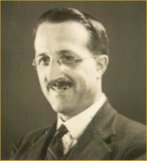
G.R.C. These passages deal with divine service.
- Until now we have been engaged with the great High Priest and His service – that which He alone could carry out;
- but these passages contemplate the saints serving.
- The word ‘serve’ in chapter 12: 28 means priestly service; it is one of the words sometimes translated ‘worship’. It is so translated in chapter 9: 14,
- “how much rather shall the blood of the Christ, who by the eternal Spirit offered himself spotless to God, purify your conscience from dead works to worship the living God”.
- This is worship in the sense of public priestly service.
- From that standpoint everything we do in public service Godward – giving thanks, singing, or whatever we do – is part of the worship.
- The other word for worship, in John 4, involves adoration or prostration of soul. And of course the two should never be separated. The Lord Jesus says in the temptations,
- “Thou shalt do homage” – that is the word for adoration –
- “to the Lord thy God, and him alone shalt thou serve” – that is the word for priestly service – Matthew 4: 10.
- Both words, therefore, occur in that verse; and the verse shows that they are inseparably connected.
- So, as I say, these passages deal with the saints serving as priests. And the order in which they come, that is chapters 12 and 13 following chapter 10, indicates what is the truth, that
- habitual entrance into the holiest underlies acceptable service.
- It enables us to take up intelligently the public, priestly service of God. And we are to do so as indicated here – with reverence and godly fear.
- Then chapter 13 indicates the position of the service of God, that this priestly service is carried on outside the camp.
- There is much in the camp which professes to be the service of God, but the true service of God can only proceed outside the camp. After showing that position, it goes on,
- “By him therefore let us offer the sacrifice of praise continually to God, that is, the fruit of the lips confessing his name”.
- This shows that the service is vocal. The fruit of the lips conveys what is vocal. Then follows the
- “doing good and communicating of your substance … for with such sacrifices God is well pleased”.
- These activities are continuous. Just as of old there was the continual burnt offering and the continual incense, so now there is to be the continual service maintained.
- But in chapter 2 we have the greatest form of the service, that is, in the assembly; the Lord Himself directing everything in it, like the king of old under whose direction the singers served 1 Chronicles 25.
- So it says, “in the midst of the assembly will I sing thy praises”.
F.W. Is the kingdom used for Christ’s glory?
G.R.C. The kingdom is a very great matter. It goes into eternity.
- God Himself is the great King, and I think that in the holiest we get an outlook on a kingdom which cannot be shaken. We have it stated in this chapter in certain words, verses 22 and onward;
- but when we are in the holiest with God, we have an outlook with Him over this divine realm of which He is the Centre.
- There we find out what these things really mean –
- mount Zion;
- the city of the living God, heavenly Jerusalem;
- myriads of angels, the universal gathering;
- the assembly of the firstborn;
- God judge of all;
- the spirits of just men made perfect;
- Jesus, mediator of a new covenant;
- the blood of sprinkling speaking better than Abel.
- It implies that we are with God at the centre, and we are looking out on the vast range of things of which He is the Centre – His kingdom.
J.P. Did you say that true service can only be carried out from impressions received in the holiest?
G.R.C. That is what I believe. What do you think?
J.P. It is a very important matter. Would you say more?
G.R.C. Well, I think there may be the idea in some of our minds – one has had it oneself – that in our approach, we are to serve at the altar of burnt offering, and then to serve at the incense altar, and then we reach the holiest
- That is not the way the truth is presented.
- We come by way of those altars – but not as serving. We come by way of those altars; they remind us of how Christ has served.
- Entrance into the holiest does not depend on our service at all; it depends on Christ’s service, what He alone could do.
- So that the first thing in approach is to pass right through.
- It is of the utmost importance to understand that our entry into the holiest does not depend upon our service at all:
- it depends upon Christ and the offering of Himself, and upon His present service of help and intercession.
- So we are to go right in, as having a true heart and full assurance of faith.
- And having gone in to God, and being before Him, we can take up the service acceptably. We know how to pray and we know how to praise, once we have been in the holiest.
- We need a fresh touch of the holiest continually to keep our prayers and our praises fresh.
J.P. It is very affecting. I believe if we understood it more there would be an entirely different tone to our service, not only assemblywise, but, would you say, householdly too?
G.R.C. I would, because what is in mind is this continual service. Our personal and household approach to God, if we are right, will always begin with direct entrance into the holiest.
J.H. Do you think that from his experience on the holy mount Peter may have received rich impressions as to the kingdom not to be shaken?
G.R.C. I am sure that is right. And we receive rich impressions in the holiest.
C.D. You have spoken of the holiest being available to one as soon as he is converted, and I was wondering whether the thief got a sight of it when he says,
- “Remember me, Lord, when thou comest in thy kingdom”, Luke 23: 42?
G.R.C. It could hardly be the holiest there. But light had dawned upon his soul that there was a kingdom of which the suffering One at his side was the Centre.
Ques. Why is the kingdom brought in here? Has it to do with moral order?
G.R.C. In one sense there is nothing greater than the kingdom. It is eternal. God Himself is the great King, as it says here – the Judge of all.
- In this passage it does not mean Judge of all merely as acting against evil. Any true king, even in an earthly sense, is the judge of his kingdom.
- He is the final arbitrator in all matters of justice; the upholder, in other words, of what is right.
- And that is the idea – God is the Centre, the Judge of all; this ensures that everything in that kingdom is in perfect equity.
F.K.C. What about the kingdom in 1 Corinthians 15? Does that which you have in mind go through to eternity?
G.R.C. Yes. It says, “then the end, when he gives up the kingdom to him who is God and Father”, 1 Cor. 15: 24.
- Then later it says that He is placed in subjection, that God may be all in all. Later still in the chapter it says,
- “flesh and blood cannot inherit God’s kingdom”, verse 50,
- shewing that, in its final setting, the kingdom of God is outside of flesh and blood conditions.
J.R.H. Would the reference, “receiving a kingdom not to be shaken”, show that this kingdom really goes beyond the present heavens and earth?
G.R.C. It is eternal in character, and embraces heaven and earth.
- The Jews looked forward to an earthly kingdom, but the kingdom of God embraces heaven and earth. So the shaking in verse 26 includes heaven –
- “Yet once will I shake not only the earth, but also the heaven”.
- So that everything is going to be shaken, in heaven and earth, that God may rule over all.
Rem. We are brought into this kingdom which cannot be shaken.
G.R.C. That is right. It will be manifested in the present heaven and the present earth as the vindication of Christ and of God;
- but it takes its final form in the new heavens and the new earth. The city of the great King is still there.
- “And I saw the holy city, new Jerusalem, coming down out of the heaven from God, prepared as a bride adorned for her husband”, Revelation 21: 2.
T.L.S. Do you think it suggests, too, that we are brought into a realm of great resources, and that we have plenty to carry on with in the service of God?
G.R.C. I am sure that would be one feature of the kingdom. And we have come to it, you see.
- Some may think, as we read this passage, How have I come to it? I have not much realisation of it.
- That is because you have not been in the holiest. If you are in the holiest, you are in the presence of the One who is the Centre of this great realm of things; the One who calls the things that be not as though they were.
- It is all complete to Him; and if you are with Him in the holiest it becomes complete to you.
- The more we habituate ourselves to being there, the more we shall become accustomed to looking out on this vast realm of glory.
W.T.L. Would it have the effect in that way of stabilizing us as to the service of God?
G.R.C. That is just it – “receiving a kingdom not to be shaken”; we are already receiving it.
- But we are receiving it vitally as we habituate ourselves to coming into the holiest, and being with God; so that we are with Him in His outlook. We realize then that we have come
- “to mount Zion; and to the city of the living God, heavenly Jerusalem; and to myriads of angels, the universal gathering; and to the assembly of the first-born who are registered in heaven; and to God, judge of all”.
- We are in His presence. And then,
- “and to the spirits of just men made perfect”.
- They could not be made perfect without us, it says: we have come to all the Old Testament saints; they are ours. And we have come to,
- “Jesus, mediator of a new covenant”, –
- a covenant which is always fresh – that is the force of the “new”
there
- – “and to the blood of sprinkling”
- – the blood of sprinkling affects the whole system. God looks out on a system which in every way has been purified with blood.
C.A.M. In 1 Timothy 1, after referring to his sinnership, Paul says,
- “Now to the King of the ages, the incorruptible, invisible, only God, honour and glory to the ages of ages. Amen”, 1 Timothy 1: 17.
- What a striking way to begin that epistle!
G.R.C. It is. He is dealing there with the house of God, which is the same subject as we are on. It says in the scripture read this morning,
- “having a great priest over the house of God”, Hebrews 10: 21.
- The holiest is the innermost part of the house of God.
- Paul is dealing, in Timothy, with the public conduct of those who form the house; and therefore he brings out immediately the greatness of the One who dwells in it.
- He is, “the King of the ages, the incorruptible, invisible, only God”.
- It is the royal residence. And the more we get a sense of the greatness and the majesty, the more we are amazed at the fact that Christ Jesus came into the world to save sinners; and Paul says, I am the chief.
- We would all gladly take that place if we understood better the majesty and yet the grace of God. The throne is something we might well think about.
- Isaiah, “saw the Lord sitting upon a throne, high and lifted up; and his train filled the temple”, Isaiah 6: 1.
- And the Seraphim were there saying, “Holy, holy, holy”. The Trinity is in mind; yet we know the One who occupies the throne. But the point is, it is the throne of God.
- “Holy, holy, holy is Jehovah of hosts; the whole earth is full of his glory!” Isaiah 6: 3.
- That was Isaiah’s impression. The idea of heaven and earth had not yet come fully into view, and so he says,
- “The whole earth is full of his glory”.
- What a view then we should get, if we were thus in the temple, in the holiest – we who know God’s will as to heaven and earth!
A.J.D. Peter in his second epistle says,
- “but, according to his promise, we wait for new heavens and a new earth, wherein dwells righteousness”, 2 Peter 3: 13.
- Is that the thought of the eternal kingdom?
G.R.C. It is the kingdom in its eternal setting.
- Hebrews, no doubt, has the kingdom in its millennial setting primarily in mind; but then the great items mentioned, such as
- the city of the living God, the heavenly Jerusalem; myriads of angels, the universal gathering; and the assembly of the firstborn, registered in heaven:
- all belong to eternity.
- They are displayed in the world to come, in the millennial reign, but they all belong to eternity, and pass into eternity.
F.W. Would such a kingdom involve coming under the influence of such a blessed King?
G.R.C. That is the idea. God is the King –
- “God, judge of all”. He is the Centre.
- He is viewed here as the One who maintains everything in absolute equity, throughout the millennium, but also through all eternity. He is the King. David says,
- “thou art exalted as Head above all”, 1 Chronicles 29: 11.
- The title Head, as applied to God, includes kingship.
G.H.P. Is there any connection between receiving a kingdom, and what it says in Revelation 1: 6, “made us a kingdom”?
G.R.C. I believe the verse in Revelation implies that we have part in royalty. It is not simply that we are subjects of the kingdom, but that we have part in royalty. It says,
- “and made us a kingdom, priests to his God and Father”.
- We are a royal priesthood; and that bears on what we are engaged with now, that is, the way we are to function as priests in the light of having received a kingdom which cannot be shaken.
- If I kneel down to pray, and do not enter the holiest, I begin to think of my needs and of the difficulties of the day before me. But prayer for personal need is not priestly service.
- But if I have been in the holiest with God, and have had an outlook on the kingdom which cannot be shaken, I begin to pray, not in relation to my things at all, but in relation to His interests, which must go through.
- I pray for all saints, and for the whole realm of divine interests; and when I come down to my interests, they assume very small proportions.
- I have a sense, when I reach down to my things, that He will readily care for them.
J.P. Is that the force of the verse at the end of these great lists of things?
- “See that ye refuse not him that speaks”,
- or, as the footnote reads, ‘excusing themselves, declined’.
- Do you think that in the holiest we will be conscious of a divine communication to us?
G.R.C. I think we would. God speaks from off the mercy-seat, from between the cherubim;
- it is wonderful to get such communications; they would keep us in movement every day. Earlier in this epistle it says,
- “Today, if ye will hear his voice”, Hebrews 4: 7.
- God has got something to say today, not simply something to say to me about my state. He may have something to say about that;
- but He has something to say to me about His great realm of things to keep me in movement. And it is, “today, if ye will hear his voice”.
Ques. Does the assembly of the firstborn refer to the kind of persons there?
G.R.C. Yes. They are really the nobility, the highest ranking persons in this great kingdom.
Ques. In 1 Corinthians 4, Paul says, “I would that ye reigned”, 1 Corinthians 4: 8. Has this in mind the kingdom?
G.R.C. Yes. Those who are marked by royalty now suffer. The imperial colour is purple.
- The Lord was given a purple robe in the gospel of Mark. It was a purple cloth which covered the altar of burnt offering;
- this shows that the imperial colour, in testimony, is suffering.
- A man who is capable of suffering for God now, proves that he is a royal personage; the power and dignity of a king are with him. So it says,
- “and made us a kingdom, priests to his God and Father”, Revelation 1: 6.
- Royalty is involved in that. It is the suffering priesthood.
C.A.M. Is it not remarkable that the Holy Spirit says that Lydia was a seller of purple in the city of Thyatira, and she was now in Philippi.
- I wondered if that was a reference to the fact that royalty was going to characterise all the happenings of that chapter?
G.R.C. It is remarkable because in Revelation Thyatira is connected with the system which claims the purple.
- The Pope wears the triple crown, as the king of kings in place of Christ, assuming to be the Vicar of Christ.
- It is a terrible assumption.
- But, as you say, the purple, according to God, belonged to Philippi where Paul was in prison; and the temple service was going on in prison.
Ques. Does Psalm 48 help us in that,
- “Beautiful in elevation, the joy of the whole earth, is Mount Zion, on the sides of the north, the city of the great king”.
- Is the City characterised by the King Himself?
G.R.C. The Psalm begins,
- “Great is Jehovah, and greatly to be praised in the city of our God, in the hill of his holiness”.
- That is what marks the city of our God.
J.B. I would like you to open up what is meant in 1 Corinthians 15 by the expression,
- “that God may be all in all”.
G.R.C. In the millennial reign Christ’s official glories will be in great prominence. The title, ‘the Christ’, means that He fills every office, and magnifies every office which God has established;
- because the anointing covers the prophet, priest and king;
- and His official glories will, as I say, be very prominent in the world to come. It is the great day of Christ’s vindication.
- But, before the eternal state, He gives up the kingdom to Him who is God and Father; that is the mediatorial kingdom.
- His mediatorship must continue; but the mediatorial kingdom is given up.
- The idea of the mediatorial kingdom is that it is in the hands of a Man; and a Man, speaking with all reverence, is prominent in His official glories.
- But in the eternal conditions those glories are allowed to recede. I am not saying they are forgotten; but they are no longer in prominence. So in Revelation it says,
- “And I saw a great white throne, and him that sat on it”, Revelation 20: 11.
- It does not say who He is. It does not say He is the Christ – no official glory is mentioned. It is just One sitting on it.
- “And I saw a great white throne, and him that sat on it, from whose face the earth and heaven fled, and place was not found for them”.
- It is the throne of God; and although we know who the Sitter on the throne is, it does not tell us. We know who it must be, because it speaks of His face.
- It must be Jesus who is sitting there; but He is sitting there as representative of God, as we may say.
- Similarly in Revelation 21: 5 we know who the Occupant of the throne is; but He is speaking as God. It is a question of God – God known as the great King.
Ques. Is that the kingdom which Daniel speaks of,
- “and his kingdom that which shall not be destroyed”, Daniel 7: 14?
G.R.C. The kingdom is a continuous matter from the time of its establishment, and has its phases.
- There is the mediatorial phase in the millennium,
- and then the eternal phase.
- At the present time it is in mystery.
- But I would think that it is primarily the mediatorial kingdom which is in mind in Daniel. Perhaps you would read the verse.
Rem. “And in the days of these kings shall the God of the heavens set up a kingdom which shall never be destroyed”, Daniel 2: 44.
G.R.C. It is a remarkable passage. It is in the days of the Gentile kings that God sets up a kingdom which will never be destroyed, but which goes on forever.
- What would primarily be in mind would be its present form, in mystery; and then the mediatorial kingdom.
- A stone cut out without hands strikes the feet of the image, and all the metals and materials which compose the image become as chaff in the summer threshing floor; and the stone becomes a great mountain, and fills the earth.
- That refers to Christ coming and establishing the direct rule of God in the earth in place of His indirect rule through the Gentile empires.
- He will come to establish the direct rule, which in the first instance, will be the millennial kingdom. But then He gives up that kingdom in due
course, and the kingdom takes on its final and eternal character.
Ques. Does 1 Kings 10 help us in these verses? I notice that the service is linked with the kingdom here. The Queen of Sheba says,
- “Happy are thy men! happy are these thy servants”.
G.R.C. That would bear specially on our last scriptures as to what goes on in the assembly. She saw, typically, the assembly ordered under King Solomon;
- and, according to Ephesians 3, the principalities and authorities in the heavenlies see the ordering of God in the assembly under her glorious Head.
- The Queen of Sheba, an earthly principality, marvelled at the wisdom of the earthly Solomon;
- and so at the present time heavenly principalities marvel at God’s wisdom, seen in the assembly under the headship of Christ.
J.A.P. I was wondering whether the receiving of the kingdom brings in responsibility on our part? It says that David received the kingdom; but then he had to learn the lesson about the due order.
G.R.C. So it says here,
- “Wherefore let us, receiving a kingdom not to be shaken, have grace, by which let us serve God acceptably with reverence and fear. For also our God is a consuming fire”, Hebrews 12: 28, 29.
- God tolerates nothing in His service which is out of keeping with the holiest. Nothing can go through the veil which has been ended judicially in the cross of Christ – in that great burning.
- “Our God is a consuming fire”;
- and we see what that means in the death of Christ. It is not only the burning on the altar.
- The consuming fire was when the body of the victim was burned outside the camp. A different word used for burning in these two cases.
- The burning outside the camp represents the unsparing judgment of God, the victim being reduced to ashes, as is seen in the burning of the red heifer.
- We should ever keep in mind that God does not spare that which He has brought to an end judicially, at such cost, in the cross of Christ.
J.A.P. So in Leviticus 10, when the two sons of Aaron died, it says,
- That state should be with us – the rebuke of God against all that is of the flesh in the service.
E.M. It is remarkable that at the end of Matthew, the great kingdom gospel, we have the answer to this, the veil of the temple being rent and the earth shaken; and then we have a man that fears greatly.
G.R.C. Very good. And if you think of this continual service, taken up in our private chambers and in our household devotions, it raises the question as to our way in every department of life.
- We are not priests just on certain occasions: we are priests all the time.
- So that, as we enter the holiest and take up divine service in a formal way, morning by morning and evening by evening – I am using the word ‘formal’ in a right sense: we may enter the holiest at any time during the day when we have a moment to spare,
- but there are times when we can allot time for approach and service –
- it would surely lead us to see to it that all our appointments and habits, personal and household, are in keeping with our God, and in accord with the priesthood.
J.A.P. That is very helpful; and I would like to ask you, do you think it is right for brethren to come to meetings at night without having been in the presence of God?
- We come from our business and household matters, and some of us may come to the meetings rather carelessly without having been in the presence of God. What would you say about that?
G.R.C. Well that is the importance of the evening oblation. The continual service which we are speaking about was maintained by the morning and evening oblation
- – the continual burnt offering and the continual incense – see Exodus 29: 38, 30: 10.
- What you are referring to, at the close of the active day, would answer to the evening oblation. In Palestine at sundown, which did not vary much throughout the year, the active day would cease.
- And at the close of the active day – between the two evenings – there was to be the oblation.
- We need to see where we can fit it in, in our arrangements, for, in modern life, the circumstances of persons differ much.
- I do not know whether any brother or sister gets through the active day without some sense of humbling.
- We commence the day in the presence of God, and desire to walk all through the day as those who belong to the holiest.
- It is a wonderful conception – to walk through this world as one who belongs to the holiest, whose place is within the veil.
- We come to the end of the day, and we may feel how many things have happened which are not in keeping. But then, all can be put right before God at that point.
- The continual burnt offering reminds us of our unchanging acceptance, so that the way is still open into the holiest.
- And as we enter there, matters of the day are seen according to God; our souls are adjusted; we get fresh impressions of glory, and so the divine service goes on.
- We can take up afresh then, as free from pressure, the intercession for all saints, and for all men.
- And thus we are also prepared to make the most of the meditative part of the day, which is really the beginning of the new day.
- The day begins in the evening. The day begins with the meditative part, and we cannot make the most of that if we do not observe the evening oblation.
J.H. If we knew about this, do you think there might be more power to affect one another? I was thinking of Luke 11,
- “And it came to pass as he was in a certain place praying, when he ceased, one of his disciples said to him, Lord, teach us to pray”, Luke 11: 1.
G.R.C. Quite so. We should indeed affect one another. And I think it would greatly affect our evening meetings.
- We should not come there burdened with the matters of the day. They would have been settled, and we would have been with God.
W.T.L. What you are saying would not hinder a brother going straight from his work to the meeting, if compelled by necessity, would it?
G.R.C. I was just thinking of that. If one has to do that, he would look for mercy and grace from God to enable him, even if only for a moment, to enter the holiest on his way.
- We can be quite sure, that, if we come boldly to the throne of grace, we shall receive mercy and find grace for help in such circumstances.
- The throne of grace is not simply to help me get through my path here; it is to help me in such manner that I am not hindered from going into the holiest.
- “Let us approach therefore with boldness to the throne of grace. that we may receive mercy, and find grace for seasonable help”, Hebrews 4: 16.
- It is a time of need if I have to go straight to a meeting – a time of very real need. There is grace to enable me, in my spirit, to enter the holiest.
- And if I have not much time for it, there are brethren who have; and
they are going to help me, by their presence and influence, when I get to the meeting. That is why those who have got time should give time.
A.J.D. So the way into the holiest is always open.
G.R.C. Just so.
Ques. How are you going to fit this in with the glad tidings? How much we need to be helped as to the glad tidings of the glory in power.
G.R.C. That is where royalty comes in. We are a Kingly priesthood, as it says,
- “But ye are a chosen race, a kingly priesthood, a holy nation, a people for a possession, that ye might set forth the excellencies of him who has called you out of darkness to his wonderful light”, 1 Peter 2: 9.
- The only effective preacher is a priest. Paul served God – that word is priestly service – in his spirit in the glad tidings of His Son, Romans 1: 9. A priest was going forward with the gospel.
H.O.E. Is it not possible to be with God in the active part of the day when we are doing our business? We have the Spirit present with us, and we have proved His help in that way.
G.R.C. The Spirit is with us in all these matters. Even in the discharge of our ordinary obligations,
- “the righteous requirement of the law should be fulfilled in us, who do not walk according to flesh but according to Spirit”, Romans 8: 4.
- So that we can walk according to Spirit, and be conscious of His presence all through the active day. And that will help us much.
- Then, of course, if there are spare moments during the active day, the holiest is open.
J.P. “For the kingdom of God is not eating and drinking, but righteousness, and peace, and joy in the Holy Spirit”, Romans 14: 17.
- Does that not give us a sense of the Spirit with us in maintaining us in righteousness throughout the whole day?
G.R.C. Quite so. The Spirit is with us in our things, to enable us to discharge them in righteousness before God and men, so that there may be no hindrance to our entering the holiest and functioning before God as priests.
J.P. So when we approach the service then, it is a matter of knowing that our service is acceptable? Is not this word ‘acceptable’ a very important one in our service?
G.R.C. Yes, and it could not be so apart from the Spirit, could it?
- “Their anointing shall be to them an everlasting priesthood” Exodus 40: 15.
- Everything the priest does is in the power of the anointing.
Ques. I was thinking of the sensitiveness of the Spirit. As we get on our knees there may be something which has been overlooked during the day, but He will bring it before our hearts at the close of the day.
G.R.C. He will. But what do you mean by the close of the day?
Rem. I fully agree with what you say, but it is just an opportunity when the close of the day comes.
G.R.C. What I am concerned about is that we should not leave the service we are speaking of until the time we go to bed. That is too late.
- The idea of it is, that it is the close of the active day, which in the East was sundown. In this country we cannot link it with actual sundown, but it is the principle of the thing which we should observe.
- “Let not the sun set upon your wrath”, Ephesians 4: 26,
- bears on what you have said. That time of the day is the time to get all these matters settled.
- If left until bed-time you miss the evening. You miss the evening of the new day, and the profit of the meditative part, because you have not put things right.
A.J.D. So that the evening oblation is at the end of the active day.
G.R.C. The end of the active day is not just bed-time.
Rem. It is between the two evenings.
G.R.C. That is the point, it is between the two evenings; that means between the close or evening of the active part of one day, and the evening which begins the new day.
F.K.C. With Daniel it speaks of the time of the evening oblation,
- “whilst I was yet speaking in prayer, the man Gabriel, whom I had seen in the vision at the beginning, flying swiftly, touched me about the time of the evening oblation”, Daniel 9: 21.
- The whole prophetic calendar was really unfolded in that atmosphere.
G.R.C. It is remarkable what divine communications there were at that time, as Daniel was observing the evening oblation.
J.S. You mean, that as soon as we are released from the responsible things which hold us our hearts go to their own home?
G.R.C. That is the idea.
Ques. Did not God say, “evening and morning”?
G.R.C. That is right.
H.B. You will remember that in Acts 10 Peter went up on the housetop to pray. There is a certain deliberateness about his movements, and thus God was free to communicate to him what He was about to do.
G.R.C. Very good. I think sometimes when the word ‘pray’ is used, it means the whole matter of the service – the whole matter of our communion with God.
- Undoubtedly, as we are speaking now, Peter would enter the holiest. In fact, it says,
- “an ecstacy came upon him”, Acts 10: 10.
J.A.P. In our house we have morning reading together at the beginning of the day; but in the evening we do not have reading together in a collective way.
G.R.C. But do you have household prayer?
J.A.P. Not in the evening.
G.R.C. I think you would find it profitable. I admit that in households you have to take up things as you find them.
- Those with young children have to get grace and wisdom from the Lord to do what is best, and fit things in when it is best.
- But as soon as the children are old enough to be brought into these things happily, I think it is good for the whole household to be in them.
- But, until that time, it is a question of arranging things as best one can.
- But I am sure that, if we give God His portion in this way, we shall get very great gain.
- It is not a question of a long reading. In fact there is nothing laid down in scripture about reading at all at the time of the oblation.
- It is good to read something, even a few verses because it gives God an opportunity to speak to us. We are not going to say a lot about it; we are listening to what He would say.
- And then we speak to Him. We want to hear Him speaking from off the mercy-seat, and we want to speak to Him.
- Then how good it is, having entered His presence, and thus having His outlook, to pray both morning and evening in relation to His interests.
- The active day is finished, you see, in your home town, but it is beginning somewhere else, worldwide. And you are thinking too of government worldwide; not only in the morning, but in the evening.
A.J.D. Is the household held on the basis of sanctification, as we proceed on those lines?
G.R.C. Practical sanctification? I am sure that is so. Coming into God’s presence frequently in your own home – if you do it in spirit and truth – will put your house in order. You will begin to see that anything inconsistent with God has got to go out.
J.H. Is that not a remark attributed to F.E.R., that if he could have had life over again he would have read less and prayed more.
- It indicates, not depreciation of the feature of reading, which is good, but an appreciation of the importance of the matter which we are now considering.
G.R.C. I believe that is so. I cannot help feeling that what we are considering now is one of the most important of matters; otherwise, we tend to make christianity simply the meetings.
- And then the meetings are not what they ought to be. The meetings will never be what they ought to be if we make our christian lives simply the meetings.
- Our christian life is every day – “Today if ye will hear his voice”.
Ques. Is it important that our young brothers and sisters, and indeed all the sisters, carry out what we are saying, as well as the brothers who have the active responsibility in the meetings?
- There are many very young in fellowship. Would you not encourage us all to enter the holiest at the end of the active day?
G.R.C. I certainly would. I would greatly encourage the younger brethren to take this up, because some of us have missed many years of it.
Ques. I would like to enquire about a household where the husband is away. Can the wife carryon in his absence?
G.R.C. I would say so. What do you think?
Ques. I was just inquiring. I wondered about the matter of the wife praying and carrying on the reading.
G.R.C. If the children are young, it is her business to carry on. If she has sons who are committed to the Lord, she would, of course, give them their place as to audible prayer. It depends just how the household is constituted.
Rem. I do not think you can lay too much stress on our entering the holiest, so there may be power with us; that we may get real help in our souls, and not be just merely theoretical.
G.R.C. It is thus you really live. You are living day by day in relation to God – living by every word of God; and then you can see how assembly service according to chapter 2: 12 would be enriched.
T.L.S. Are we always helped in looking at things from the normal standpoint?
G.R.C. That is the way we are helped. We may find at times that we cannot do all that we would like to do; but let us get the normal idea, and then we will do what we can.
Ques. When Peter and John were going into the temple, it says of the man lying there,
- “seeing Peter and John about to enter into the temple, asked to receive alms. And Peter, looking steadfastly upon him with John, said, Look on us. And he gave heed to them, expecting to receive something from them. But Peter said, Silver and gold I have not; but what I have, this give I to thee: In the name of Jesus Christ the Nazaraean rise up and walk”.
- Is that the effect and result of having been inside the holiest?
G.R.C. I am sure it is. He could say, “Look on us”. What men they were! And we should appear in this world as those who belong to the holiest, and who have come from it.
Rem. “They recognised them that they were with Jesus”, Acts 4: 13.
Ques. If we resorted more to the holiest, do you think we should have more doxologies – outbursts of praise to God spontaneously?
G.R.C. I am sure we should. We cannot separate the holiest from praise and priestly service.
- As in our spirits in the holiest, conscious of the presence of God, we begin to serve. You cannot make rigid separations as in the type.
- If we enter the holiest and hear His voice, surely there will be an outburst of praise, whether in our household or personal approach. And that is the idea of service at the altar,
- “By him therefore let us offer the sacrifice of praise continually to God, that is, the fruit of the lips”, Hebrews 10: 15.
- It is what is expressed with the lips.
A.J.D. So that in taking up our ordinary business matters in the day, as common people, we are priests at the same time.
G.R.C. Exactly.
Ques. When John says,
- “I became in the Spirit on the Lord’s day”, Revelation 1: 10,
- is that different from what we have in relation to the holiest?
G.R.C. I think it may be something similar. It is viewed as John’s own act – “I became in the Spirit”.
- The Lord says later, “I became dead”. That was His own act.
- John says, “I became in the Spirit on the Lord’s day”. The Spirit is available for this. It is a question of becoming in Spirit.
- Of course, it appears that he was completely abstracted; I do not say we could be quite in the state he was, in our ordinary household devotions.
- But this book shows that we can enter the holiest; and it involves, in some measure, being in Spirit.
- In fact, from the divine side, we are not in flesh but in Spirit. From the divine side, it is the state of the saints. But what do you say about it?
Rem. It is a challenging matter to me, to know what it is to be in Spirit.
G.R.C. I think we ought to know more about it.
- “I became in the Spirit on the Lord’s day”;
- surely he would be in the holiest; but he heard a voice behind him.
- For the moment, instead of going on with what he would normally be engaged with in the holiest, he heard a voice behind him;
- and he had to turn round, and look at the assemblies here in responsibility. But he got a remarkable view of the Lord.
J.P. In connection with the holiest and the morning and evening oblation, if some of us were truthful we might have to admit that
- the position of our service, as in chapter 13: 13, would be the answer to why we are not free in relation to the evening oblation, and so on.
- Perhaps you would say more as to the position of the service – outside the camp.
G.R.C. I believe the true service of God is only carried on outside the camp.
- It is only there that God is worshipped in spirit and truth. The Lord indicated it to the woman,
- “Woman, believe me, the hour is coming when ye shall neither in this mountain nor in Jerusalem worship the Father”.
- True worship is outside of all these things. And that is where Jesus is, as far as the world is concerned.
- In another sense, of course, He is in the presence of God. He has
entered in. But the One who has entered in, as regards this world is outside; and we go to Him without the camp.
Ques. Considering the day in which we are, would you stress that there is but one position – outside the camp?
G.R.C. Yes, I would say that.
Ques. Are you giving “outside the camp” a spiritual application?
G.R.C. I want to give it a very practical one.
J.P. Personally, one feels challenged as to the bearing of “outside the camp” on our day-to-day relations with men.
- It affects our whole lives, and perhaps has a good deal to do with the sapping of spiritual vitality in carrying out the evening oblation, and our freedom to go into the holiest.
G.R.C. I do not think it is merely a physical separation.
- We may maintain a physical or formal separation, and say, We are the separate people; we have gone outside.
- But it involves nonconformity to the world in every aspect, in conversation and outlook, dress and everything else.
- It is useless to talk about having taken a position without the camp if I am just imitating the world in my manners and deportment.
D.M. Would Daniel be a model for us –
- “he kneeled on his knees three times a day, and prayed, and gave thanks before his God, as he did aforetime”, Daniel 6: 10?
- Yet he was a busy man.
G.R.C. All the affairs of the kingdom pressed upon him, but it did not affect the fact that three times a day he prayed and gave thanks, with his windows open toward Jerusalem.
- There was excess there. And some of the sisters are privileged to act likewise.
- Brothers living in big cities are often away from home all day; they may not have a room to themselves in the factory or office. What can they do at midday?
- But sisters engaged on domestic duties can get alone with God, even if only for a brief time.
The body of the sin offering was burnt outside the camp, and it says that it was to be burnt in a clean place; and the only clean place in this world is with Christ outside the camp.
- Scripture also makes clear that only clean persons can have part in the service of God; therefore the service of God is with those who have gone forth to Him, bearing reproach.
W.T.L. Would you say that outside the camp would involve a great deal more than not being in Trade Unions or other similar associations?
G.R.C. It involves the reproach of Christ; and in order to escape that reproach we can easily take on the habits and fashions of the world.
- But, if we fail to accept the reproach of Christ, we give up one of the greatest privileges which will ever be ours, and forfeit the present joy of approach to God and priestly service.
F.K.C. In Numbers 19: 5-6 it says,
- “And one shall burn the heifer before his eyes; its skin and it flesh, and its blood, with its dung, shall he burn. And the priest shall take cedar-wood, and hyssop, and scarlet, and cast them into the midst of the burning of the heifer”.
- Would that be in line with what you are now speaking of? The cedar-wood, hyssop, scarlet all go into the burning.
G.R.C. That is it. It is a remarkable type, and it is mentioned, as we have noticed, in Hebrews 9: 13,
- “a heifer’s ashes, sprinkling the defiled”.
- It is the only time that the burning is said to be done before someone’s eyes.
- The ordinary sin offerings were burnt outside, but what is stressed as to the heifer is that is was to be burnt before Eleazar’s eyes.
- We are to have this terrible burning, which Christ endured, before our very eyes; and we are to see that all we could boast in has gone into it.
- The cedar and hyssop and scarlet have all gone in the burning, in order to produce the ashes for the water of purification for sin.
Ques. We may maintain separation in business, but, if we isolate ourselves from men, we may miss the privilege of bearing reproach.
G.R.C. Quite so. The Lord did not isolate Himself. I know that it is sometimes a temptation to keep out of sight in order to escape reproach.
- Of course, we would not run into suffering needlessly, but the testimony requires that we should show ourselves. Elijah is told to show himself to Ahab.
- We would not do it unnecessarily; but we are to testify, and that is where the kingliness of the priesthood comes in; you are prepared for the suffering and reproach involved in testimony.
J.R.H. When you speak of the burning being before Eleazar’s eyes, have you in mind the spiritual discernment of the saints?
G.R.C. Yes, I think that. It is, therefore, always a present matter to us, and it would bear also on our bodies being washed with pure water.
- It is a thing viewed from God’s side as complete. The word to Peter in Acts 10 is,
- We accept the gospel, and God regards us as completely cleared from the old man.
- We are “buried with him in baptism”, Colossians 2: 12.
- We profess to have put off the old man and to have put on the new. But it is a question of the practical working out of it;
- and the practical working out of it means that we are outside the camp in our conduct, as well as in an ecclesiastical way.
G.A.S. And the transforming by the renewing of your mind goes along with that, does it not? Does that take place in the holiest?
G.R.C. The Spirit would transform us by the renewing of our minds. He brings divine thoughts before us with a view to transformation, so that we are no longer conformed to this world; we have something much better.
Ques. Daniel’s prayer three times a day meant, not only testimony, but being put in the lion’s den.
G.R.C. He was not seeking publicity, but he did not shrink from it.
- Now this matter of outside the camp is a very touching thing. Our privilege is inside, but the corresponding place is outside. Our place is within the veil.
- Well, the One who secured that place within, for us, suffered outside; and He is still outside; and we are to go forth to Him without the camp.
- And there we come into the place where we can carryon this great service. It does not go on according to God, anywhere else.
Ques. Do you mean, by Him being outside, that He is outside of everything that is of the old man and of the world, and that we have to go forth to Him without?
A.J.D. The wording of that verse is very affecting.
- “Wherefore also Jesus, that he might sanctify the people by his own blood, suffered without the gate”, Hebrews 13: 12.
G.R.C. It is, indeed, very affecting. I am afraid we shall not have time to touch chapter 2,
- but it really affords the climax of what we are engaged with, because, while there is the continual burnt offering and the continual incense to be maintained, it all bears on assembly service.
- The great response is there. Whatever we may enjoy in our private devotions; everything is enhanced in the assembly. So the word there is,
- “I will declare thy name to my brethren; in the midst of the assembly will I sing thy praises”, Hebrews 2: 12.
- That is the great end in view in the service of God. And, under the hand of Christ, there will be great substance in the ordering of the service.
- And we shall reach the highest levels of the service under His direction, as He says,
- “My Father, and your Father, and my God, and your God”.
Page Top Reading Top
LIVES REGULATED
BY THE WILL OF GOD |
|---|
Address by G. R. Cowell at Toronto, October 1957
Hebrews 10: 5-7; Romans 12: 1-2
2 Timothy 2: 3-6, 15, 21, 24-26
Memorials 2: 122-137 |
|---|
I was asked some weeks ago, dear brethren, as to the choice of a career. I suppose there are young people here tonight who are thinking about their career.
- The fact of the matter is there is only one career for the Christian; it is the most blessed and glorious career that any of the human race could have.
- The Christian’s career is to do the will of God; and, if we accept that, it makes things very simple.
- God has called us out; He has called us in; He has called us up. It is the will of God that we should pursue our calling with all our might.
- J.N.D’.s hymn speaks of the calling out. He says,
- “Rise, my soul, thy God directs thee”.
- In another hymn he says,
“This world is a wilderness wide; we have nothing to seek or to choose”.
- Our path, you see, is the will of God. God has chosen it for us. And we have a great Model in the Lord Jesus.
If we take account of Him, our souls will be moved, and our one desire will be to pursue the path of God’s will. That is why I began with Hebrews 10: 5,
- “Wherefore coming into the world he says, Sacrifice and offering thou willedst not; but thou has prepared me a body. Thou tookest no pleasure in burnt-offerings and sacrifices for sin. Then I said, Lo, I come (in the roll of the book it is written of me) to do, O God, thy will”.
- The Lord Jesus came into the world with only one object – to do God’s will. And for that He needed a body. He says,
- “thou has prepared me a body”.
- He took that body with that one object in view, that in that body He would carry out the will of God.
- And a tremendous amount devolved upon Him – all that was written in the roll of the book, the book of eternal counsel. All devolved on Him as to the carrying out of God’s will.
- How much it cost Him! What He uttered shows that He fully understood what it would cost Him.
- The will of God meant to Him that He should be the great anti-type of all those offerings by fire, of old.
- “Sacrifices and offerings and burnt-offerings and sacrifices for sin thou willedst not, neither tookest pleasure in”.
- They were the four offerings by fire. How well He knew what was involved in His coming! He was to endure the fire; not only the fire on the altar,
- but that all-consuming fire of divine judgment, typified when the victim’s body was consumed outside the camp.
- Jesus knew this full well; and He took that body on purpose to offer it as a sacrifice;
- “by which will we have been sanctified through the offering of the body of Jesus Christ once for all”.
- Think of Him taking a body, and pursuing His path of service here in perfection; but all the time having in view what was coming at the end,
- that He was to be the great offering by fire, and that He was to endure all that that fire meant in all its reality.
- J.N.D. says, “All that God is, He is against sin”.
- And the Lord Jesus bore it all.
- “Him who knew not sin he has made sin for us”, 2 Corinthians 5: 21.
- It is by God’s will that we have been sanctified by the offering of the body of Jesus Christ once for all. Surely this leads out our hearts in worship and adoration to the Lord Jesus!
- What glory attaches to Him as the Sanctifier! He stands in His glory, yet in verse 11 He is linked with the sanctified.
- “For both he that sanctifies and those sanctified are all of one”, Hebrews 2: 11.
- What fruit He has secured for God already! By God’s will we have been sanctified; God has already the sanctified company, perfected as to their conscience.
- “For by one offering he has perfected in perpetuity the sanctified”, Hebrews 10: 14.
- God has a company, all of one with Christ, who have boldness to enter the holy of holies by His blood, by the new and living way. How much this means to God!
- His presence is already filled, as it were, with sanctified men. And how great the full result will be when the assembly is complete, and the sanctified company is actually in His presence in glorified bodies! What a great result!
- But then there will be not only the sanctified company, whose place is within the veil, but a universe secured for God as a result of this offering.
- His body was given for us; yet through the offering of His body, and the pouring out of His blood, a basis has been laid for a universe to come into blessing.
Now how does this bear upon us? Romans tells us. In chapter 12 the apostle says,
- “I beseech you therefore, brethren, by the compassions of God, to present your bodies a living sacrifice, holy, acceptable to God, which is your intelligent service”.
- We need bodies to carry out the will of God. The Lord took a body; it was prepared for Him; but then we have bodies. God needs our bodies.
- You may be able to say, My soul is saved. That is good. God has saved your soul, but what about your body?
- Your body is essential for the carrying out at the present time God’s will. So the word is,
- “I beseech you therefore, brethren, by the compassions of God, to present your bodies a living sacrifice”.
- And that is what I would beseech my brethren here tonight to do. I would beseech the young people to do it.
- You say, Well I am breaking bread; I broke bread when I was eleven, or twelve. But are you really thoroughly in fellowship?
- Romans 12 is the fellowship chapter. The fellowship we are in is the fellowship, or the communion, of the body of the Christ. It is also the fellowship, or the communion, of the blood of the Christ.
- You have got the benefit of the blood; it has brought great blessing to your soul; but what about the fellowship of the body of the Christ? Are you in that communion, vitally?
- If so, it means that according to your capacity you will be using your body, as He used His.
- And every week, as you partake of the bread, you are committing yourself to it – the communion of the body of the Christ. Every week there is a challenge to us as to how I am holding my body.
- I am professing to be in the communion of the body of the Christ; am I holding my body as He held His, for one purpose only, the will of God?
- God has called you into the fellowship of His Son. I have spoken of the way He has called you out, but He has called you in.
- “God is faithful, by whom ye have been called into the fellowship of his Son Jesus Christ our Lord”, 1 Corinthians 1: 9.
- But while He has called you into it, nobody forces you into it. Paul beseeches you, and we beseech you. We beseech you, by the compassions of God, to present your bodies a living sacrifice.
- You will note the way this is put. ‘Bodies’ is in the plural, and ‘sacrifice’ is in the singular. The typical reference here is to Exodus 25 when Jehovah says to Moses,
- “Speak unto the children of Israel, that they bring me a heave-offering”.
- It was material for the tabernacle. It was one great heave-offering; but everyone had part in it. And that is the point here.
- We present our bodies, one great living sacrifice; our bodies are all needed. It is not just a question of being here for the will of God as an isolated unit.
- You are not adequate for the will of God by yourself. That is not the point. The point is that you are with your brethren. In Romans 12 Paul is beseeching the brethren.
- We are all in this; we are all presenting our bodies a living sacrifice, holy and acceptable to God – one great living sacrifice, the great heave-offering.
- And it is our “intelligent service”. We know what the heave-offering is for. That is the meaning of ‘intelligent’. We have no doubt as to what is in God’s mind.
- Those people who brought the great heave-offering had no doubt as to what was in God’s mind. He said, ‘Let them make me a sanctuary that I may dwell among them’.
- And they brought the great heave-offering so that God might have His sanctuary, His dwelling place. And that is the point here.
- God wants dwelling conditions at the present time. And if He is to have them, the brethren must present their bodies, one great living sacrifice,
- for the formation, in a practical way, of God’s habitation; and this is their intelligent service.
- The only intelligent thing you can do is to surrender yourself fully to the great matter in hand, that God may have His tabernacle, in all its features, in each locality where we are. That is a great thing! Could there be anything greater?
It is remarkable that the presenting of our bodies is a priestly act; “your intelligent service”
- – that word means priestly service.
- It is one of the first great acts of priesthood. Until you have done this, you are not much good for anything else.
- We have spoken of carrying on priestly service day by day, and how things are apt to crowd it out; but, if the body is presented a living sacrifice, it will not be crowded out.
- God’s service will be the first thing, not left until last when everything else is finished and there is a little time left. In Malachi God says,
- “I am a great King”, Malachi 1: 14.
- And the force of what is said in that passage is that nothing but the best is acceptable to Him. It is a question of putting God first – making sure – that He gets His portion.
- But then it begins by the presenting of our bodies. A man who has presented his body puts God’s claim first. And so it goes on,
- “And be not conformed to this world, but be transformed by the renewing of your mind”.
- Now transformation is a wonderful thing. I hope there will be transformation as a result of our being together at this time. I hope there will be a great change with all of us.
- It is by the renewing of the mind, you see. If a man is thinking aright, he will do aright,
- “For as he thinketh in his soul, so is he”, Proverbs 23: 7.
- God brings to us the thoughts of His own mind to govern our minds; and the moment you get persons governed by the mind of God, there is a transformation.
- The word of God is both the great weapon in conflict and the great transforming power.
- It is the weapon the Lord uses when He comes out of heaven, the sharp two-edged sword going out of His mouth.
- If you could get the word of God to govern the minds of men at this present moment, war would cease, fear would go, and the conflict between good and evil would be over. The conflict is in men’s minds.
- The moment men think aright there will be a transformation. And that is going on with the saints now,
- “transformed by the renewing of your mind”.
- The Spirit is operating; and, as we give Him place, He brings God’s thoughts before us, so that we are thinking God’s thoughts.
- And as we think God’s thoughts, and let them control us, we are transformed.
And so the word is, “be not conformed to this world, but be transformed”.
- As God’s word comes to us, let it have its effect!
- We have to think of the negative first, because tomorrow the world will come in to crowd out of our minds what we have been having. Many things will come in.
- Scripture normally puts the negative first –
- “Be not conformed to this world”.
- The Spirit gives us power to put things away from us, and to allow the word of God to work out to full result.
- Perhaps you have largely been conformed to this world up till now. Be not conformed to it any longer; but let the word of God have its place in your mind, and you will be transformed.
- You will take on a different appearance. Maybe your home will take on a different appearance too. That is a wonderful thing – transformation!
- And there is no place where transformation takes place so remarkably as in the holiest. As we habituate ourselves to going into the holiest, we shall surely be transformed;
- and we shall want to be here in all our ways, manifestly, as those who belong to the holy of holies.
- It will become the great desire of our hearts to comport ourselves at all times as those who belong within the veil. What a wonderful thing! Transformed!
- If you want to get the good of these meetings, go into the presence of God and go over things there. Behold the glory of God in Jesus! And so the transformation goes on, all with a view that
- “ye may prove what is the good and acceptable and
perfect will of God” – and so to come out like Jesus.
Do not be vague about what the will of God is. If you go your own way you will prove just the opposite.
- You will prove that your will is a bad and miserable thing, which leads you to disaster.
- But if you are committed to God’s will, with your body presented, and yourself transformed by the renewing of your mind, you will prove that which is good and acceptable and perfect.
- Your path will be like the path of the just, which
- “is as the shining light, going on and brightening until the day be fully come”, Proverbs 4: 18.
- And so, as I have said, we need our bodies for the will of God. It is a question of my body. What am I doing with my body? Paul says in 1 Corinthians 6: 19-20,
- “Do ye not know that… ye are not your own? for ye have been bought with a price: glorify now then God in your body”.
- Prior to that he asks two pertinent questions which bear on the subject in hand:
- “Do ye not know that your bodies are members of Christ?” verse 15, and,
- “Do ye not know that your body is the temple of the Holy Spirit?” verse 19.
- This bears on the matter of the will of God. The first thing I have to consider, as here for the will of God, is that I am a member of Christ.
- Scripture says that my body is a member of Christ; I am to function in the one body; that is what is in mind in being a member of Christ.
- “We, being many, are one loaf, one body”, 1 Corinthians 10: 17.
- “We, being many, are one body in Christ, and each one members one of the other”, Romans 12.
- You say, I would love to know what God’s will is for me. I can tell you what God’s will is for you.
- He has made you a member of the body of Christ; and the first element of His will is that you should function as an active member of the body.
- In our human bodies, when they are healthy, no member is inactive. Every member plays its part, and every member is content with its place.
- And that is God’s will for you. Do you not know that your body is a member of Christ? If you are to fulfill your function in the body of Christ, you need to hold your body in relation to that.
- The first claim on my body is that it should be used to function in the body of Christ. How are you getting on, on that line?
- Paul goes on to exhort them, in Romans 12, not to have high thoughts above what they should have, but to think so as to be wise. It is the wise-hearted who in Exodus 36 put the material together.
- You have got the material, the great heave-offering, the bodies presented; but now you need to be wise as to how it has to be put together.
- That is, we need to learn wisdom in our thoughts in relation to one another, as God has dealt to each a measure of faith.
- In my locality there are a certain number of bodies available; and God has dealt to each member a measure of faith.
- The faith mentioned in that verse is not justifying faith – it is faith for action.
- God gives to every member of the body of Christ, faith to act in the position in which it is set in the body.
- It is for you and me to take account of that. I can see that each one can do something more efficiently than any one else.
- If we lose a member of our bodies, the other members have to do the best they can; but they cannot do it as well as the member that has gone.
- And so, as regards the body of Christ, in so far as the members are available, it is not for me to get in their way; it is for me to encourage each to get on with his work.
- God has dealt to each brother a measure of faith. He has dealt to each sister a measure of faith.
- I look round, and I begin to see how estimable my brethren are. God has had dealings with every one of them, and I cannot help respecting them.
- He has put them in the body of Christ, and has dealt to each a measure of faith so that they can carry out their functions in the body. In accepting this I learn to be wise, and not to think too highly of myself.
- I can see what He has given to others, and I want to make way for others, and, at the same time, to fit in myself. I want the body to work. It is the will of God.
- I want you to get on to the line of the will of God, dear young brothers and sisters.
- This is part of your career; to understand what God has given to your brethren, and what He has given to you; and to fit together in divine wisdom as the body of Christ.
Then in 1 Corinthians 6 there is the second question.
- “Do ye not know that your body is the temple of the Holy Spirit which is in you?”
- That is a complementary idea, because the Spirit manifests Himself through the members of the body.
- We, as individual believers, are to hold our individual bodies as temple of the Holy Spirit, in view of our collective place in the temple of God.
- “Do ye not know”, he says, “that ye are temple of God” – that is written to the company – “and that the Spirit of God dwells in you?” 1 Corinthians 3: 16.
- The way we get the gain of the temple is by understanding the truth of the body; and if we are in the gain of the truth of the body, and each member is functioning, and
- love is operating according to 1 Corinthians 13, so that each one is free and happy to function in his place,
- then we get the manifestations of the Spirit through the members.
- The Spirit distributes to each as He pleases – marvellous thing! – and that is how we get the gain of the temple.
- We come together bodywise, in mutual estimation of one another in love, in holy freedom; and thus the Spirit is free.
- And the Spirit manifests Himself through whom He will, and light shines in the temple.
- Bringing it down to each one of us, it all hinges on the way I am holding my body. I am ever to keep in mind that my body is a member of Christ, and temple of the Holy Spirit, in view of what is collective.
- And while we get great benefit from the body, and great benefit from the temple, the great end in view is that God is dwelling.
- Without saints set together bodywise, there can be no chaste virgin for Christ, and no suitable conditions for God. The great objective is the dwelling place of God.
- We are apt to think of the temple only as a place where we get light; but the greatest thing about the temple is that God is dwelling there. God is in His holy temple.
- It is the place where divine service goes on, where they cease not day and night saying, Holy, Holy, Holy, Lord God Almighty, He who is and who was and who is to come – see Isaiah 6 and Revelation 4.
- We get light there; but the great thing is that God is there, and is served there. Well, is not this worth going in for? Is it not a great career to have our part in God’s temple and the service proper to it?
Now I pass on to Timothy, because what is precious to God is here and has to be defended.
- And it is the will of God that you should be one of the defenders.
- We are in a system in which there is compulsory military service – no exemption. When God’s rights are at stake, you cannot claim exemption on conscience ground.
- You will get a bad conscience if you do not serve. So Paul says to Timothy,
- “Take thy share in suffering as a good soldier of Jesus Christ”;
- or, as the note says, ‘Christ Jesus’. I love that expression – Christ Jesus. Who would not desire to be a good soldier of that victorious and glorious Man!
- After the tabernacle of old was set up, and God was dwelling in it, and all the service of the priesthood was established, then God ordered the people to be numbered for military service – see Numbers 1.
- All were to be available to defend the testimony, to defend His habitation. This is the will of God.
- Have you accepted your enrolment in that army? Is there anyone here, brother or sister, who is not on active service? You are not really in fellowship if you are not actively in the army.
- It is not only the old brothers who are in the army; it is all – from 20 years old and upward.
- Twenty years old, typically, refers to the time when I confess Jesus as my Lord and commit myself to His fellowship.
- I may be much younger in actual years, but spiritually I am twenty years old. I become a member of the ‘Armed Forces’;
- “Take thy share in suffering as a good soldier of Jesus Christ”.
- Never leave your sword behind! Never go about unarmed! Always be ready to defend the truth, for to do so is part of the will of God.
- You say, I do not like suffering. Nor do I. Alas! I have often avoided it, sad to say. And yet it is one of our greatest privileges to suffer, for we prove our moral title to kingship by preparedness to suffer.
- Let us be always ready to defend the testimony! That is what Paul says to Timothy,
- “Proclaim the word; be urgent in season and out of season”, 2 Timothy 4: 2.
- That is, be always prepared to use the sword of the Spirit, which is the word of God.
- Timothy would be a man always ready to lay about him when enemies came into view; always, of course, with a view to the saving of men. The Christian soldier does not inflict suffering; he bears suffering in order to save others.
- And if you use the word of God, it will bring you into suffering and reproach. So he says,
- “Take thy share in suffering as a good soldier of Jesus Christ”.
Then Paul says, “And if also anyone contend in the games, he is not crowned unless he contend lawfully”.
- Be a good athlete! Lay aside every weight! If you were going in for the games, and you wished to win a crown, you would lay everything else aside.
- The soldier lays things aside in order to be available to the One who has enlisted him; he does not entangle himself with the affairs of this life.
- The athlete too lays things aside because he has got one objective, and one only. Paul says,
- “but one thing – forgetting the things behind, and stretching out to the things before, I pursue, looking towards the goal, for the prize of the calling on high of God in Christ Jesus”, Philippians
3: 13-14.
- That is the will of God for you: He wishes you to be a man of one purpose. Then he says,
- “The husbandman must labour before partaking of the fruits”.
- One is delighted to see the labour that has gone on these days; young men and women labouring, serving the brethren. I am sure, young people, you will partake of the fruits! God will see to that!
- You have laboured, and your labours have been appreciated, and you will partake of the fruits. But go on with the labour! Be prepared for labour!
- “Salute Maria, who laboured much for you”, Paul says in Romans 16: 6.
- How the sisters labour!
Then he goes on, “Strive diligently to present thyself approved to God, a workman that has not to be ashamed”.
- Now you are at the university, you see.
- Many young people here may be at a university, but this is the divine university. You are trying to satisfy your examiners, and it may be a tough job!
- But in the divine university you have to satisfy God, and you have to strive diligently to do that. This is not an easy course at all.
- When you have gone through your course of technical training, your examiners come and look at your work. But this is divine scrutiny –
- “Strive diligently to present thyself approved to God, a workman that has not to be ashamed”.
- Think of doing work in such a manner that God finds no fault with it! Even under His scrutiny it passes! What a degree to get!
- “Strive diligently to present thyself approved to God, a workman that has not to be ashamed, cutting in a straight line the word of truth”.
- Young men and women, you cannot be too young to start on this course. It needs diligence; it needs application.
- You may say to me, My ordinary studies take up a great deal of my time. Well, God will help you in those, if you are simple, especially if you are prepared to give application to His things.
- God calls us into His work; not only brothers, but sisters.
- “Prisca and Aquila, my fellow-workmen in Christ Jesus”, Paul says in Romans 16: 3.
- He puts the sister first. It is the highest level of workmanship to be Paul’s fellow-workmen in Christ Jesus. Let us all have before us to pass this test,
- “approved to God, a workman that has not to be ashamed, cutting in a straight line the word of truth”.
- Have this before you, young people, whether brothers or sisters! Have an outline of sound words, and learn to cut the truth in a straight line!
Now, as the chapter proceeds, it speaks of a vessel.
- The matter of separation is brought in, in order that we might be vessels to honour; and that is another test. It is not the military test, nor the examination test.
- But unless we answer to the test of separation we cannot pass the other tests. We always tend to get contaminated with what is unclean. So he says,
- “If therefore one shall have purified himself from these in separating himself from them, he shall be a vessel to honour, sanctified, serviceable to the Master, prepared for every good work”.
- What an object to have in view; to be ready for every good work, Godward, saintward, manward! The greatest good works are priestly services Godward. They are not dead works, but good works.
- The Lord said of one, “she has wrought a good work toward me”, Matthew 26: 10.
- Then there is service to the saints, and service to men. And then the whole matter is summed up in the expression,
- You count it the greatest honour to be just a slave of Jesus Christ.
- “And a bondman of the Lord ought not to contend, but be gentle towards all; apt to teach; forbearing; in meekness setting right those who oppose, if God perhaps may sometimes give them repentance to acknowledgment of the truth, and that they may awake up out of the snare of the devil, who are taken by him, for his will”.
- The footnote shows that ‘his will’ means God’s will. So if in meekness you are seeking to set right those who oppose, your only objective is that they should be available for God’s will, to bring them into the path you are on.
- Now I speak again to the young people here. You may not have been able to take in all I have said, but I trust that what I have said is enough to show you that
- there is a most glorious career available to you, something worth devoting all your energies upon.
- But you may say to me, Yes, but I have got my living to get.
- Dear young believer, if you are set for God’s will, your living will be a very simple matter. God knows your needs. Your heavenly Father knows them all.
- If you are set this way, you can go very simply to Him to ask for guidance as to the incidental things, because your livelihood here is an incidental matter.
- God’s will is the main thing. But as to the incidental things, He will care for those, and do the very best for you.
- “In all thy ways acknowledge him, and he will make plain thy paths”, Proverbs 3: 6.
- He will give you no doubt as to what kind of work you should do down here. And in ordering for you, you will find, as life goes on,
- that He has ordered for you in the very best way relative to your carrying out these primary obligations to which I have referred;
- that He has ordered your circumstances in the very best way in relation to His own.
- And what could you want better than that?
- I would, therefore, encourage all the young people here as to the great career which lies before you; and let me implore you not to miss it.
- If you fail to appreciate the present opportunity, the time will come when your heart will be filled with regrets.
- May God grant that we all present our bodies a living sacrifice, and prove what is that good and acceptable and perfect will of God!
Page Top Address Top
| KEY TO INITIALS |
|---|
GREATNESS
Meetings with G. R. Cowell at Toronto, October 1957
Initials were obtained from the (withdrawn) Stow Hill edition.
Names and localities are from personal knowledge and
believed to be accurate, except ? = uncertain or unknown. |
|---|
? Edgar (J.) Blain, Hamilton
Harry Baird, Hamilton
? John (A.) Bulloch, Toronto
? E.C.
? Dr. C.
Frank K. Corney, Toronto
Gerald R. Cowell, Hornchurch
Allen J. Dacres, Montreal
Charles Deayton, Toronto
H. O. Emtage, Barbados
Jack Heggie, Toronto
John G. Hunter, Columbus
John R. Heggie, Toronto
Wm. T. Ladyman, Toronto
Charles A. Markham, Cranford, N.J.
|
? Dean Mills, ?
? Elliot Markham, Cranford, N.J.
? Jack (T.) Mooney, Montreal/Toronto
? Jack McKillop, Chicago
A. Bufton Parker, New York
G. H. (Bert) Penlington, Toronto
? J.P.
James A. Petersen, Westfield, N.J.
Geoffrey A. Suckling, Toronto
? John (K.) Steen, Tillsonburg
Thomas L. Smith, Detroit
A. N. Walker, New York
? Fred Wragge, ?
? H.O.W.
Peter Wilson, Toronto
|
Page Top Key to Initials Top