Menu•SiteMap |
Ministry
| FOUNDATIONS |
|---|
Matthew 16: 13-18
1 Corinthians 3: 9-11; Luke 6: 43-49
Reading at Hedge End, Portsmouth, September 1961
Foundations, Notes of Meetings, 12: 1-21
|
|---|
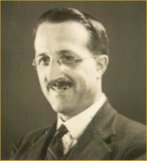
G.R.C. The sixteenth of Matthew brings forward the foundations on which the Lord Jesus Himself builds.
- The third of Corinthians gives us the foundation upon which the workman builds. Paul speaks of our being God's fellow workmen.
- The sixth of Luke speaks of the foundations on which we individually build in our lives and our minds, in our walk, relative to our own formation.
- I thought it might help to look at foundations in these three aspects. It may be that we shall dwell in a special way on the last.
In the first passage the Lord Jesus says
- “On this rock I will build my assembly”.
- God Himself is spoken of in a number of scriptures as the Rock.
Christ is spoken of as the Rock,
- “They drank of a spiritual rock that followed them”.
- So that the rock in any case indicates a Divine Person – as here it refers to Christ, the Son of the living God.
- While those expressions refer to Him in manhood, they could not be attached to a mere man; no mere man could carry the honour and the offices that belong to Christ.
- He must be a Man, but He must also be, as Paul says,
- “Over all God blessed for ever”.
- And so with “The Son of the living God”: therefore the Lord Jesus says, “On this rock I will build”. He Himself is the Rock.
- In passing, I might say that in the Bible recently published – The New English Bible – there is a very grave error;
- It says “thou art Peter the rock, and on this rock I will build my church”. Those two words, thou art Peter ‘the rock’ are not in the original – they have no right to be there at all – serious untruth.
Rem. When you are going to build you need stability, a sure foundation.
G.R.C. You do, “sure foundation”: it says in Isaiah 29: 16,
- “Behold, I lay for foundation in Zion a stone, a tried stone, a precious corner stone, a sure foundation”.
Rem. I am glad you spoke about that Bible, because it is used a lot in schools, and it is good for the children to take note of what you said.
G.R.C. There are other things that might be raised in connection with it, but that in itself is a very grave error.
- The so-called Protestant to put that in which, so far as I know, not even the Roman Catholics would put it in.
Ques. Would you say that the title of “the Christ” is more than Man?
G.R.C. Well, the title “the Christ” means ‘the Anointed’; it is the highest title in the universe, the highest office in the universe – more than any angelic office.
- He has a Name which is above every principality, and authority and power and every name named.
- He is anointed as Head over all things in heaven and earth; and it covers the great offices of Prophet, Priest and King.
- We may think, to begin with, of the great office of prophets of old, but in the case of the Lord Jesus, He has brought forth the whole mind of God – His very Name, “the Word” signifies that.
- Then He is the Priest. But what takes priority, in a way, is His Kingship; King of righteousness, King of peace, and Priest of the most high God –
- that is the first intimation of the combined offices of King and Priest in the Old Testament.
- The Old Testament only takes account of earth; but in the New Testament, we know, He is Head of all things in heaven and earth. No mere man could fill that office.
- And so Paul speaks to Israel of Him in Romans 9: 5,
- “and of whom, as according to flesh, is the Christ, who is over all, God blessed for ever”.
- That is what leads the church to worship Him. The church has the nearest place to Him, and she appreciates His person, more than any other company could in the whole universe. She is the
- “fulness of him who fills all in all”
- – and no mere man could fill all in all.
Ques. Could you say, please, why the setting here is
G.R.C. It is the line to which the Spirit often refers – the Lord Jesus in His days of humiliation here;
- and all kinds of injurious things said against Him would be forgiven, as the “Son of Man”.
- He came not to be ministered to – He Whom we see in Daniel,
- “thousands upon thousands” ministering to Him, and “ten thousands time ten thousands”.
- But, coming here, He says:
- “the Son of man came not to be ministered unto, but to minister, and to give his life a ransom for many”.
- Coming on that wonderful mission, to save sinners, the most terrible statement against Himself could be forgiven,
- but no such statement against the Holy Spirit can be forgiven.
- That is a remarkable thing; this is one of the most powerful words stated in Scripture as to the Personality and Deity of the Holy Spirit.
Rem. We were seeing in the 16th of Matthew that the Christ is the Builder. I was thinking of 1 Peter 2, where it says:
- “To whom coming, a living stone, cast away indeed as worthless by men, but with God chosen, precious, yourselves also, as living stones, are being built up a spiritual house, a holy priesthood, to offer spiritual sacrifices acceptable to God by Jesus Christ”.
- Would that refer to the building of the Christ at the present time?
G.R.C. I think so. Of course, we can look at what has been built here in public testimony
- and what has been built in a more hidden way which will be fully manifested in the world to come.
- But I think there is a view in which the Son is the Builder both as to the house, which would link back with the structure that Solomon built, and also the Tabernacle;
- because Hebrews speaks of the Tabernacle and calls it the house –
- “whose house are we”, it says, “if indeed we hold fast the boldness and the boast of hope firm to the end”, Hebrews 3: 6.
- There it says that Christ is the Builder, whichever aspect of the house we take.
- But there is another important thing in what you say, and that is, we become living stones by apprehending Jesus as the Christ, the Son of the living God. It was that which made Peter a living stone.
- And one loves to see that our apprehension is greatly increasing today – that the young ones may get an impression of the greatness of Christ.
- He is God over all, blessed for ever, but He holds all the great offices of the universe – they are all held by one Man
- – the Prophet, the Priest, the King, the Shepherd; and they are held by the Man Who alone could hold them and adorn them; and He becomes the one Man of our hearts as we apprehend that –
- the Man whom God has chosen to fill every office – the Christ – that is the title the church delights in.
- It is the title used relative to the church: Christ,
- “mine elect, in whom my soul delighteth! I will put my Spirit upon him; he shall bring forth judgment to the nations”, Isaiah 42: 1.
Rem. We are the body of Christ; we are not said to be the body of the Lord, or Jesus, but the body of the Christ.
G.R.C. I think there are two aspects here, although the house side is the most prominent in this passage in Matthew.
- I know that underlying the house is “I will build my assembly” – the house that Solomon built.
- There was there the implication of what was not yet brought out in ministry, that is
- the truth of the body – linking on with the title of “the Christ”;
- and the house linking with the title “the Son of the living God” – what is for God here.
Rem. Peter himself had to do with the Father in arriving at this, did he not?
G.R.C. And I believe Paul's great exercise was to make us all living stones; he does not put it that way.
- He prays to the Father that He might strengthen us by His Spirit with might in the inner man, that the Christ might dwell
- – not come there occasionally, but dwell –
- in our hearts by faith. And where that is a living reality, a continuous thing, we become living stones, do we not?
Ques. Is it beautiful to notice that it is the Father – that wonderful relationship – that the heart of Christ delights to bring us into?
G.R.C. What does the Son of the living God delight to do in the assembly but to use it in the praise of His Father and His God?
- That is the aspect here; while the body underlies it, as the body underlies the house – the body is the inner, the vital side – Christ's body must be God's house.
- When He was here, His own body was the temple of God. So that the saints, being His body, must be God's house;
- it is where God would delight to dwell, everything there speaking to Him of Christ.
- That would be the main point of the passage in thinking of His Father and His God and His praises.
H.S.E. Can the truth of the house of God be worked out without us being vitally in the body?
G.R.C. I don't think it can. I think the truth of the body underlies the house.
Rem. Love, really, must be the seat of intelligence; you connect love with the body, do you not? and understanding with the truth of the house of God?
G.R.C. I think so.
Rem. It is a very practical matter. One was thinking of the Apostles praying day by day to God;
- they recognised Him as Jehovah, the God of the Old Testament.
- But now they are in the presence of His Son here in Manhood. It is really the fruit of communion with His Father that Peter gets enlightened.
- I am thinking of the practical bearing of it upon ourselves; we don't get it exactly by reading Scripture
- – though we need Scripture to guide us –
- but we get the apprehension and appreciation of Christ really getting into the presence of the Father, about Him, do we not?
G.R.C. That is why I was quoting Paul's prayer; he was bowing his knees to the Father, that He would strengthen us with might by His Spirit,
- that Christ might be unrivalled in our affection every day, and that everything might flow out of the fact of His dwelling in our hearts.
- Then we shall not only be living and operative members of His body, but we shall be living stones in the house for God's praise.
Rem. There is a particular grandeur in the verses in Ephesians 3; Paul says, he bows his knees to the Father that He would grant the saints to be strengthened by His Spirit in the inner man.
- There is a tremendous combination of Divine power and love to bring us into the good of this.
G.R.C. This shows how Peter became a living stone;
- “Thou art Peter” – a stone, a living stone.
- The Lord names him because he arrives here by the Father's grace at this great truth – the apprehension of Christ – that here before him was the Christ, the Son of the living God.
- He names Jesus, and Jesus names him; He says, you are a stone; and on this rock, that is the truth of Christ's Person, and particularly the truth of His Person as apprehended in the souls of the saints – He says,
- “on this rock I will build my assembly, and the gates of hades shall not prevail against it”.
- This is an emotional scene, the scene of deep emotion. The italics show that; the Lord is moved; Peter was a worshipper:
- Peter, in his thoughts, was really prostrated before the Lord. And that is how we be come living stones; we so apprehend the glories of the Person of Christ that we become worshippers of Christ.
- And then the Lord is moved, speaking reverently; and you get the emphatic pronoun again, “thou art Peter”. The material coming to light, the living stone.
Rem. After the Lord was questioned in the temple building, He Himself asks one question; He says, the Christ, whose son is He? and they were not able to answer it; they were not material for the house, were they?
G.R.C. There is no living stone among mere professors to answer that question.
Ques. Is there any connection with Genesis 2? It says there that Jehovah Elohim built the rib, that he had taken from the man, into the woman. Is that what God had in mind at that point?
G.R.C. Yes; it used to be said that man was the first builder – Cain built a city.
- But God was the first Builder, and He built the woman, and what the woman represents in type.
- Christ secures His helpmate, and God secures His city and His house.
- The building up of the body is what Eve represents – she was taken out of the man.
- So that God is the first Builder; and the two lines go on together.
- There is still substance coming out of Christ in the way of spiritual impressions and spiritual ministry which is building the woman – that is still going on – and it is all from the Man.
- That is the body side of it; and the body builds itself up in love; building is a body thought, it is an organic idea.
- But then as to the public side, the Godward side of praise and our fitting in together in praise and testimony in God's house, the other figure is used, the Building, that is the putting of stones together.
- It says “in whom”, that is Jesus Christ our Lord, “ye are also built together for a habitation of God in the Spirit”.
- The building is going on.
L.J.J.W. Will you say a little more on the great matter of the house, particularly as to Christ being addressed
- “the Son of the living God”?
G.R.C. The house of God in Timothy is called
- “the assembly of the living God”;
- it is the link with this scripture. The Lord says
- “I will build my assembly”,
- it is His too. It is His in a peculiar way, but it is also the assembly of the living God.
- And it is in that vessel that the praise of the living God is secured. Would you say more about it?
L.J.J.W. It does seem that the Lord's sonship is vital to this thought of the house.
G.R.C. It does; and so it says in Romans 9,
- “And it shall be, in the place where it was said to them, Ye are not my people, there shall they be called sons of the living God”.
- You have here, “the Son of the living God”; but Romans shows you how “sons of the living God” is brought to pass.
- You can see how Paul and Peter are linked together, though they use different expressions:
- “distinctions of gifts but the same Spirit”, 1 Corinthians 12: 4.
- This should dismiss the idea that there is only one kind of ministry. All the ministry is unified, if it is of God; but Peter, Paul and John do not borrow one another's expressions.
G.H. Would you say that this brings out the greatness of the Person, the Builder, and meetness of the material for the building?
G.R.C. It does. It emphasises the greatness of the Person; but how wonderful it is, how the Lord is affected to see a living stone coming to light!
- – what a joy to His heart! May there be joy to His heart today, that all of us become more living!
P.R. Do you think it all comes to a climax in the 21st of Revelation:
- “Come here, I will shew thee the bride, the Lamb's wife … and shewed me the holy city, Jerusalem, coming down out of the heaven from God, having the glory of God”.
G.R.C. I think that is just the thing, the climax is there in Revelation 21; the building is complete, the woman is builded – because she is called the bride, the Lamb's wife –
- and that same vessel is the city, and the early part of that chapter is the tabernacle.
P.R. You also get the twelve foundations.
G.R.C. Yes, you have the twelve foundations, and the names on them are the twelve apostles of the Lamb.
Rem. That speaks of the stability of the building, it is built on the Rock.
G.R.C. It does. So the gates of hell cannot prevail against it.
- In our building of our own affairs, in Luke 6 it is the same principle; we have got to dig deep and get down to the rock, and the rock is Christ: ‘On Christ, the solid Rock I stand’.
- The Rock referred to there is the initial thing in the gospel, and that is perfectly true. But that is really a stand all the time – Christ, the solid Rock;
- let us dig deep and get down to it, get down to Christ, get past ourselves, and even past the opinion of men and everything else.
- This is to be done in our own private building, otherwise the gates of hades will prevail against our private building, as we might say.
Ques. When you say privately, do you mean individually?
G.R.C. Yes; the Lord said: “Everyone that comes to me, and hears my words and does them”.
- That is the main point of this reading, although we spent a lot of time on the first part. He said:
- “Every one that comes to me, and hears my words and does them, I will shew you to whom he is like”, Luke 6: 47.
- We have heard a lot of ministry, but whether we have ever carried it out is another matter.
- I mean ministry that comes from the Lord. There are things that we have heard, as we know, that had not come from the Lord.
W.J.D. Have we got to bear in mind that responsibility and sovereignty go together? In Matthew 16 we get the sovereignty of the work of God;
- and then there is the responsible side of digging deep, that we might find our foundation in Christ Himself?
G.R.C. Yes; because, you see, each one of us is building all our life time – doing something. Is what we are doing of any value?
- And from the point of view of the Lord's words, it depends on the foundations; what foundation are we building on?
W.J.D. Is that not where we have been tested recently?
G.R.C. Well, the Lord said there: “Every one that comes to me”. That is the first thing.
- That is to say, those who build on the wrong foundation do not come to Him; He does not use that word about them – “come to me”.
- They never come to Him; and one thing we have had to learn is to ‘Come to Jesus characteristically’ – not simply what we do in the night we are converted;
- but something we continue to do several times a day, at least – we come to Jesus, the glorified Man, in the attitude of our souls.
- We constantly resort to the holy of holies where Jesus is; because we cannot come to Him except as the glorified Jesus.
- And we should be continually coming to Him in that scene of glory; as the Father says:
- “This is my beloved Son, hear him”.
- If you want to get light from God, go to the holiest; conditions of the holiest should be here today; it is open to us individually too.
W.J.D. And so he said to Peter, in our scripture, “And I also”, an additional word.
G.R.C. That was a word for the moment.
Ques. How do we discern His word?
G.R.C. Well, I would say, in the presence of God and in Christ's own presence.
- He says: “Every one that comes to me, and hears my words” – not hearing the Scriptures read away from Christ in your soul.
- The Scriptures have their full place; but we may not come to Christ, as He says:
- “Ye search the scripture, for ye think that in them ye have life eternal – but ye will not come to me that ye might have life”, John 5: 39.
- So it is as coming to Him we get the word for the moment. On the mount of transfiguration the Father's voice was heard,
- “This is my beloved Son, hear him”.
- It is Christ glorified; and it all depends on the surroundings and atmosphere in which we read the Scriptures.
- Are we in the atmosphere of the holiest, have we come to Jesus in our reading of them, and we in His presence?
- And do we hear His living voice in what He would convey in the Scripture at that moment?
P.W. I was wondering about the necessity of discernment, because we have had qualms about what we have heard.
G.R.C. That is because we have not learnt the habit of going into the holiest.
- I have not learnt it very much yet; some of us have been converted forty years and hardly know what the holiest is.
- We can read a lot of ministry, but it is in that atmosphere of glory that the Father says, “Hear him”.
- You can read the scriptures by themselves, like the scribes and Pharisees. But the word to Moses is
- “there will I meet with thee, and will speak with thee from above the mercy-seat”, Exodus 25: 22.
- The holy of holies gives the Lord the opportunity to speak to us in that atmosphere and in that scene of glory.
- And you see, there is the Urim and the Thummim there; and if you want to get the gain of the Urim and the Thummim, you have to be where your name is – your name is on the breast-plate.
- We all have a right to be on Jesus' breast, because our name is on the breast-plate.
- And if we go where our name is, on the breast of Jesus, we shall see the Urim – light on every situation.
Ques. Would that have a bearing on the tenth chapter?
G.R.C. Yes, something like that. There are many things exercising our minds at the moment, but the Urim is available, but you have to be on the breast of Jesus to see it.
Ques. If we allow the word of the Lord to reach us in our own experience, we reach Christ. Do you think it would work that way?
G.R.C. I think we need to come to Christ to get the word. I can see what you mean, as to the initial stage; the word reaches our conscience and our heart, and we come to Jesus.
- So that initially it is the word of God, living and powerful and sharper than two edged sword; that brings us to Jesus.
- But then, in the habit of our souls we keep on coming.
- He says to the Jews, “Ye will not come to me that ye might have life”.
- They might be searching the Scriptures without Jesus; how much we have done that! Our minds working without Him.
- “He that comes to me shall never hunger”, John 6: 35.
- We are all feeling the need of food; you will never get food unless you come to Jesus; you won't get food by coming to the scriptures only.
M.D.MacIn. Would you say that, practically speaking, we should come to Jesus before we start reading our Bibles?
G.R.C. I wish I knew the working of it better myself. I like help from others as to the way this works.
- I don't know what to say as to a specific rule; but I believe we want to make a prime point of coming to Jesus – even if we have not got time to read the scripture much.
- Some people may be so busy all day and have no time to read the scriptures, but don't let us fail to come to Jesus, with our ears open as to what He may have to say.
- The scriptures are of course very important; but if we come consciously into His presence, how wonderful they would become to us!
H.S.E. Peter got this definite impression in the midst of all the error that is typified in verse 14 – Matthew 16 – by cultivating the presence of Jesus; he arrived at it that way, would you say?
- There were at least four erroneous opinions in that verse, but Peter arrives at the right result.
Ques. Does the Father reveal to such persons to come to Jesus in the way you are speaking of?
G.R.C. Yes, and He deals with them before they come, because Jesus said:
- “No one can come to me except the Father who has sent me draw him”, John 6: 44.
- The Father's activities are very wonderful in that way.
I think what our brother says bears on the present time; there are many opinions about different things.
- We can go to the scriptures: six different people can read six different things from the same scriptures; and where are you then?
- But if you come to Jesus, He will have you listen in the holiest of all – “Hear Him” – and the Urim will then indicate perfect light; the word is plural, meaning perfect lights.
- It is the bringing of the light of God, which is shining in its completeness, to bear on a particular point and problem.
- So in connection with the Urim, it is said, as to Joshua – in Numbers 27: 21 – that at the judgment of the Urim the children of Israel, even the whole assembly, should go out and come in.
- Whatever they did, they were to get the judgment of the Urim. And the Urim is available for us today;
- and the way we shall see it clearly – I wish I knew more about it – is by going into that blessed place and leaning on the breast of Jesus; the names of all the saints are there.
H.S.E. So that when this building was taking shape in a practical way, as in Romans 16 for example, Epaenetus is spoken of as the first fruits of Asia for Christ.
G.R.C. What do you make of that?
H.S.E. Well, what you have been saying earlier about Christ – “Thou art the Son of the living God”.
- If the development in a concrete way of these matters
- – and I take it that the development of the body in a visible sense in Asia was to take place –
- it was because that man, who was a pioneer in one sense, was the first fruits of Asia for Christ.
G.R.C. Very good.
Ques. Is it important that the two disciples who wanted to know the Lord Jesus in the first chapter in John's gospel abode with Him that day?
G.R.C. Well, it is; that is good.
Ques. Is there encouragement in the word here: “Every one that comes to me”? It is not a certain individual, is it? It is an encouragement to every one of us.
G.R.C. Exactly; I think this is one very great result from the exercises we passed through, that we become comers to Jesus every day and to hear His word –
- the living word He had for the moment; the judgment of the Urim on every question,
- whether it is my own affairs in relation to the testimony, or more especially God's affairs.
- We get direction how to go out and how to come in. And so the Lord says:
- “Every one that comes to me and hears my word and does them”.
- That is the point, we must do His words.
Ques. Would Mary be a great example of what you are saying; she having sat down at the feet of Jesus was listening to His word.
G.R.C. That is right; and then she did it. In John 12 she carried out what was most precious.
- But you see, we have gone through an upheaval, have we not? And much of what we have built up in our minds and our thoughts has collapsed around us. Because it was built on sand.
W.J.D. It is a question of what we build, is it not? You had that in mind?
G.R.C. Yes; that comes in Corinthians. But still, it also comes in this scripture in Luke; because each one of us is building something of some kind – we are building some structure.
- In our mind and in our outlook we have got a structure. I would like to make sure that the structure I am building up is true;
- but if I go into the holiest I can test it.
- And the atmosphere of the holiest, if things were right with me, would be enhanced when we are together.
- But if all I did and all I built in my mind and in what I do and undertake are based on the words of Jesus nothing of it would ever collapse; it would stand every strain.
Rem. We get the invitation from the Lord Himself, “Come unto me”; and then when we are in His presence, we are going to learn from Him, are we not?
G.R.C. One of the things that hinder us is the ‘burden’ – “all ye who labour and are burdened”.
- So the first thing in coming to Jesus is to get free from your burdens – whatever they are.
- You may think, whatever may happen next?
- Well, whether individually or collectively, locally or universally, if you are so burdened, the first thing to do is to get free of these burdens – you are to be quiet to hear the voice of the Lord. So the Lord says,
- “Come to me all ye who labour and are burdened and I will give you rest”
- – whatever the burden is.
- That is the very first thing to do; you get into the presence of Jesus and you find rest; because you are in the presence of the One Who knew everything.
- Then we shall be free to hear what He has got to say in our particular case.
Rem. In a particular case here, there is the coming, there is the hearing and there is the doing. That is a very practical exercise of the soul, is it not?
G.R.C. Well, quite so, very practical. And we would like, in our own pathways, to build something that will go through.
W.J.D. It is building upon the rock, is it not?
G.R.C. The Lord shews here that it is not a superficial matter; if you are going to hear His words and then to carry them out, you have got to dig deep.
- There is everything in myself that would militate against my carrying out the words of Jesus.
- There is the power of Satan, and in one sense everything is against my doing the words of Jesus; but you have got to dig deep and get down to the Rock – Christ.
- Now prior to that, in Luke 6, the Lord speaks of the trees. These and the building are two similes that are often put together in Scripture;
- that is, the saints are regarded as plants with roots, and they are regarded as a building with a foundation.
- And so Colossians puts the two together.
- “Rooted and built up in Him”;
- our roots are in Christ Jesus and our foundation is in Him; and we are built up in Him.
Rem. On the line of Luke 6, we shall not build again that which we have destroyed.
- There have been cases of that, where people have swung over; that in itself is serious enough – but they have retracted and swung over.
G.R.C. It is serious; and that kind of thing happens in an endeavour to escape suffering. But the Lord says:
- “He that loves his life shall lose it”, John 12: 25.
- There is a dreadful penalty to seeing what is right and hearing something of the Lord's words and failing to do them, because of some ulterior motive or fear or position or place.
- So after referring to the assembly in Matthew 16, it says:
- “From that time Jesus began to shew his disciples that he must go away to Jerusalem, and suffer many things from the elders”.
- If we are to have these immense privileges – greatest ever given to the creature – we must be prepared to suffer.
- Really, it is only in suffering that these things are wrought out in their reality and blessedness – we have discovered that, have we not?
Rem. That may be involved in the expression, digging deep.
G.R.C. And the digging deep is the suffering in connection with the getting rid of our old man – digging right through and getting to the Rock; because, through grace, if we are true believers, Jesus Christ is in every one of us. Paul says:
- “For other foundation can no man lay, besides that which is laid, which is Jesus Christ”.
- That refers to the foundation laid down in the souls of believers. And there again, Jesus is still the foundation; but it is Jesus Christ laid in the soul of the believer.
- So at the end of the second epistle of the Corinthians, Paul says:
- “Examine your own selves if ye be in the faith; prove your own selves; do ye not recognise yourselves that Jesus Christ is in you, unless indeed ye be reprobates”.
- That is to say, if Jesus Christ is not in each of us here foundationally, we are not Christians.
- You cannot lay down any other foundation – but see how you build on it.
- But from the standpoint of digging deep, I wonder whether it means that you dig deep through all that you are, as it were, as after the flesh –
- all calculations of the flesh, reasonings of the flesh, everything that comes from that source,
- and get down to the foundation that has been laid deep down in your soul, that is Jesus Christ. Is that so?
Rem. That is very helpful indeed.
G.R.C. Now if we come to the thought of workmen, for a moment, in the third of Corinthians, that is not building our own structure like Luke 6;
- but as workmen seeking to serve God among His people and secure material for the house through the gospel.
- There we have got to see how we build as true workmen.
- If we have not come to a judgment of our own selves, our old man, that wretched old man, we shall build something not suitable at all for the building.
- That particularly applies to our local company; it applies to all, of course, but especially to what is local.
- Paul says: “We are God's fellow-workmen; Ye are God's husbandry, God's building”.
- But he is speaking especially of their company, because he has been there and he has laid the foundation. Apollos had been there and had watered it; but watering is to do with plants.
- Apollos watered, that is one side of the matter, meaning us individually, then as built together – Paul alone laid the foundation and others built on it.
- And if we are going to be successful workmen according to 1 Corinthians 3, we need to be building on right lines according to Luke 6 individually.
- Because the worst man we could bring in to build on is ourselves.
- He said “neither the planter is anything, nor the waterer, but God the giver of the increase”.
P.W. I was wondering relative to our faith, whether that is a requisite for the power of God to those to be set at liberty. Is there with us the necessary faith to go forward with God in the building?
G.R.C. I am sure there is to be faith with us. Because the planter is nothing, nor the waterer, but it is God who gives the increase.
- And then he says “Who is Apollos, and who Paul? Ministering servants, through whom ye have believed, and as the Lord has given to each”.
- It is on the line of faith you get things. No one has anything to do, or to give that is profitable, unless he has received from the Lord on the principle of faith; and he has faith as to the result. But perhaps you have something more as to faith?
P.W. Well, I was thinking that we might be often over-occupied with activity, but the power of God is there – to do far exceeding above what we ask or think.
G.R.C. That is an exercising point, because in Romans 12 it says:
- “As God has dealt to each a measure of faith”.
- And that is not just a justifying faith that led to our justification, but it is faith in action.
- But not many of us, perhaps none of us, has put faith properly into activity.
Ques. Would this be like 2 Chronicles 6: 4
- “Blessed be Jehovah the God of Israel, who spoke with his mouth to my father David, and hath with his hands fulfilled it”?
G.R.C. Yes, that is what God has done. But then in the fulfilling of it, so far as the building of the house was concerned, there were many who were active in the work.
- I believe it would help to see that God had dealt to each one a measure of faith to be active in the work;
- and at the end of chapter 15 of 1 Corinthians, we are enjoined by Paul to be always abounding in the work of the Lord;
- that included every brother and every sister in Corinth.
Ques. Do you think that we often get fainthearted when we approach the meeting, when we are so small in number?
G.R.C. I do, but the greatness of the Lord is the point, is it not? Peter's impression of Who He is; and then
- “where two or three are gathered together in my name, there am I in the midst of them”.
Ques. Is it important therefore, to realise that the appreciation of the greatness and perfection and all-sufficiency of Christ is the outcome of the revelation of the Father?
G.R.C. Yes, if it comes to us today, it would be through the Spirit, would it not?
- Diversity or distinctions of gifts but one Spirit; and we are given the capacity to act accordingly. God has dealt to each a measure of faith.
- He has set the members in the body as it has pleased Him; and we would like to see more true activity of every form.
- We all feel the need of shepherds at this time. Rachel was a shepherdess; so sisters can come into that.
- And then we feel the need of evangelists; but we don't turn the tap on at 6.30 on Sunday evening, or certain fixed time when they go to preach in the open air.
- But we are to be channels of living water all day and every day
- “out of his belly shall flow rivers of living water”.
- That is the kind of evangelist.
Rem. That means energy sustained, all along.
Rem. I was wondering why you stressed Jesus in relation to the testimonial position and Christ in relation to the first scripture.
G.R.C. That is how it seems to stand, does it not? The testimonial position in view in Corinthians;
- Jesus Christ is the character of the man that we should display – His character; is that right?
- You see, the tabernacle throughout spoke of Jesus Christ – no other man – every time of the tabernacle – shittim wood and other things.
- Some refer to Him personally; but in character, every part of the tabernacle represented Jesus Christ.
Rem. I suppose the foundation of the tabernacle really was shittim wood. There are the sockets of silver for the boards, but the inside material is the shittim wood.
G.R.C. And I think that is what Paul had in mind, because the house of God in Corinth is viewed as the tabernacle of testimony.
Rem. I wonder whether the difference between the stones that Peter speaks of in his building and the stones in the building in the 21st of Revelation, is that
- the stones in Peter are for endurance and permanency, but the stones in Revelation are for glory; is that right?
G.R.C. Yes, that is right. It is wonderful that foundations should be so well made. You don't usually put precious stones in the foundation, do you?
Rem. They are all exposed. Foundations of a house are all covered up, but in God's house they are all exposed, so that the glory of them all would be seen and the light to shine through them.
Rem. In verse 10 of 1 Corinthians 3, it says,mp<
- “But let each see how he builds”
- – ‘how’ is stressed, is it? Is it the sense of fitting in with others?
G.R.C. I think that. You mean fitting together in the building itself. The building is the public side.
- It is not the members of the body, that is the secret side.
- But the building is the public side that men can take account of, where the saints are walking as fitted together;
- and if they are not fitted together in their praises and so on, there is not adequate testimony for God.
- The public testimony is in mind in connection with the house.
- These brotherly relations are very delicate. We need to be very careful; we can be so clumsy in trying to remove the mote from our brother's eye.
Rem. Is not the great matter for us is to understand what was here for God in Jesus Christ? We delight to speak of this as Himself morally in the foundation in that sense.
- But the name Jesus Christ is the historical name, the name of testimony, is it not?
- We are not here for our own testimony; but we are here for the testimony of the Man Who glorified God so perfectly.
G.R.C. It is the Man who was here and now is glorified, Jesus Christ. John speaks of the testimony of Jesus.
Page Top Article Top
| CHRIST IN US |
|---|
Romans 8: 9-10
Colossians 1: 27-29; 3: 9-11; Ephesians 3: 14-19
Reading at Hedge End, Portsmouth, September 1961
Foundations, Notes of Meetings, 12: 34-54
|
|---|
G.R.C. In the eighth chapter of Romans it is Christ in the individual.
- “If anyone has not the Spirit of Christ he is not of him; but if Christ be in you, the body is dead on account of sin, but the Spirit life on account of righteousness”.
- In Colossians it is Christ in the local company:
- “to whom God would make known what are the riches of the glory of this mystery among the nations, which is Christ in you the hope of glory”.
- And coupled with that we have the teaching in Colossians that we profess to have put on the new man, where Christ is everything and in all; and that should mark every local company.
- We should be true to what we profess – that we have put on the new man.
- And then in Ephesians, the prayer is “the Christ”. In the other passages it is “Christ”. In Ephesians it is that the Christ might dwell in our hearts by faith.
- And “the Christ” refers to Him in the way we were speaking of Him yesterday, as the Head and Centre of things in heaven and earth
- – holding in His own Person all the great offices, “the Christ” is the highest office in the universe –
- He is God's Anointed, to rule over all things in heaven and earth – angels and principalities and powers made subject to Him.
- So that in Ephesians, the Christ dwelling in our hearts by faith, means that He is Head over all things to each one of us as we apprehend Him as Head over all things in heaven and earth, and cherish Him in our affections as such.
- So that the passage goes on to show that if He, the Christ, has that place in our hearts, we shall be rooted and founded in love because He is the very expression of Divine love, radiating God's love to a universe, and we shall be able to fully apprehend the whole system –
- “the breadth and length and depth and height”.
- We have to work out things individually first – though, of course, the individual side goes on all the time.
- In divine things we never fully compass any side of the truth; but there are certain lines of things we must begin with;
- and as we make a beginning in Romans we can go on to Colossians, and then proceed further to Ephesians.
- But we never fully compass Romans 8; you never fully compass any element of the truth – because everything connected with the truth of God is so wonderful – you are always developing in it.
- And so, once you start on the various lines, you keep developing on all the lines; therefore you never leave Romans in one sense.
J.W.D. What does the Spirit of Christ mean?
G.R.C. The Spirit of Christ is that aspect of the Spirit that is often spoken of as the Anointing.
- Christ means the Anointed One; and what God says about Him calls our attention to Him. He says:
- “Behold my servant whom I uphold, mine elect in whom my soul delighteth! I will put my spirit upon him”, Isaiah 42: 1.
- That is the anointing. So that for us to be marked by the Spirit of Christ means that the features of God's Beloved, in whom God's soul delights, are expressed in us. Is that so?
J.W.D. Yes, thank you.
G.R.C. And we don't want any other features, do we? Think of God speaking of His soul – “in whom my soul delighteth”! The soul speaks of deep emotion.
- When God looks upon His Beloved, His soul is moved.
Rem. Is it good to see the setting of this in Romans? After we come into the practical gain of chapter 7; that is, the beautiful ending of the chapter:
- “I thank God through Jesus Christ our Lord”?
- Having learnt that there is nothing in that man, you are ready for all that is in the other Man, are you not?
G.R.C. Saul of Tarsus was the finest man he knew; he had no thought that there was a better man than Saul of Tarsus; every feature of that man he admired.
- But the time came, when he went through Romans 7, he came to the conclusion that Saul of Tarsus was a wretched man.
- That is a good thing to come to; if he came to that, we ought to come to it ourselves.
Ques. Would you agree that we have to go through Romans 7 before we come to Romans 8?
G.R.C. In an initial sense, yes. In an initial sense that you never go back on; but you are increasing. I may realise more in a few months that I am a wretched man than I do now.
Ques. Is there a difference between the first verse – “in Christ” – and this verse we read, “Christ in us”?
G.R.C. Well, that is an important point, because Christ could not be in us if we were not in Him.
- “There is then now no condemnation to those in Christ Jesus”.
- But really the two sides link together. You get much of it in John's gospel:
- “Abide in me and I in you“, and so on.
- He speaks in his epistle about abiding in God and God in us. The two sides should be commensurate; if we are in Christ, Christ should be in us – nothing else but Christ seen. What have you got in mind?
Rem. Well, I should like help, because this verse speaks of Christ in us – I suppose it means that something should be seen practically in us of Christ; not our standing in Christ.
G.R.C. No, our standing in Christ is complete, is it not, because that is from the Divine side?
- “If any one be in Christ, there is a new creation”, 2 Corinthians 5: 17.
- There we are, in Christ. God has wrought, and from His side, that stands – we are in Christ and that is new creation.
Rem. In this chapter, we do not walk according to flesh but according to Spirit; the Spirit of Christ should be seen in us. Would you say that is so?
G.R.C. Yes; so the first thing really is to make room for the Spirit.
- We apprehend that Christ has borne the condemnation for our wretched man.
- I cannot think why we want to revive him so much – this wretched man!
- Paul was glad to get rid of him; and nobody had admired that wretched man more than Saul had; but he completely changed his outlook. He said:
- “O wretched man that I am”.
- If only I can rid myself of Saul of Tarsus!
- Then he says, I have got rid of him, because I am now crucified with Christ, and I am not living any more but Christ is living in me.
- That is how he came to this; Paul's own experience is summed up in those words. Because the wretched man deserves only to be hanged upon a tree.
- It may take me a long time to come to it that I am so wretched by nature that I deserve to be hanged upon a tree, and Jesus took my place.
- He bore the condemnation so that there is no condemnation to those in Christ Jesus. But then he immediately brings in the Spirit:
- “For the law of the Spirit of life in Christ Jesus has set me free …”.
- It is one thing to realise that He bore the condemnation and there is none for me from God's side – because He has borne it – it is another thing to be in the joy and liberty of that, and that is by the Spirit –
- “the Spirit of life in Christ Jesus has set me free from the law of sin and death”.
- The ideal thing for the Christian is to have nothing even to condemn himself about.
- God is not going to condemn me, but then if I am going about all the time with the sense of failure and the sense of condemnation, I am not a very happy man.
- I know that we often offend, and that we have to go back to root principles; but characteristically, we should be in a state where we are delivered from self-condemnation, and rightly so because the Spirit is life.
Rem. You are not really a satisfied man, if you are looking for any good from that kind of man.
G.R.C. No, you are always despondent.
Rem. You have not come out practically through the 7th chapter.
G.R.C. No, quite. But if we make room for the Spirit, you see, it makes room for Christ.
- The Spirit is here to make room for Christ in everything.
- And if we recognise that God has condemned sin in the flesh, and the condemnation has been borne and that God has finished with that man, the wretched man, it means then that we make room for the Spirit.
- That is the result of it practically; the Spirit is my only hope subjectively. If I am only a wretched man and all I can bring forth is wretched thoughts and wretched acts, well, my only hope is in the Spirit.
- Therefore I begin to think that there is no point in doing anything else than to walk no more after the flesh – which would always keep me miserable – but to walk after the Spirit, and to mind not the things of the flesh.
- Because the mind of the flesh is death – I don't want to be in a dead state all the time – but to mind the things of the Spirit which is life and peace.
- I come to that conclusion, that it is the only thing worth while.
Rem. So he buries the man that is dead.
G.R.C. You see, any man hanged upon a tree had to be buried the same day, he was accursed;
- Christ became a curse for us and He was hanged upon a tree and buried on the same day;
- and that is what we should do with ourselves.
- We should see that the wretched man, ”Saul of Tarsus’, was buried the same day and not revived.
Rem. You might think that hanging on the tree was sufficient, but it is absolutely to be removed out of sight of everybody – it is unfit for His presence.
G.R.C. Well, if you are only fit to be hanged on a tree, you are not fit to be looked at, so you will bury that man.
- This makes way for Christ in us; the Spirit makes way for Christ – you make way for the Spirit and the Spirit makes way for Christ.
- And so the triumphant end of things here in verse 10 is really the state of soul in true deliverance. It is not now “Who shall deliver me from this body of death?” but the body is dead – now you are delivered.
- “The body is dead on account of sin, and the Spirit is life”.
- That man is delivered; he is not worrying about a body of death; his body is under control – his body is dead – he had got that down under control.
- And the Spirit is life – the source of his thoughts and deeds and words.
- And for that to come to pass, we need to make room for the Spirit in such a way that the Spirit makes room for Christ; so that it can be said Christ is in us – He is reigning supreme in our moral being; Christ and not self. Is that right?
Rem. That is lovely, if it is real.
G.R.C. “If Christ be in you” is the triumphant position in which God has made a provision for us all to be in; that is, as we walk about here Christ is in control.
Rem. No such thought as ‘inferiority complex’.
G.R.C. No, Christ is in control; both as Christ lives in me and is enshrined in my affections and in control of my being.
- What I do and think and say spring from Christ and not from self.
- The Spirit in me is to bring that about as a state – a characteristic state of soul.
Ques. Is that what Paul meant when he said,
- “That I might know him and the power of his resurrection”, Philippians 3?
G.R.C. Yes, he was going on to that. Philippians shows that we can never take the ground that we have reached the fulness of anything while we are down here. He was pressing on to that all the time.
Ques. Would you say that we never reach deliverance as an accomplished thing – is it something we grow into constantly?
G.R.C. I think so. The first time you come to it helps you to never go back to it in despair.
- The man in Romans 7 is in despair until the end of the chapter; and Mr. Stoney said that a man in that state is liable to commit suicide – because he is in despair.
- God would not normally let you go as far as that, because He shows you the light; you get to the point of,
- “O wretched man that I am, who shall deliver me?”
- And then he sees the whole thing; the cross, and the Man crucified there become a curse for him and bearing the condemnation; and then he learns to value the Spirit, typically the brazen serpent and the springing well.
Rem. When once they were over the Red Sea, they never went back again.
G.R.C. No; So that the initial thing in Romans 7 is real, but then we keep on going into it more deeply.
- Towards the end of his life Paul says he is the chief of sinners; it was not just a theory; he never knew any one worse than himself;
- and that is what we come to in this process of Romans 7 and 8 – that we never met anybody worse than ourselves, and that affects our outlook on everybody else.
Rem. It is a continual matter, to put to death the deeds of the body, and we can only do that as we are subject to the Spirit.
G.R.C. That is a continual thing, and, as you say, it is by the Spirit you do it. So that there are the two sides.
- On the one hand we have before us the characteristic state where Christ must have the place He ought to have in us and has complete control in our affections and in every way;
- and then it views it, from that standpoint, that when that is so the body is dead.
- If Christ is in command, the body can't do anything; for if it acts of itself it is all sin, that is the point – the law of sin in our members, as Romans 7 says.
- If the fleshy mind acts of its own, all it can do is sin.
- And therefore Christ cannot go on with sin; if He has the place He ought to have in us the body is dead; that means it does not act of itself.
- The Spirit is life, not the thoughts and desires of the flesh, but the Spirit is life on account of righteousness. That is the characteristic state.
- But then, on the other hand, in the practical working out of that, you have to act as an executioner all the time, killing the deeds of the body;
- because while characteristically the body is dead and Christ is in command, the urges of the flesh keep coming up.
- They don't worry you while you are in Romans 7; but now as you progress into Romans 8, they keep coming up. Before you know where you are, you are prompted to let the unruly member get out of hand.
- That is the primary thing; a man who can control his tongue can control his whole body. So if we haven't learnt to control our tongue – and I haven't learnt to control mine very much – we can't be sure what is going to happen to the rest of the body.
- If you can control your tongue, that is a great thing, and never say anything but which comes from the Spirit of God.
- And so we have to be like an executioner – and it is not a sad job to be an executioner – for you had got round to that judgment with God in it.
- And so as these things crop up, you put them to death – you should not have any mercy on them. You have to be a ruthless executioner;
- “if, by the Spirit, ye put to death the deeds of the body, ye shall live”, Romans 8: 13.
Ques. Is there any doubt about the Holy Spirit indwelling the believer? It says:
- “if indeed God's Spirit dwells in you”, verse 9?
G.R.C. I think, perhaps, there are two sides to that. In 1–Corinthians 3 it says:
- “Do ye not know that ye are the temple of God, and that the Spirit of God dwells in you?”
- I know it is the company there in mind, and it is true from the Divine side.
- But the aim in what we are on here now is that the Spirit might be dwelling restfully in us – dwelling suggests restfulness. And that depends on right conditions with us.
Rem. I ask this because it has been said that not all believers have got the Holy Spirit dwelling in them; but here, I take it, it suggests what is normal.
G.R.C. Well, there may be believers of a kind that have not got the Holy Spirit.
- But this is normal here – we have to keep to normality.
- Some may say there are not many normal Christians about, but it does not help us to drop the normal view. The thing is to maintain what God regards as normal.
- But I think it is the normal thing for every believer on Jesus glorified to have the Spirit, however little they may learn to value Him.
- Because, without the Spirit, I cannot see how anybody can have any apprehension of Jesus glorified.
Rem. Without the Spirit, they cannot say “Lord Jesus”.
G.R.C. Not in a real way, and properly understand it.
Rem. Being in Christ is a new position, is it not? You are then in the Spirit and not in the flesh.
G.R.C. Well, that is the normal Christian position, that we are in Christ and Christ in us.
- Our apprehension practically of that is another thing.
- When it comes down to the very root of the matter, Paul says to the Corinthians,
- “Examine your own selves if ye be in the faith; prove your own selves; do ye not recognise yourselves, that Jesus Christ is in you, unless indeed ye be reprobates?”, 2 Corinthians 13: 5.
- So that with every believer who has the Spirit, he is in Christ, and that is fixed and unalterable, and through Divine workmanship Christ is in him.
- All Romans is experience; it is not a statement merely of doctrine. Romans shows how we arrive at it experimentally; whatever may be from the Divine side, the thing is that we arrive at it and are in the joy of it.
- And if Christ is in us experimentally, then the body is dead because of sin, and the Spirit life.
- Now, it may be that a number of times in a day I may fail in vigilance to be an executioner; and before I manage to take vigorous action, as is necessary,
- I have allowed the flesh – my eyes, my tongue and may be other things – to get out of hand, and of course I have to get to God about it.
- But it can be done very quickly:
- “If we confess our sins, he is faithful and righteous to forgive us our sins, and cleanse us from all unrighteousness”.
- The matter is finished and your spirit is cleansed from the whole thing and you are back where you were – Christ again in control.
Rem. “By the Spirit“; will you say something about that, please? We need help as to this, because the flesh is too strong for us.
G.R.C. The flesh is indeed too strong for us. The man in Romans 7 finds the flesh altogether too much for him; he is carnal, sold under sin; he is just a slave carried along by the power of sin in his members.
- And that is where we all are by nature; you can't meet flesh with flesh.
- As born again, you have the desire, like the man in Romans 7; the desires are right; he wants to do what is right, what is of God.
- But instead of that, he is doing what he hates, because the flesh is too much for him.
- But God's gospel would not leave us in that position; His gospel is a gospel of deliverance as well as salvation.
- Therefore He meets the flesh with the Spirit; but the Spirit is against the flesh all the time, and that is a comfort to me.
- The flesh lusts against the Spirit, that is why this work of execution has to go on. But then it says the Spirit against the flesh.
- And therefore if I maintain a judgment against my flesh, which we are very slow to come to as a constant thing
- – if I only maintain my judgment so that I take sides with the Spirit – He is against the flesh all the time –
- there is bound to be victory.
- The Spirit is the Almighty God in us:
- “I am the Almighty God; walk before my face and be perfect”, Genesis 17: 1.
- Now the power of the Almighty God is in us by the Spirit; so that we have power to do what we are told to do here.
- The trouble is that we are apt to love certain features of the flesh; it may be a long time before certain features leave us, and we like to allow that little feature any way, and then we lose power.
Rem. Paul says in Galatians,
- “They that are of the Christ have crucified the flesh with the passions and the lusts”, Gal. 5: 24.
- The matter is complete and all is gone.
G.R.C. You come to a real judgment of that man and all its features – whether men call it good, bad or otherwise – that man deserves nothing but to be hanged upon a tree.
- You crucify the flesh in that way; in your mind all that you are in the flesh is hanged upon a tree. What do you think?
B. Well, we need help to maintain that.
G.R.C. I know, we do; but we can't doubt the almighty power of the Spirit to deal with what, otherwise, is an entirely impossible obstacle – the flesh in us.
- It is something that I am always thankful about – that the Spirit is against the flesh; and if I am only with the Spirit and take sides with Him, I shall win.
Rem. We prove that, do we not? even in small things we are helped to triumph, and it is a comfort to us.
G.R.C. It is a comfort. We want to get before us, in this scripture, what is normal and hold to it – Christ is in us in this way in triumph; Christ, by the Spirit, having control of every item of our practical life.
R. It might take me all my life to reach this stage. But I was thinking that Saul did not take long before his name was changed to Paul.
G.R.C. No; Saul attained to that quickly, one would judge – three days blind, and then away to Arabia. But that was a long time before he came to active service.
- He went to his home-town at Tarsus, and then he was brought out by Barnabas to go to Antioch.
- But he did not go round saying the Lord has appeared to me, and I am a chosen vessel and I am going to do a lot of great things.
- He went on with God and waited until the time when Barnabas came and fetched him from his locality.
- Then a year at Antioch and afterwards was sent by the Spirit:
- “for the work to which I have called them”, Acts 13: 2.
- What went on in all those years, who can tell? But Saul went through all the features of Christianity in his own soul. I hope we are all encouraged by Romans 8!
Rem. It is a great encouragement. Would that I had these things when I was young – how I think of our dear young brothers and sisters in that way!
G.R.C. Our brother spoke of what a long time it is for one to attain to this. Well, I have been 49 years in fellowship trying to learn it – what a slow learner I am!
Rem. Well, we can all say that.
G.R.C. Now, as to Colossians, it is a local company.
- And when you come to Christ being in a local company, well, it is a marvellous thing to arrive at.
- The language used is almost, one may say, extravagant:
- “the riches of the glory of this mystery among the nations, which is Christ in you the hope of glory”, Colossians 1: 27.
- Just a few unknown people in Hedge End – but there is riches of glory.
Rem. Perhaps you will enlarge on this ”riches of the glory', please!
G.R.C. I think one illustration of it is the tabernacle system.
- You see, alongside of the giving of the law, which condemns us and tells us our man is a wretched man and brings us to the end of ourselves, God introduced what was typical of Christianity – the tabernacle system.
- That is an amazing thing; that in introducing the Old Covenant, He introduced alongside of it what typified Christianity itself – the tabernacle.
- And what Paul is saying here is the riches of the glory of this mystery among the nations.
- Among the nations; Christ is among the nations, that is among a little company here in this place – Christ is there.
- What was there typically in the Old Testament in that wonderful system, where the Ark was as the Centre, and the high priest moved freely and served God; now the real thing was among the nations.
- The other system was a type and shadow. But the real thing, the true tabernacle, which the Lord pitched and not man, is among the nations.
- And they needed anointed eyes to see it. The features of the true tabernacle are in the saints.
- Everything in the tabernacle was Christ – there was not any article, the smallest item, which did not refer to Christ. Some items referred to Christ personally, like the Ark;
- but all the rest referred to Christ in character.
- And the first thing to learn is to look round on your local brethren and see nothing but Christ; because new creation is present here; not yet complete, but new creation is here present in this room.
- We have got a number of people here who are in Christ – a new creation.
- Paul says he knew no one after the flesh; and when he looked round at people in a meeting room he only saw new creation.
- I don't know what we see when we look round on the saints; we should see only part of that which formed the true tabernacle which the Lord pitched and not man.
- Now, you see, Paul knew no one after the flesh, and therefore he could take account of the flesh in the brethren, without exposing them, and could deal with it and help them.
- If you clothe your brother with the flesh in him you are not helping him at all; you are putting him back to what God has delivered him from – from the Divine side. And that does not help a man.
- But if we know no one after the flesh, we can still take account of the flesh working in them, but we are in a position to help them; because we still hold them to what they really are as newly created by God.
Rem. You would see something of the excellency of the glory of Christ is in each brother and sister.
G.R.C. Yes, the riches of the glory – that you see in Christ in each brother and sister. They form part of this true tabernacle, where there is nothing but Christ.
- But that preposition ‘in’ in the original also means ‘among’. And I believe the two thoughts are involved in this verse.
- I believe the tabernacle is the idea in mind, and in the tabernacle Christ typically was there personally in the Ark; and in the great priest serving, and so on; and also in the candlestick.
- Christ was there personally and surrounded by what was Christ characteristically.
- Christ must be in us characteristically before He has liberty to be among us personally.
- When they made the tabernacle, the Ark was not the first thing made; they made the whole tabernacle first, not the court. They made the curtains, the boards and so on.
- The tabernacle was set up before the Ark was made; so that when it was made there were suitable surroundings.
- And that is what we have to look to in our localities, to see that we are not knowing one another after the flesh, that we are dwelling together on the lines of new creation and thus fitted together spiritually
- and then we shall know Christ personally in the midst of us.
- Both sides are needed for the “riches of the glory”. There would not be riches of the glory if there were not both sides: Christ in us characteristically and Christ among us personally.
Rem. It is very helpful to bring in the tabernacle system into this; it helps us in the understanding of Colossians, as you are bringing before us; because you can see with what delight God would have us in our place in the tabernacle system!
G.R.C. That is it. So that in every local meeting there should be a replica of the tabernacle, as it were. And as set together relative to new creation we know the presence of Christ amongst us.
Ques. So as the tabernacle contains many different things, all speaking of Christ, we also would not expect to see the same things in each one of us. There should be something of Christ in each one in the company. Is that right?
G.R.C. Yes, clearly. And then He is known amongst us in a personal sense –
- “there am I in the midst of them”, Matthew 18.
- He is the Ark, He is the Great Priest, He is the Altar, He is the pure Table, He is the Candle-stick. What riches of glory in knowing Christ among us thus!
- At one time, He may impress us about Himself in certain ways as to His glory, and other times in other ways.
- Look at the way He impressed us this morning with His glory; the One Who is the Ark, the Candle-stick, through Whom all light shines!
- And this will encourage us to toil, like Paul did, to bring about practical conditions,
- where we are dwelling together relative to new creation, in one another and in the new man;
- so that we might experience this every time we come together – Christ in liberty amongst us.
- Paul says, “Whereunto I toil”.
Rem. It was not until the tabernacle was set up that God dwelt in the midst of His people, was it?
G.R.C. No, it was not. And if Christ comes in amongst us, we shall enjoy the presence of God.
- In such surroundings God does dwell; and where we experience the joy of it, there Christ is free to come and move freely amongst His people –
- “The riches of the glory of this mystery”
- – it is a mystery. People outside have no idea what you are enjoying – they don't know that Christ is there amongst that company.
Rem. Our exercise then should be that there are conditions where He can come.
G.R.C. That is it. That is what Paul laboured for.
- “Whom we announce, admonishing every man, in all wisdom”, Colossians 1: 28.
- That is like Bezaleel – Exodus 36 – the wise-hearted, putting the tabernacle together.
- He taught them in all wisdom to fit together body-wise so as to present every man perfect in Christ.
- We are set together in our proper place, in the body and in the house functioning. And then we have the presence of Christ amongst us.
Ques. Would you say that in the tabernacle system it is not so much that I go in as God coming out?
G.R.C. I think it is both.
Rem. Yes, I am thinking of the entrance by the brazen altar, but is it not first God coming out from the holiest?
G.R.C. And our going in, what about that?
Rem. Perhaps you can help us a little on that line!
G.R.C. Well, no sooner had God took His abode in the tabernacle in the end of Exodus, that He spoke in the beginning of Leviticus out of the Tent of Meeting.
- And what did He speak about? If any one wants to draw near – He invites His people to come near;
- He tells His people what is near His heart, that they should draw near to His abode in the place in which He abides.
Rem. And those people who offered Christ to Him in type, He clothed them with Christ – the priest that offered the sacrifice received the skin; it is wonderful, isn't it?
G.R.C. Yes. The riches of the glory. Who wants anything of the world if he knows anything of this – “the riches of the glory of this mystery”.
- A little obscure company meeting in an obscure place – and many of the brethren are meeting in very obscure places just now – but Christ is among them!
Rem. Paul was a type of the true Bezaleel, erecting the tabernacle: “present every man”. How he laboured to erect that tabernacle in relation to Christ; what toil he had, didn't he?
G.R.C. And we need to go in for this work. It is “toil”, because the enemy is so busy to spoil this, as we know very well, so that there may be no experience of it at the present time.
Rem. So that it is not only toil here, but combating.
G.R.C. Yes, conflict in prayer.
Rem. So that what is amongst us should be more real than the tabernacle. I was thinking of what Hebrews says –
- “a shadow of heavenly things”, Hebrews 8.
G.R.C. That is just it, a shadow. We form part of the real thing. So that in chapter 3 of Colossians, Paul speaks of the new man which we profess to have put on.
- The tabernacle was all characterised by the new man – the new man is Christ in the saints. We profess to have put it on.
- He says “having put off the old man”
- – that is our profession –
- “and having put on the new”.
- That is what every Christian professes to have done, even at his baptism:
- “For ye, as many as have been baptised unto Christ, have put on Christ“, Galatians 3: 27.
- He has left his old man in the grave and he has put on the new. Paul says, ‘just be true to what you have done, that is all’.
- In the new man Christ is everything – everything as object, and everything as character;
- “Christ is everything, and in all”.
Ques. Why should that word come at the beginning of the verse:
G.R.C. That is our unruly member; according to James, if that unruly member is under control the whole body is under control. So we can test ourselves that way – that is a continual challenge.
Rem. It is a small member, but what damage it can do!
G.R.C. You see, if other sins come in: wrath, anger, malice, blasphemy, vile language; all these things are connected with the tongue – in addition to the earlier list in verse 5, fornication, uncleanness, vile passions, and so on!
- All those things begin with the tongue getting into mischief.
- If we enter into wrong relationship with people, it almost always comes about with speaking first.
Now, to go on to Ephesians for a moment, it is not so much a particular locality in mind, although Paul was thinking of the Ephesian saints.
- But it is a kind of climax of the line we are on; the Christ dwelling in each of our hearts by faith.
- Well, Christ could not dwell – because of the idea of dwelling is restfulness – if there is a rival.
- And “the Christ” suggests an apprehension of the glory of the Person and the glory of the offices He fills – we bad some sense of that this morning.
- And as such, He is dwelling unrivalled in our hearts by faith.
- If that was so, we should walk by faith; faith would govern us every moment of the day – not the things that are seen, but the things that are not seen which are eternal; they are all centred in Christ.
- The Spirit makes room for Christ, and if Christ has this place, that makes room for all the fulness of God –
- “that ye may be filled even to all the fulness of God”.
Rem. You could not get beyond that, could you?
G.R.C. No. God has brought us out from what we have lived in as a system – a seen system.
- There have been the unseen realities enjoyed – I am not belittling all that has gone on that has been right – but nevertheless we have been living more and more in a seen system.
- And the more you do that, the less you are taking account of the saints according to new creation.
- Social links, family links, national links; all get mixed up, and the real point of new creation in the saints and living with one another on those lines begins to fade away;
- and then Christ hasn't His place among us as the Ark.
- He is not the great Centre of attraction; all sorts of things are holding us, though we are moving along with believers.
- I believe God has in mind, however few they may be, to bring us back to these great realities:
- Romans 8, a real known thing; Colossians, a known thing in our localities;
- and then this great apprehension of Christ as the Sun and Centre of heaven and earth and enshrined in our hearts as such, so that we shall move on to be filled even to all the fulness of God.
Rem. “Rooted and founded in love”. It is wonderful, really; the roots are not seen, and the founding is the result of deep work in the soul.
G.R.C. If there are two or three here or elsewhere really in the good of this – filled to all fulness of God – there would be living waters flowing out to all men. There would not be a thirsty soul to go unsatisfied.
Rem. You would impress us that all this is open to us, but it is in the power of the Holy Spirit.
G.R.C. Yes.
Rem. In these verses we get the riches of His glory brought in again – to be strengthened with power by His Spirit in the inner man. The apprehension of the riches of His glory would help us on that line, that we might be filled even to all the fulness of God.
G.R.C. It is a touching expression, because it is the Father's Spirit that strengthens us, that our hearts, in our measure, might be able to take in
- what He has conceived and what is always before His heart.
- First of all, His Beloved, His Anointed, that our hearts might share with the Father's heart, by the strengthening of His Spirit, to take in the greatness and the blessedness and the affection of His Anointed Man;
- and then the whole system centred on Him.
- The Father bringing us in power into what is always before His heart, and that it should be always before ours.
Rem. You would say without hesitation that there is nothing for God and nothing for us apart from the Spirit!
G.R.C. No; the Spirit is the Truth. As far as anything is down here, it is in the Spirit.
- Christ is the Truth above – the truth as it is in Jesus glorified –
- and there is nothing down here on earth for God outside the Spirit and His work.
Rem. Perhaps you would say something on “the love of the Christ which surpasses knowledge”!
G.R.C. I wish I could; it gives you a sense of endless satisfaction, doesn't it –
- “to know the love of the Christ which surpasses knowledge”.
Rem. Breadth and length and depth and height; you can't conceive it, can you? But you just get a little impression of it. It suffices, really.
G.R.C. On earth you can only get length and breadth and height.
Rem. Oh!
G.R.C. In fact I think it only speaks of that in connection with the Holy Spirit.
- But when you come to God, it is depth; and the love of the Christ, it is depth. Breadth and length and depth and height.
Rem. Jesus moved downward in the expression of that love; I was wondering what your thought was in relation to God!
G.R.C. I hardly know what to say about it; it speaks of
- “the depths of God”, 1 Corinthians 2;
- the depths of Calvary's woe. They were expressed in the coming down; the coming down of Christ and His going down into death.
Ques. What is the difference between “rooted” and “founded”?
G.R.C. One is husbandry and the other is building. The saints are always viewed in both ways.
- As husbandry, we are individually objects of infinite Divine care and attention; our roots need to be in love;
- but as viewed together, we are building.
- And our foundation needs to be in love, otherwise we shall not be held together for the building:
- “Prepare thy work without, and put thy field in order, and afterwards build thy house”, Proverbs 24: 27.
- The two are interdependent; the house is no good without a field with plantation to support life in the house.
Page Top Article Top