Menu•SiteMap |
Ministry
Living Stones
Later Ministry by G. R. Cowell
– Part Seven (final)
| REST, LIFE, FOOD, DRINK |
|---|
Matthew 11: 28; John 5: 39-40, 45-47; 6: 35; 7: 37-39
Reading at Ventnor, I.O.W., April 22, 1961
Divine Provision in a Day of Small Things
Notes of Meetings, 11: 1-21
|
|---|
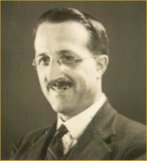
G.R.C. The words we have read are all the Lord’s own words, and in each passage He refers to coming to Himself.
- I think the most important exercise at the present time is the strengthening of our personal links with Christ upon which all else depends; so that primarily the value of the present conflict lies in that.
- Those who have been going through things with God, facing sufferings, in their exercises they should see to it that their links with the Lord are permanently strengthened – that they acquire the habit of coming to Him.
- Because coming to Jesus is not a thing to be done once; it is to be the daily and perhaps the hourly habit of our lives – to come to Jesus.
The passages we have read show how all-sufficient He is. The first passage is:
- “Come to me and I will give you rest”.
- The second, “ye will not come to me that ye might have life”; we need rest, we need life.
- The third, “he that comes to me shall never hunger”;
it is a question of food.
We all need food; in natural affairs we cannot go along without it – but “he that comes to me shall never hunger”.
- And then in the last passage, as coming to Him to drink, it is with a view to a pure stream going out in testimony.
There will never be a pure stream going out in testimony to satisfy the thirst all round, unless we ourselves are continually coming to Jesus and drinking.
So that it is really essential that we each learn to appropriate the Lord Jesus in these four ways; only thus can we be contributors to the fellowship, add wealth to the fellowship.
- Without this we are more or less passengers being carried by other people.
J.D. So that all the resources are in Him, are they not?
G.R.C. Yes, and what a wonderful thing it is that we are to prove this personally – in our personal history with Christ;
- a wonderful experience that is open to us, to prove that Christ is all-sufficient for all the prime necessities of our souls.
- Every other resource will fail us; but there is one who will never fail.
I.H.R. Would you say that the actual words of the Lord Jesus always have their own appeal to our hearts, to those of us who love Him?
- I was thinking that if there is one expression above another that is very touching and affecting is this word, “Come” that He uses – how inviting it is!
G.R.C. Yes, and how He longs for it! We can see how blessed it is that the door is open to each one of us, but the Lord is longing for each one of us to take it up; He says,
- “all that the Father gives me comes to me”,
- as though He is waiting for it, looking out for those who are going to come. But then, how much have we done it?
A.J.Gl. Would you say a word as to coming to the Lord where He is?
G.R.C. That is what we have to keep in mind in these passages, coming to Him where He is.
A.J.Gl. Coming to Him outside the camp?
G.R.C. Oh yes, outside the camp;
- “Let us go forth to him without the camp”, Hebrews 13.
- Coming to Him means coming to Him as the glorified one; then that gives strength to go to Him outside the camp, as to position here.
- But we come to Jesus glorified. He is not here, in the days of His flesh now; if we come to Jesus, it is to Jesus glorified.
H.C. As Peter says: “with God, chosen and precious”, we come to that One.
G.R.C. Yes; in our last scripture, the 7th of John, it makes it quite clear. He says:
- “If any man thirsts, let him come to me and drink”,
- and then the scripture goes on to say:
- “But this he said concerning the Spirit, which they that believed on him were about to receive; for the Spirit was not yet, because Jesus had not yet been glorified”.
- Showing that what He had in mind was persons coming to Him glorified. Now, how often do we come to Jesus glorified in the course of one day?
Q.H.H. The hymn we sung is in keeping with what you are saying: “Exalted far beyond the skies”, and, “Received in glory bright up there”. [No. 350, 1973, J.T.]
- He is given a place up there by the Father as glorified.
G.R.C. So that in the language of Hebrews it means entering the holy of holies where Jesus is.
- He is glorified and God’s glory is shining forth in Him, and because of the work He accomplished, that place is our home – where Jesus is it is the very home of our souls.
- And we should go home as often as we can in our personal links with Christ.
H.F.R. This is not only for our need, is it? The last scripture we read really refers to the eternal day, the great day of the feast, does it not? and then we shall be always coming to Him – and that is not when we are in need.
G.R.C. So that in coming to Him now we touch what is eternal. It is the same with the living bread, He says,
- “that which abides to life eternal”.
- And the rest He brings us into in Matthew 11 is an eternal rest.
H.F. Would you say what you had in mind in reading the scripture speaking of rest?
G.R.C. I think that apart from knowing rest we are not of much use to God or to men.
- It is the great thought of the Sabbath which is continued in the next chapter. The Son of Man is the Lord of it.
- The Father is the Lord of heaven and earth, but the Son is the Lord of the Sabbath. He brings in God’s rest in heaven and earth. He says:
- and the note says, ‘I will bring you to rest’; and that rest involves the liberty in which Christ has set us free from every yoke of bondage, and the only yoke we have is His yoke.
- that yoke is perfect freedom; but all other yokes are broken if we come to Jesus in this way.
- And then we are brought to the rest of God’s Sabbath; and that is strictly the beginning of things for us, the beginning of our true spiritual history.
F.W.C. Would the next chapter – chapter 12 –show the kind of liberty that the Lord would bring us into?
G.R.C. That is right. Man-made rules deprive us of Sabbath, they break in upon God’s rest, as it were, in the saints and our rest in God.
H.F. Does the scripture in Matthew link with verse 16 of Jeremiah 6?
- “Thus saith Jehovah: Stand in the ways and see, and ask for the ancient paths, which is the good way, and walk therein, and ye shall find rest for your souls”.
G.R.C. That is very interesting; that would be the point, the latter part of the verse,
- “and ye shall find rest for your souls”.
- I am glad to get that connection in Jeremiah.
- There are two thoughts here: He gives us rest, and then we find rest. And I think that if we come to Him and enter into the rest He gives,
- we shall be enabled to tread the path, as taking His yoke, where we find rest for our souls – and that would link with Jeremiah.
H.F. Do you think John is typical of one doing this? his head was found on the bosom of Jesus.
G.R.C. I do; we need to keep in mind that that place is open to each one of us, and the Lord wants us there more than we can ever desire to be there.
- We think that if only we are like John and could rest in the bosom of Jesus and lean on His breast, as though it is something that is far away that we could not attain to!
- But if we remember that Jesus wants each one of us there. His desires are far stronger than ours could ever be. He feels it if we are not there.
I.H.R. I was going to ask, in connection with Mr. R.’s remark as to our thinking often of our need, whether we should not think more of His need.
G.R.C. Well, it helps us to see that His longings to have us in the greatest nearness to Himself are far greater than ours can ever be.
- But then it is good to see that in coming to Him all our longings will be satisfied. And the first thing we need is rest;
- “Come to me and I will give you rest”.
- To understand that God has found His rest in Christ and the work that He accomplished so that we rest there; and if our activity does not spring from rest there is little or nothing for God in it.
- True Christian activity springs from rest, we are not working up to something, as though by being feverishly active we are going to arrive at something;
- but we are brought into the blessedness of God’s rest and satisfaction in Christ so that our works flow from it – if our works do not flow from Sabbath there is something wrong.
- Jesus brings us to rest in the presence of God, to rest in Himself as the One in whom God rests.
- We are in perfect acceptance before God, nothing we could do could add to our acceptance; we are there before God to appreciate with God His rest in Christ.
P.H. Does that involve our contemplation too of His movements here for God’s pleasure?
G.R.C. Yes, having arrived at rest, the rest of God, then we come out into the pathway here in the spirit in which He trod it.
–.D. Do we find an example in Mary who sat at His feet and listened to His word; was she not in a restful state?
G.R.C. She was. And so too the man in whom was legion, he was sitting at the feet of Jesus.
K.O. You made a reference in your prayer to Jesus as the Shepherd of the sheep; do you think that He would take us, every one of us, and would lead us into rest?
G.R.C. That is what the Psalmist says:
- “The Lord is my Shepherd, I shall not want”;
- that bears on what we are saying, you won’t want anything else. Then he says,
- “He makes me to lie down in green pastures”;
- you cannot imagine anything more restful than to be lying down in green pastures; and you are led, too, beside the still waters; and so the soul is restored. And then he says,
- “he leadeth me in paths of righteousness for his name’s sake”, and that is, “take my yoke upon you”,
- but it follows the other – “he leads me in paths of righteousness for his name’s sake” – that yoke is easy.
W.L.R. Is the background of this that He is the Revealer of the Father? Then He says, “Come unto me”. Is that right?
G.R.C. So that John 14 links on with
- “No one comes to the Father except by me”
- – in coming to Jesus, really, we find ourselves in the presence of the Father. The little children were to abide in the Son and in the Father – abide there. It involves continual coming.
L.J.J.W. The intense desire in the heart of the Lord that we should come to Him and be with Him should affect us; the element of invitation enters into all these scriptures.
G.R.C. Think of being invited by the glorified Man to come to Him as and where He is and to find our rest there!
H.F.R. You have not to take any journey now physically; I was thinking of the great advantage of the present dispensation. He is glorified and the Spirit is here. The Spirit will bring us into immediate contact with the glorified Christ.
G.R.C. So that we have boldness at all times to enter the holy of holies by the blood of Jesus. It can be done, as you know, perhaps in a busy street or anywhere else. Sometimes the Holy Spirit would help us to abstract ourselves.
H.S.E. Would you connect this with the last verse of 2 Corinthians 3:
- “Looking on the glory of the Lord”,
- emphasising coming to the glorified Man; and I take it that restfulness accrues from the contemplation of that One.
G.R.C. That is right. The glory in the face of Moses repelled, and they had to put a veil on his face;
- but because of the work that Jesus has done on the cross, having glorified God on our account, the radiant glory shining in His face attracts.
- We are not repelled and we are not expelled from the presence of it; we are attracted into it and we find our home in it.
E.R.E. Is that how transformation takes place?
G.R.C. Transformation – then we shall represent God aright. You can see the thing must begin from there if we are to be here for God. We must begin from the top.
J.E. I think you said just now something about the difference between these two rests; would you like to say a word about them, please?
G.R.C. One seems to be an absolute thing, ‘I will bring you to rest’; that is, we are brought to share God’s rest in Christ and in the work that He has completed for God’s glory.
- It involves rest in the presence of that glory, and there we shall rest eternally – it is really God’s eternal Sabbath, from that standpoint.
- We know that the eternal Sabbath will involve everything, the whole universe, in all that is congenial for God, but we touch God’s eternal rest. Well then He says:
- “Take my yoke upon you and learn from me, for I am meek and lowly in heart and ye shall find rest unto your souls”.
- The yoke is the yoke of bondman ship to Christ.
- But our souls have longings; we have longings for our brethren, we have longings for the blessing of men, we have longings that the service of God might go on right down here, and we can get feverish about them, and that spoils things.
- But having come into the rest, the foretaste of God’s eternal rest, then we come out into the sphere of service and testimony, with all the longings that the Spirit of God produces in our souls, in the way that He came into things.
- He was meek and lowly in heart; and in coming out to Him in that way we find rest to our souls – I think it is the opposite to feverishness.
L.J.J.W. Does the present position that we have sought to take, in this exercise, become the sphere in which these two things come out?
G.R.C. Well, there is tremendous amount of labour and burden. The brethren have been brought under heavy burdens.
- The Scribes and Pharisees bound heavy burdens on men, hard and heavy to bear; the Lord was thinking of those kind of things as well as others.
- He was thinking, no doubt, of what would have burdened His spirit, if He had not the retreat into the Father’s presence; the burden too of the lack of repentance with people in spite of all His grace.
- Also that the Pharisees bound burdens hard and heavy to bear, the Lord says; they were bound on people, and He says:
- “Come to me and I will give you rest”.
- That is the call at the present time from that standpoint.
L.J.J.W. It is good to see in the light of that, in view of the work of God in the saints, this is their natural environment.
G.R.C. It is. “All that the Father has given me will come to me”. The work of God in the saints;
- but men come in with many other things and put the saints in bondage.
- If it is allowed to work, it will work in keeping them away from Christ; occupying them with themselves, and with anything but Christ.
H.S.E. This matter of rest of soul comes first in John’s third epistle.
- It is quite clear that Gaius was no idle man, he found plenty to do and in very adverse circumstances, all of which would be calculated to act against restfulness.
- But the apostle speaks to him first of all of the prosperity of his soul.
G.R.C. You are thinking of it as linking on with the 11th of Matthew; I think that is right.
H.S.E. I thought that that would be implied in speaking of the prosperity of his soul, before he says anything else.
G.R.C. I think that is good, because that must be the way of soul prosperity – and the only way – because it is as we find rest unto our souls that our souls prosper.
H.S.E. As J.N.D. says: “Who serve Thee with a quiet mind, find in thy service rest”!
G.R.C. Yes.
W.L.R. Feverishness would only be effective to the flesh, and the flesh loves to be active in relation to the Lord’s things.
G.R.C. And we so easily get feverish. I think that brings out another point, that although it is not mentioned in this scripture, it is mentioned in the other three scriptures;
- it shows that coming to Jesus, in the way we are speaking of it, is a matter of living and active faith. In John 5, after saying:
- “Ye will not come to me that ye might have life”, He says: “for if ye had believed Moses, ye would have believed me, for he wrote of me. But if ye do not believe his writings, how shall ye believe my words?”
- It is a question of faith. And then in chapter 6 He says:
- “he that comes to me shall never hunger, and he that believes on me shall never thirst at any time”, verse 35.
- And earlier when they said, “what should we do that we may work the works of God?” – which is feverishness – the Lord said to them,
- “This is the work of God, that ye believe on him whom he has sent”, verse 29.
- This is not just believing once, any more than coming once. It is the constant state of a normal Christian soul – continually coming to Christ on the principle of living active faith –
- “Having … boldness for entering the holy of holies by the blood of Jesus … let us approach with a true heart, in full assurance of faith”.
- And so again in John 7,
- “But this he said concerning the Spirit, which they that believed on him were about to receive”.
A.L.O. I am thinking of the beginning of Hebrews where God’s Son is brought forward, that God is behind all this, and the importance of seeing Who the Person of Christ is to Whom we are coming, and the power there available for us!
G.R.C. So that again in John 6, He says,
- “This is the will of my Father, that everyone who sees the Son, and believes on him, should have life eternal”.
- That is the will of God the Father that we should see the Son and believe on Him – the greatness of His Person, Jesus glorified.
H.D. Is the Father’s will that we should have the yoke of Christ?
G.R.C. They said, “What should we do that we may work the works of God?”.
- We cannot do anything pleasing to God until we are believers – and characteristic believers, living by faith. Paul says,
- “I live by faith, the faith of the Son of God”.
- That means he was continually coming to Him, continually believing – living on that principle.
L.J.J.W. So that believing is intensified for us now.
G.R.C. Yes; why don’t we come to Jesus continually and prove all these great realities?
P.H. Is the Lord turning to the Father here, in spite of the dark background at Capernaum and the lack of faith all round Him, a wonderful example for us?
- His turning to the Father, reverently speaking, instinctively, in that happy restful way, is it something for us to learn? He says, “and learn from me”.
G.R.C. I think that is it. I think we can learn particularly from the Lord in the circumstances of that moment when He spoke those words;
- He was resting in and indeed praising the Father, the Lord of heaven and earth.
- The Father is the Lord of heaven and earth, but the Son is the Lord of the Sabbath.
- That is, the Son of Man is the only one who can dispense rest; there is not anyone in the universe who can bring us into rest except Jesus.
R.C.B. If it is not deviating, will you say a word as to the first invitation in John 1?
- There were those who were exercised and say, “Where abidest thou?” and He says, “Come and see”! and they came and saw and abode with him that day!
- Would that be a right exercise, as to what you are speaking of – restful conditions?
G.R.C. Well, it would, because abiding implies that. They abode with Him in restful conditions.
- But that may imply more than what we are saying; perhaps that is implying not only our coming to Him, but His being present with us. It may refer to His abode here as coming to His own.
- But, at any rate, it bears on what we are saying. Could Mr. M. help us on coming to Jesus continually?
C.M. Do you not think there are two steps here? First of all you get rid of your burden and you take up a yoke which is easy. It is a yoke, but it is easy; it is a burden but it is light.
G.R.C. Yes, that is very good. Could you say a little more about the last, the yoke that is easy and the burden that is light?
C.M. Is that what holds us to Christ, a Divine Person? You wonder how a father and mother get on with their children – with difficulties and many burdens, you see that naturally in the home; but love makes it light. Does it not?
G.R.C. Yes, it does. And we must have a yoke, otherwise we will be lawless. We might be without a yoke at all and free, but actually we would be doing our own will which is bondage. The enemy would get a grip on us, but under Christ’s yoke is the real path of freedom.
L.J.J.W. Is it not very beautiful that John portrays the Lord coming in in this spirit and atmosphere of restfulness:
- “No one has seen God at any time; the only-begotten Son, who is in the bosom of the Father, he hath declared him”.
- As though, from the outset he would give us the sense of that sphere of restfulness, do you think?
G.R.C. You are thinking of the Son in the bosom. The Lord is under command here ever recognising the yoke in that sense, but the perfect liberty of it!
- As Mr. M. says, where things are right, the constraining yoke – if you put it that way – of a father and mother is not burdensome; without it, the children would go astray – they must be under control, but it is love’s control.
J.E. As Paul says: “not without law, but as legitimately subject to Christ”.
And it was said in our care meeting last night that we should not give up a single divine principle that we have learnt; is that right?
G.R.C. I am sure that is right,
- “if ye love me, keep my commandments”.
- Love would not surrender anything due to the One we love.
- I think that if we move on the lines we are referring to now, continually coming to Christ, we should be preserved in every way,
- because we should be accustomed to His own surroundings where He is and we should want things down here among the saints to correspond with the circumstances up there.
Ques. So would not that give substance in the soul, instead of shallowness? One would desire to have substance in the soul, which I am sure is what we all need!
G.R.C. Well, this is the only way to have substance. Paul says,
- “What have we that we have not received?”
- All that we have we have received from the Lord – as coming to him.
H.F.R. That is life, is it not – your second scripture? Every time we come to Him we get a fresh living impression of Himself.
G.R.C. So that brings us to John 5. He says:
- “Ye will not come to me that ye might have life”.
- He says: “Ye search the scriptures”,
- and the note says, ‘it is not command, it is an appeal’; the Lord wanted them to go on searching the scriptures. He wants us to search the scriptures, but with this in mind, that
- “these are they which testify of me”.
- If we do not search the scriptures from that point of view we won’t get the gain of them. But then to really get the gain of them we must come to the Person of whom they speak.
Ques. The disciples, each of them had a link with the Lord. If failure comes in on my side, Peter would say:
- “Lord, thou knowest I am attached to thee”.
- We should have that link and attachment as coming to Him, intimately and personally, then only am I suitable for the company. Is that right?
G.R.C. It seems to me that if we study Scripture merely as a study – apart from state – we shall never get the gain of it.
- Timothy knew the letter of scripture from a child, but the only way to make him wise unto salvation was
- “through faith that is in Christ Jesus”;
- and faith in Christ Jesus will lead us to do what we are saying this afternoon – to keep on coming to Him, as livingly feeding on Him.
- And it is really as coming to Him that the scriptures will light up: we realise that they really do testify of Him.
H.F.R. It used to be told us forty years ago that John’s gospel was written to make believers of believers.
G.R.C. That is true.
H.F.R. It is true indeed; and every time we come to Him we become more firmly established believers, because we know more of Himself.
G.R.C. Mr. Raven used to say that the trouble with Christians is that they tend to realise that they must be justified by faith, but having been justified by faith they go back to live by law.
- But we are justified by faith and we are to live by faith; and living by faith involves this constant coming to Jesus where He is, and with coming to Him like that we come into life.
- “Ye will not come to me that ye might have life”.
L.J.J.W. Do you think this will have a very practical bearing upon the present time? Might we look at it in this way, that the saints have been liberated that they might have life really?
G.R.C. I think so; “I am come that they might have life, and that they might have it abundantly”.
- It is the Shepherd again; He brings in the thought of liberty, they should go in and out and find pasture.
- And then, in the pasture there is the thought of rest – lying down in green pastures. Then He says,
- “I am come that they might have life, and might have it abundantly”.
- Well, let us go in for it; He has come for that purpose but it involves our coming to Him continually, so that we are all under His direction as the Shepherd.
–.F. Which came first, do you think, in the Galatian error, the tendency among the saints to decline from living by faith of the Son of God,
- or the actual legal enactments that eventually put them in bondage?
- I wondered whether they gained scope for these legal enactments that came in by their living lower than by faith, faith of the Son of God!
G.R.C. Well, I would say that it is that latter thing which makes way for legality.
- Whether we know it or not, our state gets very low – as to what the Lord said,
- “He that eats me shall live by me”.
- We were not really living by Him, by our continually coming to Him; and that is what happened in Galatia, as you say, the teachers came down from Judea,
- and there was evidently there soil ready to receive it, because they gave up living by faith.
- So we must get back to this; and we shall see that what we are on this afternoon is absolutely essential, otherwise we shall get into bondage again.
W.L.R. Would the opening of John 5 answer that? The man was healed, but he went back to the temple, instead of going back to the One that healed him, like the blind man in chapter nine.
G.R.C. Well, he is a warning for us; he went back to where he was – without Christ.
L.J.J.W. Paul had entered into the practical gain of what we are speaking of this afternoon, had he not?
G.R.C. Well, he lived by faith, the faith of the Son of God. And he shows from the next chapter that that is synonymous with living by the Spirit and walking by the Spirit – the two things go together.
- A man that is full of faith is full of the Spirit; they are put both ways round in Acts. Stephen full of faith and the Holy Spirit, Barnabas full of the Holy Spirit and of faith.
- So at the end of Galatians 2 Paul says, I live by faith, by faith of the Son of God who loved me and gave Himself for me, and he begins chapter three with
- “O, senseless Galatians … having begun in the Spirit, are ye going to be made perfect in flesh?”
- He was showing that he was making the two things synonymous, living by the faith of the Son of God is going on in the Spirit; the Spirit would not lead you any other way.
- And if you don’t do that, you will be going back to the flesh and legal commandments, because you are not getting the support of the Spirit.
A.L.O. What is the meaning of that word in Galatians, “if righteousness is by law then Christ died for nothing”?
G.R.C. Because righteousness never was by law, and never could be. You see, righteousness before God is by faith, that is the only ground of justification, and practical righteousness is by the Spirit.
A.L.O. What does it mean then, Christ died for nothing?
G.R.C. Well, he says, if it were by law, Christ would have died for nothing. But the truth is that righteousness, in the history of mankind, has never been by law.
F.W.C. Does that passage in Romans 10 amplify that matter?
- “For Moses lays down in writing the righteousness which is by the law. The man who has practised those things shall live by them. But the righteousness of faith speaks thus”.
G.R.C. That is right. So that righteousness for us is always by faith and in a practical sense is by the Spirit; there is no other way for it. The law perfected nothing.
K.C.O. Does the end of chapter five show the value of the Old Testament?
G.R.C. There are several sayings of the Lord that show the great value He put on the Old Testament, and that is one of them.
- It is of great value to speak of them as to the value of the Scriptures as a whole; not to treat the Old Testament as though it is hardly inspired.
- The inspiration of the Old Testament is a most wonderful thing; the pains the Spirit of God went to in preparing vessels to be used for inspiration.
- In a way, it was simpler in the New Testament, because He was indwelling the persons.
- But in the Old Testament, the Spirit of God took up persons and passed them through experiences, like David fleeing from Saul and so on, to give them feelings.
- So that they did not express the inspired word like automatons – like Balaam did. The Spirit could give inspiration through a man who had no feelings about it at all.
- But, generally speaking, the Spirit of God prepared men with great care, so they had feelings suited to the inspired words He put in their mouth; and that is really a wonderful thing and should attach our hearts to the Holy Spirit.
- The care with which all was done; and while the things themselves in the Old Testament were types and shadows, the language used was not shadow. The inspired language used was used with great accuracy.
- The tabernacle was a type and shadow, but you take the words used in its description – they were perfectly accurate in detail; and so were the offerings, and they were repeated in the Old Testament.
P.H. That is what we want to get hold of; it has been often stressed lately that they were mere shadows and mere figures of things to come and so on; but their value to us is surely infinite.
G.R.C. Yes. We have to keep in mind I suppose that the actual things or persons used as types were only shadows;
- but we must not limit our minds to the literality, otherwise they will get warped.
- But you come to the description, the detailed language used to describe things is not shadowy language, as far as I can see – it is with very great accuracy.
- Take the language as to the offerings, it is not shadowy language, it is very accurate language – you will know how to apply it spiritually, for it is very accurate language.
P.H. Yes, indeed, very helpful.
W.W. So that “He interpreted to them in all the scriptures the things concerning himself”.
G.R.C. Yes.
I.H.R. We were saying in Croydon recently that the early disciples only had the Old Testament writings; and when Paul writes to Timothy, he says,
- “Especially the parchments”.
- Would that show the great value of the Old Testament writings in the mind of Paul?
G.R.C. Yes, I think he does in the second epistle; he makes it quite clear, the value he put upon it –
- “Every scripture is divinely inspired”.
- So the Holy Spirit was in great pains to give us accurate details of the truth in the Old Testament, and it is a wonderful thing that alongside of the law, which perfected nothing, he brought in a type of Christianity in the tabernacle.
- Showing what was in God’s mind, that alongside of that which could only condemn man, He brought in typically, and accurately described, a system where man would live before God, in perfect righteousness and peace for ever.
E.R.E. The value of that was particularly seen in later types in relation to the ministry as to the Spirit, that it was almost entirely confined to the Old Testament.
G.R.C. Yes, the literal examples were typical. Yet there is much in the New Testament from which you can make an accurate spiritual deduction, and spiritual deductions occur in scripture.
- Abel, in giving his offering, made a spiritual deduction; Noah, in building his altar, the first altar in scripture, made a spiritual deduction.
- It is right to make deductions, provided they are spiritual; and if they are spiritual, there is no doubt but that they immediately appeal – if we are unbiased – as being right.
I.H.R. Do you mean that the more we come to Him the more we are able to make these spiritual deductions?
G.R.C. Yes; we have to be careful about the mind working, but right through scripture there are spiritual deductions.
- David said, this is the house of the Lord God, this is the altar of the burnt offering of Israel, and so right through.
- We make a spiritual deduction as to household baptism in the New Testament.
- There are those, we know, who say, there is no literal scripture in the New Testament to say that you should include children when the household is baptised – there should only be the adults in the household.
- They say that because there is no literal statement in the New Testament to say so.
- But you can make a spiritual deduction in the New Testament and then go to the Old Testament and find that you have it confirmed.
- “We will go with our young and with our old”, Moses said to Pharaoh.
I.H.R. I suppose the more we come to the Lord, the less literal we become and the more spiritual.
G.R.C. Yes, quite so.
Page Top Article Top
APPRECIATION OF CHRIST
AND HIS SUFFERINGS
IN VIEW OF GOD'S PRAISE |
|---|
Psalm 22: 1-3; 1 Corinthians 3: 9
– “ye are God's husbandry, God's building” –
1 Corinthians 3: 16; 10: 17; 12: 13; 1 Timothy 3: 15
Address at Croydon, December 9, 1961
Divine Provision in a Day of Small Things
Notes of Meetings, 11: 29-38
|
|---|
I want to say a word, dear brethren, about the praise of God and how we are brought into it as appreciating the One who suffered to bring it about.
- Psalm 22 touches the heart of every one of us here tonight. It is the language of Jesus Himself at Calvary, and it touches the very depths of our being.
- Our blessed Lord Jesus suffered there on the cross of Calvary.
- You say, He suffered there for my sins; and how very true that is, and our souls go out in thanksgiving and praise to Him and the blessed God in appreciation and gratitude!
- But, we want to see that our sins do not come into Psalm 22.
- The sufferings of Jesus are depicted there in that touching manner, because of His intense feelings and desires that God should be praised, and praised rightly and adequately in the great congregation – according to the fullest thoughts of the heart of God.
The thought of serving God in praise runs right through the Scriptures.
- Moses and the children of Israel lifted up a song of praise after coming out of Egypt and the Red Sea – which is a type of Christ's death for us. They speak of
- “My strength and song is Jah, and he is become my salvation: this is my God and I will glorify him: my father's God, and I will extol him”.
- They even speak later in chapter 15 of Exodus of being brought in and planted in the mountain of his inheritance,
- “The place that thou, Jehovah hast made thy dwelling, the Sanctuary, Lord, that thy hands have prepared. Jehovah shall reign for ever and ever!”
Then David takes up the service of song and praise, with the priests and Levites and singers in a more ordered setting in the house of Jehovah.
- Also how full are the Psalms, the language of deep feelings of David and others in their appreciation of God!
- Speaker after speaker voicing aloud his inner feelings of joy and praise of the God he has come to know in the circumstances peculiar to his own experiences,
- either individually or in a collective sense in the midst of those engaged in the service of song and praise in the congregation of Israel.
- Until you reach the last few psalms where, after the wonderful variety of joyful praise and worship is uttered throughout Psalms 145 to 149,
- the Psalmist rises to the climax of the great Hallelujahs in Psalm 150,
- touching every feature of intelligent praise and worship on the various kinds of stringed instruments, that the close of the Psalm is
- “Let everything that hath breath praise Jah. Hallelujah!”
Then Isaiah sees the King, chapter 6, high and lifted up, sitting upon a throne and his train filling the temple.
- What a glorious sight of the King and His saints as His train – with the Seraphim calling out,
- “Holy, holy, holy is Jehovah of hosts; the whole earth is full of his glory!”
- But Isaiah felt his utter unsuitability to the scene, and one of the Seraphim brings a glowing coal from off the altar –
- the altar is not far from the King on His throne
- – and touches the prophet's mouth and his iniquity is taken away from him.
- But how wonderful and touching that the King on His throne is the same One who died on the altar; and that is the basis of our being made suitable to take up the service of praise to the blessed God.
- And so Jesus died on the altar to secure the service of praise to God.
- You say, we shall live eternally to praise God and the Lord Jesus for His dying for us.
- Yes, and you would love to go forth and proclaim Him as the glorious Saviour of sinners. Isaiah was immediately ready to be sent; he answers the Divine call,
- “Whom shall I send, and who will go for us? And I said, here am I send me. And he said Go”.
- And what a presentation of Christ as the suffering Lamb of God he gives us later in chapter 53! None could preach Christ like the one who had seen the King in His glory.
Other passages are found throughout the Old Testament which speak of God being the Object of His people's praise and worship,
- and you come to Malachi's final testimony by God about His people and the nations too:
- “For from the rising of the sun even unto its setting my name shall be great among the nations; and in every place incense shall be offered unto my name, and a pure oblation: for my name shall be great among the nations, saith Jehovah of hosts”, chapter 1: 11;
- and then in verse 14, God says,
And so you come to the New Testament, where the great King Himself appears and presents Himself to His people in Matthew's gospel – only to be rejected and put to death.
- He rides to Jerusalem in that triumphal procession as the King of Israel on the ass according to prophecy with the crowds singing and shouting aloud –
- “Hosanna to the Son of David; blessed be he who comes in the name of the Lord; Hosanna in the highest”.
- But that very crowd cries out aloud again a week later to Pilate,
- “We have no king but Caesar”; and then they cry again “away with him, crucify him, crucify him”.
- And so the King dies on the altar, dear brethren, and, as I said before, His death is the very basis for securing the praise of God.
- And so the disciples are left in the end of Luke's gospel in the temple blessing and praising God.
Now Paul comes on to our view as the model worshipper with his heart steeped in the sense of the greatness of Christ as the great King.
- And how he breaks out in his doxologies of praise and worship in his epistles!
- In Romans he praises God as a Creator in His creatorial majesty and supremacy; then, as in His unsearchable judgements and untraceable ways …
- “For of him, and through him, and for him are all things: to him be glory for ever. Amen”, Romans 11: 35-36.
- Also in chapter 9 and verse 4, how his heart is towards his kinsmen in the flesh
- “whose is the adoption, and the glory, and the covenants, and law-giving, and the service, and the promises; whose are the fathers, and of whom as according to flesh is the Christ, who is over all, God blessed for ever. Amen”.
- Afterwards at the end of the epistle he rises, as he touches on
- “the revelation of the mystery, as to which silence has been kept in the times of the ages, but which has now made manifest … according to commandment of the eternal God … the only wise God, through Jesus Christ, to whom be glory for ever. Amen”, Romans 16: 25-27.
Then in Timothy, Paul renders praise and glory to Jesus as
- “the King of the ages” in chapter 1,
and in chapter 6 to
- “the blessed and only Ruler … the King of those that reign, and Lord of those that exercise lordship; who only has immortality”.
- So as one who sees the King in His majesty and glory, with these doxologies filling his heart, in true praise and worship, he could also
- testify of Him as the glorious Saviour of men, and as the Mediator of God and of men.
- And what a preacher Paul was of the One Who had died on the altar, but who is now in glory in heaven!
- Christ in glory filled his soul and equipped him to speak of the glad tidings of the glory of the blessed God. Then he would tell us that
- “Faithful is the saying and worthy of all acceptation, that Christ Jesus came into the world to save sinners, of whom I am the first”.
- The glory of God shining in the face of a Man in heaven becomes the motive power of the model preacher, who is ever ready to speak of the glorious Saviour of sinners.
- But it is Paul the worshipper who is the best preacher.
- And so I commend this to everyone who wants to preach Christ, that you start from the inside view of Christ in glory.
- And so we need to go into the holiest often, right into the presence of God where Jesus is, and that glorious sight of the Man in the glory fills you and prompts you into praise and worship.
How we need to become accustomed to the holiest; that is our home and there you cannot but
- break out in holy doxology in the praise of the God Who has come within our range.
- We do not know Him in the Deity, but we do know Him as revealed in Christ.
- The One Who is from eternity to eternity, God over all blessed forever, has been made fully known – God manifested in flesh.
- But we know Him too as our Father – the great King of the Ages has come into the sphere of time.
- And who can honour the King like His sons? Even where He said in Malachi I am a great King, He said,
- “a son honoureth his father”.
- As in sonship, it is our great privilege to utter praise and worship and glory to God our Father according to the fullest thoughts of love in His heart.
- And we then worship in spirit and truth. God is a spirit and those who worship Him must worship Him in spirit and truth. The Father seeketh such as His worshippers;
- He is not exactly seeking worship, but persons who are thus filled with Him who can worship Him in the beauty of holiness.
But the praise of God in its spiritual character and fulness can only be properly carried out in the sphere of God's own choosing and appointment,
- which requires the collective side of the truth.
- Christ Himself is spoken of as saying,
- “I will declare thy name unto my brethren, in the midst of the congregation will I praise thee”, Psalm 22: 22.
- God has a position here on earth where He has set His name, it is in the midst of those who compose His house.
- Paul begins with this idea in Corinthians before he comes to the truth of the body of Christ.
- He starts with God's building; it is simply what the saints are in God's sight. Paul says in verse 9 of chapter 3 of the first epistle,
- “Ye are God's husbandry. God's building”.
- The foundation has been laid, which is Jesus Christ; but God's building is here in this world and no one can challenge it.
- The Holy Spirit has come to earth and set up this wonderful building for God – a habitation of God in the Spirit. And so Paul says to the Corinthians,
- “Do ye not know that ye are the temple of God, and that the Spirit of God dwells in you?”
- A glorious fact; let us get hold of this truly in our souls, dear brethren.
The Corinthians needed this challenge – “Do ye not know?” and so we want to take it to heart, that even if some do not know it,
- the fact remains that the saints are God's temple and the Spirit of God dwells in us.
- But every true believer in our Lord Jesus who has the Spirit, forms part of this building; the living and conscious knowledge of it in our souls is vital to us in these days.
- You see, God has set us apart from everything in this world for Himself, for His dwelling, for His very shrine, where He wants to be with us all the time – what a great honour and privilege!
- And it is a fixed position, divinely appointed and set up, for the service of God where the service of song and praise and worship by His beloved people is to be carried on in the power of the Spirit.
We need not be afraid of the word position. The position we are now in is for the pleasure of God and where He would receive the praise and worship of His willing people.
- “But thou art holy, thou who dwellest amid the praises of Israel”.
- We are all to have part in this service of praise; it is God's thought that we should rise to it.
- If you say, I don't feel equal to it, it may be that you are confusing it with the idea of the calling of God and the fellowship.
- I do not suppose any of us has as yet fully answered to God's call and to the fellowship. He has called us into the fellowship of His Son, Jesus Christ our Lord. I cannot say I have answered fully to that call.
- But we are in the fellowship if we are. It is a question of our being in it consciously, and if we are really in it, we would enjoy it, which is God's desire for us in calling us to it. It is a matter of practical experience in the enjoyment of it.
- And so, as we are God's building as a result of what He has done, let us be in it consciously and fully and thus rise to the service of praise and worship.
- And in so doing together we experience in the fullest sense what it is to be in the fellowship of God's Son, Jesus Christ our Lord.
Then we are also the body of Christ and form part of God's house; it is the same company in both.
- And so we need Paul to help us in these matters. He says in 1 Corinthians 10: 17, that we being many are one loaf, one body, for we all partake of that one loaf.
- Then according to verse 18, which speaks of our eating of the sacrifices – which is the Lord's supper – we are in communion with the altar.
- What a wonderful thing that is! that as in one body we are knit in the closest possible partnership together and with the altar, and hence in the closest possible fellowship with the blessed One Who suffered on the altar.
- The Spirit of God would make us increasingly conscious of this wonderful position in which we are to find our full occupation with the blessed Lord Jesus who becomes the absorbing Object of all our hearts.
- This is the King Who died on the altar to secure the praise of God abidingly.
- The Holy Spirit has baptised us into the one body, and we are said to have been given to drink of one Spirit; so that this new position in which we are thus to be held together by the One Spirit should demand our whole and constant attention all the time.
- What motive power it becomes for complete and entire separation from everything, especially that which merely bears the name of Christ in the ecclesiastical systems around us.
- We would do what we can for every Christian and seek to help him into what belongs to him, for he in fact belongs to the whole position,
- and we want to see everyone fully in the enjoyment of his place in it, in taking up his privileges
- and functioning according to the mind of God for him in the service of praise in the assembly.
Finally, we would become increasingly concerned too as to the great matter of the House of God here on earth and our conduct in it.
- Everything is living there, for it is the assembly of the living God, and the pillar and base of the truth.
- If you claim to be in the body and stop there, you will fall short of the thought and concern of God about you. The house of God is the pillar and base of the truth; and we must not fall short of the whole position.
- The fellowship of God's Son involves being under Him and under His authority, for He is Son over God's house, whose house are we – Hebrews 3 – and that in love and freedom.
- And if you simply rest on the fact of your being in the body without going on to the house, you are not fully in the truth, only partly, for it is the base of the truth.
- The One Who is the great King of the ages dwells there, and our conduct in the house must be in keeping with Him.
- On the public side a full testimony to represent the King according to what He is as known – manifested in flesh – with all the features of the house of God as in the first epistle to Timothy.
- The great centre where God dwells and where He is to be known through the saints who form part – marvellous grace – of the assembly of the living God.
- And in the inner side we dwell with the King Himself, the blessed God as known in Jesus. We don't know Him in Deity, as I said before, but as revealed in Christ.
- We thus abide in God and He in us, and he that abides in God, John says in his epistle, abides in love.
- For we know Him as Father, and as sons we can honour Him intelligently and in the affection of sons, and therefore freely and joyfully praise and adore Him.
- Peter and John too have their own doxologies, and the Revelation abounds with them where the Elders join in the service of praise and worship to the great God, the King of the ages.
May the Lord greatly help us, dear brethren, in these great matters of the praise and worship of God, for His Name's sake!
Page Top Article Top
| LIVING STONES |
|---|
1 Peter 1: 1-9; 2: 1-10
Address at Hedge End, Portsmouth, September 1961
Foundations, Notes of Meetings, 12: 22-33
reprinted in Ministry of G. R. Cowell, Booklet 6: 40-41
|
|---|
The words that I have read were written by the one of whom the Lord said he was a stone: "Thou art Peter".
- They were written by the sample living stone in Matthew's gospel. It is well to listen to what he said.
- One thing that his writings prove is that persons who are really living stones are never defeated; they are not overcome by circumstances.
- Indeed they thrive in adversity; on that account the gates of hades cannot prevail against the assembly. The gates of hades cannot destroy the foundations – Christ Himself –
- "on this Rock I will build my assembly, and the gates of hades cannot prevail against it", the Lord said.
- They cannot prevail over those who have truly come to Jesus, and maintained that as a characteristic of their lives – coming to Jesus the glorified Man.
- They are able to resist the devil himself, as Peter exhorts at the end. He is writing to other living stones, he is not the only one. He speaks of
- "the devil as a roaring lion, walks about seeking whom he may devour. Whom resist, steadfast in faith, knowing that the self-same sufferings are accomplished in your brotherhood which is in the world".
In one way, though there is much that is very sorrowful about it,
- it is a privilege to have had part in the sufferings of the past year or two.
- So there are many privileged persons here tonight; because in the sufferings we prove many things; and perhaps one of the most important things is
- we learn to test our foundation, as to where we stand, and in so doing our links with the Lord are greatly strengthened.
- We learn as a habit of life to come to Him as a living Stone. We must get into our minds that this idea of coming to Jesus is a continual thing to be done every day, and it may be many times a day:
- "He that comes to me shall never hunger".
- We need several good meals a day; we need to come to Jesus.
- "If any one thirsts let him come to me and drink".
- We get thirsty; let us come to Jesus. It means we are living, characteristic believers – believing every moment:
- "Ye believe on God, believe also on me", Jesus said.
- They are the kind of people that cannot be overthrown by the enemy's power; because John said:
- "And this is the victory which has gotten the victory over the world, our faith", 1 John 5: 4.
- So Peter's last word in the first epistle is: "whom resist, steadfast in faith".
I have spoken of the assembly; it is interesting too that Peter uses his own phraseology, and brings forward his own impressions.
- His view of the assembly is that it is a spiritual house and a holy priesthood.
- We must keep in mind that there are diversities – distinctions – of gifts, but one Spirit; but if ministry is really of God there will be no copying one another's phrases.
- Each servant has his own link with God and expresses things according to that link; and so, while there are distinctions of gifts, Paul says
- "the planter and the waterer are one"
- in the scripture we had this afternoon. He was referring to himself and Apollos;
- you could understand him better if he was referring to himself and Timothy, his child in the faith; but he was speaking of himself and Apollos.
- Apollos was a man who had his own line of things from the Lord; but Paul said they were one; that is what marks ministry that comes from Christ – there is diversity, but oneness, all operative to the same great end.
- And we need to remember too that the great end in view is God Himself, and therefore His house, and on the way to that is Christ Himself and the satisfaction of His heart as Man – in having us as living stones with Him.
- So whatever the gift is, it is working to the one great end. According to Ephesians 4, all the particular gifts mentioned there are for the edifying of the body of Christ – gifts are for building up.
- Paul had power to overthrow too – that is needed at times – but the great point is what he says that the authority he received was for building up and not for overthrowing.
- And all gifts are for building up, even the evangelists. When I say 'even' the evangelist, I don't mean that it is the least gift; by no means, it is one of the greatest gifts.
- But there is always the danger of separating the gospel from the church.
- The evangelist is for the building up of the body of Christ, and for the establishment of the "habitation of God in the Spirit" down here. He is bringing in material; he loves souls; he yearns for souls to be saved.
- But his greatest joy is that he is bringing material for the house of God – bringing in the cedars of Lebanon.
How good it is to get back to Divine thoughts on these matters! Peter had his own way of putting things, and he refers to the spiritual house and the living stones.
- But he is addressing his epistle to the sojourners of the dispersion, or as the Authorised Version says, "the strangers scattered abroad".
- There has been a scattering, dating back a long way in history; and no doubt many he was writing to have been evangelised in the places to which they were scattered.
- You know, scattering is a very unpleasant thing to nature. And there is a scattering in the Acts after the stoning of Stephen. No doubt some of those scattered were included in these.
- Think of them; many were living stones in a real and practical way. The scattering proved it, and brought into relief what those people were; brought out the gold tried by the fire.
- It says, those scattered abroad after the stoning of Stephen went everywhere evangelising the word. Peter says here, in thinking of their suffering,
- "Wherein ye exult for a little while, at present, if needed, put to grief by various trials".
- Think of the trials of those brethren! Refugees going out of Jerusalem, where they have had big meetings; a great spiritual system had been working in Jerusalem; and away they go to strange cities in twos and threes, may be.
- In similar circumstances, persons, who are not living stones, would be filled with despondency.
- Some are filled with despondency today. 'Where shall we go?' people are saying; but the living stone says, 'I know where to go' –
- Peter now says. He had once exclaimed
- "To whom shall we go?", John 6: 68.
- They had been in the habit of going to Him; they had already come out of the Jewish system in Jerusalem, and now are scattered abroad.
- They were not at a loss; they were not concerned whether to settle down here. The point was they had got a living glorified Saviour and Lord – the living Stone – to go to Him every day.
- They could go to Him, without referring to the Scriptures; they could go to Him for rest, they could go to Him for life, they could go to Him for food, they could go to Him for living water; what more could they need?
- And they went forward into those various cities of Palestine as well as to Gentile cities. They were exulting.
- And you know what testimony they were; they were of greater testimony than if they had remained at Jerusalem – discovering what great results they had in their souls. They became more and more living as found in the house of God.
- They might have said, well, how are we to get on now? Only two of us in this city; only three of us in that city, how can we get on? How can we function in the priesthood? We have been used to large companies in Jerusalem; they were not despondent at the thought of it.
- No one could rob them of the living Stone. Steadfast in faith, they had Him as their continual resource – Where two or three were gathered
together unto His Name, there He was in the midst of them.
- Could anyone be at a loss with Jesus in the midst of them? That is His promise in Matthew 18.
Instead of things becoming less real, everything became more real to these souls as they went forward. They were so joyful about it, as divine things became more real to them.
- They went everywhere evangelising the word. And that is what the Lord is looking for at the present time.
- There has been a scattering; brethren, many and in small numbers, have experienced a wrench of natural ties, which these refugees must have proved in some measure – the up-rooting and so on.
- The Lord is looking to us for the results that should flow out of this; that is, that we so prove Him as we have never done before as the living Stone, and our living Resource. Our links with Him and with one another becoming ever so much more real.
- Then our heavenly inheritance, also, becoming so much more real – the living hope and the incorruptible, undefiled and unfading inheritance filling our souls with exultation.
- Living water flowing then for men as never before. Living water had been flowing at Jerusalem – rivers of it – but now living waters were flowing to many Gentile cities; things were moving that way.
- Evangelising the word is like the living water; that is what the Lord is really looking for.
- Did the praise of God suffer? No, it did not suffer at all; the praise of God would not suffer at all if we are exulting. Exulting in a new found reality for our spiritual links with Christ and with one another and the joy of our inheritance.
- Think of what our inheritance is! We have spoken of "the Christ" this afternoon – that wonderful title, the Christ; the One Who is the Head over all things; the One in Whom all things in heaven and earth are to be headed up.
- At any moment He may come, with a view to His public appearing – Christ's great manifestation and Christ's reign. And following,
- "to head up all things in the Christ …",
- it says: "in whom we have also obtained an inheritance".
- Think of that – we are
- "joint-heirs with Christ".
- Think of being associated in glory with One Who is
- "Head over all things to the assembly which is his body, the fulness of him who fills all in all", Ephesians 1: 23.
- "An incorruptible and undefiled and unfading inheritance, reserved in the heavens for you".
A living hope! These dear believers, deprived of earthly hopes, found the "living hope" far more bright and real than ever before.
- And it is persons who are thus full of hope that can serve God.
- I have spoken of the service to men – the living waters flowing out – but the service of the spiritual house does not cease. The spiritual house is not any particular centre on earth.
- The living Stone is in heaven, to whom we come. He is the living Stone, not only as the Corner Stone, but as the foundation:
- "Behold, I lay for foundation in Zion a stone, a tried stone, a precious corner stone, a sure foundation",the scripture says: Isaiah 28: 16.
- What a thing it is to have Jesus and to realise that He is the foundation on which we stand!
- "On Christ, the solid Rock I stand", as another has said, and we shall never be disappointed, if we are standing there.
- And as for coming to Him as the living Stone, as another has said, the spiritual house functions all over the earth. And it is surprising how John confirms this.
- John does not mention the assembly in the gospel, and only once in his epistles, I believe. But he shows how this works out in a day of scattering:
- "Ye believe on God, believe also on me", John 14.
- The Lord goes on to show in that chapter that even one isolated believer can know the joys of the house of God.
- "If any one loves me" – one of the refugees only, found alone may be in a city –
- "if any one loves me, he will keep my word, and my Father will love him, and we will come to him and make our abode with him".
- Not to stay for a day or two, but make Their abode with him. The Spirit already dwelling in him, abiding in him for ever. The Father and the Son coming, because he loves Jesus and keeps His word.
So you see, both Peter and John show the privileges of the spiritual house, and therefore
- the service Godward flows from it and can be brought down to the smallest numerical number.
- And so while the scattering went on, we can be sure the service of God went on.
- They were being built up a spiritual house, a holy priesthood; and instead of the priesthood being concentrated at Jerusalem, they were now spread away over the cities of Israel and went as far as Antioch.
- And in Antioch, some of them preached also to the Greeks and the Lord's hand was with them. I love to think of these refugees, strangers scattered abroad.
- The Scripture gives us an account of the one among them who was a gifted evangelist – Philip. He had the gift of the evangelist, but it does not limit the evangelical activities to Philip.
- It says of all of them that they went everywhere preaching the word – living waters were flowing from them wherever they went. And the living waters reached as far as Antioch and went out to Greece.
- And the Lord's hand was with them – He used those souls. How bright their testimony was!
- And so great a crowd was secured; Barnabas fetches Saul – a tremendous Divine triumph on that account.
- Saul was the instrument of the scattering; it was through his murderous onslaught that they were scattered. It looked as though the enemy had won the day. Not at all. The gates of hades did not prevail.
- The Lord brought the persecutor down to His feet. Those scattered, instead of being despondent, went everywhere with exultation holding up the banner of Christianity which Saul sought to destroy.
- They went everywhere holding up the banner and the living water flowed out to men. And so a great crowd were now gathered at Antioch, and
- the great persecutor, Saul, who had driven them out, is now brought back to teach them the truth.
- Who could have foreseen the ways of God? And we need to be ready for what the ways of God may bring to pass in present exercises – let us be ready for it.
- The enemy is going about seeking to destroy this movement, by bringing in discord and diversions which are a shame. Let us resist him, steadfast in faith.
- Let there be no more devouring of the flock in partisanship; let there be no personalities obscuring the vision of the saints as they look for the lead of the Great Shepherd. Peter says,
- "ye have returned to the Shepherd and overseer of your souls".
- The leaders follow the flock; they don't put themselves between the sheep and the Shepherd.
- They follow the flock so that they can see the flock and their eye is on the Chief Shepherd, and see too that the eyes of the flock are also on the Chief Shepherd, and not on them.
- We need to take our eye off men:
- "Let no one boast in men";
- let us get our eyes off men and men's opinions and schools of opinion.
- Let us be simple and understand the words of the Lord Jesus as to the declaration of God and seek in a right and comely way to respond to every feature of it – in a right and comely way – the Spirit of truth will help us.
- But let us not be diverted from what God would have at the present time, that we should go forward in the spirit of exultation, having been through the experience that we have passed through,
- having found the Lord more precious and the saints more precious and the spiritual house more precious
- and finding it workable in the smallest numbers and more reliable than in big numbers, and finding the living hope in a way we never found it before.
- They were looking for Jesus to come any minute – their hearts all alive.
All that enters into the testimony; it is that kind of thing that made the testimony, and those scattered abroad were so powerful.
- God is looking for this today; so let us go forward with our loins girt about and our lamps burning, like torches in a dark night, because our hope is living.
- We are living, living stones; we belong to a spiritual house; we belong to a holy priesthood. And in the power of all that the service of God is to go on.
- We are a kingly priesthood, to show forth His excellencies, to let the torches shine in a dark night
- "that ye might set forth the excellencies of him who has called you out of darkness to his wonderful light".
- Brothers and sisters are all in it. God would turn these conditions of scattering into testimony and fruitfulness for Himself and for us.
It is therefore good to take account of what this living stone, Peter, is telling us. Nothing could overthrow him now; he had made ever so many mistakes.
- There is not a man who ever lived who has not made mistakes, except the Lord Jesus. The idea of sinless walk is just nonsense in that respect; for anybody to claim,
- or to make a claim for other people, that they have not sinned since they received the Spirit is just nonsense.
- There is no excuse for sin – but we have not an example in scripture of a man who got through without sin. James says,
- "for we all often offend", 3: 2.
- He put himself among them; any person who has any sober estimate of things would put himself among the offenders.
- Peter did not need to say that; everybody knew Peter had gone wrong more than once.
- But he remained a living stone – a living stone like Peter could get right; he could write an epistle like this to the strangers scattered abroad. Peter has especially the priesthood in mind:
- "Elect according to the foreknowledge of God the Father, by sanctification of the Spirit, unto the obedience and sprinkling of blood of Jesus Christ", 1: 2.
- There you have the priesthood; elect according to the foreknowledge of God, sanctified by the Spirit – as it says in Exodus,
- "The anointing shall be to you an everlasting priesthood".
- The obedience and sprinkling of the blood of Jesus Christ is the ram of consecration; the blood of the ram of consecration. There is the priesthood. He says:
- "Wherefore, having girded up the loins of your mind, be sober and hope with perfect steadfastness".
- Girding up the loins of the mind, is like the girdle of the priests of Aaron's sons.
- Nothing troubles us like our minds; they wander about all over the place, instead of getting light from God.
- People even look for light, putting their problems to a human being for them to settle, instead of going to the Holiest to get the light of the Urim.
- Gird up the loins of your mind and be sober; that is like the linen vest – no natural excitement; and hope with perfect steadfastness. That is like the high caps; and lift up the head with hope, a living hope.
- That is a living burning hope – that is a great power in testimony.
- "Let us hold fast the confession of the hope unwavering, for he is faithful who has promised", Hebrews 10: 23.
- So in chapter two, Peter speaks of the functioning of the priest; and no wonder that this is going on today, in numerical weakness in so many localities;
- thank God that in some measure the holy priesthood is functioning with spiritual sacrifices acceptable to God through Jesus Christ.
Do we feel isolated? However small we may be, we belong to the spiritual house and the holy priesthood – a strong collective word, the priesthood, and the brotherhood which is in the world.
- And there is nothing like suffering to prove the brotherhood; the brotherhood becomes a great reality in links formed in suffering. And so that is how he finishes his first letter:
- "Knowing that the selfsame sufferings are accomplished in your brotherhood which is in the world".
- The present sufferings are drawing together those who have come out to the Lord, in all parts of the world closer than they have ever been.
- The thing is, coming out to Him as the living Stone and becoming living stones, and then we value the brotherhood. God gets the priesthood, we get the brotherhood. Then he says:
- "But the God of all grace who has called you to his eternal glory in Christ Jesus, when ye have suffered for a little while, himself shall make perfect, stablish, strengthen, ground: to him be the glory and the might for the ages of ages. Amen".
- Let us get used to these doxologies!
- "To him be the glory and the might for the ages of ages".
- Peter starts with a doxology,
- "Blessed be the God and Father of our Lord Jesus",
- and he ends with a doxology. Here is a priest functioning; it is a priest writing a letter – a living stone and a priest in the house of God.
And then, before I close, as for the brotherhood, the 13th verse is interesting:
- "She that is elected with you in Babylon salutes you".
- Peter is no doubt referring to the local assembly in Babylon; but he keeps to his own line, and the 'she' refers to the brotherhood.
- And so the brotherhood in Babylon salutes the brotherhood in these places where the strangers were scattered abroad.
- It is so remarkable that in the original 'brotherhood' is a feminine word. So it shows the sisters are not excluded.
- And finally, I want to show in a further way how Peter and Paul were linked together. In chapter one and verse 8, he says:
- "whom having not seen, ye love;".
- Now we were speaking this afternoon of the Christ dwelling in our hearts by faith – Ephesians 3: 17. By faith means that we have not seen Him; we walk by faith and not by sight.
- But Peter says, whom having not seen ye love; so that these strangers scattered abroad were marked by 'first love'. Christ was dwelling in their hearts by faith – not having seen Him they loved Him. And not only so, but
- "on whom, though not now looking, but believing, ye exult with joy unspeakable and filled with the glory".
- Now, you see, what Peter is speaking of these scattered souls, is as though they are in the full gain of Paul's prayer in the third of Ephesians.
- The Christ dwelling in their hearts by faith – though having not seen they loved – and exulting and filled with the glory.
- This shows that the ministry of the Apostles was all one, no diversion but was one.
- It shows that the scattering has in view providing conditions which are suited for the answering of Paul's prayer, that the Christ might dwell in our hearts by faith, being rooted and founded in love, we might be filled even to all the fulness of God.
Well, may God grant that this may be the result, for His Name's sake!
Page Top Article Top Next Article