Menu•SiteMap |
Ministry
Page Top
GOD'S CHIEF INTEREST
ON EARTH |
|---|
Haggai 1: 1-8, 12-end; 2: 1-5, 10-19; 1 Corinthians 3: 11
Reading at Airdrie, September 29, 1962
God's Chief Interest on Earth, Notes of Meetings, 3: 1-22
|
|---|
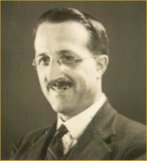
G.R.C. I have in mind our work as builders, our business being in whatever manner it falls to us to do it, to build God’s house.
If the house is to be built, the foundation must first of all be laid.
- I think there is a danger of the language of the second verse coming into our mouths, and our being tempted to say,
- “The time is not come, the time that Jehovah’s house should be built”.
- That is to say, we might feel that what marks the present time is scattering; and the enemy would suggest that now it is not possible to work out anything collective,
- thus leading us on to independent lines – individually independent, and companywise independent of other companies – and we may settle down to build our own houses.
- But the question is raised in verse 4,
- “Is it time for you that ye should dwell in your wainscoted houses, while this house lieth waste?”
- That has its application to our own personal dwellings to which we may devote our minds,
- but I think it also has application to the possibility of our saying to ourselves,
- ‘Well, as long as we can keep comfortable in our own little meeting, we won’t bother about anything further afield. We will just be a little independent meeting, and remain neutral on issues of the truth, why should we let them concern us?’
- But when in Jerusalem the Lord said, in relation to the temple, “Your house is left unto you”, Luke 13: 35.
If we go on independent lines we are treating the local meeting as our house and not as God’s house,
- so that we want to make it more comfortable for ourselves, and to leave out anything which might disturb us.
- We are then not really considering for God, because God’s house is not my meeting.
- God’s house is spread over the earth, it is commensurate with the one body, there I am not in line with God’s thoughts or the Lord’s commandment if I limit my thoughts to my own locality.
- If I am simply thinking of making it comfortable for myself the Lord will say eventually, “your house”. He will refuse to own it as His.
- So Haggai writes to encourage us to work. If God is to have any features of His house in broken days, or at any time really, it entails work and toil.
Things had all gone wrong at Corinth on almost every point. They were wrong. God had not been considered. They were temple of God but they were not acting accordingly.
- So Paul exhorts them at the end to be
- “Firm, immovable, abounding always in the work of the Lord, knowing that your toil” – it involves toil – “is not in vain in the Lord”.
- Is it worth toiling for God? Or is it better to sit down and make ourselves comfortable and leave Him out of our thoughts and practice? –
- to just have little, comfortable times of fellowship on our own, and to think that so long as we enjoy things a little nothing else matters.
- Well that is not the divine thought and we shall not be blessed on that line. Even our own matters will not flourish.
J.R.C. While the thought of individuality has been greatly re-emphasised in recent happenings, are you suggesting that although we may move accordingly
- we must never lose sight of the fact that what is individual has what is collective in view?
G.R.C. That is right. It is of the utmost importance that in, and as a result of, the present crisis
- we should strengthen our individual links with the Lord, have even closer communion with Him, and that He should become everything to each one of us.
- But if so, the house of God will become our great concern. As the Lord said prophetically,
- “The zeal of thy house devours me”.
- So it is no good speaking of our close links with the Lord if we are not marked by a similar zeal.
A.G.J. Has the apostle in mind the danger of this kind of thing when speaking to the elders in Acts 20?
G.R.C. He puts the responsibility on them to shepherd the assembly of God and that would mean that
- the assembly of God should answer to what it really is as the house of God, “the pillar and base of the truth”.
A.G.J. And he brings them an account of his own toil, his own example.
G.R.C. Yes, showing them his hands. How he toiled to that end! His was a life of toil and unremitting suffering, and we have got to be prepared for that.
- We have, for many years, been lulled into a false sense of ease and security, and we have got to learn to accept that it will be toil and suffering till the Lord comes. That is the order of the day.
- If you look back broadly over the Christian dispensation it has been toil and suffering for all who sought to put God first.
Ques. So in 1 Corinthians 1: 2 the apostle says, “with all that in every place call on the name of our Lord Jesus Christ”. Would that preserve us from isolationism?
G.R.C. It would. It is, “all that in every place …” And even the Old Testament ends with that,
- “in every place incense shall be offered unto my name, and a pure oblation”.
- It is a question of God’s portion “in every place”. And that is why the epistle to the Corinthians was written. That was the great end in view, God’s portion in every place, in the assembly of God.
J.R.C. Would that correspond with verse 8, “I will take pleasure in it and I will be glorified”? Is that the objective we should have before us?
G.R.C. That is the objective. And how is God glorified?
- “Whoso offereth praise glorifieth me”.
- God is glorified when incense and a pure oblation are offered to His name “in every place”, because every place in that respect should be uniform.
- We have suffered from strong pressure for uniformity in outward details, but from one standpoint God delights in variety, variety in unity. There is no thought of regimentation.
- But there is uniformity in this, “incense … and a pure oblation”, offered to His name in every place.
- Each prince in Numbers 7 brought exactly the same offering, without being told to do it as far as the record goes, because that is what would mark all the tribes.
- All the local companies throughout the world would be uniform in this, that they would bring to God the incense and a pure oblation which He desires.
J.McC. The wood is brought from above; the word is “Go up”.
G.R.C. That is right. “Go up to the mountain”. That brings us to the great point of this book, and that is, laying the foundation.
- They had not got very far at the time of Haggai. They had been back from captivity 15 or 16 years when Haggai wrote, and even the foundation of the house was not finished.
- Within a short time after they arrived back in the land the foundation was stated to be laid, and Ezra 3 records their celebration of this.
- But it is evident that while the foundation was laid then, it could not have been anything like complete.
- I would assume it must have been the beginning of it, they laid the foundation stone.
- But after about 15 years’ delay and consequent on the prophecy of Haggai they laid the foundation completely on the four and twentieth day of the ninth month of the second year of Darius. God speaks of that day in chapter 2: 18:
- “Consider, I pray you, from this day and onward” –
- from that particular day, from the four and twentieth day of the ninth month, from the day that the foundation of Jehovah’s temple was laid. Consider it!
- But I cannot see that we have yet laid the foundation.
J.McC. Do you feel we may tend to be too much occupied with what is around and what we have left?
G.R.C. Yes. It is an important matter, this, because God calls our attention to it. “Consider. … from this day …”
- See the importance God attaches to a foundation being laid that is right.
- And we are told in Corinthians that as far as the house of God is concerned
- “other foundation can no man lay besides that which is laid, which is Jesus Christ”.
- From the divine side it is laid. Paul laid it. Others have laid it. “The foundation of the apostles and prophets”. What was that foundation? Jesus Christ! They laid it.
- But then you see in a day of recovery we have got to lay it. We have not got the apostles here to lay it for us. We have to lay the foundation, and if it is to be the house of God that we are building,
- it will not be the house of God in character unless it is on this foundation.
- We can lay another foundation but the structure that will arise will not be the house of God.
- We might lay a foundation for a legal system. That is not the house of God.
- We can lay a foundation for an ‘open’ system, but that is not the house of God. The foundation must be Jesus Christ.
Ques. You were linking with this the mountain and the wood, were you?
G.R.C. Yes. In Matthew 5 the Lord went up into the mountain, and His disciples came to Him, and He opened His mouth and taught them.
- What did He teach them? It was about Himself. He taught them the features of Himself, Jesus Christ. He opened His mouth and said,
- “Blessed are the poor in spirit, for theirs is the kingdom of the heavens. Blessed they that mourn, for they shall be comforted. Blessed the meek, for they shall inherit the earth. Blessed they who hunger and thirst after righteousness” – they who must have righteousness – “for they shall be filled”.
- Now I believe you get the idea of the wood there. On the one hand you have gone up into the mountain and then as the Lord further says in Luke 6
- “he that comes to me and hears my words and does them, I will shew you to whom he is like. He is like a man building a house, who dug and went deep and laid a foundation on the rock”.
- Well, the rock is Jesus Christ in another aspect. If you think of the tabernacle the foundation was acacia wood which speaks of Jesus Christ.
- If you think of the structure from the standpoint of Solomon, the foundation would be the rock, that is Jesus Christ.
Ques. Does that suggest what is stable?
G.R.C. When you refer to what is stable, you mean the foundation? There is no stable foundation other than Jesus Christ. Well now, did Jesus Christ ever compromise?
- He loved righteousness and hated lawlessness. And He looks to us to hunger and thirst after righteousness.
- But in the way we do it, it is as poor in spirit. Not the hard legal righteousness of the Pharisee which is not righteousness at all, but according to God utter uncleanness.
- A righteous man, as the chapter shows, would be poor in spirit; he would be a mourner because of the unrighteousness and lawlessness around.
- He would be meek, never standing up for his own rights but for the rights of God.
- He would hunger and thirst after righteousness, the longing of his soul being to have things right according to God.
- He would be merciful, not laying down rules to be mercilessly carried out even if they are in themselves literally right.
- Even if a thing is right in itself you do not carry it out without mercy.
- “Blessed the merciful, for they shall find mercy. Blessed the pure in heart, for they shall see God. Blessed the peace-makers…”.
- But you cannot have peace unless it is based on righteousness – there is no other true peace. It is “Peace, peace! when there is no peace” if you overlook righteousness.
- So “Blessed the peace-makers, for they shall be called sons of God”.
- Well, there you have the house, “… sons of God”, the ones who can serve God in His house.
- But then if you are on that path you will be hated and reviled, reproached and persecuted, and they will say “every wicked thing against you, lying”, for Christ’s sake, but you are to “rejoice and exult”.
- Now that is bringing down wood from the mountain, I believe. We may say they are the laws of the kingdom, and so they are, but the laws of the kingdom merge into and secure material for the house.
J.R.C. Do the features of grace and truth enter into this matter of laying the foundation?
- There is a tendency in many quarters to sacrifice truth that we held and loved; but we ought to hold on to that, ought we not?
- And though we are to hold it in the power of grace we must not sacrifice it for a broad outlook compromisingly.
G.R.C. We must not, because you cannot separate grace and truth.
- They are united in chapter 1 of John by a singular verb in the original text and the New Translation. It reads, “grace and truth subsists”, the verb being in the singular, as though grace and truth constitute one thing.
- As the note says, they go together in the Person of Christ. That is, it is not the grace of God if it is not truth, if it is not in keeping with truth.
- It may be what men call grace, but the grace of God is inseparable from truth. It is the true grace of God in which we stand.
- And to the Colossians, Paul speaks of the time when they heard and knew the grace of God, in truth.
- You cannot separate them. We are to maintain grace and truth which subsists through Jesus Christ. He is the foundation. What do you think?
A.P.C.L. Yes, I am enjoying what you are saying because it is so important. When the people came up from the captivity it says they set the altar on its base. This is the first thing that is recorded, is it not?
- While it says that fear was upon them because of the people of the countries, what they had in mind was that there should be a portion for God.
G.R.C. And that is the great objective which we must keep before us.
- Why do we want the house to be built? So that priestly service can go on, so that God can be served as He desires to be served.
- And He can only be served in holy surroundings where He can dwell. The word “base” is not used anywhere else in Scripture relative to the altar.
A.P.C.L. Is it not the place where the blood of the sacrifices was emptied, the bottom of the altar? But Ezra 3: 3 is the only place where the actual word “base” is used.
G.R.C. Yes, the reference is to the bottom of the altar, in Exodus and Leviticus, so that Ezra 3: 3 seems to show that
- in a day of recovery foundations have to be looked to, and this is so whatever you are constructing.
- The first thing is the altar, and so it was at the beginning of the present recovery, that is, the idea was to separate from unsuited conditions so that the Lord’s supper could be celebrated.
- That was the first idea, it was the idea of the altar, breaking bread and responding to the Lord and to God, because in sectarian conditions, though persons may come together to break bread they do not eat the Lord’s supper, as Paul tells the Corinthians.
- Corinth was a fine and gifted meeting outwardly, but the apostle has to tell them that when they came together to eat, it was not the Lord’s supper.
- And the moment we allow something out of accord with the foundation, we do not eat the Lord’s supper, whatever we may claim about it.
- The Lord’s supper is when the Lord is present. We can go on for some time perhaps and yet not realise that He is not present.
- The Corinthians might have thought He was present, but Paul says it was not the Lord’s supper. He was not there, there were not the conditions, because they had divisions among them.
Ques. Would getting the gain of the passover as set out in Luke’s gospel help us to eat the Lord’s supper morally and truly?
G.R.C. It would; that is most essential, to be in the gain of the passover; to be sincere and true, in other words.
Well now, in the present crisis, brethren who have come ‘out’ have greatly enjoyed the Lord’s supper. I believe the Lord has been there, and we do not want to miss Him.
- I dread lest somehow or other, something should be allowed and we lose the sense that we have of the blessed presence of the Lord.
- We cannot link it with any position or any particular body of persons, whether ourselves or anybody else.
- What we do know is that it is very easy to forfeit the Lord’s supper, and we not want to forfeit it.
- Since we came ‘out’, the Lord’s supper has been a great thing to us, a wonderful time, but if that is to be preserved, if the altar is to be safeguarded and not exposed to influences around, you must have the house.
- So you must get down to this question of building. What foundation are we on? What is the ground of fellowship?
- Well, in Haggai’s time though they had begun, for fifteen years the work lapsed.
- The work of building has tended to lapse with us in recent times, and if you do not get on with the work of the foundation you are in a very dangerous position.
- I think the time has come when we ought to apply ourselves earnestly to ensuring that the foundation is well and truly laid.
- We must not stop at the foundations, we want to build the house, but let us get the foundations properly laid.
A.G.J. Do you mean that we cannot compromise on principles, on issues of the truth, as otherwise we are not laying the foundation and we are not building? Is that what you have in mind?
G.R.C. Yes. If we do not lay the foundation we cannot start on the superstructure, can we? Then we want to get the living stones built in.
- We do not want bricks. Those we have left are brick-making, as in the case of the tower of Babel. They are trying to mould old and young to their one pattern of thought, which, sad to say, is antichristian in the main.
- But they want everyone in a mould, from twelve years of age – or is it now much earlier? – and upwards. That is brick-making.
- “Asphalt for mortar”, it says. Well, asphalt is nasty stuff, and attempts are made to bind men together by all sorts of motives, usually self-interest, or pride, and that kind of thing – that is just asphalt.
- But God is building with living stones bound together in the divine nature, which they are partakers of, which is the true binding element, and there is no other.
- There is plenty to get on with in building; but we must see to the foundations, then we can look out for the living stones coming to light, and in divine love bind them together.
Ques. You mean that evangelical activity will take colour from that?
G.R.C. Well, it should do. If we are right at the foundations we shall be right in our activities.
- It is evident we have not been so for many years, and thus evangelical activity has not been good.
- It has been taken up as a duty, such as you ought to be present in the open air preaching and you ought to pray for the gospel on Lord’s day evening, and when you have carried out such formal matters you have fulfilled your obligation.
- But that is not the gospel or the level of the gospel. It is not the attitude of one who has really got glad tidings in his heart, for he is full of them.
- He is talking about them morning, noon and night, he cannot help it. He is so happy and living waters are flowing out from him all the time, he cannot keep it in.
- That is what we want to get to. And for that there has to be first love for Christ, and therefore loving God with all your heart, soul, mind and strength.
- If we were like that we should be good evangelists, and God would give us living stones, fruit of His own work.
P.S. I have been thinking of the expression, “Consider your ways”.
G.R.C. Yes. Do you not think we should do it now, at this minute?
P.S. Yes, I am sure.
J.R.C. And are you encouraging us in order that we might go forward in the defining of situations in each locality, so that the truth of the assembly might be recognised in a unified way?
G.R.C. Yes. We want to be poor in spirit, “an afflicted and poor people”, and we want to keep like that, poor in spirit, in a spirit of mourning, and meek;
- so that it is not a question of my rights, or that I may have been overlooked, or anything of that.
- It does not matter what happens to me – the question is one of God and His rights – meek, and hungering and thirsting after righteousness.
- But you do not set aside your poorness of spirit in order to get righteousness.
- These things blend, and while you are hungering and thirsting after righteousness you are merciful, “Blessed the merciful”; that is to say,
- you do not try to enforce righteousness in a legal way, you act in the spirit of the new covenant, in a merciful manner, yet without compromising.
- But you are merciful, and a peace-maker, you do not want war if you can avoid it.
Ques. Are you thinking of the continual burnt-offering the morning and evening lamb?
G.R.C. Quite so. We need to maintain these things all through the day.
- We need to be up in the mountain with the Lord, hearing His words afresh, as they reach us in living power,
- and seeing them all exemplified in Him, Jesus Christ the Man of God’s pleasure,
- and you know it is not only that the foundation is Jesus Christ, but He is the headstone too.
- You see to the foundation, that is Jesus Christ, but then all the
building is Jesus Christ. You do not build anything in except Him.
- You know nothing except Jesus Christ, and Him crucified, so you are not building in any other man – whoever he may be – on the way up.
- It is Jesus Christ, and then when the building is complete there will be the bringing forth of the headstone with shoutings, “Grace, grace unto it!”
- What is the headstone? It is Jesus Christ. It is all Jesus Christ.
H.B. Is that the thought in His invitation in Matthew 11, “Come unto me”?
G.R.C. Yes. What we have to learn is that those invitations to come to the Lord in the gospels do not refer simply to an initial coming when we first come to the Saviour.
- I believe they are intended to be daily matters with us.
- “Come unto me all ye who labour and are burdened”.
- How often in the day do we get burdened? Well, the Lord says the moment you feel burdened, come to Me.
H.C. So that it is characteristic to keep on coming to Him, even as in Matthew 5 there is what is characteristic of the sons of God?
G.R.C. I think so, and, you see, if we come to Jesus now we can only come to Him as a glorified Man in the presence of God. That is where we come to Him.
- We come to the glorified Man as soon as we feel burdened. He says, “I will give you rest”.
- And when you feel thirsty you come to the glorified Man, “If anyone thirst, let him come to me and drink”.
- Well, you need to drink more than once a day. That is why the living waters are not flowing out, because we come to Jesus so little.
H.C. Is the plummet to be in the hand of the Lord?
G.R.C. Yes, that is when we get on to the structure. We have got the foundation, then when you come to the structure the plummet is there to ensure that nothing but Jesus Christ is put on the foundation; it is applied at every point.
H.C. There is always a tendency to deviate or compromise, especially at the present time, in view of the pressures that are experienced.
G.R.C. Yes, that is always the danger.
R.R.H.B. The structure is to correspond with the foundation which is laid, which is Jesus Christ – that order of manhood. The boards of the tabernacle were of acacia wood, overlaid with gold.
G.R.C. The foundation of the tabernacle system, in a way, was acacia wood, all the way through,
- although in another way the foundations were the bases of copper in the public position, and the bases of silver in the inside position.
- But the foundation of the structure generally was of shittim or acacia wood. The gold was put on that.
Rem. And if the work of construction is to go forward more and more living stones are needed, are they not? I was impressed by the reference you made to the gospel preaching.
- Paul was a great preacher and he always had that in mind, yet his spirit was painfully excited in him at one time seeing men going on without God. Is that what is needed?
G.R.C. That is just so. So he spoke every day with those he met in the market place. There was living water flowing in Athens.
- I would like to think of living water flowing here in Airdrie every day, rivers of it.
- Rivers of it, because it is all very well to say, “whosoever will, let him take the water of life freely”,
- but where is the water of life? If he is to get it, where is it?
- Well, it is flowing out of the bellies of believers. It should be. There should be plenty of it in every town where there are believers.
A.P.C.L. One citizen, at one point, was accused of preaching about “a certain Jesus”. That would be the laying of the true foundation, would it?
G.R.C. Yes, it would indeed. Go on, Mr. L.
A.P.C.L. It is all so important, is it not? But then when you speak about Jesus Christ, people immediately say, ‘Well, I know Mr. So-and-so, and he is a very nice person, just like Jesus, and why can I not break bread with him?’
- The very fact of the character of the thing being so simple and so perfect, is, in a certain sense, a difficulty to some persons,
- who do not discern that a person’s associations have to be considered according to the instructions laid down in scripture.
- I was only wondering as to setting the altar on its base; it is a question of “the altar of the God of Israel”, but according to the word of “Moses the man of God”.
- Now would that mean that while the thing is there, and you value every believer, yet you must take into consideration their associations?
G.R.C. So in Haggai God says, “The word that I covenanted with you, when ye came out of Egypt, and my Spirit, remain among you”.
- Of course, persons who say, ‘He is so like Jesus’, may not have apprehended Jesus very much, because they may have omitted to realize that He loved righteousness, and hated lawlessness – hated it.
- He would not tolerate it. He would be gentle and gracious to those who were learning righteousness, and ready to learn, however many times they made mistakes,
- but for a man who turned his back on righteousness, like the Pharisees who yet, in fact, claimed it, He says, “I have not come to call the righteous”.
- They claimed to be righteous but they were not righteous. It was the worst form of unrighteousness to make such a claim in that way. The Lord left them and went away.
- And in Matthew chapter 23 we can read the unsparing condemnation of them from the lips of the Lord Jesus.
- So that one great feature is hungering and thirsting after righteousness.
- If people say, ‘he is such a nice man, and like Jesus, I would like to walk with him’, I would say,
- ‘Well, so would I, but I cannot walk with him unless he is hungering and thirsting after righteousness. If he is ignoring righteousness, well, I am not, therefore we cannot walk together’.
H.B. Is that “lay hands quickly on no man”?
G.R.C. Yes, when it is a question of fellowship.
Ques. “Shall two walk together except they be agreed?”
G.R.C. Quite so
Rem. Paul discerned, in Acts 16, that Lydia was one he could identify himself with. She was judged to be faithful to the Lord.
G.R.C. That is so. She was good material, and so was the jailor – excellent material; and Paul speaks in his Philippian epistle of the supply of the Spirit of Jesus Christ.
- Now the Spirit of Jesus Christ involves hungering and thirsting after righteousness, as well as being meek and poor in spirit.
- So there is no compromise, some just do not understand Jesus in that aspect.
J.R.C. I was wondering if you would say a word in regard to this matter of righteousness.
- It might seem, as Mr. L. has suggested, that a person exhibiting features of Jesus was moving in a path of righteousness to some extent,
- but have you in mind that righteousness has a much broader application, every-day righteousness?
G.R.C. Oh, yes! Righteousness involves keeping God’s commandments.
- If you take, say, 1 Corinthians, just as an example, what is included in that is not only the passover, that I should be sincere and true in all my words and deeds – that in itself would put an end to compromise –
- but that I, should recognise the truth of the body as part of the Lord’s commandment.
- I could not possibly be a righteous man, if I have the light of that, and yet go on with independent meetings on the principle of independency.
- I could not possibly, if I have the light of the body, and am a righteous man, go on with sectarianism in any shape or form.
- Otherwise I disobey the Lord’s commandment, which is that we should govern ourselves by the fact that we have all been baptised into one body.
H.C. There is no suggestion of there being more than one house. In Haggai 1: 8 God tells them to “build the house”.
G.R.C. Quite so, that is just it. The house of God is one. And the body is one, and therefore
- every locality should be governed by the light of the oneness of the thing they belong to.
- We belong to one body, that is the secret side of it, and the one body, being the assembly, is God’s house.
A.P.C.L. I would like you to say some more about independent gatherings especially, because it seems to me that the brethren are weary. They have suffered a lot,
- and they may not seem somehow able to face up to crises that arise, and it is such an easy way out if someone comes along and says,
- ‘Well, you can just be a nice quiet independent company, and it does not matter what is happening among your neighbours, there is no issue for you’.
- It seems to me that it is a direct attack of the enemy, because of the conditions of weakness, weariness and tiredness, that are upon the saints generally, and we have to recognise it.
- Now can you tell us how we can help one another to strengthen ourselves in these circumstances?
G.R.C. Well, I hope we shall strengthen one another this afternoon. I need it, because I know that feeling well enough, that tired and weary feeling, that longing for peace.
- You would almost have peace at any price, you long for it so, but then that would be, “peace, peace, when there is no peace”. Peace at any price is not peace.
- Before long, however much you tried to guard your locality, it would be invaded. Satan will see to that, and
- if you give way on this principle long enough you will find that when the time comes to make a stand, you are weak, and if you are not careful you will be overthrown.
H.C. In chapter 2 verse 9 Jehovah of hosts says, “and in this place will I give peace”.
G.R.C. That is very good. “In this place will I give peace”. Well, that is the kind of peace we want.
H.C. So that Jerusalem will then correspond with its name.
G.R.C. Yes. You mean Jerusalem means “the place of peace”. And if God gives peace that is what we want, the peace He gives.
J.McC. What about the man that stops at home, and does not go anywhere but says he is waiting on the Lord to show him what to do, or something like that?
G.R.C. Well, that is a somewhat similar sort of thing taken to a greater extreme.
- The Lord does not want people to stop at home, we are soldiers of Jesus Christ, we are to go forth in the conflict. We do not help anybody, not even ourselves, by stopping at home.
J.McC. And we are denying the Lord of His rights. His own personal rights.
G.R.C. Yes.
B.G.H. And are we not rather mistaking the scripture that has been quoted,
- “Shall two walk together except they be agreed?”, Amos 3: 3.
- The two referred to are God and His people. It is not an agreement between persons as to what they shall do. But that was an appeal from God to His people.
- It is a matter of recognising what God requires, and not a human arrangement at all.
G.R.C. That is very important. So that the first element in fellowship is walking with God, then we can think about walking with one another.
A.G.J. So that at the end of chapter 2 verse 4 Jehovah says, “for I am with you”.
G.R.C. Well, if God is with us who can be against us, who can disturb us?
E.R.S. Is not the timing of the prophetic word in Haggai 1: 15 and 2: 1, significant in view of Leviticus 23: 26-36?
- The day of atonement and the feast of tabernacles would have been celebrated in between the starting of the building and Haggai’s word.
- We cannot build rightly except in the continued sense of the greatness of Christ’s atoning work.
G.R.C. Yes, very good. Haggai’s name means “feast of Jehovah” according to the note. As though the maintenance of the feast is important to strengthen us.
Ques. You referred to the Lord’s commandments. Is there a danger of confusing what we are “in Christ” which refers to all Christians, and the Lordship of Christ which involves certain rights over us?
G.R.C. Yes. And then you see the enemy’s attack is on anything corporate and collective.
- That is why we have come out of “the camp” because collective associations in the camp are man-made, based on man’s rules – sometimes one man’s rules – and ordering.
- And everything man-made we have to leave. God calls us out. The true tabernacle was pitched by the Lord, and not man, therefore we leave everything of man, we want nothing of it.
- Personally, I define the camp as what is man-made in religion.
B.G.H. And we do not want to bring those man-made things into the preaching of the gospel, do we?
G.R.C. No, we do not. We have left it, we have left the camp, as I think a brother said the other day.
- It is no good asking a preacher to your meeting if you have to tell the convert afterwards, ‘Well, do not go with the preacher, we are not walking with him really’.
E.R.S. You would be confronting the convert with a testimony to division and forcing him to choose between two men, instead of leaving Christ supreme in his vision.
G.R.C. How could I take someone to hear a preacher if I have got to tell him afterwards, ‘Whatever you do, do not follow the preacher. You have got the blessing through him, but do not go with him’.
- Anyway, we must be free of the camp – though God does not forsake the camp, and that confuses some people. We are never told that the manna stopped nor that the water from the rock ceased to flow.
- God did not abandon the camp, but those who sought the Lord went out to the tent of meeting, far from the camp.
- We must not be confused with God’s faithfulness, for “God is faithful”. So that manna, and some spiritual refreshment, are still there in the camp.
- Brethren who have not been brought up among the saints mostly see this,
- but those who have been brought up amongst brethren, when they find there is manna and some refreshment in the camp, may be so surprised, that they say, ‘Well, the camp must be right then’.
- But it is not so at all. Those of us who were brought up in ‘system’ so-called, know well enough that God does not forsake Christians in system, we have got no illusions on that at all.
- We know there is manna there, but manna, wonderful as it is, and attractive – and we neglect it far too much – is for support in our daily responsible life.
- And Satan does not make his great attack on that, because he rather likes to have people who are godly and upright, and feed on Jesus as the manna, and to attach them to his system. It makes his system look respectable.
- What Satan is particularly against, however, is corporate and collective truth which secures to God His portion.
- So Satan is against the truth of the body, of the house, and of the temple which is linked with the house, as the inner part of it, he is against the truth of the bride, and the city. He would destroy every vestige of testimony to those things if he could.
- And that is what is paramount, to ensure that the features of the body, and the bride, and the wife, and the house, and the temple, and the city, are maintained.
- For that you need not only manna, but also priestly food, and other foods such as the old corn of the land. And you find such food is not generally appreciated in Christendom.
- If you were to talk about these foods, they would not want you, and you will find that in the case of brethren who are wanting to go on ‘open’ lines,
- the only kind of ministry they want is that which just encourages them to individual godly devotedness in their homes and businesses, and so on. Well, Satan is not much against that.
P.H. It says, “The Lord knows those that are His”. He does not forsake them, and “Let every one who names the name of the Lord withdraw from iniquity”. It is a question of what is here connected with the name of the Lord.
G.R.C. That is right.
P.H. That is, we go forth to Him without the camp.
G.R.C. That is just it. The name of the Lord is a great matter, and the name of God. We should be gathered to the Lord’s name.
- Now where does God put His name? He put His name in His house at Jerusalem, and it is as we are true now in character to the house of God that we shall have the Lord’s presence,
- because that is what it means by being gathered to His name. It is not just a formal matter.
- You may say, ‘Well, we are Christians, and we come together and we pray to the Lord’. That does not mean you are gathered to His name.
- His name is inseparably linked with His house, and with what is proper to His house, that is where He puts His name.
G.W. Do the living stones come to light for the building up of God’s house in persons moving to Christ as Lord, that is, going forth to Him without the camp?
G.R.C. They do. Yes, very good. That is how living stones are made, I believe, in going forth to Him.
Ques. Would 1 Timothy suggest that the true pursuit of piety would lead to our finding our place and knowing how to conduct ourselves in God’s house, which is the assembly of the living God?
G.R.C. Yes. Well, that is just it. So that the manna, nourishing people on the manna, has in view securing pious men for Himself and His house, as you say, not stopping short and adorning this world.
A.G.J. So if I find that a divine principle is denied in another gathering, is there not an obligation on me to face the matter, that is if I value the corporate truth?
G.R.C. If it is another gathering at a distance, any individual can write to them about it, and lay it on their conscience,
- but if any administrative action is to be taken, it must be by the nearest gathering.
- We have to abide by the rules, it says, “he that strives must contend lawfully”.
- Great care is needed before we intrude on another locality without reliable knowledge of the local facts. There is great danger in baseless meddling.
A.G.J. I was thinking of the way it is to be worked out with them, with priestly feeling, and no legality.
G.R.C. Well that is what we need help on, how to face it in a right spirit and according to the law of God.
A.P.C.L. Other localities’ matters cannot be adjudicated in meetings at a distance, can they? Unless there has been a definite issue at the place where they are, where they lie.
G.R.C. Well that is what I understand.
J.McC. And you feel that we may be obligated to write to them, particularly if they are at a distance, if we have a particular matter?
G.R.C. Yes, I think we have to keep it to an individual writing, generally. If we are writing to another meeting about problems, put it on an individual basis first, and then if we cannot get satisfaction refer it to the nearest meeting, I would judge, to get their judgment on it.
A.P.C.L. Yes. I would think that. The tendency in confused times like these may be to take some kind of action that is not fully in keeping with what you were saying about striving lawfully, and keeping to the rules.
- But if we expect matters to be done according to the principles of the house of God, we have first to apply those principles to ourselves.
G.R.C. That is what I feel, that in standing for what we know is right we may ourselves depart from the principles of the house, the principles we are trying to maintain,
- not perhaps on the line of looseness, but on the line of not handling things according to divine arrangements.
B.G.H. We need to act constitutionally, do we not?
G.R.C. Yes.
A.T. So that if a complaint is made against a locality on the part of any other locality or anyone in it, we should not accept it without first inquiring of the locality against whom the charge has been brought.
G.R.C. Well, we should first enquire whether the rumour is true; that would be better than to talk about it – but withal not forgetting the responsibility of the nearest meeting according to Deuteronomy 21.
Page Top Article Top
CHRIST AS FOUNDATION,
STRUCTURE AND HEADSTONE |
|---|
Zechariah 3: 1-7, 8-9; 4: 1-10; 6: 12-13
Malachi 1: 11; 2: 1-2, 4-7
Address at Airdrie, September 29, 1962
God's Chief Interest on Earth, Notes of Meetings, 3: 23-38
|
|---|
I wish to speak, dear brethren, of the great objective in view in the work of the Lord which Paul calls “your toil” – “your toil is not in vain in the Lord”.
- If you want people to work hard at something, they must know the objective. You must give them an incentive to work, so that they realize what they are labouring for.
- And the great objective in church exercises and labours is that God might have His portion, that
- “in every place”, as He says, “incense shall be offered to my name and a pure oblation”.
- And with that in view we must, in its features, build the House, for we cannot connect God’s Name with that which is unsuited to Him.
- Men may do so. Men connect God’s Name with all kinds of things, but God does not, and we ought not to identify God’s Name with anything with which God Himself does not connect it.
- God connects His Name only with what is suited to Him. He cannot associate His Name with what dishonours Him and displeases Him, and therefore yields nothing to Him.
- Much of that with which men connect God’s Name is simply for the pleasure and will of man, as Paul says when, in Colossians, he speaks of men’s religious works as for the satisfaction of the flesh.
But God would deliver us from all that, in order that, with pure hearts, we might seek His pleasure,
- and conduct ourselves as those who really are members of the one Body and are true to it,
- and as those who really do belong to the House of God and are true to it.
- While we cannot restore things publicly, God looks for the features of an afflicted and poor people who trust in and call on the Name of the Lord – “the Name”, having respect to that Name, as it says of Levi,
- “he trembled before my name”,
- “he feared me and trembled before my name”,
- and of the recovered remnant it says they “thought upon his name”.
- I cannot conceive anything greater to think about or meditate upon. We are apt to let our minds drift on to mere trifles, but the remnant in Malachi feared the Lord and thought upon His Name.
- The more you really think upon God’s great Name and all that is due to it, the more it is going to affect you and bring you into accord with it.
- It says that they “spoke often one to another”. What would their theme be? It would be what they were thinking about.
- What we speak about is what we are thinking about, and so they would be speaking of God’s Name, and what was suited to that great Name, and what was for His pleasure.
I think we can recognize amongst that remnant in Malachi, features of God’s house. God says,
- “and I will spare them as a man spareth his own son that serveth him”.
- All that God desired in its moral features were found amongst them even as we find in Luke.
- There was a priest serving according to the order of his course in the midst of the general departure and ruin and Pharisaism.
- There, there was a priest and his wife, just before God, and, in the order of his course, maintaining what was due to God in His house in a day of great weakness; although, alas, in some respects even he was marked by unbelief.
- But then we would concentrate on the true objective, which we need to keep steadily before us, and not be diverted.
- If God is to have the incense and the pure oblation offered unto His Name this can only be in conditions corresponding with His house,
- and therefore to reach that objective we must get down to foundational truth, and see that the foundations are truly laid in our souls – that is where they must be laid – and then labour at rearing up the structure.
- God has brought in the living stones, then we must use the true mortar, the tempered mortar of the divine nature, that we might be built together.
- God is working from His side, and we are being built up a spiritual house, but there is the question of our side and our responsibility to see that this is going on and to have our part in it.
- “We are God’s fellow-workmen”, Paul says, and “ye are God’s husbandry, God’s building”.
- But Paul was thoroughly engaged in it, and we are to be so engaged, therefore we must first see to the foundation, a very essential and present and urgent matter that the foundation is well laid in our souls.
- Then we are to build one another up and build ourselves together in the divine nature to the exclusion of evil – what is contrary to God –
- so that in the power of the Spirit there might be down here, so far as there can be in our mixed state, in our flesh and blood conditions, that which corresponds with the place above.
- Our place above is already prepared, but what about the place down here for God? David said he would not give sleep to his eyes or slumber to his eyelids until he had found a place for Jehovah down here.
- The place above is perfect and we can enter there in spirit, but it is a question of something down here, because it is in that setting that the incense and the pure oblation are to be offered unto God’s Name.
- So that the building of the house has that objective in mind, that God might have home conditions, as we might say, even in a world where His rights are disowned, and that this incense and pure oblation might be offered unto His Name.
Well now, there are two related aspects of this matter – one is the structure, the building, and the other is connected with husbandry, and these two lines run on together.
- “Prepare thy work without”, it says, “and put thy field in order, and afterwards build thy house”, Proverbs 24: 27.
- We have to look after one another, both as husbandry and as living stones.
- The husbandry thought coming first, and on that line the Lord Jesus who is, of course, always unique, is referred to as “the Branch”.
- The husbandry thought is linked more with what we are as the priesthood. There is the house and there is the priesthood. We are both, “a spiritual house, a holy priesthood”.
- But the Lord, as the priestly King, is referred to as the Branch which really means, as the note says, “the Sprout”, which is connected with the thought of “growing up”, as it says of Him,
- “He shall grow up from his own place”.
- There is this thought of growing up as Isaiah says,
- “He shall grow up before him as a tender sapling, and as a root out of dry ground”.
- What a wonderful contemplation! The Lord Jesus growing up out of His own place, the One who is to bear the glory, growing up out of His own place as the promised Branch or Sprout.
- It is connected with the priestly King. He sprang out of the tribe of Judah.
- In connection with Zechariah we have the two thoughts in two different men: Zerubbabel, the kingly side, and Joshua, the priestly side. But they combine in Christ, and are combined in the saints now.
- It is not God’s thought to separate them, having been perfectly expressed in Christ, in the same Person, they are never to be separated again.
- In fact the first person stated to be priest in Scripture was King of righteousness, King of peace – Melchisedec – priest of the Most High God.
- And so Christ has made us, to His God, kings and priests, and in that respect we are all sprouts and are to grow up out of our place in order to grow up to Him who is the Branch.
- So that, in our measure, we should function as priestly kings too. Christ, the One of course ever pre-eminent, has died that we might be qualified for this highest office in the universe.
- Sonship is a relationship, priesthood and kingship are offices, now combined. And God has willed that His Son should hold the highest office, and that we should be nothing less than kings and priests.
- And as right with God, and moving in the affections of sonship we shall not fail Him.
- David and Solomon were an example of this in the type. Both were sons, and God says of David,
- “I will make him firstborn, the highest of the kings of the earth”,
- and of Solomon, “I will be his father, and he shall be my son”.
- They were both priestly kings, they were priests upon the throne. Though not officially the priests at that time, they led in the service of God, organised it, directed it. But they are just a faint type of Christ.
- We need to get before us the glory of the One who is indeed the Branch, the Sprout, who has grown up out of His place and is now bearing the glory, and sitting “a priest upon his throne”.
- The One who is building the temple from the divine side. He is building it and nothing shall stop Him. “I will build my assembly”, He said, Matthew 16: 18.
So you can see that the husbandry thought must come first because it is the One who as the Branch grew up out of His place who becomes the Builder.
- Unless the husbandry side prospers there will be no building now.
- We need to grow up out of our place and develop in spiritual sensibilities and in the knowledge of God so as to become builders.
- Thus Paul puts husbandry first in saying to the Corinthians,
- “Ye are God’s husbandry, God’s building”.
- He cared for them as God’s husbandry, had spent 18 months amongst them, but they had been blighted by partisanship and so on, and the result was that their hands were slack in building. Indeed they were building with wrong material.
- All this bears on what I have been saying that the great objective is that God should have His portion in His house, but we must first have this thought of husbandry so that it may be brought about for His own satisfaction.
- The idea of “living stones” is that we are built together, it is the structural idea, living and full of life. But it is the permanent structure, things being established in our souls so that we are immovable, like stones fixed in a building, but living stones.
- We do not move from principles. We stand for what is of God, we know what is due to God and we are set for it and fixed in it. That is one side.
- The other side is, that having grown up out of our place, we develop more and more as kingly priests to serve God and to represent God. This is the great objective to have before us.
- I do not belittle the idea of saving souls, I believe the more we are in this the more we shall save souls, and really save them, not leave them at the point of knowing their sins forgiven,
- but concerned as Peter was to bring his converts to the end of their faith, the salvation of their souls, and that is present salvation, so that they might function as kingly priests.
- Because, you see, you cannot function in liberty as a kingly priest unless as a present matter you are in practical salvation.
- We have ‘ups and downs’, I know, but how blessed it is when we reach the end of our faith, the salvation of our souls, liberated from everything and free to serve the living God, with hearts welling up in worship to Him.
Well, that is the objective we are to have before us, and if we keep it before us we shall be stimulated
to face what is involved, to face the hard work of building, to face the hard work of removing the rubbish, to face the conflict –
- because the enemy is trying to stop the building, and he would attack us from every angle to make our hands weak and slack either by violence or by corruption.
- The enemy would weaken our hands in the work as he did with the remnant of old, so that, though we may start, and start well, we may get slack.
- Fifteen years elapsed from the day they began to lay the foundation of the house till the time they finished it. Fifteen years!
- Well, let us get on with things, dear brethren, and, as having the true objective before us, work – and do what we do with all our might in this world.
- Our toil is not in vain. It may seem to be, but we are assured, “your toil is not in vain in the Lord”.
But now, we began with referring to Joshua, and one verse which is outstanding in chapter 3 is Zechariah’s own contribution, as we might say, to the meeting, when he says,
- “Let them set a pure turban upon his head”.
- See this young man breaking out in spirituality. There were all those standing by, the angel of the Lord and others, and it says,
- the Angel “spoke and said unto those that stood before him, saying, Take away the filthy garments from off him. And unto him he said, See, I have caused thine iniquity to pass from thee, and I clothe thee with festival-robes”.
- Then this young man, Zechariah, speaks up, and he has got the right objective before him. He says,
- “Let them set a pure turban upon his head”.
- That is really the end in view, get him suitable and ready for the priest’s office.
- God made room for this young man to express his exercises, and how it must have stirred everybody present as they saw that he had the divine objective.
- And we want the young men and young women now to get this divine objective.
- Do not be diverted by popular evangelisation which can never bring people into this, as it has not this objective.
- Get God’s objective before you, young man or young woman, let this be your language: “Let them set a pure turban upon his head”.
- It is worth labouring for, from youth onward, that there should be an adequate response to God, not that we can ever say it is really adequate, but that there should be a response that will give God pleasure.
- Our thoughts go to Christ especially as to the pure turban, but Joshua was representing the people as the high priest, and he had had filthy garments on him.
- But now how wonderful to have a pure turban upon our heads as engaged in the priestly service!
Now if we are to reach that, we must be established in the truth of the gospel, and that was what was needed at this stage
- Joshua was clothed in filthy garments, the sins of the dispensation.
- I wonder whether we have understood enough the sins of the dispensation!
- The sins of the early Church, the sins of the dark ages, the terrible sins committed in opposing Reformation truth, the sins of not going on to completion in Protestantism,
- and the terrible sins that have been committed during the last year or two amongst those we have known.
- The sins of the dispensation all coming upon us, the whole array of it, filthy garments. You see, he represented the people, represented the dispensation.
- You may say, ‘How can we take up this service with all this load of sin upon us? Our sins, and the sins of our people, they crush us right down!’
- But the wonderful thing is to learn over again the truth of the gospel, and to apprehend that
- when Jesus went into the darkness and distance as being made sin for us and bearing our sin He bore all the sins of the dispensation.
- He not only bore our sins as sinners as we speak, but bore our sins as Christians, which are worse in a way.
- He took account of the whole solemn matter. He looked down throughout the dispensation and all was borne by Him on the Cross.
- Wonderful grace! All was taken into account! He bore the iniquity of the sanctuary right down through all the years!
So that what we find, as we confess our sins and the sins of our people, as Nehemiah did and Daniel did, is that
- the work of Christ is so efficacious and the gospel message is so great that there is still glad tidings even for Christian sinners, even for those who as Christians have forfeited everything.
- There is still glad tidings. The Angel would, as it were, say today,
- “Take away the filthy garments from off him. And unto him he said, See, I have caused thine iniquity to pass from thee”.
- In another and different aspect we are always bearing it in our spirits, but when we are before God the sense of it is caused to pass from us,
- “See I have caused thine iniquity to pass from thee”
- – although they are the dispensation’s sins and our sins – he causes them to pass from us. He says,
- “and I clothe thee with festival-robes”.
- It is the best at the end of the dispensation. God would bring in His best, because He is not defeated. The atoning work of Christ is so marvellous and efficacious and complete that God can bring in the best at the end.
- And it is not only priestly garments but festival robes. The name Haggai, which means “festival of Jehovah”, suggests this. So God would have His festival and festivity at the end.
- I am not suggesting anything public or ostentatious, but what is current amongst an afflicted and poor people who trust in the Name of the Lord.
- You can understand, as knowing God, how He loves to bring in festivity amongst such, those who are really poor and afflicted and who own their state, and confess their sins and the sins of their people – it delights the heart of God because it is all provided for.
- Here are festival-robes – the best now at the end of the dispensation in an inward and spiritual way. God giving the best to us that we might give the best to Him, because it is of His own we give Him.
- All priestly service springs from appreciation of the gospel, the appreciation of God known in grace – all response flows from that.
- We ought to have a greater appreciation of the gospel in this sense than any other thing because of what objects of pure mercy we are – just brands plucked from the burning, that is all we are.
- And it is because of the burning, as it were, that Jesus endured when He bore the wrath of God.
- Do not let us forget that all these sins have had to be atoned for – terrible thought – to consider what Jesus bore in His own body on the tree!
And so you see, as grounded in the truth of the gospel, now you have got persons who are ready for priestly service and to have a pure turban set upon their heads.
- Think of this young man realizing that that was really the end in view in the filthy garments being taken off Joshua and his being clothed with festival robes.
- It would make Zechariah happy and Joshua happy too, of course, but the real point was, as we may say, speaking reverently, to make God happy. That God should have His portion –
- “Let them set a pure turban upon his head” – pure priestly service.
- When we see the pure turban on the head of Christ who has ever been a delight to God, how we rejoice to think of His joy. In manhood He has ever had the turban in a unique way, of course.
- “He shall drink of the brook by the way”, it says of the priest after the order of Melchisedec, “therefore shall he lift up the head”.
- You see, as we give to Christ His portion in bridal affection – the brook by the way – He already lifts up His head bearing the priestly turban.
- Amongst His own, He lifts up the head in a priestly way, and that for service, and we, all available to Him, His people willing in the day of His power in holy splendour.
Well, it is following that that God brings in the first thought of the Branch or the Sprout – precious thought that I have tried to develop –
- in view of the priestly response, that we should all grow up out of our place.
- And because we have grown up out of our place we should be diligent builders to secure the setting in which the priestly service can go on.
- You must have the house, the foundation laid, the altar put on its base, and the features of the house in evidence, all with this end in view.
- So as we grow up out of our place our concern is to get all these things established and functioning in our place, and in every place,
- “with all that in every place call on the Name of our Lord Jesus Christ both theirs and ours”,
- to get these things in movement so that in every place incense is offered unto His Name, and a pure oblation.
Well now, in the next chapter it speaks of the lampstand all of gold, but you need the house in order to house the lampstand, you see. These thoughts run together.
- You will find where house conditions are not catered for, as I might say, where there is no exercise about them, there is little light of God, practically nothing, because the lampstand does not function except in its own setting in the house.
- Once you have got the house, however, the principles of the house maintained, you will find the lampstand begins to function – because the Spirit is free.
- “The word that I covenanted with you when ye came out of Egypt, and my Spirit, remain among you”,
- and if we provide the house conditions we will find the lampstand there with its seven lamps, with the bowl on top and the seven pipes for the lamps and we shall begin to get light.
- You see, the priests need light; you need light if you are to serve God acceptably.
- You can see how these thoughts hang together, the foundation, the building, the lampstand functioning, the priests growing up out of their place,
- and now a sphere where they can carry out their priestly service, having light as necessary to serve God acceptably. We could say much about that lampstand, but there was just that thought.
- Then Zerubbabel is encouraged that as he had laid the foundation so he would bring forth the headstone, and that touches on another point we had this afternoon,
- that not only is the foundation Jesus Christ, but the whole structure is Jesus Christ, and He is the Headstone.
- It is wonderful when you can bring forth the Headstone with shoutings, for you have arrived at completion. This is what is before us, but the Lord says of Sardis,
- “I have not found thy works complete before my God”.
- Think of the work before us, dear brethren, to lay in our own souls and in one another’s the foundation, to erect the structure, binding us together,
- and to bring forth the Headstone with shoutings as “Christ is everything, and in all”, Colossians 3: 11.
We hear a lot about getting rid of the old system, but we need to judge and refuse the old man – our old man. Your old man, and my old man, how much scope does it have?
- Our old man has been crucified with Christ. What Paul meant when he said,
- “I did not judge it well to know anything among you save Jesus Christ, and him crucified”
- was that nothing of that old man should come into the structure. That old man cannot do anything right.
- “The mind of the flesh is enmity against God: for it is not subject to the law of God; for neither indeed can it be”.
- It is lawless and can never do anything right. The features of that man will always bring in discord and confusion. Let that man do what he likes and he will ruin everything.
- What we want is Christ as the Foundation, Christ as the Structure, and Christ as the Headstone:
- “Jesus Christ and him crucified”,
- meaning we have Jesus Christ alone. The apostle says,
- “Examine your own selves … that Jesus Christ is in you, unless indeed ye be reprobates”.
- Through grace, Jesus Christ is in every true believer, but let Him shine, let Him have all the place, let Him give character to all our words and movements!
I pass on now just for a moment to Malachi chapter 2 – we have already referred to the verse in chapter 1. It says,
- “Now, ye priests, this commandment is for you”.
- God has called us to the priesthood, and one’s concern is that we should answer to the call and be true priests, considering for the glory of God’s Name.
- Now chapter 2 brings out another feature of the priest and that is, the law of truth is in his mouth.
- We have thought of the priesthood Godward, and there is the priesthood manward in the proclamation of the glad tidings which you could not get clearly put out, of course, in the Old Testament. Peter speaks of it,
- “that ye might set forth the excellencies of him who has called you out of darkness to his wonderful light”.
- A true Christian gospel needs to be preached by a priest. We are all priests, but we are to be in the gain of priesthood!
- If you heard Paul preaching, you would hear a priest preaching. He could say,
- “God, whom I serve” and that word is priestly service “in my spirit, in the glad tidings of his Son”.
- It needs a priest to tell forth the excellencies of Him who has called us out of darkness into His marvellous light.
- The priest is acquainted with those excellencies. He learnt them in the holy shrine. He has contemplated those excellencies inside with God, and so he can tell them forth.
But here in Malachi chapter 2, it says of Levi,
- “The law of truth was in his mouth and unrighteousness was not found in his lips: he walked with me in peace and uprightness”.
- We spoke about that this afternoon; the first idea of fellowship is walking with God, not whether you are going to walk with your brethren or not.
- If we are each walking with God we shall walk with each other.
- “He walked with Me in peace and uprightness, and he turned many from iniquity. For the priest’s lips should keep knowledge, and at his mouth they seek the law; for he is the messenger of Jehovah of hosts”.
- It is an immense matter that we should be able to speak the law of God – “at his mouth they seek the law”.
- Now, as you are a priest, brother or sister, people have got a right to come to you, and at your mouth to seek the law of God on any subject. Are you equal to this?
- It is required of you as a priest, to know the law, to speak the law, to carry it out.
- Now the remarkable thing is that when God put man under law in responsibility, law was never established. The law could only show man what a sinner he was.
- But in putting men under grace, law is established. Putting him under grace does not mean lawlessness.
- By bringing in grace and putting man under grace, God has established law in the universe, which could never be done by putting men under law. Paul says,
- “Do we make void the law by faith?”. “No”, he says, “we establish law”.
- God has established law throughout the ages of ages through bringing in the gospel by way of the cross of Christ.
- In the eternal state wherein will dwell righteousness, that is the opposite of lawlessness, there will never be an atom of lawlessness.
- Righteousness will dwell, and righteousness means that the law of God prevails. Righteousness is regulation by God’s law.
- Of course, God has reckoned righteousness to us by faith. Christ is our Righteousness. We have a perfect righteousness from that standpoint as to our standing before God.
- I do not want to put anyone under law for salvation, because you could never get it that way.
- “Christ is the end of the law for righteousness to every one that believeth”.
- He becomes my righteousness, the glorified Man is my righteousness before God. But it is all in view of bringing to pass a universe wherein righteousness will dwell.
- There will not be any deviation whatever from the law of God through an endless eternity, and the thought of God is that His law should be established among Christians now, and it begins in Romans 7, as to our soul history,
- “I delight in the law of God after the inward man” – a marvellous thing!
- You have got a man now, not cringing from the law like they did at Sinai, but he is saying, “I delight in the law of God after the inward man”,
- he would love to keep it, he loves righteousness, that man, although he has still got no power to keep it and is feeling self-condemned because he has not got power to keep it.
- But he loves it, and at the end of the chapter he makes a resolve,
- “I myself with the mind serve the law of God”, never mind what other people do, “I myself”, he resolves, “with the mind serve the law of God”.
- Now if you serve the law of God with your mind, you will begin to be able to speak about it. People will be able to come to you and hear something at your mouth – a priest’s mouth – as to the law of God.
- Have we each made that resolve? Never mind what Mr. So-and-so’s doing, or someone else, “I myself with the mind serve the law of God”,
- I am not going to move from it, my mind is set that way. I am going to refer to God’s law on every matter, irrespective of the consequences.
- That is before he begins to think of fellowship and who he is going to walk with, that is the initial resolve, and he finds immediately in the next chapter that in the Spirit he has the power to fulfil it.
- If your mind is set that way, the Spirit of God is entirely with you, “The Spirit is life in view of righteousness” that is how law is established.
- The law of the Spirit of life in Christ Jesus sets us free from the law of sin and death, and in result the righteous requirement even of the law of Moses is performed in us. For the righteous requirement of the law of Moses is
- “Thou shalt love the Lord thy God with all thy heart, and with all thy soul, and with all thine understanding, and with all thy strength … and thou shalt love thy neighbour as thyself”,
- Christianity goes further than neighbour: you lay down your life for the brethren, which the law never required you to do, Christianity brings in excess and there it is.
Now, at the priest’s mouth they seek the law; I do not want to say much more as to it but it is not said to be the law of Moses, of course, it is the law of God;
- “I delight in the law of God”, the rule of God, and the essence of it is love – divine love, because divine love hates evil. They are incompatible.
- If evil comes in, love goes out, therefore love cannot tolerate evil.
- Love will be the power of the universe of bliss wherein dwells righteousness. Love is the whole law, it says.
- Love will give God what is due to God, with heart, soul, strength and mind, and will give the neighbour his due – but God first – what is due to God first.
- How can I talk about loving God with all my heart and soul and strength and mind if I am playing fast and loose with this principle, if I am not concerned as to the holiness of His house?
- “Upon the top of the mountain, all its border round about is most holy”.
- If I love God, I must stand by that at all costs. If nobody will walk with me, then I must walk with God anyway, and hold to what is due to Him.
- So I just wish to stress that side of priesthood, that the priest’s lips keep knowledge and at his mouth they seek the law – that is the priest’s duty.
- The priests were failing God in Malachi. God was speaking to them because they were entirely failing in their office and thinking for themselves instead of for Him.
Well, let us go on with the work, dear brethren, having in view the priesthood functioning Godward,
- and then in the gospel, and in knowing and serving and being prepared to speak with our mouths the law of God, and standing for that.
- It is going to prevail in the whole universe, it is going on through the ages of ages. The law of God will prevail, let it prevail now!
- That is the test of the moment, let it prevail now. It may cost you something but let it prevail now.
- “Keep the commandment spotless, irreproachable until the appearing of our Lord Jesus Christ”.
- Everything will be all right then, but keep it till then, that is the thing – stand for what is due to God till then. There is not long to wait.
- May the Lord help and encourage us all. Amen.
Page Top Article Top Next Article