| NAZARITESHIP |
|---|
|
Numbers 6: 1-4; 8: 27 Luke 2: 49; 3: 21-23; 4: 1; 22: 41-44; 23: 34, 46 Reading at Barking, Essex, May 26, 1962 Walking with God, Notes of Meetings, 2: 57-79 |
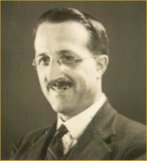
G.R.C. I suggest these scriptures because one feels that what is called for at the present time is the special vow of the Nazarite.
- Paul is speaking in the spirit of the Nazarite in 1 Corinthians 7, where he says that in view of the present necessity he would that all men should be even as he was. No one could doubt that he was a Nazarite.
- We have never known a time when the present necessity was so great and therefore I believe it calls for Nazariteship.
- Not that Nazariteship is something abnormal in Christianity – it is called the special vow of the Nazarite in Numbers – but
- I believe the whole of Christianity is special, and that the prosperity of the testimony, all down the ages, has depended on the true Nazarites of God.
- According to Lamentations, they were “purer than snow, whiter than milk, more ruddy in body than rubies, their figure was as sapphire”, that is, typically they exhibit what is heavenly.
- And while we can see this and take account of Nazariteship in Paul and other men of like passions, the thing is set out perfectly in Jesus.
- In Luke He is presented as a model for us. “Leaving you a model, that ye should follow in His steps” – the second Man out of Heaven. His figure was as a sapphire.
- “Found in figure as a man”, it says, but a man such as had never been seen on earth before – the Heavenly Man – the One truly and fully separated to God.
- So He sets out as a model what the path of a Nazarite should be.
- We have read passages which speak of Him in His early days, in the strength of His manhood and in the great final conflict,
- and which show the way He maintained the character of the dispensation of grace under the most extreme pressure until the end.
R.W. Would it be right to think of the Nazarite’s vow – “I love my master, my wife and my children. I will not go out free”. Do you think that Nazariteship calls for devotedness in relation to those three things?
G.R.C. It underlies those things. It is separation to God. That is the spring, the underlying thing in the soul.
- There are certain expressions in Psalms 42 and 43 which come to one’s mind – the Psalmist says,
- “the God of my life”, “the God of my strength”, and then, “the God of the gladness of my joy”,
- and it is in the power of having God as the gladness of your joy, one would think, that you can fulfil in a heavenly way every responsibility.
J.G.B. Samson was strong so long as he maintained his Nazarite vow; when he broke down as to the vow, he lost his strength and became as other men.
G.R.C. Yes. If we are looking to the fruit of the vine for our strength and stimulation we are just like other men;
- the fruit of the vine is not something wrong in itself, it is what is legitimate;
- but we are no different from other men on earth if we are looking to the fruit of the vine for stimulation.
H.F.R. “All my springs are in Thee”.
G.R.C. That is it. So if we think of the Lord, it says, “that Holy Thing which shall be born shall be called Son of God”.
- He was holy to Jehovah from His birth. As coming into the world He said,
- “sacrifice and offering thou willedst not, but a body hast thou prepared me … Lo, I come to do thy will, O God”,
- that was His vow, as it were, made as coming into the world.
F.G.H. You made a remark at Redhill, some time ago, regarding this special vow, which helped me and others. You said that what was special in the Old Testament is normal in the New.
G.R.C. And, do you not think that is right?
F.G.H. I do. I thought it would help us to see that.
G.R.C. It seems to me that Christianity is in itself special, it is heavenly.
D.McI. It could almost seem that this is beyond us. I am speaking very simply. It is very, very great. How can we take up this vow and what is the power for it?
G.R.C. I think that the Spirit of God will help us this afternoon as we speak over it.
- One’s desire is that vows might be the outcome of this meeting, in the proper sense of the word as applied to Christianity, not vowing in the confidence of the flesh.
- The first vow in Scripture, I suppose, was Jacob’s, and so on, throughout. But have we not made vows in recent times?
- I mean, have not those who have come out to the Lord in recent times and passed through sufferings, made vows in the course of their exercises?
- I hope that such, with us all, would renew their vows at a time like this.
- And then there is not only making them but performing them. So Psalm 66 speaks of the vows which my mouth uttered when I was in trouble.
- I have heard brethren say, ‘We haven’t come out to be less separate, our idea in coming out to the Lord is to be more separate than we have ever been’. That is a wonderful thing.
- People have come out and passed through the trials and have said, ‘Now I’m going to be more truly separate to God than I have been’.
- But the Psalmist in Psalm 66 verse 13 says,
- “I will go into thy house with burnt offerings; I will perform my vows to thee, which my lips have uttered, and my mouth hath spoken, when I was in trouble”.
- Now, I have heard these statements made when persons were in trouble and surely it is time to see to it that they are performed. Let us help each other to do so.
R.W. In chapters 7 and 8 of Zechariah, Jehovah is challenging them as to whether they fasted to Him.
G.R.C. Were those fasts real fasts? There are fasts going on today in an ostentatious way, but Scripture tells us what God thinks of those fasts – Isaiah 58: 4-7; Zechariah 7: 4-10.
- There is no command to fast. If you fast, do so in a real way to God. Be separated to God – do not tell men you are fasting.
G.R.C. It is not imposed on us, but we have uttered vows, have we not, when we were in trouble? and now is the time for performing. Let us be, in heart, separated to God.
- And the first thing is, as regards the Nazarite, to be separated from wine and strong drink.
- If we are relying on wine and strong drink for our stimulation we cannot be a Nazarite.
- It says in Amos they “gave Nazarites wine to drink” – now we can do that to one another – we can corrupt one another by giving to the Nazarites wine to drink.
F.G.H. What part have wine and strong drink in this application?
G.R.C. I regard it as representing stimulation which suits the man of the earth.
- What is stimulating us and keeping us going? We are apt to seek something to stimulate us and keep us going.
- An evangelical campaign, for instance, might keep us going for a long time. I am not decrying evangelisation, but, if we are relying on service of any kind for our stimulation, we are not Nazarites.
- Then there are more mundane things upon which we may rely for stimulation.
- The language of the Nazarite is
- “that they who have wives, be as not having any; and they that weep, as not weeping … and they that buy, as not possessing; and they that use the world, as not disposing of it as their own”.
- These are legitimate things but he is not looking to them for stimulation. God is his stimulation.
–.D. Do you think that Nehemiah maintained the Nazarite’s vow? His enemies wanted him to come down but he would not go down. He said, “The work is great” and he kept on building the wall. His requests to God that He might do him good, were in the light of that, were they not?
G.R.C. Quite so. We might think of him as separated to Jehovah, holy to the Lord.
F.G.H. If our stimulation is found in God Himself, we shall not be less evangelical.
G.R.C. I am sure we shall not. We have the model in Jesus – the greatest Model.
- We are thankful to have Paul – “fix your eyes on those walking thus”, he says, “as you have us for a model”. We need Paul as our model, but Luke presents the greatest Model.
- Who was so evangelical as the Lord Jesus? But who can say that in that evangelical activity He was not separated to God? No one dare say that He sacrificed in the slightest degree His Nazariteship.
M.L.J.M. Would you say something about consecration? In Numbers he is to consecrate himself to Jehovah. Is that perhaps where we are lacking, in the understanding of what that means?
G.R.C. The note says ‘Nazarite’, ‘consecration’ and ‘separation’ in this chapter are from the same root.
- So that it is not quite the same as the consecration in Leviticus of Aaron and his sons, but you can see the great stress is separation; it is consecration in that sense.
- The word ‘Nazarite’ means it, the word ‘consecration’ means it and the word ‘separation’ in the chapter means it.
- But then there is a touch of the other consecration, which means the filling of the hands, in the chapter, because when the days of his Nazariteship were fulfilled, the Nazarite himself merged into the priest.
- In verse 18, you have a remarkable offering, the hair of the head of his consecration or separation, is put on the fire which is under the sacrifice of the peace-offering.
- It is a marvellous thing that God so valued this kind of separation of heart to Himself that the hair was put on the fire on the altar. I do not know of anything like that elsewhere in scripture.
- The priest, according to verse 19, took the offering which the Nazarite brought and put the pieces of it upon the hands of the Nazarite,
- so that the Nazarite was privileged to do that which the consecrated priests normally did.
- The Nazarite’s hands were filled, like those of an offering priest. It is in this way, I believe, that we arrive vitally at the priesthood.
- We are not merely priests officially, but we have arrived at priesthood by way of separation to God. On the high priest’s turban was inscribed “holiness to Jehovah”.
D.McI. Stimulation is something internal, but the hair is an external evidence of the separation. Why is that? It is that which is put on the fire on the altar.
G.R.C. Long hair, in a man, while it is evidence of life, in the eyes of the natural man is effeminate. Is that not how the natural man regards a Nazarite of God?
- The meekness and gentleness of Christ, the Jesus of Luke’s gospel did not suit the proud, arrogant Pharisee, any more than the worldly Herod; in fact,
- He was the Stone which the builders rejected.
- That kind of man does not excite any admiration in the heart of the natural man.
- He was the Stone which the builders rejected.
- The Lord Jesus was left alone – despised of men, a man of sorrows and acquainted with grief, and we have to be prepared for that, do we not?
- Now, what has come out in recent times is the opposite of those features, alas, not like Jesus at all. What we have seen are the features set out in 2 Timothy 3.
- Among them it says, “boastful, arrogant, traitors, headlong, slanderers”, and yet, “having a form of godliness”.
- We have seen these terrible features come into the assembly of God, so-called, and I regard them as just the opposite of the features of the heavenly man, as expressed, perhaps, in the long hair.
G.E.Y. Does the background in Lamentations cause it to shine the more? He says, “the daughter of my people is become cruel, like the ostriches”. We are seeing definite cruelty.
J.G.B. But it shines the more – this separation to God. It is not separation from, it is something positive.
Ques. It is a precious objective for us each one, is it not?
G.R.C. It is a separation to the God of the gladness of our joy, and if only we knew God better, we would need no other stimulation. We would need nothing else to keep us going, and therefore the path of God’s will would be plain before our feet.
J.G.B. So that John the baptist was content with wilderness conditions and it was said of him that he was separated to God from his mother’s womb; he was a Nazarite.
G.R.C. He is an example for us.
- In Numbers, a man separated himself for a certain period, but it is clear from scripture that God’s desire is that our Nazariteship should be life-long.
- We want men and women who will separate themselves to God for life.
- The angel says to Samson’s mother, “he shall be a Nazarite of God from the womb”, but
- she says to her husband, “he will be a Nazarite of God from the womb to the day of his death”.
- That was the mother’s ideal.
- she says to her husband, “he will be a Nazarite of God from the womb to the day of his death”.
H.S.E. The angel says, “he shall begin to save Israel”. Is the effect of it seen in that?
G.R.C. Is there any other way to save Israel? We have an implacable foe who is attacking on several fronts.
- We need salvation, and we shall not get it without the spirit of the Nazarite.
W.M.C. This is open to any man in Israel?
G.R.C. Any man or woman. It says, “Speak unto the children of Israel and say unto them, If a man or a woman have vowed the special vow of a Nazarite”.
W.M.C. What has always rather frightened me is that something happens that he cannot help and all his former days are forfeited; now can you help us as to that?
G.R.C. I think the forfeiture flows from lack of vigilance, and we have all suffered from that, have we not?
- Communion with God is a most sensitive thing and we need to be vigilant so as not to be overtaken with anything that would hinder it.
H.F.R. Our preservative really is the daily burnt-offering. I was thinking of our appreciation of what Christ is to God.
- I notice in Psalm 66, which you quoted, it says,
- “I will go into thy house with burnt-offerings, I will perform my vows to thee”.
- It seems to me that the verses read in Luke’s gospel would give substance for our burnt-offerings.
- And if we were found more in God’s house with burnt-offerings, I think there would be trueness with us, which we learn in Jesus, which would enable us to perform our vows.
G.R.C. When the Nazarite presents his offering to Jehovah
- it is “one yearling he-lamb for a burnt-offering, one yearling ewe-lamb for a sin-offering, one ram – all without blemish for a peace-offering”.
- What energy is suggested in those offerings, what deep appreciation of the burnt-offering, what deep appreciation of the sin-offering –
- because the more we are separated to God the more we shall judge and abhor sin
- – and then the ram, the peace-offering, ensures the prosperity of the brethren.
- No person contributes so much to the prosperity of the brethren as a Nazarite. He brings a ram for a peace-offering.
H.F.R. Very good. The devotedness that is suggested in the ram is what we all need.
G.R.C. Every clean person could eat of the peace-offering – that is the eating which is fellowship. What is offered at the altar as a peace-offering becomes available as food for every clean person.
H.F.R. It is essential that we should maintain cleanness so that we can get the benefit of this food.
- We are fighting on two or three fronts and we need to maintain the purity of the Nazarite in associations.
- We must not think that unrighteous associations do not matter. They matter a very great deal in the sight of God.
- We need to be clean in every respect, if we are to perform this vow of the Nazarite.
G.R.C. He was not to touch a dead body only but he was not to come near it, it says. That is where lack of vigilance may come.
- He was not to come near it, not even to run the risk of touching a dead body. This involves vigilance.
W.M.C. It is “if one die unexpectedly by him” that troubles me.
G.R.C. May it imply that such an event should not be unexpected? In view of the character of the world in which we are, great vigilance is needed.
- Even the brother you trusted most may fall and if you are not careful you may be defiled.
F.F. Does Romans 12 compare with this in the present dispensation? Only the person there was transformed, was he not? The one vowing in the old dispensation was not transformed.
G.R.C. I think the transforming of Romans 12 is very important – “transformed by the renewing of your mind”.
- These matters are inward matters, but manifested in outward results.
- First there is separation of heart to God, He Himself becoming the stimulation of your heart, the God of the gladness of your joy. And then there is the mind.
- The mind in scripture is linked with the heart. It does not mean merely the intellect – that capacity we use when we study geography or history, etc.
- Scripture always links ‘thoughts’ and ‘mind’ with the heart. For instance, the first mention of thoughts in scripture is, “every imagination of the thoughts of his heart”, Genesis 6: 5; not the thought of his mind.
- It is not a question of reasoning, it is what comes out of your heart – the thoughts that come out of the very centre of your being – indicating what you are.
- “As he thinketh in his heart, so is he”, Proverbs 23: 7.
- “Out of the heart come forth evil thoughts”, Matthew 15: 19.
- “As he thinketh in his heart, so is he”, Proverbs 23: 7.
- So that the scriptural use of the words ‘thinking’ and ‘mind’ involves the very centre of a man’s being, and the Spirit of God begins there.
- The Spirit does not begin with externals – the Spirit begins by renewing the mind so that you have a source of pure thought,
- a man must be right in his thoughts if he is to be right in actions and words. The mind of the Spirit is life and peace.
C.R.B. Is it not important that ‘consecrate to’ precedes ‘separate from’?
- I do feel, in the past, perhaps most of us have had ‘separation from’ in mind but we have not had God primarily before us.
- Is that not the only way in which separation can be vitally and truly maintained? I am only just grasping the value of it.
M.L.J.M. Is not separation primarily to God, and the other works out afterwards.
G.E.Y. J.N.D. says, “If clouds have dimmed my sight, when passed, eternal Lover, towards me, as e’er, Thou’rt bright”, to come back to the enduring constancy of God.
- If communion has been dimmed, to judge myself and to find that God is exactly the same towards me as He has always been!
G.R.C. So that if we forfeit our Nazariteship, we can always get back.
G.E.Y. There is always the way back.
P.H. How beautiful that is. Psalm 116 is full of it. He starts off by saying
- “I love Jehovah for he hath heard my voice and my supplications; for he hath inclined his ear unto me, and I will call upon him during all my days”.
- And so he goes on to that beautiful verse, “I will walk before Jehovah in the land of the living”, and then,
- “What shall I render unto Jehovah for all his benefits toward me? I will take the cup of salvation, and call upon the name of Jehovah. I will perform my vows unto Jehovah, yea, before all his people”.
G.R.C. That is the point that is pressing on one – the performing. I believe most, if not all, have made vows in the present pressure, but what about the performing of them?
- The Psalmist says, “I will perform them”.
- Many who have come out to the Lord have said that they were resolved to be more separated to God than ever. Now is the time for performance.
P.H. And he says, “I will take the cup of salvation”. The cup of salvation is the joyful side of salvation, and he loves God. Therefore he performs his vows.
G.R.C. The cup of salvation touches on the thought of “the God of the gladness of my joy”. What a cup ours is! The Lord’s cup, 1 Corinthians 10: 21.
- “This cup”, he says, “is the new covenant in my blood”, 1 Corinthians 11: 25.
- Think of the cup He took in Gethsemane, as the One who was fully separated to God!
- But then, as the result of His Nazariteship, as we may say, even unto death, He gives us a cup which brings to us God as the gladness of our joy.
D.McI. You have touched on the Lord in His pathway, in His childhood, in His youth, and in His manhood. Now, does that not shew how each one of us must take this up.
- We have had a beginning, we have made vows; but then it is a question of continuing. And I was touched by that in the last scripture read as to His death.
- That is most solemn. But as a result of it there is the cup of the new covenant in His blood. What have we not got? What resources we have to maintain us in the true light of Nazariteship.
G.R.C. And it is on the basis of Nazariteship that God says, “they shall put my name upon the children of Israel”, Numbers 6: 27.
- We call on His Name, “let everyone who names the name of the Lord withdraw from iniquity”.
- A Nazarite could do nothing else. He would not be a Nazarite if he did not act on that; and then he “calls upon the Lord out of a pure heart”, purer than snow, a Nazarite!
- So that 2 Timothy 2: 19-22 is a call to Nazariteship in itself. But then what a great matter it would be if there were such a state among the people of God, however few, that He would say,
- “I will put my Name on them”.
- That is the idea of the covenant; “I will be their God and they shall be my people”.
- And the Lord Jesus, the One who was wholly separated to God even to death, has established the new covenant in His blood, so that God might have a people that He can put His name on down here.
- But it will not be in a practical way unless He is the God of the gladness of our joy, and unless we give up – and gladly, as knowing God – relying on earthly things for our stimulation.
H.F.R. Does our strength lie very largely in being enabled by the Spirit to concentrate our hearts and minds upon the Lord Himself?
G.R.C. Well, I suggested reading in Luke because I thought some positive impressions of the Lord would help us.
J.L.W. The Lord says, “my Father’s business”. It was not the Father’s business to the Lord, but my Father’s business. So that He really took it up as His own personal objective.
- Do we not each need a personal objective. We may have meeting objectives and so on, companywise, but let us each have a personal one.
G.R.C. We must put God first. I love evangelical activities, I wish I were more fitted for them, and I want to see more and more evangelists raised up.
- But I want to see them first separated to God as Nazarites, that is the point.
- Once you get your service before you, as an end in itself, you are no longer a Nazarite, you are relying on service to stimulate you. What is the good of a man like that?
F.G.H. I suppose that would apply to service in ministry, too?
G.R.C. Oh, just as much. I was including every form of service.
F.G.P. Paul did not live in the results of his service did he? At the end he says, “all in Asia have turned away from me”.
- But when it came to meeting the battle on one of the fronts, they sent
- “our beloved Barnabas and Paul, men who have given up their lives for the Name of our Lord Jesus Christ”.
- That is Nazariteship, isn’t it? They had not actually died but they had given up their lives for the Name of the Lord Jesus.
F.G.H. I am not weakening what you said Mr. C. because I know, in the old days, if one’s diary was full for three months it was all right. That is the stimulation we want to avoid.
G.R.C. We do want to get away from such stimulations; they leave the heart barren. The God of the gladness of my joy!
J.G.B. When there is love there you are satisfied with the Lord and the Lord alone.
G.R.C. That is the point to get to. Is He our great necessity and our all-sufficiency? If so we can then think of service in a true way according to God.
W.M.C. I notice there is no reward or promise to the Nazarite, like longevity or possessions in the land, or anything of that kind. It is holy to Jehovah.
G.R.C. Yet the prosperity of the whole camp depended upon it. In the early chapters of Numbers, the holy nation is organised. We sometimes forget we are a holy nation.
- In a national emergency, and we are in one, the whole nation is mobilised, everybody has ‘to do their bit’ as they used to say.
R.W. In Hannah’s vow in Samuel, it seems that when she vowed a vow she had nothing less in mind than the anointed, and what she vowed was carried through in Samuel, and the result of that is that David is brought in.
G.R.C. We should have that as our objective, should we not? We have in view bringing in the true David and that He should have His place among us and then God will have His place, in praises.
W.M.C. Is that when the Nazarite can drink wine again, after his days are fulfilled? Is it a special provision from God?
G.R.C. I think we drink wine again of the heavenly kind. It is the new wine, “these men are full of new wine”, that was no earthly stimulation.
- “Be not drunk with wine, but be filled with the Spirit”.
- That is the wine we are to drink, and we miss that if we rely upon earthly stimulation even religiously – big meetings and that kind of thing – we miss being filled with the Spirit, which is normal Christianity.
- We are not left without wine but it is wine of a different kind. And so it says of John the baptist,
- “he shall drink no wine nor strong drink and he shall be filled with the Holy Spirit even from his mother’s womb”, Luke 1: 15.
- His stimulation was in the Spirit. He said, “This my joy then is fulfilled”, John 3: 29.
W.M.C. I am impressed that Nazariteship is a life-long matter, and the reward surely would be the Lord’s approbation.
G.R.C. That is it.
R.W. “They are full of new wine”, Acts 2: 13, and so they were – the right kind of wine.
G.R.C. Yet, how much of our lives may be energised by earthly stimulations. A man may think he is going to get promotion in business next year, and he lives on that for a year. That is a poor thing for a Christian.
J.L.W. And so we have lived on conference to conference, on the same basis.
J.G.B. The only reward these three Nazarites in Scripture received was death –
- John the baptist, he died as the result of being a Nazarite, when Samson was performing his Nazarite vow he died, and Stephen was full of the Holy Spirit and he died. Their reward was death, was it not?
G.R.C. We have to speak soberly, but if you had the privilege of actually laying down your life for the glory of God that would be the very best way to lay it down, would it not?
J.G.B. Yes. God finds no pleasure in a man who makes a vow and does not perform it.
G.R.C. No. That is why I am raising this exercise. I believe a good many here have made vows in the last year or two, but what about performing them? Let us get down to that.
- It applies to the young people, young men and women, “if a man or a woman have vowed the special vow of a Nazarite”.
- What of our sisters, what about their vows? I’m sure they have made vows in the sorrows they have been through.
A.S.B. Why have they not been performed? Is it because they have not been linked with eternal life? “That they may know Thee, the only true God”.
G.R.C. It is in the power of eternal life that we can carry these things out. That is why the apostle says to Timothy,
- “Lay hold of eternal life to which thou hast been called”, before he, in that chapter, tells him of
- his responsibility to keep the commandment, spotless and irreproachable – that involves separation to God.
F.G.H. Does the power for performing vows lie practically in the Holy Spirit. Chapter 4 of Luke says, “Jesus, full of the Holy Spirit, returned”. Is He not blessedly the Model for us in that?
G.R.C. If we are filled with the Spirit and led by the Spirit our service will not be our objective in itself. We could not think of that with the Lord.
M.L.J.M. Is it of interest that, in Acts 13, we find those in the assembly ministering to the Lord and fasting, and then it says, “The Holy Spirit said, separate me now”. Does that play a great part in the understanding of true Nazariteship?
G.R.C. I think so, and I think that is the attitude in which we should come together normally – ministering to the Lord – thinking of His portion first. And that raises another point,
- that the great point in the tent of meeting is that it is the place where we meet the Lord.
- We meet the brethren, we could not do without them, but it was those who sought the Lord who went out to the tent of meeting that Moses pitched outside the camp and far from the camp.
- The great point with them was they must have the Lord, and I wish that was in all of our hearts. We must have the Lord at all costs.
- Nothing will do as a substitute; the brethren will not do as a substitute, service will not do as a substitute. I must have the Lord for the satisfaction and life of my soul.
H.F.R. That would involve, companywise, providing suitable conditions for Him. If we must have Him we would go to any lengths to see that the conditions were right for Him.
G.R.C. So we would go far from the camp. Moses pitched the tent outside the camp – far from the camp. It is not a question of going as near as you can.
C.R.B. Psalm 42 which you have already quoted would fit in with what you are saying, “my soul thirsteth for God, for the living God, when shall I come and appear before God?”
G.R.C. The great thing is that you are going to appear before God, that is surely what we come to the meeting for. Think of the morning meeting. What it would mean to us if that was burning in our hearts – we are going to meet the Lord!
P.H. And the last verse of Psalm 116 says, “in the courts of Jehovah’s house in the midst of thee, O Jerusalem”. He meets God there, as we might say, assemblywise.
H.C. Are you thinking in Luke, of the way in which the Lord is the example to us?
G.R.C. Yes, first of all, in boyhood. Because we are concerned about the boys, and the girls, too.
H.C. Indeed, I was thinking perhaps a word for the young people was in your mind.
G.R.C. A boy or girl can make the vow of a Nazarite, because John the baptist was a Nazarite from birth and so was Samson.
- So why should the boys and girls here be behindhand, why not make the vow to be holy to Jehovah all your life – and the Lord Jesus is the Model.
- It would mean much to a boy of twelve to go to Jerusalem – the highways packed with people going to the feast, great excitement, perhaps a million people in the city come up to celebrate the feast. Much bigger numbers than any we have known.
- All that would tend to stimulate and carry anyone along whether they had a real link with God or not.
- Then there was the temple and there were the doctors of the law – the ‘big’ brothers, as we speak.
- But see the perfection of Jesus! There He sat down in perfect seemliness as a boy of twelve, and what was occupying Him? “My Father’s business”!
H.C. J.N.D’.s note is interesting – He would be wholly occupied – wholly in it
G.R.C. That is a wonderful word. It really is, “Wist ye not that I must be wholly in the things of my Father?”.
- Now I would like to appeal to young people – you may be 12, 15, 16 or 17, perhaps taking your G.C.E.,
- but do not forget that what God is looking for is that you should love Him with all your heart and soul and strength and mind.
- Now, He will help you with your studies if you put Him first. Many of us have proved that He will help you in all that you have got to do,
- but the great thing is to be set for His things in all the time that is available.
- This does not mean neglecting other things; the Lord did not neglect other things, He worked as a carpenter. But use the time you have available to be wholly in the things of God.
W.M.C. I suppose the Nazarites did their work as usual.
G.R.C. I suppose so. According to Mark they said of Jesus, “Is not this the carpenter?”
D.McI. Speaking about the young, one feels that our liberty has been given to us for God, not to be used for ourselves. Liberty makes greater demands than bondage – we have escaped from bondage.
G.R.C. If we live for ourselves we are putting ourselves under another form of bondage.
- To be truly set apart to God, to find in Him your life, and to be His bondman, is the only path of liberty. If you are not in that path something is holding you in bondage although you may not realise it.
H.S.E. So that beyond what is prescribed as to the Nazarite’s vow, it says, “beside what his hand is able to get”.
G.R.C. So there is no limit put on it, except his capacity.
- See how much flowed from Paul’s Nazariteship! How much under God, we owe to Paul today!
- What a ram of peace-offering he offered! What he brought to the altar in a sacrificial way has fed the saints all down the ages.
F.G.H. Regarding the Lord here in perfection at the age of 12, it says He was in subjection to His parents. That did not hinder Him being in the things of His Father.
G.R.C. It shews how utterly wrong is teaching that sets children against their parents, it is hateful to God, see Malachi 4: 6.
- We have to remember that anyone separated to God would have the greatest regard for, and the greatest energy in fulfilling, every divine institution in integrity.
- We are witnessing every divine institution, spiritual and natural, being corrupted, the enemy intent to destroy them. But the more we are separated to God, the more we shall carry them out with integrity.
- So that while Nazariteship may lead those who have wives to be as those not having any, yet such persons would be better husbands than those who rely only on that which is natural to maintain the marriage bond.
- God is the gladness of their joy and, even though they have to deny themselves certain natural comforts and things in the service of God,
- they bring from heaven into those relationships what would surpass anything that nature could afford.
- In the early part of His pathway the Lord said to His mother, “Woman, what have I to do with thee?” when the service was at stake.
- But see Him on the cross in the midst of His sufferings, “Woman behold thy son”, and to John, “Behold thy mother”. There was tenderest consideration. He was the most wonderful son any mother ever had.
D.McI. Have you some special thought as to the Holy Spirit coming upon Him?
G.R.C. We have thought of Him in boyhood, and we do want to secure all the young people here.
- We do not want one to be lost. We want them to be wholly in the things of God.
- But, then, we see the Lord sanctified and sent into the world in service, the Spirit coming upon Him and abiding on Him, set apart for service.
- He was beginning to be about 30 years of age. And so we look round upon young men and women who are beginning to be about 30 years of age –
- God expects you to be fully developed – not in experience yet, you will go on learning all your life, but as to all your spiritual faculties.
- The sense of hearing, sight, smell, taste and touch, at the age of 30 they should be fully developed, so that you are ready for service.
- You would not put yourself out of your place in front of an older man, but you are ready to bear the burdens of the testimony whatever comes upon you.
S.B. The Lord went into public service in Nazareth, where He was brought up, and one of the subjects of His address was Naaman the Syrian; and Naaman was the result of the evangelical work of a little maid. Is it a help to bring that in?
G.R.C. It is a great help.
S.B. Evidently she was not rebellious against what had happened.
G.R.C. She was a subject maid carrying glad tidings. So we should be as wide as possible in the gospel,
- but not sacrifice anything as to the Church – not compromise anything as to the house of God.
- So you find the Lord soon after His anointing in Levi’s house. There was nothing legal about that gathering. It is described in Luke as a great entertainment that Levi made for the Lord.
H.C. Would you say a word as to the Lord having been baptised and praying.
G.R.C. It shews that prayer is to mark us all the way along. In Gethsemane it says, “being in agony he prayed more intently”.
- Prayer is to mark us all the way along and I hope, as a result of this meeting, we shall be more in prayer than we have ever been. Having been baptised and praying – that is how the Lord began His service.
- And then, as I say, we find Him in Levi’s house eating with publicans and sinners – “a friend of publicans and sinners”, they said of Him later,
- but even as He sat there in Levi’s house with publicans and sinners it was true of Him that He was holy, harmless, undefiled, and separated from sinners.
- You say to me, How separated from sinners? – He is surrounded with them at the table. But at that very time He was separated from sinners.
- It does not mean physical segregation – He was with them and near to them and bringing the grace of God to them, yet separated from them, separated to God; and now made higher than the heavens.
- And He is still thinking of men up there – He is the Mediator of God and men, the Man Christ Jesus.
S.B. Separation is intensely and rightly in the heart primarily. Mere segregation is not true separation.
G.R.C. How wonderful that we can bring the grace of God to men, “Christ Jesus came into the world to save sinners”, and therefore that must be our business too.
- So far as lies in us, we go into the world to save sinners and to glorify God in doing it, as being ourselves separated from sinners.
- You do not help people if you move on their level – we must remember that.
- As to the Nazarites it says, “their figure was as sapphire”, and you do not change your colour just because you go into another house.
D.McI. The Lord was so separated that He would draw others into that separated condition.
G.R.C. That is right. That is the true evangelist; he will go the full length to save men;
- but the effect of his teaching and example, and of what is shining in him, is that
- those who are affected become, in their measure, as he is, and that is what we want. That is how church material is formed.
H.S.E. And it is a whole-time matter. “In the morning sow thy seed and in the evening withhold not thy hand, for thou knowest not which shall prosper or whether they both shall be alike good”.
G.R.C. Quite so. So we have to be diligent all the time – doing the work of an evangelist.
H.S.E. We have only just touched the fringe of it.
G.R.C. Quite so. Now I suppose Gethsemane would teach us that we shall never get through along with the testimony without suffering and conflict. We may have thought we could, but it is impossible.
- Gethsemane means ‘wine-press’, and I suppose we all, in our little measure, pass through the ‘wine-press’: not like the Lord, for He was unique.
- When you think of what passed between Ridley and Latimer, the night before they were burnt at the stake, it is clear it was the wine-press for them.
- It is in secret where you face the foe – the powers of darkness operating to turn you aside if possible. The struggle is in secret with God, once you have faced it there, you can face any number of men.
- Luther’s experience was similar on the night before the Diet of Worms. He had to come to it that he had no strength in himself at all, yet, when he faced the Diet, he was as bold as a lion.
- He could not have told you he was going to be like that the night before. “Here I stand, I can do no other”.
- But then, think of the Lord, the great Warrior, “This is your hour”, He said, “and the power of darkness”.
- We have experienced the terrible reality of the power of darkness these last two years. In ourselves we are no match for the power of darkness.
- So it seems the Lord, in Gethsemane, as the perfect dependent Man, has shown us how to meet it. “He prayed more intently”.
A.S.B. Does meditating on the glories and sufferings of Christ give us power to fulfil our vows?
G.R.C. I think it is the food we need, the bread which strengthens man’s heart, and I wonder whether Luke’s gospel is especially that, and would strengthen our hearts to go through to the very end.
J.L.W. And to be maintained in the spirit of the dispensation, “Father forgive them”. No reprisals, no reproaches.
G.R.C. Just so. Think of the extremity of that moment, when men had heaped upon Him all the suffering of mind and body they could –
- the crown of thorns, the beating on the head, the mocking, the scourging, the night’s trial, the hours that went by, and then finally the nails through His hands and His feet.
- Men had done their worst, and then, just ahead, the cup to be received from His Father’s hand.
- Yet, in that moment He could say, “Father, forgive them, for they know not what they do”.
- How much we need, in facing the sufferings that have been brought, at the present time, to bear on the brethren, to be kept in this spirit “Father forgive them, for they know not what they do”.
G.E.Y. Normally sufferings tend to turn us in on ourselves. But we need to think about Christ.
G.R.C. I believe we need this food – we need to feed on Jesus Himself.
| LET HIM THAT BOASTS, BOAST IN THE LORD |
|---|
| 1 Corinthians 1: 30-31; 2 Corinthians 1: 19-22 Philippians 3: 3, 8, 10-17; 1: 19-21 Colossians 3: 1-4, 11 (last clause) Address at Barking, Essex, May 26, 1962 Walking with God, Notes of Meetings, 2: 80-92 |
I would like to raise the question, at the commencement, dear brethren, as to whom we are boasting in.
- We may even be boasting in ourselves. The Pharisees boasted in themselves, but made nothing of the rest of men. We each need to be delivered from self-boasting.
- There was a time when Paul boasted in himself, at that time he did not know a better man than himself, but through God’s grace all that was broken down. He was brought to say,
- “O wretched man that I am”, Romans 7: 24.
- There are others who boast in men, an ever-present danger, especially with young people. We may see men as trees walking.
- The purpose of a meeting like this is to deliver you from all such boasting;
- that yourself, and every other man, should disappear from your vision, and that you should see Jesus only, “they saw Jesus only with themselves”.
- You have no right to boast in any mere man, least of all yourself. The word in 1 Corinthians 3: 21 is “let no one boast in men”. May the Lord bring that word home to us. Have done with that kind of boasting!
- “Who then is Apollos, and who Paul? Ministering servants through whom ye have believed, and as the Lord has given to each”.
- They had nothing till the Lord gave them something. Therefore Paul says
- “neither the planter is anything, nor the waterer; but God the giver of the increase”.
- Why let our vision be obscured by men?
As to the public position in this world, Paul says,
- “Far be it from me to boast save in the cross of our Lord Jesus Christ, through whom the world is crucified to me, and I to the world”.
- Let that be the language of our hearts! The cross of our Lord Jesus Christ proves my nothingness, and man’s nothingness.
- So much is said about the crucifixion in the first and second chapters of 1 Corinthians. They were boasting in men and Paul says,
- “Is the Christ divided? has Paul been crucified for you?”
- Why should we be divided over men? The Church has been damaged all down the ages by being divided over men and their strong opinions.
- Have you realised the fact that Jesus has been crucified for you?
- “The word of the cross is to them that perish foolishness, but to us who are saved it is God’s power”.
- Salvation is based on the cross, God forbid that I should boast in anything else. “Jesus Christ and Him crucified” should deeply affect our hearts.
- I would invite you to look afresh at the cross of Christ, ‘Behold on the cross of dishonour, a cursed and a dying Man’. Why should He have died upon the tree?
- “Cursed is everyone hanged upon a tree” and Christ became a curse for us.
- Has it entered your soul, that you deserved that public death of shame and curse, and that Jesus took your place upon the cross?
- Could Paul have done it? Could any man you might boast in have done it? Only Jesus could have taken your place upon the cross. We cannot measure the debt we owe Him.
- Anyone hanged upon a tree was a curse and was to be buried the same day. Jesus was buried the same day.
- Do you know He was buried for you, having become a curse for you? Have you accepted the fact that you ought to have been crucified?
- We all ought to have been, as rebels against God. But Jesus took our place, and it is our business to see that “our old man”, who was crucified with Him, is buried.
- What a shame it is on us that we allow that man to be in evidence for so long. Buried the same day is the divine thought.
If we understood the benefit of the cross we should use the language of Paul, who exulted in it, he said,
- “I am crucified with Christ”.
- What could be greater grace than that? I, who deserve to be crucified and to bear the curse myself – can now say “I am crucified with Christ”; the curse has been borne, the judgment is past.
- I can regard myself as crucified with Christ and reckon myself alive to God in Him.
- But, if He was my substitute on the cross, the only righteous thing on my part is to allow Him to substitute me. Paul said,
- “No longer live I, but Christ lives in me”.
- Christ was to be magnified in his body, whether in life or death.
- “In that I now live in flesh”, he said, “I live by faith, the faith of the Son of God who loved me and gave Himself for me”.
- Do you know what living by faith means? Some people think it means trusting God about their circumstances – but faith and trust are two different things, though closely connected.
- In that verse “I live by faith, the faith of the Son of God” Paul meant that the Son of God displaced self in his vision.
- The controlling object of his life was the Son of God, who had loved him and given Himself for him.
- Was Paul going to live for himself any more? Not at all! “No longer live I, but Christ lives in me”.
- Let me say that again – faith means that the Son of God fills the vision to the exclusion of self.
- If a man is full of faith it means self is completely gone from before his vision, and the Son of God, and the system of glory that centres in Him, fills the vision of his soul, and on that principle he lives.
- Paul was justified by faith and now he says, “I live by faith” He lived on the same principle on which he was justified, and we have to learn to do this.
- If so we shall be able to trust God for our circumstances, but that is a secondary matter which flows out of the first, however important.
- The great thing is that self should be gone from our vision, displaced by the Son of God, the controlling Object of our life, so that Christ lives in us.
- Beloved, do not let any man come between you and Christ, no other man was crucified for you. You have been united to the Lord and thus one Spirit, the closest link that could possibly be.
And so that brings us back to my original question: in whom are we boasting? Let no one boast in men. Paul says,
- “he that boasts, let him boast in the Lord”.
- Every Christian should be a boasting man but he does not boast in himself nor does he boast in other men. He boasts in the Lord.
- Talk about evangelisation, if we were all boasting men, boasting in the Lord, the word of the Lord would be sounded abroad. People would say, ‘there must be something in Christianity. These people are all boasting in the Lord’.
- And you know, the more you are full of faith, the more you will be filled with the Holy Spirit, the two things go together, because as self goes from your vision, and the Son of God fills it, the Holy Spirit fills you.
- The Holy Spirit cannot fill a man who is full of himself, but a man who is living by the faith of the Son of God is the kind of man who is filled with the Holy Spirit.
- The Holy Spirit has come here to glorify God’s Son, and to fill those who walk by faith in Him. So faith and the Spirit go together – and if you are filled with the Spirit you are filled with the new wine.
- We have spoken about abstaining from earthly wine but there is nothing like being filled with the Spirit. It was said of such, “These men are full of new wine”.
Paul ends chapter one by the word, “he that boasts let him boast in the Lord”. He precedes this by saying,
- “of him are ye in Christ Jesus, who has been made to us wisdom from God and righteousness and holiness and redemption”.
- Have you realised that the Lord Jesus is that to you? What marvellous grace!
- The basis for all God’s acting in grace is the cross of Christ, where He effected reconciliation. How our affections should be drawn out to Him!
- The apostle felt it so much, that, at the end of this Epistle, he said,
- “If any man love not the Lord Jesus Christ, let him be Anathema Maranatha”.
- Think of Gethsemane, think of the cross! Are you going to let any man come between your soul and Jesus, who paid that price for you, who loved you and gave Himself for you, that He might be to you now wisdom from God?
- What resource you have in Him, Christ Jesus, the glorified Man, glorified in the presence of God.
- That is the Man that I boast in – the glorified Man in the presence of God in whose face the glory of God is shining, and He is mine!
- Made mine! Made to me wisdom from God, righteousness, holiness and redemption.
It is of the greatest importance to get wisdom. Wisdom was required to meet the problems of the old order and to plan the new. Christ is the power of God and the wisdom of God.
- In and through Christ God has met every problem and, in Christ, God has the Pattern of the new creation. He is the beginning of the creation of God.
- God’s plans centre in Christ, but in order to give effect to these plans, all the problems sin had brought in had to be met.
- The new creation is based on the settlement of good and evil and the basis of that settlement is the cross of Christ.
- At the great white throne there will be the final settlement of moral issues.
- Christ is the One by whom God meets every problem, and He can settle all my problems. There is not a problem I can meet with – little though I may believe it, little though I may have appropriated Him –
- yet I know from this Scripture that there is not a problem I could meet with individually or in my local meeting or in any way that He cannot meet.
- And then, if it is a question of planning, God has planned in Christ and all His plans will come to pass; but then Christ is wisdom for me also in planning.
- I think of the young people here with life before you, if the Lord tarries. What does the Proverbs say?
- “Wisdom is the principal thing”.
- You say, ‘I want a good education’, but that is not the principal thing,
- “wisdom is the principal thing; therefore get wisdom: and with all thy getting get understanding”, Proverbs 4: 7, A.V.
- Wisdom is available to you. Christ is made to us wisdom from God, therefore receive Christ, let Him be your all and you will not go wrong.
- “He leadeth in the paths of righteousness for His name’s sake”, Psalm 23: 3.
- “I” wisdom “lead in the way of righteousness, in the midst of the paths of judgment”, Proverbs 8: 20, A.V.
- “He leadeth in the paths of righteousness for His name’s sake”, Psalm 23: 3.
- How intricate the paths of judgment are! We have to come to a judgment about this and about that. There are problems every day. But wisdom will lead you through the labyrinth.
- God has, in Christ, settled the great problems of our sins and of our state, at infinite cost. He has borne the curse and the judgment – our old man has been crucified with Him.
- Who could have thought of such a way of meeting them? The greatest problems were thus met in a way which required a love beyond all comprehension – wisdom and love go together – for
- it involved sacrifice and suffering unfathomed.
- But by that means, He has become our righteousness. He is made to us wisdom from God and righteousness.
- What is my title to glory? What right have I to enter the presence of God? Christ is my righteousness!
- The very Man in whose face the glory of God is shining is my righteousness, and thus my title to be there.
- So that, in perfect rest, I can behold the glory. That glory which would have terrified, repelled and expelled me, that very glory in the face of Jesus, I can restfully take in, because He is my righteousness.
And then it says, holiness. We have been speaking about being holy to the Lord.
- Well, from the divine side, the measure in which we have been set apart to God is seen in Jesus. He is our holiness or sanctification.
- And then redemption – redemption brings in the question of liabilities, and we are as clear of liabilities as He is. He is our redemption.
- If we understood these things, dear brethren, we should boast in the Lord, ‘Of Him we sing, God’s blessed Son, of Him we make our boast’. Let earth, in so far as we are concerned, resound with our song to Jesus.
I go on to Colossians for a moment. If redemption is effected, the way into life is free. Redemption and life are intimately connected.
- Redemption deals with the liabilities resting upon us. What were they? Sins, death and the enemy’s power.
- We have been redeemed by blood, and also by a mighty hand and an outstretched arm, so as to receive and enjoy life in Christ Jesus.
- Not only is He made to us wisdom from God and righteousness and holiness and redemption, but He is our life, and when Christ, who is our life, shall appear, then shall we appear in glory with Him.
In the second epistle Paul refers to the Son of God, 2 Corinthians 1: 19. I wonder if you ever say with exultation,
- “we know that the Son of God has come”.
- It is a triumphant cry because, if you believe that Jesus is the Son of God you have victory over the world. And so it says here
- “the Son of God, Jesus Christ, who was preached by us among you … did not become yea and nay, but yea is in Him”.
- No more doubts or uncertainties, for yea is in Him. The Spirit of God would draw our attention to the risen Son of God, where He is beyond the reach of any hostile power, victorious over all. In Him is the yea, and in Him the Amen.
- Whatever God has promised, whatever He has covenanted, whatever He has purposed is bound to come to pass. And He has already done wonderful things for us,
- “He that establishes us with you in Christ”.
- God would establish all the souls here tonight. He would establish you and establish us with you in Christ, that you may have no more doubts, or uncertainties.
- Can we say that we are established in Christ? Are we really established in the fact that He is made to us wisdom from God and righteousness, holiness, redemption, and life? He that establishes us with you in Christ is God.
- And how does He give effect to it now? “And has anointed us”. We already, as anointed, belong to the great system of glory, the true tabernacle, which the Lord has pitched, and not man. We have boldness to enter the Holiest by the blood of Jesus.
- We have been established in the system, anointed in it, sealed as Divine property, and we have the earnest of the Spirit in our hearts, which brings in such wealth that we can offer like the princes at the altar in Numbers 7.
- But the altar is outside the camp. The Christian altar never has been in the camp, viewed from this standpoint.
- “We have an altar of which they have no right to eat who serve the tabernacle”, Hebrews 13: 10.
- I hear much being said about Christians having a right to eat. Scripture does not say much about that. It tells us that the Corinthians were not eating the Lord’s supper although they were breaking bread. They had forfeited their right because of sectarianism.
- Be careful you do not lose your right, be careful you do not go on breaking bread without eating the Lord’s supper.
- Those who served the tabernacle – the only divinely-accredited man-made system – had no right to eat of the Christian altar.
- If serving the only divinely-accredited man-made system was a disqualification, what about serving man-made religious systems that have never had divine sanction at all?
- The camp is made up of what is man-made, Hebrews makes that clear. It tells us that the true tabernacle was pitched by the Lord, and not man, chapter 8: 2, and was not made with hand, chapter 9: 11.
- It says that Christ has not entered into holy places made with hand, chapter 9: 24.
- The moment I see anything man-made, I leave it. I know it is part of the camp, whether a man-made priesthood or anything else.
- “Far from the camp”, I want to be. I belong to a system that is divinely made and pitched and I want to get back to that and abide there.
- God has put me in it, He has established us with you in Christ, has anointed us, sealed us, and given the earnest of the Spirit in our hearts. God has done it all, there is nothing of man about it!
- The anointing is to us an everlasting priesthood, Exodus 40: 15, God has made us priests and we do not want man-made priests of any kind.
- And so, this Divine system, and our access to it, remains – whatever happens down here – because it is established in the Son of God.
- “Having therefore a great high priest who has passed through the heavens, Jesus, the Son of God”.
- The Son of God has come and He has passed through the heavens making a way through for us. We can go in, but our enjoyment of going in depends on our going out – going out to Him without the camp.
- Going in is put first, you must have that as the lever, but if you want to be maintained in the joy of it – go out.
- “Let us go forth to Him without the camp, bearing His reproach”.
Some people are troubled because they say there is still some spiritual food in the camp, and many of the Lord’s people are there.
- It does not say that God forsook the camp, but you have got to go out of it if you want Him.
- In Exodus, I would suppose, the manna still fell round the camp, the water from the rock still watered it.
- Moses, as a type of the Lord, went back into it in grace to care for the people. The Lord knows those that are His. If there is manna in the camp and some spiritual refreshment this just proves what Scripture says,
- “if we are unfaithful, He abides faithful”, 2 Timothy 2: 13.
- But that does not allure me into the camp. Why? Because I want Jesus Himself. Jesus suffered without the gate. The camp is nothing to me compared with Jesus.
- If I want to meet Jesus, where must I go? To the tent of meeting! Those who sought the Lord went out to the tent of meeting.
- The primary thought of the tent of meeting is that there I meet with God, there I meet Jesus face to face; see Exodus 33: 11.
- I cannot have Him on such terms in the camp. And that is what I want, and may nothing rob me of it!
- Some of us have known intimacy with Jesus in recent times, in a way we never knew before. Our measure may be small but still we have known something of it at the Lord’s supper, and I do not want to miss eating the Lord’s supper.
- I know I could forfeit my right easily. I could still break bread every Lord’s Day and yet not eat the Lord’s supper. It is the Lord’s presence that makes it the Lord’s supper, Corinthians proves it.
- I do know that no company, however great their pretension, can claim the Lord’s presence, week by week, because of a supposed outward ‘position’.
- We hope and pray that there will be such conditions, week by week, that we shall continue to prove the Lord’s presence in our midst in that intimacy which flows from unclouded communion with the Lord and with one another.
But, think of what God has done in establishing us in this divine system. Who is going to miss it for a man-made one? Through God’s grace, I trust we never shall.
- The tent of meeting was outside the camp, far from the camp, and all who sought Jehovah went out to the tent of meeting.
- The point is, who are you boasting in? If you commence boasting in men you will get allured back into the camp, and you will be held by men there.
- I only want one Man – Jesus. Let every other man go from my view. Let me be where I can have Jesus, our Beloved.
I have presented objective things. I think Philippians gives us the subjective answer, seen in a man, Paul.
- If we really appreciate these things as seen objectively, our consuming desire will be to be in the gain of them practically – it cannot be otherwise.
- In Philippians we see a man in untoward circumstances, who had Christ as his wisdom in a practical way and he had Christ as his righteousness, but he wanted to enter fully into it.
- He wanted to have a full experience in his soul, even before he got there actually, of what it was to be found in Christ, not having his own righteousness, which would be on the principle of law, but that which is by faith of Christ, the righteousness which is of God through faith.
- If you lay hold of these things by the Spirit, in your soul, you will be energised to tread a path whereby you will come into the reality of them.
- You know as a doctrine, that Christ is your righteousness, but have you ever even in feeble measure been found in Him?
- Have you discovered yourself there, in that blissful place which, having Him as your righteousness, opens up to you? I would like to find myself there more and more.
- Paul was reaching after things that he knew well enough objectively, but he wanted to be in them in ever-fuller reality. It was the Person that captivated his heart, “that I may gain Christ”, he says.
- To gain Christ properly, I must be with Him in His own surroundings – to be found in Him in the gain of having Him as my righteousness, so that I am there restful and at peace, with Christ in His own surroundings.
Paul speaks of “the excellency of the knowledge of Christ Jesus my Lord”.
- The cost did not count at all so long as he got that.
- Now that is the kind of spirit the Lord is looking for amongst those who have been through trials, and are going through them, and have come out to Him.
- We all profess to have come out to the Lord. Do not let us decline. What has marked Christianity all through is rapid declension after every fresh divine movement.
- Do not let us think we can rest on our oars, because if we do that we shall decline, we shall fail to perform the vows that we made in the day of trouble.
- But think of Paul. The cost was nothing to him so long as he could have Christ. That is first love, how precious to Jesus.
- The best things, compared with Christ, were but filth to Paul. It was because of the wonder of Jesus and His love, the wonder of His company in His own surroundings.
- Be the cost what it may, we must have Jesus, and have Him where He is, in His own surroundings above, by faith entering the holy of holies.
- And then move down here amongst those like-minded, where we can, even in mixed conditions but with pure hearts, seek to provide Him with circumstances suited to those above.
- So that, when He comes to us, He may find, so far as is possible in these mixed conditions, home circumstances for Himself. That is the idea of John 14: 23.
- The one who keeps His word is the one who says, ‘I would like, when Jesus comes, that He should find something consistent with what is above’.
- When a loved one comes home you want everything just ready, just suitable, just what the loved one would desire to find. And He says, where that is so,
- “My Father will love him and we will come to him and make our abode with him”.
- Thus we have the double privilege, entering in spirit to where Jesus is there and to experience by the Spirit His coming to us here.
- There is only one way to secure the privilege and I believe I can say with the utmost emphasis there is only one way to secure true unity amongst brethren, and that is to keep the commandments of God.
- If you want a prescription for unity I would give you that.
- “Hereby we know we love the children of God, when we love God and keep His commandments”.
- On any other course we do not really help anybody, least of all ourselves.
- “This is the love of God that we keep His commandments. His commandments are not grievous”.
- If you want a prescription for unity I would give you that.
- If you find any commandment grievous to the divine nature in you, you can be sure it is man’s commandment. Men would place upon you commandments hard and grievous to be borne, not so God. Jesus says,
- “I know that My Father’s commandment is life eternal”.
- All the other requirements of divine love lead up to life eternal, and that leads up to God’s praise and glory.
And so Philippians gives you a man on this road and you may say to me, ‘I have not got far on that road’. Nor have I, but there is this encouragement, Paul says,
- “whereunto we have attained let us walk in the same steps”.
- He did not reckon himself to have attained, he was pressing on. We are all in the race to Christ in glory, in order to reach the goal and get the prize.
- It is not a competitive race – the prize is open to all and we want all the brethren to be in at the finish.
- But there is not only the race to be run, but the walking, “whereunto we have attained”, in testimony here to God’s glory.
- The measure to which we have attained in the race, is the measure in which Christ is magnified in our body in our walk here.
- “Let us walk in the same steps”. Your steps may be faltering compared with Paul’s but walk in them nevertheless, you will get stronger in your walk as you go on further in the race.
- “Be imitators all together of me, brethren, and fix your eyes on those walking thus as you have us for a model”.
- We can afford to accept as model a man like Paul, who could say,
- “Christ shall be magnified in my body, whether by life or by death”, and “for me to live is Christ and to die gain”.
May the Lord help us to be sustained in a spirit of exultation as to what we have in Christ and what He is to us.
- Let us never boast in ourselves, nor in other men, but boast in Christ Jesus.
- And boast in the cross of our Lord Jesus Christ, by whom the world is crucified to us and we to the world, for His name’s sake.