| AS A MAN THINKETH IN HIS HEART, SO IS HE |
|---|
| Romans 8: 6-10; 1 Corinthians 2: 9-11, 16 Philippians 2: 5-11; 3: 13 Reading at Cirencester, March 10, 1962 The Divine System, Notes of Meetings, 1: 41-64 |
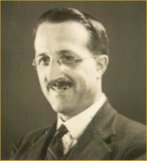
G.R.C. I have suggested these scriptures having in mind the verse in Isaiah
- “Thou wilt keep him in perfect peace whose mind is stayed on Thee, because he trusteth in Thee”, Isaiah 26: 3.
If there is one thing that is needed at the moment it is peace of mind. Scripture shows that we can have perfect peace.
- Another remark I would like to make at the outset is that in scripture the mind does not mean merely the intellect.
- We use our minds in the sense of the intellect when we study geography, mathematics, etc. Men use the intellect even in the study of theology.
- But that is not the way the mind is presented in scripture as applied to the things of God.
- According to scripture the mind and the heart are inseparably connected, so that the first reference to thoughts in scripture is that
- “every imagination of the thoughts of his” man’s “heart was only evil continually”, Genesis 6: 5.
- It does not say the thoughts of his mind, but the thoughts of his heart. Also, “as he thinketh in his heart, so is he”, Proverbs 23: 7.
- In pure study we use the intellect by itself and the heart is not affected, but a believer is characteristically not a student, but a heart man.
- So according to scripture he thinks with his heart; thinking means your mind is at work, but as governed by your heart.
- Even as regards evil things, men think in their hearts. The Lord says “Out of the heart proceed evil thoughts”.
- The heart is the very centre of a man’s being; and the mind therefore is an exceedingly important faculty. Scripture speaks a great deal about it.
When scripture says “Keep thy heart more than anything that is guarded; for out of it are the issues of life”, Proverbs 4: 23,
- in a practical way it means keeping your mind. Only it is the mind as inseparably connected with the heart.
- And so you can understand in the gospel epistle – Romans – Paul speaks a good deal of the mind.
- Another thing to consider is this, the conflict is wrought out in the minds of believers. If the enemy attacks he attacks through the mind although he may use external things to affect the mind.
- For instance, if something is presented that calls out the lusts of the flesh, the danger lies in letting the mind dwell upon it.
- Particularly in matters of doctrine and of the truth, the enemy attacks through our minds.
- It is in the minds of men that the battle is fought out, and that is why the divinely given weapon is the sword of the Spirit which is the word of God. If the word of God controlled all minds, the battle would be over.
- When the Lord comes forth the sharp two-edged sword proceeding out of His mouth is the only weapon He uses, as far as we know, because once the word of God has prevailed with all its sharpness over the minds of men and of nations, the battle will be won.
- The battle will not be won by armies and navies and air forces; they do not, in a moral sense, effect anything; they only effect circumstantial things, although they may be used to deal with persons who are corrupting men’s minds, and are useful that way.
- But the real battle is not fought out by them. The spiritual conflict has got to be fought out finally in our minds, and the final result will be that every mind, every intelligence in the universe of God will be subject to the word of God; then the battle will be won.
- We are, as it were, in a beleaguered city, the enemy is all around us, the universal lords of this darkness are attacking us all the time, watching for any opening to get an entrance into our minds, and to corrupt our minds from simplicity as to the Christ.
- So we need to get the gain of the gospel epistle – Romans – with reference to our minds to begin with, because what I said indicates that in the recovery of the man for God the mind is a most important thing.
- A man will never be right unless what he thinks in his heart is right, “As he thinketh in his heart, so is he”.
- Another reason one has suggested this subject is because one feels the need of it so much oneself. I am feeling the need of peace of mind, so it is as a needy soul I am bringing this forward to see if we cannot help each other.
R.W. Would the idea of it be in the way Paul speaks of Timothy, “for I have no one like-minded who will care with genuine feeling how ye get on”?
G.R.C. Philippians deals a good bit with being ‘minded’. For instance Paul says “if ye are any otherwise minded, this also God shall reveal to you”.
R.W. I was wondering in that way if you were linking it up with the heart? Solomon asks for an understanding heart, and it is said that God gave him a heart to hear, so that from his heart his mouth might be controlled.
G.R.C. That is very good. It is from the abundance of the heart that the mouth speaks, and when a man speaks he is expressing aloud his thoughts. So that really when the mind is working in the normal sense the whole man is involved.
B.G.H. Would you say a word as to the part the Spirit plays in this matter.
G.R.C. The first thing I think we need to understand is that we cannot think a single right thought without the Spirit, not one.
- Unless a man be born anew he cannot see the kingdom of God, so that we cannot grasp one divine thought, or have one right thought about ourselves without the Spirit. That is how I understand it.
- The mind of the flesh, it says, is enmity against God, for it is not subject to the law of God, for neither indeed can it be. I cannot imagine a stronger statement.
- So that those that are in the flesh cannot please God. And what I understand by being in the flesh is that the mind of the flesh governs you.
- You see, from the Divine side we are not in flesh, but in Spirit. In grace God regards us in that way, because He has sealed us with the Spirit; the Spirit of God dwells in us.
- But, when it comes to practice, I believe that whether we are practically in flesh or Spirit depends upon the state of our minds.
- If those that are in the flesh cannot please God, it is because they are governed by the mind of the flesh. When we act in the flesh, we are governed by the mind of the flesh.
- I would like to be consistent in practice with what is true of me from the Divine side, that I am not in flesh, but in Spirit. How marvellous to be in the gain of that, my thoughts always proceeding from the Spirit.
H.J.W. Did Paul come to it at the end of Romans chapter 7, “I myself with the mind serve God’s law”?
G.R.C. I think so, and chapter 8 shows that while he has come to that resolve and decision, the working of it out can only be by the Spirit,
- because otherwise the mind of the flesh will always get the better of us. The mind of the flesh is always springing up like a foul spring.
- The Holy Spirit is the spring of living water. But the foul spring is always springing up unless it is checked. So it says,
- “They that are according to flesh mind the things of the flesh”, that is the foul spring.
- “They that are according to Spirit, the things of the Spirit” – another spring, a fountain of living water.
- “They that are according to flesh mind the things of the flesh”, that is the foul spring.
A.E.B. The first reference to the mind in Romans, is to a reprobate mind, a mind void of moral discernment, and it says God gave them up to that, men away from God.
G.R.C. That is a terrible thing.
A.E.B. I thought perhaps it was such a solemn matter that the only alternative to the mind of the Spirit ultimately is to fall back to the reprobate mind. Is that right? Are we to take it to heart?
G.R.C. That is very solemn, very solemn indeed. The danger of falling back and being given up governmentally by God to a reprobate mind should solemnise each of us.
B.G.H. What a blessed thing it is that in spite of our frailty and weakness the Spirit is ever ready to help us.
G.R.C. Yes, indeed. No wonder the Lord, according to John, calls Him the Comforter.
- This is an initial thing in which we need comfort, that we are not left a prey to the mind of the flesh, we can have the mind of the Spirit, the Spirit being the source of our thoughts.
- Now what is a wonderful thing to me is this, that the Spirit will give me right thoughts on everything, and if I have right thoughts on everything I shall be able to say right words and do right actions.
- The thoughts are basic, so you can understand the importance of this from the standpoint of deliverance.
- It is a most marvellous thing to me, it has only come to me the last few days, the wonder of it that it is possible for me to have a right thought about everything,
- and once a man’s thoughts are right, God has got the man, because his feelings will be right and his actions will be right. “As he thinks in his heart, so is he”.
R.W. So do you think that we take advantage of the kind of spirit that has been given to us. It is of love, and of power, and of wise discretion. Would not that involve the activities and the thoughts of the mind?
G.R.C. Yes, and, in the sense in which we have been speaking, the thoughts of the heart.
-.H. Would you say that if our hearts are controlled by the Holy Spirit Himself, the mind is bound to be right?
G.R.C. Yes, if we are giving place to the Spirit, He will fill the heart, because it says, “the love of God is shed abroad in our hearts by the Holy Spirit which has been given to us”.
- He puts the heart right and then He would be the Source of our thoughts.
- Now we need to see that in Romans it is the moral question of good and evil in the ordinary walks of life.
- I go down the street and am continually coming into circumstances when things are presented: which call out lustful thoughts, whatever kind of lust it may be, the lust of the flesh, the lust of the eyes, the pride of life.
- The mind of the flesh is governed by those three things, and we are continually presented with things which excite those lusts and produce evil thoughts. “Out of the heart”, the Lord says, “proceed evil thoughts”.
- Now when evil thoughts begin to come out of the heart, how are they going to be met? It is a wonderful thing to me that there is the possibility of complete deliverance.
- Not that the flesh will not always be there, but there is no need to think according to flesh. “The mind of the Spirit is life and peace”. I think if we only accept the possibility it will help us.
- It is possible for each one of us, and it is the Divine thought, that we should be able to go through an unclean world in purity of mind as having the mind of the Spirit. When these unclean thoughts come in, there is power to dismiss them.
- It is possible not to mind the things of the flesh, but to mind the things of the Spirit.
- That is, the Spirit would give you right thoughts even about the unclean matter, so that you are preserved from defilement because you have right; thoughts, right judgment, given by the Spirit at the moment; He gives righteous thoughts.
- Now righteousness begins with your thoughts. If my thoughts are right, I shall be a righteous man. It is a wonderful thing to me that the Spirit would give us righteous thoughts;
- righteous thoughts about marriage and all that is connected with it, righteous thoughts about business, and all else.
- He would fill our minds with righteous thoughts, although at the door all the time there is the mind of the flesh, ready to move, and to suggest what is unrighteous; all lust is unrighteous.
- But the Spirit is dwelling in us to bring at every point righteous thoughts into our minds so that our acts might be righteous, and our words righteous, in our responsible life here.
- Let us test ourselves therefore at a time like this as to how far we know deliverance.
J.H. What is going to help us as to that please, because we fail?
G.R.C. We shall always be apt to fall; do not be disappointed about that.
J.H. What is going to help us give more place to the Spirit practically? I was wondering whether you were going a step further back in moral history – what is going to help me to give more place to the Spirit practically as I go about in my daily work in life?
G.R.C. It is feeling the need of Him and really wanting Him.
- The heart by nature is “deceitful above all things and desperately wicked”.
- The fact is that as we go about our way and something is presented that draws out the lust of the flesh, the lust of the eyes, or the pride of life, if we are not vigilant, we give way to the fleshly desire to pause a little and gratify ourselves in thought.
- As Christians we would not desire to do a wrong act; we hope we shall never get to the point of doing something that is wrong;
- but do we not tend to nurse those thoughts for a few moments for self-gratification, because even feeding on an evil thing in thought gratifies the flesh.
- The last thing we are prepared to give up is evil thoughts, because you can gratify yourself a little while with evil thoughts without anybody knowing it, except God, and then we find that the Spirit is grieved and communion broken.
R.W. Is this all seen in chapter 7? “I find then the law upon me who wills to practise what is right, that with me evil is there”. Then he goes on,
- “For I delight in the law of God according to the inward man: but I see another law in my members, warring in opposition to the law of my mind, and bringing me into captivity to the law of sin which exists in my members”.
G.R.C. There is this law of sin, and we have to learn to side with the Spirit, for we cannot overcome it ourselves.
- When the temptation comes to hold evil thoughts in your mind for a short while in order to gratify the flesh, call upon the Spirit’s help to cast them aside.
- “The flesh lusts against the Spirit, and the Spirit against the flesh”.
- The way the battle is going depends on which side I am on, and if you analyse your own heart, if yours is like mine, you will admit that
- sometimes instead of seeking help from the Spirit at once, as being definitely on His side in the conflict – He is against the flesh – you lose the battle for the moment;
- and then you grieve the Spirit, and are conscious of communion broken, because the allowance of fleshly thoughts will break your fellowship with God.
- sometimes instead of seeking help from the Spirit at once, as being definitely on His side in the conflict – He is against the flesh – you lose the battle for the moment;
- We talk a lot about fellowship, but the first thing in fellowship is communion with God, and you cannot deceive God.
- You can deceive the brethren, but you cannot deceive God. The first challenge in John’s epistle is,
- “If we say we have fellowship with Him and walk in darkness, we lie and do not practise the truth”, chapter 1: 6.
- Now if I am holding fleshly thoughts I am walking in darkness. I would not like the brethren to know I am holding them.
- I would not like them to know that, during the day, I have allowed evil thoughts even for a few minutes; I may not even confess it to God and then I am walking in darkness.
- The moment I grieve the Spirit, it means that fellowship – or, communion – with God is broken. But it can be immediately restored, for
- “If we confess our sins, He is faithful and righteous to forgive us our sins, and to cleanse us from all unrighteousness”, 1 John 1: 9.
- We are thus preserved walking in the light, and “if we walk in the light as he is in the light, we have fellowship with one another”.
- The first thing is to maintain communion with God.
H.J.W. Do we enter into this conflict by using our minds as in chapter 6, “reckon yourselves dead to sin and alive to God in Christ Jesus”. Is that the start?
G.R.C. It helps to see that there are two words for mind in the New Testament, as you no doubt know.
- The word for mind in Romans 7: 25 is the intelligent thinking faculty.
- The word for mind in chapter 8 is the bent of mind.
- They are different words in the original although we have only the one word in English.
- When you say, ‘I do not mind doing that’, or ‘I am not minded to do it today’, that is the bent of mind.
- If the Spirit of God has worked in a believer he begins to think with his thinking faculty the thoughts of God; and is exhorted, Romans 12: 2, to be transformed by the renewing of his mind – thinking faculty.
- The reckoning in chapter 6 is on that line. The Christian says, ‘God in grace has called me and affected my heart. I am going to be here for God, as alive in Christ Jesus, and yield my members to God’.
F.G.P. God always puts a positive alongside a negative, and there are two lines here, the life line and the death line, and the life line is the mind of the Spirit and that is life and peace.
G.R.C. On the line that Mr. W. is speaking of, many of us came to the decision years ago to be here for God, didn’t we?
- That was an act of the intelligent faculty, “I myself with the mind serve the law of God”, you have resolved that you are going to be here for God, and so you accept baptism, and you reckon yourself dead to sin and alive to God in Christ Jesus.
- But that does not alter the bent of mind of the flesh which will be with you till your dying day, like a foul spring within which will fasten on anything that is unclean, and feed on it.
F.G.P. I thought what you had in mind was to encourage us all to be on the life line because it brings joy and peace.
G.R.C. We need to weigh these words over, “the mind of the flesh is death”.
- Now is it worth while experiencing spiritual death even for five minutes in order to gratify the flesh by harbouring the thoughts of the flesh?
- The law of God in these matters is inexorable. If you allow the mind of the flesh the Spirit will be grieved, communion will be broken, and for the moment you experience spiritual death.
- But the mind of the Spirit is life and peace. Who wouldn’t have life and peace?
A.E.B. As to the practical side, do we need to be like our father Abraham? I was thinking of Genesis 15 when it says that the birds of prey descended on the carcases that were about to be offered, and it says he scared the birds away.
- Immediately afterwards it says, “And Jehovah that day made a covenant with Abram”. Is that the idea of fellowship with God?
G.R.C. And the covenant with Abraham there is a basic covenant, based on the death of Christ, is it not?
- But the covenant which proceeds from it in chapter 17, the covenant of circumcision, means that you are committed to God in reference to rejecting the flesh and walking in the Spirit.
- In chapter 17: 4-7 God says, “As for Me” (see footnote), “… I will be a God to thee, and to thy seed after thee”, and in verses 9-10 He says, “As for thee … every male among you be circumcised”.
- Those are the terms in their spiritual import on which God is in communion with any of us, namely, that we reject the flesh and are committed before God to walk in the Spirit. We come to that point in our histories with God, do we not?
A.E.B. Yes.
D.G.C. Would you say a little about the renewed mind that we get further on in the epistle in chapter 12?
G.R.C. That is the thinking faculty, and I think the renewing is by what we call impressions, which are the fruit of divine teaching.
- The Spirit of God continually gives us fresh thoughts to meditate upon, fresh impressions on positive lines.
- He not only gives us right thoughts as to every relationship of life, thus regulating our responsible life,
- but in addition He gives impressions, as we call them, of the divine system and of Christ the Centre, and of God Himself.
- Those impressions which come livingly from Him renew our minds. They give us a new outlook which the natural man has no conception of,
- “things which eye has not seen, and ear not heard and which have not come into man’s heart”.
- I think that is how our minds are renewed day by day and we are to be transformed by those impressions – “transformed by the renewing of your mind”. What do you think?
D.G.C. Very good, that is helpful.
G.R.C. This again shows how important the mind is. If we are to be transformed it must be because our minds have been affected by impressions from the Holy Spirit. It begins in the mind, “As he thinks in his heart, so is he”.
H.W.S. Did Peter have to learn a lesson about the mind? It was a very solemn rebuke that the Lord gave him, wasn’t it? Apparently it was a good remark he made.
G.R.C. His mind was on the things of men. There it is the bent of mind. The bent of Peter’s mind was on the things of men.
- It sounded a very affectionate remark, but the Lord indicates the source, that it was Satan. It is a terrible thing that Satan can so easily control our minds.
Ques. Would Philippians 2 be a help? I am not thinking of the lowly mind, but “let this mind be in you”. It is a matter of letting.
G.R.C. The word there is the bent of mind. In 1 Cornthians 2: 16 “We have the mind of Christ”, it is the thinking faculty. But how important the exhortation is, “Let this mind be in you which was also in Christ Jesus”.
A.H.N. Would you relate all this that you are bringing before us to the word of God? The Lord Jesus had to say to some: “And ye have not the word of God abiding in you”. I was thinking of the word of God abiding in us, as to whether it has some relation to what you are saying.
G.R.C. That is very good. Do you not think the word of God abiding in us, is by way of these living impressions which the Spirit implants in our minds.
- The renewing of our minds involves that we think the thoughts of Christ, and we think the thoughts of God, and that, I believe, is the meaning of our next scripture in Corinthians.
B.G.H. Is not the secret of this having our hearts satisfied with the Man in the glory? I was thinking of the young people here.
G.R.C. I am sure it is. Our brother was asking earlier as to the way we get the gain of these things, and I have tried to answer it
- but I would also refer to the necessity of entering the Holy of Holies regularly, because it is where the renewed mind can feast.
B.G.H. “ ‘Tis Jesus fills that holy place”. [Hymn 59: 3]
G.R.C. The holy of holies is the presence of Jesus glorified in the presence of God.
B.G.H. And then how readily the Spirit is able to give us impressions. We do not want to try to approach it from a kind of technical point of view, do we?
- We want to see that the power for these things springs initially from our links with the Lord Jesus where He is.
G.R.C. “He that is joined to the Lord is one Spirit”.
- But my concern really is that the young people here should do better than I have done. Let us make a start on these fundamental matters.
- One of the things that have come to light in the present crisis is that many young people, and older ones too, have never passed through the experiences of the 7th of Romans,
- and have therefore brought the features of the flesh into a religious setting and desecrated the assembly.
Rem. You are stressing the arriving at the “wretched man”. That takes a long time?
G.R.C. As regards the wretched man, if you put a clerical garb on him, he is no better.
- Young men may take the place of being priests in a meeting and of standing for the truth. They clothe themselves with a kind of clerical garb, but it is still the wretched man.
Ques. Would verse 10 help, “If Christ be in you, the body is dead on account of sin”? The mind of the flesh would not be active in that way, if Christ be in you.
G.R.C. In conflict the soul says, “This body of death”, Romans 7: 24. “The body is dead”, Romans 8: 10 means deliverance.
Ques. We enjoy the thought of being in Christ, do we not? and here it is Christ being in us.
J.R.W. Galatians 5: 22 refers to the fruit of the Spirit.
G.R.C. I thought we each ought to know that verse off by heart, as to the nine-fold fruit of the Spirit,
- and it would not do any harm to know the verses 19-21 off by heart as to the sixteen works of the flesh, which spring from the mind of the flesh.
- The works of the flesh are like the weeds in the garden. One thing that marks a gardener is he recognises a weed as soon as it pushes through the ground.
- And if we do not know what the works of the flesh are they may grow considerably before we detect them, and do a lot of damage.
- So we need to recognise the works of the flesh but especially the fruit of the Spirit.
- I hope all the young people here could tell me the nine points of the fruit of the Spirit. It is no good waiting till the crisis arrives, as it may do several times a day.
- You want to have the verse in your heart, so that, when the test comes, you know what is the fruit of the Spirit and you know what is a work of the flesh, and you are ready to pull up the weed and go on with the fruit.
Ques. It is one fruit-cluster.
R.W. Would David’s victory show that he had control of his mind? Everything with Goliath was clothed except his forehead. David was a man upon whose heart God looked. Consequently his first public victory was in relation to the mind.
G.R.C. Very good. The stone went right in. It was the word of God, typically.
A.E.B. In Ephesians, salvation is connected with the mind, is it not, in the helmet of salvation? I was thinking of what Mr. W. has said.
G.R.C. Exactly. And in Peter the strength is connected with the mind. “Gird up the loins of your mind”. If your mind is not under control, if your thoughts have not their source in the Spirit, you are a weak man, and you know you are weak, you feel it.
A.E.B. You say, have their source in the Spirit?
G.R.C. Yes.
A.E.B. You were remarking just now that the fruit is one, but in each case the root is one. In one case it is the flesh and in the other case it is the Spirit. Does not that, in a sense, simplify the matter?
G.R.C. Yes, it does. In 1 Corinthians 2 it is the positive line. There is not now the conflict of Romans, the responsible setting, but
- “things that eye hath not seen, and ear not heard, and which have not come into man’s heart” (you see how the heart is connected with it again)
- “which God has prepared for them that love Him, but God has revealed to us by His Spirit, for the Spirit searches all things even the depths of God”.
- Now you are coming to something wonderful. The Spirit is revealing, bringing into your soul these marvellous impressions which the natural mind never has conceived and never could.
- Substantial things – “the things”, not just ideas and theories. The Spirit of God is bringing into your soul “things” which God has prepared. They are more real than the things you see with the natural eye.
- He is bringing into your mind and soul things; God is engaged with things not theories, “the things that God has prepared for those who love Him”, and “the Spirit searches all things, even the depths of God”.
F.G.P. Yes, I suppose only the Spirit of God knows the depths of God, but He can bring us into the joy of some of them.
G.R.C. They are such wonderful things that it needs the Spirit of God Himself to disclose them.
- “Who of men hath known the things of a man save the spirit of the man which is in him? thus also the things of God knows no one except the Spirit of God”.
- God has revealed them to us by His Spirit, and in result we have the mind of Christ.
F.G.P. Would that be dependent upon the service of the Spirit? Christ is on high, we were saying just now, and very blessedly, but the Spirit of God makes His mind known in the assembly.
G.R.C. This has in view the local assembly.
- Romans 7 and 8 is essentially individual. No one knows the battle going on in my soul nor the wonder of the victory of Romans 8. Romans 8 is victory!
- So that the man at the end of the chapter is like a soldier on the battlefield who looks out and says, ‘Where is the next enemy?’ He fears none.
- He says “neither height, nor depth, nor any other creature” – he looks round for any other creature, who can stand in his way, and he cannot find one.
- But now you come to the assembly side of things; and what engages us in the assembly? The deep things of God, and I cannot function in the assembly to any profit unless I know something about them.
B.G.H. It is remarkable in Genesis the reference to the servant having all the treasure of his master under his hand. It is a great thing to get a large thought of the resources that lie in the Spirit.
G.R.C. They are immeasurable, are they not?
Ques. Have you in mind that when believers are gathered together, having with them some sense of the Church it is possible for the Spirit to serve to open up something of this to their minds?
G.R.C. That is right, and I do not limit it to being together although it essentially enters into times when we are together.
- If we do not experience this, what is the profit in coming together?
- This is the wealth of the fellowship, the things we enjoy in common, because in the assembly we are not thinking of our own affairs, our business affairs or our family affairs.
- Other fellowships have their special interests which they enjoy together, and the Christian has his. And these are the things he has, even the depths of God.
B.G.H. We are always in the assembly, are we not, and we want to hold all the saints in our hearts all the time?
G.R.C. Yes. If we learnt to abstract ourselves individually and to enter the holiest more, we would become more acquainted with these things, and this would help us when in the assembly, and add to the wealth of the fellowship.
B.G.H. Well, you cannot get into the holiest without passing the table on which the twelve loaves speak of the completeness of the saints.
G.R.C. Quite so, the saints are always in mind.
F.G.P. Do not the verses we have read in Corinthians show us how important it is to wait upon the Holy Spirit?
G.R.C. It shows we are shut up to Him. We are shut up to Him in Romans 8 in that conflict, and now we are shut up to Him for the positive revealing of things.
B.G.H. “That we may know the things which have been freely given to us of God”.
G.R.C. That is it. Freely given. I could spend my whole life studying the Bible, but without the Spirit I would not get one divine thought.
Rem. John could speak of the things that he had seen and heard and handled concerning the Word of life. Would that have any connection with this?
G.R.C. Yes. He had the privilege of knowing the Lord here – seeing, hearing, contemplating and handling Jesus Himself.
- Now, if we are to come into these matters, Jesus being glorified, it must be by way of the Spirit.
- Even those impressions the apostles had were not fully appreciated until after they received the Spirit.
B.G.H. It is a very strong expression at the end of verse 11 is it not? “The things of God knows no one, except the Spirit of God”. So we are shut up to Him.
G.R.C. We are shut up to Him. When gathered together, what should we have to talk about to any profit except for the Spirit?
- We might talk like theologians, and perhaps alas, at times, that is what we have done, but to get what is living and vital, the depths of God, we are shut up to the Spirit.
- By the Spirit we are enabled to think the thoughts of Christ and the thoughts of God, a wonderful thing, “We have the mind of Christ”. That is the way we arrive at unity of mind.
J.R.W. How does the Spirit reveal things to us?
G.R.C. I am sure you have experienced what it is to be walking down the street and to get a fresh thought, when, perhaps, you least expected it.
- Where did it come from? You are convinced at once that the Spirit has given it to you in sovereign grace. And then much more so in the meetings.
- Think of a morning meeting when we get a real consciousness of the presence of Christ in our midst. The Spirit brings in one impression after another that we could not have conceived with the natural mind.
J.R.W. Are these things for all Christians?
G.R.C. They are the things that God has prepared for “those that love Him”.
- The apostles have set out things in scripture, but scripture does not give you the thing. I mean, you could read all the apostles say and still have nothing, not a single thing in your soul.
- The Spirit gives the things, the substance of what the apostles spoke about; He alone can do it.
- In perhaps your most depressed moments you may suddenly get a sovereign ray of light from the Spirit which alters your whole outlook.
Rem. So Paul says, “But God has revealed to us”.
G.R.C. Quite so. We need revelation in this sense. If you have got a real divine thought or conception in your soul the Spirit has given it to you, and He loves to do it.
- These things have been freely given to us of God. Think of how He does it in the morning meeting.
- Sometimes we come away simply amazed at what we have received; but then we need to keep by the Holy Spirit the good deposit, not lose it.
Ques. Is it remarkable that what the Spirit brings is the result of communion between Divine Persons? The Lord Jesus tells us in John 16 that He shall speak of those things which He hears.
G.R.C. It is wonderful.
R.W. Peter refers to being partakers of the Divine nature. That is not Deity, but does it mean that the mind and heart are capable of taking in these great and glorious things?
G.R.C. It does. If we were not partakers of the divine nature we could not take in divine thoughts. Only love can take in what love has conceived.
- If I have not love I shall not apprehend the thoughts of God, because love conceived them. Therefore it says in Ephesians 3
- “being rooted and founded in love that ye may be fully able to apprehend with all the saints what is the breadth and length and depth and height”.
- The Spirit of God has wrought in us so that we are partakers of the divine nature and, as love is operating in the heart, we shall be able to take these things in.
- At the Lord’s Supper, where love is in activity, the eyes of our hearts are enlightened by the Spirit.
Ques. Do you think that the reference to the spirit of the world in verse 12 and John’s reference to the things of the world, would come in this setting to hinder our minds from being able to understand and take in what the Spirit is making known?
G.R.C. I think that Scripture fits here. It is to the young men.
- “Love not the world, nor the things that are in the world”.
- They are strong and the word of God abides in them. But the enemy would bring in the things of the world to capture their hearts.
- John’s final word in that epistle is “little children, keep yourselves from idols”. We have to guard our hearts against idolatry in connection with the things of the world.
L.E.T. I was wondering whether that character of love between the Father and the Son should mark us. I was thinking of the verse at the end of John 17.
G.R.C. Very good. “That the love wherewith Thou hast loved Me might be in them”.
- How could we lay hold of the vast system of things which the Father has decreed should centre in the Son, where there is breadth, length, depth and height, if we had not that affection in some degree in our hearts.
- It is because of the Father’s affection for the Son that He has planned that vast system which is referred to as breadth, length, depth and height.
L.E.T. This character of love is greater than human love.
G.R.C. It is the Divine nature. God is love.
-.S. Would those things that God has prepared for them that love Him answer to the things in the land that Jehovah brought His people into? He said He would bring them into that good land – a land where they could eat and drink in plenty and where they could bless Jehovah. Would those things answer somewhat to them?
G.R.C. I think they do. It was a land with water brooks, and streams springing out of the valleys and hills.
Ques. But then they were to take possession. And is it here the same suggestion – “that we may know the things that have been freely given to us of God”. Knowing and not simply accepting them in a mental way?
G.R.C. And that is only by the Spirit. We can only possess by the power of the Spirit.
- It speaks of the earnest of the Spirit and also of Him as the Earnest of our inheritance.
- But one thing as to the mind of Christ is that if we give place to the Spirit we shall become unified on fundamentals.
- We are speaking of the things that God has prepared, but we shall also get unified on fundamentals as to the commandments of God.
- This is love, that we keep His commandments. You see if we do not love God we shall never understand or keep the commandments of God.
- Christ always kept His Father’s commandments and abode in His love, so what we talk about as the ground of fellowship all depends on love.
- Those who love know the commandments and keep them, and that is love according to the second epistle.
- “This is love that we should walk according to His commandments”.
G.R.C. But primarily are we not to love God?
- “Hereby we know we love the children of God when we love God and keep His commandments”.
- The first thing is to love God, and this is love, that we keep His commandments. In our passage it speaks here of those who love God.
A.E.B. I cannot say that I love God and just limit myself to that, can I? It must work out in loving the children of God.
G.R.C. Yes. Does not John make that clear in the 5th chapter of the epistle.
- If we love God, we love our brother also, and he goes on to say that if we love Him that begets we love Him that is begotten of Him.
- So that establishes that if you love God you love the brethren. But then he goes on to say “Hereby we know that we love the children of God”.
- You are coming down a step now. First it is loving God. If you love God, you will love all the saints, but
- “hereby we know we love the children of God when we love God and keep His commandments”.
- That is to say, it is not real love for the children of God to ignore the commandments. It would mean that you are not loving them as children of God.
- You may love them because you are fond of them, but not according to their true level.
- A Royal family is expected to live on a higher level of conduct than any family in the country; and if you encouraged them to adopt a lower standard, you would not be loving them as a Royal family. You might love them in other ways, but not as a Royal family.
A.H.N. So your scripture in Philippians is important in that it shows the fruit of love in the One who was prepared to humble Himself to carry out the commandments and the will of God. And then Paul speaks of having the same love and being joined in soul.
G.R.C. Very good.
R.W. Is not what we see in the Supper the love that we have towards all who love Christ. But then the practical side is another matter, is it not? I was thinking of the practical side of carrying it out in fellowship.
G.R.C. It is a most practical matter. What is our obligation to one another?
- “Hereby we know that we love the children of God when we love God and keep His commandments”.
B.G.H. Referring to the suggestion of love being behind the chapter in Philippians, does not the reference to the bondman support that?
- The bondman serves because he loves. I am thinking of the movements of the blessed Lord here.
- He took a bondman’s form, the bondman who had his ear pierced to the doorpost because He loved. “I love my master, my wife, and my children”.
F.G.P. He also said to His disciples, “Do ye know what I have done unto you?” That fits in with this, does it not? “Let this mind be in you”. It is a lesson which I believe would help to bring the saints into unity, if we were prepared to wash one another’s feet.
G.R.C. It is the line of comfort in Christ, consolation of love, and fellowship of the Spirit. Let this mind be in us, which was also in Christ Jesus. It should be the bent of our minds.
Ques. The Lord speaks of love as the whole law, does he not? To love God with all one’s soul, and heart, and mind and strength. He links them all together by saying “and to love thy neighbour as thyself”.
G.R.C. “Love works no ill to its neighbour”. Loving your neighbour as yourself goes a long way, but then as J.N.D. pointed out, Christ’s love went beyond that.
- He laid down His life for us, which is more than the law required.
Rem. “A new commandment I give to you, that ye love one another as I have loved you”.
Ques. At the beginning you quoted from the Old Testament as to the peace of mind, and you felt that this is the present objective. Do you feel that what has been before us in regard of the mind of God, the mind of the Spirit and the mind of Christ, do bring the peace of God into the soul?
G.R.C. I think so. “Thou wilt keep him in perfect peace whose mind is stayed on Thee”.
- So I think we need our minds stayed upon the Spirit, and upon Christ, the Head of the body, the assembly, and thus upon God Himself.
- And then to have the mind to go down helps in peace of soul; “Let this mind be in you which was also in Christ Jesus”.
- So that we can move on together as “joined in soul”, I cannot conceive of a greater unity amongst men than joined in soul, your very longings one.
- Paul’s longings are brought out in the next chapter, “This one thing I do” So that while in chapter 2 it is the mind that was in Christ Jesus to go down,
- in chapter 3 it is the mind of Paul to pursue the calling on high. His mind was set on one thing, to apprehend Christ in glory.
H.W.S. So that peace is very important to us practically, because we find often that we are not in peace, but ruffled and easily upset by little things. Paul speaks about the peace of God which passes all understanding which shall guard your hearts and thoughts by Christ Jesus.
G.R.C. How we need every day in prayer, to put everything before God.
- So much presses on the mind and the only relief, in connection with the general situation, is to make your requests known to God; and thus secure the peace of God which passeth all understanding.
- And then he goes on to say that if you think of and do certain things the God of peace will be with you.
H.W.S. Our thoughts are channels which the enemy can use but Paul speaks here of the peace of God guarding your thoughts. These are real things.
G.R.C. And then a condition on which the God of peace will be with you is that you are thinking on right things. It is remarkable how much the mind is referred to.
- Mr. W. spoke about little things disturbing our peace, and that was the danger at Philippi, as instanced in the discord between Euodia and Syntyche.
| THE WALL OF THE CITY |
|---|
| Nehemiah 12: 31-43; Isaiah 26: 1-4; John 12: 49-50 1 John 2: 3-6; Revelation 21: 10-14, 18-21 Address at Cirencester, March 10, 1962 The Divine System, Notes of Meetings, 1: 65-79 |
I wish to say a word about the wall of the city. We know that it bears on the question of fellowship
- but an outstanding thing connected with it is comfort.
- We have spoken of peace, “Thou wilt keep him in perfect peace whose mind is stayed on Thee”, and in that setting it says,
- “In that day shall this song be sung in the land of Judah: We have a strong city. Salvation doth he appoint for walls and bulwarks”.
- This speaks of security and comfort. We have spoken of the service of the Holy Spirit, He is the Comforter. What should we do without His service?
- We should have no comfort at all, the flesh would get the better of us every day, we should be miserable slaves to the law of sin which is in our members.
- But the Lord Jesus came to set the captive free. It would not be like God to forgive us our sins and yet leave us here as captives of sin.
- So He has given us the Holy Spirit that we might be here in daily victory and thus deliverance is preached to the captives.
- “The law of the Spirit of life in Christ Jesus has set me free from the law of sin and death”.
- In Romans 7 you have a miserable captive “O wretched man that I am”. He was conscious of complete captivity to the law of sin, and could not rescue himself. God does not leave us like that.
- As to condemnation, there is no condemnation for those in Christ Jesus; our place above is secure, and, through the Holy Spirit, there is victory down here.
The mind of the Spirit is life and peace. Thus our minds are stayed on God.
- Think of the great presentation of God in Isaiah 26. “In Jah, Jehovah, is the Rock of Ages”, verse 4. How wonderfully the Spirit of God brings those two names together, Jah and Jehovah.
- How blessed to have our minds stayed on the Rock of Ages; What a glorious view of God!
- Jah, I suppose, is the Name which suggests more than any other His absolute existence, and
- Jehovah, which suggests the way He has come into time to carry out His purpose and to meet us in our need and set us free.
Now I want to speak of comfort, because the word Nehemiah means “comfort of Jehovah”, and
- the one who brought the comfort of Jehovah to the people, was the man who rebuilt the wall.
- There is no sense of comfort or security while the wall is in ruins and,
- if we tend to have a sense of insecurity at the present time and a certain amount of disintegration, you can depend upon it, it is because the wall is not there as it should be.
- If you want to get comfort instead of distraction and fear, see to the wall.
- While the wall was down, and everything of the city laid bare to the attacks of the enemy, how could there be any comfort?
- But when the wall was rebuilt, there was such a state of comfort that the joy of Jerusalem was heard afar off. In Acts 2 there was the greatest expression of joy there has ever been in Jerusalem.
- But there was also a great expression of joy in Nehemiah 12 and, because of the comfort, God’s praise was unhindered. The singers sang loud.
- It is good when people’s hearts are so at peace, and so comforted, that they sing loud. The priests were there with their trumpets in the house of God.
- There was no fear of attack for the wall was up, and the gates were functioning. They had peace and unity.
- The two choirs in unity; administration and privilege in perfect accord,
- for the first choir, as we know suggests the line of privilege, and the second choir the line of administration and responsibility.
- There was, typically a great administration of grace, because, by the second choir, the ground covered was the fish gate, the sheep gate, the tower of Hananeel which means ‘God is gracious’, and the tower of Meah which speaks of a hundred-fold.
- And, although they stopped in the prison gate, even that is grace because, in this dispensation, if prison has to be resorted to, it is always in view of recovery.
So it represents the great administration of grace, beginning with the tower of the furnaces which we are very glad of.
- All that we learn to detest as partakers of the divine nature, has been burnt up, in that sense, when Christ vicariously took our place and bore the all-consuming judgment of God;
- and we are glad to begin our administration on that basis, namely that we are in accord with God’s judgment.
- It is the tower of furnaces; we make a tower of them, that is, it is to be an outstanding thing never to be forgotten, that
- we begin all administration on the basis of God’s unsparing judgment of the flesh which we learn experimentally in Romans 7 and 8.
- We learn it in ourselves and bring it to bear on all administrative matters. That makes way for the flow of grace.
- So you see how the people were at peace, how the people were comforted; God had His portion and there was a testimony to men. Now we need comfort, we need peace.
“Peace, perfect peace in this dark world of sin” – says a well-known hymn. Is it possible? It is possible.
- “Thou wilt keep him in perfect peace whose mind is stayed on Thee”, and
- “we have a strong city; salvation doth he appoint for walls and bulwarks”.
- On the day of the dedication of the wall they offered great sacrifices and rejoiced, for God had made them rejoice with great joy.
- There were great sacrifices for God, there was great joy for the people, and the joy of Jerusalem was heard afar off. The women and the children rejoiced.
Now we Christians have a strong city, we belong to it, it is our city; but it is not in actual manifestation yet.
- That is why we need to go to Revelation 21 to see what our strong city is.
- We walk in the light of the former and the latter glory. We look back to Pentecost but we cannot get back to Pentecost, there cannot be recovery to that.
- But we look on to the future, we are already fellow citizens, as belonging to the heavenly Jerusalem, it is ours, and it is a strong city too.
- So we govern ourselves by the light of the former glory – Pentecost – and the latter glory of Revelation 21.
- As we walk in that light we get the support of the Spirit, and we shall find divine principles will work in our day; and we shall not lack peace and comfort.
Before I come to that I want to refer for a moment to the Lord Jesus, because
- His words as to commandment in John 10 and 12 are most striking, and lest there should be a fear of even taking such a word on our lips.
- We may even get the idea that commandment only applies in the Old Testament, but that now we are freelances, not under command at all, because we are not under law, but under grace.
- When we speak of commandments, do not think of legality. John’s writings are full of the idea of commandment and there was never a man less legal than John, I would say. The one who knew love so well, spoke most about commandment.
- The great feature of Christian commandment is that “His commandments are not grievous”. The moment something is brought to bear which falls grievously on simple and godly people, you can be sure it is not from God.
- God’s commandments are of such a kind that the divine nature in a Christian immediately responds, so that you say, ‘That is excellent, that is just what I would like to be, just what I would like to do’.
- So the Lord Jesus is the great example of the One who kept commands.
- “If ye shall keep My commandments ye shall abide in My love, as I have kept my Father’s commandments and abide in His love”.
“Lo, I come”, He says, “to do Thy will, O God”. The Lord was under command from the very outset, all through His life and until He laid His life down, which proves there is no question of legality about it.
- The commandments of God are a necessity from God’s point of view because they are love’s necessity, and God is love.
- If they are needful for God, then they are needful for me in two ways.
- First, because they are needful for me in themselves, and
- secondly, I could not contemplate the idea of displeasing God. I want to do everything that would give Him joy and pleasure.
- First, because they are needful for me in themselves, and
- So at the close of His public service the Lord Jesus shows how completely He kept His Father’s commandments.
- “I have not spoken from Myself but the Father Who sent Me has Himself given Me commandment what I should say and what I should speak”.
- Think of the Lord’s life here, He did not speak from Himself. Think of the days of His flesh, day after day, speaking the word of God from morning till night, and never speaking from Himself.
- As the Father gave Him command, so He spoke.
- Now, if our very words were under command, it is certain our acts and our footsteps would be.
We read, “Hereby we know that we know Him if we keep His commandments”, 1 John 2: 3.
- Do not let us try to avoid these statements, and think it is legality to be under command, it is not so at all.
- The way you know that you know Jesus, is that you keep His commandments, the Bible says so. You cannot evade Scripture.
- Let each of us prove that we know Jesus. The proof is that we keep His commandments. Then it goes on to say,
- “He that says I know Him and does not keep His commandments, is a liar and the truth is not in him” – a very grave statement.
- Perhaps we have never given it attention, we have passed it unnoticed. Let us take it in now.
- “He that says I know Him and does not keep His commandments, is a liar and the truth is not in him” – a very grave statement.
- You may say to me. ‘What does it mean, keeping His commandments? Well, we are not left in any doubt. It goes on to say,
- “Hereby we know that we are in Him. He that says he abides in Him ought, even as He walked, himself also so to walk”.
- That is the command that should govern our feet, to walk as Jesus walked. There is no other standard but Christ in Christianity. The law of Moses is not the standard, it is something greater – Christ.
- The commandments of men are an abomination. The Lord spoke of the doctors of the law who tied on others burdens hard and grievous to be borne, and did not lift them with the little finger.
- That is the religious man, that is what he would do. He takes godly souls with tender consciences towards God, and he deceives them into thinking that man’s commandments are the commandments of God.
- How can you discern them? They are hard and grievous to be borne; and they make void the commandments of God.
- But Christ is the Model, the Standard, and we should have no less objective before us.
- No real Christian who is moving in the power of the divine nature would ever think of having a lower standard. However much we fail, we can never think of a lower standard than Christ.
Now let us study the footsteps of Jesus. Did He ever compromise anything in connection with the rights of God?
- Not once; it would be a blasphemous thought.
- When He went into Levi’s house and sat down at table with publicans and sinners He was carrying out the commandments of God.
- He had come into the world to save sinners. He had come into the world to show the kindness and love of our Saviour God to men. He was representing God.
- Wherever Paul went he represented God. He said, “I am an ambassador for Christ”.
- But while the Lord was sitting at the table eating with publicans and sinners He was still holy, harmless, undefiled, and separated from sinners.
- You say, ‘how was He separated from sinners?’ He was sitting amongst them, talking to them about God, and eating with them. Scripture says He was undefiled in doing it.
- He was separated from sinners even when He was sitting amongst them, for He was entirely different from them; separated in heart to God.
- All His outgoings were to God and what He was doing was to the glory of God.
- Mere physical separation is not true separation at all. The Pharisees’ notion of separation proceeds from the mind of the flesh, and is an abomination to God.
- There, though sitting and eating with them, He was separated from sinners.
- He that says he abides in Him ought to walk even as He walked.
- It is our responsibility to represent God rightly to men in kindness and love, and yet to be undefiled, and separated in heart from the very sinners we are showing kindness and love to.
- He that says he abides in Him ought to walk even as He walked.
- But, on the other hand, the Lord never compromised with evil.
Even in the case of Peter saying something wrong, He did not compromise, “Get thee behind Me, Satan”.
- He put God first all the time. He loved God and kept His commandments.
- Thus He sat at the Pharisees’ table and ate with them – three instances are recorded by Luke – and said very faithful things to them, things that it would need much grace to say.
- In one of the cases in Luke He said, “Ye Pharisees, ye cleanse the outside of the dish and cup but inside ye are full of plunder and wickedness”, Luke 11: 39.
- Just think of saying that sitting at the man’s table. The Lord said it in perfection, not in railing. Grace and truth were there in Him.
- He said the truth and none could withstand it, and His path of faithfulness led only to the cross, where by His supreme sacrifice, He upheld all that was due to God, so that God’s glory is now radiant in His face.
- He became obedient, He was under command, even unto death and that the death of the cross.
- Are you and I going to compromise relative to God and what is pleasing to Him, when Jesus went into death itself to uphold His glory and to bring about an order of things where everything would be according to Him?
- You can see the two sides, approach to men in grace, but, on the other hand, the maintenance of the holiness of the house of God.
- No unrepentant Pharisees could enter there, nor any unrepentant tax gatherer, yet, He would go to them in grace if by any means they might be saved.
The first epistle to Timothy gives us both sides very clearly.
- He came into the world to save sinners and has introduced the gospel of the glory of the blessed God as depicted in Luke 15. We are to be in accord with that.
- On the other hand when it comes to behaviour in the house of God, the command is, “Lay hands quickly on no men, nor partake in others’ sins”, 1 Timothy 5: 22. We need to see the two sides.
- It is God’s command that all men should repent, it is by command of our Saviour God that Paul went forth with the gospel, 1 Tim 1: 1.
- It is His will that we should show forth His character to men – the kindness and love to man of our Saviour God. We should look on our fellow men with eyes of love and kindness, desiring nothing but their blessings.
- But when it comes to approaching God in His house, then lay hands quickly on no man. The Lord was not laying His hands on the tax gatherers and sinners when He went and had a meal at Levi’s house.
- Laying on of hands is fellowship. Lay hands quickly on no man, nor have fellowship (is the actual word) with others’ sins.
- So the elect lady in John’s 2nd epistle was not to greet the false teacher, otherwise she would have fellowship with his wicked works. And it is in that epistle that he says “This is love, that we keep His commandments”.
- You might have thought love was different from that, but it is not so, because the first thing is to love God.
If we act as though the first commandment is to love our neighbour and the second commandment to love God, we have gone astray, we have lost the idea of divine love.
- The first commandment is, Thou shalt love the Lord thy God with all thy heart, all thy soul, all thy strength, all thy mind, and then thy neighbour as thyself.
- Only Christianity goes beyond thy neighbour as thyself, for it says,
- “He laid down His life for us, and we ought for the brethren to lay down our lives”.
- We are put on our mettle as children of God as to whether we are in accord with the God who has begotten us.
- We are exhorted to move and act in the divine nature of which we are partakers. It is a matter of what we ought to do.
- Well, you say, ‘I would love to do it, but I am very weak, and I think if I were tested I would fail, but I would love to do it’.
- So you see, Christian commandments are not grievous. They are things you would aspire after.
- “Hereby we know that we love the children of God”.
- How do we know that we love the children of God?
- “When we love God and keep His commandments”.
- “Hereby we know that we love the children of God”.
- When God, and what is due to God, is the great consuming matter, God known in Christ filling the vision of the soul, you want all His children to be pleasing to Him,
- and the best way to help is to set them an example by loving God and keeping His commandments yourself.
- That is how you can know that you love the children of God. You love them on that level, as children of God.
- You want all the children of God on earth, captivated by all kinds of systems of men, set free to be in accord with the One Who begot them. Why? Because you love God.
- Your motive in loving the children of God is that you love God. Love to God must be first; God is our first love in that sense.
God’s commandments are set out in perfection in Jesus Himself. I am not going to point you to texts of scripture, but to Jesus Himself. He is the One Who commands our lives.
- Just as the Father commanded His life, we have the Pattern set before us to walk as He walked, so that we might not make a mistake, because if we had not got the Model we might deceive ourselves.
- John talks so much about the deceiver; beware, because you may easily be deceived. It is as easy as possible to be deceived unless you keep Jesus before you and the way He walked.
- Paul enlarges on the commandment in 1 Corinthians and everything is beautiful, it is not grievous.
- Chapter 1, the word of the cross, who would not value that?
- Chapter 2, the presence of the Spirit, He revealing things to us.
- Chapter 3, we recognise that we are the temple of God, and thus holy, that is part of God’s commandment; that is why we should lay hands quickly on no man.
- Then in chapters 3 and 4 we are exhorted not to boast in men; what about that? Before we know it we find ourselves boasting in men, which means partisanship.
- In chapter 5, we are each to purge out the old leaven and the leaven of malice and wickedness, and to keep the feast of unleavened bread in sincerity and truth.
- In chapter 6 we are to recognise our bodies as members of Christ and temple of the Holy Spirit, and not use them for wrong purposes.
- In chapter 7 we abide with God in the calling in which we were called.
- In Chapter 8, we make sure we do not stumble our brother, who may have a tender conscience.
- Chapter 9, we remember that those who preach the gospel should live of the gospel.
- Chapter 10, we are in fellowship with the altar.
- Chapter 11 is the Lord’s Supper.
- Chapter 12, the truth of the body; it is a command of the Lord that we should recognise the truth of the body and act on it.
- Chapter 13, the new commandment, without which all others fall to the ground, love, the more excellent way, “love one another as I have loved you”.
- Chapter 14, we use our spiritual intelligence in the meeting and everything is done comelily and with order, as subject to one another. In that chapter he asserts that all he has been saying is the Lord’s commandment.
- Chapter 1, the word of the cross, who would not value that?
- All those individual items are necessary to make up John’s one item – “walk as He walked”.
Now, I go on to Revelation because we have a strong city.
- Abraham looked for this city, but we have it and belong to it and are fellow citizens.
- It is not in manifestation yet, but we can look back to Pentecost and get light to govern us, and we can also look on to the holy city Jerusalem and get light.
- It is said of the city that the building of its wall was jasper. And note the importance attaching to the wall according to Revelation. It does not speak of the building of the city, we know it has to be built.
- Men built Babel with bricks and asphalt. God is building His house of living stones, and all the cementing power of the divine nature; not asphalt – self-interest – but love.
- But the only reference to building in Revelation 21 is the building of the wall, as though to stress the importance of it. The building of its wall was jasper; and it was great and high.
- You may say, ‘That seems strange, it was only 144 cubits high, yet the city itself is 1200 stadia’. I mean, if you take the actual measurements, the wall appears to be very small.
- Yet in spite of the measurements, it says “having a great and high wall”. But you see it is to stress the moral importance of the wall; and that it is an adequate protection for the city.
In the mixed conditions which will still obtain on earth in the millenium the heavenly and holy city must have the wall.
- In the eternal state it will not be needed, but in mixed conditions now and in the millenium the wall is essential.
- So it says the wall is great and high, meaning that it is impossible to surmount it; you have got to go in by the gate, otherwise you stay outside.
- You say, it must be a forbidding thing to be faced with a wall like that. It is not a forbidding thing at all.
- It says that the building of its wall was jasper, a beautiful thing, and in the foundations of the wall there was every precious stone.
- You come up to the wall and you are transported at the sight of it. A wall of jasper, and every precious stone in the foundation!
- You might well say, ‘What a marvellous sight! If this is the wall of the city, whatever must the city itself be like? I will go in by the gate and see’. That is how it should affect us; there is not anything forbidding.
- It is true you cannot get past it, but it would attract anybody with right sensibilities who saw it.
- Of course if they go in by the gate, they will see that the whole city is shining as a crystal-like jasper stone, although the actual material is pure gold.
- A city of pure gold! You can understand you need a wall to protect that. Who is going to allow anything dark and defiling into a city of pure gold, shining as a crystal-like jasper stone?
- “If we say that we have fellowship with Him, and walk in darkness, we lie, and do not practise the truth”.
- But we want to enjoy our citizenship now, to have crystal-like jasper conditions now, in order
“Like Him, to know that glory beam
Unhindered, face to face”. - It reminds me of another old hymn:
“Eternal Light, eternal Light,
How pure the soul must be
When placed within thy searching sight,
It shrinks not, but, with calm delight,
Can live, and look on Thee”.
That is what communion with God means. If we walk in the light, as He is in the light, we have fellowship with one another.
- So we do not want what is dark to get past the wall. The building of its wall was jasper.
‘Well, you say, where is the wall? how is it built?’
- Some have said that the wall is divine principles. That is not the whole truth. It would be a poor sort of wall if it were only abstract principles.
- Jasper stone is used to represent God in this book. The One sitting on the throne in chapter 4 was like a jasper stone and a sardius.
- I believe the wall to be the saints themselves as in the good of salvation and deliverance; the saints themselves walking as Jesus walked.
- When Jesus walked here, not only was the city administration there in Him in perfection, but the wall was there.
- No evil could penetrate the holy walk of Jesus. There was no darkness there!
- I believe the wall today means the saints walking together true to what they are as partakers of the divine nature; so that they act like God in every circumstance.
- They also react like God to everything and everyone they meet, and in purity of walk as jasper, they repel unholiness and sin, yet express the kindness and love of our Saviour God to men.
- There is nothing in the wall to repel the sinner who is convicted, who is repentant. A repentant man, seeing the wall would say, ‘I have never seen a sight so beautiful, a wall of jasper, and gates of pearl!’
- So he goes in readily. He is quite prepared to wash his robes and go in by the gate into the city.
Years ago I saw a gate of pearl. I went into a farm worker’s cottage and there were a few Christians sitting there, farmers and farm workers together, who loved one another and were talking over the Scriptures.
- I saw the features of the pearl there, though I could not have told you at the time. I saw the mystery operating.
- They had no clergymen, but were relying on the Lord Jesus and the Holy Spirit, and love pervaded the company – love, and mutual respect for one another. Masters were willing to learn from servants and vice versa.
- I had never seen such a sight. I had been brought up in system, as we speak, and I had never seen a sight like that.
- My resolve was ‘this is the place for me; no more cathedrals, chapels, churches and officials; this is real Christianity’.
- There the pearl was in expression, because a pearl, as we know, has a soft lustre, referring to the saints as merged together in one body.
- “By this shall all men know that ye are disciples of mine if ye have love among yourselves” – and there it was.
- And when we have love among ourselves we prove the gain of the mystery as Colossians shows,
- “being united together in love, unto all riches of the full assurance of understanding to the full knowledge of the mystery of God, in which are hid all the treasures of wisdom and knowledge”.
- The gate of pearl is in evidence in such conditions and an exercised stranger coming in, will say in principle ‘This is the gate for me. I want to be in the gain of this myself’.
- So the Christians themselves – if they are walking true to the divine nature, walking as Christ walked – will constitute morally the wall of jasper, and will manifest the gates of pearl.
I think this is grand! This is the public testimony.
- The public testimony in itself is the wall, in that sense. It is a true representation of God – jasper.
- And you will find, if that is maintained in power by the Spirit, then wherever there is a work of God in men, they will be attracted.
- Men are not attracted to looseness if there is a real work of God.
- Men are attracted to what is right according to God, a true representation of God where love reigns. God is love.
- The pearl suggests holy love operating amongst men in mutual conditions, and that is what we need to know.
May the Lord help us as to these thoughts of the wall, because it is what we need if we are to get comfort. We need to be able to sing the song
- “We have a strong city; salvation doth he appoint for walls and bulwarks”.
- Let us be in the power of salvation ourselves through the grace of the Holy Spirit and be set together to represent God in truth in this world, for His Name’s sake!