Menu•SiteMap |
Ministry
Page Top
| THE DIVINE SYSTEM |
|---|
Hebrews 4: 14 - end; 8: 1-2; 10: 19-22; 13: 10-16
Reading at Enfield, February 10, 1962
The Divine System, Notes of Meetings, 1: 1-26
|
|---|
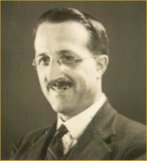
G.R.C. I trust the brethren will feel free as led by the Spirit to express their exercises without feeling obliged to hold strictly to the Scriptures read. “Where the Spirit of the Lord is, there is liberty”.
- So that with these Scriptures as a basis we may be helped to express exercises that may be burning in our hearts.
What is in mind is the need to get back to and understand the Divine System.
- It is not a question of thinking of a system we have left, but of a system which will stand for ever, which it would be apostasy to leave.
- It is the system to which we belong and which, in so far as we have been carried away by man-made ideas, we have departed from.
- In leaving a system which has become dominated by man’s thoughts, it would be sad if we found ourselves with an empty void.
- It would mean that we had got virtually no appreciation of Christ and of the divine system, of which He is the Author, Centre and Upholder.
- There is a great need to understand that we belong to a system, the principles of which are unalterable, which is already existing and which abides for eternity.
- It is described in this Epistle as the true tabernacle which the Lord has pitched and not man, and nothing that has happened during recent years, or however far back we go, has in any way altered the tabernacle which the Lord has pitched, and we have to take account of those words added, “not man”.
- That is the thing we have got to lay hold of, “not man”; because whenever man intrudes he brings in something which diverts from the divine system.
- So we have got to think of a system, the true tabernacle which the Lord has pitched and not man; there is not a thing of man about it. In chapter 9 it speaks of Jesus not having entered into holy places made with hands.
- We want nothing of man’s making. So we have to discard what is of man’s making and what man has pitched, but it is all with a view to getting back to what was always there, to what we know we have departed from, to the system to which we belong.
- We are not freelances, free to act as though we did not belong to a system at all, that would be anarchy. For everyone to do what is right in his own eyes is anarchy.
- But in being released from what is of man, the value of it lies in coming, in a fuller way than we have ever known, to what is of God, in which lies true liberty.
R.W. Viewing the tabernacle system have you in mind that everything there was according to the divine plan. There is a system now that is going through that is wholly of God,
- and is the divine intention today to search our hearts as to how far we are in it? Are we in it livingly, practically and fully? What are we giving ourselves to?
G.R.C. Yes. So that the epistle develops the system before it speaks of going forth to Him without the camp; that is the order of the teaching.
- You do not go forth to an empty void, in fact you go forth to Him, but we have to understand that, in going forth to Him, we go forth to Him as the Centre of a system which the book has described.
R.W. So that everything of the tabernacle system was there in divine order. That is, the curtains, and the boards and the furniture; God was concerned that that system would go through.
G.R.C. And we see in Revelation that it does go through. The tabernacle of God is with men.
- The tabernacle which the Lord pitched goes through into eternity, and I suppose we might say it began at Pentecost.
- Although the Lord was gathering material for it earlier, I suppose the pitching of it was at Pentecost, and at the beginning of Acts we see the divine system set out and functioning.
H.W.M. Would you say that the book of Hebrews was written to link on those that believed in Jerusalem with the system set up. We tend to give up the assembly position. That is what you are encouraging us not to do, not to be freelances.
G.R.C. Yes, quite so. Although they were in Jerusalem, they had to learn that Jerusalem, as the centre of the Jewish system, was essentially part of the camp.
- The Lord suffered without the gate of that particular city, and we are to go forth to Him without the camp because there is nothing in the camp that has any compatibility with the divine system.
-
The divine system is entirely apart from the camp, there is nothing in common.
- Therefore if you go forth to Him it is a very comprehensive thing, you go forth to that blessed Person. He has founded, upholds, and gives character to the vast divine system.
J.L.W. Is that the meaning of His title here, Jesus, the Son of God?
G.R.C. It is.
H.G.V.C. Is the basis of your exhortation what we have in the first verse read in chapter 4 “let us hold fast the confession”?
G.R.C. That is good, because as Christians our confession lies really in the fact that God is soon going to bring this system into display. That is the idea of the testimony.
- But we are in it already in faith and by the Spirit. We are well acquainted with it, in fact we know the innermost part of it; and God is going to bring it into display,
- so that immediately after speaking of entering the holy of holies, it says “and let us hold fast the confession of the hope unwavering”.
- You see, the hope is certain; we are already well acquainted with the system in the faith of our souls and in the power of the Spirit, therefore we know it is only a matter of God’s time before the system comes into display,
- and the more we go into the holy of holies and enjoy our part in it, the stronger our confession will be, the confession of the hope.
F.G.P. I wonder if the truth that the High Priest is on high, Jesus, the Son of God, to support us is important for all of us today. We should hold fast the confession.
G.R.C. There is a danger at the moment, through reaction or through suffering or depression;
- and the suffering is becoming more severe with some just now in the breaking up of families, through wicked teaching.
- There is the danger of failing to hold fast and then the enemy gets an advantage.
- We want to go on with buoyancy; hope suggests buoyancy. The more you know of the system you belong to, the more buoyant you are;
- it is the confession of the hope and not simply the confession of faith. Faith must be there, but the confession of the hope suggests something very lively.
H.G.R. Do we need to maintain in our minds the pattern that was shown on the mount?
G.R.C. Quite so; and that enters into going forth unto Him without the camp, because
- not only is He the Founder and Upholder and Head and Centre of the system, but the whole system takes character from Him.
- You go forth unto Him and you find that He is linked with a system where there is nothing of the old man at all – it is outside the camp.
H.G.R. So that in Ezekiel 43 it says that the visions that he saw were like the vision he had seen by the river Chebar in chapter one.
- Was he sustained, in spite of the pressure and the breakdown publicly, in the full light of what God was going to bring in in glory?
G.R.C. Yes. So that the visions of Ezekiel are most important in our day. And then getting back, as you say, to the pattern on the mount is important – for it is getting back to fundamentals.
- Every part of the tabernacle was Christ in character. There was not a single thing in the tabernacle which was not typically Christ – Christ personally or Christ in the saints.
- So that going forth to Him outside the camp, you are brought to a system where He is everything and in all.
H.F.R. That makes the Holy Spirit very important in this matter. The tabernacle was pitched when the Spirit came down. But the Spirit’s presence is the assurance that it will all go through, yet nothing but Christ will go through.
- He is occupied in forming Christ in the saints and He was greatly grieved when the Spirit of Christ was rejected.
G.R.C. Quite so. What a wonderful thing it is that, not only did the Spirit come down as the anointing, because the whole tabernacle system was anointed, but in His coming, God came down to dwell in the habitation.
- It is not an uninhabited tabernacle. God is there; and if there are tabernacle conditions, a simple person or unbeliever coming in will say God is among you of a truth.
- Because in Corinthians the assembly is viewed as the tabernacle of testimony in the wilderness, and God is there. That is to say if we are governed by the system in faith and giving place to the Spirit, that will be our experience.
F.G.H. What answers to the camp today? We have often quoted “Let us go forth to Him outside the camp bearing His reproach”. I wonder whether we sufficiently understand what the camp signifies.
G.R.C. One thing that would be accepted by the early Hebrew Christians would be that Jerusalem was part of the camp. That was the extraordinary thing in that day.
- And we have had to accept that what we thought was our Jerusalem has become part of the camp. “Go forth”, it says.
H.F.R. Is it not the case that all man-made systems are the camp, which you have drawn our attention to?
G.R.C. I believe that is a key word in this book; first “not made with hands”, and then “which the Lord pitched and not man”. No part of it is made with hands, not even a little section of it. And the whole thing was never pitched by man.
R.W. So the One who is the Head of it is the great High Priest who has passed through the heavens; that is something that cannot fail, it is nothing to do with this world at all.
G.R.C. In the type it refers no doubt to the high priest going right in with the blood. He passed through the court into the holy place and right through into the holiest of all
- And in another scripture it says He is made higher than the heavens; He has gone above them all, because of who He is.
- But the point here is that He is gone through the heavens; our Great High Priest has gone right into the centre of the system. He Himself is the Centre of it.
H.G.R. Is that why it is “Jesus the Son of God”? Is it that we should be impressed with the reality of the One who has been here on our behalf and on God’s behalf too?
G.R.C. Each of these scriptures speaks of what we have. We could have read parts of this book which refer more to what God has. But these passages refer more particularly to what we have.
- “Having a great High Priest who has passed through the heavens, Jesus the Son of God”.
- And then in the next passage, the summary is “that we have such a one High Priest who has sat down on the right hand of the throne of the greatness in the heavens”.
- Here it is simply that He has passed through, like the priests going in. But in that chapter, His work is viewed as so complete that He has sat down at the right hand of the throne of the greatness in the heavens.
- And then chapter ten is also what we have, “having boldness” to enter, because He has made a new and living way through for us. So that we have boldness to enter, and we have Him there as the Great Priest.
- And finally “we have an altar”, that is down here.
F.G.P. I wonder whether on the one hand we have the greatness of the Person who has gone right into heaven itself, yet on the other hand we have His love and sensitiveness as to all the saints may be passing through.
G.R.C. That is right. And so according to this passage we approach the throne of grace.
- The word approach could be translated “come near”; it is so in the Authorised – “Come boldly”.
- So you have the idea in this book, firstly approaching or coming and then going. We are not told to “go forth” until we come.
- The thing is to learn to come boldly to the throne of grace and with boldness to enter into the holy of holies.
- And then knowing what we have got on the positive line, in the power of it, we go forth unto Him outside the camp.
- What do we want of the camp once we have known the blessedness of this system? Who would go back into the camp after that?
D.W. What is the confession, please?
G.R.C. I think our confession would be our living appreciation of the whole truth of Christianity in so far as we have learnt it.
- The confession abstractly is the whole truth of Christianity livingly held by the saints. But then our measures of course differ.
- What a confession belongs to the Christian! He is here in a world where Christ has been cast out to confess that
- Jesus is the Inaugurator and Sustainer and Centre of a system that is soon going to supersede everything man has built up. Jesus is the Apostle and High Priest of our confession.
D.W. Our measures of appreciation of this, as you said, differ; some of us have very small appreciation of it, and perhaps may be inclined to lose heart.
G.R.C. We must not be discouraged, however small our appreciation. For we all have some appreciation of this glorious Person who is the Centre of it.
- Although I have known this many years, I feel very much humbled at the poverty of my impressions. Let us encourage one another in view of enlargement.
H.W.M. I was thinking of John 9 and the way that man goes; he asks the question as to the Son of God, and the gospel is written to that end, that we might believe on the Son of God. Do you think that John’s line is parallel to Paul’s?
G.R.C. Yes, he made his confession according to his measure until at last he was cast out and he confesses to Jesus Himself that He is the Son of God.
- I think that our confession has to be made first of all to Him. As we go along we bring every fresh appreciation to the Lord, and speak to Him and to God about it.
- Make the confession first to the Father and to the Son in the power of the Holy Spirit and then we will be able to confess to men.
H.P. Young Christians are to prove the reality of approaching the throne of grace and obtaining mercy, even as did the persecuted saints. When the disciples prayed the place shook.
G.R.C. What an evidence that was of the existence of the system; the place shook and they were all filled with the Holy Spirit.
R.W. Isn’t the confession of Jesus, the Son of God, the great thing?
G.R.C. The confession includes all that centres in Him. It is the world to come of which we speak.
- We are speaking about it, not only among ourselves, but to men; we are telling men about the world to come. But we are to be in the gain of it now. Jesus is the Centre of the confession.
F.G.H. Would you say that “holding fast” really involves our full committal in our hearts and minds and bodies, and, indeed, our whole being?
G.R.C. Yes. Because this system, while it is in faith, is more substantial than anything material.
- Material things are apt to seduce our hearts away from what is substantial and real. Material things are not real in one sense because they are so fleeting; as it says at the beginning of this epistle, “as a vesture He will roll them up and they shall be changed”.
- But what about the Person who is going to do that and the system of which He is the Centre? He is upholding all things by the word of His power, and that comforts me.
- Because if He can uphold that vast material system – some people tell us it consists of trillions of galaxies – by the word of His power, how much more is He concerned about upholding the spiritual system?
- There is no possibility of the spiritual system breaking down, because this blessed Person who inaugurated it at such a cost, making by Himself the purification for sins, is upholding it, and He will uphold each and all of us.
- That is His side; our side is “hold fast”. That is, do not get occupied with material things, not even with large numbers. The Hebrews had to get free from such things.
- The early Hebrew Christians had meetings of perhaps five or ten thousand in Jerusalem and they had the twelve apostles to look to.
- The Lord ordered that they should be scattered abroad. And the test then was – what had they got? Had they really grasped the great spiritual system, of which the big meetings and the help of the apostles were but spiritual mercies, as it were, to help them into the system?
- Once those mercies were removed, what had they got? But then they proved they had everything. They had lost nothing, because the system worked in all circumstances.
- They went everywhere evangelising the word. They had radiant faces, rejoicing with joy unspeakable and full of glory.
- When they thought they lost everything, they found that they lost nothing because they still had Christ and the system centered in Him.
H.P. So that Acts 9 shews that they had the needed preservation from the Lord. He was looking after the system and those who were true to the confession. He wouldn’t allow Saul to go and cause devastation among them.
G.R.C. The system is ever so much greater than anything I have grasped. I am just on the fringe of it, and I feel how little I have held fast the confession.
- I think if you look between the lines in Acts you will see it operating and how vast it is. It takes in the innumerable company of angels, the universal gathering; it takes in all the great operations of God.
- The creation subserves it, governments subserve it, the Holy Spirit livingly operates in it! In spite of man-made systems here, this divine system governs everything.
- All those in authority are controlled in view of it by God; and the angels are at His bidding, and you get an idea of that in Acts.
- For instance, a famine that occurred so that Jew and Gentile might be knit together – Acts 11 – served the divine system.
- But much earlier than that Saul was allowed to go on in fury, he too was but serving the divine system, because that scattering of the saints was the first great evangelical campaign.
- One thing remarkable in Acts is the absence on the part of the apostles of any attempt at human organisation.
R.W. Is it interesting that in our weaknesses the throne of grace is still available – there is full allowance for weakness. If I am weak I approach the throne of grace and I find mercy and grace for seasonable help.
G.R.C. And don’t you think those refugees found it in Acts; and who needed the throne of grace more than they? But the whole system was working.
- If the apostles had sat down in Jerusalem and had a conference and said, we had better organise a worldwide campaign to preach the gospel to all the nations, I believe the whole thing would have broken down.
- Human organisation is a snare, we, and Christians all down the ages, have fallen into. Men get together and allocate this work to this one and that work to that.
- The apostles did nothing of the kind. They believed in God. God ordered the first great evangelical campaign, not through a missionary society, but through Saul of Tarsus scattering the saints abroad.
- You say that was very peculiar mission-work, but “they went everywhere evangelising the word”, and, to speak humanly, with the best possible advertisement for the message they carried.
- They were able to tell people that they had lost everything and yet possessed all things. They had got a real part in the divine system; and they found that wherever two or three were gathered to Christ’s Name He was in the midst of them.
- And the climax of that first campaign was that the great persecutor came to Antioch, introduced by Barnabas, who told them that he was the man who could help them. What a climax!
- Who could have arranged a climax like that except God – that the man who persecuted them should be brought in amongst them to comfort them and help them forward in the truth?
- And if you look into the Acts you will find that God was over all things governmentally; angels were active, as in the case of Philip – chapter 8 – and Herod –chapter 12.
- Then the Holy Spirit Himself was giving immediate directions; He said to Philip, “go and join thyself to this chariot”. Philip could not have organised that.
- The same applies to the movement to bring in the Gentiles. Peter knew he had the keys of the kingdom, but he did not sit down to try to work out when he should use the keys. He waited restfully until the Holy Spirit told him to go with those men, nothing doubting.
R.W. So they did not expect everything to be worked out in three days at Antioch – it took them eighteen months.
G.R.C. The moment you get the human mind working in the organisation of things, you are bringing man in.
- The true tabernacle is not made with hands; the Lord has pitched it. He is doing things and not man; but we are to be available to Him in it.
- Let no one feel that the divine system is in chaos; it is just what it ever was. It is because the saints left it that for them chaos ensued.
H.G.V.C. And if we take that chaos to heart, shall we not see something more of the three things you have drawn attention to as relating to the Person – namely that He inaugurates, upholds and sustains?
G.R.C. I am sure that is right. If you think of those refugees, how they must have availed themselves of the throne of grace!
- They did not have the apostles to turn to in their troubles and ask them what to do next.
- But they had the throne of grace and they received mercy and found grace for seasonable help; so that they “rejoiced with joy unspeakable and full of glory”, as Peter says, and wherever they went the Lord prospered them.
- The system was working, in what men would consider the most untoward conditions.
F.G.P. And after all these centuries it still works. Our blessed Saviour is on high and is carrying things through.
G.R.C. That is the point, it does indeed work and is working this afternoon. Let us hold fast to that; that is holding fast the confession. Let us hold to it, for it is working; and we are putting it to the test and find it is working.
M.L.J.M. Would the contemplation of this precious touch of the Lord being tempted in like manner, be a great help and comfort to the saints as they seek to work out this great and glorious system?
G.R.C. Yes. One benefit of what we have been through, and what we are going through, is that it brings us nearer to what the Lord suffered.
- We realise more what we have held in theory as to the sufferings of Christ, now that we have had some little part in them.
- And we realise what a wonderful thing it is to know that He endured every suffering that we can possibly endure in a far deeper way than we ever could.
W.C. We are speaking about the system, but there may be many thinking, ‘I can never comprehend this system in all its detail’. You are pressing, are you not, the One who is the Centre of it, that we are to be occupied with. If we are to be working in the system are we to be occupied with Him?
G.R.C. The way we can come into the gain of the system fully, I would say, is the answer to Paul’s prayer in Ephesians 3 – the Father strengthening us by His Spirit in the inner man with power, that the Christ might dwell in our hearts by faith.
- That means there is no rival, He is dwelling in complete control. That is to say the One who is the Centre of the divine system, is the Centre, and is in control, of my heart.
- And that being so, as being rooted and founded in love, I begin to look out at and apprehend the system – breadth, length, depth and height.
H.G.R. Is that the bearing of chapter 8 verses 1 and 2? We have such a One High Priest. Is it as interceding and making intercession, that He is our present Saviour in the living power of the work that He completely effected on the cross?
G.R.C. He is able to save completely those who come to God by Him and thus He can maintain and uphold us if only we avail ourselves of Him.
- We have Him, but do we use Him? Is He everything to us? Are we coming to Him day by day as our Resource in everything?
- Because being saved completely involves being livingly in faith in this system, living in it; then you are saved from everything else.
J.L.W. Some of the burning questions arising in our hearts could be answered.
G.R.C. They could, because they are answered in the holy of holies.
- You may feel, and we often feel, that we are not ready for the holy of holies. But, as it has just been said,
- there is no reason why we should not be, because the One who has secured our place there at such a cost – God Himself – loves to see us enter.
- You cannot imagine that the blessed God has not made all the necessary provision to meet all our weaknesses. So that we need never fail to go in.
- There is the throne of grace where I receive mercy and find grace – no ‘if’ about it – and the result is that
- I do not stop at the throne of grace, which is more the place for supplication. I enter the holy of holies where there is contemplation, adoration and prostration.
M.L.J.M. May I follow up your thought as to those that were dispersed? Is it not encouraging to see that Peter, when he writes his first letter, brings before them the glory of the Person in chapter 1 and what the Person has done. Is that not a great bulwark to the believer as he goes forward? Do we need to fix our eye on the Person?
G.R.C. We certainly do. It is the crux of everything. In chapter 2, he begins more with the system, the spiritual house. But in the holiest you are absorbed with the Person.
H.G.R. Is that why it says, “on the right hand of the throne of the greatness in the heavens”? I wonder if it is to impress us with the majesty and greatness of Christ, and His glory and the place He occupies. What could be greater than to consider that?
G.R.C. If we knew more of what it is to be in the holiest we should understand those expressions better, because we should be in the place where the glory is, where He is sitting.
- It is a wonderful thing to be in the glory of God with Jesus, a glorified Man, in the presence of God, in whom God’s glory shines forth.
Ques. Will you please explain explicitly who the priests are? We think of the Lord Jesus as the High Priest; but who are the priests?
G.R.C. The priests are not mentioned as such in this epistle, but their service is; and so they are there by implication in chapter 13 –
- “By him therefore let us offer the sacrifice of praise continually to God”.
- The book is leading up to that, to the point where we should be enabled to offer the sacrifice of praise to God continually.
R.W. Isn’t it interesting that in the first chapter of Revelation we are made a kingdom, priests to His God and Father; and then in chapter 20 we are said to be priests of God and of Christ.
G.R.C. A priest is one who knows the system – not that anyone knows it fully – but he knows the system and moves freely in it, and this book is needed
- that we should know the system and the One who is the Centre of it and know the laws that govern it and move freely in it. So that in the last chapter the priests are functioning:
- “By him therefore let us offer the sacrifice of praise continually to God, that is, the fruit of the lips confessing his name. But of doing good and communicating of your substance be not forgetful, for with such sacrifices God is well pleased”.
- The priests are maintaining the continual sacrifices at the altar.
R.W. And any difficulty that may arise can be met at the throne of grace.
G.R.C. But then you are not ready for service until you have been inside. Christian service flows from the holiest; it is not on the level it should be unless we have been inside first – that is the structure
of this book.
- The early part of the book is the Person of Christ, then the greatness of His work, His sacrificial service, in the offering of Himself.
- And through His Person and His service, the new and living way is opened for us to go in.
- It is not our service that takes us in. If we think that, we are going back to the old covenant.
- It is His service that has made the way in; our privilege is to go straight into the holy of holies which is our eternal home; to be there and to come out to serve.
- Our service is in chapter 13. In the teaching of this book you have to go all along the way to chapter 13 to get our service.
F.G.P. Do you think this wonderful privilege is open to all the saints, not just a few? The way to go into the holiest is for all, is it not, so that we should get the answers to our questions by going into the holiest?
G.R.C. If we have got any notion in our minds that it is not open to all, it shews we are not yet free from legality.
- We still retain some notion that it is our service, our work, our apprehension that will get us in.
- This scripture shews us that Christ and His sacrifice at the altar – He gave Himself there – is the ground of our going in; and therefore it is not a question of how long I have been converted.
- If I am converted and have received the Spirit, I have liberty to enter the holy of holies – even the youngest Christian.
F.G.P. What I had in mind chiefly is that we should not be perplexed at what we ought to do – because we can go into the holiest and get our help from the Lord Himself.
G.R.C. That is very humbling, because I very often get perplexed, and it shews how little I know about the holiest. When you go into the holiest, the Great Priest is there.
- “The High Priest” refers to Him more as the One who offered Himself, the One who gave the great offering that has inaugurated the system, and has gone in in the power of His own blood, as occurred typically on the great day of atonement.
- But as the Great Priest He remains there during this dispensation, with each of our names upon His heart on the breast-plate, and each of our names upon His shoulders.
- It says “Having therefore a great high priest”, Hebrews 4: 14 – we have Him. If only we knew what it is to go into the holiest and appropriate Him as the Great Priest, we should not be at a loss;
- because the Great Priest has, in the midst of our names on the breast-plate, the Urim and Thummim.
- And, you see, the Urim gives light; it brings light to bear upon any particular situation, and that is what we know so little about.
- The light of God in a general way is radiant in Him who is the effulgence of God’s glory in the holiest. But when you need light on a particular situation you would do like Eleazar did.
- It says that Eleazar would enquire for Joshua by the judgment of the Urim when he should go out and when he should come in, and when the children of Israel should go out and come in, and when the assembly should act –
- all three things are mentioned, Joshua and the children of Israel and the assembly, all are to get light by the judgment of the Urim through Eleazar.
- Now what we need is the judgment of the Urim upon questions that are a trial to us at the moment.
Ques. Is that why it says “a true heart”?
G.R.C. The gospel gives you a true heart, if it has been really accepted. So few of us have accepted the gospel.
- If the gospel had really been accepted, brethren generally would not have gone back to the commandments of men, which is worse than going back to the law of Moses. There has been great ignorance of the gospel.
- A true heart is what a person gets when he truly accepts the gospel. Such have accepted the truth about themselves and about God; they have no illusion, they have a true heart.
- Full assurance of faith refers to one who has whole-heartedly accepted the gospel; his faith is in the Person and work of Christ and therefore he has full assurance. They are the conditions for going in.
W.C. So that really we need to get into our souls that we are welcome there.
G.R.C. Mr. Stoney spoke of our being received with acclamation. I would not perhaps use that language, because I would not be equal to it.
- Mr. Stoney referred to the difficulty of getting into the audience chamber of an earthly monarch.
- But he said that when you approach the divine audience chamber, you may approach with fear and trembling, but to find you are received with acclamation because you belong to the King Himself.
H.S.E. It is a dedicated way, does that suggest its availability?
G.R.C. Very good, say more.
H.S.E. I was thinking of what you said about our lack of understanding of the gospel. This comes back to the real fundamental matter of the blood of Jesus.
G.R.C. Yes. And what you say, dedicated for us, that is very remarkable, is it not?
H.S.E. Who could be excluded from that ‘us’ in verse 20 of chapter 10!
F.G.H. Could we enter the holiest individually, or is it limited to when we come together?
G.R.C. One of the difficulties in seeking to speak to one another, as you know, is that we do not live up to what we speak to others about.
- I have said more than once that we ought to go in at least twice a day; that is the minimum. What do you say?
F.G.H. I thought it was important to remark upon that, especially for the sake of the young people among us; the importance of taking up this privilege of entering the holiest individually. If we knew more of that there would be greater power and substance when we come together?
R.W. Did not Mr. Raven limit it to a collective move, and an aged brother said that would not do for him, for he went in several times a day; and then Mr. Raven said it would not do for him either.
G.R.C. Yes, Mr. Raven adjusted his thoughts. But then what we enjoy individually we enjoy in a greater way together.
- When it says, “Ye are the temple of God”, it refers to the temple of the tabernacle. It is the assembly viewed as the tabernacle of testimony in the wilderness in Corinthians.
- “Ye are the temple of God” means that the saints there were characteristically the inner shrine of the tabernacle – the holiest in other words. Our meetings should be of that character.
- Mr. Stoney said the more we go into the holiest – he meant individually then – the more we shall be concerned to provide ‘holiest’ conditions down here amongst the saints for the Lord to come to so that we enjoy the holiest together.
H.F.R. It is important, I think, to maintain both sides as to entering the holiest, both the individual and the collective. And the more we know of the individual entering the holiest, the more ready would we be when we come together.
G.R.C. That is what I feel. “Ye are the temple of God” really means there should be a ‘holiest’ atmosphere whenever the saints are gathered together.
Ques. Do you think that we need to love it, we need to love that spot? The Psalmist says, “I have loved the habitation of thy house, and the place where thy glory dwelleth”.
G.R.C. And he says, “that I might dwell in the house of Jehovah all the days of my life”. That is where we ought to dwell.
- If you are asked where you live, you ought to be able honestly to say, I live in the holiest; I have to go out to do things, to fill out my responsible life, but when I am free from other things, that is where I go.
M.L.J.M. Do we not get a beautiful example in the Lord Himself? He always resorted to His Father’s presence. What was open to Him in His glorious manhood, is open to every believer.
K.G.B. I wonder whether you would say a little more about “the new and living way” which would set us perfectly free to enter the holiest. I wonder whether we are a little frightened of entering in!
G.R.C. Having boldness, it says, for entering into the holy of holies by the blood of Jesus. That is a cardinal point;
- and coupled with that is the new and living way, which He has dedicated for us through the veil, that is His flesh.
- The fact that it is new, I think, is in contrast to Judaism. In fact the way was not open into the holy of holies while the first tabernacle had its standing.
- But now the High Priest has gone in, and has remained in; and as High Priest He is our Representative. He has gone in there to appear before the face of God for us, and as our Forerunner.
- And His prayer to the Father “that where I am there they may be also” really means that our place is in the holiest, where He is, glorified in God.
- And He has dedicated this way which is new – in contrast to Judaism – and living – which, I think, involves that we have the Holy Spirit. We have, in the Spirit, the power requisite for entering in.
P.H. Entering by the blood of Jesus – the very youngest believer here has a precious link with Christ because of His precious blood shed for him. Surely we should not say that anyone could be frightened to enter the holiest and sit down where he is at home in the presence of God and in the
presence of Jesus! Divine love wants us there.
G.R.C. It is the blood that gives boldness, and what has often comforted me is that to be bold in entering the holy of holies is not presumption.
- Indeed, if I am not bold in entering in, I am casting a slight upon the Person and work of Christ. I honour Him by being bold to enter the holiest.
W.C. You said earlier that you doubted whether we really accepted the gospel. Do you think that we really have very little apprehension of the wonderful efficacy of the precious blood of Christ?
G.R.C. The present heresies that have swept so many away are essentially an attack on the gospel, and if you lose the gospel you lose the church.
- It is a solemnising thought that so many who have been taught the truth for years in readings and gospel preachings, have now been swept away from the truth of the gospel at a stroke.
- If they are to be recovered they will have to get back to the truth of the gospel.
F.G.P. I wonder whether the blood of Jesus would give us to see the love that was behind it and would give us liberty.
G.R.C. His love is such that we would love to honour Him, and one way to honour Him is by holy boldness, as relying upon His Person and work.
- Because He has gone in in the power of His blood and we have received the Spirit, we can go in. There are no preliminaries, it is not that we have to work up to something.
H.F.R. It is one of the things we have; it is not a question of whether we have it or not. There are two things here.
- “Having therefore boldness for entering the holy of holies by the blood of Jesus, the new and living way, which he has dedicated for us through the veil, that is his flesh; and having a great priest over the house of God, let us approach …”. That is what we all have.
G.R.C. Exactly; if we have really accepted the gospel, we have these things. We have a true and sprinkled heart, and a body washed all over, God having cleansed us. This is so elementary; yet what do we know about entering the holiest?
H.P. So that it is a question of what the water is, as well as the blood.
G.R.C. The blood sprinkles our hearts from a wicked conscience, you have no more conscience of sins.
- And as regards the water, it would link with what God said to Peter, “what God has cleansed”, and with the Lord’s words, “he that is washed all over …”
- Having a true heart means that we have accepted the gospel, the truth about ourselves, the truth that our old man has been crucified with Christ; and the truth about God.
- If we have a true heart as governed by the truth of the gospel, what is to hinder us going in?
H.G.R. Would this set us in real spiritual liberty and in the enjoyment of what has been secured through the death of Christ?
G.R.C. A similar scripture to this was written to the Gentiles, in Colossians 1: 21, where it says:
- “And you … yet now has it reconciled in the body of his flesh through death”.
- It is reconciliation, and thus we can go right in, like Luke 15.
- “In the body of his flesh through death”, links with “the veil, that is his flesh” in Hebrews 10: 20.
- “To present you” is the divine side. The fulness presents us “holy and unblamable and irreproachable before it …” It does not go on to say, if you serve well, or if you get a better apprehension of things.
- No; it says: “if indeed ye abide in the faith founded and firm and be not moved away from the hope of the glad tidings”. It is simple faith in the gospel that fits us for the presence of God. Nothing we can do would fit us.
H.G.R. The gospel involves the “glory of the blessed God”. Perhaps we tend to have lost the true character of the gospel in our minds.
R.W. Could you say something about the altar in chapter 13, because it is something we need.
G.R.C. According to chapter 10, we have been inside, but now comes the exhortation:
- “therefore let us go forth to him without the camp, bearing his reproach”.
- The place we have been in has nothing to do with the camp; it is quite incompatible; and the only way to be consistent with our place inside, is to go forth to Him outside.
- But it begins the section by saying “we have an altar”; that is the place of service; the holiest is not the place of service.
- But the altar and our place of service is outside the camp, just because the divine system has nothing to do with the camp. It is a question of where we are down here and what we do down here.
- We profess to serve God, but the test comes as to whether we are clinging to anything of the camp or whether we have come right out of it.
- The Christian altar is outside the camp – “we have an altar”. And the first point here about the altar is fellowship.
- “We have an altar of which they have no right to eat who serve the tabernacle”.
- The first point is that the altar is the place and the standard of fellowship, where we eat. Eating at the altar is the eating that involves fellowship.
R.W. Ezekiel 41 speaks of the altar being of wood and about its corners and the length, and then “he said unto me, this is the table which is before Jehovah”. Does that bring in the fellowship side?
G.R.C. Yes. In Ezekiel chapter 41 and in Malachi chapter 1 the altar is called the Lord’s table, because it is the place of provision of food for God – see Numbers 28 and 29 – and for the people.
R.W. I wondered whether it has anything to do with the altar in 1 Corinthians 10?
G.R.C. It is the same idea. “We have an altar”; The first thing is eating at it; and then the section ends with serving at it;
- “by him let us offer the sacrifice of praise continually to God”.
- That goes on all the better when we are together, but it is to go on every day.
- We go into the holiest and what can we do but come out with a voice of praise; confessing His name in a sacrifice of praise and then doing good and communicating of our substance.
- It is service at the altar. But the first thing is fellowship, because unless you accept the terms of fellowship as conditioned by the altar, you will be greatly hampered in your service; the question is how far your sacrifices will be acceptable.
S.A.F. Was Peter suspected of being out of accord with the altar in his service in Acts 10, and yet in actual fact his service sprang from the holiest. It was the case there of the Lord pitching the true tabernacle and not man. Whereas if he had gone to serve in the spirit of John, “I go to fish”, then something of man would have come in, wouldn’t it?
G.R.C. That is very interesting. Because the pitching of the tabernacle, in the principle of it, was completed in that chapter, in the Gentiles being brought in. Were you thinking of that?
S.A.F. I thought it connected with your idea of service springing from the holiest.
G.R.C. Well, I think when it says that Peter became in an ecstasy, it meant that he was in the holiest. I would not think that was an unusual thing for Peter; but on that particular occasion he got special light, just as we were saying, you get light in the holiest.
F.G.P. Did not God speak to him; is that the other side of going into the holiest?
G.R.C. Yes. Peter might have thought: I have got the keys of the kingdom, but how am I going to use them? He might have tried to work out
something as to how to use those keys.
- But while at Joppa, he fell into an ecstasy and got light, and then he got the Holy Spirit’s direction. He let the Holy Spirit arrange things and tell him when to do it. The Spirit said to him, “Go with those men, nothing doubting”.
- It is all a question of the Lord’s work and not man’s – not even an apostle’s.
M.C. May I ask as to what you said about the right system – the divine system – and have also indicated about the wrong system, in which the mind and will of man operate.
- Can you give us briefly a word of practical help as to how we might avoid what many of us feel to be the very real danger of falling back again into some kind of wrong system, in which man’s mind predominates?
G.R.C. We all feel that danger; but what I think might do damage is to make a bogey of it, if you see what I mean.
- So that we even fear the normal commands of the divine system – we are afraid to go back even to them, lest we are building up another system.
- I want help myself on this point; but I believe one thing to do is to really get back in our faith and thoughts to the divine system and its requirements, and to face up to them.
- We wonder about the basis of fellowship and so on. But should we not face up to the requirements of the divine system soberly?
- I think the more we enter the holiest, and into the privilege side of things, the more we shall be prepared for the commands of God and requirements of the divine system.
- If we really enter the holiest, we cannot come out and tolerate anything brought over from the camp; and we shall be sensitive to judge the introduction of anything that is merely from man’s mind.
- But in our avoidance of what is of man let us not shirk what is clear and definite, namely that we have an altar, and that the altar conditions the fellowship.
- Fellowship is fellowship with the altar; that is where we eat. And we
need to face up to the divine requirements of the system as set out in scripture, and then the Lord will certainly help us.
H.F.R. Are the details set out for us in the first epistle to the Corinthians in a practical way, culminating in the apostle’s insistence that the things that he wrote to them were the Lord’s commandment?
G.R.C. Quite so. I do feel we need to face up soberly to those commandments and be prepared to accept them,
- because our enjoyment of the system to which we belong depends on that.
- Hebrews 13 is a most important chapter from that point of view. The whole attractive vista has been set before us in this epistle, and all is in view of strengthening us to face up to chapter 13, that we have an altar;
- and anyone who partakes of anything connected with the camp has no right to eat of it.
- And if a man has not the right to eat, he cannot have liberty, even though he may be formally breaking bread.
- The mere act of breaking bread will never give me the joy of this system, if I am not in accord with what communion with the altar means.
R.W. You would say then that the system is all right, but that the persons who belong to it may disqualify themselves from the enjoyment of it.
G.R.C. And this last chapter is the test, that we have an altar. And there were those who were linked up with the tabernacle system of that day who had no right to eat of it.
- Well, there are those today who have no right to eat of it though they may profess to have it.
W.C. You are feeling that we may even try to understand this system with our natural minds.
G.R.C. We must reject the working of the natural mind in divine things. We need to be kept before God.
Page Top Article Top
| FELLOWSHIP |
|---|
1 John 1: 1-end; 2: 1-6; 4: 15, 16; 5: 2-6, 13, 20, 21
Address at Enfield, February 10, 1962
The Divine System, Notes of Meetings, 1: 27-40
|
|---|
I wish to say a word, dear brethren, on the subject of fellowship which involves walking and keeping. Hebrews 13 deals with it, it says,
“We have an altar of which they have no right to eat who serve the tabernacle”.
- That is the Christian altar, and eating of the altar is fellowship. The altar is thus presented from the standpoint of fellowship; it is indeed the standard of Christian fellowship.
- “Are not they who eat the sacrifices in communion” [or fellowship] “with the altar?”
- We have an altar, and the altar does not vary, it sets out in perfection God’s standard, and that standard has been upheld by Jesus in the sacrifice of Himself. He is both the Altar and the Sacrifice.
- Think of Him as the Sacrifice and how He has put away sin from before the eye of God by the sacrifice of Himself.
- Once in the end of the world He appeared in order that everything due to God’s throne, where He now sits at the right hand, should be upheld; that God should be vindicated and His glory shine forth.
- That was the result of the Lord Jesus offering Himself on the altar. And that is the altar the Christian has, and that is to be the standard of our walk together.
- It indicates in that chapter that there are those who have no right to eat, and that is ever so. They may claim the right, they may even think they are doing it.
- It says “We have an altar, of which they have no right to eat who serve the tabernacle”.
Now the tabernacle referred to in that verse, was the literal tabernacle, a figure of the true; a dwelling place authorised by God to be made with hands and pitched by man.
- But those who served that tabernacle had no right to eat of the Christian altar, even though that tabernacle was made according to
divine specification.
- Something better had been established – the true tabernacle which the Lord had pitched and not man.
- Christ has not entered into holy places made with hands, figures of the true, but into heaven itself.
- Even though there were right things made by hands in the old dispensation, they had no place whatever in Christianity.
- Nothing made with hands, nothing that man has devised, nothing man has pitched has any place in true Christianity.
Now if those who serve the tabernacle made with hands, which was originally divinely specified, have no right to eat at the Christian altar,
- how much less those who serve systems that have never had divine authority!
- Such may still break bread, but the privileges that attach to the Lord’s Supper will never be known in their true character, because God is not mocked; He never changes His standard.
- And so you get the principle of separation in Hebrews 13, “Let us go forth to Him without the camp”; that is outside of everything that man has pitched and everything that man has made.
- Go outside of it all, the divine system is outside of it all, let us go outside to Him who is the Centre of that system, the Son of God. Let us confess Him as the Son of God.
- Let us hold fast the confession of the hope unwavering, for not only is the Lord Jesus about to appear, but the whole system we live in by faith and by the Spirit is going to appear.
- Let us hold fast the confession of the hope unwavering and go forth to Him outside the camp rejecting everything that belongs to the camp.
- The Christian altar stands clear of all those things; I am speaking of it abstractly, the divine thought, “we have an altar”. Why should we tarnish it, why should we lower the standard?
- The standard is in Jesus and in His death upon the cross, where He upheld God’s glory at the uttermost cost to Himself; He being made sin for us, who knew no sin, that we might become the righteousness of God in Him.
- That is the aspect of the death of Christ which is brought before us in Hebrews 13. The bodies of those beasts whose blood was carried in to the holy of holies as a sacrifice for sin were burnt outside the camp.
- What a sacrifice was the sacrifice of Jesus! He offered Himself without spot to God and God made Him to be sin for us as typified in the burning without the camp.
- It ought to make us shudder at the thought of bringing anything into our walk and ways as Christians which is in the slightest degree out of keeping with Jesus and His sacrifice,
- and thus out of accord with God and His thoughts and His glory, which Jesus upheld; and therefore to make us eschew everything that is pitched by man or made by man.
- But I am not speaking only now of things that are actually made with hands, but what men figure out in their minds.
- “Thou shalt not make to thyself any graven image”.
- We can easily figure out things in our minds and make a kind of graven image of our own conception of God.
- So Hebrews 13 is a testing chapter but a blessed chapter, and a chapter we should all take up surely with spiritual exhilaration if we know something of the earlier part of the epistle and the blessedness of our place within.
If you have been inside you want your circumstances down here, as far as is within your capacity, to be in accord with what is inside.
- If you have been where Jesus dwells in the holy of holies you would like to provide Him with conditions down here, among those with whom you meet, in keeping with the holy of holies, in so far as that can be done in these mixed conditions.
- We can never claim to have achieved it, but we would be satisfied with no less an objective than to provide Jesus, when He comes to us as He has promised, with conditions suited to Himself.
- There can be no other standard, however much we fall short of it; and so let us remember that we have this altar, remembering also that we may have all the outward appearance of having the Lord’s Supper and yet not have it.
- That was the case with the Corinthians. It says,
- “I hear that there exist divisions among you. When ye come therefore together into one place, it is not to eat the Lord’s Supper”.
- If you had gone to Corinth and said to the brethren, ‘Do you have the Lord’s Supper?’ they would have said, ‘Certainly we do’.
- The apostle said it was not the Lord’s Supper. It shows how we can deceive ourselves, and think we have got the Lord’s Supper when we have not.
- The outward form does not make the Lord’s Supper. What makes the Lord’s Supper is the inward state and the Lord’s presence in consequence.
- No outward position – much is claimed of an outward position – secures the Lord’s presence, but an inward state; a state in keeping with the altar.
- He goes on to speak of those who individualise it, as is done in the case of the so-called Sacrament around us. People isolate themselves.
- They take the ground of breaking bread only as individuals. ‘If the person next to me is unconverted, it is nothing to do with me, I am just remembering the Lord as an individual’.
- But that is like a person eating his own supper. I do not belittle that. The Lord feeds such souls because He is faithful, but it is not the Lord’s Supper. That is something to think over.
- Let us not claim anything, least of all a position, as though the Lord were automatically connected with a position. It is a question of conditions from week to week. It is
- “where two or three are gathered together to My Name there am I in the midst of them”.
- Surely our hearts crave for the presence of our Beloved at His Supper. We must have Him, whatever the cost.
Now when we come to John, he deals with what is vital and inward.
- He does not use the word altar. It has been said that he gives the truth of the terms rather than the terms of the truth.
- He does not speak of the altar in terms, but he gives you the altar in substance.
- It is implied in this first chapter, “If we walk in the light as He is in the light”.
- How is it that God has come into the light? Through Christ’s sacrifice at the altar! Where has God’s character been displayed? In Christ’s sacrifice at the altar!
- There we have learnt that God is light and God is love; God is righteous and God is holy. There we learn God’s mercy, there we learn God’s abhorrence of sin.
- The knowledge of God has come to us by way of the altar, the sacrifice of Christ. As to our communion with the altar, he says later in the epistle,
- “Hereby we have known love, because He has laid down His life for us; and we ought for the brethren to lay down our lives”.
- That is the positive side of communion with the altar.
- I suppose if anyone was in that state of soul – prepared to lay down his life for the brethren – there would be no doubt that he was walking in the light, because he would have nothing to hide.
- If you are walking in love, and love is your only motive, you have got nothing inward to hide. That man is walking in the light.
- But the moment you get mixed motives then you have got something to hide, you have got something you are ashamed of.
- There is no dark part with God, nothing, speaking with all reverence, that He needs to hide. The message, thus, is that God is light and in Him is no darkness at all.
- He is all that He says He is, all that He purports to be; and that is what we should be. The Lord Jesus speaks of it, “I am altogether what I say to you”.
- How wonderful it would be if we never went in our words beyond what we really were in our hearts.
And so here it speaks of walking in the light, but first of all it says, after giving us the message that God is light and in Him is no darkness at all,
- “If we say that we have fellowship with Him”.
- Now the first point in fellowship is fellowship – or communion, which is the same word in the original – with God.
- We think much of fellowship with one another, but the first thing is fellowship with God.
- God’s desire for that came out in the garden of Eden. God walked in the garden in the cool of the day. Walking is the idea of fellowship or communion.
- He had given the garden into Adam’s charge to till it and keep it, and Adam had not kept it and so there was no communion. It was impossible for God to walk with man – a solemn thing.
- But God has wrought that communion might be restored, but in a new and most blessed way.
- The apostles had fellowship with the Father and with His Son, Jesus Christ in a unique way, and John writes that we might have fellowship with them.
- We must begin that way, taking account of what they saw, heard, handled and contemplated. They have passed it on to us that we might have fellowship with them; and thus, in the measure in which it is open to us, we have fellowship with God.
So the first thing is, “If we say we have fellowship with Him”.
- You see, if you have not communion with God you are really outside of vital Christianity.
- I am not saying you are not a Christian, but what is the value of my being a Christian, in a practical sense, if I have not communion with God?
- So normally, if a man professes to be a Christian, he is really professing that he has fellowship with God. But
- “If we say that we have fellowship with Him, and walk in darkness, we lie, and do not practise the truth”.
- That is a very solemn thing, because it is useless to think of true fellowship with one another unless each one of us individually has fellowship with God.
- That is the basic thought of fellowship – communion with God.
- You may have dark spots which the brethren do not know, but if you have got dark spots, if you have got hidden motives, wrong motives, selfish
motives, anything of the flesh in fact, you will not have communion with God because you cannot escape the eye of God.
- You can escape the eye of the brethren and go on a long time perhaps, but you cannot escape the eye of God and God is no respecter of persons.
- Nor does He ever lower His standard though He is gracious and kind, and will help you to get back to it.
- But if there is darkness in my heart, I may remain in fellowship amongst the brethren but I have lost fellowship with God, and my fellowship amongst the brethren is more or less an empty shell.
- “If we say that we have fellowship with Him, and walk in darkness, we lie, and do not practise the truth”.
Now this is a thing to maintain every day. You cannot hide anything from God, and the first point as to fellowship is to live under the eye of God,
- and to let Him search the heart as to every hidden motive and every evil thought and every intrusion of the flesh; to walk under the eye of God and to judge it at once.
- You may try to hide it from God like Adam with the fig leaves, but you cannot do it. So the first and foremost thing, if you want to be in fellowship, is to walk under the eye of God.
- Let our links with God be unimpaired, communion free and unhindered between our souls and God, so that we abide in the Son and in the Father in the power of the Holy Spirit.
- He says to the little children in the next chapter, “Ye shall abide in the Son and in the Father”.
- Fellowship with God means that my home is in the Son and in the Father. That is the family aspect of the holiest – abiding in the Son and in the Father in the power of the Holy Spirit.
Then I begin to think of fellowship with the brethren. It goes on to say at once,
- “If we walk in the light as He is in the light we have fellowship with one another”.
- If we let God’s light shine into our hearts day by day, keeping short accounts with God, that communion with Him may be unimpaired, we shall have fellowship with one another.
- If there is nothing to mar communion with God you may be sure there will be nothing to mar communion with one another.
- So if we walk in the light as He is in the light – walking with God in the full light of all that He is as manifested in Jesus – we have fellowship with one another.
- What a rich fellowship! Each one of us day by day maintaining communion with God, our links with the Father and the Son, our home in the presence of God, and then we have fellowship one with another. Sweet fellowship indeed!
- “And the blood of Jesus Christ, God’s Son, cleanses us from every sin”.
- There is no need to keep any part dark, because, though we all often offend, that does not cause the fellowship to break down. If we are with God, then every offensive thought and motive is dealt with at once.
- The enemy would accuse and depress you; he would say to you, ‘Look at those evil motives that arise in your heart, and yet you thought yesterday they had all gone’.
- But they will continue to arise while we are down here because the flesh remains in us. That is why we are exhorted to keep our hearts more than anything that is guarded.
- But there is no need to let the enemy cast you down, because the blood of Jesus Christ in all its efficacy remains.
- Satan is the accuser of the brethren and would turn you in on yourself, saying, You are not fit for communion with God!
- But the blood of Jesus Christ, God’s Son, cleanses us from every sin, and, as the accuser would attempt to come between my soul and God, accusing me as I approach God – for he accuses the brethren before God day and night – I can claim the abiding efficacy of the blood.
- “They have overcome him by the blood of the Lamb, and by reason of the word of their testimony”.
- There is no need to be under the power of sin in the flesh, nor under the power of depression.
So “the blood of Jesus Christ, God’s Son, cleanses us from every sin”; and on this basis we walk in the light together.
- How wonderful is real Christian fellowship! Let us give up all pretence and hypocrisy.
- “If we say we have no sin, we deceive ourselves”.
- I do not mean that anyone here would go to that extreme, but we may walk, act, and allow pride as though we had no sin, and thus find it very difficult to confess our sins.
- But real fellowship involves sincerity and truth, first of all in our relations with God, so that our communion with God is unimpaired, and then in our relations with the brethren.
- “If we confess our sins he is faithful and righteous to forgive us our sins and cleanse us from all unrighteousness”, 1 John 1: 9.
Many sins are only known between my soul and God, for the thought of foolishness is sin.
- Other sins, which are open and public, have to be confessed not only to God but to the brethren.
- There is nothing to fear, if we are honest. What causes trouble is the hiding of things instead of transparency with God; this is darkness.
- If we bring all to the light, He is faithful and just to forgive us our sins. That is how the fellowship is maintained in reality.
- Otherwise we may maintain formally the breaking of bread without a vital link of fellowship.
It is a great thing to see that fellowship is based on moral principles; and not on knowledge of doctrine.
- Of course we must all be real Christians, having the doctrine of the Christ, acknowledging His deity, His atoning work, and the basic truths of Christianity, including separation from evil;
- but, as having these fundamentals, the essential thing is the fleeing of youthful lusts and the pursuit of righteousness, faith, love and peace.
- If we are all pursuing these things we can walk together. So that basically our walk together is a question of right and wrong, and so is our walk with God.
- If I do something wrong, be sure of this, that my communion with God will be broken until I acknowledge it. “I acknowledged my sin unto Thee”.
- We need to be sensitive as to anything that hinders fellowship with God. We need our senses exercised to discern good and evil, right and wrong.
But where a wrong is done which affects the name of our Lord Jesus Christ or affects the brethren, fellowship with the brethren can only be restored as the sin is acknowledged.
- The person concerned may normally be godly in walk, devoted and thoroughly sound in doctrine, but, if he has done something wrong it is a question of judging acts and facts.
- If he has done something wrong fellowship is broken until it is acknowledged.
- Now we need help as to this, not only in our relations with God, but also in our relations with one another.
- We need to be simple, loving and faithful with one another, because judgment has to be maintained without respect of persons. Scripture forbids respect of persons in judgment.
- If anyone does wrong, and we continue to have fellowship with him before he has acknowledged it, God will not support us. You cannot mock God, you cannot afford to overlook divine principles.
- I am not going to help the offender, nor myself, nor the brethren if I make excuses for him. He has done wrong, and until that is acknowledged, communion with God is certainly broken.
- That is a matter between the person’s soul and God, but then, if there is faithfulness, communion with the brethren will be broken. If not, God will have to say to the brethren.
- When the king sinned – David – he had to go the way of his meanest subject for there is no respect of persons with God. One might have said, ‘That is David, surely you will excuse him because of what he has done, he killed Goliath, he saved the nation’.
- It makes no difference. David had sinned and when it comes to sin there can be no respect of persons with God, nor with us if we are with God, and God will have to say to us if we do respect persons when it is a question of right or wrong.
- The first thing we begin to do is to seek to justify persons we love, persons who have helped us, instead of helping them to walk in the light, and obtain fresh joy in the experience of God’s grace like David did.
- David the king had to go the same road; the man who had killed Goliath and had done wonderful things, had to go the same road as the meanest of His subjects.
- There is no respect of persons with God. Now we must bring that home to ourselves because we are apt to make excuses for ourselves, and for others, but we must be with God in the matter of fellowship, because we want fellowship to be real.
- God will never depart from His principles, and we are to follow righteousness, faith, love and peace. Righteousness, faith and love go together as one whole.
- We cannot have righteousness without faith and we cannot have righteousness without love, for love is the whole law, Romans 13: 10.
- They go together, and if they are transgressed, we shall never have peace because God, in His government, will have to say to us.
- May the Lord help us in these things, that we may walk in the light as God is in the light!
“He that says he abides in Him ought, even as He walked, himself also so to walk”, 1 John 2: 6. What a standard of walk!
- What an attack has been made of late on the walk of Jesus here, as though He were no example to us. He that says he abides in Him ought to walk even as He walked.
- And you may depend upon this, that in everything that Jesus did and said, He glorified God; and that is to be our standard. Whether you eat or drink or whatever ye do, do all to the glory of God, and Jesus did that right on to the cross.
- But then just prior to that, we have the word,
- “Hereby we know that we know Him, if we keep His commandments. He that says, I know Him, and does not keep His commandments, is a liar, and the truth is not in him”.
- So while we walk, and walk together, it is as keeping His commandments. We are to keep His commandments, and keep His words, and if we are to keep these then, in the first instance, we must keep our own hearts, as already stated.
- “Keep thy heart more than anything that is guarded for out of it are the issues of life”.
- And that is how this epistle ends. It says of Jesus at the end of the epistle,
- “He is the true God and eternal life. Children, keep yourselves from idols”.
- Where do the idols begin? In my own heart. Let us keep our hearts more than anything that is guarded, keep them wholly for Christ, and as keeping our hearts wholly for Christ, He being enshrined there, we shall have also in our hearts every command of His.
- Every command of the loved One will be precious to and kept by the lovers. Every command is a necessity of the divine nature.
- Furthermore, we shall keep His word, we shall be near enough to Him to get the very desires of His heart, and they will all be imperative to us because of love.
In the beginning, God brought in the idea of keeping. Adam was told to keep the garden – this translation says “guard”, but it is the same word –
- with a view to God walking, and man having communion with Him.
- Our walk will not be right unless we are keeping things; unless we are keeping our hearts, more than anything that is guarded, keeping them wholly for Christ, keeping them from idols;
- and thus keeping His commandments and His word, as those who delight in everything that pleases our Beloved.
- And then while John speaks about commandments he says “his commandments are not grievous”; “My yoke is easy, and My burden is light”; whereas the doctors of the law bound on men burdens grievous and hard to bear.
- Do not be afraid of divine commandments, they are not grievous, they are delightful!
- The Lord says of the Father “his commandment is life eternal”, John 12: 50. He has commanded that we should have eternal life, and it meant Jesus going into death.
- The detailed commandments are laid upon us to ensure that we enjoy eternal life, because although it is given to us, and we are called to it, unless our hearts are right and our feet are right, we shall not enjoy it.
- And unless we enjoy it – see Psalm 133 – God will not have the praise that is His due – Psalm 134. Divine commandments are blessed, not grievous.
“Hereby know we that we love the children of God, when we love God and keep His commandments”.
- The true proof of my love for my fellow Christians is that I love God and keep His commandments.
- I do not help them and I do not help myself if I surrender one commandment that is truly the Lord’s, and truly God’s.
- I help myself and help my fellow Christians in the best way possible by keeping the commandments, and they all have in view dwelling conditions for God.
- “Whosoever shall confess that Jesus is the Son of God, God abides in him, and he in God”.
- This is the practical enjoyment of the tabernacle system. John does not mention the tabernacle in his epistles but he gives you the kernel of it as applied to the individual.
- “Whosoever shall confess that Jesus is the Son of God” has gone outside the camp like the man in the 9th of John.
- The Son of God is known now as the One who has gone in to God; the great High Priest, who has passed through the heavens, Jesus, the Son of God.
- The confessor of the Son of God is enjoying tabernacle life, God is abiding in him and he in God.
- It puts God abiding in him first, because it is a question of the public confession. The next verse puts it the other way round. “God is love, and he that abides in love abides in God”.
- That is the way we come into things, we go in to God first. “Abides in God, and God in him”.
- It is really the principle of tabernacle life, as it were, only put in John’s way, and shown to be available to the individual.
May God help us to be in the gain of these things, and to realise how simple the ground of fellowship is,
- that it is a question of moral principles, a question of right and wrong, of keeping short accounts with God, and in a right way keeping short accounts with one another;
- and remembering that it is not right before God to recognise, as though it belonged to Christianity, anything man-made.
- It does not help others, and it does not help me, if I condone by my presence or by my links any such thing.
- “Let us go forth to Him without the camp”. Let it be a clean break; let us hold fast to the true tabernacle which the Lord has pitched, and not man; to which we, and all Christians belong.
- May the Lord help us to get back to that. We have imbibed things of man, and they have flooded in of late, and we are glad to be free of these; and now let us get back to the real thing.
- Do not let us grope about in the dark as though we did not know what the real thing is. Let us get back to that in which there is nothing of man.
- Let us get back to God Himself as the Centre, and to Christ Himself as the Inaugurator and Upholder of the true tabernacle, and thus, by the Spirit, enjoy our life hid with Christ in God;
- and learn from Him the commandments which govern God’s house. They are not grievous.
- Let us not go about as though we are not people under command. Let us not allow the state depicted in Judges when everyone did what was right in his own eyes,
- but let us be governed by the true light of God and be true to the system in which God is enshrined.
May it be so for His Name’s sake.
Page Top Article Top Next Article