Menu•SiteMap |
Ministry
The Mystery of Piety
Later Ministry by G. R. Cowell
– Part One
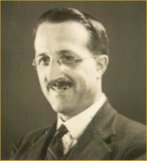
The ministry on this and the following Later ministry pages was given in 1960-63 –
- following the shameful and unrighteous excommunication of Mr. Cowell until he was taken by the Lord, February 19, 1963.
His later ministry is specially valuable – some 40 years later – because:
- it provides instruction and comfort for those of us in the present time who, as himself and those he served, have had to go forth to Him without the camp;
- it gives numerous insights into the exercises of the early 1960's, and warnings of dangers that eventually caused the disintegration of that once hopeful movement;
- it shows the deep concern of a shepherd's heart for the welfare of the saints, the faithfulness of a teacher in opening up the truth and the meek and humble spirit of a true bondman of the Lord.
'The Bride and the Wife' has only recently – April 2009 – come to light and was previously unpublished.
G.A.R.
THE MYSTERY OF PIETY
AND THE PRESENT CONFLICT
|
|---|
1 Timothy 1: 15, 17; 3: 14; 4: 1-11; 6: 3-6
1 Corinthians 10: 30
Address at Guildford, August 7, 1961
Issued as a pamphlet, but not included in any of
the books or booklets published by Philip Haddad.
|
|---|
I wish to speak dear brethren, of the mystery of piety and the way it bears on us and on the testimony. It says in 1 Timothy 3: 16,
- "And confessedly the mystery of piety is great".
- There is no other word like that in Scripture as far as I know.
- As to Christ and the assembly the apostle says, "this mystery is great", but as to this matter he says,
- "confessedly the mystery of piety is great. God has been manifested in flesh, has been justified in the Spirit, has appeared to angels, has been preached among the nations, has been believed on in the world, has been received up in glory".
- The great truth contained in this verse, the truth of the incarnation, of the perfect life of piety lived by Jesus as a Man down here, and of its results, are treasured in the house of God.
So the house of God is called the assembly of the living God, the pillar and base of the truth. The assembly is here to bear witness to and support the truth.
- A pillar is an adorned witness. We are to adorn the doctrine of God our Saviour in all things.
- And if the doctrine is to be adorned and God is to be represented, it depends upon piety.
- The mystery of piety was seen in Jesus, but with a view to our living piously in Christ Jesus, walking as He walked in the circumstances of life down here;
- not on the level of Jewish piety, right in its place, where prayer could be made for the destruction of enemies, but to live on the level of piety in Christ Jesus, inexplicable to the natural man;
- Of a piety that is free to pray for the destruction of enemies, a natural man would have some understanding. The piety that is seen in Jesus Himself is beyond the thoughts or calculation of the natural man.
- Confessedly the mystery of piety is great. Only those who are initiated understand the mystery.
- But we are called upon to live piously in Christ Jesus and all who do so will suffer persecution.
- If you fraternize with men you will not suffer persecution.
- If you cut yourself off from the world and make yourselves, as a company, like a monastery without walls, you will escape persecution, although you may get a certain amount of suffering on account of your folly.
- But if you live piously in Christ Jesus you will suffer the reproach of Christ, but you will really represent God in this world, displaying His kindness and love to man. Titus 3: 4.
- It is impossible to represent God in this world unless you live piously. It says, God has been manifested in flesh.
- You say, Well, of course that means a Divine Person has been here. But God was manifested.
- In that blessed Person who was here, who was indeed God incarnate, the character of God was manifested, He was not hidden from men, God was manifested in flesh.
- That was what brought the reproach on Jesus, because He did not hide the
character of God from men. He alone could express it perfectly, and He manifested it.
- God has been manifested in flesh. We should note the word manifested.
We need to see the difference between faith and piety. Faith and piety
are complementary.
- Faith lays hold of God and of light from God. Faith enters God's side of things.
- Faith is the substance of things hoped for. It takes you into the divine realm as it were.
Piety means you bring God into your side of things. One is complementary to the other.
- If I have faith, I apprehend Christ as the Centre of God's world, and apprehend God's thoughts,
- but if the joy of that is to be maintained in my soul, I must bring God into my circumstances.
- Faith would lead me to know His circumstances; piety brings Him into my circumstances. And that is linked with the house of God down here.
- God is dwelling among us; we belong to His house and are always under His scrutiny. Therefore if is essential from His point of view that we should walk before His face.
- His word to Abraham was, walk before My face and be perfect.
- The Galatians, having begun in the Spirit, tried to be made perfect in flesh; the enemy would turn you aside like that.
- Paul says, "you ran well"; they were walking before God's face at one time in the power of the Spirit, but now were trying to made perfect in flesh.
- Paul enumerates the weeds, the works of the flesh in chapter 5, verses 19-21. They were all made manifest among the Galatians.
- The moment you try to be made perfect in the flesh the works of the flesh will become manifest among you.
- The flesh cannot bring anything forth except weeds, and they do not need any cultivation; but you need to attend to them all the time ruthlessly.
- But in the power of the Spirit we can walk before God's face and that is piety – everything is done under His eye and for His glory in our circumstances.
- That is the conduct proper to those wo belong to the house of God, and if it is carried out, then, in a practical way, we prove the house of God to be the pillar and base of the truth.
Now immediately it says here – and the division of chapters is not inspired –
- "The Spirit speaks expressly, that in the latter times some shall apostatize from the faith".
- Very strong language is used; apostasy from the faith, giving the mind to deceiving spirits and teachings of demons speaking lies in hypocrisy, cauterised as to their own conscience.
- You may say, Whatever is coming next? Surely some fearful blasphemy about the Person of Christ. But it simply says, forbidding to marry, bidding to abstain from meats.
- You will say, Why speak so dramatically about such doctrines as these?
- Furthermore, when these doctrines were first taught, no doubt many
devoted souls said, What could be more devoted than to give up marriage?
- Surely that is the last word in devotion to Christ! So it had an appeal!
- That is why it speaks of deceiving spirits – presenting to you something which seems the very acme of devotedness to Christ.
- And so the law teachers – 1 Timothy 1: 7 – who are always ready to get power over men by means of dogmas, were not slow to bring in the rule forbidding to marry.
- If a man or woman, in devotion to Christ, feels the Lord has called him or her to give up marriage, all well and good.
- But the law teacher say, You must not marry; and you must abstain from meats, cleaving to Jewish customs.
- What does the Spirit say about it? He says, Some shall apostatize from the faith.
- You say, I would not have thought it was so serious as that. But the
Spirit speaks expressly.
- An attack in the realm of piety, if given heed to, will end in apostasy from the faith.
- Normally, if there were an attack on the Deity or the work of Christ, all true Christians would rise up.
- The subtlety of Satan's present attack is that it is a deceiving attack in the realm of piety,
- telling you to do things irrespective of your conscience, interrupting your communion with God by and unscriptural dogma of men having no divine authority;
- and, what is much worse, attacking the mystery of piety by telling you – that is the current teaching – that if you did what Jesus did, in His perfect path of piety down here, you will commit sin – a dreadful thing to say.
- We see the mystery of piety and the path that that involved, in the path of the Lord here as recorded in the Gospels, "What Jesus began to do and to teach".
- Any teaching which tells you that what Jesus did as the perfect Man down here would be sin if you did it, is an attack on Jesus Himself; an attack on the mystery of piety which is confessedly great.
- Nobody can afford to challenge God in this way.
We need to see what the present issues are, and the solemnity of them, so as to be before God to get a right judgment of them.
- We should allow nothing to hinder us getting a right judgment of the present conflict.
| The 'present conflict': The leader of the legal sect – from
which GRC and others had separated – had forbidden his followers to eat with anyone not in his 'fellowship'. |
- And it seems to me that the Spirit of God gives it hear in these verses – 1 Timothy 4: 1-3 – as clearly as can be, without any doubt at all.
- The doctrines named in verse 3 led to actual monasticism, but the lies in hypocrisy spoken today are deceiving devoted souls and putting them into a monastery without walls; and it is an attack on the mystery of piety.
- We need to get down to the solemnity of this attack, because it strikes at the very vitals of Christianity.
- According to this scripture, those who give their minds to the false teaching, and propagate and enforce it, at least in so far as their teaching and conduct are concerned, have apostatized from the faith.
- Simple souls relying on the Unction say at once, It is not Christianity. Even natural conscience condemns such persons.
- If they persist, their consciences will become cauterised and thus incapable of again acting in response to light from God – terrible thought!
- May God grant them repentance … 2 Tim. 2: 25-26.
And it says, "Confessedly the mystery of piety is great, God has been manifested in flesh"; not only that God was here, but He was manifested.
- When Jesus ate with tax-gatherers and sinners, it was God manifested, the character of God displayed.
- His opposers said, He is the friend of tax-gatherers and sinners. They
would say He was fraternizing – blasphemous thought! Of course He was not.
- He came into the world to save sinners. How could He have saved them if He had put Himself in a monastery?
- He came into the world to save sinners, and so He moved among sinners, but He did not descend to their level – it would be blasphemy to think so.
- He did all to the glory of God; God was manifested in every act.
- According to Luke, three Pharisees asked Him to eat with them – on three occasions, Luke 7: 36; 11: 37; 14: 1. He accepted the invitations.
- Would you say that Jesus was in fellowship with those Pharisees? Of course He was not.
- But see with what grace He sat down at table and read what He said! God was glorified in the house of each Pharisee.
We have sung in our hymn, Magnify the sinner's Friend. That is a good word. And let us understand what we mean.
- We do not mean that He was descending to their level; but He was truly the sinner's Friend.
- The Pharisees was a bigger sinner than publican, but the Lord would not leave him out. He would give him the opportunity for salvation.
So it says, God has been manifested in flesh, has been justified in Spirit.
- Now this will be a check on us, as to our conduct.
- The Lord a Man here did nothing but what the Spirit was entirely with Him in it, and justified Him in doing it. Now that is the level of Christian
piety.
- We may not often be up to it; but when you are thinking of doing anything or going anywhere, just ask yourself, can I be justified by the Spirit in doing it?
- Is the Spirit going to be with me without reserve? Or shall I have a sense afterwards that I have grieved the Spirit?
- Let us do nothing in which the Spirit cannot support us; if He is with us ungrieved, then it is certain we shall glorify God.
- True piety means that whether we eat or drink or whatever we do, we do all to the glory of God. 1 Cor. 10: 31. That is the standard.
- It does not allow of looseness; it does not allow of fraternising with
the world, it does not allow of compromise.
- The Lord never compromised; it would be blasphemy to think so. But He glorified God and was justified in the Spirit.
Now, that is the test for us. From another angle it is a very comforting verse, because let us assume you were practising piety and tomorrow some of the worst things that could befall a man happened to you, like Job.
- People might well say, Where is your God?
- That is the very cry in Psalm 42. The enemies were saying all the day, Where is thy God?
- So they might come to you and say, Where is your God that He has allowed all these circumstances.
- But if in the gain of this you could say, I am not justified by circumstances, I am justified in the Spirit, I am conscious the Spirit is with me.
- And the questioner will see that the Spirit is with you; he will see a radiant face in the midst of all the troubles, on account of a heart boasting in tribulation and boasting in God.
- He might say, I thought you would be ashamed of your religion now all this trouble has come upon you.
- Oh! No, you say, I am not ashamed because the love of God is shed abroad in my heart by the Holy Spirit. So the Christian does not rely on circumstances to justify him for his course.
- A man of the world relies on circumstances to justify him. If his business prospers he says, I did the right thing.
- But a Christian does not judge that way at all.
- The question is, did I have the support of the Spirit in doing that? Has my heart been kept in the love of God? Have I got a good conscience – maintaining faith and a good conscience?
- Another has said, A good conscience is a good bed to lie on. So that
a pious man is justified in the Spirit; he has the support of the Spirit
in what he is doing and that justifies him in the course he is taking.
- Let us see that we are on a course in which we shall be thus
justified.
Then it goes on to say, "has appeared to angels". A pious man thinks about angels, and a pious woman too.
- I would think it probable that angels have special care for women and children – the weaker vessels. We should not pass lightly by 1 Cor. 11 about a woman covering her head.
- Consideration for angels should enter into our minds because they are always near us.
And then it goes on to say, "has been preached among the nations". Why does it come in at that point?
- It does not bring the preaching in until after it has said God has been manifested. It is because that is the background for the preaching.
- People need to see God expressed in the daily lives of pious men and women here, in word and deed, to secure their interest in the gospel, so that they say,
- We would like to know what gives these Christians that serenity,
that peace, that boasting in tribulation, even when everything seems to go wrong.
- And you would say to such, Come and hear the gospel.
- One confirms the other. So that everything is to be "according to the
glad tidings of the glory of the blessed God", as we read in 1 Timothy 1.
- That is the standard as far as the testimony goes, and that will shine out as we are really marked by piety and bringing God into our circumstances.
- The glory of the blessed God will find some expression in His people, His kindness and love to men.
- Then it goes on to say, "believed on in the world".
- There is a moral order in this. Let us begin at the beginning, that,
according to our measure, God should be manifested in our lives by the practice of true piety. If we want gospel results, this is the moral
order.
The end is "received up in glory". There could be no other end to that path of pure perfection which was light on all around.
- We must hold to the fact that Jesus has lived the perfect life of piety as the perfect Man here below, and that He is the model for us.
- To deny it or set it aside means, if carried to its full length, that the true representation of God on earth ceases.
- The gospel is lost as to any practical expression of it; and if you lose the gospel you lose the church.
- The church, so-called, becomes a Pharisaical institution. The leaven of the Pharisees, and of the Sadducees, and the leaven of Herod permeates all.
- The only answer to avoiding leaven is to walk before God – "Walk before My face". There is no hypocrisy there.
- So the present attack is in the realm of piety and, for myself, I had not realized till recently the gravity of an attack in that sphere.
- We would all realize the gravity of an attack of the Deity of Christ or His redemptive work, but let us get down to the gravity of an attack on the mystery of piety, as to which the Spirit speaks expressly.
- Divine standards in every sphere go by the board when you let go the mystery of piety. And this makes room for every kind of evil.
- The monastic system, which had the outward appearance of such devotion, made room for every kind of moral evil, fornication, adultery, and worse, till even the natural conscience of men in the Middle Ages were outraged by what was going on in the monasteries.
- If you give up the mystery of piety, Christ as the Model, and cease
therefore to walk before God, what can stay the enemy? He will come in like a flood.
- Have we not known something of it? And so we need to be alive to these things, and not to let the enemy divert us by getting our minds occupied with other things at this time.
- We have enough to do to get to the root of this and judge it in ourselves, and to contend earnestly for the faith once delivered to the saints.
And so he says to Timothy. "Laying these things before the brethren, thou wilt be a good minister of Christ Jesus".
- Well, why are we not doing this? What are we laying before the brethren? Are we laying things before them that will help them in this matter?
- It says, "Laying these things before the brethren, thou wilt be a good minister of Christ Jesus, nourished with the good words of the faith and of the good teaching which thou hast fully followed up. But profane and old wives fables avoid".
- Many of the things – e.g. open baskets, open coffins, etc. – that have been brought forward of late are of no more value than profane and old wives fables.
- He say, "Avoid them and exercise thyself unto piety". That is the thing that matters. It is profitable for everything, having promise of the present life and of that to come.
And then, just as he brings in a faithful word in the first chapter, that Christ Jesus came into the world to save sinners, so he brings in another faithful word in chapter 4,
- "For this we labour and suffer reproach, because we hope in a living God, who is preserver of all men, specially of those that believe". What a link it gives us with all men!
- Christ Jesus came into the world to save sinners; He gave Himself a ransom for all, and God is the preserver of all men, especially those that believe.
- We hope in this living God, preserving all men in His mercy at the present time from self-destruction.
- That is why we pray every day, morning and night, I hope, in our homes, as well as in our prayer meetings, making supplications, prayers, intercessions, thanksgivings for all men, for kings and all in dignity.
- Are you doing that morning and night?
- When it is night here, there is something going on in another part of the world. You cannot afford to let government go on without supplications.
Christ Jesus came into the world to save sinners. That speaks of His coming of His own volition; He came into the world.
- The other side of the truth is that the Father sent Him; and He said to the Father, "As Thou hast sent Me into the world I also have sent them
into the world".
- Therefore we should have in mind saving sinners.
- Mr. Darby says in the Synopsis, on the Nazarite's vow, that Christ "was ever the perfectly sociable man, perfectly accessible to sinners
because He was thoroughly separated from them, and set apart for God inwardly". Synopsis Vol. 1, page 245 – Morrish.
- Jesus did not spare Himself in seeking and saving the lost.
- But don't think because you go out after men and are prepared to go a long way to help them, that you can therefore have fellowship with them.
That is another matter altogether.
- This same epistle say, "Lay hands quickly on no man". That is a matter of fellowship.
- When it is a question of fellowship, you are commanded not to commit yourself quickly. You are to make sure of what you are doing.
- But approaching men in grace is another matter. We must keep these
things balanced in our minds. Jesus is the standard.
- And we have apostolic injunction to help us. Lay hands quickly on no man, nor partake – or have fellowship – in others' sins.
- You can approach a man in grace. If he invites you. You may go and eat with him and glorify God in so doing.
- But you do not lay hands on him at that stage. You would be having fellowship with his sins, whether ecclesiastical or other sins.
- But if we are clear in our minds in these matters, how much there is to be done in that true approach to men which represents God! You do not represent God if you are compromising anything.
- When the Lord went into the Pharisee's house He said nothing in the way of compromise. Everything He said was a faithful word.
- If we practised piety and were thus supported by the Spirit, we could walk as Jesus walked in our availability to men.
- Someone was saying the other day, everyone in a road where a Christian is living should know that when they are in trouble they can go to that house and find one who will show them the kindness of God, even though they may have despised him as a Christian heretofore.
- They came to Jesus in their troubles, and if we set forth the excellencies of Him who has called us – 1 Peter 2: 9 – they will also come to us.
In chapter 4: 11 it says, "Enjoin and teach these things", and in chapter 6: 3-4, "If anyone teach differently and do not accede to sound words, those of our Lord Jesus Christ and the teaching which is according to piety . . ".
- Note the authority the apostle attaches to the words of our Lord Jesus Christ.
- Let no one think that His words need apostolic confirmation.
They are in no way superseded by the epistles. I cannot find any verbatim repetition in the epistles of the words of Jesus as recorded in the gospels.
- It would have been presumption for any apostle even to appear to confirm what He said. And that especially applies to the declaration of God. One person only declared God and He alone could, and that is the Lord Jesus.
- The apostles had two ministries. The ministry of the gospel and the ministry of the church.
- The ministry of the gospel is to bring people into the gain of the declaration, and the ministry of the church to bring about response to the declaration.
- But Jesus alone declared God, and if I want to know about God I go to
the words of Jesus, what He said about the Father and about Himself and about the Holy Spirit.
- I go to the epistles to learn about the gospel of the glory of the blessed God whom Jesus has declared.
- The ministry of the gospel tells me how I can come into the gain of it.
- I am saying this to stress the importance of the words of our Lord
Jesus Christ. And I believe He says more about piety than any other,
especially in what we call the Sermon on the Mount, and similar passages in Luke.
- So Paul says, If any one teach differently and do not accede to sound words, those of our Lord Jesus Christ.
In my early days, I heard the Sermon on the Mount spoken of as though it were hardly Christian. We must not belittle the words of our Lord Jesus Christ.
- I do not know where you can learn the teaching of piety more fully than in that so-called Sermon.
- So it says, "If any one teach differently and do not accede to sound words, those of our Lord Jesus Christ, and the teaching which is according to piety, he is puffed up, knowing nothing, but sick about questions and
disputes of words". I will leave the rest for you to read.
- We know something of evil suspicions and of men corrupted in mind and
destitute of the truth, call it brain-washing if you like;
- but it is a solemn thing for men who once had the truth to become corrupted in mind and destitute of the truth.
- And if you become destitute of the truth you are bound to begin to think on the line of holding gain to be the end of piety, because you have not got the real thing.
- Having lost the substance of Christianity, you begin to think of gain – position, place, power, or money, or whatever it may be.
- This downward grade is a terrible thing in which true Christians may be caught.
I feel the urgency, dear brethren, because it says the Spirit speaks expressly.
- I am sure He has something to say about the present conflict and what is involved in it, so that we might go forth as true soldiers of Jesus Christ, understanding what the battle is about and what has to be stood for and met.
May the Lord help us for His name's sake!
Page Top Article Top
THE GOSPEL AND THE CHURCH
|
|---|
Romans 1: 1-7; 16: 25-27; Colossians 1: 27-29; 2: 1-3
Ephesians 1: 22; 3: 20-21; Malachi 1: 11
Address at Plymouth, July 15, 1961
Jesus in Control, Notes of Meetings, 8: 80-95
|
|---|
My objective, dear brethren, in this word is the last verse we read, that we should have in view God's own word:
- "For from the rising of the sun even unto its setting my name shall be great among the nations; and in every place incense shall be offered unto my name, and a pure oblation …"
- And if that is to be brought to pass at the present time in our dispensation, it involves the truth of both the gospel and the church.
- The enemy has sought all down the ages to divorce the gospel from the church: if we allow that, we shall not reach God's present purpose – for He has a present purpose. Ephesians 3: 8-13.
- Men may be blest in the sovereignty of God but God's end will not be reached.
- Therefore we need to be vigilant to see that in our minds and activities the gospel and the church are not separated.
- A true workman, striving diligently to present himself approved to God, will never separate them.
- But since the enemy is unceasing in his efforts we need to be on our guard all the time.
If we look back at recent conflicts, I have no doubt that both in 1890 and in 1908 an underlying cause of division was the separation of the gospel from the church.
- Those who were foremost in preaching the gospel, and used of God too, in their way, failed to connect it vitally with the church.
- A well known evangelist, known to many here, told me soon after the Glanton division, that if God had not come in the truth as to the church would have been lost amongst the saints.
But in the present conflict the divorce is the other way round; the church has been separated from the gospel.
- Of these two things the latter is the more deadly.
- If you separate the gospel from the church, you lose the church vitally and also the best of the gospel; but there are still some elements of the gospel left.
- But if you separate the church from the gospel, you lose the church – because you cannot have the church vitally without the gospel – and you have given up the gospel too. What is left? Nothing.
- And that is what I believe those who fail to move out of the religious association we have had to leave will find.
- The Lord will be faithful to devoted individuals, but as a body they have lost vital Christianity.
- It is a very solemn and sad thing. In divorcing the church from the gospel our brethren have lost the church.
- Claiming to have it, claiming to be it, they have lost the reality of it entirely.
- The enemy has come in, the sanctuary has been defiled and vital church truth has gone.
- And they have lost the gospel too. For if you bring in Judaism and Pharisaism you necessarily lose the gospel, and you have also lost the church.
But then the call for us is to see that in our minds and affections the two are not divorced, and that is the great test.
- How are we going to come out of the present conflict? It will help us if we face it now.
- We shall not come out according to God unless we see to it that in our thoughts and activities there is no divorce whatever between the gospel and the church.
- Both ministries are needed to secure incense to God's name and a pure oblation; and the great end in view must be God Himself.
- The gospel, as a ministry, brings in unspeakable blessing for man;
- but the truth of the church secures what is for God, because what is adequate for God cannot be rendered by isolated individuals however blest.
- Therefore you must have the church if Christ is to have a worthy portion and if God is to have His;
- for the church is the body and the bride of Christ and it is God's house, His habitation in the Spirit.
There are many believers who have not the light of these things, and I am not saying anything derogatory about them;
- but if anyone has light as to the church, then it exhibits great heartlessness as to Christ and to God not to pursue it.
- It is right to think of men and their blessing, but let us not be heartless as to Christ and to God.
- Should there not be an adequate return to God? You must have the church for that, the final thing being:
- "To him be glory in the assembly in Christ Jesus unto all generations of the age of ages".
Well now, Romans shows that the mystery, which involves the truth of the church, goes out as widely as the gospel.
- In the first chapter Paul speaks of being separated to God's glad tidings concerning His Son Jesus Christ our Lord;
- and that by Christ Jesus our Lord he had received grace and apostleship on behalf of His name for obedience of faith among all the nations.
- That was Paul's gospel commission. Paul never gave up his commission, even when a prisoner; in 2 Timothy, he says as to the gospel:
- "to which I have been appointed a herald and apostle and teacher to the nations", 2 Tim. 1: 11.
- He was not only an evangelist, he was a teacher.
- Peter was not only an evangelist – a fisher of men – but at the end of John's gospel he received his commission as a shepherd.
- Those gifts are complementary and are essential if the gospel is to bring in material for the church.
- The evangelist is for the edifying of the body of Christ, just as are the other gifts – Ephesians 4: 12 – and if anyone of us has anything less before him he is not with God.
The gospel blesses men in the fullest degree with a view to their filling their place in the church, and so we need evangelists; may the Lord raise up more evangelists!
- They have the full scope in their mind, all the nations; who knows where God may yet send some – where the Spirit is working? The wind bloweth where it listeth.
- Surely God will have His servants ready – true churchmen – but having the gift of an evangelist; He will have them ready to take up the work wherever the wind blows, wherever the Spirit works sovereignly.
- And then we need the shepherd and the teacher so that those secured by the gospel do not fail to find their place in the body, the assembly.
- All gifts are for the edifying of the body of Christ, until the church is complete,
- "until we all arrive at the unity of the faith and of the knowledge of the Son of God, at the full-grown man, at the measure of the stature of the fulness of the Christ" –
- that is the woman entirely answering to the Man – the measure of the stature of the fulness of Christ.
- That is the objective in view, therefore, in all ministry. To regard one ministry as separate from another or rival to another is not of God.
And so at the end of this epistle – Romans – Paul says:
- "Now to him that is able to establish you according to my glad tidings and the preaching of Jesus Christ, according to the revelation of the mystery … "
- He wants them established according to his glad tidings and the preaching of Jesus Christ and according to the revelation of the mystery.
- The first two, the glad tidings and the preaching of Jesus Christ are in view of the mystery. And as to the mystery, he says,
- "as to which silence has been kept in the times of the ages, but which has now been made manifest, and by prophetic scriptures, according to the commandment of the eternal God, made known for obedience of faith to all the nations".
- So that the truth of the mystery is to be made known as widely as the gospel is preached, that is to all the nations.
And this is very solemn; because how much have we been concerned about making known the mystery? The gospel is preached, the mystery made known.
- And you cannot make known the mystery by simply talking about it: right words come in and are needed, but to make known the mystery you must show it.
- I saw it working first in a farm labourer's cottage; and when I saw it working
- I was delivered from all the religious associations of men which we call Christendom.
- I saw the mystery working among the poor of the flock, and that is how it was made known to me for I did not know the doctrine of it then.
- I came into the company of simple folk who loved one another. They had love among themselves.
- Masters and servants were there according to the truth of the body, without respect of persons, and riches were flowing in from the ascended Head.
- They had not human learning, but proved that all the treasures of wisdom and knowledge were available in the body, the assembly.
- The mystery, in that sense, was made known in that little company, and it freed me once for all from the whole dead weight of Christendom as built up by man.
But have we not kept this truth mainly to ourselves, clothing ourselves with it, priding ourselves in it?
- And the moment you pride yourself in anything you have from God, you lose the power of it.
- So now if it is known at all, it is known in terms but not in power; the reality is gone, the substance is gone.
- The pride began long ago, pride in what we have got, what ministry we have got, what light we have got.
- Yet God was patient with us, and continued to teach us as to the mystery as we were ready to hear.
- But now that time has passed; brethren have turned aside to fables.
- It is a very solemn thing that instead of holding what God had given as light for all saints and for all the nations, we kept it for ourselves and prided ourselves in it till we lost it.
- But if we repent and are restored to the gain of these things, God may even yet give us an opportunity, as disentangled and freed from what is Laodicean,
- to make known the truth of the mystery among the nations.
- So that we may yet see in many more places, incense offered to God's name and a pure oblation.
We must be in the good of it if we are to show it. And so Paul says:
- "Now to him that is able to establish you, according to my glad tidings and the preaching of Jesus Christ".
- Now Paul's glad tidings are clear enough; he says
- "But when God, who set me apart (even) from my mother's womb, and called me by his grace … that I may announce him" – that is God's Son – "as glad tidings among the nations", Gal. 1: 5.
- Paul's glad tidings are clear enough, they are the announcement of God's Son as glad tidings. God has sent His Son that He might redeem us and that we might receive sonship. Galatians 4: 5.
- Paul's glad tidings in the essence of it is sonship, the highest blessing for man.
- We need establishing according to Paul's glad tidings; we need the epistle to the Galatians to preserve us from every Judaistic tendency, every yoke of bondage, so as to be in the liberty in which Christ has set us free – Galatian 5: 1 –
- walking as He walked, not of the world as He was not of the world, led by the Spirit of God as sons of God.
- The present attack is intended to rob us of Paul's glad tidings.
Then he says, "the preaching of Jesus Christ"; That is another essential if we are to know the mystery.
- The preaching of Jesus Christ links with 1 Corinthians 2: 2 – he determined to know nothing among them save Jesus Christ and Him crucified.
- So that in Romans, when he is putting the whole gospel forward, he says the gospel of God concerning His Son "Jesus Christ our Lord".
- In Galatians he stresses God's Son, but in Corinthians he stresses the preaching of Jesus Christ.
- God's Son gives glory and liberty to the divine system; but Jesus Christ refers to Him as the pattern, the pattern of the whole system.
- God is building up a system, and soon is going to display it, where there is nothing but Jesus Christ, not a thing;
- everything will bear the character of Jesus Christ, like the tabernacle;
- every bit of it was typical of Christ, and nothing but Christ; either Christ personally or Christ in the saints.
So Jesus Christ is the pattern: "And see that thou make them according to their pattern, which hath been shewn to thee in the mountain", Exodus 25: 40, 26: 30.
- And the cross removes that which hinders the pattern being carried out.
- Our old man has been crucified with Him. The great thing we need at the present moment is the cross.
- It is not enough to say we have left the old system and that we do not want to bring any of it over; if you bring yourself over you have brought everything that can damage.
- It is our old man, yours and mine, which will do the damage.
- We don't want to bring over features of the old system that were not of God;
- although we should bring over everything that is of God – separating the precious from the vile.
- But above all let us not bring over our old man. I would like you to ask me just as I would like to ask you 'What has happened to your old man?'
- Paul says; "having put off the old man with his deeds, and having put on the new", Colossian 3: 9.
Paul ends the second epistle to the Corinthians by saying: "examine your own selves, if ye be in the faith; prove your own selves; do ye not recognise ye be reprobates?"
- The truth is if Jesus Christ is not in me nor in you, we are not Christians, we don't belong to the system.
- If through grace Jesus Christ is in us, then do not let us obscure what is in us by allowing our old man any scope at all.
- He has been crucified with Christ when He bore what we deserved. Crucifixion is the only fitting end of our old man.
Christ was crucified for us; Paul was not crucified for you and he could not deliver you from the old man!
- Strange how we love the old man! But let us accept the crucifixion of our old man with great relief and love him no more. Let us see him buried.
- One hanged upon a tree was accursed and had to be buried the same day – Deut. 21: 23 – why do not we bury our old man the same day?
- I would think John was prepared for that after standing by the cross until he saw the blood and water flow from Christ's side.
To be established according to the preaching of Jesus Christ is a root matter. Let us get down to the roots.
- If what we have passed through does not get us down to the roots, whatever will?
- And so let us be established according to Paul's gospel, that is, in the liberty of sonship, free from our old man in every way.
- So that Jesus Christ, who is in us through divine grace, may give character to us now.
- If so there will be nothing to hinder us entering into the gain of the mystery, for we will fit into our place in the body without any difficulty.
- If you take the tabernacle, every part typically was Christ, so that it all fitted together perfectly.
- But if anything extraneous had been introduced, all would have become spoiled.
- A man in the liberty of sonship does not quarrel with the place God gives him sovereignly in the body; he is ready to do anything. He would be also in affairs of this life.
- I remember a brother, in the army days of the 1914 war, saying that as a son he could break stones just as happily as carrying out an administrative post, if God appointed it.
But then the place God appoints to each member of the body is a precious place, even if obscure; it is wonderful to be in the body at all.
- And in the liberty of sonship we gladly accept the place God has given us.
- At the same time if I am in the gain of preaching Jesus Christ I would not bring in anything extraneous. So you see how you are ready for the mystery.
- The body is of Christ and we are not to bring in anything that is not of Christ.
- What happy local meetings we should have if we were in the gain of this!
- We should all fit together, each knowing his place and carrying it out in the liberty of sonship, no one bringing in anything extraneous.
- You look at everybody and you see the Spirit of Jesus Christ; you say what a lovely brother, what a lovely sister – nothing but Christ! That is what God has in mind, but it takes some working out!
The Scriptures show us the high road to the working of this out; let us get down to it.
- The exercises of Romans 7 and 8 are involved, indeed chapters 7 to 12.
- Scripture shows us plainly the way to work it out,
- offering our body a living sacrifice, and fitting into our place according to 1 Corinthians 12, as available for the manifestations of the Spirit;
- then coming to Colossians where we find that Christ is the Head of the body, the assembly.
- Who? The greatest Person imaginable! The One by Whom and for Whom all things were created;
- the One in Whom all the fulness dwells bodily, He is the Head of the body; you could not have a better Head!
- And, you see, if you have not passed through, in some measure, the exercises of Romans and Corinthians, so that you fit into the structure, you will miss the gain of the Head.
- It is not worth allowing anything to lose that – the flow that comes from the glorious Head of the body.
- "The riches of the glory of this mystery among the nations, which is Christ in you";
- and that implies not only in you characteristically, as we have been saying that every part of the structure is Christ, but also Christ among you, as Head.
No wonder Paul got to work, and we need to get to work. "Whom we announce", he said.
- What did Paul have in mind when he said "Whom we announce"?
- Both ministries – the gospel and the church.
- He announced God's Son as glad tidings among the nations with a view to gaining people for the church,
- and you are not "perfect in Christ" until you are in your place in the one body in Christ.
- To present every man perfect in Christ involves everyone being in his place in the divine structure. Well, that is a big labour;
- "Whereunto I toil", he said.
- How little we are prepared to accept toil! the toil involved in helping souls to be established according to Paul's gospel.
- Think of the labour involved in freeing people from Judaism!
- Then the preaching of Jesus Christ, getting people into deliverance from their old man; and then getting them fitted into the body.
- To present a man perfect in Christ is a great work, and Paul set to work to do it.
- Have we set to work to do anything of this kind? We have not, unless we have got the gospel and the church in our hearts.
If we have not the pattern before us, we labour without knowing the end in view, like a builder getting to work before he has the architect's plan.
- And he says, "admonishing every man and teaching every man … to the end that we may present every man perfect in Christ".
- Think of the scope that Paul had before him! So far as the largeness of his heart was concerned he had every man in the world before him – every man in the world was potentially for Christ.
- And he was labouring that, so far as lay in him, every man should be in the gain of the gospel and the church.
- This is the thing we should have before us in our small measure, and the hardest work, no doubt in many ways, is to be done in our localities.
- That is where love is tested, that is where patience is needed, longsuffering, forbearance.
- He says, teaching every man and admonishing every man. Even in human affairs a teacher needs much patience.
- He has to be prepared to say the same thing many times over before it finally goes home, but at last his patience is rewarded.
So we need to be prepared to work with a view to presenting every man perfect in Christ.
- And not only work but combat; "Combating according to his working who works in me in power".
- It was heavy work for the Merarites moving the boards, fifteen feet long and I suppose 27 inches wide;
- but in addition to all this heavy work there is combat in prayer! – how much time do we spend in prayer?
- He says "For I would have you know that combat I have for you, and those in Laodicea, and as many have not seen my face in the flesh".
So think of Paul labouring, giving addresses in the daytime and going into houses in the evening to see how much had been understood before continuing public teaching the next day; and when all that was finished, agonizing in prayer.
- The Lord would help us not to be superficial, but to get down to things and accept the fact that it is toil and combat; toiling in the actual working out of things and combating in prayer.
- Even a saint who is sick and cannot do active work, can combat in prayer. That is how Ephesians ends;
- "Praying at all seasons, with all prayer and supplication in the Spirit, and watching unto this very thing with all perseverance and supplication for all the saints", Ephesian 6: 18.
- What a labour! What a combat! Wrestling in prayer,
- "because our struggle is not against blood and flesh, but against principalities, against authorities, against the universal lords of this darkness, against spiritual power of wickedness in the heavenlies", Ephesians 6: 12.
- They are encompassing us and we prove the terror of them, the terrible forces against us. The only way to meet them is to "be strong in the Lord and the might of his strength".
- But then, that cannot be without prayer, and those who have perforce to be restricted in activities can yet have part in that conflict in a very real way.
- Such persons can realize the forces against the testimony and withstand them in prayer before God.
- And so we need to take up these great matters. Let us not be feather-bed Christians; let us combat in prayer so that there may be results for God in these days.
And as to prayer, I would just say a word about prayer in Timothy.
- Prayer in Ephesians 6 and 1 Timothy 2 are complementary. Both exhortations were for the Ephesian company.
- Ephesians 6 calls for all prayer and supplication in the Spirit for all the saints and for Paul;
- 1 Timothy 2 requires supplications, prayers, intercessions, thanksgiving for all men; and for kings and all that are in dignity.
- The Ephesians side would link with the golden altar, and 1 Timothy 2 with the brazen altar.
- Solomon's prayer at the brazen altar included all peoples of the earth 2 Chronicles 6: 33; "My house shall be called a house of prayer for all the nations", Mark 11: 17.
At the golden altar you are thinking of the purpose of God and the saints as they are before God, so you pray for them that they might come into the gain of His purposes.
- But at the brazen altar you are thinking of the sacrifice of Christ – "He gave himself a ransom for all", and so you pray for all men.
- The service on these two altars must never cease – a continual burnt offering and a continual incense. Both must go on.
- Resorting to the holiest, to which we have access at all times, and where we contemplate the glory of God shining forth in the glorified Man, will maintain us in spiritual energy for service at both altars continually.
I touched on Ephesians 1 and 3 to indicate the end in view in the mystery, that is Christ's portion and God's.
- In the end of chapter one the church is presented as His body, the fulness of Him who fills all in all.
- We need that conception to give us heart and strength for the labours. That is the objective.
- Adam named the creatures and finally he named the woman. The Lord named the church, no one else could. He said: "Why persecute thou me?"
- The church had been there since Pentecost, but no one could name it but Christ. And He named it to the Apostle of the nations.
- It was Himself – His body. What an impression that made on Paul!
- So we need to have the complete thing before us, what the church is to Christ, and then what it is to God –
- "to him be glory in the assembly in Christ Jesus unto all generations of the age of ages".
The gospel produces lovers of God, and if you love God you will not be heartless as to Christ's portion not as to God's.
- It was the man who appreciated most what the church is to Christ and to God who was the greatest evangelist; evangelical in outlook and desire.
- There was never such an evangelist as Paul, but what was his motive in his labours?
- He carried on the work of the gospel as a sacrificial service in order that the offering up of the nations might be acceptable, sanctified by the Holy Spirit. Romans 15: 16.
- The offering up of the nations! – think of what he had in mind!
- There was a new meat offering at the feasts of Pentecost in Leviticus 23.
- It had leaven in it, two wave loaves baken with leaven, but the leaven was not active because it was baken.
- We can apply the type in this day to what is secured through the gospel and the preaching of Jesus Christ.
- If we are established according to Paul's glad tidings and the preaching of Jesus Christ, there will be substantially the new meat offering,
- composed of persons who present their bodies a living sacrifice, holy and acceptable to God.
- Think of having substantial results like that in your locality through sanctification of the Holy Spirit!
And, as I said before, that lays the basis for the mystery.
- Paul had before him that his gospel and his preaching of Jesus Christ should bring about moral conditions that the mystery might become a working reality.
- And he agonized in prayer that it might; combating for all who had not seen his face in the flesh, which includes ourselves – Colossian 2: 1-3 – that our hearts might be encouraged, being united together in love.
- Think of what we get as we come into the gain of the mystery! A simple company in country village endowed with the wealth of heaven!
- They need the services of the evangelist and teacher to set them up in the gain of the gospel;
- but once they come to the truth of the mystery they learn to derive directly from Christ as the Head.
- So while they are glad to see a gift at any time, they are not dependent on gift.
- As united in love and in touch with the Head in heaven – and known among them too – they learn that in their locality all the treasures of wisdom and knowledge are available to them.
And that is the way we get our full portion and, in consequence, God gets His.
- If there is the new meat offering and the flowing in of the treasure it will mean that God will have His portion;
- that in every place – there will be incense offered to God's name and a pure oblation.
- May God grant that we may be helped in these matters – and I do not add these words as a formality, but I say from all my heart – for His Name's sake! Amen.
Page Top Article Top
| THE BRIDE AND THE WIFE |
|---|
Word By G. R. Cowell at a marriage meeting
at Dereham, Norfolk, 1st April 1961 – revised by GRC
Revelation 21: 2and 19: 6-8
The notes of this previuosly unpublished word
have only come to light recently. GAR, April 2009
|
|---|
On an occasion like this, dear brethren, our hearts go out in response to the One of whom it says,
- “He that has the bride is the Bridegroom”.
- Our hearts are moved in response to our blessed and beloved Bridegroom; one of whom God says, referring to Him as the one of whom Adam was a figure,
- “It is not good that Man should be alone; I will make him a help-mate, his like”.
- The two thoughts, the bride and the wife, should never be separated. Indeed in the description of the city, the word is,
- ”I will show thee the bride, the Lamb’s wife”;
- because the Lamb’s wife never ceases to be a bride.
- I suppose the thought of the bride conveys freshness of affection and beauty; and, in the case of the assembly, that freshness continues all through eternity. It is never in any way dimmed.
- The freshness of the affection of the bride for the Bridegroom is suggested in our first scripture. She is presented in bridal character – prepared as a bride adorned for her Husband – after the thousand years reign.
- After all the administrative work of the millennium, the city is, as she ever was, a bride in affection and beauty; the cherished object of the One for whom she is prepared and adorned.
Then there is the idea of the wife, a help-mate, His like; and how needful she is and how this will be proved through the millennial day!
- What a help-mate the assembly is for Christ, as Head over all things; she sharing the headship and dominion with Him as an adequate counterpart, an adequate consort for the King of kings.
- So when we might have thought , in Revelation 19, that she would be referred to as the bride, it says,
- “The marriage of the Lamb is come, and his wife has made herself ready”.
- And when we might have thought it would have said the wife in chapter 21 verse 2, it speaks of the bride. When the most arduous wifely duties are over she is still the bride;
- and that is what we desire for our brother and sister – that they may never cease to be a bride and bridegroom all through their lives;
- that the responsibilities of married life may not dim the bridal side of things; so that the freshness of the affections of bride and bridegroom may be sustained while carrying out, in love, the responsibilities of wife and husband.
But then different clothing is needed for the bridal and wifely functions. According to Revelation 21: 2 the assembly is prepared as a bride adorned for her Husband. It does not say in that passage that she has anything to do with the preparation.
- We think of the servant in Genesis 24. He put the ring on Rebecca’s nose and the bracelets on her hands and gave her articles of silver and gold and clothing. Genesis 24: 47-53.
- Think of the care being spent upon the assembly by the Holy Spirit so that she might be prepared as a bride adorned eternally for her Husband.
- Think too of what the Lord Jesus has spent – giving Himself – and of His present activities, with the same great end in view. Ephesians 5: 25-27.
- But as regards the wife it says,
- “His wife has made herself ready”.
- In view of all the duties which devolve upon her, she makes herself ready for her administrative position as connected with the throne of God and the Lamb. The throne of God and of the Lamb is said to be in the city; how suited she needs to be!
We know that this has a particular bearing on the present time, because there is so much suffering of a kind we never expected to pass through; suffering of spirit and mind in an excruciating way, so that some of our brethren have told us recently of sleepless nights in agony!
- All this should enter into the making ready. We have learned the reality of the sufferings of the Lamb in a way we did not expect. The Psalms and the prophets have lit up in their real meaning as we have been privileged in some little measure to have part in the sufferings of the Christ.
- We can never have part in His atoning sufferings, but are privileged to have part in other kinds of sufferings, and in going through them and getting the benefit of the exercises involved – and may the Lord help us each and all to get the full gain of them – then we shall enter more into the meaning of
- “His wife has made herself ready”.
- The clothing that results is fine linen, bright and pure. These are what we may call wifely garments for daily duties.
Think of what the assembly has to undertake in the world to come – the administration under Christ of the whole earth; and, I suppose, direction of heavenly beings also.
- The Lord Jesus has gone into heaven, angels and principalities and powers made subject to Him. The assembly, as His body, goes above them all. She must do so. A separate creation, taken out of the Man, she must take precedence over every other created thing. What a great destiny the assembly has!
- The Lord our God the Almighty takes to Himself kingly power; He takes it in the Person of Jesus in the world to come. What must the wife be attired in? – she has made herself ready.
- So it speaks of the fine linen, bright and pure, the righteousnesses of the saints; and so we want to go in for righteousnesses. How we would like to fulfil all righteousness! In fine linen the warp and the weft correspond. There is nothing coarse about it. It is fine linen.
- Righteousness according to God is not a legal righteousness, that is not fine linen, that is rough and hard. Righteousness according to God is a fine texture.
- Joseph is said to be a righteous man at the beginning of Matthew’s gospel. He was a righteous man because he not only had a judgment of what he thought might be evil, but he had right feelings. Without right feelings we cannot be righteous people according to God.
- It has been said that merely condemning evil is not righteousness according to God. You must have right feelings. We think of the warp as the actions and the weft as the feelings – right feelings according to God should accompany every act and word.
- Therefore it says the fine linen is bright and pure; not dark and ugly. True righteousness is a true representation of God.
The highest idea of righteousness is that man as a being created in the image of God, should represent God.
- We can be righteous in one sense and not represent God at all. The law did not represent God; it only expressed His righteous demands from the creature which were holy and just and good; but it did not express God’s nature and character.
- Man’s responsibility as a creature is truly to express God and he doesn’t fulfil righteousness unless he does so.
- The expression of God brings light into the situation. Men love darkness rather than light, but every true righteousness according to God expresses God and is therefore bright and pure. We cannot express God unless our motives are pure.
- So these are the kind of garments we are called upon to make. They are woven into the texture of our being; so we must proceed on this line – fine linen bright and pure. These righteousnesses will light up the whole situation, as reflecting
God’s righteousness with glory bright,
Which with its radiance fills that sphere.
But then although she makes herself ready, it says, “It was given to her”; because when we come to the end, and we are at the judgment seat of Christ, we shall recognise that while the garments can be regarded as the result of the exercises and sufferings of the saints, yet they are really the gift of God.
- Of ourselves we could never produce righteousnesses. God has worked in us, we have been born of the Spirit, born of God, and we have been given the gift of the Holy Spirit.
- The righteousness that God imputes is a free gift. Christ is made to us righteousness. 1 Corinthians 1. 30.
- Practical righteousness can only be by the Holy Spirit. No one ever practised righteousness according to God apart from the Spirit.
- So it is all a gift. It was given to her; and how gladly we shall recognise that it is God who has worked in us the willing and the doing of his good pleasure; therefore all credit is due to God alone. And we would not have any desire otherwise – all glory must be ascribed to God alone.
May the Lord use this meeting to help us in relation to Himself both in bridal and in wifely character! The two things, as I said, must not be separated.
- And we trust our brother and sister will be greatly helped that these things may not be separated in their lives, but that the true bridal character and the true wifely character may go right through and that on his side our brother may take character from Christ as the true Bridegroom and the true Husband. May it be so, for His Name’s sake!
Page Top Article Top Next Article