Menu•SiteMap |
Ministry
The Return of the Glory
and other
Ministry by E. J. McBride
| INTRODUCTION |
|---|
| Ministry by E. J. McBride |
|---|
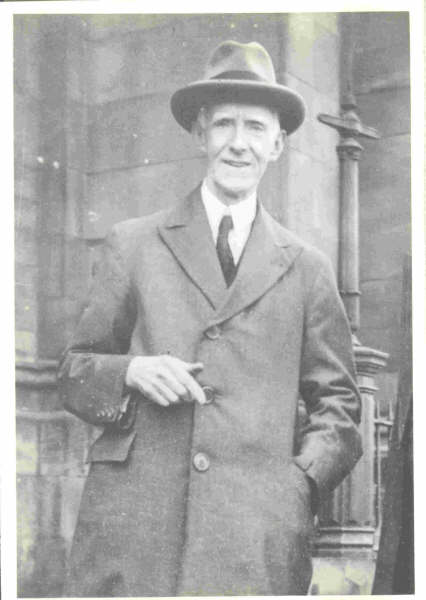
In the early 1900's, Mr. McBride served widely in Great Britain and elsewhere in the ministry of the word.
- As for many whose ministry appears on 'My Brethren', we have few personal details but it is understood that he was local in Croydon.
The series, 'The Return of the Glory' is challenging, has valuable instruction, and is still very much needed in these last days.
- Most of the adresses following were given at special meetings with Mr. James Taylor who wrote appreciately of Mr. McBride:
- "We shall not be at Belfast this year. They wrote inviting me lately, but I had heard in November that Mr. McBride had been invited, which met my exercises, and so my mind was in another direction", January 23, 1933, Letters 1: 382.
- "The Rochester brethren invited Mr. McBride for their meetings, but he did not feel equal to the undertaking as not too well", April 7, 1936, Letters 2: 31.
G.A.R.
Page Top
| THE RETURN OF THE GLORY |
|---|
Luke 2: 8-14; Romans 5: 1, 2; Colossians 1: 24-28; 1 Peter 4: 12-14
From 'The Return of the Glory', pp. 5-24, Southport, January 1925
|
|---|
E.J.McB. What I had chiefly before me was that the Lord might give us exercises that we should be able, under His gracious hand, to secure the return of the glory.
- Speaking for the saints generally, I think everyone would admit that we have had a remarkable proof of the grace of God. We have had an evident ministry of grace, but God has promised not only to give grace but to give glory. Psalm 84: 11.
- One is exercised as to how far individually as believers, or locally as a company of saints set together in any one place, we are exercised in securing the return of the glory.
- I have no doubt, speaking practically, that while in one way, just as it was in the history of Israel, the glory had never left, yet in another way the public defection of the ancient people of God led to the departure of the glory.
- And so in the history of the assembly publicly the thing has been the same. In one view of the assembly the glory has never left. One would not like to think that for a moment;
- One would be exercised as to any revival at this time which would take the form of bringing the glory back again. I think one sees evidences in persons like Simeon and Anna of a desire that the glory might be brought back again, and on the part of the Lord an answer to those desires.
Ques. Will you tell us what is in your mind as to the glory?
E.J.McB. I think the idea of glory is that you secure the demonstration of the presence of God here. I think 'glory' in its essence is the moral outshining of the effulgence of the being spoken of.
- You can understand how the enemy is destroying that in a day like this; hence the present practice of cutting hair amongst women.
- Now the glory of God is evidently Christ, and the assembly is the glory of Christ.
Ques. In what way has the glory gone into retirement?
E.J.McB. I think the assembly position has not been publicly maintained. Saints have not been together in unity.
- Individualism has really marked the situation more or less up to, I should say, the time of J.N.D. The public position was gone.
- What you could see was a public denial of everything connected with God, and still claiming to be the bride of Christ.
- But under the gracious hand of the Lord, and the bountiful ministry of His love, we see moral features of the assembly coming again into view. I do not look for a public re-establishment of it here, but I do look for the securing of the glory.
Ques. Do you think that the features coming back among two would secure the glory?
E.J.McB. I think they might be secured in one person. If a person suffers as a christian – he might be the only believer publicly recognised in the village – the Spirit of glory rests upon him.
- It is pretty evident that when a person suffers as a christian God is more to that person than the system of things in which he is. Peter says,
- "Let him not be ashamed, but glorify God in this name", 1 Peter 4: 16.
Rem. Glory would be the shining out of Christ in an individual. You would not get the same effulgence in an individual as in the company.
E.J.McB. It would be the same character of effulgence in the company as that coming out in individuals. It is secured in measure in individuals, but the point is that it is secured in a vessel.
- I think it came out in a peculiar manner in Stephen. No one could deny that in Stephen we have remarkable effulgence shining in one individual.
- It might help if we see the kind of features that marked the return of the glory as seen in Luke 2. One feature of it is seen there. I refer to these shepherds keeping watch over their flock by night; it is to them that the testimony comes, and that the glory, which had been in retirement, appears in evidence:
- "the glory of the Lord shone around them".
- God was going to make Himself known in Christ, reconciling the world to Himself, and the peculiar features that marked the company to which that was committed is full of interest to us at the present moment.
Ques. Why do you specially refer to the shepherds watching their flock by night?
E.J.McB. It indicates a restoration of the spirit of faith that marked the first beginnings of God's work in man, for Abel was a keeper of sheep, and the spirit of faith is the important point – that we should not be thinking that everything is lost.
- It is a great thing to revive the spirit of faith amongst the saints, so that in the light of it – that is, in the power of the spirit of faith – however dark it becomes, we should watch the flock.
Ques. Would you watch the flock in view of the coming day?
E.J.McB. Yes, in view of the morning, the morning that has no night.
Ques. That would be very like the spirit of Christ in Paul, would it not?
E.J.McB. Undoubtedly, and I think that the Lord is reviving amongst us a spirit of faith. The spirit of faith is in accord with the word. Christ is in heaven as a glorified Man, and that should dominate the situation for us.
Rem. So that although numbers might be few, faith would take account of the immense possibilities. We are not told how many shepherds there were.
E.J.McB. There were not many, but the angel speaks of "all the people". We have, perhaps, got a limited idea of them, but the glad tidings were to be to all the people.
- During the last two or three years one has seen a great increase in the spirit of evangelism amongst the saints – a growing desire for the conversion of souls.
Ques. Say a little more about the shepherds in Luke. Do you think that the spirit of caring for the flock would be seen today in the way in which we care for the interests of Christ here?
E.J.McB. Yes, I would not like you to go to Christ in glory and leave a single person in Southport behind, if you could take them with you. That is the spirit of the shepherd, and the darker the night the more would you be marked by that spirit of watching the flock.
- You would not be content with watching the flock merely, but you would have a testimony of God for all men, for the glory is going to cover the earth as the waters cover the sea. That is the kind of spirit that marked the shepherds. It is to that spirit that the glory comes. It is manifested to them.
Ques. Is there any significance in the fact that the shepherds were abiding without?
E.J.McB. There was no 'within'. We came out to Him, and we have never been able to go back again. I do not think there is any real 'within' until we go home. That is my impression as far as the world is concerned.
Ques. What about Hebrews, "within the veil"?
E.J.McB. Well, is not that home?
Ques. I was wondering whether we get it now?
E.J.McB. You can go home as often as you like; that is one of the privileges of the family. You have not got to wait for holidays. 'His presence is our home'. Hymn 12.
- The passage in Luke helps. The measure in which our concern is for the flock will be the measure in which we come out evangelically.
- There is one question I would raise, that is: how much are we really concerned about the flock? I think the Lord is reviving the spirit of care amongst us. I am amazed in going about to find the amount of interest there is, not only in other believers, but in the desire that all men should come to know Christ. I have thought, and I think rightly, that the light is evidencing itself.
- It is becoming very dark. Things outside are darker than they were; there is a positive desire to get rid of God. They got rid of Christ, and now they want to get rid of the One who sent Him. It was a very dark moment in Luke 2 when the Lord came in.
Rem. It is encouraging to see that in the coming in of Christ the first result is
- "Glory to God in the highest".
Ques. What do you call the first move of glory Godward in regard to a soul?
E.J.McB. I think that is a point of immense interest. The first move of glory Godward in regard to a soul, is the admission of need. I do not know anything that is more delightful to heaven, and creates more joy than that recognition on the part of man.
Rem. When Saul of Tarsus began to pray it was taken account of in heaven.
E.J.McB. There is joy in heaven over one repenting sinner, because that one sinner is going to be a vessel of glory. There is a contributive element to the glory of God in one repenting sinner.
Ques. How does need contribute to the glory of God?
E.J.McB. Because it shows you that you cannot do without Him, and man was made for God's glory, and when he admits need he is admitting that.
Ques. Is that the first step towards recovery?
E.J.McB. Yes, and it is an evidence of His glory when man admits it.
Ques. Was not that a reason why the glory departed from Israel, because they did not recognise their need of Jehovah?
Rem. So that to secure what you are speaking about we have to be as a people in a sense of need?
E.J.McB. Yes, I think you will have to admit that many of our Bible readings, and meetings for ministry, fail in spiritual power because we regard ourselves as efficient, and the Lord in His goodness says, 'Well, if you are efficient you will hardly need Me'.
Rem. With regard to the coming of the Lord in Luke, it seems that the glory was the one great end in view.
E.J.McB. The coming of Christ into this world was to secure glory to God.
Ques. How did Christ secure glory to God?
E.J.McB. The features of it are very easily seen. God had demonstrated in the garden how He could influence the scene, and how under that influence gold would come into evidence. One of the first things found where the river out of Eden flowed was gold.
- The river is the influence of the garden, and under God's precious provision the influence brought to light the fact that gold was there. Satan saw evidences of the gold in the man and the woman.
- Man was created in the image and likeness of God, and Satan tried to cover the gold, and to destroy the glory. But God came down to make known His intention to have the glory with greater effulgence than ever.
- He intimated to the serpent that the seed of the woman would crush his head – an announcement that involved Christ – and in Luke you have the Babe of that announcement.
Rem. There is a suggestion of suffering in connection with the intimation.
E.J.McB. That is what Peter secures. A person who does not suffer as a christian is not contributing an element of glory to the local company to which he belongs.
Rem. What was lost in Genesis is secured in Christ when He comes.
E.J.McB. Go a little farther. What was lost in Genesis is secured in Luke with additional glory.
- In the Genesis picture the glory was in the man and the woman, but in the restoration of it, it is to cover the earth as the waters cover the sea. I understand the glory covering the earth to be a proof that there will not be a spot that Satan can put his foot on.
- Now, before God secures that on the earth universally, He would secure it in you, and in me, so that there is not a single spot on which Satan can place his foot.
Rem. The name of the first river means overflowing.
E.J.McB. Yes, the earth is going to be covered with the glory of Christ. That makes Christ very great.
- If the coming of Christ is going to effect that, there is not going to be a spot where Satan can put his foot in the whole scene. There is no confusion with the coming in of Christ.
- Now you can see the value of every individual believer who has been captured by the gospel. You go to the believer and say, 'How long have you been converted?' and 'What are you looking forward to?' He would answer, 'I have been converted five years, and I wish to be so influenced by the glory that Satan cannot get a foothold anywhere on me'.
Ques. How are you going to secure that now?
E.J.McB. The shining of the glory results in movement towards Christ.
Ques. Why does the idea of fear come in? "They feared with great fear".
E.J.McB. When God begins to seek His own interests He produces a spirit of real exercise on our part, a kind of holy exercise as to the gravity of the thing at stake. I think we want to be marked by the "fear of the Lord". It is the beginning of wisdom.
- We want to feel the gravity of divine things. Think of having a personal part in a vessel that is going to come out of heaven with the glory of God. We are not to be onlookers then; we shall have a personal part in it.
- When God makes a proposal that surprises you, He convinces you that He has the power to carry it into fruition. There would be nothing to strike terror in the Babe. It suggests the way God takes. He begins very small. The first impressions of Christ are very small, but they are capable of filling heaven and earth.
Ques. Do you suggest an analogy between the period mentioned in Luke, and the present moment? There had evidently been a long period of preparation for the coming of this One, and I suppose we are now passing through the period of preparation in view of His coming in in glory.
E.J.McB. Yes; before the first coming of Christ, God had raised up a king – Ezra 7: 27 – to beautify the house of the Lord. One feels that the house is being beautified today in view of His return, and that He is beautifying it in our eyes. We are learning to cherish more the truth of the house of God.
- One feature of the present day is that the saints love to be together. It is a spot down here where there is a home for the glory. You can understand the exercises of the apostle in the Colossian epistle to make Christ great in the eyes of the saints.
- Colossians 1 is written to magnify Christ to those to whom he wrote. Christ is planted among them. To that company of saints at Colosse the apostle in speaking to them of the riches of the glory of the mystery, adds which is
- "Christ in you the hope of glory" – an evidence of the coming glory.
- When you begin to take up the exercise of newly-justified souls, one finds that the feeling which has entered is that they are approved of God – that is what Jesus was – and they begin to weigh over the possibilities of being approved of God.
- To use a human illustration, suppose the king of this country took a sudden fancy to you, you would be approved. Then you would begin to weigh it over and say, 'How far can he go with me? He might adopt me into his family. That would be the extent of his approval. He could never make me a king'. Well, that is the "hope of glory".
- You begin then to consider the possibilities of what God can do with a person of whom He approves in connection with His own glory. As you begin to weigh this over, and it becomes great to you, by coming in contact with the people of God you begin to realise that you have a place in the midst of them.
- You have a place there, and you have a capacity, through the grace of God working with you, and your impressions of Christ add to the greatness of that company. Now that is the "hope of glory". I wish every believer knew that.
- I wish all believers, when they were converted, entered into the fact that they are assets to the christian company in the district in which they are – an element of Christ that the company needs.
- The working of the thing is this, that no believer who begins to delight in the "hope of glory", can remain isolated. He would find the suffering saints with the Spirit of glory resting on them, and he would identify himself with these people.
Ques. Do you think that the apostle had the assembly in view when speaking of the glory of God?
E.J.McB. Undoubtedly. Now the mystery is this: what Christ was personally on earth as the Vessel of glory, the body of Christ – His assembly – is to be during His absence.
Rem. The features of Christ are to come out now among us.
E.J.McB. The amazing thing is that they come out among gentiles. It was no new thing for the Jews to have the glory, but the marvellous thing now is that being amongst the gentiles, Christ was expressed by the gentiles.
- I can understand Peter's difficulty in the house of Cornelius, as the features of the glory came into evidence. Now he had to connect it with an entirely new vessel.
Rem. It is the assembly now to whom belongs the glory.
E.J.McB. "Assemblies, Christ's glory", 2 Corinthians 8: 23, we read. That is said in connection with brethren who were deputed messengers, carrying ministrations from one company to another.
Rem. It is said, too, that the city has the glory of God. Where did she get it?
E.J.McB. Here. We become acquainted down here with Christ as the expression of God in His moral being; the assembly thus gets her impressions and takes them up with her. The point we want to reach is that there should be the glory here and now.
- I think you will agree with me that the great difficulty as to the present expression of glory, lies in our not entering into, in spiritual apprehension, the two epistles that deal with the transition of the soul from the gospel to the assembly – the epistles to the Colossians and the Hebrews.
- We meet evangelical people who have never found their assembly position, and we find them deficient in glory. It shows how necessary it is to have a transfer from the platform of need, upon which Christ met them, to the ground on which purpose would set them.
Ques. How does that work out in Colossians?
E.J.McB. Colossians would free the Gentile mind from looking in any direction whatever for light, help, or upkeep, except to Christ.
- Now the Jew would be saved by the epistle to the Hebrews from looking back to the ancient archives, and would be brought to see the present position of the glorified Man.
- In the Colossian epistle we learn that we are "complete in him". We should obtain the support of glory. The preaching of the gospel takes a man out of the world, and out of the clutches of Satan, and he comes out free; now we want to see the Spirit of glory resting upon him.
Well, for that he will have to suffer first as a christian, and take up the reproach of Christ, and accept the truth of the circumcision of Christ. The difficulty to get vessels for glory is the dislike we have of Gilgal.
Ques. Will you say a word on "Christ in you the hope of glory", whom we preach?
E.J.McB. The anointed Vessel, which exhibited all God's moral attributes had come to be resident in the company, and the apostle says that that is the only kind of preaching we have.
- We do not preach the glorification of man, but the ruin of man, but we do preach a Man in glory, "whom we preach". The end in view in the gospel is that a man is not only no longer in Adam, but he is in Christ.
Ques. Is that the idea of presenting every man "perfect in Christ"?
E.J.McB. Yes. I think we sometimes lack the shepherd care that marked the beginning, and when the soul is converted we rest, but we have to watch the flock by night.
Rem. I was interested to see that when Moses went up to mount Abarim, and was told that his day was done, he prayed to God for a man with a shepherd spirit to be set over the assembly.
E.J.McB. You do not want a warrior to lead you into privilege, but a sympathiser. You want a person who knows the entanglements of the outside system, and who will be with you while you are brought through them.
Rem. You were speaking of watching the flock all through the night. What did the shepherds do with the flock when they went to Bethlehem?
E.J.McB. They took it with them – not physically, of course; I mean that as having the true spirit, you are standing by them in heart, and you are watching interests that will be salvation to them.
- I sometimes say to a believer who has a great care in the local meeting, and the Lord raises up a ministry, 'If you were to go and hear the ministry, the flock would get the benefit of it'.
Rem. We ought to exhibit the features of the Colossian saints.
E.J.McB. What is one of them like? I want to see the features of a man that belongs to that sort of company.
- I come to Epaphras and say, 'You have many converts in Colosse'. 'Yes'. 'I suppose you are quite satisfied'. 'I will never be satisfied till they are all exactly like Christ'. 'Why?' 'Because when they are exactly like Christ, Satan cannot get a foothold anywhere'.
- "That we may present every man perfect in Christ".
- Every bit of the land has been captured for Christ.
Ques. Is that the thought of the tabernacle boards being overlaid with pure gold?
E.J.McB. Yes.
Ques. What is the connection between the hope of glory, and the present glory you have spoken of?
E.J.McB. The land is in view, and Christ becomes very great, and you say, 'Wonderful day, and I shall be in it'. You begin to feel that amongst the saints there are instincts, and affections that belong to heaven.
- If you took the Supper you would be in it. I think that the idea of Joshua being magnified, is that the natural gives place to the spiritual. The spiritual becomes greater with you.
Rem. The hope is always there before us, I take it, till we actually reach glory.
Ques. Would you agree with the thought that every gathering should be expressive of "Christ in you the hope of glory"?
E.J.McB. There are special occasions on which you can enter into the elements of glory.
- Suppose you went to a Bible reading and the saints begin to speak together on the things of God, say, in 1 Thessalonians 1. You can understand that the more they talk together about Christ and His things, the nearer the glory becomes.
- But then there are special occasions in which you move into glory.
Ques. Is that the idea of "from glory to glory"?
E.J.McB. Yes, in connection with the ministry of the new covenant; and the effect of it is we all become like one another.
- God in that way comes out in expression in the saints. The rays of glory are the most far-reaching rays in the world. If we could secure the glory, the rays would reach the whole vicinity.
- This was evident in Christ Himself. There was the moral effulgence of God shining out in that blessed Man. We want a local company like that. If there is, the report of it would be circulated and spread abroad.
- How precious, if before we are actually like the Lord, there should be on earth the moral expression of the glory! What a precious thing it would be in view of the return of Christ! What a triumph for God that before we are actually conformed to the image of His Son, there should be a company on earth now in moral conformity to Him!
- In suffering as a christian the Spirit of glory rests upon you. We are to have bodies of glory. God has secured now, morally, what is to be displayed publicly in the day to come. We have that in the Spirit.
- I have no doubt that a "body of glory" is requisite for a man who is influenced by glory. He has worn out the garment he has on, and he wants a better one. As the end is secured in the individual, and it is brought into the company, that company has added lustre to the precious interests of Christ locally.
Rem. Peter connects the suffering with the glory. The difficulty on our part is that we are not really prepared to accept the suffering.
E.J.McB. Yes; how did Christ enter into His glory? By suffering. I suppose there could not have been any glory apart from suffering.
- The peaceful, quiet confidence in God that marks the man who has been turned out by men – the Spirit of glory – has its own effect. You cannot express it, but you can feel it.
- The thought of our light affliction, which is but for a moment, working for us an eternal weight of glory, supports us in suffering. We feel that God is being blasphemed outside; we want Him glorified inside.
- Then, too, the Spirit of God rests upon such an one. It becomes manifest that a man is sustained by more than human power – it is by divine power. It is not natural to take suffering easily. It is not natural to be converted. The moment man admits need it is an unnatural thing, it is an evidence of the spiritual power that is behind things.
- We want to be a people witnessing that there is a God, and that He is the Father of our Lord Jesus Christ. You can see that it is a great day to a locality when it becomes evident that the glory has come back again.
Rem. You could understand that the gospel would go out in great power. Is it that the man comes out like God?
E.J.McB. That is right. That is what God intended at the beginning. Man was made in the image and likeness of God. No matter what breakdown has come in, God has never lost really.
- Look how the Lord proposes to His ancient people! If they had lost everything, and if the finest feast which Jehovah had given them had failed to satisfy them,
- He says, "If any one thirst, let him come to me and drink … out of his belly shall flow rivers of living water", John 7: 37-38.
Rem. When it is a question of bringing in the glory in an outward way it will be very quickly accomplished.
E.J.McB. It will. "Suddenly there was with the angel a multitude of the heavenly host". It will not take long for God to bring in the glory to cover the whole scene.
Ques. Where is the suggestion of suffering in connection with the first scripture?
E.J.McB. In the Babe coming into this world. Almost everyone has some sort of a home, but He had not "where to lay his head".
- The saints were chosen before the foundation of the world, but they have not been brought into public manifestation yet.
- They await the day of "the Son of man coming … with great power and glory", Mark 13: 26.
- What an eye-opener it will be for Satan when he sees them as they are really seen by God, when they come out and begin to reflect all God's glory. For He is going to be magnified in all them that believe.
Rem. In the book of the Revelation when the city comes out of heaven having the glory of God, the nations walk in the light of it.
E.J.McB. I think the first evidence of it was when the Ethiopian eunuch came up. The rays of the glory had reached Ethiopia, and he came up to find the centre of glory.
- He went to the "city of the great king", but he found the glory in the desert in becoming acquainted with Jesus. That is the mystery; He has set the glory down, right down in the midst of the Satanic citadel.
- It is not difficult to secure the glory in heaven, but God has secured His glory in the very city of the enemy. It is secured "where the throne of Satan is", Revelation 2: 13, in that there are people who are of Christ and are His object. The effect on the eunuch is beautiful. He went on his way rejoicing.
Rem. I suppose the gain of His first coming was available to all Israel. And although there may be very few in the light of the coming glory, and of what God is going to bring into view, yet if we have an exercise to be found in that light, do you think the whole assembly will get the gain of it?
E.J.McB. If you get half a dozen saints in the world with the light of the glory in their souls, the whole assembly gets the benefit of it.
Ques. In what way?
E.J.McB. It is like the sun. Nothing is hid from the heat thereof, it is very far-reaching.
- Influence is one of the most interesting things in the Bible – the influences of night and the influences of day – two totally different influences. Light is in contrast to darkness, night is in contrast to day. None of the desert influences in your soul should produce any night seasons.
- The influence of the glory at the end of Luke was very wonderful
- "Ought not the Christ to have suffered these things and to enter into his glory", Luke 24: 26?
- People think that Christ entered into His glory when He went on high. His glory was morally present here.
Page Top Article Top
| SECURING THE GLORY MORALLY NOW |
|---|
Ezekiel 1: 1-4; Haggai 2: 4-9; Romans 16: 25-27; Jude 20
From 'The Return of the Glory', pp. 25 – 40, Southport, January 1925
|
|---|
I want to say a word or two, beloved, as to the way the Lord would encourage an individual believer who had exercises as to His interests, and who longed to secure the glory; how He would encourage such an one in a day like the present.
- I believe that the end of that encouragement would be that the Lord would revive in the vicinity and surroundings of that believer, something to evidence the fact that He was supporting him.
- I think I may say that the first important feature in the recovery of the glory with any one is the consciousness, in his or her soul, of its departure.
- "The glory is departed from Israel", one of old said. 1 Samuel 4: 22.
- I read the passage in Ezekiel for that reason. The prophet Ezekiel, as you know, is the great servant of the glory. He has a special service in regard of Israel, and I believe a special service in regard of the assembly, and that service is to secure the return of the glory.
The exercises in Isaiah are to secure the evangelical spirit of Jehovah in Israel. In other words, to break down the contracted, selfish, national spirit that marked them, about which there was no glory, and to put in its place an enlarged spirit of liberty and affection that would go out to every one.
Jeremiah, as I understand it, takes hold of you at that moment, and would substitute the Spirit of Christ for your spirit.
- He finds you have looked round for Christ, and have compared Christ with yourself, and that in the comparison you have realised what you are.
- You can understand that. I am sorry for the person who compares himself with Christ, and does not feel ashamed of himself, but Jeremiah comes on the scene, and he records the fact that when God first spoke to you He produced in you a feature of Christ, and He has never forgotten it.
- You may have forgotten it, but He reminds you of it. He says,
- "I remember for thee … when thou wentest after me in the wilderness, in a land not sown", Jeremiah 2: 2.
- "Thou wentest after me". What a moment that was for God's heart! And so He works in you till you renounce the spirit of Adam and you adopt the Spirit of Christ.
Now Ezekiel comes along at this stage to take account of you as a believer marked by the Spirit of Christ. What is going to be the end of the Spirit of Christ, beloved?
- "Whom he has justified, these also he has glorified", Romans 8: 30.
- When the Spirit of Christ has full sway with a man, there will not be a feature about that man that is not entirely in accord with all the blessedness of God. Ezekiel comes along to secure that.
- But he has to bring into evidence, not the guilt of a man, that is what Isaiah deals with; nor the state of a man, which Jeremiah deals with; but what a man has produced by his activity in having lent a hand to building up, under Satan, a vast system of things that has not a feature of Christ about it. That is why the glory had departed. Ezekiel 10.
People sometimes say, speaking of their own meeting, 'I don't know why it is that we do not get any refreshment or any light'. Have you built up a place for one brother, for one special person, more than another?
- If you have, you have repelled the glory, and so the prophet shows you the spot he was in when he took account of things and saw the glory depart.
- "I was among the captives by the river Chebar".
- That is the spot where he was when he took account of what I should call the ruin of christendom, or, to use the language of the apostle Paul, "the great house".
- Let me say that if you want to be in accord with the mind of God, and to be helpful as regards the conditions for the restoration of the glory, you have first to take account of the "great house". In other words, you have to see to it that you do not attempt, in anywise whatever, to restore christendom.
- Ezekiel was by the river, with the captives, and I ask, 'What did you find?' 'Nothing but captivity all around me'. He stood by the river with the captives, not a very happy picture, but, beloved friends, he found the heavens were opened to him, and not only so, but he saw "visions of God", and this book is essentially a book of visions.
What are the visions of God? If God had His way with you, what He would show you is Christ.
- People build up what they call good meetings, and are very anxious to supply, it may be, plenty of ministry, plenty of gospel preaching, plenty of activity; but I say, where is the glory?
- I do not suppose there ever was, or ever will be, a meeting with an outward constitution that could touch Corinth, but where was the glory? Retired! Oh, how very solemn; and yet, as we know, the apostle writes with great confidence to that company, and he wrote to secure the glory.
- When he gets them properly awakened, as Ezekiel would seek to get you awakened to the visions of God, then you get a sight of Christ, and you form your conclusions from that sight. God would thus give you a vision.
- Let me speak for a moment of Calvary. I daresay you have been to Calvary. Have you seen Calvary as a vision of God? Have you ever seen it in that light? What the whole earth was like to God at the moment when Jesus was crucified. That was a vision of God.
- Now, beloved, let me say this: the whole moral glory of the universe was in that crucified Man. What was the world or its glory, or the Roman Empire worth in the eye of God? Nothing.
- What was glorious in the sight of God? One crucified Man. Never was love expressed like it; never were the moral features of God brought out in such a way. It became demonstrated to the whole universe at that moment that "God is love".
- If we were to contemplate the great movements of the Vessel of glory, that is Christ Himself, in the light of the visions of God, we should very soon be in touch with the glory.
Ezekiel goes on to say, "And I looked, and behold, a stormy wind came out of the north, a great cloud, and a fire infolding itself, and a brightness was about it, and out of the midst thereof as the look of glowing brass, out of the midst of the fire".
- That is the prophet's description of the glory. It is very touching. He describes it as of glowing brass, coming out of the midst of a fire, that is, as I understand it, a peculiar brilliancy which has shone, and radiated, through everything that is suggestive of the scrutiny and judgment of God.
- I would say, beloved, that is what you will look like when you have come out of the trial of your faith. It is much more precious than gold. You will come out like glowing brass, as it comes out of the midst of a fire, the peculiar shining which is the product of the exercises that God has brought you through.
The point I would like to establish with each believer, is to take your place in the captivity.
- There are many devoted believers who are endeavouring to restore the church – that is, trying to improve the state of things. Their exercises are good, their desires and labours are good, but all are to no end.
- God is not going to re-establish the church publicly. It will remain in captivity outwardly until Christ comes back again.
- But you may get visions of the light from the opened heavens, and you may get a divine impression that you can scarcely put into words, for who can put into words what glowing brass is like when it has come from the fire?
Now the prophet Haggai comes in to help. We read there,
- "But now be strong, Zerubbabel, saith Jehovah; and be strong, Joshua son of Jehozadak, the high priest; and be strong, all ye people of the land, saith Jehovah, and work".
- I would like to emphasise this point to every brother and sister. I would not speak unkindly, but I would speak personally: it is a matter of very great distress to many saints, myself among them, that coming into a locality, you may see fifty people together who outwardly are in assembly setting. They attend the prayer meetings and the Bible readings, and possibly occasions of special ministry, and come to the Supper.
- But when you come to look at them and take account of them, you find that everything is carried on by about six; and you stay a week in the place, and you ask – what are the forty-four doing? Nothing. Forty-four are doing nothing, did you say? The forty-four are not important people. Well, I will read the passage over again, and see if I have made a mistake.
- "But now be strong, Zerubbabel".
- That is the specially supplied ministry for the moment. Then I find Joshua the son of the high priest. That is the answer to the special ministry in your own local gathering. He is working, that is all right. What about the common people?
- "And be strong, all ye people of the land, saith Jehovah, and work".
- Yes, all ye people. What does the Lord say to them? "Work". What do you mean? I will tell you what I mean, beloved: if you have been committed, and I trust you have, to the precious interests of the glory, they call for all your time.
- Now how much time does a man have? The amount of leisure he has apart from what occupies him in earning his righteous living here. These interests of Christ here call for all your time. You have to work. These last days require all the time you have; every spare minute is required for the service of the glory.
- If you get home from business at, say, seven o'clock, then you start work at seven o'clock. By that I mean that you have left your legitimate calling: your mind, and interests, and affections turn at once to the precious interests of the glory and you begin duty.
- You may not go out of the house that night. You can sit, it may be, with your wife and your children, but you are thinking of the interests of Christ, and you are supporting them by the way you carry on your work.
Then the Lord says, "The word that I covenanted with you when ye came out of Egypt, and my Spirit, remain among you".
- I find, speaking practically, that the scriptural record of people who supported the glory, is that they
- "continued daily in the temple".
- I think our meetings suffer from people coming to them in a slothful state. I say to a sister, 'What work have you been doing?' 'Oh, I am of no importance. I thought the meeting was carried on by the brothers who are gifted'.
- Meetings that are led by the Spirit, are the fruit of workmanship – the workings of the Spirit of God in every brother and every sister. Why, if a sister can do nothing more, she can bring the spirit of Christ into the meeting, and so the Lord points out that if this feature is found, He will secure a return of glory.
- He says, "I will shake the heavens, and the earth, and the sea, and the dry land; and I will shake all nations, and the desire of all nations shall come; and I will fill this house with glory".
- I believe I can say this without hesitation, that if these features are revived, we shall all become an actual part of the working interests of Christ in the place in which we live. The Lord will remove the hindrances.
- It would not be very difficult for God to shake a king from his throne. It is a pleasure to God to remove the things that interfere with Christ's coming. I am not speaking of His public coming, that will be by-and-by, but of Christ coming into manifestation among His people, as the apostle says,
- "Christ in you the hope of glory", Colossians 1: 27.
Haggai then describes it very beautifully.
- "The latter glory of this house shall be greater than the former".
- What was the former glory of the house? 'Oh', you say, 'the impression I got when I was first converted'. It must have been very fine.
- What is it like today? It surpasses everything ever heard. The radiancy of Christ in His place eclipses all else. That is what Haggai would secure, and it calls for all your time, energy, and work; you want to be committed to it, body, soul, and spirit.
I shall say a word now on the working out of this practically. You may say, 'It is all very well to talk like that, but you know we are ordinary common mortals'.
- Let me say a word on the epistle to the Romans, and the vision of God in that epistle. I have chosen that epistle, and that of Jude, as the New Testament scriptures I want to allude to in connection with the subject before me.
- In Romans we have the gospel in its radiancy, in Jude we have the ruin at its worst, and so in the two letters we get the features of the glory in a very remarkable way.
- What is the special vision of God in Romans? Suppose I were to ask a young believer to read the epistle through carefully, and to feel, like Ezekiel sitting down amongst the captives by the river Chebar. Let it be the case of one only recently converted, not knowing there was any meeting in that city, but he meets a fellow believer, recently converted too, and they sit down by the river, so to speak.
- The things of God are precious to them, and they say, 'We do not know what to do, we shall have to wait till we get to heaven, there is no hope here. Perhaps we had better pray'. Well, immediately they begin to pray they find heaven is open. Heaven is intensely interested, and it is wide open to all their exercises, and they have not been praying very long before they get one of the visions of God.
- Then they read the epistle to the Romans – that is the first epistle that any young believer would read to know what to do, and how to do it. And they come to chapter 3: 24, 25, and read
- "Christ Jesus; whom God has set forth a mercy-seat, through faith in his blood".
- 'Ah', they say, 'We can get some communications there as to where and how we ought to go', and it is like the glowing brass, out of the midst of the fire. They could not explain it, but it becomes very attractive, and the nearer they get to it the more attractive it is.
- They say, 'We are not the only two christians in this place, we can see. What do you think? How are we going to find the others?' I will read the verse for you.
- "Now to him that is able to establish you, according to my glad tidings and the preaching of Jesus Christ, according to the revelation of the mystery, as to which silence has been kept in the times of the ages, but which has now been made manifest, and by prophetic scriptures, according to commandment of the eternal God, made known for the obedience of faith to all the nations".
- That is where we are going to find them. Very fine, beloved! Here is the revelation of the mystery. In the visions of God we receive divine communications, and we begin to realise that there is something here that is not yet in public manifestation.
- They begin to look for it, and I would say this to all believers, whoever they are, or whatever community they belong to, as men speak; if you begin to look for the mystery you will very soon find it.
When you begin to look for it the first thing you want to learn is how it came into existence. As you learn to contemplate Christ, you will become so intensely interested in Him that you will be absorbed.
- I know of one who once wanted to find the mystery. He knew nothing about it, beyond the fact that he had an instinctive feeling that there was this glowing brass somewhere. So to find it he began to be occupied with Christ, and he found that Christ was a Man in glory; that "the desire of all nations" was a Man in glory.
- He became so engaged with Christ, that one day, walking along the street thinking about Him, he said aloud to himself, 'A Man in glory', and 'a part of the mystery'. A sister who was walking along the same road and heard him, said, 'Do you know the Man in the glory?' And he said, 'No, I do not, I am feeling after Him, but I have seen the shining of it'.
- She said, 'I can tell you about that; it was the preaching of Jesus Christ that brought it to me'. He invited her to tea, and she sat down at his house and unfolded Christ to him as the fulness of God, and then she went on to tell him of half a dozen believers who met together in one room, and he said, 'I would like to try that'.
- He went to try, and he has never tried anything else since. He found the 'hope of glory' there. He found Christ amongst His people.
What is the object of the preaching? It is to lay hold of souls, and to bring them out of the kingdom of darkness, into the kingdom of the Son of God's love, and to put them down amongst other believers, so that there may be a sphere in which Christ can have His present portion.
- That is the epistle to the Romans, and as the apostle puts it very beautifully
- to "the only wise God, through Jesus Christ, to whom be glory for ever".
- If God can do that with one man, He can do it with a million. I can understand the apostle feeling that the only exercise he had was to find Christ.
I want to press in regard of this epistle the importance of looking at chapter 3 as the vision of God.
- So many people read it doctrinally, and I have seen brothers sit down and discuss it with an ingenuity and ability, that almost make my brain whirl, and when they have finished I do not know who is right, or who is wrong. Perhaps they both have some truth.
- Then someone else comes along who has much less natural ability, it may be, and he says, 'That is a vision of God'. 'I do not understand what you mean'. 'It is the outshining of the absolute delight that it is to the heart of God to say what He wants to say, and which He never could say until Christ died'.
- He never was free to open His heart till Christ died, but when Romans 3 becomes the vision of God to your soul you are not surprised when you read chapter 8, and see that nothing is able to separate us from the love of God.
We are in the last days of the history of man, as well as of the assembly, and things are worse than they have ever been. Men are actually blaspheming God.
- That is why I read those verses in Jude. In that epistle we have the most solemn picture in the Bible of the awful depravity to which things would sink.
- "These are they who set themselves apart, natural men, not having the Spirit", verse 19.
- I do not know anything more serious, than what is called in this world the 'Russellites' – those who are justly described as setting themselves apart, natural men, not having the Spirit.
- They have utterances about the whole world being saved, but when you come to examine the utterances there is no mark of the Spirit about them. There is no vision of God there; and yet they are so subtle, so dangerous.
- Then the apostle turns round and makes this beautiful remark,
- "But ye, beloved, building yourselves up on your most holy faith".
- This is where you want to work. There is much building to be done. You do not want to put the building off to the Monday night prayer meeting, or the Wednesday night Bible reading; you want to work always.
You are going into a shop to buy a pound of tea, and in the doorway of the shop you meet a brother. Now that is an occasion to work.
- You have not five minutes to spare and you say to the brother, 'Are you keeping bright today, dear brother?' 'Yes, thank God'. What is that? Work. You are building yourselves up on your most holy faith. The thing that is uppermost in the heart comes out.
- So Jude says, in days like these, you want to be building one another up, fortifying, strengthening the elements of the glory in the souls of the saints, and keeping yourselves in the love of God. And in the deep and holy, and blessed sense, that if God has secured you in His love He will hold you in His love forever.
- You do not look at circumstances, or at trouble in the meeting, you keep yourself in the love of God, and then if you come to trouble it is very beautiful how the servant puts it,
- "Awaiting the mercy of our Lord Jesus Christ unto eternal life", verse 21.
- Let me say this: every trouble in your body, in your history, in your meeting, is an element intended to conduce to eternal life. I have not the slightest hesitation in saying that the exercises of the meeting, the exercises of the business, are to teach us that we have a life and interest in that day – that the things here die. It is a very great mercy when anything disentangles us from things here, and makes that kind of life more real to us.
Jude then goes on to speak of our exercises in the work; some have to be saved with fear, snatching them out of the fire, and we are to hate even the garment spotted by the flesh. These are the activities of work. Then he comes to that beautiful passage,
- "But to him that is able to keep you without stumbling, and to set you with exultation blameless before his glory", verse 24.
- What is it that gives God exceeding joy in presenting the believer blameless before His glory? Weigh that over quietly. Shall I tell you what I believe it is? That the person whom He presents in the presence of that glory is in accord with the glory he is presented in the presence of. That is God's glory. 'I have worked in you to produce moral likeness to Christ, and I am going to present you blameless before My glory, and what delights Me is the similarity'.
- I think that is a triumph for God. You were once a child of Adam, once a cause of joy in the heavens, because you were converted, and now God has completed His work in you. He is going to present you blameless before His glory with exultation. We know that we shall be like Him, when He appears.
- The way God works to separate His people from the subtleties of the Babylonish system with all its hideous features, and anti-Christian wickedness, is by the features of Christ beginning to rise up in their holy beauty and blessedness. As these are seen in His people they become an intense delight to the heart of God, and He will present them blameless before His glory with exultation.
- Oh, beloved, if God has proposed that the Sanctifier and the sanctified shall be all of one, He is working that purpose out. He can take up any brother, and any sister; they may not have any particular gift, but God can take them up and He will present them before His glory. And the whole universe will look on and say, 'Yes, there is no disparity, there is likeness to Christ in that person. They are all like Him'. 'Like Jesus! Grace supreme!' Hymn 72.
Jude concludes with that touching expression, "To the only God our Saviour". I like that,
- "To the only God our Saviour".
- Do not forget it, beloved. We may have been breaking bread for fifty years, and have been blessed to a great many, but do not connect glory with that, connect work with that, and when you have worked you will get your pay.
- The issues of glory are that in your work, and in your service, you have learned a little of the only wise God, your Saviour. If it had not been for God, you would not have come through.
- If you stand up in public, you will have many attacks made upon you, but you can say "the only God our Saviour". The service of God calls for all we have, and all we are.
- To Him "be glory, majesty, might, and authority, from before the whole age, and now, and to all the ages. Amen".
Page Top Article Top
| THE TESTIMONY OF GLORY |
|---|
Psalm 19: 1-6; 2 Corinthians 3: 16-18; Revelation 21: 9-14
From 'The Return of the Glory', pp. 41-60, Southport, January 1925
|
|---|
E.J.McB. I think it must be evident that the present christian testimony in its highest character is connected with the thought of glory.
- There is proof of this in the testimony of Stephen; in the conversion of Saul of Tarsus; and in the epistle to the Ephesians.
- The testimony of Stephen was the transition from the proffered mercy to the Jew, which was rejected – the last overture of God to His ancient people – to God taking up His original thought of glory, changing from the national thought of it, to the family thought.
- The glory of God is that He is Father. That is His glory, and I thought the conversion of Saul by the glory, evidenced the fact that the vessels that are to have part in this testimony, have to be formed from the spot to which they belong. That is the conversion of Saul.
- The epistle to the Ephesians shows you that the thought is not to have a Jew or a Gentile in blessing, but a company formed of Jew and Gentile made one, praying together by the Spirit, and capable really of holding glory. There is glory to God in the assembly.
Rem. There is a glory connected with Israel. In Romans 9: 4 we read, "Whose is … the glory".
E.J.McB. Yes, and there is a glory connected with manhood – natural glory. I take it Israel's glory will be that they will be the head of the nations.
- What is so distinctive about God, is that He has the feelings and affections of a Father. That is His glory. In all His creatorial and His administrative actions, He has the thoughts and feelings of a Father, and that was revealed when the Son was here; that glory then came to light.
Rem. "A glory as of an only-begotten with a father", John 1: 14. That would be the very highest point?
E.J.McB. That is right, the very highest point. It is the radiancy of that which is to fill everything, and from which every family will take character. If we knew better the generation to which we belong, we should be a dignified people.
- We try and get the young people out of the world by representing what the evil of the world is, and they say, 'I do not believe it, I will go and try'.
- If you get them out of the world by glorifying God in their eyes, they would say, 'I will not have anything to do with it, I will not touch it, I belong to a much more glorious system'. I merely remark that, to secure the fact that the glory is a great assembly feature at the present moment.
- I read Psalm 19 because it brings before us a spot where God's glory has not been outraged. I think the reason why we want to take account of that is this, that we have to look at the glory, and we have to look at the assembly as having come from heaven. It did not spring up in the earth.
- There is a day coming when the glory will cover the earth, but the whole assembly testimony has come down from heaven – from the place where God has secured His glory, and where it has not been tarnished.
- Everything that He had committed to man had been in measure outraged, but He has secured His glory in the heavens. It is from there that Christ came.
- One feels the danger of making christianity a part of something here, instead of a holy, exotic plant, that belongs to another sphere, and that cannot live by anything that is here. It is entirely dependent for its existence, and for its development, on what comes from heaven.
Rem. That is very beautiful, because we see that in Christ: He lived on account of the Father.
E.J.McB. Yes, "All my springs are in thee", Psalm 87: 7. He was as a root out of dry ground. The ground yielded nothing to Christ.
Rem. All His joys were derived from heaven.
E.J.McB. Yes. You may ask the question, Why did God lay the Israelite aside, and frame a vessel entirely from heaven? The greatest of men whom God raised up – remarkable men – failed Him, so He brings in His own Man out of heaven.
Ques. I suppose that everything now has to be patterned after that Man?
E.J.McB. Yes. The church lost glory when she received support from the earth.
- The church at the beginning, in its pristine beauty, stood as a vessel wholly and entirely dependent on supplies from heaven. But when they introduced what was worldly, and of man – intellect, ritualism, and ordinances – they began to mar the features of the glory.
- That was the great danger at Colosse, and had evidently been developed at Corinth. The apostle feared the danger of introducing an element of earthly glory into a vessel that is going to display Christ in such wise that it expresses the glory of God.
- I have no doubt that in the public history of the church the glory of Christ has become lost to view. In Thyatira there is room for a woman in publicity, which means that the glory of the man has waned.
Ques. When you spoke about the conversion of Saul, had you in mind this vessel being formed from the glory?
E.J.McB. Yes, and it is not difficult for any believer, who reads his Bible to discern that we get an entirely new note introduced in the assembly's constitution with Paul's ministry – a note that the early apostles found some difficulty in picking up in their music.
Ques. What is the new note you speak of?
E.J.McB. The heavenly note. You can understand Peter's difficulty as to the sheet let down. It was let down from heaven, it was taken up to heaven, its only contact with earth was for the conversion of Peter. It had done its work when Peter was converted. It had no interests here, it belonged entirely and exclusively to heaven.
Ques. When you say Peter was converted, you mean to the truth of the Gentile being admitted?
E.J.McB. Yes; you can see the necessity for Peter's conversion, because he had the keys; and if you do not convert the doorkeeper you will have no one in heaven.
Ques. Is the gospel, then, the gospel of the glory of the blessed God?
E.J.McB. Yes, the outshining of the radiancy of God.
Ques. In connection with the glory and what is heavenly, do we not get that in John's gospel?
- There were those of whom the Lord could say, "And the glory which thou hast given me I have given them", John 17: 22.
E.J.McB. That touches a very important point – the necessity for John's ministry.
- The tendency would be to ritualise Paul, but John comes in to show that we can only understand Paul in the light of his ministry – that is, in the light of that which is vital.
- Paul was brought in to complete the word of God. The tendency with the complete word of God was to ritualise it.
- John's testimony was that the Word was God. His ministry is vital, the effect of it is seen in living people, it cannot be put into the hands of the clergy. To ritualise it would spoil it.
- Now the heavens have been opened, and the radiancy of that spot has come to this scene in a Person – the Son, our Lord Jesus Christ. That is why Christ is so attractive to the saints.
Ques. "We have contemplated his glory", John 1: 14 – was that not special to the apostles?
E.J.McB. Well, I suppose it was. They had a unique position in relation to Christ. But then they have described the position and shown us the way into it, so that it does not remain unique any more.
- "That which we have seen and heard we report to you, that ye also may have fellowship with us", 1 John 1: 3.
- John's gospel is "I am the way".
Rem. I can understand your remark in regard of what comes from heaven, from the glory, that there is nothing here that will add to it, and it must go back there.
E.J.McB. That is right. People ask sometimes, 'Why all this history of sorrow, why all these trials and tribulations?'
- The reason for them is that the vessel is being formed to hold the glory, not only to be in it, but to hold it: "having the glory of God". The vessel will be all divine handiwork, so there is most exclusive workmanship in the framing of it.
Ques. Do you connect the framing of it with the discipline of the way?
E.J.McB. Yes; all the history of your life here with all its vicissitudes, its exercises, its joys and its sorrows, is being used of God to form each one who shall stand as part – a component part – of that stupendous structure that will be adequate to have the glory of God.
Ques. Is that the thought of transformation?
E.J.McB. Yes, and not only transformation, but transparency; it is clear as crystal. There was no doubt whatever that nothing about the Person of Christ hid the radiancy of God that was there.
- The point God is working for with the saints, is that they shall be changed into the same glory. The veil is done away. Why? Because we have transparency. The necessity of a veil is that things are not quite transparent, but when that which abides and subsists in glory comes in, the veil is removed.
- The apostle says "having therefore such hope, we use much boldness", 2 Corinthians 3: 12.
- All the features of it are absolutely suitable to the place to which it belongs. I have no doubt the ministry of Christ in Luke made the company that was associated with Him as transparent as Himself.
Rem. This makes the assembly very great, because if Christ was here and He was transparent, and there was nothing to hide the shining out of the glory, the assembly should be here with the same features.
E.J.McB. Yes, and all God's operations now have in view the assembly being formed for Him, not for men.
Ques. Must there not be training by the way, as the moulder with his hammer would straighten things out?
E.J.McB. Yes; John helps you there. He says,
- "What we shall be has not yet been manifested", 1 John 3: 2.
- It has not yet been manifested, but it is in process. There are two kinds of processes; one the moulding in the hands of the artificer, the other the crucible under the hand of God, and I have no doubt we mould one another.
- You may get many knocks, but God takes care of the crucible Himself. If He puts it into the fire, He watches it. He sits as a refiner. He never lets the furnace exceed your powers of endurance. He knows the amount of pressure under which you can pass.
- "God is faithful, who will not suffer you to be tempted above what ye are able to bear", 1 Corinthians 10: 13.
- The trial of your faith is much more precious than of gold which perishes, though it be tried with fire.
- Having secured the situation and having suggested the bridal aspect of it, as in Psalm 19, it is like the bridegroom coming out, going forth from his chamber, and you say, 'What are you looking for?' 'I am looking for the bride'. 'Have you not come out a little prematurely?' Suppose the Lord comes out, would you say He had come out a little prematurely?
Rem. It says, too, "he rejoiceth as a strong man to run the race". He must have something in view if He rejoiceth.
E.J.McB. I think the Spirit secures bridal affections now, so that He is not disappointed. I like the thought of Christ coming out, because if He comes to His people He will find the affections there that will be fully developed in the glory.
- What a choice thing it is to Christ to come and find affections here that are heavenly in character, and origin, and in all their longings formed by the Spirit.
- Peter speaks of loving one another out of a pure heart fervently. How intensely precious to Christ! 'Oh', you say, 'I am not of much account'. But I say, you can love the brethren with a pure heart fervently. That is one of the choicest features that can be produced on earth.
In the epistle to the Corinthians you have the local company, and the exercise of the apostle is that the local company should be in order.
- You might say to Paul, 'What do you want Corinth in order for? You raise certain questions with them, what is in your mind?' 'Well', he says, 'I will tell you. If I could only get the local company in order, I should begin telling them about the glory'.
- So in the second epistle, having helped them into divine order by his first epistle, the apostle lets his heart out, and the interesting feature is that in doing so, he actually takes a man into the glory. That is the way he conducts a man there, and the man says, 'I do not know whether I have a body or not'.
- Now, when he gets the saints at Corinth to recognise the difference between the celestial and the terrestrial, he has got them in order. The saints had risen to his thought, that there is a heavenly vessel.
- They were accustomed to earthly vessels. Every man is accustomed to look forward to a time when there will be earthly glory. Now the apostle got the Corinthian brethren to recognise that there is heavenly glory;
- "different is the glory of the heavenly, different that of the earthly", 1 Corinthians 15: 40.
- He has things in their proper order now, and having secured that he begins to let his heart out. He introduces the Lord of glory.
- They had been polluting all the features of the glory. They had magnified Adam to such an extent that they had beclouded Christ. Where there are men of ability there is often the beclouding of the precious features of Christ.
- A simple sister or brother, who is of very little importance in the world, may be very great in spiritual affections, like Mary
- "the house was filled with the odour of the ointment", John 12: 3.
- I sometimes wonder whether we have room for these boxes of ointment in our meetings.
Ques. Will you explain what you meant, when you said in the first epistle the apostle was setting things in order so that he might present the glory?
E.J.McB. What I think is that, under that line of ministry, he liberates a soul to such an extent that the soul is prepared to follow the whole line. He could not stop short, and I think sometimes you feel, when under a ministry of Christ, as if you had arrived there.
- That is the point in 2 Corinthians, but note this: if you are there, you will feel very small down here. I do not think I ever felt so distressed with my pathway, as the moment when I first had a sight of the glory.
Rem. Then we should be like Stephen. We should want to go there now.
E.J.McB. When God opens heaven and the blessedness of it lays hold of you, you say, 'Well, how long have I to wait?'
- The Lord would propose, under the ministry of the covenant, that He would commence conditions by which you can make that practical. That is what I call covenant conditions.
- He would establish conditions by which you can take that journey; He would assure you of liberation here. That is 2 Corinthians 4. Liberation here is that, instead of the body being the controlling vessel, something within it becomes the controlling power;
- "always bearing about in the body the dying of Jesus", 2 Corinthians 4: 10.
- He gives you also a constitution which belongs to where you belong. That is your new constitution.
Rem. Do you suggest, then, that it is the glory really which liberates?
E.J.McB. Yes, I do. There is no doubt whatever that if we were under the shining of the covenant, being held by the Lord of glory, we should be changed.
Rem. Then in chapter 4 it says, "We have this treasure in earthen vessels".
E.J.McB. Now a man is liberated from what is here because he looks at his body as the earthen vessel that holds the deposit. Your impressions of Christ are infinitely greater than the vessel in which they are.
- I would be sorry for any preacher who did not feel, when he got up to preach, that he, as a vessel, could not express the impressions he has.
Rem. They are too great.
E.J.McB. Yes, they would be.
Rem. The thought is very beautiful that God is forming a vessel that is great enough to express Christ. He is forming the holy city which, when it comes out of heaven, will be great enough to express Christ, and when the display comes, it will have the glory of God.
E.J.McB. That will be the end of all God's ways with us. Saints will write their hallelujah psalms in the ways of God with them, and everything that hath breath will praise the Lord.
- It is not once a week, but everything that hath breath will praise Him. All their breath goes to praise the Lord. That is the end of the psalm history.
- God brings the saints into unity, and into affection so that they are together really, not merely because they are in the same room. The danger with people is they reckon they are together because they have met in the room, but the brethren ought to be always together.
Ques. Do you mean in the way of being together in affection?
E.J.McB. Yes, quite so. The fact of brethren being together because they are in the room is merely an ecclesiastical church position that is public.
- The brethren are together because they love one another. Being together is only a manifestation of the affections that will not be apart from one another.
Rem. As the Scripture says, "We all, looking on the glory of the Lord". We should begin to move in this connection if we were all looking on the glory of the Lord.
E.J.McB. Now do you not think we should be right in saying that the supreme point of glory that God has secured in the Administrator is this, that He can frame a vessel to hold the glory.
- Now Pharaoh gave Joseph supreme authority to administer in Egypt, according to his wisdom, and to put every man just in the place he wanted him in.
- God gave His Son supreme authority to frame a vessel to hold the glory, and that could express God's feelings in a family way.
Ques. Is chapter 3 the process in view of that? Is it progressive "from glory to glory"?
E.J.McB. We become more like one another – that is, those formed according to the same image – so that it will become apparent to the world when the assembly goes up. 'Why, they might all be brothers, they are so like one another'. As a matter of fact, they are all brothers.
Rem. That is interesting – to be like one another, and in many respects so unalike. You referred to Joseph, who had the power to put every one in the place in which he wanted him. I suppose the same thing is true with us. The Lord can put each one in his place, and each one would have the same object – the glory of the Lord would be the end in view.
E.J.McB. Yes. John's first impression when he was called into heaven was radiancy. Revelation 4: 1-3. That is the first impression.
- There are a great many other things he saw when he had been there a little time, but the first impression he had was of radiancy;
- "and he that was sitting like in appearance to a stone of jasper and a sardius", Revelation 4: 3.
Rem. Speaking of the precious stones again, there should be with us ability to recognise these things. We shall see them readily enough in the glory, but we may see them now.
Rem. In chapter 3 it is, "transformed according to the same image from glory to glory, even as by the Lord the Spirit". Why is that?
E.J.McB. As I understand it, it is not that He told you to do it, not because you ought to do it, but you get imbued with the spirit of the Transformer.
- That is, if you had every believer on earth absolutely subject to the authority of Christ as Lord, you would have them all in one place and all like one another.
- The point secured in this second epistle is a very choice one.
- "Come out from the midst of them, and be separated … and I will be to you for a Father, and ye shall be to me for sons and daughters, saith the Lord Almighty", 2 Corinthians 6: 17-18.
- Sons and daughters describes the family here, not our heavenly relationship.
Referring to the Psalm again, we read as to the sun, "there is nothing hid from the heat thereof". Sometimes people talk about not being evangelical. They think one can be evangelical by visiting the houses of people who do not know Christ, but if we were to secure proper assembly conditions on the heavenly line, I am sure the heat of the sun would be felt. That is testimony.
- We have made a great mistake. We have taken to life-boat building, when we should have had a light-house. People have made the need the object, rather than the light that is to remove it. I am not saying need is not going to be an object, but you secure your objective by securing the light that will remove the need. Why, look at the light! I am not afraid of making for that harbour. Look at the light.
Rem. "The shining forth of the knowledge of the glory of God in the face of Jesus Christ", 2 Corinthians 4: 6.
E.J.McB. "We have this treasure in earthen vessels".
Rem. The vessel was broken when they stoned Stephen, but the glory shone out then.
E.J.McB. The actual language of the heavenly man came out there.
- "Lord, lay not this sin to their charge".
- What a moment for God! I think of God looking down on that dying man and saying, 'That is like Jesus over again!' It is very choice.
Ques. What is seen in Stephen is beautiful. How could that be produced in us?
E.J.McB. It is a very real thing. In 2 Corinthians 4: 10, we read,
- "Always bearing about in the body the dying of Jesus".
- The world had its way with Him. Men would get rid of Him if they could, and they did. You would leave them if you could, but "Lord, lay not this sin to their charge".
Rem. Then the life of Jesus is manifested in our body?
E.J.McB. It is remarkable. It does not say bearing about in the body the death of Jesus, but the "dying".
Ques. What is the difference?
E.J.McB. The death was one act; the dying of Jesus is from John 11 to 19. Those peculiar utterances, those peculiar affections, that would introduce the light of an entirely different scene into this scene, that is the dying of Jesus.
Rem. Paul wished for the conversion of Agrippa and those who were with him.
E.J.McB. He did, indeed, and I have never met a christian yet who was badly treated by a man, who would not have done all he could for the man's soul's interests. That is the kind of spirit a christian has. A man comes and tries to destroy your trade. You ask him to a gospel meeting.
Ques. That is how the jailor was converted, was it not?
E.J.McB. That is a choice sample. Now in Revelation you get the city coming out of heaven, and one of the angels who had the seven last plagues, having come to show it to John.
- The idea of the seals, and the end of all the plague system is brought before the mind, for when God brings the issues of Calvary to bear on the scene, there will be no more plagues. God put the judgment on that Man that we might escape.
- If you refuse to escape, and He lets the judgment out, it will be the end of all plagues. There will be no more escape. The angel would just give you a sight of what has been framed, while these things have been going on.
- What am I going to show you? The bride, the Lamb's wife – what the Bridegroom came out of heaven to see, as suggested in Psalm 19. That is the point.
Ques. Do you mean that this goes back to an earlier part of the book of Revelation? That is before the plagues are inflicted.
E.J.McB. Yes. The seven last plagues, I mean the whole history of plagues, has been God's way of framing this vessel.
- The assembly, we know, will have been actually caught up before the last plagues are literally poured out; but what is before me is the ways of God morally now with the assembly, putting her through them in principle, so that their moral import and lessons have been learnt.
- In the day of display it will be evident that she has judged morally all that the righteous judgment of God bears down upon when the last plagues are inflicted.
Rem. That is interesting, because the plague order would seem to be over in Revelation 21: 9, It says "one of the seven angels which had had … the seven last plagues".
E.J.McB. I do not know anything that is more valuable to us, than to recognise that everything that God has had on this earth has had a contributing element in the formation of the assembly.
Ques. Give us an example.
E.J.McB. He had to destroy the city of Sodom, but it brought to light that He saved a righteous soul. That is an actual assembly feature. It was brought to light that there was a righteous soul, vexed by the filthy conversation of the wicked, and God has developed that soul in such conditions. That is marvellous. It is an assembly feature.
- What will mark the assembly is that she has a righteous soul. In going through Scripture you cannot help seeing that the overtures of the grace of God were calls to man. What is going to come out of that? Look at the radiancy that is coming out of that.
Rem. I suppose the plagues are in connection with clearing the scene, are they not?
E.J.McB. It is very much like display here. If we could sit down and see that everything has been swept away, it would be a great thing. The carrying of it out publicly is, I think, a detail.
- God has gone through all the moral issues that are going to be publicly raised, and the assembly ought to go through them. She is entirely dissociated from this scene in all her links. Have you ever had that view of the assembly, "and shewed me"? How the Lord would like to show you what the assembly is from His standpoint.
- We speak of it with feeling and affection from the breakdown viewpoint, but the Lord says, 'Let Me give you a look at it. Have you ever seen it as I see it?' 'Well', you say, 'I do not know how you made it'.
Rem. John was a long way from the breakdown here in the mountain, was he not?
E.J.McB. That, I consider, is the value of the Supper. There is nothing that takes one away from the breakdown like the Supper. You might be millions of miles away.
Rem. In the transfiguration the Lord took His disciples into a high mountain, but when He would give a view of the bride it is to a great and high mountain.
Ques. Is Balaam's prophecy in line with this?
E.J.McB. Yes. I think Balaam's position is that he is made to see the people as Jehovah sees them. The exercises of the scene of ruin would bring one into line with what God is doing.
- The angel is showing the thing as God sees it, and the effect of it is that you turn away from everything here. You say, 'In a little time the ground will be cleared'. You get a vision of what is there.
Rem. So that to be conversant with God's movements, helps us in the understanding of the vessel that is formed for His glory?
E.J.McB. There is nothing that is of greater value to the saints than to look at the moral issues of anything. You say, 'There is no harm in that', but what is the moral issue of it? And when you see that, you turn away. 'Now', He says, 'I will show you the moral issue of all God's ways'.
Rem. That is interesting. It is not a question of the harm of a thing, but what it is going to lead to.
Rem. If we considered the moral issue of things it would affect us in our daily life.
E.J.McB. Yes. If we were "bearing about in the body the dying of Jesus", and the new creation's stainless light were dawning in our souls, we should be in accord with God as to moral issues.
- You would say to the angels, 'I am not surprised at what you are doing. My ideas of moral issues are framed from God's – that brings me into sympathy with divine operations'.
- God would give you, by the Spirit, divine thoughts of the assembly, as she is in the affections of Christ. What marked her in the crystal-like character of her light – nothing hidden or secret – no undisclosed matters – beautiful, clear, transparent and open. It is radiancy.
Ques. So there is not only transformation, but there is transparency. Sometimes we speak about reflection. Now reflection is not quite enough, is it?
E.J.McB. A looking-glass is reflection. That is why I used the word radiancy. Reflection means that you have got a peculiar substance behind it, but in radiancy the things go through and through it; it comes out from all quarters – in every part of it.
Ques. It has been said, 'The pearl is a supreme assembly thought'. Why?
E.J.McB. Because it is what Christ gave Himself for. Ephesians describes the heavenly vessel – that epistle is really the charter of the assembly position.
- You can sit down and think of it, and re-think of it and you cannot get beyond it. "Holy and blameless before him in love".
Rem. Christ loved the assembly and gave himself for it. He had that in view, as it is coming out here.
E.J.McB. He had that in view; the passage describes the man and the woman as of one another.
- "This mystery is great, but I speak as to Christ, and as to the assembly", Ephesians 5: 32.
Rem. What marvellous expressions, "blameless before him in love".
- "Having no spot, or wrinkle, or any of such things", Ephesians 5: 27.
Rem. He presents it to Himself glorious.
E.J.McB. Yes. Suppose some one gives you a choice, exotic plant, to carry home to your wife, and you do not know how to carry it home. You are afraid of injuring one petal, and you think an injury to the smallest petal would spoil the beauty of the whole thing. Here is a vessel of transparency that has been carried home, and there is not a petal spoilt.
Rem. It is very wonderful.
Rem. "What hath God wrought!"
Page Top Article Top
| THE ENTRANCE INTO GLORY |
|---|
Psalm 24: 1-10; Luke 24: 50-53
From 'The Return of the Glory', pp. 61-78, Southport, January 1925
|
|---|
E.J.McB. I think we may take it that the great principles of access are established in Christ
Ques. What do you mean by the principles of access?
E.J.McB. How we enter into the glory now practically. We shall actually enter into it by and by.
- I think the Psalm we have read springs from the conclusion of the wilderness history.
- One would suggest that Psalm 23 concludes the wilderness history, and the house is established. There are two thoughts, as I understand it: one is for the permanent abode of God, an eternal thought; and the other is to assure a footing for present privilege.
- The footing upon which you can really enter into privilege now, as in Psalm 24, seems to suggest the way the Lord opens the system of glory, and also the conditions whereby the saints can enter into it now.
- I think, speaking generally, most brethren would agree that the moment for privilege is the Supper. But I think the difficulty at the Supper sometimes is that the saints are disposed to go farther than Bethany; they go beyond Bethany, instead of letting the Lord lead.
- The Lord had a definite intention in leading them out to Bethany and no farther. We are inclined to go farther on, to the millennial conditions here.
- What will happen publicly when the Lord takes the earth and the fulness thereof as His own, is that the power of death will be broken – Lazarus will be alive – so to speak. Service will be put on a platform that has no labour connected with it, for Martha, as representing service, will be in harmony with the surroundings.
- Then, too, every divine impression of Christ will have an outlet, as seen in Mary. There will be a spirit of opposition as seen in Judas, but it will be held in abeyance.
- My impression is that the Lord would lead saints as far as Bethany; the danger – one speaks practically – is that instead of stopping there with the Lord, they go on, and miss the peculiar heavenly privilege that belongs to translation.
Ques. Go on where?
E.J.McB. Into display. 'On His Father's throne is seated Christ the Lord, the Living One'. Hymn 404. Many a meeting travels into the joys of the thousand years, and misses the joys of heaven. The thousand years is on earth, is it not?
Rem. There is an earthly side, but it is connected with the coming of Christ in power and great glory, is it not?
E.J.McB. Yes, I think the point in Psalm 24 is not so much that privilege is open, but who it is that opens it. Not the vast, stupendous system that has been opened up, but He who has opened it, so that we can enter into the heavenly side of things.
- What is connected in Luke with Bethany is the fact that it is from there He is carried up into heaven. You may move on to millennial joys, or you may hesitate when you get to Bethany, as to going any farther, and if you hesitate you will be carried up into heaven.
Ques. Would not that be going farther still?
E.J.McB. It would be going higher, but not farther. You want to go higher, but you do not want to go into things that are not yet public.
- What spoils the time of privilege is, either a recurrence in your mind to what has transpired, or looking on to what will transpire, instead of enjoying what is. From that spot you can rise to the full height.
- What will publicly take place on the earth when the Lord comes back again, has taken place in the saints; they are in the state of being clothed with power from on high.
- God is going to pour out His Spirit on all flesh in the days to come; that is a millennial thought, but the Lord tells the disciples to remain in the city till they were clothed with power from on high.
Ques. Do you look upon Bethany as being very close to heaven?
E.J.McB. I do, the portals of heaven are there. You will observe in John 12 and 14 the Lord opens out two things to them from Bethany.
- He shows the millennial earth, in that the Greeks come to see Him, but then He opens the Father's house. That is evidently the suggestion of the Lord.
- The Psalmist connects the thought of going up with "blameless hands and a pure heart;" that is the way the apostle connects the thought of privilege with the Hebrew brethren – hearts sprinkled from an evil conscience, bodies washed with pure water.
Rem. Those are conditions for entering into the holiest, and for really entering into privilege?
E.J.McB. Yes, one sometimes wonders whether the glories of Christ, and all that is connected with Him – the outward glories that belong to that peculiarly blessed Person – have not sometimes robbed us of the blessedness of that personal communication from Himself, which is so intensely dear, and cherished in His own heart.
- "That where I am ye also may be", John 14: 3.
Ques. Do you think that the danger with us in the morning meeting is to bring in the kingdom glories, rather than being occupied with the family side?
E.J.McB. Yes, and that is what I call going beyond Bethany.
- "He led them out as far as Bethany".
- You will notice Luke is very careful. He does not say 'Amen' in closing his gospel. If he said, 'Amen', he would not have written the Acts of the Apostles. The whole point is that having secured the thing in one Man, it goes on, so Luke's second book has that in view.
I think nothing takes the earthly glory and glamour out of a person, and gives him heavenly colour, like the contemplation of that Man as seen in Luke.
- Christ is portrayed before you in that gospel in a double way; one is to give you all the thoughts of God presented in man, and the other is to secure in you the contemplation of the kind of man you yourself are going to be.
- People acquire habits, and methods of thought, and often methods of speech, from the people they admire most. I merely say that to draw attention to the care of Luke as a writer – "as far as Bethany".
- When it is a question of the Lord coming to you, no saint's house would detain the Lord.
- "He made as though he would go farther", Luke 24: 28.
Ques. What is the mount of Olives then?
E.J.McB. I understand the mount of Olives to be a spot where things are looked at entirely from God's standpoint; fleshly thoughts are of no account there.
- The tendency is, if you go into the presence of Christ to contemplate His glory, if not held in personal communion, to be taken up with the magnificence of the view, rather than with the love of the One round whom the glory centres. Is that not so?
Rem. To be looking on as an outsider at the display rather than going in?
E.J.McB. Yes, and perhaps sharing in it. We shall share in the display, but then the display with all its magnificence is the divine answer to the breakdown, but the Father's house is a scene of love and holy joy within.
Rem. I thought when we went in our view of His glory was extended?
E.J.McB. Yes, but if you enter the millennium now, you give Christ His place as Lord; that is what I should call a millennial setting. You are recognising that everything belongs to Christ before the world recognises it. It is giving Christ His due place of lordship over the soul.
- If an unbeliever were to go into the home of one of the saints, he would say, 'You do not seem to have any of the troubles of the world in your home'. 'No, because the Lord is supreme; the commandments of the Lord are written on the door post, and they are the conditions of heaven on the earth'.
- The point is who brought them to this? The Lord of glory did. Now, the challenge is not what He has done, but who is He? If you come to contemplate who He is you will find that He is the Son of the Father's love. That is for us much greater than the Lord of glory.
Rem. I was thinking, He will not stop short till He brings us to His Father and our Father, to His God and our God.
E.J.McB. That is right. That is not onward, it is upward, as the writer of the hymn says, 'That way is upward still'. Hymn 12.
- You may go right on to the thousand years, but then the point is He would detain you at the spot from which you go up. Well, you say, I do not know the way up, and He says, 'You watch Me, and I will show you the way up'.
- How did He go up in Luke? He was carried up, and He was carried up because He was wanted up there. If He had gone up, you and I could not have gone, but if He was carried up there is no reason why we should not be carried up. If He inaugurates a line that is open to us, we can go. That is the supreme point.
- If He had gone up and entered in His own right we should have had to stay down here, but He was carried up. You would not mind if some one carried you up. The translation is this – the rapture – caught up – you are prepared to be at His beck and call, and let Him do what He likes with you.
- If He can get you as far as Bethany He will take you up. But the difficulty is to get you detained there. You run off to the things of the coming day.
I like the view of Christ creatorially; one loves the stupendous greatness of God to dawn on the soul. God gave Job a lesson on astronomy, to get Himself in His greatness in Job's mind. It is very precious.
Ques. So you think that His joy would be now to carry us up?
E.J.McB. That is the whole point. I think you have lost the real import of the Supper if you are not translated in your affections.
- You are beyond the millennium there, you are in the family circle of divine affections. Divine things in their essence cannot be expressed in language, they are known in enjoyment.
Rem. And therefore a pause in the meeting may mean inward enjoyment.
E.J.McB. I do not know why in that hymn – Hymn 14 – of J.N.D.'s, 'Hark! ten thousand voices crying', the compilers of the hymn-book left out that wonderful verse, 'Till voice by voice in silence fails'.p>
- It is where we are all one in Christ Jesus, where male and female cease to exist, and where a sweet weight of glory comes over the saints – not visible glory, but moral glory. The consciousness of divine Persons is known in the soul.
Rem. Do you think we know perhaps too well the programme of the 'morning meeting' – up to a certain point, and consequently there is not the waiting at Bethany, because that is where our affections are led to, is it not?
E.J.McB. I like that; I think our danger is programme. Having been favoured by light, saints in their minds have got an ordered meeting made up. You cannot order privilege, you can order display.
- You can have the trumpeters coming first, and the bandsmen coming afterwards, the immediate attendants following them, and then the person himself coming.
- You can order that, but you cannot order the affections. They have a way of running of their own.
Rem. I think that is interesting, because if we really look to the Lord as Head we cannot tell where He will lead.
E.J.McB. You could not tell the next thing that is going to be done. What is before me is the doorway into privilege.
- Privilege, as I understand it is this, the saints have before them Christ in the sense of the complete triumph of good over evil. Now they are free to enjoy Him in the intimacy and affection of the circle that He left, after having established and vindicated the attributes of God.
- That is what I understand by privilege. The privilege of the believer is his home circle conditions.
Rem. So that really the enjoyment of the Supper would bring you in your affections to the family circle?
E.J.McB. My own experience is – I may be simpler than some – that the Supper makes Christ real and personal to me in affection.
- Of course He will be actually visible when I have a body of glory. There is not the slightest doubt that when you know Christ personally, it gives you to see things you have never seen before. There is no doubt whatever that we reach privilege by way of display.
Rem. I was thinking of that verse in Ephesians 2 where, after speaking of the riches of God's mercy, it says that in the ages to come He might display. Do you look at display in that light?
E.J.McB. I do. I have no hesitation in saying that no person has ever touched the joys that belong to the family circle of divine affections, without submitting first to Christ as Lord, owning His right to rule from the river to the ends of the earth.,p>
- Until that place of supremacy is given to Christ, no one is free to contemplate Him in His personal place of affection with the Father. The scripture says every knee shall bow at the name of Jesus, and the effect of that is glory to God the Father – note every knee.
Rem. So really the kingdom is the way in.
Ques. Is that prior to the thought of Bethany then?
E.J.McB. It is. You touch the spot where all those rights are recognised. It was apparent to every one that Lazarus had been dead but was alive again. That is one of the features – the Colossian ground is there – risen with Christ; the power of death has been broken. Lazarus represents the company; he is a personal figure to represent the state of a Colossian company, so to speak.
Rem. Now that is John's view of Bethany. What would you say Luke's view of Bethany is?
E.J.McB. Well, Luke's view of it shows what it was to Christ. John's view is what it is for His own.
- Luke would show you what Bethany was to Christ. Christ in manhood had secured a spot from which every outraged thought of heaven had been destroyed. He led them that far.
- If we were to exploit that spot, you have the ancient people back in their place, a heavenly company held, and the nations brought into privilege.
- He detained them, and having detained them there, He blessed them, and as He blessed them He was carried up. He inaugurates a new road up to heaven.
- When you come to the Supper your anxiety is to break bread. You come there with the feeling in your soul that those outward memorials have a moral significance, if you could only get hold of it, and you want to do so. I think the Lord says to you, 'If I can detain you long enough you would see Me at that spot, and not only see Me there, but you would see Me go up'.
Rem. I suppose you would feel you wanted to hear the Lord's voice, His own voice, and you would want to have His own peculiar touch upon your spirit, and you would linger there in view of that.
E.J.McB. Yes, I have often connected it – I don't know what others think – with the little maid. Peter knocked at the door and she goes to the door, and she says, 'It is Peter'. 'Why don't you let him in?' She was too happy, because it was Peter.
- The Supper is a very sensitive thing. There is nothing official about it. If you hear a knock you say, 'I am sure it is the Lord'. Well, let Him in.
Rem. I think that is good, because the brother then who gives thanks, does it in the freshness and power of the Spirit, and the saints recognise the Lord.
E.J.McB. Yes, he does not try to explain the Supper. I think brethren get into bondage because they think they have to explain the Supper.
- It explains itself; all you have to do is to feel that the Lord has knocked; then every one is alive to the fact that it is the Lord, and there is a peculiar spring in the brethren to any living affection.
Ques. Are you making Bethany and the breaking of bread synonymous?
E.J.McB. Yes, pretty much synonymous. You will find, if you read John, that at the time of the Supper, all those peculiar instances – Lazarus, Martha and Mary – connect themselves with the thought of the Supper.
Ques. Are you speaking of chapter 12?
E.J.McB. Yes.
Rem. There we read they made Him a supper.
E.J.McB. Yes, that is, the affections of the saints are secured for the pleasure of Christ; they want to entertain Him. I have no doubt whatever that when the millennial day is established, every one's desire will be to gratify the Lord.
Ques. Could you say a little about the remark you made, that if the Lord could detain us He would lead us as far as Bethany?
E.J.McB. I think He would detain us at Bethany. The tendency with us perhaps is that when the Lord brings us to a certain point, and His moral greatness rests in the soul, and we begin to get a sense of the greatness of Christ, we overlook the fact that the Head is there.
- Room has to be left to allow the Person who is so great to speak. The indications of the Head are precious.
Ques. Do you look upon John 12 as a millennial scene, where they make Him a supper?
E.J.McB. Yes, I do. I think that the kind of spirit and attitude that should mark the saints as come together, is indicated there. They each one come from a home where they have learned the Lord personally, as illustrated in Martha and Mary and Lazarus.
- They have come by Colossian teaching to recognise that they do not need to go outside of Christ. They have tried physicians, but the doctors are of no account; and at last they have turned to the Lord, and then they find that He is adequate for the situation, for He is the resurrection. They are "complete in him".
- If you have found a Person who can lift your brother out of death, you have found some one who is infinitely greater than any physician. You are risen with Him; you have the Lord's interests at heart, and He would have you taken up with His interests;
- but then the point is that from that spot – Bethany – He shows you that He is not going to exploit His interests down here.
- The rest of chapter 12 shows that, but from the end of the gospel we see that He is going to enter heaven, not personally in His own rights, as presented in John, but He is taken up as the first-fruits of those who will also be taken up. So we read "and was carried up into heaven".
Ques. What is the difference between what is mentioned in Luke, "carried up into heaven", and John, "I ascend"?
E.J.McB. As we have said, the two thoughts are distinct. In John it is not a question of the Son down here in weakness, but One who enters heaven in the right of His own Person, and there is a people who are wholly spiritual who can move without any hindrances. In John 20, you will notice, the Lord enters, the doors being shut. He is independent of doors.
Ques. So it is important to see these things in their own peculiar setting?
E.J.McB. It is very valuable. You want to keep the spiritual on its own plane. Hence the Lord says to Mary, "Touch me not". In Luke He says, "Handle me and see". You must keep the thing in its own bearing.
Ques. Would you say John's line is essentially spiritual? What would Luke's line be?
E.J.McB. I think the point in Luke is He secures it in your affections. The Lord wants the affections to move, and so we get the institution of the Supper in Luke. The Supper is open to the simplest affections.
- You do not want to be very advanced for the Supper to be open to you; a person may only have been received the Lord's Day before, but the Supper is open to him. The spiritual stature may be very small. The Lord secures it in the affections of the saints.
Rem. What is set forth in the Supper is the way the Lord came down to the very bottom to reach us.
E.J.McB. And it was from that point that the Father raised Him. He was raised by the glory of the Father. That is, the Father secured a family in that Person.
Rem. So that being "carried up" does not depend on spirituality, it depends on the affections.
E.J.McB. That is the whole point. That is what Luke would secure.
- In John the movements depend on spirituality. If I said to a man, 'I want you to come in without opening the door', he would say, 'I cannot come in unless you open the door'. That is what John would secure. A man who is independent of doors – who knows nothing of the natural barriers of life here; that is the line of ascension.
ough the writer would say, 'I am just running over the thread so that you will know what we have had before'.
Ques. I have a difficulty about the ascending line. Is not the ascending line touched in the morning meeting?
E.J.McB. Oh yes, I think that; but it is not looked at from the side of the saints as being here in weakness and affliction, but as in spiritual power and dignity.
- There are the two sides; there is your place as children of God, but then there is your place in sonship. Your place in sonship is spiritual; you cannot take up a place outwardly in sonship. Outwardly it does not yet appear what we shall be.
- God has given us the privilege of being the children of God, cared for by God, but the stranger does not know that we are sons. Sons are on the line of what is spiritual. The two lines have to be kept in their own setting.
Rem. I suppose it would take the twenty-four elders to say, 'Amen'.
E.J.McB. It would indeed. In the early history of the saints they began on the line of Luke. Well, the enemy came in and said, 'I will very soon swamp that line; I will disorganise you, I will bring divisions among you'.
- John's line comes in and introduces the spiritual, so that if what is outward fails the enemy will not be able to touch it.
Rem. It is approached in a way from Luke's side?
E.J.McB. You must approach it in that way. If you do not know what it is to have been a guilty sinner, you have never known grace, nor anything of the precious things of God.
- There may be a tendency with us to have a sort of ultra-spirituality, in which we forget that we are debtors to mercy. That is dangerous.
Ques. Would you, at the Supper, be happy if there was a little more waiting on the personal affection side – the Bethany side – rather than perhaps an immediate advance in connection with what is spiritual?
E.J.McB. Yes, speaking as a brother I wish we were detained more at the Supper; the Lord's movements take their spring from Bethany. Do not make up a meeting; the Lord would bring us to the Supper if we were simpler.
- But while recognising that He would bring us to it, we want blameless hands and a pure heart, according to Psalm 24. We must be exercised to bring nothing in to interfere, no feelings against any one. A brother who is nursing feeling against his brethren is a hindrance to the Lord's activities.
Rem. To bring personal feeling would be a disturbance; would the blameless hands be our associations?
E.J.McB. Yes, I think so. We have to do business with the world, to mix with men, but we can do it with clean hands – blameless hands.
- We want the preciousness of the love of Christ to have more weight with us.
- The psalm raises the question,
- "Who is this King of glory"? The answer is, "Jehovah strong and mighty, Jehovah mighty in battle",
- but later on the psalmist says again,
- "Who is he, this King of glory? Jehovah of hosts, he is the King of glory".
- If you read the psalm it is very beautiful.
- Who is He? That is the point. He is the King of glory. The challenge the Lord makes when He raises the question of the assembly with Peter is,
- "Who do ye say that I am"?, Luke 9: 20.
- You have to supply the answer. That is your privilege.
Rem. The answer the second time is very beautiful, "Jehovah of hosts, he is the King of glory".
E.J.McB. Each brother and each sister should have an impression of the glory of Christ, and each impression of Christ would give a stimulus to the meeting. No brother would give the same impression.
- Sometimes one gives an impression, and that impression colours the meeting. We each one of us ought to have our own peculiar impression, something that we have gathered up relative to Christ.
- Then the convening together ceases to be a mere 'brethren's meeting', on the lines of ritualism and formalism when it is known beforehand what is going to be done, and how it is going to be done.
- A meeting carries with it immense possibilities. We might rise higher than any conception we have ever been given before. Let us look out for the spiritual possibilities of a region that we have perhaps never been in.
Rem. One has often thought that if we make room for Christ as Head, the possibilities are great. We cannot limit Him.
E.J.McB. We can, as under His leading, let Him take us as far as He wants to, and when He wants us to stop, let it be as under His control.
- There is no doubt that at times we go beyond the Lord. When He would hesitate we go on, and in that way we hinder Him. But the Lord is very good; He bears with us. He continues to appeal to our affections.
Ques. Was He speaking to the affections when He showed His disciples His hands and His side?
E.J.McB. Yes, I think the Lord would confirm His compassion to us. We do not read it in history. It is confirmed to us.
- The Lord would confirm it to us in His own Person, 'Well, you know, I went through intense pain for you; see My hands and My side'. It makes it intensely personal, and the Lord would confirm it. It is not merely an historical account, it is a personal interview with His own.
Page Top Article Top
| SONSHIP |
|---|
Matthew 2: 13-15; 3: 15-17; 5: 43-45; 6: 16; 17: 5
Belfast, October 1911 |
|---|
I want to say a few words to you tonight on what I understand to be the thought of sonship – what it is to be brought into and enjoy the peculiar privilege of being one of the sons of God.
- I need not say it is one of the greatest dignities that God could confer upon man; but when you come to know God, you find that He acts according to what He is – according to His own greatness – and He makes the need and the ruin of man but the occasion of bringing out His own resources.
Now, there is nothing more important than that we should get, by the power of the Spirit of God, a clear sense in our souls of what God has called us to.
- I may say it is one of the deepest joys of any 'son' to have in his heart a sense of the greatness and the dignity of the position to which God has called him.
- You find today that everything is in movement; there is activity on every hand; but the saints have to learn – and sooner or later everyone finds it out – that activity in service is not morally great enough to command the heart of a 'son'.
- You may serve, not in the sense of sonship, but you will have underneath the service something that is not satisfied. The reason is simple – it is because one of the sons of God is morally too great to be satisfied with service. The only thing that will satisfy a son is the affection of his Father.
- Someone may say, 'Why am I left in this scene, whilst others are taken home?' The reason is that the affections are ripened sooner perhaps in one than in another. What God is doing in each one of us is ripening our affections as sons, so that we may adequately respond to the joy and delight that our Father has in us.
In Matthew's gospel we have the truth of sonship. No one will deny that the great thought in the King is that He is the Son. You will remember the first time a king was given to Israel, God drew attention to the fact that he was a son – Saul, the son of Kish.
- But God brought in another kind of man, David, the son of Jesse; and what marked David, the son of Jesse, was that he was beloved. He was a pattern man; he was a man after God's own heart; and he cherished in his soul the fact that he was beloved of God.
- He may have failed – and he did fail – but his failure, while proving to him with increasing severity the depths of the wickedness of his own heart, made him cling all the more firmly to the fact that he was beloved of God.
- So, though we may have to learn the depths of the depravity of the natural heart, may the Lord encourage our hearts on this side, – that we are beloved by God.
Then you find in Matthew what might be called the characteristics of a son: you get his home; and then his privileges. In the first verse of chapter 1 we read,
- "Book of the generation of Jesus Christ, Son of David, Son of Abraham".
- There you see He is a Son on two lines; one is that He is the Son of a royal king; and the other that He is the Son of a man of faith.
- Then in the next chapter we get recorded this remarkable fact – Herod had issued a decree that all the boys were to be slain; and the Lord was taken down into Egypt. Now, why was He taken down into Egypt? I will tell you; He was taken into Egypt that you and I might be delivered out of it.
- A decree had been issued, by one in authority, that all the boys were to be put to death, and the Lord was taken down into Egypt, not to avoid Herod's sword, but that the scripture might be fulfilled.
But perhaps a still more striking example is recorded in Old Testament scripture – Pharaoh commanded that all the male children of the children of Israel should be killed. Why? Satan's thought was, beloved friends, that God should have no sons.
- Christ went down into Egypt that it might be fulfilled which was spoken of the Lord by the prophet, saying,
- "Out of Egypt have I called my son", verse 15.
- Now, what is the first characteristic of a son of God? It is this, that in heart and affections he is free from the world.
- None of us can ever know in our souls the true height of the dignity and enjoyment that belong to the sons of God, if we have not, in heart and affections, got free from the world – "Out of Egypt have I called my son" – and what marks each one of the sons is that he is morally free from the world:
- "Our Lord Jesus Christ, who gave himself for our sins, so that he should deliver us out of the present evil world", Galatians 1: 3-4.
It is the world that is the danger to the young men. 1 John 2: 15. When first they start out in the vigour of Christianity, and in the enjoyment of Christ as their Saviour, they would allow nothing to divert them from Christ; but after a time, perhaps, they begin to become occupied with the things of the world.
- Now, the world is a system all framed and built up by Satan, to rob God of His pleasure in man. Cain went out from the presence of God, and Esau went out, many went out, and they founded a system which is altogether apart from God;
- and our danger today is lest the principles that obtain in that system should get into our hearts.
- Now, this blessed Person, who gave Himself for us, went down to make a way out of that system for us. Beloved friends, how far are we out of it? The world is a system where man is kept going in a continual whirl of things, and Satan's object is to rob God of His pleasure in man. God calls His sons out of that world.
- In the close of chapter 3, we get another characteristic. The Son of man is an object of delight to heaven. Why? Nothing could be more simple; it is because
- The blessed Lord Jesus came into humanity; and although John here would have hindered Him, He is found in "paths of righteousness for his name's sake", and heaven opens on Him with supreme delight; the Spirit of God descends like a dove, and lights upon Him, and a voice from heaven announces,
- "This is my beloved Son, in whom I have found my delight".
Now, Christ is the great Pattern; and whilst the heavens opened upon Him in a pre-eminent way, still those who walk in the paths of righteousness – despised and rejected of men though they be – are objects of the most profound interest to heaven, and God looks down with delight upon them.
- What has God done to prove the extent of His delight in His sons? Well, He has proved it by giving the Holy Spirit from heaven, so that what came out in the Pattern – in the true Son – might come out in us. For He is the great Pattern; and
- "God has sent out the Spirit of his Son into our hearts, crying, Abba, Father", Galatians 4: 6.
So, beloved friends, you are entitled down here, each one of you, to count yourself an object of the great delight of heaven. Scripture, speaking of the family of faith, says of them,
- "Of whom the world was not worthy", Hebrews 11: 38.
- No, indeed, it was not worthy of them; and heaven has supreme delight in those people. May, the Lord keep us in the path of righteousness, for His name's sake; for it is as we walk in the paths of righteousness that we get the consciousness in our souls that heaven has opened upon us, and that we are objects of delight to God.
Now, another thing I want to refer to is, the spirit of the son. I think from Matthew's gospel, chapter 5, to the end of chapter 7, you see the spirit of a son.
- He is like his Father; and you could have no greater standard. God could have no greater standard than that His sons on this earth should be like Himself. So you get this verse:
- "Blessed the peace-makers, for they shall be called sons of God", verse 9.
- There you get the idea of a people of dignity, in a scene of confusion. I have no doubt the sons are left down here to be the great peace-makers; and the basis of it all is that they do not tolerate any confusion – neither inside nor outside.
- This feature comes out beautifully in the early disciples; they went about, and they removed every element of confusion. Why? Because they would only allow their souls to dwell on one Man.
- If they were referred to by Jew, or Gentile, by Pharisee, or Sadducee, it made no difference to them; they only allowed of one Man, and that One was the Man Christ Jesus.
If you take Moses, in Old Testament Scripture, you find that he started out in human strength to be a testimony; and he slew the Egyptian. But what had he to learn?
- He had to learn that he had only removed one side – the outward side – but the inward side must be removed as well. The Lord to this end meets him and seeks to slay him, to teach him true circumcision, before he is able to free God's sons.
Now, in our ways and manner of life down here we are to be peace-makers. Does that mean that you are going to close your eyes to anything that is wrong? No, it does not.
- There are a thousand and one things wrong; but a son of God does not go about this world occupied with what is wrong. Why? Because he has the spirit of his Father – the blessed God.
- And what is He occupied with? He is occupied with what is good. Yet He knows better than any what is wrong.
Now, in chapter 5: 43-45, we read, "Ye have heard that it has been said, Thou shalt love thy neighbour and hate thine enemy. But I say unto you, Love your enemies, bless those who curse you, do good to those who hate you, and pray for those who insult you and persecute you, that ye may be the sons of your Father who is in the heavens".
- That is the spirit which is to mark us. You may say there are so many wrong things to be put right. Yes, but that is not what the sons are to be occupied with.
- Their present business is to take care of the interests of the Father; and they are discovered to be sons by the fact that they are going about doing good. Just as the Son, that One blessed peerless Person, went about doing good, and healing all who were oppressed of the devil. What is the result? Anyone who has a heart, or appreciation for the things of God is instinctively drawn in that direction.
Take one case in New Testament Scripture. You remember when Paul was on his mission in Philippi, how the heart of Lydia, the seller of purple, of the city of Thyatira, was drawn to him. She saw in him a man going about doing good, just like his Master; and she came to him and said,
- "If ye have judged me to be faithful to the Lord, come into my house and abide there. And she constrained us", Acts 16 15.
- What had drawn her? Had Paul come into the place denouncing everything wrong? No; he came in the spirit of his Father; and there shone out the wondrous goodness and grace that are in the heart of God, and the woman's heart was attracted.
- We belong to heaven, and the goodness and the grace of God shine upon us at the present moment, in the power of the Spirit, that we may find out those that are weary and heavy laden and be able to lead them to green pastures, and beside waters of quietness, by leading them to the Son.
"But seeing the crowds, he went up into the mountain, and having sat down, his disciples came to him; and having opened his mouth he taught them", Matthew 5: 1-2.
- I may say this, the mountain in this passage is morally in accord with the heavens at the close of chapter 3. It is a system of things above the earth. He goes up into the mountain, and there, in that place of superiority, and moral greatness, He begins to open out to their hearts what the spirit of a son should be.
- What is the first thing? "Poor in spirit". People who are aiming after their rights here have no real link with heaven. What marks the sons of God is that they are poor in spirit; they let their interests, so far as this world is concerned, go to the wall; they are poor in spirit, but all the resources and treasures of heaven are at their disposal.
We get a beautiful example in Old Testament Scripture in the case of Elijah. Elijah was a man who was poor in spirit, meek and lowly, and yet he could come into this scene, and bring all the resources of heaven to bear upon the poor and needy people of the world.
- What we want to display in this world is the spirit of the sons of God.
"Ye have heard that it has been said, Thou shalt love thy neighbour and hate thine enemy. But I say unto you, Love your enemies …", then He refers to the fact that if ye merely love those who love you, the tax-gatherers do the same, and if ye salute your brethren only, ye do no more than other people; and He closes with these words:
- "Be ye therefore perfect as your heavenly Father is perfect".
- Now, I dwell on that, because nothing that is imperfect will go to heaven. Thus the divine standard is set before us to educate us into the sort of spirit that is morally suited to the sons of God. And what is it? They are to be perfect as their Father is perfect. Just think of the dignity that belongs to the sons of God! In the midst of a scene of darkness they shine forth as lights in the world.
Now I come to another side of things, Matthew 16. People may say to you: It's all very well to talk, but we have to go through the world; we have to earn our bread and butter, and we have to face things here.
- Well, speaking very plainly, if I were to take any one of you, and ask you how do you manage to surmount the peculiar difficulties of your business day after day, what would you say? Not speaking of Christianity at all, take a hard-working business man in Belfast, and ask him that question, what would he say to you?
- He would say – Come home with me. You go home with him; and what do you find? You find he has a place where he can sit down, and dismiss all these cares from his mind – a place where he can rest; where he finds home comforts and encouragement, and the warmth of affection; and he goes back to business again, invigorated, and like a new man.
Now, in this chapter you find the home of the sons of God. The blessed Lord turns to the disciples and asks them;
- "Who do men say that I the Son of man am?", verse 13.
- They replied, some say thou art John the baptist; some Elias; and others Jeremias, or one of the prophets. Then He said to them,
- "But ye, who do ye say that I am?"
- The response is so beautiful: Peter says,
- "Thou art the Christ, the Son of the living God".
- Now, what are the affections of the living God towards His Son? He will give Him a circle that can never be moved. Then the Lord turns to Peter, and He says,
- "Flesh and blood has not revealed it to thee, but my Father who is in the heavens. And I also, I say unto thee that thou art Peter, and on this rock I will build my assembly, and hades' gates shall not prevail against it".
It is a great thing to appreciate that circle where Christ is known in His own blessedness – where you go in from the turmoil of this world, and sit down and rest in His presence.
- You find yourself in a circle where you have not to love your enemies, or to bless them that persecute you. You are loved by everyone; and they are all glad to see you; and you are glad to see them. It is a wonderful spot – the assembly of the Son of the living God.
- No intruding enemy ever put his foot there; and whilst we have to walk through this scene in the spirit of sons, we have a home circle where we can sit down and enjoy divine refreshment in the house of God.
Now, as to the privileges, there are two great elements that interfere with the privileges of sons, and they are illustrated by Moses and Elias.
- Moses was a most honoured man. You could not over-estimate his importance, but he had to say to man in responsibility and to tell man what he ought to do. But when you come to the privilege of sons, you do not come to man in responsibility.
- Moses was a wonderful man; he was bearing with a people than whom, I suppose, there never were any more trying to have to do with; and yet he was the meekest man on earth.
- But you have not to do with Moses; he has to go out, else you are robbed of your privilege of sonship, for he was only a servant. Now, if Moses tells you what you ought to do, Elias reminds you of what you ought to have been.
There are two classes of christians who are not enjoying the privilege of sons, and they are robbed of it by reason of this – on the one hand they say, 'I am not what I ought to be'. Granted.
- Then the other class say 'Ah, if we had only been faithful, look what we might have been'. Quite true; that is Elias. But neither of these two men set forth sonship.
- Then there is another interfering element – when on the mount, Peter wanted to speak. You may have a nice thought, and you want to give expression to it. Peter had a nice thought, but there came a cloud and blotted it out.
- I like what blots out everything but Christ – there came a cloud that overshadowed them, and a voice out of the cloud said,
- "This is my beloved Son, in whom I have found my delight: hear him".
- To hear Him is the peculiar privilege of the sons of God. There is no greater privilege that the people of God have, than to be in the spot where the Father is free to unfold His delight in His beloved Son to those whom love has drawn together.
- The Father's delight is that we should hear the Son's voice, and learn what He is doing for the Father. And what a delight it will be for the Father to welcome every son into His house!
May we, then, seek more diligently to enter into the peculiar dignity that belongs to us as "God's sons by faith in Christ Jesus", Galatians 3: 26, that the moral characteristics of sons may come out in us now for God's glory.
Page Top Article Top Next Article