| INTRODUCTION |
|---|
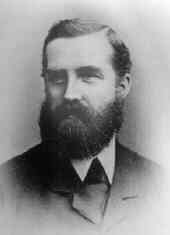
| "HOW SHALL THEY HEAR?" George Cutting, 1843-1934 |
Most of Mr. Cutting's many booklets and tracts relate to the glad tidings, in which he had a particular interest.
It is hoped that besides providing scriptural direction for those concerned as to reaching others with the gospel – and certainly we all should be – it will dispel the notion some may have that the brethren were disinterested in the spread of the gospel.
G.A.R.
| “HOW SHALL THEY HEAR?” |
|---|
| WHAT IS GOD’S WAY OF REACHING THE MILLIONS WHO GO NOWHERE? |
The question before us refers to certain tidings brought to this world from heaven. The Sender, God Himself.
Toward the close of a long letter unfolding the glories of this heavenly message, its marvellous possibilities, its gracious far-reaching results, a question is raised by the Spirit of God through the pen of the apostle.
It is this inquiry, and that which hangs upon it, that we propose to consider in these pages.
Two answers to the question will come before us –
Alas! that they do not perfectly coincide.
Substantially the united answer is this –
But the real value of an answer to this question does not lie in the universality of its adoption among men, but in the satisfaction it gives to God. This we shall have to consider later. But before going to that side let us make one serious inquiry –
A man starts to cross a mountain. It is the first time he has done so, and seeks direction. He is told by one who ought to know that by taking a certain path the journey on foot will take him two hours.
Then let us try to apply our figure to the matter before us. It has been publicly stated in London recently by an archdeacon in the Established Church, and one, therefore, in a position to speak with pretty good authority, that only about eighteen per cent of its six and a half millions attend church or chapel of any kind.
If the man in our illustration had only idly sauntered along that mountain path he could not be much surprised that he had doubled the specified time without reaching his destination.
Indeed, it may well be asked: What has been left undone in seeking to make successful the various competitive cries of Come to us? We only refer to one thing more. This desire of pleasing men and attracting them to “our places” has opened the door for one of Satan’s most subtle devices.
Is it enough to heave a deep sigh and then settle down comfortably and unconcerned in the midst of these perishing millions?
Two or three years since a large business house in the very heart of London was on fire, and several employees perished in the midst of it. The poor victims could be seen at the upper windows looking in vain for deliverance, while crowds in the streets below anxiously witnessed their peril.
Does our concern end here? Do we say: “If they do not choose to come to us, as far as we are concerned they shall not hear God’s message at all”? What a magnificent triumph for Satan would that be! God deliver us from even the “appearance” of it.
We have no hesitation in saying that any unprejudiced mind with the Scriptures before him will not fail to see that, in bold contrast to man’s elaborate system, stands God’s way in its own unselfish simplicity.
But let us come at once to the testimony of God in the Scriptures.
To the servant when all things were ready for the “Great Supper” – “Go out quickly into the streets and lanes of the city”, Luke 14: 21.
To the apostles – “Go ye into all the world and preach the gospel to every creature”, Mark 16: 15. And later when delivered from prison – “Go stand and speak in the temple all the words of this life”, Acts 5: 20.
To Philip the Evangelist – “Go toward the south … Go … join thyself to this chariot”, Acts 8: 26, 29. Note the eunuch was not told to drive round to Samaria to hear Philip preach.
To Peter – respecting Cornelius – “Go with them, nothing doubting”, Acts 11: 12. Cornelius was not sent to see Peter.
To Ananias – “Arise, and go into the street which is called Straight and inquire … for one called Saul, of Tarsus”, Acts 9: 11. The Lord knew as well where Ananias lived as where Saul lodged, yet He did not direct Saul to go to Ananias.
To Paul – “Unto whom” – i.e. to the Gentiles – “now I send thee”, Acts 26: 17. But above every other example Jesus Himself stands before us in Scripture as pre-eminently the “Sent One”. More than forty times in the Gospel of John He so speaks of Himself.
Now come to what we may safely call
Its importance is seen in the fact that each evangelist is inspired to record it. We refer to the feeding of the five thousand. With the exception of the feeding of the four thousand, it is the only instance where all served together under His own immediate oversight and personal direction.
But further. Not only has our gracious Lord told us how He would like His work done, and illustrated it by parable, He has simply exemplified it in His own personal service.
It matters little that men are unwilling to come to us if we are willing to go to them. It is our waiting till they can be persuaded to come to us that has so seriously stood in the way of their hearing the gospel at all.
That God takes a peculiar delight in the assembling of His saints together, and that He has His own way of doing so, there can be no shadow of question.
But let us never sin against the light of Scripture by limiting the scope of God’s harvest field to such places. Those who attend them have either been “found” already, or are outwardly occupying the place of seekers.
Can there, then, be any question as to the way the gospel was carried at the beginning, or the marvellous triumph accompanying it? In less than thirty years its power had been felt in all the three known continents – Europe, Asia and Africa!
But who could possibly imagine that the ear of “every creature under heaven” could be reached within such bounds?
“But”, says one, “we cannot all be preachers; and we read: ‘How shall they hear without a preacher?’”
That introduces another and very important consideration, namely, the necessary spiritual equipment of
In what does his fitness consist? It consists, we believe, in the measure in which, by the Spirit’s help, he makes use of two mighty moral forces.
We would beg the reader to note carefully the various features as they come before him, and say if he does not consider that such a servant, if unhindered, would be a fitting vessel to do his Master’s work, carry his Master’s message, express his Master’s mind and spirit, and to do it anywhere. Behold, then,
We have only to direct your attention to 1 Corinthians 13 to show you that the first quality in a divine equipment for any service is love. This is abundantly set forth in Scripture.
Love is the outward mark of every true disciple, the inward power of all acceptable service.
Men may go to college and learn to preach, but they must be “taught of God to love”, 1 Thessalonians 4: 9.
“The Faithful and True Witness – Christ Himself” – Revelation 3: 14 – was the perfect expression of Another. The love that sent Him, the love He was constantly enjoying, was the love that was every seen in Him.
But how is it, says one, that with such marvellous possibilities as are to be found in the possession of the Spirit of Christ, I am able to express so little?
We have said that the two elements of this qualification are inseparable.
Take an illustration. When a steamboat is about to commence her voyage two things are absolutely necessary.
Now let us seek to apply our figure.
But a more marvellous development of the story had yet to be told. The Creator Himself, veiled in flesh, would come into this world of sin, and in His own holy Person would positively make use of death for the ends of love!
But we have yet to learn another thing. More was involved in Christ’s death than the putting away of our sins.
Now if this in dwelling principle of evil was such that nothing but the death of Christ could deliver the believer from it, then by that death God has proclaimed its hopeless exclusion from His service;
What we have to learn is this great moral principle of Exclusion.
Gideon, before his great victory, had to learn it, however dimly; and we too must learn it, however slowly.
When the disciples asked respecting their inability to deliver the child from the power of the devil, “Why could not we cast him out?” the same secret came out –
But to return. In the cross God writes His “No” on man born after the flesh.
What a lovely specimen of the “victorious three hundred” type was Paul! What fearlessness when the interests of Christ were in question!
But perhaps some reader may say, “We are not all Pauls today”. No. And what is more, there are no Pauls today.
But spite of this, some one may say, “How could I reach these ‘go-nowheres’ even if I tried?”
But before going out even to speak to one we shall do well to take our true measure in
Selfishness is the very opposite of love; the greatest antagonist to its display.
“Faith cometh by hearing”. But if they will not come to us, how are they to hear if we do not go to them?
We have only one thing to fear – the fear of hiding Christ by intruding ourselves.
Oh, what an impression would be made amongst men if, by the Spirit of God in the power of the love and compassions of Christ, and with the jealous exclusion of the “great hinderer”, every true Christian in the land were moved to care for those who go nowhere! If Jesus died for them, are they not worth our seeking?
Has the Result of our Answer Satisfied us?
“If you want to please men, tell the that which will make them pleased with themselves!”Does it Concern us?
God’s Answer
If Christ has set you free;
And when it sets them longing
Say, Jesus died for thee”.The way of acceptable service.
But how shall they preach except they be sent?
A FULLY QUALIFIED SERVANT.
HIS MORAL PORTRAIT.
The Light of the Cross