Menu•SiteMap |
Ministry
Woollen and Linen – and – The
Moral Glory of the Lord Jesus Christ
Ministry by J. G. Bellett
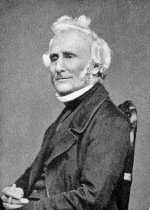
John Gifford Bellett has the well-deserved reputation of being one of the most devoted and spiritual of the early brethren.
G. A. R.
Page Top
| WOOLLEN AND LINEN |
|---|
"Thou shalt not wear a garment of divers sorts,
as of woollen and linen together", Deuteronomy 22:11, KJV.
|
|---|
The path of the church of God is a narrow path, such a one that the mere moral sense will continually mistake it.
- But this should be welcome to us, because it tells us that the Lord looks that His saints be exercised in His truth and ways,
- unlearning the mere right and wrong of human thoughts that they may be filled with the mind of Christ.
Luke 9: 52-56
The case of Elijah judging the captains of the king of Israel, referred to as it is in the course of the gospels, brings these thoughts to mind. Luke 9: 52-56.
- The Lord had steadily set His face toward Jerusalem under the sense of this, that “he should be received up”. Something of the thought of glory and of the kingdom was stirring in His soul.
- I believe the consciousness of His personal dignity and of His high destiny, as we speak among men, was filling Him as He began His journey toward Jerusalem.
- “It came to pass, when the time was come that he should be received up, he steadfastly set his face to go to Jerusalem, and sent messengers before his face”.
- The expression of conscious dignity breaks forth from this and gives character to the moment, and the disciples feel it.
- They appear to catch the tone of His mind, and therefore, when the very first village, through which the path of their ascending Lord lay, refused Him entrance they resent it, and would fain, like Elijah in other days, destroy these insulting captains of Israel.
This was nature, the natural sense also of right and wrong. Why then did the Lord rebuke it? It was not wanting in either righteousness or affection.
- The day will come when the enemies of Christ, who would not that He should reign over them, shall be slain before Him.
- There was nothing unrighteous in the demand, “Wilt thou that we command fire to come down from heaven, and consume them, even as Elias did?”,
- if we but think for a moment of the person and rights of Him who was thus wronged and insulted.
- Nor was there a wrong affection in this motion of the heart. Jealousy for their divine Master stirred it; this motion may be honoured, the moral sense may justify it fully;
- but Christ rebukes it: “Ye know not what manner of spirit ye are of”, said the Lord to them.
But why, again I ask, this rebuke? Was it because they were exacting beyond the claims of Him whom they sought to avenge?
- No, as we have said, for such claims will have their day; but the disciples were not in the spiritual intelligence of the moment through which they were passing.
- They had not “the mind of Christ”; they did not discern the time so as to know what Israel ought to do, 1 Chronicles 12: 32; they were not distinguishing things that differ; they were not rightly dividing the word of truth.
- This was their error: “Ye know not what manner of spirit ye are of, for the Son of man is not come to destroy men’s lives, but to save them”.
- It was not a wrong principle of moral action which the Lord discovers in their souls, but ignorance of the real or divine character of the moment through which they were passing.
- They did not perceive – what thousands (disciples of this day, as they were of that day) do not yet perceive – that the path of Christ to glory does not lie through the judgment of the world, but through the surrender of it; not through self-vindication, but through self-renunciation.
- This was their mistake, and this is what the Lord rebuked.
- They naturally thought that this indignity must be recognised; that, if the prospect of glory was filling the mind of their Master, and if they themselves, in the spirit of such a moment, had gone before His face to prepare His way, whatever stands in the way must surely be set aside.
- Nature judged thus; and nature thus judging would be justified by the moral sense of man.
But the mind of Christ has its peculiar way, and nothing guides the saint fully but that: analogy will not do, there must be the spiritual mind to try and challenge even analogies.
- Certain correspondences were remarkable here: Elijah was but a stage or two from the glory, just going onward to be “received up”, when he smote again and again the captains and their fifties.
- He was on a hill, full of great anticipations, we may say, and the chariots and horsemen of Israel and his heavenly journey were lying but a little before him in vision.
- The soul of their Master appeared to the disciples on this occasion to be much in company with that of Elijah.
- But analogies will not do, and the use of them here was confounding everything,
- taking the Lord Jesus out of His day of grace into the time of His judgments; inviting Him or urging Him to act in the spirit of the times of Revelation 11 when He was in the hour of Luke 4.
- The witnesses of Revelation 11 may go to heaven through the destruction of their enemies, fire going out of their mouth to consume them that hurt them, as after the pattern of Elijah; but analogies are not the rule.
- They must be challenged by that “mind of Christ” which distinguishes things that differ, and which teaches in the light of the word that
- Jesus goes to heaven through a path which procures the salvation and not the destruction of men; through His renunciation of the world and not His judgment of it.
- Elijah avenged himself on the insulting captains and then went to heaven; the witnesses will ascend to heaven, and their enemies shall behold them, Revelation 11: 3-11:
- but Jesus takes the form of a servant, and is obedient unto death, and then God highly exalts Him.
- And so the saint: so the church. “Ye are they which have continued with me in my temptations. I appoint unto you a kingdom, as my Father hath appointed me”.
Here was the mistake: here was the not knowing what manner of spirit they were of. Analogy strongly favoured the motion of their minds.
- The moral sense, which judges according to man’s thoughts and not in the light of God’s mysteries, justified it.
- But He who divinely distinguishes things that differ rebuked it: “Ye know not what manner of spirit ye are of”.
- The way of the disciples here would have disturbed everything, counteracting all the purpose of God.
The Parable of the Tares: Matthew 13
They remind me of the servants in the parable of the tare-field. The disciples were right according to man, and so were those servants.
- Is it not fitting to weed the wheat? Are not tares a hindrance, sharing the strength of the soil with the good seed, while they themselves are good for nothing?
- The common sense of man, the right moral judgment, would say all this, but the mind of Christ says the very contrary: “Let both grow together until the harvest”.
- Christ judged only according to divine mysteries. That is what formed the mind in the Master, perfect as it was; and that is what must form the like mind in the saint.
- God had purposes respecting the field. A harvest was to come and angels were to be sent to reap it, and then a fire was to be kindled for the bundled and separated tares;
- but as yet, in the hour of Matthew 13, there were no angels at their harvest-work in the field, nor fire kindled for the weeds, but all was the patient grace of the Master.
- The Lord will have the field uncleared for the present. The mysteries of God, the counselled thoughts and purposes of heaven, precious and glorious beyond all measure, demand this;
- and nothing is right but the path that is taken in the light of the Lord, in the knowledge of the mysteries of the kingdom of heaven.
Nor is the church to go to heaven through a purified or regulated or adorned world, any more than Christ would have gone to heaven through a judged world.
- This is to be well weighed; for what is Christendom about? Just practically gainsaying all this.
- Christendom affects to regulate the world, to keep the field clean, to make the path to heaven and glory lie through a well ordered and ornamented world.
- It has put the sword into the hand of the followers of Christ. It will not wait for the harvest, nor will it go into “another village”. It avenges wrongs instead of suffering them.
- It orders the church on the principles of a well regulated nation and not on the pattern of an earth-rejected Jesus.
- It is full of the falsest thoughts, judging according to the moral sense of man and not in the light of the mysteries of God. It is wise in its own conceits.
I know full well there beat in the midst of it a thousand hearts true in their love to Christ; but they know not what manner of spirit they are of.
- I know that zeal, if it be for Christ, though misdirected, is better than a chill at the heart or indifference as to His rights or His wrongs.
- But still, the only perfect path is that which is taken in the sight of the Lord in the understanding of the mysteries of God, and the call of God, and the directions of the energy of the Spirit,
- and not merely after the fashion or dictates of the morals and thoughts of men.
- And the call of God now demands that the tare-field be left unpurged, that the indignity of the Samaritans be left unavenged, that the resources and strength of the flesh and of the world be refused rather than used,
- and that the church should reach the heavens, not through the judgment of the world by her hands,
- but through the renunciation of it by her heart, and separation from it in company with a rejected Master.
“He that gathereth not with me scattereth”, Luke 11: 23; that is, he that does not work according to Christ’s purpose is really making bad worse.
- It is not enough to work with the name of Christ: no saint would consent to work without that; but if he do not work according to the purpose of Christ he is scattering abroad.
- Many a saint is now engaged in rectifying and adorning the world – getting Christendom as a swept and garnished house; but, this not being Christ’s purpose, it is aiding and furthering the advance of evil.
- Christ has not expelled the unclean spirit out of the world. He has no such present purpose.
- The enemy may change his way, but he is as much “the god” and “prince of this world” as ever he was. The house is his still, as in the parable. Luke 11: 24-26.
- The unclean spirit had gone out, that was all; he had not been sent out by the stronger Man so that his title to it is clear; and he returns, and all that he finds there had only made it more an object with him.
- He finds it clean and ornamented; so that he returns with many a kindred spirit and thus makes its last state worse than its first.
David and Peter
Mistakes of this kind are very old mistakes. David was erring this way when he purposed to build a house for the Lord; but it was an error, though committed with a right desire of the heart.
- The time had not come for building the Lord a house because the Lord had not yet built David a house.
- The land was still defiled with blood; and till it was cleansed there was no place for the rest and kingdom of the Lord.
- David therefore greatly erred, yet not through double-mindedness but through ignorance.
- David’s error was this – that the Lord could take His throne in the earth before the earth was purged.
- The servants in the parable erred on the other hand in this, that the church was made the instrument of purging the earth or the world.
I might say, in the language of the Levitical ordinance, that David was about to put on a garment of “divers sorts”, but the Lord prevented it.
- The motion of his heart – as far as it was expressive of himself – was acceptable with the Lord, but still it was hindered and disappointed.
- Something to tell us how jealous the Lord is that His own principles be observed and the position in which He has set His servants and witnesses be maintained;
- nay, that even the most affectionate and jealous desire of the saint, though it be valued by the Lord and get its personal reward or acceptance, can never reconcile the mind of the Lord to an abandonment of His thoughts and purposes.
- All would be confusion. David’s thoughts, however innocent and in some sense to be approved of God, would have confused everything, bringing about
- this strange result – the Lord taking His throne in an uncleansed kingdom and allowing His servant to give Him rest before He had given His servant rest!
- What confusion this would have been! What an evil testimony these mixed principles would have produced!
- Who could have read in the result, had it been allowed, either the grace or the glory of the God of Israel?
The rebuke of Peter at Antioch was more peremptory; for Peter erred, not like David, through ignorance, but through the occasional fear of man, which, as we are taught and as we experience, “bringeth a snare”;
- and it was something worse than confusion, it was perversion – in Deuteronomy 20: 19-20 we have an ordinance against perversion, or turning things to a wrong use.
- But still, even if it amount only to confusion, and that by the hand of the dearest and most loved servant, it is not to be allowed, as this case of David shews; as also in his other act of bearing the ark from Kirjath-jearim.
- The confusion there was not made excusable by all the true-heartedness and religious joy that attended it, 1: Chronicles 13: it could not be.
- Place by subjection was not to be given to it for an hour, and, however acceptable with God the motion of David’s heart was, these ways must be withstood, because the way, and purpose, and counsel, and thoughts of the Lord are precious in His sight and are to stand for ever.
- It is not that David and Peter were men of mixed principles, as the word is, or were wearing, as the ordinance speaks, garments of woollen and linen, but these instances in their history illustrate a serious truth, which is much to be remembered, that
- the Lord will vindicate His own principles in the face of even His dearest servants, that
- He will and He must withstand the motions of their hearts if they go to obscure or disturb His purpose and His testimony,
- even though such motions have much of a personal, moral character in them which He can accept and delight in.
Double-Mindedness
But, beside these cases of David and of Peter, and of the disciples in Luke 9, who, in mistaken, misapplied zeal for the Lord whom they loved, would have avenged His wrongs with a true and righteous affection,
- there is a generation who are seen apart from the way of God through double-mindedness.
- Such a generation may be tracked all through Scripture, a people of mixed principles, as we say, who wear garments of woollen and linen contrary to the call of God and the pure ordinances of His house.
- It may be humbling to oneself more than to most others to look at such a generation, but it has its profit for the soul and its seasonableness in this hour.
Lot
Lot was associated with the call of God. Like Abram, his uncle, he left Mesopotamia, and then after the death of Terah, his grandfather, he came with Abram into Canaan,
- and he was a righteous man, there was no palpable blot upon him.
- Abram betrayed the way of nature, again and again recovering himself, with shame too, from the snare of Egypt and of Abimelech.
- But Lot was not so rebuked all the time he sojourned in Sodom. We only read of him that his righteous soul was vexed with the filthy conversation of the wicked.
- But withal, he was sadly of the generation I am now speaking of.
If Abram’s garment was soiled now and again it was not “a garment of divers sorts”, but Lot’s garment was “woollen and linen”.
- He was untrue to the call of God; he became a citizen when he ought to have been only a sojourner, choosing well-watered plains and taking a house in a city,
- when God’s witness was going over the face of the country from tent to tent, and from one tabernacle to another.
- Fewer mistakes are recorded of him; but what then? He was a man of mixed principles all his days, while Abraham all his days was true to the call of God.
- And his life of false principles leads him into sorrows that are his shame, and that is the real misery of sorrow.
He was taken captive while he lived in the plains of Sodom, and was nigh unto destruction after he had removed to the city of Sodom;
- and he is still, and ever has been in the church, the witness of one, saved it is true, but “so as by fire”.
- He had no comfort in his soul; his righteous soul was vexed day by day. This is told of him, but no brightness is there: no joy, no strength, no triumph of spirit is told of him.
- The angels held much reserve towards him, while the Lord of angels was in nearness and intimacy with Abraham.
- He had to escape with his life as a prey when Abraham was on high beholding the judgment afar off.
- And, what is full of meaning, we observe that after he had taken his own course and become a man of mixed principles, departing from the track where the call of God would have kept him, he and Abraham had no communion.
- Abraham will run to his help in the day when his principles were bringing him into jeopardy; but there is no communion between them. They could not meet in spirit.
- The saint of God will own him as his kinsman, and do him the kinsman’s service; but there is no present communion between them. And this is no uncommon case to this day.
Such was Lot. Instead of making his calling and election sure, he is one whom the people of God receive on the extraordinary testimony of the Holy Ghost,
- rather than on the necessary and blessed credit of his assured call of God, or as one of that people of whom Paul could say, “Knowing, brethren beloved, your election of God”.
Jonathan
Nature prevails sadly and variously in all the recorded saints of God; in some more, in some less, just as the fruitfulness of the Spirit is seen in them in affections and services; in some thirtyfold, in some sixty, and in some an hundred.
- But this is a different thing from being men of mixed principles. It was so with David. Nature prevailed in him at times, but he was never a man of mixed principles.
- He never deliberately sat down in a connection which was untrue to the call of God under which he had to act. His character was formed by that call and his ways were according to it:
- but it was not so with his friend Jonathan; his life was not formed by the call of God, and the energy of the Spirit working in the rule of that call.
- He acted nobly and graciously at times, but still he was not the separated man. He was not true to the pure principles of God made manifest in that day.
- He was a man of faith, and of many endearing spiritual affections, such as give him, without reserve, a place in the recollections of the saints. But withal he was not where the call of God would have had him.
Saul’s court was a defiled, even an apostate, place then.
- God was with David then. The glory was in the wilderness with him; the dens and caves of the earth hid it in that day.
- The ephod was with David, the priest, the sword of God’s strength, the witness of victory.
- The flower and promise of the land were with him also, those who gain a name in the cave of Adullam, or in the day of vengeance at Ziklag.
- Such sons of Israel as these, such as shine afterwards in the court and camp of the kingdom, were all with David then.
The call of God was then to the caves and dens of the earth with the son of Jesse, and the energy of the Spirit worked there; but Jonathan was not there. That is the sad story.
- Jonathan was not where the glory was, where the priest with the ephod was, where the rejected man after God’s own heart was, where all the promise of the coming kingdom was. That is the sad story.
- Jonathan was lovely individually, he had done some noble deeds and was breathing some heavenly affections; and to the end we may be sure David lived in his heart;
- and many misgivings about his own father, we may be equally sure, that same heart was troubled with.
- He never personally gave David anything but joy; while we know those who companied with him, even in his afflictions, were betimes both a shame and a sorrow to him.
- But still his position was not true to the call of God in that day. It kept him apart from all that was of God then, though he had the Lord with himself personally.
- Till he falls on Mount Gilboa, he is with the camp and the court that fall with him there, dishonoured and defeated as they were, having ere then lost the glory, and all that was of God nationally departed from them.
- A common case he illustrates. Was it ignorance of the call of God, or double-mindedness? We will not say;
- but still in this our day there is, like Jonathan, many a saint dear to one’s heart, and outshining in personal graces the larger number of the day, who is found apart from the place where the energy of the Spirit, according to the rule of the dispensation, works.
- Noble and generous deeds are done by them individually, but their connection is their dishonour, as it was Jonathan’s –
- linked with a world which is speedily to meet the judgment, and in courts and camps which are to lie in the midst of the uncircumcised, with them that be slain with the sword.
- “Tell it not in Gath, publish it not in the streets of Askelon”. Jonathan illustrates this, and this is known abundantly to this hour.
But Jonathan cannot sanction the place; Jonathan’s presence did not make Saul’s camp or court other than it was.
- The only impression the soul has of Lot in Sodom is that of a tainted Lot and not of a sanctified, purified Sodom.
- According to the word in Haggai, “If one bear holy flesh in the skirt of his garment, and with his skirt do touch bread, or pottage, or wine, or oil, or any meat, shall it be holy? And the priests answered and said, No”.
- But “If one that is unclean by a dead body touch any of these, shall it be unclean? And the priests answered and said, It shall be unclean”.
There are, however, “things that differ”, and the soul exercised of God is to distinguish them.
- There is a soiled garment which is, however, at the same time not a mixed garment, a garment of “divers sorts”, of “woollen and linen”.
- Our way under the Spirit is to keep our garments undefiled; and anything other or less than that is not the way of communion with the Lord.
- But still, a soiled garment is not a mixed garment; nor is a garment with a thread now and again of another sort to be mistaken for one whose texture is wrought on the very principle of “woollen and linen”.
Scripture, ever fruitful and perfect, exhibits characters formed by what has been termed “mixed principles” and characters which occasionally become tainted by such, but are not throughout formed by them.
- The life of Lot, as we have been seeing, was formed of mixed principles throughout. There was double-mindedness in Lot; I say not the same with the same clearness of Jonathan;
- but still the life of each of them from the outset to the close, when the scene of temptation set in, was tainted by connection with evil.
- Lot, though associated with the call of God, was a man of the earth; Jonathan, though witnessing the sorrows and the wrongs of David, continued in the interests of the persecutor unto the end.
- Their life was thus formed by connections which were untrue to the way of God and the presence of the glory all through. The garment upon each of them was made of divers sorts, of woollen and linen.
But look at Jacob in contrast, and in him we find one of another generation; he was a cautious man who had his worldly fears and schemes and calculations; and they greatly disfigure several passages of his life.
- His building of a house at Succoth, his buying of a piece of ground at Shechem, were things untrue to the pilgrim life, the tent life, which a son of Abraham was called to know.
- But Jacob is not to be put with Lot; his life was not formed by Succoth and Shechem, though we thus see him there, and out of character there, but he was a stranger with God in the earth.
- And in the closing days of his pilgrimage, when he was in Egypt, though with many a circumstance around him there to tempt him to have it otherwise, we have many a beautiful witness of the healthful and recovered state of his soul.
The Days of Ahab
The days, for instance, of Ahab king of Israel, king of the ten tribes, were fruitful in illustrations of this kind.
- There were in those days an Elijah and a Micaiah, a Jehoshaphat and an Obadiah, beside seven thousand who had not bowed the knee to the image of Baal;
- and all these in the midst of the foulest departure from the ways of God, the times of Jezebel and her abominations.
But all these are not to be classed together. To use the language of “woollen and linen”, or “garments of divers sorts”, I might say there was no mistaking the cloth of Elijah and Micaiah.
- The leathern girdle of the one and the prison bands of the other tell us what men they were and bespeak their complete separation.
The seven thousand we cannot speak of particularly; we know them only under the hand of God as “a remnant according to the election of grace”, and that in an evil day they “had not bowed the knee to the image of Baal”.
- But Obadiah was not Elijah, and again, as between him and Jehoshaphat, we are still to distinguish; such was the moral variety illustrated for our admonition in these days.
Jehoshaphat
Jehoshaphat, king of Judah, of the house and lineage of David, was a separate man,
- but a man who at times, and that too pretty largely, is found in defiling connection.
- He was of Jacob’s generation, though it may be more faulty than Jacob in that generation.
- Vanity betrayed him again and again, as worldly policy betrayed the patriarch.
- Jehoshaphat joined affinity with Ahab. In the day of the battle he put on the royal apparel, a garment sadly and shamefully of “divers sorts”;
- and it was near costing him his life, as the same clothing nearly cost Lot his life in the city of Sodom.
- He acted there in terrible inconsistency with the sanctity and separateness of the house of David. But, though all this is so, I am not disposed to put Jehoshaphat in company with Lot.
- His life was not one of mixed principles; his garment was not advisedly wrought of “woollen and linen” together, though sadly and shamefully untrue to the testimony which became a son of David and a king in Jerusalem.
- Very noble deeds were done by his hands, and very dear affections were breathed by his spirit, and the God of his father owned him; but, like Jacob, and to a more painful extent, he was betrayed;
- he was betrayed into connections which make his testimony a very mixed, imperfect thing.
- It was not merely nature prevailing at times – that may be seen in all, in those of the best generation, in Abraham, and in David.
- It was not merely a soiled garment whose blot is palpable, but a garment the texture of which is scarcely discernible, whether indeed it be of one sort or a condemned garment of “woollen and linen”;
- so shamefully do the “divers sorts” appear in it at times, but not throughout.
Obadiah
But the garment which Obadiah wore in those days cannot be mistaken.
- It needs no close inspection to make out what it is. The “divers sorts” of woollen and linen are to be seen in it from head to foot. His life was of that texture.
- It was not that he was betrayed at times merely, nor was it that his way was stained at times, but his whole life evinces a man of mixed principles.
- He was a godly man, but his ways were not according to the energy of the Spirit in that day.
- He had respect to the afflictions of the prophets, hiding them in caves from the persecution and feeding them there;
- but all the while he was the adviser, the companion, and the minister of king Ahab, in whose kingdom the iniquity was practised.
- The “linen and woollen” thus formed the garment that he wore all his days. It was not the leathern girdle of Elijah; and when they come together this difference is preserved and expressed most strikingly.
- Obadiah is at some effort to conciliate the mind of Elijah. He reminds him of what he had done for the persecuted prophets of God in the day of their trouble and tells him that he feared the Lord; but Elijah moves but slowly and coldly towards him.
- Painful all this between two saints of God, but it is far from being rarely experienced; it is a common thing, I would say, but much more commonly felt than owned. 1 Kings 18.
There could have been no blending of the spirits of Abraham and Lot after Lot took the way of his eye and of his heart and continued in that direction – a citizen of Sodom.
- We are not told this, it is true, in the history; but we find from the history, as I observed before, that they never meet after that, and we may easily know why. Because such things are real and living things still.
- The Abrahams and the Lots of this day do not meet; or if they meet it is not communion. They do not enjoy refreshment in the bowels of Christ.
- Abraham rescued Lot from the hands of the king Chedorlaomer, but this was no meeting of saints; they could not blend.
- And if the people of God cannot come together in character they had better be asunder. In spirit they are already severed.
So was it in a far more vivid expression of it in Elijah and Obadiah.
- The man with the leathern girdle – God’s stranger in the land in the days of Ahab – could not be found much in company with the governor of Ahab’s house.
- But they meet in an evil day, a day which may remind us of the day of the valley of the slime pits, the day of Lot’s captivity. Ahab his master had divided the land with Obadiah to search for water in the day of drought.
- The Lord his God had put the sword of His servant Elijah over the land to give it neither rain nor dew; and in an hour of Obadiah’s perplexity and of Elijah’s commission under God they meet.
- The occasion is one of interest and meaning and has lessons for our souls.
There is effort on the part of Obadiah and reserve with Elijah. This is naturally and necessarily so. Obadiah seeks to combine with Elijah, but Elijah resents the effort.
- Obadiah calls Elijah his lord, but Elijah reminds him that Ahab is his lord.
- For this will not do. We are not to be serving the world and going on in the course of it behind each other’s backs and then, when we come together, assume that we meet as saints.
- This will not do; but the attempt to have it so is very natural, nay, it is very common to this hour.
- But Elijah acted in character, faithful to his brother now as he had been to his Lord before; and beautiful this is, and precious it ought to be whenever we get it.
- Obadiah had been walking with the world in Elijah’s absence, and Elijah cannot let him now assume that he was one with him though in his presence.
Obadiah pleads: “What have I sinned that …”. But why this? Elijah had not accused him of sinning.
- Why this alarm and perturbation of spirit? Elijah was not hazarding his life or safety, or any of his interests; he was disturbing nothing that belonged to him.
- Why this alarm and taking refuge in the thought of finding his plea in the fact that he had not sinned?
- It is a poor, low state of soul when a saint has only the consciousness of this, that he has not sinned. Is that enough to enjoy the communion or understand the mind of an Elijah?
- Had not Obadiah been in Ahab’s palace when Elijah was by the brook Cherith? That is the question, and not the question whether he had sinned or not.
- Had Obadiah been with him over the barrel of meal or the cruse of oil?
- Elijah had not told him that he had been sinning; he need not shelter himself or commend himself thus. But Elijah cannot but let him know that their spirits were not blending; for they had met from different quarters.
- “Was it not told my lord what I did when Jezebel slew the prophets?” What was all this to the point?
- Elijah had not been going over his past history; it was better to leave the most of it untold; and it is a miserable thing for a saint of God to be trading after this manner on his character or his past ways.
- This is no title, no sufficient title, for the present communion of the saints, nor competency for it either.
And these are Obadiah’s thoughts and refuges and pleadings now that he is in the presence of a faithful witness of Christ. He had not sinned, and in days past he had done service.
- What a low sense of the common calling of the people of God the soul must have that can think it can be maintained and that saints can go on together on such a title and competency as this!
- If the world be served when we are behind each other’s back, though we may not have sinned, as people speak, and though we may have had character and done services in past days, we are not fit for each other’s presence as saints of God.
Have we been in the heavenlies or in Ahab’s court? Have we been making provision for the flesh or desiring the things of Christ?
- There are other things than pleading “we have not sinned”, or trading on established character and past services. These are what alone fit us for the true communion of saints.
- Obadiah was governor over Ahab’s house; how could such a one as Elijah be comfortable or at ease with him? He felt reserve, and he expressed it in manner if not in words.
- Obadiah is the man of words on the occasion – that was natural also, and is the ordinary style of such occasions or of such intercourses between Elijahs and Obadiahs to this hour.
- For indeed it is not communion when there is effort on the one side and reserve on the other. This is surely not the communion of saints.
- But it all has a voice in it, and is common enough now-a-days. They were not in company with each other; that was the fact. Their spirits could not blend.
- The garment of divers sorts, of woollen and of linen, which a saint of God could not but wear in Ahab’s court, ill-matched the leathern girdle of a separated, suffering witness of Christ.
- We see this saint of God thus in his party-coloured dress but once; but this voice is thus full of holy, serious meaning to us.
- The poor widow of Zarephath, whom Elijah had lately left, enjoyed the full flow of Elijah’s sympathies; and that humble, distant homestead, with its barrel of meal and its cruse of oil, had witnessed living communion between kindred spirits, and presented a scene which had its spring and its reward with God.
- But Elijah and Obadiah were not thus in company with each other. Elijah is too true to let Obadiah come near to him in spirit or to answer the effort he was making to conciliate him.
There is character in all this I am fully sure. Abraham and Lot never met, as we have said, after they parted on Lot’s lifting up his eyes on the well-watered plains of Sodom.
- There was moral distance quite sufficient to keep them asunder, though a sabbath day’s journey might have brought them together. Very significant evidence that is!
- And so Elijah and Obadiah: their meeting was no meeting. As well might Abraham’s rescue of Lot out of the hands of Chedorloamer be called a meeting.
- This was not “the communion of saints”. This was not refreshment of bowels in the Lord. But all this repeats for the heart an oft-told tale.
Ebed-Melech
Ebed-melech, in the days of another Elijah, was a man of this Obadiah generation, not, however, so strongly marked as his elder brother.
- Like him he loved the prophet of God, and in the face of an injurious and insulting court, and hindered by the timid policy of the king, pleaded for Jeremiah and served him with gracious personal service.
- But he was not a witness as the prophet was. He was afraid of the Chaldean – Jeremiah 39: 17 – the sword of the Lord’s anger, and such was not the condition of the Lord’s witness.
- But his weakness was not despised in the rich grace of God. His measure received its measure again, and in the day of the judgment of the Lord Ebed-melech got his life for a prey when Jeremiah was had in honour.
- Ebed-melech was saved then, but that was all; the prophet was rewarded.
Thus have we seen a generation in other days who, though the people of the Lord, shew themselves sadly apart from the place to which the call of God would have led them.
- Such was Lot and such was Jonathan, and such were Obadiah and Ebed-melech.
- It was more or less double-mindedness in them or love of the world in greater or smaller power in their souls.
- But such a generation is abundant to this hour. Saints are seen in situations and connections from which the call of God would separate them just as surely as it would have kept Lot out of Sodom.
- But this may be added with equal sureness in a multitude of cases: this impure connection arises from ignorance or want of hearts instructed in the kingdom of God.
- They have not listened to the voice of the mysteries of the kingdom but conferred with flesh and blood.
- They have not heard the Shepherd’s voice calling them outside.
- They have not understood the church as a heavenly stranger on the earth, and that connection – religious connection – with the world is Lot in Sodom, or an Israelite with a garment of “divers sorts, as of woollen and linen”.
The world is marked for judgment even more surely than Sodom was; ten righteous would have spared the cities of the plain, but nothing can cancel the judgment of “this present evil world”.
Here let me add, however, that the distinction of Lot and of Jonathan may be seen in many a soul now a days.
- Lot had nothing to sanction Sodom to him; all that he knew to be of God was outside; and even nature had no plea to plead for Sodom.
- Abraham and Sarah were outside, the witnesses of the call and presence of God, and his kindred in the flesh.
- All that was sacred in religion or nature were outside; and providences pleaded with him to the same end, for the plains of Sodom had already brought him into jeopardy of life and liberty, and warned him to dread the city.
- It was the world and nothing else that was heard in Lot’s heart in favour of Sodom.
- But with Jonathan nature had a plea. All that was of God, it is true, was in that day outside Saul’s court and camp;
- but the claims of kindred, the voice of nature, nay, the authority of nature, were known and felt from within. The father and the family were there though David and God were not.
And so now-a-days. There is many a thing that pleads from within. Nature, things moral and religious, plead there;
- opportunities of service and testimony, obedience to authority, maintenance of order,
- the dangers and evils threatened to the social well-being, the peace of families, and example to children and servants:
- these things are pleaded, and they all come from within, and put in various claims for the course of the world.
But these, and all such put together, can never speak to the saint or plead with him with the authority of the call of God.
- If the church be a heavenly stranger on the earth, alliance with the world defiles her, nay, ruins her as a witness for God;
- and to defile after this manner, to seduce from the place of testimony, is the enemy’s purpose and has been so from the beginning.
- Was not the serpent in the garden seducing Adam from the place the Lord God had set him in?
- Nay, earlier even than that, are we not told about the angels that sinned that they kept not their first estate?
So afterwards with Israel, “Ye are my witnesses”, says the Lord of them; but the enemy prevailed till the testimony was gone.
- “His house shall be called a house of prayer, but ye have made it a den of thieves”.
- Here were successful attempts of the enemy to drag from the place in which God had set His witness.
- It is not merely that there was a soil, or a blemish, or a rupture, but a revolt, a departure, a yielding up to the enemy the great purpose or thought of God.
The contrary effect precisely, in the precisely like attempt, as has been observed by another, is seen in Jesus.
- “If thou be the Son of God”, said the tempter. His design was to lead Him to the abandonment of His place, His place of perfect and entire subjection which knows only God’s will.
- But all was perfection and victory in Jesus, but in Jesus only, whether before Him or after Him; for the witness of this dispensation has been as corrupted as others.
- That which was set to be a heavenly stranger on earth, the companion of the rejected Christ, has faithlessly allied herself with the rejecting world; and what ruin can be more complete than this?
The Man of God from Judah
The “man of God” who was deceived by the old prophet would have had security in the divine principles had his soul been alive to them.
- The word received, it is most sure, would have secured him; for it expressly forbade his eating and drinking in that place. But divine principles would have been his shelter also.
- The word he had received when he set out on his journey was founded upon them, as we may easily perceive. For how, I ask, could the Lord employ an unclean vessel?
- The old prophet had been clearly laid aside as unfit for the Master’s use. He was dwelling in the very city where the Lord had a business to be done, but he was passed by.
- The Lord had gone down to Judah to get a witness against the altar at Bethel, though a saint of His own was living on the very spot. How could “the man of God” think that the Lord could employ the prophet of Bethel as His vessel?
- He had already passed him by. He had already after this manner treated him as unfit for His use, according to the principles of His own house that an unpurged vessel is not fit for service, 2: Timothy 2. How could the man from Judah be careless about all this?
- The word he had received was enough to tell him how this principle of God’s honour was at that moment, so to speak, alive in God’s thoughts,
- because he was enjoined neither to eat not to drink in that unclean place, nor was he to return by the way that he came:
- so particular was the commandment in keeping him apart from all fellowship with that against which He was employing him to testify.
- And yet “the man of God” is beguiled to receive a message as from the Lord by the hand of one who was in contact and communion with the unclean thing, against which he has been brought all the way from Judah to testify!
- Strange forgetfulness! Sad and shameful carelessness about the principles of the house of God. A saint as he was, and servant as he was, faithful too in the face of the offers of a king – his carcase is not to come to the sepulchre of his fathers. 1 Kings 13.
Micaiah versus Jehoshaphat
When the eye is single the whole body is full of light. There is consistency and harmony in the action when the moving principle is maintained single and unmixed.
- Micaiah’s action in 2: Chronicles 18 was of such a nature, but Jehoshaphat’s body was then anything but “full of light”.
- In the hour when he left Micaiah to go to the prison of king Ahab while he himself accompanied that same king of Israel to the battle, who would have known him to be a saint of God?
- Where was the body “full of light” then? It was the clouding and overcasting of all the illumination which he really partook of.
- There was no harmony, there was no pure and cloudless noonday marking the pathway of Jehoshaphat then; no making of “his calling and election sure”, as the apostle speaks.
It is happy to follow that dear man a stage farther, 2 Chronicles 20. For in the days of Ammon, Moab and Mount Seir, Jehoshaphat’s body is again “full of light”.
- He acts as a son of David ought to act; he seeks the Lord and the Lord only; and all is faith and victory and joy.
- But when in the earlier day Micaiah was sent to the prison of Ahab and he himself went to the battle of Ahab, where was the son of David then? The whole body was full of darkness.
The Returned Captives
The captives, returned from Babylon to the land and city of their fathers, in like manner read us an instructive lesson on this subject of the garment of “divers sorts”; and their history affords both encouragement and warning.
- They do not refuse to accept the punishment of the nation’s sin, and therefore they take their place in subjection to the Gentile power whom God had set over them for their sins.
- They accept the favour of Cyrus, of Darius, and of Artaxerxes, in the spirit of the injunction “honour to whom honour, fear to whom fear”. They speak of a Gentile power as “the great and noble Asnapper”,
- and evidently feel grateful for the kindness shewn to them by one after another of these powers, blessing God because of them, and ready-hearted, I am sure, to pray for the life of the king and of his sons.
- But with all this they were a separated people. Their refusal of Samaritan connection was as earnest as their acceptance of the favours of the Gentiles.
The zeal and revenge, and clearing of themselves of the mixed principle and of the abomination of bringing Greeks into the temple to pollute that holy place, was as simple and firm as it would have been in the days of Joshua or of David.
- They refused the garments of divers sorts. If they would have worn that livery, it might have saved them much trouble in the progress of the work of their hands, which was also the work of the Lord; but they could not and would not. The thing was not according to the ordinance; and they would not.
Paul might have saved himself a prison if he had accepted the testimony of the damsel at Philippi; but it was Samaritan help again, or something worse, and he could not;
- and the man who on that occasion refused the garment of woollen and linen must therefore for his faithfulness have his feet made fast in the stocks and wear prison bands.
- But all is right in the end whether with Paul or the returned captives. Their God pleads their cause.
Here, however, some new and serious points of instruction on the matter of mixed principles occur. I feel I can pursue this with a sense of personal need and application.
- The further history of the captives from Babylon warns us as well as instructs us. They refuse the strange alliance, they will not wear the garment of divers sorts,
- but then they wear their own garments without a girdle; that is the moral of the story.
- They go to build their own houses when the Samaritan enmity stops their building of the Lord’s.
- This is warning to us, as it was shame to them, and the Spirit of the Lord has to awaken them as from sleep and intoxication.
- They served themselves when the service of the Lord was interrupted. Ease and indulgence and self-pleasing take the place which had now been left vacant.
- Haggai and Zechariah have to call them to the girding of their loins and the trimming of their lamps.
- By no means do they send them back to make terms with the Samaritans. They do not tell them that they erred in refusing the garment of divers sorts,
- they only call on them to gird up the pure garments they were wearing – to do the Lord’s work in the Lord’s way though Samaritans might again withstand them.
All this is full of meaning for us. The Spirit of God, let the exigency be what it may, will never have the saint in “woollen and linen”;
- but at the same time He would have the pure garment girded.
- An ungirded garment though pure is not after His mind; and often does He find that wanting, as in the days of Haggai and Zechariah,
- and this is our deep rebuke – a pure position kept with little spiritual grace.
The returned captives were in the right position. Their place was a better place than that of their brethren who dwelt still in the distant cities of the uncircumcised,
- and they did well, as I have been saying, when they refused alliance with the Samaritans; such alliance would be but the wearing of garments of divers sorts, of “woollen and linen” This they did not do; but those who stand such a trial fail under another.
- Though they thus refuse to wear mixed clothing their garments, as we have seen, were not girded, and even worse than that, they were sadly soiled and spotted.
- These returned Jews were doing much worse than their brethren who were off in the distant lands of the heathen. Their ways in the Holy Land were deeply rebuked by the ways of their brethren among the Gentiles.
The Jews abroad had redeemed their brethren from the heathen to whom they had been sold,
- while the Jews at home or the captives returned to Jerusalem were selling their brethren for debt. Nehemiah 5.
- What a sad sight! What a humbling and searching fact! Is there not much that is miserably kindred with this to be known still? This is something like “form without power”.
- “The kingdom of God is not in word but in power”.
- Position may be quite according to God, but the practical godly grace with which it is filled and occupied may be scanty and poor.
And how should this warn us not to count on the virtue of a merely pure and separated position!
- If it be trusted in, or held with an unjudged and unwatched heart, even they among the uncircumcised may rebuke us.
- Much love and service is often to be found within, as I have been speaking, while little of the power of holiness and of the mind of heaven accompanies those who go outside.
- What I mean is this – that there is often less grace and moral power in the purer position than there is in the defiled connection.
- As with Jonathan, David loved him dearly and yet he was not David’s companion. But the companions of David’s temptations were at times a trial to him, talking on one occasion of even stoning him, while Jonathan personally was always pleasant to him.
- What an outside and an inside was this! And yet David’s outside place was the place of the glory then, and his companions were in the right position. But what exhibitions are all these!
- And yet we see the same around us at this hour. There is no lesson I would more press on the attention of my own soul than this – and I think I can say I value it:
- Position without power,
- principles beyond practice,
- jealousy about orthodoxy, and truth and mysteries
- with little personal communion with the Lord –
- all these the soul stands in constant fear of and in equal judgment and refusal.
The earnestness about many,
- and many a right thing that was found at Ephesus,
- the stir and activity even of a religious nature that prevailed in Sardis, and
- the orthodoxy of Laodicea, were all challenged by the Lord, and
- we deeply justify the challenge. Revelation 2, 3.
- The tithing of mint and anise when judgment and mercy were passed by, was exposed by the divine mind of Christ; and in the Spirit the saint joins in the exposure,
- “Either make the tree good, and its fruit good; or make the tree corrupt and its fruit corrupt”.
We refuse position without power as we would principles without practice; or truth and mysteries and knowledge without Christ Himself and personal communion with Him.
- But in the stainless, perfect page of the word we find all honoured, and nothing thoroughly according to God but where each and all is in its place and measure honoured. As He says Himself,
- “These ought ye to have done, and not to leave the other undone”.
But here I will turn aside for a moment to what is sweet relief to the soul: that to know Him in grace is His praise and our joy.
- We instinctively think of Him as One that exacts obedience and looks for service.
- But faith owns Him as the One that communicates; that speaks to us of the privileges rather than of the duties; of the love, and the liberty, and the blessings of our relationship to Him rather than of the corresponding returns from us.
- This is truth, beloved, we need also now-a-days, though it may be a little beside my leading thought just now.
The call of God separates us, but we need the Spirit of God to occupy the place according to God, and the loving devoted mind.
- “Salt is good”, the divine principle is the good thing. But salt may lose its saltiness.
- The right position or the divine principle may be understood and avowed, but there may be no power of life in it.
- What variety of moral instruction is thus provided for the soul in the words of the Lord! But let us still listen and we shall still learn, for the mine is never exhausted.
The Two Tribes and a Half
The history of the two tribes and a half has its peculiar instruction for us.
- They do not stand in company with the Lot of the days of Abraham, though in some respects they may remind us of him. For, as I have just said, it is wonderful
- what a variety of moral character and of christian experience puts itself before the soul in the histories of Scripture; the lights and shades are to be traced as well as the leading features. This strikes us forcibly in the history of this people.
- They are not Lot but they remind us of him. Like him their history begins by their eyeing well-watered plains good for cattle. While yet on the wilderness side of the Jordan they think of their cattle:
- Abraham their father had never been on that side of the river. Moses had said nothing to them respecting those plains of Gilead.
- Nor did their expectations when called out from Egypt stop short of the land of Canaan.
- But Reuben, Gad and Manasseh had cattle, and they ask for an inheritance there on the eastern or wilderness borders of the river, for there cattle might graze to advantage.
They had no thought whatever of revolting, of sacrificing the portion of Israel, or of separating themselves or their interests from the call of God.
- But their cattle would be nicely provided for in Gilead and there they desired to tarry, though, of course, only as Israelites under the call of God. How natural! How common!
- They hold to the hope of the people of God though not walking in the suited place of that hope. In power of character and conduct they were not a dead and risen people but they are one in faith with such.
- They would declare their alliance with the tribes which were to pass the Jordan though they would remain on the wilderness side of it themselves.
- They were not, like Lot, a people of mixed principles who deliberately form their lives by something inconsistent with the call of God;
- but they were a generation who, owning that call and prizing it, and resenting the thought of any hope but what was connected with it, are not in the power of it.
- Again I say, how common! This is a large generation. We know ourselves too well to wonder at this.
Moses is made uneasy by this movement and he expresses his uneasiness with much decision.
- He tells this people that they bring to his remembrance the conduct of the spies whom he had sent out years before from Kadesh-barnea, and whose way had discouraged their brethren and occasioned forty years’ pilgrimage in the wilderness.
- There was something so unlike the call of God out of Egypt, in the hope of Canaan, thus to linger in any part of the road, and Moses resents it.
- And it is bad when this is produced, when the first instinctive thought of a saint walking in the power of the resurrection of Christ is that of alarm at what he sees in, or hears from, a brother: and yet how common!
- Reuben, Gad, and the half tribe of Manasseh have to explain themselves and to give fresh pledges that they by no means separate themselves from the fellowship and interests of their brethren; and they do this with zeal, and with integrity too.
- In this they are not like Lot. They would not have taken the eastern Gilead had this been the forfeiture of their identity with those who were going to the western – the Canaan inheritance.
But Moses cannot let them go as Abraham parts with Lot; they are not to be treated in that way.
- Neither does the judgment of God visit them as it did the unbelieving spies who brought up an evil report of the land. But Moses eyes them and fears for them and has his thoughts anxiously and uneasily occupied about them.
- What shades of difference do we find in these different illustrations of character! What various textures may we inspect in these woollens and linens!
- Different classes among the people of God and shades of difference in the same class.
- We have Abraham and Moses and David; we have Lot and Jonathan and the tribes in Gilead; we have Jehoshaphat and Obadiah – and yet these are the people of God.
- Sodom was Lot’s place, Saul’s court was Jonathan’s place, and the palace of Ahab was Obadiah’s; while Abraham dwelt in a tent, David in a cave of the earth, and Elijah with the provisions of God at the brook Cherith or in the Gentile Sarepta. Here were distances!
- And so as between Jonathan and others, for Jonathan was – strictly speaking or distinguishing – neither Lot nor Obadiah, though we generally set them together as a class. Neither was Obadiah Lot exactly.
- And as between Lot, Jonathan and Obadiah on the one side, and Moses, Abraham and Elijah and such like on the other, we see the Reubenites, Gadites, and half-tribe of Manasseh –
- a generation who will not admit the thought of their separation from the call and the people of God, but who betray in moral action that which is inconsistent with that call.
And this is indeed a common class; nay, this is the common class. Numbers 32. One’s own heart knows it full well.
- Joshua, who had the spirit of Moses, holds this same people in some fear and suspicion, just as Moses had done before.
- He calls them to him and he addresses to them a special word of exhortation and warning when the time of action in the camp of God begins. Joshua 1.
Little things of Scripture are at times very symptomatic. It is so, I doubt not, in Joshua 1. As to the tribes generally,
- Joshua has but to say, “Prepare you victuals, for within three days ye shall pass over this Jordan to go in to possess the land which the Lord your God giveth you to possess it”.
- They were free; they were in travelling order; they had but to know the hour of departure. Like Noah all was ready for the voyage into another world and he needed only time to put himself and his family into the vessel.
- The two tribes and a half were not so equipped in travelling order. They were encumbered, and instinctively, as it were, Joshua acted towards them as towards a heavy baggage in the hour of decamping.
- He had to challenge them – at least he felt he had – to remind them of their pledges to Israel, for they were not under his eye as if they had been altogether Israel themselves. In measure he is to them what the angel who came to Sodom was to Lot.
So mark this same people again in Joshua 22. The ark had gone over, the feet of the priests bearing it had divided the waters of the Jordan, and the ark had gone over conducting and sheltering the Israel of God;
- and it is true that Reuben, Gad, and Manasseh had gone over too.
- But Israel and the ark remained there and the two tribes and a half return – return to settle where their brethren had but wandered;
- return to present this questionable and strange sight – Israelites finding their place and their interests outside the natural boundary of their promised inheritance, finding a home where the ark had never rested.
Ere they set out on the return Joshua seems to feel this and specially warns and exhorts them;
- and as soon as they make the passage and but touch the place which they had chosen they begin to feel it also.
- They are not quite at ease in their souls, and they raise an altar. This is full of language in our ears. An Israelite in the land of Gilead at this living day of ours understands it.
Jehoshaphat was after this manner uneasy when he found himself on the throne with Ahab, and under the pressure of that uneasiness – which attends on the heart of a true Israelite in an uncircumcised place –
- he asks for a prophet of the Lord. This is the language of the renewed mind in a foreign land.
- The two tribes and a half raise an altar and call it “Ed”. It was a witness, as they purposed, of this: that Israel’s God was their God; that they had part in the hopes and calling of the Israel of God.
- But why all this? Had they taken up their portion in Canaan they would not have needed this; they would have had the original and not a reflection.
- Their souls would have had the witness within, and “Ed” would not have been needed without. But they were not in Canaan but in Gilead.
- Shiloh was not in view and they had to give themselves some artificial, some secondary help, to prop up their confidence by some crutch of their own devising, that it might be known that they and the Israel of God were one.
All this is full of meaning and is much experienced to this day. Some witness of what we are and who we are as saints is craved by the soul, and called for by others,
- when we get into a position in the world with which the call of God does not fully combine.
- Some artificial or secondary testimony is felt desirable; the countenance or acceptance of others, the examination of our own personal condition, with many a restless action of the soul, reasonings with ourselves about it all, remembrances of better days invoked now and again.
- Something of this secondary character like the altar at Ed is needed where the soul is not fully simple and faithful: all this is still known, and all this I judge is the writing on this pillar in the land of Gilead.
- Lot’s wife, the pillar of salt, has a writing upon it which the divine Master Himself has deciphered for us; and I doubt not the Holy Ghost, the Spirit of truth, would have us under His anointing read and learn the writing on this pillar which Israelites outside the natural bounds of the promised inheritance once reared.
- It may warn our souls, if we love quietness and assurance of heart and deep peace of soul, not to return and find a settlement where the church of God has duly found a pilgrimage. Does my soul read this writing?
- Every heart knows its own humiliation. These disturbances of spirit, this demand of Jehoshaphat for a prophet of Jehovah, this altar of Ed, witness both for and against us.
- They bespeak the saintly or renewed mind, but they bespeak it in such conditions, such exercises and experiences, as a more single-eyed and full-hearted love to Christ would have spared it.
Reuben, Gad, and Manasseh are challenged a second time. Joshua and the tribes in Canaan have to challenge them now as Moses had to do before.
- Their altar in Gilead awakens suspicions now as their desire to settle in Gilead had awakened suspicions then. This is all natural and common, and all symptomatic.
- Saints in Gilead are not such as “make their calling and election sure” to the hearts of their brethren, at least without some inquiry.
A great stir is made among the tribes who were now in Canaan and within the conscious possession of Shiloh and of God’s tabernacle there, and an embassage is formed to inquire into this matter.
- Something, they know not what, struck their eye which appeared to be at variance with the common call of Israel; and it must at least be explained.
- What a living picture this is. We are surely at home in such a spot as this and know the customs of the place.
- I believe the apostle in the epistles to the Corinthians is very much, in the New Testament form, a Phinehas, a son of Eleazar the priest, crossing the river to inquire after the pillar in the land of Gilead.
- There were things at Corinth which alarmed Paul, symptoms of sad departure from the common call of the heavenly saints. They seemed to be “among the princes of this world”, to be “reigning as kings on the earth”.
- His ministry in the meekness and gentleness of Christ was getting to be despised and others were getting to be valued because of their place and advantages in the world.
- The way of the schools, the way of wisdom of men, was regaining its authority, and saints seemed as though they were returning to settle where the church was to be but an unknown stranger.
- In the zeal of Joshua 22, Paul crosses the river, and whatever the discovery may be the action is a painful one and the need of it a scandal in the history of the church.
The tribes of Gilead may satisfy Phinehas and his brethren more than the Corinthian saints satisfy the apostle;
- all such differences and varieties in the conditions of the people of God are known at this hour, but there is this common sorrow and humbling,
- that the calling and election is not made sure, and we have either to take journeys or to occasion journeys that our ways, our Ed, our altars, our pillars, the bleating of our flocks in the plains of Gilead, may be inspected and inquired after
- instead of our resting and feeding together, and together gathering around and learning the secrets of the tabernacle and altar at Shiloh.
Corinth
In the New Testament the church at Corinth was the Israelite on the wilderness side of the river.
- The apostle’s fears respecting the saints there were not respecting Judaising influences; nor were they on account of the working of liberty of thought and infidel speculations, at least at the time of the second epistle; nor were they respecting the turning of grace into lasciviousness.
- These fears occupy the mind of the Spirit in addressing other saints and churches: but at Corinth it was worldliness that was dreaded.
- A certain man appears to have gained attention from the saints there; he was one who had, both from nature and from circumstances, something to attract the mere worldly heart of man.
- He was, I believe, as modern language speaks, a gentleman. He had a fine person and an independent fortune, and the Corinthian saints had evidently to a great extent got under his influence. To some extent they were beguiled.
- They had begun to look on things after the outward appearance; they were suffering a man to vaunt himself and to take occasion to be somebody among them, simply from the advantage he had from nature and from circumstances.
Such a bad condition of things the apostle had to withstand.
- Affection and confidence towards himself had been withdrawn in measure because he had no such advantages to boast which they were thus beginning to prize. And surely he was purposed not to affect such things at all.
- And though he had certain things “in the flesh” of which he might glory, still he would glory rather in his infirmities. He would be “weak in Christ”.
- The natural or worldly advantages which this man had and used among the saints, our apostle exposed as Moses would expose the woollen and linen garment or other mixtures.
- “Be ye not unequally yoked together with unbelievers”, says he to the saints now,
- as Moses had said of old to Israel, “Thou shalt not plough with an ox and an ass together. Thou shalt not wear a garment of divers sorts, as of woollen and linen together”.
- But Paul himself was not thus yoked and clothed; indeed he was not. He was among the foremost of the tribe of Judah in crossing the river.
Surely I may say all these things illustrate profitable lessons for us.
- We are not to be mixed up with that from which the call of God separates us; we are not to wear the garment of divers sorts.
- But if we refuse it and put on only the pure clothing, take the place and be found in the connection to which the call of God leads,
- we are to be there with a girded as well as with an unmixed garment, and to watch, too, that it be unspotted.
- The world is that, not to the improvement of which Christ calls us, but to separation from which He calls us.
- But if, beloved, in form we take the separated place, let us seek the grace and the power which alone can adorn and furnish that place for the Lord!
And such is the character of the hour we are now passing through.
- The god and prince of this world is allowing the citizens to sweep and garnish his house, and they are led to admire it afresh in its adorned condition, and to flatter themselves that it is by no means the same house that it once was.
- But this delusion is solemn; it is as much the home of the unclean spirit as ever it was, and only the more suitable for him because it is swept and garnished, and ere long he will use all these operations of the citizens for his final and most awful purposes.
- “He that gathereth not with me scattereth”. Is our labour according to the purpose of Christ? Is it by the rule of His weights and measures? If it be not, though we may labour in His name we are but doing what the enemy will soon turn to his own account.
- In the parable the sweeping and the garnishing turn out at the last to have been all for the unclean spirit, to whom the house as much belonged as ever it did, though it be true he had left it for a season.
- Whatever is done for the improvement of the house is done for the master of the house, and Satan is the god of the world as much as ever he was, and will be till the judgment of it by the Rider on the white horse takes place.
The lengthened peace of the nations which Europe so long and till lately enjoyed gave abundant occasion to the sweeping and garnishing of the house. In man’s way the sword was turned into a ploughshare.
- The earth and its resources, man and his skill, have been produced and cultivated beyond all that ever was known, and the house looks different from what it was now that it is under these cleansing and ornamenting labours of its servants.
- Advancement in letters, morals, refinement, and religion is immense; peace societies, temperance societies, literature for the million, and music for the million, with the general confederacy of the nations, loudly tell all this, as do the boasts in the age which are heard every hour.
- But this diligence is according to the mind of the real master of the house, or the god of this world.
- This is serious truth: “He that gathereth not with me scattereth”.
- This is a serious word: “Be ye not unequally yoked together with unbelievers”. It is confusion. It is the illicit weaving of woollen and linen together.
- But, beloved, while one says this, the heart owns it and would be humbled by the confession of it, that
- many a dear, honest-hearted servant of Christ who is labouring with a mistaken purpose, and working – not by the weights and measures that are according to the standard of the sanctuary – with a true affection and zeal, and singleness, and diligence and fervour, may be far before others of us who have clearly discerned their mistake.
I dread indifference more than mixture. I would shun Laodicea more than Sardis. May we learn the lesson in both its features –
- Sardis, with its religious bustle which gave it a name to live, will not do;
- Laodicea, with its selfish, cold-hearted ease and satisfaction, will not do.
- Let us be diligent but in pure service; occupying talents, but occupying them for a rejected Master;
- looking for nothing from the world that has cast Him out, but counting on everything in His own presence by and by.
Page Top Article Top Next Article