Menu•SiteMap |
Ministry
Christianity is Christ
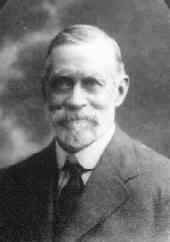
Ministry by Joseph Pellatt
– Part 4 (Final)
| The Closing Ministry of J. Pellatt (1843-1913)
|
|---|
| CHRISTIANITY IS CHRIST |
|---|
| Norwood – Philippians 2
|
|---|
No intelligent believer would claim inspiration as to the order of the books of the New Testament; at the same time it has been felt to be striking that the Epistle to the Philippians should follow that to the Ephesians.
- It seems fitting and right that it should be so, for Philippians gives you a practical illustration of the truth which is so characteristic of Ephesians.
- Without going into detail I would remark that what is so prominent in Ephesians is the heavenly side of our calling. When Paul was writing to Timothy he said,
- "Thou hast fully known my doctrine and manner of life".
- Paul was the living embodiment and exemplification of his teaching. It was Paul who wrote Ephesians, and Paul, as seen in his Epistle to the Philippians, is the embodiment of his teaching in that epistle.
There is no epistle, of all those written by Paul, that gives you such an insight into his experience as a Christian as Philippians.
- It is not, strictly speaking, an apostolic epistle. Paul does not write to them in the
character of apostle. In the beginning of it he says,
- "Paul, bondman of Jesus Christ",
- and he associates Timothy with himself in that word – "bondman".
- In this respect it is in accord with Revelation 1: 1, which was written by John, as
- "the bondman of Jesus Christ".
So the Epistle to the Philippians has been spoken of as an epistle of christian experience, and we do well to recall what has been said by our brother – T. H. Reynolds – "Christianity is Christ!" That is a beautiful statement!
- The more you think of it the more it will impress you! "Christianity is Christ", so if this is an epistle of christian experience it must set forth Christ, and so it is all Christ and that in a wonderful way!
It has been spoken of in different ways:
- Chapter 1 – Christ our life.
- Chapter 2 – Christ our pattern.
- Chapter 3 – Christ our object.
- Chapter 4 – Christ our strength and sufficiency.
- It would be easy to show how each of these characterises each chapter.
Then again we may look at each chapter in another light:
- Chapter 1 is encouragement.
- Chapter 2 is humility.
- Chapter 3 is energy.
- Chapter 4 is satisfaction and contentment.
In chapter 1 Paul says, "For to me to live is Christ";
- he says this as a "bondmen" of Christ.
- If you make any of his experience as expressed in this epistle apostolic, you put a distance between the writer and yourself.
- Beloved, we are bondmen of Jesus Christ. It is a great thing to see that Christianity is what we are.
- There is a great deal of self-occupation in Christians trying to be what they ought to be.
- One would not like to be cold-hearted but it is a great thing to take account of what we are in God's mind, and then we can be exercised that the Spirit may work in our souls so as to bring us into correspondence with it.
- In 1 Corinthians 7 there are two classes of believers as to their social standing – there are slaves and freemen.
- Now Paul says to slaves
- "As redeemed you are Christ's freed-men".
- Then he speaks to masters and says,
- "Ye are Christ's bondmen".
- We are bondmen of Jesus Christ, He has bought us with a price.
Well, see chapter 2 – "If then there be any comfort in Christ, if any consolation of love, if any fellowship of the Spirit, if any bowels and compassions, fulfil my joy, that ye may think the same thing …".
- How these words should appeal to our hearts as to what is available to us as Christians. Paul and Timothy had no comfort in Christ that you may not have.
- For years it has been an encouraging thought to me that the best things of Christianity are open to us all, and that the very best things remain – the best things that were here when the apostles were here.
- They were official servants but they had not any blessings better than what we have. How the Spirit seems to delight to spread these things before us, and to engage our hearts with them!
This epistle is not doctrinal. There is in it something better than correct doctrine and order, and that is an experience of Christ.
- It is not a doctrinal but an experimental epistle. The stamp on it from beginning to end is christian experience exemplified in Paul.
There is a wonderful link between Paul and the saints in Philippi. He is free to let his heart out. He says: "fulfil my joy".
- How happy he was about them! He says in chapter 1: 3:
- "I thank my God for my whole remembrance of you, constantly in my every supplication, making the supplication for you all with joy".
- He had no anguish and tears in writing this epistle; when he wrote his Epistle to the Corinthians his heart was at breaking-point.
- Not so here, but now in chapter 2 he says: Do you want to fill my joy full, I am very happy about you, but do you want to fill my joy up?
Now notice how he expresses his desire for these saints. Some of us have a scolding way, but look at the lovely way in which Paul begins. I commend it to you:
- "If then there be any comfort in Christ, if any consolation of love, if any fellowship of the Spirit".
- There are two expressions about the Spirit.
- When it is a question of worship it is the "Spirit of God".
- But when it is a question of what is experimental which is unfolded in this chapter, it is the Spirit of that Man; and He will make us like that Man, there will be an answer in us to what He is.
"For to me to live is Christ". But what is it to live? To live largely depends on the heart and the mind,
- We speak of a man as characterised by this or that; it is all a question of the heart and the mind, so if we are to "live Christ", it is a question of our hearts and our minds.
- In this passage it is the mind that is prominent. When Paul says, "Fulfil ye my joy", his desire is that they should "think the same thing".
- Just imagine thirty or forty saints at Norwood all thinking the same thing! They would begin to touch the confines of unity! That was Paul's desire.
- Then he appeals to the heart; he says:
- Is not that beautiful? I call that a divine touch. You not only think the same thing, but you have the same love.
- Soul is a distinct component part of man. There is spirit, soul and body. Soul is the appetite – desire, hunger, thirst after God.
- "My soul thirsteth for … the living God".
- We are to be "joined in soul" – in all our desires, spiritual appetites – hunger and thirst, to be one.
What a wonderful putting together of saints that is! It is not an external adjustment.
- I do not care about any kind of external unity: if we get the inside adjusted, the outside will take care of itself. When the saints cannot get on together it is always the inside that is wrong.
- This must be real. We must not pretend to it; the Lord will pull you up if you are a pretender.
- It is "in lowliness of mind, each esteeming the other as more excellent than themselves; regarding not each his own qualities, but each those of others".
- To give yourself up is a fine way of being a help to your brethren! Do you ask, How can this be brought about, how can we answer to this practically? How can we think the same thing, and how can all this be? Here is the answer for you:
- "Let this mind be in you which was also in Christ Jesus".
- In the end of 1 Corinthians 2 Paul says, "We have the mind of Christ". That means the thinking faculty, but here it is a different thought.
- "Let this mind be in you which was also in Christ Jesus".
- What kind of a mind governed Him?
- Men have their minds set on certain things, perhaps on making money. I know a man who set his mind on making money, and he became the richest man in the world. The minds of different men are set on different things.
- But what was the mind in Christ Jesus? This does not refer to His mind as now risen and glorified; it is the mind that was in Him when down here.
- We often try to practise Christianity, and we may be sincere and upright in the attempt, but we attempt it in ourselves. That cannot be; we must have Christ only before us, it must be –
- "to me to live is Christ".
- There is only one mind in which we can carry out Christianity practically, and that is the mind that was in Christ Jesus. That mind is to be in you and in me. It is a question of what is in us.
- We charge our difficulties on our circumstances. Things and persons are trying, and so forth. All that is not the question; the question is – what is in you? Is this mind which was in Christ Jesus in you?
- Christ Jesus subsisted in the form of God, and thought it not an object of rapine to be equal with God. Of course He did not. He is, and ever was God equal with Father and Spirit; but if these heights of His divine Person are brought before us, it is only to intensify what follows –
- "made himself of no reputation".
- If any of us take the lowest place it is good, but it is no credit to us. Who are you and who am I?
- But, beloved, think of a divine Person subsisting in the form of God, emptying Himself, taking a bondman's form, etc.
- Adam thought it an object of rapine to be like God, but here is One who thought it
- He made Himself of no reputation. If you and I make anything of ourselves as Christians, it is not the mind of Christ Jesus, but the mind of the flesh.
- Alas! what strife, what vain glory there often is! It is our common shame. I speak in the sense of the reproach it is to Christ.
- What marked Him? He emptied Himself, taking a bondman's form. How it ought to touch our hearts that One who subsisted in the form of God should take a bondman's form!
- If we had spiritual apprehension as to His path, we should accept it as an honour to be His bondmen. Paul gloried in calling himself "bondman of Jesus Christ".
- If you and I in the spirit of our minds are in the form of bondmen, we are in touch with Christ. When saints take an opposite form they are in touch with the devil. We touch Christ when we take the bondman form.
Then we get "taking his place in the likeness of men".
- J.B.S. illustrated it by saying: Suppose a high-born and wealthy man determines to take the place of a servant and to live it out for a certain time, and never flinches or varies in the path; so the Lord when He took His place in likeness of men and humbled Himself.
- That is the true path; that is the "mind in Christ Jesus". It is expressed in His
- and then humbling Himself further to death – the death of the cross. It was down, down, down all the way.
- In Luke's gospel in the first nine chapters the Lord goes up till He reaches the top of the holy mount, and from that He goes down till He strikes the bottom on Calvary's cross, becoming obedient unto death, and that the death of the cross.
- That was what expressed the mind of Christ, and – listen! – "let this mind be in you". You can only find this mind in Him. It expressed itself in these downward steps till He was obedient unto death.
Then there is the answer:
- "Wherefore also God highly exalted him, and granted him a name, that which is above every name, that at the name of Jesus every knee should bow".
- That is not yet; that day is coming.
The wonderful opportunity for us of the present moment I do not know how to speak of! The opportunity to let this mind be in us that was also in Christ Jesus.
- What a strange hallucination if we think the present is a time to go up! This is the time to go down – down. To be in accord with our Lord Jesus Christ is true Christianity, and if we suffer, we shall reign with Him.
- I would not speak of this – as one feels how short one comes of it – only that I desire to impress on your hearts the wonderful privilege and opportunity of the present moment.
Page Top Article Top
| DELIVERANCE AND ITS RESULTS |
|---|
| Romans 7: 24, 25; Romans 8: 1-11
|
|---|
We desire to present to you a few simple thoughts in connection with this scripture.
- I think there is common agreement amongst God's people who have a measure of light and understanding, that the Epistle to the Romans lays the foundation of Christianity. It presents the foundation in a twofold way –
- the foundation for faith which is objective,
- and the foundation subjectively. What we mean by subjectively is that which is connected with the indwelling and work of the Spirit of God in us
- Speaking of this epistle, in the order in which the truth is presented, we have first – faith
- From chapter 3 to verse 11 of chapter 5 you cannot fail to see that faith is very prominent; "believing", that is, faith, is constantly spoken of.
- That is objective; it is what is presented from God to us.
- Then from the beginning of verse 12 of chapter 5 we do not hear any more about believing. From thence we get the subjective side.
There are two dangers from which we have suffered.
- The first is confusion; we have failed to distinguish between the two sides of Christianity, and that is serious,
- but it is equally serious to separate the one side from the other side, and that is the second danger.
- We may suffer from confusion – the lack of distinction – and we may suffer from separating one part from another. In scripture the two sides are never confounded and never separated.
Now this portion I have read is manifestly on the subjective side.
- In the first eleven verses of chapter 8 the Spirit of God is spoken of eleven times. There we are on the subjective side.
- It is no question in Romans 8 of receiving the Spirit, that is settled in chapter 5, where the Spirit is brought in. The love of God is shed abroad in our hearts by the Holy Ghost.
- But what is brought before us in chapter 8 is the good of the Spirit. It is not only that we have the Spirit abiding, and indwelling us, but we have the activities and workings of the Spirit within us.
- Do you ask, Can any one have the Spirit and not be in the good of it? The first Epistle to the Corinthians is an answer to that.
- There is no doubt according to that scripture that the Corinthians were indwelt by the Spirit. It is positively stated that they had the Spirit, but they were not in the good of the Spirit. Paul said he could not speak to them as unto spiritual but as carnal.
- The Galatians also had the Spirit; the apostle tells them they had received the Spirit, not by the works of the law, but by the hearing of faith, yet they too were not in the good of the Spirit.
- If you are in the good of the Spirit you are not "stopped". The apostle says,
- "Ye did run well; who stopped you?"
- If you are in the good of the Spirit you are moving on. I have no doubt there are souls now-a-days of whom the question might be raised: "Have ye received the Spirit?" for there is so little sign of it; but it is one thing to have the Spirit, and another thing to be in the good of the Spirit.
- The portion I have read shows what is involved in being in the good of the Spirit. Our souls cannot be built up in the superstructure of Christianity apart from the foundation being laid in this twofold way.
- We have spoken of what is laid with regard to faith, and it must also be laid with regard to what the Spirit would effect in our souls. God can only build us up on the foundation which this epistle presents. Hence its great importance.
- You may study Colossians and Ephesians, which are superstructure epistles; but unless you have the foundation – the twofold foundation which we have spoken of – though your mind may get occupied with what is in those epistles, you will not be able to appropriate it.
- One of the most disappointing things I have known is that I have got engaged with doctrines in various parts of scripture, and I have thought that I understood them;
- and then something happens and down one goes, and one finds out there is more foundation-work to be done in one's soul before one can truly reach the superstructure.
- There is great need that the scriptural and moral foundations in Romans should be made good in our souls.
I read the closing verses of chapter 7 to show you that there is no division between chapter 7 and chapter 8, not even a paragraph. Now you must go through chapter 7 to reach chapter 8.
- I have met with those who said to me: "Oh, I am in Romans 7", and I am inclined to reply, "I wish you were". If you were ever really in Romans 7 you would not build your nest there.
- I have found people saying that who are fast asleep. You cannot go to sleep in Romans 7, but you must go through it before you reach chapter 8.
- You may listen to ministry, and read ministry, and as you read, it may command the assent of your heart, but all the time you may never have come to –
- "O wretched man that I am!"
- If you are trying to go on wholesale, as it were, you are not going on at all. Who does "I" stand for? It stands for Joseph Pellatt and for you. Do not say that good does not dwell in others. Do not get occupied with the flesh in others.
- What you must be brought to is the solemn consciousness of:
- is the cry of a soul that has got to the end of itself. It is something like the woman in the gospel who had the issue of blood. She had means, and had spent it all, and was now worse instead of being better; she has come to the end.
- You can always tell when you get to the end of self, for when you do get there you will turn to Another. There was no difficulty in the case of that woman, she said, 'I will go to Jesus, and touch the hem of His garment'.
- Why did she not go sooner? Because she had still money and doctors around her. It is a great thing when you come to the end of self and say,
- The passage reads strangely, as if uttered in one and the same breath. The soul looks out from itself for a Deliverer, and answers its own question –
- We do not get through chapter 7 until we have got to the end of self. I only yielded when I could not hold out any longer.
- Certainly, He is the Deliverer. He can deliver you. He is able to deliver you, but the question is – have you got there? Is your eye off every one else? You are not then occupied with others; it is your own case. You are in earnest.
- In the last sentence of verse 25 we have an epitome of what is in the chapter, and what is true of every one who travels this road. Before that he tells us that his mind was all right, his will was right. What then was the matter? That miserable flesh was working –
- "I see another law … warring against the law of my mind".
- Though he was right in mind, this other law was too much for him, and he was conscious of it. The law in his members was too much for him, and it issues in the cry,
- "O wretched man that I am!"
- It is like a man going through a tunnel. I think he sees the end of the tunnel when he says, "I thank God". But he is not out of the tunnel yet though he sees a point of light and is encouraged. But when he is out of the tunnel he bursts forth –
- "There is therefore now no condemnation to them which are in Christ Jesus".
Now this is the first effect of being in the good of the Spirit. Many of us know the doctrine; we have heard so much preaching about it that when we hear of people being "in Christ", we say, 'Of course'.
- But do you know what it is for the first time to apprehend spiritually in your soul what it is to be in Christ? The doctrine of it will not help you. We may be well posted in doctrine without being in the spiritual good of it.
- I remember the time when the Lord actually brought me to the end of myself, and to apprehend that I was in Christ. I hardly knew whether I was in or out of the body when I first knew it. The point is, "It is no more I".
- You are always condemning yourself, but God is not condemning you. You say, "O wretched man!" but if you have been brought into it really, you are prepared for this –
- "There is therefore now no condemnation to them which are in Christ Jesus".
- That is the first result of being in the good of the Spirit; you come to know what it is to be in Christ.
That does not take place doctrinally. It is not that the preacher makes his point clear to you,
- but it is a real exercise of soul that you pass through, and then you come into the good of the Spirit, to the apprehension of being in Christ.
- "For the law of the Spirit of life in Christ Jesus hath made me free", verse 2.
- The man personified in Romans 7 is not free, he is in captivity to the law of sin. But the captivity is all passed when he is under the law of the Spirit of life.
- The Spirit of life hath made you free. You are in Christ, you have life in Christ; not in yourself, but in Him.
- The law of the Spirit is not a legal enactment, but a divine operation, and you are delivered, and positively in freedom – in liberty.
- If you have truly come to the Deliverer, you breathe the air of freedom, and then how little external circumstances amount to, how little it matters where I live, whether in a mansion or a hovel, whether I have a position in society or none.
- How insignificant everything becomes in comparison with this blessed liberty! Can you say,
- "The law of the Spirit of life in Christ Jesus hath made me free"?
- Oh, thank God for what was done on the cross!
- "Knowing this, that our old man has been crucified with him".
- That is spoken of as common christian knowledge, chapter 6: 6.
Now look at chapter 8: 3. What a wonderful statement! It is what was done by God in connection with the death of His own Son, "God, having sent his own Son".
- How the Spirit would impress us with the dignity of the One who hung on Calvary's cross!
- You must not divorce the work of Christ for us from the work of the Spirit in us.
- "What God hath joined let no man put asunder".
- And you must not put asunder the work of Christ and the work of the Spirit of God. What did God do through the work on the cross? He condemned sin in the flesh. At the cross sin was dealt with and condemned once and for ever. What for?
- "That the righteous requirement of the law should be fulfilled in us, who … walk … according to Spirit".
- By the death of God's own Son God has condemned sin in the flesh, and what God had in view in doing this is now effected in us. We walk according to the Spirit, and fulfil the righteous requirements of the law.
God once took up man in the flesh. What does scripture say of man at the end of one thousand six hundred years of testing?
- "None righteous, no, not one".
- Now God has ended that order of man, and He has given us the Spirit, and by the Spirit the righteous requirement of the law is to be fulfilled in us. What is it? Love. Now you can love God with all your heart and your neighbour as yourself. What a marvellous change!
- Have we troubles? Are there difficulties among the saints? Yes, and nine out of ten cases might be traced to the righteous requirements of the law not being fulfilled in us because of our not walking according to the Spirit.
Oh! these are the days of doctrines! Heads big as a bushel with inflated doctrines, and hearts shrivelled up. I do not want a big head, I want a big heart.
- When the righteous requirement of the law is effected in me by the Spirit of life in Christ Jesus there is no hindrance, the love of God is there.
I shall never forget hearing 1 Corinthians 13 spoken of by a dear brother. The suggestion was made, Put yourself, instead of love, "I suffer long and am kind", etc.
- Oh, I went down on my knees and turned to the Lord. It would do you good to go down; we want the righteous requirement of the law – Love, fulfilled in us.
- There is that blessed One – the exalted Man, look at Him! There He is in glory, and in Him I see the accomplishment of all that God requires in man, and I long to touch even the confines of moral correspondence to that Man. He has been here, and He could say,
- "Thy law is within my heart".
- The Spirit of that Man has come down, and would like to control us, and to lead us into correspondence to that Man. We are going to see Him.
- I might never cross the Atlantic again to see my wife, but I am going to see that Man. I am going to see Him. Are we cherishing that blessed hope?
- And when He is manifested we shall be like Him, for we shall see Him as He is; but the Spirit would bring us now into moral correspondence with Him.
- He was the true ark of the covenant, and God's law was written in His heart, and He answered to it in every thought, word and act. What an embodiment that Man was of the righteous requirements of the law! In every way God could look down with delight upon Him.
- No wonder that God should open the heavens upon Him and say,
It is our privilege to walk, though amidst much weakness, according to the Spirit, and not according to the flesh,
- and if we do, we shall walk in moral correspondence to that Man who filled the heart of God with delight, and who is now in His presence, to the ineffable delight of His heart.
Some people suppose that to be spiritual is something super extra.
- If you are not spiritual, you are according to the flesh; there are only two orders,
- "The mind of the flesh is death; but the mind of the Spirit life and peace"
- We may have life and peace before us in a doctrinal way, but God's thought is to make it real to us. He would have life and peace to be the spiritual atmosphere of our being, so that we might say – In the midst of death we are in life. In the midst of trouble we are in peace.
- The beauty and charm of eternal life is its contrast to sin and death, and while we are still in this scene of sin and death we can live in the sphere of eternal life.
- In all our circumstances here, and God's people have many sorrows, the minding of the Spirit is life and peace. At home, not in the meeting only, but amid all your cares, spiritual condition makes you independent of all circumstances.
- You need not mind contrarieties or seek relief in recreation or pleasure. Life and peace is established by the Spirit of God in you, and is independent of all circumstances.
And what is the climax?
- "If the Spirit of him that raised up Jesus from among the dead dwell in you, he that raised up Christ from among the dead shall quicken your mortal bodies", verse 11.
- It ends in the eternal actuality of Christianity.
May the Lord make it good in us!
Page Top Article Top
PHILADELPHIA – THE TRUTH OF THE
ASSEMBLY MAINTAINED TO THE END |
|---|
| Revelation 3: 7-13
|
|---|
I am not going to give an exposition, but only a little word of encouragement. I believe the Lord would encourage the hearts of His people in connection with the truth of the assembly.
- I think we have been slow to take account of the relation of the assembly to Himself; if its relation to Himself were more vividly present to our spirits, we should take a much greater account of it.
- It has been thought by some that to speak much of the assembly detracts from the glory of the Lord Jesus Christ, but it is the very opposite to that; we could not think so if we really understood the relationship of the assembly to Christ.
The assembly in Revelation 2 and 3 is seen in the completeness of its local character.
- Seven is the number of completeness, so seven assemblies figuratively speak of the church in its completeness, yet the seven assemblies in these two chapters are seven local assemblies, and hence they speak to us of the completeness of the assembly in its local character.
- The Lord has established the assembly, in the character of which I speak, to be in testimony for Himself. The idea of a lamp or candlestick is light, and light is testimony, and the assemblies here are spoken of as on the ground of responsibility.
- The character of responsibility attaches to them; the responsibility is to be here in testimony for Himself.
Now if the Lord has established His assembly in this way and character, and it is incontrovertible from this scripture that He has,
- we cannot conceive of the Lord failing to maintain here a testimony for Himself in connection with the assembly, however great the ruin.
We all know that the first assembly of these seven – Ephesus, is marked out as the beginning or starting-point of declension,
- and, speaking generally of these seven assemblies, they set before us a downward course of declension and failure.
- They go from bad to worse, and when we reach the last, things have gone to the very worst; so much so, that the Lord says to Laodicea,
- "I will spue thee out of my mouth".
- That is final and decisive; the Lord actually and absolutely rejects it; there is no hope of recovery held out to Laodicea.
I want to speak about Philadelphia – the last but one of the seven of these local assemblies.
- Now Philadelphia stands for that which is perfectly suitable and agreeable to the Lord; it stands for that which He can approve of and encourage.
- I would like simply, without any attempt at argument, to bring before you the fact that Philadelphia was literally an assembly, and hence it furnishes a suitable representation of the truth of the assembly, and Philadelphia goes on to the end.
- I want you to see this because the question is raised sometimes – Will the Lord sustain to the end the truth of the assembly, will He maintain it, will it be here, or must we give up faith with regard to it?
- Must we abandon ourselves to the alternative of trying to do the best we can under the circumstances?
- I think the Lord's message to Philadelphia provides a very clear and distinct answer to that question. It encourages us in the assurance that the Lord will sustain the truth of the assembly down to the very close, so we need not give up.
Things must be stated clearly. To speak of the truth of the assembly is not pretension or assumption! No, the Lord never did sustain pretension.
- To say He does not is nothing peculiar to the present moment, for He never did;
- but I cannot conceive of the Lord giving up the truth of His assembly,
- I mean in the sense of having the truth of it maintained down here in testimony to the end.
If you have given up all thought of the truth of the assembly being maintained at the present time, I can only say that I am not a bit in sympathy with you,
- and if you do not treasure in your soul the truth of the assembly, I am sorry for you.
Let me emphasise this – The Lord is not taken up with certain persons or individuals as such.
- I will tell you what He is taken up with – with the truth of His assembly, and that because of its relationship to Himself. I cannot conceive of the Lord not being interested in that which so closely concerns His own honour and glory.
- I can understand ourselves not being interested in it, though it is to our shame, but I cannot conceive the Lord becoming indifferent to what involves His honour and glory.
- If He encourages Philadelphia, it is because the saints there are found identified with the truth of what His heart is set on.
Now as to what involves the Lord's glory down here, we get three things mentioned –
- "My word, my name, and the word of my patience".
- Just think soberly before the Lord of those three things. The Lord is not here. From the standpoint of this book He is absent, but His word, His name, and the word of His patience are here; and those three things involve His honour and His glory.
- The Lord approves those in Philadelphia, and encourages them because they have kept His word and have not denied His name.
- That was true locally in regard to that local assembly in Philadelphia, but speaking of that assembly, which existed, one thousand nine hundred years ago, is not enough, the message of the Spirit to that assembly must have an application to the very end, because it goes on to His coming.
- He says to Philadelphia, "I come quickly: hold fast" … .
- The whole construction of the message supposes that this assembly continues to the close. No one dies in Philadelphia, there are no deaths, Philadelphia is here till the rapture, hence it is He says,
- "Because thou hast kept the word of my patience, I also will keep thee".
- How does He keep them out of the trial? Just the same way that the Lord kept Enoch out of the flood by taking him away before it came, so He will "keep" Philadelphia by taking her away before the hour of trial comes.
- Enoch was never in the flood, God took him before the flood came, and so it is here; Philadelphia goes on to the end, until the Lord comes to take His assembly to Himself.
Pressure may have come upon you to let go, to give up the truth of the assembly, but this message is most encouraging,
- for this message of the Spirit is the assurance that the Lord is going to maintain the truth of His assembly to the very end.
- I am in sympathy with Him about it, and I would like to be in the testimony of it. Would not you?
- God maintains it. Philadelphia presents that which the Lord approves, and which the Lord encourages, and which the Lord vindicates.
- It is not a question of the Lord approving you and me, but that He will maintain the truth of His assembly to the very finish, and He encourages our hearts to be in accord with His heart.
- God's people often get their eyes on themselves, or on some one else, and they get into confusion and trouble – doubting and fearing.
- We want to get our eyes off ourselves and off others, and to have our eyes fixed on Him and to get back to first love and hold fast the truth as involved in My word, My name, and the word of My patience,
- because in keeping those three things we hold fast the honour and glory of our Lord Jesus Christ at the present time.
Then another point in Philadelphia – there is no trace of publicity; there is no trace of anything that men as such can take account of, no indication of anything that lies under the eye of man.
- There was once, for instance, in the assembly at Corinth, as we can see in 1 and 2 Corinthians.
- If you had gone down to that city they would have told you there were three classes of people there – Jew, Gentile, and the assembly of God.
- If you had asked – Where is the assembly of God, an intelligent Corinthian might have answered, They have a meeting and break bread and you can go there next Lord's day.
- Publicity was there and there was what men could take account of; but in Philadelphia there is no publicity. Failure and ruin has come in in regard of all that is public, so that the day for that has passed by.
There is more involved in this than you might think. We like publicity, we are slow to give it up, we linger around it.
- Some of us were trained to publicity and had public religious positions, but I call your attention to this – there is no publicity in Philadelphia,
- and I say beware of publicity; it is connected with what is outward, and formal, and perhaps material;
- but what I understand by Philadelphia is that it embodies the truth of the assembly, not publicly, nor outwardly, but inwardly and spiritually and vitally.
All power is connected with the unseen presence and operation of the Holy Ghost,
- "Whom the world cannot receive".
- He was never sent to the world, the world cannot receive Him, it is impossible, because
- it "neither seeth him, nor knoweth him".
- All power in Christianity is connected with the unseen Spirit. Verse 8 should read:
- "thou hast a little power".
- Why is it little? Because of the ruin that has come into all the sphere that is under the eye of men, but there is a sphere under the eye of Christ.
- 'Keeping his word and not denying his name' is predicted of Philadelphia in connection with the "little power", so I would warn you against publicity.
- We are going to be public enough by and by, when Christ comes out and all the saints in glory. We shall have publicity then, but beware of it now. It is the rock on which all the terrible wreck has taken place, organising churches, etc.
- Why do they like steeples, painted windows and architecture? For its publicity. What have such things to do with the assembly of Christ? Nothing. The more these things abound the further you are away from not denying His name.
- Philadelphia is not an outwardly organised company of saints; that is the force of the Lord saying,
- 'they are under My eye, I am acquainted with them'.
- It is sometimes said as a taunt – you people do nothing! Well, you are not trying to do, you are on the line of keeping His word and not denying His name.
- Those two are the grand considerations in your soul which profoundly exercise you and move you in your inmost soul before the Lord.
If Ephesus is the point of departure, Philadelphia is the point of recovery,
- because those in Philadelphia have been brought back to the point which was left in Ephesus, and that point is "first love".
- First love involves Christ's love to the assembly; it is said to Ephesus,
- "Remember therefore from whence thou art fallen".
- They had fallen from the top – it was not a little fall – they had fallen from the very top, and Philadelphia is recovery. There is first love in Philadelphia. How do you know?
- Philadelphia is keeping His word; the fruit of love is there. He is loved and the proof of it is His word is kept.
- Then there is the second proof:
- "thou hast not denied my name".
- When "name" is spoken of it supposes that the person is not present. If I am a thousand miles away from my children I think a great deal of their keeping my word, not denying my name, and when Christ is absent it is a wonderful thing to keep His word and not to deny His name.
- In Philadelphia they have come back to the point of departure. J.B.S. used to say "a remnant means a bright bit of the original".
- If you look at Exodus 14 you will see what marked the Israelites on the Arabian bank of the Red Sea. They "feared the Lord", the Lord had got His place with them.
- There is plenty of failure with them all along the line, but when we come to Malachi 3: 16 we find
- "Then they that feared the Lord".
- Oh, that was a great deal to the Lord. The Lord expresses His appreciation of that company:
- "they shall be mine, saith the Lord".
- So I think if I want the brightest bit of the beginning of the assembly I would go to Ephesus, that is where the top was realised. It is in the Epistle to the Ephesians that you get the love of Christ to the assembly; it is properly there, "it passeth knowledge", and there is the answer to that love in the assembly.
- I believe the apostle's prayer – chapter 3 – was answered in those Ephesian saints,
- "and to know the love of Christ which passeth knowledge, that ye might be filled with all the fulness of God".
- Ah, from that point they fell, and from that point the Spirit has wrought and recovered the saints in Philadelphia. I believe the mark of the operation of the Spirit is the recovery of saints to "first love". Have you been recovered?
- You need not tell people who are recovered what they ought to do; it is people who are recovered who keep the word of His patience, they are under the mighty power of the love of Christ and there is an answer produced in them; they are recovered to the love of Christ – His love for His assembly.
- Give me the recovery of Philadelphia, let me be recovered to first love to Christ in the assembly, let me respond to the love of Christ – that is what He approves and supports. And He says,
- "They shall know that I have loved thee".
- How glad the Lord is to tell out His heart to those who keep His word, and do not deny His name. I would like to speak so that the Lord's people might be encouraged on that line.
- I do not mean any little section of the so-called Plymouth Brethren. I mean the whole of the Lord's people; we all want a stirring up in the direction of being agreeable to the Lord. I want to be agreeable to Him. Do not you?
- Those in Philadelphia were agreeable to Him and they maintained by the power of the Spirit the truth of the assembly.
It is the truth of the assembly, while it is made good in each soul individually.
- Some have a difficulty as to what is individual; the truth of Christianity must be made good in each individual soul. If it is not made good in your soul, as far as you are concerned, you are not in it.
- I may break bread, but if the truth is not made good in my soul, I have no vital part in it. But what kind of truth is it? It is the truth of Christ's love to the assembly.
- Now and then you will find some one taking the ground that Elijah took when under the juniper tree. He said: "I am the only one left". There is nothing in that but unbelief and self-occupation.
- What did the Lord say to Elijah? He put seven thousand before the "one" – seven thousand and one. Was not that quite a nice little company?
- The Lord is still maintaining the truth of His assembly; you will never be reduced to one like Elijah; you will find others there too, and you will be able to go on.
- And you will find that the Lord will maintain the truth of His assembly to the end for His own glory.
- If you look on three hundred years from Malachi, you find Simeon and Anna looking for redemption in Israel, and it was to those and not to the Pharisees to whom the Holy Ghost had to say. In that little company there was maintained the truth of that dispensation.
The Lord would encourage our hearts in what He is doing. I would like to say more, but the time is gone. Turn for one moment to Revelation 22, the last chapter in the last book of the Bible.
- At the very end of the present time – the end of Christianity – the Lord presents Himself as
- If you and I had written that verse, we should have said – there are perhaps a few brethren saying, "Come". No, it is "the Spirit and the bride". That is the end – the finish – the Spirit and the bride say, Come.
- The bride is here, she is duly represented in all her bridal affections and she is longing for Him.
- "The Spirit and the bride say, Come".
- The Spirit of God has written it down in these last few verses of the Bible. I want to be in that. Do you? Is it not cheering and inspiring in these last few moments to have such words as these?
- Oh, He is coming in the eventide – the heavenly Isaac. Eleazar has brought Rebecca to Him.
- "The Spirit and the bride say, Come".
May the Lord greatly encourage our hearts. I am encouraged. Are you?
I remember one of the last messages F.E.R. sent to America was, "Tell the brethren never to give up".
Beloved! we are not going to give up. Are We?
Page Top Article Top
| "THE FIRST DAY OF THE WEEK" |
|---|
| Revelation 1: 9-10; Acts 20: 7; John 20: 19-20; 1 Corinthians 16: 1
|
|---|
There are four scriptures I would like to read.
- The first one you will find in Revelation 1: 9-10, "I John, who also am your brother", etc.
- The second is Acts 20: 7, "The first day of the week, we being assembled to break bread", etc.
- The third is John 20: 19-20.
- The fourth is 1 Corinthians 16: 1.
I think that in these four scriptures you will find that we have a complete testimony with regard to the first day of the week, or the Lord's day.
- I apprehend that in the expression "the first day of the week" we are reminded of that which is entirely new.
- "The first of the week" – for the word "day" is not literally there – is involved in the expression "the Lord's day". We have the same day, but the day brought before us as specially connected with the Lord, and as marked or characterised by those things which belong to the Lord.
I have no doubt that in these four scriptures we have a very comprehensive expression of what belongs to and characterises Christianity.
- There is only one day mentioned in the New Testament in respect of Christianity, and that is the first day of the week, or the Lord's day. There is no mention of any other day, and in this respect Christianity stands in striking contrast to what preceded it.
- In connection with Judaism we not only have different days, but we have different times of different days, we have hours, minutes, moments. We have days, many days, different days, and then we have weeks, months, and years, even going so far as fifty years.
- But in Christianity we have only one day.
I think the way Christianity is presented to us in the New Testament scriptures gives us only a week at a time.
- There is the "first day of the week", and whatever belongs to that day is characteristic of Christianity.
- So that it is a question whether the Lord will tarry through the week; if He does not come during the week – and He may come – that is how the truth is put before us, for there is no scriptural ground for delay or putting off the coming of the Lord.
- He may come this week – but if He tarry, if He does not come this week, we begin again next "first day of the week", that is how it is presented.
- The point I want to press upon you just at this moment is that the "first day", or the Lord's day, is the characteristic day of Christianity; hence it characterises all the days that may follow.
- I think you will find I have read these four scriptures in their proper order.
It is remarkable that the scripture in Revelation brings before us an individual Christian. You say, perhaps, 'But John was an apostle'. We know that he was. But it is not as an apostle that he speaks in the verses I have read. But mark! he says,
- "I John, who also am your brother" – your brother – "and fellow-partaker in the tribulation and kingdom and patience in Jesus".
- That is, John comes before us as a Christian, and further, he comes before us as a Christian in fellowship.
- "I John", who speaks of himself as "your brother" – the brother of every Christian – "and fellow-partaker in the tribulation and kingdom and patience, in Jesus, was in the island called Patmos, for the word of God and for the testimony of Jesus".
And what follows? "I became in the Spirit on the Lord's day".
- There is perfect order. John is here brought before us as a Christian, an individual Christian who is in fellowship. And then he speaks of the Lord's day. He says,
- "I became in the Spirit on the Lord's day".
- That is the beginning.
We shall come to the assembly presently, but there is something that precedes the assembly, there is that which is individual which underlies and precedes everything that is collective.
- We participate in the breaking of bread, which may be spoken of as privilege. But even in
connection with the breaking of bread you find a double responsibility.
- There is a responsibility belonging to the assembly as such, and responsibility belonging to every individual who has part in it.
- But what precedes it? Why just what John expresses about himself –
- "I John, who also am your brother and fellow-partaker".
- What precedes our coming together to break bread? You have to be ready for it individually, you have to be in fellowship for it individually.
- It is a poor thing to be connected with Christianity only in the way of responsibility. There is responsibility, but you will find in scripture that there is a basis upon which responsibility rests, and that is, that you are in the reality of christian fellowship.
I allude for a moment to a scripture just for the sake of making that point clear.
- At the end of Acts 2 after an account of Peter's testimony is given and the wonderful working of God when three thousand people were pricked to the heart, and cried out,
- "Men and brethren, what shall we do?"
- They got a very plain answer through the lips of Peter, who says,
- "Repent, and be baptised, each one of you, in the name of Jesus Christ, for the remission of sins, and ye will receive the gift of the Holy Spirit".
- They responded to that answer. And what is said about them then?
- "They persevered in the teaching and fellowship of the apostles".
- I just want to emphasise that point – they persevered in the apostles' teaching and fellowship. The truth had been presented and taught, and they who responded to it persevered in the apostles' teaching and fellowship. Then it goes on to say,
- "and in the breaking of bread and prayers".
I want to press this point upon you a little as the Lord may help. I apprehend that when you come to the Lord's day the first question is – "Are you in fellowship?"
- What is the point of fellowship? The point of fellowship is the death of Christ. But mark! it is not the death of Christ as in the Lord's supper. It is the death of Christ as our Passover. In 1 Corinthians 5 we read, –
- "For also our passover, Christ, has been sacrificed [or slain]".
- Now what is the import of Christ as our Passover? It is the death of Christ as the expression of the judgment of God upon sin, on evil – on all that is contrary to God.
- If you go back to the type, the literal Passover in Exodus 12, what characterised that night? Judgment! Jehovah, through Moses, said:
- "I will pass through the land of Egypt this night, and will smite".
- Mark that! He does not speak about blessing there, He speaks about smiting.
- "And will smite all the firstborn in the land of Egypt, both man and beast … I will execute judgment: I am Jehovah".
- It was a night of judgment – the judgment of God. He took account, and solemn account, of everything in the land in relation to Himself, and all that was contrary to Him He smote. He executed judgment upon it.
- That is the death of Christ as our passover.
- It is a serious question, beloved! Are we in the fellowship that is based upon the death of Christ as the judgment of God upon evil?
- Do you ask what has come under the judgment of God? We might sum it up in three terms. The flesh, and the world, and Satan as the prince of this world; all these have come under the judgment of God.
- Well, then, what does it mean to be in christian fellowship? It means that you and I are morally in accord with what is expressed in the death of Christ as our passover. But Are We?
You know there are two things enjoined on Israel. Exodus 12.
- There was the passover, and based upon it, and you might say formed by the divine judgment as expressed in the passover, there was the feast of unleavened bread. What was that?
- It was the practical answer on the part of Israel to the judgment of God which was expressed in the Passover. Hence every bit of leaven was to go: and to go, not only out of the bread but out of the houses –
- "The very first day ye shall put away leaven out of your houses".
- Now look at the application of it by the Spirit to Christians in 1 Corinthians 5. All is based upon Christ's death. Christ our passover has been sacrificed. What have you had to do with that?
- You have had nothing to do with it unless you have accepted it in the faith of your soul. The question is – Are you in accord with it?
- The trouble at Corinth was that they were not practically in accord with the death of Christ; they were practically allowing that which had really come under the judgment of God in the death of Christ; that was the cause of all the trouble.
- The Lord never instituted the Lord's supper or the breaking of bread and called us to it that we might eat and drink judgment to ourselves. But that was what they were doing at Corinth. And why? Because they were not in the reality of fellowship.
- They were responsibly in fellowship. Every Christian is responsibly in fellowship. But, oh! what a poor thing it is simply to incur the responsibility without the spiritual reality of it. That is how it was with those at Corinth, and that is where we come short.
- We are not ready in spiritual condition to come together on the first day of the week to break bread if we are not in fellowship with the death of Christ, and that means that you are in accord with it,
- that there is that in you which morally corresponds to the judgment of God as seen in the death of Christ. What is that? Self-Judgment!
- There is the disallowance of the flesh and the disallowance of the world and the disallowance of Satan.
These are simple things to speak of. We know something about the breaking of bread; some of us have known it for a good many years.
- I ask, Did you ever hear of any trouble among the saints who break bread together? We know there has been trouble. Why does trouble come upon us? Is it not because we are not truly in Christian fellowship? We are not in accord with the death of Christ.
- Responsibly every Christian is in fellowship. It is not a matter of choice.
- "God is faithful, by whom ye have been called to the fellowship of his Son Jesus Christ our Lord".
- Every Christian is under that call. Each one is under the responsibility of it too. There is no such thing in scripture as a Christian not in fellowship. Of the three thousand converted in Acts 2 every one of them persevered in the apostles' teaching and fellowship.
- There was no Christian in those days that was not in fellowship, and there would not be now if things were right.
- Well, you cannot set everybody right, but there is one person you can see to, and that person is yourself. You can at least do what Paul said to Timothy:
- The question for me is: 'Am I really in fellowship?' The beginning of all Christian fellowship is that you are in the fellowship of Christ's death – that there is the answer in you to the judgment of God expressed in the death of Christ.
- Then you walk in habitual self-judgment, in habitual refusal and disallowance of the flesh in you, and of the world around you, and of Satan.
- I am bold to say that not one of us Christians is going on according to God unless we are thus in correspondence with the death of Christ as the expression of God's judgment.
Well, now, to revert to Revelation 1 John says:
- "I John, your brother and fellow-partaker in the tribulation and kingdom and patience, in Jesus, was in the island called Patmos, for the word of God and for the testimony of Jesus. I became in the Spirit …"
- How did he "become". Things do not happen accidentally or incidentally in Christianity.
- My beloved brethren, it is a wonderful thing to become in the Spirit. It is not a question of having the Spirit. It is a question of coming into that condition where you are under the control and power of the Spirit of God.
- That is where the Lord's day begins. It begins with us individually. There was John! He could not have gone to a meeting for the breaking of bread on that Lord's day, for he was in the "island called Patmos".
- I have no doubt that Satan at the back of the Roman power triumphantly said, 'I have stopped that man; I have got him banished'. But has he defeated and stopped him? Oh no! John is there in the Spirit. John is in fellowship.
- I would say to you, Are you in fellowship? You say, perhaps, I have had to move off further and I cannot get to the meeting. I do not ask if you can get to the meeting, but Are you in fellowship?
- John though banished from all the saints was in fellowship because there was the answer in his soul to the death of Christ. John had tribulation, and you will have it if you are in the fellowship of Christ's death.
- If you allow the flesh, the world, the devil, you can have an easy, a smooth-going time – but do you want to have such a time here where He was rejected? Ah no! we want to be in "the kingdom and patience of Jesus".
I know, alas! that it has come to pass that many are just Sunday go-to-meeting Christians.
- Excuse me for putting it in that blunt way, but I want to press on you the way to begin the Lord's day.
- The first thing is, You are in fellowship – in the reality of it, in the truth of it.
- There is response in your soul to the judgment of God expressed in the death of Christ. You are keeping the feast, not with the old leaven of malice and wickedness, but
- "with the unleavened bread of sincerity and truth".
- You are morally transparent. There is nothing to hinder the sunshine of His love if we are keeping the feast of unleavened bread of sincerity and truth.
- I do not want to be in concert with the world or the flesh. I want to be in concert with God, and if I am it does not matter about my circumstances. Let me be on the island of Patmos or wherever He wills me to be, but let me be found in correspondence with God.
Well. John "became in the Spirit on the Lord's day".
- Now we are on the line for the next scripture that I read – Acts 20: 7,
- "And the first day of the week, we being assembled to break bread".
- Who came together? All those who were in the reality of christian fellowship.
- I know where they put the breaking of bread in Christendom. But what thought have we of it? I was taught once that it was a "means of grace" – that we come to partake of the Lord's supper as a means of grace – that if you do not know that your sins are forgiven the sacrament is a good place to be at. That is all wrong.
- I will tell you what the breaking of bread is – it is the divinely appointed expression of christian fellowship. The breaking of bread does not manufacture the fellowship, it supposes it to be there.
- If it is not there, if I am not in the fellowship of Christ's death, what is the breaking of bread? It is eating and drinking judgment, that is what it will prove to be to me; that is what it proved to be at Corinth.
- Why did it prove to be eating and drinking judgment to themselves? Because they were not in the truth of fellowship. They were not keeping the feast of unleavened bread. They were not morally and spiritually in correspondence with the death of Christ as the expression of God's judgment on sin.
- And I would emphasise this; I would that the Lord might be pleased to bring it home to us. I do not want to surround the wonderful blessings and privileges of Christianity with an atmosphere of fear and trembling; God forbid! I do not want to frighten anybody's soul, but we are entitled to take account of these things in all their seriousness.
- If you are in fellowship with the death of Christ you are ready, you are eager for the supper. You will be in a spirit something akin to the spirit of the Psalmist in Psalm 122 when he says,
- "I rejoiced when they said unto me, Let us go into the house of Jehovah".
- Do you know what it is to feel glad when you are going to the breaking of bread, your heart full of joy, holy gladness filling your soul? Where am I going? I am going to meet with the saints to break bread.
- Some say that if you break bread so often it will become a formality. Did you ever get afraid of eating your regular meals? So long as you have got a good appetite you need not be afraid of its becoming a form.
- I am not afraid of its becoming formal, I am "glad" like David to "go into the house of Jehovah". David was glad when he heard the invitation, "Let us go up".
"The first day of the week, we being assembled".
- The point is, I repeat, Are you ready to come together?
- If in every believer there was moral correspondence with the death of Christ, if the flesh and the world were disallowed in coming together we should know something about having a feast, and there would not be trouble among us.
- When Paul heard there was trouble at Corinth he put his finger on the spot. He said, 'You are fleshly'. What does that mean? Is it that you have got the flesh? No, but that you allow the flesh.
- The Corinthians were allowing the flesh and Paul puts his finger on the spot; he says –
- "Whereas there is among you emulation and strife, are ye not carnal?"
- Do you ever have such things where you meet to break bread? If all like John were in the Spirit on the Lord's day there would not be trouble. When the Spirit is in power in the saints there is no trouble.
When we come together to break bread, the first thing for you is to be individually right. If you are, when the Lord's day morning dawns upon you it finds you ready for it. Just try it.
- On Saturday night, before I go to sleep for the night, I like to say to the Lord, 'Lord, I want to become in the Spirit on the Lord's day'.
- John became in the Spirit on the Lord's day, not when he was at a meeting, but when he was in Patmos. You may say, How could he be in fellowship where there were no saints.
- John was more truly in fellowship than are some of us with meetings all about us. He was in the reality of fellowship, and if you and I know what it is to be in the reality of fellowship we shall know what it is to become in the Spirit on the Lord's day; we shall come under the active control and power of the Spirit of God.
Take a scripture like Galatians.
- "But the fruit" – not fruits, it is the one undivided fruit – "but the fruit of the Spirit is love".
- That is good to begin the Lord's day with – love. The blessed activity of the heart going out in love to God and Christ and to all the saints.
- "Love, joy, peace, long-suffering, kindness, goodness, fidelity, meekness, self-control".
- Do we know anything of that?
When John became in the Spirit on the Lord's day, what happened to him?
- He heard a voice. I know that was a special revelation to John, but in principle the moment you become in the Spirit you will find yourself in touch with Christ – the Spirit will put you in touch with Christ.
- Is it not wonderful, to be in touch with Christ in a living way by the Spirit? When a man gets in touch with Christ by the Spirit all the enemy's schemes will be overthrown for him.
- If we come together in the reality of fellowship the Spirit will put us in tune and in time and in unity. He will put the saints together, and bring about the most wonderful unity and harmony.
Now a word as to the breaking of bread. There are the two sides to it. There is the Lord's side and our side.
- What is it on His side? It is all love; it is nothing about the judgment of God, nothing about demand. That does not belong to the breaking of bread. What does belong to it? Let Him speak, and let us listen. He said:
- "Take, eat; this is my body given for you".
- That is the language of love. That is the way love takes; that is the way He would bring His love right home to our hearts. And then of the cup He says:
- "This cup is the new covenant in my blood, which is poured out for you".
- It is all love on His part – no judgment. On the other hand, "Christ our passover" is all judgment, the judgment of God, and that is where we want to begin in our souls. We must be in accord with God. Everything that is contrary to God must be judged. That is where we begin.
- We are in the fellowship of His death as the expression of the judgment of God, but being in that fellowship there is nothing now to hinder the Spirit from putting us into accord with all the love that fills the heart of God, and that was told out when Christ gave His body for us and poured out His precious blood for us.
- Now then, that is our side. And we respond to His love.
- "We love him, because he first loved us".
- How simple it is! It is not that we try to love Christ. Christ brings His love to bear upon our hearts, and there is an answer to it. That is our side of the supper. We are responsive to Christ's love, and to God's love, for the love of both comes out in the supper.
- "This cup is the new covenant in my blood, poured out for you".
- Oh, how the love of the heart of God is expressed! Is your heart touched by it? It is very simple: you drink in Christ's love and God's love and there is the response to it in your heart.
- That is the Lord's supper, that is the breaking of bread, and let me warn you against your minds, as such, becoming entangled with points about the supper. See to it that you are in the reality of fellowship and in the Spirit on the Lord's day, and then the love of Christ will have full control in your heart and you will respond to His love.
- With your heart thus responding to Christ's love and to God's love you will never find a locked door to whatever spiritual heavenly privileges belong to the assembly, you will find every door wide open.
I like what Mr. Raven said in one of his later readings speaking about the Lord's day morning,
- "It is the meeting-place, and I would not like to go away from the Lord's day morning meeting with a feeling of disappointment in my heart".
- If you get a sight of Him you will do what they did in John 20, "They rejoiced". Why did they rejoice?
- "They rejoiced, seeing the Lord".
- Your heart will rejoice, it will be ravished. Do you know what it is to have your heart ravished? My heart has been ravished in connection with the breaking of bread.
- In John 20 they have not come together there to break bread. They have come together as His "brethren" in resurrection and in the light of His ascension. That wonderful message had been brought to them,
- "Go to my brethren and say to them, I ascend to my Father and your Father, and to my God and your God".
- They are there as His brethren. What does that mean? That they are derived from Himself.
- "Both he that sanctifies and those sanctified are all of one; for which cause he is not ashamed to call them brethren".
- The blessed, holy grain of wheat has fallen into the ground, it has died, it is no more "alone", there is "much fruit". There they are gathered as His brethren, and what happens?
Let us not be content with anything less than all the reality of Christianity. Is not the Spirit here?
- Do not be content with simply breaking bread; do not, I beg of you, become a mere bread-breaker. Do not be satisfied with anything short of the divine touch of His love.
- Let your soul know what it is to be thus in the light of what you really are as one of His brethren – in the light not simply of His death, and not alone of His resurrection, but let your soul know the light of that heavenly place into which He has gone.
- "I ascend unto my Father and your Father, and to my God and your God".
"From thence He comes within our midst in heavenly grace
To lead our holy praise, who 'Abba, Father', cry".
Brethren, I long to know more of it myself. I long that we might all know it.
- Do not be satisfied with anything less than a full Lord's day portion. Do not be content to touch the fringe of christian privilege, but seek to know it in all its divine fulness.
- He delights to come to us. What it must be to Him to have a company down here of which He is the centre. He has been here. He was the centre of a company when He hung upon the cross. There were those around Him who loved Him.
- But He has got another kind of company now, and into the midst of that company it is the infinite delight of His heart to come.
May we know the divine reality of being in that place, and of rejoicing – as they rejoiced – "having seen the Lord".
May the Lord be pleased to add His blessing.
APPENDIX
The breaking of bread takes place in the scene where the Lord is absent. It would have no significance if the Lord were here.
- He was forty days here after His resurrection, and they never broke bread. It would have no meaning.
- It is during His absence and in the scene of His rejection that we call Him to mind in the breaking of bread; and it is, "Till he come".
- What is the great point as to the Lord and as to the saints in the breaking of bread? As to the Lord, it is divinely lovely. It is His love for us –
- "Take, eat … this is for you; this is poured out for you".
- The Lord seeks to concentrate all His love in our hearts. The great point on His part is love,
- and the great point on our part is responsive love to Him. The only thing that can satisfy Him is response to His great love.
- We have rightly been taught that the breaking of bread is introductory to the assembly – not the assembly that can be taken account of locally, but the assembly in its own proper heavenly character.
- The great question for you in the breaking of bread is, Did you meet Him? Did He manifest Himself to your affections?
- If the Lord leads you to take account of Himself in the heavenly scene, that is blessed; but that is not,
- "Then came Jesus and stood in the midst".
- Where did they see Him? "In the midst", and "they rejoiced". What a privilege! Our hearts touched with His love and responsive to His love. And then we find the door to all heavenly privileges wide open.
- The privileges of Christianity are not locked up. You can go through the door into all privileges.
- Do you say to me, 'Describe what it is'? No, I could not – it cannot be described, if any company could have conveyed to another what it was to see "Jesus in the midst", the company of John 20 could.
- But when they told Thomas he said, "I will not believe it". It is a reality, but it is indescribable. There is a glory in Christianity that is "unspeakable and filled with glory".
There is only one thing more I would say, and that is – the more you know what it is by the Spirit to "see the Lord", the more your heart will turn with affection to the saints. That is Christianity!
- "I became in the Spirit on the Lord's day";
- then flesh is refused. Then we break bread, and our hearts under the power and control of the Spirit will be touched by His love, and will respond to it.
- Responsive love delights to own – "All praise to him is due". You catch His notes when He sings praises in the assembly. You "rejoice, seeing the Lord", and you come out with His love to the saints.
We shall soon see His face, but, oh! for one touch of the divine reality of seeing Him by the Spirit now before we see Him face to face!
Page Top Article Top
THE LORD JESUS AS SEEN
IN THE LIGHT OF JOHN'S GOSPEL
|
|---|
| London – John 14: 1-3, 15-20; John 16: 7-28; John 17: 24
|
|---|
We desire, beloved, to call your attention to the Person of our Lord Jesus Christ, especially in the light of this gospel – the Gospel of John. I can only briefly rehearse the points which we attempted to bring before you last week.
We called your attention to the wonderful fact – one might almost call it the basal fact – of incarnation. The scriptural statement of incarnation is in chapter 1: 14 of this gospel:
- "And the Word became" [not was made] "flesh, and dwelt among us (and we have contemplated his glory, a glory as of an only-begotten with a father), full of grace and truth".
- Then we reminded you of verse 18, and how in that verse the full truth of the Person of the One who became flesh is unfolded, and the moment the full truth of His Person, as the only begotten Son, who is in the bosom of the Father, comes before us, the Father is declared.
We attempted to bring before you from the Gospel of John what incarnation really involves, and one feels it to be so great a subject that one is conscious how little one can rightly speak of it.
- It was the way which God took to make Himself known to man; it was the necessity for the desire on the part of God to reveal Himself; there was no other way to reveal Himself.
- In incarnation God has brought Himself into revelation, and thus He has brought Himself within the range of man's apprehension;
- and if we look at it on our side it is equally true that we could never have known God apart from incarnation;
- He must have remained the invisible God dwelling in unapproachable light that no man hath seen nor can see; not but what He is still that, but He has come out in the revelation of Himself in Christ.
We tried to show you that the revelation of God is connected with two thoughts; there is the nature of God as light and as love – putting the statements in the order in which the Spirit gives them in the first Epistle of John. There we read "God is light" and then "God is love".
- But there is more than this in connection with incarnation, for in the revelation of God we have divine Persons revealed.
- When I say divine Persons revealed, I am not forgetting what the Lord said in Matthew 11 about Himself,
- "No man knoweth the Son but the Father",
- but I mean that we have divine Persons so far declared that we can speak of the Father, and of the Son, and of the Holy Spirit; and this belongs to the very foundation of Christianity.
- We all know that christian baptism is into the name of the Father, and of the Son and of the Holy Ghost; and in that there is a certain revelation of the affections which subsist between divine Persons in the Godhead.
- In chapter 1: 18 the declaration of God is spoken of as an accomplished fact:
- We do well to consider that the gospels not only cover the life of the Lord as Man down here, but they cover His death. No one can understand any one of the gospels excepting in the light of the death of the Lord Jesus Christ.
- I make this statement in order to show that the revelation of God really covers, not only the Lord's life here in flesh, as a Man, but it covers His death, so we might say that the revelation of God culminates and finds its completeness in the death of our Lord Jesus Christ.
This leads us to speak of His death, and remember we are speaking from the Gospel of John;
- indeed, in a sense, we need not speak of it – we do well to call your attention to His own speaking about His death, and He speaks of it definitely twice in this gospel.
- He speaks of it in chapter 3: 14-15. He says to Nicodemus:
- "As Moses lifted up the serpent in the wilderness, thus must the Son of man be lifted up, that every one who believes on him may have life eternal".
- The words "may not perish" are doubtful in verse 15, they are not doubtful in verse 16.
- So that the Lord speaks of His death as the antitype of the lifting up of the brazen serpent in the wilderness, and the great point is that the one believing on Him should have life eternal.
- But what is the connection between His being lifted up and the one believing on Him having eternal life? I apprehend it is this; eternal life belongs – and you have only to look into scripture to see it – not to man according to flesh, viewed as in responsibility,
- it is connected in scripture with the purpose of God, and the believing one may have it;
- all that has been connected with man in the flesh must find its judicial termination under the judgment of God, and that took place on the cross –
- "God, having sent his own Son, in likeness of flesh of sin, and for sin" [that is, as a sacrifice for sin], "has condemned sin in the flesh", Romans 8: 3
- – so that all my history as a man in flesh is no hindrance to my having life eternal, for whosoever believeth on Him has life eternal.
Now there is the other passage in John 12: 24, where the Lord again speaks of His death, and He says,
- "Except the grain of wheat falling into the ground die, it abides alone; but if it die, it bears much fruit".
- In chapter 3 it is a question of the removal of that which is contrary to God, but in chapter 12 it is the other side,
- it is the question now of the grain bearing fruit – of bringing a new generation into existence
- so that the believing one is not only connected with the death of Christ as ending the history of man according to flesh,
- but he becomes part of a generation that had no existence prior to the death of Christ, save in His own Person.
Now I want to speak a little of His resurrection, and also of His ascension, and of what is connected with each; and then I want to touch on His coming. Let me again remind you that we are speaking from John's gospel.
- The first mention of the Lord's resurrection is in chapter 2, when He went into the temple and found there the sellers of oxen and sheep, etc., and He drove them out. Then they challenged Him to give them a sign, and He gives them a sign. He says,
- "Destroy this temple, and in three days I will raise it up";
- that was the sign. I would call your attention to the wonderful significance of that sign:
- "He spake of the temple of his body".
- His body as a Man here was the true temple of God – of the Father, the Son, and the Holy Spirit – the trinity are presented in Him in John's gospel – three divine persons.
- John bears witness – chapter 1: 32 – of having seen the Spirit in the form of a dove descending upon Him, and the peculiar expression of John is –
- One could quote a good many passages from this gospel where the Lord speaks of the Father dwelling in Him, and, beloved, He Himself in His own Person is there presented as the Son –
- "the only-begotten Son who is in the bosom of the Father";
- so the truth is brought out that He was the temple of God, God dwelt in Him abidingly.
- With the exception of this passage – where He says, "Destroy this temple" – you find everywhere in John that His death is His own act:
- "No man", He said, speaking of His life as a Man here, "taketh it from me, but I lay it down of myself".
- Again – "I am the good shepherd. The good shepherd lays down his life for the sheep".
Then – as to His resurrection – the first significance of it is that it is His own act; even in chapter 2 He says, "I will raise it up". It is in a sense the rebuilding of the temple of God.
- He laid down His life, but in resurrection He takes it again as Man; He takes it up in a condition perfectly suitable to all the purpose of God, and He takes it up, may I say, in a condition that places Him – His precious body – beyond all the reach of Man; He lives after the power of an endless life; death has no more dominion over Him.
- His body was the alone point where the enemy could touch Him; Satan persuaded himself that he would destroy Him by bringing His body into death, and that would end everything! But did it end everything? No; it was the beginning of the accomplishment of the eternal purpose of God.
- In it God was declared – the Father, the Son, and the Holy Ghost were made known.
- Those Jews, led on by the enemy, might in a sense "destroy" His body, but they could not destroy the light of the revelation of God; that was beyond the power of the enemy to touch.
- He builds His body again, and He builds it in a condition that is indestructible, beyond the reach of man, and beyond the reach of death for ever.
- One would speak carefully and reverently; He died on the cross under the judgment of God. He died as Man; He cried,
- "My God, my God, why hast thou forsaken me?"
- Man nailed Him to the cross and heaped every indignity upon Him, and He bore the judgment of God; but in dying under the judgment of God He exhausted that judgment perfectly and for ever. He has built His body; He is raised from the dead.
Now there comes to light a very interesting thing in connection with the resurrection of the Lord Jesus Christ; you find Him risen in chapter 20, and with the exception of what He had to say to Mary personally, the first words that left His lips were
- "Go to my brethren and say to them, I ascend to my Father and your Father, and to my God and your God".
- But it is not His resurrection that has made us His brethren. Let me quote Hebrews 2:
- "For both he that sanctifies and those sanctified are all of one; for which cause he is not ashamed to call them brethren"
- – "all of one" – of the same origin, derivation. Where did that take place? In His death.
- The "grain of wheat" fell into the ground and died, and in His death that took place which answers to what takes place in a grain of wheat which falls into the ground and dies.
- The many grains come forth, and so it is His death and not His resurrection that makes us His brethren.
- The term "brethren" involves our being "all of one".
- Before His death He was alone; now there are "many" who are of His nature as a Man, and the first thing that comes to pass in resurrection is that they are brought to light; He owns them; He recognises them
- He says, "Go to my brethren".
- They will share all that belongs to Him, though that does not come about yet. He had been alone, but He is alone no more; He is still the heavenly One, but there are heavenly ones with Him now, the beginning of whose spiritual being was in His death, and they are brought to light in resurrection.
There is another aspect of the Lord's resurrection in John. We find there two things as to the disciples – the eleven; they are the Lord's disciples – His peculiarly chosen ones, and we find them in association with Him.
- I am anticipating a little, for association is chiefly with the Lord in ascension, but we find them also in association with Him as risen, and though you may take account of them as in association with the Lord as risen, remember resurrection does not take anybody to heaven; I speak reverently, it did not take the Lord to heaven.
- Speaking of it in the broadest sense, resurrection is God's victory over death down here. In the moment that is coming, when "the dead in Christ shall rise first", God's victory over death will take place down here, where all the death, and all the sorrow has taken place, and in one moment the power of Christ will undo all that death has ever done for the saints of God.
- The resurrection of the Lord Jesus Christ is the pledge and anticipation of blessing here upon earth, and God is going to return to that side for His earthly people;
- He is going by-and-by to take things up down here for blessing, and when He takes them up for blessing the order of God will be – first, the remnant of Israel,
- and then the blessing will spread out, not only to the nations – those particular nations found in prophecy connected with Israel, but it will go forth to the ends of the earth.
Now I must pass on because I want to speak a little of His ascension – I might have spoken more fully of resurrection if time had allowed,
- but I trust I have said enough, so that I shall not lie under the suspicion in any Christian's mind that we want to minify the resurrection, but it is clear that the terminus in John's gospel is not resurrection.
- Ascension is the terminus, because John presents Him as the divine Man, the second Man out of heaven; and the second Man out of heaven could not find His terminus – if I might use such an expression – in resurrection;
- although His ascension is not actually given in John – his whole gospel is in the light of it.
- He says, "I came forth from the Father and have come into the world; again I leave the world and go to the Father".
- We might cite many such passages in this gospel, but I only note one more. In the message which He sends to His "brethren" in chapter 20 He says, "I ascend", so we are bound to take account of His ascension.
Now the first thing in connection with the Lord's ascension is the association of sons with Himself. Ascension is the point of association.
- Association in the New Testament scriptures stands connected with Christ as the ascending or the ascended One. Hence He says to Mary Magdalene:
- "Go to my brethren" [there are the brethren – the 'much fruit'] "and say to them, I ascend to my Father and your Father, and to my God and your God".
- If I understand scripture those words denote association, and the point of association is His ascension.
- His death is the womb of our new existence; in His death we have been brought forth of the same nature with Himself as Man, and He owns us; He calls us His brethren.
- In His resurrection we have come into view, and then in His ascension we are placed in association with Himself.
- In the Gospel of John everything is attributed to Himself, so to speak. It is in His death that we are brought forth as the "much fruit"; we come into existence as the "much fruit" of the heavenly Man – the second Man out of heaven.
- In John His resurrection also is His own act, as I have said.
- In Romans it is attributed to the glory of the Father; in Ephesians to the surpassing greatness of God's power:
- but in John's gospel He raises the temple of His body in three days. He not only has power or authority to lay down His life, but He has the same power to take it again.
- Then we are brought to light as His brethren, and now He places us in association with Himself. You will bear with me in repeating these truths,
- but I think there is a very widespread defect amongst us in that we do not seem to have the sense that we are entitled to be heavenly, and that we belong to heaven.
- If we speak of association with Christ the very thought of association connects us with heaven.
Another point in connection with ascension is this – I read from chapter 14 and also from chapter 16, and in chapter 16 the Lord positively declares that
- "It is profitable for you that I go away; for if I do not go away, the Comforter will not come to you; but if I go I will send him to you".
- The coming of the Comforter did not depend merely upon His death or upon His resurrection; it depended on His ascension and glorification. In John 7 we are told:
- "For the Spirit was not yet, because Jesus had not yet been glorified".
- So that the coming, and the abiding and indwelling presence of the Spirit of God stands connected with His ascension. I trust that is clear.
- I am sorry to pass over the points so briefly, because, in one sense, everything practically in Christianity hangs upon the abiding, indwelling presence of the Spirit of God.
- Christianity lies within the region or sphere of the Spirit of God; outside that sphere, in this city of London, vast as it is, there is not one bit of what God takes account of.
There is one more point I want to speak of in connection with ascension, and that is the scene brought before us in John 20.
- We most of us understand Pentecost in a certain way; it was on the day of Pentecost that the Holy Ghost descended, but I do not know that we all understand what we get in John 20.
- We find there that Mary Magdalene went with the message – to which we have referred – from the lips of the Lord; the "brethren" were together, and they received His message; so they were together not only in the light of His resurrection,
- but they were there in the light of what was involved in His words –
- "I ascend to my Father and your Father, and to my God and your God".
- On that day in the evening He appears in their midst, and the point I would refer to is this – it says in our authorised version, "He breathed on them", but that is not right,
- "He breathed into them", and He says to them,
"Receive Holy Spirit".
- It has generally been stated that in John 20 we have the divinely-given pattern of the assembly,
- not the assembly as coming together for the Lord's supper, or the breaking of bread as in 1 Corinthians,
- but a pattern of the assembly viewed spiritually, and viewed in relation to the heavenly privileges of the assembly – the Lord breathed into them and said, "Receive Holy Spirit".
- Now I think that in the light of the fact – of which we are pretty generally agreed – that John 20 is a divinely-given pattern of the assembly in the way in which I have spoken, and in view of the Lord's words to Mary Magdalene preceding,
- that we are entitled to regard the Lord here in the light of His ascension, although His actual ascension was not until forty days after that time.
- But the time and actuality of things do not appear in John; it is the divine pattern that he gives, and so according to the pattern we are right to regard the Lord in this scripture as in the light of His ascension. He is acting in that light, and so He breathed into them.
- I am sorry I cannot speak at greater length, but I would say this – it may help you to understand it – that the close of Luke and beginning of Acts give us the truth as to the Holy Ghost outwardly, and in connection with public testimony. The Lord says to them,
- "Ye will receive power, the Holy Spirit having come upon you, and ye shall be my witnesses both in Jerusalem and in all Judaea and Samaria, and to the end of the earth".
- But John does not give us the Spirit in those connections, he gives us the Spirit inwardly. It is not the Spirit in relation to outward testimony, but in relation to the enjoyment of heavenly privileges.
Now I want to speak of one more point before I close, and it is this – The Lord is coming again; as He says in chapter 14,
- "Let not your heart be troubled; ye believe on God, believe also on me. In my Father's house there are many abodes; were it not so, I had told you: for I go to prepare you a place; and if I go and shall prepare you a place, I am coming again and shall receive you to myself, that where I am ye also may be";
- and in perfect keeping with this in chapter 17: 24 He, speaking to the Father, says,
- "Father, as to those whom thou hast given me, I desire that where I am they also may be with me, that they may behold my glory which thou hast given me, for thou lovedst me before [the] foundation of [the] world"
- We often speak of the rapture, but the revelation of the rapture in 1
Thessalonians 4 is from the standpoint of the sorrows and needs of the saints. Paul's last word there is:
- "So encourage one another with these words".
- And what a wonderful word of encouragement and comfort for the saints that has been from that day to this!
- But in John 14 it is not from the point of view of our sorrows in a scene like this, where death is, and all that it involves;
- but the Lord is speaking in the light of His own love, and you cannot have anything higher than that.
- He is not thinking for the moment of the sorrows and needs even of His people – though He does take account of every sorrow that touches His people – He is touched with
the feeling of our infirmities, but He is speaking there from the standpoint of His own love.
- "I go to prepare a place for you",
- and it is the necessity of His love to do so. He says,
- "I am coming again and shall receive you to myself".
- It is as though He had said: I know that wonderful place – the Father's house – I go to prepare a place for you in it, and He has prepared it – His entrance there as Man prepared it for His people.
- He says to them, 'I must have you with me where I am' and He says to the Father,
- "Father, as to those whom thou hast given me, I desire that where I am they also may be with me, that they may behold my glory".
- I cannot speak as fully as I would like, but there are two sides. One is, that we are to shine in manifested glory with Him – as it is so beautifully put in Colossians
- "When the Christ is manifested who is our life, then shall ye also be manifested with him in glory".
- That is the display – the manifestation side.
- But there is another side, there is being with Himself and beholding His glory – "My glory".
- There is a glory given Him which we are going to share with Him; but there is a glory peculiar to Himself, and which is connected with Himself as the One who is the peculiar Object of the Father's love from before the foundation of the world, and we are to see it.
- One can understand limitations to the manifested glory, but to that which He speaks of as "My glory" there are no limitations – it will never end.
May the Lord endear Himself to our hearts in connection with these wonderful facts about Himself.
- I am sure He is seeking at this time, in a very especial way, to engage the affections of His people's hearts with Himself; and may it be thus with us, that our hearts may be drawn out to Him, and that we may learn increasingly to appreciate Himself and to make everything of Him.
Page Top Article Top Next Article