Menu•SiteMap |
Ministry
Twofold Apprehension of Christ
as Lord and as the Living Stone
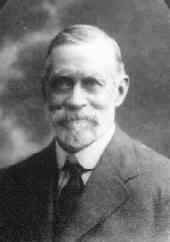
Ministry by Joseph Pellatt
– Part 3
| The Closing Ministry of J. Pellatt (1843-1913)
|
|---|
TWOFOLD APPREHENSION OF CHRIST
AS LORD AND AS THE LIVING STONE |
|---|
1 Peter 2: 1-9
Note that the words in verse 7, "He is precious", should read,
"To you therefore who believe is the preciousness".
|
|---|
You must not expect anything like an exposition of the verses just read.
- We have no desire whatever to indulge in expository preaching, even if we had the ability.
- I can frankly tell you what our desire is; our desire is to speak to you about the Lord Jesus Christ.
- I am perfectly certain of this, that if the Spirit of God, who is here, who abides with us and dwells in us, if He has His way here tonight, it will be, in His power, a ministry of Christ to our hearts.
- In this way Christianity is very simple. The heart is not divided with a multiplicity of objects, neither is the mind distracted in attempting to grasp many different things. Christianity is Christ.
- It is Christ to begin with, and it is Christ to go on with – it is Christ from first to last. I am sure it would be impossible to overstate the importance of our being engaged with Christ by the Spirit.
- I am not going to dwell on the fact that God has revealed Himself in Christ – in our Lord Jesus Christ, who is the Son of God, blessed as that is – I am not going to dwell particularly upon the fact that redemption, with all that the word in its widest meaning may embrace, has been accomplished by Christ. But in the scripture I have read I desire to speak most simply.
The Lord Jesus Christ is presented to us here in a twofold way, and I conceive that the apprehension of Christ in this twofold way is most important. I only speak for the moment of apprehension; but you will find this to be true as we proceed with what we have before us.
- There are four A's with regard to growth in Christ.
- The first "A" is APPREHENSION; there must be apprehension. I do not see how anything like spiritual movement can take place or be accomplished in our souls apart from the apprehension of Christ.
- Then, following apprehension, there comes APPRECIATION. It is a very simple thing to say, but it is impossible to appreciate one whom you do not apprehend. We apprehend Him, and the light in which we apprehend Him becomes the measure of our appreciation of Him. What a wonderful thing to have, in any measure, an appreciation of Christ!
- And then there is another "A", and that is the "A" of APPROPRIATION. You appropriate Him. I do not think, as we have sometimes been told, that appropriation is a function of faith.
Appropriation is by love; it is love that appropriates. Faith apprehends, faith perceives, faith is really the soul coming into the light of Christ. God has only one object to present and that is CHRIST, and apprehension of Him is the light coming into our souls.
Then there is appreciation. And there is a scripture that will help us as to that. You will find it in Galatians: "Faith worketh by love". That is how faith operates; it is faith working by love that appreciates, and then there is love – affection for Christ.
Let me go over it. When there is apprehension and appreciation of Christ, what marks the soul? Affection for Christ. If you apprehend Him and appreciate Him, you love Him. It is this affection for Himself that appropriates.
- And the result of appropriation is ASSIMILATION. You are assimilated to Christ; you become like Christ. That is what God's heart is set upon with regard to us all at the present time. It is to make us like Christ.
Why? Well, Christ has been here; He was under the eye of God on earth for three-and-thirty years, and – I do not know how better to express it – those three-and-thirty years were for God's heart an unbroken period of feasting and delight. What must it have been for God after four thousand years seeing man on earth according to the flesh?
Well, I think you get an intimation of it in Luke 2 with regard to the Lord. There He lies a babe in the manger, wrapped in swaddling clothes, and there is the communication from the angel of Jehovah to the shepherds. Then suddenly there steps down from the plains of glory a multitude of the heavenly host. What do they say? "Glory to God in the highest".
- Ah, God's time is come! Glory to God in the highest! Put that against four thousand years of deep, dark, black dishonour to God! How it stands out!,
- "Glory to god in the highest!" "on earth peace!" And then – "good pleasure in men!"
- Put that beside Genesis 6. God created man. We know what happened. God allowed man outside the garden to go on for about one thousand seven hundred years. There came a moment when God distinctly looked down and took account of man here upon the earth – and what does the Spirit say of it?
- Has there been any improvement since the flood? Alas, who can dream of improvement when man according to flesh is in question? The foolishness of this poor world is that they are all dreaming of improvement.
- The papers tell you things are going to get better; that they are just on the turn; that some little change in the Government will make things all right. That is the old story. What folly!
- But listen! What did the angelic host say? "Good pleasure in men". God can look down on that babe wrapped in swaddling clothes, and lying in a manger, and there is a point of reconciliation for the heart of God; and the angelic host exclaim, "Good pleasure in men", in Christ.
- When one begins to speak about Him where can one stop?
Now what I want to put before you simply is the twofold way in which He is spoken of.
- I repeat, it is not my thought at the present time to dwell upon the revelation of God in Him.
- "No one has seen God at any time; the only-begotten Son, who is in the bosom of the Father, he hath declared him".
- God has been perfectly declared, perfectly made known, perfectly revealed in Him who is the Image of the invisible God, who is the brightness, the effulgence, the outshining of God's glory, and the "exact expression" of God's substance.
- He has accomplished the work of redemption. He has taken up the question of sin. He has answered according to the glory of God, and God has reaped a revenue of glory from the atoning death of the Lord that He never could have reaped from an eternity of Adam in innocency.
- If one might venture to say it, God is richer in glory since the cross than ever before. It is not only that there has been compensation for all the dark shame and dishonour of sin, but God is richer in glory than He ever was before.
- Christ died. God raised Him, and let Peter tell what we want to express, in the end of his discourse on the day of Pentecost when he said:
- "Let the whole house of Israel therefore know assuredly that God has made him, this Jesus whom ye have crucified, both Lord and Christ".
I want to speak of Him as Lord for a moment.
- He has not only been down here and revealed God and accomplished that wonderful work of atonement or redemption on the cross, in which God has been perfectly glorified and the whole question of sin has been taken up and definitely settled,
- but He has secured, so to speak, for man, all the grace that fills the heart of God.
- And now God has raised Him up, and exalted Him, and made Him Lord. What does that mean? It means this – that God has made Him the Administrator of all the grace that fills the heart of God, and which God is so free to dispense on the ground,
- not only in the light of the revelation of Himself, but on the ground of the death of the Lord Jesus Christ.
- Now, the Lord Jesus Christ is the Administrator of that grace, and that is all gathered up in that beautiful expression in verse 3 of the chapter which I have read:
- "If indeed ye have tasted that the Lord is good".
- "The Lord is good".
Now, you will find in this first Epistle of Peter, all through the first chapter, culminating in the third verse of the second chapter, that the Lord Jesus Christ is presented as Lord.
- That is what He is on God's side man-ward in the administration of the grace of the heart of God. And so we get redemption and "being born again".
- Let me tell you, "born again" in 1 Peter is not the same expression in the Greek that is translated in John 3 "born again". "Born again" in John 3 is really "born anew",
- but in the first Epistle of Peter it stands for the whole work of God in the soul that constitutes a person a Christian.
- There is redemption – the great work for them; and there is "born again", the great work in them.
- Chapter 2 opens in a very simple and yet a very instructive way. It says, "Wherefore". – That word "wherefore" is built up on what precedes, on all that comes out in chapter 1. –
- "Wherefore laying aside all malice, and all guile, and hypocrisies, and envies, and all evil speakings"
- – five things. Wherefore laying all these things aside. Why lay them aside? Because they are the miserable workings and activities of the flesh.
- Although you are redeemed, although you are born again, there must be the Work of God in you – there is not a shadow of doubt cast upon that – there is no question about it.
- Take the word "know" – K – N – O – W –
- "forasmuch as ye KNOW that ye were not redeemed with corruptible things … but with the precious blood of Christ ..."
- – and so, as "born again", we are to love one another with a pure heart fervently, there is no shadow of a question – no doubt upon either the work for you or the work in you
- Then why are we to lay these things aside? Because it is a question of growth – of spiritual growth; and if these things are allowed there can be no growth, no progress, no movement.
- I am solemnly impressed with this fact that a great many Christians are spiritually like the Galatians – they are stopped! That is the word. He says
- "Ye did run well, who stopped you?"
- Well, you say, the Judaising teachers were used of the enemy. But how were they "stopped"? By the flesh.
- I am solemnly convinced that a great many Christians – and they are Christians – have been redeemed, they have been born again; there is the work of Christ for them and the work of God in them; unquestionably they are Christians –
- yet I am impressed that a great many are "stopped". And a good many get stopped by these five things.
"Wherefore laying aside all malice".
- Come, we had better look into the looking-glass straight. Look straight into it! Then it will show you up just as you are. Malice! Guile!
- What is guile? Guile is saying things that are true to hide the truth. That is guile. You cannot indulge the flesh in any way and go on with God – you are stopped.
- Then hypocrisies! There is a difference between guile and hypocrisy. Guile is like the woman we are told about at the well. "I have no husband", she said. That was true, but it was not all the truth. The truth was she had had five husbands, and the man she had then was not her husband. Now hypocrisy is pretending to something that is not at all true.
- What is the next? "And envies". You have to guard against that.
- And what is the last? "Evil speaking". Are you going to spread slander and evil reports about your brethren? So much the worse. "Evil speaking" is a work of the devil and a great hindrance to growing up to salvation.
Now, lay aside these evil things and seek something else; you want something that will positively minister to your spiritual growth. And so, in the next verse, we find:
- "As newborn babes desire earnestly the pure mental milk of the word".
- What is the matter with our appetites? Here is a mother that has got an interesting family. Meal-time comes and she spreads the table with good wholesome food. The children are called, but one little child says to her mother – "I have no appetite". An inquiry takes place; there is an investigation. What is the matter with the child?
- What is the matter with some of us that we have not got an appetite for the pure mental milk of the word? We have spoilt our appetites by allowing the flesh.
- "As newborn babes desire earnestly the pure mental milk of the word, that by it ye may grow up to salvation".
- Ah! that is the point, and is it not a definite point? I was going to say a climax.
- "If indeed ye have tasted that the Lord is good".
- You know Him as Lord; you are in the good of His Lordship; you have tasted of His goodness. If you set an apple on the table and ask my opinion of that apple, I say, First let me have a taste of it. I taste it and I pronounce it a very good apple. How do I know? Because I have tasted it.
- So "If indeed ye have tasted that the Lord is good",
- you know that He is good! That is in connection with salvation – soul-salvation. You are in the good of it and you prove what a wonderful thing it is to taste that the Lord is good! Have you tasted today that the Lord is good?
- Tell me, what has happened today? Perhaps some of the children sick. Perhaps something went wrong in the house or in the business. You are tried here and there. How have you got through it all? Did you taste that the Lord is good? Did you prove the reality of soul-salvation?
- Let me tell you, if you grow to salvation – soul-salvation, you are on the top of your trials, and of your difficulties, and of all your circumstances. If your trials and difficulties and circumstances are on the top of you, you have not grown to salvation, you are not in the good of the Lord.
- "If indeed ye have tasted that the Lord is good".
- It is a lovely word. It is very simple, because one finds this – and I am sure in speaking thus I am only expressing what every Christian in this room would express –
- as we go on in our life down here things do not become less real; they become more real to you, in that way, because you begin to take account of things in relation to God, in relation to the Lord Jesus Christ,
- and in proportion as you do, you find things very real.
- I may say that things are more real to me now since last Saturday. What about last Saturday? you say.
- Well, I just crossed the line of threescore years and ten last Saturday. Things are much more real to me now than they were twenty or thirty years ago.
- You take a more intelligent, a more sober account of things here than you did when you were younger, if you are growing up to salvation. It is a wonderful thing to grow to salvation.
In chapter 1 the apostle says:
- "Whom having not seen, ye love; on whom, though not now looking but believing ye exult with joy unspeakable …".
- My brethren and sisters, are you much acquainted with the joy that is "unspeakable"? I used to be a methodist parson, but when you get this kind of joy there is no use going to a class meeting. You could not tell the joy; it is unspeakable.
- That is a wonderful thing to "grow up" to. It is not that my trials and difficulties cease. It is not that I begin to go to heaven, hovering about ten feet above all the ordinary things down here? No, no. Things become more real to us as we grow old.
- There is not one of us but is being tested day by day. Some days the test may seem extra strong, but never a day goes over our heads in our journey here but what we are morally tested. One would not wish it otherwise.
- When you find Christians chafing under their trials and circumstances they are all wrong; they are not tasting that the Lord is good. When you grow to salvation and taste that the Lord is good you can "boast in tribulation".
But I must go on. You have come to a wonderful point in your spiritual history. What about the next verse? "To whom coming".
- It is like crossing a line, and more than that. We may speak of things in type in the history of the children of Israel, and they may in a way furnish an illustration; yet one feels they fall short of the greatness, the immensity, the importance of what verse 4 indicates.
- It was a wonderful day when the children of Israel crossed the Red Sea; and a wonderful day when they crossed the Jordan! But what a wonderful day it is in our spiritual history when we have come into the good of what the Lord is! We have grown to salvation; we have tasted that the Lord is good. But what next?
- "To whom coming, a living stone".
- Who do we come to? To the same Person; you begin with Christ, you go on with Christ; it is Christ all the way through, all along the way; it is Christ everywhere and all the time.
But I wish I could indicate to you in a simple scriptural way what this fourth verse indicates. It indicates that there is a new apprehension of Christ in your soul. "To whom coming …".
- Is it that you come to Him as a Redeemer, a Saviour? No. But to A LIVING STONE. That is the wonderful thing.
- We have been so slow. We have not all profited as we should have profited by what the Lord has given us for twenty years past. I remember a beloved brother – now with the Lord, a devoted servant of the Lord –
- whom the Lord enabled at one time when the truth was in question to write a four page paper on the Person of Christ, in which he affirmed just one thing – that in scripture Christ is sometimes presented as Man, distinct and apart from what He is as a divine Person.
- What he denied was that the truth of Christ's Person consisted in the union in Him of God and man, alluding to the theological doctrine: "Very God, very Man – one Christ".
- He called attention to the fact that a great many Christians failed in their apprehension of incarnation, and he pointed out where the failure lay. The failure was to see that in incarnation Christ had taken a distinct place as Man God-ward.
- Having taken a distinct place as Man God-ward, He is the pattern of our blessing. What do you come to now? "To whom coming …". Before it was Christ on God's side man-ward; now it is Christ on our side God-ward.
- It is a complete transition in the apprehension of Christ in your soul. And what a wonderful moment that is when we come to Him – the Living Stone! when we begin to apprehend what Christ is as Man God-ward!
- It has often been said – and I say it for myself under the profound conviction that it is true – that we never learn truth of any sort outside of Christ. You may look at the saints, you may look at yourself until you sink down into doubt, and fear, and uncertainty; there is only one way to learn the truth of God really, and that is, to learn it in Christ.
- Why is it that we are so slow even now to apprehend our proper blessing? I will tell you. It is because we are so slow to apprehend Christ in the place He has taken as Man God-ward.
- Take the truth of the assembly. We may have good believers' meetings on Sunday mornings, and we may thank God for what He has done, and anticipate all that is to come; but all the time we may be missing the truth of the assembly.
What is the reason? We are so slow in the apprehension of Christ as a Man having a special place God-ward; hence we fail to apprehend Him in what He is on our side God-ward; that is the failure.
- "To whom coming, a living stone, cast away indeed of men" – but mark what follows!
"But with God chosen, precious, yourselves also, as living stones, are being built up a spiritual house, a holy priesthood, to offer spiritual sacrifices acceptable to God by Jesus Christ".
- I would like to state this – God has got His present thoughts about His people.
- Let us leave the future out for a few moments. I know something about the blessedness of the future. I know what the scriptures say about it: that there is awaiting us a far more exceeding and eternal weight of glory; I know it.
- But God has also got His present thoughts about His people down here, and they have come out here. They are twofold.
- What is the first thought? WORSHIP. What is the second thought? TESTIMONY.
- "A holy priesthood, to offer spiritual sacrifices acceptable to God by Jesus Christ". That is worship.
- And then: "A kingly priesthood, a holy nation, a people for a possession, that ye might set forth …" down here before men in testimony: what is set forth? Our own greatness? No!
"That ye might set forth the excellencies of him who has called you out of darkness to his wonderful light".
- That is it. These are God's thoughts; we should answer to them here and now.
- But the secret of answering to them is the APPREHENSION and the APPRECIATION, and the APPROPRIATION and the ASSIMILATION of Christ in what He is as Man on our side God-ward.
I have noticed – it is a very simple illustration, but I call your attention to it – Matthew and Mark are the only two who, in their gospels, give us an account of what followed the breaking of bread.
- Luke does not tell you, and Paul does not tell you; but there is twofold – adequate testimony. "In the mouth of two or three witnesses", etc. Matthew testifies, and Mark testifies, and it just illustrates the point.
- If it is the breaking of bread the Lord is on God's side. Then the cup "This cup is the new covenant in my blood". That is not Christ on our side God-ward – that is Christ on God's side us-ward.
- What is the new covenant? It is the unfolding of all that God is in His love towards us.
- But, after the supper, according to Matthew and Mark, what did He do? He took His place on our side, i.e., with the saints. "When they" – – I like that "they", because you see it is Himself and the company, they are all in that "they" – "when they had sung an hymn".
- Do you think He sang? I think He led the singing, and they sang with Him. "And when they had sung an hymn". Christ comes over on our side God-ward. He says,
- "In the midst of the assembly I will sing praise unto thee".
- There it is. That is the principle of this passage – "To whom coming, a living stone". If you and I apprehend Him thus we know what Christ is as Man in relation to the purposes of God.
- That is not what Christ is as Man on God's side in relation to our need, but that is what Christ is as Man on our side God-ward in relation to the purposes of God and all the thoughts of God.
- And so "To whom coming, a living stone;" you apprehend Him, you appreciate Him, you appropriate Him, and you are like Him. How do you know that you become like Him? Because the very same language is used. Is He the living Stone? Well! coming to Him we are living stones.
- Scripture does not deal in unrealities; it does not deal in mere dogmatic statements. If the Spirit of God speaks of saints as living stones, living stones they are. There is a distinct connection that might be traced. It is the same man who wrote this epistle who in Matthew 16, when the Lord says,
- "Whom do men say that I the Son of man am?" replies,
"Thou art the Christ, the Son of the living God".
"Blessed art thou, Simon Bar-jona" ['Bar' means 'son of']: "for flesh and blood hath not revealed it unto thee, but my Father which is in heaven. And I say also unto thee, That thou art Peter, and upon this, rock …"
- – the rock is the Father's revelation of Himself in Peter's soul. What is Peter? He is a stone. "Thou art Peter". He is of the same material; he is a living stone –
- Christ, the Son of the living God, is the eternal rock upon which the assembly stands in all its impregnability, in spite of the gates of Hades.
- Yes, Peter is a living stone; and we are living stones. Have you apprehended Him thus? What a wonderful day it is when the soul apprehends Him in that light! Do you appreciate Him "chosen of God, and precious"? He is precious to God. Is He precious to you?
- "To you that believe is the preciousness".
- And is there the appropriation of Him in love? Is there really the eating of Him? When the Lord says,
- We appropriate Him, and what is the result of appropriation? Assimilation. He is the Living Stone; we are living stones, and as such we are built up a holy priesthood, and as such we come out a royal priesthood.
May God be pleased to encourage us in connection with His thoughts of the blessed Lord Jesus Christ!
Page Top Article Top
| LOVING, BELIEVING, REJOICING |
|---|
| 1 Peter 1: 8-9
|
|---|
What I have before me tonight is very simple and exceedingly blessed, and I want it to be a word of encouragement for all the Lord's people here; I do not think you can find any portion more encouraging than this.
- God has presented to us all the wonderful activities of His grace, mercy and love, etc., for His people from the very beginning, and here they are all gathered up for us, and for our encouragement, as Romans 15: 4 puts it,
- "Whatsoever things were written aforetime were written for our encouragement",
- so this stamps the character of the instruction and throws it all open for us. It is a very simple epistle – this first Epistle of Peter. Peter here writes to the Jewish believers "scattered"; the fact of their being scattered made no difference in the Lord's love to them.
- The Lord's love to us is a wonderful thing – how He loves us all, and how His love takes account of all that may befall us in our path down here – poverty or sickness – blindness or deafness, whatever it may be – He knows all about it, and we may still have shining hearts, and be superior to it all. His love delights to cater for us, and to minister to our every need. Oh! it is very encouraging!
Now let us look at these two verses – verses 8, 9. In the end of verse 6 our trials are spoken of, and it is in connection with our trials and circumstances that the Lord says,
- "the proving of your faith being much more precious than of gold".
- There is an unspiritual way of being occupied with our trials – a selfish way, but the Lord would have us to be exercised by everything. He would not have us indifferent to what He passes us through.
- Gold is at the top of the list of precious metals; and because it is precious it is subjected to the fire, so that every element of alloy and dross is separated from it.
- I have often been at a brother's house who is a goldsmith, and seen the sweepings from the shop brought in, which look like dust and dirt, but the refiner wraps it all up carefully in paper, puts it into the refining pot, opens the furnace door, and in it goes, and the fire immediately consumes all the rubbish; the refiner keeps watching, and at last he puts in the tongs and lifts out the crucible, and leaves it to cool; then with a hammer he breaks it in pieces, and then you see at the bottom a little piece of gold – pure gold which has come out of the refiner's fire.
- Pure gold is precious to man, but here the trying of our faith is called "much more" precious to God.
- Our very short-sightedness makes us often worry, and sometimes we are so short-sighted that we are positively mystified in our trials, but, oh, beloved, do we realise what God has in view? Do we take in that God is going to get a big revenue of praise for Himself through these very trials at the appearing of Jesus Christ?
- Saint of God, cheer up! you may be "put to grief" down here, you may have very real sorrow in your heart, but take courage, the harvest time is coming and God is going to reap a harvest; I do not know how it will happen, but I think He will say, as it were, 'Look, here are the people that have been tried and tested by the fire; look at them now – they are all shining!' Yes, He will get His revenue.
- Now see the point we have come to –
- "the revelation of Jesus Christ: whom, having not seen, ye love".
- Are you really in the good – the present good of being a Christian? Is your heart going out in affection to Him? We do not find a passive love in scripture; all true love is active; when He commands your affections they flow out to Himself.
- Look at my watch, the mainspring is the secret of its working; so with us, it is when the heart's affections are right that the rest corresponds.
- It is an easy thing to say – "Whom, having not seen, we love", but I want the hearts of all here to get really touched with divine encouragement tonight; God is set to encourage and comfort you.
- What could be more serious for us than anything that interferes with our affections; these saints to whom Peter wrote had lost everything down here, but the Lord had captivated their hearts. He commands their affections, and the Spirit could say of them,
- "Whom, having not seen, ye love".
- Ah, beloved, there is always one thing a Christian can do, and that is, he can love Christ. He can look that blessed One in the face and say,
- "Thou knowest all things, thou knowest I am attached to thee".
The next thing you get is confidence – "believing". Do you remember His words to His disciples in John 14?
- "Let not your heart be troubled, ye believe in God, believe also in me".
- They were troubled at the thought of His leaving them, because they loved Him, and thought they would lose sight of Him, but He reminds them that they had confidence in God, whom they had never seen, and would they not have confidence in Him?
- Do not let the devil worry you; he will if he possibly can; he will tell you that you are a hopeless failure, but you can resist him "steadfast in faith".
- Oh, do not give up your confidence in the Lord. Has He ever failed you? that is not His way. I believe I understand the Lord's look on Peter! Peter had been cursing and swearing, and denying that he ever knew the Lord. What did that look say?
- Ah! I think it said, 'Peter, I love you – there is no change in me, I love you just the same'. That is not the sort of look we should give! Oh, no! but that look of the Lord's just smashed Peter's heart all to bits –
- he "went out and wept bitterly".
- Oh, beloved, do not give up your confidence in Him! is He not worthy of it? He has never given you any occasion to question His love and faithfulness.
Now what comes next, "joy unspeakable and filled with the glory" – "glorified joy" is the real sense of the word. Think of it!
- If you could see inside such a believer's heart, you would see it fairly shining with
- "joy unspeakable and filled with the glory".
- Is it not wonderful? And that can be even now. He is coming to receive us to Himself, we are today another day nearer to that, but while we wait for Him, we may again be put to grief, the furnace may be hot, because the "proving of the faith" is going on, yet "believing" we may rejoice with joy unspeakable.
- I feel we are so little up to it; we are strangely shy of being happy, strangely shy of the road to joy, but
- "the joy of the Lord is our strength".
- The devil will turn us in on ourselves if he possibly can; he will make us miserable, and some try hard to be wise – doctrinal – Christians, and some think it necessary to take low ground; that is just what the devil wants, and if we give him the chance he will get us to low ground and crush us.
- But oh, to be simple Christians, to see that it is all Christ, and that He is the One we believe and confide in. How simple it is! And then the "joy unspeakable" follows.
- The Spirit of God says it is "unspeakable". Peter is not writing to a company of advanced Christians. No, he writes to simple believers. Christ is enough for them.
Now comes the "salvation of your souls", and it is a remarkable salvation from the very fact of its being soul-salvation.
- Do you say, When shall I get that? Well, it either takes place now, in this life, or not at all. "Receiving" soul-salvation is when you are morally superior to everything here.
- I once went to see a sister in Colorado, and for three whole hours she poured out all her troubles; she had got right down under them and they were almost as big to her as the Rocky Mountains, which take forty-eight hours' travelling to get round.
- Now, beloved, where are we? Either our trials are on the top of us, or we are on the top of them; the Lord can put us right on the top of them all, and He loves to do so.
- The first link here is love, the second link is confidence, and then comes rejoicing, and receiving. These blessed things are all linked together, they keep step side by side.
- The Lord knows the trials of each one of you individually – you are proved by them – but let Him have your heart. Give it up to Him, so that it may go out to Him without let or hindrance; there is no restraining needed with that.
- We have to keep our loins girded; in walking here we cannot allow our robes to flow, but I can let all my heart go out to Him unreservedly, and then I can be superior to my circumstances and trials.
- We have in this scripture lovers, believers, and rejoicers, all filled with glory. If we know the glory inside now we shall not feel strange when we actually enter those scenes of endless joy.
- Do you think that the end of your faith is only to get to heaven? Oh, no! The end of your faith is the salvation of your souls, and that is to be realised here and now. Oh, beloved, try it – try it!
Page Top Article Top
| THE SPIRITUAL JOURNEY |
|---|
Belfast
Luke 8: 1-3; Mark 15: 39-41, 47; Mark 16: 1; John 20: 1-20
|
|---|
You will find in these scriptures a complete soul-history, and we have read it with the thought of bringing before you the spiritual history of a soul from the start to the finish.
- The history of Mary Magdalene is very instructive and comprehensive.
- I am not sure if I shall be understood in speaking about the finish of the spiritual history of a soul. It is necessary to eliminate all idea of time.
- There is such a thing as the present goal in Christianity – a spiritual reality. The future goal is in actuality.
- The only difference between the present goal in spiritual reality and the future goal in actuality is the difference between the words reality and actuality. There is such a point as the present goal of Christianity to be reached here and now.
In Ephesians 4, the apostle presents Christ as the ascended Man; he by the Spirit speaks of gifts given by the risen and ascended Christ; he speaks of the end in view, and that is,
- "Until we all arrive at the unity of the faith and of the knowledge of the Son of God, at the full-grown man, at the measure of the stature of the fulness of the Christ".
- That, I understand, presents the present goal of Christianity. It in no way involves the termination of our life in flesh down here, and a very simple proof of your having reached the goal is that you disappear morally. When the goal is reached this disappearance takes place.
- It will be so in another sense with the whole assembly in the future. The assembly, as such, will disappear when the Lord takes us to be with Himself, and when the goal is reached in spiritual reality by any of us here we disappear.
- I feel even the statement of it to be very serious, because it tests every one of us, speaker and hearer alike.
It is beautifully illustrated in the history of Mary Magdalene. She first appears in Luke 8, and she disappears in John 20.
- She is not seen in John 21, or in the Acts of the Apostles or in the Epistles. Mary Magdalene is seen no more. She has disappeared.
- When she first appears it is as one completely dominated by Satanic power. She is indwelt by seven demons, and when she disappears she disappears in the Assembly. That is the disappearing place.
- It should come home to you and to me. Have we disappeared? If her first appearance is that which speaks of sin and Satan's power, her disappearance is lovely. Most glorious! Who would not like to disappear in the brightness and glory of His presence?
I should like to trace the spiritual journey of her soul from the start to the finish. It is like starting on a journey, to speak simply.
- Suppose you go from Belfast to Dublin. You live in Belfast, Belfast is the starting-point, Dublin is the goal. You go to the station and get into the train. Your goal is before you, but there are stations between Belfast and Dublin.
- Luke 8 is the starting-point of the spiritual journey of the soul in Christianity. John 20 gives us the goal. The other scriptures give us the stations between the starting-point and the goal.
- I speak in this simple way in order that every one of us may take account of ourselves in connection with the spiritual journey.
- The starting-point is salvation. Many of us could state the doctrine of salvation very correctly, but Luke 8 does not present the doctrine of salvation, it presents the fact of salvation.
- I trust salvation is a fact with every one of us here. Unless it is a fact there is no start. It is important to get a good start in one's spiritual journey, and it is most important to get a true idea of the Lord Jesus Christ as Saviour.
- In Luke the Lord Jesus is presented as the anointed Preacher, and He preached the gospel of the kingdom; God is presented as a Saviour-God. How wonderful to come under the influence of such a blessed Preacher!
- Mary Magdalene comes under this preaching, with the result – it is very simple – that she is saved,
- "Out of whom seven demons had gone".
- Not some of them gone and others left. They all went out, she is completely saved from the domination of Satanic power. A great many are clear about the doctrine of salvation, but it is much more important to have the fact. It meant much to Mary Magdalene.
- Up to this time demons had held undisputed sway in her soul, but the preaching of the Lord Jesus announcing the glad tidings of the kingdom in the power of the Holy Ghost resulted in her salvation, and seven demons had gone out of her. It was a marvellous fact to her.
- We need to be thoroughly stirred up, especially in a place like Belfast, where there are so many brethren and children of brethren who are familiar with the doctrine of the gospel.
- There is a very real danger of souls taking certain steps and assuming certain positions without real soul-history; but what about spiritual facts and spiritual history?
- There could be no doubt whatever as to the reality of Mary Magdalene's start. She had got a new object for her heart and a new path for her feet. She was with the Lord and she followed Him. Is salvation such a fact to us that the One who has saved us is the object of our hearts?
- These women were with Him, and they followed Him, and they ministered unto Him of their substance. Sometimes people got converted, but it does not seem to affect their hearts or their feet.
- Mary got a new object for her heart – she was "with him" – and a new path for her feet – she "followed him".
- The Lord in saving her has so touched her heart that He becomes the supreme Object of her affections. His path is her path. There is one prominent thing that characterises Mary Magdalene in scripture, and that is affection for Christ. This characterises her through every stage of her spiritual journey.
- Has He thus reached our hearts? When He touches our hearts we lose sight of everything else. As Mr. Darby expresses it in that beautiful hymn 139:—
"There is but that one in the waste.
Which His footsteps have marked as His own".
If He commands my heart, my eyes will have no difficulty in finding the path. Have we started in it? It is a wonderful start.
- Your conscience may be clear. Ah! but the question of conscience does not come in here, it is a question of the heart's affection.
- I have no doubt Mary Magdalene's conscience was quite clear. Conscience is a question of righteousness.
To turn to the Old Testament for a moment, the start for Israel came in when they stood on the Arabian bank of the Red Sea. Pharaoh and his warriors were behind them on the other side, but they were commanded to
- "stand still, and see the salvation of Jehovah".
- There was no fighting or no talking as to what was to be done; not a blow to strike nor a word to say. Jehovah fought for them, and on the Arabian bank they saw the Egyptians dead on the seashore.
- "Then sang they this song to Jehovah".
- That is the first station.
Now to come to the next. It follows naturally on the first. When you get into the train all you have to do is to sit still. The train is moving on and you do not need to struggle. The next station comes naturally in the history of the soul. See Mark 15: 40-41.
- "And there were women also looking on from afar off, among whom were both Mary of Magdala and Mary the mother of James … who also, when he was in Galilee, followed him, and ministered to him".
- In the opening of Luke 8, the Lord is an anointed preacher, going about "doing good, and healing" [or saving] "all that were under the power of the devil", as Peter says in Acts 10. Nothing could stand before Him.
- Here – Mark 15 – He appears in the light of a suffering, despised, scorned, cast out, rejected One, going up to Jerusalem to be crowned with thorns, to be crucified. The cross is the culmination of His rejection. This is the test to souls.
- It is easy to follow a triumphant victorious One, but rejection is the test.
- To turn again to the Old Testament it is like Jonathan. David came out of the valley with the giant's sword and head in his hand – the tokens of a complete victory. He had wrought salvation for Israel just as the Lord wrought salvation for Mary Magdalene.
- She was, as we have said, completely saved from the power of the enemy, consequently she found an object for her heart and a path for her feet.
- So Jonathan's soul was knit to the soul of David. It seemed very real. He stripped himself of his robe, his princely attire, his garments which distinguished him as a prominent man, even to his sword and to his bow, and to his girdle which he bore as a warrior. He stripped himself of what characterised him as a prince, a man, and a warrior, that he might place it upon David.
- But the test came. Jonathan's father sought David's life. There came the last good-bye – the last kiss, and then they parted never to meet again. David went to the cave of Adullam and Jonathan went back to his father's house.
- What was the end? Jonathan's headless body, slain on Mount Gilboa, was nailed to the walls of Bethshan. How sad!
- How different to Mary's course. She cleaves to the Lord through His rejection.
- You will not travel very far in His path until you find that He is the despised and rejected One here, but you will not be turned aside if He really commands your heart.
Mary is moving on. The next step in her history is indicated in the last verse of this chapter. He died on the cross, but three women remained with Him all through, and saw where His body was laid. They get as near as they possibly could be. Mary was "near by".
But I must hasten on. We come to John 20 and we find here the effect of the death of Christ on a heart that so truly loved Him. Mary goes down in early morn to the tomb and sees the stone taken away.
- She walks away – no, she runs. Think of that lonely woman turning and running, in the early morning when it was still dark, clean back and coming to Peter and John and relating to them the story of the empty tomb. What details the Spirit of God gives us!
- Then Peter and John run. John gets there first of the two, but Mary had run back too, and she is there as soon as they are. How she loved Him!
- The two disciples – I will not say much about them – went into the tomb and came out of it perfectly satisfied that the Lord had risen. There was perfect order inside. The clothes were not lying bundled together, but the handkerchief that was upon His Head – folded up in a distinct place by itself. No confusion whatever. They therefore went away again to their own home.
- But Mary – what a contrast! how it testifies to the affection that was in her heart – stood at the tomb weeping without. There was not a spot on earth to detain her except that empty tomb "where the body of Jesus had lain".
"Farewell, farewell, poor faithless world,
With all thy boasted store;
We'd not have joy where He had woe –
Be rich were He was poor".
Now, let me ask you, has the death of Christ affected you? You may think about the doctrine of it, but has it affected your heart?
- Mary's affection was rewarded. As she wept she stooped and beheld what Peter and John did not see. Through her tears she beheld two angels. Angels seem to have the power of appearing and disappearing at will. Peter and John did not see the angels, but Mary did.
- Two in scripture is adequate testimony. What a descriptive testimony to the dignity of the One who had lain there. They did not sit side by side, but "one at the head and one at the feet, where the body of Jesus had lain".
- They say to her, "Why dost thou weep?" This question drew out the expression of her heart. But the angels knew who was near her, and the Lord in His question to her goes further than the angels. He not only says
- "Why weepest thou?" but "Whom seekest thou?"
And then He says to her, "Mary".
And she says to Him, "Rabboni".
- She has received Him in resurrection! It is one thing to believe in the doctrine of resurrection, but it is another thing to reach Him there. Are we identified with the rejected One? His rejection left Mary a picture of inconsolable grief without a spot on earth to turn to, and no home but an empty tomb.
- She went down to Jordan to the river's brink, but the ark had been there, so Jordan was dry. He had been there. It has been well said that nothing will ever lead a soul to cross Jordan but love for Christ.
- Mary reached Him in resurrection. Have you and I reached Him there? But there is more; some would stop at resurrection. But what does the Lord say to Mary now?
- "Jesus said to her, Touch me not; for I am not yet ascended".
- What! Ascended! If you have read the Gospel of John through to this point and have appropriated it you will be quite prepared for ascension. John speaks a good deal more of ascension than of resurrection. I have counted the passages one by one.
- Christ came from heaven in John and goes back to heaven. What comes from heaven goes back to heaven. The Lord had been speaking all through John's gospel about going back to "my Father". I would emphasise that peculiar place and the affection that belongs to that peculiar place.
- John's gospel, from the outset, prepares you for the close of it, which is chapter 20. Read chapter 12: 24. The corn of wheat has died, and has brought forth much fruit. Therefore the message:
- "Go to my brethren, and say unto them, I ascend unto my Father, and your Father; and to my God, and your God".
Well, Mary went and brought word to the disciples
- "that she had seen the Lord, and that he had spoken these things unto her".
- What next? She has come into the assembly! She has reached the goal. The assembly of Christ's brethren in association with Him as the risen One. She disappears! She has reached the present goal.
- Who would not like to disappear like this? If you have started on the line we have traced, this is the present goal of it. Are you identified with the rejected One? It is into the midst of that company He delights to come. He comes there. Mary has reached it and she disappears.
May the Lord lead our hearts into it for His name's sake.
Page Top Article Top
RESURRECTION
– GOD'S VICTORY OVER DEATH |
|---|
Genesis 3: 14-15; 1 John 3: 3-8;
Romans 5: 12; Romans 6: 23; 1 Corinthians 15: 21, 54-57
|
|---|
It is before us, beloved, as the Lord may help us – and I am very conscious of my need of His help – to say a few words on the subject of resurrection.
- I read the verses in Genesis 3 just to bring this point before you – that the entrance of sin and death into this world was the work of the devil.
- Jehovah-God had spoken to the man and to the woman. He then speaks to Satan, and what He says is this:
- "Because thou hast, done this", etc.
- These are the words of the Lord God; He attributes what has just taken place – the entrance of sin into the world – to Satan.
Then I read the scripture in 1 John in connection with this in Genesis to call your attention to this fact,
- "For this purpose the Son of God was manifested, that he might undo the works of the devil".
- The works of the devil were undone in man's heart by the knowledge of God which came to light in the Son of God, and the resurrection is the culmination of the purpose for which the Son of God was manifested.
- In resurrection the works of the devil are completely undone, for that was God's victory over death, and hence the connection with resurrection in 1 Corinthians 15: 54,
- "Then shall be brought to pass the saying that is written, Death is swallowed up in victory".
- That "saying" is written in Isaiah 25: 8,
- "He will swallow up death in victory".
We have often been reminded that 1 Corinthians 15, is that wonderful chapter on resurrection which emphasises the victory of God – death swallowed up in victory.
- There was the allusion to it in type in the rod of Aaron, Hebrews 9: 4 or Numbers 17: 8.
- All the apparent victory that death has attained for the last six thousand years is wiped out in resurrection. It is a triumphant word,
- "O death, where is thy sting? O grave, where is thy victory?"
Satan was accused by God of having done this; he brought about sin, distrust of God and death, and of this Jehovah said,
- "Because thou hast done this, thou art cursed above all cattle, and above every beast of the field; upon thy belly shalt thou go, and dust shalt thou eat all the days of thy life, and I will put enmity between thee and the woman, and between thy seed and her seed; it shall bruise thy head, and thou shalt bruise his heel".
- Genesis 1 and 2 are purely creation – there is nothing of responsibility in them; it is the putting forth of God's creative power – He looks over His creation, takes account of it all, and pronounces it "very good".
- In chapter 2 we have the introduction of human responsibility, God having put man under responsibility by His divine command. We find God deals with man according to the responsibility he has been placed under in relation to God, "By one man" – the devil is not mentioned there –
- "By one man sin entered into the world, and death by sin";
- that is, sin and death have been brought in by one man – brought in in connection with his breakdown and failure in responsibility.
- "And so death passed upon all men, for that all have sinned".
- The necessity for resurrection lies in the fact of man – one man – having brought in sin and death, and the whole race has been involved in the consequence,
- "The wages of sin" – not sins; if you put in the "s" there, you cannot account for the death of infants; fifty per cent of the human race born into the world die in infancy, Death is "the wages of sin" – God has a fixed, righteous estimate and judgment of sin.
The necessity of resurrection lies in the fact that one man brought in sin and death, death being connected with sin as the just judgment of God upon sin; and let me say here, in the most simple way possible, when death takes place that ends for God and for eternity the question of sin.
- If you could conceive the most wicked man dying tonight, his death settles for ever the question of sin.
- There remains the question of individual responsibility, but that is never connected with "sin", and, with that in view, scripture says,
- "After death, the judgment"
- – but not judgment in regard to sin. The necessity for resurrection is found in the entrance and the consequence of sin – death. In 1 Corinthians 15, it says,
- The first man was out of the earth, made of dust, and his origin fixes his order; for origin and order in scripture always go together. It is a man made out of dust that is the earthly man.
- The second Man is out of heaven. That is the Man who has brought in resurrection of those that are dead. Scripture is very simple but very comprehensive. We need believing hearts to understand it.
- There is the first man out of earth; all the question of sin and death is attributed to that man in scripture,
- "By man came also the resurrection of those that are dead".
- How has this second heavenly Man brought in resurrection of those who are dead? In the first place He bore the judgment of God, which was due to the sin which He took upon Him, and then He died. By the grace of God He tasted death for every man. He died for all. He is the propitiation for the sin of all the world.
- "He gave himself a ransom for all".
- He answered to God for the totality of sin. He glorified God in all the question of sin, and so He has answered to God; He has maintained all that was due to God. He has put away sin – not anybody's sins, but sin, by the sacrifice of Himself.
- That side has been met, and now God has raised Him from the dead and has brought in resurrection of those that are dead. Let me say, He has brought in resurrection for every human being.
- His death, on the one hand, has covered the question of sin before God; His resurrection is equally wide,
- "By man came also the resurrection of the dead".
- I am not saying there is no difference in resurrection. In His death God has been glorified for the totality of sin,
- "He gave himself a ransom for all".
- He includes every man, He died for all, and the resurrection brought in by the second Man out of heaven is just as wide and extensive in its bearing as His death.
- "The hour is coming, in the which all that are in the graves shall hear his voice, and shall come forth; they that have done good, unto the resurrection of life; and they that have done evil, unto the resurrection of damnation", John 5: 28-29.
- From Abel down through all the intervening centuries down to the end of time, all that are in the graves shall hear His voice and come forth. There is scripture supporting all that I have said in connection with the second Man – the heavenly Man.
1 Corinthians 15 is addressed to those who are really Christians, to those
- "sanctified in Christ Jesus, called to be saints"
- – constituted saints by divine calling, and it takes a divine call to make a saint.
- He says, "with all that in every place call upon the name of Jesus Christ our Lord".
- 1 Corinthians is addressed to Christians, and I do not see that we should depart from that when we come to chapter 15. In connection with this I read in Romans,
- "The wages of sin is death; but the gift of God is eternal life through Jesus Christ our Lord".
- What I want to show you is that in scripture eternal life is brought in in contrast to sin and death, and my reason for pressing this point is that, being brought in in contrast to sin and death, it necessarily involves resurrection.
I note that in John, whether in the gospel or the epistles, eternal life is presented as a present thing.
- Every believer in the Son of God has a present title to it, and every believer is entitled to be conscious of it. These things have I written that ye may know.
- The word used in 1 John 5: 13 is the word for conscious knowledge – that ye may be conscious that ye have eternal life. John presents it in the present; but other scriptures present it in the future.
- Titus 3: 7. "That being justified by his grace, we should be made heirs according to the hope of eternal life".
- What a man sees, he does not hope for. What then is the hope of eternal life? Where and how will that be reached? The end of 1 Corinthians 15 furnishes a complete answer to that.
- "The trumpet shall sound, and the dead shall be raised incorruptible, and we shall be changed".
- That passage shows us when and where and how it will take place – that should be enough for us. By one man sin entered into the world – not into heaven. Where will resurrection take place? On earth! By resurrection or change we shall come into the reality of eternal life.
- "Then shall be brought to pass the saying that is written, Death is swallowed up in victory. O death, where is thy sting? O grave, where is thy victory?"
- It is gone. God is going to bring us into resurrection down here. It is resurrection we have in this chapter, not the rapture.
There are several points of interest in this chapter, but I have not time to dwell upon them.
- First, there is the resurrection of Jesus Christ, relative to our justification. The apostle argues,
- "If Christ be not risen, then is our preaching vain … we are found false witnesses … ye are yet in your sins".
- I want to trace as completely as my time will allow me, resurrection and its bearing upon us. Romans 6 does not speak of our resurrection; it speaks of Christ's death and His life, and that involves resurrection on His part.
- "In that he died, he died unto sin once: but in that he liveth, he liveth unto God".
- And He "was raised up from among the dead by the glory of the Father".
- We are said to be buried with Him by baptism – to have part in His death; and if we have been planted with Him in the likeness of His death, we shall be also in the likeness of His resurrection.
- He argues also, that we respond by walking in newness of life and reckoning ourselves alive unto Jesus Christ.
- "For if the Spirit of him that raised up Jesus from the dead dwell in you, he that raised up Christ from the dead shall also quicken your mortal bodies", Romans 8: 11.
- There is only one passage that gives a present bearing to resurrection. In Colossians 2 we are said to be
- "raised with him through faith of the working of God who raised him from among the dead".
- There is a present moral application to Christians now; though of course not actual, it is through faith that we come into the good of it. His resurrection was actual, but we come into the present good of it through faith of the working of God who raised Him from among the dead.
- The resurrection will take place at that time when
- "the trumpet shall sound, and the dead shall be raised incorruptible, and we shall be changed".
- 1 Thessalonians 4 and 1 Corinthians 15 do not say that after the resurrection the rapture will follow. We have no doubt that it will follow, but what 1 Corinthians 15 sets before us is the celebration of God's victory in resurrection. What will it be when God brings in His victory over death!
- Think of all that death has done among the saints of God! Six thousand years the saints have been dying, and
- "in a moment, in the twinkling of an eye", God will undo it all – 1 Corinthians 15 –
- God will have His victory in a moment, and that victory will be celebrated where death has taken place – on earth – in the very scene of our sorrows, right down here. He is going to have His victory celebrated in resurrection.
Let me now say a word about the resurrection of the Lord Jesus Christ in relation to God
- It has enabled God to lay actually the foundation of the accomplishment of His purposes. In the cross of Christ God has been glorified as He never will be anywhere else, not even in eternity.
- The resurrection of Jesus Christ is the antitype of the sheaf of first-fruits in Israel. It was the pledge of the coming harvest.
- "Christ the first-fruits; afterward they that are Christ's at his coming", 1 Corinthians 15.
- When you speak of the purposes of God in regard to man, they are twofold. They apply to man here, and they apply to this scene.
- I think we are inclined to overlook the fact that God made this scene, and made man for this scene. The first man fell, but the second Man has perfectly glorified God with regard to Himself. He had a perfect title to live here, and He went into death to earn a title for His people, and He has earned it for them.
- We say how glad we shall be to get out of this earth, but do not think that God has given up His rights to this earth. What God is going on with down here at the present time is the heavenly part – the assembly. That will be accomplished by-and-by, and then God will revert to the earthly side, and will bring His purposes as to it into accomplishment.
- Christians have a part in the earthly side. They have eternal life now, and you will find in scripture eternal life is connected with the earthly side of the purposes of God, not with heaven. It is never connected with heaven.
- In the resurrection we shall come into the actuality of it, but we shall come into it down here according to the end of 1 Corinthians 15.
- The rapture is connected with the heavenly side of the purposes of God, and the rapture applies to the assembly as such. It is the actuality.
- We get in Ephesians that the saints are raised up and made to sit down together in the heavenlies in Christ. All that is true of the saints in Christ will be made actually true of them in the rapture. Caught up into the clouds to meet the Lord in the air. The rapture belongs to the heavenly side of God's purposes.
- "I will come again, and receive you unto myself; that where I am, there ye may be also".
- The earthly side is when all that is mortal shall be swallowed up of life. I am certain that God is going to have a celebration. He is to have a victory here, and He will celebrate it.
- In Isaiah 25 we find that God is going to destroy the covering that is over all nations. Look around, God has covered them all up with death. God is going to destroy the covering that has covered up the nations of the earth. The day is coming when He will remove the covering and bring in resurrection.
- The whole millennial earth will be established on the basis of resurrection, and maintained on that ground by divine power. See Ezekiel 37. God will cause the dry bones to live, and they will stand up in the principle and power of resurrection.
Resurrection – "risen with Christ" – is not actual but through faith.
- The quickening work of God in you is to enable you to act in all the light of your faith as not only having died with Him, been buried with Him in baptism, but raised with Him.
Page Top Article Top Next Article