Menu•SiteMap |
Ministry
Departure and Recovery
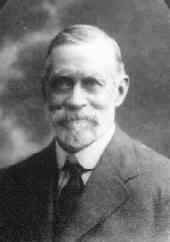
Ministry by Joseph Pellatt
– Part 2
| The Closing Ministry of J. Pellatt (1843-1913)
|
|---|
| DEPARTURE AND RECOVERY |
|---|
| Revelation 2: 1-7; Revelation 3: 7-13
|
|---|
I think in the message to the church at Ephesus we have marked out by the Lord Himself the point of departure,
- and in the message to Philadelphia we have on the part of the Lord the recognition of the point of recovery,
- and these are the two thoughts I desire to bring before you on this occasion.
- It is an immense thing to have the expressed judgment of the Lord Jesus Christ.
- There is no need for any of us to be in any uncertainty with regard to His judgment upon matters at the present time.
- I do not mean matters pertaining to our responsible life here or to our circumstances, or to ourselves, but matters pertaining to His glory, to that which is in relationship to Himself; that which is the delight and satisfaction of His own heart.
One feels very much at the present time the need of grace from the Lord to rise above every form of selfishness. We are blocked up and hindered by selfishness, perhaps to a greater extent than we are aware of.
- I do not mean common selfishness with regard to our own things, but selfishness in regard to the Lord's things; we are much hindered in this way.
- We need to be delivered from this kind of selfishness, so that apart from every thought of ourselves we might be able to look at things in the light of the Lord, in the light of the relationship of the assembly to the Lord and what is really involved in that relationship.
In the first place I want to bring before you the point of departure. I am not speaking of that which is merely individual. I am speaking concerning Christ and the assembly.
- Our attention has been called of late to the distinction between the primary thoughts of God, and those thoughts of God which have been brought before us consequent upon the entrance of sin – the presence of sin in the world,
- and I would like to say that the relationship of the assembly to Christ belongs to the primary thoughts of God.
- In the very beginning of the Bible, in the account of things here prior to the entrance of sin, when there was nothing of the kind to affect man, nor to call out the blessed activities of God in grace, I need not recount to you the story of creation as we have it by the Holy Ghost in the opening of Genesis.
- I refer to the six days of creation, and how at last man was brought upon the scene, everything ordered and arranged by God with reference to man. Then the man was brought upon the scene.
- The whole scene of creation was open under the eye of God; there was nothing evil in it; God was able to say as He surveyed it that it was "very good". It pleased Him to look upon it. and it was at that time that you get that wonderful statement.
- "It is not good for man to dwell alone".
- You might think it primarily applied to Adam, but no! it primarily applied to Christ.
We are told in Romans 5, that Adam was the figure of Him that is to come, and we must take account of things as under the eye of God.
- God's mind, God's interest, was primarily in Christ. When He said concerning the man down here.
- "It is not good that man should be alone",
- we then get for the first time in scripture after the creation of man the expression of divine sovereignty.
- God says. "I will", What did He "will"? What was His purpose – His counsel? What was in the mind and heart of God? It was this
- "I will provide an helpmeet for him".
- There we get in type Christ and the church! Sin is not in question, sin is not there.
- I have no doubt that in the light of the first Epistle of John that sin existed at that time, but it did not exist in connection with man nor in relation to the creation brought before us in the opening of Genesis and which God pronounced to be "very good".
- Sin existed already in relation to Satan; he was the original sinner – he "sinneth from the beginning" or "outset", but there was a created scene down here without sin.
- So that we are not going beyond scripture in saying that the truth of Christ and the assembly belongs to the primary thoughts of God.
I do not wish to traverse all the distance between the opening and the end of the Bible, but I just want to call your attention to the end.
- When the end is brought before us, God does not say much about the eternal state, though He speaks plainly, and no doubt tells us all that we need to know about it at the present time; and when the new heavens and new earth come into view in Revelation 21 what do we see?
- We see the bride of Christ. We see her in all her undimmed loveliness and freshness. One thousand years at least had rolled by; the world to come, the whole millennial age had passed by, and are there no signs of fading, no signs of age in her? No, she is still
- "prepared as a bride adorned for her husband".
- I only refer to this, I am not dwelling upon it now, but I wish to point out that if in the opening of Genesis before the existence of sin took place so far as this world is concerned we see foreshadowed God's primary thought, so in Revelation 21 when sin is "no more" – gone – when what John Baptist declared of the Lord Jesus Christ on the banks of Jordan when he sees Jesus coming to him,
- "Behold the Lamb of God, which taketh away the sin of the world!"
- when that has taken place, He has borne it away and not a trace of sin or of anything to remind you that sin ever existed remains in that bright scene – that blessed moment, then we find God free to return to His primary thoughts.
- There is Christ and there is His assembly; He is not as Mediator, there is no need of mediation then, but there, beloved, in that scene is His assembly adorned for Him; there she is in all the glory and brightness and freshness that God has purposed to adorn her with.
- "As a bride adorned for her husband", she has a place in that scene.
Now I would like to speak simply about this message to the Angel of the assembly in Ephesus.
- I leave the Old Testament for the present; the church is not there, as we know, except in type; the first actual mention of the truth of the church is in Matthew 16. There Christ says,
- "On this rock I will build my assembly".
- The moment has come; there has been the revelation by the Father of the blessed Person of Christ to Peter, who says,
- "Thou art the Christ, the Son of the living God".
- And the Lord says, "On this rock" Himself, the Father's revelation of Himself "I will build my assembly".
Now I pass on. We come to the Acts of the Apostles – to the day of Pentecost; the Lord had died; He had been raised from among the dead and had ascended, and taken His place up there in glory,
- and from that scene of heavenly glory the Holy Ghost descended on the day of Pentecost.
- The result is that the church is here; she is here as an actual fact; the presence of the Holy Ghost from the risen, ascended and glorified Christ – the Son of God, has brought into existence the assembly.
But I am not going to speak now about the assembly as the "one body", nor as the house of God, the assembly of the living God, the pillar and ground of the truth, nor as seen for a brief season as the assembly at Jerusalem;
- but what I am going to speak about is local assemblies – assemblies here and there.
- There were many local assemblies, but I want now to call your attention to the one particular assembly at Ephesus.
I think the scriptures fully entitle us to consider the assembly at Ephesus as rising, in apprehension of privilege unfolded to them, above and beyond every other assembly at that time.
- From a very small beginning – see Acts 19 – the assembly at Ephesus had grown numerically and spiritually.
- Afterwards we find the apostle paying them a long visit; you remember when on his way to Jerusalem he sent from Miletus and called the elders of the Ephesian assembly to him, and he rehearsed to them his ministry.
- He said that he had not "shrunk from announcing to them all the counsel of God".
- In that assembly he had unfolded all the wonderful range of things that lies within that expression – "the counsel of God". Later on he writes to them a marvellous letter.
- We have often been told that there is a certain connection between each epistle and the state of the saints composing the particular assembly to which it was written; you cannot fail to see this connection in the first epistle to Corinth, and in the epistle to the assemblies in Galatia, and that to the saints at Colosse, and we see this connection in a marked way in the Epistle to the Ephesians.
- What a marvellous unfolding of the counsels of God is there! One never tires reading the opening of the epistle to the Ephesian assembly. It begins at the very top.
- "Blessed be the God and Father of our Lord Jesus Christ, who has blessed us with every spiritual blessing in the heavenlies in Christ".
- You cannot find anything above that, it is the peak that towers up above every other peak; and the Ephesian saints were there, and as there, in Christ, they were spoken to as having been blessed with every spiritual blessing.
- Then further on you get in chapter 3, that wonderful prayer. Do you know the climax of that prayer? He says,
- "And that ye may know the love of the Christ which surpasses knowledge; that ye may be filled even to all the fulness of God".
I believe that prayer was answered in the assembly in Ephesus. I do not believe that the apostle bowed his knees for naught. He says:
- "For this reason I bow my knees to the Father … of whom every family in the heavens and on earth is named".
- I believe that prayer found its answer. What light, what marvellous privilege, what a state there must have been in those saints! That prayer has in view what is subjective in the saints:
- "To be strengthened with power by his Spirit in the inner man".
- It is inward and spiritual; it was to be effected in them, and that "being rooted and founded in love" they might be able to apprehend with all the saints what is the breadth, length, depth and height, and that they might
- "know the love of the Christ which surpasses knowledge", that they might be "filled to all the fulness of God".
- That was not simply what was unfolded in ministry to them, but there had been wrought in them by the Spirit an answer to it; these saints at Ephesus had reached the top.
- You say, How do you know? I know it from Revelation 2. The Lord says there:
- "But I have against thee that thou hast left thy first love".
- If first love has never been reached you cannot be charged with having left it.
- It was reached at Ephesus; in that assembly; by the Spirit, there had been wrought such a response – a full response to the love of Christ for the assembly, and that is first love.
- It is not the first love of a new convert – we use the expressions of scripture very loosely.
- It is the assembly down here with the light of the range of the counsels of God; it is the assembly down here in the knowledge of the love of Christ which surpasses knowledge and as answering to that love.
And that is where declension began. I do not mean geographically, I mean where it began spiritually.
- It began at the highest point that can be reached down here – I say it reverently, recognising all Christ's interests in the assembly, and recognising the ministry of the Holy Ghost with us in the assembly – the highest point that can be reached by the assembly down here –
- the only thing I know beyond it is not beyond it even in character, it is only the difference between spiritual reality now and eternal actuality by and bye.
- Well, that is where it began. But the wonderful thing is this – in connection with this particular message, and indeed with all these messages – one gets to know, if I might say it reverently, the feelings of the heart of Christ in relation to His assembly here.
- Oh, how He must have felt that leaving of first love!
- Really outwardly the assembly at Ephesus was still in a wonderful state; there were no signs or symptoms of outward decay; there was wonderful activity, wonderful energy of a spiritual sort, there was no thought at Ephesus of putting up with anything evil, they had tried those who took high ground, who said they were apostles and were not, and they had found them liars, and there was patience, and endurance, they had not fainted.
- But the eye of Christ discerns, and His lips pronounce the declension.
- "I have against thee that thou hast left thy first love".
I would, beloved, that the impression – the divine conviction might come home to us of what really is proper to the assembly in relation to Christ;
- that is what the Lord looks for and prizes; it is not what people, and even God's people sometimes value and prize.
- A great deal is thought of outward order, and I am not saying a word against it, but if there is not the responsive affection to the love of Christ for the church it will not please Him, it will not suit Him.
- It was not simply that they had fallen, but the point of the statement is: "Whence" they had fallen.
- I would not make light of any kind of fall, but I would that we might feel the force of the Lord's words:
- "Remember therefore whence thou art fallen, and repent!"
- They had fallen from the greatest height, and the Lord calls them to repent, and I would that we might understand it.
- We think we understand repentance on the part of the sinner, but have you ever thought of what repentance is on the part of the saint, and on the part of the assembly?
- The Lord says: "Repent and do the first works".
- You might say, What are first works? First works are the expression of first love.
- There is a great variety of works; there are works that are not thought much of down here, and which do not gain credit here, but I am sure of this, that "first works" will not fail to secure His approbation and the expression of His delight.
- The assembly at Ephesus had left first love, and with the decline of first love, first works were no more.
Let me say a word further with regard to the phases of the decline. In a certain sense the seven messages to the seven assemblies present a consecutive and a successive history,
- but – not to go into details – what is the final result of falling from first love?
- Spued out of Christ's mouth.
- There is quite a journey between, but this is where it leads to, that is the ultimate end of falling from the heavenly height of first love.
- So it is a very serious matter, and I would that we might think of it in a very serious way, and remember, beloved brethren, we are here where the decline has taken place, and we are here in the presence of the consequences of the decline; we cannot ignore it, and it would be profitable for us to recognise it.
Now I turn for a moment to the message to Philadelphia. There we see the point of recovery.
- If you read these messages it will produce a sad impression upon your heart.
- First in Ephesus there is a fall from the height of first love, then you come down to Smyrna and Pergamos, and while there is in Smyrna much the Lord can and does approve of, and concerning which He encourages the saints to be faithful unto death and He will give them a crown of life, still on the other hand there are evidences of increasing declension.
- They hate the deeds of the Nicolaitanes at Ephesus, but they are tolerated further on, and their doctrine is tolerated too.
- You trace all these assemblies and you come to the last four, which are those which particularly concern us, because it is evident that these last four – Thyatira, Sardis, Philadelphia and Laodicea – continue to the end.
- So somewhere and somehow there must be that now that answers to Thyatira and to Sardis and to Laodicea.
- I cannot speak for the want of time so fully as I would like, but I may say this – you will find in Sardis the last appeal of Christ to the church here; there is no appeal after Sardis, there is no need of appeal in Philadelphia, and Laodicea is beyond appeal.
- The Lord says, "Because thou art lukewarm, and neither cold nor hot, I am about to spue thee out of my mouth".
- There may be individuals that He loves, but not the church at Laodicea.
- When you come to Philadelphia I do not know how it impresses you, but one feels at least relieved.
- There is Thyatira – that terrible state of things – there is I know a remnant described as "the rest", but I do not speak of that at this moment –
- there is Sardis, "a name to live"; and what good is a name to live when you are dead; it is a mockery; it is empty pretension, "works not found complete before God", and the terrible threat hanging over Sardis that the Lord would treat her like the world – would come upon her as a thief in the night.
- When you come to Laodicea, well, you have to turn away from it if you are at all spiritual, if you have any feeling for Christ you can only turn away from it with a pained heart at the utter indifference to Christ that is evinced; self-complacency, self-satisfaction.
- "I am rich and have need of nothing". What a terrible state, so obnoxious, so nauseating to Christ.
Now, when we come to Philadelphia, I think one might be justified in speaking of its surroundings, for it is preceded by Thyatira and Sardis and succeeded – I mean in the order of statement, I am not speaking of the order of time – by Laodicea, and there stands Philadelphia.
- What do you find there? What is perfectly according to Christ. Perfectly suitable to Christ, and, beloved, the Lord Jesus has not one word of censure or blame to say.
- You cannot read the message to Philadelphia without feeling impressed with the encouragement, complete from the first word to the last.
- I would that I were able and had the time to speak fully of it, but what I want to say is that the point of recovery is in Philadelphia.
- We have dwelt a good deal upon the point of departure, because you must see the point of departure in order to apprehend the point of recovery; the point of recovery must be equal to the point of departure.
- Will Christ be satisfied with anything less? Will the Spirit of God work from any lower standard than what is perfectly suitable to Christ? I cannot believe such a thing. It is impossible.
- I want to say emphatically that whilst the word "love" on the part of Philadelphia – mark this! – is not mentioned in the message, His love is declared when He says,
- "And to know that I have loved thee";
- but while the word love as marking Philadelphia is not mentioned there is the threefold unquestionable evidence that recovery to first love is reached in the answer to His love in the saints in Philadelphia.
I hope we shall be able to divest our minds, beloved, of all geographical or ecclesiastical ideas. I trust the Lord will give us ability to take in the spiritual application of the message to Philadelphia.
- Let me tell you one thing very plainly, there is no publicity in Philadelphia. Are you on the line of publicity?
- What is the idea of publicity? It is the eye of man – the approval, the endorsement of man; and what an unholy competition there is all around us today, each, as it were, bidding to outvie the other with regard to publicity.
- Let me tell you there is no publicity in Philadelphia;
- hence Philadelphia does not represent any public body.
- Philadelphia is not brethrenism. If you have ever taken that thought up, drop it! We all would seek to be Philadelphian as to our state, but Philadelphia is not brethrenism.
- How that beloved servant of the Lord, Mr. Raven, laboured in his soul, that the saints might be delivered from the idea of brethrenism!
- When you come to "isms", I would not give you much for the choice; I was once, and I am ashamed to say it, in Methodism, and I am sure the Lord never brought me out of Methodism to put me in another "ism".
- It is a matter of prayerful exercise, and has been with me for some years, that not one bit of "ism" might be found about us, and I would wish the Lord to utterly divest me of it.
- There is nothing for the eye of man in Philadelphia, nothing for the praise of man; but everything for His eye and everything according to Himself.
Now for the threefold proof. Oh, how beautiful are the three "Mys" of this message! Are you acquainted with them? Christ is speaking.
- He says, "my word", "my name", and the "word of my patience".
- Now, when you find these things, you may know that the Spirit of God has effected recovery. First love is there, and first love asserts itself. "My word", "my name", "word of my patience".
- The Lord says, "Thou hast a little power".
- What it must be to Christ to be able to recognise the presence and proof of the power of the Holy Ghost, for any real power in Christianity is that of the Holy Ghost.
- His word is kept and cherished.
He is not here. What is here? What represents Him?
- In one sense the Holy Ghost represents Him, but in another sense He is represented by His word, and His name, and the word of His patience.
- I do not want to strain this passage, or to give any extraordinary meaning to it; there is no need of that; it is unmistakable:
- "Thou hast kept my word", and "hast not denied my name".
- There is recovery! The love of the Christ has its place in the hearts of those who morally and spiritually stand for Philadelphia, and there is response to that love.
- Then there is another expression. Philadelphia has a crown.
- "I come quickly: hold fast that which thou hast, that no man take thy crown".
- What is the crown? First love is the crown. Christ has got His crown. There is that which is His distinguishing glory, and there is that which is the distinguishing glory of the assembly here, the crown seen in Philadelphia.
- Do not let any one take it from you. Be careful about your crown!
There is one thing more I should like to say before I close and that is – do not take Philadelphia as representing anything outward, anything material – what some speak of as assembly order or anything of that sort.
- Let me remind you, there was much in Ephesus that the Lord Himself commended; there was nothing outward or external lacking there; all was as it should be,
- but we find this in the history of things, that where first love is lacking, sooner or later, even the outward thing will go.
- It has gone. I would ask you, can you find anything that answers even to that which the Lord commends in Ephesus at the present time? It has gone.
- Oh, beloved, do not get the idea of anything outward, even that of meetings or fellowship, however blessed that may be and is; what the Lord is seeking now and the Spirit too
- – and no wonder, for He is coming, He says: "I come quickly" –
- is to effect in us, to produce and maintain in us, an answer to the love of Christ to His assembly, and that is recovery. It is a state produced by the Spirit.
I am sorry to have to speak so briefly, but I trust the Lord will help us. I feel it is a great thing for the saints of God to get help inwardly. The Lord is coming.
- I would like to allude to one more scripture. There is a certain connection between Philadelphia and Revelation 22, nearly at the close, where the Lord presents Himself;
- He says: "I Jesus … I am the root and the offspring of David, and the bright and morning star".
- Listen to the response!
- "And the Spirit and the bride say, Come".
May this blessed effect be really produced in us to His praise and glory.
Page Top Article Top
| THE REVELATION OF GOD |
|---|
"And the word became flesh, and dwelt among us –
and we have contemplated his glory, a glory as of an only-begotten with a father
– full of grace and truth", John 1: 14.
|
|---|
Last week we endeavoured, from the three scriptures we read, to bring before you the wonderful fact – the wonderful truth that the Lord is a divine Person – a divine Person and God. In John 1: 1 we are told:
- "In the beginning was the Word, and the Word was with God, and the Word was God".
- Now, it is this same Person of whom we wish to speak to you tonight; but we shall speak of Him as incarnate. That is why I have read this verse. It is the one verse in the Bible that declares the truth of incarnation –
- "And the Word became flesh"
- – that is the truth of incarnation, and we would remind you again of that term "flesh".
- It is a term of condition, and further, it stands in the Bible not for angelic condition, but for human condition, and we want to speak of the blessed Lord tonight as incarnate, as having become Man.
I am conscious of the greatness of what we are attempting – conscious, too, of my own
inability, but I count on the Lord to help me by His Spirit.
- I have found out this – that if the Lord, in the truth of His Person, is our theme – the subject of our hearts, we may count upon the help of His Spirit. You know what the Lord said later on in this gospel.
- "He shall glorify me: for he shall … take of mine, and shall shew it unto you".
- One might be so bold as to express it thus, with infinite freedom and delight – the Spirit of God glorifies Him.
Now, beloved, that our thoughts may be in some measure in order, I should like to speak of the Lord as having become flesh,
- and I should like to speak of Him in relation to man, and in relation to God.
- There are expressions – names – divinely given titles, applied to Him in scripture, that present Him in special relation to man.
- Perhaps the first distinctive title given to Him in scripture is "the seed of the woman". He is the seed of the woman, and the Holy Spirit in the progress of scripture never forgets it.
- If He is the seed of the woman in the very first statement from God about Him – and it is God's statement, it is God's testimony about Him – we find, beloved, as I have said, the Spirit of God maintains it. You find it in Isaiah. He is the virgin's Son – a virgin shall conceive, a virgin shall bear a Son.
- So when you come to the New Testament take that lovely account – for exquisitely lovely it is – in the opening of Luke. Take the interview of Gabriel with the Virgin Mary and his language in connection with it. How perfectly beautiful it is!
- He first tells her that she was to have a child, and further, when she in holy grace – for there was no spirit of demurring, or any expression of unbelief – says, "How shall this be?" the angel says.
- "The Holy Ghost shall come upon thee, and the power of the Highest shall overshadow thee: therefore also that holy thing which shall be born of thee shall be called the Son of God".
There is another beautiful and very distinct expression in this connection about the Lord in Galatians 4.
- "When the fulness of time had come, God sent forth his Son" – mark – "made of a woman".
- I do not know whether the beauty of it has struck you, and whether the wonderful wisdom of God in connection with it has impressed you.
- We know the weak point in the creature of sin – the woman; the devil did not begin by attacking Adam, by gaining a point of vantage over Adam, he began with the woman, and scripture notes it. Look at 1 Timothy 2: 14 in the New Testament.
- Has the Holy Ghost forgotten it? Never. He speaks unmistakably about the woman. She was the first in the transgression, she was the one deceived, and so on. Now, beloved, there is something very beautiful in this.
- If Satan had apparently obtained a victory and gained a point of vantage in connection with the woman, what does Jehovah say?
- He says, as it were, 'I will meet you. I will more than match you. Have you deceived the woman? Have you gained an apparent triumph through the woman? The woman's seed shall bruise your head'.
What a beautiful thought that is! Let me emphasise this point a moment in this way – that in speaking of the Lord as the woman's seed – the virgin's Son – that holy thing, as the Angel Gabriel said to the Virgin Mary, that shall be born of thee – made of a woman – God's Son made of a woman – made under the law.
- What is the point? Special connection with man as such.
- And the more you ponder the wonderful fact of the incarnation, and all the details given us in Luke in respect of it, the more it will impress you, because if there was to be established a link between God and man, it must be in connection with the woman. That is the point.
- I venture to enlarge a little on this point. I do not know how far we have studied it. What I mean by studying it is looking at it in the light of scripture; not imagining anything, not thinking out of our own minds, but how far have we turned it over in the light of scripture,
- because – to go back a moment – we know man was created in the likeness and image of God and there was the whole order of creation, and it involved not simply responsibility on the part of man, but it involved claim and right on the part of God.
- Man's responsibility and God's rights are inseparable. In the very nature of things they are inseparable, because man is God's creature, and if he is a moral, intelligent, responsible creature, God has constituted him such.
- There was all the question of the glory of God, the rights of God, the claims of God, involved with the responsibility of man as created by God and placed herein the likeness and image of God – placed here responsible to represent God in all His creation; and accordingly what do you find?
- You find very early in the Old Testament God begins to assert His claim to the earth, and when God speaks of Himself as the God of all the earth, you do not imagine, do you, that it is a depopulated earth?
There is nothing material about God. God is a Spirit. He is ever and always a Spirit, and He has His claim and He begins early to assert His claim.
- The further you read in Genesis the more the assertion of claim on the part of God stands out. You must be satisfied with my just touching this point, but look at Israel after God took them up in a distinct way.
Take the point of their crossing the Jordan with the Ark. The Ark was everything for them in crossing the Jordan. When they got there it was the time of barley-harvest, and it was full; and there could not have been any passage of the Jordan but for the Ark.
- How is that Ark spoken of? It is the Ark of the God of all the earth. I am bold to say when God took that people into that land, that in putting that people into possession of that land God was giving expression to His right and title to all the earth.
- Let me give you one more very striking scripture. I am tempted to read it to you. It is at the end of Revelation 4
- "Saying, Thou art worthy, O our Lord and our God, to receive glory and honour and power; for thou hast created all things, and for thy will"
- – mark that: what does that mean? It means for God's purpose – for God's satisfaction, and for God's delight –
- "and for thy will they were and they have been created".
- Now, beloved, I speak simply; we are familiar at least with the statements as to the consequences of sin on the part of man – how it dragged the whole system of creation here into ruin.
- Romans 8 expresses it, "the whole creation groaneth and travaileth in pain together until now".
- Even the creation as such is represented in a state of bondage – bondage to corruption.
Now we know that we are a heavenly people. I wish we knew it better! I am sure it would be a wonderful thing for us if we did know it better!
- Our calling is not to the land of Canaan, our calling is on high – not here.
- We are "holy brethren, partakers of the heavenly calling".
- In 1 Corinthians 15 we find –
- the first man is of the earth, made of dust; the second man, out of heaven. As is the one made of dust, such are those made of dust; as is the heavenly one, such are also the heavenly ones".
- That is blessedly true.
But there is another side, and I sometimes think that even in the little measure in which we may have apprehended the heavenly side of things in Christianity, we have perhaps been disposed to lose sight of the other side, and I just now want to recall you to it, and to speak a little of incarnation
- A divine Person enters into human condition and is found here as a Man. How marvellous! He is the "seed of the woman", the virgin's Son, the root and offspring of David, "that holy thing that shall be born of thee", God's Son, made of a woman –
- and as the seed of the woman He has taken up everything connected with the responsibility of man; He has taken up everything connected with the rights and claims and glory of God.
- If you read merely the account in Genesis, it would seem as if the enemy just had what we call a "walk over". He seemed to triumph so easily. He did not seem to encounter any difficulty whatever; it looks as if man the moment he was tested fell, and we know what has come in
- As the result of that, even in Genesis, what results do you find? Well, you find at least three things – toil, sorrow, death, and that before Cain comes forward. Then when Cain comes in you have another element – hatred, murder.
- Now look at Genesis 6. The Lord looks down and takes account of things. There comes a distinct moment when the Lord takes a definite account of man down here. What does God see? The whole scene is filled with corruption and violence. And what about God?
- It grieves His heart. Think of that! Scripture says that God is grieved in His heart, and it goes so far as to say He repented He had made man upon the earth. Then follows the flood.
- Oh, beloved, it would seem for the moment like a complete triumph of the enemy. Not a live man is to be seen. Noah is alive, but he is not seen, he is hidden in the ark, and the rest – but outside the ark it is just one unbroken scene of death.
- But has the enemy scored a triumph? Not he. He will never triumph when it comes to God's will. It is a foregone conclusion that the victory is with God.
- What about the woman's seed? God had not overlooked that when He sent the flood. Oh no! You may go through all the dark, sorrowful, painful history that went on for four thousand years.
- But oh, beloved, Christ comes in! Christ comes to take things up in connection with the earth and in connection with the responsibility of man and of all the rights and claims of God. He takes it all up.
- Time would not admit going into detail, but let me ask, have we thought of, have we pondered how Christ came in to take up every question for God?
- You first get Adam in innocency but in responsibility. Then you get man sinful, but still in responsibility. Then God takes up Abraham, takes up the children of Israel, takes up the Jews – still in responsibility. It is breakdown with Adam, breakdown all through – nothing but breakdown and failure.
- Then, thank God, Christ comes! "The Word became flesh". He – that blessed One, came here, the seed of the woman, and He began at the very beginning.
- What a wonderful life was the life of the Lord Jesus Christ as Man down here! I see Him taking up every broken thread in all the history of man in responsibility. Adam and Noah, and Abraham and Isaac, and Jacob and the children of Israel – the whole thing – I see every thread taken up and every thread maintained.
- You and I may fail and be very seriously defective in our appreciation of the Lord Jesus Christ, but I can tell you of One who does not fail to appreciate Him – the One who opened the heavens above Him and said,
- "This is my beloved Son, in whom I find all my delight".
- The heart of God was filled with divine delight and joy.
"Ye shall find the infant wrapped in swaddling clothes, lying in a manger".
- What a sight for God! What a sight for heaven! The heart of God – may I say – cannot contain itself; it bursts out through the angelic heavenly host,
- We might go into details but we have not time tonight, but oh, beloved, just think how God has been – I was going to say – at such infinite pains to write it all, not only from Genesis to Malachi, but from Matthew to Revelation, He has spread it thickly, brightly, gloriously upon the pages of scripture.
- Look at the Lord's statement to the Jews:
- "Ye search the scriptures; for in them ye think ye have eternal life and they are they which testify of me".
- There they are – Genesis to Malachi, God's testimony of that blessed One. They testify of Me. We seem to think it wonderful when some one maybe gets up and begins to unfold a little of Christ from the Old Testament.
- I tell you what I think is wonderful and that is, that our eyes and hearts are not full of Christ as He is seen from Genesis to Malachi! That is wonderful! But such is our feebleness.
Well, beloved, in the life of Christ God is glorified. Look at the record in the gospels of Satan's temptation – how the Lord was subject to the direct effort and attacks of the enemy, but, oh, how beautiful it is to read it!
- Then afterwards there were Satanic agencies and instruments – Pharisees, Sadducees, lawyers, Herodians – religious men and politicians, and they all had a try, but He more than answered every one of them.
- He had the last word with every one. In Matthew 22 we are told that after that no one durst ask Him a question. Every mouth was stopped, the mouth of Satan and his agents were closed. He did it.
- Ah, beloved, have you considered Him as a Man down here? We are apt to put responsibility on the Lord as if it were only on the cross, but He took up the responsibility in His life.
- There was the question of what sin had brought man into – death and judgment – the judgment of God. He took that up on the cross, but He took the question of responsibility up in His life also.
- Go to the mount of transfiguration. There see a Man who has a perfect title to live, and not only to live here. There is a Man who could have gone up from the top of the holy mount right straight into heaven. There He is – look at Him. Did He go up then? No. He came down from that mount of glory to die!
- By the grace of God He tasted death for everything. Had death any claim on Him? Oh, no; it had a claim on Adam and made its claim good. But here is a Man, beloved, on whom death has no claim, who knew no sin. "That holy thing" – holy, not innocent – One who had a perfect right to live upon God's earth, for death had no claim on Him. Oh, how wonderful it is, beloved!
- There He is. I want to call your attention to Him. Just rapturously gaze upon, by the Spirit, that blessed, peerless Man. What does the Holy Ghost say of His life as a Man here? –
- "that eternal life which was with the Father, and was manifested unto us".
- Look at what He was here! And then He died, that others might enjoy it with Him. He died, and established a title for others, that others beside Himself might have a title, and more than a title to live!
- And He died, beloved, that we might get the Spirit, and have the real, real might and enjoyment of it now. What do you think of that?
But let me speak a little more of Him as Man in relation to God. We have spoken of Him in relation to man. Now look at Him as a Man in relation to God, for there is a distinction there.
- There was a Man here, beloved – that blessed One, and that Man is great enough to reveal God. I delight in John 1: 18,
- "No one hath seen God at any time; the only begotten Son, which is in the bosom of the Father, he hath declared him".
- Who has He declared? God. The Word as become flesh. He has declared God. Mark! it is the same divine Person that we have been looking at, but we are now looking at that divine Person in incarnation, as having become Man, and it is as having become Man that He declares God.
- It is as having become Man that He is the image of the invisible God. There could not be any image of the invisible God in a man until that blessed One, the Word – became flesh. The moment He became flesh, there is the image. He is the brightness, the effulgence, the outshining of God's glory. Think of it!
- Oh, beloved, have you thus looked at Him? One would speak soberly, but if in any measure you have by faith seen His face, you need not fear to look at the face of an angel. Have you thus seen Him. He is the brightness of God's glory, the exact expression of divine substance, and hence, beloved, He has declared God.
- In that blessed One as having become flesh God has been perfectly revealed. I am not forgetting that His death is the point where it all culminates. If you want the climax of the revelation of God in a Man, it is in that Man who hung upon the cross – that is the Man in whom God was revealed. Have you thought of that? Oh, think of Him as Man!
- And then there is another point – think of a Man who fully answered to the God He revealed! There was a perfect answer in Him to God. That is why the Lord says what He does in John 17: 3:
- "And this is the eternal life, that they should know thee, the only true God".
- If you ever know Him as the only true God, you will have to learn Him in that One – nowhere else.
- Are you what they call a student of nature? If you are, I am sorry for you, for you have no true knowledge of God. You may know something of the divinity and power of God in the visible things of creation, but God remains, unrevealed, unknown and unknowable, outside the Lord Jesus Christ.
- I do not wonder that men turn their backs on Christ and on the blessed revelation of God in Him, when with learned, educated eyes they begin to peer into creation. They tell you, 'We have looked everywhere, and we do not know God, we cannot find Him'. No, of course they cannot.
- But oh, how wonderful it is to look at a Man who answered to God! What it must have been to God! What a wonderful thing that God had One here in whom He could reveal Himself – One in whom He could come out to man in all that He is as God, and yet, at the same time, One who as Man down here perfectly responded to the revelation of God.
- Does it tire you, beloved, to hear of Him? Some could sit for hours and hear about their blessings. They say, 'How sweet it is to hear how wonderful our blessings are'. True! but have you got no further? Even Charles Wesley, who was a Methodist, got on to this –
'Give me Thyself, from every boast,
From every wish set free;
Let all I am in Thee be lost,
But give Thyself to me.
'Thy gifts, my God, cannot suffice,
Unless Thyself be given,
Thy presence makes my paradise
And where Thou art is heaven.'
Are you sure that you would feel at home if you went to heaven tonight? It is all Himself there. All are absorbed with Him there. Oh, beloved, we shall at last, thank God, if not before, get to the end of ourselves.
- We shall at last find ourselves in holy, heavenly liberty to be absorbed and occupied and taken up with Himself. I desire to speak soberly. I just begin to understand what Paul said.
- "Having a desire to depart and to be" – what? to be very happy up there with all the saints? No, "to be with Christ; which is far better".
- Oh, beloved, think of One great enough to be the revelation of God and great enough to respond to that revelation, and in response to fill the heart of the infinite and eternal God with delight.
- May the Spirit of God bring Him in all His glory and in all His beauty and in all His perfection as a Man before our hearts. May He really do it!
- I have only just touched this subject. I have only touched the fringe of it. But think of who He is and what He is!
- He is great enough for earth and He is great enough for heaven, and the time is coming when He will flood the universe of God with love, and light, and glory. He will.
- He will, and oh, beloved, what a marvellous thing it will be! and how wonderful to be taken up by Him, and to be in any way contributory to His glory. It is indeed marvellous!
Page Top Article Top
| THE LOVE OF GOD AND RESPONSE TO IT |
|---|
| Luke 15
|
|---|
I do not want to give an address this afternoon but just to talk to you quite informally about the love of God.
In the beginning of Luke's gospel we learn who the Lord Jesus Christ was as Man. He was the Son of God.
- If you want to learn who He is as a divine Person you must go to John's gospel; John 1: 18 brings out that truth.
- But in Luke we learn who He is as Man. The Angel Gabriel said to Mary,
- "that holy thing which shall be born of thee shall be called the Son of God".
- So when He was born God immediately owns Him in this peculiar way
- "Thou art my Son: this day have I begotten thee", Hebrews 1: 5.
- Now what marked Him as Man was this – He was the Son of God. When He was baptized God opened the heavens and said,
- "This is my beloved Son",
- shewing that the Lord Jesus Christ was the peculiar object of the love of God, and He adds –
- "In thee I have found my delight",
- shewing that there is in Him as Man a perfect answer to God's love.
How these two things mark Him! If you give your heart to any one, nothing would satisfy you but that they should answer to that love. What I want to bring before you is the Lord Jesus Christ as Man.
- Nothing was lacking in God's delight in Him; all His affection was concentrated on that Man, to whom He says:
- "Thou art my beloved Son, in whom I have found my delight".
- But more than that, God found in that Man a perfect response to His love. I wish I could express what that must have been to God.
- He created man in perfect innocence; man was an innocent creature and there was a delightful intercourse between God and Adam. God walked in the garden,
- but then sin came in, and God lost all pleasure in that man and had to drive him out of the garden, and put a flaming sword at the gate of Paradise.
- About one thousand six hundred years ran on until you come to Genesis 6, and God looked down and we are told that "it grieved him in his heart".
Then later we get the children of Israel, God separated them for Himself, and gave them the law and said,
- "Thou shalt love the Lord thy God with all thy heart".
- Was there any response in man? Before Moses came down from the mount man had set up an idol.
- Man has never responded to God, he was only a disappointment to Him. God had set His heart
on man but He got no response from him.
- But the Son of God came here into Manhood and God can look down on Him and say – 'There is not only a Man on whom I can concentrate all My love, but there is One who answers perfectly to My love'.
Now what is the point of Christianity? Why, to make you and me like that Man – like the Son of God. In Romans 8: 29 we are told that we are
- "predestinated to be conformed to the image of his Son".
- God has got that before Him; that is what Christianity means, and what the gospel means – that you and I should be like the Son of God, so that we might know and enjoy all God's love and answer to it.
- The great point of Luke 15 is that the Lord Jesus, who was the peculiar object of the heart of God – the One who knew that love and was answering to it as no one else could – that He tells out the heart of God.
- There is only one thing worth your while, or worth mine, only one thing worth knowing, and that is the heart of God – to know God's love, and that He can fill your heart and mine.
- We like the sunshine and rejoice in it, but, beloved, what is it to have your heart lit up with the eternal sunshine of the love of God, and to have your heart responsive to that love.
- Issues are being raised now as to what we believe doctrinally; these questions are but as dust, the great thing is – do you by the Spirit know that God is love? Has the sunshine of that love entered your heart? John, in his first epistle, says,
- "We have known and believed the love of God";
- that is the point, for as you know it and believe it, your heart answers to it, and we love Him because He first loved us. Could anything be more simple?
- We all know how everything changes here, how disappointments and sorrows come in, but at all times there is the love of God, and that love is brighter than the sun. The sun will set tonight, but God's love has no sunset, no clouds or interruptions; there it is like eternal sunshine, it shines and shines on for ever.
In Luke 15 we get really one parable in three parts, but all three are distinct; the shepherd is distinct from the father, but the shepherd is God the Son, the woman is God the Spirit, the father is God the Father – there is distinction on the one hand but marvellous blending on the other.
- And all is to bring out the heart of God! The Son of God came down here to express before man all that was in the heart of God; now He has died, has been raised from the dead, exalted and glorified.
- All the light of that love, and response to that love, has been left in this world, and now from Christ exalted the Spirit has come down and the love of God is shed abroad in hearts by the Holy Ghost.
- That is to say, the Spirit has come to make good in your heart and in mine the very love that rested on Him as Son of God and to which He perfectly responded; the Holy Ghost has come to shed abroad that very love so that the eternal sunshine of it should light up our hearts to produce the same kind of response to it that there was in His heart.
What was the response? Look at Him in that dark moment in Gethsemane; the agony of His soul was so great that the sweat was as drops of blood. What did He say? "Abba, Father".
- In the heart of that blessed Man in that dark moment there was perfect response to the love of God. God takes us up and makes us sons.
- He has "sent forth the Spirit of his Son into our hearts, crying, Abba, Father",
- that is, producing in our hearts the same response to Himself that was in the heart of Jesus, the Son of God.
- That is Christianity; and I assure you that nothing is worth your thought or mine but that your heart and mine should know the same love that He knew as Man here
- – that that same love should fill your heart and mine with eternal sunshine and that there should be produced in your heart the same response as there was from His –
- that "Abba, Father", the utterance of responsive affection should be begotten in your heart by faith and in the knowledge of the love of God.
- It does not mean that you will not have trials and sorrows here. If it is a question of trials He is the pattern Man. Do not imagine that you will not have trials; it is guaranteed to us by the Lord, for He says:
- "In the world ye shall have tribulations",
- and strangely enough tribulation is what we are so afraid of.
But what does scripture say?
- "We also boast in tribulations, knowing that tribulation works endurance; and endurance, experience", Romans 5: 3.
- Do you not want experience? Do you know what is the matter with people when they go about with sad faces and are full of complaints? They do not know the love of God;
- the divine remedy for sorrow is knowing the love of God, bowing to the will of the One who so loves me.
- If you knew His love you would be like one who in a dark, damp cell in prison wrote:
Upon Thy will I lay me down
As child upon its mother's breast;
No silken couch or bed of down
Could ever give me such sweet rest.
Now I am longing to tell you what the love of God means; it means all that is good, it means peace – peace from the moment you wake to the moment you sleep – it means joy, it means everything that can be put into the word blessedness.
- I wish I could tell you how to know that love and to have your heart answering to it.
- I once went to California, and a brother said to me, 'Just think, we have three hundred and twenty cloudless days here every year'.
- I replied, 'I can beat that by forty-five, I have three hundred and sixty-five cloudless days'.
- Is that in my circumstances – in my responsible life? Oh, no; but in my spiritual relation to God there is not a single cloud. "We have known and believed the love of God". The Spirit has shed abroad His love in my heart, and has produced an answer to it.
- That is sunshine, peace and rest. The love of God will take away all the worry, and fret, and every evil desire from your heart; it will just clear it out, such things cannot stand in the sunshine of God's love.
- Why do people worry and fret about their circumstances? If you had asked Madame Guyon if she wanted to get out of prison, she would answer –
While place we seek and place we shun,
The soul finds happiness in none.
Now I want you to look at Luke 15 and ponder the occasion
- Often when you see golden sunshine the darkness of surrounding clouds make it seem brighter. In this blessed chapter we find the Lord down here, telling out the love of God's heart, to whom? To "publicans and sinners".
- Those are the kind of people that suited Him, and He them, but the Pharisees murmured and said, "This man receiveth sinners".
- The Lord says, as it were, 'I would like to tell you something about God'.
- And then out comes the full disclosure of the heart of God – how God's love is set on men, and how God's heart delights when man turns to Him and repents; man is brought to know the love of God, and there is joy in the presence of angels.
I have come here today with a longing heart. I long for every person in this room, that their hearts might be filled and flooded with the eternal sunshine of God's love, and that their hearts should learn to respond to that love.
- Shew me a person not responsive to that love, and I know they do not know it. When you can say, 'We have known and believed the love of God', then it is all settled;
- if I knew that you had all the sunshine of God's love flooding your heart, and if I heard that any trial had happened to you, I should sympathise with you, but still I would say, 'It is all right'. Why?
- Because "all things" work together for good – illness, poverty, sorrow. If you know that a thing is working for good, I could not tell you how quiet it makes you feel.
All God's love has come out in Jesus – the Son of God. I see two things –
- I see the love of God resting on Him, He has brought it to light in His Person,
- and I see in Him, as Man, a perfect answer to that love,
- and that is what God is seeking to effect with every one of us, to make us like that Man – as we have borne the image of the earthy we shall bear the image of His Son.
- Cheer up, you are in good hands; God has got you in His hands, and He is working to one end, and that end is to make you like His Son, so that all the eternal sunshine of His love should shine into your heart, and that you might respond to it fully.
Page Top Article Top
| NEW COVENANT MINISTRY |
|---|
| 2 Corinthians 3
|
|---|
My desire, beloved friends, in connection with the scripture we have just read is to bring before you a few thoughts in connection with the new covenant ministry.
I have often thought what a great joy it must have been to the apostle to write this second letter to the Corinthian saints.
- We are not left to our imagination as to this, because the apostle states in this second epistle that he had written the first epistle to them in grief and anguish of spirit, and with many tears;
- but that epistle had not only reached them, but it had pleased the Lord to use it, so that they had taken a very sober account of themselves before the Lord; indeed, there had been wrought in those beloved saints at Corinth real repentance,
- so that with respect to all that concerning which the apostle had to write them in his first letter, and really to reprove and correct them, they had now thoroughly cleared themselves.
- I am sure one cannot read the two letters without perceiving the marked difference; the apostle is able, not merely to unfold his own heart and affection for them in this second letter, as he was not able to in his first letter,
- but what is of greater importance than this, he is really free, in the hand of the Holy Spirit, and under the control and direction of the Lord, to set before them that which is – when we consider it spiritually – unmistakably in advance of what we find in the first letter,
- and in saying this there is not the least thought in one's mind of underrating the importance of what comes out in the first letter.
- So far as God's side of things is concerned – and there is God's side even in the first letter – there is no imperfection: the ministry which is found in the two epistles is absolutely perfect, and will ever abide in all its perfection.
To speak simply, you find in the two letters a threefold ministry.
- There is the ministry of the gospel in the first epistle; that is, the death, the burial, and the resurrection of our Lord Jesus Christ. I do not dwell upon it, but one can scarcely pass it by without saying how wonderful is even the most elementary ministry of the gospel!
- How wonderfully is the truth of the death of Christ, with all that it means, brought out in the first epistle! It means, beloved, not simply as we are told in chapter 15, that Christ died for our sins – it not only means an eternal ending of all our sins in the death of Christ,
- but it means as we are told in the early chapters of the epistle, that Christ has been crucified for us, and not only have our sins all gone in the death of the Lord Jesus, but we ourselves as men according to flesh are gone too, all passed away from under the eye of God in the judgment of God as expressed in the cross.
- And then the Spirit, too, stands connected with the gospel ministry, as making good in the souls of the believers the divinely-intended effect of the death, burial and resurrection of Christ, though, so far as the resurrection side of the gospel is concerned, the first epistle puts our resurrection in actuality, and therefore in the future.
But I want to call your attention to the ministry of the new covenant, which is – I think one may say – in advance of the gospel ministry, especially as it is unfolded in the closing part of the first epistle;
- and I think in this way the Spirit of God would intimate to us that these beloved Corinthians, having cleared themselves with regard to that which was connected with the flesh – with man according to the flesh, and hence, of course, with this world,
- are ready to be led on, and there is more than the intimation of this, there is the recognition of it, and that recognition takes shape in the ministry which the apostle
proceeds to unfold in his second epistle, in the portion of it that I have read.
I desire to speak simply; I am sure the more simply we can take account of the truth the more we shall be edified and helped by it.
- Theological terms operate like clouds to hide the clear, bright shining of the complete revelation of God in the Person of our Lord Jesus Christ.
- The new covenant ministry, beloved friends, is a ministry of Christ; but it is not Christ dying for our sins, it is not exactly Christ crucified, as expressing the judgment of God upon man according to flesh, and of course the end of the world under the judgment of God;
- but it is Christ now as the expression of the heart of God, the love of God; that is what I understand by the new covenant ministry:
- it is the ministry of Christ as the One in whom there has come out a full disclosure of all that God is in His love toward us.
- But further – even that does not answer fully to the new covenant ministry; it is, objectively, the unclouded light of the disclosure – the revelation of God, the presentation to us of the heart of God, of all that God is in His love toward us.
- But the new covenant ministry is still more than that, because you cannot limit real ministry to that which is objective, to that which is on the part of God a matter of revelation, and which is consequently presented to us as light.
- Ministry has also its subjective side, and whilst in a certain sense we may distinguish the two sides, I should seriously object to any separation of them: there is the ministry of that which we may speak of as objective – outside ourselves,
- but that same ministry is in the power of the Spirit of God; hence, it has its subjective effect.
- I know, speaking commonly, that there is largely the thought that public speaking, preaching, or whatever it may be, is ministry; but if we paid attention to this chapter, we should see that it speaks about the ministry of the Spirit and of its subjective effect.
I want to convey to you the full thought of the new covenant ministry.
- It comes as light from the revelation of God; there is that which is objective – God's love toward us – and I need not tell you God's love toward us does not in any wise depend upon what may be true in us; it is true in itself, and it finds its perfect expression in the Lord Jesus Christ;
- but, as I have said, there is the other side of it, there is the Spirit, and His divine operation in ministering that which is revealed;
- that which is presented objectively in the Lord Jesus Christ – the Spirit ministers to us, so that we may have the threefold effect of it.
The first effect of new covenant ministry is that you are quickened, you are made alive; and we are made alive in our affections; to put it in the language of Romans 5,
- "the love of God is shed abroad in our hearts by the Holy Ghost which has been given to us".
- Now I may think of God's love in connection with Himself, as that which is really the expression of the heart of God toward us as His children, but in Romans 5 it is the love of God shed abroad in our hearts by the Holy Ghost given unto us.
- That is new covenant ministry, and it is in this way that it operates to quicken us, to make us live; and it is a wonderful point, because it is life subjectively; and the effect is, there is response to the love of God; you love Him.
- It is a simple thing to state, but still it is worth stating: our attention has often been called to the fact that in Romans 5 it is the love of God shed abroad in our hearts by the Holy Ghost given unto us,
- but chapter 8 is the answer to it – we love God; we do not read much about God's love to us in chapter 8, that is in chapter 5,
- but what comes out in chapter 8 is that as the consequence of the Holy Ghost shedding abroad that love in our hearts there is a response to it; we love God.
- I know we speak of these things frequently, but, beloved brethren, who could overstate the importance of this? The fear is that we should come short in our hearts of answering to that wonderful love of God.
The apostle says He has made us new covenant ministers, not of letter – if you think of the new covenant in letter you are poorly off; of course we are not in a public way under the operation of the new covenant;
- the day is coming when God will make that new covenant with His earthly people here; and when He does it will be subjective in their case also, and it will have a marvellous effect upon them, there will be an answer in the hearts of Israel in a coming day to the love that is in the heart of God, they will love the Lord their God with all their heart, with all their soul, with all their strength and understanding; but if we only think of the new covenant ministry in letter, the apostle says,
- "For the letter kills, but the Spirit quickens".
- There is nobody so badly killed as the people who take up the mere language of these things and in a doctrinal or dogmatical way talk about them. The apostle says,
- "Who has also made us competent, as ministers of the new covenant; not of letter, but of spirit. For the letter kills, but the Spirit quickens".
- Then follows the parenthesis, and when he takes up the thread again he says,
- "Now the Lord is the Spirit".
- That wonderful Person, that blessed Person – the Lord, He is the quickening, life-giving Spirit of the new covenant. Well, that is the first effect.
Then further down you get liberty.
- "But where the Spirit of the Lord is, there is liberty".
- There is not only life, but there is liberty. If I might attempt such an illustration, it is like Lazarus when he walked out of the grave, he had got life, but he had not liberty; the grave clothes had to be taken off so that this living man might enjoy in liberty the life he had received; so, "Where the Spirit of the Lord is, there is liberty".
- It is not called the Holy Ghost, or the Spirit of God, in this chapter, it is "the Spirit of the Lord".
Then there is a still more wonderful effect, and that is the transforming effect of the ministry of the new covenant.
- "But we all, looking on the glory of the Lord with unveiled face, are transformed according to the same image from glory to glory, even as by the Lord the Spirit".
- How it stands out in blessed contrast to Moses! When Moses came down the second time the skin of his face shone with glory, and the children of Israel could not bear to look upon that glory-shining face, and so, when in the presence of the children of Israel, his face was veiled.
- But not so with the Lord Jesus, there is no veil on His face. Christ is the image of God, as we read in the next chapter, where, speaking about the glad tidings, the apostle says,
- "But if also our gospel is veiled, it is veiled in those that are lost; in whom the god of this world has blinded the thoughts of the unbelieving, so that the radiancy of the glad tidings of the glory of Christ, who is the image of God, should not shine forth for them".
- He is the image of God, and looking on the Lord's glory with unveiled face we are changed into the same image, we become like Christ here, and that takes place now, because 2 Corinthians 3 is not dealing with the future, it is dealing with the saints in the present tine,
- and it is unfolding in a wonderful way the effect of the new covenant ministry, the effect of the ministry of Christ as the One in whom all that God is in His love toward us has been perfectly expressed,
- and we are now the subjects of that ministry in the power of the Spirit – the Spirit of God.
The apostle begins the chapter about the question of letters of commendation; he says,
- "Do we begin again to commend ourselves? or do we need, as some, commendatory letters to you, or from you? Ye are our letter".
- The saints were, Paul's letter of commendation; and where was that letter written? In Paul's heart,
- "Ye" – and the "ye" is emphatic – "are our letter, written in our hearts, known and read of all men, being manifested to be Christ's epistle ministered by us".
- The saints were Christ's epistle. What a wonderful thought that is! I am not so much concerned about preaching as I am concerned before the Lord that you and I should be in the good of these things in our souls by the power of God.
- "Ministered by us" – he has ministered "written, not with ink" – it is not a question of an outside kind of mark, what might be legible in the eyes of man,
- but "the Spirit of the living God; not on stone tables" – how hard were those stone tables! – "but on fleshy" – not fleshly – "tables of the heart".
- The writing on stone never effected anything; you know when Moses came down with those stone tables what a state of things there was at the foot of the mount amongst the very people to whom the stone tables were brought; those stone tables never produced one bit of response to God in their hearts.
"And such confidence have we through the Christ towards God: not that we are competent of ourselves to think anything as of ourselves, but our competency is of God; who has also made us competent, as ministers of the new covenant; not of letter, but of spirit. For the letter kills, but the Spirit quickens".
- Now let me tarry a moment here again with regard to the ministry of the new covenant, which is Christ as the One in whom all that, God is toward us has been expressed.
- It is to be deplored how largely Christianity so-called has become a matter of what is external – of what is outward; or if not altogether what is outward, it has become a matter of mere doctrine.
- Let me say, the all-important thing is the effect in the heart, and so the ministry of the Christ, who is the expression of all that God is toward us, is taken up, and that love is shed abroad in our hearts by the Holy Ghost given unto us, and what is the effect of it? It quickens, it makes alive.
- We must not confuse things that differ. I do not wish to speak too critically, but the question of man's sins – of man's guilt, and the question of righteousness is one, question;
- but, beloved friends, the question of life subjectively – not objectively, as is eternal life – but the question of life subjectively – spiritual life – that is, an answer in man's affections to the love of God, and to what there is in God's heart towards us – well, the importance of this could not be overstated.
A great many difficulties are encountered by souls simply because they have never been under the power of the new covenant ministry, and that is why, oftentimes, things are taken up in the way in which they are, in a kind of outward, hard and fast, doctrinal sort of way;
- but we need to have our hearts brought under the power of the love of God, so that there should be an answer in your affections and in mine to what is in the heart of God and what has found its expression in the death of the Lord Jesus Christ
- Many of us break bread and take the cup every first day of the week, but I do not know whether we are impressed with what we ought to be spiritually familiar with –
- "This cup" [the Lord's own language] "is the new covenant in my blood".
- And what constitutes it the new covenant in His blood? Why, it is the expression of the death, the blood-shedding of the Lord Jesus Christ; it is not the expression of His death as accomplishing atonement; it is not the expression of His death in that character;
- it is the expression of His death as the full disclosure of the love that there is in the heart of God.
- "God commendeth his love toward us, in that, while we were yet sinners, Christ died for us".
- That is the quickening power of the new covenant ministry, producing an answer to this love in your heart.
- If there is an answer to it in your heart or in mine, if we really love God, it is the result of the Holy Ghost having shed the love of God abroad in our hearts. What a wonderful thing it is when we enter upon life! I mean subjectively!
- do not mean in the full sense of eternal life – that has its own sphere – but what a wonderful thing when we really begin to live!
- It has been said we begin to live as we begin to love, and we begin to love as the love of God is shed abroad in our hearts by the Holy Ghost given unto us.
- You might say that under the law God commanded love; He claimed the affections of man's heart, but He never secured it under the law.
- "For what the law could not do, in that it was weak through the flesh, God, haying sent his own Son, in likeness of flesh of sin, and for sin," [that was as a sacrifice for sin] "has condemned sin in the flesh, in order that the righteous requirement of the law", etc.
- And what is the righteous requirement of the law? It could be summed up in one word – love –
- "that the righteous requirement of the law should be fulfilled in us, who do not walk according to flesh but according to Spirit".
I would, beloved, that we were all clear about the new covenant ministry and the first effect of it, as really securing our affections for God. I could not express what the effect of it would be.
- How it would deliver many a believer from legality, to say nothing about doubts and fears and questionings – how all that would disperse from the soul!
- What a change it would make to have the love of God shed abroad in our hearts by the Holy Ghost and in that way to have an answer to His love in our affections.
- What wonderful things are predicated of love! Love delights in its object; it delights in the will of its object; it delights in the pleasure and glory of its object.
- How we should learn in our souls the contrast of what Peter spoke of, referring to the law, when he said that it was a yoke that neither they nor their fathers could bear; we should learn in contrast to that that the yoke of Christ is easy, and His burden is light.
Now I would like to speak for a moment of the other two effects of the new covenant ministry. There is the second effect, and that is liberty.
- "Where the Spirit of the Lord is, there is liberty".
- I would like to be able to speak forcibly of the importance of spiritual liberty. How many believers are not free! Why? Because there is not in them the full effect of the new covenant ministry –
- the ministry of Christ as the One who not only gives full expression to that love,
- but who, as Man, is the perfect exponent of the liberty that belongs to that love.
- How freely He moved! What a perfect delight the will of God was to Him! I speak of Him as a. Man down here. He could say:
- "I do always the things that are pleasing to him".
- He was Himself, on God's side, the expression of all that God is in His love towards us; but He was also the expression, as a Man, of the perfect answer to it. He was the exponent of that liberty that the apostle speaks of.
I would speak a little further as to the third effect, that is, the effect brought out in the end of this chapter. When the apostle resumes in verse 17, and says:
- "Now the Lord is the Spirit, but where the Spirit of the Lord is, there is liberty", –
- then he goes on: "But we all, looking on the glory of the Lord with unveiled face", etc.
- In the next chapter we have the glory of God in the face of Jesus Christ … there is quite a difference between the glory of the Lord and the glory of God in the face of Jesus Christ.
- The glory of the Lord is that which distinguishes Him; and He is looked at, not as down here in the days of His flesh, but as the risen, exalted, and glorified Man, and His glory is, that even as the exalted Man, the glorified Man, He is the perfect expression of all that God is in love toward us;
- and indeed it is very interesting and instructive to notice how in the New Testament the connection, the indissoluble connection, is maintained in the language of the Spirit of God between the love of God and the Lord Jesus Christ:
- "Nothing shall be able to separate us" – we are told – "from the love of God, which is in Christ Jesus our Lord".
- And, looking on the glory of the Lord, we are transformed into the same image. We become marked by that love of God; we become – I almost hesitate to say it – the exponents, in our measure, of that love of God.
- We are transformed according to the same image. It is the beginning now of that wonderful statement in connection with the purpose of God:
- "whom he has foreknown, he has also predestinated to be conformed to the image of his Son".
- That wonderful work of transformation does not wait for the future, it begins now, it begins here: it is not, I need scarcely say, a question of the body now, the evidence abounds on every hand that our bodies are still mortal and very weak, but there is the inward effect of it, there is the inward transformation
- we "are transformed according to the same image … even as by the Lord the Spirit".
- It is not exactly the Spirit of God, it is by the Lord, because it is the power, not, so to speak, of the transforming agent, it is the power of the transforming object, and we all, looking on the glory of the Lord, are transformed according to the same image.
"He that dwelleth in love dwelleth in God, and God in him".
- How profitable all our intercourse with one another would be if we were under this wonderful ministry of the new covenant.
I have spoken of it very feebly, but I have spoken of it with this encouragement, that the Lord might be pleased to encourage us with it,
- and to bring our hearts under it, and into all the blessed effect of the knowledge of Christ as the perfect expression of all that God is in His love toward us, and the subjective power of it,
- not knowing it simply as a doctrine, but knowing it, beloved, as a divine reality in connection with the ministry of the Spirit of God in shedding that love abroad in our hearts, producing in our hearts, Godward and saintward, all the wonderful effects of this ministry.
Page Top Article Top Next Article