| INTRODUCTION |
|---|
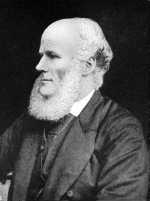
Mr. C. H. Mackintosh – who in spite of the attacks on FER, remained in fellowship with him to the end – is one of the best known teachers of those used in an outstanding way in the recovery of the truth.
He wrote in a clear forceful style which may surprise – and challenge – those who have only seen extracts from his ministry and have thought of it as nice and comfortable.
Thou and thy House is presented here because it is possibly the most thorough examination of the teaching as to the believer's household and its practical bearing.
| Other pages relating to C. H. Mackintosh: Biography: C. H. Mackintosh Biography: F. E. Raven: His Friends: C. H. Mackintosh History: The First 50 Years: A History |
G. A. R.
| "THOU AND THY HOUSE" C. H. Mackintosh |
|---|
There are two houses which occupy a very prominent place on the page of
inspiration, and these are, the house of God, and the house of God's
servant.
Now, while many minds may be prepared to enter into the truth and
importance of all the principles connected with God's house,
When the iniquity of the antediluvian world had risen to a head, and the
end of all flesh had come before a righteous God, who was about to roll
the heavy tide of judgement over the corrupted scene, these sweet words
fell upon Noah's ear,
The same ark that lay open to him lay open to them also. Why? Was it
because they had faith? No; but because he had, and they were connected
with him.
This, to a tender conscience, cannot fail to prove a most pungent
principle.
But not only does God so rule His house: He likewise loves, approves of,
and treats with His marked and honoured confidence, those who do the same.
Now, the question for the Christian parent's conscience really is, 'am I
counting upon God for my house, and ruling my house for God?'
And here, perhaps, my reader may feel disposed to demand fuller
scripture proof than has yet been adduced, as to our warrant for counting
upon God for our houses.
We now turn to the opening chapters of the book of Exodus, where we find
that one of Pharaoh's four objections to the full deliverance and
separation of Israel, had specific reference to "the little ones".
"And Moses said, We will go with our young, and with our old, with our sons, and with our daughters, with our flocks, and with our herds will we go; for we must hold a feast unto the Lord", Exodus 10: 8-9. The reason why they should take the little ones and all with them, was
because they were going to hold a feast unto the Lord.
But what shall my child say to me, if I tell him that I am earnestly
seeking Christ and heaven for him while, at the same time, I am educating
him for the world?
Now, I would affectionately, yet faithfully, suggest the question, whether much of the failure in practical testimony for Christ is not justly traceable to the neglect of the principle involved in the expression, "Thou and thy house".
In the book of Numbers "the little ones" are again introduced to our
notice. We have just seen that the real purpose of a soul in communion
with God was to go up with the little ones out of Egypt.
"But your little ones, which ye said should be a prey, them will I bring in, and they shall know the land which ye have despised. But as for you, your carcasses, they shall fall in the wilderness", Verses 28-32.
My children should be now a testimony for God; and they can only be this by my taking God's ground with them, and going on with Him about them.
Throughout the book of Deuteronomy, the children of Israel are, again and again, instructed to set the commandments, the statutes, the judgements, and precepts of the law before their little ones;
I now pass on to that truly memorable resolution of Joshua, "Choose you
this day whom ye will serve … but as for me and my house we will
serve the Lord", Joshua 24: 15. Observe, "Me and my house".
The opening of the first book of Samuel affords most solemn demonstration of the truth of this:
Here we see that, no matter what the personal character of the servant of God may be, yet, if he fail in the due regulation of his house, God will
not hold him guiltless.
But, how many parents have since trodden in Eli's footsteps!
Here, however it may be objected that, up to this point, we have been
breathing only the atmosphere of Old Testament scripture, and that the
principles and proofs have been only thence deduced; now, on the contrary,
God's approval or disapproval of things, flows out of what He is in
Himself; and, in this matter, in particular, inasmuch as God rules His own
house according to what He is Himself, He commands His servants to rule
their houses upon the same principle.
But let us turn to the New Testament and see if we cannot find in its
sacred pages ample proof of our thesis.
In Christ's commission to His Apostles, we find these words,
"And when he had brought them into his house, he set meat before them, and rejoiced, believing in God with all his house", Verse 34.
In the same chapter, Lydia says, "If ye have judged me to be faithful to the Lord, come into my house and abide", Verse 15.
In all these scriptures, we find the same great truth maintained, namely, that when God visits a man with blessings and responsibilities, He visits His house with the same.
But, if our writings are not the thing, what shall we say of our
meetings – meetings for worship, meetings for prayer, meetings for general edification?
Some there are who present themselves in the assembly with their hearts
big with thoughts about something they are going to do or say.
But, further, how many there are who attend Christian assemblies with
unpurged consciences, unjudged hearts, and unmortified flesh!
Thus, we see, there are various causes conspiring to sap the springs of
life and vigour in the public meetings, and various reasons for the
generally low tone and enfeebled testimony amongst us.
Nor is it a mere church question – a mere difference of judgement as to points of truth, however important in themselves.
Now, under the term "house," three things are included, viz., the house
itself, the children, and the servants.
This is plain enough. If I want to know how I am to provide for and rule
my house, I have only carefully to study the way in which God provides for
and rules His house. This is the true way to learn.
Some may shake their heads and say, This is all very fine, but where will you get it?
But what can be more dishonouring to God than to see the house of His
servant the very reverse of what He would have it?
This was descending to very minute particulars. The same might be said of the following passage from Amos:
But, let me ask, how did we get rank in life? or, in what life is it?
It may, however, be further urged that Christianity affords no warrant for filthy and irregular houses. This is most true.
The next point suggested by the expression, "Thou and thy house," is the
management of our children.
This is a solemn and searching truth, in the light of which we may clearly see the evil of urging our children along a path upon which we profess to have for ever turned our backs, as believing firmly that it terminates in hell fire.
This I feel to be a startling inquiry; yet it is one which we are bound to follow up to the uttermost.
However, it is not merely in reference to the object set forth in our
children's education that we have failed, and so marred the testimony; but
also in the matter of keeping them in general subjection to parental
authority.
Some, however, may say that the apostle in the above passage, is speaking of converted children. To this I reply, that there is nothing about conversion in the passage.
But, it may be said, We must wait for evidences of conversion.
Let as many servants as are under the yoke count their own masters worthy of all honour, that the name of God and his doctrine be not blasphemed".
Nor is the exemplification of this principle confined merely to Old
Testament times. By no means. Look at the case of Barnabas.
Now, in every case in which this great truth has been lost sight of by
Christian parents, their houses have been thrown into confusion.
Nor do people always take a correct view of this matter, and trace the
failure up to its legitimate source.
But the sum of the matter is this, the wilfulness of my children reveals
the wilfulness of my own heart, and a righteous God is using them to
chasten me, because I have not chastened myself.
As to the management of servants, in a Christian household, the principle is equally simple.
Two Houses
Noah
That this is a principle involving vast practical consequences, we shall, with God's blessing and grace, see, ere we close this paper; but we must first seek to establish its truth from the word of God.Abraham
The next passage to which I shall refer occurs in the life of Abraham.Exodus
Numbers
But, let us remember, that the way to prove our entrance into the blessing is by fulfilling the responsibility.Joshua
Eli
Divine Principles
New Testament
Failure
In all these things, as well as in many others, there has been the deepest
and most marked failure – failure which has grieved that Holy Spirit of God
whereby we profess to be sealed, and which has brought dishonour upon that
holy name by which we are called.Our Meetings
The Christian at Home
Rank in Life
The Management of our Children
But it may be urged, Our children will crave a little worldly enjoyment,
and we must indulge them. We cannot put old heads upon young shoulders.
But it will be said, How are our children to get on? must they not earn
their bread? Unquestionably. God formed us for work. The very fact of my
having a pair of hands proves that I am not to be idle.Subjection
God's Moral Government
It is here there has been So much failure in the management of our houses. We have forgotten the principle of righteous rule which God has set before us, and in the exercise of which He has given us an example.
But it may be said, The parental relationship is one of love. True; it is founded in love: "Behold what manner of love the Father hath bestowed on
us that we should be called the sons of God".
But let all be viewed in the light of testimony for God's Son. It is to
further this we are left here.Management of Servants