Menu•SiteMap |
Ministry
Ministry by A. E. Myles
– Part One
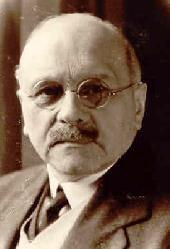
Those unfamiliar with Mr. Myles should see his Biography: A. E. Myles, which also lists his known printed ministry.
- His ministry showed a particular concern for the spiritual well-being and progress of younger brethren.
AEM served widely in the ministry of the word and in other matters which came before the brethren but relatively little of his ministry was printed or remains in print.
- There are several addresses by AEM in the series 'Selected Addresses' and 'Selected Ministry' recently published by Kingston Bible Trust, and some of them appear on this and the following page. See
Site News: The KBT Report.
The Assembly as a Divine Conception is a fine example of his divinely given skill in making the most sublime subjects understandable, yet retaining their spiritual attractiveness.
The Great Truths of Christianity clearly and cogently sets out the distinctive features of Christianity.
- The seven additional addresses all bring out great truths in a simple and understandable manner.
G.A.R.
Page Top
THE ASSEMBLY
AS A DIVINE CONCEPTION |
|---|
| Matthew 16: 15-18, 1 Corinthians 1: 1-9
|
|---|
I had in mind, dear brethren, to speak about the assembly, what is called in the authorised version of the Scriptures the church, but a better term is assembly.
- The word 'church' has come to be associated, in the minds of men, with a material building.
- I need hardly say to any one here who knows anything about God, that he is not concerned at all as to buildings of stone or brick, no matter how beautiful they may be ornamented with all the arts of man.
- God is concerned about persons, and where the expressions 'assembly' or 'church' or 'a building' are used in Scripture, it is persons who are in view.
You will find that the term 'assembly' occurs frequently through the whole of the New Testament, and it is evident to any reader, as I trust it is to the many young people here, that the assembly is a very great thought in the divine mind.
- It is written "Christ also loved the church, and gave himself for it". Ephesian 5: 25.
- Could you conceive of the Son of God giving Himself for a building of stones that crumble away?
- No, it is persons who form the assembly and this passage gives us a little sense of the greatness of the assembly in the thought of God, since, as we read, Christ gave Himself for it.
There are two very clearly defined lines which run through the word of God; in other words believers are viewed in two aspects, one is what is individual and the other is what is collective, or corporate.
- The corporate aspect is that which takes account of the relationship of the assembly to Christ and of the links of relationship with all other believers which flow out of the relation of the assembly to Christ.
- The individual aspect is that which deals with what each one is before God as individually responsible to Him.
- As an individual you are responsible to God for all the light you have received.
- When you come to Christ you begin an individual pathway of movement in relation to Another – the Lord Jesus Christ.
- When in faith you have definitely accepted Him as Saviour and Lord, you are only conscious of your individual blessing,
- but you have not yet learnt then that you are only one of a number, one of a vast number of persons whom the Lord Jesus had in view, and who are all equally the objects of His love.
- You were not conscious of that, but it existed, and when the Lord in His grace began to draw you to Himself, He had that vast company of persons – the assembly – in His mind.
Need I say, that to begin the individual path is very blessed.
- I trust you have all begun, and that you have made a definite movement toward the Lord in response to all His blessed movements in grace toward you;
- but while there is so much blessedness connected with that aspect of things,
- yet there is the other aspect which has to do with your corporate relations, which take account of God's thoughts not only for you,
- but for millions of other persons who live, have lived, or may live on this earth, and all of whom are in the love of Christ in the same measure as you are.
I desire to give you a few thought about assembly relations. I trust the Lord will help me to be simple;
- for it is so easy to use terms which by long usage have become familiar to those who are older, but which may not convey much meaning to the minds of young enquirers into the truth.
- So I should like to speak in simple language.
I read the passage in Matthew 16 because it is a passage that must arrest the attention of every careful reader.
- The Lord Himself makes a most positive and definite statement there about the assembly. He says in verse 18,
- "… upon this rock I will build my church, and the gates of hell shall not prevail against it".
- The rock was not Peter; the rock was what He was in Person, the Son of the living God.
- It is coincident with Peter's confession that Jesus was the Christ, the Son of the living God, that the Lord brings to light that
- the impregnability of the assembly is based upon what He was – the Christ, and who He was – the Son of the living God.
Now, I feel sure that even the young people here, to whom I specially address myself, must have taken note of
- the hundreds of sects and religions there are in this world that nominally acknowledge Christ, and outwardly and publicly stand as the church of Christ.
- You may have read the history of the church, a shameful history of what men have done in the name of Christ;
- you may have read deeds which make your blood run cold, of persecution, of martyrdom, and of what is worse –
- the false obnoxious doctrines of hell which have robbed the Lord Jesus Christ, in the eyes of men, of the glory that if His, and all professedly done in the name of the church of Christ.
- Profession is in possession of powers that aim to take from Christ all that has been given to Him.
- His deity is denied, so also His divinity, His true manhood, and the character of God is falsified;
- and these heresies as to the Person of our Lord Jesus Christ are all covered up by a multitude of worldly activities.
What does it all mean? Did the Lord make a mistake when He said, "the gates of hell shall not prevail against it".
- Did He, the Son of God, speak beyond knowledge. Surely not!
- In John 3: 11 He said, "We speak that we do know".
- The Lord spoke with knowledge and all His words were with authority and according to truth.
- In the light of this, we must start our considerations with the deep conviction in faith, that what Christ builds the gates of hell cannot prevail against.
Yet as you look around or read the history of the church you see what appears to be a total denial of the Lord's words.
- It may appear as if the gates of hell have prevailed, as if they have conquered;
- but the fact is men have laid hands upon and made captive that which stands professedly as the church of Christ,
- and the weight of cumulative evidence, coming as it does from antiquity and fully proved, is such that many serious-minded men, not converted men, will tell you that the most conspicuous failure in all the world's history is the church.
- They say that it has proved futile, wanting, and that it is full of confusion and shame.
Thus we have before us two incontrovertible things, first the authoritative testimony of the Son of God that His assembly is impregnable,
- and second, the testimony blazoned abroad in the world that the church has been taken captive and used for enemy ends.
- Now there is only one possible solution of these seemingly contradictory facts and that is that what stands publicly as the church of Christ, that which has so shamefully failed, is not the real thing at all but
- a false imitation, raised up designedly by the powers of darkness in order to bring public shame and dishonour on the name of Christ.
Now, the comparison of a scripture such as read in Matthew 16 with the address to the church at Laodicea in the book of Revelation, is most interesting in this connection.
- The latter book is very instructive in that is shows what is the final issue of the things that we see working around us today;
- it shows what they will finally come to, and the address to the church at Laodicea is the last state of that which bears the name of Christ today in the eyes of men.
- It is a state of utter and entire indifference to Christ.
- They say they are rich and increased with goods and have need of nothing, and the Lord says to them, "I will spue thee out of my mouth". Revelation 3: 16.
- It is obnoxious, nauseating to Him.
- Instead of the tender and appealing love of the bride that calls for Him, that sits as a widow and mourns during His absence, there is utter indifference to all His claims.
- That is the end, the issue of that which professes today before men to be His assembly.
What about the words of Jesus? What about this confident statement, "shall not prevail against it" – the confidence of a Person who is able to maintain what belongs to Him?
- Well, there is another word in the book of Revelation, at the end of the book, chapter 22, a word that comes from the lips of her who is described as the bride; it is only one word, "Come".
- There is therefore something on earth that will not be satisfied without Christ; something that in His eyes is beautiful, not obnoxious;
- something that He will take to His own blessed heart and cherich and nourih throughout eternity;
- something that is the answer and response to His own blessed love;
- something that has come through the world with all its sad history, out of its persecution, out of its shame, out of the evil doctrine that men have held in regard to Christ;
- something that in His eyes is without spot and which the gates of hell have not touched, nor the powers of darkness put a blemish upon.
- It is the assembly, that which has been kept, and which is fully responsive to all the precious love of Christ, and which in unison with the Spirit will say "Come".
Thus, dear young fellow Christian, in language as simple as I can make it, you get the two lines –
- that of false profession, which outwardly claims to be Christ's but which is not His – a false imitation which has emanated from hell itself and which Christ will have nothing to do with;
- and then side by side and in obscurity you get the line of that which is true, and real and precious in His sight, that which is the product of the Spirit and which the Spirit will say "Come". "The Spirit and the bride say, Come".
- These two lines run through the New Testament scriptures.
As the church was set up at the beginning it was wholly for Christ, marked by purity of affection, first love, and entire separation from the world,
- but failure came in, the flesh was allowed, then tolerated, then welcomed.
- The world came with the flesh.
- Nations which once persecuted the church patronised it, finally added it to their own national glory,
- until the line of distinction between the church and the world was lost.
What do we see now? the so-called churches, not only hopelessly divided, but hurrying after every movement of the world in the vain endeavor to hold a recognised place.
- I hope, dear young believers, that your eyes will be opened to see the line of that which is pure and true, which is under the eye of Christ,
- and which will come out of the confusion of this world purified in affection and responsive to His own blessed love.
Now I should like to call your attention to one of the features of the assembly viz.: — the relationship of the saints to another; it is a divine conception.
- I refer to the manner in which they are connected and joined together, so that under the eye of Christ they are one whole,
- not so many units, or so many individuals, but one whole; they are saints perfectly joined together in the thoughts of God.
- I should like to develop the thought that the assembly is a divine conception, and is wholly the product of the divine mind.
- I am speaking in this way because we are so much in danger of judging divine thoughts by what we see around us in the world.
- We must get away from that, and remember that what we see around us is merely a mass of profession.
- We must turn to Scripture, to the light that is there for the formation of our thoughts, and there we can see that the assembly is a divine conception.
When men form a church, as they often do, they draw up certain rules and regulations, which appeal to their minds as being the best calculated to meet the views of the greatest number, but divine instructions are entirely disregarded.
- If you talk to devoted Christians whom you will find in the various systems around, you will gather that what they are connected with appeals to them as being more right than what is connected with some other body.
- But what Scripture would teach us is that the assembly is a divine conception from beginning to end,
- that God has ordered it according to His own infinite wisdom and knowledge, not only in its outline but in the most minute detail connected with it,
- so that He has not left even one single detail for the mind of man to add to it.
- The assembly as it is indicated in Scripture is something that the greatest mind in this world could not add to or improve in the slightest particular.
- What a wonderful thing to come to a fellowship which is of God and which cannot be improved upon!
- What a favour to be brought to something to which the mind of man cannot offer a single suggestion of improvement!
- Do you know any organization in this world – I speak of man's organizations – that cannot be improved?
- The best business houses in this world are always on the outlook for suggestions of improvements, and they will pay for them.
- They recognize that things are advancing and improving and that the progress of science is always adding some feature that commerce can make use of.
- But when you come to the assembly, it is a conception of the mind of God that He is not ashamed of,
- for even the smallest detail in it is perfectly in accordance with His own blessed mind.
We have often seen great men in the world, men of gift and attainment, as we would speak – men with master minds, such as Napoleon or others,
- and we may have thought, well, if such an one only came amongst the people of God what a help he would be.
- What could he do? Well, you say, look at his mind.
- Was his mind as great as the mind of God? Oh no, it could not be.
- In the assembly we have the divine mind, and no man could add to that.
- I should like to impress you, dear young Christian, with the greatness of God's thoughts.
- He has made it possible for us to be in touch with His great things, with immense things, things that are most profound, and that come from His own blessed mind as perfect, in short, the things of Christianity.
- Lift your eyes for one moment from what is imperfect and what has failure and weakness stamped upon it,
- and let them rest upon that which has come from God in all its completeness, and remember, that what God is doing now He is going to maintain for eternity, for it is all of Himself.
In this first epistle to the Corinthians we get many thoughts which are connected with the divine conception of the assembly.
- The people of God at Corinth needed adjustment. They were going on with things which were not according to the divine thought,
- and so the apostle presents them certain features of the assembly as it is in the mind of God in order to correct them, so that what belonged to man's mind might be given up and refused.
- He begins by addressing them as "called saints".
- In the religious world the idea of a saint is largely taken from the Roman Catholic conception which is that hundreds of years after persons have passed out of this life they should be elevated by the church to a saintly position.
- Now, God works in exactly the reverse way from that.
- He approaches us and tells us what His thoughts about us are, and after that He works in our hearts and in our souls to bring us up to His thoughts.
- He begins from the top. He knows exactly what He is going to do before he begins.
- When a man starts to do a certain thing he goes as near to what he conceives as is possible,
- but God begins with His own thoughts, draws near to men and gives them those thoughts as light to their souls, and that light becomes the truth to them.
- And so "called saints" is the thought of God in regard of every one of His people.
- All His people are saints. They are called saints.
- It is not that they will ultimately reach this saintly position; they begin with it; it is what they are according to God, and He works in them to bring them into the practical reality of it.
- I appeal to you, younger brethren, to take that into your hearts – that God looks upon you as saints.
- It is not what men call you, but what you are by divine calling, and in the light of that wonderful position which we have under the eye of God,
- the apostle proceeds to speak of certain features of the assembly, and wonderful features they are.
It says, that "… in everything ye are enriched in him". 1 Cor. 1: 5. What a suggestion of wealth that is connected with the assembly!
- Well, that is her portion; the word of wisdom was there; the word of doctrine was there;
- in short, the assembly is endowed with everything which is necessary to carry her right on unto the "coming of our Lord Jesus Christ". That is God's thought.
- You know what an endowment is. A person builds a hospital, puts up the building, equips it, makes it all ready, but that is not enough;
- it has to be endowed so that from day to day it may be furnished with the constant supplies that are necessary to carry it on.
- Now, the assembly has not only been constituted and formed by the coming of the Spirit, but God has endowed it with all enrichment, with all treasure and wealth,
- with the wisdom and the knowledge and the gift that is necessary to sustain it and maintain it until the day of the revelation or coming of Jesus Christ. What a wealthy place!
- And note, all this is in the assembly on earth, not the assembly in heaven, and there is too now, the functioning under God's eye,
- and the practical everyday working out of this wonderful organization with all its precious endowment, with its treasure of wisdom, of knowledge, of doctrine and of gift.
- What a marvellous place!
Have you ever thought how the saints can continue to maintain for God here?
- I know this, that in the professing systems of religion of this world there is a great deal of concern at this moment as to how they are going to carry on, for their resources are running out.
- But these divinely given resources cannot run out; they will not fail.
Think of the assembly as the vessel of utterance! Utterance of what? you say.
- A place for the display of the gifts of men, or of the glory of men, or of what is connected with man after the flesh? Oh, no!
- The assembly is the place of utterance, where every little movement of affection for Christ finds intelligent expression.
- When God gave us this marvellous revelation of the assembly that was to be for Him and for Christ, He had in mind that it was to be a vessel of utterance; it was to be a vessel of expression.
- You may come amongst the saints of God who have through grace a measure of light; you may be a young man; you may be shy;
- you may be backward in expressing yourself and you may say, "I do not see how I could ever take any part in the meetings"; but the assembly is the place of utterance.
- If you do not give expression to what comes into your heart there, another will.
- Do not be dismayed, do not be discouraged about it. It is the assembly that is a vessel of utterance.
- You may be a sister; you may say, "I wonder why that brother that sits in front of me never says anything, never has anything to tell the Lord".
- Perhaps if there were something in your heart that had to find expression, that brother would get to his feet; he could not help it.
- What is in the company that is moving in the light of this is bound to find utterance, it must find expression.
- If expression is lacking, it is because there is not appreciation in the hearts of the saints seeking to find an outlet.
- It is the place of utterance, I repeat; it is the place of wealth and God would bring His people into the practical enjoyment and appreciation of that.
Now I turn to verse 9. It says, "God is faithful, by whom ye were called unto the fellowship of his Son Jesus Christ our Lord".
- I am trying to indicate just one or two features of the assembly as it is in the mind of God, so that we might be impressed with the sense of wealth and treasure of that wonderful place,
- but now in this verse things come a little closer, because it speaks of what is practical.
- In the first place it say that God is faithful. Take that into your hearts.
- What is He faithful to? He is faithful to His own thoughts, to every one of them.
- In 2 Timothy we get indicated the path in a day of ruin that is open for any man who loves the Lord Jesus Christ.
- He is to depart from iniquity; he is to follow after righteousness, faith, charity, peace with those that call on the Lord out of a pure heart. Chapter 2: 22.
- You may be one of a little company, perhaps a company of only two or three who are seeking to do that, and what you find is that God is faithful.
- He has not departed from His own thoughts one iota.
- All the failure and the weakness of which we are so conscious has not diverted the blessed God from His original thought. He is faithful.
- He wants you to know that He is faithful – faithful to His own thoughts about the assembly and her relation to Christ.
- He is the faithful God, and it goes on to say that He has called us to the fellowship of His Son Jesus Christ our Lord.
I want now to say a little about that fellowship for it is connected with the assembly.
- You must know what that fellowship is, for a fellowship has not only privileges, but it has obligations, and this fellowship is the fellowship of God's Son Jesus Christ our Lord.
- I shall give you an illustration of what a fellowship is.
- There are many associations in this world – I do not call them fellowships, for fellowship is a divine term; but there are many associations in this world in which men band themselves together for certain purpose.
- For instance, there are political associations; the obligation in that case being that all should have the same political belief.
- If a man who is a Conservative, and belongs to a Conservative club becomes a Liberal, if he does not resign, they very quickly turn him out; he is not conforming to the association.
- Then there are musical associations; people have common tastes about music and have joined themselves together as having these, but politics are not the test in a musical association.
- The point I would emphasize is this, that all the associations of men are partial.
- They are held together concerning one feature only of community interest, but they do not embrace the whole life of a person.
But when you come to the fellowship of His Son, Jesus Christ, our Lord, it is a dominating fellowship; it is a controlling fellowship;
- it take account of every sphere of man's life – business features, household features; it take account of every place into which your feet take you, and of every thought that finds lodgment in your mind; it is a regulating fellowship;
- it takes everything into its view, and why? Because it is the fellowship of His Son.
- Think of God drawing men together in such wise as to have a part with His own blessed Son!
- It is a partnership really. Every saint is a partner; everyone has a vital interest; every one has a definite place.
- In the fellowship of His Son Jesus Christ, God would have you enjoy all that is in His Son.
- He wants you to know it, and in order that you might know it, you must take up the obligations connected with it.
- These obligations bear on every feature of daily life, for the fellowship of God's Son Jesus Christ our Lord is a very great fellowship.
- God would give you, dear fellow-believer, to know, yea, to know what He thinks about His Son;
- 'His Son' is what He is on God's side and 'Jesus Christ our Lord' is what He is on our side.
Now, if you are a Christian, I do not say, if you are breaking bread, but if you are a Christian, if you have the forgiveness of your sins and the gift of the Spirit of God, you belong to this fellowship.
- You may not be conscious of it; you may never have followed its workings, but you belong to it.
- God has connected you with it; you are a part of it.
- God has made you a partner in this wonderful "concern" that has all this wealth of capital, that has been endowed with all the treasures that the mind of God could devise.
- You are a partner in this wonderful privilege, and along with the privilege comes the serious obligations of fellowship.
- Every association that you put your hand to – the association of business, the companionship of marriage – has to be judged in the light of this fellowship.
- Is it in accordance with this fellowship?
- Every place you go into, and everything that you identify yourself with affects the fellowship.
- If you are breaking bread, you involve the brethren in that which you touch.
- They may not see you, there may be no eye resting upon you, but you compromise the brethren if you do not answer to the obligations of the fellowship; you identify the fellowship with every association to which you put your hand.
- Solemn and serious consideration for us!
Now, God has called us into the fellowship of His Son Jesus Christ our Lord.
- God would have us know, dear brethren, the preciousness of Christ, not as mere onlookers, but as those who are connected with it vitally, and who livingly form a part of the organization.
- God is faithful to that.
- Now, are we true to it?
- Let us ask ourselves the question, are we true to it?
- Are our associations in line with it?
- It is not here the fellowship of His death that is referred to; the fellowship here is more than that; it is that of God's Son, Jesus Christ our Lord.
- It involves His death; for the very title Jesus Christ our Lord involves it, for that is what He is as the risen, ascended Man; that is what God has made Him both Lord and Christ; but it is Himself.
- All that He has died to is outside the fellowship, whether it be this world's system, or any religious system; everything that is false and unreal, is all severed by His death.
- This truth is taught in 1 Corinthians 10.
- We are identified with the symbols of His death and we are called to be apart from every other association.
- But oh! to have Himself as the bond of fellowship, Himself!
- All the treasures of wisdom and knowledge are in Him!
- Think of what we have in the Lord!
- Think of His ability to give gifts to men, to raise up men for the edification of the assembly!
- What a treasure we have got in Him!
- Think of all the blessed resources that are in His hand to minister to the assembly, to fill it with holy delight – with Himself, and with God!
- All these things are in Him, in His Son, Jesus Christ our Lord, and you are privileged to have a part in it too.
- Are we enjoying it?
- What a goodly portion!
- Does it represent something irksome to you?
- Is it a place of bondage to you?
- If it is, you have not apprehended the preciousness of His Son Jesus Christ our Lord.
- There is no bondage there.
- If it indicates for you a narrow pathway in this world, if it takes you into places where shame and humiliation will be your portion, is it not more than compensated for by what you find in Christ, in His Son?
- He is God's delight; God finds all His delight in that blessed One.
- Think of Him as being great enough to fill the heart of God!
- Can He not fill your heart and mine?
- Oh, surely the compensations of this fellowship are wonderful!
- I hope you are finding it so, that you are not feeling irksome and hard, that as you go through this world, you do not say, "I must not do this, and I must not go there"; but that you say, "I cannot do it, because of what I have found in Christ".
- Your feet will not then be found in the paths of wickedness; you will not find yourself in the places of pleasure of this world;
- your soul will not delight in the literature of this world; you will find your delight in Christ, in His Son Jesus Christ our Lord.
Hast thou heard Him, seen Him, known Him
Is not thine a captured heart?
Chief among the thousands own Him,
Joyful choose the better part.
Ah, dear brethren, that is our portion; that is what is real in the world.
- That is what is going to come out of all the confusion and shame of this world in all its beauty and preciousness as the bride.
- You have a part in that; take your place in it, let your heart expand itself there;
- let your mind ponder as controlled under the influence of the Spirit on all the vast range of things that are connected with Christ.
- Surely that is great enough for you life and mine, and wisdom and knowledge are found there in their totality.
- The knowledge of man is only partial. The greatest man in the world will tell you that there is much that he does not know,
- but in this wonderful fellowship there is wisdom in its totality; it is all that is in Christ that is open to us, all the vast resources in Christ God's Son – what He is to God, and what He is to us. All that!
- There is nothing else like it in the world; nothing that will give such wonderful compensation, nothing that can satisfy the heart like it, dear young Christian.
- Oh, I should like to encourage you to go in for it wholeheartedly and devotedly.
You may be a Christian yet never have given yourself to Christ. You may only have given Him a place in your life.
- He does not merely want a place in your life; He wants you. He wants you altogether with no reservation; He wants you to commit yourself to Him and to His people.
- You may look at His people and they may look a poor and miserable lot – a poor and afflicted people; you may look at their outward appearance and there may be nothing about them outwardly that attracts the eye, but oh, what a treasure you will find if you see them as Christ sees them.
People may say that Christians are a poor lot; ah they are not! Every one of them is a prince.
- They are not riding on horseback in this world as princes; they are walking on foot; they are not clothed in princely garments; they will some day, but not today.
- The beggars are riding on horseback; the princes are walking on foot.
- If your eyes are opened to see them as Christ sees them, what you will see is that the greatest amongst them are captains over a thousand, and the least among them captains over a hundred.
- There is not one of them that is small. Every one of them is a chief. Every one is distinguished.
- Every one is princely like the sons of a king – these are the brethren of Christ.
In closing I would say that if you tread this path about which I have been trying to may suggestions, if you take up this fellowship with all its precious privileges,
- you will find Christ in His beauty and you will find the saints as the product of His own blessed work, beautiful and fair.
- You will find that which the gates of hades cannot touch; you will find that which will come out of all the confusion of this world as the bride,
- and in that wonderful sense your heart and your mind will be satisfied.
- You will be, too, more, prepared to accept the discipline of the way as contributing to that; you will be prepared to accept an outside place in this scene
- because of the present recompense and the future prospect, not only for what you get now. God will give it to you now.
- He will make it available for your hearts.
I pray earnestly that the dear young people may find their way to such blessedness even now to be established as upon a rock,
- not to be tossed and blown about by every varying wind, nor as marking a crooked course through life, as many of us have marked, but marking a straight course that has Christ as its object and its goal.
- I desire for you with much earnestness that this might be your portion, for His name's sake.
A.E.M.
Page Top Article Top
| THE GREAT TRUTHS OF CHRISTIANITY |
|---|
| A letter – No Date |
|---|
In asking your consideration of the subject of this letter, I seek help from God, as having no selfish motive,
- but only a very true and real desire that you may find the source of eternal happiness in the great and glorious Person in whom my faith rests.
- I write as one who has obtained mercy, and who knows that the surpassing mercy which has reached such as myself can reach any man.
We have often given many hours to the consideration of some business problem so that
- it is not unreasonable to devote time to the question of our eternal security and happiness.
- None of us can afford to make a mistake in a matter of such importace.
Much that I shall say will be opposed to what is accredited in the religious and scientific world, and it may cut across cherished thoughts in your own minds,
- but I feel sure you will give earnest consideration to what I present.
- My expectation that it may reach an win your hearts for Christ is in God, before whom I shall pray unceasingly for your blessing.
It may perhaps be well to set out, in simple terms, the basis of Christian belief as I understand it.
1. God, the Creator, in His being, thoughts and ways, is greater than man His creature, as the heavens are higher than the earth. He is beyond all investigation or research.
- "Lo, he goeth by me, and I see him not: he passeth on also, but I perceive him not. Behold, he taketh away, who can hinder him? who will say unto him, What doest thou?", Job 9: 11-12.
- The creature cannot comprehend the Creator.
- If God is to be known, it can only be by revelation, for God sovereignly and of His own pleasure makes Himself known in the way of His choice, that is, in grace which is in and through His Son, our Lord Jesus Christ.
2. The Scriptures are the word of God, given to men by direct inspiration, and having all the authority of a direct communication from God,
- they are able to make us "wise unto salvation, through faith which is in Christ Jesus".
3. The Lord Jesus Christ is the Son of God. In His own Person and Being, He was, is, and ever will be, God.
- He, a divine Person, became a man in order to work out redemption, meet man's need, and reveal God to men.
- His death is the basis of God's approach to men in grace, and apart from His death and faith in His name, there is no way of approach to God, and no way of salvation for men.
4. Man is now a fallen creature.
- He was not so created, but by listening to the devil he came under the power of sin and became a fallen creature.
- The children of Adam inherit a sinful nature and repeat the sins of their first parents: as such, they must come under the righteous judgment of a holy God.
I make these simple statements as the ground of what I present to you.
- The great truths of Christianity are not presented to man's intellect for investigation, they are preached for the acceptance of faith.
- They cannot be proved by man's natural powers. If they could be so proved faith would not enter into it.
- Faith is not reasoning, it is not sight; it believes God, no matter what may be seen.
- "Without faith it is impossible to please him: for he that cometh to God must believe that he is, and that he is a rewarder of them that diligently seek him". Hebrews 11: 6.
- Here, at the very threshold of the way of blessing, all men, learned or unlearned, rich or poor, are put upon a common platform.
- Yet many of the learned men of to-day, both religious and scientific, are virtually saying, 'We will believe God as and when we prove Him, and when we prove Him and accept Him the common and unlearned can do the same'.
- Such an attitude is a denial of faith, and a claim that man is as great as God.
In presenting, therefore, what cuts at the root of modern beliefs, I am comforted and emboldened by the words of Paul,
- "For the weapons of our warfare are not carnal, but mighty through God to the pulling down of strongholds, casting down imaginations, and every high thing that exalteth itself against the knowledge of God, and bringing into captivity every thought to the obedience of Christ". 2 Corinthians 10: 4-5.
Practically every truth I have stated is commonly denied in the world. Men proudly say it is because they have become enlightened; but another explanation is found in the word of God:
- "It was needful for me to write unto you, and exhort you that ye should earnestly contend for the faith which was once delivered unto the saints.
"For there are certain men crept in unawares, who were before of old ordained to this condemnation, ungodly men, turning the grace of our God into lasciviousness, and denying the only Lord God, and our Lord Jesus Christ". Jude 3-4.
- And again, "But there were false prophets also among the people, even as there shall be false teachers among you, who privily shall bring in damnable heresies, even denying the Lord that bought them … and many shall follow their pernicious ways". 2 Peter 2: 1-2.
- And yet again, "For such are false apostles, deceitful workers, transforming themselves into the apostles of Christ. And no marvel; for Satan himself is transformed into an angel of light. Therefore it is no great thing if his ministers also be transformed as the ministers of righteousness". 2 Corinthians 11: 13-15.
I ask you to consider the possibility – to me a real truth –
- that Christianity, as we now see it publicly, has been deliberately corrupted by the powers of evil, so that men should be deceived and Christ humiliated.
- However, my purpose is not to enter into the detail of what I believe to be false, but rather to set forth what I believe to be true.
I will now seek to open up the basic teaching of Christianity, as it deals with the question of man's standing before God,
- taking my instruction, not from the corrupted, lifeless profession which has made the things of God nauseous in the sight of many sober, thinking men, but from the incoruptible word of God.
- For the sake of clarity I will deal with the paragraphs as numbered.
1. God
If there is a God, as my faith, hope, peace and love most strenuously affirm, He must be the final Arbiter of the universe.
- His word must rule. His desires must eventually triumph.
- Though in grace He may wait for thousands of years, faith remembers that "one day is with the Lord as a thousand years".
- If He tolerates enemies it must be to make them serve His ends. He allowed men to crucify Christ, not because He had no power to interfere, but because it was in accordance with His own plan that Christ should die.
- If He undertakes to bless man, His creature, the blessing must transcend any happiness or pleasure which can be found apart from Him, and must be eternal, because He is the eternal God.
- All this accompanies the very idea of a Supreme Being, the Creator.
- As God's creature I must have to say to Him, to answer for my life, and for the way I have treated His Son as presented to me in the gospel, and all this,
- not in the light of men's corrupted standards, but in the light of God's requirements and standards.
In view of this, my first inquiry is, What kind of a God have I to meet?
- Men largely, even in enlightened England, set up a god of their own imagination. They accredit their god with whatever characteristics they please.
- A new religion, or a new set of beliefs, however fantastic a departure from the truth, can be started any day and find ready acceptance.
- Wherein does all this differ from the heathen, who without any of the so-called benefits of civilisation, make a god of wood or stone, of whatever form pleases him?
- If God be God, supreme, omnipotent, desirous in grace of having man, His creature, near to Him, surely you would look for some overture, some movement on His part that would definitely yet simply convey to men what God is like.
- I confidently assert that we have a revelation from God which clearly show His nature, attributes and disposition towards His sinful creatures.
- That revelation has been given to men by the only One who could speak with knowledge and authority about God, the blessed Son of God Himself, our Lord Jesus Christ. He, though coming in manhood's lowly form, was God.
- That revelation is the foundation of every hope for men. In it the nature of God is revealed as love, and accompanying that is the divine attribute of righteousness.
God's love is holy. There is no standard amongst men by which the holiness of God can be measured, but there is a manifestation of it in the cross of Christ.
- I quote from Psalm 22, where the inner feelings and sufferings of Christ are prophetically unfolded:
- "My God, my God, why hast thou forsaken me? … O my God, I cry in the daytime, but thou hearest not … but thou art holy."
- Here the universe witnessed the supreme sight of a holy, sinless Man forsaken by a holy God; a Man who never in thought, word or deed had sinned against God,
- but being there as the sin-bearer, bearing the holy judgment of God, the blessed Son of God is forsaken, His cry unheard, because God was holy.
- He cannot even look upon sin. His standards cannot vary. They are fixed by no caprice; they exist because of what God is. May I say, reverently, God is bounded by what He is.
- The Scriptures say, "It was impossible for God to lie", Hebrews 6: 18. This is not that He chooses to speak truth, but that it is impossible for God to do otherwise because of who He is and what He is.
- If we have any thought that God is moved by the impulse of the moment in regard to moral issues, as an earthly despot might be, we should never know from day to day where we stood,
- but the knowledge that God is holy, righteous, and moves on fixed, unchanging, yet revealed principles, gives a sensse of eternal security to all who have believed in the Saviour, His Son, our Lord Jesus Christ.
God demands righteousness from men. Being a righteous God, could He do less? But He demands it so that the absence of it should be recognised.
- When such is the case, God does not lower His standards to meet the need, but the death of Christ enables a righteous God to impute righteousness where faith accepts Christ as righteousness.
- It is in the light of God's standard I find myself a sinner, having come short of the glory of God.
- By men's standards I may be no worse than most, and a bit better than some, but men's standards are corrupted, God's are unchanging and pure.
- So the revelation of God shows me, first, what God is, and then, as a consequence, what I am. I stand exposed in the holy light of God, where God stands revealed.
- I, as a sinner, am unable to fulfil my obligations, as it is written, "There is none righteous, no, not one", but where I am exposed in all my need,
- God is revealed as prepared to meet that need through "the righteousness of God which is by faith of Jesus Christ unto all and upon all them that believe", Romans 3: 22.
2. The Holy Scriptures
I now turn to the section which refers to the place the Holy Scriptures have in this wondrous scheme.
- No feature of Christianity has been so "sucessfully" attached as the Bible.
- Of necessity what is written is open to every attack, and so great is the enemy's success that it is rare to meet an educated person who accepts the Scriptures as the word of God.
- The Bible is prized for its literary merits, and classed along with other books which are equally valued.
- But if the Bible is the word of God it should be accepted as authoritative.
- If it is only a sham it should be burned – there is no intermediate point.
- Protestantism in particular is responsible for opening the door to infidelity and unbelief in the Scriptures.
- What is the effect upon the simple, when the great leaders publicly avow their unbelief, when all their efforts are towards accommodating Christianity to the present world system?
- The end of Protestantism is seen in Revelation 3: 14-22, where lukewarmness and indifference to Christ is exposed as nauseous to God.
- Roman Catholicism, on the other hand, has hidden the Scriptures, and substituted for the authority of God's word the edicts of their leader, thereby putting him in the place given to Christ alone.
- Yet the public position is rapidly working up to this: that of all accredited, so-called Christian bodies, only the Catholics profess and enforce the fundamental doctrines of the deity of Christ, the virgin birth, and the fall of man.
- I do not speak of individuals in these systems, for there are many who have faith in Christ.
There are certain proofs of the inspiration of the Scriptures which are clear to faith.
- The Bible perfectly describes me. It tells me I am a sinner. It shows me how unfitted I am for the presence of God.
- No one but God could afford to tell me the naked truth about myself. What philosopher could afford to do it?
- Even if a man were sincere, he could only work from man's standard of measurement, whereas the eye of God penetrates to the centre of my soul and exposes me.
- Yet the exposure is not punitive, it is in view of meeting my desperate need. If God took up things punitively with the children of Adam, who could stand?
- The Scriptures unfold the way to forgiveness and salvation as it is in Christ Jesus, and my heart has found rest in believing.
- In them I see one harmonious thought, presented through many writers, and over long periods of time. From the very beginning they point to Christ.
- They foretell His coming hundreds of years prior to the event; they foretell His death; they show the reason for the present position of the Jew; they explain the presence of death; they tell of a future day of blessing when Christ shall reign over the earth.
I find, too, the heart of God revealed, and His righteousness maintained.
- The discoveries of science, wonderful as they are, do not tell me anything about the heart of God.
- The Scriptures do not foretell the progress of science and invention, they deal with moral things.
- Philosophers may say they are incomplete; so they are to them, for they look for what is not there.
- First, they assume to fix what should be there, and then deny the inspiration of the word because it is not there.
- The geologists say their deductions conflict with the statements of the Bible, but they differ from each other by thousands of years in their own deductions!
- The so-called higher critics, christian in profession, have bit by bit denied the greater part of the sacred writings,
- but none of these things deceive or weigh with me. The Lord has them all in derision.
- I see God in His word has used language, figures of speech and examples, as understood by men in that day.
- God would not confound men by speaking of what was not generally known; He spoke to simple persons. He has always addressed such.
- "Hath not God made foolish the wisdom of this world?", 1 Corinthians 1: 20.
The Lord Jesus, as God manifest in flesh, knew all things; no feature of science was hidden from Him, the Creator of worlds, yet what He laboured for was that men should know God.
- His desires for men were that they should have eternal life, and every detail of the divine plan and the way into life is unfolded in the words of Jesus.
- God in His word deals with important things, not the detail of creation, or the laws which move the universe.
- All that, great as it is in itself, is relatively small, it is the work of His hand, perfect and wonderful,
- but what is linked with His affections must of necessity be the greatest thing the creature can know.
- One great proof of the truth is that men in all ages who have walked before God have learned to trust and love Him.
- That men should fear God is understandable, but that they should love Him in response to His love is beyond understanding.
- Abraham was called the friend of God, He learned that God could raise the dead.
- To the believer death is not a calamity, for resurrection into a condition of life which is beyond death is the hope of all who know God.
- I reverence the Scriptures; and as I prayerfully study them, I find fresh features of such surpassing blessedness that I could only accredit them to God.
3. The Person of Christ
I turn now to speak with holy reverence of the Person of Christ, for I worship, as God over all,
- the blessed Person who in manhood "loved me, and gave himself for me". I marvel at the grace of His stoop to manhood.
- I think of Him, the holy, sinless One, moving about in this sin-stained world, amidst all the terrible consequences of sin, feeling and beholding all that lay between God and man,
- and then, as the final act of His short earthly path, offering Himself a ransom for all, yes, even for those who crucified Him!
- It is rare to-day to find a person who believes all that the Scriptures say of Him.
- Some deny His deity, some His manhood, some believe He was only a mythical figure, some believe He was God but not man.
- Some would cause His name to perish, some use it only to give point to an oath, or to adorn a wanton jest.
- If the Lord Jesus is not now and for ever a man, then I can have no link with God, can never know nearness to God, for God is a spirit.
- I need the Man Christ Jesus to represent me, to support me for ever in the presence of God, to succour me now in my weakneess, to speak to, to walk with, a real, living Man.
- Yet if the Lord Jesus is not God, how could He have solved the great question of good and evil according to God? meeting the holy nature of God in so doing,
- and establishing a righteous basis for setting forth Jesus – "a propitiation" [or mercy-seat] "through faith in his blood".
- Deny the deity of Jesus and the whole fabric of Christianity is destroyed, and faith and hope cease.
It was by man that sin entered into the world, and if Christ is to die for sinners it must be as man.
- Yet that Person is in His own Being the Son, and it is who and what He is that gives value and worth to His death, that makes it morally posible and just that His death should open the way of salvation for millions of men.
- There is no thought so stupendous, so utterly beyond comprehension as that He shold die for the creature's sin.
- As believing that He is the Son of God, the whole plan of redemption becomes reasonable. Deny any attribute or glory of Christ, and it becomes unreasonable.
- There it stands as God's own way of dealing with the situation of the sinner's need. It is for acceptance or refusal, not for alteration or amendment.
- It is God's way, God's plan, God's Son. He will not receive men on any othe ground:
- "There is none other name under heaven given among men, whereby we must be saved".
- People talk about seeking God in their own way. Does not such language slight the sacrifice of Christ and deny to God the right to indicate the way that glorifies Him?
- Such are like Cain of old, who offered the fruit of his own toil and was rejected, whereas Abel offered a lamb, a figure of the worth of Jesus as going into death, and he was accepted.
- Scripture is full of such figures, beginning with Adam, who when he sinned was clothed by God in a coat of skin, figure of covering based on the death of Christ.
4. The Fall of Man
My last numbered section is a most important one, for if the fall of man is denied, there is no need of a Saviour, and all that I have spoken of ceases to be of momentous importance.
- If man has not forfeited all rights through sin, then he is able to ask for justice. But if this were so, why did Christ die, and why does man die?
- The story that runs through the Bible is that the first man, Adam, fell through disobedience and involved his race in that fall.
- "Wherefore, as by one man sin entered into the world, and death by sin and so death passed upon all men, for that all have sinned", Romans 5: 12.
- Every child of Adam is born in sin, that is their condition in the light of God. They are begotten of sinful parents, and before their history has
progressed far they commit sins.
- To recognise this means blessing, because God has provided a way whereby my sinful state and my sins are devinely dealt with.
- It was by "one man's disobedience many were made sinners, so by the obedience of one shall many be made righteous … But where sin abounded, grace did much more abound: that as sin hath reigned unto death, even so might grace reign through righteousness unto eternal life by Jesus Christ our Lord", Romans 5: 19-21.
- In every age God has accepted any man who in honesty of heart and as recognising his sinful condition, has sought Him after the appointed way.
- The trouble is that men seek other sources of help, such as their own efforts. There is an active enemy, the tempter, who will whisper every lie into the ears of those who do not listen to God.
- All who hear God have the remedy put before them, that the situation has been met without impugning the character of God, or denying that man is a sinner.
- The whole fabric stands together, and God is pledged to save "all that come unto him" by Jesus Christ.
Death is an ever-present witness that sin is a terrible thing in the sight of God.
- It is an awful reality for the unsaved to contemplate leaving all that they love, to pass out of the world where Satan has deceived them, into eternity to face God in judgment.
- How much better to come under the shelter of the blood of Jesus, to be cleansed now from the sins of a life-time, and to be established in such favour as to be beyond the imputation of sin.
- "Blessed is he whose transgression is forgiven, whose sin is covered. Blessed is the man unto whom the Lord imputeth not iniquity", Psalm 32: 1-2.
Faith
My final remarks will be on the question of faith. Is it possible that faith in Christ can bring a sinful man into the known favour of God?
- Can he be absolutely assured, not merely hope, that his sins are forgiven and his eternal happiness secured? The word of God assures me that it is so.
- My purged conscience adds to this witness. My joy in God and love for Christ confirm it.
- I have seen it in others more brightly and fully than in myself. I was once privileged to see a dear woman in Scotland who had lain in bed for fifty-one years.
- Her circumstances were poor, her suffering was great. Shut off from all that would make life worth living to a worldling, she had found full satisfaction in Christ.
- Full of happiness and joy, she was waiting till He who died for her called her to Himself.
You may say it seems a small thing to accept only what another has done – yet it is the only way that leaves all the golry to Christ.
- To say, I will do the best I can and trust Christ for the rest is to displace Christ from the glorious preeminence that He occupies as the accomplisher of redemption.
- Could we expect to secure God's favour in such a way? If I or any other could add anything to the work of Christ, then would the glory be divided. Why not leave the glory to Him as the One who did it alone?
- His work is accepted by God – surely the final test – as a complete answer to the sins and the sinful state of all who believe in Him.
- God delights to receive and honour the man who honours His dear Son by trusting in His finished work.
Let one in his innocence glory,
Another in work he has done,
Thy blood is my claim and my title,
Beside it, O Lord, I have none.
I trust I have not wearied you by the length of my letter. If volume is a witness, it will prove that I have your welfare at heart.
- If, with your keen, analytical minds, you undertake to pull this letter to pieces, you could do it, but you would only destroy my feeble words.
- God remains. His word accomplishes His purpose, and His house shall be filled.
While you read, and I trust ponder, I shall pray. I have no hope in argument, no desire to convince without converting,
- but I have great hope in God and in the subduing power of His grace.
- That you, with all your loved ones, may find eternal joy in God is the earnest desire of
Your sincere well-wisher, A. E. Myles.
Page Top Article Top
| THE MOVEMENTS OF DIVINE PERSONS |
|---|
John 1: 14; 6: 38-39; 13: 1; 14: 23; 16: 27-28
Place and date unknown |
|---|
Our understanding of the truth largely depends on our apprehension of the movements of divine Persons.
- The coming down from heaven of the Lord Jesus, His going into death, His rising from the dead, and His going back to heaven, complete a cycle of divine movements which are detailed in the Scripture, along with certain features of the truth connected with them.
The first movement before us is in John 1, where we read
- "the Word became flesh, and dwelt among us".
- Here we have presented a condition which is visible, in contrast to one which is invisible, for
- "No one has seen God at any time", John 1: 18.
- Indeed, we are told that no one can see God. But a divine Person could take another form, in which He becomes visible to men, and that is what is conveyed in the statement, "the Word became flesh".
- He became something which was not true of Him before; this involved a movement on His part. When He became flesh, it was His own act, an act that clearly indicated God's desire to be known.
- God is so great that there was no possibility of any creature reaching up to Him in the conditions of Deity, He dwells in light unapproachable. No one could make a movement towards God in that sense; God must make the movement if He is to be known.
- If He is to be seen by men, or men are to be filled with what God is, then God must come near in such a way that men are constrained and attracted to look, and contemplate.
The Word became flesh and the apostle says,
- "we have contemplated his glory".
- It was a glorious matter to him, a matter to fill the soul! It was not a cold doctrine or statement of belief; but something that filled his soul with the sense of glory.
- As we apprehend that a divine Person has taken a form that brings Him within our range, all His movements are full of importance and meaning to us.
- As understanding these movements, we move towards that blessed Person, and learn in the power of the Spirit, what they mean. There is nothing else within our view, that is of such magnitude, and so attractive.
This movement of the Lord in the first chapter of John is at once seen as holding men, attracting them, so that they become contemplators of His glory. Then it gives the character of the glory –
- "as of an only-begotten with a father",
- as having especially in view His relation with the Father. How delightful He was to the Father! There is nothing more blessed to contemplate than an only-begotten with a father, when that only-begotten is Christ with His Father.
Now what we might speak of as a second movement, is in chapter 6, where we read
- "I am come down from heaven".
- That is a change of position, not a change of condition, as in the first movement, nor a question of another form.
- Who could say, "I am come down from heaven", but a divine Person? What does it mean? He presents Himself as food,
- "the true bread out of heaven", verse 32.
- It is full of meaning having in view that believers should be made independent of that which supports men of this world. Whatever feature of glory or greatness you might speak of in this world, there is nothing like this.
- This movement is not to be compared even with the visitation of an angel, great as that would be, for angels are representatives of God, but they move only as sent. But here is One who can say,
- "I am come down from heaven", John 6: 38.
- He came down. Think of the stoop of it! And then he says,
- "Not that I should do my will, but the will of him that has sent me".
- You will observe it says first, "I am come down from heaven". That is His own movement, the movement of a divine Person, One in the absolute co-equality of Deity. But now He takes a subject place, that He might do the will of Him that has sent Him.
- First He "comes down", then He is "sent".
- God is coming near to us in this Person in an intelligible, attractive way; He wants to be known. He wants to draw men consciously into all the joy and happiness of the knowledge of God as the Father.
- Before we can understand the Father, and the relationship of sons to Him, we must apprehend these divine movements. For it is a divine Person who comes down from heaven, who then speaks as One sent, not doing His own will but the will of the Father who had sent Him.
- You see how He is bringing the Father before us. When we apprehend Christ as the sent One, not doing His own will, but the Father's will, we begin to understand the place the Father has in the matter.
- He is to have a place in our hearts and minds, as the result of the Lord's movements in presenting Himself with such marvellous skill. God is thus made known and becomes a reality to our hearts.
I pass on to chapter 13, where we have another movement indicated,
- "Jesus, knowing that his hour had come that he should depart out of this world to the Father".
- He was in the world for the Father, and as here He spoke of the Father; presenting Him to men, but there was no response outside the circle of His disciples, and now He is going out of the world by way of death.
- Oh, what a movement! How much is involved in it! The whole work of linking us vitally with Himself, so that we have a place with Him before the Father.
- Had He gone to the Father in any other way, He would have been alone. But He is going by way of death in order to bring us into His place as Man before the Father. He wants His saints to understand that movement. Chapters 13 to 20 of this gospel are in view of our understanding the meaning of that great movement.
- At this point He introduces the precious service of feet-washing, indicating that our understanding is dependent on the removal of certain difficulties, and the solution of exercises in which we require much help.
He rendered this service as One who
- "having loved his own who were in the world, loved them to the end".
- I have no doubt that "the end", has His death in view; but I would specially call attention to the fact that He brought in this particular service having an end in view.
- His love found this peculiar way of helping them to understand that great movement of His in going to the Father. It is to make things practical for us that we might know something of going to the Father.
- How little there is for the Father! as we come together 'in assembly'. We allot but a short space of time to the Father. We linger over that which appeals most to ourselves, rather than move forward to that which is specially in the Lord's mind.
- Nothing is more precious to the heart of the Lord, than that the Father should be reached and worshipped.
- He says, "My Father is greater than I", John 14: 28.
- We have every reason to eulogise and praise the Lord Jesus, to give Him a supreme place, indeed a place that no one else could occupy.
- But we should remember that His great service as coming into the world was to make the Father known, and to secure worshippers for Him.
- So in these chapters He is teaching the great import of His death, as connected with the Father. He is going out of the world to the Father. Do we understand that? His service of feet-washing is to make this practical to us, to make it a reality, and it is an obligation laid upon the saints to wash one another's feet as He did.
- How intensive the instruction is. He takes a wash-hand basin. A wash-hand basin is a small household utensil, suggesting what would probably be found in every household irrespective of its size. And into that wash-hand basin He pours water and washes the disciples' feet.
- May it not indicate how John would limit the size of a local meeting? Paul would limit the size of a gathering by the cup, how many can drink out of one cup?
- John, speaking of the wash-hand basin and the towel, would perhaps indicate how large the local company should be. How many saints' feet could you wash in a wash-hand basin and dry with a towel? It suggests a family setting for us. All are to have their feet washed.
- The fact that Peter was not agreeable did not stop the Lord, but He meets Peter's objection – not by authority, but by explanation. The great way to meet objections that are raised amongst the saints about matters, is by explanation or teaching,
- "in meekness setting right those who oppose", 2 Timothy 2: 25.
- The Lord tells Peter that, except He washed him, he would have no part with Him.
- As soon as Peter understands that, he is quite agreeable, indeed he wants to go too far the other way; to have not only his feet washed, but also his hands and his head.
- The Lord did not have that in view, for they were already clean, as having been bathed – John 13: 10 and John 15: 3. To deal with a man's hands and head requires a large amount of water,
- but what is in view here is that which will help us to go forward in freedom from hindering elements, to follow a divine movement.
- The Lord would accustom us to the idea of His going to the Father by way of death. He does this great service in connection with that movement, so that the saints might be able to move forward towards the Father according to His own desires.
- What a movement that was! The opening up to His own of that realm of supreme blessedness connected with the Father. There is nothing so great as that for us. It is the highest and greatest feature of the dispensation. What do we know about it?
- One feels how little one knows about it in a practical way, and yet it is one of the greatest movements of Christ, and that in which He has peculiar joy. How He delights in those who would follow Him in that way, answering to His own desires, and affording the Father that which He seeks.
Now I pass on to chapter 14: 23, where we read,
- "If any one love me, he will keep my word".
- Here again you get the truth of a divine movement, which governs the thought of the Father and the Son moving together.
- "We will come", it says, "and make our abode with him".
- Notice how this most wonderful movement is put in relation to any one – "if any one". Matthew's gospel requires two or three, having in view what is administrative, but John brings things down to the smallest number "if any one". Let us think about that, dear brethren; it is worth pondering.
- "If any one love me, he will keep my word, and my Father will love him, and we will come to him and make our abode with him".
- Meaning that God will extend to every lover of Christ in this way, the same kind of affection as that which extends to the Son.
- "The Father loves the Son, and has given all things to be in his hand", John 3: 35.
- The Son has that unique place, that distinctive place, in the Father's affections, who has given all things to be in His hand. But now there is a door opened for man,
- "If any one love me, he will keep my word".
- What is His word? It would be all that He had to say in connection with the Father; for the Father is in view in all this, the One who is to receive all the fruits of divine workmanship in men; the Father is to receive the full result. What an incentive to keep His word, what a lever for the soul!
- How the apprehension of that would discredit the world, and all its glory and gain. The only thing for a christian to go in for is this,
- "If any one love me, he will keep my word, and my Father will love him, and we will come to him and make our abode with him".
How important to understand that, as here on earth, but as living morally outside of it, as loving Christ and keeping His word, we may become accustomed to divine visitations.
- The Lord says, "we will come to him".
- We may know little about it, but can recognise the blessedness of it; that while we wait to be taken up to heaven and enter unhinderedly into all the joy of divine love, the energy of love in us, as keeping His word, will bring divine Persons down to us, to make their abode with us.
- That is how God would express in this living and marvellous way, the value He places upon any response to Himself and to Christ.
Finally, in chapter 16: 27, the Lord says,
- "for the Father himself has affection for you, because ye have had affection for me, and have believed that I came out from God".
- The Lord at this point is encouraging the disciples to have to do with the Father Himself. While we understand that the Father is only known in the Son, yet the disciples having become lovers of Christ, find their own position now assured as before the Father Himself.
- He is inviting them to speak to the Father: "the Father himself has affection for you, because ye have had affection for me, and have believed that I came out from God".
- The Lord as coming out from the Father, and sent forth from the Father, and now going back to the Father states that the result of these movements is that we have access to the Father Himself, and know that the Father Himself loves us, because we have loved Christ.
- It is a kind of climax. What I want to emphasise is the expression "the Father himself". It is very personal.
- One notices the lack in our worship of that which is connected with the Father Himself. The Father indeed delights to hear us speaking to Him about the Son. But then there is the Father Himself, He is to have a personal place in our hearts, and in our worship and thanksgiving.
- The Father is to be not merely a name to us, but One known personally. So the Lord says, "the Father himself has affection for you". What can one say of the Father Himself? He loves to hear of Christ, and one is deeply thankful for any measure of ability found with us to speak to the Father about Christ,
- but we should bear in mind that the Father has a personal place "the Father himself has affection for you".
- Why does He love us? – because we have loved Christ, and have believed that He came out from God.
This presents the believer again moving forward into what is the greatest feature of the dispensation.
- I do not think any one could doubt that the Father, and what is connected with Him, is the highest and greatest and best!
- Now the Father is made known in this personal way. The grand and glorious result of these divine movements – the Word becoming flesh; coming down out of heaven; sent into the world; going to the Father out of the world by way of death; and later presented as ascending to the Father.
- All these movements have in view that the Father should be known; that He should have a personal place with the saints.
- Having to say to the Father, is always connected with the Son and the Spirit, as the apostle says,
- "through him" [that is, Christ] "we have both access by one Spirit to the Father", Ephesians 2: 18.
- This does not weaken the personal way in which the Father is known, but is to support the realisation of it. He has personal affection for the saints, because they have loved Christ, and have believed that He "came out from God".
The result of these glorious movements of divine Persons will fill a universe, in which God will be all in all.
- Think of the glory and the power, and all the labour that has been taken up by these divine Persons – all having in view that God should be all and in all. He loves men; He sets a great value on men. He will dwell with them eternally. Revelation 21: 3.
- We do not need to wait for our translation to heaven, to find spiritual things in function, they are to be realised today.
And these visitations, these movements, indicated in the passages before us, can be realised. If we do not know them, let us ask ourselves if it is because we do not keep His word, and do not love Him.
- I commend His word to our consideration, as having in view the opening of the door into the marvellous privilege indicated in the words,
- "We will come to him and make our abode with him".
Page Top Article Top
| THE DISCIPLE WHOM JESUS LOVED |
|---|
John 1: 37; 13: 22-26; 19: 26, 33-35; 21: 3, 7, 21-22
Place and Date unknown
|
|---|
My purpose in reading these verses is to call attention to divine grace, as expressed in the disciple John.
- John is especially interesting to us who live in the last days of the assembly's history, for he represents the assembly's position, as dependent entirely on the will of the Lord. Thereby indicating that the Lord is pleased to prolong the phase of things represented in John.
- That represented in Peter, is not prolonged as the Lord Himself indicated in chapter 21 of this gospel. The phase of things presented especially in Peter, was to end in martyrdom; that is, the victory of the kingdom is seen in that the saints can be put to death without losing anything!
The Lord could trust Peter, He can always trust a man who has broken down and has been recovered.
- It is to that man that the Lord entrusts His sheep, so far as shepherding and feeding of them were concerned. In chapter 21 the Lord gives over into the hands of Peter what seems to be the greatest work.
- It was a marvellous thing that the Lord should lay upon Simon Peter the great and grand work of caring for the sheep and the lambs.
- Now there is always a tendency with those to whom great things are committed, to look round and say, Well I am doing a lot of hard work, and accomplishing a great deal, but others do not seem to be doing very much.
- Peter's energies, and Peter's devotion, which went even to death, were extended in a certain direction. It was of the Lord.
- I am not in any way discrediting Peter, the great vessel to whom the Lord committed so much; but I think there was, perhaps, a tendency in Peter's heart to question what others should do. So he draws the Lord's attention to John, and says, "What of this man?"
- If Peter is given the great public feature of caring for the flock, what is there for John to do? I think Peter in his own heart knew.
- Indeed, the history of the gospel, which I shall refer to presently, would indicate that Peter knew that John had a very great place in the Lord's heart, and so he says, "What of this man?"
Now the Lord's answer is full of instruction, telling us in effect, that John was reserved.
- He was reserved for something that was outside of, and beyond, Peter's commission and Peter's work, and that something, whatever it was, wholly depended upon the will of the Lord.
- I need hardly say that when you get such an expression as, 'the will of the Lord', or 'the will of God', you have what is absolute. It gives you a great sense of stability and permanency.
- There could be nothing greater for us than to know the will of the Lord; it is final. There is no argument, no reasoning, no questioning, there it stands.
- And so Peter learns that, while the great sphere of public service is very much in the heart of the Lord Jesus, yet He is keeping John for something in reserve for Himself, something connected with His own will, that would come to light as He was pleased to reveal it.
- John speaks of himself as "the disciple whom Jesus loved", and you will not fail to see that what is for the Lord's own heart, what is connected with His love – not exactly with His care, is to be reserved for the last day.
We discern therefore from these facts that the special feature of divine grace in John is that of lovability.
- However distinguished one may be in service and gift, to be loved and to be loveable, are perhaps the greatest features of the dispensation. Indeed, I know of no greater thought for us than that we should be loved by divine Persons.
- It is far greater that Christ should love me, than that I should love Him. There is ample reason for my love; but what reason can there be for His love! The love of Christ is sovereign, and flows out because it is in Himself, and of Himself,
- but the true answer to that for me as having fed upon the love of Christ, is to be loveable.
- A person who is loveable is one whose general behaviour and conduct is such that they can be readily loved. In other words, lovability is a right response to the love of Christ.
- Now that is set out in John. What a loveable man he was; what an unjealous man. He does not tell us about his own converts. He would tell us about the converts of Andrew and Philip. He would tell you what others do, but he does not tell you much about himself;
- and if he refers to himself, he does it in such a way that he brings the Lord before you.
- If a man designates himself as "the disciple whom Jesus loved", what do you see in that picture? – You see Jesus and His love. The disciple is there, but he is unnamed, and he appears as distinguished by the love that Jesus confers upon him.
That is just how the matter should be. While we are to be most thankful for, and to glory in, the love of Christ,
- yet we should do it in such a way as to suggest that the whole matter originates in His heart, that it is His pleasure to love us.
- We do not know why He should love us, but we would desire to provide for the Lord Jesus suitable conditions for His love.
- You cannot love unsuitable, obstreperous, insubject, rebellious people. Such characteristics are a constant challenge to love. It may not quench the love, the love is strong, but as to its manifestation it cannot be free to express itself, as such things mark us.
John is a loveable man, and I would say to the younger brethren especially,
- it is better to be loved, than to be admired, or feared.
- You may gain a place amongst the saints by service. If you serve them, they will love you for that service. You may gain a place of admiration by acquiring knowledge, by being able to answer questions as to this and that.
- But the greatest place that you could gain in the affections of the saints, is to be loved because you are loveable.
- One sometimes hears persons complain that the brethren do not show love. Well, there are two things necessary for the showing of love; one is that love should be there. If there is a work of God in our hearts love is there, for love is of God.
- But the second thing is that, if I want the brethren to express love towards me, I must be loveable.
- Love must have conditions in which to display itself, and frequently those who complain that the brethren do not love them are in such a condition that it is put at a distance.
- If I stand aloof from the saints, if I have worldly friends, or friends amongst christians, who are not faithful to the fellowship of God's Son, Jesus Christ our Lord, to which we have been called, all these things will hinder the working in us of lovability.
- A christian that is loveable, who wants the closest intimacy with Christ, is one who will continue here entirely at the disposal of the Lord's will. As the Lord said of John, "If I will that he abide".
- True assembly affection, as it will be found at the end of the dispensation, centres in John's ministry, and in what John represents. There will be love for Christ found at the end, connected with this line of things of which I am speaking.
I begin my references in this gospel with John 1, and suggest that John the evangelist was one of the two who followed Jesus.
- When you get an unnamed person in this gospel doing something that is to be commended, we are justified in assuming that that person is John.
- He tells us who the other one was. Oh, what a lovely spirit! One often listens to the brethren giving an account of something and alas, how much of the big 'I' there is at times!
- But John brings in this delightful feature, that he would always narrate the best as to the brethren, and would attract attention to someone else. How loveable is that feature!
- The measure of love with us is largely shown by the extent to which we put ourselves in the background, or bring others forward.
- Love will always search out what is in the background. What is there behind the public position? What is there behind the gospel? What is there behind a good Bible reading? What is behind it is the loveable company.
- The saints who are content to be amongst the brethren as disciples whom Jesus loved – these are the people that give stamina, and moral support to every occasion. These who would glory, first of all, in the fact that Jesus loves them. Oh, what a challenge it is to us!
- If we were sitting down, and taking stock of what we possess spiritually, where would we put the love of Christ? You may say, I know this or that doctrine. I have a library of books, and I preach every Sunday night, and I have gathered so many converts.
- But if you were asking John to give you an account of his spiritual possessions, he would begin, I am sure, with the fact that he was a disciple whom Jesus loved. In such an account he is not excluding others.
- John would not exclude any one. He is very near to the heart of Christ, but he would always leave room for others, for he is one of the many loved by Christ: that is his distinction.
In chapter 13 you will notice that Peter has the most to say in the first part. He makes himself prominent at a time when prominence is a shame.
- There are times, you know, dear brethren, when we are together and the Lord Himself is filling out the moment with His service. At such a time it is a shame for us to make ourselves prominent.
- Perhaps Peter thought he was doing very well, honouring Christ by his words; but Peter was really hindering the service of Christ. The normal service of the moment had to be interrupted, in order that Peter should be put right.
- The Lord is very gracious – much more gracious than we are with one another. The Lord tarried to put Peter right, to teach him. Adjustment in this inside circle is by teaching.
- But now Peter, having been put right, is not prominent, and you will notice that he made a sign to John. Just think of Peter, so notable for readiness of speech, making a sign to John.
- An occasion like this was one for speaking of the most sensitive kind, and so Peter appeals to John. Peter was not near enough to the Lord, so he turns to the disciple who was in the bosom of Jesus.
You could not gratify the heart of Jesus more; you could not give a greater response to His love, than to lean on His bosom at supper. Love is having its way, having its way without any hindrance.
- Yet John, when he speaks of himself as there, does not give you any impression that he had done anything to acquire that place. He let the Lord put him there.
- Would you like a place in the bosom of Jesus? It is not a question of attainment, or acquirement: it is a question of letting Jesus put you there.
- In other words, while service is set out in Peter, and service is a most important feature of christianity, we must not forget the heart of the Lord, and what His heart seeks after is love. He would give everyone of His own a place on His heart. John represents that.
- John never gives you a sense that He would claim this as his own private territory, to the exclusion of others; oh, no! He would always give you the sense, in speaking of where he is, that it is your place, too.
- And Peter might have been there. Why was he not there? Did the Lord love John more than He loved Peter? – who could say that?
- What was happening was that John was letting Jesus love him, and appreciating it, and Jesus had put John in the place of holy intimacy that He would give to every one of His own. So you see, John comes to the front now.
- There are times when those who put themselves in the background are the only ones who seem equal to maintaining the service of God in our meetings.
- There are times when the ready active speakers have to make signs, so to speak, and the one who has been enjoying the love of Christ, and has wanted nothing else, has to do the speaking.
- I commend that to you, dear brethren. I would take it to my own heart: how much better it is to be loved and appreciative of the love of Christ, than to serve.
I go on to chapter 19: 26, where we have the beautiful record of how the Lord committed his mother to John.
- I have no doubt there were features in all the disciples that the Lord calls attention to. But at this peculiar and distinctive moment, looking round on those that stood by the cross,
- He has not in view a certain great service that would receive public acclamation, but what you might call a private service.
- For Mary was the mother of Jesus according to the flesh, and stood in a certain relation to Him, that no one else occupied. So I call it a private service. May I say reverently – a matter that concerned the Lord Himself in His life of flesh and blood.
- He was tender concerning His mother according to the flesh – who was about to lose Him according to the flesh – concerned that she should be cared for. To whom would the Lord entrust her? It is to the disciple "whom he loved".
- I think these private commissions disclose an intimacy and a nearness to Christ that are to be coveted. Such a private commission, as when you open your house and take in a saint. Here is a matter that is dear to the heart of Christ.
- I am not taking it out of its place, I trust; it may not be regarded as of great spiritual importance; but the Lord Jesus never leaves these matters unattended to.
- One who delights most in being loved by Jesus, would find many a service that the Lord would tell him to do.
Now I call your attention to the thought of witness in verse 35.
- It says "there came out blood and water".
- And then John says, speaking in an impersonal way,
- "and he who saw it bears witness".
- This feature of the truth, connected with the blood and the water, is the point where christendom, or public profession, turns to the one side, and those who know the love of Jesus in its holy intimacy, turn to the other; they part company here.
- No feature of truth so definitely brings together those who love Christ in a fervent way, those that will not be satisfied with anything but nearness and intimacy.
- John pauses at this point. He does not say, 'This is an apostle that is speaking to you'. Paul would speak in that manner on occasion, although he would take this same place with John. But John emphasises the truth in this manner, he says, "he who saw it bears witness".
- He is not speaking second-hand, he is not speaking of what he was told, but of what he had seen. The thing was real to his own soul. He saw it, and his witness is true – as though he himself attested what he saw as the truth. And then he says –
- "He knows that he says true that ye also may believe".
- The man that lives in the love of Christ has moral weight in himself, he has no need to call on anything official to support what he is saying.
- Sometimes you will hear words like these: 'I am the oldest brother here, you know; I have been in fellowship fifty years, I have got some ground to speak'.
- John says he saw it, and what he saw is true, and what is true he knows. It was in his own soul. That is how he emphasises the truth, a beautiful way that can only be taken by one who is habitually in the sense of the love of Jesus.
In chapter 21 John is the first to recognise the Lord.
- This chapter shows how liable we are to move under influence, even wrong influence. Peter started the wrong movement.
- But at any such moment how valuable it is to have a brother or sister who, when the enquiry was raised, Where is the Lord?, can discern Him and point Him out definitely, saying,
- You will get matters put right when this is reached. Peter is put right. The others are put right. What an asset to the company is a person who can say, "It is the Lord". The Lord is in this matter, or in that matter.
- If you put the doctrine first to guide you, without any sense in your soul as to where the Lord is, that shows you are in the distance. Not that I do not need verification of everything from Scripture,
- but one who is accustomed to letting Jesus love him in intimacy and nearness, would have the sense, early in an exercise, as to where the Lord is.
- Now that is the man, and the phase of things that continue to the end, so that the Lord says,
- "If I will that he abide until I come"
- – as though He would keep that for Himself. He wants the saints. His heart can never be satisfied with distance; He wants you, and He wants me in all the nearness of the bosom. He wants us so loveable, so submissive in being loved, that His own heart finds its joy in us.
- There are thousands of our dear fellow-christians, in accredited religious systems around us, who will not submit to be loved – they lack in lovability. That does not please the Lord; it does not please His heart.
- If you want to please His heart, dear fellow-believer, you cannot do anything greater than submit to be loved.
Page Top Article Top Next Article