Menu•SiteMap |
Ministry
Seven Lectures on the Prophetical
Addresses to the Seven Churches
Ministry by J. N. Darby
– Part Three
| INTRODUCTION |
|---|
Seven Lectures on the Prophetical Addresses to the Seven Churches
Delivered in London, 1852
Collected Writings of J. N. Darby, 5: 256-382 |
|---|
Those who have had any difficulty following Mr. Darby's writings will appreciate the folowing:
|
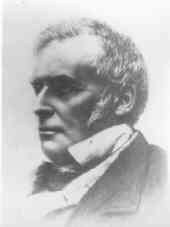 Mr. William Kelly wrote:
Mr. Darby was deliberate and prayerful in weighing a Scripture; but he wrote rapidly, as thoughts arose in his spirit, and often with scarcely a word changed.
- He delighted in a concatenated sentence, sometimes with parenthesis within parenthesis, to express the truth fully, and with guards against misconception.
- An early riser and indefatigable worker, he yet had not time to express his mind as briefly and clearly as he could wish. "You write to be read and understood", he once said playfully to me; "I only think on paper".
- This made his writings, to the uninitiated, anything but pleasant reading, and to a hasty glance almost unintelligible; so that many, even among highly educated believers, turned away, because of their inability to penetrate sentences so involved.
|
But the articles on this page are not from his written ministry but from his oral ministry, and are surprisingly easy to follow.
- They come through just as fresh as when delivered in 1852 and open up, not only the details of the letters themselves but, the background of the divine ways in an edifying and intensely challenging manner.
G.A.R.
Page Top Article Top
| LECTURE 1 |
|---|
Seven Lectures on the Prophetical Addresses to the Seven Churches
Revelation 1 |
|---|
Before entering into the detail of the addresses to the seven churches, of which it is my purpose to speak, it would be well to say a few words as to the general character of the book in which they are found.
- It is exceedingly important that we should get a right and distinct apprehension of certain great principles which run through the whole book of Revelation, or we shall not understand what God is spoken of in it as doing.
- And here, remember that it is from Scripture alone that we gather what the purpose of God is, and what God is about in doing what He does, and in doing it as He does.
The first chapter introduces the whole book. It is a revelation given to Jesus Christ to shew unto His servants things which must come to pass preparatory to the appearing of Christ.
- It is a wonderful thought that God should make such communications, as is also the way in which He does it. For God cannot write as man does, merely to recount what interests or affects the passions of men.
- But when God writes, it is in order to bring out something by which to test our souls, and bring them into fellowship with Himself.
- Take the gospels for instance. They are not written merely to give an historical account of Christ when down here, but to unfold to our souls God's purposes and ways of grace, in the work and Person of His Son.
- And it is only as we thus learn what God's thoughts and ways are, that we are able to understand what God is doing in any part of His ways.
The book of Revelation is a book of judgment all through. God is revealed in the book, as one about to execute judgment.
- This applies to the church itself, as seen in chapters 2 and 3. It is seen on the earth – subject to judgment.
- The prophecy may speak of the things which are under judgment, and of the means by which judgment may be averted; but still it is all through judicial, if we except the description of the glorious state of the church as the heavenly Jerusalem.
- But, even so, it is the case even as regards the church, when active, as she appears on white horses in chapter 19. Until we get hold of this truth clearly in our minds, the intention of the book can never be understood.
Then, again, we do not find the name of Father in this book in connection with the saints.
- The Father is spoken of in connection with Christ – chapter 2: 27; chapter 3: 5, 21 – but this only confirms the remark in the text.
- It is used also in chapter 14: 1, where the name of the Lamb's Father is written on the foreheads of the hundred and forty-four thousand, and even then it is His Father, though His name be on their foreheads; neither is there the relationship of the bride, the Lamb's wife, until the marriage of the Lamb is spoken of as taking place.
- The system and relationships in the book of Revelation are of another character altogether. It is God dealing with what is on the earth, according to the responsibility. This simple thought prevents very many mistakes.
- And further, it is not only judicial in its character, but judgment connected with the earth – that is, that men are responsible upon earth for that which is committed to their trust.
- So that, if even the church is spoken of in this book as being on the earth, its responsibility is the subject spoken of, and as such it comes under judgment. Thus you get the earth as its subject.
The next important remark is, that the whole character of the book is prophetic.
- "Blessed is he that readeth, and they that hear, the words of this prophecy".
- And even when the seven churches are addressed, the language is prophetic.
- It is not so in the various epistles in the previous part of the New Testament. They are communications addressed to the churches or saints, directing their present conduct in the relationship in which God in grace had set them with Himself and the Lord Christ.
I say these addresses are prophetic; that is, they are the announcement of results and consequences which would come upon those to whom they apply, as forming a public body, in the way of judgment
- – not the ministration of grace and direction in a sure and subsisting relationship as to which no change is suffered.
- It is not a present blessing intended for the speaker, and those who would receive it at the time as having ears to hear.
- We see this same difference in the Old Testament prophets and in the prophetic passages scattered through the epistles.
- If you look into 1 Peter 1: 11-12, you will see what I mean.
- "Unto whom it was revealed, that not unto themselves, but unto us they did minister the things", 1 Peter 1: 11-12.
- This is the proper character of prophecy. It is addressed to one and intended for others. It does not say, as the Holy Ghost in the epistles – "us"; it is a revelation of things future.
- A prophet did not prophesy about himself. The Spirit of Christ reveals to the prophet things about others, and not about Himself. The difference afterwards is, that these same things were reported to the saints by them that had preached the gospel with the Holy Ghost sent down from heaven.
- When the Holy Ghost is speaking in the saints, He reveals the things of which He speaks as belonging to themselves; and therefore it is that when the Holy Ghost speaks in the saints, He constantly says "us". We do not find this little word "us" in the same connection anywhere in the Old Testament.
- "He hath loved us and washed us" –
- "to the glory of God by us" –
- "who hath blessed us" – "according as he hath chosen us" –
- "having predestinated us" –
- "who hath delivered us" –
- and hath raised us up together, and hath made us sit together in heavenly places in Christ Jesus".
- It is not merely shewing things to come. When the Holy Ghost shews any of the things of Christ, He includes all saints –
- "that we may be able to comprehend with all saints".
- In a word, the Holy Ghost, thus speaking takes in all saints, as now associated in the blessing, and appropriates all that God has given us "in Christ Jesus".
- Only it is not all enjoyed yet, so that we have still to hope to the end
- "for the grace that is to be brought unto us at the revelation of Jesus Christ".
We have here three steps:
- first, the Spirit of prophecy in times past ministering in the prophets not unto themselves;
- secondly, the Holy Ghost sent down to announce the salvation;
- thirdly, He becomes the seal, the earnest, the anointing, by which our portion is known and enjoyed, as the Spirit of expectancy, because while here in the body we have not actually got that we shall have.
- We have the earnest, but we wait for the adoption, to wit, "the redemption of the body". Still, the Spirit of God, as dwelling in the church, in His proper church character, gives the consciousness of the present enjoyment of what He reveals in those two emphatic words "us" and "we".
We saw very lately, in speaking on Hebrews 9, that at the end of the age Christ was taken up into heaven, and while He is up there, before He returns to this earth again, a work is going on by the Holy Ghost, a body is being gathered and associated with Him – the Head in heaven at God's right hand, as in Psalm 110.
- "Sit thou at my right hand, until I make thy foes thy footstool".
- In virtue of the Head being thus exalted to the right hand of God, He sends down the Holy Ghost to gather a body to be identified with Him in glory, to have the same glory as Himself, to be members of His flesh and of His bones.
- Here is the proper church character of the Spirit; not prophecy, not the communication of what is to happen on earth to others, but the seal, earnest, and assurance of blessings which are our own, testifying how God hath blessed us – not somebody else – and abiding with us till Christ come.
- Then, blessed be God, there is not a particle of the precious dust of His redeemed that will be left behind; for
- "he that is joined to the Lord is one spirit,"
- and Christ will take the whole man, spirit, soul, and body, to the fullest enjoyment with Himself for ever.
When the Spirit of God comes to be a prophetic Spirit, it is quite a different thing. His testimony must be applied to an earthly thing. He never prophesies about heaven.
- If the Holy Ghost comes and says, All the glory in heaven is yours, this is not a prophecy of some event – i.e., a revelation.
- In one sense we are there. We realise our fellowship in heavenly places, while waiting down here for the accomplishment of all to take place, waiting for the redemption of the body.
But when I come down to the earth to think of the earth, even if I have to deal with the church, however sure its everlasting privileges viewed in its true character, it is before me as a responsible body on the earth – "the things which are" responsible according to the measure of the privileges in which it is left down here.
And it is of the last importance to keep fast hold of this truth, or we shall not understand the actings of God. The Holy Ghost dwelling in the church associates me with Christ.
- If righteousness is the question, I am the righteousness of God in Him; if life, He is my life; if glory, He says,
- "the glory which thou gavest me I have given them".
- All that He has is ours, save and except His Godhead, in which there is no need of course to say that He is, as regards us, alone.
- Morally, however, we are made partakers of the divine nature, that we may fully delight in God.
- All that Christ has belongs to me, for "he that is joined to the Lord is one spirit".
- Prophecy could not deal with this, for it was a mystery, hid from ages and generations, hid in God; but by the Holy Ghost it has now been told out that the living church is in living union at this present time with Christ, at God's right hand in heaven – Christ, the Head, in heaven – the church, the members, on the earth.
- The Old Testament saints could not talk about a man in heaven having members on the earth. Members on the earth would have had no meaning for them; and Christ must have been rejected from the earth before I could talk of His being as the Head in heaven, having members on the earth.
- When I get down to prophecy, then I get the church let into the knowledge of what God is going to do on the earth.
When the churches are addressed in Revelation 2 and 3, the Spirit never speaks of grace flowing down from the Head to the members of the body; and even when we see the saints on high, they are presented, not as one body, but as separate worshippers, having an object in heaven to worship, kings and priests to God.
- Indeed, the Spirit does not speak of the church as the body of Christ in these addresses, but of certain companies in certain circumstances, and not as members of a body, nor of the living power of grace working down here to produce blessing; but of the conduct of those who have enjoyed the advantages of this grace when they had been set in this place of blessing.
- It does not speak of what the church is, but of what the church has done. It is not the church's condition as set in grace by the power of the Holy Ghost – for the Holy Ghost which had put them there is not spoken of as working, or dwelling in them) – it is the church's responsibility.
- You will not find all through, as I said before, the Father's love to the children, nor yet the Holy Ghost, as the soul – so to speak – of the body, linking it to the Head, nor the power of grace, of which the marriage of the Lamb is the grand result.
- But it is the church in a given condition on the earth, subject to judgment. There is nothing here about union with Christ. But we find this – the testimony of what Christ is to each state of things spoken of – His present judgment of which He reveals.
- This makes it very simple and easy of apprehension, and also full of profit to our souls in the way of warning; while the privileges in which we are set are the spring of all blessing, which makes it so true that "the joy of the Lord is our strength".
But what we do get in Revelation 1: 1 is very precious and full of instruction.
- "The Revelation of Jesus Christ, which God gave unto him, to shew unto his servants things which must shortly come to pass".
- Now this, evidently, is not Christ as the Head of the body in heaven, the Holy Ghost working in the members, to edify that body. In the epistles that relationship and position are clearly brought out.
- But here it is the revelation which God gave to Christ to shew – not to the sons, but – to His servants things which must shortly come to pass.
- Again, this is not the Holy Ghost, as in the epistle to the Ephesians, bringing down instruction to the children and the bride, and shewing them their relationships to the Father and the Bridegroom, but it is a revelation to servants of things that are coming to pass on the earth,
- "and he sent and signified it by an angel".
- The ministration of angels thus comes in, shewing the prophetic character of this passage.
- Observe, further, that this is not the unfolding of the riches of Christ Himself by the Holy Ghost, but a message by an angel. Verse 2,
- "Who bare record" – not of fellowship in Christ, or of the fulness of Christ – but "of the word of God, and of the testimony of Jesus Christ".
- The testimony of Jesus Christ is not His fulness, but His witness borne to something else.
- And mark here how we have now got down to events on the earth – and these are never the fulness of Christ in heaven – we must get our minds clear on this point. Verse 3. Then there is the promised blessing to those that read and hear this prophecy.
Verse 4. "Grace be unto you, and peace, from him which is, and which was, and which is to come; and from the seven Spirits which are before his throne".
- The grace and peace here are not from the Father and the Son, but from Jehovah.
- The salutation, especially as regards the Holy Ghost, is not the same thing as in 2 Corinthians 13: 14, although, no doubt, the seven Spirits allude to the Holy Ghost, the number seven being the symbol of perfection in its diversified power.
- The title here given to the Spirit is in connection with the display of the power and intelligence with which the earth is governed. Compare chapter 5: 6.
Verse 5. "And from Jesus Christ, who is the faithful witness, and the first begotten of the dead, and the prince of the kings of the earth".
- "And from Jesus Christ" – Christ is the last mentioned of the three, as shewing how entirely He is brought out here in connection with the government of the earth.
- "The faithful witness" – the one who infallibly shewed out what God is, and indeed all truth, when He was on the earth.
- "The first begotten from the dead" – this is the power of the resurrection "from the dead" down here.
- "The Prince of the kings of the earth" – His place in power over all dominion here below, a place He has yet to take as to actual possession of it.
- He is not here called "the Son of the Father", nor yet spoken of as the Head of the body, the church; nor yet as the Lamb in the midst of the throne, but as the Prince of the kings of the earth, thus shewing that it is simply His connection with the earth that is taken up here.
But then, mark, the moment Christ is mentioned, how the heart of the church goes out with the joy of its own proper and personal relationship with that Christ:
- "unto him that loved us and washed us from our sins in his own blood, and hath made us kings and priests unto God and his Father".
- This never fails; when Christ is spoken of, no matter what the subject is, He is still our Christ, with whom we are livingly associated, so that it is impossible to hear His name only without its drawing forth the response of the soul, and the acknowledgment of what Christ is to it.
- If I think of the judgment even, and of Him as the Judge, I say, 'I am associated with Him'; in all things He is my Christ.
- If in this life the wife of some eminent man saw him coming, she would naturally say, There comes my husband, because her own relationship is in her thoughts, and first in them. So of the church with Christ, whatever character He is revealed in.
- So it is at the end of the book, when the prophetic part is closed, we find another response of the same kind; the moment He says,
- "I am the bright and morning star",
- instantly the church responds according to her hope in Him, and says, Come.
- "The Spirit and the bride say, Come".
- And so should it ever be with us: Christ Himself should be filling up every thought and affection of the heart. It is just this that gives its value to every character of testimony to Christ, to every part of His glory.
- That which concerns Christ concerns me, whatever the immediate subject may be. If my heart is occupied with Himself who possesses the coming glory, unless I find Him in the glory, the glory itself would be nothing to me.
- I always want something that concerns Christ; and because it concerns Christ, it must necessarily concern me. It is perfectly true that some subjects, even connected with our Lord, are more interesting than others, and that in proportion as they bring us into closer connection with Himself.
The crown of Jesus in that day will be composed of many diadems, and each one, though worn in respect of others than the church, will form part of our joy, because part of His glory, for we should be unhappy if we thought He could lose any part of His crown and glory.
- Our joy does not only consist in the knowledge of individual salvation, as our individual salvation is not the end of our joy. Although, blessed be God, it is the beginning to us, there is not one thing, however apparently disconnected with it, that can ever lose its value in the eyes of a saint, viewed in its connection with the glory of Christ.
- We may see this carried out at the deathbed of a Christian; if Christ Himself has been his joy, all that belongs to Him will be precious.
- If the soul has been merely occupied with the work of Christ, in bringing salvation to itself, there will be peace, because it knows salvation;
- but if the Person of Christ has become the object of affection and the soul is occupied with Himself, such a one has a constant spring within of joy, as well as settled peace; for when Christ is the personal object to the soul, it possesses a joy which the mere fact of knowing we are saved – blessed as it may be – will not continuously give.
- If Christ fill the heart, it will not be merely that I am happy because I am saved, but the thought of Him to whom I am going will fill my soul with joy. It is true that I am going to heaven, but the thought that makes heaven a heaven to my soul is, that Christ Himself is there; there is some one to go to.
- The Person I have loved on earth, I am going to be with in heaven. And thus it is always expressed in Scripture. For the spirit, it is departing and being with Christ.
From the very beginning of the book the church is put in a separate place; her priestly place is in heaven – outside the sphere of the action of this book, or rather inside, within the veil – above, in the place from whence the book came.
- Such, then, as speaking on earth in verse 5, are the church's thoughts –
- "unto him that loved us".
- There is no question of judgment: He "hath loved us"; no uncertainty as to condition:
- He hath "washed us from our sins in his own blood".
- The believer's place is no longer a question when the prophetic witness of the book begins. Christ hath died and is risen again,
- "and hath made us kings and priests",
- which titles we get without our responsibility bringing them into question. Responsibilities we have, but Jesus hath washed us, and we are conscious of the place in which we are set, having the answer of the heart in which the Holy Ghost dwells.
The place of the church is unquestionably settled before anything else is unfolded. This same principle is more elaborately brought out in Ephesians 1.
- The church is first of all placed in the very same acceptance that the Lord Jesus Christ Himself is, before it is shewn the "mystery of his will".
- This is not prophecy, but the church being placed, as Christ Himself, to be the reflection of His glory. First, thus "accepted in the beloved," God then, in the aboundings of His grace in wisdom and prudence towards her, lets her into the secret of His thoughts and purposes as to the glory of Christ, in gathering together in one all things in Him.
The Spirit closes it all with an Amen, and now begins with the earth, and speaks of the effect of Christ's coming on the inhabitants of it.
Verse 7. "Behold, he cometh with clouds, and every eye shall see him, and all kindreds of the earth shall wail because of him".
- Not so the church. I am not going to wail when I see Christ. Ah! how my face will brighten when I first get a glimpse of Him; though, alas! if our affections are not right, it cannot be a present joy to think of being caught up to meet Him.
- And here I would ask, Is there anything allowed that would make you wish the Lord's coming delayed, any mere natural affection even that comes in, turning the eye and the heart away? If the heart is wrapped up in Christ, and we feel what it is to be in such a world, not of toil merely, but of sin, what a thought to be with Christ out of it!
- Surely there is not a chord in the heart of the saint that does not vibrate exactly contrary to the feelings of those whose eyes shall see Him and wail! And yet the positive hope, the joy of seeing and being with Himself, is a yet fuller and more abiding source of joy than deliverance itself.
- When I say, "Every eye shall see him," then it is wailing with the poor world; but when I say, "My eye shall see him," then every feeling of my soul will bound up with joy – the very opposite of wailing.
- Am I looking even only to be spared? Did not Christ say,
- "I go to prepare a place for you, and I will come again and receive you unto myself?"
- which was really saying, 'This world is not good enough for you; I cannot stay with you here, where sin and sorrow are stamped on all around; but when the place is prepared, I will come and take you to be with me where I am'. What an entire difference between the two aspects of the coming of the Lord!
Verse 8. After seeing His glory and dominion we get the glory of His Person,
- "The Alpha and Omega, the beginning and the ending" – the Almighty.
- It is not the Father here. What a difference between looking for what the Almighty One will do upon the earth, and being taken up to my Father's house and talking of what my Father is for us there!
There are three great names in which God reveals Himself to man. Firstly, to Abraham, in Genesis 17,
- "I am the Almighty God [El Shaddai], walk before me and be thou perfect".
- It was like saying, I am the Almighty: therefore do thou trust in me. What is called perfection is a response to the character in which God is revealed to us.
- "He suffered no man to do them harm, and reproved even kings for their sakes", Psalm 105: 14.
Secondly, when He comes to Israel He takes another name. In Exodus we find Him revealing Himself to them as Jehovah, the ever-existing One, going on to accomplish all His promises.
Thirdly, to the saints now, it is as Father. They are taken into connection with the Almighty and Eternal Jehovah, in the relationship of children to a father, in the enjoyment of eternal life imparted to them.
- "I will be a Father unto you … saith the Lord Almighty".
- Hence we cannot answer to this revelation but by the spirit of adoption, and being really children, and possessing the nature and Spirit of Him who is our Father. Hence it is not said, as in the case of the titles, Almighty and Jehovah, "Be ye perfect with"; but when the Father's name is revealed, which Christ has done,
- We do not trust Him as strangers; we walk with and like Him as children. So that it is as Father that we know Him, who is Almighty; and Christ says, it is eternal life to know the Father and Himself.
- Again, "He that hath seen me hath seen the Father"; and again,
- "He that killeth you will think that he doeth God service; and this they will do, because they have not known the Father nor me".
- They think they are serving God when they are killing God's children; but the Father and the Son they do not know. We have seen that this title of "Father" is not that in which God is revealed in the Revelation; He is in those of Almighty and Jehovah.
Verses 9-13. "1 John … was in the isle that is called Patmos, for the word of God, and for the testimony of Jesus Christ".
- Mark again, here, the character that Christ takes in connection with the seven churches, as well as with the world. It is not as the Head of the body, as the source of grace to His members below, but as one walking in the midst of something outside Himself, and pronouncing His judgment on their external state.
- Verse 13. We see, though Christ here is revealed as the Son of man, He is also Jehovah, and bears all the characteristics of the Ancient of days in Daniel 7.
- "His head and his hairs were white like wool".
- In Daniel, the Son of man is brought to the Ancient of days. In Revelattion 1: 14*, He is shewn as Himself the Ancient of days,
- [* Indeed in Daniel, too, we see that the Son of man is Himself the Ancient of days. See Daniel 7: 22.]
- "His eyes were as a flame of fire" to pierce into the heart in judgment. "God is a consuming fire".
- "And out of his mouth went a sharp two-edged sword
- – thus holding all authority with the sword of judgment.
Verses 17, 18. "And when I saw him, I fell at his feet as dead. He saith unto me, Fear not, I am the first and the last; I am he that liveth and was dead, and behold I am alive for evermore".
- It is wondrously encouraging to the soul to think that He that is divine, the Alpha and Omega, the first and the last, besides whom there is no God, is the very One who went down under the power of death for my sins, and then, by rising again without them, has not only for ever put away every sin, but has delivered me from him who had – and justly too – the power of death, that is, the devil, and brought me up into the very presence of God.
- He "once suffered for sins, the just for the unjust, that he might bring us to God".
- It is this which gives such settled peace to the soul; for if I have come to God, I have nothing more to seek.
- "He that hath seen me hath seen the Father".
- If my soul has seen Christ dying on the cross for its sins, I have met God there also in the solemn question of judgment; and then I have come to God through a dead and living Christ; and having come to God Himself, I have got all that earth below or heaven above can give me.
- For this meekest, this lowliest One, who was brought as a lamb to the slaughter, is the very God to whom I have been brought, and that now without the least spot of sin which could make me ashamed in His presence, so that I am with Him in perfect love, all cause of fear being for ever removed; and He lives to reveal Himself to us in the power of an endless life.
Verse 19. To return to the prophetic part – we get here what is very important: the three great parts of the Book of the Revelation very distinctly stated.
- First, "the things which thou hast seen" – that is, Christ walking among the candlesticks.
- Secondly, "the things which are" – the time condition, or external state of the churches, or professing church on earth; not the eternal state and unchangeable privileges of the church, as the body of Christ.
- Thirdly, "the things which shall be hereafter" [Rather, "after these," that is, after the things that are.] – the prophetic things, the closing events in dealing with the world.
Chapter 4 shews the church in heaven. In speaking of the things that are, I do not – because Scripture does not – in any way allude to the eternal state of the church in its union with Christ, as its Head in grace,
- but to a time condition, an external state, of the church considered as responsible here below during a given period; and this time condition, this external state, judged in the seven churches.
- Again, I repeat, it is not our "spiritual blessings in heavenly places in Christ" that are spoken of here, but that in the midst of which Christ is walking, outside Himself on the earth.
- On earth He needs a candlestick – a light; not so in heaven, there is no need of a candlestick there – no candle there to give light,
- "for the glory of God doth lighten it, and the Lamb is the light thereof".
- But on earth He needs light-bearers, and therefore the character of candlesticks is given to the seven churches – to be the "light of the world". They are lighted from heaven, to give light on the earth, in the dark places below – to bear testimony to Christ, while He is away in heaven, hid in God.
- And it is to test these light-bearers, that Christ walks as the Son of man amidst the candlesticks. It is true that our life is hid with Christ in God; but while walking on the earth, we are to shine as lights in the world, the displayers of what heaven can produce – to be living in heaven while walking on the earth; as Jesus spoke of Himself when on the earth, "the Son of man which is in heaven".
Verse 20. "The mystery of the seven stars" gives the thought of power – subordinate power, and the angels* are the symbolical representatives of the churches.
- [* Note here, it has been supposed that this word is used in reference to the angel of the synagogue, and hence means the bishop or chief elder. But the angel of the synagogue was not the ruler of the synagogue at all; he was a reader, a kind of clerk. The ruler of the synagogue was quite another person.
- It may be that at the time the Apocalypse was written, the eldest or most eminent among the elders had a kind of precedence; but if it were even so in fact so as to render him responsible, the fact that he is called angel here is a proof, that if the responsibility was maintained, no such ecclesiastical title would be owned in Scripture by the Lord.]
- Spiritual power, as representing Christ on earth, was what the church might have displayed. Throughout Scripture, superior power is symbolised by the sun, and subordinate power by the stars.
- The angel of anything means the representative of that which was not itself in presence there, as even the angel of Jehovah. So when Peter knocked at the door, it was said "This is his angel"; and of children, "their angels".
- For an illustration of what I mean, when Jacob had met the angel at Peniel, it is said, he wrestled with the angel and prevailed, but he called the place "the face of God". So Moses was with the angel in the bush. And in this way we have the angels of the seven churches.
Let us now take up the general idea. We have seen that we have not the church looked at here, as in union with Christ its Head; nor seen in its proper heavenly character – although that should be manifested by it – but in its time state, as under the eye of the Lord for judgment.
- Instead of Christ as the Head of the body, what is set forth here are the responsibilities attaching to the body in its time state, and certain conduct expected for privileges received. Nor is it the giving of these privileges, but the use we have made of these privileges which is treated of.
- Let us look at particular times of blessing to the church in illustration of this.
- The Reformation, for instance, was a work of God's Spirit; and God comes, as it were, looking to see what man has done with this His working – how men have used the blessing they then got through the revival of His truth, judging what use they are making of privileges then given them.
- What comes out of the three hundred years elapsed since the Spirit of God worked so mightily? The work of His own Son, the gospel of His grace, justification by faith, was, we know, that which then came out to light. What has this resulted in in the professing church? It is as though He had said, 'What more could be done? I sowed good seed, I planted a choice vine, and now I have come for fruit; and where is it?'
- None of the seven churches consequently is viewed as the work of God in itself. What takes place is a judicial investigation, and God is not judging His own work – I need scarcely say – but man, on the ground of responsibility, according to that which he has received through that work.
I see in Scripture a complete and very definite distinction in speaking of the church of God. The sufferings of Christ, and the glory that should follow, was the testimony of the prophets before the Holy Ghost was sent down. Christ said,
- "On this rock I will build my church"; it was not yet formed.
- We do not get Christ as the Head in heaven, until redemption is an accomplished thing; I am not here speaking of individual salvation, but of the body of Christ.
- In Stephen we get another step: a man on earth, filled with the Holy Ghost, sees heaven opened, and the Son of man at the right hand of God.
- In Paul, again, is a yet further point – that is, union with Christ. Christians are members of Himself, and this is not merely by participation in His nature, partakers of the divine nature, but by the power in which He was raised, union by the Holy Ghost to Himself the Head:
- "Why persecutest thou me?"
- If my hand is hurt, I say I am hurt, for my hand is a part of me. But then there is another character which this body consequently has, it is
- "builded together for an habitation of God through the Spirit".
- Now the church being the place where God dwells, and set on the earth for the manifestation of God's glory, God then comes to judge what the fruit of these privileges has been when put into man's hand.
- It is not the fact of the Holy Ghost dwelling in the church that is spoken of here, but the use that men have made of it.
There are two principles on which God always judges His people:
- first, their original state, the point from whence there has been departure, the blessing He began with;
- secondly, that point to which His ways are tending – the hope set before His people – the fitness for the blessing with which He is going to meet them at the close, on the manifestation of His presence.
- We may take Israel, by way of example, as shewing out the principle. In Isaiah 5 God says,
- "What could have been done more for my vineyard that I have not done in it?"
- And then in chapter 6, where the glory of the Lord is seen, its manifestation proved, not only that the state of Israel did not answer to the blessing conferred upon them at starting – for Isaiah says,
- "I dwell in the midst of a people of unclean lips"
- – but that their state was not suited to the glory to which the Lord had taught them to look forward. The remnant according to grace are always preserved, while the rest are judged.
But to return to the condition of the church: the Lord first shews the privilege He has given, and then asks if the walk has been according to it; as He says to the Ephesian Church, 'Have you left your first love? Yes, you have'.
- "Remember, therefore, from whence thou art fallen".
- "I have loved you, and given myself for you",
- was the just measure of the love to Him, in which they should have walked, as
- "the church of God, which he has purchased with the blood of his own"
- – put under the guardianship of the blood as to all holy conversation, as seen in type in the priests. The blood was put on the hand, the foot, and the ear, both of the leper to be cleansed and of the priest at his consecration, so that nothing dishonouring such a guardianship was to be allowed.
- Then comes the question, Have we acted according to the blood that has been put upon us? has nothing passed in mind, act, or walk, but what has been according to God?
- The Lord always exercises judgment in a church, though He has long patience with it. He shewed His long-suffering toward Israel for more than seven hundred years after He had pronounced judgment by the mouth of Isaiah, and God never lowers the standard of the claims of His first blessing, though He may be patient when His people fail.
To Sardis He says, "I have not found thy works perfect before God"; yet how low was it fallen!
- We may bow ourselves before the Lord under failure, but though we always find that grace which lifts us up again, still God never lowers the standard of what ought to be produced, nor could we even desire that God should. No true saint could desire that He should lower the standard of His holiness in order to let us into heaven.
I could not accept – through grace – anything short of the picture of the church as God first gave it.
- Take even man as man: alas! I have lost innocence; but can I accept any standard lower than the total absence of sin?
- Nor is this all; for God now raises up a more excellent object of desire before my heart, in which He replaces what is lost by the full revelation of Himself, His own glory in His people.
- Hence the saint has to judge his state, not by that from which Adam fell, nor even by the first state of the church only, but by the Christ he has to meet.
There are thus two ways in which God is judging:
- the departure from the first condition of blessing;
- and then how far the fulness of the blessing to which God is calling us is met.
- Thus it is by our past blessing and our future blessing that God judges us. As we see in all the addresses to the churches their departure from original blessings, and the enquiry how far their present condition corresponds with the blessing to which they are called, and which is spoken of in promise.
- Paul could say, "This one thing I do, forgetting the things which are behind, I press toward the mark":
- when a man can say this, then his conscience is good and happy with God in view of the glory before him.
- But this I would desire to press on all your souls – that your standard is wrong, and your affections are wrong, if you are doing anything but following the Christ of glory presented to the eye of your heart.
- You know well the church has not kept its first love. O remember that though He is patient, He cannot lower the standard, and therefore "repent". There is abundant grace to lift up and to restore; but my conscience could not be happy if God lowered the picture He has given me of the church.
Man has lost innocency; but blessing has come in by the cross, and though I have not attained the glorious result of that redemption manifested in the glory of Him that accomplished it, "I press toward the mark"; my conscience could not be happy otherwise.
- Suppose the thought of the Lord's coming to receive us to glory were very present to us, how many things would disappear! How many objects that we now cling to, how many sorrows and cares that burden us, would be nothing, were the hope of His coming steadily before our eyes!
- "He that hath this hope in him purifieth himself, even as he is pure".
But the church has lost her first love, and has also lost her expectation.
- The hope of the Lord's coming makes Him very present to our souls, so as to judge the condition in which we are. You are called to meet Jesus; are you in such a position as would make you ashamed before Him at His coming?
There is also, I may add, another principle which is a motive to holiness in the church, the presence of the Holy Ghost.
- It is said, "Grieve not the Holy Spirit of God".
- Do not do anything inconsistent with His presence any more than with the glory to which you are going, of which He is the witness.
- In the first three churches there is no reference to the Lord's coming; but after that time, when failure had completely set in, then the Lord's coming is the thought presented. It is our joy and our hope, to sustain us when all else fails.
I would just recapitulate what I have said. The character of the book of Revelation is prophetic.
- We do not at all see the church here, as indwelt by the Holy Ghost, giving the knowledge of Christ as the Head of the body, or fellowship with the Father and the Son.
- All is judicial. Christ is distinctly the Judge, first, of the church, and then of the world – of the church looked at in its earthly condition, of course, not in its heavenly.
- The whole book is divided into three parts – the things seen, the things that are, and the things that shall be after them.
- And, as we have seen, God has two great ways of judging. He sees if we are profiting by the blessings already given, and if we are walking in a way suited to the promised glory.
There is a return in grace expected according to privileges bestowed, and an answer of the heart to the glory He is calling us to. Having blessed us, He expects the response,
- "Even so, come, Lord Jesus".
- He looks for fruit from His grace towards us, and I am to see unto what I am called by it. Not that I have attained, but I press forward in the power of a new life,
- "forgetting the things that are behind".
- God has set His heart upon blessing us in a certain manner; and what He looks for is that our hearts should respond to this knowledge of the heavenly calling.
May we taste now what God has called us to in fellowship with His Son. May it get such hold on our affections that we may be enabled honestly to say,
- The Lord open and fill our eyes with the glory of the Lord Jesus Christ, and cause us to walk in the power of that hope – of seeing Him as He is and being with Him and like Him for ever.
Page Top Article Top
| LECTURE 2 |
|---|
Seven Lectures on the Prophetical Addresses to the Seven Churches
Review + Ephesus |
|---|
I was referring, the last time we were speaking, briefly, to the distinctive character of the church of God; and to the character of this book, as being one of judgment, whether as regards the church or the world.
It is important to distinguish between the view of the church of God as a responsible body on the earth, and therefore subject to judgment,
- and that view of it which looks at it as the body of Christ, and as enjoying her proper place before God, and her privileges as such.
- We must keep these two truths distinctly and definitely before our minds, or we shall get into confusion.
We saw the last time, that God has given Christ to be
- "Head over all things to the church, which is his body, the fulness of him that filleth all in all".
- God's thought and purpose about the church is, that it should be the body of Christ when He takes dominion over all things.
- God has exalted Christ far above all principality and power and might and dominion, and has put all things under His feet, and gave Him to be Head over all things to the church, which is His body, and, therefore, called
- "the fulness of him that filleth all in all".
- All the fulness of the Godhead dwelt in Christ; but this is quite another thing. We are His fulness, that is, we complete the mystic man, Christ being the Head. For the church is that which completes and displays Christ's glory in the world to come;
- and then there will be not only Christ in heaven, known to the believer, but Christ ruler over the earth, over all things.
- It is a blessed thought, that it is not merely God as God who fills all things, but that Christ in redemption and mediatorial fulness in grace and righteousness fills all things.
- "He that descended is the same also that ascended up far above all heavens, that he might fill all things".
- Everything from the dust of the earth up to the throne of God has been the scene of the accomplishment of, and witness to, Christ's glory. But when He does actually thus "fill all things," and it is not merely known to faith, it will not be alone, but as the Head of the body which is now being formed, taking the church to share in His dominion and glory.
- All things will be subject to Him in that day; but the church will be associated with Him. Just as it was in the garden: Adam, the image of Him that was to come, was lord over all the creation; Eve was neither a part of the creation over which Adam reigned, nor yet had she any title of her own over it, but she was associated with him in the dominion.
- The passage in Ephesians 5 takes up this formation of Eve, and applies it to the church –
- "this is a great mystery, but I speak concerning Christ and the church".
Christ has every title to this dominion over all things. See Colossians 1.
- As God, all things were created by Him and for Him. And remark, that in the passage He has a double primacy – Head of creation when, as Son, He takes His place in it, for He is Creator; and also Head of the church, for
- "he is the head of the body the church, who is the beginning, the firstborn from the dead, that in all things he might have the pre-eminence".
A second title to headship is, that He is "the Son" – not merely as Creator – as we have seen in Colossians 1, "hath translated us into the kingdom of his dear Son" – but by inheritance also.
- In Hebrews 1 we find this counsel and intention of God as regards His Son: "whom he hath appointed heir of all things …". Here Messiah is in contemplation.
A third title to headship is, that He is man. Psalm 8, which celebrates millennial glory, is quoted and applied by the Holy Ghost to Christ in Hebrews 2: 6-9,
- "We see Jesus, who was made a little lower than the angels, crowned with glory and honour,"
- and all things put under his feet. See also Ephesians 1: 22; 1 Corinthians 15: 27.
- Thus we see His title to dominion:
- first, as Creator, "for by him were all things created";
- secondly, as the Son, "whom he hath appointed heir of all things";
- Thirdly, as Man, under whose feet in the counsels of God all things are put.
- Then, we may add, He cannot take the inheritance as a defiled thing, and, therefore, He has a fourth claim in the way of redemption.
- His title is to a redeemed and purified inheritance, "the heavenly things themselves with better sacrifices than these".
- With us, who were under sin, alienated in mind by wicked works, it is not merely purifying: guilt also is removed. Then He takes and makes us His body; as it is written,
- "We are members of his body, of his flesh, and of his bones".
- The Holy Ghost comes down and consecrates us to be the body of Christ in living power; and in unity, because baptised with the Holy Ghost into one body. Not only is each soul quickened and sealed by the Spirit, but believers are
- "baptised into one body by one Spirit".
This began at the day of Pentecost, and since then this baptism has been the portion of every believer.
- It is a great and blessed truth that, however we may have grieved the Spirit, still, individually, the Holy Ghost abides with the believer and reproves him.
- And it is also most blessed as regards the church, that the Holy Ghost is not, like the Lord Jesus, only here a little time with His people, and then going away.
- "He shall give you another Comforter, that he may abide with you for ever".
- And mark this that the abiding presence of the Holy Ghost in the church is in virtue of the redemption which Christ has wrought, and not dependent on our use of the privileges given – though when present His action is according to the use or abuse of these privileges.
The church of God, united to the Lord Jesus Christ, has its place,
- first, by virtue of Christ's Person;
- secondly, in redemption by Christ;
- thirdly, by the presence of the Holy Ghost.
- This is not a question of prophecy, but it is the power of divine living grace, putting the church in divine glory. The moment the Holy Ghost thus formed the church, it is treated down here as the body of Christ,
- "from which all the body, by joints and bands, having nourishment ministered, and knit together, increaseth with the increase of God".
- Just as, in the growth of a child, the body is there, and each member is in its place, and it grows up into its full stature.
There are two distinct aspects of the church, however, presented to us in Ephesians 1 and 2 – the body of Christ is in heaven, and the habitation of God by the Spirit on earth.
- This second character of the church is a deeply important one. The church of God, being formed by the Holy Ghost on the earth, necessarily involves the responsibility of the church to manifest upon the earth the glory of Him that set her thus.
- Responsibility never changes God's grace. But while the church remains upon the earth, she is responsible for the glory of her absent Head down here – not as under law, of course; but the church is responsible to represent the glory of Him who has redeemed it, and put it here. It is to be a light in the midst of darkness –
- "in the midst of a crooked and perverse generation, among whom ye shine as lights in the world";
- "shewing forth the praises of him who hath called you out of darkness into his marvellous light".
- And, as Paul says in 2 Corinthians 3,
- "Ye are manifestly declared to be the epistle of Christ, known and read of all men".
- – The word is "epistle," and not "epistles," of Christ. It is one body – one transcript of Christ.
- The church was set as Christ's epistle of commendation to all men, that in it men might read and see the power of redemption, and the character of Him who is out of sight, through the Holy Ghost dwelling in it, and forming it to be the visible witness of its invisible Head.
- Jesus says, in John 17, "that they all may be one".
- And to what end? "That the world may believe" [not yet "know" – that is the fruit of the glory] "that thou hast sent me".
- This should have been the effect of this oneness in reference to the present time. When the church is in manifested glory with Christ, and as Christ, the world must of necessity know that the Father sent the Son; and not only so, but will know that the Father has loved us as He loved Jesus, seeing us in the same glory as Jesus.
- It must, therefore, be previous to that time, that the world should see the church as one, in order to believe – should see the church in this place of responsibility as this epistle of Christ. Its responsibility is, that the life of the Head in heaven should be manifested on the earth in power.
- Thus we see what a responsible place it is to be under grace, for it is through our being under such free grace as we are, that our proper responsibility comes in.
- When we come on this ground of a responsible body on the earth, we find the Lord, of course, taking cognisance of the actings of the church under this responsibility.
Thus in these two chapters – Revelation 2 and 3 – we have the Lord, not as the Head of the body, not as the One from whom grace is flowing down to the members of the body, but walking amidst the candlesticks in the character of a Judge, to see if they are acting according to the grace received.
- This principle of judgment runs through them all: 'I will give unto every one of you according to the use he has made of the privileges and grace in which the church was at first set'. This is a solemn word for us, just in proportion to our estimation of grace.
- It is not condemnation as by the law; but the more I understand the love, of which I have failed to testify, the more my heart will be grieved when I do not give a true answer to that grace, for it connects sin, as it were, with God's name, which I bear.
- The effect of Israel's wickedness did not only prove man to be a sinner, but, God having placed His name there, it connected the sin with the name of God. On this ground it was that the Lord rebuked Israel when He said,
- "The name of the Lord is blasphemed among the Gentiles through you".
The testimony of His name was placed in their keeping, and it ought to have been guarded by them.
- God will know how fully to vindicate His holy name, in the end, on the earth. Still more is this the case in respect of the church of the living God.
- The world ought to see practically perfect holiness and perfect love in the church: for we are made partakers of God's holiness, and we are the objects of His infinite and perfect love.
- The church ought to have but one constant position and service on the earth, that of manifesting to the world what it draws from its living Head in heaven.
- The church never knew Christ after the flesh; the only Christ the church knows is the Christ that the world rejected, and is now in heaven; and therefore the church should be in such entire abstraction from the world, as to manifest what its Head is.
- And thus the church should be Christ's epistle of commendation. And note the force of the word "epistle" here. The world ought to see what Christ is in you, as the law was seen written on the tables of stone, 2 Corinthians 3, a living epistle, "known and read of all men".
- And the character of our walk will be greatly deepened, according to the extent we are realising what His grace has done for us, and has called us to.
- Thus we see the Lord never gives up this in principle. He never departs from that into which the church is called in testimony and witness, though He bears with it in patience.
But now we will turn to another point: the use that is to be made of these addresses to the churches. There are two things on the face of the matter
- First, it is an historical fact, that there were churches on the earth in the condition here spoken of;
- then, secondly, that the moral instruction is available to every individual saint – applicable to every person who has an ear to hear and an understanding heart to know the Lord's mind. This is very simple.
But if we go on farther, we shall find that there is significance in the number of the churches that are addressed.
- The number seven, being the symbol of perfection, is the number often used in this book – seven seals, seven trumpets, seven vials.
- Thus the choice of this number marks the complete circle of God's thoughts about the church, as responsible on the earth according to the grace in which it has been set there.
- It is not that there were only seven churches or assemblies on the earth at the time these addresses were given, as we know, for instance, of Colosse and Thessalonica, and so many others; but these and all the others were left out, because they did not furnish the moral elements which were needed by the Holy Ghost for this complete picture.
When thinking of the unity of the body with the Head, we get into privilege, and not responsibility – the life of Christ and the glory of Christ as the measure and the end.
- But these chapters present the actual and diversified state of the church.
- The next point is, that these seven churches are taken up distinctively in connection with responsibility; and then, further, they cannot all apply to the whole body at large at one time, because we find such different states among them, and therefore we cannot apply what is said in one of them indistinctively to another, as there are distinctive charges and distinctive promises.
- We shall find, however, on entering into details, that different parts of the professing church with distinctive characters are spoken of as partially subsisting at the same time.
- So that we get this: each description does apply, in one sense, to the church at large, yet all do not to the whole church at one and the same time. And therefore you get in these churches,
- either a successional picture of the condition of the church upon earth, as responsible to God from the beginning to the end of this dispensation, in a prophetical way,
- or a particular state of a part necessary to complete the whole picture – the different aspects that it has presented in the world until the Lord spues it out of His mouth.
Then, you will say, 'How can the church be spued out of Christ's mouth, when the church is the body of Christ, and must be with Him in the glory?'
- That is true, if you speak of the body of Christ, but the church as an external body on earth never loses its responsibility, whatever its characteristics may be. Looked at as on earth, it is responsible for its conduct.
- If the unworthy servant did not do his master's will, he was to be treated, not as being not a servant at all, but as a hypocrite according to the position in which he was found, though not as being really such, for servant he was none really. It was not said to him, 'You are no servant'; but,
- "Cast ye the unprofitable servant into outer darkness … and appoint him his portion with the hypocrites".
- Thus he was taken up and condemned on the ground of his profession.
So it was with Israel. They were formed by God to bear His name before the world; they failed; they were dealt with as responsible, and were set aside, as looked at under the old covenant. The word to the barren fig-tree was,
- "No man eat fruit of thee hereafter for ever".
- The fig-tree might bear leaves, but when the Lord came seeking fruit, finding none, He said,
- "Let no fruit grow on thee henceforward and for ever … and presently it withered away".
- Thus Israel, as a vessel to bear God's name unto the world, was set aside; but this did not touch the question of God's faithfulness. He will restore Israel in the last days, and till then grace still flows on, taking up the remnant from among them as the true seed of Abraham, only in better privileges; for if Israel as a whole be set aside, then God sets up the new thing, and out of the Jew and Gentile
- "the Lord added to the church daily such as should be saved".
- The question here is not as to the certainty of individual salvation, but about the vessel God is using to bear His name before the world. Individuals who believe will go to heaven, but the vessel of testimony, having failed, must be broken.
- God has long patience with it; but if, after all that has been done, it only brings forth wild grapes, it must be cut off. Doubtless there is a faithful remnant taken to heaven, but the vessel is cast off as a visible public testimony on the earth.
In Romans 11 we see how God puts what He has formed at present on the earth to bear His name, in the position of a public visible system on the earth, as He did Israel.
- "Behold the goodness and severity of God; on them which fell, severity; but toward thee, goodness, if thou continue in his goodness: otherwise thou shalt be cut off".
- God can cast off the professing church in perfect consistency with what He has revealed Himself to be, because it is not a question of His grace and goodness, or of individual salvation, but simply and only of responsibility.
- And this it is which makes His dealings with these churches a deep and positive warning to us, as the very same principle applies to Gentile as to Jewish testimony.
- God will accomplish to the very word every promise He has made to Israel. Yet we all know as a plain fact that God has cast off Israel as visible witnesses to bear His name to the world. And He will, in the same way, cast off the church, if it fails in its responsibility on the earth.
- Thus we see how God maintains His government in respect to the testimony which His people ought to bear under every dispensation, and that, while individual salvation is for ever secured to individuals in Israel and the church, both will be set aside as to their public visible testimony. Thus we get not only responsibility but the results of failure.
EPHESUS
We will now take up the positive example and warning that God gives us in the word to Ephesus.
- It is of course a great means of strengthening the soul – its being instructed in the ways and actings of God in the Scriptures; but it is a source of joy to myself to get the immediate application of truth to my own soul.
- General principles of Scripture are very blessed, but the individual application of truth to the heart and conscience is still more happy.
In these addresses to the churches we have,
- first, the character of Christ which is always adapted to the state of the particular church. Thus, in the first, to the Ephesians, as a matter of general application we have,
- "He that holdeth the seven stars in his right hand, who walketh in the midst of the seven golden candlesticks"
- – that is, Christ revealed in the particular character in which He exercises judgment.
- Secondly, in each church we see the special character of the trials of the faithful.
- And, thirdly, a special promise is given to sustain the faith of those under the trial.
- Thus it is all suited grace and mercy to meet the special circumstances.
- And then, fourthly, looking forward to the time of fullest blessing, we see the portion given "to him that overcometh," when Christ has taken the saints to Himself.
The churches are divided into two portions; three churches in the first division, and four in the second. This is a point of great interest.
- The church generally seems to be addressed as such in the first three churches. That is, saints, though having to overcome, are looked at as in the body at large; the little remnant more distinctively apart in the latter four.
- Thus, through this division also, we get distinctive characteristic parts of the professing church. In the addresses to the first three churches, the exhortation:
- "He that hath an ear let him hear"
- – precedes the promises to the faithful overcomers. In the latter four it follows the promises.
- In the first three the hearing ear is spoken of in connection with the general testimony to the church before singling out the faithful remnant who overcome. In the last four, the exhortation follows the overcoming.
- In the first three, also, the coming of the Lord is not spoken of, but for the same reason as for the greater distinction of the remnant.
- With the fourth, attention is directed to the coming of Christ. This was now the remnant's hope, not the return to primitive order. The public professing body was utterly corrupt.
In the former three, the thoughts of the church are, as it were, called back to the original condition and standing – a condition which was held out as one to which it was possible it might be restored if repentant.
- We were remarking, in the last lecture, that God had two standards of judgment in dealing with a people placed in responsibility:
- either the grace which has placed them there, and, therefore, the thought of restoration because of this grace, and according to the standard it has given;
- or the glory to which they are called.
- In the first three churches we find the former of these. But in Thyatira another thing comes in. The church as a whole has proved to be in a hopeless condition – I speak of the church in testimony here as a visible body in the world
- – and then the individual hope is always given, and the address of the Spirit is specially to those that overcome, and, as may be seen, the coming glory at Christ's return held out as the encouragement.
- And therefore in Thyatira we get this distinctive hope held out to the remnant,
- "that which ye have, hold fast till I come".
With these general truths I would also remark that in the address to the first church, Ephesus, we see the general character of Christ as exercising judgment,
- "holding the seven stars in his right hand"
- – that is, holding all the authority and all the power –
- "walking in the midst of the seven candlesticks," the churches
- – going round to see whether the lights were burning brightly, giving out that true light which He had lit up.
We see, consequently, in every one of them the peculiar stamp of responsibility.
- Then, observe how He commences this Ephesian address, by touching upon every point that He can in any way approve of, before He brings out the opposite side of the picture.
- "I know thy works, thy labour, and thy patience".
- What a blessing that He does know all about us, even "the thoughts and intents of the heart!"
- "Nevertheless, I have somewhat against thee, because thou hast left thy first love".
- Now mark another important principle. What must Christ necessarily be jealous about but His love to the church, which was stronger than death?
- It is utterly impossible that He can forget His love to the church, and therefore just as impossible that He can be satisfied without the return of her love to Him; for, remember, that it is only love that can satisfy love.
- The very reproach He makes brings out the strength of His love to the church, which cannot rest till it gets the same from her; for He cannot cool down to be satisfied with a feeble return of His love, however much the church may have cooled down in her thoughts about Christ's love to her.
- There may be still much outward fruit in "works, and labour, and patience"; but let the toil and labour be what it may, the spring of it all is gone – You have left your first love; there is the great mischief.
- It is no matter how much you toil and labour, if love to Christ be not the motive of all your service, it will only be, as the apostle says, "like sounding brass or a tinkling cymbal," which dies with the sound thereof.
Here, then, in Ephesus, we get the first great principle of failure, and therefore the great general judgment which came upon the whole church.
- "Remember therefore from whence thou art fallen, and repent, and do the first works" [see how He brings them back to the point of their departure], "or else I will come unto thee quickly, and will remove thy candlestick out of his place, except thou repent".
- He cannot allow that to remain in the world which fails to shew forth the great love wherewith He loved the church; for if He did, He would not be
- "the faithful and true witness".
- This principle of tender, faithful reproach is the blessed proof that His love never grows cold, however much ours may fail.
In this respect the Lord's way of dealing with individual souls is exactly the same as with the church.
- He takes notice of all departure from Him, but the door is always open for "repentance," and when the sin is judged, and seen in the light in which God sees it, then there is nothing to hinder immediate restoration.
- The moment the conscience bows under the sin, and confesses it, then it gets into an upright position; an uprightness of soul, where evil has been, is shewn in the consciousness of evil, and power to confess it;
- and therefore the church of God, or an individual soul, must get into this state of uprightness before God, in order for Him to restore it; Job 33: 23-26.
- Get sin judged in the conscience, and then there is the revelation of the unfailing love of God to meet the need. It is thus in the daily details of Christian life. Judgments may pass upon His people, but His chastening love is seen in it all.
And thus is learned the reason why the Lord reproaches the church for leaving her first love. There is in it the revelation of His perfect and unchanged love shining through the condemnation of their state.
- And do we not see this dawn in the natural relationships of life? Take husband and wife. A wife may take care of the house and fulfil all her duties so as to leave nothing undone for which her husband could find fault; but if her love for him has diminished, will all her service satisfy him if his love to her be the same as at the first? No.
- Well, then, if it will not do for him, it will not do for Christ: He must have the reflection of His love. He says, I am not blind to your good qualities, but I want yourself. Love, which was once the spring of every action, is gone; and therefore the service is valueless. If love is wanting, the rest is as nothing.
- It is true that our love cannot answer worthily, but still it may answer truly; for at least Christ looks for undividedness of object, though there be not adequateness of affection. There must be a dividedness of heart if there is instability of affection.
- This was the secret of all the failure at Ephesus. Undividedness of heart as regarded the object of affection had been lost, singleness of eye was gone, and the perfect reflection of that love which had laid hold of the church for Himself was gone. Still, while Christ says,
- "I have somewhat against thee,"
- He marks everything that is good.
- "Thou hast borne, and hast patience, and for my name's sake hast laboured, and hast not fainted".
- Well, then, it might be said, What can the Lord want more? He says, I want herself. Remember this as regards the church. Then He says,
- "Remember, therefore, from whence thou art fallen, and repent, and do the first works".
- To me this is a very solemn but touching word to us, for we have gone much farther from our first love than they; still the heart of him that is faithful finds a certain refuge in Christ, for his soul finds in the very reproach an infallible proof of His unchanged love.
What does He take notice of as excellent here? "Works, and labour, and patience".
- Nothing positive is named that marks the decline, but the works that were done were not linked with the first love.
- And here let us observe, that the church has a positive service very distinct from what the Jews ever had. God was not looking for the Jews to go out in love, but the church, having received grace, is to go forth in grace to call poor sinners in. The Jew had the law as a wall to keep righteousness in, but no open door for love to flow out.
Take the Thessalonians, who, in this, are in direct contrast to these Ephesian saints, and who were in the freshness of their "first love," and what is noticed in them?
- "Their work of faith, and labour of love, and patience of hope in our Lord Jesus Christ"
- – just the very same things that are commended in Ephesus. What was the difference, then? Not that they had no works, but that the true spring of them was gone; while in the Thessalonians the spring of it all was in full play.
- The three great principles of Christianity, faith, hope, and love were all at Thessalonica – that is, the full link of the heart with the source of power.
- The faith which characterised their "work" kept them walking in communion with God.
- The love which characterised their "labour" linked them with the source of power.
- And in the "hope" which characterised their patience we get the coming of the Lord, as the object before their souls, for their patient waiting in service.
- Thus, in the Thessalonians you get spiritual power, Christ Himself as the object, and love characterising it all.
- Suppose I go labouring, and the spirit of love is in my work, what a difference there will be when the whole service is stamped with the character of this love! If it is only in preaching the gospel, how fully shall I set forth God's love to a lost world, if the love of Christ is freshly springing up in my own soul!
- But alas! how often have we to reproach ourselves with going on in a round of Christian duty, faithful in general intention, but not flowing from the fresh realisation of the love of Christ to our souls.
But righteousness and true holiness, and the aspect of the church in connection with these characters of God, have their place as well as the love which is His nature.
- "Thou canst not bear them that are evil".
- The natural, the normal state of the church, is the full power of good in the midst of evil, giving a bright testimony through divine power.
- The church ought not to be the place where good and evil are in conflict within, but in such a state as to be the manifestation of good in the midst of evil. But suppose a decline, then there is a question of evil within.
- "Out of his belly shall flow rivers of living water"
- is the only right state of the church. This is its primary and only absolutely owned state.
- Next comes power to remove the evil and make it an occasion of blessing when it does arise. See Acts. But if it ceases to be thus, then a question of evil within it arises, as here:
- "Thou canst not bear them that are evil".
- Now evil had come in, or this would not have been said. There was no longer this overflowing stream of goodness, but, the stream having got low, it was a painful process to navigate it in safety and blessing. The banks were broken down, and evil had come in, or there could not have been this question as to evil.
- Take the case of Ananias and Sapphira. They wanted to get the character of devotedness, for such the church had, but without the cost of it. Thus hypocrisy had come into the church, but the power of good was there to expose the evil which sought the character of good for credit's sake.
- Love of money really governed them, modified by the love of church reputation. And the Holy Ghost's presence must be manifested in judgment. This was a sad beginning, when the good has to be characterised by the conflict with evil, instead of the good being manifested by keeping evil out.
- Then as to doctrine, it is the same thing:
- "This thou hast that thou hatest the deeds of the Nicolaitanes, which I also hate".
- Patience had to be exercised. We see at once that it is not the first state – joy over that which is good – but a work of patience which was needed; and we have specially to look at this characteristic in our walk as Christians. That which characterises power individually is patience when the time of conflict with evil begins.
But then we get another principle. There are cases in which Christ approves hatred.
- "Thou hatest" that "which I also hate".
- The doctrine of the Nicolaitanes brought in a licence to evil with the character of grace, thus putting into association Christ and evil. And this is a terrible thing – the bringing in that which associates God with evil; for Satan would imitate or counterfeit grace, and thus associate God with evil, the very thing that God says – "my soul hateth".
- We have seen that the character in which Christ is presented is connected with judgment. He is walking amidst the candlesticks. And here, being the general and introductory church, the judgment also is the general resulting judgment. The warning therefore is, that the church will be removed.
- In sum, we get the three points, responsibility, failure, and consequent judgment. Then, with respect to the promise,
- "To him that overcometh will I give to eat of the tree of life, which is in the midst of the paradise of God",
- the paradise which He has made for Himself. It is not the paradise in which God visited man to see what he was doing, as He came to Adam, and if doing well, He was to allow him to remain, but if evil, to turn him out; but it is God taking man into His own paradise.
- What a difference between the paradise of man, into which God came and found sin there, and so cast man out, and the paradise of God, into which man is taken as the result of redemption, to go no more out.
- There are no two trees here; there is no tree of the knowledge of good and evil here – we have had plenty of it in our own responsibility.
- We shall possess it there according to the holiness of God; indeed, in nature we do so already, being renewed in knowledge according to the image of Him that created us in righteousness and true holiness.
- But there is but one tree, and this the tree of life, the one unfailing perfect source of life in God; and one partaking of it – the result, not of responsibility, but of redemption and life-giving power, and a redemption according to God's own counsels and thoughts – responsibility not being dispensed with, but fulfilled according to Christ's own love.
- "To him that overcometh will I give to eat of the tree of life".
- Grace had sustained the individual that overcame; and when the church had failed, instead of sailing on with the stream of failure – the heart of the individual saint having spiritual energy to form an estimate of the failure within, and judge it in the sight of God, instead of being discouraged and sinking when others were letting go their first love – they themselves overcame.
- But then it is well to see that grace did it all.
- "My grace is sufficient for thee".
- And the result was, that they had their place in God's paradise, feeding on all the ripe fruit the tree of life could produce.
In applying all this as a general principle we find the secret testimony of grace to the hearts of the faithful to be the source of strength.
- If "to me to live is Christ," it is the testimony of unfailing grace that carries me through all trials and difficulties; nay, the greater the trial and failure, the more it brings out what God is to my soul, so that I know God in a way that I never knew Him before – like Abraham, who, "when he was tried, offered up Isaac"; and then he learned God as a "God of resurrection," which he had never thus known before.
- What a comfort it is to find Christ so much the more enjoyed the more we are in the midst of hindrances, and, seeing the failure, look to Him who never fails!
- "The secret of the Lord is with them that fear him, and he will shew them his covenant".
In Ephesus, then, we find, that we begin with the church's failure.
- Such is the witness of the Judge, and the effect of failure will be the removal of her candlestick, unless she repent; and, as to this, she is called back to the first works, or else she will cease to be a witness on the earth.
The failure was not in public acting, not in righteousness, refuting false teachers, but in intimacy of communion with Christ in her love.
- Her works had not diminished in quantity or zeal; their character was deteriorated: Christ knew when there was not the same love to Him in them.
Page Top Article Top
| LECTURE 3 |
|---|
Seven Lectures on the Prophetical Addresses to the Seven Churches
Review + Smyrna and Pergamos |
|---|
We saw in our last lecture that the character of judgment runs through the whole of the book of Revelation – first of all among the churches, and then in the world.
- So that we have the Lord walking in the midst of the candlesticks, exercising judgment, taking notice of all that is going on, and saying,
- "I will give unto every one of you according to your works".
- And we also saw the importance of remembering the distinction between the church as seen in Christ in heaven, and seen on the earth, as representing Christ.
- We are partakers of His life, and united to Him in heaven; but it is equally true that He has set the church as a vessel to bear His name before the world,
- "the epistle of Christ known and read of all men".
- We also remarked, that the responsibility of the church down here does not touch the question of salvation in any wise; and also that God's faithfulness to individuals does not touch the judgment of the corporate body bearing His name.
- God had promised in His faithfulness to carry them on to the fulness of His glory; but, at the same time, He must judge them for failure in the responsibility in which He has placed them down here.
- We must not confound His judgment of the vessel set in testimony on the earth, and His faithfulness to the church – the bride, united by the Holy Ghost to Christ in heaven.
- But, moreover, God judges His saints individually for their good by exercising their hearts and consciences in warnings; and bowing under His judgments, they are blessed, while
- "the simple pass on and are punished", Proverbs 22: 3,
- and at length, as a body, are spued out of His mouth, while all the trials, discipline, and chastenings turn to the profit of the church as to its heavenly calling.
- In the address to each church there is a peculiar revelation of Christ made, with which the peculiar judgment corresponds; and also special promises, suited to their special need, meeting the exercise of the heart in order to sustain it, and pledges given to the faithful.
We have seen that the very first thing that characterised the church, looked at in its responsibility as pictured by Ephesus, was, that it had departed from the power of its original standing,
- Nor is the subject now the supply of grace from the Head; it is no longer "that which every joint supplieth", but the giving of reproofs, warnings, and promises, to act on the hearts and consciences of individual saints in their responsibility down here.
Another thing which it is well to remember here is, that we shall never find the object of the address to be the power of the Holy Ghost actively at work to form and gather.
- If it is judgment which is spoken of, it clearly cannot be, for Christ can never be said to judge the work of the Holy Ghost. It is power working in grace, if the Holy Ghost works.
- Christ, in exercising His judgment, is shewing forth His estimate of the practical use which has been made of the work of the Spirit after it has been given.
- The first great truth is, that the Lord looks at the church as responsible for all the love of which it is the object, and expects a return; and if He finds it not, but finds departure from the first love, which is only the sad commencement of greater failure, then He says,
- "Repent, or I will remove thy candlestick out of its place".
Then, again, mark another thing. It is not individuals who are judged here, but churches – although individuals may hear and profit by the warnings.
- Thus the Spirit speaks to the churches; but there being no response from the church, no repenting, no doing the first works, no returning to the first love, the candlestick is to be removed.
- And then the address comes individually to him "that hath an ear – let him hear what the Spirit saith unto the churches".
SMYRNA
But although as a church it has failed, and the candlestick must be removed, still there is such a thing as individual energy to overcome.
- And mark here that it is overcoming in the condition in which the church found itself. The responsibility of individuals is that of overcoming where they were.
- This was very different from the state of things when the fulness of blessing was poured in by the Holy Ghost. There was now that within the church which was to be overcome, not in the world merely.
- "This is the victory that overcometh the world, even our faith".
- He will revive the heart of the faithful one by promises to sustain it against the snare of Satan in the world; but when decay has come in, then the conscience necessarily becomes exercised as to maintenance of their standing where they were.
- Snares, difficulties, and dangers had come in; for we must remember, that the church had fallen from its first love, when Smyrna was addressed;
- and the moment the church is addressed by the Spirit, as a fallen church, it ceases to be in itself the place of security for the saint; he cannot take for granted, that, in walking with it, he walks according to the power and will of God.
- A fallen church cannot secure me from error; being itself under judgment, it cannot be a guarantee for anything. In truth it never was, but apostolic power and energy, which sustained and watched over it, while the apostles lived. See Acts 20: 28-29, and 2 Peter 1: 15.
Then individuals are singled out, for the church can no longer warrant me in this or that.
- The church may be right in this or that, but I have to make good my security against, or at any rate independent of, the church by the word of God; for I must discern what I can follow, and what I cannot, by the word of God applied by the Spirit.
- But then this state of things by no means supposes that there was no blessing, that there was nothing excellent left in the church; for we find the Lord recognising and commending many things.
- But surely I need scarcely say, how amazingly important is this principle, that a failing church ceases to be a guarantee; and, therefore, I have to judge in individual responsibility what I am to receive and what I am to reject.
- The church has been, as set up of God, a place of blessing as regards individuals, a guardian for Christ of the state they were in, as being the vessel and expression of the power of the Holy Ghost, the proper result of His working; but it is not so at all now that it has left its first estate;
- and, as we have remarked, the apostles alone ever maintained it in it practically, as in the case of Ananias and Sapphira, the church of Corinth, etc.
- Our responsibility, however, never changes; nor can Christ fail in needed grace for the state in which the church is.
I would here take the opportunity of making a remark on the word "development", which Satan has brought in as a very favourite word.
- Now there is perfect and entire infidelity involved in this thought of development in the church of the Living God. There is nothing in God to be developed; He is the perfect unchangeable source of all.
- Now what God has called us to is a perfect revelation of Himself in Christ, as we saw in 1 John 1: 1-2. There was the manifestation of that eternal life which was with the Father; and it is clear that there can be no development of that which has been manifested unless we can get something beyond the perfection of Christ, in whom all fulness dwells
- God is light; Christ was the true light; and this shone out fully in the revelation of the glory of His Person, by the power of the Holy Ghost. And can we get anything better or fuller than this "Light"? Can we add to this revelation of "Truth"?
- There is much to be learned about Him; but it is a Person that is here presented, and not a doctrine. If it were a doctrine, merely, we might get something added – another doctrine; but it is not a question of doctrine merely, but a living Person that has been revealed.
- Well, then, if it is Christ Himself, what more can be revealed? We cannot add to what God has wrought. Alas! man may decline from it, as was the case at Ephesus. They had left their first love; they had left something: there is no development in that.
- Of course we may ever learn, and should ever be learning, more about that which was revealed at the first; but God ever brings out each thing perfect in the beginning. For God cannot set up anything but what is perfect, anything that is inferior, or contrary to His mind.
Thus man in innocence was set up perfect in that innocence, and Adam fell. The priesthood of Aaron was perfect in its kind, but there was failure in Nadab and Abihu.
- Whatever God has planted, He has planted wholly a right seed according to His mind. Whatever comes from God must be perfect, and cannot be made more perfect by any other operation whatever.
- This is a very simple truth; but it is one which cuts up by the roots and overturns a whole system of thoughts and feelings which would put something between our souls and Christ.
- It is not that God cannot reveal in the creature more than He has yet revealed, and accomplish what is better than what went before. He does so: the Second Adam is clearly infinitely more excellent than the first.
- But the thing that He sets up is absolutely perfect, as the expression of His mind in that thing. Man cannot improve or add to it. The thing set up for us is the perfect manifestation of God in Christ; hence the notion of development is rejection of the true object, or blasphemy.
- So John says, "that which was from the beginning", when he would keep the saints secure.
- But even as to glory, as in man's responsibility, that passes away.
- God had "planted thee a noble vine; how then art thou turned into the degenerate plant of a strange vine unto me?
- From this cause – that, directly a thing is put into a man's hand, there is departure.
Then we get another principle. This departure having come in, God uses Satan's power, acting through the world's hostility, for two ends:
- first, to exercise the divine life in a saint;
- secondly, to hinder a further departure from the Lord.
- This is the "tribulation" they were to have; and, therefore, when we come to Smyrna, we hear of persecutions.
- If you take the history of the life of Christ, it was an exercise of trial and suffering until He reached the cross; it was not that He needed it to deliver Him from any existing evil; it only brought out His perfectness more fully, that He might be made perfect in the just result, in glory as man, of what He was morally.
- "Though he were a Son, yet learned he obedience by the things that he suffered".
- The manifestation of all that was in Him was brought out through opposition and slighting. His path became darker and darker down to the cross. He had to overcome Satan, and says for others,
- "to him that overcometh will I grant to sit with me on my throne, even as I also overcame, and am set down with my Father on his throne".
The second end to which God uses Satan's power, in persecutions and trials to the saints, is to hinder a further departure from Himself.
- There is a constant tendency in the heart of the saints to take rest in prosperous circumstances, because the flesh naturally turns to that which is agreeable in the world for rest, the result of which is a decay of vitality within; but this will not do. Therefore God says,
- "Arise and depart, for this is not your rest, it is polluted".
- Persecution is the natural portion of the church of God, while down here, in a world of sin. And when the church began to take rest at the beginning, God was obliged very soon to bring in persecution amongst them.
In Matthew's gospel, the Lord beautifully unfolds the spirit and character of the kingdom in the sermon on the mount:
- "Blessed are the poor in spirit";
- "Blessed are the meek";
- "Blessed are the pure in heart", etc., etc.
- Blessing is the character in which He introduces the witness He was bearing. God was shewing what was blessed in His sight. Then the grace of Christ was just beginning to be manifested, shewing the natural consequences of the principles and moral character of His kingdom.
- The miracles which He had already performed had attracted the attention of crowds from all the surrounding country, and He thereupon explains to those who heard the true spirit and character of the kingdom, which they, indeed, thought of quite otherwise, and tells who are the blessed; but at the end of the gospel in chapter 23, it is
- "Woe! woe! woe!" instead of blessing. "Your house is left unto you desolate; for I say unto you, Ye shall not see me henceforth till ye shall say, Blessed is he that cometh in the name of the Lord".
- It was because the opposition of man had been fully brought out by the perfect manifestation of what Christ was. The beginning of Matthew's gospel was the blessed outflow of what was in His heart, while the course of His life brings out what was in their hearts, and hence the word,
- "Woe unto you, scribes and Pharisees, hypocrites …".
To return – God sends us tribulation, opposition from without, to bring out grace and to hinder the constant tendency to decay; with Christ it was always and only to bring out grace. Thus God uses Satan as an instrument to work out blessing even for the church.
- Take Job, for instance. How wondrously was Satan used of God for blessing in Job's case! It is God who begins the conversation with Satan, and He knew perfectly well all He was doing in attracting Satan's attention to Job, and says, "Hast thou considered my servant Job?"
- Satan's malice was quite ready to plague and persecute him; but this malice of Satan was used by God to bring Job to that which was necessary for his blessing – the knowledge of the evil that was in his heart, which he could not have so learned any other way.
- Then, again, take Paul. He was taken up into the third heaven, there to get such a sense of the power of God as would fit him for his peculiar service to the church and the world, and such a revelation of the glory of Jesus as was proper to sustain him under all the trials he must inevitably pass through.
- And what is the use the flesh would make of this? Why it would puff up, and say, 'Now, Paul, you have been into the third heaven, and nobody has been there but you'. So there was given to him a thorn in the flesh, the messenger of Satan to buffet him; and for this he besought the Lord thrice that it might depart from him; but no, it cannot be removed, lest Paul should be exalted above measure. But he gets this assurance –
- "my grace is sufficient for thee".
- That which became strength to Paul, as far as himself was concerned, was that by which he learned his own weakness –
- the "thorn in the flesh, the messenger to buffet him";
- for it then became a question of Christ's grace and strength, and not Paul's. And now Paul can say,
- "Most gladly, therefore, will I rather glory in my infirmities, that the power of Christ may rest upon me".
It seems astonishing that God should use Satan as an instrument to try the saints with, and not interfere to deliver: but so He does, as we see here; for He says, not 'I will cast you into prison', but
- "the devil will cast some of you into prison";
- but could not the Lord have hindered it? Of course He could; but as the trial was needed, had He hindered the devil from so acting, He would have hindered them from the blessings which would result from such a trial.
- Take, again, the case of Peter. The Lord said,
- "Satan hath desired to have you that he may sift you as wheat; but I have prayed for thee".
- What? that Peter should not be sifted? No, not a bit; for Peter needed sifting, because he had confidence in the flesh. But the Lord prayed
- that his "faith might not fail";
- that is, that Peter might be sustained under his trial – his heart not lose its hold on Christ, but be assured of His love, and get the intended blessing. And to such trials of faith Peter alludes, when he says,
- "That the trial of your faith being much more precious than of gold that perisheth, though it be tried with fire, might be found unto praise, and honour, and glory, at the appearing of Jesus Christ".
- And when Satan had sifted the chaff from the wheat, then the Lord would use him as He said:
- "When thou art converted, strengthen thy brethren".
When the church had fallen – had left its first love, she has to be put in the furnace, to keep the world, its allurements, and its evil, from acting on her own evil tendencies, while remaining in a body of sin and death.
- While she was walking in the freshness of her "first love", the world had no power over her. Christ was too vividly the object before her for her to sink into other affections which leave the heart open to the reasoning of unbelief.
- But when the". first love" was departed from, then the church became the prey of her own evil flesh, acted on by the evils around, therefore she must be put into the furnace, the place where Satan persecuted, to prevent her getting into the far more dangerous place where Satan dwells, that is, the world.
Verse 9. "I know thy works, and tribulation, and poverty, but thou art rich".
- Christians were poor and despicable in appearance, when the church was first set up.
- Leaving their first love, they were in danger of falling in with the current of the world's reasonings; and the Lord lets loose the prince of it against them, makes them find their sorrow where they were in danger of finding a false ease and joy, but the true character of enmity of the world, instead of its false allurements, which draw them into it, and away from the Father's love; and they sink into the insignificance and poverty which the world's opposition sets the saints in.
- "But thou art rich", says the Lord. These poor despised few possessed divine and exhaustless riches. They had got multiplied in the world and enlarged, and then there was a tendency to rest in the effects produced and not on the Lord; and the Lord, loving them too much to suffer this, must put them into the furnace to make them lean on Himself.
- For He will cast the church on its own proper portion altogether, and therefore He uses the hostility of the world to drive it back into its own proper hopes and privileges.
- But for this it would seem strange that the Lord should leave them to be tried "ten days", were it not to teach them that heaven is their portion and not the earth; that they are not to remain on the earth, but to pass through it as pilgrims and strangers, to glorify Him who, when down here, was a stranger, and who now in glory is a stranger to the world, as the world.
- But then this shews also that the trial is measured. God may use Satan as a rod, but he cannot touch a hair of our head beyond what is allowed.
But the church must be brought to the deep consciousness of the state from whence she has so deeply fallen. Hence, Christ not only suffered the devil to cast some of them into prison, but says also,
- "Be thou faithful unto death, and I will give thee a crown of life".
- They may be martyred, and what then? Jesus gives them a crown of life. The church had slipped into the world; still, where living faith was in exercise, the effect was to give Christ His true place, and to strengthen all.
- When once it came to the question of giving up Christ, there were martyrs, perhaps even amongst the worldliest. This is often seen.
- Just so it is now, in the day in which we live. Christians are largely seeking just what the world seek, wealth, power, and influence: these three things are just what the Lord had not. And can I be said to be a stranger where I have power and influence? Certainly not; and if the Lord turns the current against them, then they must pass through the furnace.
- The church must give up a heavenly Christ and a crucified Christ, if it take the world up in any sense as its portion. The church of God cannot associate the world and religion without losing its true character.
The object of Judaism was to associate religion with this world, with the earth: and thus God proved whether man could be attracted to God Himself through earthly things being associated with Him.
- To this end God gave them a magnificent temple, gorgeous dresses, splendid ceremonies, music and singing, that He might mingle the tastes and feelings of nature with Himself.
- But all this, mark, needed a priesthood between them and God; for it was not the presence of God, as light, in heaven, and peaceful communion with Himself.
- These earthly things do but keep the soul at a distance from God. For, wherever the world is connected with religion, priesthood must come in, because, the moment you get man as he is, he cannot stand before God; he cannot stand in the light and therefore needs a priest.
But we now are brought nigh; we can stand in the light as God is in the light: we are priests; and as to our standing in God's presence, there is no need of a priesthood between God and us.
- Christ suffered without the gate; and the moment the blood of Christ, wherewith we are sanctified, is taken into the holy place into the presence of God, our association is with heavenly places, and no longer with an earthly city – for there is no holy city now –
- and we are taken outside the world altogether – and the world, as religionised in a fleshly way, for that, for us, is the camp. "Let us go out therefore unto him without the camp" – and inside the veil with Him.
- It was exactly what the apostle was teaching the Hebrews. They could not go on with religion with a worldly character, with Judaism, which was God's earthly religion.
- Hence, too, it is the apostle says, if he had known Christ after the flesh, he knew him no more. He was only a heavenly Christ to him.
Carnal ordinances connected man with God under Judaism; but, Christ being rejected, His followers have His place of acceptance in heaven, and rejection on the earth.
- The cross or heaven. Now there is no middle thing – Christ is wholly heavenly; and we are raised up to sit in heavenly places in Him.
- The moment the church loses the sense of its heavenly place in Christ, the Lord in His faithful love lets loose the power of Satan upon us, just that we may learn that the very world that we are seeking to religionise is the place of Satan's throne.
- Of course in such case we shall be sure to have the world and its thoughts about religion entirely opposed to us; but then we shall have Christ and His thoughts with us, who says,
- "Fear none of those things which thou shalt suffer", for "I am the first and the last, which was dead and is alive".
The character of Christ in the address to this church is as "dead and alive". Christ is not merely divine – God – but He is also the One who was dead and is alive again for evermore.
- Looked at as man He has been rejected and cast out; so that, like Mary Magdalene, we must get either an empty tomb – for that is all the world is, if we seek Christ – or a risen Jesus.
- If your heart is fixed on Christ, all you will find in this world is the tomb of Jesus, and nothing in it. Then we have nothing to do with this world, for if we are in spirit with our Head in heaven, we have all our blessings there.
- But then it is a constant difficulty, in a world like this, to get and to keep the heart and soul up to this; but it must be done. For otherwise, if we do not cleave to the world, the world of itself will cleave to us; and if decay comes in, and the first love is left, then "tribulation" must come, that we
- "be not conformed to the world".
- This was the case with the church here. They had left their first love, therefore they had to be put through this course of trial, to keep them in remembrance that they were not of the world. Judaism crept in – development, etc., etc. –
- "intruding into those things which they have not seen, vainly puffed up by their fleshly mind",
- instead of being a despised few, a little flock. Their numbers increased amazingly, so that they made a fair show in the flesh. In fact, you find the whole thing rapidly conformed to the likeness of the Jewish hierarchy.
- Then persecution comes in and blows upon it all; and if there was persecution even unto death, where there was a living faith in a living Lord, though such a one may die here, he shall not be hurt of the second death.
- The history of these times proves that the living power and truth in the church was not in its doctors, but in its martyrs.
PERGAMOS
Pergamos. "I know thy works and where thou dwellest, even where Satan's seat [throne] is".
- Here we get another and more subtle character of evil. The Lord gives credit for all He can. The church had gone through persecution, and had been faithful.
- "Thou holdest fast my name, and hast not denied my faith",
- when Antipas, my faithful martyr, was slain.
- But now it was not merely worldly persecution without – that assailed but purified the church – but doctrinal corruption within.
- The church of God has its place of responsibility in the world where Satan's throne is. If this ceases to be a persecuting world, because the church has ceased to be a heavenly witnessing church, still the church is living there; that is the place where, as to its external forms, it still is, and has been ever since the epoch here referred to.
- It is not a question here of individual conduct, but of the corporate position of the church.
People have a notion that Satan ceased to be the prince of this world when Christ was crucified.
- Now, I would just say, that it was at the cross of Christ that Satan emphatically became the prince of this world. He was it always, really, as to man's heart.
- But till Christ was rejected, it might have been hoped that some means might find, or cause to spring up, some good in man; but the cross proved and determined the subjection of man's heart to Satan, so as that nought could deliver it as such.
- Of course the cross was virtually the destruction of his power, for there Christ destroyed him that had the power of death, that is, the devil. Then, in a sense, as to the accomplishment of the work which was to effect this, as to righteousness before God, his power ceased, his head was bruised, though the fruit of this accomplished work is not yet brought in by power.
- Man had been tried in every way, and, lastly, in the Jewish system, had been put under responsibility by law, and tested on the ground of obedience. There he had failed, but he is ready to think that, if he could do all he liked, he would set all right. He was put to the test in this, by the committal of power into his hand, in the person of Nebuchadnezzar.
- In both ways he failed, that is, in the Jews, and in the representative of the imperial power.
- Christ came. Satan risked everything in getting rid of Christ, but it only ended in his own defeat; still he is for a time left to lead the world out of which Christ has been cast, which, in its universal and varied forms, is the instrument of Satan – as we see at the Lord's crucifixion.
- Satan, the prince of this world, came and found nothing in Christ; but the chief priests, Pharisees, Pontius Pilate, Jews, and Gentile power were all led of him. And even His own disciples forsook Him, through their dread of Satan's power manifested in the world.
- In a word, the whole world was led by Satan to reject Christ, and from that moment Satan is the manifested prince of this world: for until Christ was rejected by the world, Satan could not be displayed as the world's prince. And the Lord owned him such, calling him
- "the prince of this world, saying, Now is the judgment of this world; now shall the prince of this world be cast out".
- "The prince of this world cometh and hath nothing in me".
The church of God has been taken entirely out of the world to be associated with God's Prince in heaven; therefore Christians have no business to be dwelling, as their place of abode, their home, where Satan's throne is, living in the world and as the world.
- But, alas! the church has practically slipped off from "holding the Head", and has taken an earthly character. If "to me to live is Christ", it is not Christ to be standing in worldly religion; for man in the flesh must have something between him and the Head. The difference between the Christian and the religion of the world is of the most absolute character.
- "If ye be dead with Christ from the rudiments of the world, why, as though living" [that is, alive] "in the world, are ye subject to ordinances?"
- A man in the world must have ordinances. How can he get on religiously without them? But ordinances are not Christ; they have been nailed to His cross. There is no possibility of escaping the religion of the world, ordinances, and the like, but by knowing and walking in the power of a dead and risen Christ.
- Man in the flesh must have a religion of ordinances between him and God; but if united to the Head in heaven, nothing can be wanting to bring him nearer, for he is one with Christ; and if he is not one with the Head, then he is separated from Christ.
- Put anything whatever between Christ and the soul, and all is gone. The position then becomes a totally different one.
This corrupt tendency to association with the world brought in persecution, but with it the suited promise,
- "Be thou faithful unto death, and I will give thee a crown of life".
- It is quite true that the Lord causes trial, but never do you find that there is with Him any moral acquiescence in evil. He cannot tempt by evil doctrine. The Lord had taught them the evil of this corrupting association with the world, by turning it into a persecuting world;
- but He could not send Balaam's evil teaching; for it would be impossible to talk of Christ's sending moral temptation as a rod for the correction of the saints. He may permit it in His holy wisdom.
- The effort of the enemy in Pergamos would not like the tribulation spoken of in Smyrna. Balaam would associate them religiously with the world – a sadder evil than Satan's openly persecuting power.
In Ephesus, we had the first point of departure, leaving their "first love".
- In Smyrna they were put into the furnace. Persecution had not attained Satan's ends – faithfulness even unto death had crowned the sufferers with a martyr's honour: but here a new danger arises.
- They were dwelling where Satan's throne is. The world is the place of Satan's throne; and now corruption, pleasing to the flesh, associating the church with the world, is taught. The enemy is working within.
- "Thou hast them that hold the doctrine of Balaam".
Thus there is an amazing and most instructive difference between the persecution of Smyrna and the seduction of Pergamos. In Smyrna the Lord says,
- "The devil shall cast some of you into prison that you may be tried. Be thou faithful unto death and I will give thee a crown of life".
- 'I have died for you, and now do you be faithful unto death for me'. In Smyrna the Lord would not step in to hinder the consequences of the position they were in, but turned them to the maintaining the declining church in its own true character, giving the assurance of the everlasting and heavenly promise, a crown to the faithful.
- But in Pergamos, the fact of their dwelling in the place where Satan's throne was shews itself in another way. And the Lord could not, without judging the world itself, remove the snare by acting on the world itself.
- You have got satanic subtlety acting in concert with the world, and by its spirit in the church – a false prophet leading it into association with the place of Satan's throne where it dwelt – the world that had ceased to be a persecutor. You have got Balaam there; not Jezebel yet.
A most terrible and frightful character is that of Balaam. The question had been already raised on the ground of Israel's failure, whether God would bring them into the land – whether Satan, through his instruments, Balak and Balaam, could hinder Israel's entrance into Canaan.
- The effort was to get Jehovah to curse Israel, but they could not. For, as between Him and the accuser,
- "God saw no perverseness in Israel",
- neither was there any possibility of using Satan's power against the people of God, as Balaam said,
- "There is no enchantment against Jacob, neither is there any divination against Israel".
- God held Balaam's lips and forced him to speak blessings instead of cursings, in spite of himself.
- "Resist the devil, and he will flee from you".
- When the devil comes as an adversary, he has no power; the secret of his power lies in coming in as a tempter and seducer. When Satan could not prevail in getting Jehovah to curse Israel, he seduced them into wickedness, leading them
- "to eat things sacrificed unto idols, and to commit fornication";
- and then how could the holy God bring them in? See Numbers 25.
In Pergamos, Satan comes within the church as a seducing Satan; while in Smyrna, Satan keeps outside the church as the persecuting Satan.
- Therefore in Smyrna they are exhorted,
- "Fear none of those things which thou shalt suffer".
- Weakness is in "fear"; the danger is in fear. When the saint is out of the persecution, he often trembles as he looks at it and becomes frightened; but when once he is thoroughly in it, if he has faith, he looks out of it up to God and finds he never was so happy. Thus he is separated from the world and made to feel what his own proper portion is.
- But as the church of God is dwelling on Satan's territory, if he has not this persecuting character, then he gives her as much of the world as he can – for, as Satan says, "all that is delivered unto me, and to whomsoever I will I give it" – and if it can be said of the world, that 'thou hast made the church rich', then the world will have the heart of the church, instead of her risen Head,
- "for where your treasure is, there also will your heart be".
- Balaam was a prophet, though a false one, and could use the name of Jehovah, and declare he must speak by His word only; and we find his spirit here coming within the church to make it at ease in the world.
- The wicked servant – who said in his heart, "My lord delayeth his coming, and began to eat and drink with the drunken" – was treated as a servant still, though a wicked one.
- If Satan can only make a Christian comfortable in the world, his end is gained. Then they might go and eat in the idol temple, etc.
In Nicolaitanism we have the flesh acting in the church of God; and in Balaam it is the spirit of the world, brought in by the false prophet, coming in, and in a seducing way, to bring the church into league with the world, to make the church quiet and comfortable in the world that killed Christ. We get a teacher here, a kind of religious instructor; as it says,
- "them that hold the doctrine of Balaam, who taught Balak to cast a stumbling-block before the children of Israel".
- "So also hast thou them that hold the doctrine of the Nicolaitanes, which thing I hate".
- In the former case, in Ephesus, it was "the deeds of the Nicolaitanes"; but here it is a doctrine allowing of evil deeds – antinomianism and worse – that which was not against the law only, but against Christ, internal corruption connected with, and helped on by, association with the world without.
- It is very sad – and our hearts ought to bear the burden of what passes within the church – to see how the church still declined, after tribulation had brightened it up for God after its commencing failure at Ephesus – for the root of evil was there – and returning ease made it content to dwell where Satan's throne was, and then, of course, the door was opened for evil doctrine, false teaching, connecting fleshliness with spirituality, which is antinomianism.
- Satan did not desire to persecute where he could corrupt; for Satan's persecutions only brighten the soul up for God, while the seducing corruptions of Satan imperceptibly separate the soul from God.
- There was not yet the full ripeness of wickedness as in Jezebel's time, but only the teaching the doctrine which allowed these evil deeds; but in the next church we see there are children born of this evil, the evil being their moral birth-place.
We see the Lord's eye and heart had followed them to where they dwelt, even to Satan's throne, as He said,
- "I know where thou dwellest";
- and from thence – that is, from the spirit of association with it – He would call them with this word of warning,
- "Repent, or else I will come unto thee quickly, and will fight against them with the sword of my mouth".
- Here the word is spoken of judicially as a sword out of Christ's mouth. In such a state of things the word of God is the source to which the saint is drawn. The promises now become much more individual:
- "To him that overcometh, will I give to eat of the hidden manna".
- It was hidden faithfulness which was to be sustained by the promise of this hidden manna – seen indeed in one sense, because the fruits would be manifested to all around.
- The church as a body was dwelling in the world; then, as a necessary consequence, comes the secret life of the heart of the faithful soul with God in the power of the word. It is the inward link with that which never changes in its character, sustaining secret fidelity to God.
- And what a difference is this from the judicial use of the word – the being fought against by the sword of Christ's mouth – the living members being associated with the Christ who suffered on earth, but is now in heaven!
The manna signifies the Son of God become incarnate to give life to our souls, His entering in humiliation into all our circumstances, and is the provision for the daily walk through the wilderness: for we find the manna spoken of in connection with Jesus as the living bread sent down from heaven.
- "This is the true bread which cometh down from heaven", John 6.
- But what then is the hidden manna? The manna for Israel was spread around the camp; and they were to gather it daily for their food. And so likewise is Christ to be the daily provision of the soul while in this wilderness world; but this is not the hidden manna.
- There was to be a golden pot of manna laid up before God, and when the Israelites had got into the land, they were to have the memorial of what they had enjoyed in the wilderness.
- This hidden manna is the remembrance of a suffering Christ down here – the memory of what Christ has been in the wilderness, as a man, an humbled, suffering man, and who is God's eternal delight in heaven; and in our eternal state, he that has overcome, he that has been faithful in separation with Christ from the world, will have the everlasting enjoyment of fellowship with God in His delight in a once humbled Christ – the same kind of delight, although in a different measure.
- If we are walking faithfully with a rejected Christ, instead of letting Balaam into our hearts, we shall enjoy Christ thus down here in spirit; but we cannot enjoy Christ in our souls, if we are mixed up with ungodliness in the world: if we pretend to it, then it becomes Nicolaitanism.
- But in proportion as we get and apprehend the secret of what Christ was in the world, in our souls, shall we feed upon Him; but this cannot be, if we are walking in the spirit of the world.
- Even the presentation of Christ in the gospels we cannot enjoy, unless it is as food for the soul. A man may say that truth is very beautiful; but if it only feeds the imagination, it does him no good. God did not give His Son to suffer down here, and then to be played with, but to feed upon.
The "white stone" gives the general idea of a vote in favour of any one; it is the secret mark of approbation from one to another.
- There are public joys in heaven common to all, thousands and thousands of voices in communion and praise, echoing the song of praise. And there are joys we share in Christ together here; but He must have our individual affections as well as our common affections.
- My own peculiar joy in Christ you can never know, neither can I ever taste yours; and this is true of the highest affections.
- "A new name written, which no man knoweth saving he that receiveth it".
- That name would have no meaning for anybody else but him to whom it is given. Christ reveals Himself to the soul in such sort that a stranger intermeddleth not with its joy. Individual joy, personal communion, is distinct from, though it enhances, the universal joy; and that individual joy which we know down here will never be interrupted.
- This promise, as do all those to the churches, relates to the future time of heavenly blessing; but it is also the source of joy and strength now. The Spirit of God makes us anticipate the day. We may have now in spirit this "white stone" from Christ, this secret expression of His grace and love, which others cannot have for me, neither can I have it for them.
- How this makes this "white stone" worth everything else! What a secret source of strength it is, even though all the world think me wrong, if I have the white stone of Christ's approbation, acquired in following the word, but known in the heart!
- But, I say again, I must judge all by the word, that sword of His mouth that disarms and purges all the workings of Balaam. Then I do not mind – let the world talk about things as it pleases, Christ has talked to me, and in the coming day of glory will own all He has said to me.
It is sorrowful enough what a Balaam is teaching in the church; but then, mark, there cannot be any trouble among the saints that does not bring out the faithfulness of Him who waits to bless the "overcomer", and thus bring the soul into communion with Christ in a way that nothing else could.
- For nothing gives the blessed consciousness of Christ's approbation as between the soul and Himself, like faithfulness where evil begins to corrupt. If it is false teaching within, the word – as in persecution, and with all else – is "Overcome".
- He that has an ear to hear what the Spirit saith to the churches is to be overcoming that evil whatever it be that besets the church.
Thyatira. The hour forbids my doing more than just looking for a moment at Thyatira.
- You get this difference when Jezebel comes in; it is a prophetess still, but she herself becomes the mother of children; a whole class of persons are born of this corruption. Of persons who were dallying with this corruption and evil – as well as souls simply led astray – He says,
- "These will I punish except they repent".
- But those whose moral existence is derived from this corruption, I will kill them – as He says,
- "I will kill her children with death".
- But the moment you get this condition of the church, as the begetter of corruption, then comes in the judgment of the nations:
- "as the vessels of a potter shall they be broken to shivers";
- and the heart of the believer is led to the coming of the Lord,
- "I will give him the morning star".
I am glad to close with this promise, it is full of blessing. Meanwhile the Lord Himself becomes to us the hidden manna.
- May He give to us and all His saints to avoid everything like Balaam's spirit and teaching.
- We are one with Jesus, members of His body; we are of His flesh, and of His bones, and nothing but this union with Christ will abide; as the knowledge of our union with Christ, and the realisation of it in our souls, is the only safeguard against the seducing spirit of the day in which we live.
- The Lord give us to be faithful to this blessed truth of being one with Him who is at God's right hand. Then people may try to get between me and God by their ordinances or their priesthood; but I can say, 'No; I am brought too near to God for you to come between us; and also too near to God for you to bring me nearer. There is where grace has set me; and all else is but pitiable nonsense'.
- We are called upon to judge evil in the church, for God cannot accept Balaam and Jezebel, if we can. Therefore, may the Lord give us to remember that failure within the church is to be judged.
- We are called specially to take heed to this in the day in which we live, that the church, being itself under judgment, cannot be a guarantee for faith or anything else whatever.
Page Top Article Top Next Article Top